17th Century Literature
 born in January of 1670 in Bardsey Grange,
Yorkshire, England
 young William attended Kilkenny College then
Trinity College, Dublin
 after graduation became a disciple of John
Dryden
 entered the Middle Temple to study law
 literary career started from 1692
 influenced by Plato, Aesop, and Shakespeare.
 held numerous government posts over the
years including Customs Collector at Poole,
Commissioner for wine licences, and
Undersearcher of the London port, he also
had time for the study of music
 his skill in lyric—including sung lyric,
pastoral, and verse epistle is demonstrated in
his poem
 Wrote a lyric upon the death of Queen Mary in
1694, and received £100 from the King
 was afflicted with poor eyesight for most of
his life
 after an accident with his coach in 1728
where he may have suffered internal injuries,
William Congreve died on 19 January 1729
 interred in the Poet's Corner of Westminster
Abbey
 published under the pseudonym "Cleophil"
Incognita (1692), "an Essay”
 comedy The Old Batchelor
 Love for Love (1694)
 first poetic tragedy The Mourning
Bride (1697)
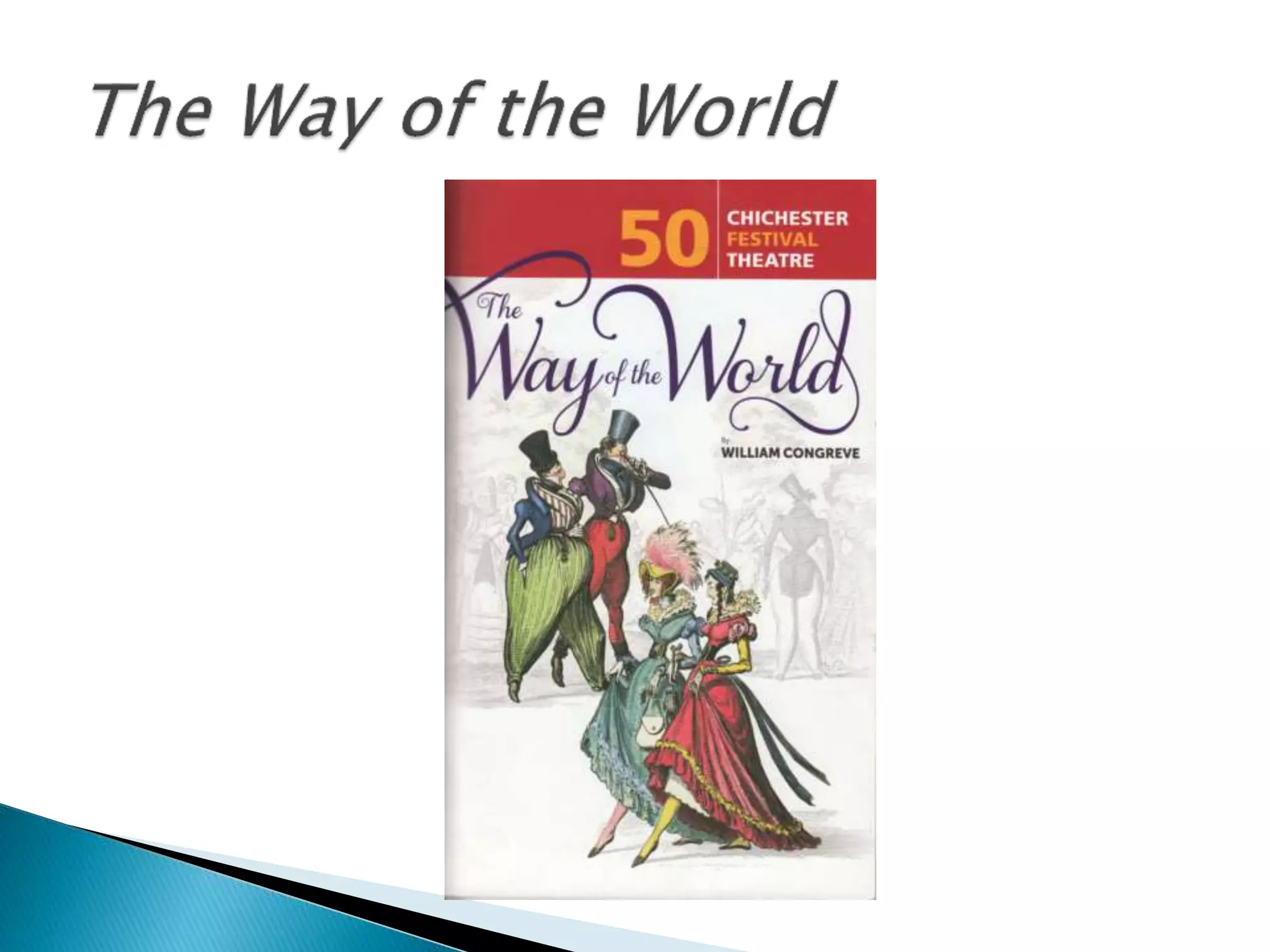
 The Way of the World (1700)
 The Mourning Bride
 The Mourning Muse of Alexis
 The Tears of Amaryllis for Amyntas
 Music has charms to sooth a savage breast,
to soften rocks, or bend a knotted oak.
 Never go to bed angry, stay up and fight.
 Uncertainty and expectation are the joys of
life. Security is an insipid thing.
 If this be not love, it is madness, and then it
is pardonable.
 social comedy that treated the love game with
lightness, humor, and some ribaldry
 satire of social types: the fops, the pedants, and
the vain women
 strong French influence which led to elegance of
plotting, characterization, and acting
 plots and subplots, and generally an excess of
action
 treatment of love with an objective rationalism
 ideas - lovers preserve their integrity as
individuals, love is not metaphysical, sentimental,
or a form of sacrifice, not merely carnal; it
includes trust, dignity, and mutual respect

Congreve & way of world

  • 1.
  • 3.
     born inJanuary of 1670 in Bardsey Grange, Yorkshire, England  young William attended Kilkenny College then Trinity College, Dublin  after graduation became a disciple of John Dryden  entered the Middle Temple to study law  literary career started from 1692  influenced by Plato, Aesop, and Shakespeare.
  • 4.
     held numerousgovernment posts over the years including Customs Collector at Poole, Commissioner for wine licences, and Undersearcher of the London port, he also had time for the study of music  his skill in lyric—including sung lyric, pastoral, and verse epistle is demonstrated in his poem  Wrote a lyric upon the death of Queen Mary in 1694, and received £100 from the King
  • 5.
     was afflictedwith poor eyesight for most of his life  after an accident with his coach in 1728 where he may have suffered internal injuries, William Congreve died on 19 January 1729  interred in the Poet's Corner of Westminster Abbey
  • 6.
     published underthe pseudonym "Cleophil" Incognita (1692), "an Essay”  comedy The Old Batchelor  Love for Love (1694)  first poetic tragedy The Mourning Bride (1697)  The Way of the World (1700)  The Mourning Bride  The Mourning Muse of Alexis  The Tears of Amaryllis for Amyntas
  • 7.
     Music hascharms to sooth a savage breast, to soften rocks, or bend a knotted oak.  Never go to bed angry, stay up and fight.  Uncertainty and expectation are the joys of life. Security is an insipid thing.  If this be not love, it is madness, and then it is pardonable.
  • 9.
     social comedythat treated the love game with lightness, humor, and some ribaldry  satire of social types: the fops, the pedants, and the vain women  strong French influence which led to elegance of plotting, characterization, and acting  plots and subplots, and generally an excess of action  treatment of love with an objective rationalism  ideas - lovers preserve their integrity as individuals, love is not metaphysical, sentimental, or a form of sacrifice, not merely carnal; it includes trust, dignity, and mutual respect