Welcome to my presentation
Takwa Siddika
ID: 123-10-180
The Dream of the Rood
Earliest poem of Anglo-Saxon period.
Anonymous poet
Written in the late 7th or early 8th century.
Alliterative verse.
156 lines.
Rood is taken from “Rod” meaning Crucifixion.
Divided into three parts.
First dream poem.
Literary characters of Anglo-Saxon
period
• Pagan and Christianity.
• Latin Translation.
• Heroic and religious poetry.
• Poetry was earnest, somber and pervaded by
fatalism.
• Broad elaboration.
• Use of figurative speech.
• Love for Christianity and religion.
• Anonymous writer.
• Strong belief in fate.
• Love for freedom.
• Love for women hood.
• Responsiveness to nature.
• Devotion to glory and honor.
Similar literary character in The Dream
of The Rood
• Pagan and Christianity.
• Earnest and somber.
• Broad elaboration in line 14-17 about the tree:
I saw the tree of glory
Honored with garments, shining with joys,
Covered with gold, games and
Covered magnificently the tree of the forest
• Figures of speech:
a. Personification:
Line 20-
‘So that it first began
To bleed on the right side’
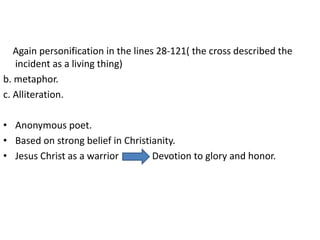
Again personification in the lines 28-121( the cross described the
incident as a living thing)
b. metaphor.
c. Alliteration.
• Anonymous poet.
• Based on strong belief in Christianity.
• Jesus Christ as a warrior Devotion to glory and honor.
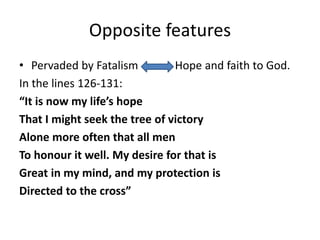
Opposite features
• Pervaded by Fatalism Hope and faith to God.
In the lines 126-131:
“It is now my life’s hope
That I might seek the tree of victory
Alone more often that all men
To honour it well. My desire for that is
Great in my mind, and my protection is
Directed to the cross”
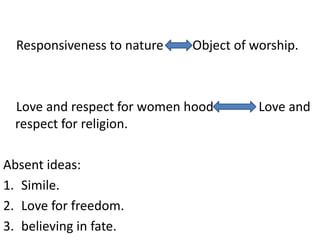
Responsiveness to nature Object of worship.
Love and respect for women hood Love and
respect for religion.
Absent ideas:
1. Simile.
2. Love for freedom.
3. believing in fate.
Do you have any
question?

presentation on anglo-saxon period

  • 1.
    Welcome to mypresentation Takwa Siddika ID: 123-10-180
  • 2.
    The Dream ofthe Rood Earliest poem of Anglo-Saxon period. Anonymous poet Written in the late 7th or early 8th century. Alliterative verse. 156 lines. Rood is taken from “Rod” meaning Crucifixion. Divided into three parts. First dream poem.
  • 3.
    Literary characters ofAnglo-Saxon period • Pagan and Christianity. • Latin Translation. • Heroic and religious poetry. • Poetry was earnest, somber and pervaded by fatalism. • Broad elaboration. • Use of figurative speech.
  • 4.
    • Love forChristianity and religion. • Anonymous writer. • Strong belief in fate. • Love for freedom. • Love for women hood. • Responsiveness to nature. • Devotion to glory and honor.
  • 5.
    Similar literary characterin The Dream of The Rood • Pagan and Christianity. • Earnest and somber. • Broad elaboration in line 14-17 about the tree: I saw the tree of glory Honored with garments, shining with joys, Covered with gold, games and Covered magnificently the tree of the forest • Figures of speech: a. Personification: Line 20- ‘So that it first began To bleed on the right side’
  • 6.
    Again personification inthe lines 28-121( the cross described the incident as a living thing) b. metaphor. c. Alliteration. • Anonymous poet. • Based on strong belief in Christianity. • Jesus Christ as a warrior Devotion to glory and honor.
  • 7.
    Opposite features • Pervadedby Fatalism Hope and faith to God. In the lines 126-131: “It is now my life’s hope That I might seek the tree of victory Alone more often that all men To honour it well. My desire for that is Great in my mind, and my protection is Directed to the cross”
  • 8.
    Responsiveness to natureObject of worship. Love and respect for women hood Love and respect for religion. Absent ideas: 1. Simile. 2. Love for freedom. 3. believing in fate.
  • 9.
    Do you haveany question?