Visual Timeline This  could  be mindbogglingly huge so, I will show some restraint with who gets a mention and not sneak in  all  my favourite authors. Our topic is  LOVE through the ages,  so an aspect of love  ought  to be explored. You  need  to be aware of the evolution of literature – Kings and Queens, centuries and decades make reasonable divisions – I am sticking to British authors with the occasional important American thrown in.  Use this with any knowledge of historical, social and cultural context and you will be alright with A03 & A04.
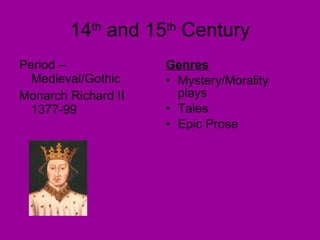
14 th  and 15 th  Century Period – Medieval/Gothic Monarch Richard II 1377-99 Genres Mystery/Morality plays Tales Epic Prose
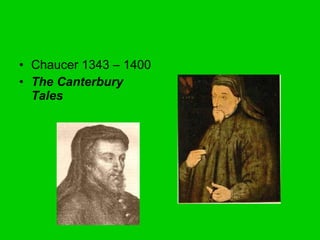
Chaucer 1343 – 1400 The Canterbury Tales
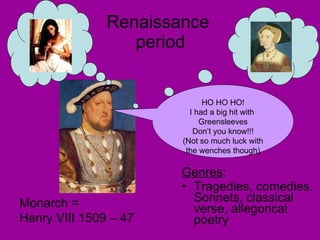
Renaissance  period Genres : Tragedies, comedies. Sonnets, classical verse, allegorical poetry HO HO HO! I had a big hit with  Greensleeves Don’t you know!!! (Not so much luck with the wenches though) Monarch = Henry VIII 1509 – 47
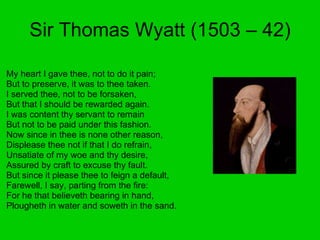
Sir Thomas Wyatt (1503 – 42) My heart I gave thee, not to do it pain;  But to preserve, it was to thee taken.  I served thee, not to be forsaken,  But that I should be rewarded again.  I was content thy servant to remain  But not to be paid under this fashion.  Now since in thee is none other reason,  Displease thee not if that I do refrain,  Unsatiate of my woe and thy desire,  Assured by craft to excuse thy fault.  But since it please thee to feign a default,  Farewell, I say, parting from the fire:  For he that believeth bearing in hand,  Plougheth in water and soweth in the sand.
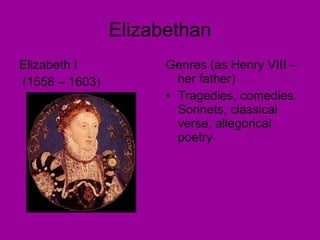
Elizabethan Elizabeth I (1558 – 1603) Genres (as Henry VIII – her father) Tragedies, comedies. Sonnets, classical verse, allegorical poetry
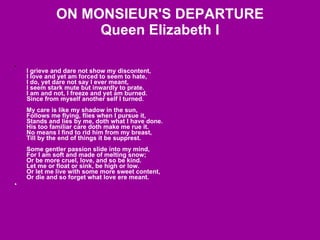
ON MONSIEUR'S DEPARTURE Queen Elizabeth I I grieve and dare not show my discontent,  I love and yet am forced to seem to hate,  I do, yet dare not say I ever meant,  I seem stark mute but inwardly to prate.  I am and not, I freeze and yet am burned.  Since from myself another self I turned.  My care is like my shadow in the sun,  Follows me flying, flies when I pursue it,  Stands and lies by me, doth what I have done.  His too familiar care doth make me rue it.  No means I find to rid him from my breast,  Till by the end of things it be supprest.  Some gentler passion slide into my mind,  For I am soft and made of melting snow;  Or be more cruel, love, and so be kind.  Let me or float or sink, be high or low.  Or let me live with some more sweet content,  Or die and so forget what love ere meant. 
Spenser (1552 – 99) So passeth, in the passing of a day, Of mortall life the leafe, the bud, the flowre, Ne more doth flourish after first decay, That earst was sought to decke both bed and bowre, Of many a Ladie, and many a Paramowre: Gather therefore the Rose, whilest yet is prime, For soone comes age, that will her pride deflowre: Gather the Rose of love, whilest yet is time,  Whilest loving thou mayest loved be with equall crime. [Edmund Spenser (I552-I599): The Faerie Queene II.XII.75]
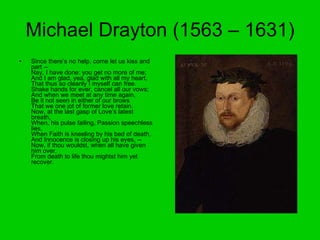
Michael Drayton (1563 – 1631) Since there’s no help, come let us kiss and part -- Nay, I have done: you get no more of me; And I am glad, yea, glad with all my heart, That thus so cleanly I myself can free. Shake hands for ever, cancel all our vows; And when we meet at any time again, Be it not seen in either of our brows That we one jot of former love retain. Now, at the last gasp of Love’s latest breath, When, his pulse failing, Passion speechless lies, When Faith is kneeling by his bed of death, And Innocence is closing up his eyes, -- Now, if thou wouldst, when all have given him over, From death to life thou mightst him yet recover.
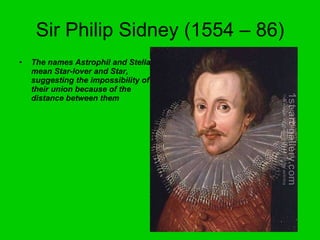
Sir Philip Sidney (1554 – 86) The names Astrophil and Stella mean Star-lover and Star, suggesting the impossibility of their union because of the distance between them
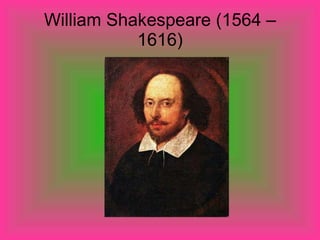
William Shakespeare (1564 – 1616)
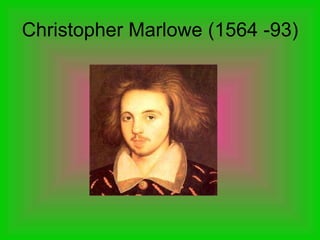
Christopher Marlowe (1564 -93)
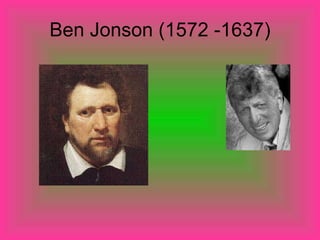
Ben Jonson (1572 -1637)
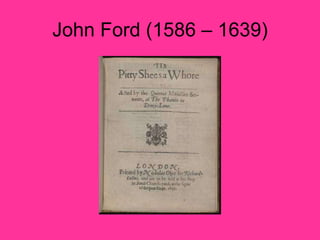
John Ford (1586 – 1639)
Commentary At this time drama becomes important – London Playhouses, Masque and spectacular, Also courtly love poetry Henry and Elizabeth were both (apparently) authors penning, respectively, Greensleeves and On Monsignoir’s Departure and other poetry.
Critical theory-  Defense of Poesy   Sidney –  Apology for Poetry  1595 Characters: Sidney, in his historical persona as  Sir Philip Sidney , poet and courtier [both carefully constructed "roles," so don't treat him as a politically naive truth-teller!];  Edward Wotton , a courtier and friend to Sidney who shared his Continental tour;  John Pietro Pugliano , Italian riding master to the Emperor; and all the poets who ever had been.
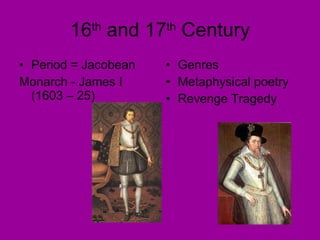
16 th  and 17 th  Century Period = Jacobean Monarch - James I (1603 – 25) Genres Metaphysical poetry Revenge Tragedy
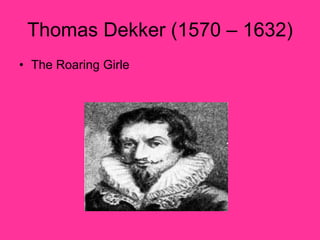
Thomas Dekker (1570 – 1632) The Roaring Girle
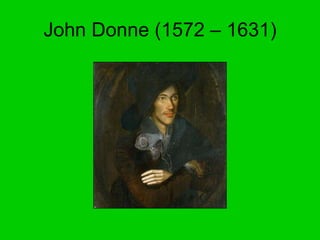
John Donne (1572 – 1631)
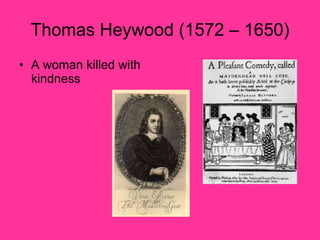
Thomas Heywood (1572 – 1650) A woman killed with kindness
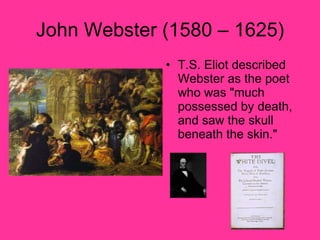
John Webster (1580 – 1625) T.S. Eliot described Webster as the poet who was "much possessed by death, and saw the skull beneath the skin."
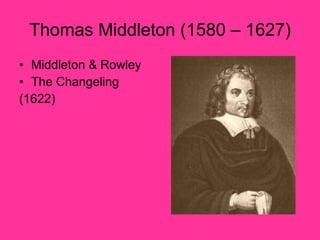
Thomas Middleton (1580 – 1627) Middleton & Rowley The Changeling (1622)
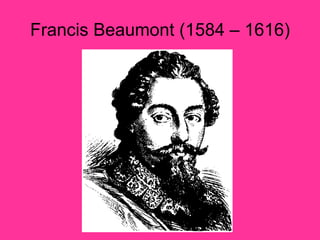
Francis Beaumont (1584 – 1616)
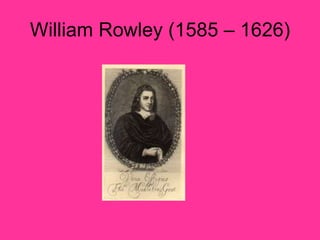
William Rowley (1585 – 1626)
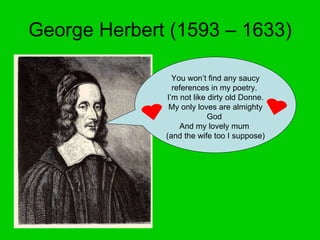
George Herbert (1593 – 1633) You won’t find any saucy references in my poetry.  I’m not like dirty old Donne.  My only loves are almighty God  And my lovely mum  (and the wife too I suppose)
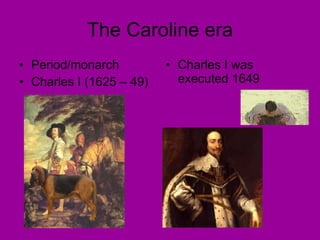
The Caroline era Period/monarch Charles I (1625 – 49) Charles I was executed 1649
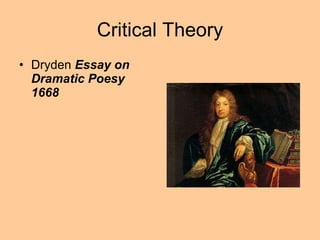
Critical Theory Dryden  Essay on Dramatic Poesy 1668
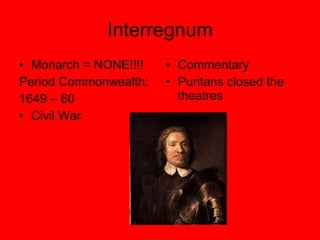
Interregnum Monarch = NONE!!!! Period Commonwealth: 1649 – 60 Civil War Commentary Puritans closed the theatres
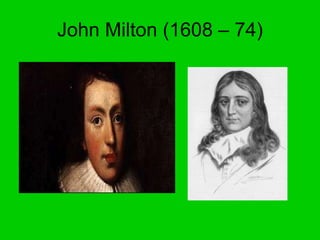
John Milton (1608 – 74)
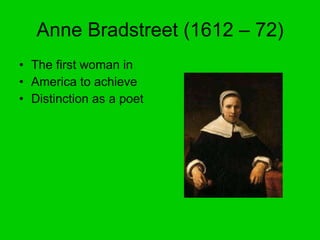
Anne Bradstreet (1612 – 72) The first woman in  America to achieve Distinction as a poet
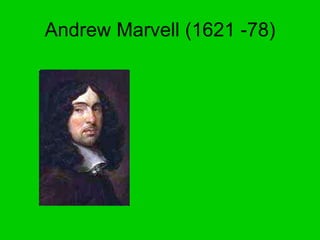
Andrew Marvell (1621 -78)
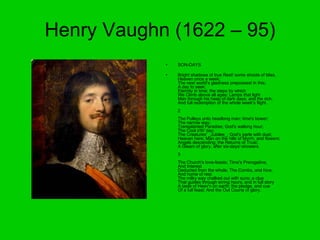
Henry Vaughn (1622 – 95) SON-DAYS Bright shadows of true Rest! some shoots of bliss,  Heaven once a week;  The next world's gladness prepossest in this;  A day to seek;  Eternity in time; the steps by which  We Climb above all ages; Lamps that light  Man through his heap of dark days; and the rich,  And full redemption of the whole week's flight.  2  The Pulleys unto headlong man; time's bower;  The narrow way;  Transplanted Paradise; God's walking hour;  The Cool o'th' day;  The Creatures' _Jubilee_; God's parle with dust;  Heaven here; Man on the hills of Myrrh, and flowers;  Angels descending; the Returns of Trust;  A Gleam of glory, after six-days'-showers.  3  The Church's love-feasts; Time's Prerogative,  And Interest  Deducted from the whole; The Combs, and hive,  And home of rest.  The milky way chalked out with suns; a clue  That guides through erring hours; and in full story  A taste of Heav'n on earth; the pledge, and cue  Of a full feast: And the Out Courts of glory.
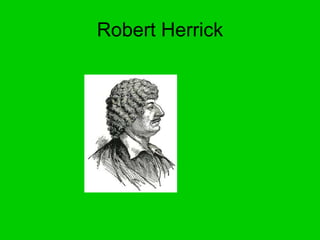
Robert Herrick
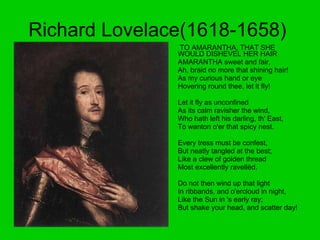
Richard Lovelace(1618-1658)  TO AMARANTHA, THAT SHE WOULD DISHEVEL HER HAIR  AMARANTHA sweet and fair,  Ah, braid no more that shining hair!  As my curious hand or eye  Hovering round thee, let it fly!     Let it fly as unconfined  As its calm ravisher the wind,  Who hath left his darling, th' East,  To wanton o'er that spicy nest.     Every tress must be confest,  But neatly tangled at the best;  Like a clew of golden thread  Most excellently ravellèd.     Do not then wind up that light  In ribbands, and o'ercloud in night,  Like the Sun in 's early ray;  But shake your head, and scatter day!
Sir John Suckling
Aphra Behn (1640 – 89)
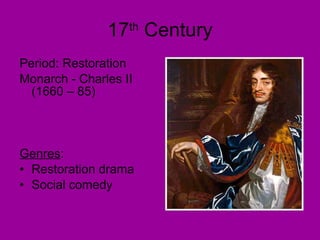
17 th  Century Period: Restoration Monarch - Charles II (1660 – 85) Genres : Restoration drama Social comedy
Commentary Theatres re-opened 1660 – comedy of manners. Influence of Court on drama and poetry – bawdy, cynical and  amoral.
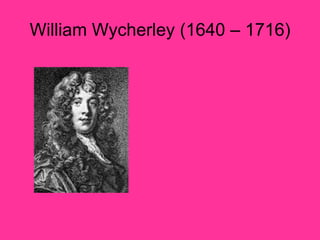
William Wycherley (1640 – 1716)
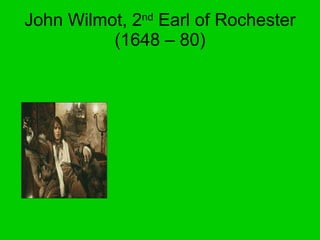
John Wilmot, 2 nd  Earl of Rochester (1648 – 80)
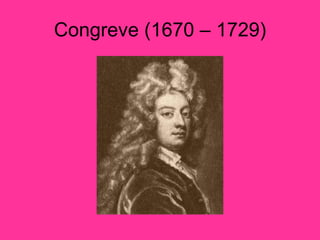
Congreve (1670 – 1729)
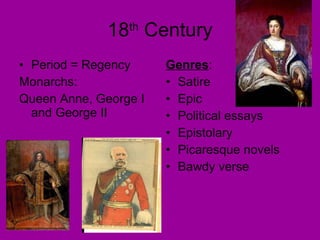
18 th  Century Period = Regency Monarchs: Queen Anne, George I and George II Genres : Satire Epic Political essays Epistolary  Picaresque novels Bawdy verse
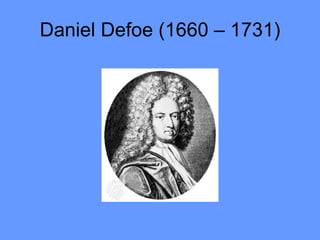
Daniel Defoe (1660 – 1731)
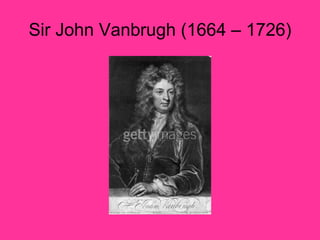
Sir John Vanbrugh (1664 – 1726)
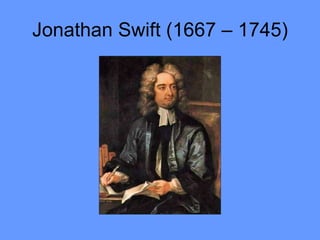
Jonathan Swift (1667 – 1745)
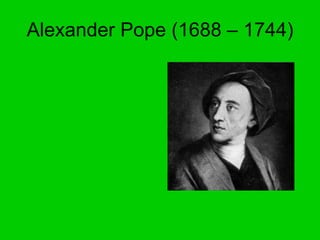
Alexander Pope (1688 – 1744)
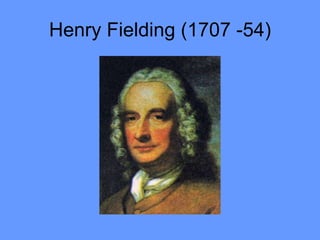
Henry Fielding (1707 -54)
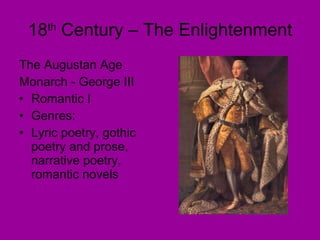
18 th  Century – The Enlightenment The Augustan Age Monarch - George III Romantic I Genres: Lyric poetry, gothic poetry and prose, narrative poetry, romantic novels
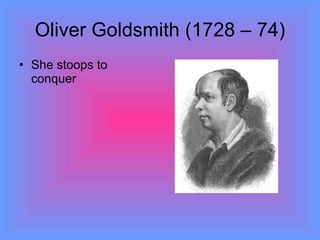
Oliver Goldsmith (1728 – 74) She stoops to conquer
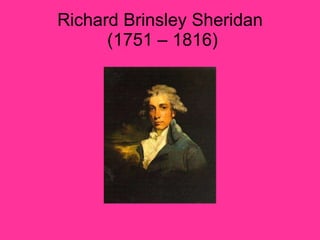
Richard Brinsley Sheridan  (1751 – 1816)
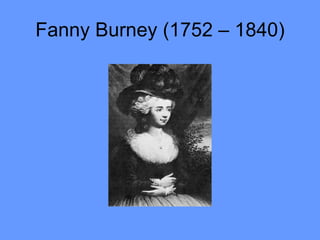
Fanny Burney (1752 – 1840)
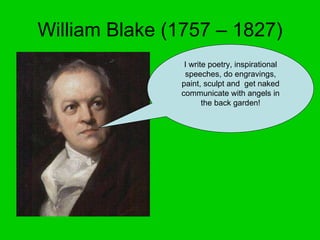
William Blake (1757 – 1827) I write poetry, inspirational speeches, do engravings, paint, sculpt and  get naked communicate with angels in the back garden!
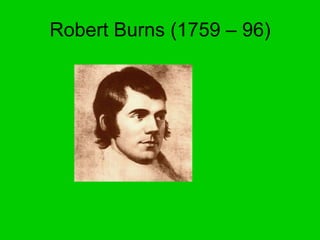
Robert Burns (1759 – 96)
Commentary New genre of novel in early 1700s with Defoe Popularity of biting satire, attacking those in power By end of the period 3 volume confessional, satirical or picaresque novels well established – as well as the romantic novels to cater for female readership; importance of lending libraries Blake is a precursor of Romantic movement with interest in childhood and individual
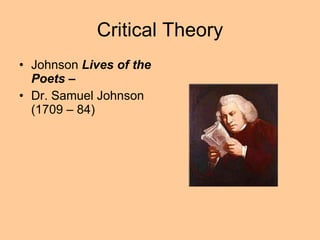
Critical Theory Johnson  Lives of the Poets –  Dr. Samuel Johnson (1709 – 84)
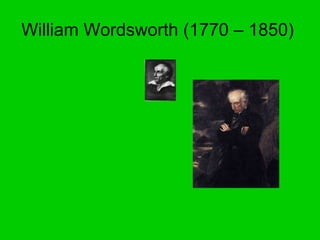
William Wordsworth (1770 – 1850)
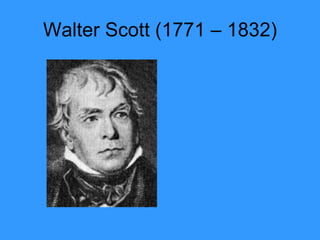
Walter Scott (1771 – 1832)
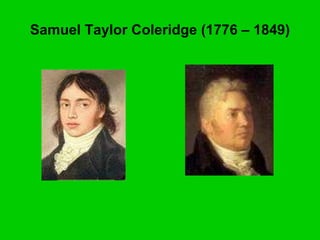
Samuel Taylor Coleridge (1776 – 1849)
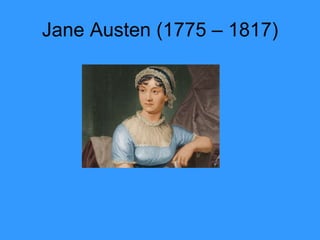
Jane Austen (1775 – 1817)
Commentary First generation of Romantic writers Passion and imagination in literature, especially poetry Influence of Middle Ages and Gothic era in settings, plots and characters Reaction against previous period –  Importance of rebellion and independence Worship of Nature in all aspects
Critical theory Wordsworth – Preface to  Lyrical Ballads 1800 Coleridge –  Biographia Literaria  1817
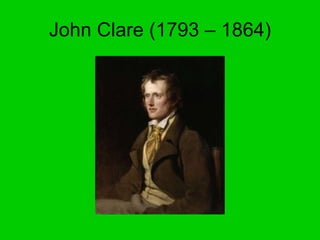
John Clare (1793 – 1864)
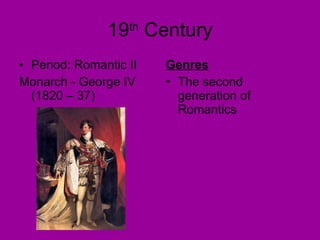
19 th  Century Period: Romantic II Monarch - George IV (1820 – 37) Genres The second generation of Romantics
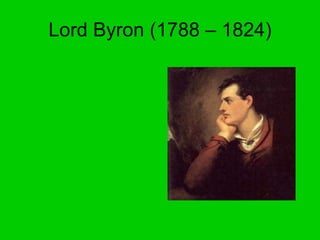
Lord Byron (1788 – 1824)
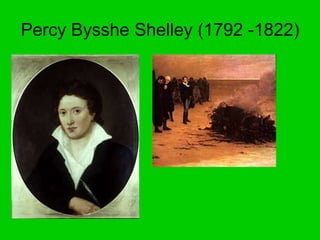
Percy Bysshe Shelley (1792 -1822)
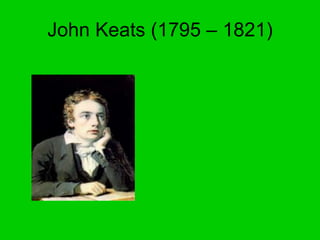
John Keats (1795 – 1821)
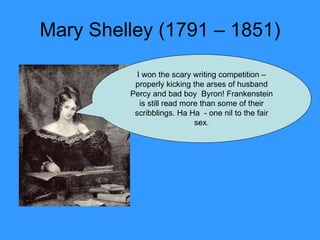
Mary Shelley (1791 – 1851) I won the scary writing competition – properly kicking the arses of husband Percy and bad boy  Byron! Frankenstein is still read more than some of their scribblings. Ha Ha  - one nil to the fair sex.
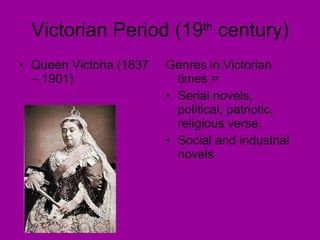
Victorian Period (19 th  century) Queen Victoria (1837 – 1901) Genres in Victorian times = Serial novels, political, patriotic, religious verse, Social and industrial novels
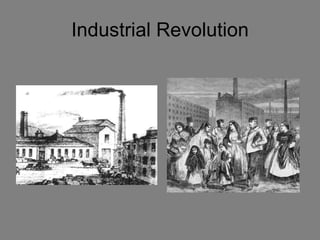
Industrial Revolution
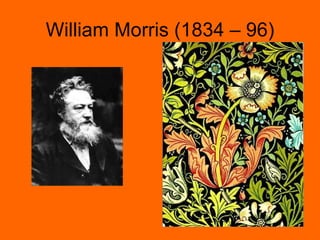
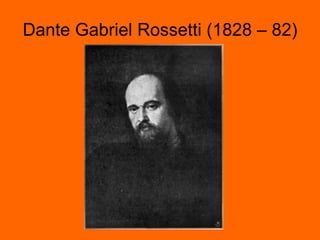
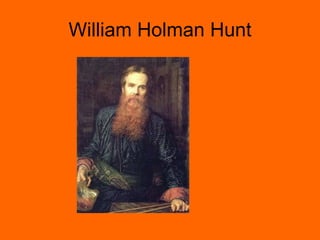
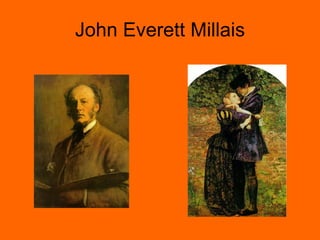
Pre-Raphaelite Movement A group of artists and writers formed in 1848 in reaction to the existing conventions in art and literature.  They wanted a return to simple sincerity and believed that this was to be found in the art of the early artists before Raphael, whose technique was the model of the academicians.  Most of the brotherhood were concerned with painting.
William Morris (1834 – 96)
Dante Gabriel Rossetti (1828 – 82)
William Holman Hunt
John Everett Millais
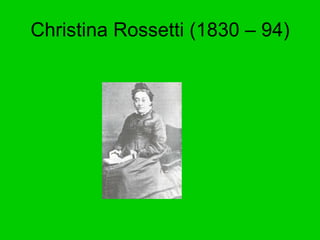
Christina Rossetti (1830 – 94)
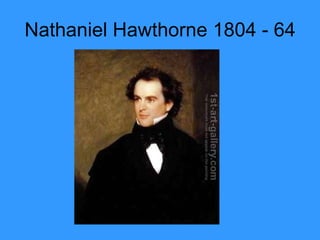
Nathaniel Hawthorne 1804 - 64
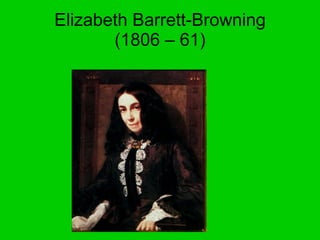
Elizabeth Barrett-Browning (1806 – 61)
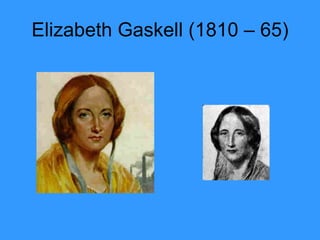
Elizabeth Gaskell (1810 – 65)
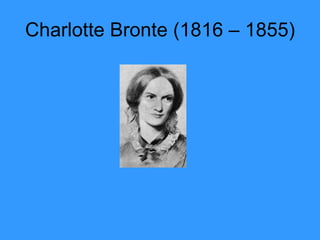
Charlotte Bronte (1816 – 1855)
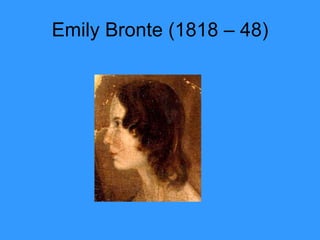
Emily Bronte (1818 – 48)
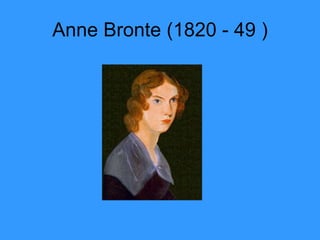
Anne Bronte (1820 - 49 )
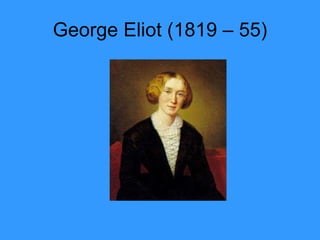
George Eliot (1819 – 55)
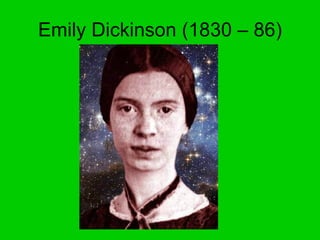
Emily Dickinson (1830 – 86)
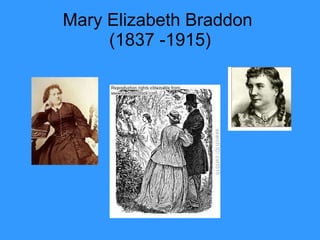
Mary Elizabeth Braddon  (1837 -1915)
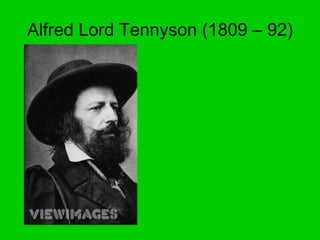
Alfred Lord Tennyson (1809 – 92)
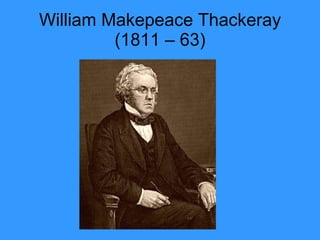
William Makepeace Thackeray (1811 – 63)
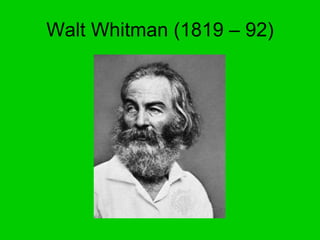
Walt Whitman (1819 – 92)
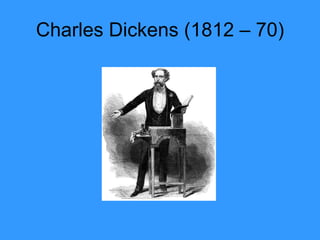
Charles Dickens (1812 – 70)
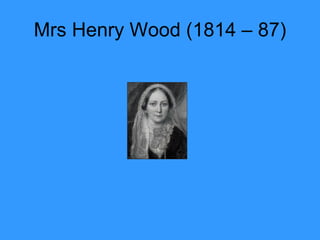
Mrs Henry Wood (1814 – 87)
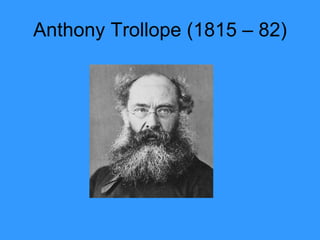
Anthony Trollope (1815 – 82)
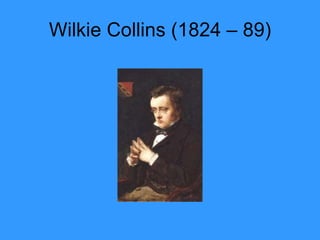
Wilkie Collins (1824 – 89)
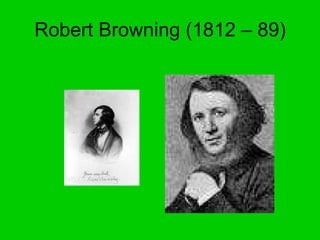
Robert Browning (1812 – 89)
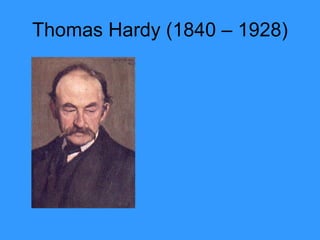
Thomas Hardy (1840 – 1928)
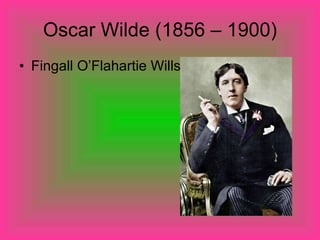
Oscar Wilde (1856 – 1900) Fingall O’Flahartie Wills
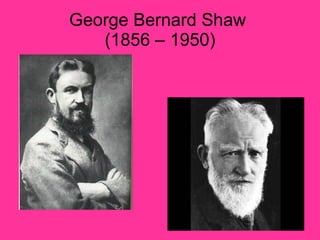
George Bernard Shaw  (1856 – 1950)
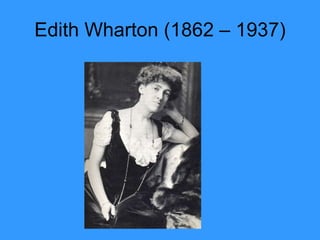
Edith Wharton (1862 – 1937)
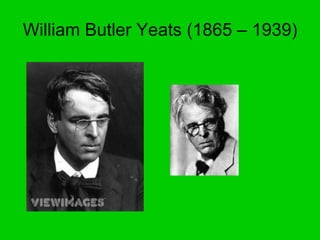
William Butler Yeats (1865 – 1939)
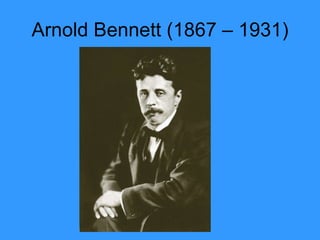
Arnold Bennett (1867 – 1931)
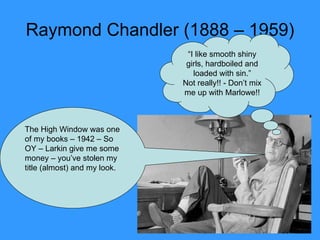
Raymond Chandler (1888 – 1959) The High Window was one of my books – 1942 – So OY – Larkin give me some money – you’ve stolen my title (almost) and my look. “ I like smooth shiny girls, hardboiled and loaded with sin.” Not really!! - Don’t mix me up with Marlowe!!
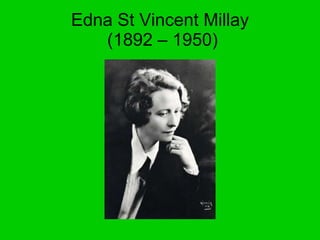
Edna St Vincent Millay  (1892 – 1950)
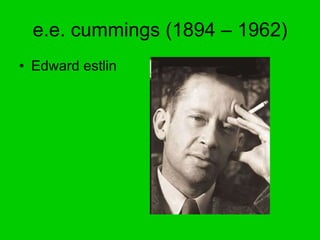
e.e. cummings (1894 – 1962) Edward estlin
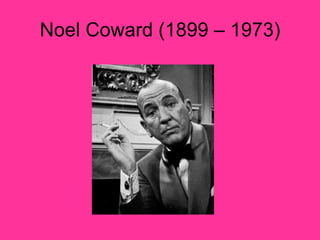
Noel Coward (1899 – 1973)
Commentary Themes of duty, nationalism and trade, education and morality until World War One Class and gender divide Family values – happy domesticity – woman as angel of the house Effect of Darwin on ideas Wide reading public – serialisation, e.g. Dickens More restrained than Romantics but still preoccupied with countryside, children and feelings.
Critical Theory Shelley –  Defence of Poetry  1821 Hazlitt –  Lectures on the English Poets  1818 Liberal Humanism – Matthew Arnold –  Culture and Anarchy  1869
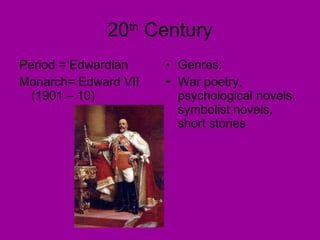
20 th  Century Period = Edwardian Monarch= Edward VII (1901 – 10) Genres: War poetry, psychological novels, symbolist novels, short stories
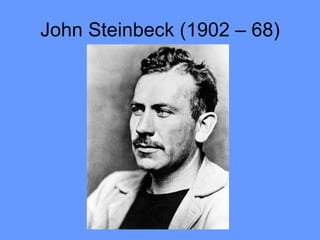
John Steinbeck (1902 – 68)
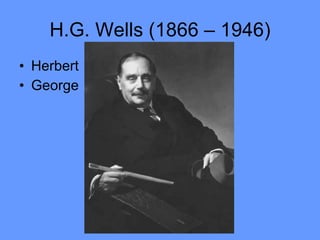
H.G. Wells (1866 – 1946) Herbert  George
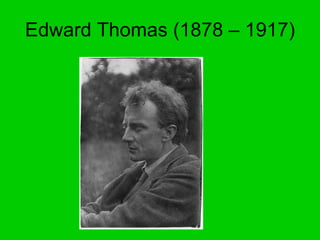
Edward Thomas (1878 – 1917)
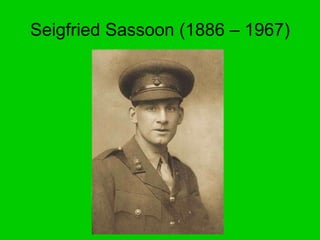
Seigfried Sassoon (1886 – 1967)
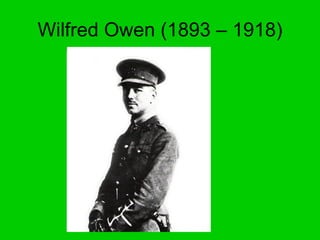
Wilfred Owen (1893 – 1918)
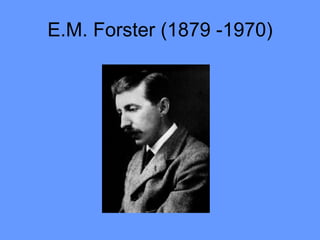
E.M. Forster (1879 -1970)
Commentary First half of the 20 th  century , World War One brought upheaval and questioning to all aspects of life – rupture with past and its beliefs, e.g. heroes Writers turned to art – art for art’s sake Interest in theory, experimentalism and breaking rules
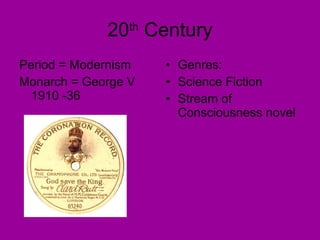
20 th  Century Period = Modernism Monarch = George V 1910 -36 Genres: Science Fiction Stream of Consciousness novel
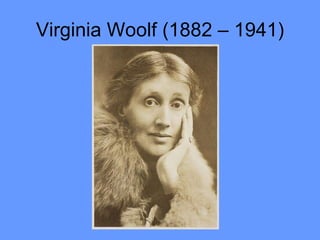
Virginia Woolf (1882 – 1941)
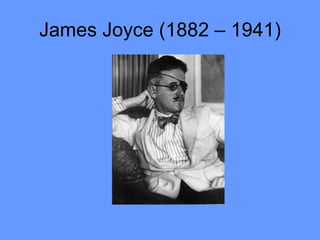
James Joyce (1882 – 1941)
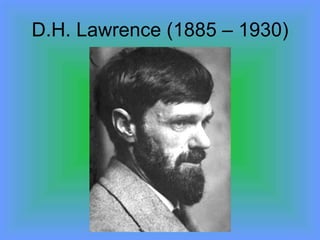
D.H. Lawrence (1885 – 1930)
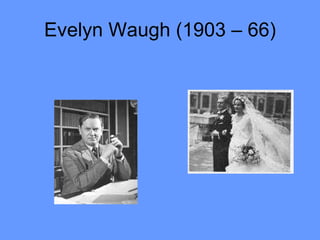
Evelyn Waugh (1903 – 66)
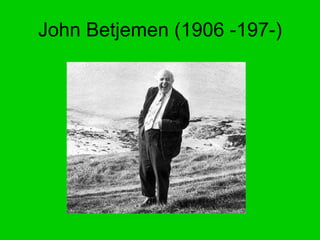
John Betjemen (1906 -197-)
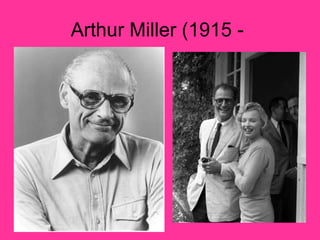
Arthur Miller (1915 -
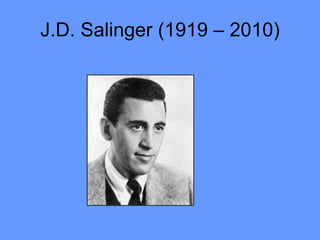
J.D. Salinger (1919 – 2010)
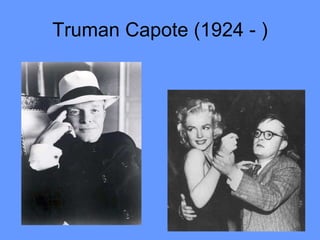
Truman Capote (1924 - )
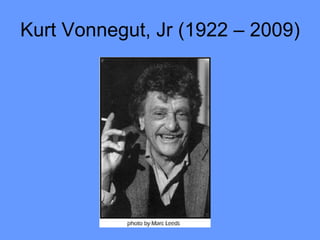
Kurt Vonnegut, Jr (1922 – 2009)
Commentary New genres of science fiction and psychological novel sprang from preoccupation with social and personal identity Writer alienated from society Influence of Freudian psychology – exploring the workings of the unconscious, fascination for sexual fantasy, mysticism and use of symbols
Critical Theory The New Practical Criticism  – T.S. Eliot 1920s I.A. Richards  Practical Criticism  1924
Twentieth Century Period/monarch George VI (1936 – 52) Genres: Socialist poetry and fiction
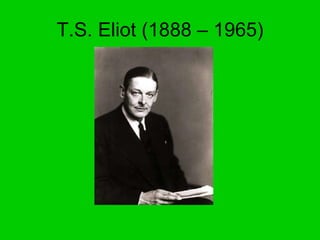
T.S. Eliot (1888 – 1965)
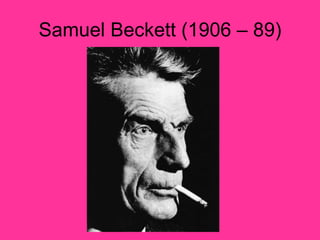
Samuel Beckett (1906 – 89)
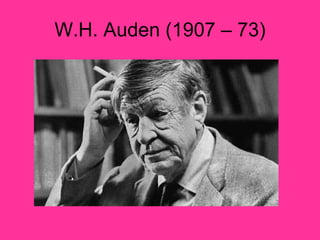
W.H. Auden (1907 – 73)
Commentary Traditional chronological narrative replaced by connotation, association and use of symbols Recognition of instability and complexity of personality Concept of epiphany Growth of feminist writing
Critical Theory W. Empson (Ms Empson’s grandfather!!!) –  Seven Types of Ambiguity  1930 F.R.Leavis –  The Common Pursuit  1952 Formalism
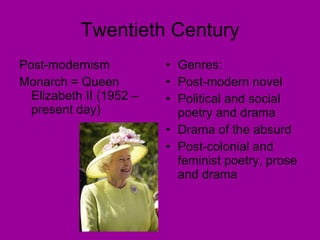
Twentieth Century Post-modernism Monarch = Queen Elizabeth II (1952 – present day) Genres: Post-modern novel Political and social poetry and drama Drama of the absurd Post-colonial and feminist poetry, prose and drama
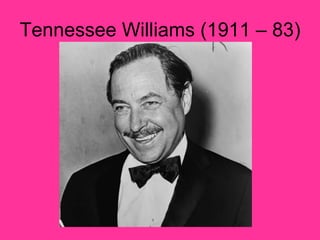
Tennessee Williams (1911 – 83)
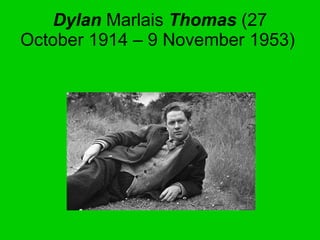
Dylan  Marlais  Thomas  (27 October 1914 – 9 November 1953)
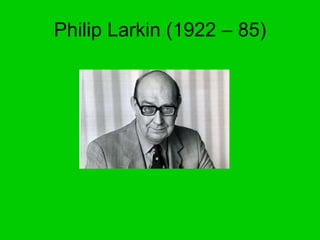
Philip Larkin (1922 – 85)
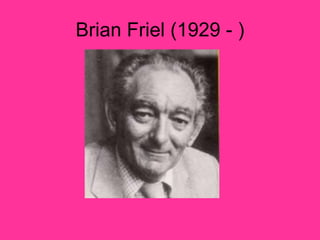
Brian Friel (1929 - )
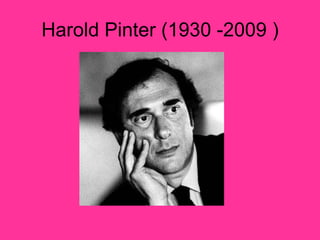
Harold Pinter (1930 -2009 )
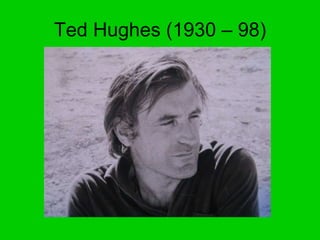
Ted Hughes (1930 – 98)
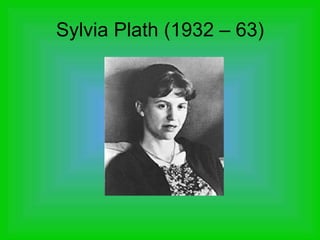
Sylvia Plath (1932 – 63)
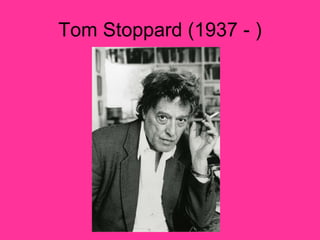
Tom Stoppard (1937 - )
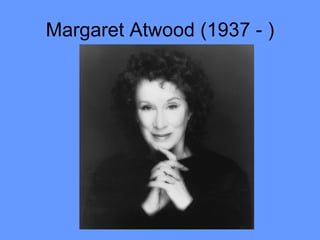
Margaret Atwood (1937 - )
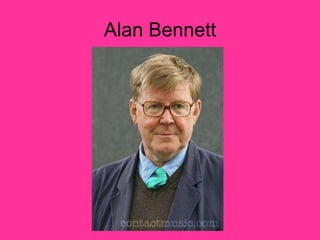
Alan Bennett
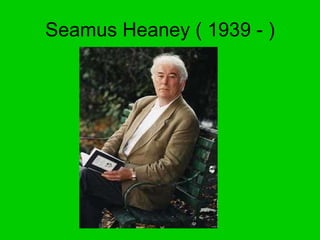
Seamus Heaney ( 1939 - )
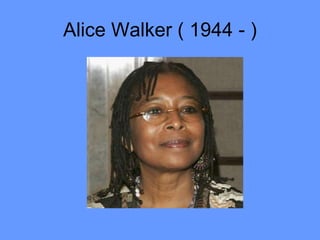
Alice Walker ( 1944 - )
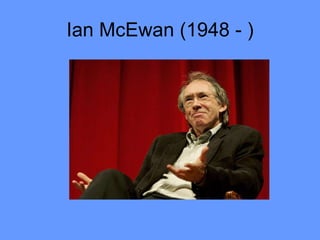
Ian McEwan (1948 - )
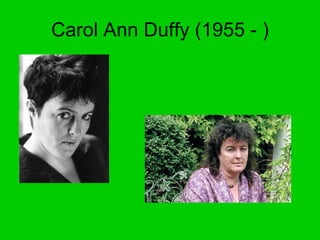
Carol Ann Duffy (1955 - )
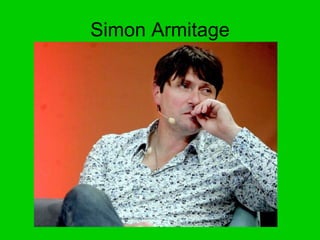
Simon Armitage
Commentary From 1960s to present, preoccupations of modernism shared but taken further  Traditional linear narrative mocked and rejected and comfort of closure rejected Randomness, discontinuity and contradiction, pastiche and deliberate irony Makes us reflect on act of writing and relationship between writer, character, and reader Parallelism, binary opposition, doublings, mixing fictional and historical characters, twisting well known myths
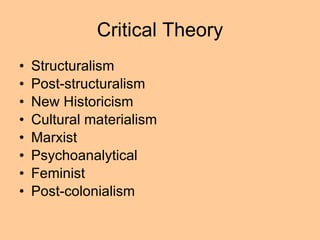
Critical Theory Structuralism Post-structuralism New Historicism Cultural materialism Marxist Psychoanalytical Feminist Post-colonialism

English Literature Timeline

  • 1.
    Visual Timeline This could be mindbogglingly huge so, I will show some restraint with who gets a mention and not sneak in all my favourite authors. Our topic is LOVE through the ages, so an aspect of love ought to be explored. You need to be aware of the evolution of literature – Kings and Queens, centuries and decades make reasonable divisions – I am sticking to British authors with the occasional important American thrown in. Use this with any knowledge of historical, social and cultural context and you will be alright with A03 & A04.
  • 2.
    14 th and 15 th Century Period – Medieval/Gothic Monarch Richard II 1377-99 Genres Mystery/Morality plays Tales Epic Prose
  • 3.
    Chaucer 1343 –1400 The Canterbury Tales
  • 4.
    Renaissance periodGenres : Tragedies, comedies. Sonnets, classical verse, allegorical poetry HO HO HO! I had a big hit with Greensleeves Don’t you know!!! (Not so much luck with the wenches though) Monarch = Henry VIII 1509 – 47
  • 5.
    Sir Thomas Wyatt(1503 – 42) My heart I gave thee, not to do it pain; But to preserve, it was to thee taken. I served thee, not to be forsaken, But that I should be rewarded again. I was content thy servant to remain But not to be paid under this fashion. Now since in thee is none other reason, Displease thee not if that I do refrain, Unsatiate of my woe and thy desire, Assured by craft to excuse thy fault. But since it please thee to feign a default, Farewell, I say, parting from the fire: For he that believeth bearing in hand, Plougheth in water and soweth in the sand.
  • 6.
    Elizabethan Elizabeth I(1558 – 1603) Genres (as Henry VIII – her father) Tragedies, comedies. Sonnets, classical verse, allegorical poetry
  • 7.
    ON MONSIEUR'S DEPARTUREQueen Elizabeth I I grieve and dare not show my discontent,  I love and yet am forced to seem to hate,  I do, yet dare not say I ever meant,  I seem stark mute but inwardly to prate.  I am and not, I freeze and yet am burned.  Since from myself another self I turned.  My care is like my shadow in the sun,  Follows me flying, flies when I pursue it,  Stands and lies by me, doth what I have done.  His too familiar care doth make me rue it.  No means I find to rid him from my breast,  Till by the end of things it be supprest.  Some gentler passion slide into my mind,  For I am soft and made of melting snow;  Or be more cruel, love, and so be kind.  Let me or float or sink, be high or low.  Or let me live with some more sweet content,  Or die and so forget what love ere meant. 
  • 8.
    Spenser (1552 –99) So passeth, in the passing of a day, Of mortall life the leafe, the bud, the flowre, Ne more doth flourish after first decay, That earst was sought to decke both bed and bowre, Of many a Ladie, and many a Paramowre: Gather therefore the Rose, whilest yet is prime, For soone comes age, that will her pride deflowre: Gather the Rose of love, whilest yet is time, Whilest loving thou mayest loved be with equall crime. [Edmund Spenser (I552-I599): The Faerie Queene II.XII.75]
  • 9.
    Michael Drayton (1563– 1631) Since there’s no help, come let us kiss and part -- Nay, I have done: you get no more of me; And I am glad, yea, glad with all my heart, That thus so cleanly I myself can free. Shake hands for ever, cancel all our vows; And when we meet at any time again, Be it not seen in either of our brows That we one jot of former love retain. Now, at the last gasp of Love’s latest breath, When, his pulse failing, Passion speechless lies, When Faith is kneeling by his bed of death, And Innocence is closing up his eyes, -- Now, if thou wouldst, when all have given him over, From death to life thou mightst him yet recover.
  • 10.
    Sir Philip Sidney(1554 – 86) The names Astrophil and Stella mean Star-lover and Star, suggesting the impossibility of their union because of the distance between them
  • 11.
  • 12.
  • 13.
  • 14.
    John Ford (1586– 1639)
  • 15.
    Commentary At thistime drama becomes important – London Playhouses, Masque and spectacular, Also courtly love poetry Henry and Elizabeth were both (apparently) authors penning, respectively, Greensleeves and On Monsignoir’s Departure and other poetry.
  • 16.
    Critical theory- Defense of Poesy Sidney – Apology for Poetry 1595 Characters: Sidney, in his historical persona as Sir Philip Sidney , poet and courtier [both carefully constructed "roles," so don't treat him as a politically naive truth-teller!]; Edward Wotton , a courtier and friend to Sidney who shared his Continental tour; John Pietro Pugliano , Italian riding master to the Emperor; and all the poets who ever had been.
  • 17.
    16 th and 17 th Century Period = Jacobean Monarch - James I (1603 – 25) Genres Metaphysical poetry Revenge Tragedy
  • 18.
    Thomas Dekker (1570– 1632) The Roaring Girle
  • 19.
  • 20.
    Thomas Heywood (1572– 1650) A woman killed with kindness
  • 21.
    John Webster (1580– 1625) T.S. Eliot described Webster as the poet who was "much possessed by death, and saw the skull beneath the skin."
  • 22.
    Thomas Middleton (1580– 1627) Middleton & Rowley The Changeling (1622)
  • 23.
  • 24.
  • 25.
    George Herbert (1593– 1633) You won’t find any saucy references in my poetry. I’m not like dirty old Donne. My only loves are almighty God And my lovely mum (and the wife too I suppose)
  • 26.
    The Caroline eraPeriod/monarch Charles I (1625 – 49) Charles I was executed 1649
  • 27.
    Critical Theory Dryden Essay on Dramatic Poesy 1668
  • 28.
    Interregnum Monarch =NONE!!!! Period Commonwealth: 1649 – 60 Civil War Commentary Puritans closed the theatres
  • 29.
  • 30.
    Anne Bradstreet (1612– 72) The first woman in America to achieve Distinction as a poet
  • 31.
  • 32.
    Henry Vaughn (1622– 95) SON-DAYS Bright shadows of true Rest! some shoots of bliss, Heaven once a week; The next world's gladness prepossest in this; A day to seek; Eternity in time; the steps by which We Climb above all ages; Lamps that light Man through his heap of dark days; and the rich, And full redemption of the whole week's flight. 2 The Pulleys unto headlong man; time's bower; The narrow way; Transplanted Paradise; God's walking hour; The Cool o'th' day; The Creatures' _Jubilee_; God's parle with dust; Heaven here; Man on the hills of Myrrh, and flowers; Angels descending; the Returns of Trust; A Gleam of glory, after six-days'-showers. 3 The Church's love-feasts; Time's Prerogative, And Interest Deducted from the whole; The Combs, and hive, And home of rest. The milky way chalked out with suns; a clue That guides through erring hours; and in full story A taste of Heav'n on earth; the pledge, and cue Of a full feast: And the Out Courts of glory.
  • 33.
  • 34.
    Richard Lovelace(1618-1658) TO AMARANTHA, THAT SHE WOULD DISHEVEL HER HAIR AMARANTHA sweet and fair, Ah, braid no more that shining hair! As my curious hand or eye Hovering round thee, let it fly!   Let it fly as unconfined As its calm ravisher the wind, Who hath left his darling, th' East, To wanton o'er that spicy nest.   Every tress must be confest, But neatly tangled at the best; Like a clew of golden thread Most excellently ravellèd.   Do not then wind up that light In ribbands, and o'ercloud in night, Like the Sun in 's early ray; But shake your head, and scatter day!
  • 35.
  • 36.
  • 37.
    17 th Century Period: Restoration Monarch - Charles II (1660 – 85) Genres : Restoration drama Social comedy
  • 38.
    Commentary Theatres re-opened1660 – comedy of manners. Influence of Court on drama and poetry – bawdy, cynical and amoral.
  • 39.
  • 40.
    John Wilmot, 2nd Earl of Rochester (1648 – 80)
  • 41.
  • 42.
    18 th Century Period = Regency Monarchs: Queen Anne, George I and George II Genres : Satire Epic Political essays Epistolary Picaresque novels Bawdy verse
  • 43.
  • 44.
    Sir John Vanbrugh(1664 – 1726)
  • 45.
  • 46.
  • 47.
  • 48.
    18 th Century – The Enlightenment The Augustan Age Monarch - George III Romantic I Genres: Lyric poetry, gothic poetry and prose, narrative poetry, romantic novels
  • 49.
    Oliver Goldsmith (1728– 74) She stoops to conquer
  • 50.
    Richard Brinsley Sheridan (1751 – 1816)
  • 51.
  • 52.
    William Blake (1757– 1827) I write poetry, inspirational speeches, do engravings, paint, sculpt and get naked communicate with angels in the back garden!
  • 53.
  • 54.
    Commentary New genreof novel in early 1700s with Defoe Popularity of biting satire, attacking those in power By end of the period 3 volume confessional, satirical or picaresque novels well established – as well as the romantic novels to cater for female readership; importance of lending libraries Blake is a precursor of Romantic movement with interest in childhood and individual
  • 55.
    Critical Theory Johnson Lives of the Poets – Dr. Samuel Johnson (1709 – 84)
  • 56.
  • 57.
  • 58.
    Samuel Taylor Coleridge(1776 – 1849)
  • 59.
  • 60.
    Commentary First generationof Romantic writers Passion and imagination in literature, especially poetry Influence of Middle Ages and Gothic era in settings, plots and characters Reaction against previous period – Importance of rebellion and independence Worship of Nature in all aspects
  • 61.
    Critical theory Wordsworth– Preface to Lyrical Ballads 1800 Coleridge – Biographia Literaria 1817
  • 62.
  • 63.
    19 th Century Period: Romantic II Monarch - George IV (1820 – 37) Genres The second generation of Romantics
  • 64.
  • 65.
  • 66.
  • 67.
    Mary Shelley (1791– 1851) I won the scary writing competition – properly kicking the arses of husband Percy and bad boy Byron! Frankenstein is still read more than some of their scribblings. Ha Ha - one nil to the fair sex.
  • 68.
    Victorian Period (19th century) Queen Victoria (1837 – 1901) Genres in Victorian times = Serial novels, political, patriotic, religious verse, Social and industrial novels
  • 69.
  • 70.
    Pre-Raphaelite Movement Agroup of artists and writers formed in 1848 in reaction to the existing conventions in art and literature. They wanted a return to simple sincerity and believed that this was to be found in the art of the early artists before Raphael, whose technique was the model of the academicians. Most of the brotherhood were concerned with painting.
  • 71.
  • 72.
  • 73.
  • 74.
  • 75.
  • 76.
  • 77.
  • 78.
  • 79.
  • 80.
  • 81.
  • 82.
  • 83.
  • 84.
  • 85.
    Alfred Lord Tennyson(1809 – 92)
  • 86.
  • 87.
  • 88.
  • 89.
    Mrs Henry Wood(1814 – 87)
  • 90.
  • 91.
  • 92.
  • 93.
  • 94.
    Oscar Wilde (1856– 1900) Fingall O’Flahartie Wills
  • 95.
    George Bernard Shaw (1856 – 1950)
  • 96.
  • 97.
    William Butler Yeats(1865 – 1939)
  • 98.
  • 99.
    Raymond Chandler (1888– 1959) The High Window was one of my books – 1942 – So OY – Larkin give me some money – you’ve stolen my title (almost) and my look. “ I like smooth shiny girls, hardboiled and loaded with sin.” Not really!! - Don’t mix me up with Marlowe!!
  • 100.
    Edna St VincentMillay (1892 – 1950)
  • 101.
    e.e. cummings (1894– 1962) Edward estlin
  • 102.
  • 103.
    Commentary Themes ofduty, nationalism and trade, education and morality until World War One Class and gender divide Family values – happy domesticity – woman as angel of the house Effect of Darwin on ideas Wide reading public – serialisation, e.g. Dickens More restrained than Romantics but still preoccupied with countryside, children and feelings.
  • 104.
    Critical Theory Shelley– Defence of Poetry 1821 Hazlitt – Lectures on the English Poets 1818 Liberal Humanism – Matthew Arnold – Culture and Anarchy 1869
  • 105.
    20 th Century Period = Edwardian Monarch= Edward VII (1901 – 10) Genres: War poetry, psychological novels, symbolist novels, short stories
  • 106.
  • 107.
    H.G. Wells (1866– 1946) Herbert George
  • 108.
  • 109.
  • 110.
  • 111.
  • 112.
    Commentary First halfof the 20 th century , World War One brought upheaval and questioning to all aspects of life – rupture with past and its beliefs, e.g. heroes Writers turned to art – art for art’s sake Interest in theory, experimentalism and breaking rules
  • 113.
    20 th Century Period = Modernism Monarch = George V 1910 -36 Genres: Science Fiction Stream of Consciousness novel
  • 114.
  • 115.
  • 116.
  • 117.
  • 118.
  • 119.
  • 120.
  • 121.
  • 122.
    Kurt Vonnegut, Jr(1922 – 2009)
  • 123.
    Commentary New genresof science fiction and psychological novel sprang from preoccupation with social and personal identity Writer alienated from society Influence of Freudian psychology – exploring the workings of the unconscious, fascination for sexual fantasy, mysticism and use of symbols
  • 124.
    Critical Theory TheNew Practical Criticism – T.S. Eliot 1920s I.A. Richards Practical Criticism 1924
  • 125.
    Twentieth Century Period/monarchGeorge VI (1936 – 52) Genres: Socialist poetry and fiction
  • 126.
  • 127.
  • 128.
  • 129.
    Commentary Traditional chronologicalnarrative replaced by connotation, association and use of symbols Recognition of instability and complexity of personality Concept of epiphany Growth of feminist writing
  • 130.
    Critical Theory W.Empson (Ms Empson’s grandfather!!!) – Seven Types of Ambiguity 1930 F.R.Leavis – The Common Pursuit 1952 Formalism
  • 131.
    Twentieth Century Post-modernismMonarch = Queen Elizabeth II (1952 – present day) Genres: Post-modern novel Political and social poetry and drama Drama of the absurd Post-colonial and feminist poetry, prose and drama
  • 132.
  • 133.
    Dylan Marlais Thomas (27 October 1914 – 9 November 1953)
  • 134.
  • 135.
  • 136.
  • 137.
  • 138.
  • 139.
  • 140.
  • 141.
  • 142.
  • 143.
  • 144.
  • 145.
    Carol Ann Duffy(1955 - )
  • 146.
  • 147.
    Commentary From 1960sto present, preoccupations of modernism shared but taken further Traditional linear narrative mocked and rejected and comfort of closure rejected Randomness, discontinuity and contradiction, pastiche and deliberate irony Makes us reflect on act of writing and relationship between writer, character, and reader Parallelism, binary opposition, doublings, mixing fictional and historical characters, twisting well known myths
  • 148.
    Critical Theory StructuralismPost-structuralism New Historicism Cultural materialism Marxist Psychoanalytical Feminist Post-colonialism