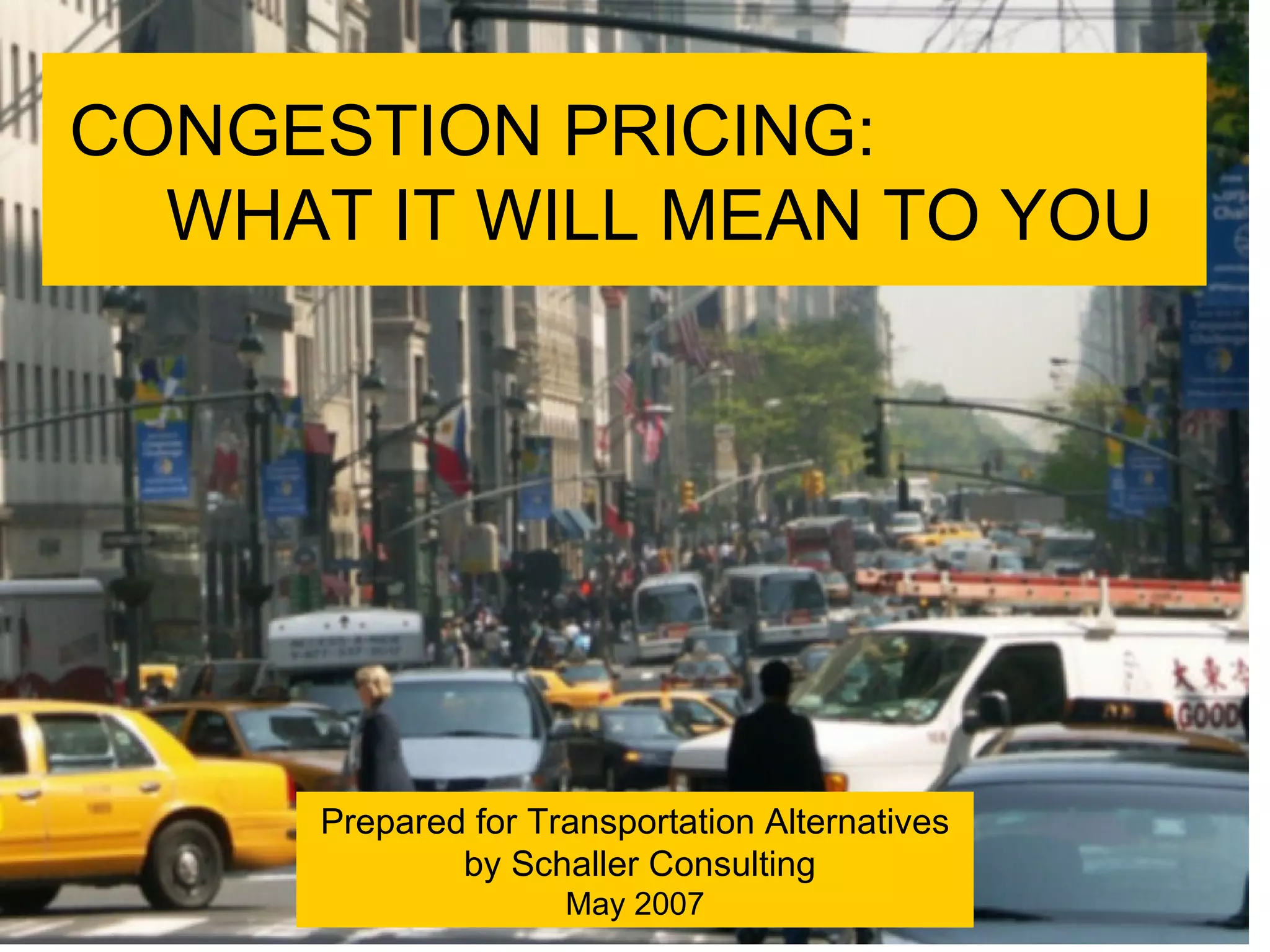
CONGESTION PRICING:  WHAT IT WILL MEAN TO YOU Prepared for Transportation Alternatives  by Schaller Consulting May 2007
PlaNYC 2030: Congestion Pricing is part of a larger plan Goals of PlaNYC: Improve public health: achieve cleanest air of any large U.S. city Reduce carbon emissions by 30% Bring transit system to state of good repair Everyone within 10 minute walk of a park Accommodate 1 million population growth Clean up all contaminated land in NYC
Congestion Pricing Issues 1. How would  congestion pricing work ? 2. What  problems  does congestion pricing try to solve? 3. How  effective  is congestion pricing at taming traffic? 4. Who will  pay  the congestion charge? 5. Is congestion pricing  fair  to the โ€œouterboroughsโ€? 6. How many โ€œouterboroughโ€ drivers would  have to pay ? 7. What is the impact on  working and middle class  New Yorkers? 8. How would the โ€œouterboroughsโ€  benefit ? 9. Will there be  time-shifting  to avoid the fee? 10. What if drivers  park just outside  the charging zone?
1. How would congestion pricing work? In effect 6 a.m. - 6 p.m. weekdays. Manhattan up to 86th Street. Daily congestion charge:  (charged once per day) $8 charge for cars entering congestion zone $4 for cars traveling within zone $21 for trucks  (defined by weight or # of axles) Drivers credited for tolls paid up to $8. Would raise nearly $400 million a year to be used only to improve transit and roads. Taxis, livery cars, emergency vehicles, handicapped cars are exempt.
2. What problems does congestion pricing try to solve? $31 billion in unfunded transportation needs Second worst air quality in United States Taming traffic key to efforts to slow global warming Congestion costs $13 billion annually High shipping costs, unreliability 37,000 jobs yearly, lost productivity Traffic chips away at our quality of life
3. How effective is congestion pricing in taming traffic? London (first 3 years): 16% traffic reduction 30% less traffic delay Stockholm: 20-25% traffic reduction
3. How effective is congestion pricing in taming traffic? Travel within NYC charging zone (projected) 6% reduction in traffic mileage in the zone 7% increase in vehicle speeds 24% reduction in time lost in traffic delay for trips within the zone Travel into charging zone 11% fewer vehicle trips Depending on the crossing, 20% to 40% reduction in time lost in traffic delay for trips entering the congestion zone
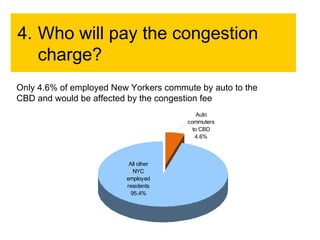
4. Who will pay the congestion charge? Only 4.6% of employed New Yorkers commute by auto to the CBD and would be affected by the congestion fee
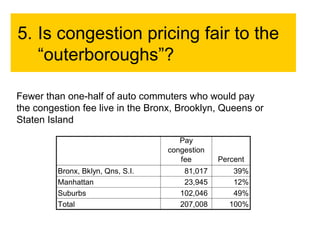
5. Is congestion pricing fair to the โ€œouterboroughsโ€? Fewer than one-half of auto commuters who would pay the congestion fee live in the Bronx, Brooklyn, Queens or Staten Island
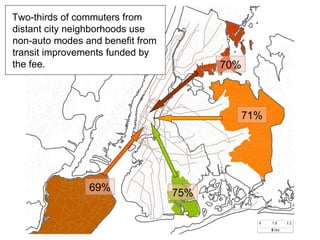
Two-thirds of commuters from distant city neighborhoods use non-auto modes and benefit from transit improvements funded by the fee. 69% 70% 75% 71%
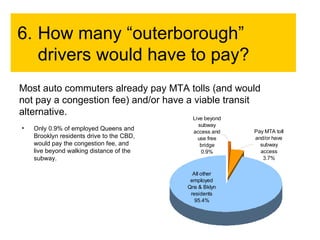
6. How many โ€œouterboroughโ€ drivers would have to pay? Most auto commuters already pay MTA tolls (and would not pay a congestion fee) and/or have a viable transit alternative. Only 0.9% of employed Queens and Brooklyn residents drive to the CBD, would pay the congestion fee, and live beyond walking distance of the subway.
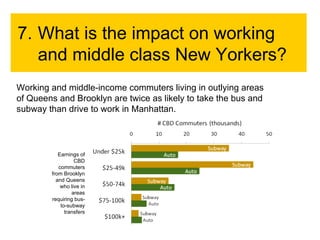
7. What is the impact on working and middle class New Yorkers? Working and middle-income commuters living in outlying areas of Queens and Brooklyn are twice as likely to take the bus and subway than drive to work in Manhattan. Earnings of CBD commuters from Brooklyn and Queens who live in areas requiring bus-to-subway transfers
8. How would the โ€œouterboroughsโ€ benefit? Transit improvements: Station rehabs, bringing the subways to good repair 10 new bus rapid transit routes and exclusive bus lanes Traffic improvements in congested corridors East River bridge bus lanes Ferry service Second Avenue Subway, connecting LIRR-GCT Better intra-city commuter rail service Only 2% increase in ridership is expected, spread over many transit lines
8. How would the โ€œouterboroughsโ€ benefit? Traffic congestion reductions: 72% of traffic reduction in NYC from congestion pricing occurs  outside  the congestion pricing zone
9. Will there be time-shifting to avoid the fee? Most commuters would have to arrive at work shortly after 6 a.m. to avoid the fee in the morning. Commuters would also have to stay past 6 p.m. to avoid the fee going home. London did not experience time-shifting
10. What if drivers park just outside the charging zone? Not anticipated due to high land costs, scarce parking already in these neighborhoods PlaNYC: The City will โ€œ work with local communities  if it seems that they would be impacted by drivers seeking to avoid the congestion pricing charge.โ€ โ€œ Possible solutions include  parking permits  for residential neighborhoods โ€ฆโ€
Conclusion PlaNYC has citywide benefits for reducing congestion, improving public transportation and cleaning the air This is the only workable way to accommodate population and job growth No other way to fund $31 billion in transportation projects that are at the heart of the plan.

congestion pricing

  • 1.
    CONGESTION PRICING: WHAT IT WILL MEAN TO YOU Prepared for Transportation Alternatives by Schaller Consulting May 2007
  • 2.
    PlaNYC 2030: CongestionPricing is part of a larger plan Goals of PlaNYC: Improve public health: achieve cleanest air of any large U.S. city Reduce carbon emissions by 30% Bring transit system to state of good repair Everyone within 10 minute walk of a park Accommodate 1 million population growth Clean up all contaminated land in NYC
  • 3.
    Congestion Pricing Issues1. How would congestion pricing work ? 2. What problems does congestion pricing try to solve? 3. How effective is congestion pricing at taming traffic? 4. Who will pay the congestion charge? 5. Is congestion pricing fair to the โ€œouterboroughsโ€? 6. How many โ€œouterboroughโ€ drivers would have to pay ? 7. What is the impact on working and middle class New Yorkers? 8. How would the โ€œouterboroughsโ€ benefit ? 9. Will there be time-shifting to avoid the fee? 10. What if drivers park just outside the charging zone?
  • 4.
    1. How wouldcongestion pricing work? In effect 6 a.m. - 6 p.m. weekdays. Manhattan up to 86th Street. Daily congestion charge: (charged once per day) $8 charge for cars entering congestion zone $4 for cars traveling within zone $21 for trucks (defined by weight or # of axles) Drivers credited for tolls paid up to $8. Would raise nearly $400 million a year to be used only to improve transit and roads. Taxis, livery cars, emergency vehicles, handicapped cars are exempt.
  • 5.
    2. What problemsdoes congestion pricing try to solve? $31 billion in unfunded transportation needs Second worst air quality in United States Taming traffic key to efforts to slow global warming Congestion costs $13 billion annually High shipping costs, unreliability 37,000 jobs yearly, lost productivity Traffic chips away at our quality of life
  • 6.
    3. How effectiveis congestion pricing in taming traffic? London (first 3 years): 16% traffic reduction 30% less traffic delay Stockholm: 20-25% traffic reduction
  • 7.
    3. How effectiveis congestion pricing in taming traffic? Travel within NYC charging zone (projected) 6% reduction in traffic mileage in the zone 7% increase in vehicle speeds 24% reduction in time lost in traffic delay for trips within the zone Travel into charging zone 11% fewer vehicle trips Depending on the crossing, 20% to 40% reduction in time lost in traffic delay for trips entering the congestion zone
  • 8.
    4. Who willpay the congestion charge? Only 4.6% of employed New Yorkers commute by auto to the CBD and would be affected by the congestion fee
  • 9.
    5. Is congestionpricing fair to the โ€œouterboroughsโ€? Fewer than one-half of auto commuters who would pay the congestion fee live in the Bronx, Brooklyn, Queens or Staten Island
  • 10.
    Two-thirds of commutersfrom distant city neighborhoods use non-auto modes and benefit from transit improvements funded by the fee. 69% 70% 75% 71%
  • 11.
    6. How manyโ€œouterboroughโ€ drivers would have to pay? Most auto commuters already pay MTA tolls (and would not pay a congestion fee) and/or have a viable transit alternative. Only 0.9% of employed Queens and Brooklyn residents drive to the CBD, would pay the congestion fee, and live beyond walking distance of the subway.
  • 12.
    7. What isthe impact on working and middle class New Yorkers? Working and middle-income commuters living in outlying areas of Queens and Brooklyn are twice as likely to take the bus and subway than drive to work in Manhattan. Earnings of CBD commuters from Brooklyn and Queens who live in areas requiring bus-to-subway transfers
  • 13.
    8. How wouldthe โ€œouterboroughsโ€ benefit? Transit improvements: Station rehabs, bringing the subways to good repair 10 new bus rapid transit routes and exclusive bus lanes Traffic improvements in congested corridors East River bridge bus lanes Ferry service Second Avenue Subway, connecting LIRR-GCT Better intra-city commuter rail service Only 2% increase in ridership is expected, spread over many transit lines
  • 14.
    8. How wouldthe โ€œouterboroughsโ€ benefit? Traffic congestion reductions: 72% of traffic reduction in NYC from congestion pricing occurs outside the congestion pricing zone
  • 15.
    9. Will therebe time-shifting to avoid the fee? Most commuters would have to arrive at work shortly after 6 a.m. to avoid the fee in the morning. Commuters would also have to stay past 6 p.m. to avoid the fee going home. London did not experience time-shifting
  • 16.
    10. What ifdrivers park just outside the charging zone? Not anticipated due to high land costs, scarce parking already in these neighborhoods PlaNYC: The City will โ€œ work with local communities if it seems that they would be impacted by drivers seeking to avoid the congestion pricing charge.โ€ โ€œ Possible solutions include parking permits for residential neighborhoods โ€ฆโ€
  • 17.
    Conclusion PlaNYC hascitywide benefits for reducing congestion, improving public transportation and cleaning the air This is the only workable way to accommodate population and job growth No other way to fund $31 billion in transportation projects that are at the heart of the plan.

Editor's Notes

  • #2ย In the citywide discussion of Mayor Bloombergโ€™s sustainability plan for 2030, there is no more heated issue than the Mayorโ€™s proposal for congestion pricing. This document presents key information about the proposal and how it would affect New York City residents, especially those living outside Manhattan. The objective is to help New Yorkers understand the facts and make smart decisions about whether they think the Mayorโ€™s plan is good for themselves and good for the city.