What is community engagement? Why does it matter? How is it changing? Community Solutions for Community Issues West Palm Beach, FL April 11, 2011
The Deliberative Democracy Consortium
What is community engagement? Often used interchangeably – along with “participation,” “democratic governance,” “public involvement,” and other terms Definitions always fuzzy
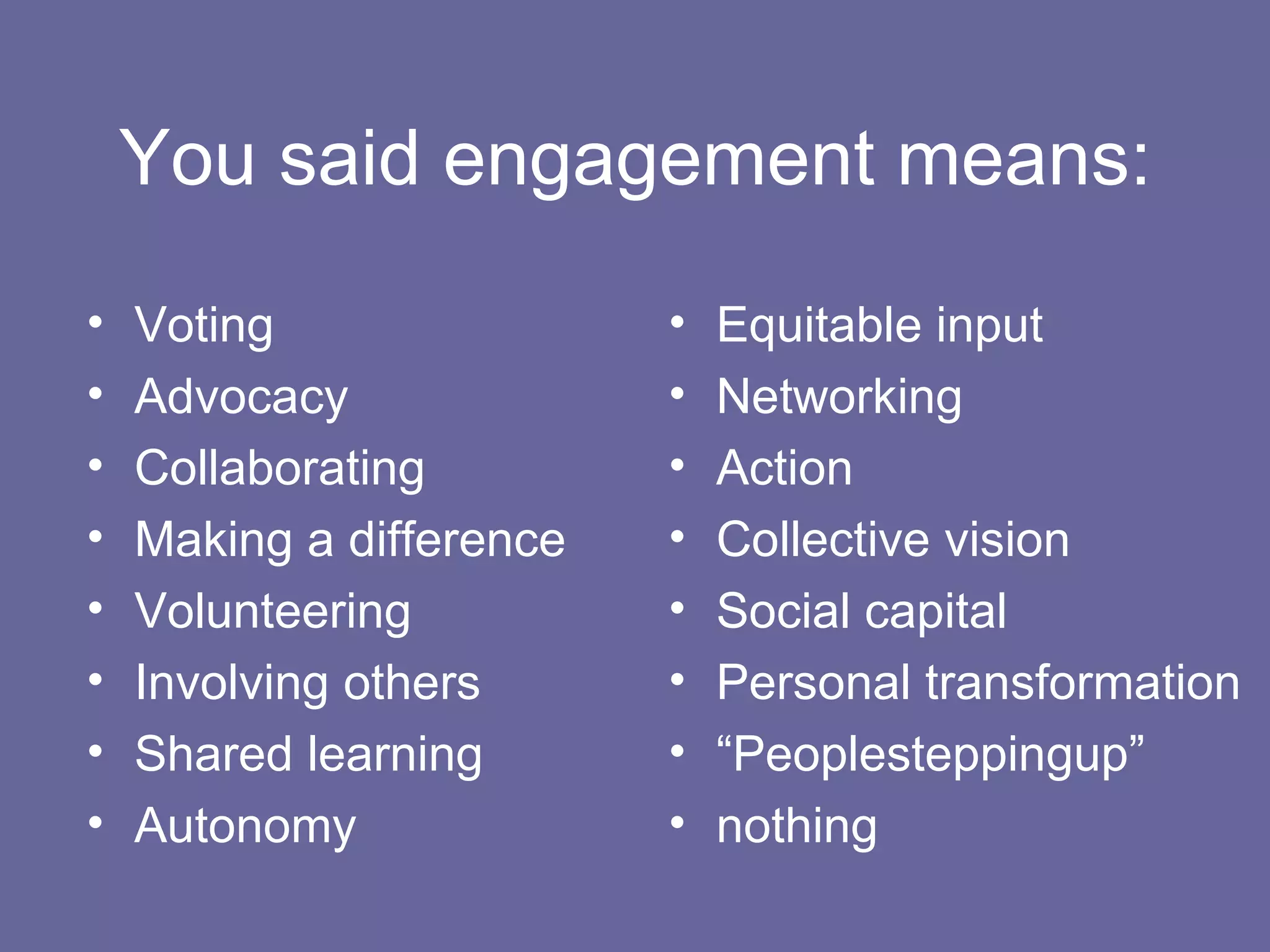
You said engagement means: Voting Advocacy Collaborating Making a difference Volunteering Involving others Shared learning Autonomy Equitable input Networking Action Collective vision Social capital Personal transformation “ Peoplesteppingup” nothing
The context:  How have citizens* changed? More educated More skeptical – different attitudes toward authority Have less time to spare Use the Internet to learn and connect * “citizens” = residents, people
The context:  Families with young children Have the most at stake in community success Parents have even more motivation to engage, but even less time, than average resident Want opportunities to engage in  community , not just politics
Given these changes, why is it important to engage people? And why might they want to be engaged?
Other research findings about engagement Having a relationship with a person of a different group = greater empathy and understanding People get involved because they want to affect an issue, stay involved because (and only when) they enjoy the experience (both process and outcome) Stronger feelings of belonging to community = increased likelihood that person will stay in that place Stronger feelings of loyalty to community = greater community economic health
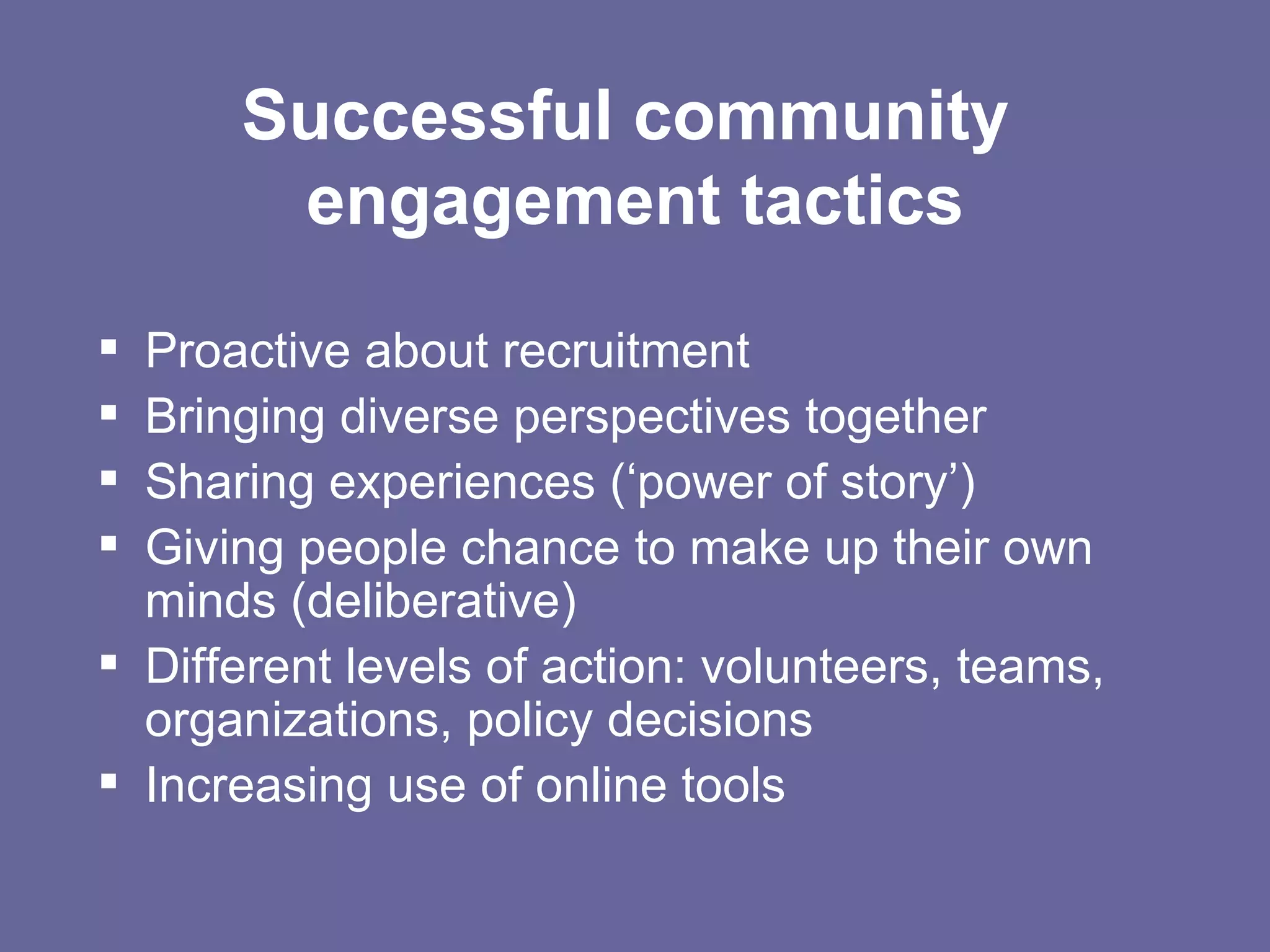
Successful community  engagement tactics Proactive about recruitment Bringing diverse perspectives together Sharing experiences (‘power of story’) Giving people chance to make up their own minds (deliberative) Different levels of action: volunteers, teams, organizations, policy decisions Increasing use of online tools
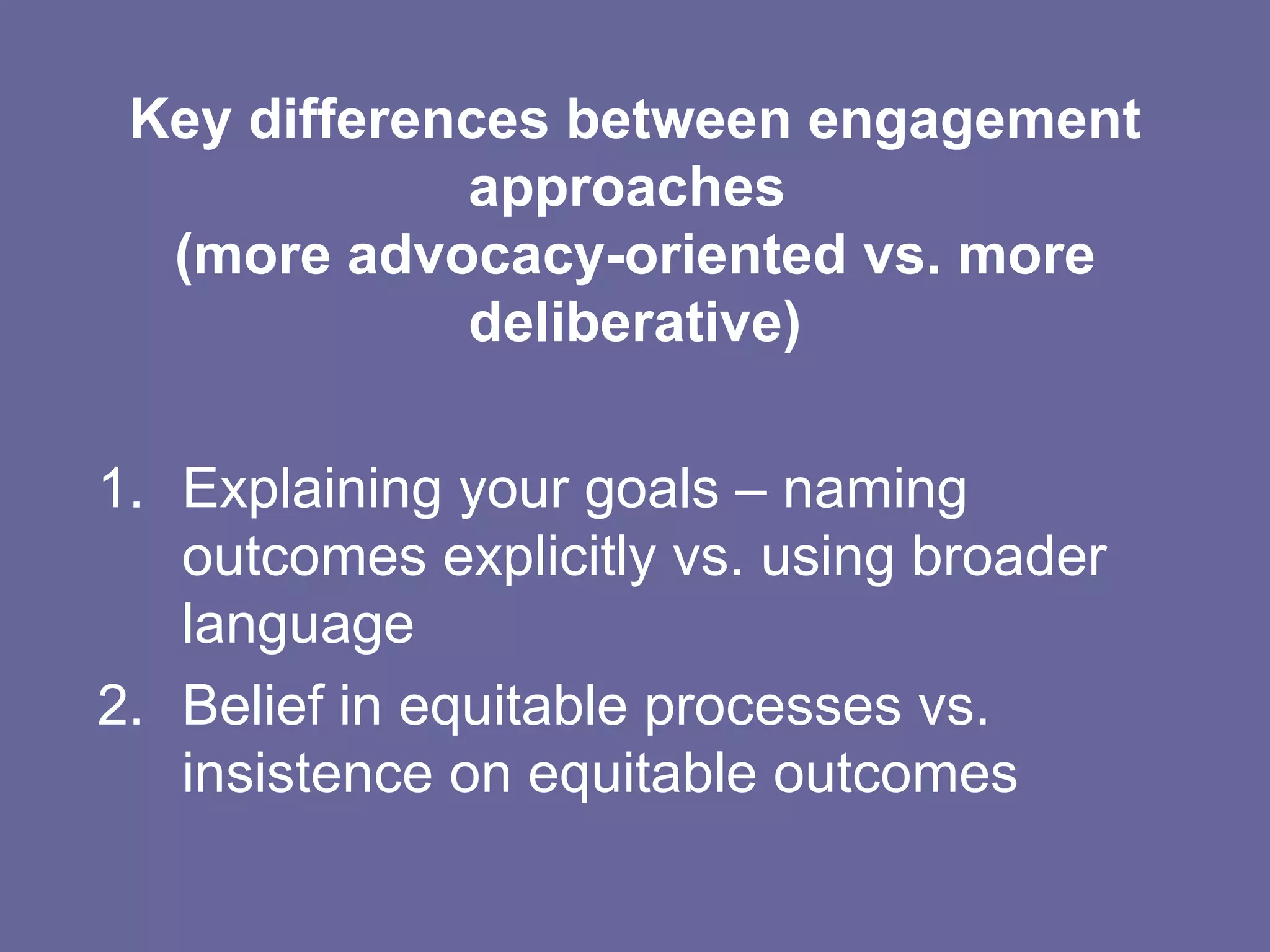
Key differences between engagement approaches  (more advocacy-oriented vs. more deliberative) Explaining your goals – naming outcomes explicitly vs. using broader language  Belief in equitable processes vs. insistence on equitable outcomes
Shared interest among different engagement approaches: going beyond merely ‘engaging’ people
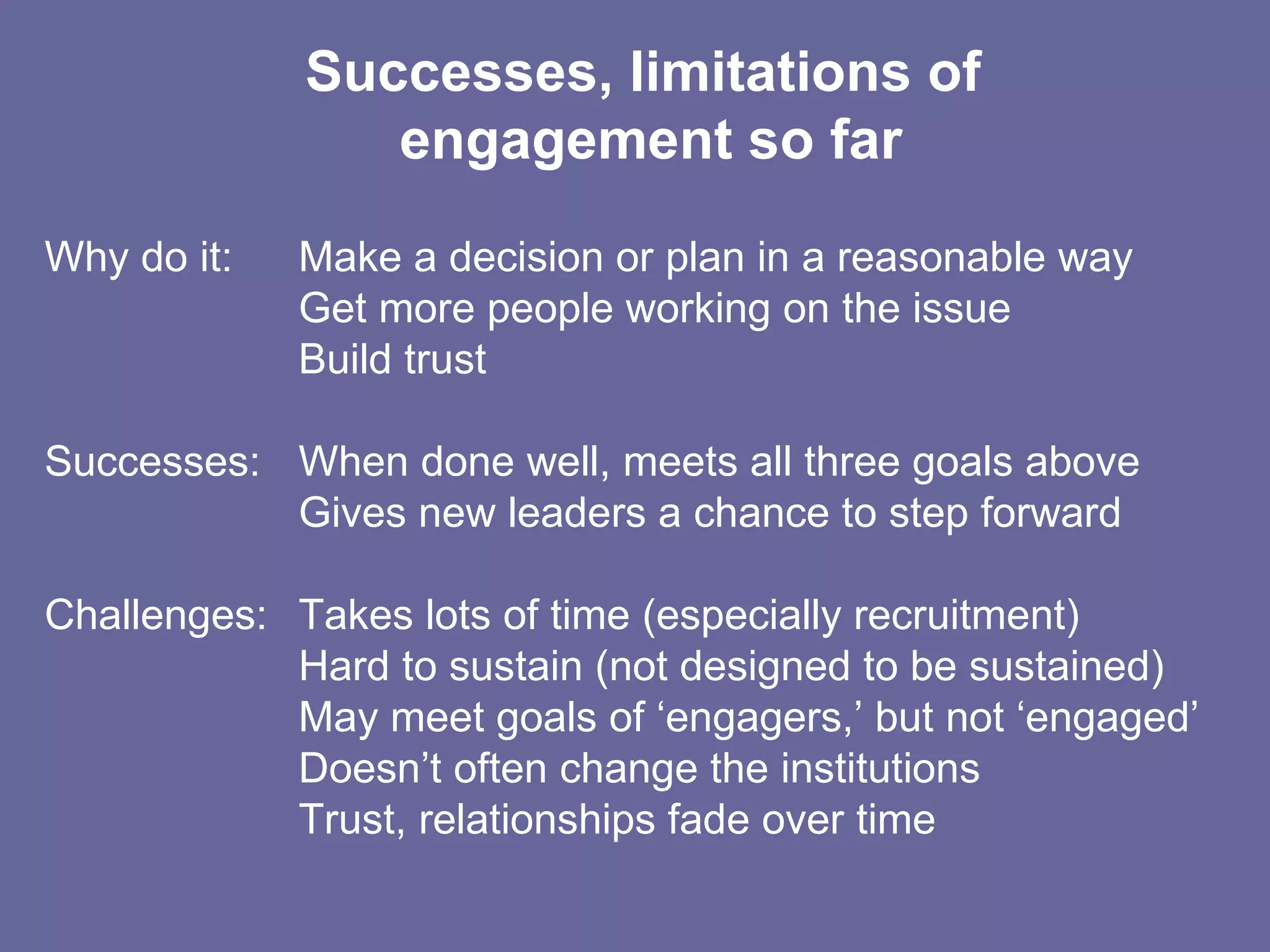
Successes, limitations of  engagement so far Why do it:  Make a decision or plan in a reasonable way Get more people working on the issue Build trust Successes: When done well, meets all three goals above Gives new leaders a chance to step forward Challenges: Takes lots of time (especially recruitment) Hard to sustain (not designed to be sustained) May meet goals of ‘engagers,’ but not ‘engaged’ Doesn’t often change the institutions Trust, relationships fade over time
Need more sustained, holistic forms of engagement:  regular, structured, enjoyable opportunities  that enable people to: Connect with other people (particularly people who are different from themselves) Feel like they belong to a community that values their voices and contributions Bring their concerns and priorities to the table (they help shape the agenda) Participate in governance (they have a say/hand in decision-making and problem-solving)
Does this reflect what you’re seeing in your community? What are you up against, and what do you have going for you?

What is community engagement?

  • 1.
    What is communityengagement? Why does it matter? How is it changing? Community Solutions for Community Issues West Palm Beach, FL April 11, 2011
  • 2.
  • 3.
    What is communityengagement? Often used interchangeably – along with “participation,” “democratic governance,” “public involvement,” and other terms Definitions always fuzzy
  • 4.
    You said engagementmeans: Voting Advocacy Collaborating Making a difference Volunteering Involving others Shared learning Autonomy Equitable input Networking Action Collective vision Social capital Personal transformation “ Peoplesteppingup” nothing
  • 5.
    The context: How have citizens* changed? More educated More skeptical – different attitudes toward authority Have less time to spare Use the Internet to learn and connect * “citizens” = residents, people
  • 6.
    The context: Families with young children Have the most at stake in community success Parents have even more motivation to engage, but even less time, than average resident Want opportunities to engage in community , not just politics
  • 7.
    Given these changes,why is it important to engage people? And why might they want to be engaged?
  • 8.
    Other research findingsabout engagement Having a relationship with a person of a different group = greater empathy and understanding People get involved because they want to affect an issue, stay involved because (and only when) they enjoy the experience (both process and outcome) Stronger feelings of belonging to community = increased likelihood that person will stay in that place Stronger feelings of loyalty to community = greater community economic health
  • 9.
    Successful community engagement tactics Proactive about recruitment Bringing diverse perspectives together Sharing experiences (‘power of story’) Giving people chance to make up their own minds (deliberative) Different levels of action: volunteers, teams, organizations, policy decisions Increasing use of online tools
  • 10.
    Key differences betweenengagement approaches (more advocacy-oriented vs. more deliberative) Explaining your goals – naming outcomes explicitly vs. using broader language Belief in equitable processes vs. insistence on equitable outcomes
  • 11.
    Shared interest amongdifferent engagement approaches: going beyond merely ‘engaging’ people
  • 12.
    Successes, limitations of engagement so far Why do it: Make a decision or plan in a reasonable way Get more people working on the issue Build trust Successes: When done well, meets all three goals above Gives new leaders a chance to step forward Challenges: Takes lots of time (especially recruitment) Hard to sustain (not designed to be sustained) May meet goals of ‘engagers,’ but not ‘engaged’ Doesn’t often change the institutions Trust, relationships fade over time
  • 13.
    Need more sustained,holistic forms of engagement: regular, structured, enjoyable opportunities that enable people to: Connect with other people (particularly people who are different from themselves) Feel like they belong to a community that values their voices and contributions Bring their concerns and priorities to the table (they help shape the agenda) Participate in governance (they have a say/hand in decision-making and problem-solving)
  • 14.
    Does this reflectwhat you’re seeing in your community? What are you up against, and what do you have going for you?

Editor's Notes

  • #3 The DDC network includes practitioner organizations, operating foundations, and academic researchers Lakewood story? ED joke?
  • #4 Participation, democratic governance, and about ten other civic synonyms People in different fields have different favorites
  • #5 Participation, democratic governance, and about ten other civic synonyms People in different fields have different favorites
  • #6 This is the challenge – and opportunity – we all face, no matter what kinds of organizations we lead or belong to