
Conflict management
Laszlo Balazs Ph.D.
Benefits
 The opportunity of development
 The possibility of deepening the
relationship
 Protecting our own interests
 Life is beautiful if it’s a bit hectic
Agendas
 Conflict – definition and layers
 Conflict-types
 Conflict management technics
Definition
It is an interaction characterized by
irreconcilable disagreements among
participants. For participants, this kind of
interaction causes distress , and in most
cases it has serious emotional implications.
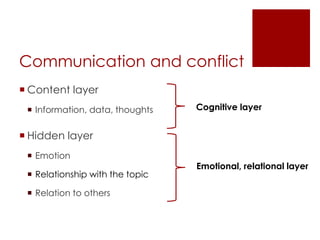
Communication and conflict
 Content layer
 Information, data, thoughts
 Hidden layer
 Emotion
 Relationship with the topic
 Relation to others
Cognitive layer
Emotional, relational layer
Conflict’s layers
 Cognitive:
 Facts, data and figures
 Emotional
 Emotion, needs, expectations, desires
1. Exercise
 Find examples for conflict situations
where
A. after the recognition of conflict (toughening),
you talked about it with the other person;
B. you had no opportunity to initiate a
discussion with the other person, and clarify
the situation
C. you had a conflict with yourself.
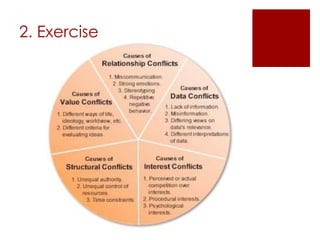
The types of
conflict
Based on Moore (1992)
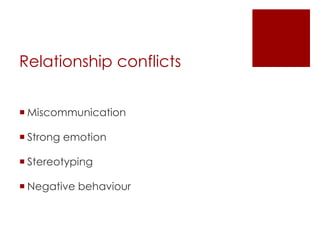
Relationship conflicts
 Miscommunication
 Strong emotion
 Stereotyping
 Negative behaviour
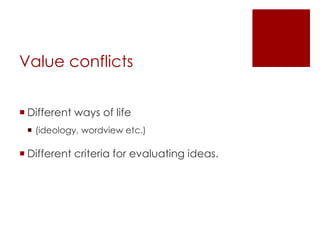
Value conflicts
 Different ways of life
 (ideology, wordview etc.)
 Different criteria for evaluating ideas.
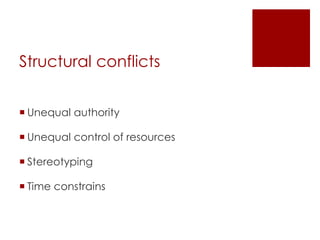
Structural conflicts
 Unequal authority
 Unequal control of resources
 Stereotyping
 Time constrains
Data conflicts
 Lack of information
 Misinformation
 Differing views of data relevant
 Different interpretations of data
Interest conflicts
 Perceived of actual competition over
interest
 Procedural interests
 Psychological interests
2. Exercise
Conflict
management
strategies and
methods
1. tool: “Show me!”
 How we perceived the situation
(perception) “I look/watch …”
 What emotions it provoked
(emotion) “I feel …”
 What impact it had on us
(interpretation) “ I see …”
2. tool: “Active listening!”
The signs of active listening
 eye contact
 nodding
 turning toward the speaker, relaxed body posture
 attentive paralinguistic sounds
 questions
 the re-production, clarification of content
 the expression of emotions
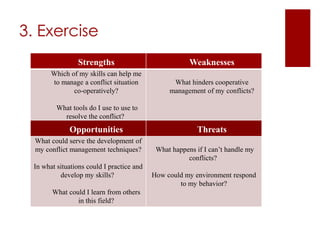
3. Exercise
Strengths Weaknesses
Which of my skills can help me
to manage a conflict situation
co-operatively?
What tools do I use to use to
resolve the conflict?
What hinders cooperative
management of my conflicts?
Opportunities Threats
What could serve the development of
my conflict management techniques?
In what situations could I practice and
develop my skills?
What could I learn from others
in this field?
What happens if I can’t handle my
conflicts?
How could my environment respond
to my behavior?
Thomas–Kilmann
modell
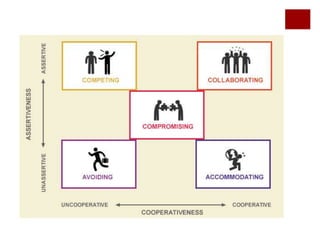
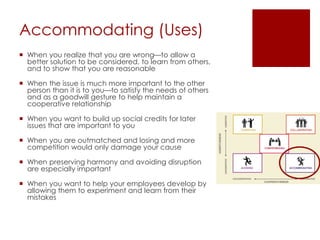
Accommodating (Uses)
 When you realize that you are wrong—to allow a
better solution to be considered, to learn from others,
and to show that you are reasonable
 When the issue is much more important to the other
person than it is to you—to satisfy the needs of others
and as a goodwill gesture to help maintain a
cooperative relationship
 When you want to build up social credits for later
issues that are important to you
 When you are outmatched and losing and more
competition would only damage your cause
 When preserving harmony and avoiding disruption
are especially important
 When you want to help your employees develop by
allowing them to experiment and learn from their
mistakes
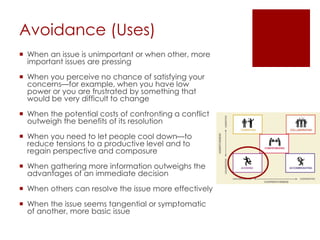
Avoidance (Uses)
 When an issue is unimportant or when other, more
important issues are pressing
 When you perceive no chance of satisfying your
concerns—for example, when you have low
power or you are frustrated by something that
would be very difficult to change
 When the potential costs of confronting a conflict
outweigh the benefits of its resolution
 When you need to let people cool down—to
reduce tensions to a productive level and to
regain perspective and composure
 When gathering more information outweighs the
advantages of an immediate decision
 When others can resolve the issue more effectively
 When the issue seems tangential or symptomatic
of another, more basic issue
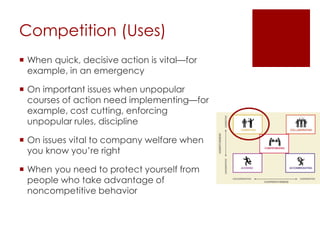
Competition (Uses)
 When quick, decisive action is vital—for
example, in an emergency
 On important issues when unpopular
courses of action need implementing—for
example, cost cutting, enforcing
unpopular rules, discipline
 On issues vital to company welfare when
you know you’re right
 When you need to protect yourself from
people who take advantage of
noncompetitive behavior
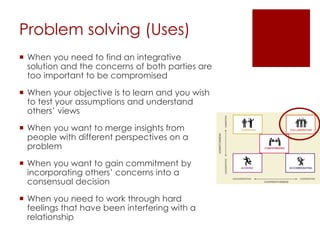
Problem solving (Uses)
 When you need to find an integrative
solution and the concerns of both parties are
too important to be compromised
 When your objective is to learn and you wish
to test your assumptions and understand
others’ views
 When you want to merge insights from
people with different perspectives on a
problem
 When you want to gain commitment by
incorporating others’ concerns into a
consensual decision
 When you need to work through hard
feelings that have been interfering with a
relationship
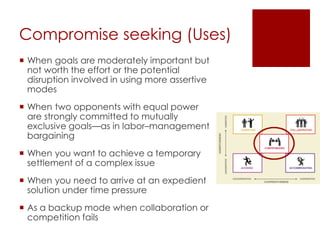
Compromise seeking (Uses)
 When goals are moderately important but
not worth the effort or the potential
disruption involved in using more assertive
modes
 When two opponents with equal power
are strongly committed to mutually
exclusive goals—as in labor–management
bargaining
 When you want to achieve a temporary
settlement of a complex issue
 When you need to arrive at an expedient
solution under time pressure
 As a backup mode when collaboration or
competition fails
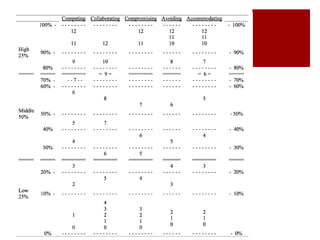
What influence my conflict
management methods?
Thank you for your
attention!

Conflict management

  • 1.
  • 3.
    Benefits  The opportunityof development  The possibility of deepening the relationship  Protecting our own interests  Life is beautiful if it’s a bit hectic
  • 4.
    Agendas  Conflict –definition and layers  Conflict-types  Conflict management technics
  • 5.
    Definition It is aninteraction characterized by irreconcilable disagreements among participants. For participants, this kind of interaction causes distress , and in most cases it has serious emotional implications.
  • 6.
    Communication and conflict Content layer  Information, data, thoughts  Hidden layer  Emotion  Relationship with the topic  Relation to others Cognitive layer Emotional, relational layer
  • 7.
    Conflict’s layers  Cognitive: Facts, data and figures  Emotional  Emotion, needs, expectations, desires
  • 8.
    1. Exercise  Findexamples for conflict situations where A. after the recognition of conflict (toughening), you talked about it with the other person; B. you had no opportunity to initiate a discussion with the other person, and clarify the situation C. you had a conflict with yourself.
  • 9.
  • 10.
    Relationship conflicts  Miscommunication Strong emotion  Stereotyping  Negative behaviour
  • 11.
    Value conflicts  Differentways of life  (ideology, wordview etc.)  Different criteria for evaluating ideas.
  • 12.
    Structural conflicts  Unequalauthority  Unequal control of resources  Stereotyping  Time constrains
  • 13.
    Data conflicts  Lackof information  Misinformation  Differing views of data relevant  Different interpretations of data
  • 14.
    Interest conflicts  Perceivedof actual competition over interest  Procedural interests  Psychological interests
  • 15.
  • 16.
  • 17.
    1. tool: “Showme!”  How we perceived the situation (perception) “I look/watch …”  What emotions it provoked (emotion) “I feel …”  What impact it had on us (interpretation) “ I see …”
  • 18.
    2. tool: “Activelistening!” The signs of active listening  eye contact  nodding  turning toward the speaker, relaxed body posture  attentive paralinguistic sounds  questions  the re-production, clarification of content  the expression of emotions
  • 19.
    3. Exercise Strengths Weaknesses Whichof my skills can help me to manage a conflict situation co-operatively? What tools do I use to use to resolve the conflict? What hinders cooperative management of my conflicts? Opportunities Threats What could serve the development of my conflict management techniques? In what situations could I practice and develop my skills? What could I learn from others in this field? What happens if I can’t handle my conflicts? How could my environment respond to my behavior?
  • 20.
  • 22.
    Accommodating (Uses)  Whenyou realize that you are wrong—to allow a better solution to be considered, to learn from others, and to show that you are reasonable  When the issue is much more important to the other person than it is to you—to satisfy the needs of others and as a goodwill gesture to help maintain a cooperative relationship  When you want to build up social credits for later issues that are important to you  When you are outmatched and losing and more competition would only damage your cause  When preserving harmony and avoiding disruption are especially important  When you want to help your employees develop by allowing them to experiment and learn from their mistakes
  • 23.
    Avoidance (Uses)  Whenan issue is unimportant or when other, more important issues are pressing  When you perceive no chance of satisfying your concerns—for example, when you have low power or you are frustrated by something that would be very difficult to change  When the potential costs of confronting a conflict outweigh the benefits of its resolution  When you need to let people cool down—to reduce tensions to a productive level and to regain perspective and composure  When gathering more information outweighs the advantages of an immediate decision  When others can resolve the issue more effectively  When the issue seems tangential or symptomatic of another, more basic issue
  • 24.
    Competition (Uses)  Whenquick, decisive action is vital—for example, in an emergency  On important issues when unpopular courses of action need implementing—for example, cost cutting, enforcing unpopular rules, discipline  On issues vital to company welfare when you know you’re right  When you need to protect yourself from people who take advantage of noncompetitive behavior
  • 25.
    Problem solving (Uses) When you need to find an integrative solution and the concerns of both parties are too important to be compromised  When your objective is to learn and you wish to test your assumptions and understand others’ views  When you want to merge insights from people with different perspectives on a problem  When you want to gain commitment by incorporating others’ concerns into a consensual decision  When you need to work through hard feelings that have been interfering with a relationship
  • 26.
    Compromise seeking (Uses) When goals are moderately important but not worth the effort or the potential disruption involved in using more assertive modes  When two opponents with equal power are strongly committed to mutually exclusive goals—as in labor–management bargaining  When you want to achieve a temporary settlement of a complex issue  When you need to arrive at an expedient solution under time pressure  As a backup mode when collaboration or competition fails
  • 27.
    What influence myconflict management methods?
  • 29.
    Thank you foryour attention!