Patient Confidentiality
MHA690 Health Care Capstone
Cynthia Armstrong
Dr. Rock
Oct 1, 2015
– Training consists of Federal regulations:
– Health Insurance Portability and Accountability
Act of 1996 (HIPPA)
– The Health Information Technology for Economic
and Clinical Health Act (The HITECH Act)
– Several state laws
– Legal and ethical responsibilities
– Intense ethics training
– Protect patients’ health information
– Information used/disclosed for treatment,
payment or healthcare
– Employees must sign compliance statement
– Special Circumstances
– High-profile individuals
– Anonymity
– Special precautions
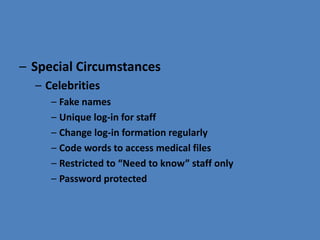
– Special Circumstances
– Celebrities
– Fake names
– Unique log-in for staff
– Change log-in formation regularly
– Code words to access medical files
– Restricted to “Need to know” staff only
– Password protected
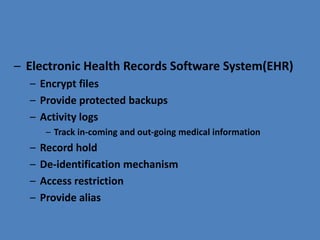
– Electronic Health Records Software System(EHR)
– Encrypt files
– Provide protected backups
– Activity logs
– Track in-coming and out-going medical information
– Record hold
– De-identification mechanism
– Access restriction
– Provide alias
– Disciplinary actions
– Stiff penalties
– Fines
– Possible imprisonment
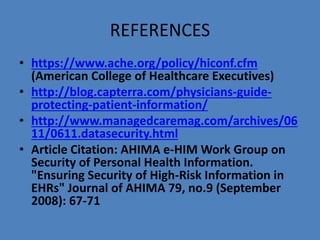
REFERENCES
• https://www.ache.org/policy/hiconf.cfm
(American College of Healthcare Executives)
• http://blog.capterra.com/physicians-guide-
protecting-patient-information/
• http://www.managedcaremag.com/archives/06
11/0611.datasecurity.html
• Article Citation: AHIMA e-HIM Work Group on
Security of Personal Health Information.
"Ensuring Security of High-Risk Information in
EHRs" Journal of AHIMA 79, no.9 (September
2008): 67-71

Confidentiality ppt

  • 2.
    Patient Confidentiality MHA690 HealthCare Capstone Cynthia Armstrong Dr. Rock Oct 1, 2015
  • 3.
    – Training consistsof Federal regulations: – Health Insurance Portability and Accountability Act of 1996 (HIPPA) – The Health Information Technology for Economic and Clinical Health Act (The HITECH Act) – Several state laws
  • 4.
    – Legal andethical responsibilities – Intense ethics training – Protect patients’ health information – Information used/disclosed for treatment, payment or healthcare – Employees must sign compliance statement
  • 5.
    – Special Circumstances –High-profile individuals – Anonymity – Special precautions
  • 6.
    – Special Circumstances –Celebrities – Fake names – Unique log-in for staff – Change log-in formation regularly – Code words to access medical files – Restricted to “Need to know” staff only – Password protected
  • 7.
    – Electronic HealthRecords Software System(EHR) – Encrypt files – Provide protected backups – Activity logs – Track in-coming and out-going medical information – Record hold – De-identification mechanism – Access restriction – Provide alias
  • 8.
    – Disciplinary actions –Stiff penalties – Fines – Possible imprisonment
  • 9.
    REFERENCES • https://www.ache.org/policy/hiconf.cfm (American Collegeof Healthcare Executives) • http://blog.capterra.com/physicians-guide- protecting-patient-information/ • http://www.managedcaremag.com/archives/06 11/0611.datasecurity.html • Article Citation: AHIMA e-HIM Work Group on Security of Personal Health Information. "Ensuring Security of High-Risk Information in EHRs" Journal of AHIMA 79, no.9 (September 2008): 67-71