Protecting Patients ConfidentialityThe Health Insurance Portability and Accountability Act of 1996 (HIPAA)
What is HIPAA?A government mandated rule to protect access to and use of patient personal health informationGives patient certain individual rights
What Type of Information Do HIPAA Cover? Identifiable Protected Health Information (PHI)Information that Identifies a Patient or Individual
Privacy InformationWhat are Identifiable Information?
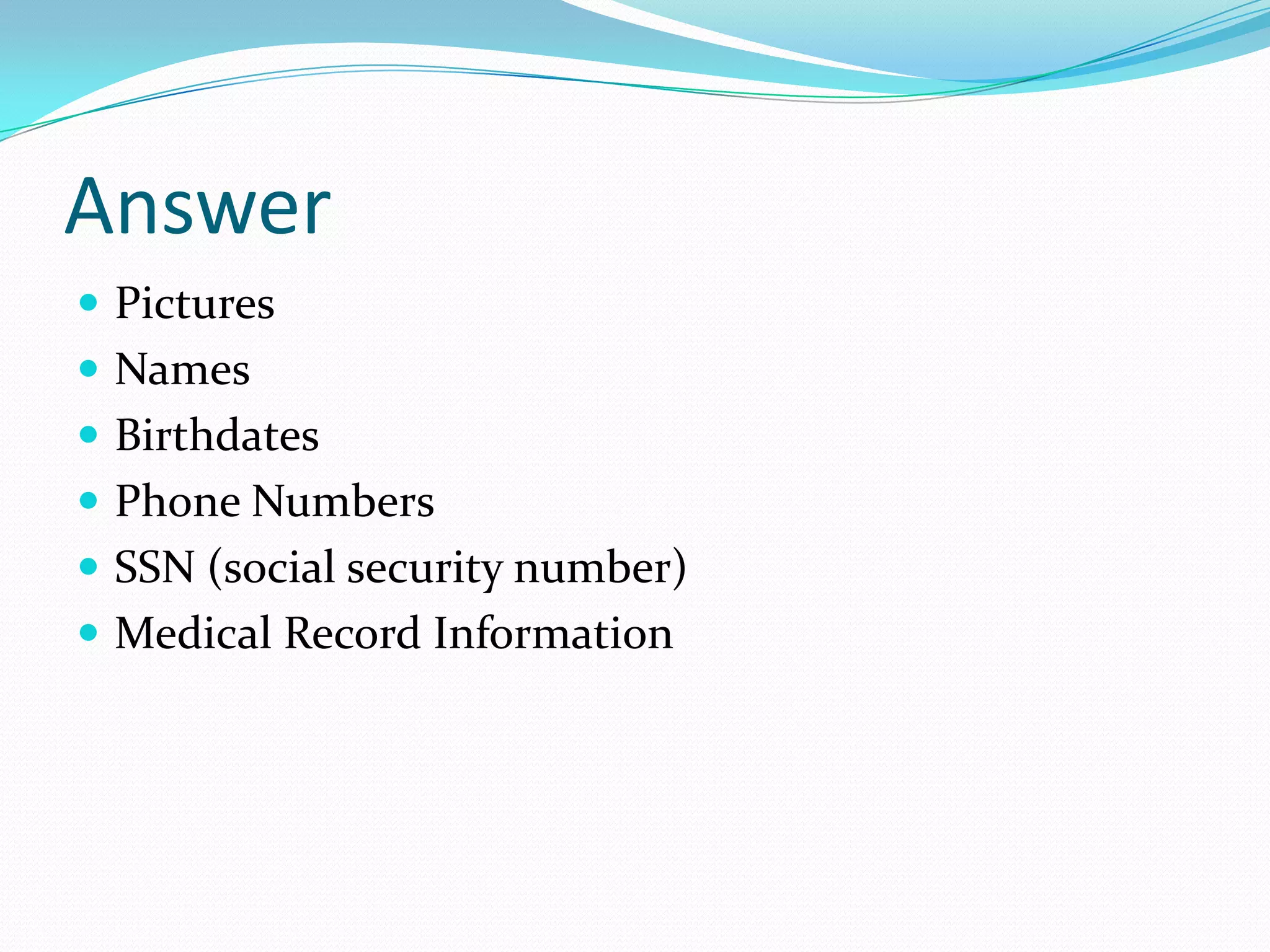
AnswerPicturesNamesBirthdatesPhone NumbersSSN (social security number)Medical Record Information
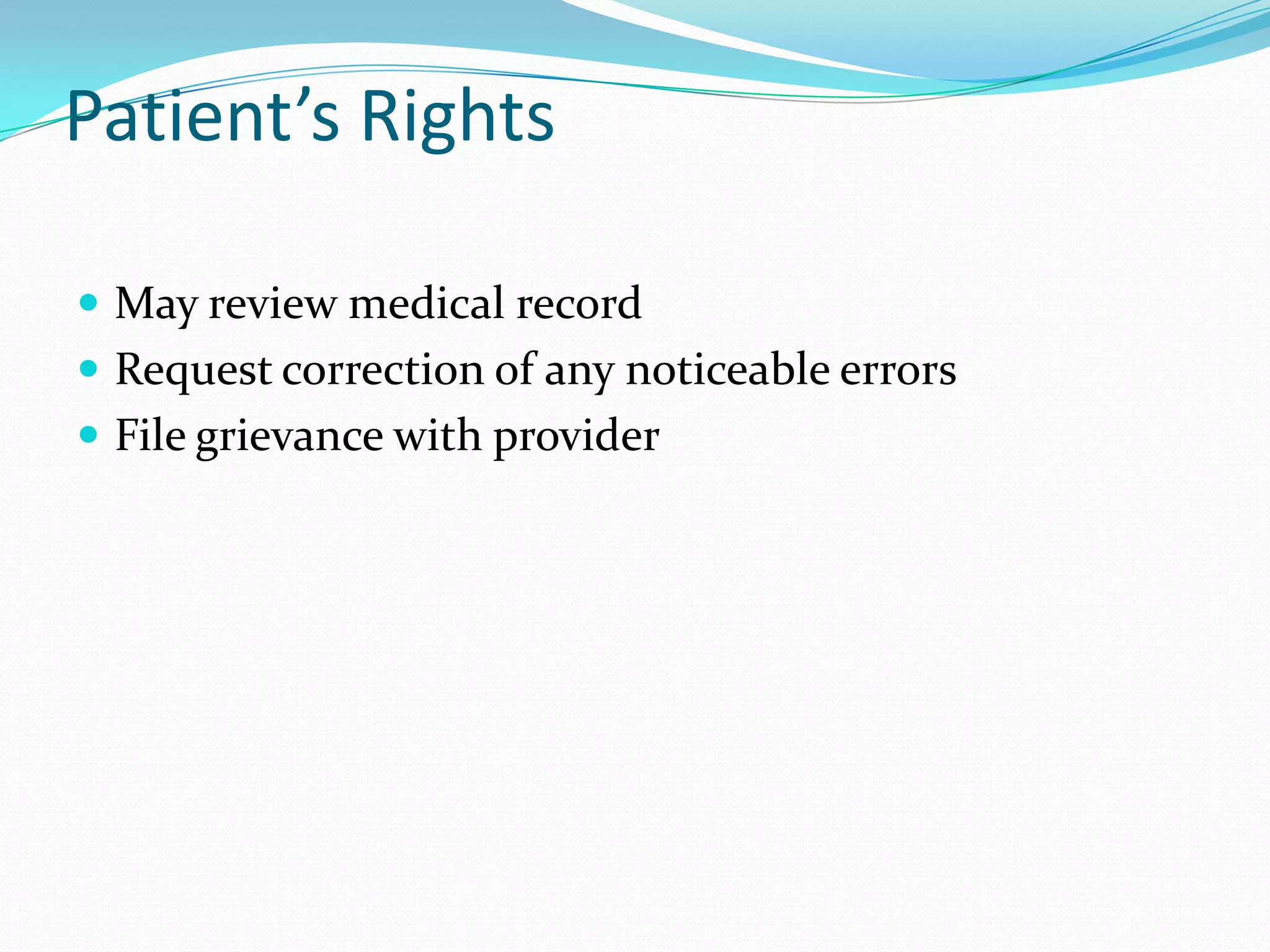
Patient’s RightsMay review medical recordRequest correction of any noticeable errorsFile grievance with provider
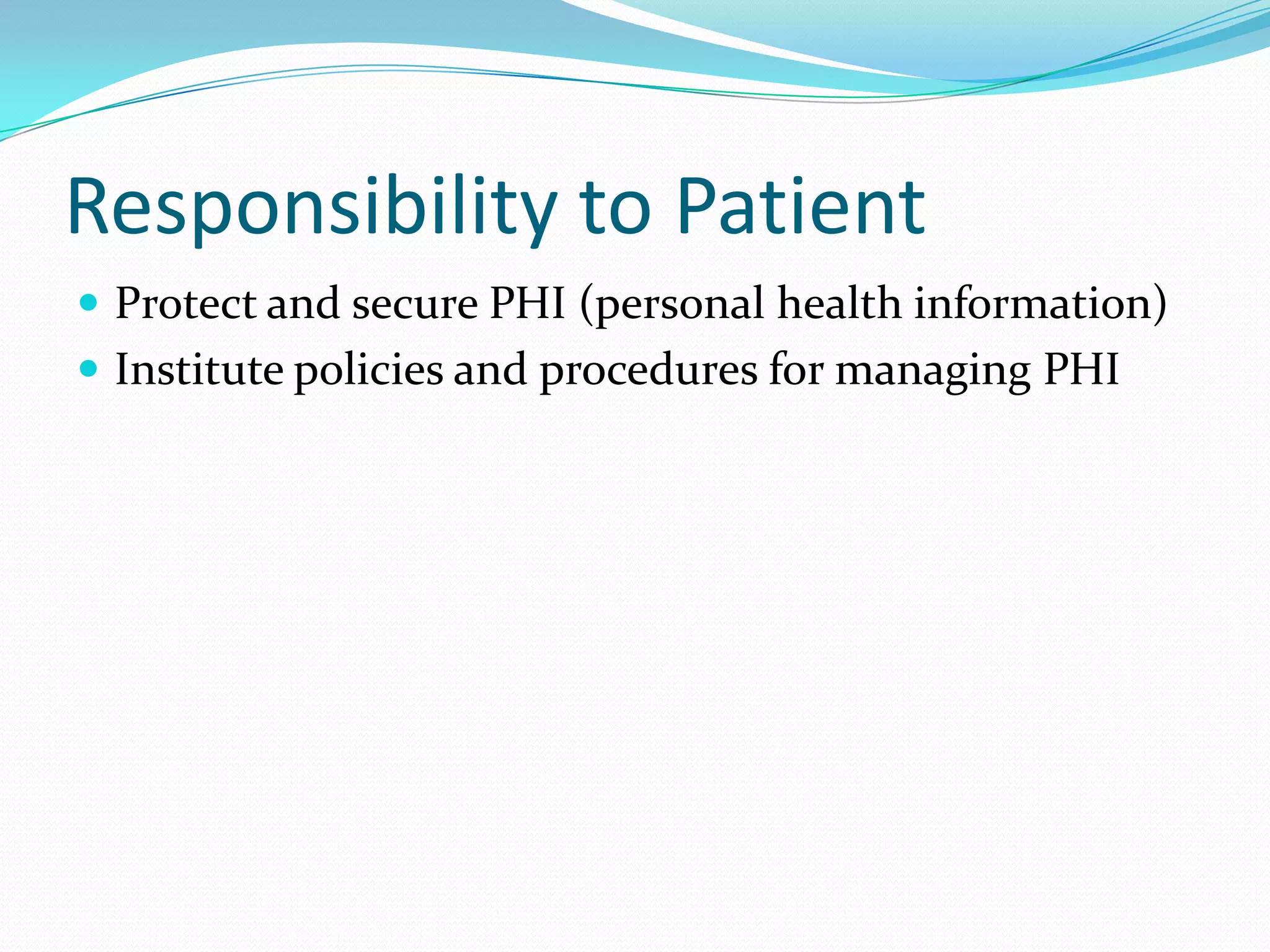
Responsibility to PatientProtect and secure PHI (personal health information)Institute policies and procedures for managing PHI
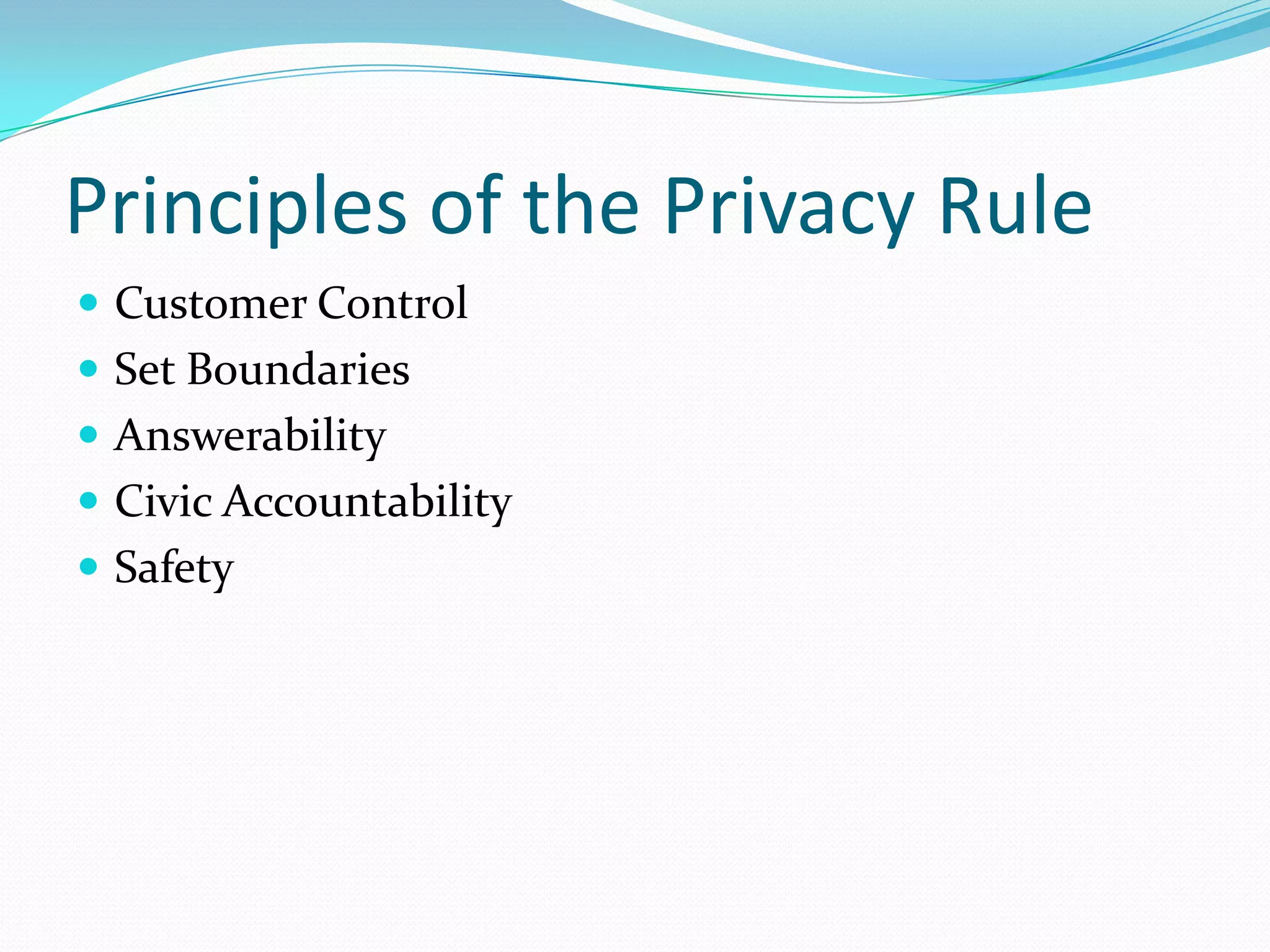
Principles of the Privacy RuleCustomer ControlSet BoundariesAnswerabilityCivic AccountabilitySafety
Protected Health Information PoliciesGuide access to and use of personal health information
Assess to Personal Health InformationIs based on who needs to know and minimum necessary informationBy health care providersBy payment activity
Use of Protected Health InformationWhen Providing Patient Health Care Treatment or Services Such as:Verification of insuranceMedical treatments
How to Protect PrivacyDo not share PHI with non clinical staffUtilize the minimum necessary standard with protected health informationAvoid public discussion of patient informationAvoid public viewing and access of patient information
When is it allowed to reveal PHI?In court processes (subpoena)Law enforcement processes (criminal investigation)
When is Patient Authorization Required?Receiving Medical TreatmentConducting Medical-Related Tests (AIDS, Drug)
What to Do When Requests are Made for an Individual’s Personal InformationVerify who is requesting the informationVerify photo (if available)Document the information being given
What Technological System Make It Easy to Access, Copy, and Distribute PHIComputerized Medical Records
Organizations that Enforce HIPAA’S RegulationsFBI (federal bureau of investigation)Office for Civil RightsJoint Commission on Accreditation of Healthcare Organization
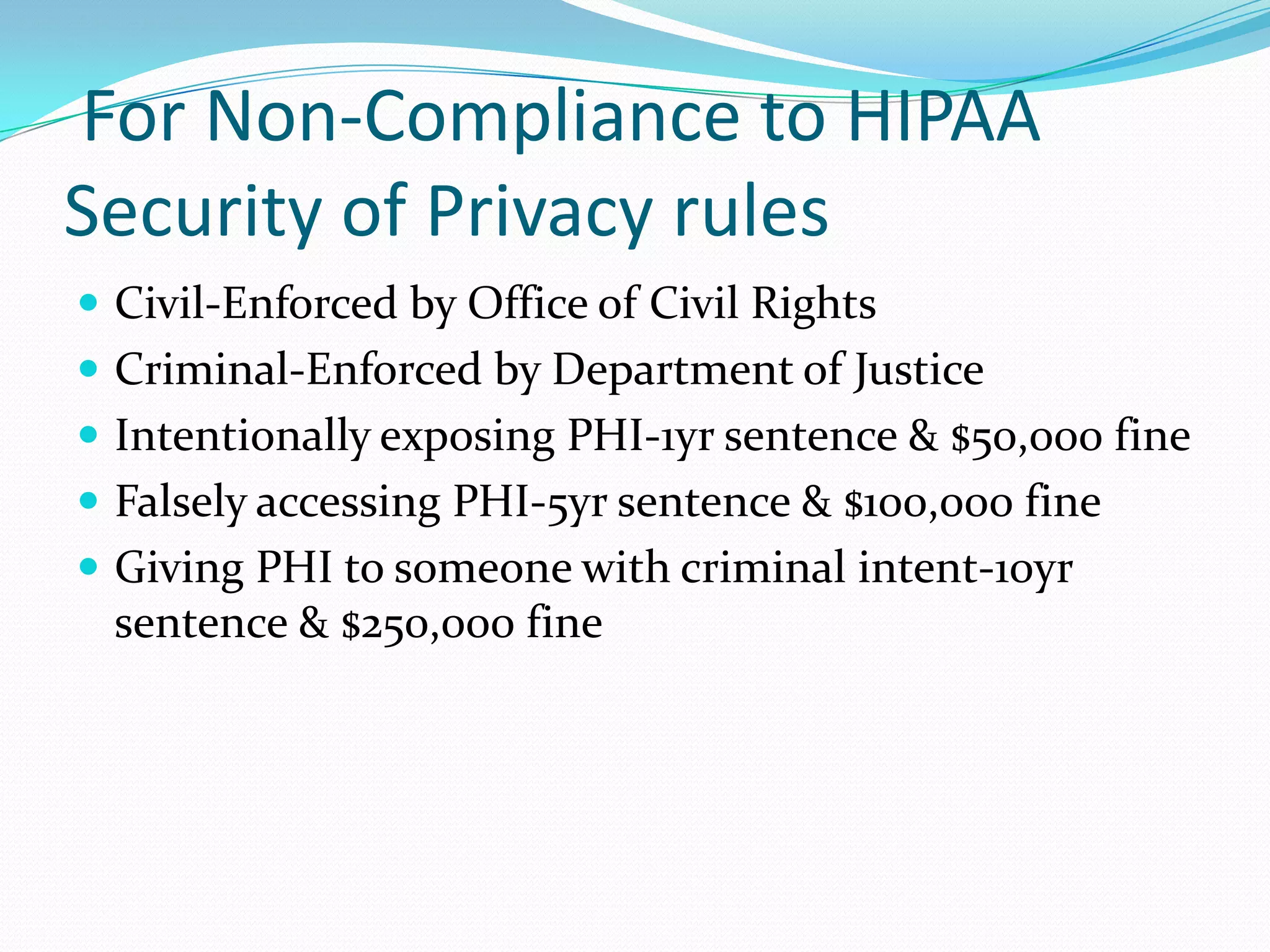
 For Non-Compliance to HIPAA Security of Privacy rulesCivil-Enforced by Office of Civil RightsCriminal-Enforced by Department of JusticeIntentionally exposing PHI-1yr sentence & $50,000 fineFalsely accessing PHI-5yr sentence & $100,000 fineGiving PHI to someone with criminal intent-10yr sentence & $250,000 fine
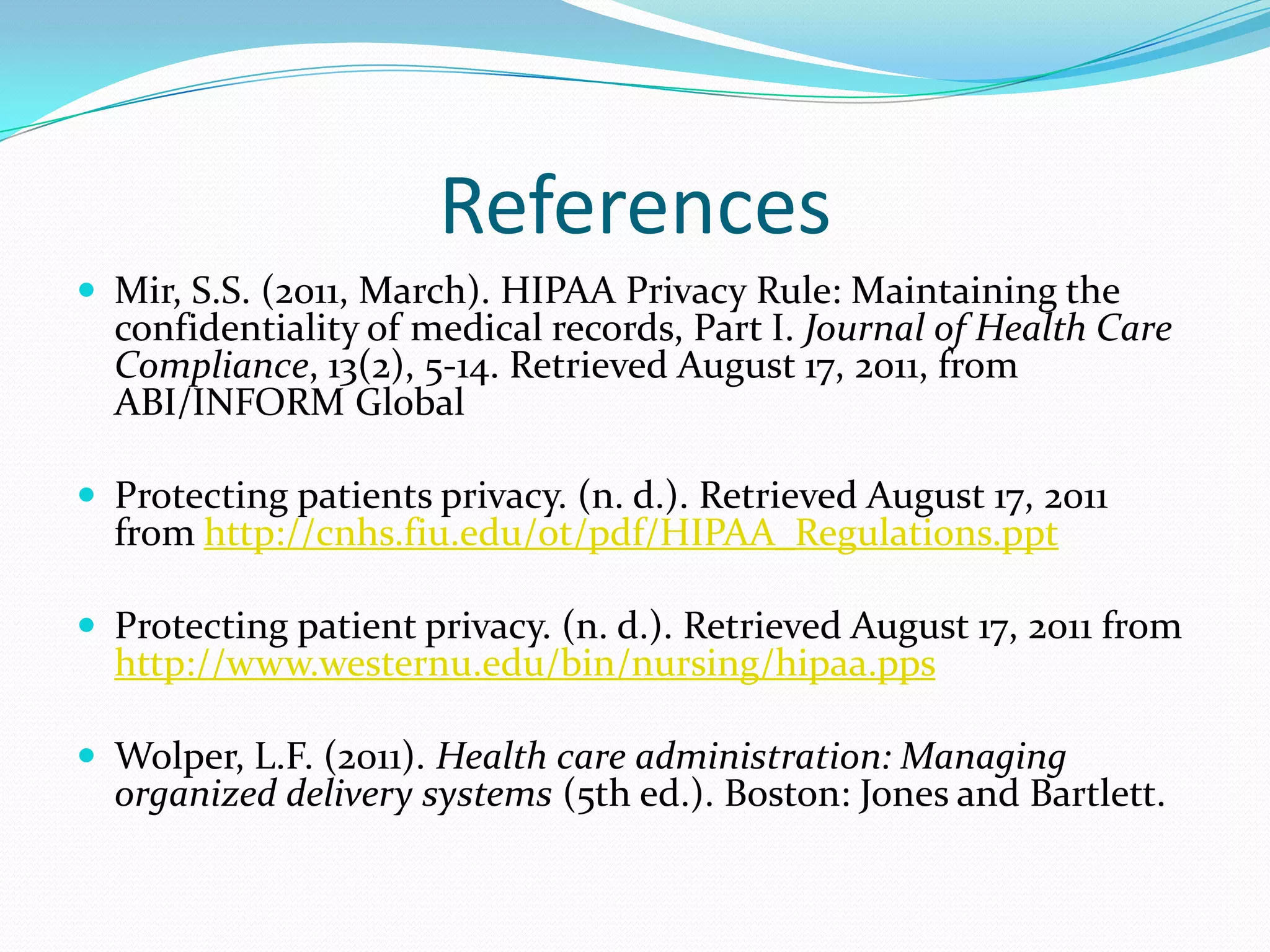
ReferencesMir, S.S. (2011, March). HIPAA Privacy Rule: Maintaining the confidentiality of medical records, Part I. Journal of Health Care Compliance, 13(2), 5-14. Retrieved August 17, 2011, from ABI/INFORM Global Protecting patients privacy. (n. d.). Retrieved August 17, 2011 from http://cnhs.fiu.edu/ot/pdf/HIPAA_Regulations.ppt Protecting patient privacy. (n. d.). Retrieved August 17, 2011 from http://www.westernu.edu/bin/nursing/hipaa.ppsWolper, L.F. (2011). Health care administration: Managing organized delivery systems (5th ed.). Boston: Jones and Bartlett. 

Protecting patients confidentiality slide presentation

  • 1.
    Protecting PatientsConfidentialityThe Health Insurance Portability and Accountability Act of 1996 (HIPAA)
  • 2.
    What is HIPAA?Agovernment mandated rule to protect access to and use of patient personal health informationGives patient certain individual rights
  • 3.
    What Type ofInformation Do HIPAA Cover? Identifiable Protected Health Information (PHI)Information that Identifies a Patient or Individual
  • 4.
    Privacy InformationWhat areIdentifiable Information?
  • 5.
    AnswerPicturesNamesBirthdatesPhone NumbersSSN (socialsecurity number)Medical Record Information
  • 6.
    Patient’s RightsMay reviewmedical recordRequest correction of any noticeable errorsFile grievance with provider
  • 7.
    Responsibility to PatientProtectand secure PHI (personal health information)Institute policies and procedures for managing PHI
  • 8.
    Principles of thePrivacy RuleCustomer ControlSet BoundariesAnswerabilityCivic AccountabilitySafety
  • 9.
    Protected Health InformationPoliciesGuide access to and use of personal health information
  • 10.
    Assess to PersonalHealth InformationIs based on who needs to know and minimum necessary informationBy health care providersBy payment activity
  • 11.
    Use of ProtectedHealth InformationWhen Providing Patient Health Care Treatment or Services Such as:Verification of insuranceMedical treatments
  • 12.
    How to ProtectPrivacyDo not share PHI with non clinical staffUtilize the minimum necessary standard with protected health informationAvoid public discussion of patient informationAvoid public viewing and access of patient information
  • 13.
    When is itallowed to reveal PHI?In court processes (subpoena)Law enforcement processes (criminal investigation)
  • 14.
    When is PatientAuthorization Required?Receiving Medical TreatmentConducting Medical-Related Tests (AIDS, Drug)
  • 15.
    What to DoWhen Requests are Made for an Individual’s Personal InformationVerify who is requesting the informationVerify photo (if available)Document the information being given
  • 16.
    What Technological SystemMake It Easy to Access, Copy, and Distribute PHIComputerized Medical Records
  • 17.
    Organizations that EnforceHIPAA’S RegulationsFBI (federal bureau of investigation)Office for Civil RightsJoint Commission on Accreditation of Healthcare Organization
  • 18.
    For Non-Complianceto HIPAA Security of Privacy rulesCivil-Enforced by Office of Civil RightsCriminal-Enforced by Department of JusticeIntentionally exposing PHI-1yr sentence & $50,000 fineFalsely accessing PHI-5yr sentence & $100,000 fineGiving PHI to someone with criminal intent-10yr sentence & $250,000 fine
  • 19.
    ReferencesMir, S.S. (2011,March). HIPAA Privacy Rule: Maintaining the confidentiality of medical records, Part I. Journal of Health Care Compliance, 13(2), 5-14. Retrieved August 17, 2011, from ABI/INFORM Global Protecting patients privacy. (n. d.). Retrieved August 17, 2011 from http://cnhs.fiu.edu/ot/pdf/HIPAA_Regulations.ppt Protecting patient privacy. (n. d.). Retrieved August 17, 2011 from http://www.westernu.edu/bin/nursing/hipaa.ppsWolper, L.F. (2011). Health care administration: Managing organized delivery systems (5th ed.). Boston: Jones and Bartlett.