MHA 690 Health Care Capstone
  Instructor: Hwang-Ji Lu
             By
     Beronica Woodson
Confidentiality in Healthcare

Healthcare workers have a duty to keep patient’s
           information confidential.
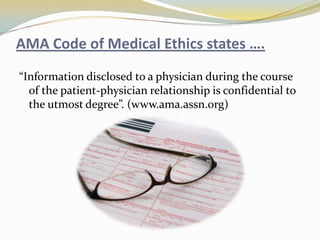
AMA Code of Medical Ethics states ….
“Information disclosed to a physician during the course
  of the patient-physician relationship is confidential to
  the utmost degree”. (www.ama.assn.org)
AMA’s Council on Ethical and Judicial Affairs states …


“The purpose of a physician’s ethical duty to maintain
  patient confidentiality is to allow the patient to feel
  free to make a full and frank disclosure of information
  to physician with the knowledge that the physician
  will protect the confidential nature of the information
  disclosed”. (www.ama.assn.org)
Breach of Confidentiality …


        is disclosing information to a third party without
        the proper consent of the patient.
Breach of Confidentiality …
Not having the proper documentation or statement from the
patient to release medical information.

Federal and State Legislation protects patient’s information related to
    HIV test results
    Genetic Screening Information
    Mental Health Records
    Drugs and Alcohol Abuse Rehabilitation


  Failure to get the appropriate release for medical records may have
  serious results. Twenty-one states punish disclosure of confidential
  information by revoking a physician's medical license or taking other
  disciplinary action.
HIPPA

Health Insurance Portability and Accountability Act

   of 1966 is a federal law about the privacy, confidentiality
    and electronic security of protected health information
    (also known as PHI)
HIPPA has two rules known as …

                      Privacy Rule
 Applies to Protected Health Information (PHI) in any
  form – written, stored electronically and spoken in
                     conversation.

                      Security Rule
 Covers PHI that is electronically stored or transmitted
Confidential Rules, Laws
                              and
              Regulations for Healthcare Workers
   Keep conversations on patient information to a private place so PHI cannot be overheard

   You must always ask the patient if it is okay to discuss their health information with other present

   Always protect PHI on computers by signing off when you are finished working

   Use the minimal amount of PHI in electronic communications and only to people a “need to know”

   Be sure to double check phone numbers when you’re faxing PHI or addresses when you’re mailing PHI

   Properly dispose of material containing PHI – not in public receptacles

   Don’t look up information about your family or your friends, other employees, people in the public
    eye, or your own information either.

   Don’t look up patient information for research purposes without IRB approval

   Don’t share passwords or personal access codes that would permit access to confidential patient
    information.
References

American Medical Association. 2012. “Patient Confidentiality”. www.ama.assn.org

Confidentiality

  • 1.
    MHA 690 HealthCare Capstone Instructor: Hwang-Ji Lu By Beronica Woodson
  • 2.
    Confidentiality in Healthcare Healthcareworkers have a duty to keep patient’s information confidential.
  • 3.
    AMA Code ofMedical Ethics states …. “Information disclosed to a physician during the course of the patient-physician relationship is confidential to the utmost degree”. (www.ama.assn.org)
  • 4.
    AMA’s Council onEthical and Judicial Affairs states … “The purpose of a physician’s ethical duty to maintain patient confidentiality is to allow the patient to feel free to make a full and frank disclosure of information to physician with the knowledge that the physician will protect the confidential nature of the information disclosed”. (www.ama.assn.org)
  • 5.
    Breach of Confidentiality… is disclosing information to a third party without the proper consent of the patient.
  • 6.
    Breach of Confidentiality… Not having the proper documentation or statement from the patient to release medical information. Federal and State Legislation protects patient’s information related to  HIV test results  Genetic Screening Information  Mental Health Records  Drugs and Alcohol Abuse Rehabilitation Failure to get the appropriate release for medical records may have serious results. Twenty-one states punish disclosure of confidential information by revoking a physician's medical license or taking other disciplinary action.
  • 7.
    HIPPA Health Insurance Portabilityand Accountability Act  of 1966 is a federal law about the privacy, confidentiality and electronic security of protected health information (also known as PHI)
  • 8.
    HIPPA has tworules known as … Privacy Rule Applies to Protected Health Information (PHI) in any form – written, stored electronically and spoken in conversation. Security Rule Covers PHI that is electronically stored or transmitted
  • 9.
    Confidential Rules, Laws and Regulations for Healthcare Workers  Keep conversations on patient information to a private place so PHI cannot be overheard  You must always ask the patient if it is okay to discuss their health information with other present  Always protect PHI on computers by signing off when you are finished working  Use the minimal amount of PHI in electronic communications and only to people a “need to know”  Be sure to double check phone numbers when you’re faxing PHI or addresses when you’re mailing PHI  Properly dispose of material containing PHI – not in public receptacles  Don’t look up information about your family or your friends, other employees, people in the public eye, or your own information either.  Don’t look up patient information for research purposes without IRB approval  Don’t share passwords or personal access codes that would permit access to confidential patient information.
  • 10.
    References American Medical Association.2012. “Patient Confidentiality”. www.ama.assn.org