Confidentiality Training
       Module
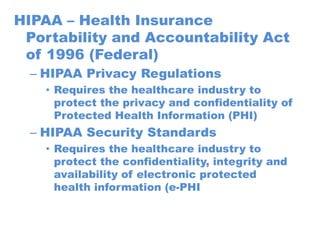
HIPAA – Health Insurance
 Portability and Accountability Act
 of 1996 (Federal)
  – HIPAA Privacy Regulations
    • Requires the healthcare industry to
      protect the privacy and confidentiality of
      Protected Health Information (PHI)
  – HIPAA Security Standards
    • Requires the healthcare industry to
      protect the confidentiality, integrity and
      availability of electronic protected
      health information (e-PHI
What Can I Access?

Only the information I need to know to
care for the patient I am assigned.
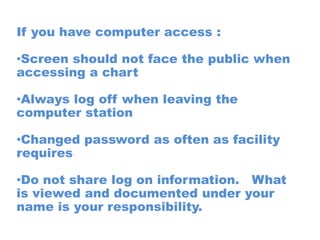
If you have computer access :

•Screen should not face the public when
accessing a chart

•Always log off when leaving the
computer station

•Changed password as often as facility
requires

•Do not share log on information. What
is viewed and documented under your
name is your responsibility.
What should you do?

A fellow nurse is viewing a patient
information from another floor. She is
not caring for this patient nor consulting
for care of this patient.
Answer:

Inform your immediate Supervising
Nurse or Manager.

Contact the Hospital Privacy Officer
“Health employees, especially those
  who are asked to manage such
      sensitive data as patient
   records, must have the ethical
responsibility and wisdom to uphold
      the laws that protect the
     appropriate and authorized
  usage, access, and exchange of
   patient information within our
 dynamic, innovative technological
environment” (Wolper, 2011, p. 389).
Summary

•Assess only the confidential
information you need to care for your
patient

• Protect your passwords

•Know and understand your facility
privacy policy

•Report any privacy violation
References

Over 120 UCLA Hospital Staff Saw
 Celebrity Health Records. Retrieved
 January 19, 2012 from
 http://www.foxnews.com/story/0,2933,3
 98784,00.html.

Wolper, L.F. (2011). Health care
 administration: Managing organized
 delivery systems (5th ed.). Boston:
 Jones and Bartlett.

Mha 690 d2 w1

  • 1.
  • 2.
    HIPAA – HealthInsurance Portability and Accountability Act of 1996 (Federal) – HIPAA Privacy Regulations • Requires the healthcare industry to protect the privacy and confidentiality of Protected Health Information (PHI) – HIPAA Security Standards • Requires the healthcare industry to protect the confidentiality, integrity and availability of electronic protected health information (e-PHI
  • 3.
    What Can IAccess? Only the information I need to know to care for the patient I am assigned.
  • 4.
    If you havecomputer access : •Screen should not face the public when accessing a chart •Always log off when leaving the computer station •Changed password as often as facility requires •Do not share log on information. What is viewed and documented under your name is your responsibility.
  • 5.
    What should youdo? A fellow nurse is viewing a patient information from another floor. She is not caring for this patient nor consulting for care of this patient.
  • 6.
    Answer: Inform your immediateSupervising Nurse or Manager. Contact the Hospital Privacy Officer
  • 7.
    “Health employees, especiallythose who are asked to manage such sensitive data as patient records, must have the ethical responsibility and wisdom to uphold the laws that protect the appropriate and authorized usage, access, and exchange of patient information within our dynamic, innovative technological environment” (Wolper, 2011, p. 389).
  • 8.
    Summary •Assess only theconfidential information you need to care for your patient • Protect your passwords •Know and understand your facility privacy policy •Report any privacy violation
  • 9.
    References Over 120 UCLAHospital Staff Saw Celebrity Health Records. Retrieved January 19, 2012 from http://www.foxnews.com/story/0,2933,3 98784,00.html. Wolper, L.F. (2011). Health care administration: Managing organized delivery systems (5th ed.). Boston: Jones and Bartlett.