Este es el ultimo tema gramatical de tu nivel 6, has logrado concluir un nivel más.
Este tema como todos los demás que has visto a través de este nivel es importante
y usual en el idioma ingles, este nuevo tema te servirá para expresar cosas o
situaciones que te gustara que pasaran y que en el presente no son posibles o
reales, es decir que este nuevo tema te servirá para expresar situaciones
imaginarias y se llama segundo condicional o presente irreal ya que como
mencionado anteriormente solo indicara situaciones imaginarias que son y no nos
gustaría que fueran o que no son y nos gustaría que fueran, vamos a ver como
funciona este tema, buena suerte y nos vemos en el siguiente nivel
Conditional Type 2 or Present Unreal Conditional
Present Unreal Conditional
FORM
[If Simple Past ..., would + verb ...]
[ would + verb ... if Simple Past ...]
USE
The Present Unreal Conditional is used to talk about what you would generally do in imaginary
situations.
Examples:
If I owned a car, I would drive to work. But I don't own a car.
She would travel around the world if she had more money. But she doesn't have much money.
I would read more if I didn't watch so much TV.
Mary would move to Japan if she spoke Japanese.
If they worked harder, they would earn more money.
A: What would you do if you won the lottery?
B: I would buy a house.
A: Where would you live if you moved to the U.S.?
B: I would live in Seattle.
EXCEPTION If I were ...
In the Present Unreal Conditional, the form "was" is not considered grammatically
correct. In written English or in testing situations, you should always use "were."
However, in everyday conversation, "was" is often used.
Examples:
If he were French, he would live in Paris.
If she were rich, she would buy a yacht.
I would play basketball if I were taller.
I would buy that computer if it were cheaper.
I would buy that computer if it was cheaper. Not Correct (But often said in
conversation.)
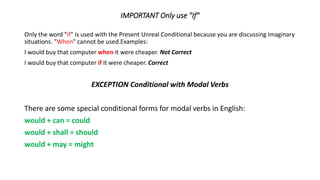
IMPORTANT Only use "If"
Only the word "if" is used with the Present Unreal Conditional because you are discussing imaginary
situations. "When" cannot be used.Examples:
I would buy that computer when it were cheaper. Not Correct
I would buy that computer if it were cheaper. Correct
EXCEPTION Conditional with Modal Verbs
There are some special conditional forms for modal verbs in English:
would + can = could
would + shall = should
would + may = might
The words "can," "shall" and "may" cannot be used with "would." Instead, they
must be used in these special forms.
Examples:
If I went to Egypt, I would can learn Arabic. Not Correct
If I went to Egypt, I could learn Arabic. Correct
If she had time, she would may go to the party. Not Correct
If she had time, she might go to the party. Correct
The words "could," should," "might" and "ought to" include conditional, so you
cannot combine them with "would.“
Examples:
If I had more time, I would could exercise after work. Not Correct
If I had more time, I could exercise after work. Correct
If he invited you, you really would should go. Not Correct
If he invited you, you really should go. Correct
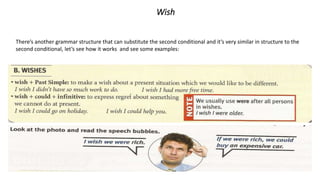
There’s another grammar structure that can substitute the second conditional and it’s very similar in structure to the
second conditional, let’s see how it works and see some examples:
Wish
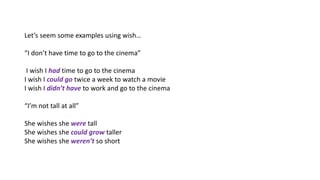
Let’s seem some examples using wish…
“I don’t have time to go to the cinema”
I wish I had time to go to the cinema
I wish I could go twice a week to watch a movie
I wish I didn’t have to work and go to the cinema
“I’m not tall at all”
She wishes she were tall
She wishes she could grow taller
She wishes she weren’t so short
Let’s see how it Works in a
Reading
Como pudiste observar este tema es un condicional como el condicional tipo 1
que habíamos ya visto en este mismo Nivel, los condicionales son estructuras de
uso cotidiano y son estructuras sencillas que nos pueden ayudar a que nuestro
habla del idioma inglés se escuche mucho mas sofisticado a la hora de entablar
una conversación y sobre todo manejar este tipo de estructuras gramaticales
cotidianas hace que nuestro nivel de inglés sea cada vez mas elevado y
profesional, son como ya mencionado estructuras básicas del idioma inglés por lo
que te pedimos no solo leas estos tema y contestes ejercicios si no has un esfuerzo
por practicar la estructura de ser posible de manera oral y si no por o menos de
manera escrita con ejercicios que tu mismo puedes encontrar en internet.
Felicidades has concluido un vinel mas de inglés, vamos por mas. SUERTE!!
TECNOLÓGICO DE ESTUDIOS SUPERIORES DE
CUAUTITLAN IZCALLI (TESCI)

Conditional sentences - Type 2

  • 1.
    Este es elultimo tema gramatical de tu nivel 6, has logrado concluir un nivel más. Este tema como todos los demás que has visto a través de este nivel es importante y usual en el idioma ingles, este nuevo tema te servirá para expresar cosas o situaciones que te gustara que pasaran y que en el presente no son posibles o reales, es decir que este nuevo tema te servirá para expresar situaciones imaginarias y se llama segundo condicional o presente irreal ya que como mencionado anteriormente solo indicara situaciones imaginarias que son y no nos gustaría que fueran o que no son y nos gustaría que fueran, vamos a ver como funciona este tema, buena suerte y nos vemos en el siguiente nivel Conditional Type 2 or Present Unreal Conditional
  • 2.
    Present Unreal Conditional FORM [IfSimple Past ..., would + verb ...] [ would + verb ... if Simple Past ...] USE The Present Unreal Conditional is used to talk about what you would generally do in imaginary situations. Examples: If I owned a car, I would drive to work. But I don't own a car. She would travel around the world if she had more money. But she doesn't have much money. I would read more if I didn't watch so much TV. Mary would move to Japan if she spoke Japanese. If they worked harder, they would earn more money. A: What would you do if you won the lottery? B: I would buy a house. A: Where would you live if you moved to the U.S.? B: I would live in Seattle.
  • 3.
    EXCEPTION If Iwere ... In the Present Unreal Conditional, the form "was" is not considered grammatically correct. In written English or in testing situations, you should always use "were." However, in everyday conversation, "was" is often used. Examples: If he were French, he would live in Paris. If she were rich, she would buy a yacht. I would play basketball if I were taller. I would buy that computer if it were cheaper. I would buy that computer if it was cheaper. Not Correct (But often said in conversation.)
  • 4.
    IMPORTANT Only use"If" Only the word "if" is used with the Present Unreal Conditional because you are discussing imaginary situations. "When" cannot be used.Examples: I would buy that computer when it were cheaper. Not Correct I would buy that computer if it were cheaper. Correct EXCEPTION Conditional with Modal Verbs There are some special conditional forms for modal verbs in English: would + can = could would + shall = should would + may = might
  • 5.
    The words "can,""shall" and "may" cannot be used with "would." Instead, they must be used in these special forms. Examples: If I went to Egypt, I would can learn Arabic. Not Correct If I went to Egypt, I could learn Arabic. Correct If she had time, she would may go to the party. Not Correct If she had time, she might go to the party. Correct The words "could," should," "might" and "ought to" include conditional, so you cannot combine them with "would.“ Examples: If I had more time, I would could exercise after work. Not Correct If I had more time, I could exercise after work. Correct If he invited you, you really would should go. Not Correct If he invited you, you really should go. Correct
  • 6.
    There’s another grammarstructure that can substitute the second conditional and it’s very similar in structure to the second conditional, let’s see how it works and see some examples: Wish
  • 7.
    Let’s seem someexamples using wish… “I don’t have time to go to the cinema” I wish I had time to go to the cinema I wish I could go twice a week to watch a movie I wish I didn’t have to work and go to the cinema “I’m not tall at all” She wishes she were tall She wishes she could grow taller She wishes she weren’t so short
  • 8.
    Let’s see howit Works in a Reading
  • 9.
    Como pudiste observareste tema es un condicional como el condicional tipo 1 que habíamos ya visto en este mismo Nivel, los condicionales son estructuras de uso cotidiano y son estructuras sencillas que nos pueden ayudar a que nuestro habla del idioma inglés se escuche mucho mas sofisticado a la hora de entablar una conversación y sobre todo manejar este tipo de estructuras gramaticales cotidianas hace que nuestro nivel de inglés sea cada vez mas elevado y profesional, son como ya mencionado estructuras básicas del idioma inglés por lo que te pedimos no solo leas estos tema y contestes ejercicios si no has un esfuerzo por practicar la estructura de ser posible de manera oral y si no por o menos de manera escrita con ejercicios que tu mismo puedes encontrar en internet. Felicidades has concluido un vinel mas de inglés, vamos por mas. SUERTE!!
  • 10.
    TECNOLÓGICO DE ESTUDIOSSUPERIORES DE CUAUTITLAN IZCALLI (TESCI)