Concept of test , measurement and
evaluation
 TEST IS USED TO GATHER INFORMATION
 INFORMATION COLLECTED THROUGH TESTS
IS PRESENTED IN THE FORM OF
MEASUREMENT
 THIS MEASUREMENT IS THEN USED TO MAKE
EVALUATION
CONCEPT OF TEST
A Test is an assessment adopted to
measure knowledge, skill , aptitude,
physical fitness or classification in many
other topics.
An instrument or systematic procedure
for measuring a sample of behaviour by
posing a set of questions in a uniform
manner.
Standardized Testing
 Standardized tests are called assessments
 Assessment:- collection and analysis of information about one or more
students.
 STANDARDIZED:-A particular group of students will take the same test
that will be scored and analyzed the same way.
 Score results for each students is then compared to the rest of the group
MEASUREMENT
This Photo by Unknown Author is licensed under CC BY
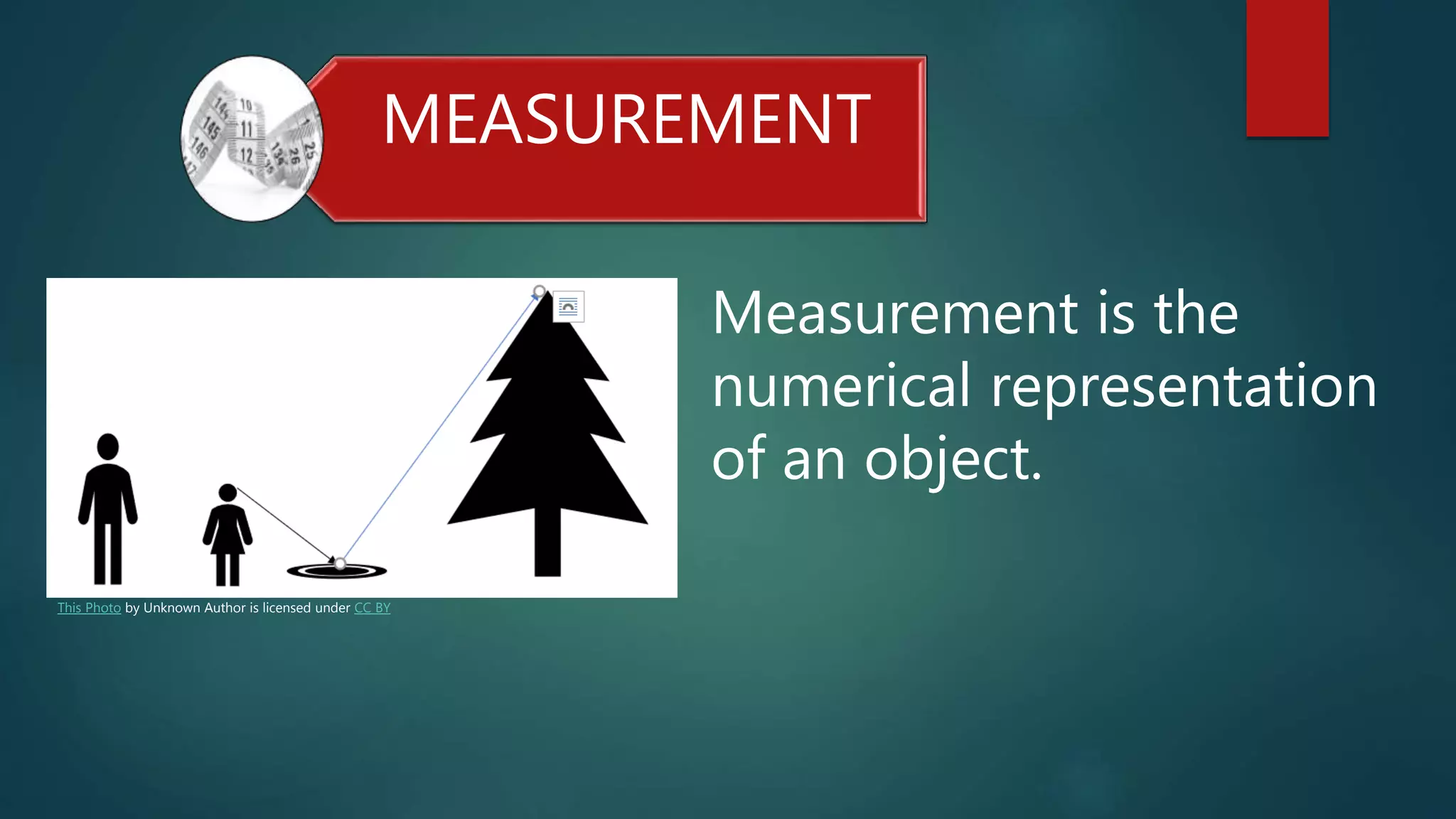
Measurement is the
numerical representation
of an object.
MEASUREMENT
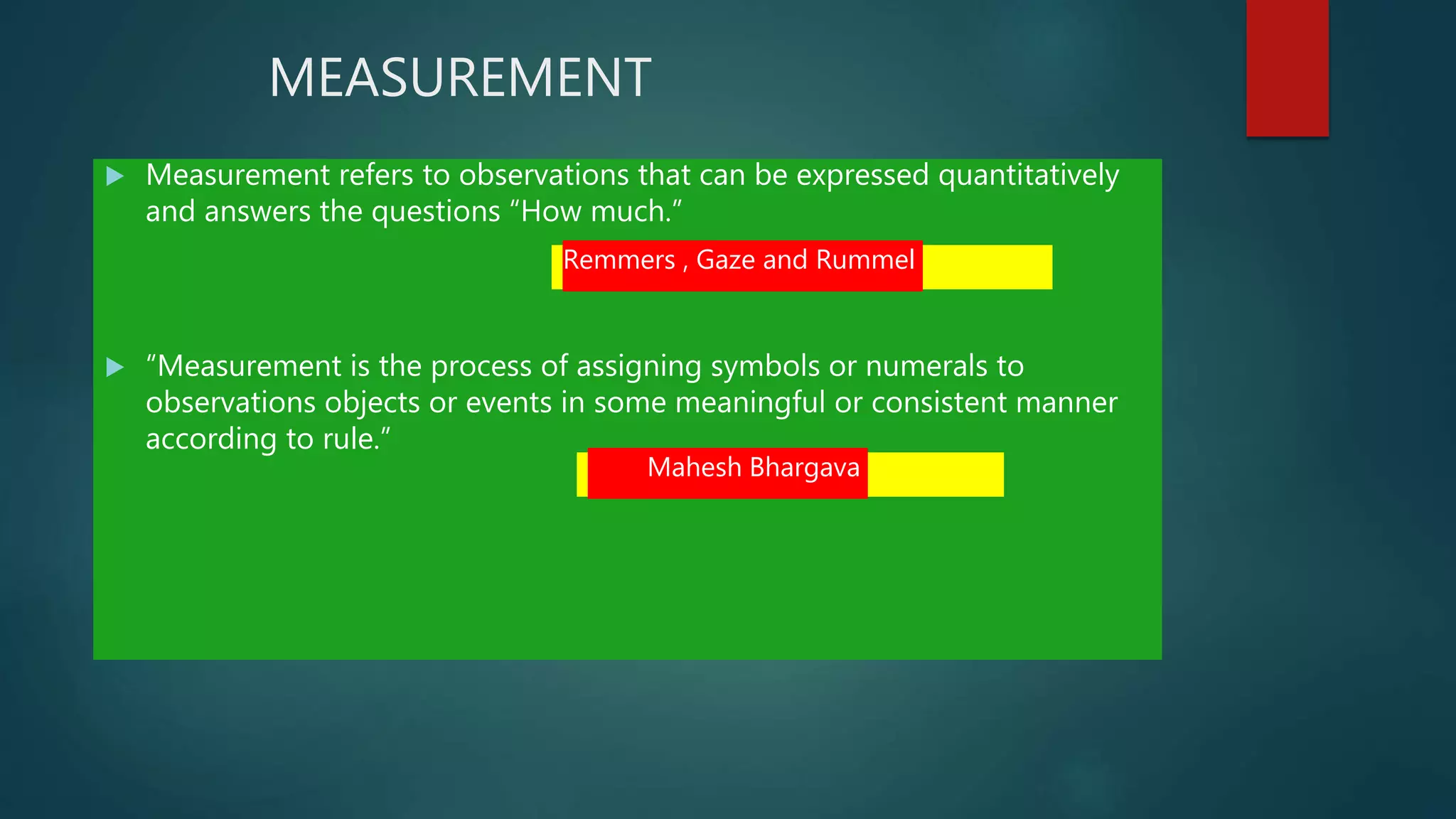
 Measurement refers to observations that can be expressed quantitatively
and answers the questions “How much.”
 “Measurement is the process of assigning symbols or numerals to
observations objects or events in some meaningful or consistent manner
according to rule.”
Remmers , Gaze and Rummel
Mahesh Bhargava
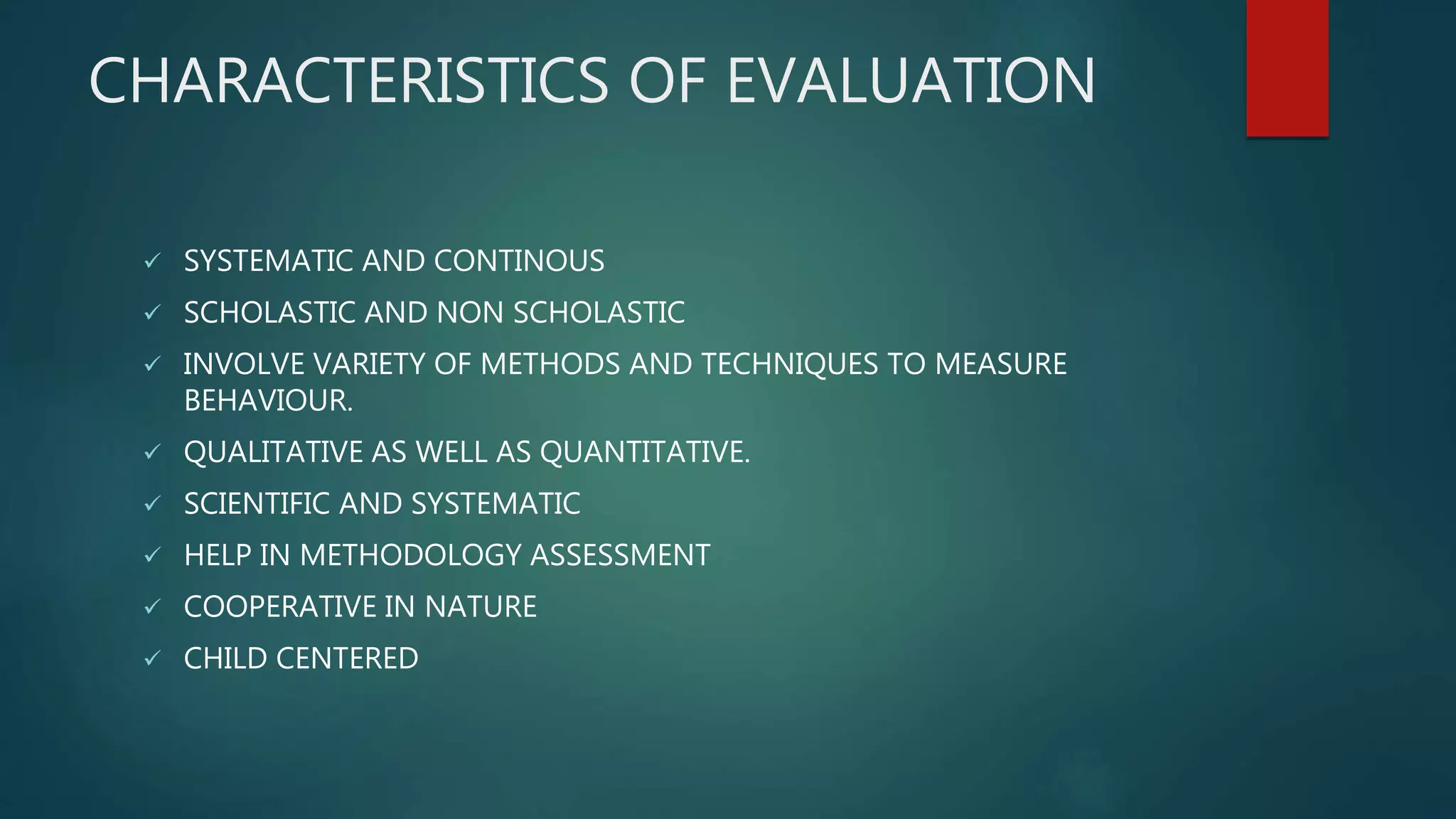
CHARACTERISTICS OF EVALUATION
 SYSTEMATIC AND CONTINOUS
 SCHOLASTIC AND NON SCHOLASTIC
 INVOLVE VARIETY OF METHODS AND TECHNIQUES TO MEASURE
BEHAVIOUR.
 QUALITATIVE AS WELL AS QUANTITATIVE.
 SCIENTIFIC AND SYSTEMATIC
 HELP IN METHODOLOGY ASSESSMENT
 COOPERATIVE IN NATURE
 CHILD CENTERED
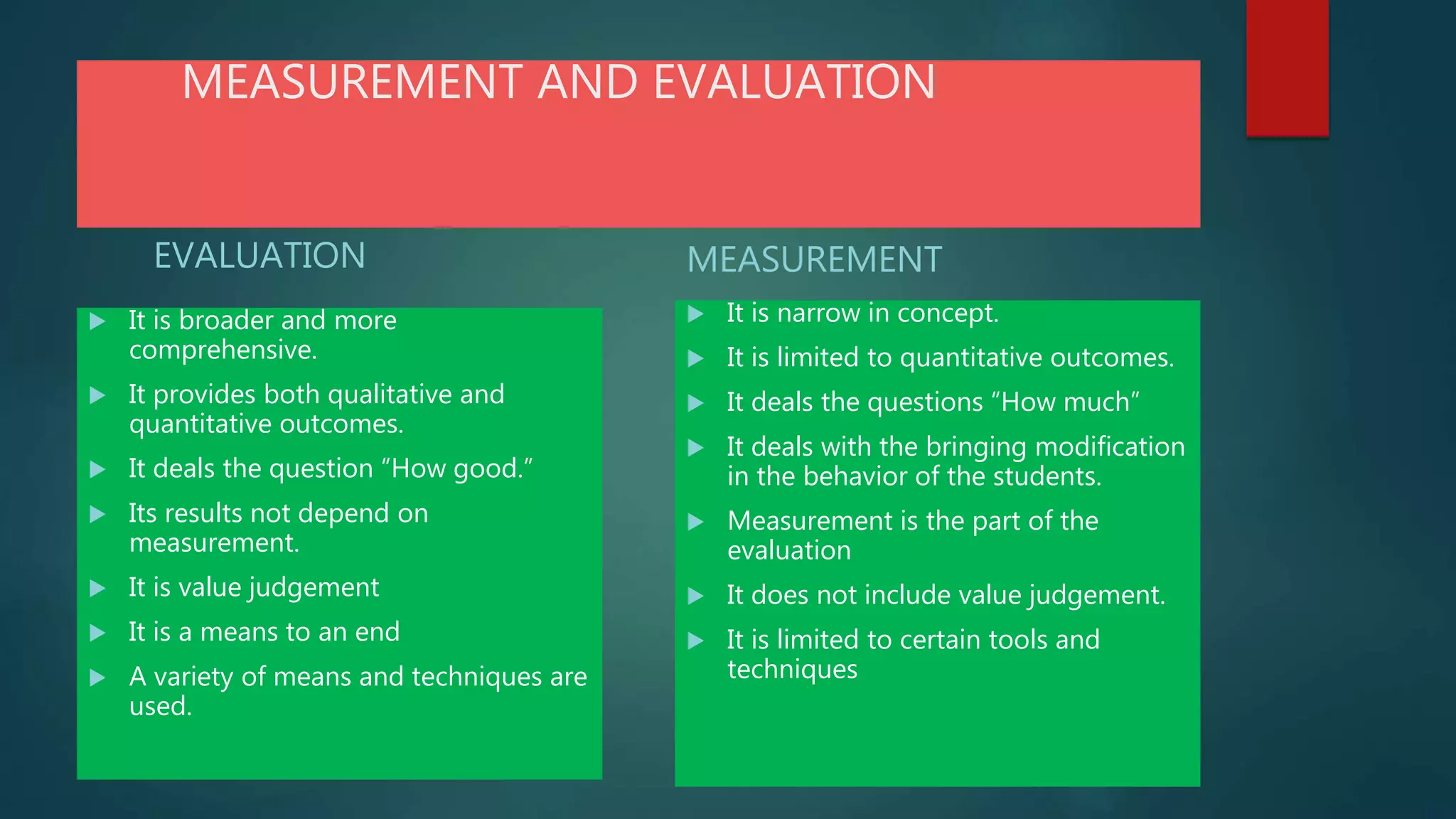
MEASUREMENT AND EVALUATION
EVALUATION
 It is broader and more
comprehensive.
 It provides both qualitative and
quantitative outcomes.
 It deals the question “How good.”
 Its results not depend on
measurement.
 It is value judgement
 It is a means to an end
 A variety of means and techniques are
used.
MEASUREMENT
 It is narrow in concept.
 It is limited to quantitative outcomes.
 It deals the questions “How much”
 It deals with the bringing modification
in the behavior of the students.
 Measurement is the part of the
evaluation
 It does not include value judgement.
 It is limited to certain tools and
techniques
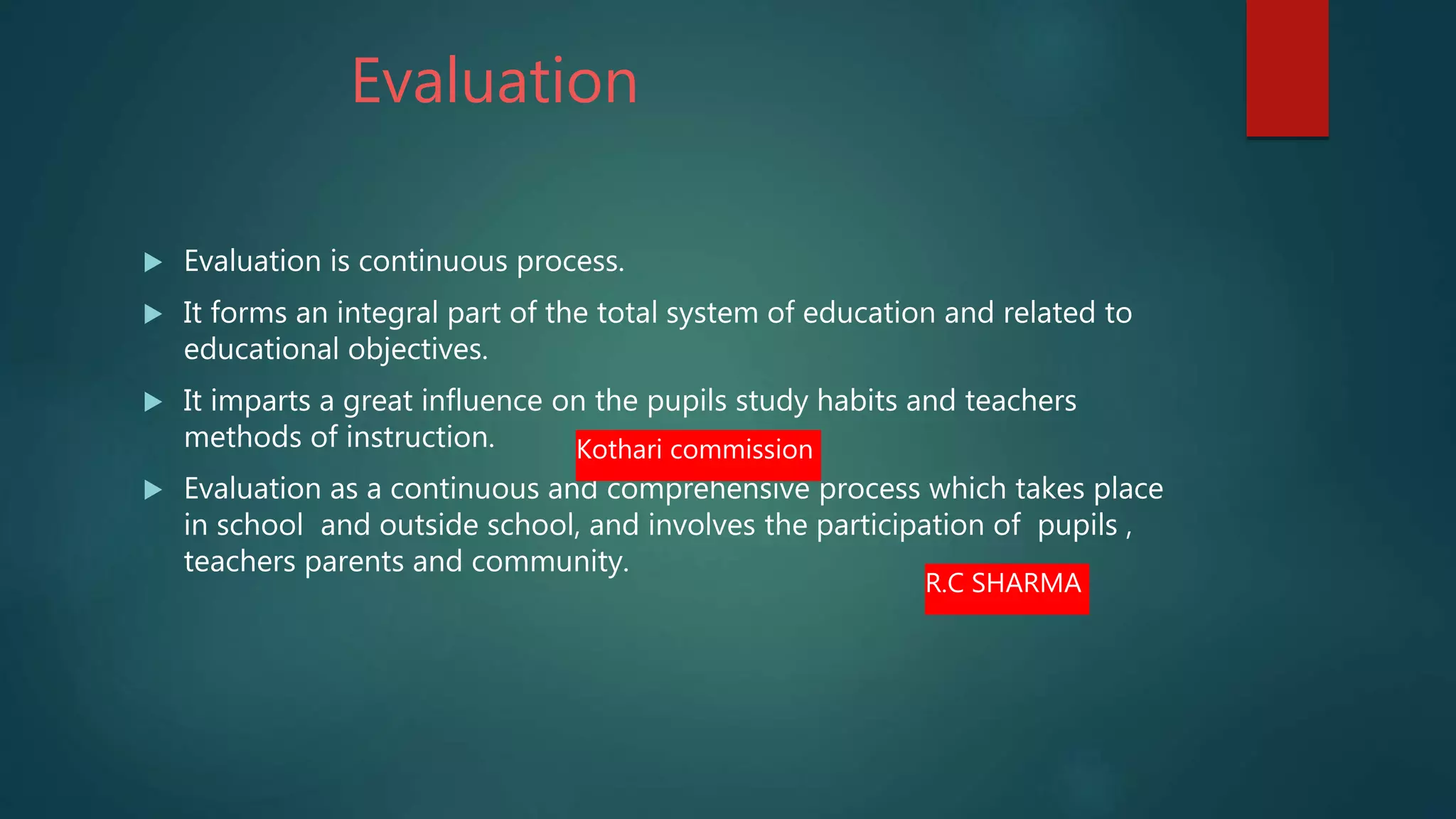
Evaluation
 Evaluation is continuous process.
 It forms an integral part of the total system of education and related to
educational objectives.
 It imparts a great influence on the pupils study habits and teachers
methods of instruction.
 Evaluation as a continuous and comprehensive process which takes place
in school and outside school, and involves the participation of pupils ,
teachers parents and community.
Kothari commission
R.C SHARMA
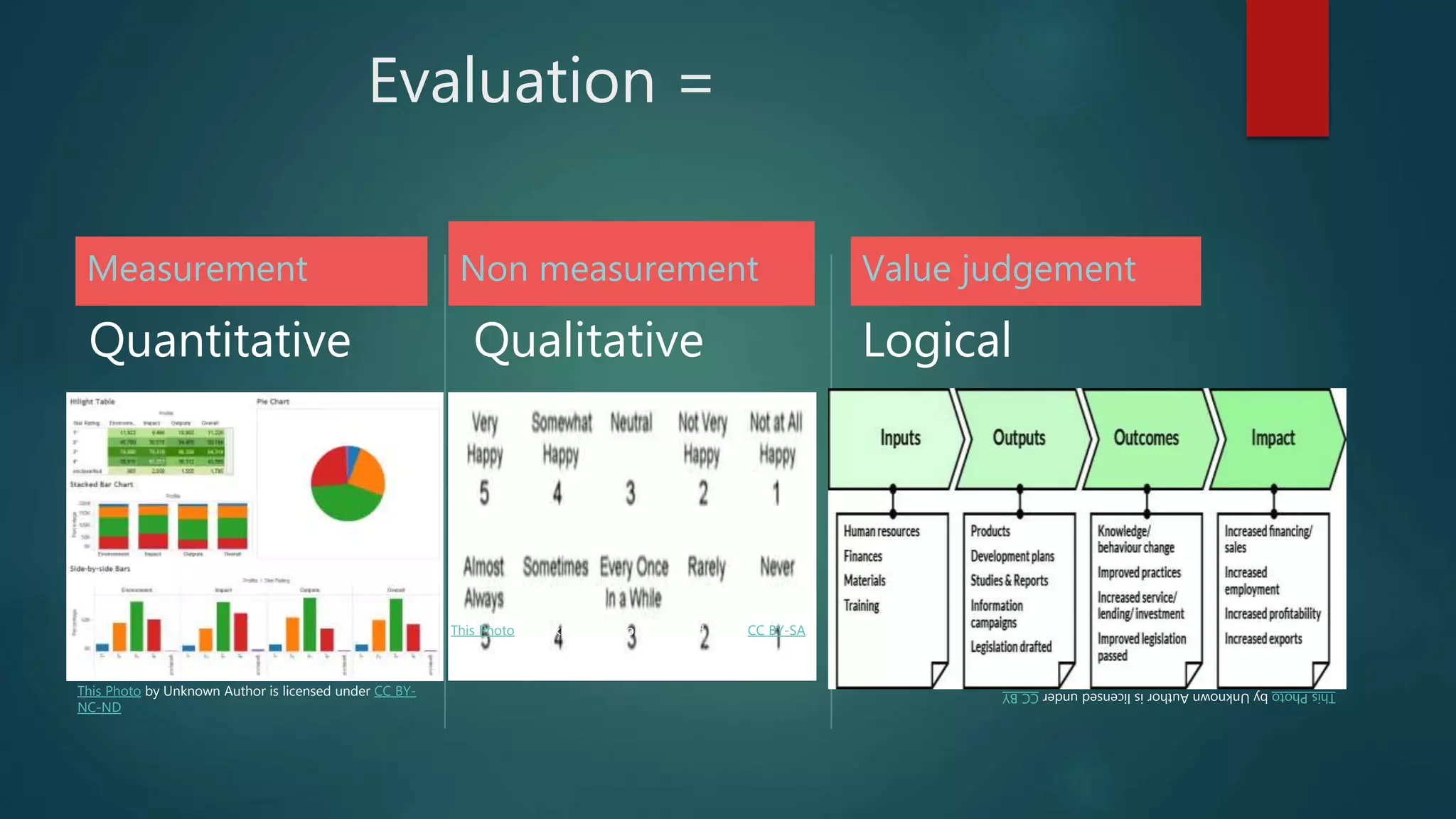
Evaluation =
Measurement
Quantitative
Non measurement
Qualitative
Value judgement
Logical
This Photo by Unknown Author is licensed under CC BY-
NC-ND
This Photo by Unknown Author is licensed under CC BY-SA
This
Photo
by
Unknown
Author
is
licensed
under
CC
BY
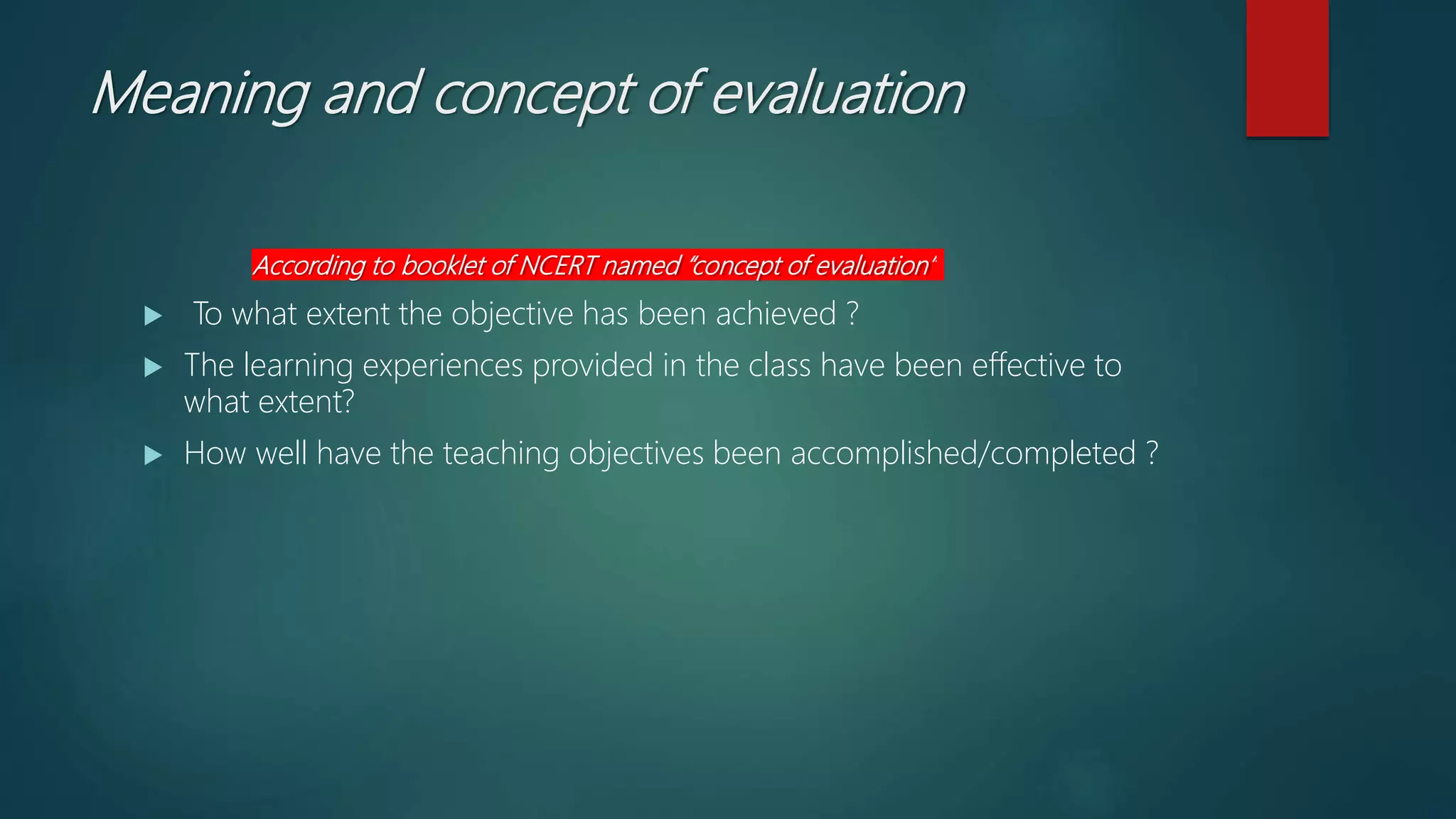
Meaning and concept of evaluation
According to booklet of NCERT named “concept of evaluation”
 To what extent the objective has been achieved ?
 The learning experiences provided in the class have been effective to
what extent?
 How well have the teaching objectives been accomplished/completed ?
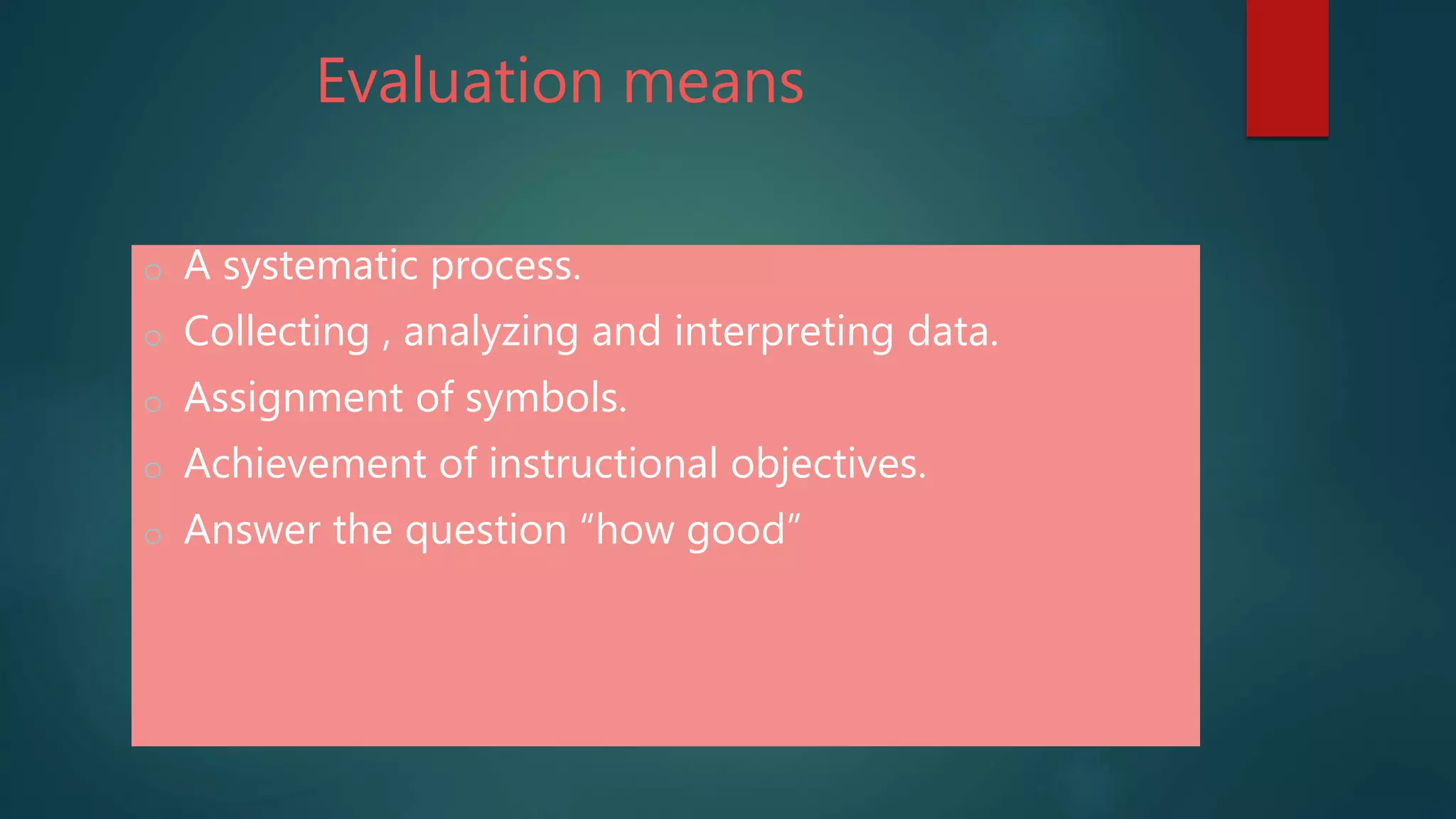
Evaluation means
o A systematic process.
o Collecting , analyzing and interpreting data.
o Assignment of symbols.
o Achievement of instructional objectives.
o Answer the question “how good”
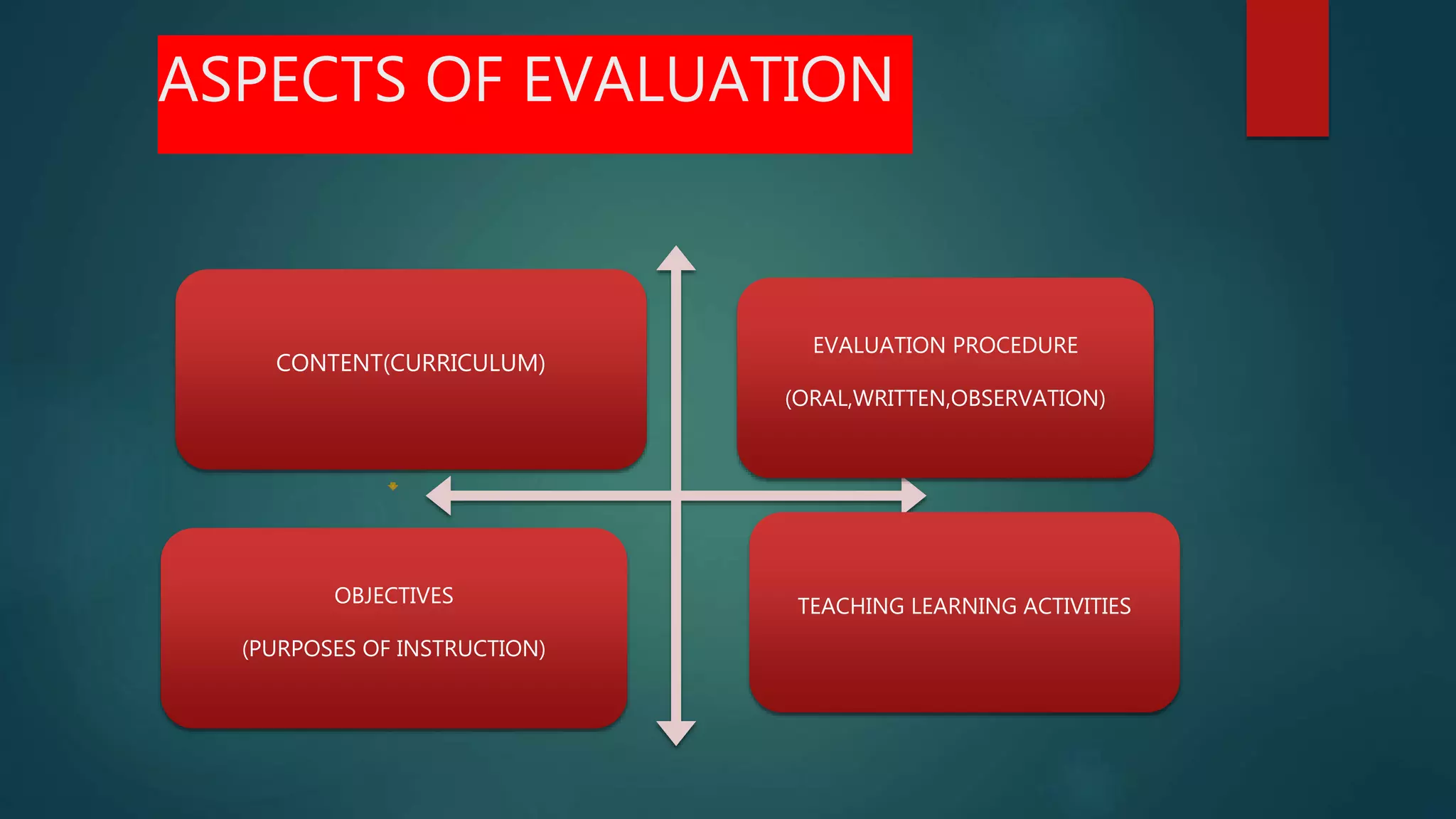
ASPECTS OF EVALUATION
CONTENT(CURRICULUM)
EVALUATION PROCEDURE
(ORAL,WRITTEN,OBSERVATION)
OBJECTIVES
(PURPOSES OF INSTRUCTION)
TEACHING LEARNING ACTIVITIES
PURPOSE OF EVALUATION
 IMPROVEMENT OF THE PROGRAMME
 PROMOTION TO HIGHER GRADE
 SELECTION OF THE STUDENTS
 PLANNING OF THE PROGRAMME
 IDENTIFICATION OF PROBLEM AREAS
 PROVIDING MOTIVATION TO TEACHJERS AND STUDENTS
 GUIDANCE AND COUNSELLING
 SELECTION OF METHODS
 TO ACHIEVE THE OBJECTIVES
SCOPE OF EVALUATION
 KNOWLEDGE
 COMPREHENSION
 INFORMATION
 SKILLS
 TENDENCIES ,ATTITUDES AND VALUE
 MISTAKES OF STUDENTS
 PHYSICAL HEALTH
ADVANTAGES OF EVALUATION
 IMPROVEMENT OF STUDENTS
 STRENGTH AND WEAKNESS OF THE STUDENTS
 DUAL ADVANTAGES
 FEARLESS EXAMINATION
 CLASSIFICATION OF STUDENTS
 HELPS IN GOAL ATTAINMENT
 IMPROVEMENT IN METHODOLOGY
 PREPARATION FOR FUTURE LIFE

Concept of test , measurement and evaluation

  • 1.
    Concept of test, measurement and evaluation  TEST IS USED TO GATHER INFORMATION  INFORMATION COLLECTED THROUGH TESTS IS PRESENTED IN THE FORM OF MEASUREMENT  THIS MEASUREMENT IS THEN USED TO MAKE EVALUATION
  • 2.
    CONCEPT OF TEST ATest is an assessment adopted to measure knowledge, skill , aptitude, physical fitness or classification in many other topics. An instrument or systematic procedure for measuring a sample of behaviour by posing a set of questions in a uniform manner.
  • 3.
    Standardized Testing  Standardizedtests are called assessments  Assessment:- collection and analysis of information about one or more students.  STANDARDIZED:-A particular group of students will take the same test that will be scored and analyzed the same way.  Score results for each students is then compared to the rest of the group
  • 4.
    MEASUREMENT This Photo byUnknown Author is licensed under CC BY Measurement is the numerical representation of an object.
  • 5.
    MEASUREMENT  Measurement refersto observations that can be expressed quantitatively and answers the questions “How much.”  “Measurement is the process of assigning symbols or numerals to observations objects or events in some meaningful or consistent manner according to rule.” Remmers , Gaze and Rummel Mahesh Bhargava
  • 6.
    CHARACTERISTICS OF EVALUATION SYSTEMATIC AND CONTINOUS  SCHOLASTIC AND NON SCHOLASTIC  INVOLVE VARIETY OF METHODS AND TECHNIQUES TO MEASURE BEHAVIOUR.  QUALITATIVE AS WELL AS QUANTITATIVE.  SCIENTIFIC AND SYSTEMATIC  HELP IN METHODOLOGY ASSESSMENT  COOPERATIVE IN NATURE  CHILD CENTERED
  • 7.
    MEASUREMENT AND EVALUATION EVALUATION It is broader and more comprehensive.  It provides both qualitative and quantitative outcomes.  It deals the question “How good.”  Its results not depend on measurement.  It is value judgement  It is a means to an end  A variety of means and techniques are used. MEASUREMENT  It is narrow in concept.  It is limited to quantitative outcomes.  It deals the questions “How much”  It deals with the bringing modification in the behavior of the students.  Measurement is the part of the evaluation  It does not include value judgement.  It is limited to certain tools and techniques
  • 8.
    Evaluation  Evaluation iscontinuous process.  It forms an integral part of the total system of education and related to educational objectives.  It imparts a great influence on the pupils study habits and teachers methods of instruction.  Evaluation as a continuous and comprehensive process which takes place in school and outside school, and involves the participation of pupils , teachers parents and community. Kothari commission R.C SHARMA
  • 9.
    Evaluation = Measurement Quantitative Non measurement Qualitative Valuejudgement Logical This Photo by Unknown Author is licensed under CC BY- NC-ND This Photo by Unknown Author is licensed under CC BY-SA This Photo by Unknown Author is licensed under CC BY
  • 10.
    Meaning and conceptof evaluation According to booklet of NCERT named “concept of evaluation”  To what extent the objective has been achieved ?  The learning experiences provided in the class have been effective to what extent?  How well have the teaching objectives been accomplished/completed ?
  • 11.
    Evaluation means o Asystematic process. o Collecting , analyzing and interpreting data. o Assignment of symbols. o Achievement of instructional objectives. o Answer the question “how good”
  • 12.
    ASPECTS OF EVALUATION CONTENT(CURRICULUM) EVALUATIONPROCEDURE (ORAL,WRITTEN,OBSERVATION) OBJECTIVES (PURPOSES OF INSTRUCTION) TEACHING LEARNING ACTIVITIES
  • 13.
    PURPOSE OF EVALUATION IMPROVEMENT OF THE PROGRAMME  PROMOTION TO HIGHER GRADE  SELECTION OF THE STUDENTS  PLANNING OF THE PROGRAMME  IDENTIFICATION OF PROBLEM AREAS  PROVIDING MOTIVATION TO TEACHJERS AND STUDENTS  GUIDANCE AND COUNSELLING  SELECTION OF METHODS  TO ACHIEVE THE OBJECTIVES
  • 14.
    SCOPE OF EVALUATION KNOWLEDGE  COMPREHENSION  INFORMATION  SKILLS  TENDENCIES ,ATTITUDES AND VALUE  MISTAKES OF STUDENTS  PHYSICAL HEALTH
  • 15.
    ADVANTAGES OF EVALUATION IMPROVEMENT OF STUDENTS  STRENGTH AND WEAKNESS OF THE STUDENTS  DUAL ADVANTAGES  FEARLESS EXAMINATION  CLASSIFICATION OF STUDENTS  HELPS IN GOAL ATTAINMENT  IMPROVEMENT IN METHODOLOGY  PREPARATION FOR FUTURE LIFE