CONCEPT OF REVENUE
PRESENTED BY
RAJA RAM SHARMA
MEANING OF REVENUE
Revenue of a firm is its money receipts from the sale of its product in a
given period.
Revenue = Price X Product
Revenue = Cost + Profit
Profit = Revenue – Cost
CONCEPT OF REVENUE
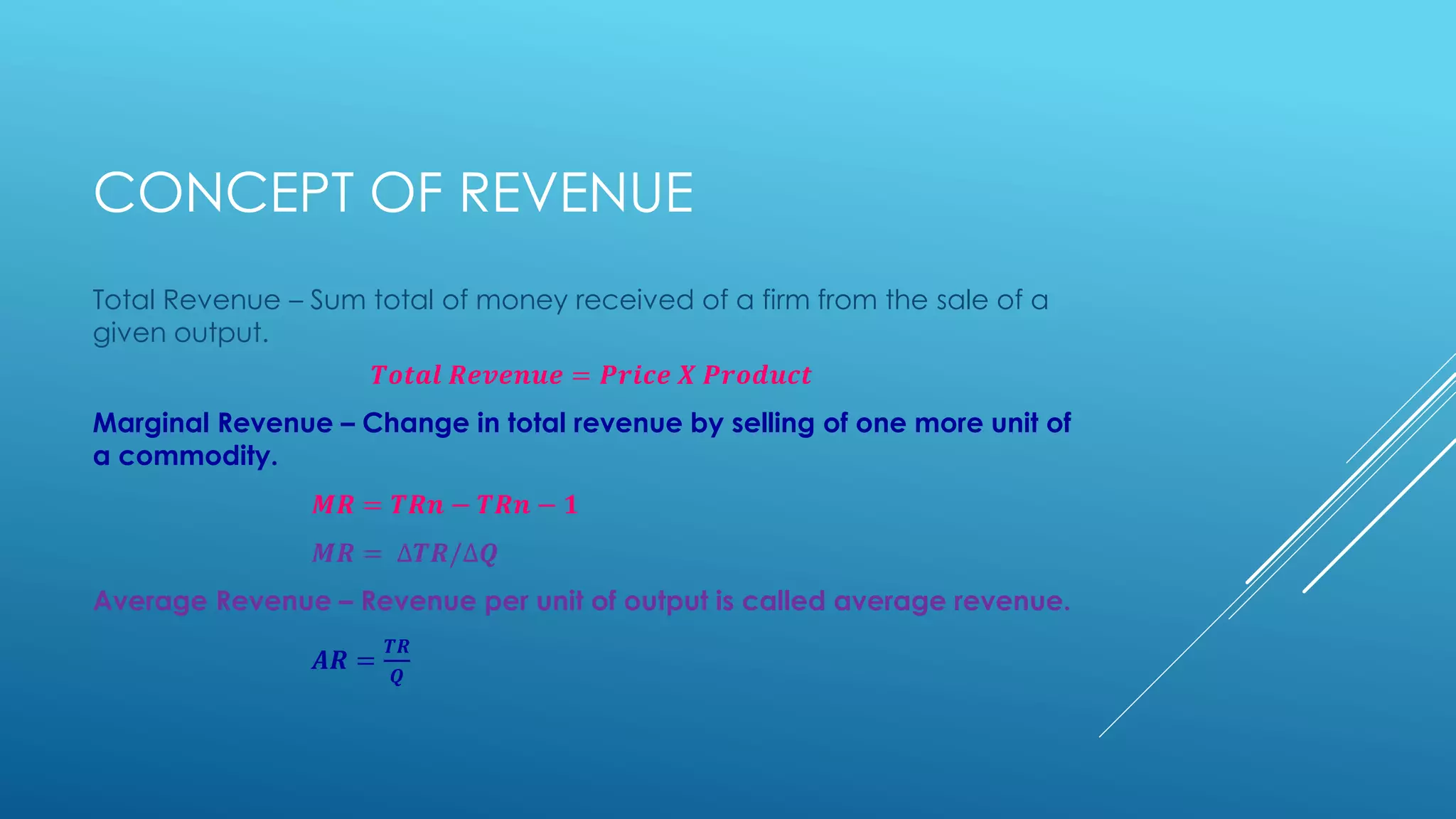
Total Revenue – Sum total of money received of a firm from the sale of a
given output.
𝑻𝒐𝒕𝒂𝒍 𝑹𝒆𝒗𝒆𝒏𝒖𝒆 = 𝑷𝒓𝒊𝒄𝒆 𝑿 𝑷𝒓𝒐𝒅𝒖𝒄𝒕
Marginal Revenue – Change in total revenue by selling of one more unit of
a commodity.
𝑴𝑹 = 𝑻𝑹𝒏 − 𝑻𝑹𝒏 − 𝟏
𝑴𝑹 = ∆𝑻𝑹/∆𝑸
Average Revenue – Revenue per unit of output is called average revenue.
𝑨𝑹 =
𝑻𝑹
𝑸
TR, MR AND AR SCHEDULE
Price Units of output TR AR MR
10 1 10 10 10
9 2 18 9 8
8 3 27 8 6
7 4 28 7 4
6 5 30 6 2
5 6 30 5 0
4 7 28 4 -2
3 8 24 3 -4
GRAPHICAL PRESENTATION
-10
-5
0
5
10
15
20
25
30
35
0 1 2 3 4 5 6 7 8 9
RELATIONSHIP BETWEEN MR AND TR
Relation between MR and TR
MR can be zero or even negative, but only when price is declining as under
monopoly or monopolistic competition.
TR stops increasing when MR = 0, so that TR is maximum when MR = 0.
TR starts declining when MR is negative.
When MR is declining, less and less is added to TR for every additional unit
sold. Accordingly TR increases only at a diminishing rate.
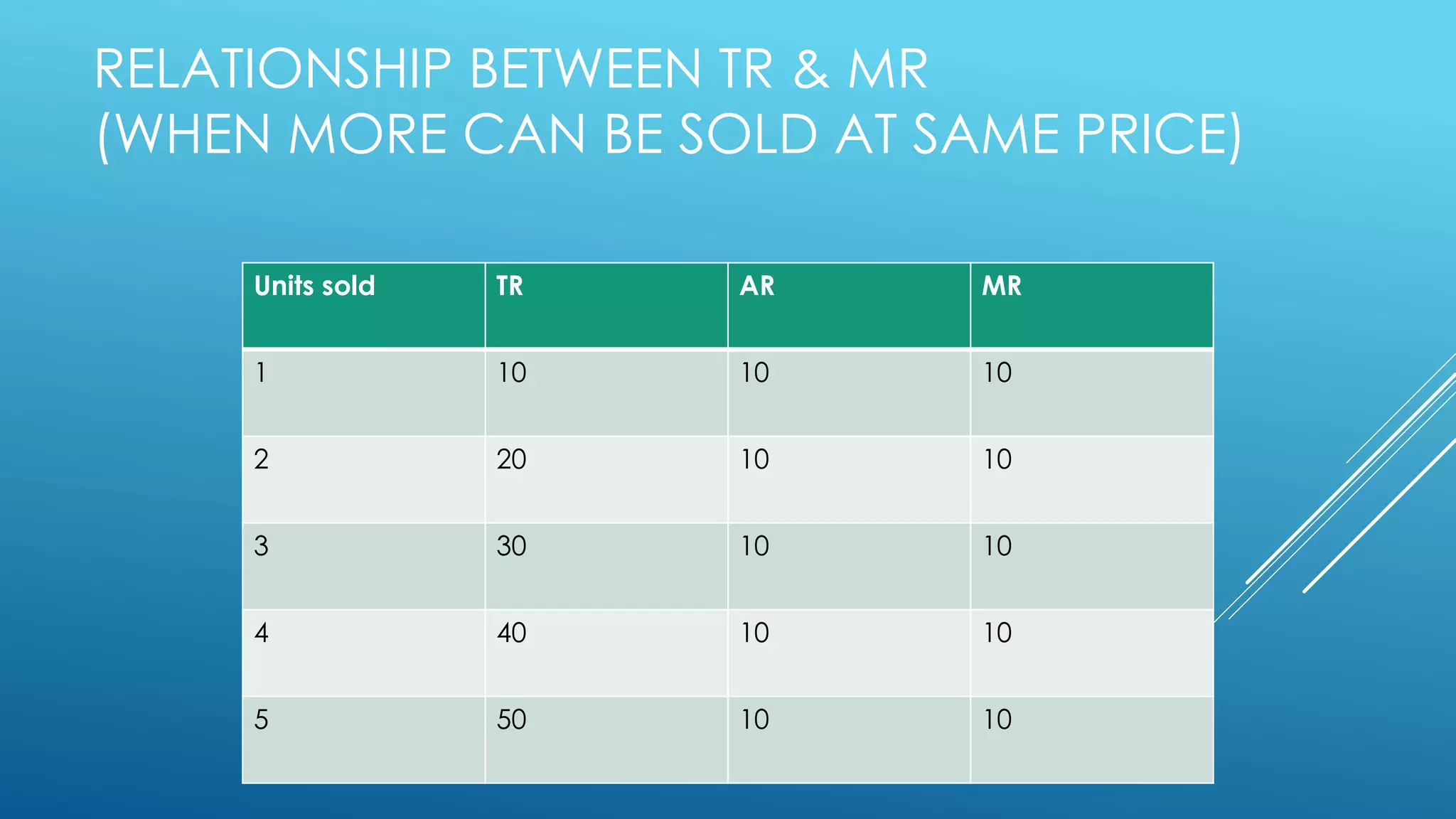
RELATIONSHIP BETWEEN TR & MR
(WHEN MORE CAN BE SOLD AT SAME PRICE)
Units sold TR AR MR
1 10 10 10
2 20 10 10
3 30 10 10
4 40 10 10
5 50 10 10
0
10
20
30
40
50
60
0 1 2 3 4 5 6
TR/AR/MR
UNITS SOLD
RELATIONSHIP BETWEEN TR & MR
(i) TR increases at a constant rate since price is constant and MR is also
constant. This implies that TR increases at constant rate. Consequently
TR curve is upward rising straight line.
(ii) AR = Price = MR are parallel to X-axis.
(iii) Since TR increases at a constant rate, MR is also constant throughout.
DEMAND CURVE IN DIFFERENT MARKETS
0
5
10
15
20
25
0 1 2 3 4 5 6 7 8
REVENUE
UNITS SOLD

CONCEPT OF Revenue

  • 1.
    CONCEPT OF REVENUE PRESENTEDBY RAJA RAM SHARMA
  • 2.
    MEANING OF REVENUE Revenueof a firm is its money receipts from the sale of its product in a given period. Revenue = Price X Product Revenue = Cost + Profit Profit = Revenue – Cost
  • 3.
    CONCEPT OF REVENUE TotalRevenue – Sum total of money received of a firm from the sale of a given output. 𝑻𝒐𝒕𝒂𝒍 𝑹𝒆𝒗𝒆𝒏𝒖𝒆 = 𝑷𝒓𝒊𝒄𝒆 𝑿 𝑷𝒓𝒐𝒅𝒖𝒄𝒕 Marginal Revenue – Change in total revenue by selling of one more unit of a commodity. 𝑴𝑹 = 𝑻𝑹𝒏 − 𝑻𝑹𝒏 − 𝟏 𝑴𝑹 = ∆𝑻𝑹/∆𝑸 Average Revenue – Revenue per unit of output is called average revenue. 𝑨𝑹 = 𝑻𝑹 𝑸
  • 4.
    TR, MR ANDAR SCHEDULE Price Units of output TR AR MR 10 1 10 10 10 9 2 18 9 8 8 3 27 8 6 7 4 28 7 4 6 5 30 6 2 5 6 30 5 0 4 7 28 4 -2 3 8 24 3 -4
  • 5.
  • 6.
    RELATIONSHIP BETWEEN MRAND TR Relation between MR and TR MR can be zero or even negative, but only when price is declining as under monopoly or monopolistic competition. TR stops increasing when MR = 0, so that TR is maximum when MR = 0. TR starts declining when MR is negative. When MR is declining, less and less is added to TR for every additional unit sold. Accordingly TR increases only at a diminishing rate.
  • 7.
    RELATIONSHIP BETWEEN TR& MR (WHEN MORE CAN BE SOLD AT SAME PRICE) Units sold TR AR MR 1 10 10 10 2 20 10 10 3 30 10 10 4 40 10 10 5 50 10 10
  • 8.
    0 10 20 30 40 50 60 0 1 23 4 5 6 TR/AR/MR UNITS SOLD
  • 9.
    RELATIONSHIP BETWEEN TR& MR (i) TR increases at a constant rate since price is constant and MR is also constant. This implies that TR increases at constant rate. Consequently TR curve is upward rising straight line. (ii) AR = Price = MR are parallel to X-axis. (iii) Since TR increases at a constant rate, MR is also constant throughout.
  • 10.
    DEMAND CURVE INDIFFERENT MARKETS 0 5 10 15 20 25 0 1 2 3 4 5 6 7 8 REVENUE UNITS SOLD