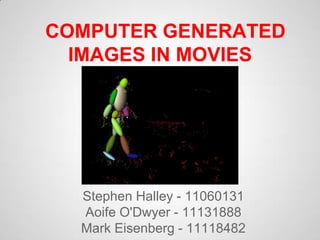
COMPUTER GENERATED
  IMAGES IN MOVIES


  Stephen Halley - 11060131
  Aoife O'Dwyer - 11131888
  Mark Eisenberg - 11118482
INTRODUCTION
"It is not just that such images [CGIs] raise the
   stakes of what can be represented, but that
   they are ... more real than the real ... "

         Why did we chose this topic?
                 •  Common interest.
             •   Relevant to our course.
             •   Explore various aspects.
Our Sections
•   CGI in Science Fiction

     •   Realistic Effects

•   Non-Realistic Animation
CGI IN SCI-FI:
FROM STAR WARS TO
  THE AVENGERS
THE EARLY DAYS
• CGI & Science fiction go hand in hand.
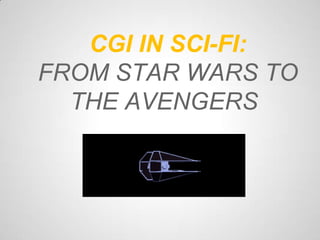
• 3D CGI first used in 'Futureworld' (1976)


                      ‘Star Wars: A New Hope’ (1977)
                        used 3D wire frame graphics.


• 1982 – ‘Tron’ - first
  movie to have extensive use
  of solid 3D CGI.
  Very little processing
  required.
RISE IN POPULARITY
• Sci-Fi movies become more prominent and successful through
  the use of CGI.

• CGI has helped make certain elements cheaper to create.

• Younger audiences in a video game culture.

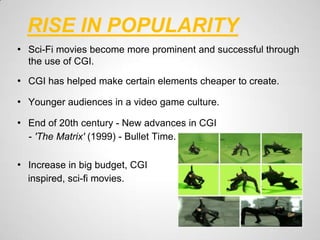
• End of 20th century - New advances in CGI
  - 'The Matrix' (1999) - Bullet Time.

• Increase in big budget, CGI
  inspired, sci-fi movies.
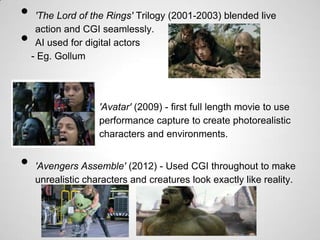
•    'The Lord of the Rings' Trilogy (2001-2003) blended live
     action and CGI seamlessly.
•    AI used for digital actors
    - Eg. Gollum


                   'Avatar' (2009) - first full length movie to use
                   performance capture to create photorealistic
                   characters and environments.


•   'Avengers Assemble' (2012) - Used CGI throughout to make
    unrealistic characters and creatures look exactly like reality.
Realistic CGI &
 Animation
Realistic CGI & Animation
•   Character - Body Movements
•   Personality - Facial Expressiveness
•   Polygon Meshes - Fast rendering, common,
    lots needed.
•   Human Face - Bossels and Depressions,
    shading problems, motion and close-up
    detail.

•   Empathy, Agency (impacting an event)
•   No sudden movement
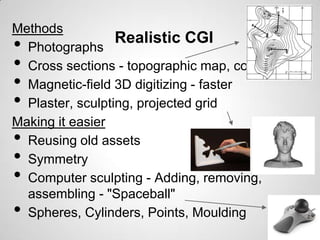
Methods
                  Realistic CGI
• Photographs
• Cross sections - topographic map, contours
• Magnetic-field 3D digitizing - faster
• Plaster, sculpting, projected grid
Making it easier
• Reusing old assets
• Symmetry
• Computer sculpting - Adding, removing,
  assembling - "Spaceball"
• Spheres, Cylinders, Points, Moulding
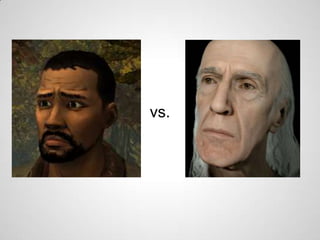
vs.
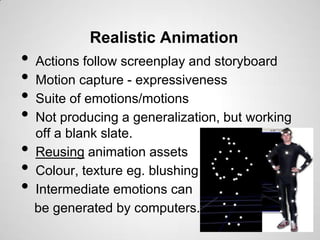
Realistic Animation
•   Actions follow screenplay and storyboard
•   Motion capture - expressiveness
•   Suite of emotions/motions
•   Not producing a generalization, but working
    off a blank slate.
•   Reusing animation assets
•   Colour, texture eg. blushing
•   Intermediate emotions can
    be generated by computers.
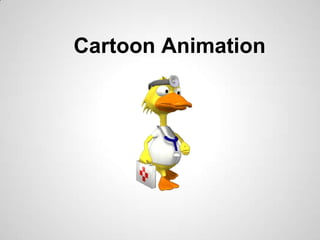
Cartoon Animation
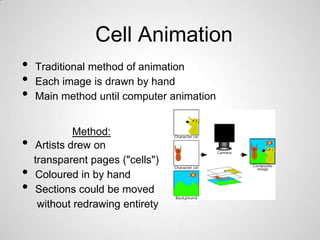
Cell Animation
•   Traditional method of animation
•   Each image is drawn by hand
•   Main method until computer animation


             Method:
•   Artists drew on
    transparent pages ("cells")
•   Coloured in by hand
•   Sections could be moved
     without redrawing entirety
CAPS
•   "Computer Animation Production System"
•   Developed by The Walt Disney Company and Pixar in
    the late 1980's
•   The first computer paint system
•   Image outlines were scanned onto computers, then
    painted
•   Enclosed blocks of images could be painted with a
    mouse click
•   Improved colour blending, shading, camera movements
•   The Rescuers Down Under (1990) was the first film
    entirely made using CAPS
•   Images were 2D looking and CAPS stopped being
    popular in 2004
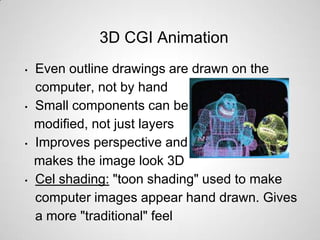
3D CGI Animation
•   Even outline drawings are drawn on the
    computer, not by hand
•   Small components can be
    modified, not just layers
•   Improves perspective and
    makes the image look 3D
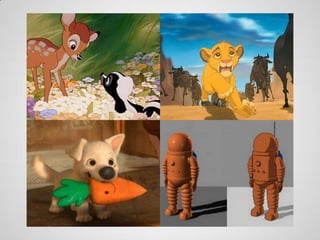
•   Cel shading: "toon shading" used to make
    computer images appear hand drawn. Gives
    a more "traditional" feel
Conclusions
•   From doing this presentation we have learned that tricks
    of the trade are used across specialities.


•   Computer Generated Images in movies are improving
    at a fast rate. The detail in graphics available now were
    not even dreamt of years ago.


•   The things we have learned can help us in the future
    with projects and in the workplace.

Computer generated images in movies

  • 1.
    COMPUTER GENERATED IMAGES IN MOVIES Stephen Halley - 11060131 Aoife O'Dwyer - 11131888 Mark Eisenberg - 11118482
  • 2.
    INTRODUCTION "It is notjust that such images [CGIs] raise the stakes of what can be represented, but that they are ... more real than the real ... " Why did we chose this topic? • Common interest. • Relevant to our course. • Explore various aspects.
  • 3.
    Our Sections • CGI in Science Fiction • Realistic Effects • Non-Realistic Animation
  • 4.
    CGI IN SCI-FI: FROMSTAR WARS TO THE AVENGERS
  • 5.
    THE EARLY DAYS •CGI & Science fiction go hand in hand. • 3D CGI first used in 'Futureworld' (1976)  ‘Star Wars: A New Hope’ (1977) used 3D wire frame graphics. • 1982 – ‘Tron’ - first movie to have extensive use of solid 3D CGI. Very little processing required.
  • 6.
    RISE IN POPULARITY •Sci-Fi movies become more prominent and successful through the use of CGI. • CGI has helped make certain elements cheaper to create. • Younger audiences in a video game culture. • End of 20th century - New advances in CGI - 'The Matrix' (1999) - Bullet Time. • Increase in big budget, CGI inspired, sci-fi movies.
  • 7.
    'The Lord of the Rings' Trilogy (2001-2003) blended live action and CGI seamlessly. • AI used for digital actors - Eg. Gollum 'Avatar' (2009) - first full length movie to use performance capture to create photorealistic characters and environments. • 'Avengers Assemble' (2012) - Used CGI throughout to make unrealistic characters and creatures look exactly like reality.
  • 8.
  • 9.
    Realistic CGI &Animation • Character - Body Movements • Personality - Facial Expressiveness • Polygon Meshes - Fast rendering, common, lots needed. • Human Face - Bossels and Depressions, shading problems, motion and close-up detail. • Empathy, Agency (impacting an event) • No sudden movement
  • 10.
    Methods Realistic CGI • Photographs • Cross sections - topographic map, contours • Magnetic-field 3D digitizing - faster • Plaster, sculpting, projected grid Making it easier • Reusing old assets • Symmetry • Computer sculpting - Adding, removing, assembling - "Spaceball" • Spheres, Cylinders, Points, Moulding
  • 11.
  • 12.
    Realistic Animation • Actions follow screenplay and storyboard • Motion capture - expressiveness • Suite of emotions/motions • Not producing a generalization, but working off a blank slate. • Reusing animation assets • Colour, texture eg. blushing • Intermediate emotions can be generated by computers.
  • 13.
  • 14.
    Cell Animation • Traditional method of animation • Each image is drawn by hand • Main method until computer animation Method: • Artists drew on transparent pages ("cells") • Coloured in by hand • Sections could be moved without redrawing entirety
  • 15.
    CAPS • "Computer Animation Production System" • Developed by The Walt Disney Company and Pixar in the late 1980's • The first computer paint system • Image outlines were scanned onto computers, then painted • Enclosed blocks of images could be painted with a mouse click • Improved colour blending, shading, camera movements • The Rescuers Down Under (1990) was the first film entirely made using CAPS • Images were 2D looking and CAPS stopped being popular in 2004
  • 16.
    3D CGI Animation • Even outline drawings are drawn on the computer, not by hand • Small components can be modified, not just layers • Improves perspective and makes the image look 3D • Cel shading: "toon shading" used to make computer images appear hand drawn. Gives a more "traditional" feel
  • 18.
    Conclusions • From doing this presentation we have learned that tricks of the trade are used across specialities. • Computer Generated Images in movies are improving at a fast rate. The detail in graphics available now were not even dreamt of years ago. • The things we have learned can help us in the future with projects and in the workplace.