


Knoxville, Tennessee
pbgenergyinc.com
2
Why We are Here
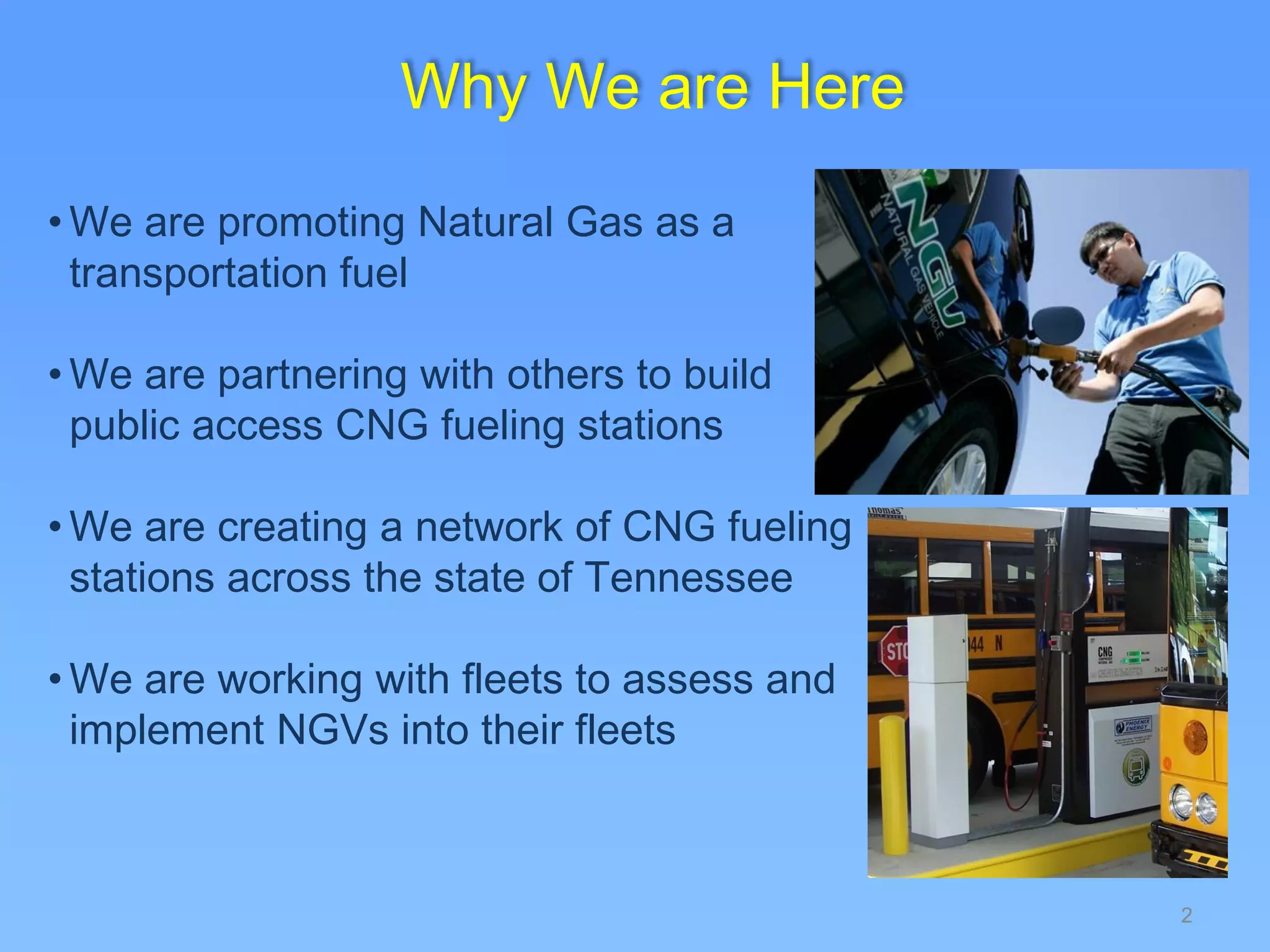
• We are promoting Natural Gas as a
transportation fuel
• We are partnering with others to build
public access CNG fueling stations
• We are creating a network of CNG fueling
stations across the state of Tennessee
• We are working with fleets to assess and
implement NGVs into their fleets
3
Natural Gas Facts
• Natural gas is very safe
 Lighter than air – dissipates when released
 High ignition temperature: 1000F – 1100F
 Limited range of air/fuel combustion ratio (5-
15%)
 Colorless, odorless, non-toxic substance
 Doesn’t leak into groundwater
 Comprehensive fuel tank, vehicle and station
design/mfg codes & standards
• Natural gas is an inherently clean fuel
 Natural gas is mostly methane: one carbon atom, CH4
 Diesel – C14H30; Gasoline – C8H18; Propane – C3H8
 Less NOx, soot and greenhouse gases than petroleum fuels
 NGVs produce between 93-95% fewer overall toxics and reduces
greenhouse gas emissions by 23-29% compared with diesel- and
gasoline-fueled vehicles
4
Why CNG?
• Environmental Factors
o Air quality
o Health issues
• Issues with foreign oil
o Uncertainty of oil pricing
o U.S. is 5% of world population but uses 25% of the world’s
oil
o 65+% of U.S. is imported, mostly for transportation
o Expanding Asian economies are putting upward pressure on
world energy prices, especially oil
• Tightening EPA restrictions
o Tightening restriction on HDVs creates performance loss
and increased O&O costs.
o Large percentage of population live in non-compliance areas
• Global cap and trade
o International pressure to reduce pollution
5
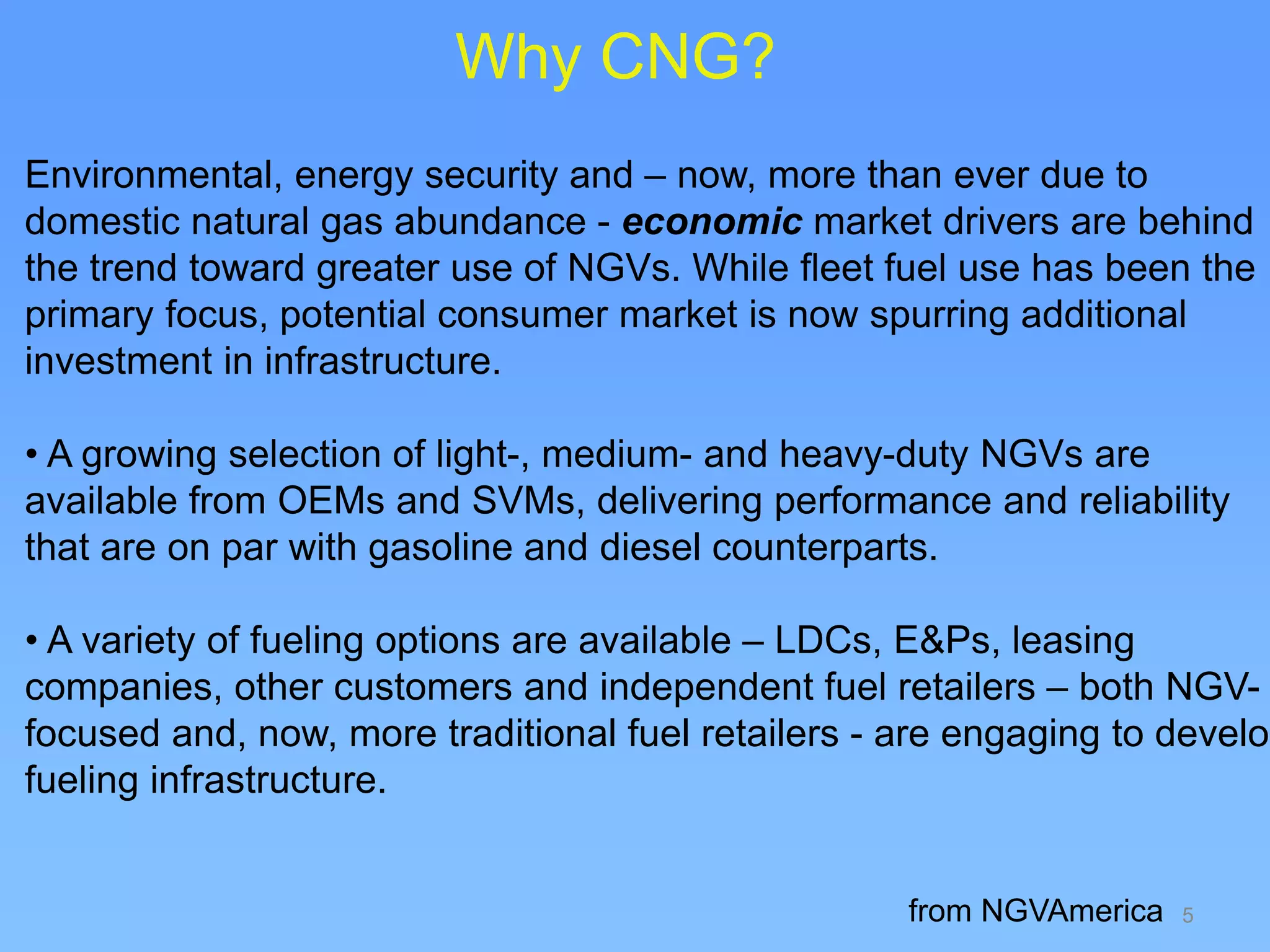
Environmental, energy security and – now, more than ever due to
domestic natural gas abundance - economic market drivers are behind
the trend toward greater use of NGVs. While fleet fuel use has been the
primary focus, potential consumer market is now spurring additional
investment in infrastructure.
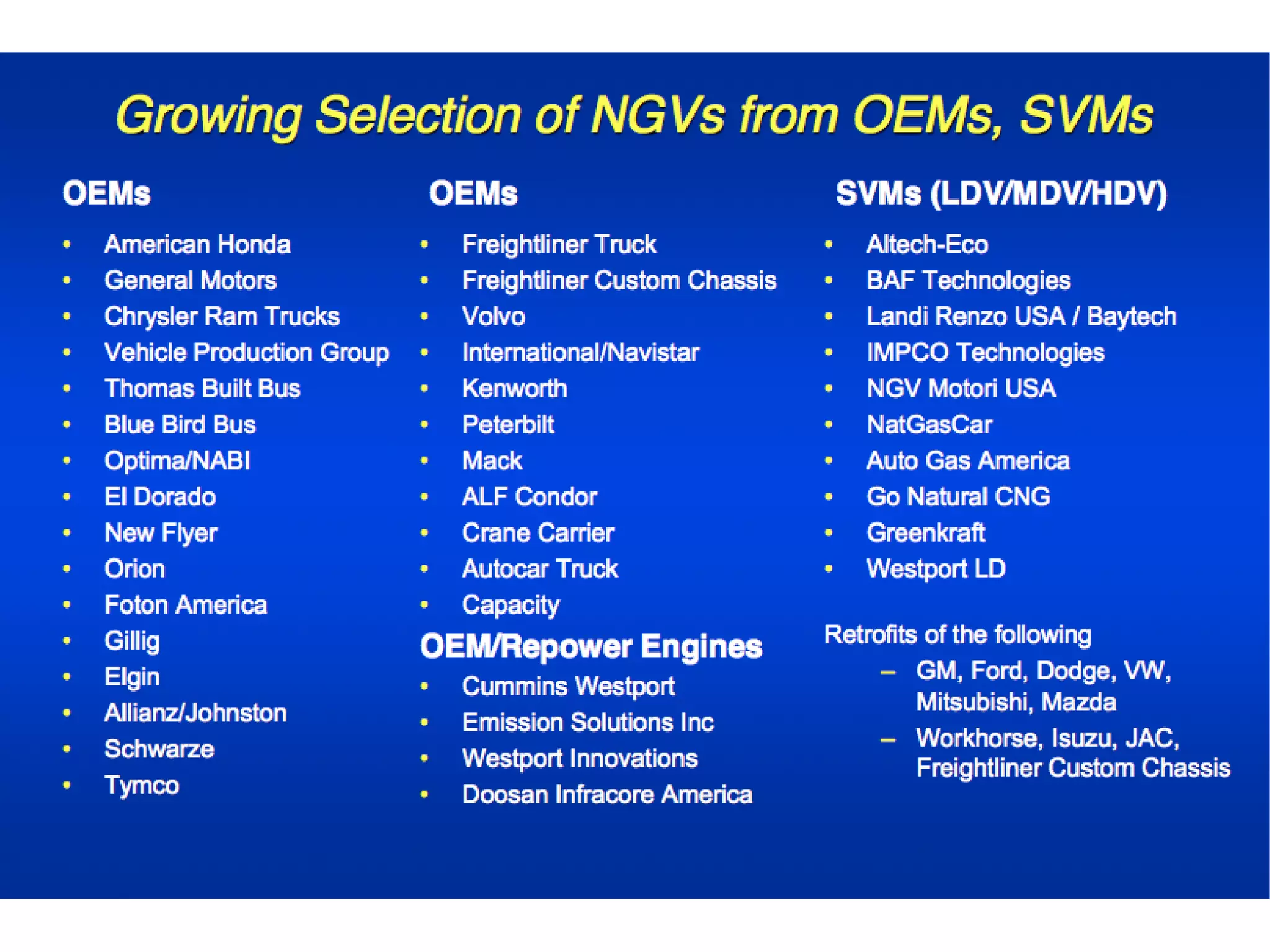
• A growing selection of light-, medium- and heavy-duty NGVs are
available from OEMs and SVMs, delivering performance and reliability
that are on par with gasoline and diesel counterparts.
• A variety of fueling options are available – LDCs, E&Ps, leasing
companies, other customers and independent fuel retailers – both NGV-
focused and, now, more traditional fuel retailers - are engaging to develop
fueling infrastructure.
from NGVAmerica
Why CNG?
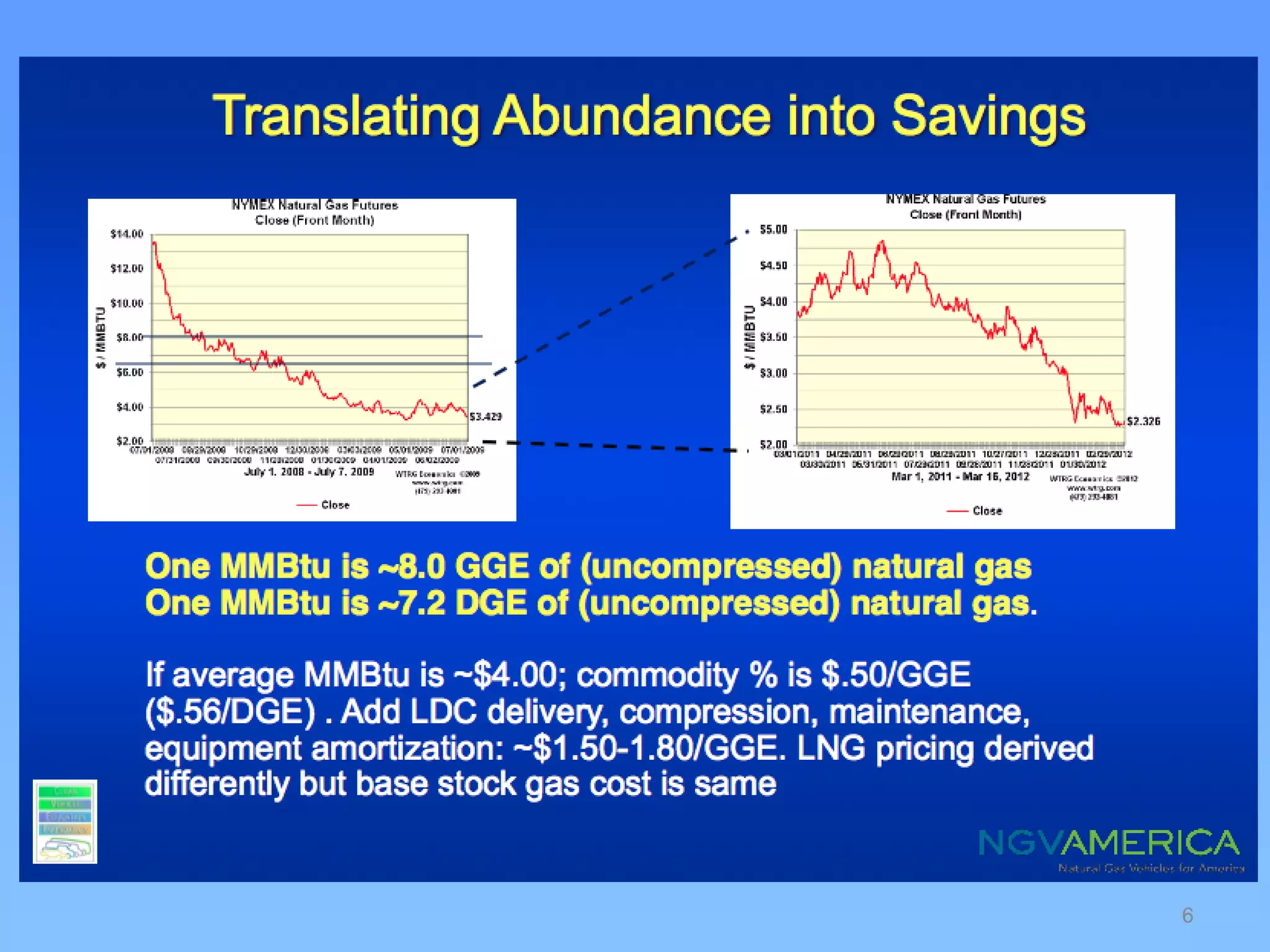
6
7
8
9
10
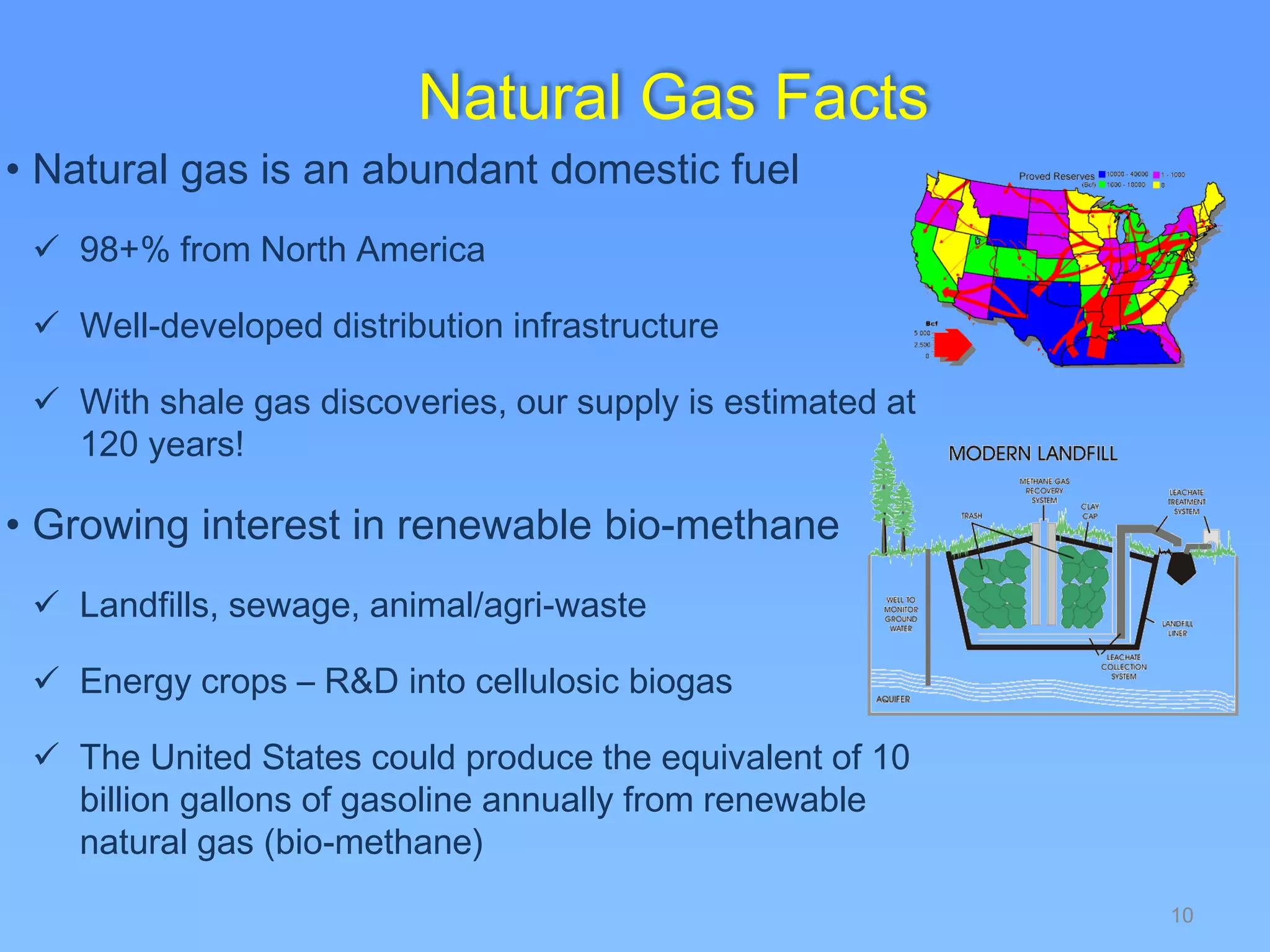
Natural Gas Facts
• Natural gas is an abundant domestic fuel
 98+% from North America
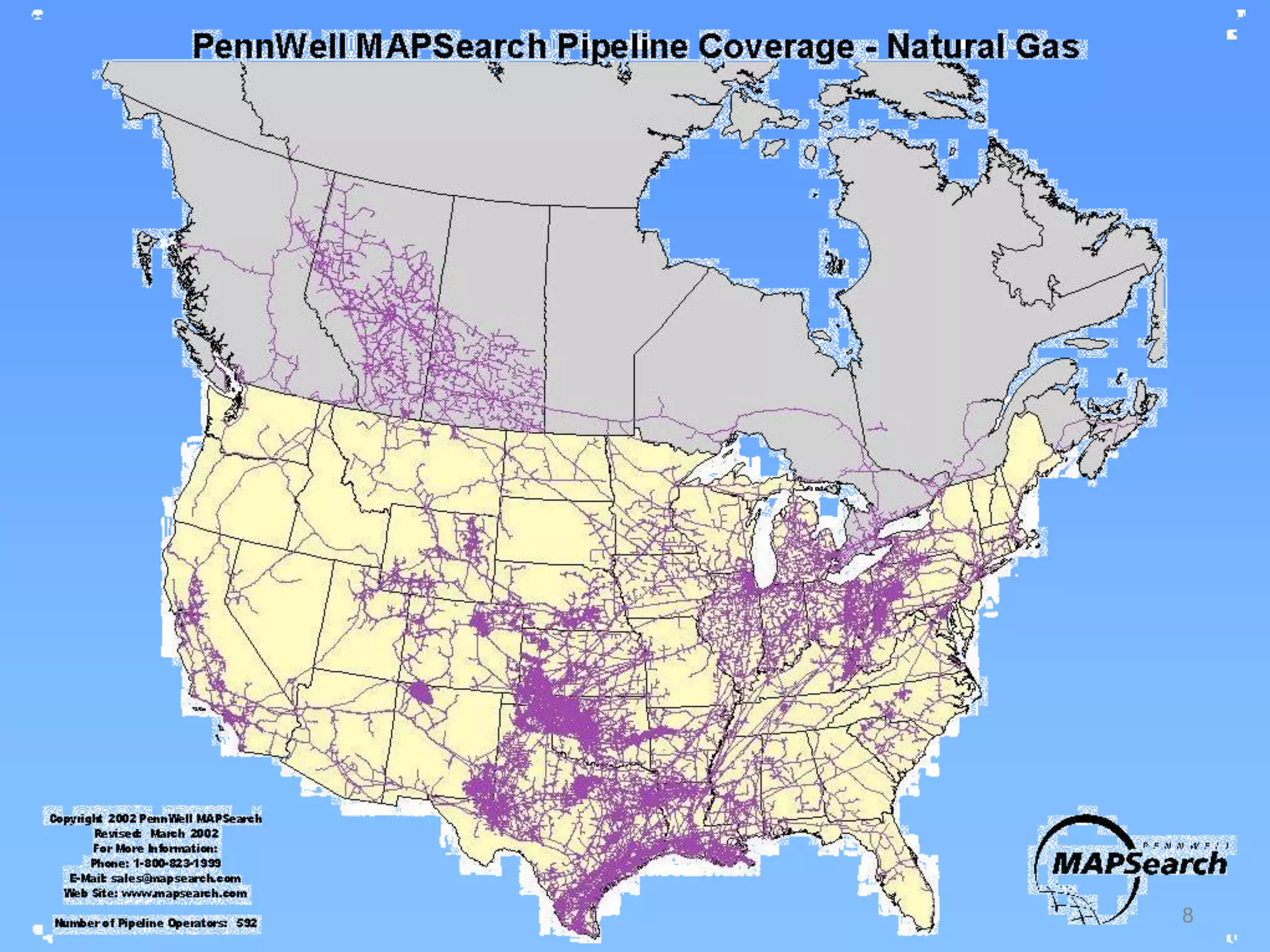
 Well-developed distribution infrastructure
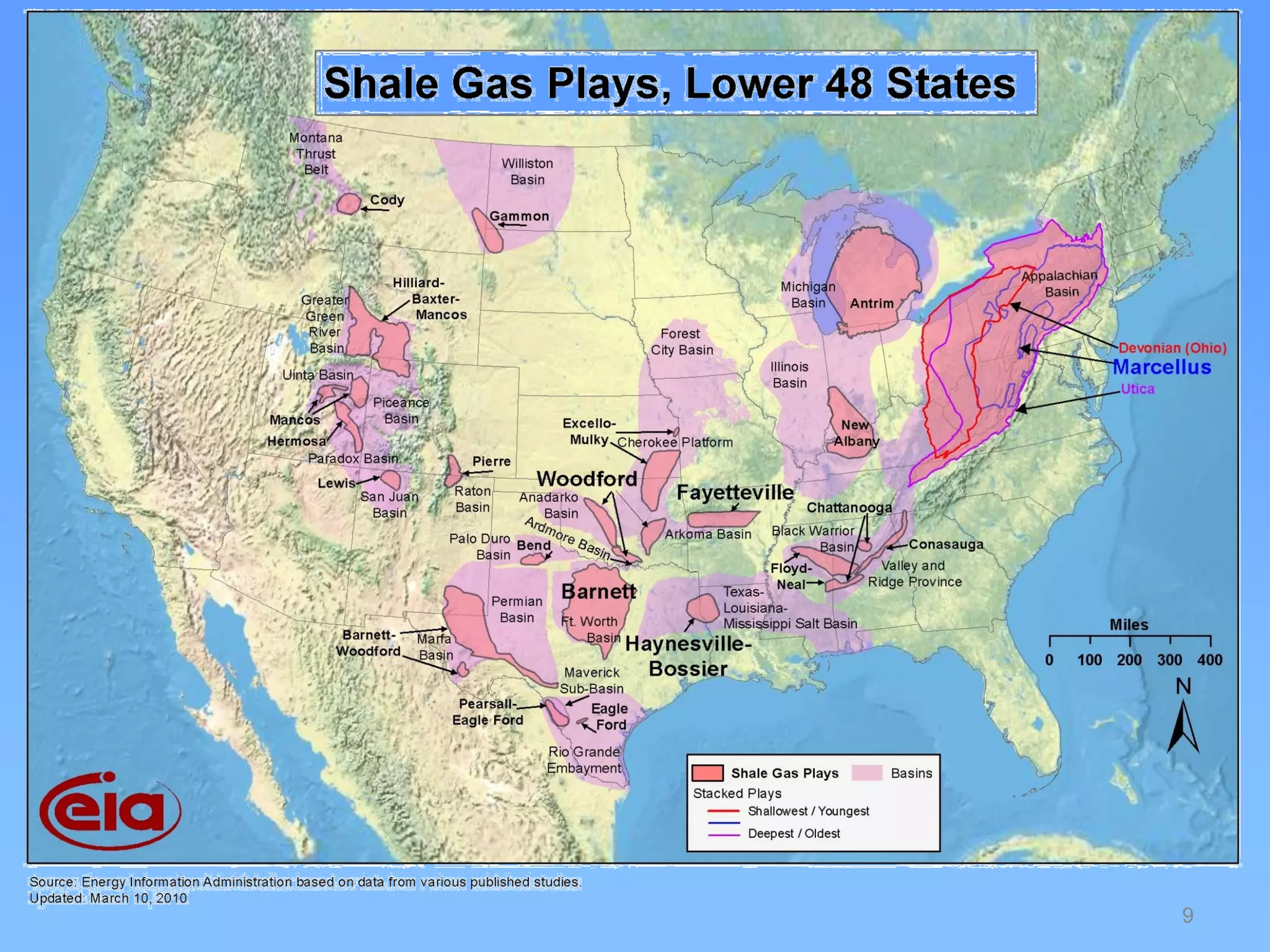
 With shale gas discoveries, our supply is estimated at
120 years!
• Growing interest in renewable bio-methane
 Landfills, sewage, animal/agri-waste
 Energy crops – R&D into cellulosic biogas
 The United States could produce the equivalent of 10
billion gallons of gasoline annually from renewable
natural gas (bio-methane)
11
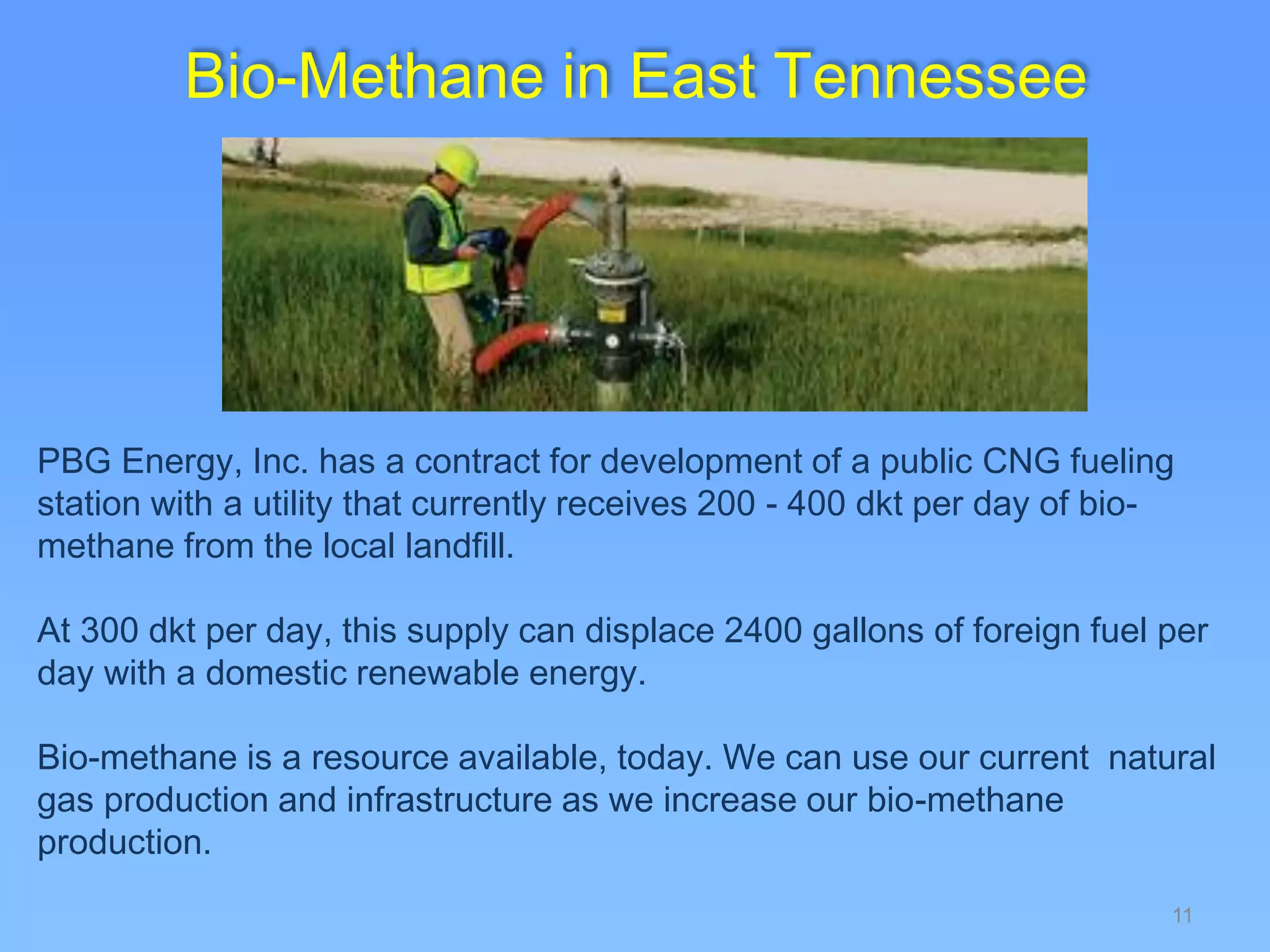
Bio-Methane in East Tennessee
PBG Energy, Inc. has a contract for development of a public CNG fueling
station with a utility that currently receives 200 - 400 dkt per day of bio-
methane from the local landfill.
At 300 dkt per day, this supply can displace 2400 gallons of foreign fuel per
day with a domestic renewable energy.
Bio-methane is a resource available, today. We can use our current natural
gas production and infrastructure as we increase our bio-methane
production.
12
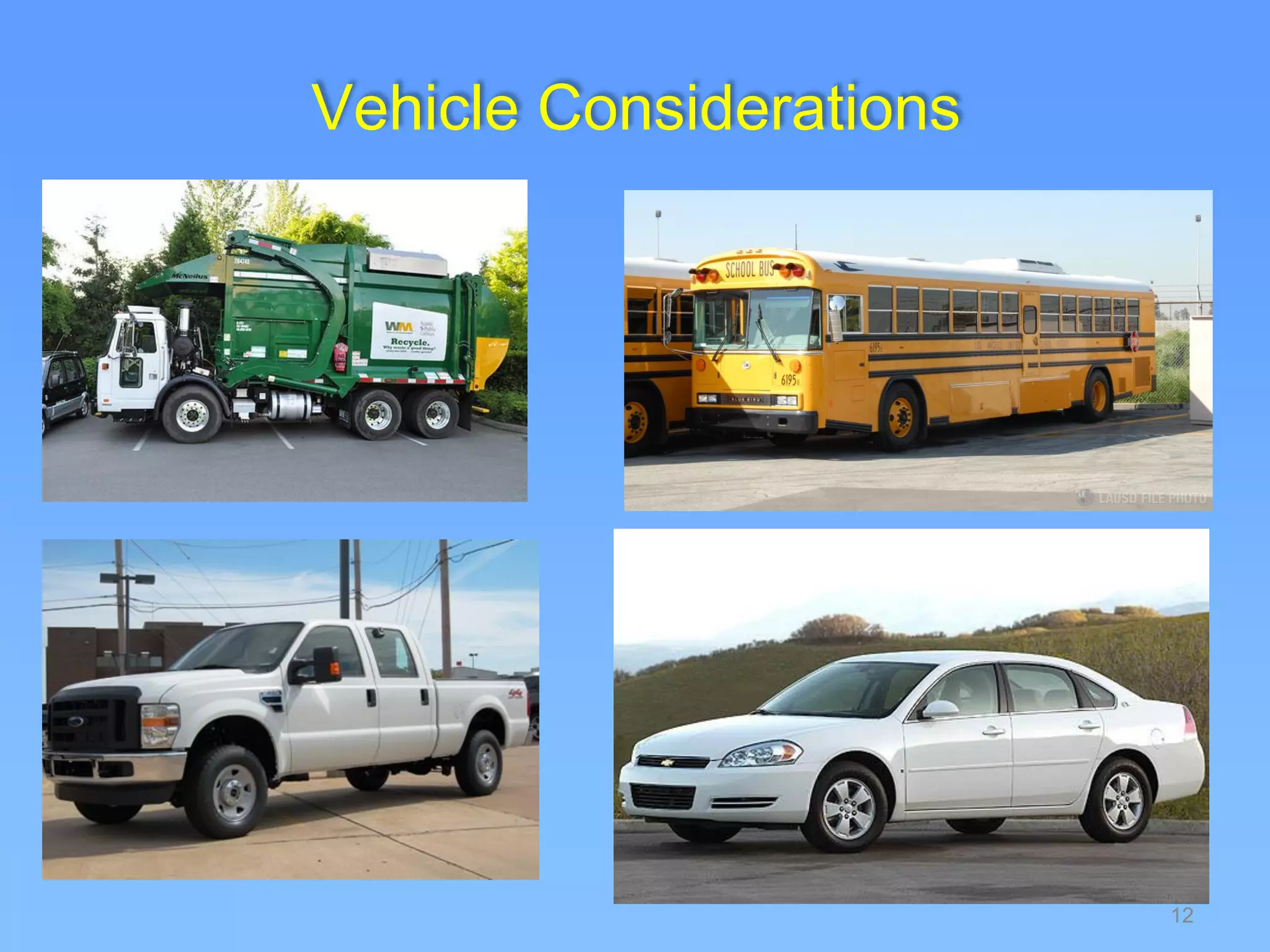
Vehicle Considerations
13
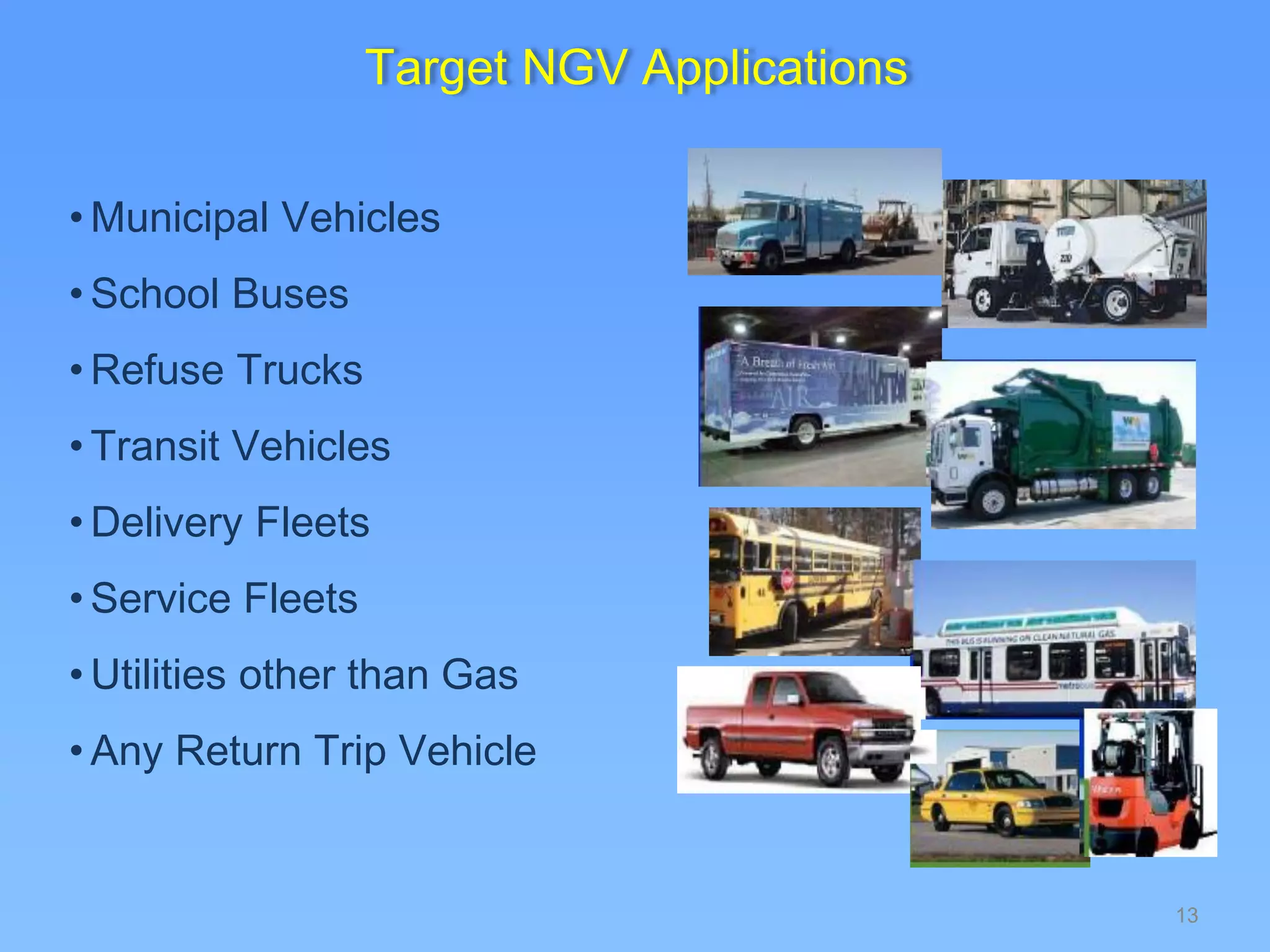
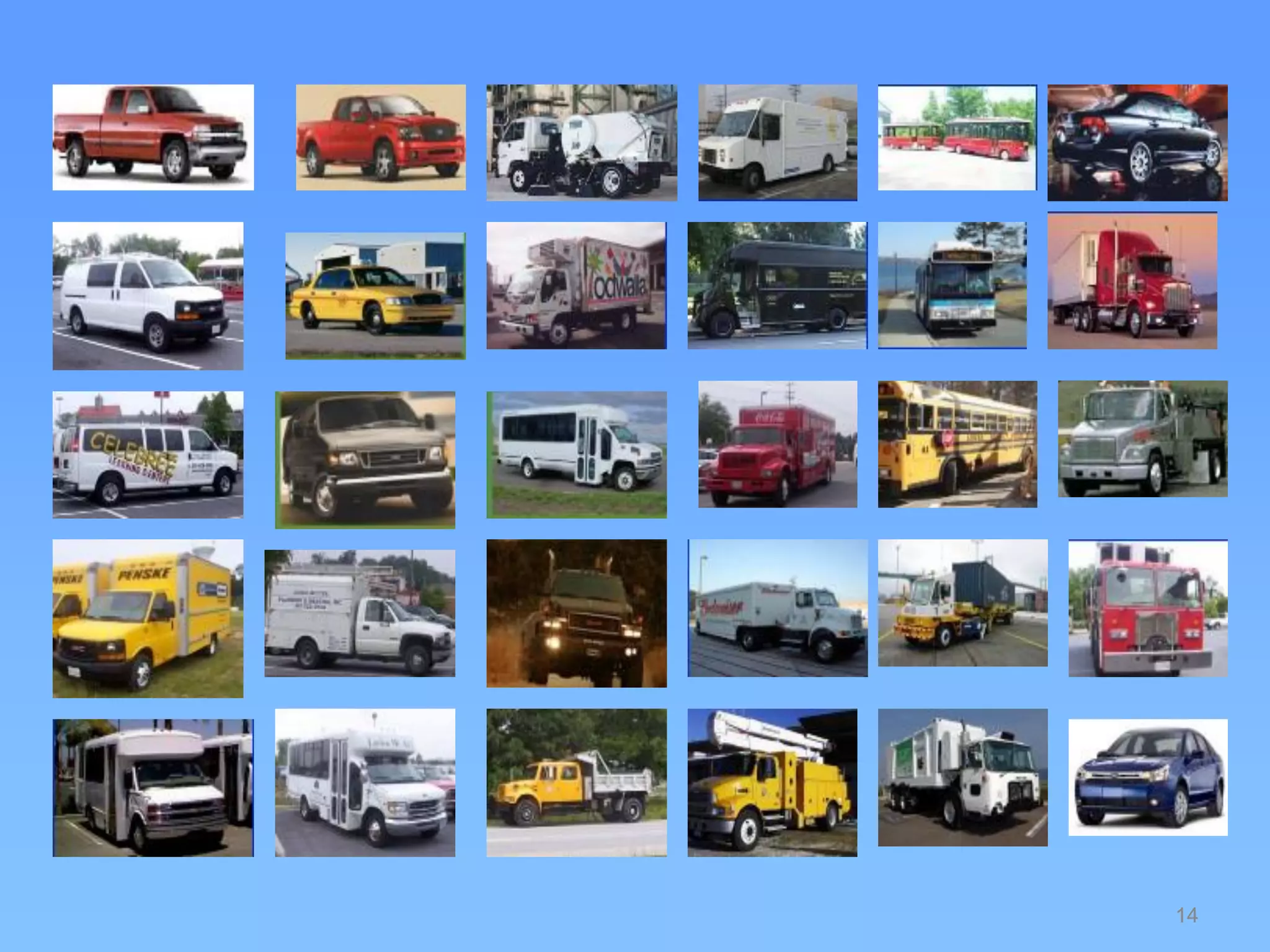
Target NGV Applications
• Municipal Vehicles
• School Buses
• Refuse Trucks
• Transit Vehicles
• Delivery Fleets
• Service Fleets
• Utilities other than Gas
• Any Return Trip Vehicle
14
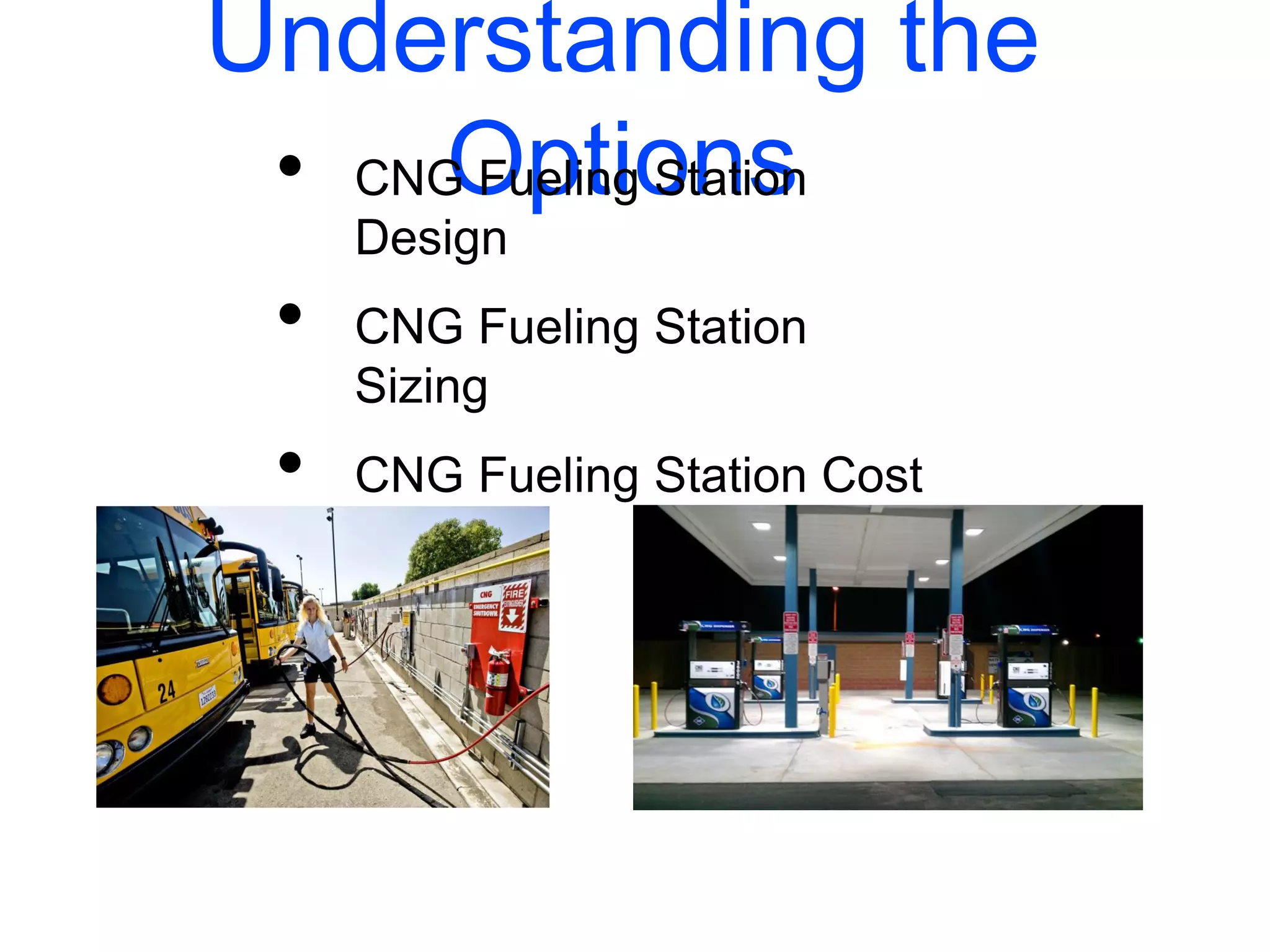
Understanding the
Options• CNG Fueling Station
Design
• CNG Fueling Station
Sizing
• CNG Fueling Station Cost
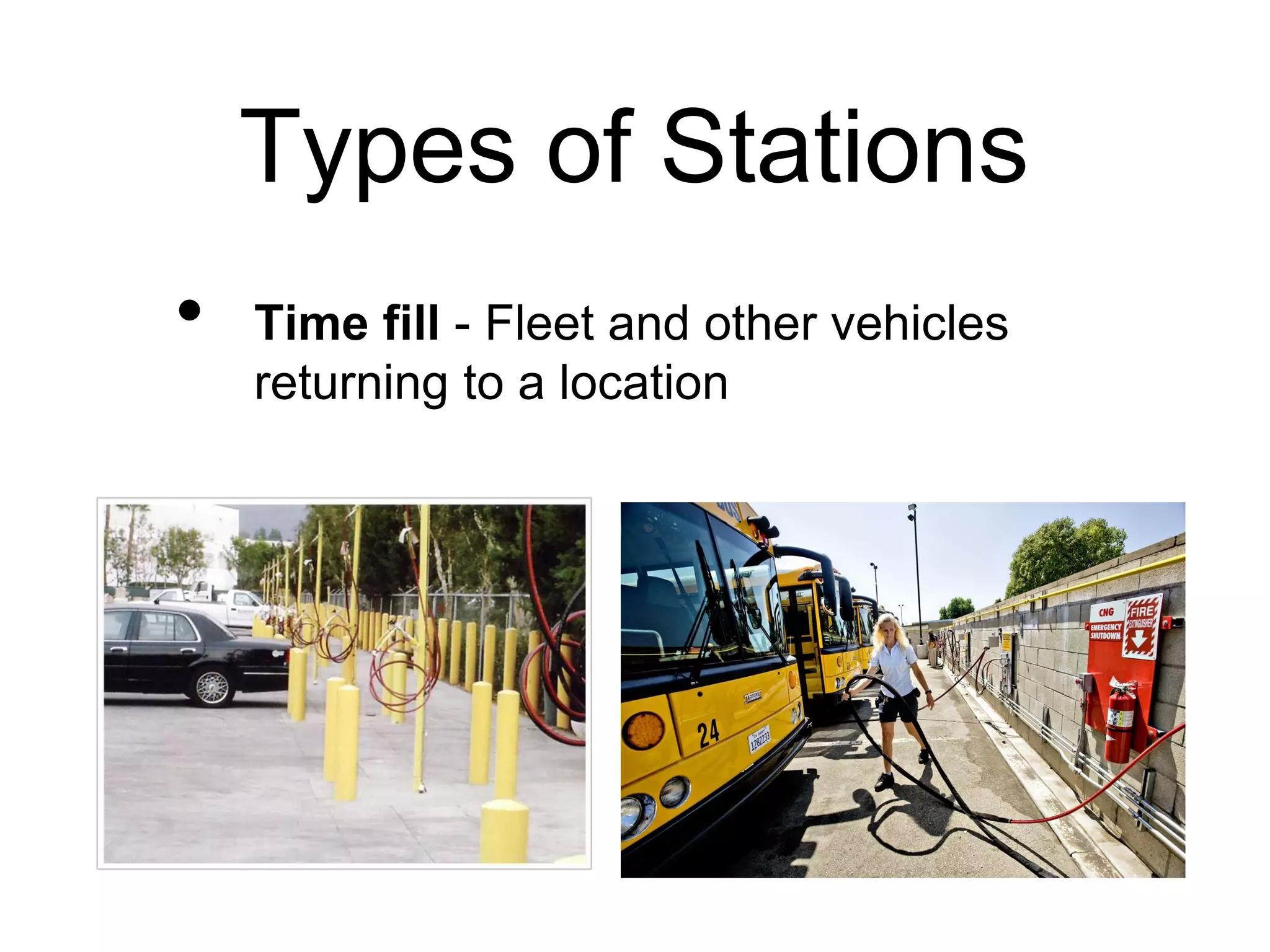
Types of Stations
• Time fill - Fleet and other vehicles
returning to a location
18
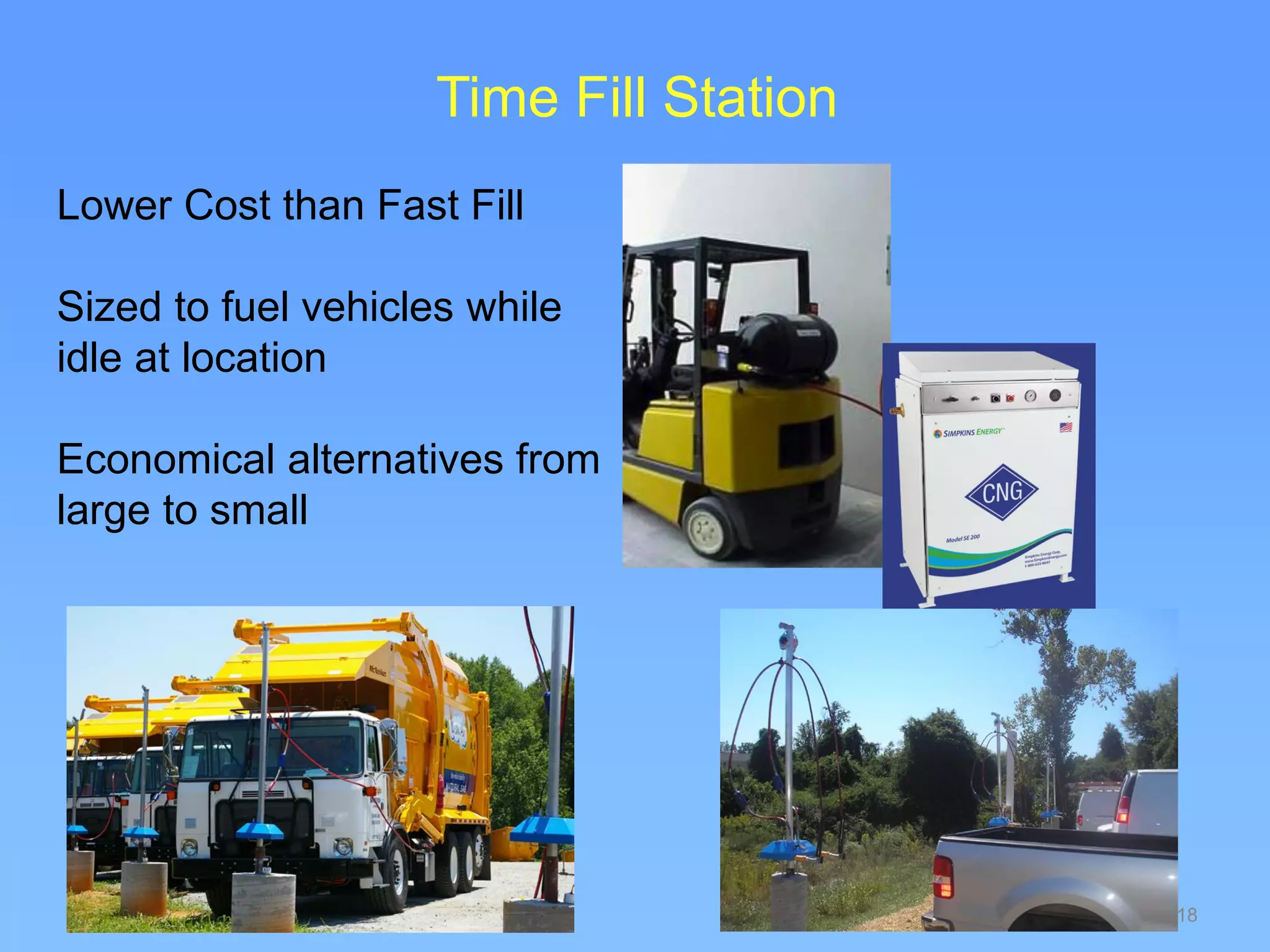
Lower Cost than Fast Fill
Sized to fuel vehicles while
idle at location
Economical alternatives from
large to small
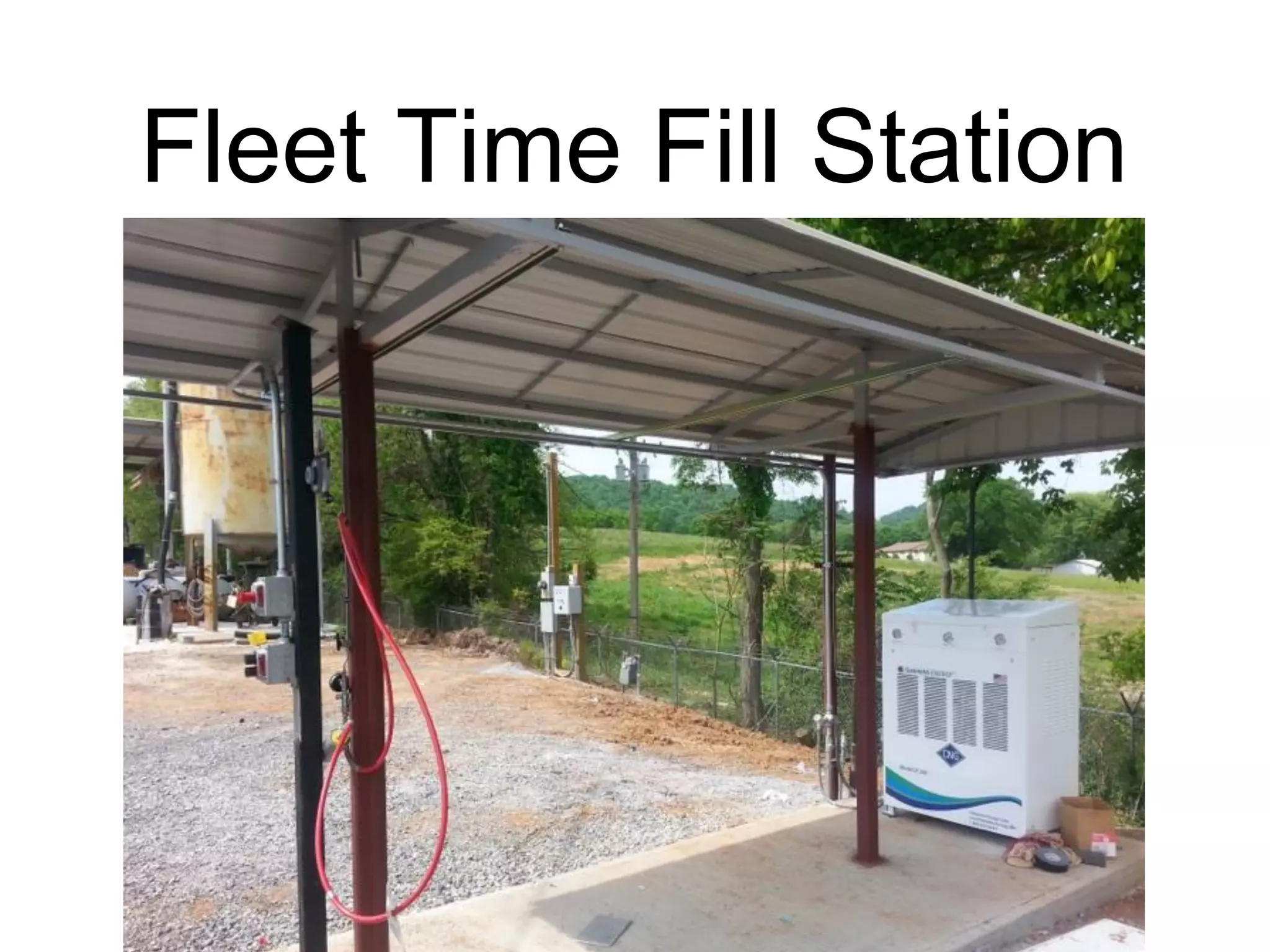
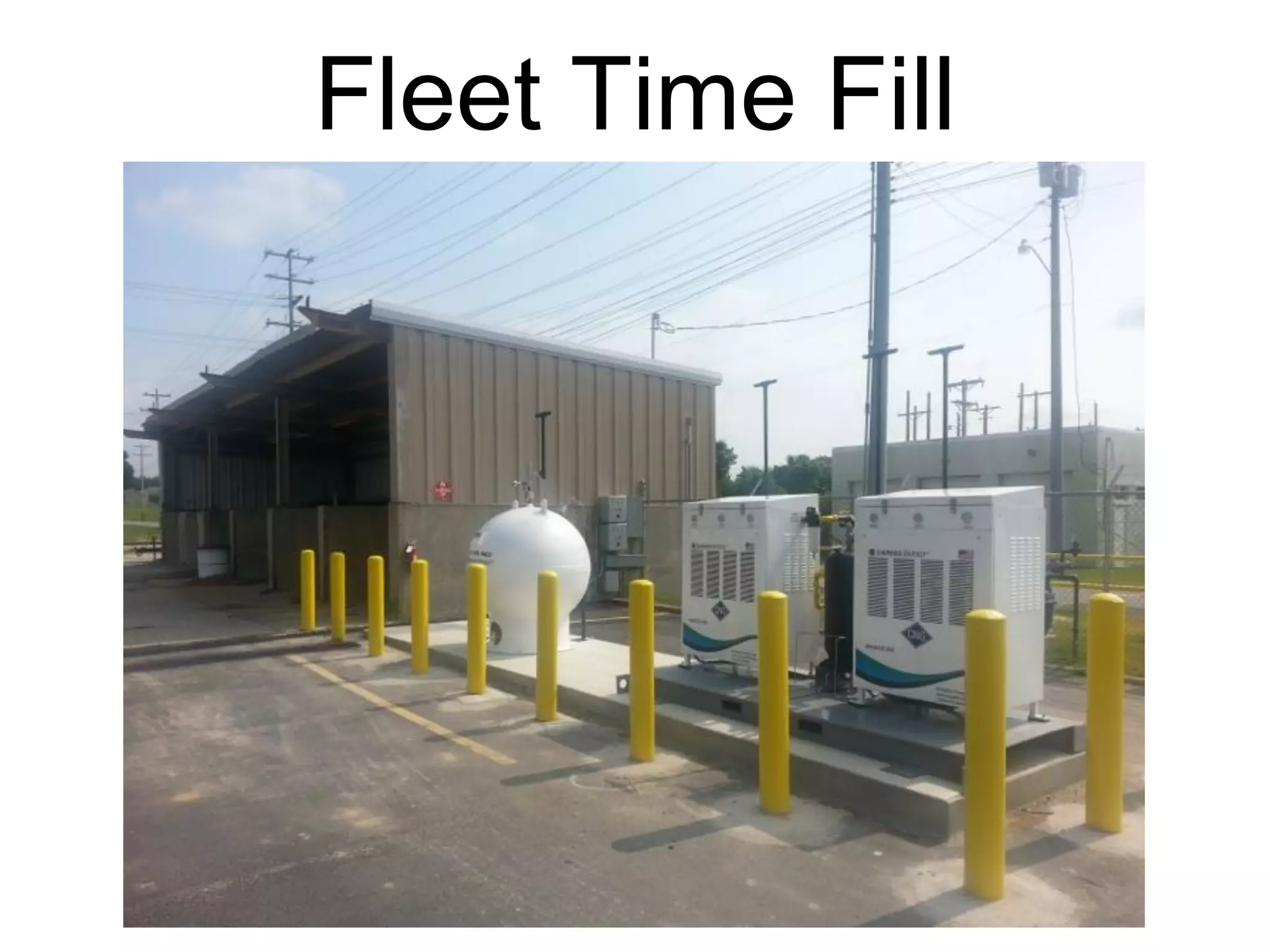
Time Fill Station
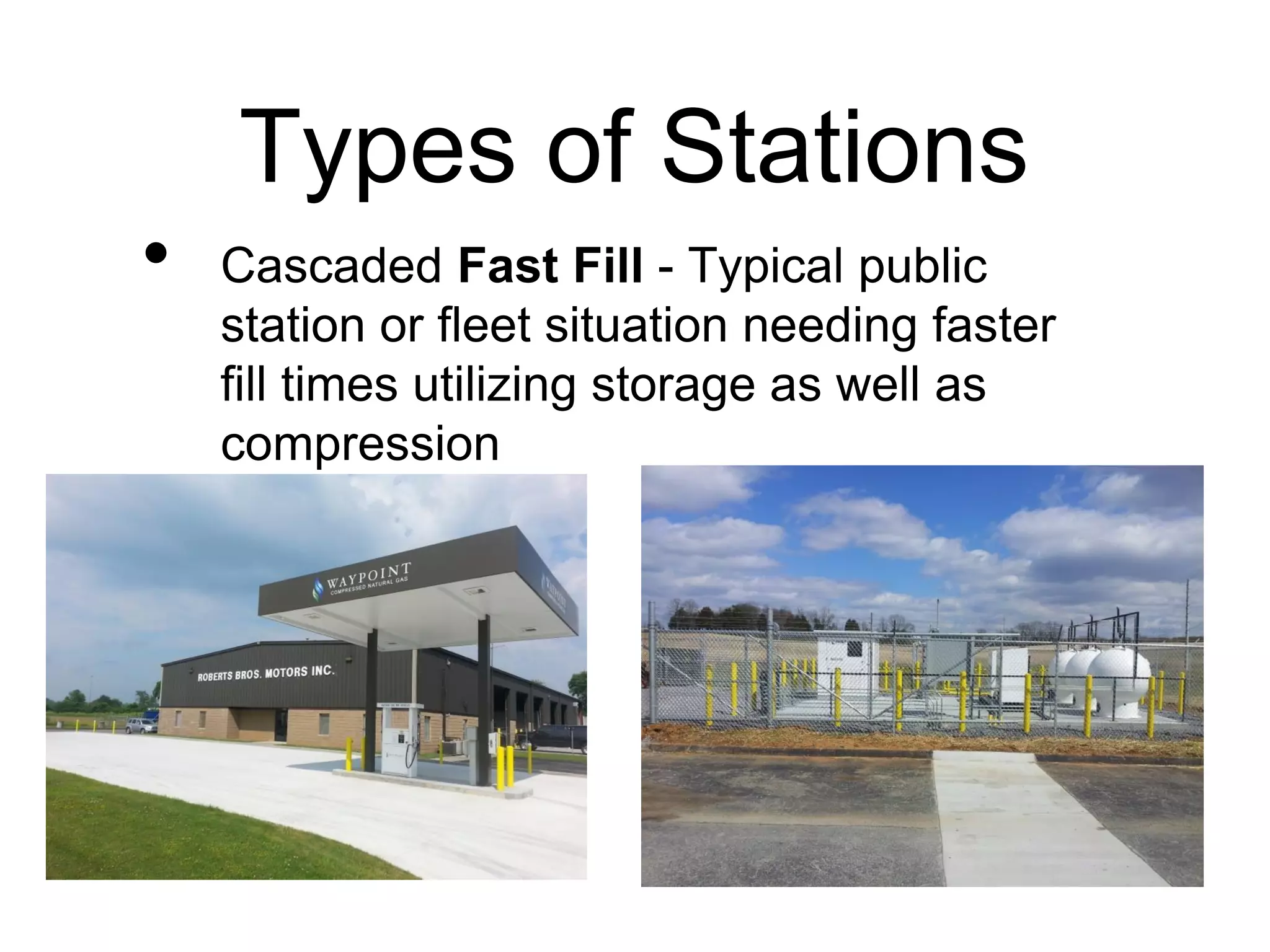
Types of Stations
• Cascaded Fast Fill - Typical public
station or fleet situation needing faster
fill times utilizing storage as well as
compression
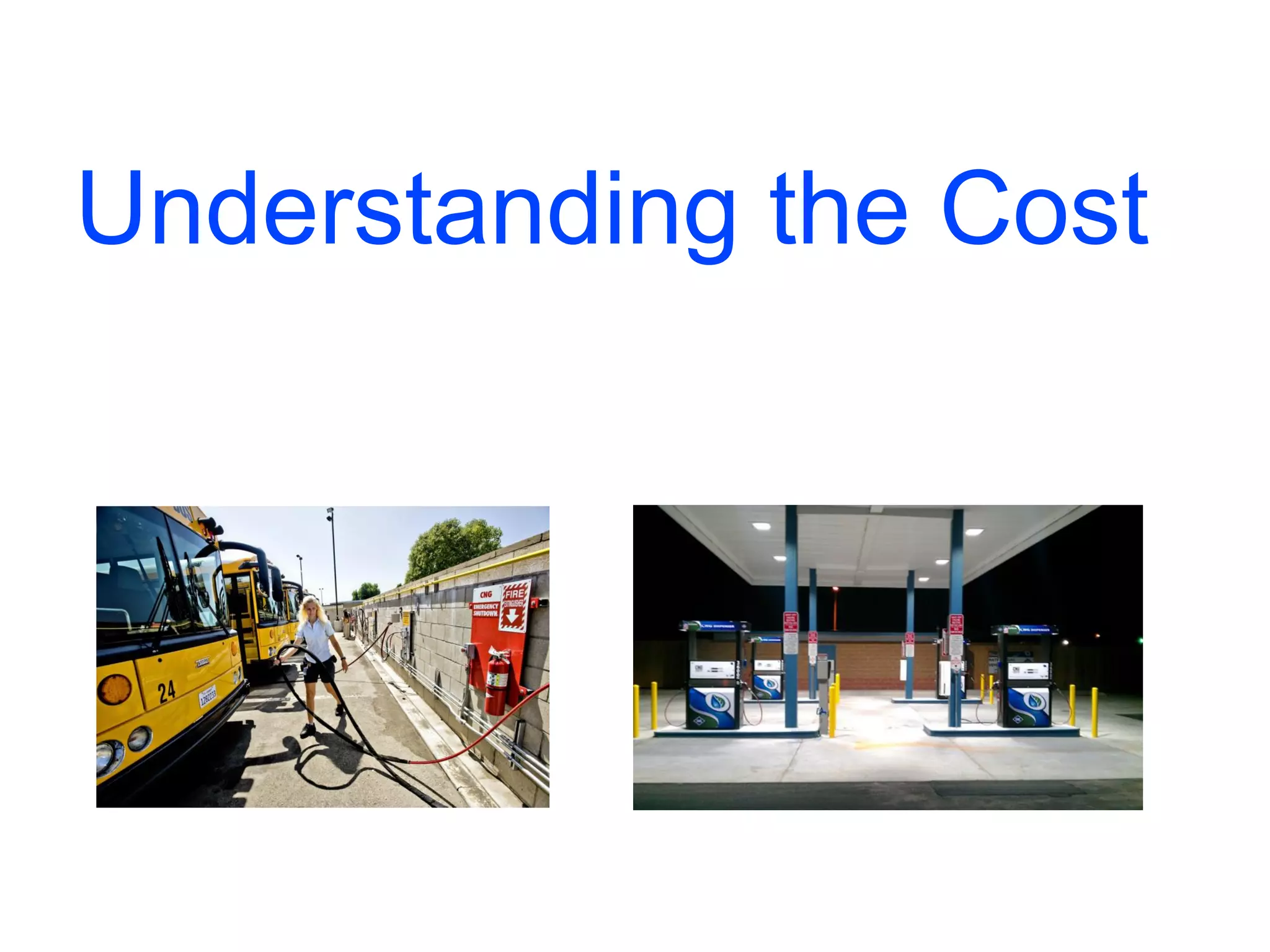
Understanding the Cost
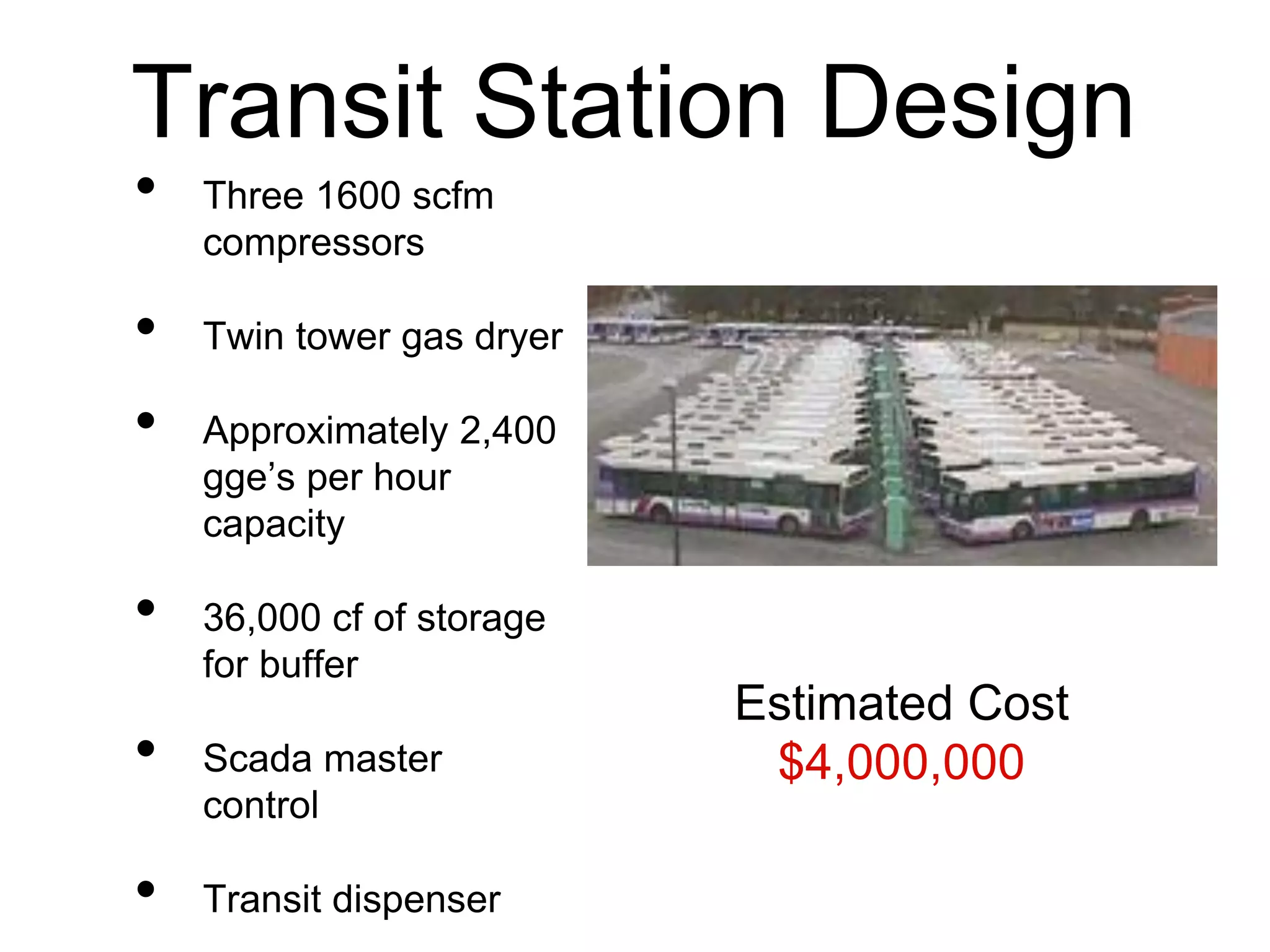
Transit Station Design
• Three 1600 scfm
compressors
• Twin tower gas dryer
• Approximately 2,400
gge’s per hour
capacity
• 36,000 cf of storage
for buffer
• Scada master
control
• Transit dispenser
Estimated Cost
$4,000,000
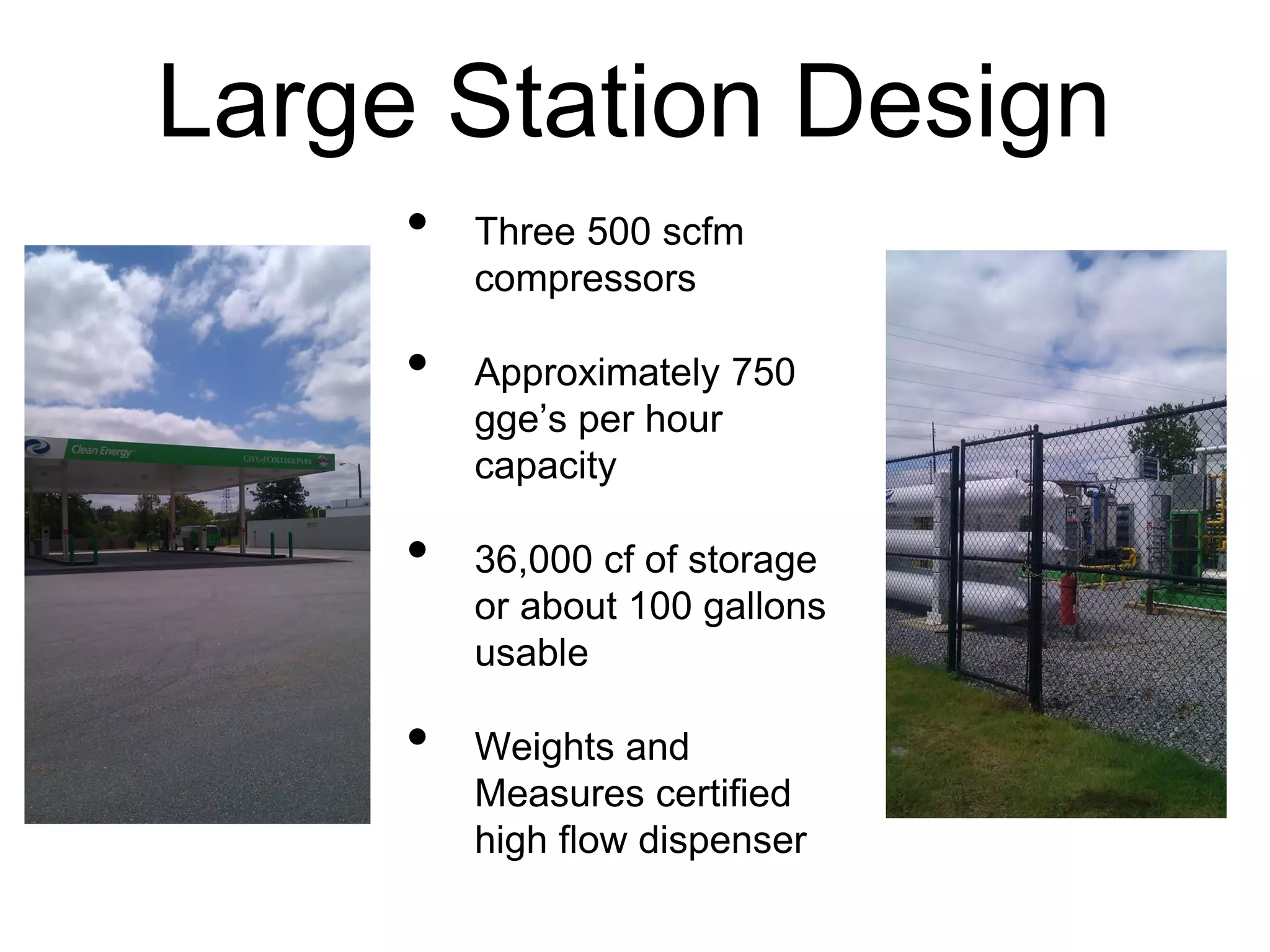
Large Station Design
• Three 500 scfm
compressors
• Approximately 750
gge’s per hour
capacity
• 36,000 cf of storage
or about 100 gallons
usable
• Weights and
Measures certified
high flow dispenser
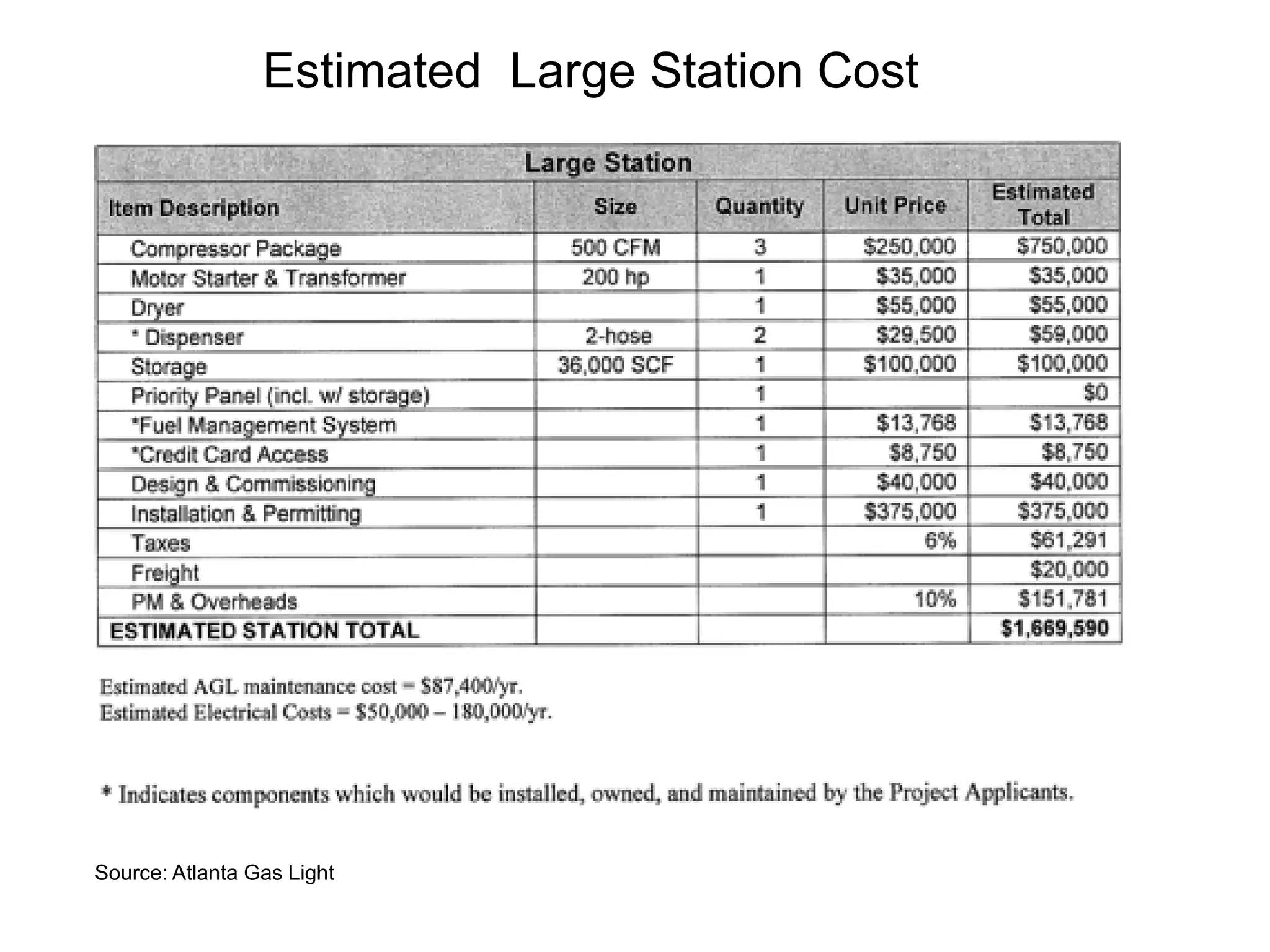
Estimated Large Station Cost
Source: Atlanta Gas Light
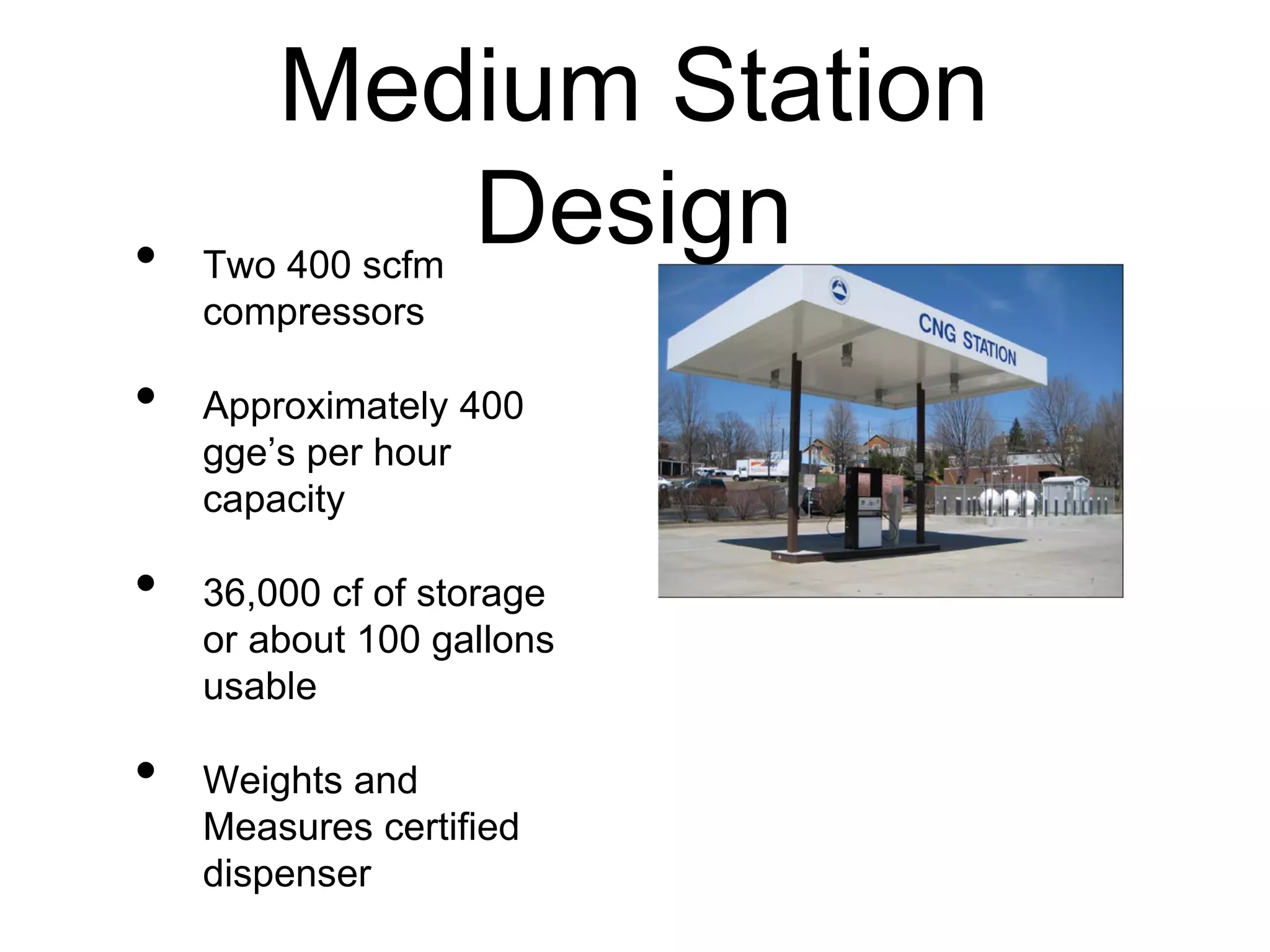
Medium Station
Design• Two 400 scfm
compressors
• Approximately 400
gge’s per hour
capacity
• 36,000 cf of storage
or about 100 gallons
usable
• Weights and
Measures certified
dispenser
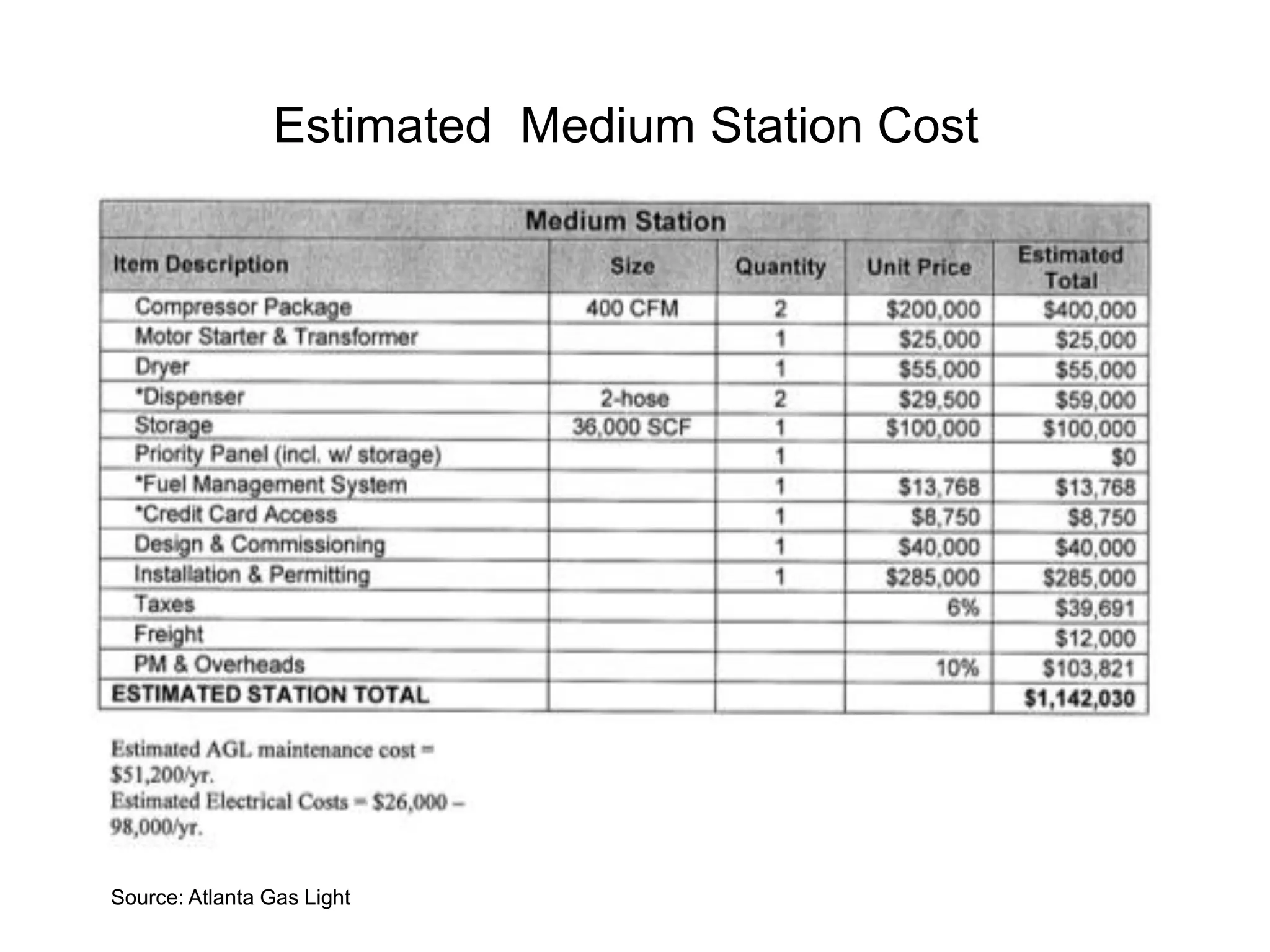
Estimated Medium Station Cost
Source: Atlanta Gas Light
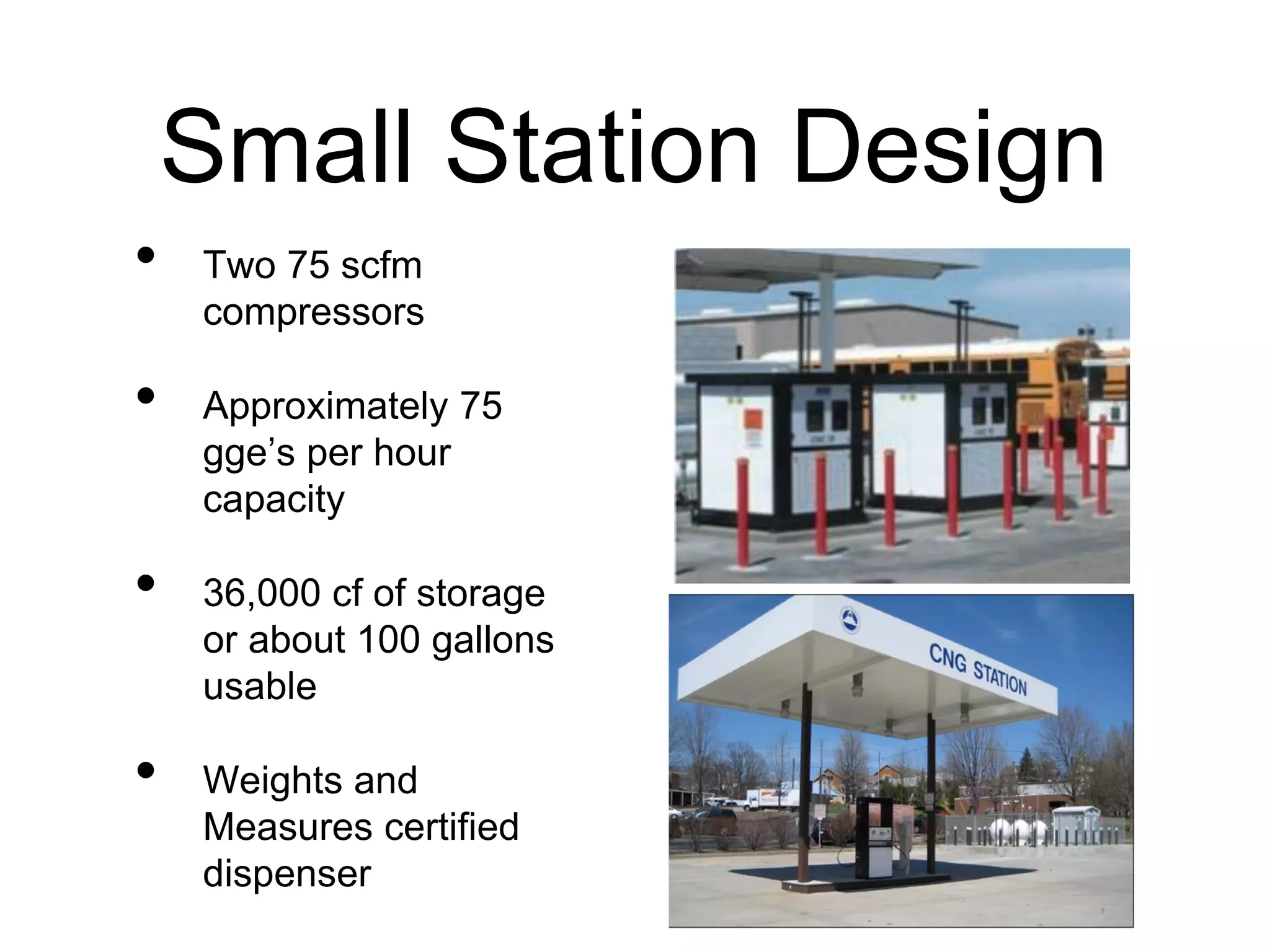
Small Station Design
• Two 75 scfm
compressors
• Approximately 75
gge’s per hour
capacity
• 36,000 cf of storage
or about 100 gallons
usable
• Weights and
Measures certified
dispenser
Source: Atlanta Gas Light
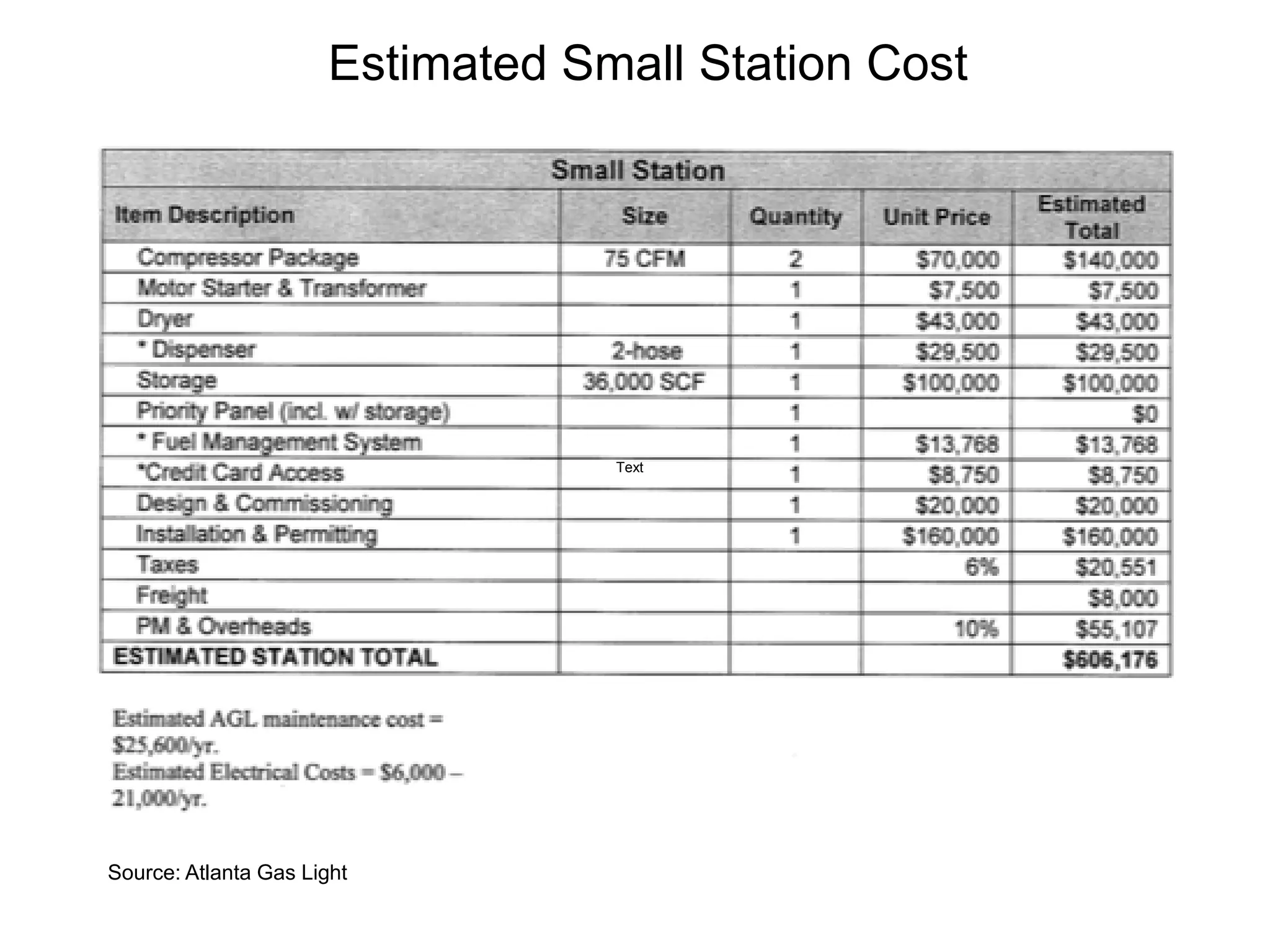
Estimated Small Station Cost
Text
Not Small Enough
Yet?
Fleet Time Fill Station
Fleet Time Fill
31
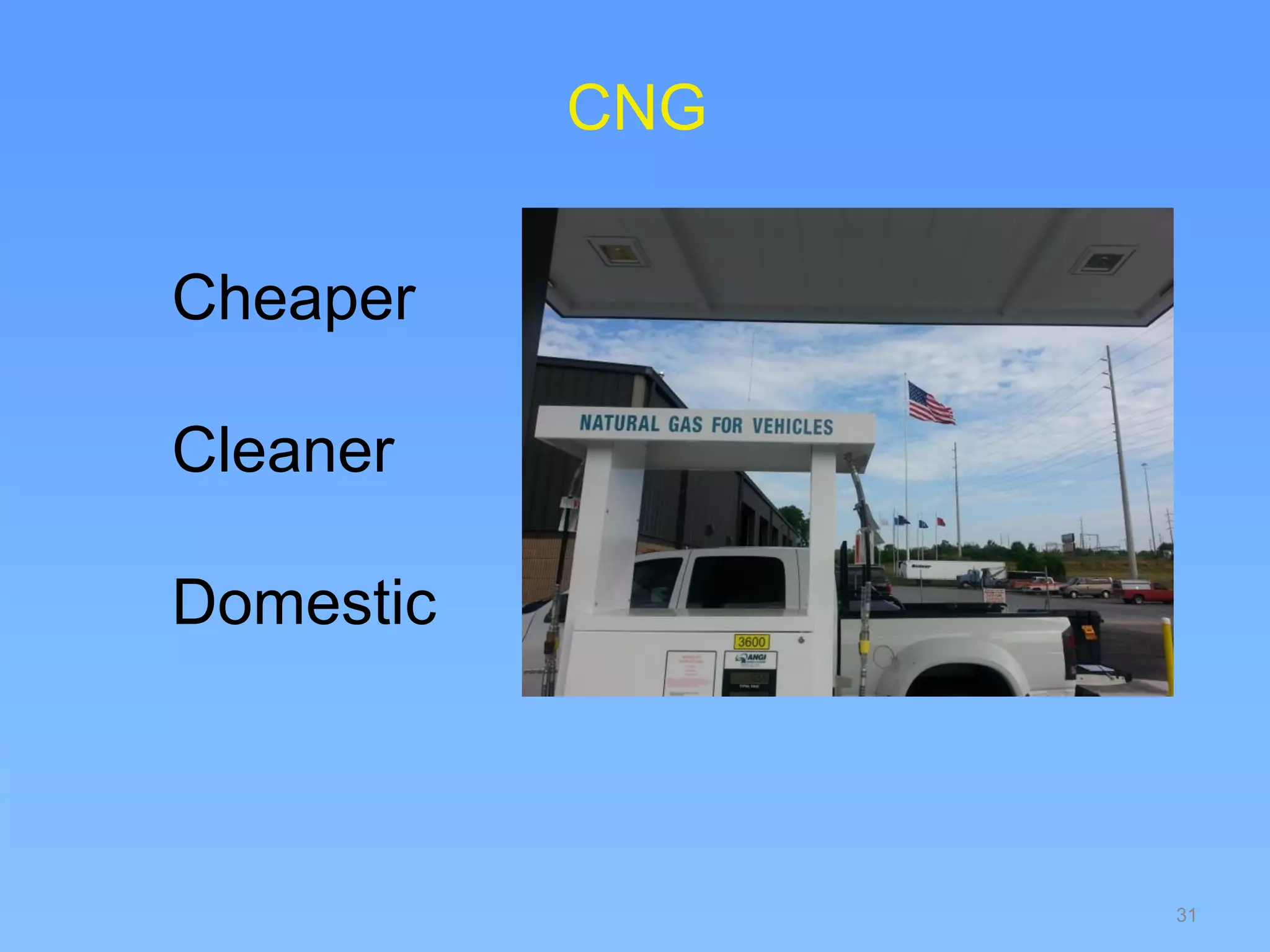
CNG
Cheaper
Cleaner
Domestic
32
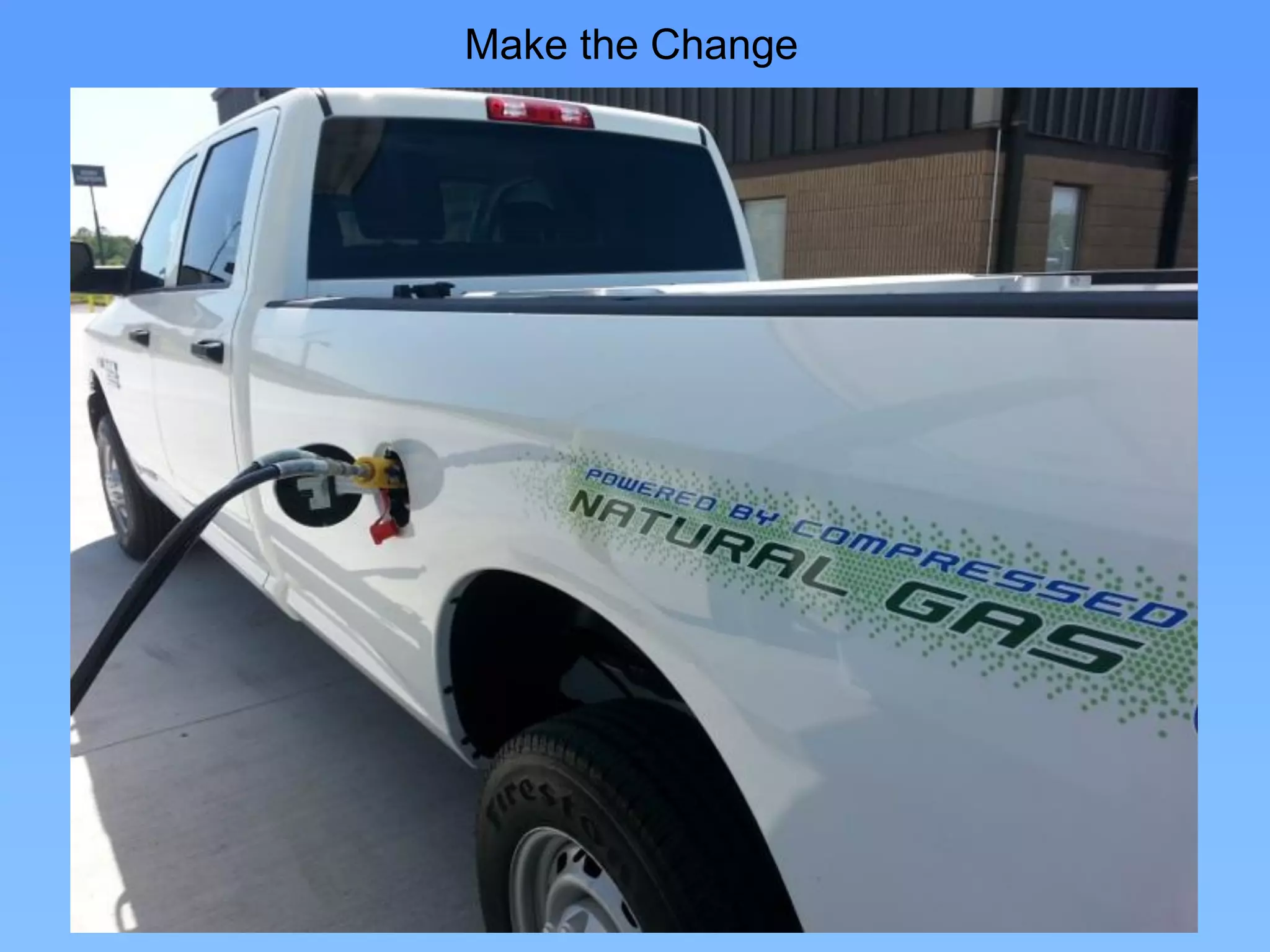
Make the Change
33
34
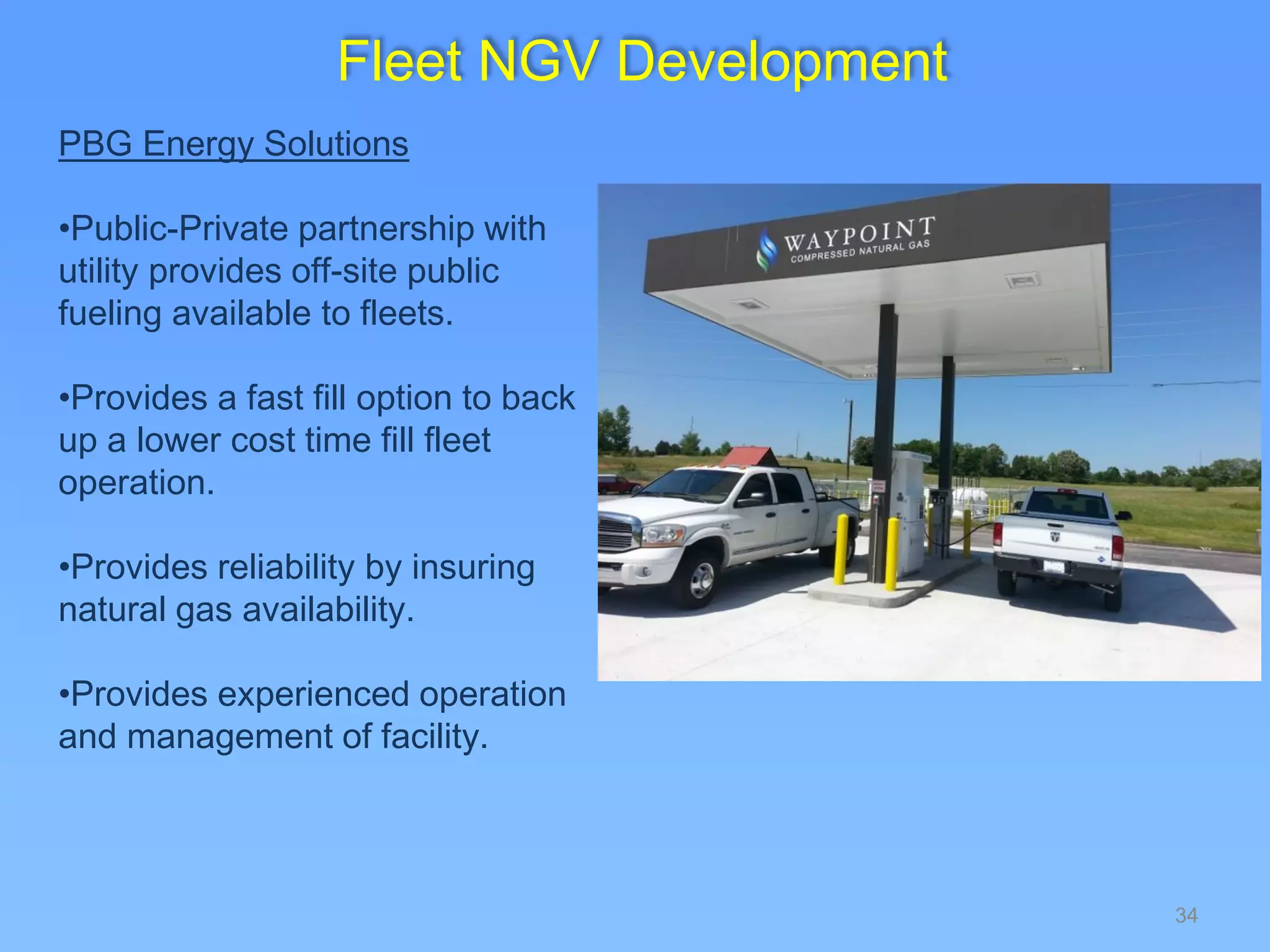
PBG Energy Solutions
•Public-Private partnership with
utility provides off-site public
fueling available to fleets.
•Provides a fast fill option to back
up a lower cost time fill fleet
operation.
•Provides reliability by insuring
natural gas availability.
•Provides experienced operation
and management of facility.
Fleet NGV Development
35
•Natural Gas is a Clean, Domestic, and Economical
transportation fuel
•Sending more than a billion dollars a day overseas for
oil hurts our economy
•Natural gas is plentiful and is easily utilized to displace
foreign oil
•The economics of CNG are very favorable to forge
alliances between fleets and end users, and natural gas
distribution companies (gas utilities)
Conclusions
36
•Jobs
•Cleaner Environment
•Energy Security
•Economic Engine
It’s about:
Doing something positive
Changing the World
37
Special thanks to:
TREEDC, Atlanta Gas Light, Tennessee Gas Association,
East Tennessee Clean Fuels Coalition
NGV America and Clean Vehicle Education Foundation
CNGnow.com, AGA.org, and DOE.gov
for their help and information provided for this presentation.
Thanks For Your Time and Interest
Contact: Robert Patterson
865-256-2612
rpatterson@pbgenergyinc.com

Compressed Natural Gas for Area Fleets

  • 1.
  • 2.
    2 Why We areHere • We are promoting Natural Gas as a transportation fuel • We are partnering with others to build public access CNG fueling stations • We are creating a network of CNG fueling stations across the state of Tennessee • We are working with fleets to assess and implement NGVs into their fleets
  • 3.
    3 Natural Gas Facts •Natural gas is very safe  Lighter than air – dissipates when released  High ignition temperature: 1000F – 1100F  Limited range of air/fuel combustion ratio (5- 15%)  Colorless, odorless, non-toxic substance  Doesn’t leak into groundwater  Comprehensive fuel tank, vehicle and station design/mfg codes & standards • Natural gas is an inherently clean fuel  Natural gas is mostly methane: one carbon atom, CH4  Diesel – C14H30; Gasoline – C8H18; Propane – C3H8  Less NOx, soot and greenhouse gases than petroleum fuels  NGVs produce between 93-95% fewer overall toxics and reduces greenhouse gas emissions by 23-29% compared with diesel- and gasoline-fueled vehicles
  • 4.
    4 Why CNG? • EnvironmentalFactors o Air quality o Health issues • Issues with foreign oil o Uncertainty of oil pricing o U.S. is 5% of world population but uses 25% of the world’s oil o 65+% of U.S. is imported, mostly for transportation o Expanding Asian economies are putting upward pressure on world energy prices, especially oil • Tightening EPA restrictions o Tightening restriction on HDVs creates performance loss and increased O&O costs. o Large percentage of population live in non-compliance areas • Global cap and trade o International pressure to reduce pollution
  • 5.
    5 Environmental, energy securityand – now, more than ever due to domestic natural gas abundance - economic market drivers are behind the trend toward greater use of NGVs. While fleet fuel use has been the primary focus, potential consumer market is now spurring additional investment in infrastructure. • A growing selection of light-, medium- and heavy-duty NGVs are available from OEMs and SVMs, delivering performance and reliability that are on par with gasoline and diesel counterparts. • A variety of fueling options are available – LDCs, E&Ps, leasing companies, other customers and independent fuel retailers – both NGV- focused and, now, more traditional fuel retailers - are engaging to develop fueling infrastructure. from NGVAmerica Why CNG?
  • 6.
  • 7.
  • 8.
  • 9.
  • 10.
    10 Natural Gas Facts •Natural gas is an abundant domestic fuel  98+% from North America  Well-developed distribution infrastructure  With shale gas discoveries, our supply is estimated at 120 years! • Growing interest in renewable bio-methane  Landfills, sewage, animal/agri-waste  Energy crops – R&D into cellulosic biogas  The United States could produce the equivalent of 10 billion gallons of gasoline annually from renewable natural gas (bio-methane)
  • 11.
    11 Bio-Methane in EastTennessee PBG Energy, Inc. has a contract for development of a public CNG fueling station with a utility that currently receives 200 - 400 dkt per day of bio- methane from the local landfill. At 300 dkt per day, this supply can displace 2400 gallons of foreign fuel per day with a domestic renewable energy. Bio-methane is a resource available, today. We can use our current natural gas production and infrastructure as we increase our bio-methane production.
  • 12.
  • 13.
    13 Target NGV Applications •Municipal Vehicles • School Buses • Refuse Trucks • Transit Vehicles • Delivery Fleets • Service Fleets • Utilities other than Gas • Any Return Trip Vehicle
  • 14.
  • 16.
    Understanding the Options• CNGFueling Station Design • CNG Fueling Station Sizing • CNG Fueling Station Cost
  • 17.
    Types of Stations •Time fill - Fleet and other vehicles returning to a location
  • 18.
    18 Lower Cost thanFast Fill Sized to fuel vehicles while idle at location Economical alternatives from large to small Time Fill Station
  • 19.
    Types of Stations •Cascaded Fast Fill - Typical public station or fleet situation needing faster fill times utilizing storage as well as compression
  • 20.
  • 21.
    Transit Station Design •Three 1600 scfm compressors • Twin tower gas dryer • Approximately 2,400 gge’s per hour capacity • 36,000 cf of storage for buffer • Scada master control • Transit dispenser Estimated Cost $4,000,000
  • 22.
    Large Station Design •Three 500 scfm compressors • Approximately 750 gge’s per hour capacity • 36,000 cf of storage or about 100 gallons usable • Weights and Measures certified high flow dispenser
  • 23.
    Estimated Large StationCost Source: Atlanta Gas Light
  • 24.
    Medium Station Design• Two400 scfm compressors • Approximately 400 gge’s per hour capacity • 36,000 cf of storage or about 100 gallons usable • Weights and Measures certified dispenser
  • 25.
    Estimated Medium StationCost Source: Atlanta Gas Light
  • 26.
    Small Station Design •Two 75 scfm compressors • Approximately 75 gge’s per hour capacity • 36,000 cf of storage or about 100 gallons usable • Weights and Measures certified dispenser
  • 27.
    Source: Atlanta GasLight Estimated Small Station Cost Text
  • 28.
  • 29.
  • 30.
  • 31.
  • 32.
  • 33.
  • 34.
    34 PBG Energy Solutions •Public-Privatepartnership with utility provides off-site public fueling available to fleets. •Provides a fast fill option to back up a lower cost time fill fleet operation. •Provides reliability by insuring natural gas availability. •Provides experienced operation and management of facility. Fleet NGV Development
  • 35.
    35 •Natural Gas isa Clean, Domestic, and Economical transportation fuel •Sending more than a billion dollars a day overseas for oil hurts our economy •Natural gas is plentiful and is easily utilized to displace foreign oil •The economics of CNG are very favorable to forge alliances between fleets and end users, and natural gas distribution companies (gas utilities) Conclusions
  • 36.
    36 •Jobs •Cleaner Environment •Energy Security •EconomicEngine It’s about: Doing something positive Changing the World
  • 37.
    37 Special thanks to: TREEDC,Atlanta Gas Light, Tennessee Gas Association, East Tennessee Clean Fuels Coalition NGV America and Clean Vehicle Education Foundation CNGnow.com, AGA.org, and DOE.gov for their help and information provided for this presentation. Thanks For Your Time and Interest Contact: Robert Patterson 865-256-2612 rpatterson@pbgenergyinc.com