COMPREHENSION-BASED
APPROACH
Starlyn L. Lacambra
Rachelle O. Abalos
HISTORY
• The comprehension approach to
foreign language instruction
emerged in the 1970s and
constituted an alternative to the
dominant language-teaching
paradigm of that time, which
prioritized performance over
reception.
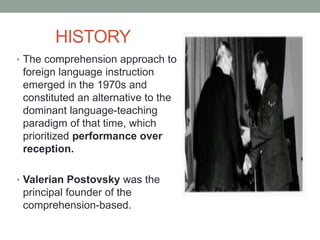
• Valerian Postovsky was the
principal founder of the
comprehension-based.
Introduction
• Comprehension-Based Approach
focuses on actual language input
and lowering the affective filter that
sometimes inhibits students
acquiring language.
• The CBA Approach stresses on
helping make meaning clear and
supporting learners gain confidence
so that they are willing to produce
language.
• It emphasize understanding of
language rather than speaking.
• This is in contrast to the better-known
communicative approach, under which
learning is thought to emerge through
language production
• The comprehension approach is most
strongly associated with the linguists Harris
Winitz, Stephen Krashen, Tracy D. Terrell
and James J. Asher.
• Krashen and James J
Asher asserted that students
learn language through
comprehensible input and
that teaching should focus on
helping students comprehend
language.
• James J. Asher created a
teaching method based on
the comprehension approach
called Total Physical
Response.
Aims:
• to help learners develop the desire
to learn the language for the joy of
learning and not for external
motivations..
• to help make meaning clear or to
make input comprehensible.
Key Features:
• Listening comprehension is very
important
• Learners should begin by
listening to meaningful speech
and by responding nonverbally
• Learners should not speak until
they feel ready to do so
• Rule learning may help learners
monitor what they do
• Error correction not necessary
• Authentic materials: audio and
video tapes
Procedure:
Comprehension-based
language teaching uses:
1.Many hours of listening activities
in the early stage of acquisition.
• Learners respond with TPR-style
task as well as non-verbal signs of
comprehension.
2. Instructor moves systematically
from concrete to abstract activities.
Procedure:
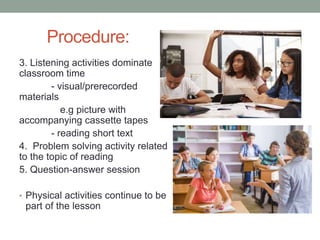
3. Listening activities dominate
classroom time
- visual/prerecorded
materials
e.g picture with
accompanying cassette tapes
- reading short text
4. Problem solving activity related
to the topic of reading
5. Question-answer session
• Physical activities continue to be
part of the lesson
Advantage
• when the learner
eventually
understands the
meaning and the
correct
application of the
words, the
language will
sound more
effortless when
he or she speaks
it in contrast to
other forms of
language
learning, which
may result in
more stilted
efforts.
Disadvantage
• some people
who are not
very confident
might decide to
wait until they
feel that they
have totally
grasped the
concepts of the
language,
including the
correct
pronunciation,
before
attempting to
speak that
language.
Application and Typical Techniques on
CBA
INPUT
1. Goal of the method: comprehension.
2. Lessons: may be practical, depending on
instructor's lesson plan.
3. The comprehension approach does not
specify what content is to be used but the order
and method of its presentation
4. The many ways devised to create
comprehensible input, through puzzles, charts,
etc.
5. This method could easily be adapted to a
competency-based curriculum but would need to
be altered drastically to accommodate the kinds
of oral skills needed by your Trainees.
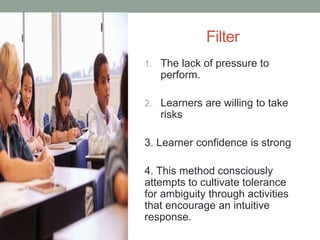
Filter
1. The lack of pressure to
perform.
2. Learners are willing to take
risks
3. Learner confidence is strong
4. This method consciously
attempts to cultivate tolerance
for ambiguity through activities
that encourage an intuitive
response.
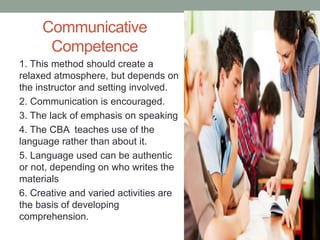
Communicative
Competence
1. This method should create a
relaxed atmosphere, but depends on
the instructor and setting involved.
2. Communication is encouraged.
3. The lack of emphasis on speaking
4. The CBA teaches use of the
language rather than about it.
5. Language used can be authentic
or not, depending on who writes the
materials
6. Creative and varied activities are
the basis of developing
comprehension.
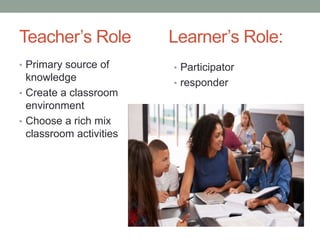
Teacher’s Role
• Primary source of
knowledge
• Create a classroom
environment
• Choose a rich mix
classroom activities
Learner’s Role:
• Participator
• responder
Comprehension-based-Approach-sllroa.pptx

Comprehension-based-Approach-sllroa.pptx

  • 1.
  • 2.
    HISTORY • The comprehensionapproach to foreign language instruction emerged in the 1970s and constituted an alternative to the dominant language-teaching paradigm of that time, which prioritized performance over reception. • Valerian Postovsky was the principal founder of the comprehension-based.
  • 3.
    Introduction • Comprehension-Based Approach focuseson actual language input and lowering the affective filter that sometimes inhibits students acquiring language. • The CBA Approach stresses on helping make meaning clear and supporting learners gain confidence so that they are willing to produce language. • It emphasize understanding of language rather than speaking.
  • 4.
    • This isin contrast to the better-known communicative approach, under which learning is thought to emerge through language production • The comprehension approach is most strongly associated with the linguists Harris Winitz, Stephen Krashen, Tracy D. Terrell and James J. Asher.
  • 5.
    • Krashen andJames J Asher asserted that students learn language through comprehensible input and that teaching should focus on helping students comprehend language. • James J. Asher created a teaching method based on the comprehension approach called Total Physical Response.
  • 6.
    Aims: • to helplearners develop the desire to learn the language for the joy of learning and not for external motivations.. • to help make meaning clear or to make input comprehensible.
  • 7.
    Key Features: • Listeningcomprehension is very important • Learners should begin by listening to meaningful speech and by responding nonverbally • Learners should not speak until they feel ready to do so • Rule learning may help learners monitor what they do • Error correction not necessary • Authentic materials: audio and video tapes
  • 8.
    Procedure: Comprehension-based language teaching uses: 1.Manyhours of listening activities in the early stage of acquisition. • Learners respond with TPR-style task as well as non-verbal signs of comprehension. 2. Instructor moves systematically from concrete to abstract activities.
  • 9.
    Procedure: 3. Listening activitiesdominate classroom time - visual/prerecorded materials e.g picture with accompanying cassette tapes - reading short text 4. Problem solving activity related to the topic of reading 5. Question-answer session • Physical activities continue to be part of the lesson
  • 10.
    Advantage • when thelearner eventually understands the meaning and the correct application of the words, the language will sound more effortless when he or she speaks it in contrast to other forms of language learning, which may result in more stilted efforts. Disadvantage • some people who are not very confident might decide to wait until they feel that they have totally grasped the concepts of the language, including the correct pronunciation, before attempting to speak that language.
  • 11.
    Application and TypicalTechniques on CBA INPUT 1. Goal of the method: comprehension. 2. Lessons: may be practical, depending on instructor's lesson plan. 3. The comprehension approach does not specify what content is to be used but the order and method of its presentation 4. The many ways devised to create comprehensible input, through puzzles, charts, etc. 5. This method could easily be adapted to a competency-based curriculum but would need to be altered drastically to accommodate the kinds of oral skills needed by your Trainees.
  • 12.
    Filter 1. The lackof pressure to perform. 2. Learners are willing to take risks 3. Learner confidence is strong 4. This method consciously attempts to cultivate tolerance for ambiguity through activities that encourage an intuitive response.
  • 13.
    Communicative Competence 1. This methodshould create a relaxed atmosphere, but depends on the instructor and setting involved. 2. Communication is encouraged. 3. The lack of emphasis on speaking 4. The CBA teaches use of the language rather than about it. 5. Language used can be authentic or not, depending on who writes the materials 6. Creative and varied activities are the basis of developing comprehension.
  • 14.
    Teacher’s Role • Primarysource of knowledge • Create a classroom environment • Choose a rich mix classroom activities Learner’s Role: • Participator • responder