COMPOSITE MATERIALS
AND THEIR APPLICATIONS
-By
Sangeetha B
introduction
• I AM GOING TO DO A PRESENTATION
ON SPORTS PERFORMANCE RELATED
THINGS. AND I AM GOING TO TELL
YOU ABOUT THE DIFFERENT KINDS OF
COMPOSITE MATERIALS. I AM GOING
TO TELL YOU THE ADVANTAGES AND
DISADVANTAGES OF COMPOSITE
MATERIALS. ALSO THE PEOPLE THAT
WORK WITH COMPOSITE MATERIALS.
TYPES OF COMPOSITE
MATERIALS
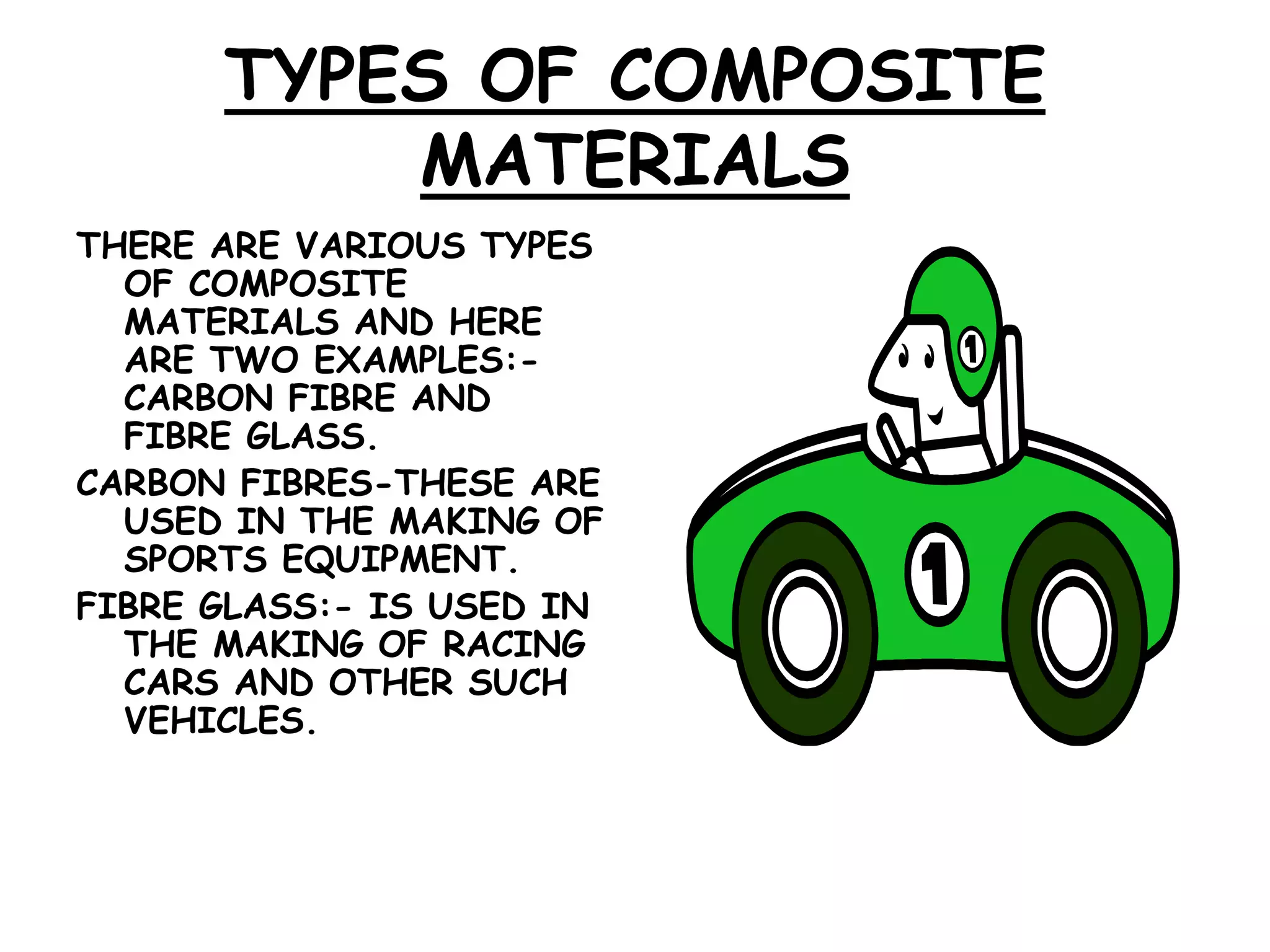
THERE ARE VARIOUS TYPES
OF COMPOSITE
MATERIALS AND HERE
ARE TWO EXAMPLES:-
CARBON FIBRE AND
FIBRE GLASS.
CARBON FIBRES-THESE ARE
USED IN THE MAKING OF
SPORTS EQUIPMENT.
FIBRE GLASS:- IS USED IN
THE MAKING OF RACING
CARS AND OTHER SUCH
VEHICLES.
Engineer
• Engineers apply technology
to build things
• When it comes to building
composites just about all
engineers disciplines can be
involved. Specific
engineering tasks include,
stress analysis, structural
designs, materials
processing, control systems,
industrial processes, testing
and more Engineers must
have an under graduate
degree and many have
master degrees. Doctorates
are less common.
Scientists
• At the risk of
oversimplifying things,
Scientists develop the
technologies that engineers
apply. In general, then,
they are more involved in
basic research such as
material development and
structural theory. Of
course, many engineers
perform research, and
many scientists work on
engineering applications.
Most scientistshave
doctorates; fewer stop at a
Masters or Bachelors.
Technician
• At the risk of over
simplifying again, again
technicians are people who
do most of the hands-on
work. They lay up the
composites, do the
machining, and produce the
drawings. Technicians
develop highly specialised
skills, most of which are
learned on the job. A
vocational background or an
associates degree is
common.
Faculty (research)
• University faculty members
can be either engineers or
scientists, and the all most
exclusively hold doctoral
degrees. In contrasts to
industry engineers,
university professors in
engineering departments
focus more on research
than on manufacture of a
specific product. The
research, however, might
be orientated towards
industry interests such as
manufacturing processes.
Carbon fibre
• You can golf, ride,
sail, tennis, drive,
cycle, fish, decorate
or even fly carbon
fibre.
• AIRBUS A350
• The development of
this aircraft will see a
further significant use
of carbon fibre
composites. The whole
wing structure will be
made out or carbon
fibre.
Business
• Any company needs staff
for management, business
development, sales, quality
assurance, scheduling, and
other tasks which are not
directly technical. Some of
these positions require
detailed technical
knowledge, and they are
often filled by former
engineers or technicians.
Even though engineers might
have advanced might have
advanced degrees, some of
business courses or even an
MBA will help the transition
into management.
Recycling
• An important usage of concern
involves the materials entire
lifecycle, as carbon fibre
reinforced plastics have an
almost infinite lifetime. Some
companies are succeeding in
recycling this carbon fibre.
The recycling strategy centres
on milling, compounding or
shredding the reclaimed carbon
fibre, and finding use for this
end product in various
industrial applications (including
carbon fibres applications less
stringent than those required
by, say, the aerospace
industry). It is also commonly
used in electronics, such as
laptops, to lower the weight
load and to improve durability.
Advantages of composite
materials
• The advantages of
composite materials
are that they are
strong, don’t rust
easily and they are
not heavy in any
way.
Disadvantages of composite materials
• The disadvantages
of composite
materials are that
they are very
expensive to buy
and difficult to
stick to other
materials.
People who work with composite
materials
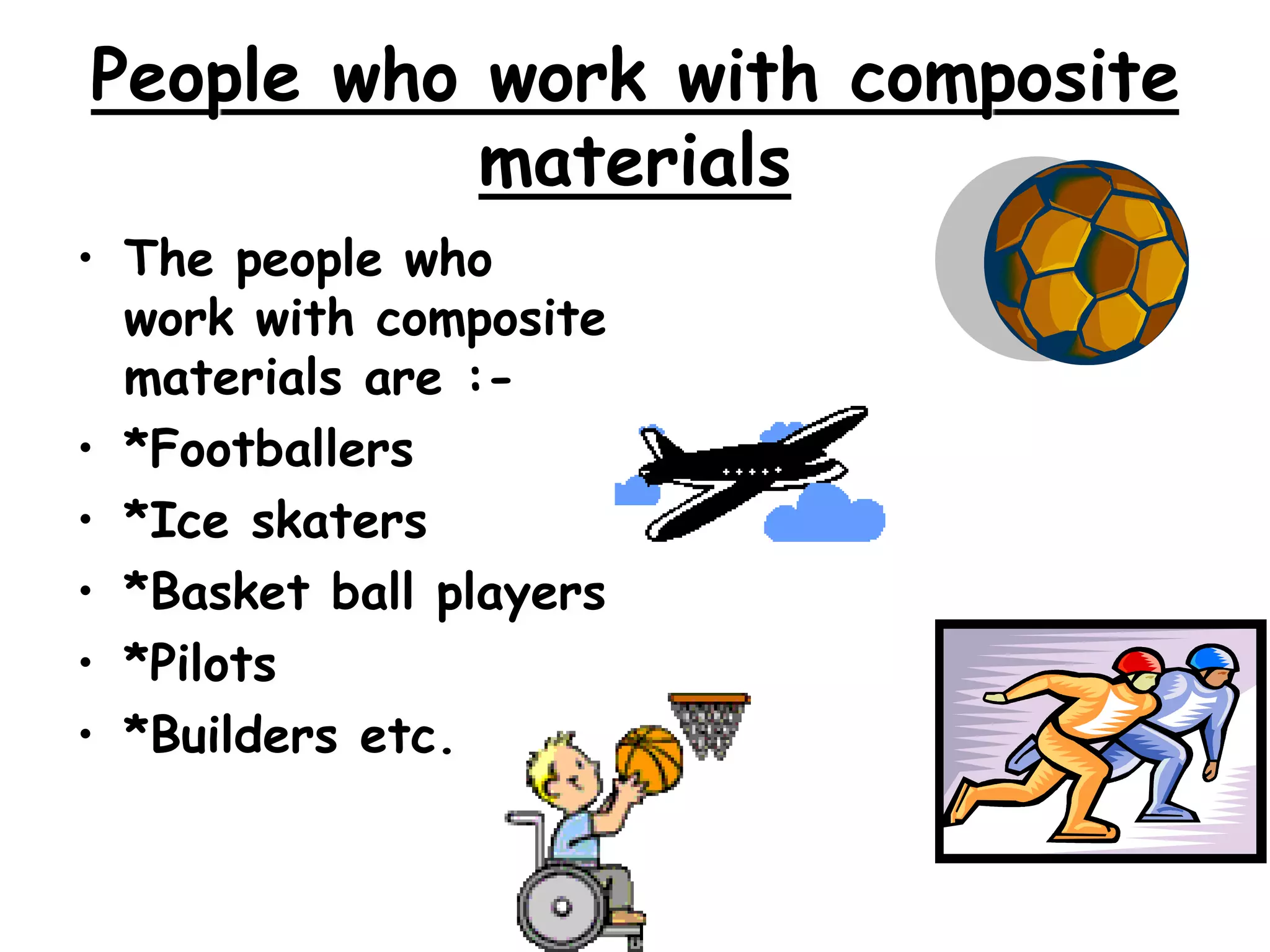
• The people who
work with composite
materials are :-
• *Footballers
• *Ice skaters
• *Basket ball players
• *Pilots
• *Builders etc.
Summary (what we found out
about)
• We found out about
composite materials
and what they are
and how they work,
what they are made
of and what they
are like to buy,
whether they are
expensive and what
they are like to
keep.
Jordan extreme boots
• Which air Jordan’s are the
lightest?
• Well most people would say
air Jordan xi are the
lightest but I don’t think it
has been proven.
• They are light, they have
speed lace toggles, heels,
PHYLON mid-sole, mid-foot
strap, ankle leash,
suspension, medial air vents
and carbon fibre shanks
plates.
Tennis rackets
• Ordinary rackets are made
of millions of carbon fibres
that are linked together
and then heat shaped but
when a racket is n-coded
nano sized silicone oxide
crystals permeate the voids
between the carbon fibres.
The results are two times
the strength, two times the
stability and 22% more
power than an ordinary
racket.
bicycles
• Team GB cycling team
were equipped with
carbon fibre bikes that
were designed and built
by ACG when they
competed at the
Athens Olympics in
august 2004 winning
two gold, one silver
and one bronze
between them.
References
• Needed:

Composite materials & applications

  • 1.
    COMPOSITE MATERIALS AND THEIRAPPLICATIONS -By Sangeetha B
  • 2.
    introduction • I AMGOING TO DO A PRESENTATION ON SPORTS PERFORMANCE RELATED THINGS. AND I AM GOING TO TELL YOU ABOUT THE DIFFERENT KINDS OF COMPOSITE MATERIALS. I AM GOING TO TELL YOU THE ADVANTAGES AND DISADVANTAGES OF COMPOSITE MATERIALS. ALSO THE PEOPLE THAT WORK WITH COMPOSITE MATERIALS.
  • 3.
    TYPES OF COMPOSITE MATERIALS THEREARE VARIOUS TYPES OF COMPOSITE MATERIALS AND HERE ARE TWO EXAMPLES:- CARBON FIBRE AND FIBRE GLASS. CARBON FIBRES-THESE ARE USED IN THE MAKING OF SPORTS EQUIPMENT. FIBRE GLASS:- IS USED IN THE MAKING OF RACING CARS AND OTHER SUCH VEHICLES.
  • 4.
    Engineer • Engineers applytechnology to build things • When it comes to building composites just about all engineers disciplines can be involved. Specific engineering tasks include, stress analysis, structural designs, materials processing, control systems, industrial processes, testing and more Engineers must have an under graduate degree and many have master degrees. Doctorates are less common.
  • 5.
    Scientists • At therisk of oversimplifying things, Scientists develop the technologies that engineers apply. In general, then, they are more involved in basic research such as material development and structural theory. Of course, many engineers perform research, and many scientists work on engineering applications. Most scientistshave doctorates; fewer stop at a Masters or Bachelors.
  • 6.
    Technician • At therisk of over simplifying again, again technicians are people who do most of the hands-on work. They lay up the composites, do the machining, and produce the drawings. Technicians develop highly specialised skills, most of which are learned on the job. A vocational background or an associates degree is common.
  • 7.
    Faculty (research) • Universityfaculty members can be either engineers or scientists, and the all most exclusively hold doctoral degrees. In contrasts to industry engineers, university professors in engineering departments focus more on research than on manufacture of a specific product. The research, however, might be orientated towards industry interests such as manufacturing processes.
  • 8.
    Carbon fibre • Youcan golf, ride, sail, tennis, drive, cycle, fish, decorate or even fly carbon fibre. • AIRBUS A350 • The development of this aircraft will see a further significant use of carbon fibre composites. The whole wing structure will be made out or carbon fibre.
  • 9.
    Business • Any companyneeds staff for management, business development, sales, quality assurance, scheduling, and other tasks which are not directly technical. Some of these positions require detailed technical knowledge, and they are often filled by former engineers or technicians. Even though engineers might have advanced might have advanced degrees, some of business courses or even an MBA will help the transition into management.
  • 10.
    Recycling • An importantusage of concern involves the materials entire lifecycle, as carbon fibre reinforced plastics have an almost infinite lifetime. Some companies are succeeding in recycling this carbon fibre. The recycling strategy centres on milling, compounding or shredding the reclaimed carbon fibre, and finding use for this end product in various industrial applications (including carbon fibres applications less stringent than those required by, say, the aerospace industry). It is also commonly used in electronics, such as laptops, to lower the weight load and to improve durability.
  • 11.
    Advantages of composite materials •The advantages of composite materials are that they are strong, don’t rust easily and they are not heavy in any way.
  • 12.
    Disadvantages of compositematerials • The disadvantages of composite materials are that they are very expensive to buy and difficult to stick to other materials.
  • 13.
    People who workwith composite materials • The people who work with composite materials are :- • *Footballers • *Ice skaters • *Basket ball players • *Pilots • *Builders etc.
  • 14.
    Summary (what wefound out about) • We found out about composite materials and what they are and how they work, what they are made of and what they are like to buy, whether they are expensive and what they are like to keep.
  • 15.
    Jordan extreme boots •Which air Jordan’s are the lightest? • Well most people would say air Jordan xi are the lightest but I don’t think it has been proven. • They are light, they have speed lace toggles, heels, PHYLON mid-sole, mid-foot strap, ankle leash, suspension, medial air vents and carbon fibre shanks plates.
  • 16.
    Tennis rackets • Ordinaryrackets are made of millions of carbon fibres that are linked together and then heat shaped but when a racket is n-coded nano sized silicone oxide crystals permeate the voids between the carbon fibres. The results are two times the strength, two times the stability and 22% more power than an ordinary racket.
  • 17.
    bicycles • Team GBcycling team were equipped with carbon fibre bikes that were designed and built by ACG when they competed at the Athens Olympics in august 2004 winning two gold, one silver and one bronze between them.
  • 18.