GM INSTITUTE OF TECHNOLOGY
P.B.ROAD, DAVANGERE
SEMINAR ON :
COMPLEMENT AND
HYPERSENSITIVITY OF
IMMUNE RESPONSE TO
INFECTION
BY:
MEGHANA.L
5TH SEMESTER
BIOTECHNOLOG
Y
COMPLEMENT SYSTEM
CONTENTS:
 OVERVIEW
 ACTIVATION PATHWAYS
 IMMUNE EFFECTS
WHAT IS A COMPLEMENT SYSTEM?
It is a group of 20 plasma proteins that forms essential
part in the innate immunity.
The word “complement” is used because our
complement system enhances or complements our
immunity.
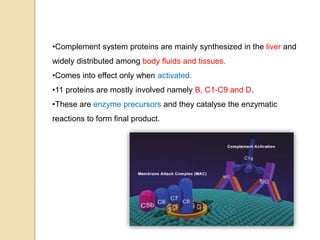
•Complement system proteins are mainly synthesized in the liver and
widely distributed among body fluids and tissues.
•Comes into effect only when activated.
•11 proteins are mostly involved namely B, C1-C9 and D.
•These are enzyme precursors and they catalyse the enzymatic
reactions to form final product.
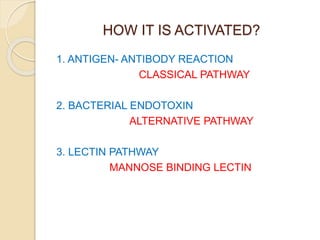
HOW IT IS ACTIVATED?
1. ANTIGEN- ANTIBODY REACTION
CLASSICAL PATHWAY
2. BACTERIAL ENDOTOXIN
ALTERNATIVE PATHWAY
3. LECTIN PATHWAY
MANNOSE BINDING LECTIN
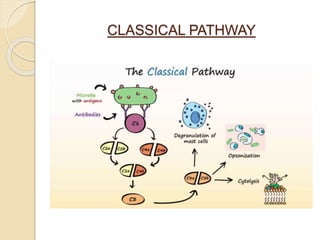
CLASSICAL PATHWAY
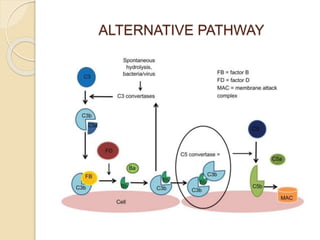
ALTERNATIVE PATHWAY
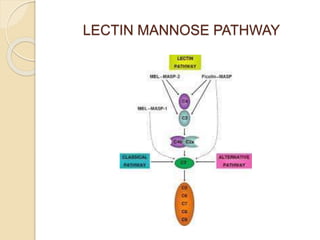
LECTIN MANNOSE PATHWAY
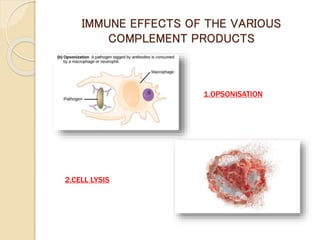
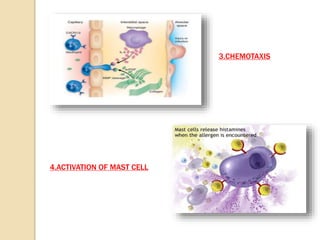
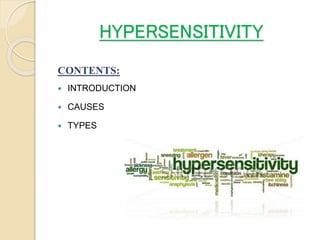
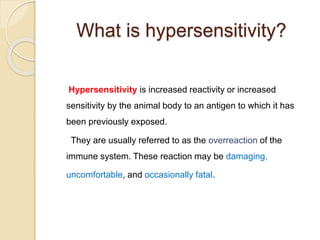
IMMUNE EFFECTS OF THE VARIOUS
COMPLEMENT PRODUCTS
1.OPSONISATION
2.CELL LYSIS
3.CHEMOTAXIS
4.ACTIVATION OF MAST CELL
HYPERSENSITIVITY
CONTENTS:
 INTRODUCTION
 CAUSES
 TYPES
What is hypersensitivity?
Hypersensitivity is increased reactivity or increased
sensitivity by the animal body to an antigen to which it has
been previously exposed.
They are usually referred to as the overreaction of the
immune system. These reaction may be damaging,
uncomfortable, and occasionally fatal.
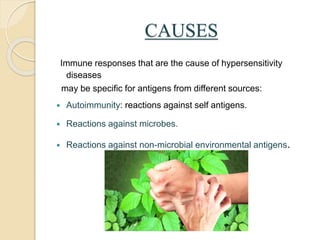
CAUSES
Immune responses that are the cause of hypersensitivity
diseases
may be specific for antigens from different sources:
 Autoimmunity: reactions against self antigens.
 Reactions against microbes.
 Reactions against non-microbial environmental antigens.
Types of Hypersensitivity Reactions
 The Gell’s and Coombs’ classification of hypersensitivity
reactions considers four types of reactions.
 Type I, II, and III reactions are basically mediated by
antibodies with or without participation of the complement
system
 Type IV reactions are cell-mediated.
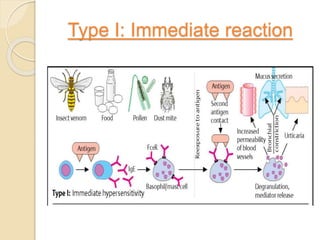
Type I: Immediate reaction
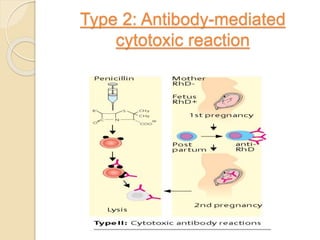
Type 2: Antibody-mediated
cytotoxic reaction
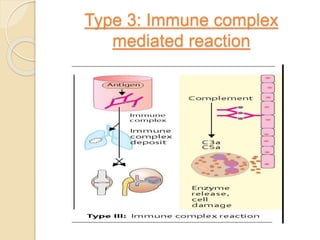
Type 3: Immune complex
mediated reaction
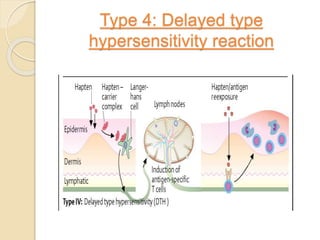
Type 4: Delayed type
hypersensitivity reaction
Complement and hypersensitivity

Complement and hypersensitivity

  • 1.
    GM INSTITUTE OFTECHNOLOGY P.B.ROAD, DAVANGERE SEMINAR ON : COMPLEMENT AND HYPERSENSITIVITY OF IMMUNE RESPONSE TO INFECTION BY: MEGHANA.L 5TH SEMESTER BIOTECHNOLOG Y
  • 2.
    COMPLEMENT SYSTEM CONTENTS:  OVERVIEW ACTIVATION PATHWAYS  IMMUNE EFFECTS
  • 3.
    WHAT IS ACOMPLEMENT SYSTEM? It is a group of 20 plasma proteins that forms essential part in the innate immunity. The word “complement” is used because our complement system enhances or complements our immunity.
  • 4.
    •Complement system proteinsare mainly synthesized in the liver and widely distributed among body fluids and tissues. •Comes into effect only when activated. •11 proteins are mostly involved namely B, C1-C9 and D. •These are enzyme precursors and they catalyse the enzymatic reactions to form final product.
  • 5.
    HOW IT ISACTIVATED? 1. ANTIGEN- ANTIBODY REACTION CLASSICAL PATHWAY 2. BACTERIAL ENDOTOXIN ALTERNATIVE PATHWAY 3. LECTIN PATHWAY MANNOSE BINDING LECTIN
  • 6.
  • 7.
  • 8.
  • 9.
    IMMUNE EFFECTS OFTHE VARIOUS COMPLEMENT PRODUCTS 1.OPSONISATION 2.CELL LYSIS
  • 10.
  • 11.
  • 12.
    What is hypersensitivity? Hypersensitivityis increased reactivity or increased sensitivity by the animal body to an antigen to which it has been previously exposed. They are usually referred to as the overreaction of the immune system. These reaction may be damaging, uncomfortable, and occasionally fatal.
  • 13.
    CAUSES Immune responses thatare the cause of hypersensitivity diseases may be specific for antigens from different sources:  Autoimmunity: reactions against self antigens.  Reactions against microbes.  Reactions against non-microbial environmental antigens.
  • 14.
    Types of HypersensitivityReactions  The Gell’s and Coombs’ classification of hypersensitivity reactions considers four types of reactions.  Type I, II, and III reactions are basically mediated by antibodies with or without participation of the complement system  Type IV reactions are cell-mediated.
  • 15.
  • 16.
  • 17.
    Type 3: Immunecomplex mediated reaction
  • 18.
    Type 4: Delayedtype hypersensitivity reaction