
Compensation & Benefits


                 Kulkesh Kumar
                   14-Feb-2012
Agenda


     What is compensation?
     Different parts of compensation
     Extrinsic compensation and Intrinsic Compensation
     Purpose of compensation
     Its Importance
     Factors affecting compensation
     Constituents of Compensation
     Law governing and affecting pay structure
     A Hierarchical Focus on Compensation
     Compensation professional’s Goal
     Compensation department main goal
Objectives


     Able to define compensation
     Understand different types of Extrinsic compensation
     Why it is importance from different perspective
     Mandatory laws to be take care in compensation
     Factors to be consider for Compensation
     Pay Model
     Compensation professional’s Goal
     Understand main goal of compensation department
What is Compensation & Benefits ?


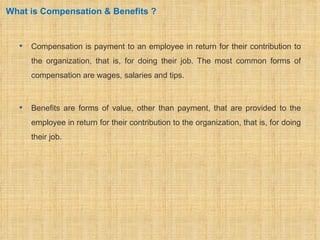
     Compensation is payment to an employee in return for their contribution to
      the organization, that is, for doing their job. The most common forms of
      compensation are wages, salaries and tips.


     Benefits are forms of value, other than payment, that are provided to the
      employee in return for their contribution to the organization, that is, for doing
      their job.
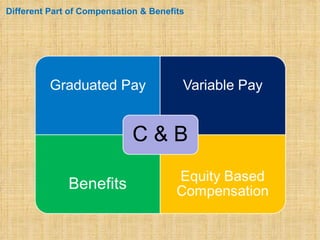
Different Part of Compensation & Benefits
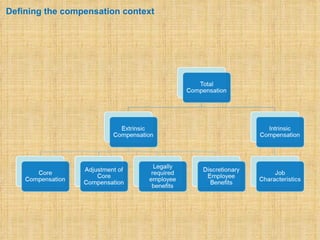
Defining the compensation context
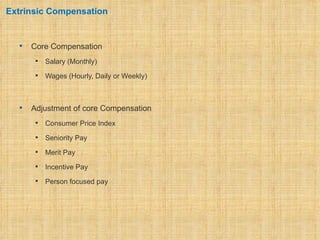
Extrinsic Compensation


     Core Compensation
          Salary (Monthly)
          Wages (Hourly, Daily or Weekly)


     Adjustment of core Compensation
          Consumer Price Index
          Seniority Pay
          Merit Pay
          Incentive Pay
          Person focused pay
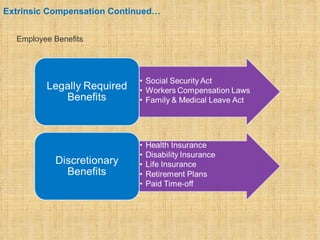
Extrinsic Compensation Continued…


  Employee Benefits
Intrinsic Compensation


     Job Characteristics
          Skill Variety
          Task identity
          Task significance
          Autonomy
          Feedback
Purpose of Compensation


     For Employer


            Brand image (employer of choice) for attracting candidates

            Motivating employees for higher productivity and performance

            Retaining talent

            Consistency in compensation

            Provoking healthy internal competition


     For Employee

            Work-life Balance

            Recognition as tool to self esteem

            Planning for better quality of life
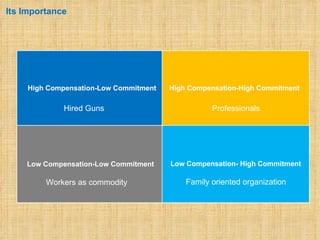
Its Importance


     High Compensation-Low Commitment   High Compensation-High Commitment

             Hired Guns                            Professionals


                      High Compensation-High
                            Commitment
    Low Compensation-Low Commitment     Low Compensation- High Commitment

         Workers as commodity               Family oriented organization
Its Importance


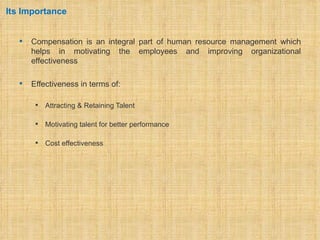
      Compensation is an integral part of human resource management which
       helps in motivating the employees and improving organizational
       effectiveness

      Effectiveness in terms of:

           Attracting & Retaining Talent

           Motivating talent for better performance

           Cost effectiveness
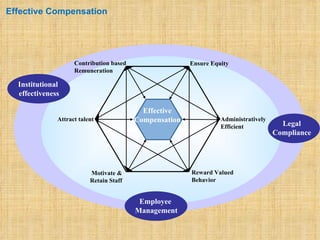
Effective Compensation


                    Contribution based                  Ensure Equity
                    Remuneration

  Institutional
  effectiveness

                                           Effective
              Attract talent             Compensation             Administratively
                                                                  Efficient            Legal
                                                                                     Compliance


                          Motivate &                    Reward Valued
                          Retain Staff                  Behavior


                                          Employee
                                         Management
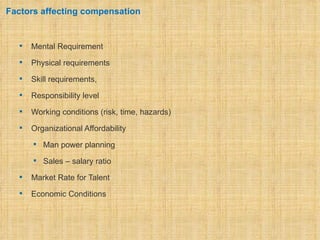
Factors affecting compensation


     Mental Requirement
     Physical requirements
     Skill requirements,
     Responsibility level
     Working conditions (risk, time, hazards)
     Organizational Affordability
       Man power planning

       Sales – salary ratio

     Market Rate for Talent
     Economic Conditions
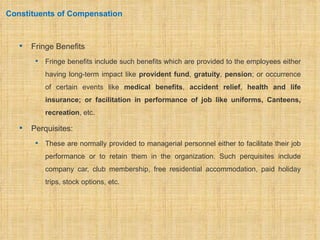
Constituents of Compensation


      Fringe Benefits
           Fringe benefits include such benefits which are provided to the employees either
            having long-term impact like provident fund, gratuity, pension; or occurrence
            of certain events like medical benefits, accident relief, health and life
            insurance; or facilitation in performance of job like uniforms, Canteens,
            recreation, etc.

      Perquisites:
           These are normally provided to managerial personnel either to facilitate their job
            performance or to retain them in the organization. Such perquisites include
            company car, club membership, free residential accommodation, paid holiday
            trips, stock options, etc.
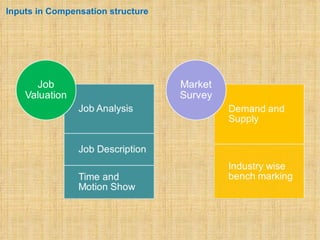
Inputs in Compensation structure
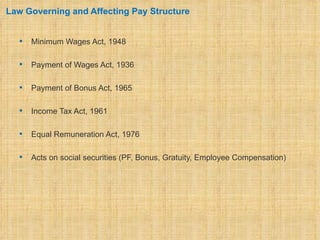
Law Governing and Affecting Pay Structure


     Minimum Wages Act, 1948

     Payment of Wages Act, 1936

     Payment of Bonus Act, 1965

     Income Tax Act, 1961

     Equal Remuneration Act, 1976

     Acts on social securities (PF, Bonus, Gratuity, Employee Compensation)
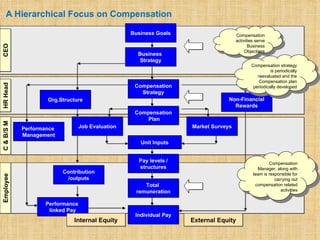
A Hierarchical Focus on Compensation

                                                  Business Goals                     Compensation
                                                                                     activities serve
CEO


                                                                                            Business
                                                                                          Objectives
                                                    Business
                                                     Strategy
                                                                                             Compensation strategy
                                                                                                       is periodically
                                                                                                reevaluated and the
                                                                                                 Compensation plan
HR Head


                                                   Compensation                               periodically developed
                                                     Strategy
                    Org.Structure                                                Non-Financial
                                                                                   Rewards
                                                   Compensation
                                                       Plan
C & B/S M


            Performance          Job Evaluation                     Market Surveys
            Management
                                                     Unit Inputs


                                                    Pay levels /                                      Compensation
                                                    structures                                  Manager, along with
                          Contribution                                                        team is responsible for
Employee


                            /outputs                                                                     carrying out
                                                      Total                                    compensation related
                                                   remuneration                                             activities


                   Performance
                    linked Pay
                                                   Individual Pay
                              Internal Equity                       External Equity
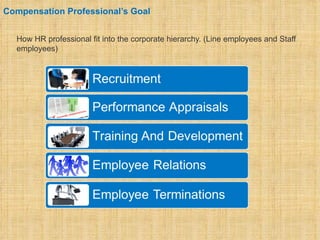
Compensation Professional’s Goal


  How HR professional fit into the corporate hierarchy. (Line employees and Staff
  employees)
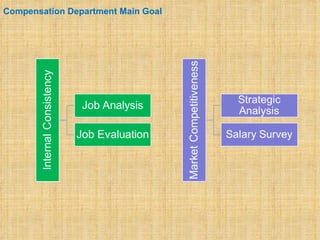
Compensation Department Main Goal
Question & Answer / Open Discussion


                               Q&A
Thank You

Compensation&benefits

  • 1.
    Compensation & Benefits Kulkesh Kumar 14-Feb-2012
  • 2.
    Agenda  What is compensation?  Different parts of compensation  Extrinsic compensation and Intrinsic Compensation  Purpose of compensation  Its Importance  Factors affecting compensation  Constituents of Compensation  Law governing and affecting pay structure  A Hierarchical Focus on Compensation  Compensation professional’s Goal  Compensation department main goal
  • 3.
    Objectives  Able to define compensation  Understand different types of Extrinsic compensation  Why it is importance from different perspective  Mandatory laws to be take care in compensation  Factors to be consider for Compensation  Pay Model  Compensation professional’s Goal  Understand main goal of compensation department
  • 4.
    What is Compensation& Benefits ?  Compensation is payment to an employee in return for their contribution to the organization, that is, for doing their job. The most common forms of compensation are wages, salaries and tips.  Benefits are forms of value, other than payment, that are provided to the employee in return for their contribution to the organization, that is, for doing their job.
  • 5.
    Different Part ofCompensation & Benefits
  • 6.
  • 7.
    Extrinsic Compensation  Core Compensation  Salary (Monthly)  Wages (Hourly, Daily or Weekly)  Adjustment of core Compensation  Consumer Price Index  Seniority Pay  Merit Pay  Incentive Pay  Person focused pay
  • 8.
  • 9.
    Intrinsic Compensation  Job Characteristics  Skill Variety  Task identity  Task significance  Autonomy  Feedback
  • 10.
    Purpose of Compensation  For Employer  Brand image (employer of choice) for attracting candidates  Motivating employees for higher productivity and performance  Retaining talent  Consistency in compensation  Provoking healthy internal competition  For Employee  Work-life Balance  Recognition as tool to self esteem  Planning for better quality of life
  • 11.
    Its Importance High Compensation-Low Commitment High Compensation-High Commitment Hired Guns Professionals High Compensation-High Commitment Low Compensation-Low Commitment Low Compensation- High Commitment Workers as commodity Family oriented organization
  • 12.
    Its Importance  Compensation is an integral part of human resource management which helps in motivating the employees and improving organizational effectiveness  Effectiveness in terms of:  Attracting & Retaining Talent  Motivating talent for better performance  Cost effectiveness
  • 13.
    Effective Compensation Contribution based Ensure Equity Remuneration Institutional effectiveness Effective Attract talent Compensation Administratively Efficient Legal Compliance Motivate & Reward Valued Retain Staff Behavior Employee Management
  • 14.
    Factors affecting compensation  Mental Requirement  Physical requirements  Skill requirements,  Responsibility level  Working conditions (risk, time, hazards)  Organizational Affordability  Man power planning  Sales – salary ratio  Market Rate for Talent  Economic Conditions
  • 15.
    Constituents of Compensation  Fringe Benefits  Fringe benefits include such benefits which are provided to the employees either having long-term impact like provident fund, gratuity, pension; or occurrence of certain events like medical benefits, accident relief, health and life insurance; or facilitation in performance of job like uniforms, Canteens, recreation, etc.  Perquisites:  These are normally provided to managerial personnel either to facilitate their job performance or to retain them in the organization. Such perquisites include company car, club membership, free residential accommodation, paid holiday trips, stock options, etc.
  • 16.
  • 17.
    Law Governing andAffecting Pay Structure  Minimum Wages Act, 1948  Payment of Wages Act, 1936  Payment of Bonus Act, 1965  Income Tax Act, 1961  Equal Remuneration Act, 1976  Acts on social securities (PF, Bonus, Gratuity, Employee Compensation)
  • 18.
    A Hierarchical Focuson Compensation Business Goals Compensation activities serve CEO Business Objectives Business Strategy Compensation strategy is periodically reevaluated and the Compensation plan HR Head Compensation periodically developed Strategy Org.Structure Non-Financial Rewards Compensation Plan C & B/S M Performance Job Evaluation Market Surveys Management Unit Inputs Pay levels / Compensation structures Manager, along with Contribution team is responsible for Employee /outputs carrying out Total compensation related remuneration activities Performance linked Pay Individual Pay Internal Equity External Equity
  • 19.
    Compensation Professional’s Goal How HR professional fit into the corporate hierarchy. (Line employees and Staff employees)
  • 20.
  • 21.
    Question & Answer/ Open Discussion Q&A
  • 22.

Editor's Notes

  • #12 Low Compensation, Low Commitment purpose is a matter of choice; existence is the driver for such people. A shop owner of a local store can be mapped to such a category. There is nothing wrong with people in this category as long as they don’t compare themselves to people from other categories. Low Compensation, High Commitment people are path creators and have high altruistic attitude. People in NGOs or start ups can be mapped to this category. Such people have low opinion about scaling and do not like working in large organizations. If you are in this category, then don’t grudge about skills. High Compensation, Low Commitment people are those who are driven by consumption. These are professionally competent people but the purpose is limited to them. They are path dependent people, who when showed the path, walk efficiently and brilliantly on it. High Compensation, High Commitment people have a sense of legacy. Narayan Murthy, Azim Premji and Manmohan Singh are the people who can be mapped to this quadrant. They are responsible for the future in which they will not exist. They have a long view of time since it takes a lifetime to make a difference. Dalai Lama has not been able to make Tibet a reality but that doesn’t deter him from his purpose and his efforts which are for a future Tibet which he may not even live to see. These people are not fazed by failures, they are deeply self aware but they have to pay an emotional price to stay in this quadrant because of its high demand
  • #17 Job analysis is a systematic process of analyzing a job for identifying job contents, leading to job description, job specification, and job evaluation A job description is defined as a written outline of the main tasks of a job To scientifically determine the optmimal way to perform the job, Taylor performed experiments that he called time and motion study