Downloaded 66 times

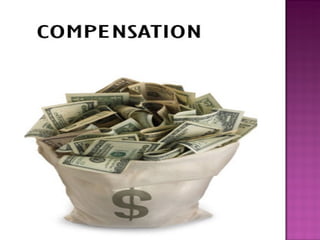

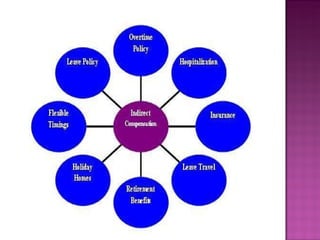
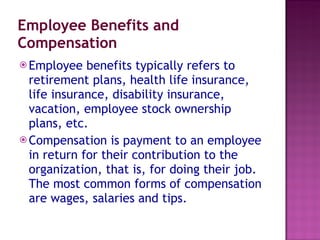
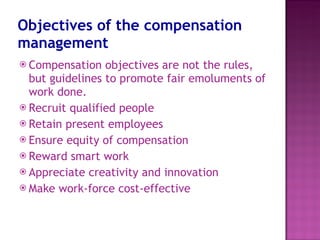
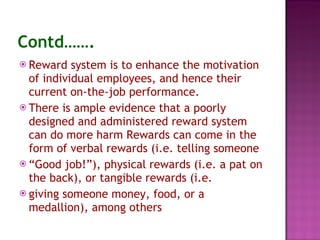
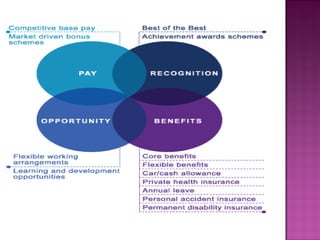
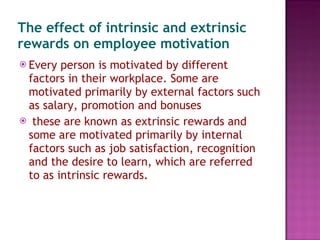






The document discusses compensation and rewards in the workplace. It defines compensation as the total reward an employee receives in exchange for their services, including both direct pay and indirect benefits. Workers' compensation originated in Germany in the 1800s and spread to the US in the 1930s-1940s to financially protect injured workers. Compensation management aims to recruit and retain qualified employees through fair compensation according to the worth of their jobs. Compensation can include base pay, commissions, bonuses, and other financial and non-financial rewards. Companies establish compensation philosophies to determine fair pay, bonuses, and incentives over time to attract and keep good employees.


