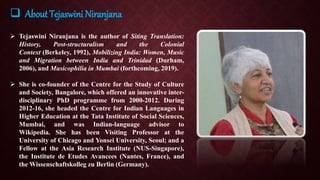
Tejaswini Niranjana examines how translation has historically functioned as a tool of colonial domination and the construction of colonial subjectivities. She argues that translation presented the colonial view of non-Western cultures and peoples as the transparent truth, erasing heterogeneity. Niranjana also discusses how post-structuralism's critique of concepts like representation, history, and the construction of difference can provide a framework to rethink translation's role and move towards practices that resist colonial frameworks. Her analysis suggests translation and histories are intertwined and both can be reinscribed through post-colonial and post-structuralist perspectives.