Communicative approach
Name: jean romo
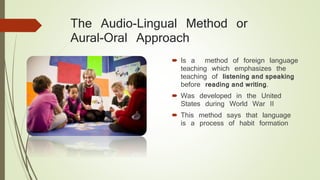
The Audio-Lingual Method or
Aural-Oral Approach
 Is a method of foreign language
teaching which emphasizes the
teaching of listening and speaking
before reading and writing.
 Was developed in the United
States during World War II
 This method says that language
is a process of habit formation
 Approach
Structuralism + Behaviorism
 Design
Dialogues & drills (pattern practice)
practice)
 Procedure
Main focus = accurate oral
performance
• Never translate
• Hear, speak, read, write
• Immediate error correction
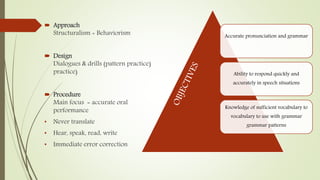
Accurate pronunciation and grammar
Ability to respond quickly and
accurately in speech situations
Knowledge of sufficient vocabulary to
vocabulary to use with grammar
grammar patterns
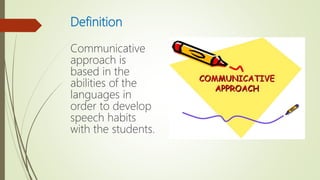
Definition
Communicative
approach is
based in the
abilities of the
languages in
order to develop
speech habits
with the students.
What is the main aim of the
communicative approach?
To enable students to use the languages
to express their needs and also express
themselves because with this approach
we can find in our students meaningful
learning and real communication
Characteristic
-Activities inside and outside the classroom
-The teacher’s role is primarily to facilitate communication.
-The student have to be concentrate in the subject
-Student’s skills
-The teacher should be able to use the target languages
fluency in a better way
-Teaches are facilitator, guide and manage.
Intercultural Approach
to English Language
Teaching
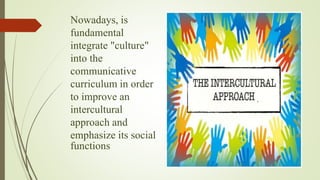
Nowadays, is
fundamental
integrate "culture"
into the
communicative
curriculum in order
to improve an
intercultural
approach and
emphasize its social
functions
The main goal of an intercultural
approach is …
to improve the ability to understand
the language and behavior of the target
community, and explain it to member
of the "home" community and vice
versa.
The intercultural approach
give to the English language
teachers the possibility of
broadening their current methods
and re-examine the rationale
governing them.
ECLECTIC APPROACH
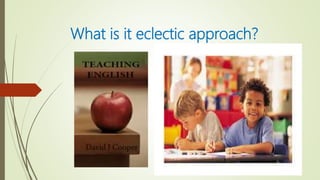
What is it eclectic approach?
Teacher has more flexibility and
adaptability
Purpose
The role of the teacher
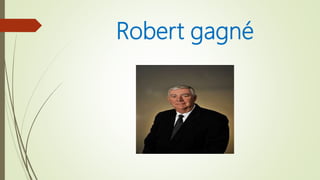
Robert gagné

Communicative approach jean romo

  • 1.
  • 2.
    The Audio-Lingual Methodor Aural-Oral Approach  Is a method of foreign language teaching which emphasizes the teaching of listening and speaking before reading and writing.  Was developed in the United States during World War II  This method says that language is a process of habit formation
  • 3.
     Approach Structuralism +Behaviorism  Design Dialogues & drills (pattern practice) practice)  Procedure Main focus = accurate oral performance • Never translate • Hear, speak, read, write • Immediate error correction Accurate pronunciation and grammar Ability to respond quickly and accurately in speech situations Knowledge of sufficient vocabulary to vocabulary to use with grammar grammar patterns
  • 4.
    Definition Communicative approach is based inthe abilities of the languages in order to develop speech habits with the students.
  • 5.
    What is themain aim of the communicative approach? To enable students to use the languages to express their needs and also express themselves because with this approach we can find in our students meaningful learning and real communication
  • 6.
    Characteristic -Activities inside andoutside the classroom -The teacher’s role is primarily to facilitate communication. -The student have to be concentrate in the subject -Student’s skills -The teacher should be able to use the target languages fluency in a better way -Teaches are facilitator, guide and manage.
  • 7.
  • 8.
    Nowadays, is fundamental integrate "culture" intothe communicative curriculum in order to improve an intercultural approach and emphasize its social functions
  • 9.
    The main goalof an intercultural approach is … to improve the ability to understand the language and behavior of the target community, and explain it to member of the "home" community and vice versa.
  • 10.
    The intercultural approach giveto the English language teachers the possibility of broadening their current methods and re-examine the rationale governing them.
  • 11.
  • 12.
    What is iteclectic approach?
  • 13.
    Teacher has moreflexibility and adaptability
  • 14.
  • 15.
    The role ofthe teacher
  • 16.