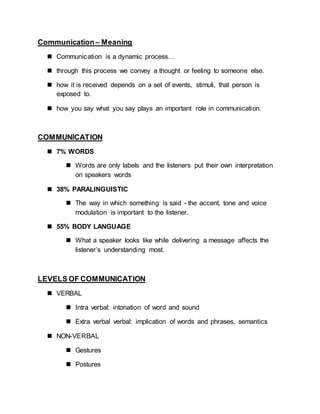
Communication– Meaning
 Communication is a dynamic process…
 through this process we convey a thought or feeling to someone else.
 how it is received depends on a set of events, stimuli, that person is
exposed to.
 how you say what you say plays an important role in communication.
COMMUNICATION
 7% WORDS
 Words are only labels and the listeners put their own interpretation
on speakers words
 38% PARALINGUISTIC
 The way in which something is said - the accent, tone and voice
modulation is important to the listener.
 55% BODY LANGUAGE
 What a speaker looks like while delivering a message affects the
listener’s understanding most.
LEVELS OF COMMUNICATION
 VERBAL
 Intra verbal: intonation of word and sound
 Extra verbal verbal: implication of words and phrases, semantics
 NON-VERBAL
 Gestures
 Postures
 Movements
 SYMBOLIC
Barriers in Communication (that have to do with the COMMUNICATOR)
 Unwillingness to say things differently
 Unwillingness to relate to others differently
 Unwillingness to learn new approaches
 Lack of Self-Confidence
 Lack of Enthusiasm
 Voice quality
 Prejudice
 Disagreement between verbal and non-verbal messages
 Negative Self Image
 Lack of Feedback
 Lack of Motivation and Training
 Language and Vocabulary Level
 Lack of Self Awareness
Barriers in Communication (that have to do with the RECEIVER)
 Selective Perception
 Unwillingness to Change
 Lack of Interest in the Topic/Subject
 Prejudice & Belief System
 Rebuttal Instincts
 Personal Value System
 Here-and-Now internal & external factors
ExternalBarriers in Communication
 Environment
 The venue
 The effect of noise
 Temperature in the room
 Other People – Status, Education
 Time
5 Basic reasonswe Do Not Listen
 Listening is Hard Work
 Competition
 The Rush for Action
 Speed differences (120 wpm v/s 360 wpm)
 Lack of Training
ImprovingListening Skills
 By not being Preoccupied
 Being Open Minded & Non Defensive
 Minimizing Interruptions
 Effective Listening is: Hearing, interpreting when necessary, understanding
the message and relating to it.
 By Asking Questions
TYPESOF BODY LANGUAGE (Remember that you are dealing with
“PEOPLE”)
 (P)OSTURES & GESTURES
 How do you use hand gestures? Stance?
 (E)YE CONTACT
 How’s your “Lighthouse”?
 (O)RIENTATION
 How do you position yourself?
 (P)RESENTATION
 How do you deliver your message?
 (L)OOKS
 Are your looks, appearance, dress important?
 (E)PRESSIONS OF EMOTION
 Are you using facial expressions to express emotion?
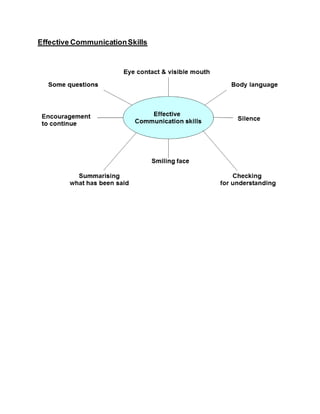
Effective CommunicationSkills

Communication

  • 1.
    Communication– Meaning  Communicationis a dynamic process…  through this process we convey a thought or feeling to someone else.  how it is received depends on a set of events, stimuli, that person is exposed to.  how you say what you say plays an important role in communication. COMMUNICATION  7% WORDS  Words are only labels and the listeners put their own interpretation on speakers words  38% PARALINGUISTIC  The way in which something is said - the accent, tone and voice modulation is important to the listener.  55% BODY LANGUAGE  What a speaker looks like while delivering a message affects the listener’s understanding most. LEVELS OF COMMUNICATION  VERBAL  Intra verbal: intonation of word and sound  Extra verbal verbal: implication of words and phrases, semantics  NON-VERBAL  Gestures  Postures
  • 2.
     Movements  SYMBOLIC Barriersin Communication (that have to do with the COMMUNICATOR)  Unwillingness to say things differently  Unwillingness to relate to others differently  Unwillingness to learn new approaches  Lack of Self-Confidence  Lack of Enthusiasm  Voice quality  Prejudice  Disagreement between verbal and non-verbal messages  Negative Self Image  Lack of Feedback  Lack of Motivation and Training  Language and Vocabulary Level  Lack of Self Awareness Barriers in Communication (that have to do with the RECEIVER)  Selective Perception  Unwillingness to Change  Lack of Interest in the Topic/Subject  Prejudice & Belief System  Rebuttal Instincts
  • 3.
     Personal ValueSystem  Here-and-Now internal & external factors ExternalBarriers in Communication  Environment  The venue  The effect of noise  Temperature in the room  Other People – Status, Education  Time 5 Basic reasonswe Do Not Listen  Listening is Hard Work  Competition  The Rush for Action  Speed differences (120 wpm v/s 360 wpm)  Lack of Training ImprovingListening Skills  By not being Preoccupied  Being Open Minded & Non Defensive  Minimizing Interruptions  Effective Listening is: Hearing, interpreting when necessary, understanding the message and relating to it.
  • 4.
     By AskingQuestions TYPESOF BODY LANGUAGE (Remember that you are dealing with “PEOPLE”)  (P)OSTURES & GESTURES  How do you use hand gestures? Stance?  (E)YE CONTACT  How’s your “Lighthouse”?  (O)RIENTATION  How do you position yourself?  (P)RESENTATION  How do you deliver your message?  (L)OOKS  Are your looks, appearance, dress important?  (E)PRESSIONS OF EMOTION  Are you using facial expressions to express emotion?
  • 5.