COMMON SENSE
in Philosophical and Scientific Perspective
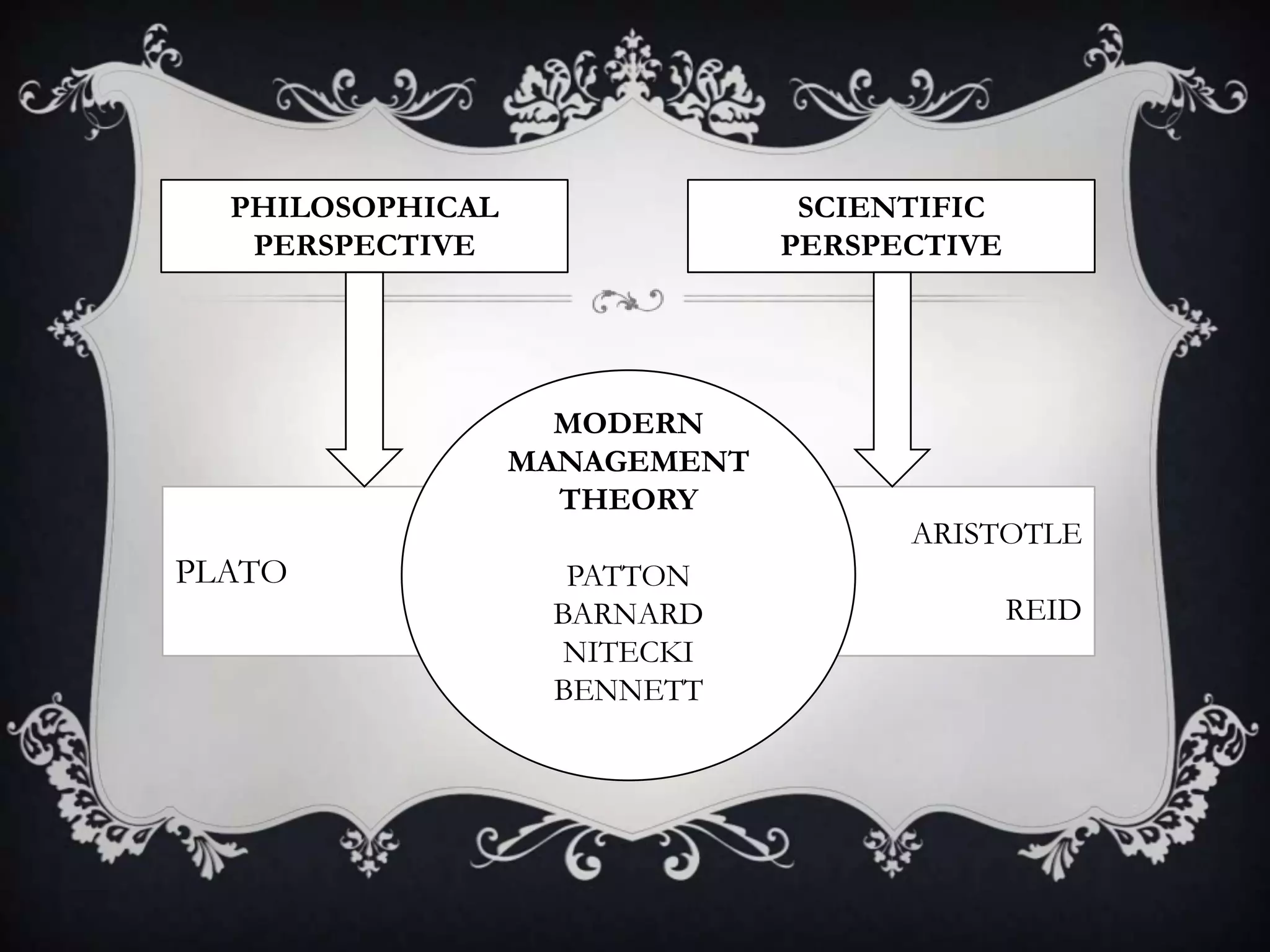
PHILOSOPHICAL                 SCIENTIFIC
   PERSPECTIVE                 PERSPECTIVE


                    MODERN
                  MANAGEMENT
                    THEORY
                                     ARISTOTLE
PLATO               PATTON
                   BARNARD                   REID
                    NITECKI
                   BENNETT
PHILOSOPHICAL PERSPECTIVE

PLATO – Knowledge of absolute truths is in some sense innate

* Plato advance the notion that knowledge of absolute truths is in
some sense innate, although requiring dialectal reasoning to be
brought to light – there is thus an intuitive aspect to knowing.
SCIENTIFIC PERSPECTIVE

ARISTOTLE – it was an activity of moving from the “givens” of
sense experience , through inductive observations of particulars, to
the general casual connections that bind everything together into one
system of nature.

* Scientific Reasoning must begin with known and obvious truths and
assumptions, producing in turn substantive conclusions that are not in
conflict with them.
SCIENTIFIC PERSPECTIVE

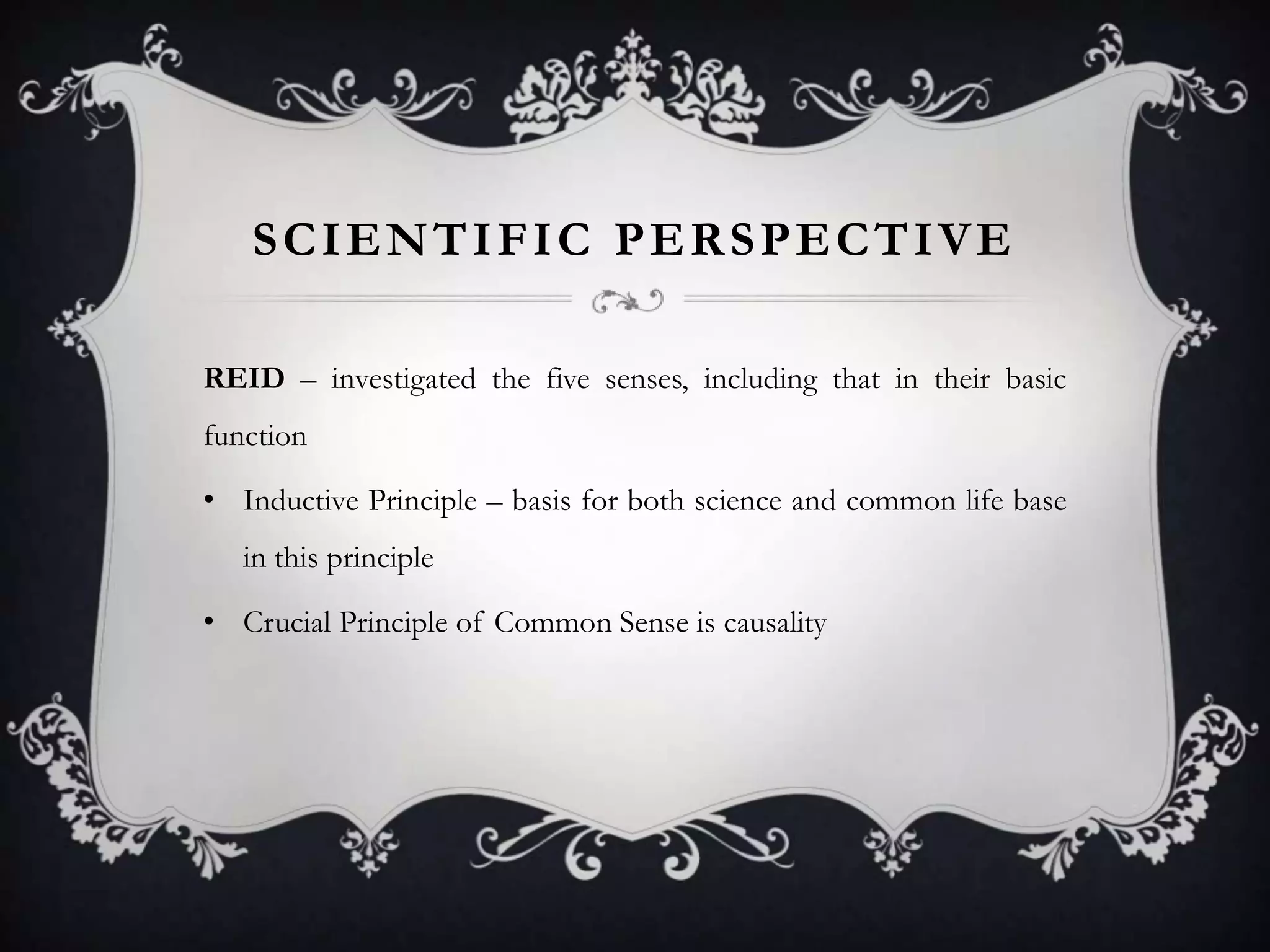
REID – investigated the five senses, including that in their basic
function

• Inductive Principle – basis for both science and common life base
   in this principle

• Crucial Principle of Common Sense is causality
M O D E R N M A NA G E M E N T T H E O RY

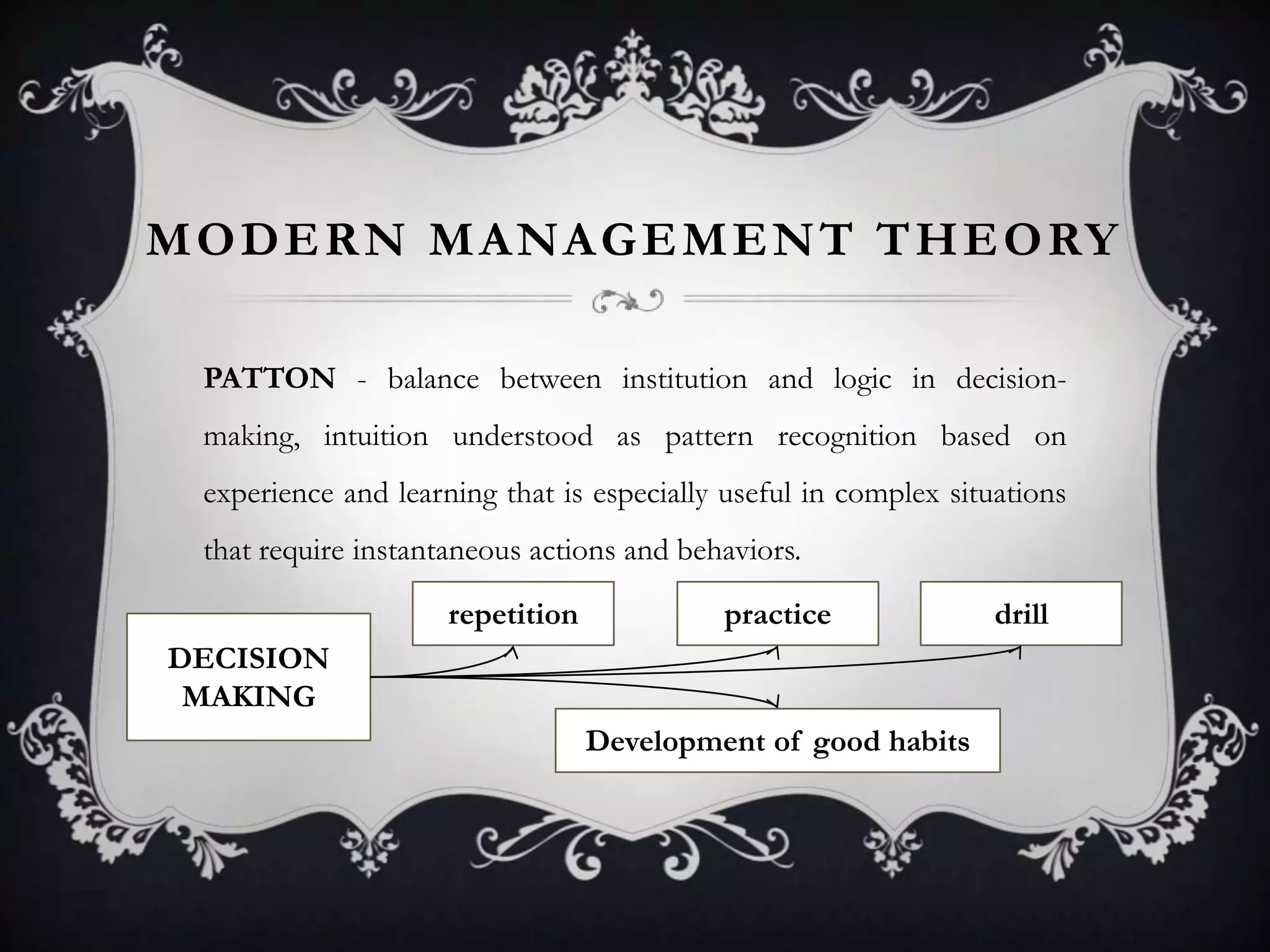
  PATTON - balance between institution and logic in decision-
  making, intuition understood as pattern recognition based on
  experience and learning that is especially useful in complex situations
  that require instantaneous actions and behaviors.

                      repetition            practice               drill
DECISION
 MAKING
                                   Development of good habits
M O D E R N M A NA G E M E N T T H E O RY

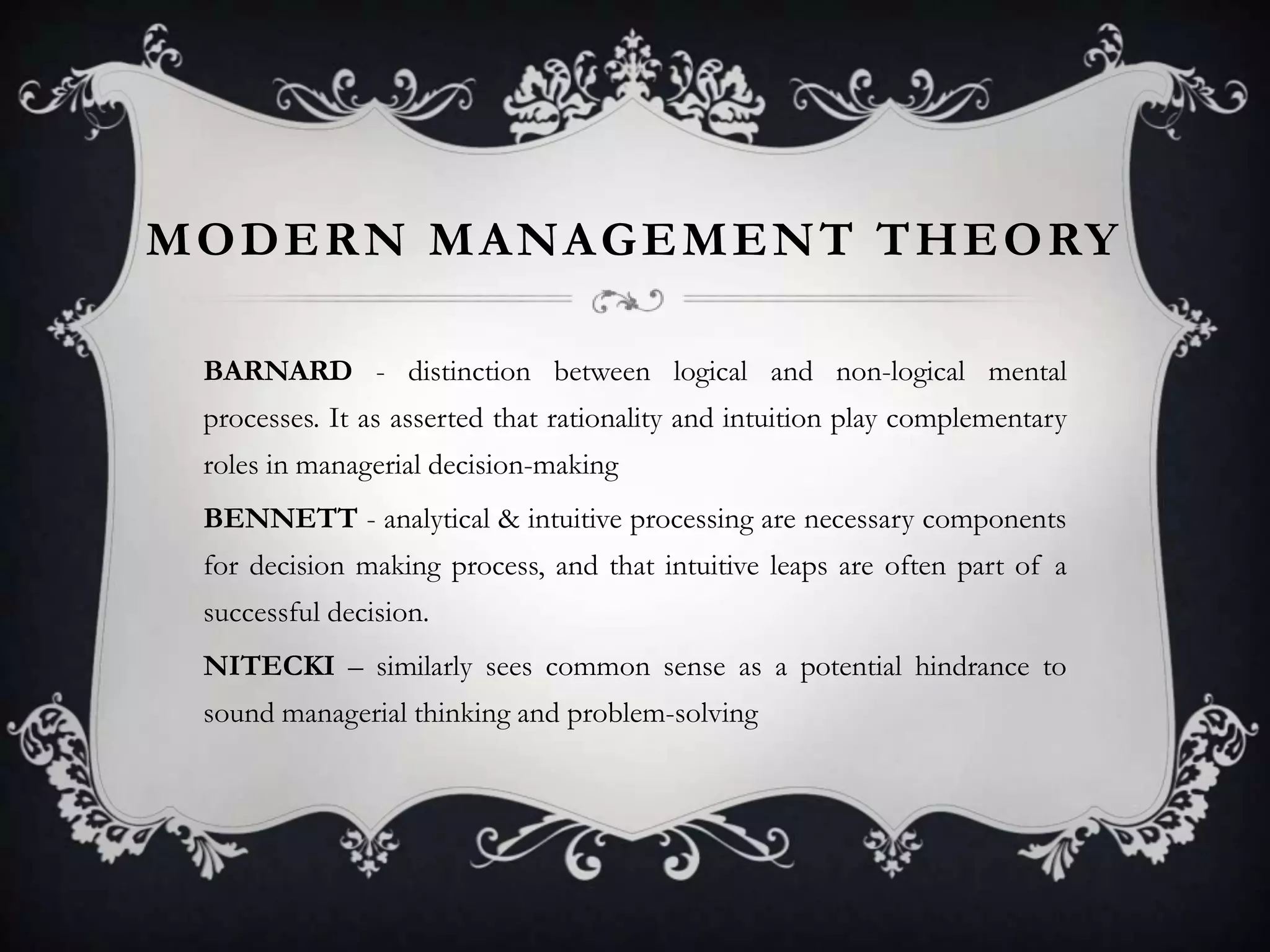
  BARNARD - distinction between logical and non-logical mental
  processes. It as asserted that rationality and intuition play complementary
  roles in managerial decision-making
  BENNETT - analytical & intuitive processing are necessary components
  for decision making process, and that intuitive leaps are often part of a
  successful decision.
  NITECKI – similarly sees common sense as a potential hindrance to
  sound managerial thinking and problem-solving
Prepared by:
Aguilar, Beverlyn F.
Benauro, Ariel Jr. O.
Grefal, Marjorie O.
Peralta, Jillian May R.


                III-H BSE Soc Stud
               University of Makati

COMMON SENSE IN A PHILOSOPHICAL AND SCIENTIFIC PERSPECTIVE

  • 1.
    COMMON SENSE in Philosophicaland Scientific Perspective
  • 2.
    PHILOSOPHICAL SCIENTIFIC PERSPECTIVE PERSPECTIVE MODERN MANAGEMENT THEORY ARISTOTLE PLATO PATTON BARNARD REID NITECKI BENNETT
  • 3.
    PHILOSOPHICAL PERSPECTIVE PLATO –Knowledge of absolute truths is in some sense innate * Plato advance the notion that knowledge of absolute truths is in some sense innate, although requiring dialectal reasoning to be brought to light – there is thus an intuitive aspect to knowing.
  • 4.
    SCIENTIFIC PERSPECTIVE ARISTOTLE –it was an activity of moving from the “givens” of sense experience , through inductive observations of particulars, to the general casual connections that bind everything together into one system of nature. * Scientific Reasoning must begin with known and obvious truths and assumptions, producing in turn substantive conclusions that are not in conflict with them.
  • 5.
    SCIENTIFIC PERSPECTIVE REID –investigated the five senses, including that in their basic function • Inductive Principle – basis for both science and common life base in this principle • Crucial Principle of Common Sense is causality
  • 6.
    M O DE R N M A NA G E M E N T T H E O RY PATTON - balance between institution and logic in decision- making, intuition understood as pattern recognition based on experience and learning that is especially useful in complex situations that require instantaneous actions and behaviors. repetition practice drill DECISION MAKING Development of good habits
  • 7.
    M O DE R N M A NA G E M E N T T H E O RY BARNARD - distinction between logical and non-logical mental processes. It as asserted that rationality and intuition play complementary roles in managerial decision-making BENNETT - analytical & intuitive processing are necessary components for decision making process, and that intuitive leaps are often part of a successful decision. NITECKI – similarly sees common sense as a potential hindrance to sound managerial thinking and problem-solving
  • 8.
    Prepared by: Aguilar, BeverlynF. Benauro, Ariel Jr. O. Grefal, Marjorie O. Peralta, Jillian May R. III-H BSE Soc Stud University of Makati