
Common Laboratory Animals
-Bhumi
Laboratory animals are those animals that can be bred and reared in
laboratory under suitable conditions.
Most common- rat, mice, hamster, guinea pig, rabbit
Large animals- dog, cat, monkey, frog, pigeon, etc.
Depending upon the special characteristics of animal and the study
to be carried out  animal is selected.
The animal which is phylogenetically closer to men considered
for the experiment
Laboratory animals
MOUSE
Biological Name : Mus musculus
Strains
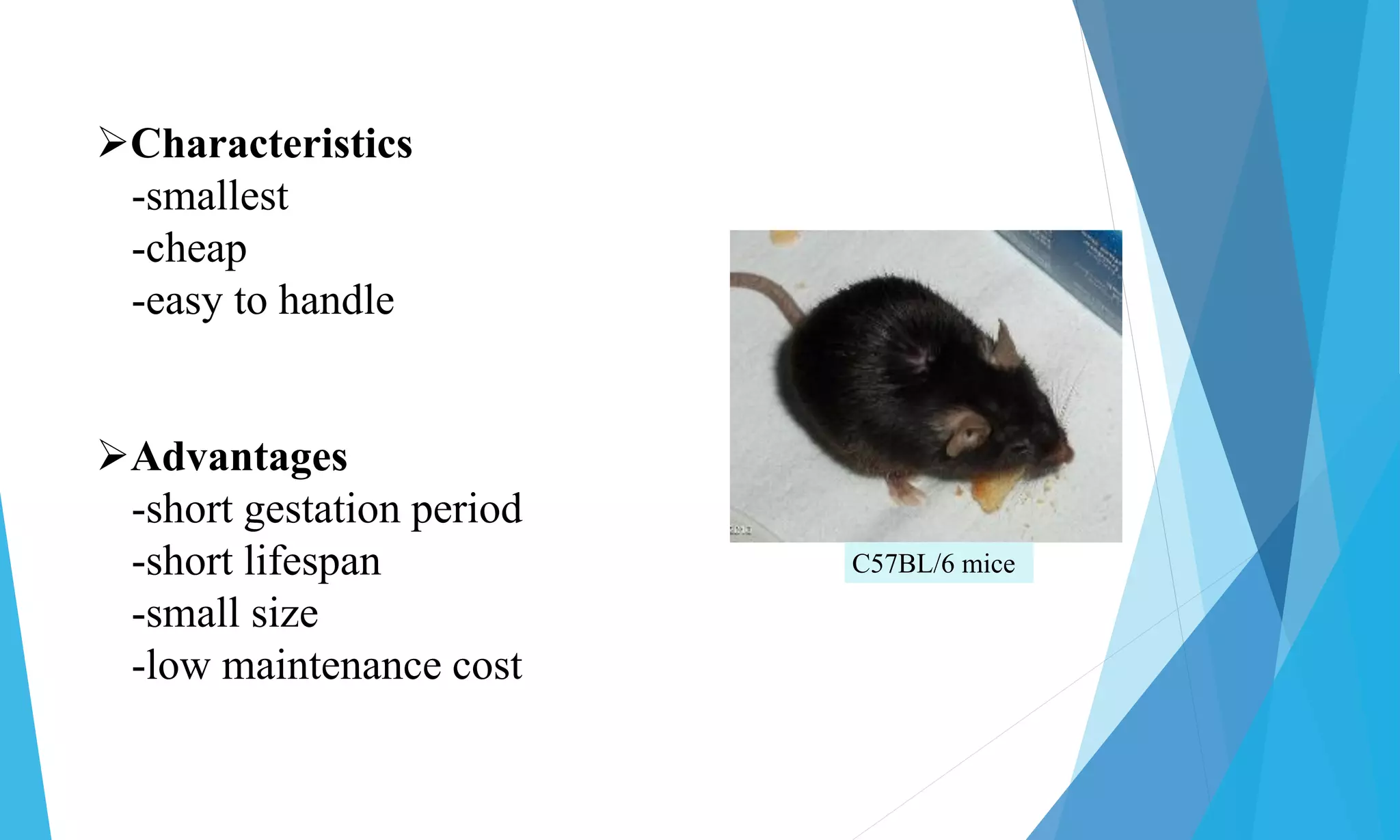
-C57BL/6 mice
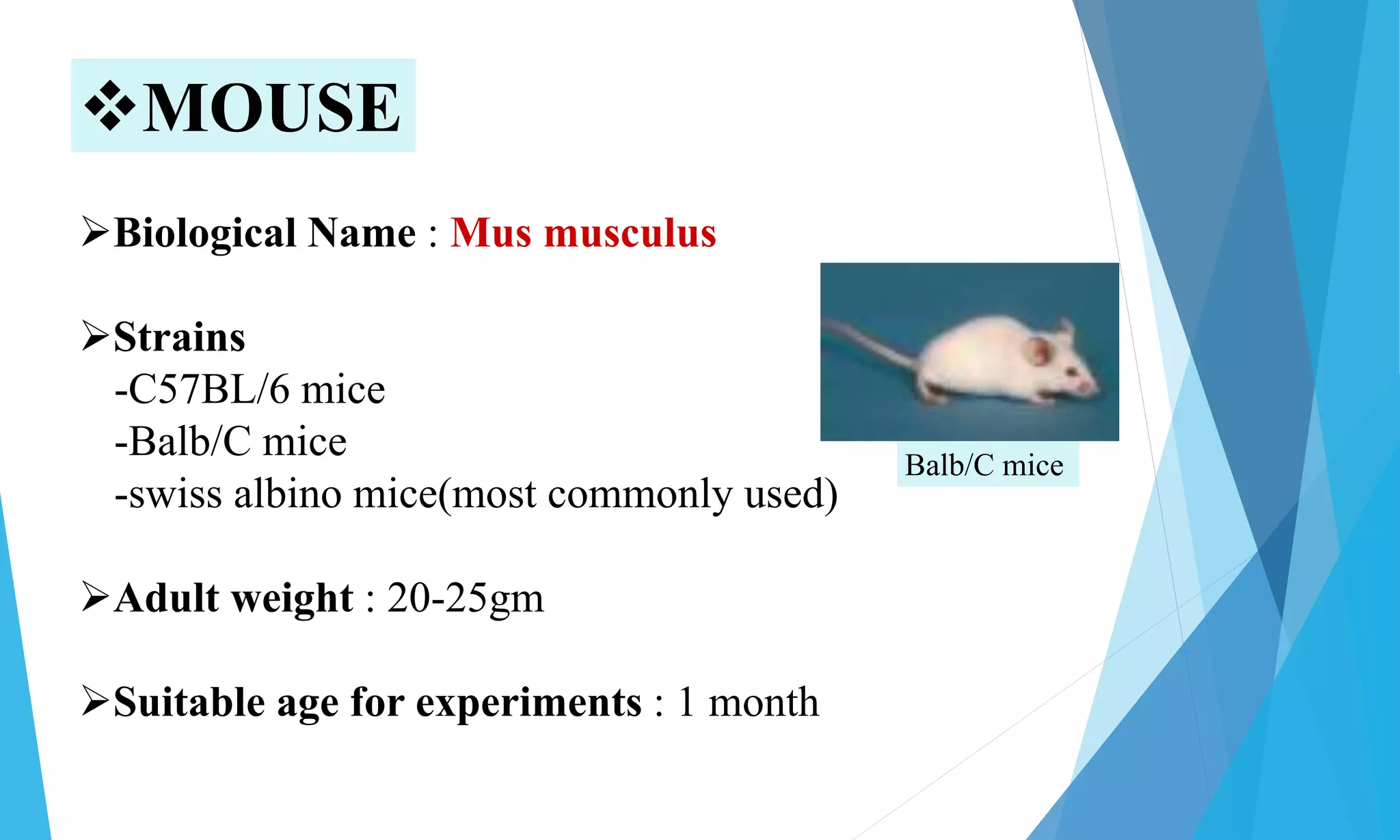
-Balb/C mice
-swiss albino mice(most commonly used)
Adult weight : 20-25gm
Suitable age for experiments : 1 month
Balb/C mice
Characteristics
-smallest
-cheap
-easy to handle
Advantages
-short gestation period
-short lifespan
-small size
-low maintenance cost
C57BL/6 mice
Experimental uses
• toxicological studies(acute & subacute)
• teratogenicity studies
• bioassay of insulin
• screening of analgesics & anticonvulsants
• screening of chemotherapeutic agents
• studies related to genetics and cancer research
• study of drugs acting on central nervous system
RAT
Biological Name : Rattus norvegicus
Strains
-Albino
-Sprague-Dawley
-Wistar Kyoto
-Long evans
Adult weight : 200-250gm
Characteristics
• small in size
• warm-blooded rodent
• vomiting centre is absent, so oral drugs can be given
• gall bladder & tonsil are absent
• greater sensitivity to most drugs
• because of the absence of gall bladder, there is a continuous
flow of bile into the intestine used to study of drugs
acting on bile, cholesterol reabsorption, etc.
• pancreas is diffuse difficult to produce pancreactomy
• clear lining between fundus & pylorus gastric acid
secretion is continuous
Two inbred original strains of albino
rats used
Wistar rat Sprague Dawley rat
• Wide head
• Long ear
• Tail length is lesser
than body length
• Resistant to infections
• Longer & narrow head
• Tail is longer than body
length
• Rapidly growing
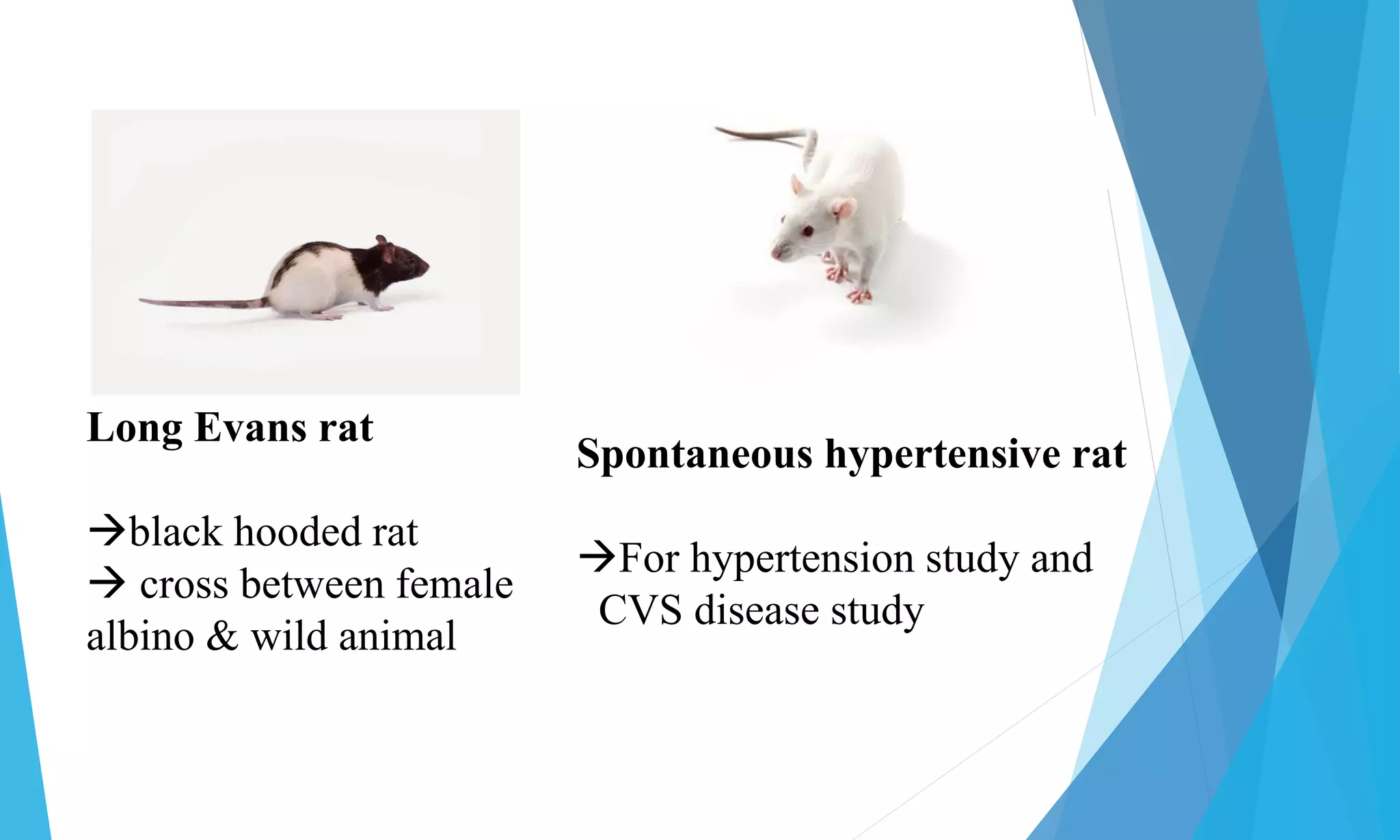
Long Evans rat
black hooded rat
 cross between female
albino & wild animal
Spontaneous hypertensive rat
For hypertension study and
CVS disease study
Experimental uses
• Psychopharmacological studies
• Study pf analgesics and anticonvulsants
• Bioassay of various hormones such as insulin, oxytocin,
etc.
• Study of estrus cycle, mating behaviour & lactation
• Study on isolated tissue preparation
• Chronic study on blood pressure
• Gastric acid secretion studies
• Study of hepatotoxic compound
• Acute & chronic toxicity studies
• Study on mast cells
• Rat brain tissue is extensively employed in radio-receptor
studies
GUINEA PIG
Biological Name : Cavia porcellus
Strains
-Dunkin Hartley
-Starin-13
Adult weight : 400-600gm
Characteristics
• Docile animal
• Herbivores
• Requires exogenous ascorbic acid in diet
• Warm blooded rodent
• Sensitive cochlea
• Highly susceptible to tuberculosis & anaphylaxis
• Highly sensitive to histamine & penicillin
Experimental uses
•Evaluation of bronchodilators
•Anaphylactic & immunological studies
•Study of histamines & antihistamines
•Bioassay of digitalis
•Study of tuberculosis & ascorbic acid metabolism
•Evaluation of local anaesthetics
•Hearing experiments
•Study on isolated tissues like ileum, trachea, vas
deferens
FROG
Biological Name : Rana tigrina
Strains
-Rana esculenta
-Rana pipiens
-Rana temporaria
Adult weight : 50-100gm
Characteristics
• Cold blooded amphibian
• 3 chambered heart  two atrium & one ventricle
• Highly permeable skin(breathe largely through their
skin)
• Camouflage defensive mechanism
Experimental uses
• Screening of certain drugs like anaesthetics
• To study the effect of drug acting on CNS,
neuromuscular junction & heart
• Study of isolated tissue like rectus, abdominis muscle,
heart, sciatic nerve preparation, etc.
RABBIT
Biological Name : Oryctolagus cuniculus
Strains
-New Zealand white(commonly used)
-Himalayan black
Adult weight : 1.5-3kg
Characteristics
• Docile animal
• Large ears
• Big eyes
• Warm blooded mammalian
• Some strains are resistant to effective of atropine because
they have higher concentration of atropinase enzyme in
their blood
• Skin is sensitive to irritation
• Can’t vomit
• Sensitive to histamine
• Secretion of leutenising hormone(LH) in female
New Zealand white rabbit
Experimental uses
• Pyrogen testing
• Bioassay of antidiabetic and sex hormones
• Irritancy tests
• Study of drug used in glaucoma
• Pharmacokinetic studies
• To test toxic effects of cosmetics
• Good model for the production of antibodies & antiserum
• Screening of agents affecting capillary permeability
Himalayan black rabbit
HAMSTER
Biological Name : Mesocriceius auratus &
Cricetulus griseus
Species
-Golden or Syrian hamster
-Chinese hamster
-Winter white hamster
Characteristics
• Short body
• Short legs and tail
• Loose skin & skin covered with dense short soft fur
• Cheeks pouches are prominent & extend upto shoulder
region
• Cheeks pouches don’t have lymphatic drainage ideal
site for tissue transplants
Experimental uses
• Research on diabetes mellitus
• Bioassay of prostaglandins
• Research related to virology, immunology & implantation
studies
• Research on carcinogenic & mutagenic agents(Armenian
hamster)
• For highly concentrated & prolonged smoke inhalation
studies( European hamster)
• Chinese hamsters have low chromosome number making it
useful for cytological investigations, genetics, tissue
culture & radiation research
MONKEY
Biological Name : Macaca mulatta
Characteristics
• Structurally & functionally similar to men
• Uterus resembles human & exhibiting regular menstrual
periods
Experimental uses
• Psychopharmacological studies
• Pharmacokinetic studies
• Primate model to study drug metabolism
• Study of drugs acting on CNS, CVS, GIT & fertility
CAT
Biological Name : Felis catus
Characteristics
• Has distinct nictitating membrane
Experimental uses
• Used in cardiovascular, behavioural & biomedical
research
• Used in screening of ganglionic drugs
• Studying the transmission of vitamins & minerals to
foetus & newborn
• Used in neuropharmacology, toxicology, oncology &
chromosomal abnormality studies
GERBIL
Biological Name : Meriones unguiculatus
Also known as “sand rat” & “jirds”
Have length between mice & rats
Characteristics
• Easy to handle
• Mild and quite nature
• Hearing curve similar to human
Experimental uses
• Used in stroke, epilepsy, auditory studies
• Used in bacterial infections, lipid metabolism, heart
disease studies
DOG
Biological Name : Canis familiaris
Characteristics
• Small alimentary tract
• Easily get trained
Experimental uses
• Study of anti-arrhythmic, cardiovascular & autonomic
drugs
• Good model for diabetes mellitus, reproduction, ulcerative
colitis, open heart surgery, organ transplantation, CNS
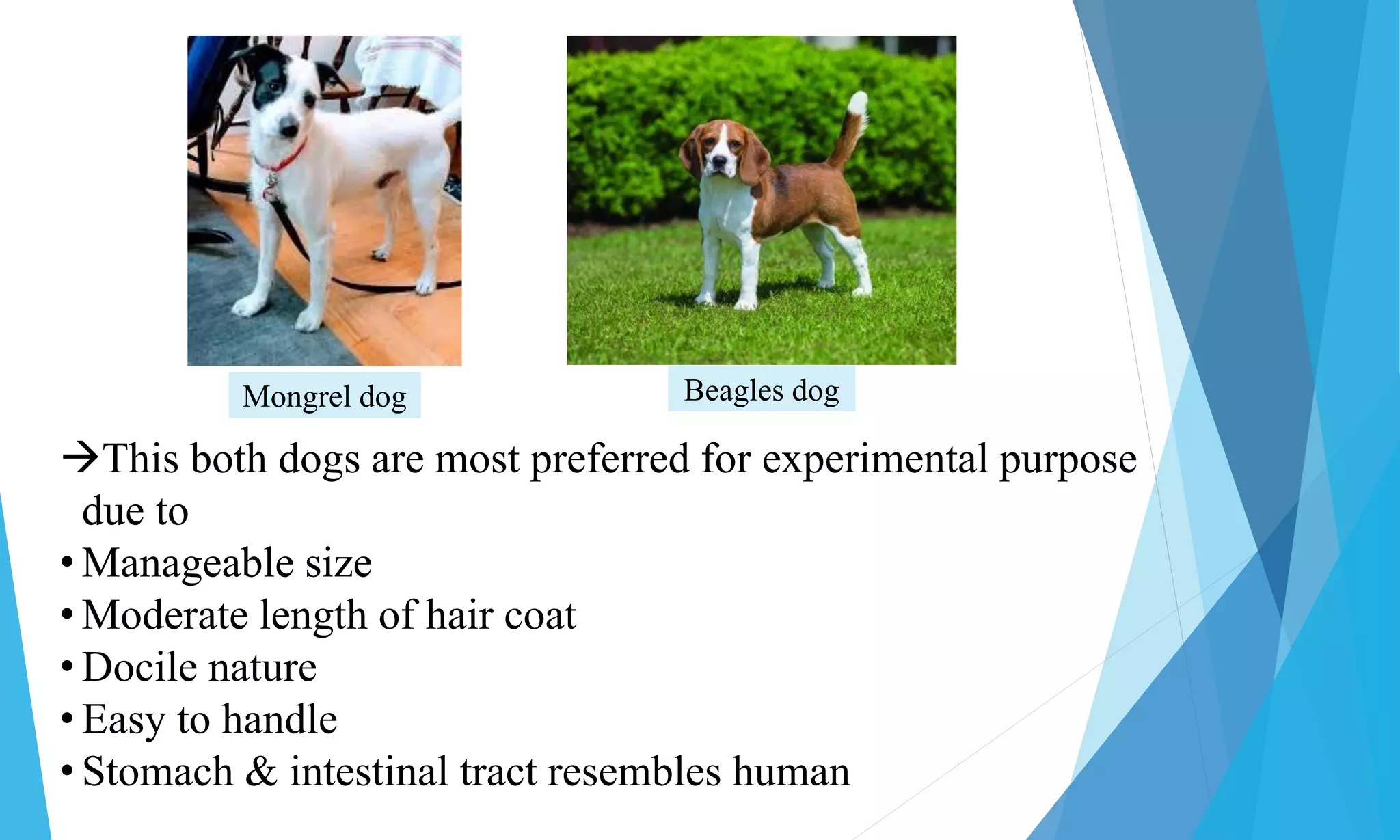
Mongrel dog Beagles dog
This both dogs are most preferred for experimental purpose
due to
• Manageable size
• Moderate length of hair coat
• Docile nature
• Easy to handle
• Stomach & intestinal tract resembles human
PIG
Biological Name : Sus scrofa domestica
Characteristics
• Less hairy skin
• Susceptible to bronchitis & pneumonia
Experimental uses
• Study of skin related studies
• Important model in cardiovascular research such as
atherosclerosis, myocardial infarction, etc.
CHICKEN
Biological Name : Gallus domesticus
Characteristics
• Ease of availability
Experimental uses
• Study on toxicology & pharmacology behaviour
• Studying avian diseases
• Important models developed in chicken are chick comb
method, chicken blood pressure measurement, heart rate,
EEG, etc.
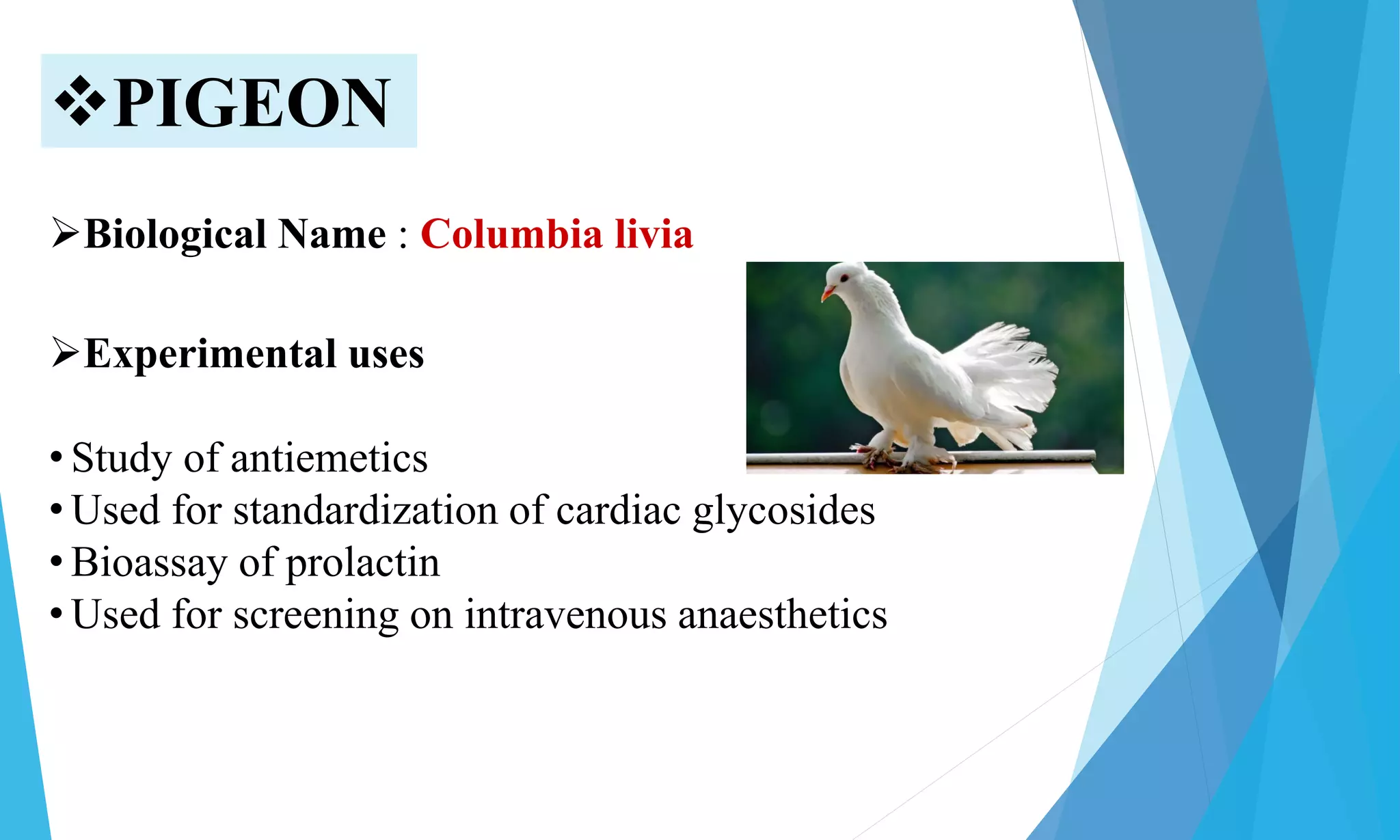
PIGEON
Biological Name : Columbia livia
Experimental uses
• Study of antiemetics
• Used for standardization of cardiac glycosides
• Bioassay of prolactin
• Used for screening on intravenous anaesthetics
THANK YOU

Common laboratory animals

  • 1.
  • 2.
    Laboratory animals arethose animals that can be bred and reared in laboratory under suitable conditions. Most common- rat, mice, hamster, guinea pig, rabbit Large animals- dog, cat, monkey, frog, pigeon, etc. Depending upon the special characteristics of animal and the study to be carried out  animal is selected. The animal which is phylogenetically closer to men considered for the experiment Laboratory animals
  • 3.
    MOUSE Biological Name :Mus musculus Strains -C57BL/6 mice -Balb/C mice -swiss albino mice(most commonly used) Adult weight : 20-25gm Suitable age for experiments : 1 month Balb/C mice
  • 4.
    Characteristics -smallest -cheap -easy to handle Advantages -shortgestation period -short lifespan -small size -low maintenance cost C57BL/6 mice
  • 5.
    Experimental uses • toxicologicalstudies(acute & subacute) • teratogenicity studies • bioassay of insulin • screening of analgesics & anticonvulsants • screening of chemotherapeutic agents • studies related to genetics and cancer research • study of drugs acting on central nervous system
  • 6.
    RAT Biological Name :Rattus norvegicus Strains -Albino -Sprague-Dawley -Wistar Kyoto -Long evans Adult weight : 200-250gm
  • 7.
    Characteristics • small insize • warm-blooded rodent • vomiting centre is absent, so oral drugs can be given • gall bladder & tonsil are absent • greater sensitivity to most drugs • because of the absence of gall bladder, there is a continuous flow of bile into the intestine used to study of drugs acting on bile, cholesterol reabsorption, etc. • pancreas is diffuse difficult to produce pancreactomy • clear lining between fundus & pylorus gastric acid secretion is continuous
  • 8.
    Two inbred originalstrains of albino rats used Wistar rat Sprague Dawley rat • Wide head • Long ear • Tail length is lesser than body length • Resistant to infections • Longer & narrow head • Tail is longer than body length • Rapidly growing
  • 9.
    Long Evans rat blackhooded rat  cross between female albino & wild animal Spontaneous hypertensive rat For hypertension study and CVS disease study
  • 10.
    Experimental uses • Psychopharmacologicalstudies • Study pf analgesics and anticonvulsants • Bioassay of various hormones such as insulin, oxytocin, etc. • Study of estrus cycle, mating behaviour & lactation • Study on isolated tissue preparation • Chronic study on blood pressure • Gastric acid secretion studies • Study of hepatotoxic compound • Acute & chronic toxicity studies • Study on mast cells • Rat brain tissue is extensively employed in radio-receptor studies
  • 11.
    GUINEA PIG Biological Name: Cavia porcellus Strains -Dunkin Hartley -Starin-13 Adult weight : 400-600gm
  • 12.
    Characteristics • Docile animal •Herbivores • Requires exogenous ascorbic acid in diet • Warm blooded rodent • Sensitive cochlea • Highly susceptible to tuberculosis & anaphylaxis • Highly sensitive to histamine & penicillin
  • 13.
    Experimental uses •Evaluation ofbronchodilators •Anaphylactic & immunological studies •Study of histamines & antihistamines •Bioassay of digitalis •Study of tuberculosis & ascorbic acid metabolism •Evaluation of local anaesthetics •Hearing experiments •Study on isolated tissues like ileum, trachea, vas deferens
  • 14.
    FROG Biological Name :Rana tigrina Strains -Rana esculenta -Rana pipiens -Rana temporaria Adult weight : 50-100gm
  • 15.
    Characteristics • Cold bloodedamphibian • 3 chambered heart  two atrium & one ventricle • Highly permeable skin(breathe largely through their skin) • Camouflage defensive mechanism Experimental uses • Screening of certain drugs like anaesthetics • To study the effect of drug acting on CNS, neuromuscular junction & heart • Study of isolated tissue like rectus, abdominis muscle, heart, sciatic nerve preparation, etc.
  • 16.
    RABBIT Biological Name :Oryctolagus cuniculus Strains -New Zealand white(commonly used) -Himalayan black Adult weight : 1.5-3kg
  • 17.
    Characteristics • Docile animal •Large ears • Big eyes • Warm blooded mammalian • Some strains are resistant to effective of atropine because they have higher concentration of atropinase enzyme in their blood • Skin is sensitive to irritation • Can’t vomit • Sensitive to histamine • Secretion of leutenising hormone(LH) in female New Zealand white rabbit
  • 18.
    Experimental uses • Pyrogentesting • Bioassay of antidiabetic and sex hormones • Irritancy tests • Study of drug used in glaucoma • Pharmacokinetic studies • To test toxic effects of cosmetics • Good model for the production of antibodies & antiserum • Screening of agents affecting capillary permeability Himalayan black rabbit
  • 19.
    HAMSTER Biological Name :Mesocriceius auratus & Cricetulus griseus Species -Golden or Syrian hamster -Chinese hamster -Winter white hamster
  • 20.
    Characteristics • Short body •Short legs and tail • Loose skin & skin covered with dense short soft fur • Cheeks pouches are prominent & extend upto shoulder region • Cheeks pouches don’t have lymphatic drainage ideal site for tissue transplants
  • 21.
    Experimental uses • Researchon diabetes mellitus • Bioassay of prostaglandins • Research related to virology, immunology & implantation studies • Research on carcinogenic & mutagenic agents(Armenian hamster) • For highly concentrated & prolonged smoke inhalation studies( European hamster) • Chinese hamsters have low chromosome number making it useful for cytological investigations, genetics, tissue culture & radiation research
  • 22.
    MONKEY Biological Name :Macaca mulatta Characteristics • Structurally & functionally similar to men • Uterus resembles human & exhibiting regular menstrual periods Experimental uses • Psychopharmacological studies • Pharmacokinetic studies • Primate model to study drug metabolism • Study of drugs acting on CNS, CVS, GIT & fertility
  • 23.
    CAT Biological Name :Felis catus Characteristics • Has distinct nictitating membrane Experimental uses • Used in cardiovascular, behavioural & biomedical research • Used in screening of ganglionic drugs • Studying the transmission of vitamins & minerals to foetus & newborn • Used in neuropharmacology, toxicology, oncology & chromosomal abnormality studies
  • 24.
    GERBIL Biological Name :Meriones unguiculatus Also known as “sand rat” & “jirds” Have length between mice & rats Characteristics • Easy to handle • Mild and quite nature • Hearing curve similar to human Experimental uses • Used in stroke, epilepsy, auditory studies • Used in bacterial infections, lipid metabolism, heart disease studies
  • 25.
    DOG Biological Name :Canis familiaris Characteristics • Small alimentary tract • Easily get trained Experimental uses • Study of anti-arrhythmic, cardiovascular & autonomic drugs • Good model for diabetes mellitus, reproduction, ulcerative colitis, open heart surgery, organ transplantation, CNS
  • 26.
    Mongrel dog Beaglesdog This both dogs are most preferred for experimental purpose due to • Manageable size • Moderate length of hair coat • Docile nature • Easy to handle • Stomach & intestinal tract resembles human
  • 27.
    PIG Biological Name :Sus scrofa domestica Characteristics • Less hairy skin • Susceptible to bronchitis & pneumonia Experimental uses • Study of skin related studies • Important model in cardiovascular research such as atherosclerosis, myocardial infarction, etc.
  • 28.
    CHICKEN Biological Name :Gallus domesticus Characteristics • Ease of availability Experimental uses • Study on toxicology & pharmacology behaviour • Studying avian diseases • Important models developed in chicken are chick comb method, chicken blood pressure measurement, heart rate, EEG, etc.
  • 29.
    PIGEON Biological Name :Columbia livia Experimental uses • Study of antiemetics • Used for standardization of cardiac glycosides • Bioassay of prolactin • Used for screening on intravenous anaesthetics
  • 30.