Common laboratory animals used in Drug
Development
Part- II
Dr. K. Manohar Babu
VJ’s College of Pharmacy
Rajamahendravaram
Contents
Types of animal models
Non Rodent Animal Models
Rabbit
Monkey
Cat
Dog
Miscellaneous
Frog
Zebra Fish
Chicken
Pigeon
INTRODUCTION
Physiologically and Anatomically there is a similarity
between the humans and animals at organs and organ
systems, which function in a similar fashion.
This similarity makes animals ideal models for the study
and development of products and techniques for humans.
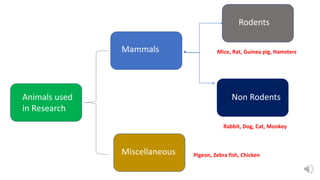
Animals used
in Research
Mammals
Rodents
Non Rodents
Miscellaneous
Mice, Rat, Guinea pig, Hamsters
Rabbit, Dog, Cat, Monkey
Pigeon, Zebra fish, Chicken
Non Rodents Animals
 Rabbit
 Monkey
 Cat
 Dog
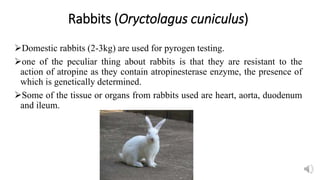
Rabbits (Oryctolagus cuniculus)
Domestic rabbits (2-3kg) are used for pyrogen testing.
one of the peculiar thing about rabbits is that they are resistant to the
action of atropine as they contain atropinesterase enzyme, the presence of
which is genetically determined.
Some of the tissue or organs from rabbits used are heart, aorta, duodenum
and ileum.
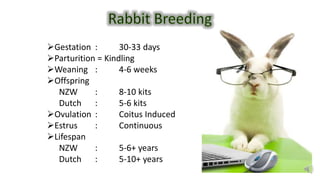
Gestation : 30-33 days
Parturition = Kindling
Weaning : 4-6 weeks
Offspring
NZW : 8-10 kits
Dutch : 5-6 kits
Ovulation : Coitus Induced
Estrus : Continuous
Lifespan
NZW : 5-6+ years
Dutch : 5-10+ years
Use of Rabbit in Research
 Development of Rabis vaccine
 Bio assay of Diabetes drugs
 Hypertension
 Glaucoma
 Eye and ear infection
 Testing of Anti fertility agents
 Testing of cosmetics using Draize test
Rhesus monkey
Squirrel monkey
• Squirrel monkeys are small in size and ease of handling
that contribute to their desirability as research subjects.
• The mean body weight of adult squirrel monkeys is less
than 1 kg compared with female rhesus monkeys, which
usually weigh 4 – 5 kg.
• Smaller doses necessary sp. Expensive medications
• easily adapt to laboratory housing
CAT (Felis catus)
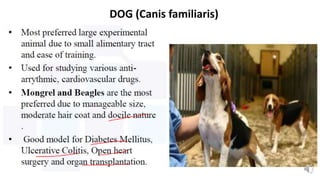
DOG (Canis familiaris)
Miscellaneous Animals
 Frog
 Zebra Fish
 Chicken
 Pigeon
FROG (Rana tigrine)
New class of antibiotic compounds in
frog skin called magainins .
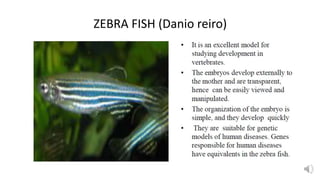
ZEBRA FISH (Danio reiro)
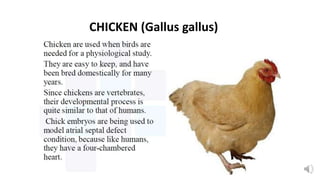
CHICKEN (Gallus gallus)
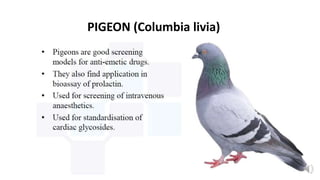
PIGEON (Columbia livia)
Common laboratory animals   part 2

Common laboratory animals part 2

  • 1.
    Common laboratory animalsused in Drug Development Part- II Dr. K. Manohar Babu VJ’s College of Pharmacy Rajamahendravaram
  • 2.
    Contents Types of animalmodels Non Rodent Animal Models Rabbit Monkey Cat Dog Miscellaneous Frog Zebra Fish Chicken Pigeon
  • 3.
    INTRODUCTION Physiologically and Anatomicallythere is a similarity between the humans and animals at organs and organ systems, which function in a similar fashion. This similarity makes animals ideal models for the study and development of products and techniques for humans.
  • 4.
    Animals used in Research Mammals Rodents NonRodents Miscellaneous Mice, Rat, Guinea pig, Hamsters Rabbit, Dog, Cat, Monkey Pigeon, Zebra fish, Chicken
  • 6.
    Non Rodents Animals Rabbit  Monkey  Cat  Dog
  • 7.
    Rabbits (Oryctolagus cuniculus) Domesticrabbits (2-3kg) are used for pyrogen testing. one of the peculiar thing about rabbits is that they are resistant to the action of atropine as they contain atropinesterase enzyme, the presence of which is genetically determined. Some of the tissue or organs from rabbits used are heart, aorta, duodenum and ileum.
  • 8.
    Gestation : 30-33days Parturition = Kindling Weaning : 4-6 weeks Offspring NZW : 8-10 kits Dutch : 5-6 kits Ovulation : Coitus Induced Estrus : Continuous Lifespan NZW : 5-6+ years Dutch : 5-10+ years
  • 9.
    Use of Rabbitin Research  Development of Rabis vaccine  Bio assay of Diabetes drugs  Hypertension  Glaucoma  Eye and ear infection  Testing of Anti fertility agents  Testing of cosmetics using Draize test
  • 11.
  • 12.
    Squirrel monkey • Squirrelmonkeys are small in size and ease of handling that contribute to their desirability as research subjects. • The mean body weight of adult squirrel monkeys is less than 1 kg compared with female rhesus monkeys, which usually weigh 4 – 5 kg. • Smaller doses necessary sp. Expensive medications • easily adapt to laboratory housing
  • 13.
  • 14.
  • 15.
    Miscellaneous Animals  Frog Zebra Fish  Chicken  Pigeon
  • 16.
    FROG (Rana tigrine) Newclass of antibiotic compounds in frog skin called magainins .
  • 17.
  • 18.
  • 19.