Common emergencies
Common emergencies are
•
•
•
•

Minor burns
Major burns
Dog bites
Choking
Minor burns
Minor burns
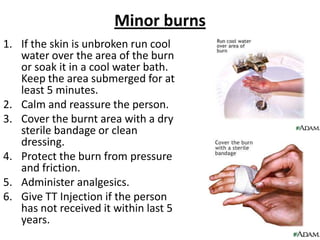
1. If the skin is unbroken run cool
water over the area of the burn
or soak it in a cool water bath.
Keep the area submerged for at
least 5 minutes.
2. Calm and reassure the person.
3. Cover the burnt area with a dry
sterile bandage or clean
dressing.
4. Protect the burn from pressure
and friction.
5. Administer analgesics.
6. Give TT Injection if the person
has not received it within last 5
years.
Major burns
Major burns
• Wrap the person on fire using a thick material
to smother the flame. Douse the person with
water.
• Assess & Maintain breathing. If no breathing
initiate rescue breathing or CPR.
• Cover the burn area with a dry sterile bandage
or clean cloth.
• If fingers or toes have been burned, separate
them with dry, sterile non-adhesive dressing.
• Elevate the body part, that is burned, above
the level of the heart.
• Take steps to prevent shock. Lay the person
flat, elevate the feet about 12 inches and
cover the person with a blanket.
• Monitor the vital signs until medical aid
arrives.
Do Not’s of major burn management
• Do not apply
ointment, butter, ice, medications, cream, oil
spray, or any household remedy to a severe
burn.
• Do not breathe blow or cough on the burn.
• Do not disturb blisters or dead skin.
• Do not remove clothing that is stuck to the
skin.
• Do not give the person anything by mouth, if
there is a severe burn.
• Do not immerse a severe burn in cold water.
Because this can cause shock.
• Do not place a pillow under the person’s head
if there is an airway burn. This can obstruct
the airways due to congestion.
Dog bites
Dog bites
• Clean the wound to remove its saliva
completely.
• Wash the wound under running water using
soap.
• Do not close the puncture wounds with
dressing.
• Cover the cut or laceration using dry dressing.
• Administer TT inj.
• Start post exposure prophylaxis against rabies
• Passive immunization using immunoglobulins.
Post exposure prophylaxis against
rabies
• Rabivir is the commonly used vaccine.
• 5 doses at 0, 3, 7, 14 and 28 days
• For people with poor immune system an extra
dose is given on 90th Day.
Choking
Choking
• Choking is the mechanical obstruction of the
flow of air from the environment into the
lungs.
• Causes:
– Respiratory diseases leading to respiratory
obstruction
– Compression of the laryngopharynx, larynx or
trachea.
– Foreign objects in respiratory tract
Clinical manifestations of choking
• Universal sign of distress
• Difficulty to speak or cry.
• Breathing, if possible, will be
laboured, wheezing and gasping will be noted.
• Violent involuntary cough, gurgle or vomiting
noise
CHOKING ADULT
CHOKING CHILD
Treatment
• Heimlich maneuver / Abdominal thrust
• Self treatment with Abdominal thrust using
chair
• Back slaps 5-20
• Modified chest thrusts for obese and pregnant
• CPR
• Finger sweeping
• Direct vision removal
Thank you

Common emergencies

  • 1.
  • 2.
    Common emergencies are • • • • Minorburns Major burns Dog bites Choking
  • 3.
  • 4.
    Minor burns 1. Ifthe skin is unbroken run cool water over the area of the burn or soak it in a cool water bath. Keep the area submerged for at least 5 minutes. 2. Calm and reassure the person. 3. Cover the burnt area with a dry sterile bandage or clean dressing. 4. Protect the burn from pressure and friction. 5. Administer analgesics. 6. Give TT Injection if the person has not received it within last 5 years.
  • 5.
  • 6.
    Major burns • Wrapthe person on fire using a thick material to smother the flame. Douse the person with water. • Assess & Maintain breathing. If no breathing initiate rescue breathing or CPR. • Cover the burn area with a dry sterile bandage or clean cloth. • If fingers or toes have been burned, separate them with dry, sterile non-adhesive dressing.
  • 7.
    • Elevate thebody part, that is burned, above the level of the heart. • Take steps to prevent shock. Lay the person flat, elevate the feet about 12 inches and cover the person with a blanket. • Monitor the vital signs until medical aid arrives.
  • 8.
    Do Not’s ofmajor burn management • Do not apply ointment, butter, ice, medications, cream, oil spray, or any household remedy to a severe burn. • Do not breathe blow or cough on the burn. • Do not disturb blisters or dead skin. • Do not remove clothing that is stuck to the skin.
  • 9.
    • Do notgive the person anything by mouth, if there is a severe burn. • Do not immerse a severe burn in cold water. Because this can cause shock. • Do not place a pillow under the person’s head if there is an airway burn. This can obstruct the airways due to congestion.
  • 10.
  • 11.
    Dog bites • Cleanthe wound to remove its saliva completely. • Wash the wound under running water using soap. • Do not close the puncture wounds with dressing. • Cover the cut or laceration using dry dressing. • Administer TT inj. • Start post exposure prophylaxis against rabies • Passive immunization using immunoglobulins.
  • 12.
    Post exposure prophylaxisagainst rabies • Rabivir is the commonly used vaccine. • 5 doses at 0, 3, 7, 14 and 28 days • For people with poor immune system an extra dose is given on 90th Day.
  • 13.
  • 14.
    Choking • Choking isthe mechanical obstruction of the flow of air from the environment into the lungs. • Causes: – Respiratory diseases leading to respiratory obstruction – Compression of the laryngopharynx, larynx or trachea. – Foreign objects in respiratory tract
  • 15.
    Clinical manifestations ofchoking • Universal sign of distress • Difficulty to speak or cry. • Breathing, if possible, will be laboured, wheezing and gasping will be noted. • Violent involuntary cough, gurgle or vomiting noise
  • 16.
  • 17.
  • 19.
    Treatment • Heimlich maneuver/ Abdominal thrust • Self treatment with Abdominal thrust using chair • Back slaps 5-20 • Modified chest thrusts for obese and pregnant • CPR • Finger sweeping • Direct vision removal
  • 20.