GROUP MEMBERS

Hajra Talat-027
Shumail ata mir-050
Iqra Bashir-024
Bisma Shahzadi-023
COLOURS & MOOD
 In 1666, English scientist Sir Isaac Newton
 discovered color and told that each color is
 made up of wave length which cannot be
 separated.


 Different colors are combined to create
 different colors e.g red and yellow combines
 to make orange.
 Color psychology is concerned with the
 effects of color on mood, emotion, behavior.

 Certain colors can raise blood
 pressure, increase metabolism, or cause
 eyestrain.

 research has shown that when our eyes
 connect with a color, our brains release
 different chemicals that impact us on a
 physical and emotional level.
 Color therapy has been practiced in traditional
  healing professions for many years, but
  marketers and businesses more recently have
  also used color to shift human moods.

 Once we learn a bit about the attributes of each
  color, we can use that information to promote
  the atmosphere we want in the different rooms
  of our homes
 Colours   have the ability to invoke in us a
  variety of moods. Although not everybody will
  have the same feelings seeing a certain colour
  (think about age and positive/negative
  memories related to a specific colour), the
  psychological effects are shared by the
  majority.
 While perceptions of color are somewhat
  subjective, there are some color effects that
  have universal meaning
 Colors in the red area of the color spectrum
 are known as warm colors and include
 red, orange and yellow. These warm colors
 evoke emotions ranging from feelings of
 warmth and comfort to feelings of anger and
 hostility.
 You do want to be careful about using bright
 colors like orange and especially yellow. They
 reflect more light and excessively stimulate a
 person’s eyes which can lead to irritation. You
 also probably don’t want to paint your dining
 room or kitchen these colors if you’re a
 calorie-counter.
 Colors on the blue side of the spectrum are
 known as cool colors and include blue, purple
 and green. These colors are often described as
 calm, but can also call to mind feelings of
 sadness or indifference.
 Are you looking for a peaceful and calming
 environment? You might consider using green
 and/or blue. These cool colors are typically
 considered restful. There is actually a bit of
 scientific logic applied to this – because the
 eye focuses the color green directly on the
 retina, it is said to be less strainful on your eye
 muscles.
 The color blue is suggested for high-traffic
  rooms or rooms that you or other people will
  spend significant amounts of time. Another
  cool color, blue is typically a calming and
  serene color, said to decrease respiration and
  lower blood pressure. The bedroom is a great
  place to use these colors as they should help
  you relax.
 color can influence our mood and our
 thoughts. Colors affect people in many
 ways, depending upon one’s
 age, gender, ethnic background or local
 climate. Certain colors or groups of colors
 tend to get a similar reaction from most people
 – the overall difference being in the shade or
 tones used. So it’s important to choose wisely.
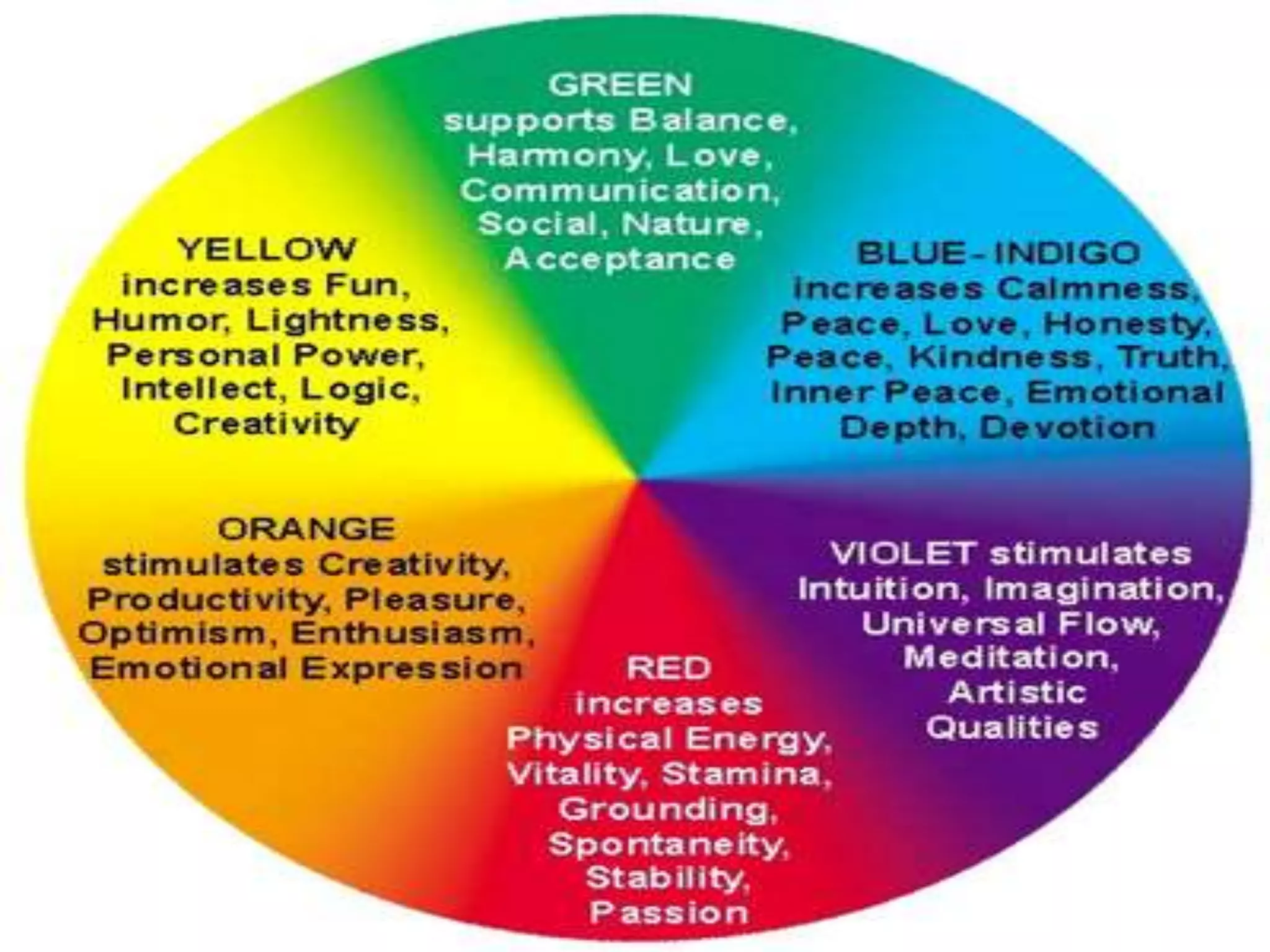
RED
associated with high energy and power.
signals courage, ambition and strength.
It promotes alertness and speed, and
connects us to our physical self.

is too much red present, or if someone is
sensitive to reds, they may experience
feelings of irritation, anger or hostility.

Often, red is best suited as an accent color
instead of the primary color in décor.
ORANGE
warm, inviting, and joyful color.
invokes feelings of sociability, enjoyable
connection, and happiness.

promotes extroverted behavior - a fantastic
color to use in gathering spaces to promote
interaction and relationship.

Too much orange    can create
overwhelming, irritating or frustrating
feelings.
YELLOW
colour ofoptimism, brightness, cheery
attitude and mental clarity.

promotes creative, clear, upbeat thinking
and decision making.

be helpful in easing depression and
encouraging laughter.

over-exposure to yellow,can increase
irritability, crying, hyperactivity, and can
shorten tempers in babies and children (as
well as adults).
GREEN
tremendously pleasing color.
has many positive qualities — invoking
renewal, balance, refreshment and peace –
which provides a calming influence and
stress reducer.

An excellent way to bring green into your
home spaces is with indoor houseplants or
herb gardens.

to too much green can promote laziness
and lack of initiative if overused.
BLUE
 promotes rest and calm.
effective to help ward off insomnia and
promote a deep relaxing sleep.

help balance hyperactivity in children,
and promotes imagination and intuitive
thinking.

. Balancing blues with a warmer, more
relational color is a great idea for gathering
spaces in a home
VIOLET
often the favorite color of adolescent girls.
stimulates the problem solving areas in our brain.
promotes creativity, intuition and artistic ability.
communicates richness and sophistication.
Overuse of violet may result in feelings of
insecurity or suppression of emotions.
 Several ancient cultures, including the
  Egyptians and Chinese, practiced chromo
  therapy, or using colors to heal.

 Chromo therapy is sometimes referred to as
  light therapy or colourology and is still used
  today as a holistic or alternative treatment.
 In this treatment:
 Red was used to stimulate the body and mind
  and to increase circulation.
 Yellow was thought to stimulate the nerves
  and purify the body.
 Orange was used to heal the lungs and to
  increase energy levels.
 Blue was believed to soothe illnesses and treat
  pain.
 Indigo shades were thought to alleviate skin
  problems.
 Most psychologists view color therapy with
 skepticism and point out that the supposed
 effects of color have been exaggerated. Colors
 also have different meanings in different
 cultures. Research has demonstrated in many
 cases that the mood-altering effects of color
 may only be temporary. A blue room may
 initially cause feelings of calm, but the effect
 dissipates after a short period of time.
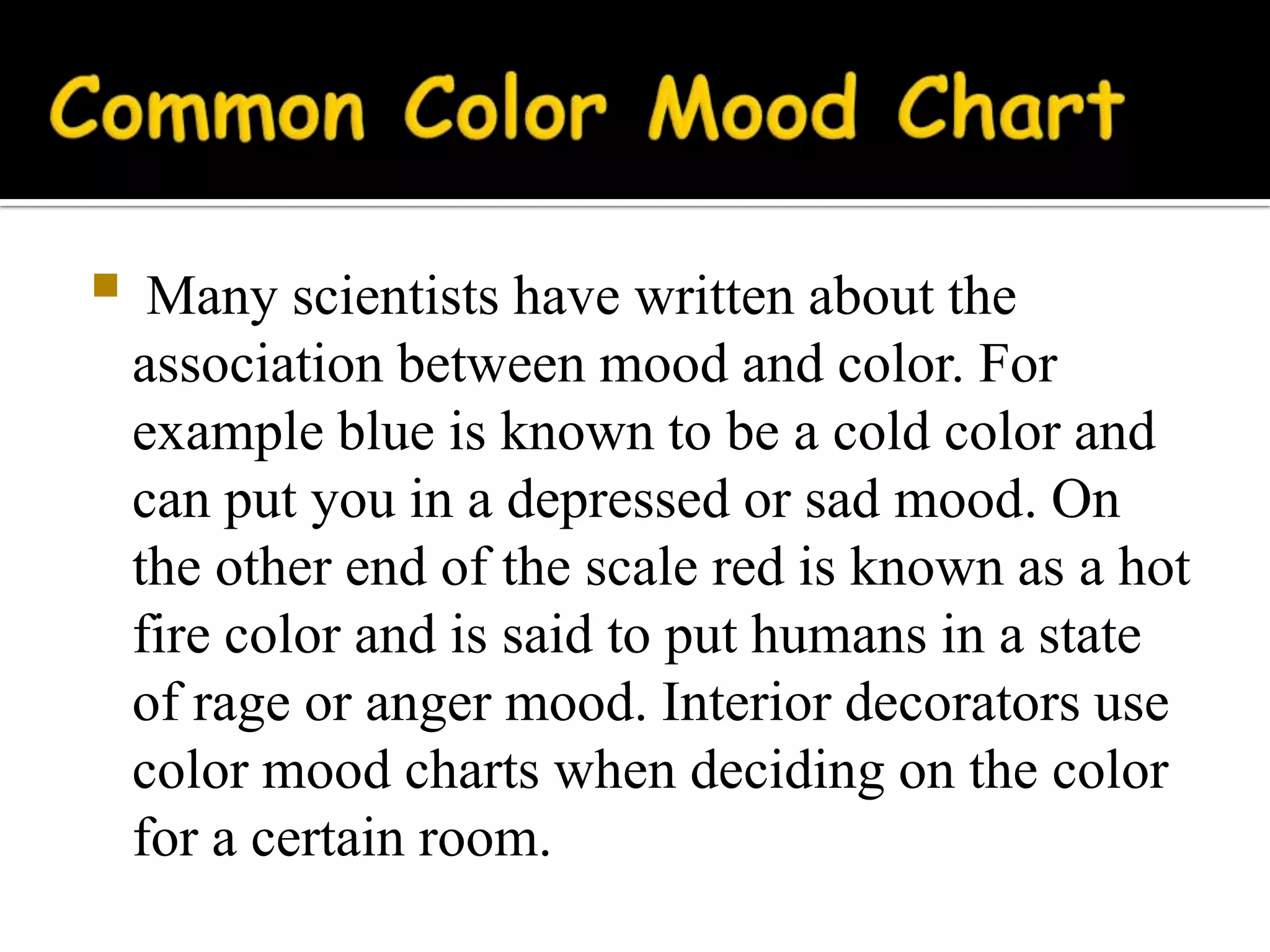
 Many scientists have written about the
 association between mood and color. For
 example blue is known to be a cold color and
 can put you in a depressed or sad mood. On
 the other end of the scale red is known as a hot
 fire color and is said to put humans in a state
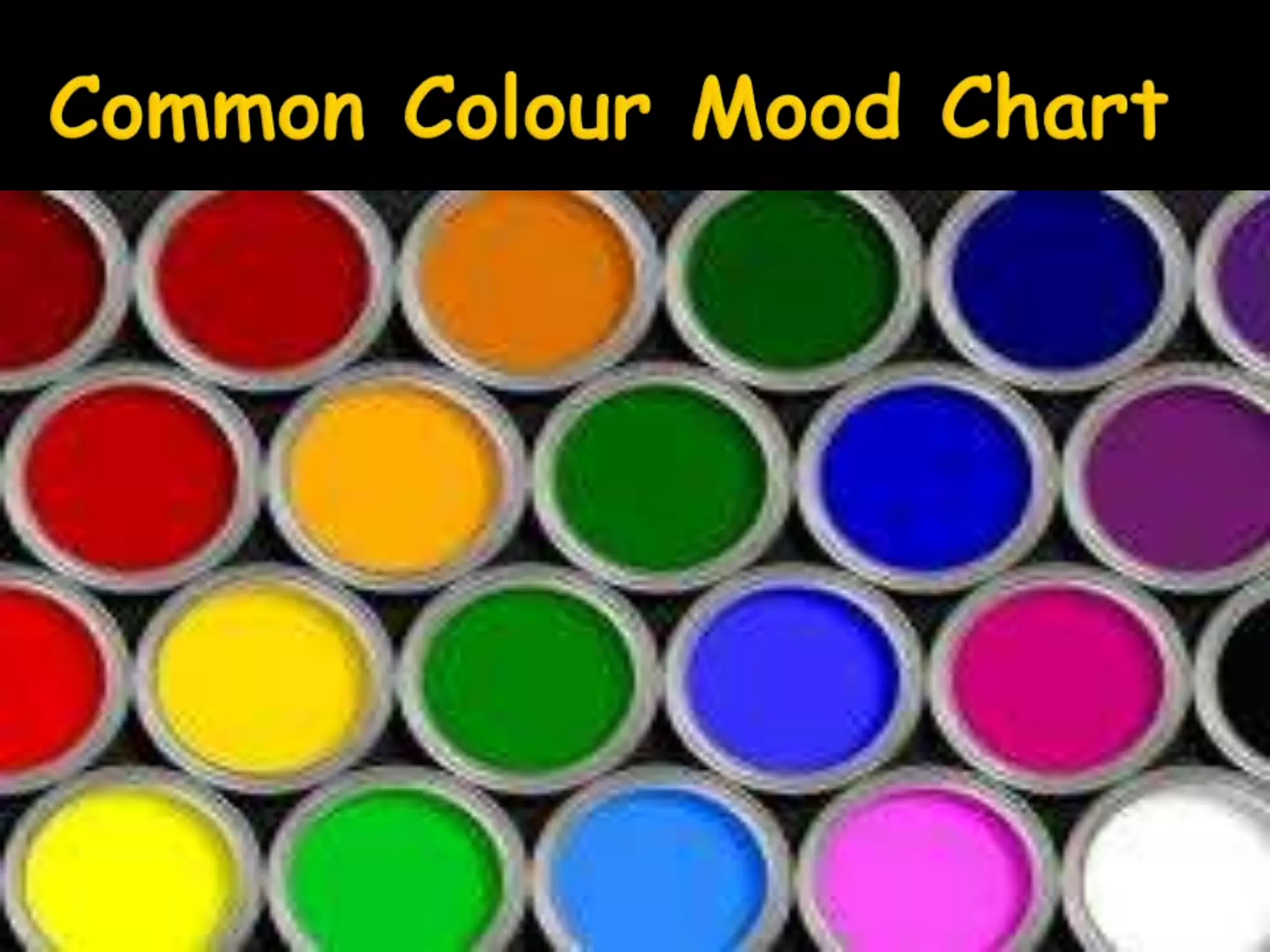
 of rage or anger mood. Interior decorators use
 color mood charts when deciding on the color
 for a certain room.
Black Color Mood Chart
 TENSE
 NERVOUS
 HASSRASSED
 OVER WORKED
White Color Mood Chart
 FRUSTRATED
 CONFUSSED
 BORED
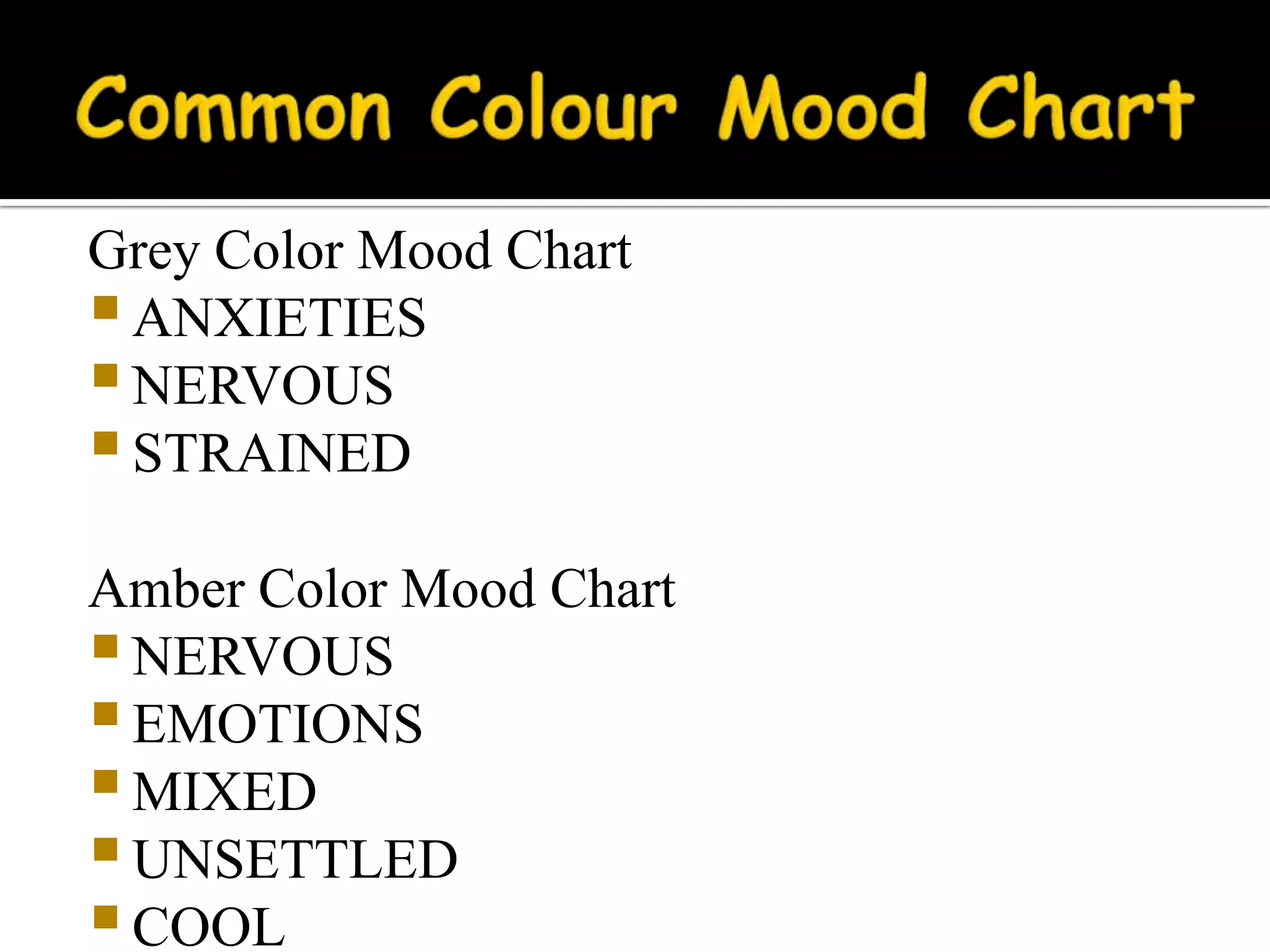
Grey Color Mood Chart
 ANXIETIES
 NERVOUS
 STRAINED
Amber Color Mood Chart
 NERVOUS
 EMOTIONS
 MIXED
 UNSETTLED
 COOL
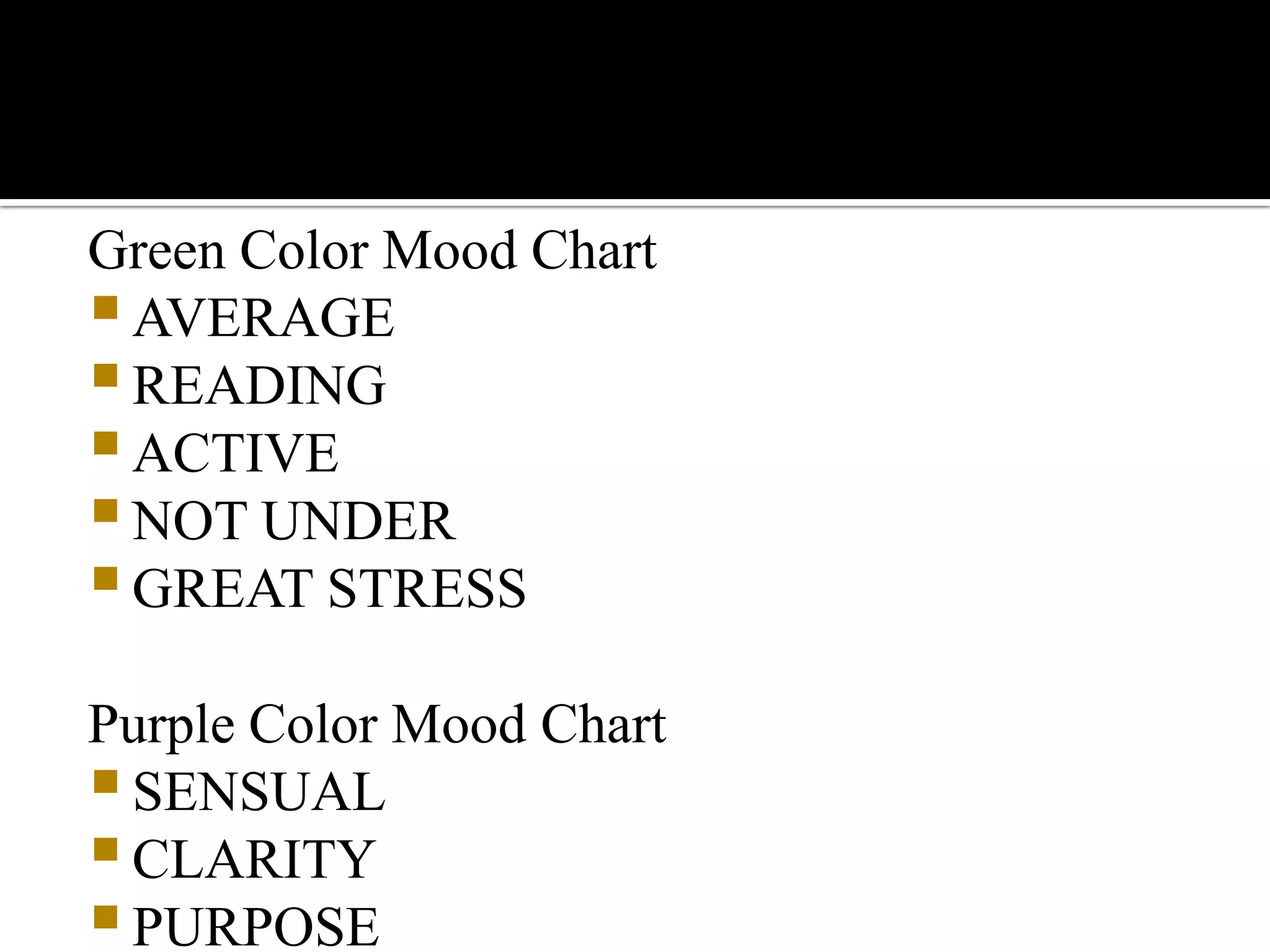
Green Color Mood Chart
 AVERAGE
 READING
 ACTIVE
 NOT UNDER
 GREAT STRESS
Purple Color Mood Chart
 SENSUAL
 CLARITY
 PURPOSE
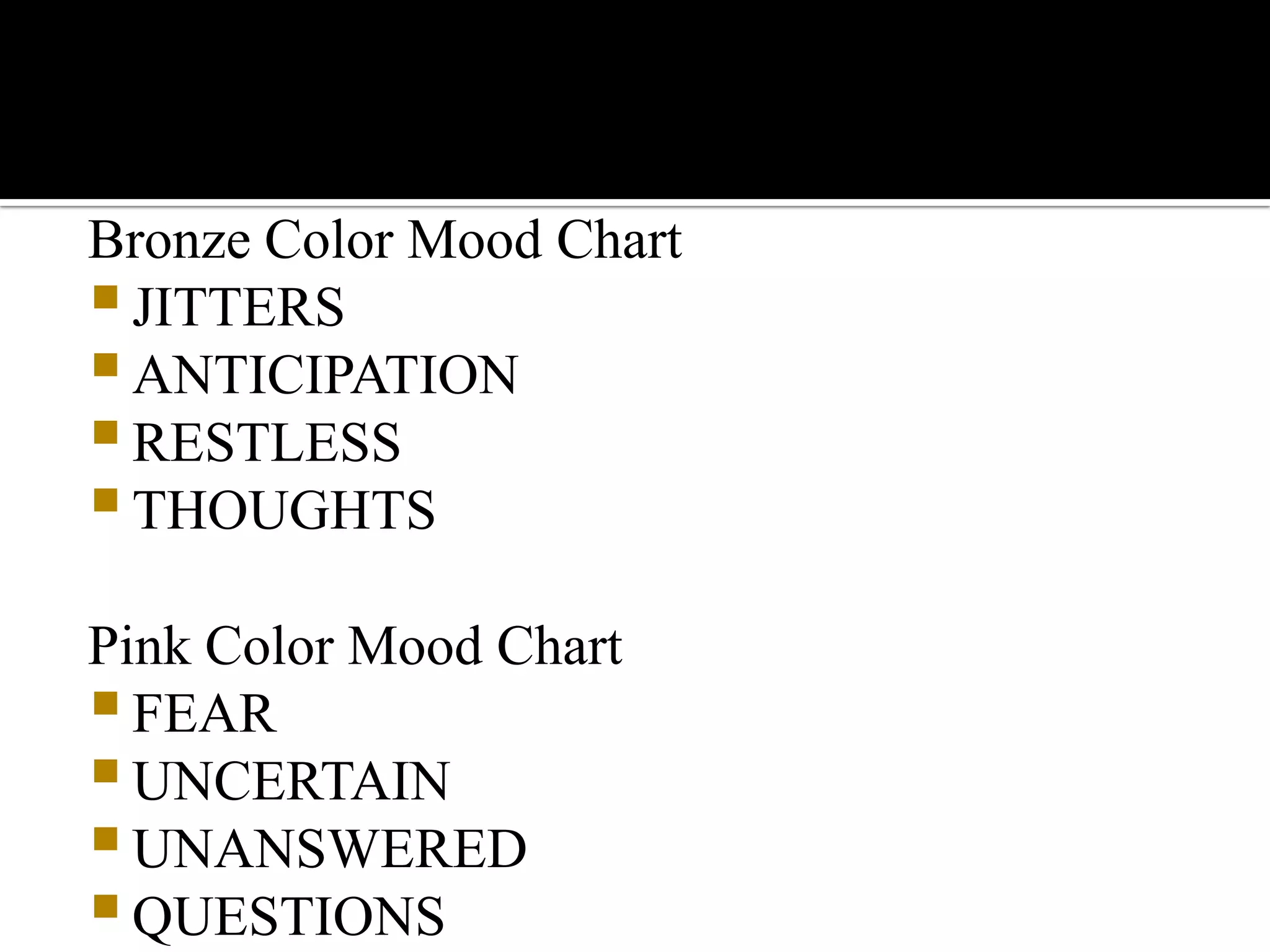
Bronze Color Mood Chart
 JITTERS
 ANTICIPATION
 RESTLESS
 THOUGHTS
Pink Color Mood Chart
 FEAR
 UNCERTAIN
 UNANSWERED
 QUESTIONS
Colours and moods(Psychology)

Colours and moods(Psychology)

  • 2.
    GROUP MEMBERS Hajra Talat-027 Shumailata mir-050 Iqra Bashir-024 Bisma Shahzadi-023
  • 3.
  • 4.
     In 1666,English scientist Sir Isaac Newton discovered color and told that each color is made up of wave length which cannot be separated.  Different colors are combined to create different colors e.g red and yellow combines to make orange.
  • 6.
     Color psychologyis concerned with the effects of color on mood, emotion, behavior.  Certain colors can raise blood pressure, increase metabolism, or cause eyestrain.  research has shown that when our eyes connect with a color, our brains release different chemicals that impact us on a physical and emotional level.
  • 7.
     Color therapyhas been practiced in traditional healing professions for many years, but marketers and businesses more recently have also used color to shift human moods.  Once we learn a bit about the attributes of each color, we can use that information to promote the atmosphere we want in the different rooms of our homes
  • 9.
     Colours have the ability to invoke in us a variety of moods. Although not everybody will have the same feelings seeing a certain colour (think about age and positive/negative memories related to a specific colour), the psychological effects are shared by the majority.  While perceptions of color are somewhat subjective, there are some color effects that have universal meaning
  • 11.
     Colors inthe red area of the color spectrum are known as warm colors and include red, orange and yellow. These warm colors evoke emotions ranging from feelings of warmth and comfort to feelings of anger and hostility.
  • 12.
     You dowant to be careful about using bright colors like orange and especially yellow. They reflect more light and excessively stimulate a person’s eyes which can lead to irritation. You also probably don’t want to paint your dining room or kitchen these colors if you’re a calorie-counter.
  • 14.
     Colors onthe blue side of the spectrum are known as cool colors and include blue, purple and green. These colors are often described as calm, but can also call to mind feelings of sadness or indifference.
  • 15.
     Are youlooking for a peaceful and calming environment? You might consider using green and/or blue. These cool colors are typically considered restful. There is actually a bit of scientific logic applied to this – because the eye focuses the color green directly on the retina, it is said to be less strainful on your eye muscles.
  • 16.
     The colorblue is suggested for high-traffic rooms or rooms that you or other people will spend significant amounts of time. Another cool color, blue is typically a calming and serene color, said to decrease respiration and lower blood pressure. The bedroom is a great place to use these colors as they should help you relax.
  • 18.
     color caninfluence our mood and our thoughts. Colors affect people in many ways, depending upon one’s age, gender, ethnic background or local climate. Certain colors or groups of colors tend to get a similar reaction from most people – the overall difference being in the shade or tones used. So it’s important to choose wisely.
  • 19.
  • 20.
    associated with highenergy and power. signals courage, ambition and strength. It promotes alertness and speed, and connects us to our physical self. is too much red present, or if someone is sensitive to reds, they may experience feelings of irritation, anger or hostility. Often, red is best suited as an accent color instead of the primary color in décor.
  • 21.
  • 22.
    warm, inviting, andjoyful color. invokes feelings of sociability, enjoyable connection, and happiness. promotes extroverted behavior - a fantastic color to use in gathering spaces to promote interaction and relationship. Too much orange can create overwhelming, irritating or frustrating feelings.
  • 23.
  • 24.
    colour ofoptimism, brightness,cheery attitude and mental clarity. promotes creative, clear, upbeat thinking and decision making. be helpful in easing depression and encouraging laughter. over-exposure to yellow,can increase irritability, crying, hyperactivity, and can shorten tempers in babies and children (as well as adults).
  • 25.
  • 26.
    tremendously pleasing color. hasmany positive qualities — invoking renewal, balance, refreshment and peace – which provides a calming influence and stress reducer. An excellent way to bring green into your home spaces is with indoor houseplants or herb gardens. to too much green can promote laziness and lack of initiative if overused.
  • 27.
  • 28.
     promotes restand calm. effective to help ward off insomnia and promote a deep relaxing sleep. help balance hyperactivity in children, and promotes imagination and intuitive thinking. . Balancing blues with a warmer, more relational color is a great idea for gathering spaces in a home
  • 29.
  • 30.
    often the favoritecolor of adolescent girls. stimulates the problem solving areas in our brain. promotes creativity, intuition and artistic ability. communicates richness and sophistication. Overuse of violet may result in feelings of insecurity or suppression of emotions.
  • 32.
     Several ancientcultures, including the Egyptians and Chinese, practiced chromo therapy, or using colors to heal.  Chromo therapy is sometimes referred to as light therapy or colourology and is still used today as a holistic or alternative treatment.  In this treatment:  Red was used to stimulate the body and mind and to increase circulation.
  • 33.
     Yellow wasthought to stimulate the nerves and purify the body.  Orange was used to heal the lungs and to increase energy levels.  Blue was believed to soothe illnesses and treat pain.  Indigo shades were thought to alleviate skin problems.
  • 35.
     Most psychologistsview color therapy with skepticism and point out that the supposed effects of color have been exaggerated. Colors also have different meanings in different cultures. Research has demonstrated in many cases that the mood-altering effects of color may only be temporary. A blue room may initially cause feelings of calm, but the effect dissipates after a short period of time.
  • 37.
     Many scientistshave written about the association between mood and color. For example blue is known to be a cold color and can put you in a depressed or sad mood. On the other end of the scale red is known as a hot fire color and is said to put humans in a state of rage or anger mood. Interior decorators use color mood charts when deciding on the color for a certain room.
  • 38.
    Black Color MoodChart  TENSE  NERVOUS  HASSRASSED  OVER WORKED White Color Mood Chart  FRUSTRATED  CONFUSSED  BORED
  • 39.
    Grey Color MoodChart  ANXIETIES  NERVOUS  STRAINED Amber Color Mood Chart  NERVOUS  EMOTIONS  MIXED  UNSETTLED  COOL
  • 40.
    Green Color MoodChart  AVERAGE  READING  ACTIVE  NOT UNDER  GREAT STRESS Purple Color Mood Chart  SENSUAL  CLARITY  PURPOSE
  • 41.
    Bronze Color MoodChart  JITTERS  ANTICIPATION  RESTLESS  THOUGHTS Pink Color Mood Chart  FEAR  UNCERTAIN  UNANSWERED  QUESTIONS