INTERPERSONAL SKILLS
Presented to : Miss Shahper Ahsan
Presented by : Ayesha Afzal Samad (9077)
Iqra university
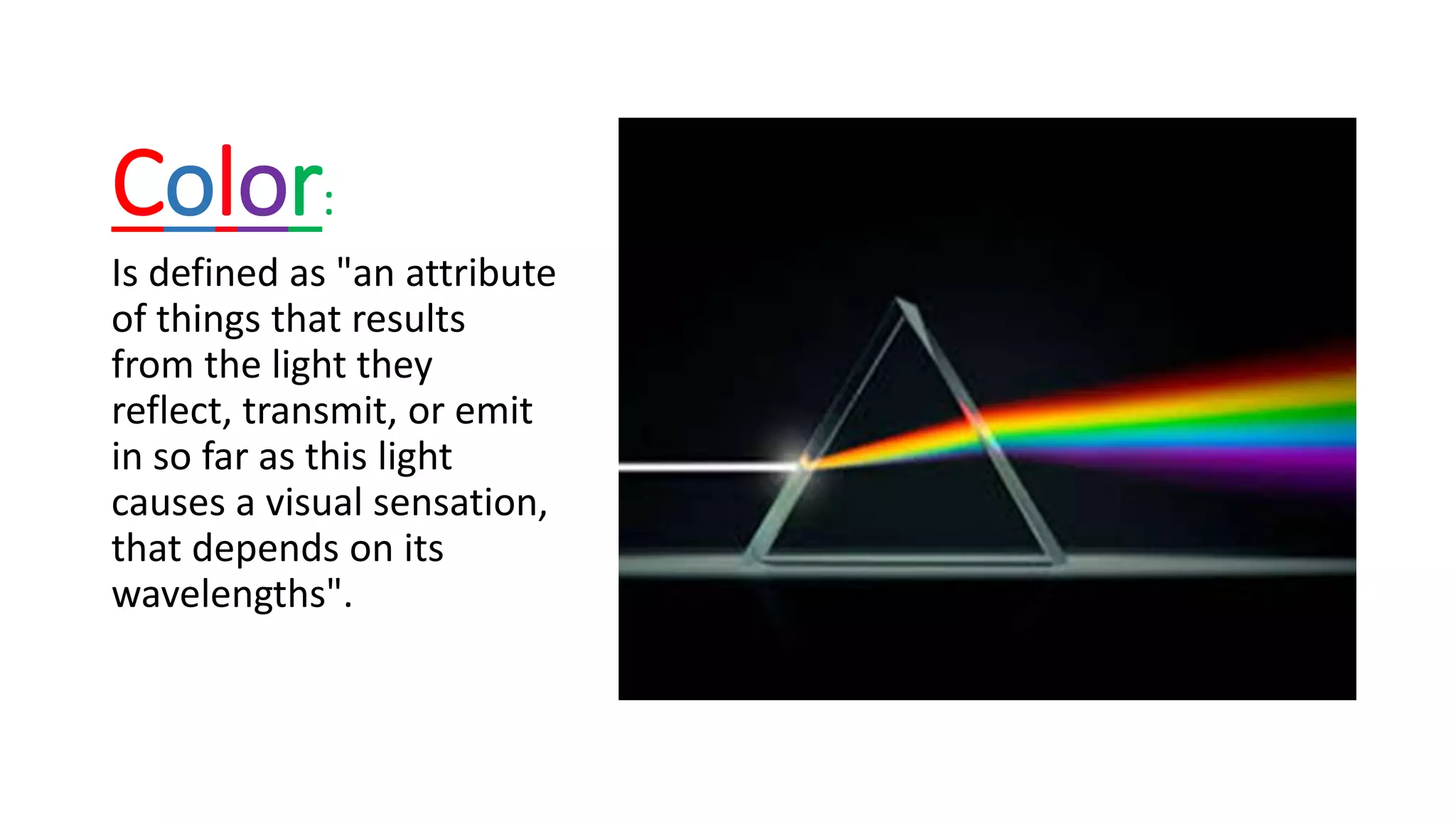
Color:
Is defined as "an attribute
of things that results
from the light they
reflect, transmit, or emit
in so far as this light
causes a visual sensation,
that depends on its
wavelengths".
Color Psychology :
“Is the study of hues as a determinant of human behavior”.
COLORS EFFECT PEOPLE :
• It affects all of our senses
• It can change our moods, thinking, performance, actions and cause
reactions.
• Marketers and advertisers are well-aware about utilizing color.
• Color is consistently used in an attempt to make people hungry,
encourage trust, feelings of calmness and in countless other ways.
Terminologies related to colors:
• Hue: Any si Hue : pure color
• Tint: hue + white
• Tone: hue + grey
Shades: hue + black
Types of color:
• Primary Colors: That can not be created by mixing other colors.
• Secondary Colors: These colors consist of two primary colors mixed
together.
• Tertiary Colors: Are made by mixing a primary color with an adjacent
secondary color.
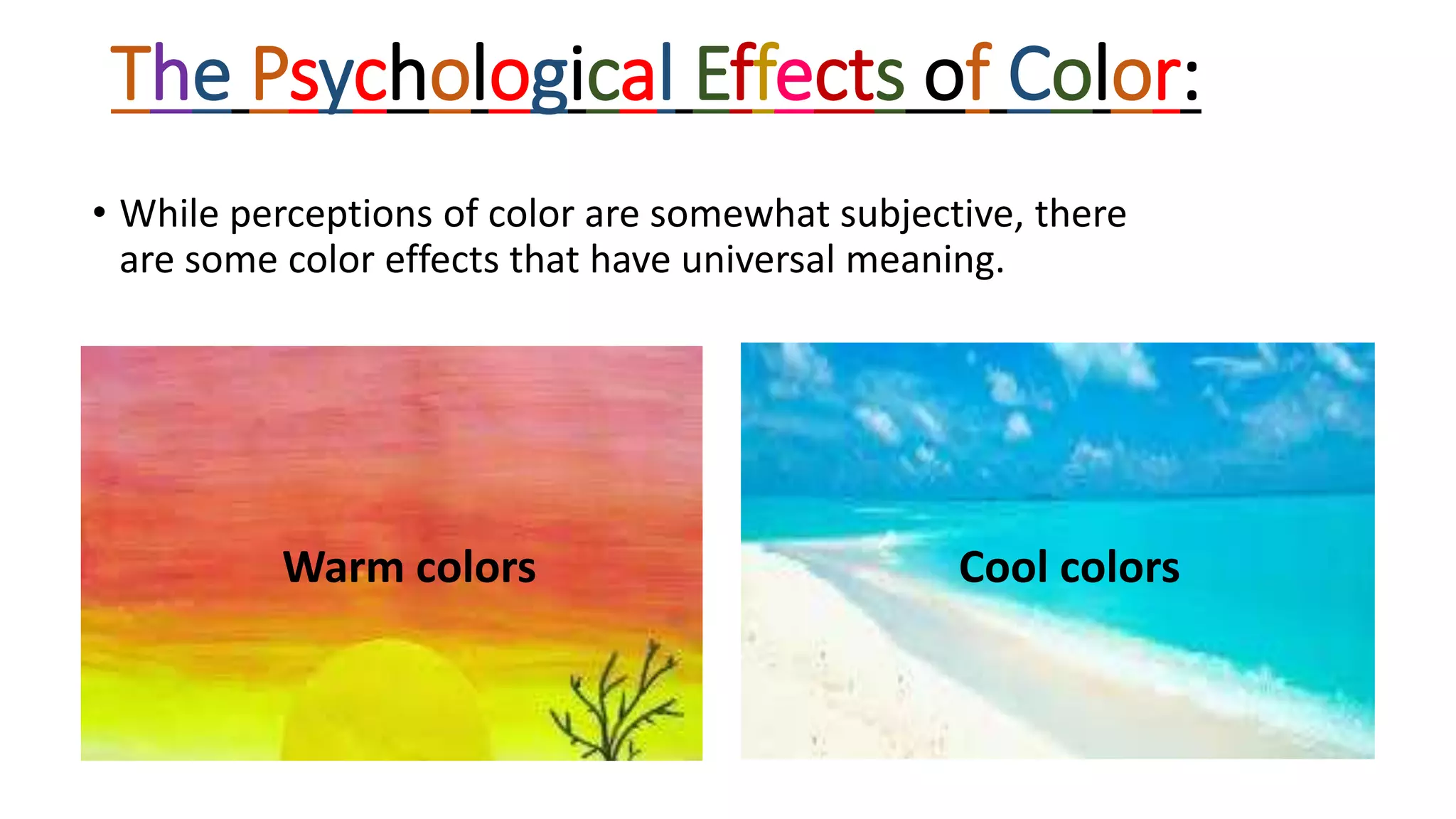
The Psychological Effects of Color:
• While perceptions of color are somewhat subjective, there
are some color effects that have universal meaning.
Warm colors Cool colors
EFFECTIVENESS OF COLOR IN MARKETPLACE:
• There is no better proof of the effectiveness of color than the
marketplace, where it is a vital key in communicating a positive,
enticing and irresistible image for a product.
• Often called the silent salesperson, color must immediately attract
the consumer's eye.
Red:
• Stimulates a faster heartbeat and breathing.
• Symbolizes love, excitement and alert.
• Often used on caution and warning signs.
• Powerful emotion of passion, lust, energy, blood and war.
• Red gets noticed and attract attention and increase appetite.
Yellow :
• Enhances concentration brightest color to the human eye.
• Speeds metabolism.
• Considered an optimistic, cheerful and energetic color.
• People lose their tempers more often in yellow rooms.
• It represents youth, fun, happiness, sunshine and other playful feelings.
Green:
• Symbolizes nature, the color of peace, freshness and growth .
• Easiest color on the eye, calming and refreshing.
• Strong emotional correspondence with safety.
• Considered beneficial to the mind and body.
• Symbolizes trust, loyalty, wisdom, confidence, faith, and truth.
Blue:
• Peaceful, calming, cold.
• It is one of the least appetizing, blue food is rare in nature.
• Is the overwhelming “favorite color”.
• Blue is the least “gender specific” color, having equal appeal to both men and
women.
• Symbolizes loyalty, trustworthy, dependable, and committed.
Black:
• Associated with power, elegance, formality, death, evil, and mystery.
• A mysterious color associated with fear and the unknown facts.
• Usually has a negative connotation (blacklist, black humor, ‘black death’).
• Denotes strength and authority; it is considered to be a very formal
and prestigious color.
Pink:
• Pink provides feelings of caring, self-worth love, and acceptance.
• Denotes feelings of innocence and delicateness.
• Every variation of pink can be either stimulating or calming.
Conclusion:
Colors have power,, if we use our knowledge
of color psychology well, we can enjoy
massive success in our business, career and
personal life.

Color psychology

  • 1.
  • 2.
    Presented to :Miss Shahper Ahsan Presented by : Ayesha Afzal Samad (9077) Iqra university
  • 4.
    Color: Is defined as"an attribute of things that results from the light they reflect, transmit, or emit in so far as this light causes a visual sensation, that depends on its wavelengths".
  • 5.
    Color Psychology : “Isthe study of hues as a determinant of human behavior”. COLORS EFFECT PEOPLE : • It affects all of our senses • It can change our moods, thinking, performance, actions and cause reactions. • Marketers and advertisers are well-aware about utilizing color. • Color is consistently used in an attempt to make people hungry, encourage trust, feelings of calmness and in countless other ways.
  • 6.
    Terminologies related tocolors: • Hue: Any si Hue : pure color • Tint: hue + white • Tone: hue + grey Shades: hue + black
  • 7.
    Types of color: •Primary Colors: That can not be created by mixing other colors. • Secondary Colors: These colors consist of two primary colors mixed together. • Tertiary Colors: Are made by mixing a primary color with an adjacent secondary color.
  • 8.
    The Psychological Effectsof Color: • While perceptions of color are somewhat subjective, there are some color effects that have universal meaning. Warm colors Cool colors
  • 9.
    EFFECTIVENESS OF COLORIN MARKETPLACE: • There is no better proof of the effectiveness of color than the marketplace, where it is a vital key in communicating a positive, enticing and irresistible image for a product. • Often called the silent salesperson, color must immediately attract the consumer's eye.
  • 10.
    Red: • Stimulates afaster heartbeat and breathing. • Symbolizes love, excitement and alert. • Often used on caution and warning signs. • Powerful emotion of passion, lust, energy, blood and war. • Red gets noticed and attract attention and increase appetite.
  • 12.
    Yellow : • Enhancesconcentration brightest color to the human eye. • Speeds metabolism. • Considered an optimistic, cheerful and energetic color. • People lose their tempers more often in yellow rooms. • It represents youth, fun, happiness, sunshine and other playful feelings.
  • 14.
    Green: • Symbolizes nature,the color of peace, freshness and growth . • Easiest color on the eye, calming and refreshing. • Strong emotional correspondence with safety. • Considered beneficial to the mind and body. • Symbolizes trust, loyalty, wisdom, confidence, faith, and truth.
  • 16.
    Blue: • Peaceful, calming,cold. • It is one of the least appetizing, blue food is rare in nature. • Is the overwhelming “favorite color”. • Blue is the least “gender specific” color, having equal appeal to both men and women. • Symbolizes loyalty, trustworthy, dependable, and committed.
  • 18.
    Black: • Associated withpower, elegance, formality, death, evil, and mystery. • A mysterious color associated with fear and the unknown facts. • Usually has a negative connotation (blacklist, black humor, ‘black death’). • Denotes strength and authority; it is considered to be a very formal and prestigious color.
  • 19.
    Pink: • Pink providesfeelings of caring, self-worth love, and acceptance. • Denotes feelings of innocence and delicateness. • Every variation of pink can be either stimulating or calming.
  • 22.
    Conclusion: Colors have power,,if we use our knowledge of color psychology well, we can enjoy massive success in our business, career and personal life.