

Collaboration through
Conflict
Evolving Better Teams
Mark Kilby
March 22, 2014
Mark Kilby
Agile Coach
Mark@markkilby.com
@mkilby– twitter
http://markkilby.com
Linkedin.com/in/mkilby
Software since 1990;
Coaching since 2003
Mark Kilby
Agile Coach
Mark@markkilby.com
@mkilby– twitter
http://markkilby.com
Linkedin.com/in/mkilby
AgileOrlando.com
(founder)
Lean Coffee Orlando
(founder)
speaker
Software since 1990;
Coaching since 2003
TALENT4STARTUPS.ORG
• Coming soon! (targeting May 2014)
• Exciting addition to Orlando tech scene
• Talent4Startups is a matching service for:
• Innovative but under-funded startups
• Driven, but under-experienced people looking
to grow their skills
3 QUESTIONS FOR YOU…
DO YOU LEAD OR
COACH TEAMS?
3 QUESTIONS FOR YOU…
DO YOU PRACTICE
AGILE NOW?
(SCRUM, XP, KANBAN, SAFE, DAD, ETC.)
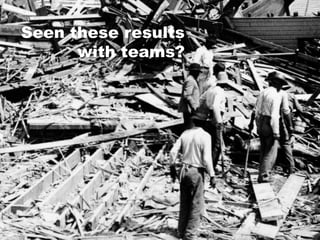
Seen these results
with teams?
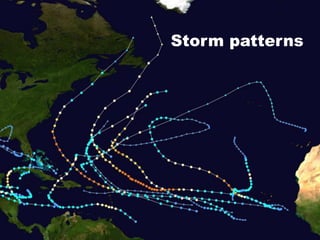
Storm patterns
Purpose today is to…
• Better understand the relationship
between Conflict & Collaboration
Purpose today is to…
• Better understand the relationship
between Conflict & Collaboration
• Give you and your teams several
tools to navigate through conflict
Benefit
Teams that can deliver
in any conditions
Agenda
1. Understand Types of
Conflict and Collaboration
2. Values & Conflict
3. When Things Still Go Wrong
Working Agreements
Working Agreements
1. Ask questions!
CONFLICT AND
COLLABORATION
Understand Types of
Jean Tabaka
Agile Fellow
Rally Software
Our point of view…
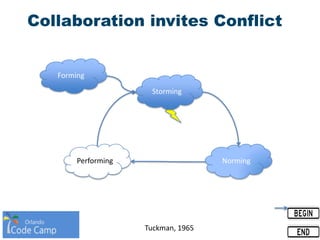
Collaboration invites Conflict
Forming
Storming
NormingPerforming
Tuckman, 1965
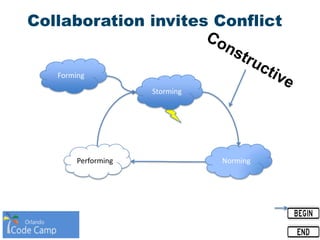
Collaboration invites Conflict
Forming
Storming
NormingPerforming
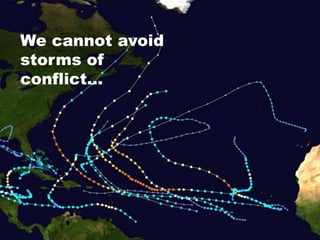
We cannot avoid
storms of
conflict…
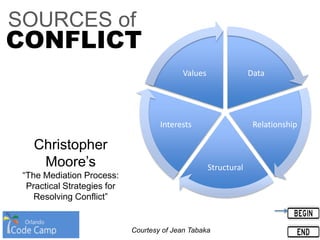
Christopher
Moore’s
“The Mediation Process:
Practical Strategies for
Resolving Conflict”
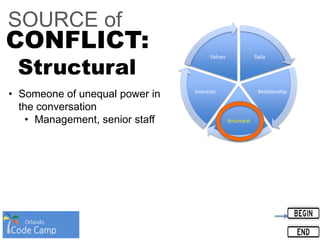
SOURCES of
Data
Relationship
Structural
Interests
Values
CONFLICT
Courtesy of Jean Tabaka
SOURCE of
CONFLICT:
DATA
Data
Relationship
Structural
Interests
Values
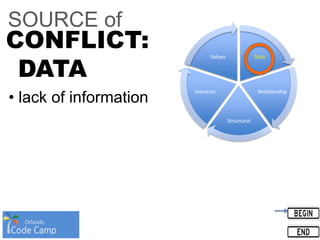
• lack of information
SOURCE of
CONFLICT:
DATA
Data
Relationship
Structural
Interests
Values
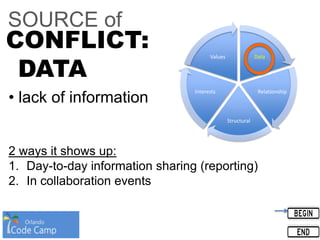
• lack of information
2 ways it shows up:
1. Day-to-day information sharing (reporting)
2. In collaboration events
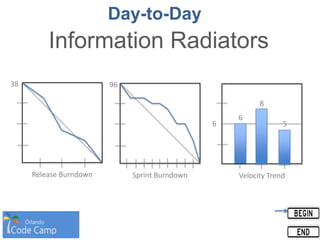
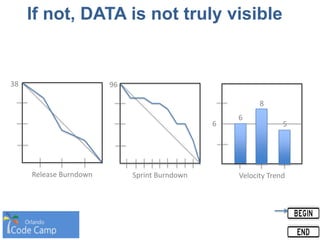
Release Burndown
38
Sprint Burndown
96
Velocity Trend
6
6
8
5
Day-to-Day
Information Radiators
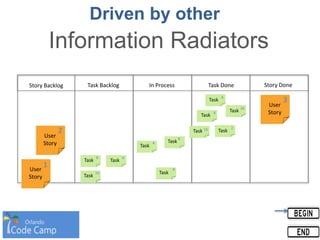
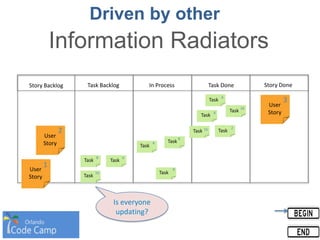
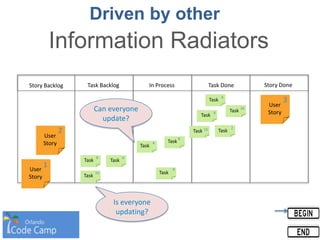
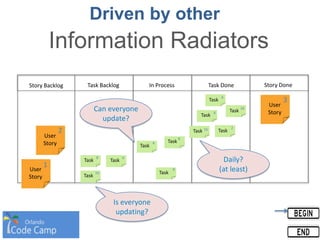
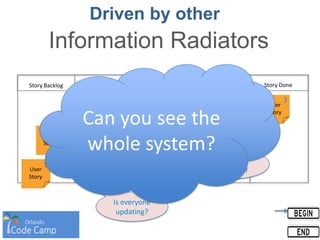
Driven by other
Information Radiators
Story Backlog Task Backlog In Process Task Done Story Done
User
Story
User
Story
User
Story
Task
Task Task
Task
Task Task
Task
Task
3
2
1
Task
8
16 2
4
8
8 4
16
8
Task
8
Task
16
Driven by other
Information Radiators
Story Backlog Task Backlog In Process Task Done Story Done
User
Story
User
Story
User
Story
Task
Task Task
Task
Task Task
Task
Task
3
2
1
Task
8
16 2
4
8
8 4
16
8
Task
8
Task
16
Is everyone
updating?
Driven by other
Information Radiators
Story Backlog Task Backlog In Process Task Done Story Done
User
Story
User
Story
User
Story
Task
Task Task
Task
Task Task
Task
Task
3
2
1
Task
8
16 2
4
8
8 4
16
8
Task
8
Task
16
Is everyone
updating?
Can everyone
update?
Driven by other
Information Radiators
Story Backlog Task Backlog In Process Task Done Story Done
User
Story
User
Story
User
Story
Task
Task Task
Task
Task Task
Task
Task
3
2
1
Task
8
16 2
4
8
8 4
16
8
Task
8
Task
16
Is everyone
updating?
Can everyone
update?
Daily?
(at least)
Driven by other
Information Radiators
Story Backlog Task Backlog In Process Task Done Story Done
User
Story
User
Story
User
Story
Task
Task Task
Task
Task Task
Task
Task
3
2
1
Task
8
16 2
4
8
8 4
16
8
Task
8
Task
16
Is everyone
updating?
Can everyone
update?
Daily?
(at least)
Can you see the
whole system?
Release Burndown
38
Sprint Burndown
96
Velocity Trend
6
6
8
5
If not, DATA is not truly visible
Release Burndown
38
Sprint Burndown
96
Velocity Trend
6
6
8
5
If not, DATA is not truly visible
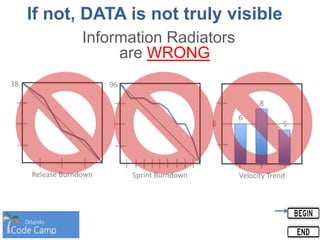
Information Radiators
are WRONG
Release Burndown
38
Sprint Burndown
96
Velocity Trend
6
6
8
5
If not, DATA is not truly visible
Information Radiators
are WRONG
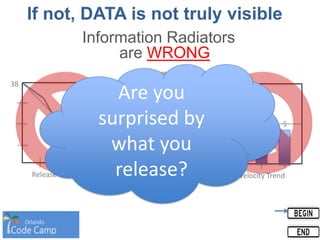
Are you
surprised by
what you
release?
Release Burndown
38
Sprint Burndown
96
Velocity Trend
6
6
8
5
If not, DATA is not truly visible
Information Radiators
are WRONG
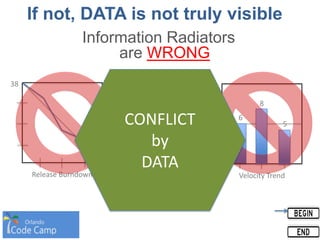
CONFLICT
by
DATA
Who facilitates
meetings?
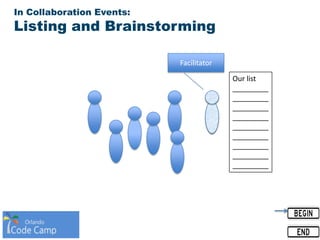
In Collaboration Events:
Listing and Brainstorming
Our list
_________
_________
_________
_________
_________
_________
_________
_________
_________
Facilitator
In Collaboration Events:
Listing and Brainstorming
Our list
_________
_________
_________
_________
_________
_________
_________
_________
_________
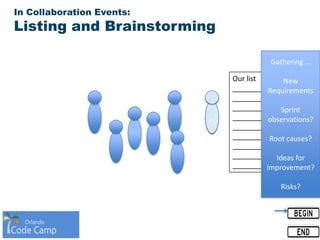
Gathering …
New
Requirements
Sprint
observations?
Root causes?
Ideas for
improvement?
Risks?
In Collaboration Events:
Listing and Brainstorming
Our list
_________
_________
_________
_________
_________
_________
_________
_________
_________
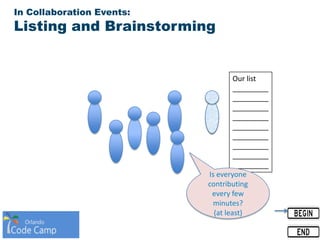
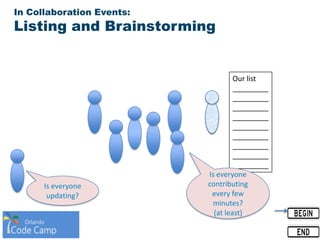
Is everyone
contributing
every few
minutes?
(at least)
In Collaboration Events:
Listing and Brainstorming
Our list
_________
_________
_________
_________
_________
_________
_________
_________
_________
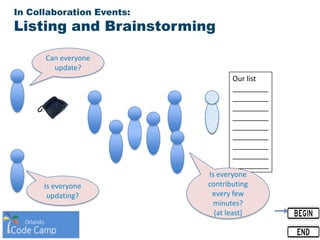
Is everyone
updating?
Is everyone
contributing
every few
minutes?
(at least)
In Collaboration Events:
Listing and Brainstorming
Our list
_________
_________
_________
_________
_________
_________
_________
_________
_________
Is everyone
updating?
Can everyone
update?
Is everyone
contributing
every few
minutes?
(at least)
In Collaboration Events:
Listing and Brainstorming
Our list
_________
_________
_________
_________
_________
_________
_________
_________
_________
Is everyone
updating?
Can everyone
update?
Every few
minutes?
(at least)
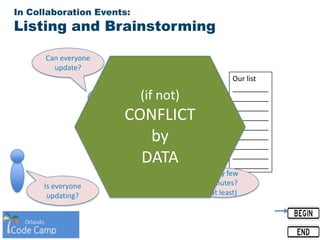
(if not)
CONFLICT
by
DATA
Data
Relationship
Structural
Interests
Values
SOURCE of
CONFLICT:
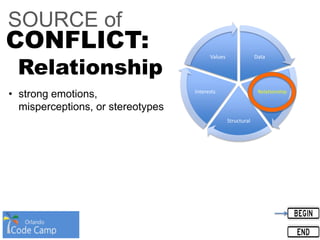
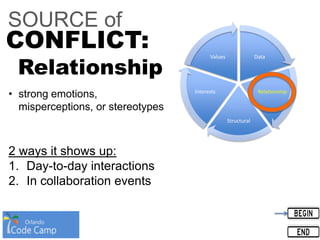
Relationship
• strong emotions,
misperceptions, or stereotypes
Data
Relationship
Structural
Interests
Values
SOURCE of
CONFLICT:
Relationship
• strong emotions,
misperceptions, or stereotypes
2 ways it shows up:
1. Day-to-day interactions
2. In collaboration events
Day-to-Day
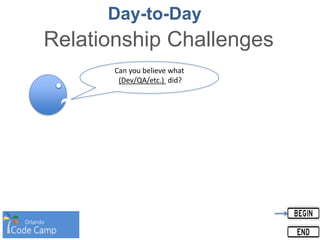
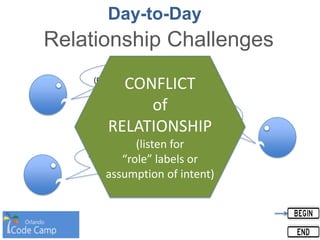
Relationship Challenges
Can you believe what
(Dev/QA/etc.) did?
Day-to-Day
Relationship Challenges
Can you believe what
(Dev/QA/etc.) did?
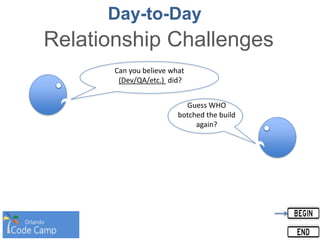
Guess WHO
botched the build
again?
Day-to-Day
Relationship Challenges
Can you believe what
(Dev/QA/etc.) did?
Guess WHO
botched the build
again?
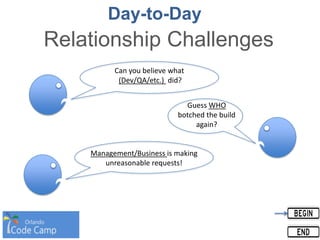
Management/Business is making
unreasonable requests!
Day-to-Day
Relationship Challenges
Can you believe what
(FAVORITE SCAPEGOAT ROLE) did?
Guess WHO
botched the build
again?
________ is making unreasonable
requests!
CONFLICT
of
RELATIONSHIP
(listen for
“role” labels or
assumption of intent)
Day-to-Day
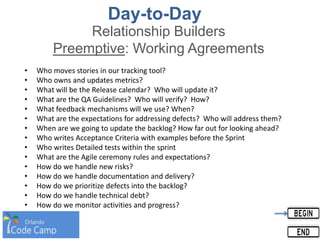
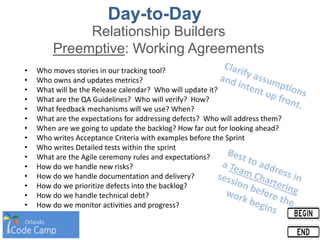
Relationship Builders
Preemptive: Working Agreements
• Who moves stories in our tracking tool?
• Who owns and updates metrics?
• What will be the Release calendar? Who will update it?
• What are the QA Guidelines? Who will verify? How?
• What feedback mechanisms will we use? When?
• What are the expectations for addressing defects? Who will address them?
• When are we going to update the backlog? How far out for looking ahead?
• Who writes Acceptance Criteria with examples before the Sprint
• Who writes Detailed tests within the sprint
• What are the Agile ceremony rules and expectations?
• How do we handle new risks?
• How do we handle documentation and delivery?
• How do we prioritize defects into the backlog?
• How do we handle technical debt?
• How do we monitor activities and progress?
Day-to-Day
Relationship Builders
Preemptive: Working Agreements
• Who moves stories in our tracking tool?
• Who owns and updates metrics?
• What will be the Release calendar? Who will update it?
• What are the QA Guidelines? Who will verify? How?
• What feedback mechanisms will we use? When?
• What are the expectations for addressing defects? Who will address them?
• When are we going to update the backlog? How far out for looking ahead?
• Who writes Acceptance Criteria with examples before the Sprint
• Who writes Detailed tests within the sprint
• What are the Agile ceremony rules and expectations?
• How do we handle new risks?
• How do we handle documentation and delivery?
• How do we prioritize defects into the backlog?
• How do we handle technical debt?
• How do we monitor activities and progress?
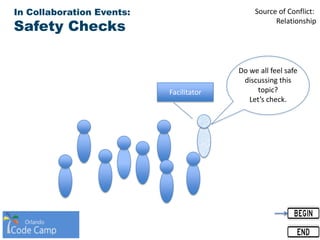
In Collaboration Events:
Safety Checks
Facilitator
Do we all feel safe
discussing this
topic?
Let’s check.
Source of Conflict:
Relationship
In Collaboration Events:
Safety Checks
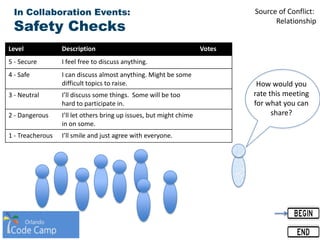
How would you
rate this meeting
for what you can
share?
Level Description Votes
5 - Secure I feel free to discuss anything.
4 - Safe I can discuss almost anything. Might be some
difficult topics to raise.
3 - Neutral I’ll discuss some things. Some will be too
hard to participate in.
2 - Dangerous I’ll let others bring up issues, but might chime
in on some.
1 - Treacherous I’ll smile and just agree with everyone.
Source of Conflict:
Relationship
In Collaboration Events:
Safety Checks
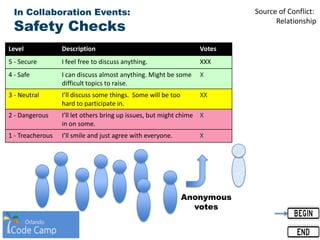
Level Description Votes
5 - Secure I feel free to discuss anything. XXX
4 - Safe I can discuss almost anything. Might be some
difficult topics to raise.
X
3 - Neutral I’ll discuss some things. Some will be too
hard to participate in.
XX
2 - Dangerous I’ll let others bring up issues, but might chime
in on some.
X
1 - Treacherous I’ll smile and just agree with everyone. X
Anonymous
votes
Source of Conflict:
Relationship
In Collaboration Events:
Safety Checks
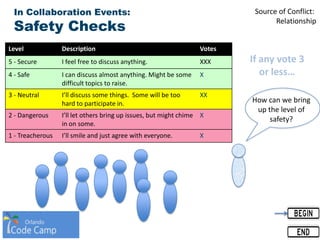
How can we bring
up the level of
safety?
Level Description Votes
5 - Secure I feel free to discuss anything. XXX
4 - Safe I can discuss almost anything. Might be some
difficult topics to raise.
X
3 - Neutral I’ll discuss some things. Some will be too
hard to participate in.
XX
2 - Dangerous I’ll let others bring up issues, but might chime
in on some.
X
1 - Treacherous I’ll smile and just agree with everyone. X
If any vote 3
or less…
Source of Conflict:
Relationship
Data
Relationship
Structural
Interests
Values
SOURCE of
CONFLICT:
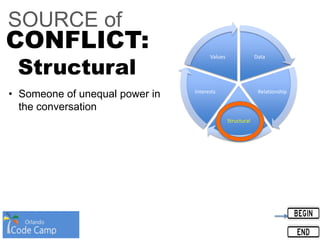
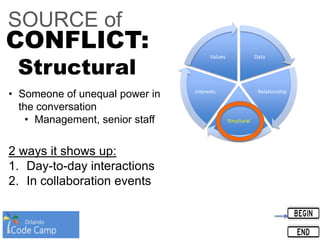
Structural
• Someone of unequal power in
the conversation
Data
Relationship
Structural
Interests
Values
SOURCE of
CONFLICT:
Structural
• Someone of unequal power in
the conversation
• Management, senior staff
Data
Relationship
Structural
Interests
Values
SOURCE of
CONFLICT:
Structural
• Someone of unequal power in
the conversation
• Management, senior staff
2 ways it shows up:
1. Day-to-day interactions
2. In collaboration events
Day-to-Day
Going to the Gemba
Gemba – “the real place”
Day-to-Day
Going to the Gemba
Gemba – “the real place”
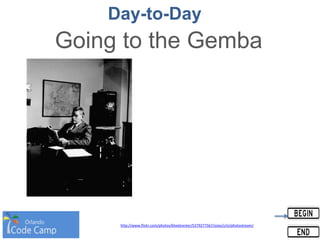
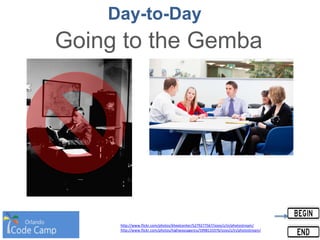
Going to Gemba (Lean) - purposely
observing how people work
together to create value
- Jim Womack
Day-to-Day
Going to the Gemba
http://www.flickr.com/photos/kheelcenter/5279277567/sizes/z/in/photostream/
Day-to-Day
Going to the Gemba
http://www.flickr.com/photos/kheelcenter/5279277567/sizes/z/in/photostream/
http://www.flickr.com/photos/highwaysagency/5998133376/sizes/z/in/photostream/
Day-to-Day
Going to the Gemba
http://www.flickr.com/photos/kheelcenter/5279277567/sizes/z/in/photostream/
http://www.flickr.com/photos/highwaysagency/5998133376/sizes/z/in/photostream/
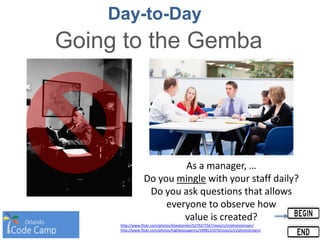
As a manager, …
Do you mingle with your staff daily?
Do you ask questions that allows
everyone to observe how
value is created?
Day-to-Day
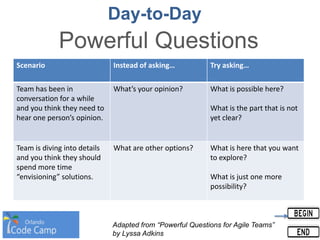
Powerful Questions
Scenario Instead of asking… Try asking…
Team has been in
conversation for a while
and you think they need to
hear one person’s opinion.
What’s your opinion? What is possible here?
What is the part that is not
yet clear?
Team is diving into details
and you think they should
spend more time
“envisioning” solutions.
What are other options? What is here that you want
to explore?
What is just one more
possibility?
Adapted from “Powerful Questions for Agile Teams”
by Lyssa Adkins
In Collaboration Events:
Clear Purpose, Agenda, &
Working Agreements
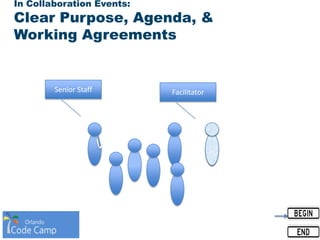
FacilitatorSenior Staff
In Collaboration Events:
Clear Purpose, Agenda, &
Working Agreements
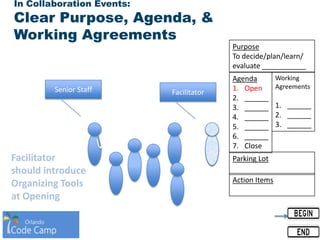
Agenda
1. Open
2. ______
3. ______
4. ______
5. ______
6. ______
7. Close
Working
Agreements
1. ______
2. ______
3. ______
Purpose
To decide/plan/learn/
evaluate ___________
FacilitatorSenior Staff
Parking Lot
Action Items
Facilitator
should introduce
Organizing Tools
at Opening
In Collaboration Events:
Clear Purpose, Agenda, &
Working Agreements
Agenda
1. Open
2. ______
3. ______
4. ______
5. ______
6. ______
7. Close
Working
Agreements
1. ______
2. ______
3. ______
Purpose
To decide/plan/learn/
evaluate ___________
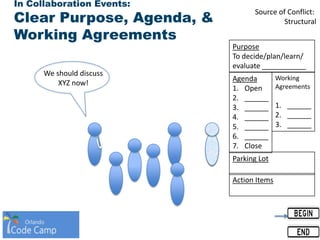
We should discuss
XYZ now!
Parking Lot
Action Items
Source of Conflict:
Structural
In Collaboration Events:
Clear Purpose, Agenda, &
Working Agreements
Agenda
1. Open
2. ______
3. ______
4. ______
5. ______
6. ______
7. Close
Working
Agreements
1. ______
2. ______
3. ______
Purpose
To decide/plan/learn/
evaluate ___________
Parking Lot
Action Items
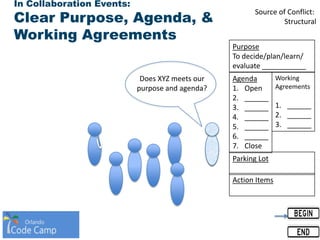
Does XYZ meets our
purpose and agenda?
Source of Conflict:
Structural
In Collaboration Events:
Clear Purpose, Agenda, &
Working Agreements
Agenda
1. Open
2. ______
3. ______
4. ______
5. ______
6. ______
7. Close
Working
Agreements
1. ______
2. ______
3. ______
Purpose
To decide/plan/learn/
evaluate ___________
Parking Lot
Action Items
XYZ
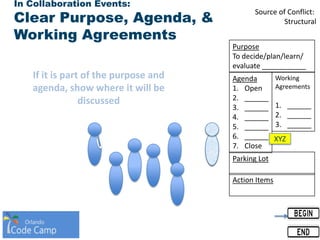
If it is part of the purpose and
agenda, show where it will be
discussed
Source of Conflict:
Structural
In Collaboration Events:
Clear Purpose, Agenda, &
Working Agreements
Agenda
1. Open
2. ______
3. ______
4. ______
5. ______
6. ______
7. Close
Working
Agreements
1. ______
2. ______
3. ______
Purpose
To decide/plan/learn/
evaluate ___________
Parking Lot
Action Items
XYZ
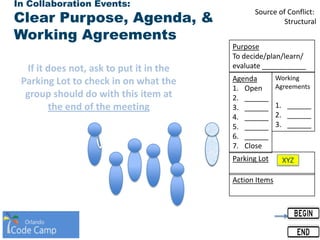
If it does not, ask to put it in the
Parking Lot to check in on what the
group should do with this item at
the end of the meeting
Source of Conflict:
Structural
In Collaboration Events:
Clear Purpose, Agenda, &
Working Agreements
Agenda
1. Open
2. ______
3. ______
4. ______
5. ______
6. ______
7. Close
Working
Agreements
1. ______
2. ______
3. ______
Purpose
To decide/plan/learn/
evaluate ___________
Parking Lot
Action Items
XYZ
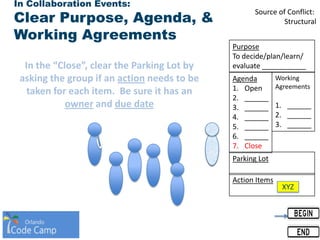
In the “Close”, clear the Parking Lot by
asking the group if an action needs to be
taken for each item. Be sure it has an
owner and due date
Source of Conflict:
Structural
Data
Relationship
Structural
Interests
Values
SOURCE of
CONFLICT:
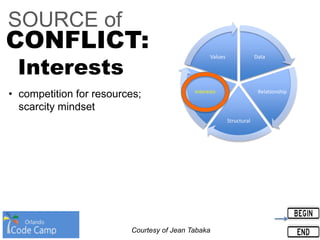
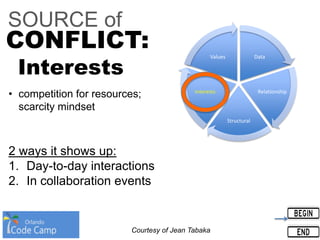
Interests
Courtesy of Jean Tabaka
• competition for resources;
scarcity mindset
Data
Relationship
Structural
Interests
Values
SOURCE of
CONFLICT:
Interests
Courtesy of Jean Tabaka
• competition for resources;
scarcity mindset
2 ways it shows up:
1. Day-to-day interactions
2. In collaboration events
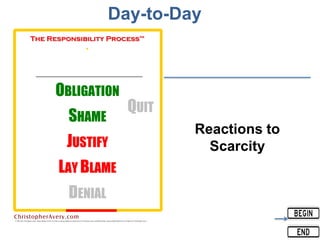
Day-to-Day
Reactions to
Scarcity
Day-to-Day
Reactions to
Scarcity
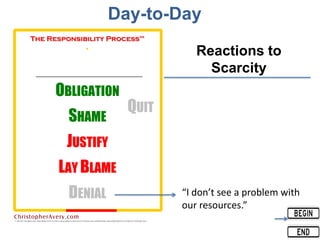
“I don’t see a problem with
our resources.”
Day-to-Day
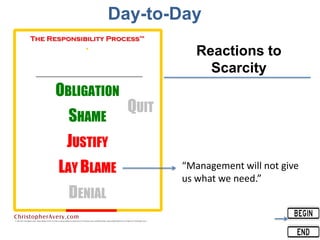
“Management will not give
us what we need.”
Reactions to
Scarcity
Day-to-Day
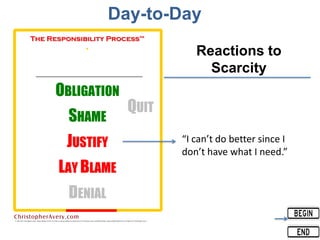
“I can’t do better since I
don’t have what I need.”
Reactions to
Scarcity
Day-to-Day
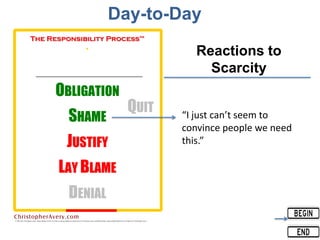
“I just can’t seem to
convince people we need
this.”
Reactions to
Scarcity
Day-to-Day
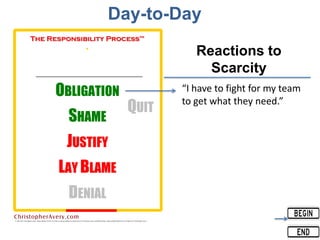
“I have to fight for my team
to get what they need.”
Reactions to
Scarcity
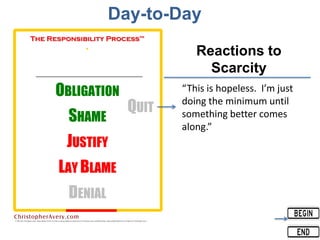
Day-to-Day
“This is hopeless. I’m just
doing the minimum until
something better comes
along.”
Reactions to
Scarcity
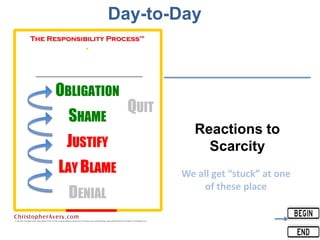
Day-to-Day
Reactions to
Scarcity
We all get “stuck” at one
of these place
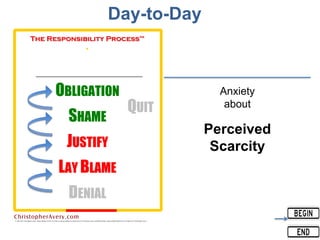
Day-to-Day
Perceived
Scarcity
Anxiety
about
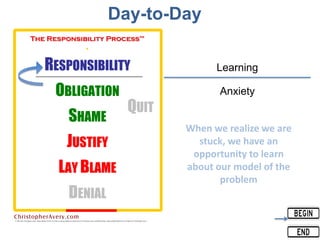
Learning
Anxiety
Day-to-Day
When we realize we are
stuck, we have an
opportunity to learn
about our model of the
problem
Day-to-Day
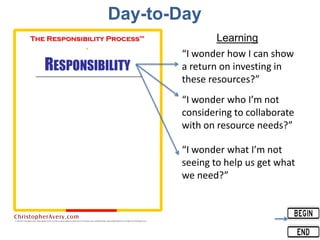
“I wonder what I’m not
seeing to help us get what
we need?”
“I wonder who I’m not
considering to collaborate
with on resource needs?”
“I wonder how I can show
a return on investing in
these resources?”
Learning
Day-to-Day
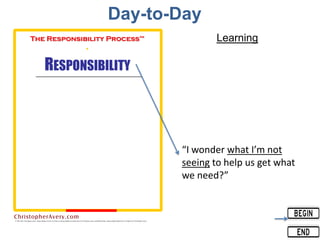
“I wonder what I’m not
seeing to help us get what
we need?”
Learning
Learning
Anxiety
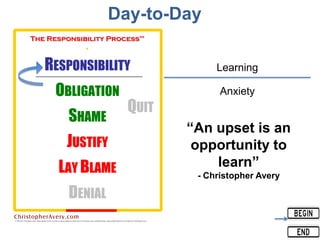
“An upset is an
opportunity to
learn”
- Christopher Avery
Day-to-Day
In Collaboration Events:
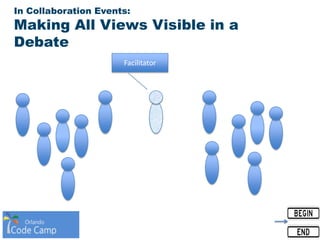
Making All Views Visible in a
Debate
Facilitator
In Collaboration Events:
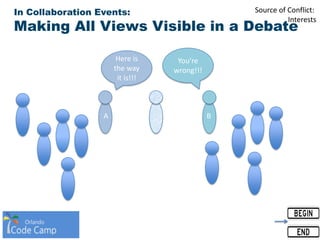
Making All Views Visible in a Debate
Here is
the way
it is!!!
You’re
wrong!!!
A B
Source of Conflict:
Interests
In Collaboration Events:
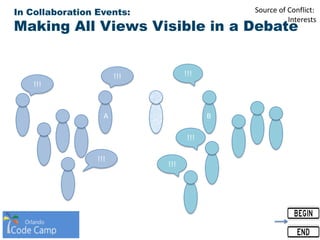
Making All Views Visible in a Debate
!!! !!!
!!!
!!!
!!!
!!!
A B
Source of Conflict:
Interests
In Collaboration Events:
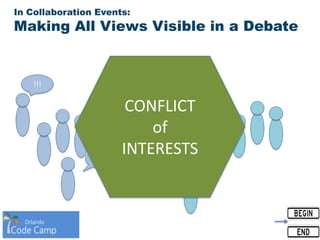
Making All Views Visible in a Debate
!!! !!!
!!!
!!!
!!!
!!!
A B
CONFLICT
of
INTERESTS
In Collaboration Events:
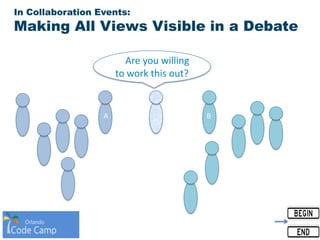
Making All Views Visible in a Debate
!!!Are you willing
to work this out?
A B
In Collaboration Events:
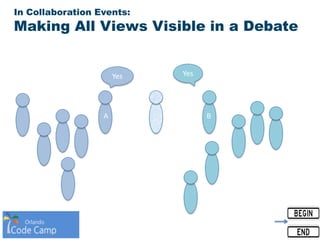
Making All Views Visible in a Debate
Yes Yes
A B
A point of view
__________________
__________________
__________________
__________________
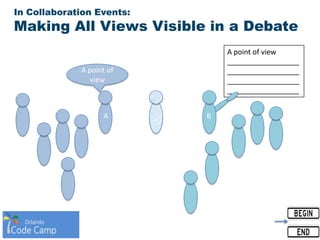
In Collaboration Events:
Making All Views Visible in a Debate
A point of
view
A B
A point of view
__________________
__________________
__________________
__________________
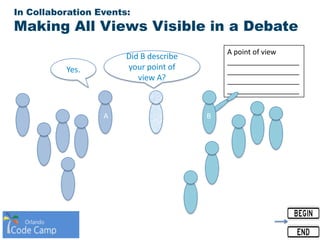
In Collaboration Events:
Making All Views Visible in a Debate
A B
Did B describe
your point of
view A?
Yes.
B point of view
__________________
__________________
__________________
__________________
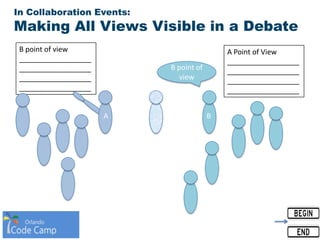
In Collaboration Events:
Making All Views Visible in a Debate
A Point of View
__________________
__________________
__________________
__________________
A B
B point of
view
B point of view
__________________
__________________
__________________
__________________
In Collaboration Events:
Making All Views Visible in a Debate
A Point of View
__________________
__________________
__________________
__________________
A B
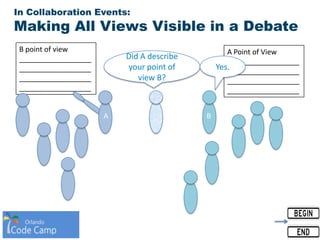
Did A describe
your point of
view B?
Yes.
In Collaboration Events:
Making All Views Visible in a Debate
A B
B point of view
__________________
__________________
__________________
__________________
A Point of View
__________________
__________________
__________________
__________________
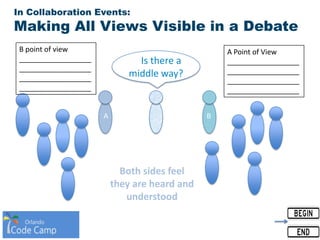
!!!Is there a
middle way?
Both sides feel
they are heard and
understood
In Collaboration Events:
Making All Views Visible in a Debate
A B
B point of view
__________________
__________________
__________________
__________________
A Point of View
__________________
__________________
__________________
__________________
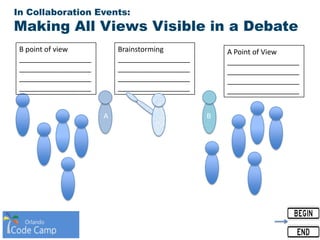
Brainstorming
__________________
__________________
__________________
__________________
Navigating
Data
Relationship
Structural
Interests
Values
CONFLICT
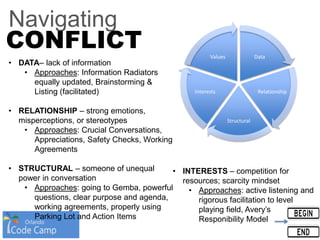
• DATA– lack of information
• Approaches: Information Radiators
equally updated, Brainstorming &
Listing (facilitated)
• RELATIONSHIP – strong emotions,
misperceptions, or stereotypes
• Approaches: Crucial Conversations,
Appreciations, Safety Checks, Working
Agreements
• STRUCTURAL – someone of unequal
power in conversation
• Approaches: going to Gemba, powerful
questions, clear purpose and agenda,
working agreements, properly using
Parking Lot and Action Items
• INTERESTS – competition for
resources; scarcity mindset
• Approaches: active listening and
rigorous facilitation to level
playing field, Avery’s
Responibility Model
VALUES & CONFLICT
Understand
Values
Data
Relationship
Structural
Interests
Values
CONFLICT
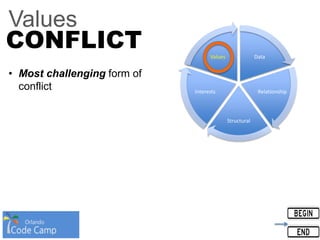
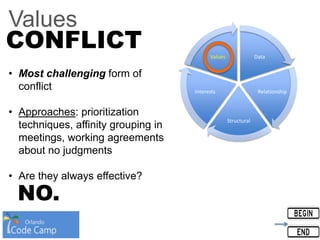
• Most challenging form of
conflict
Values
Data
Relationship
Structural
Interests
Values
CONFLICT
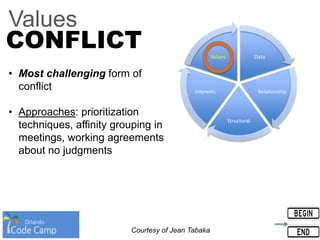
• Most challenging form of
conflict
• Approaches: prioritization
techniques, affinity grouping in
meetings, working agreements
about no judgments
Courtesy of Jean Tabaka
Values
Data
Relationship
Structural
Interests
Values
CONFLICT
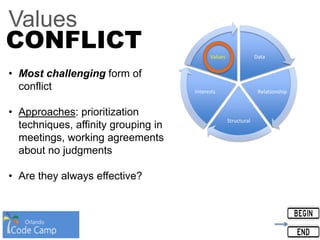
• Most challenging form of
conflict
• Approaches: prioritization
techniques, affinity grouping in
meetings, working agreements
about no judgments
• Are they always effective?
Values
Data
Relationship
Structural
Interests
Values
CONFLICT
• Most challenging form of
conflict
• Approaches: prioritization
techniques, affinity grouping in
meetings, working agreements
about no judgments
• Are they always effective?
NO.
Values
Data
Relationship
Structural
Interests
Values
CONFLICT
• Most challenging form of
conflict
• Approaches: prioritization
techniques, affinity grouping in
meetings, working agreements
about no judgments
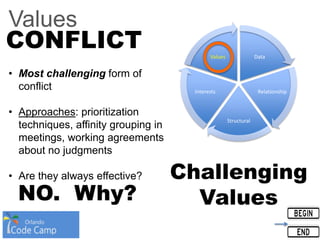
• Are they always effective? Challenging
ValuesNO. Why?
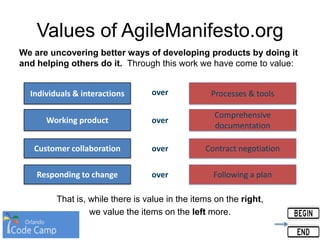
We are uncovering better ways of developing products by doing it
and helping others do it. Through this work we have come to value:
That is, while there is value in the items on the right,
we value the items on the left more.
Values of AgileManifesto.org
Individuals & interactions Processes & toolsover
Working product
Comprehensive
documentation
over
Customer collaboration Contract negotiationover
Responding to change Following a planover
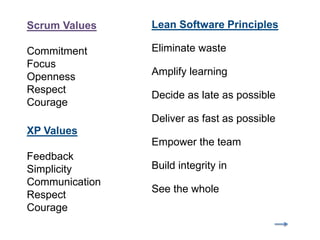
Scrum Values
Commitment
Focus
Openness
Respect
Courage
XP Values
Feedback
Simplicity
Communication
Respect
Courage
Lean Software Principles
Eliminate waste
Amplify learning
Decide as late as possible
Deliver as fast as possible
Empower the team
Build integrity in
See the whole
The problem with “giving” values…
• They may not stick with the team
The problem with “giving” values…
• We may not know what we value
• They may not stick with the team
The problem with “giving” values…
• We may not know what we value
• They may not stick with the team
• We can’t be sure if our values align
with others
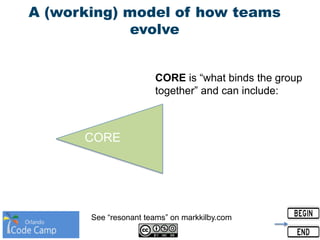
A (working) model of how teams
evolve
CORE
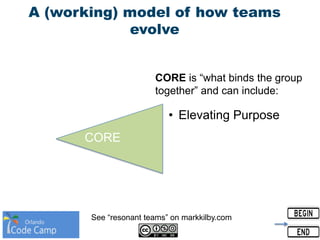
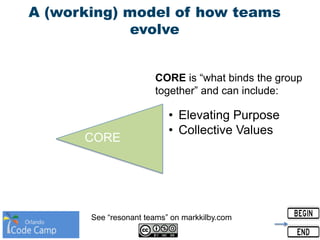
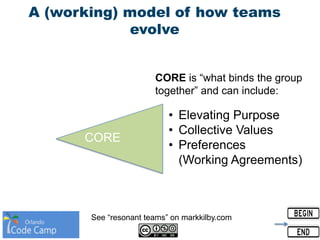
CORE is “what binds the group
together” and can include:
See “resonant teams” on markkilby.com
A (working) model of how teams
evolve
CORE is “what binds the group
together” and can include:
See “resonant teams” on markkilby.com
• Elevating Purpose
CORE
A (working) model of how teams
evolve
CORE is “what binds the group
together” and can include:
See “resonant teams” on markkilby.com
• Elevating Purpose
• Collective Values
CORE
A (working) model of how teams
evolve
CORE is “what binds the group
together” and can include:
See “resonant teams” on markkilby.com
• Elevating Purpose
• Collective Values
• Preferences
(Working Agreements)
CORE
CORE
A (working) model of how teams
evolve
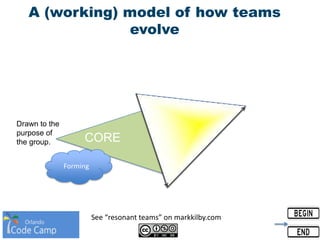
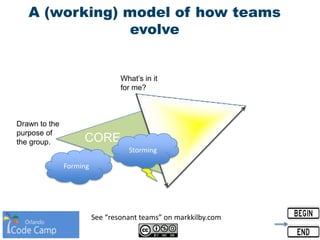
Forming
See “resonant teams” on markkilby.com
Drawn to the
purpose of
the group.
CORE
A (working) model of how teams
evolve
What’s in it
for me?
Forming
Storming
See “resonant teams” on markkilby.com
Drawn to the
purpose of
the group.
CORE
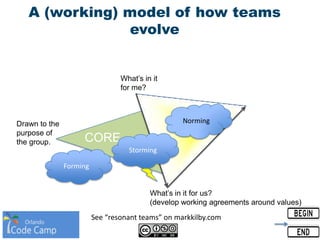
A (working) model of how teams
evolve
What’s in it
for me?
What’s in it for us?
(develop working agreements around values)
Forming
Storming
Norming
See “resonant teams” on markkilby.com
Drawn to the
purpose of
the group.
CORE
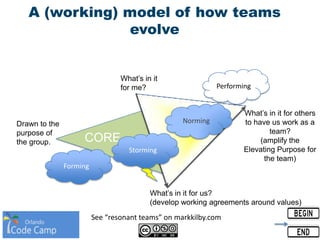
A (working) model of how teams
evolve
What’s in it
for me?
What’s in it for others
to have us work as a
team?
(amplify the
Elevating Purpose for
the team)
Forming
Storming
Norming
Performing
See “resonant teams” on markkilby.com
Drawn to the
purpose of
the group.
What’s in it for us?
(develop working agreements around values)
CORE
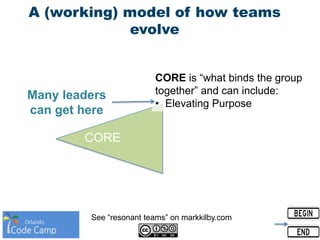
A (working) model of how teams
evolve
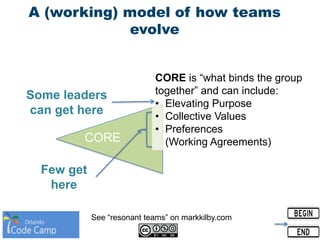
CORE is “what binds the group
together” and can include:
• Elevating Purpose
Many leaders
can get here
See “resonant teams” on markkilby.com
CORE
A (working) model of how teams
evolve
CORE is “what binds the group
together” and can include:
• Elevating Purpose
• Collective Values
• Preferences
(Working Agreements)
Some leaders
can get here
Few get
here
See “resonant teams” on markkilby.com
A (working) model of how teams
evolve
CORE
CORE is “what binds the group
together” and can include:
• Elevating Purpose
• Collective Values
• Preferences
(Working Agreements)
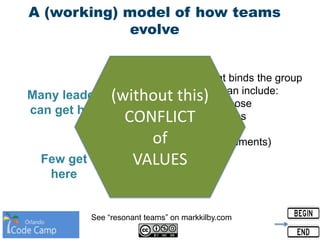
Many leaders
can get here
Few get
here
See “resonant teams” on markkilby.com
(without this)
CONFLICT
of
VALUES
TO ANTICIPATE THE “BIG STORMS”
WITHIN THE TEAM…
WE NEED TO MAP
OUR VALUES
MAP YOUR VALUES
FIRST…
S
A
T
I
S
F
A
C
T
I
O
N
TIME
201320031993
Adapted from http://www.culturesync.net/happiness
Euphoric
Tragic
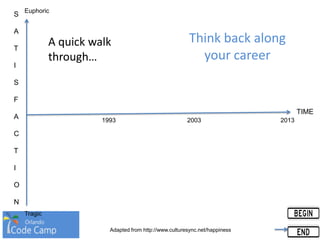
Think back along
your career
A quick walk
through…
S
A
T
I
S
F
A
C
T
I
O
N
TIME
201320031993
A
B
C
D
E
F
Adapted from http://www.culturesync.net/happiness
Euphoric
Tragic
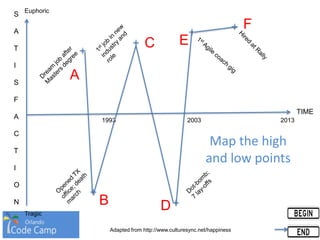
Map the high
and low points
Event A – Values (+)
Event B – Values (-)
Event C – Values (+)
Event D – Values (-)
Event E – Values (+)
Event F – Values (+)
VALUES CHART
Referred / Trust
Explore
Proving Self
Loyalty / Trust
Humility
New Path / Explore /
Build Together
Valued
Valued / Trust
Respect
Valued / Trust
New Challenges
New Roles
Respect / Valued /
Trust
Adapted from http://www.culturesync.net/happiness
For high & low
points, what
was most
present or
missing the
most for you?
Event A - Values
Event B - Values
Event C - Values
Event D - Values
Event E - Values
Event F - Values
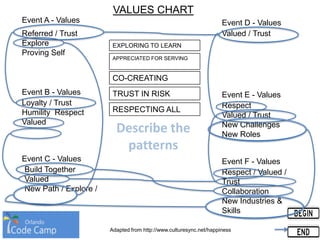
VALUES CHART
Referred / Trust
Explore
Proving Self
Loyalty / Trust
Humility Respect
Valued
Build Together
Valued
New Path / Explore /
Valued / Trust
Respect
Valued / Trust
New Challenges
New Roles
Respect / Valued /
Trust
Collaboration
New Industries &
Skills
Adapted from http://www.culturesync.net/happiness
What
patterns do
you see?
Event A - Values
Event B - Values
Event C - Values
Event D - Values
Event E - Values
Event F - Values
APPRECIATED FOR SERVING
CO-CREATING
TRUST IN RISK
RESPECTING ALL
VALUES CHART
EXPLORING TO LEARN
Referred / Trust
Explore
Proving Self
Loyalty / Trust
Humility Respect
Valued
Build Together
Valued
New Path / Explore /
Valued / Trust
Respect
Valued / Trust
New Challenges
New Roles
Respect / Valued /
Trust
Collaboration
New Industries &
Skills
Adapted from http://www.culturesync.net/happiness
Describe the
patterns
APPRECIATED FOR SERVING
CO-CREATING
TRUST IN RISK
RESPECTING ALL
EXPLORING TO LEARN
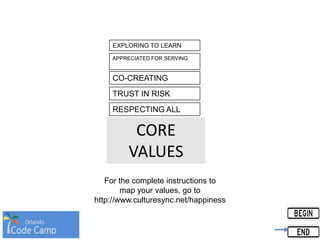
CORE
VALUES
For the complete instructions to
map your values, go to
http://www.culturesync.net/happiness
MAP TEAM VALUES
Next, together ...
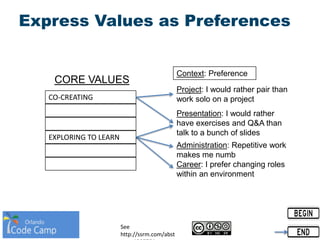
Express Values as Preferences
CO-CREATING
EXPLORING TO LEARN
CORE VALUES
Project: I would rather pair than
work solo on a project
Presentation: I would rather
have exercises and Q&A than
talk to a bunch of slides
Administration: Repetitive work
makes me numb
Career: I prefer changing roles
within an environment
Context: Preference
See
http://ssrm.com/abst
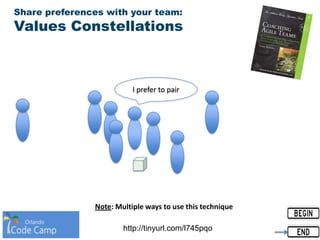
Share preferences with your team:
Values Constellations
I prefer to pair
http://tinyurl.com/l745pqo
Note: Multiple ways to use this technique
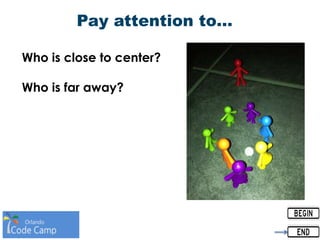
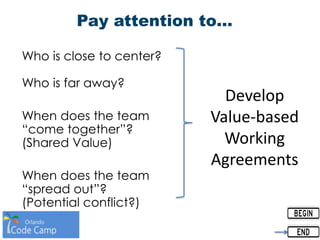
Pay attention to…
Who is close to center?
Who is far away?
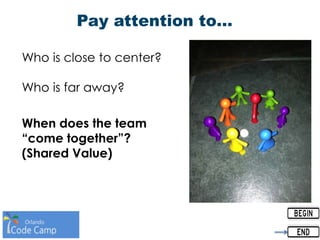
Pay attention to…
Who is close to center?
Who is far away?
When does the team
“come together”?
(Shared Value)
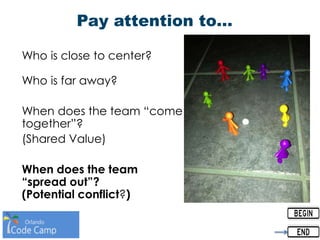
Pay attention to…
Who is close to center?
Who is far away?
When does the team “come
together”?
(Shared Value)
When does the team
“spread out”?
(Potential conflict?)
Pay attention to…
Who is close to center?
Who is far away?
When does the team
“come together”?
(Shared Value)
When does the team
“spread out”?
(Potential conflict?)
Develop
Value-based
Working
Agreements
WHEN THINGS STILL GO
WRONG
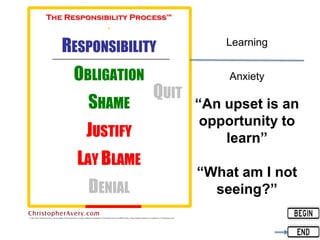
Learning
Anxiety
“An upset is an
opportunity to
learn”
“What am I not
seeing?”
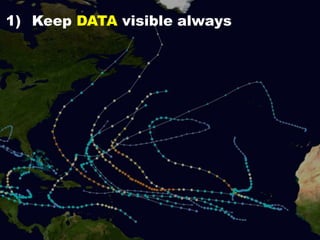
1) Keep DATA visible always
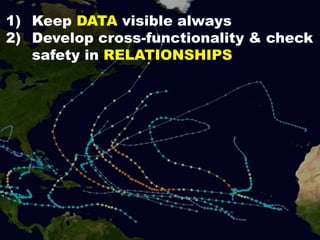
2) Develop cross-functionality & check
safety in RELATIONSHIPS
1) Keep DATA visible always
2) Develop cross-functionality & check
safety in RELATIONSHIPS
3) Go to the gemba, ask powerful
questions, and use good facilitation
to level STRUCTURE
1) Keep DATA visible always
2) Develop cross-functionality & check
safety in RELATIONSHIPS
3) Go to the gemba, ask powerful
questions, and use good facilitation
to level STRUCTURE
4) Keep all INTERESTS visible and
explore upsets as opportunities to
learn about scarcity mindsets
1) Keep DATA visible always
2) Develop cross-functionality & check
safety in RELATIONSHIPS
3) Go to the gemba, ask powerful
questions, and use good facilitation
to level STRUCTURE
4) Keep all INTERESTS visible and
explore upsets as opportunities to
learn about scarcity mindsets
5) Map VALUES to develop
working agreements
Allows you to
chase the storms
of conflict to
evolve your teams
LIFE WITHOUT CONFRONTATION IS
DIRECTIONLESS, AIMLESS, PASSIVE.
WHEN UNCHALLENGED, HUMAN
BEINGS TEND TO DRIFT, TO WANDER
OR TO STAGNATE. CONFRONTATION
IS A GIFT.
DAVID AUGSBURGER
Mark Kilby
Agile Coach
Mark@markkilby.com
@mkilby– twitter
Linkedin.com/in/mkilby
http://markkilby.com
Learn more at AgileOrlando.com
THANKS!
Questions?
Mar26 – Talent4Startups
organization meeting
Apr 07 – Using Kanban at Scale
May 05 – How often are you wrong
Lean Coffee Q&A sessions held
every 2 weeks
TALENT4STARTUPS.ORG
• Coming soon! (targeting May 2014)
• Exciting addition to Orlando tech scene
• Talent4Startups is a matching service for:
• Innovative but under-funded startups
• Driven, but under-experienced people looking
to grow their skills

Collaboration through Conflict - Orlando Code Camp March 2014

  • 1.
    Collaboration through Conflict Evolving BetterTeams Mark Kilby March 22, 2014
  • 2.
    Mark Kilby Agile Coach Mark@markkilby.com @mkilby–twitter http://markkilby.com Linkedin.com/in/mkilby Software since 1990; Coaching since 2003
  • 3.
    Mark Kilby Agile Coach Mark@markkilby.com @mkilby–twitter http://markkilby.com Linkedin.com/in/mkilby AgileOrlando.com (founder) Lean Coffee Orlando (founder) speaker Software since 1990; Coaching since 2003
  • 4.
    TALENT4STARTUPS.ORG • Coming soon!(targeting May 2014) • Exciting addition to Orlando tech scene • Talent4Startups is a matching service for: • Innovative but under-funded startups • Driven, but under-experienced people looking to grow their skills
  • 5.
  • 6.
    3 QUESTIONS FORYOU… DO YOU LEAD OR COACH TEAMS?
  • 7.
    3 QUESTIONS FORYOU… DO YOU PRACTICE AGILE NOW? (SCRUM, XP, KANBAN, SAFE, DAD, ETC.)
  • 8.
  • 9.
  • 10.
    Purpose today isto… • Better understand the relationship between Conflict & Collaboration
  • 11.
    Purpose today isto… • Better understand the relationship between Conflict & Collaboration • Give you and your teams several tools to navigate through conflict
  • 12.
    Benefit Teams that candeliver in any conditions
  • 13.
    Agenda 1. Understand Typesof Conflict and Collaboration 2. Values & Conflict 3. When Things Still Go Wrong
  • 14.
  • 15.
  • 16.
  • 17.
  • 18.
    Our point ofview…
  • 19.
  • 20.
  • 21.
    We cannot avoid stormsof conflict…
  • 24.
    Christopher Moore’s “The Mediation Process: PracticalStrategies for Resolving Conflict” SOURCES of Data Relationship Structural Interests Values CONFLICT Courtesy of Jean Tabaka
  • 25.
  • 26.
    SOURCE of CONFLICT: DATA Data Relationship Structural Interests Values • lackof information 2 ways it shows up: 1. Day-to-day information sharing (reporting) 2. In collaboration events
  • 27.
    Release Burndown 38 Sprint Burndown 96 VelocityTrend 6 6 8 5 Day-to-Day Information Radiators
  • 28.
    Driven by other InformationRadiators Story Backlog Task Backlog In Process Task Done Story Done User Story User Story User Story Task Task Task Task Task Task Task Task 3 2 1 Task 8 16 2 4 8 8 4 16 8 Task 8 Task 16
  • 29.
    Driven by other InformationRadiators Story Backlog Task Backlog In Process Task Done Story Done User Story User Story User Story Task Task Task Task Task Task Task Task 3 2 1 Task 8 16 2 4 8 8 4 16 8 Task 8 Task 16 Is everyone updating?
  • 30.
    Driven by other InformationRadiators Story Backlog Task Backlog In Process Task Done Story Done User Story User Story User Story Task Task Task Task Task Task Task Task 3 2 1 Task 8 16 2 4 8 8 4 16 8 Task 8 Task 16 Is everyone updating? Can everyone update?
  • 31.
    Driven by other InformationRadiators Story Backlog Task Backlog In Process Task Done Story Done User Story User Story User Story Task Task Task Task Task Task Task Task 3 2 1 Task 8 16 2 4 8 8 4 16 8 Task 8 Task 16 Is everyone updating? Can everyone update? Daily? (at least)
  • 32.
    Driven by other InformationRadiators Story Backlog Task Backlog In Process Task Done Story Done User Story User Story User Story Task Task Task Task Task Task Task Task 3 2 1 Task 8 16 2 4 8 8 4 16 8 Task 8 Task 16 Is everyone updating? Can everyone update? Daily? (at least) Can you see the whole system?
  • 33.
    Release Burndown 38 Sprint Burndown 96 VelocityTrend 6 6 8 5 If not, DATA is not truly visible
  • 34.
    Release Burndown 38 Sprint Burndown 96 VelocityTrend 6 6 8 5 If not, DATA is not truly visible Information Radiators are WRONG
  • 35.
    Release Burndown 38 Sprint Burndown 96 VelocityTrend 6 6 8 5 If not, DATA is not truly visible Information Radiators are WRONG Are you surprised by what you release?
  • 36.
    Release Burndown 38 Sprint Burndown 96 VelocityTrend 6 6 8 5 If not, DATA is not truly visible Information Radiators are WRONG CONFLICT by DATA
  • 37.
  • 38.
    In Collaboration Events: Listingand Brainstorming Our list _________ _________ _________ _________ _________ _________ _________ _________ _________ Facilitator
  • 39.
    In Collaboration Events: Listingand Brainstorming Our list _________ _________ _________ _________ _________ _________ _________ _________ _________ Gathering … New Requirements Sprint observations? Root causes? Ideas for improvement? Risks?
  • 40.
    In Collaboration Events: Listingand Brainstorming Our list _________ _________ _________ _________ _________ _________ _________ _________ _________ Is everyone contributing every few minutes? (at least)
  • 41.
    In Collaboration Events: Listingand Brainstorming Our list _________ _________ _________ _________ _________ _________ _________ _________ _________ Is everyone updating? Is everyone contributing every few minutes? (at least)
  • 42.
    In Collaboration Events: Listingand Brainstorming Our list _________ _________ _________ _________ _________ _________ _________ _________ _________ Is everyone updating? Can everyone update? Is everyone contributing every few minutes? (at least)
  • 43.
    In Collaboration Events: Listingand Brainstorming Our list _________ _________ _________ _________ _________ _________ _________ _________ _________ Is everyone updating? Can everyone update? Every few minutes? (at least) (if not) CONFLICT by DATA
  • 44.
  • 45.
    Data Relationship Structural Interests Values SOURCE of CONFLICT: Relationship • strongemotions, misperceptions, or stereotypes 2 ways it shows up: 1. Day-to-day interactions 2. In collaboration events
  • 46.
    Day-to-Day Relationship Challenges Can youbelieve what (Dev/QA/etc.) did?
  • 47.
    Day-to-Day Relationship Challenges Can youbelieve what (Dev/QA/etc.) did? Guess WHO botched the build again?
  • 48.
    Day-to-Day Relationship Challenges Can youbelieve what (Dev/QA/etc.) did? Guess WHO botched the build again? Management/Business is making unreasonable requests!
  • 49.
    Day-to-Day Relationship Challenges Can youbelieve what (FAVORITE SCAPEGOAT ROLE) did? Guess WHO botched the build again? ________ is making unreasonable requests! CONFLICT of RELATIONSHIP (listen for “role” labels or assumption of intent)
  • 50.
    Day-to-Day Relationship Builders Preemptive: WorkingAgreements • Who moves stories in our tracking tool? • Who owns and updates metrics? • What will be the Release calendar? Who will update it? • What are the QA Guidelines? Who will verify? How? • What feedback mechanisms will we use? When? • What are the expectations for addressing defects? Who will address them? • When are we going to update the backlog? How far out for looking ahead? • Who writes Acceptance Criteria with examples before the Sprint • Who writes Detailed tests within the sprint • What are the Agile ceremony rules and expectations? • How do we handle new risks? • How do we handle documentation and delivery? • How do we prioritize defects into the backlog? • How do we handle technical debt? • How do we monitor activities and progress?
  • 51.
    Day-to-Day Relationship Builders Preemptive: WorkingAgreements • Who moves stories in our tracking tool? • Who owns and updates metrics? • What will be the Release calendar? Who will update it? • What are the QA Guidelines? Who will verify? How? • What feedback mechanisms will we use? When? • What are the expectations for addressing defects? Who will address them? • When are we going to update the backlog? How far out for looking ahead? • Who writes Acceptance Criteria with examples before the Sprint • Who writes Detailed tests within the sprint • What are the Agile ceremony rules and expectations? • How do we handle new risks? • How do we handle documentation and delivery? • How do we prioritize defects into the backlog? • How do we handle technical debt? • How do we monitor activities and progress?
  • 52.
    In Collaboration Events: SafetyChecks Facilitator Do we all feel safe discussing this topic? Let’s check. Source of Conflict: Relationship
  • 53.
    In Collaboration Events: SafetyChecks How would you rate this meeting for what you can share? Level Description Votes 5 - Secure I feel free to discuss anything. 4 - Safe I can discuss almost anything. Might be some difficult topics to raise. 3 - Neutral I’ll discuss some things. Some will be too hard to participate in. 2 - Dangerous I’ll let others bring up issues, but might chime in on some. 1 - Treacherous I’ll smile and just agree with everyone. Source of Conflict: Relationship
  • 54.
    In Collaboration Events: SafetyChecks Level Description Votes 5 - Secure I feel free to discuss anything. XXX 4 - Safe I can discuss almost anything. Might be some difficult topics to raise. X 3 - Neutral I’ll discuss some things. Some will be too hard to participate in. XX 2 - Dangerous I’ll let others bring up issues, but might chime in on some. X 1 - Treacherous I’ll smile and just agree with everyone. X Anonymous votes Source of Conflict: Relationship
  • 55.
    In Collaboration Events: SafetyChecks How can we bring up the level of safety? Level Description Votes 5 - Secure I feel free to discuss anything. XXX 4 - Safe I can discuss almost anything. Might be some difficult topics to raise. X 3 - Neutral I’ll discuss some things. Some will be too hard to participate in. XX 2 - Dangerous I’ll let others bring up issues, but might chime in on some. X 1 - Treacherous I’ll smile and just agree with everyone. X If any vote 3 or less… Source of Conflict: Relationship
  • 56.
  • 57.
    Data Relationship Structural Interests Values SOURCE of CONFLICT: Structural • Someoneof unequal power in the conversation • Management, senior staff
  • 58.
    Data Relationship Structural Interests Values SOURCE of CONFLICT: Structural • Someoneof unequal power in the conversation • Management, senior staff 2 ways it shows up: 1. Day-to-day interactions 2. In collaboration events
  • 59.
    Day-to-Day Going to theGemba Gemba – “the real place”
  • 60.
    Day-to-Day Going to theGemba Gemba – “the real place” Going to Gemba (Lean) - purposely observing how people work together to create value - Jim Womack
  • 61.
    Day-to-Day Going to theGemba http://www.flickr.com/photos/kheelcenter/5279277567/sizes/z/in/photostream/
  • 62.
    Day-to-Day Going to theGemba http://www.flickr.com/photos/kheelcenter/5279277567/sizes/z/in/photostream/ http://www.flickr.com/photos/highwaysagency/5998133376/sizes/z/in/photostream/
  • 63.
    Day-to-Day Going to theGemba http://www.flickr.com/photos/kheelcenter/5279277567/sizes/z/in/photostream/ http://www.flickr.com/photos/highwaysagency/5998133376/sizes/z/in/photostream/ As a manager, … Do you mingle with your staff daily? Do you ask questions that allows everyone to observe how value is created?
  • 64.
    Day-to-Day Powerful Questions Scenario Insteadof asking… Try asking… Team has been in conversation for a while and you think they need to hear one person’s opinion. What’s your opinion? What is possible here? What is the part that is not yet clear? Team is diving into details and you think they should spend more time “envisioning” solutions. What are other options? What is here that you want to explore? What is just one more possibility? Adapted from “Powerful Questions for Agile Teams” by Lyssa Adkins
  • 65.
    In Collaboration Events: ClearPurpose, Agenda, & Working Agreements FacilitatorSenior Staff
  • 66.
    In Collaboration Events: ClearPurpose, Agenda, & Working Agreements Agenda 1. Open 2. ______ 3. ______ 4. ______ 5. ______ 6. ______ 7. Close Working Agreements 1. ______ 2. ______ 3. ______ Purpose To decide/plan/learn/ evaluate ___________ FacilitatorSenior Staff Parking Lot Action Items Facilitator should introduce Organizing Tools at Opening
  • 67.
    In Collaboration Events: ClearPurpose, Agenda, & Working Agreements Agenda 1. Open 2. ______ 3. ______ 4. ______ 5. ______ 6. ______ 7. Close Working Agreements 1. ______ 2. ______ 3. ______ Purpose To decide/plan/learn/ evaluate ___________ We should discuss XYZ now! Parking Lot Action Items Source of Conflict: Structural
  • 68.
    In Collaboration Events: ClearPurpose, Agenda, & Working Agreements Agenda 1. Open 2. ______ 3. ______ 4. ______ 5. ______ 6. ______ 7. Close Working Agreements 1. ______ 2. ______ 3. ______ Purpose To decide/plan/learn/ evaluate ___________ Parking Lot Action Items Does XYZ meets our purpose and agenda? Source of Conflict: Structural
  • 69.
    In Collaboration Events: ClearPurpose, Agenda, & Working Agreements Agenda 1. Open 2. ______ 3. ______ 4. ______ 5. ______ 6. ______ 7. Close Working Agreements 1. ______ 2. ______ 3. ______ Purpose To decide/plan/learn/ evaluate ___________ Parking Lot Action Items XYZ If it is part of the purpose and agenda, show where it will be discussed Source of Conflict: Structural
  • 71.
    In Collaboration Events: ClearPurpose, Agenda, & Working Agreements Agenda 1. Open 2. ______ 3. ______ 4. ______ 5. ______ 6. ______ 7. Close Working Agreements 1. ______ 2. ______ 3. ______ Purpose To decide/plan/learn/ evaluate ___________ Parking Lot Action Items XYZ If it does not, ask to put it in the Parking Lot to check in on what the group should do with this item at the end of the meeting Source of Conflict: Structural
  • 72.
    In Collaboration Events: ClearPurpose, Agenda, & Working Agreements Agenda 1. Open 2. ______ 3. ______ 4. ______ 5. ______ 6. ______ 7. Close Working Agreements 1. ______ 2. ______ 3. ______ Purpose To decide/plan/learn/ evaluate ___________ Parking Lot Action Items XYZ In the “Close”, clear the Parking Lot by asking the group if an action needs to be taken for each item. Be sure it has an owner and due date Source of Conflict: Structural
  • 73.
    Data Relationship Structural Interests Values SOURCE of CONFLICT: Interests Courtesy ofJean Tabaka • competition for resources; scarcity mindset
  • 74.
    Data Relationship Structural Interests Values SOURCE of CONFLICT: Interests Courtesy ofJean Tabaka • competition for resources; scarcity mindset 2 ways it shows up: 1. Day-to-day interactions 2. In collaboration events
  • 75.
  • 76.
    Day-to-Day Reactions to Scarcity “I don’tsee a problem with our resources.”
  • 77.
    Day-to-Day “Management will notgive us what we need.” Reactions to Scarcity
  • 78.
    Day-to-Day “I can’t dobetter since I don’t have what I need.” Reactions to Scarcity
  • 79.
    Day-to-Day “I just can’tseem to convince people we need this.” Reactions to Scarcity
  • 80.
    Day-to-Day “I have tofight for my team to get what they need.” Reactions to Scarcity
  • 81.
    Day-to-Day “This is hopeless.I’m just doing the minimum until something better comes along.” Reactions to Scarcity
  • 82.
    Day-to-Day Reactions to Scarcity We allget “stuck” at one of these place
  • 83.
  • 84.
    Learning Anxiety Day-to-Day When we realizewe are stuck, we have an opportunity to learn about our model of the problem
  • 85.
    Day-to-Day “I wonder whatI’m not seeing to help us get what we need?” “I wonder who I’m not considering to collaborate with on resource needs?” “I wonder how I can show a return on investing in these resources?” Learning
  • 86.
    Day-to-Day “I wonder whatI’m not seeing to help us get what we need?” Learning
  • 87.
    Learning Anxiety “An upset isan opportunity to learn” - Christopher Avery Day-to-Day
  • 88.
    In Collaboration Events: MakingAll Views Visible in a Debate Facilitator
  • 89.
    In Collaboration Events: MakingAll Views Visible in a Debate Here is the way it is!!! You’re wrong!!! A B Source of Conflict: Interests
  • 90.
    In Collaboration Events: MakingAll Views Visible in a Debate !!! !!! !!! !!! !!! !!! A B Source of Conflict: Interests
  • 91.
    In Collaboration Events: MakingAll Views Visible in a Debate !!! !!! !!! !!! !!! !!! A B CONFLICT of INTERESTS
  • 92.
    In Collaboration Events: MakingAll Views Visible in a Debate !!!Are you willing to work this out? A B
  • 93.
    In Collaboration Events: MakingAll Views Visible in a Debate Yes Yes A B
  • 94.
    A point ofview __________________ __________________ __________________ __________________ In Collaboration Events: Making All Views Visible in a Debate A point of view A B
  • 95.
    A point ofview __________________ __________________ __________________ __________________ In Collaboration Events: Making All Views Visible in a Debate A B Did B describe your point of view A? Yes.
  • 96.
    B point ofview __________________ __________________ __________________ __________________ In Collaboration Events: Making All Views Visible in a Debate A Point of View __________________ __________________ __________________ __________________ A B B point of view
  • 97.
    B point ofview __________________ __________________ __________________ __________________ In Collaboration Events: Making All Views Visible in a Debate A Point of View __________________ __________________ __________________ __________________ A B Did A describe your point of view B? Yes.
  • 98.
    In Collaboration Events: MakingAll Views Visible in a Debate A B B point of view __________________ __________________ __________________ __________________ A Point of View __________________ __________________ __________________ __________________ !!!Is there a middle way? Both sides feel they are heard and understood
  • 99.
    In Collaboration Events: MakingAll Views Visible in a Debate A B B point of view __________________ __________________ __________________ __________________ A Point of View __________________ __________________ __________________ __________________ Brainstorming __________________ __________________ __________________ __________________
  • 100.
    Navigating Data Relationship Structural Interests Values CONFLICT • DATA– lackof information • Approaches: Information Radiators equally updated, Brainstorming & Listing (facilitated) • RELATIONSHIP – strong emotions, misperceptions, or stereotypes • Approaches: Crucial Conversations, Appreciations, Safety Checks, Working Agreements • STRUCTURAL – someone of unequal power in conversation • Approaches: going to Gemba, powerful questions, clear purpose and agenda, working agreements, properly using Parking Lot and Action Items • INTERESTS – competition for resources; scarcity mindset • Approaches: active listening and rigorous facilitation to level playing field, Avery’s Responibility Model
  • 101.
  • 102.
  • 103.
    Values Data Relationship Structural Interests Values CONFLICT • Most challengingform of conflict • Approaches: prioritization techniques, affinity grouping in meetings, working agreements about no judgments Courtesy of Jean Tabaka
  • 104.
    Values Data Relationship Structural Interests Values CONFLICT • Most challengingform of conflict • Approaches: prioritization techniques, affinity grouping in meetings, working agreements about no judgments • Are they always effective?
  • 105.
    Values Data Relationship Structural Interests Values CONFLICT • Most challengingform of conflict • Approaches: prioritization techniques, affinity grouping in meetings, working agreements about no judgments • Are they always effective? NO.
  • 106.
    Values Data Relationship Structural Interests Values CONFLICT • Most challengingform of conflict • Approaches: prioritization techniques, affinity grouping in meetings, working agreements about no judgments • Are they always effective? Challenging ValuesNO. Why?
  • 107.
    We are uncoveringbetter ways of developing products by doing it and helping others do it. Through this work we have come to value: That is, while there is value in the items on the right, we value the items on the left more. Values of AgileManifesto.org Individuals & interactions Processes & toolsover Working product Comprehensive documentation over Customer collaboration Contract negotiationover Responding to change Following a planover
  • 108.
    Scrum Values Commitment Focus Openness Respect Courage XP Values Feedback Simplicity Communication Respect Courage LeanSoftware Principles Eliminate waste Amplify learning Decide as late as possible Deliver as fast as possible Empower the team Build integrity in See the whole
  • 109.
    The problem with“giving” values… • They may not stick with the team
  • 110.
    The problem with“giving” values… • We may not know what we value • They may not stick with the team
  • 111.
    The problem with“giving” values… • We may not know what we value • They may not stick with the team • We can’t be sure if our values align with others
  • 112.
    A (working) modelof how teams evolve CORE CORE is “what binds the group together” and can include: See “resonant teams” on markkilby.com
  • 113.
    A (working) modelof how teams evolve CORE is “what binds the group together” and can include: See “resonant teams” on markkilby.com • Elevating Purpose CORE
  • 114.
    A (working) modelof how teams evolve CORE is “what binds the group together” and can include: See “resonant teams” on markkilby.com • Elevating Purpose • Collective Values CORE
  • 115.
    A (working) modelof how teams evolve CORE is “what binds the group together” and can include: See “resonant teams” on markkilby.com • Elevating Purpose • Collective Values • Preferences (Working Agreements) CORE
  • 116.
    CORE A (working) modelof how teams evolve Forming See “resonant teams” on markkilby.com Drawn to the purpose of the group.
  • 117.
    CORE A (working) modelof how teams evolve What’s in it for me? Forming Storming See “resonant teams” on markkilby.com Drawn to the purpose of the group.
  • 118.
    CORE A (working) modelof how teams evolve What’s in it for me? What’s in it for us? (develop working agreements around values) Forming Storming Norming See “resonant teams” on markkilby.com Drawn to the purpose of the group.
  • 119.
    CORE A (working) modelof how teams evolve What’s in it for me? What’s in it for others to have us work as a team? (amplify the Elevating Purpose for the team) Forming Storming Norming Performing See “resonant teams” on markkilby.com Drawn to the purpose of the group. What’s in it for us? (develop working agreements around values)
  • 120.
    CORE A (working) modelof how teams evolve CORE is “what binds the group together” and can include: • Elevating Purpose Many leaders can get here See “resonant teams” on markkilby.com
  • 121.
    CORE A (working) modelof how teams evolve CORE is “what binds the group together” and can include: • Elevating Purpose • Collective Values • Preferences (Working Agreements) Some leaders can get here Few get here See “resonant teams” on markkilby.com
  • 122.
    A (working) modelof how teams evolve CORE CORE is “what binds the group together” and can include: • Elevating Purpose • Collective Values • Preferences (Working Agreements) Many leaders can get here Few get here See “resonant teams” on markkilby.com (without this) CONFLICT of VALUES
  • 123.
    TO ANTICIPATE THE“BIG STORMS” WITHIN THE TEAM… WE NEED TO MAP OUR VALUES
  • 124.
  • 125.
  • 126.
  • 127.
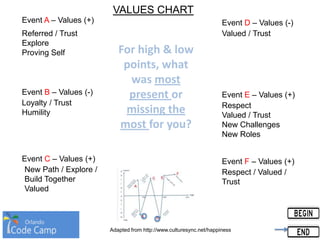
    Event A –Values (+) Event B – Values (-) Event C – Values (+) Event D – Values (-) Event E – Values (+) Event F – Values (+) VALUES CHART Referred / Trust Explore Proving Self Loyalty / Trust Humility New Path / Explore / Build Together Valued Valued / Trust Respect Valued / Trust New Challenges New Roles Respect / Valued / Trust Adapted from http://www.culturesync.net/happiness For high & low points, what was most present or missing the most for you?
  • 128.
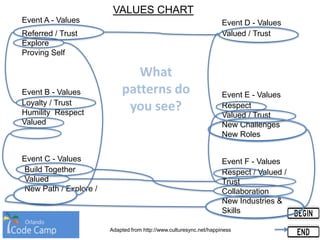
    Event A -Values Event B - Values Event C - Values Event D - Values Event E - Values Event F - Values VALUES CHART Referred / Trust Explore Proving Self Loyalty / Trust Humility Respect Valued Build Together Valued New Path / Explore / Valued / Trust Respect Valued / Trust New Challenges New Roles Respect / Valued / Trust Collaboration New Industries & Skills Adapted from http://www.culturesync.net/happiness What patterns do you see?
  • 129.
    Event A -Values Event B - Values Event C - Values Event D - Values Event E - Values Event F - Values APPRECIATED FOR SERVING CO-CREATING TRUST IN RISK RESPECTING ALL VALUES CHART EXPLORING TO LEARN Referred / Trust Explore Proving Self Loyalty / Trust Humility Respect Valued Build Together Valued New Path / Explore / Valued / Trust Respect Valued / Trust New Challenges New Roles Respect / Valued / Trust Collaboration New Industries & Skills Adapted from http://www.culturesync.net/happiness Describe the patterns
  • 130.
    APPRECIATED FOR SERVING CO-CREATING TRUSTIN RISK RESPECTING ALL EXPLORING TO LEARN CORE VALUES For the complete instructions to map your values, go to http://www.culturesync.net/happiness
  • 131.
  • 132.
    Express Values asPreferences CO-CREATING EXPLORING TO LEARN CORE VALUES Project: I would rather pair than work solo on a project Presentation: I would rather have exercises and Q&A than talk to a bunch of slides Administration: Repetitive work makes me numb Career: I prefer changing roles within an environment Context: Preference See http://ssrm.com/abst
  • 133.
    Share preferences withyour team: Values Constellations I prefer to pair http://tinyurl.com/l745pqo Note: Multiple ways to use this technique
  • 134.
    Pay attention to… Whois close to center? Who is far away?
  • 135.
    Pay attention to… Whois close to center? Who is far away? When does the team “come together”? (Shared Value)
  • 136.
    Pay attention to… Whois close to center? Who is far away? When does the team “come together”? (Shared Value) When does the team “spread out”? (Potential conflict?)
  • 137.
    Pay attention to… Whois close to center? Who is far away? When does the team “come together”? (Shared Value) When does the team “spread out”? (Potential conflict?) Develop Value-based Working Agreements
  • 138.
  • 139.
    Learning Anxiety “An upset isan opportunity to learn” “What am I not seeing?”
  • 140.
    1) Keep DATAvisible always
  • 141.
    1) Keep DATAvisible always 2) Develop cross-functionality & check safety in RELATIONSHIPS
  • 142.
    1) Keep DATAvisible always 2) Develop cross-functionality & check safety in RELATIONSHIPS 3) Go to the gemba, ask powerful questions, and use good facilitation to level STRUCTURE
  • 143.
    1) Keep DATAvisible always 2) Develop cross-functionality & check safety in RELATIONSHIPS 3) Go to the gemba, ask powerful questions, and use good facilitation to level STRUCTURE 4) Keep all INTERESTS visible and explore upsets as opportunities to learn about scarcity mindsets
  • 144.
    1) Keep DATAvisible always 2) Develop cross-functionality & check safety in RELATIONSHIPS 3) Go to the gemba, ask powerful questions, and use good facilitation to level STRUCTURE 4) Keep all INTERESTS visible and explore upsets as opportunities to learn about scarcity mindsets 5) Map VALUES to develop working agreements
  • 145.
    Allows you to chasethe storms of conflict to evolve your teams
  • 146.
    LIFE WITHOUT CONFRONTATIONIS DIRECTIONLESS, AIMLESS, PASSIVE. WHEN UNCHALLENGED, HUMAN BEINGS TEND TO DRIFT, TO WANDER OR TO STAGNATE. CONFRONTATION IS A GIFT. DAVID AUGSBURGER
  • 147.
    Mark Kilby Agile Coach Mark@markkilby.com @mkilby–twitter Linkedin.com/in/mkilby http://markkilby.com Learn more at AgileOrlando.com THANKS! Questions? Mar26 – Talent4Startups organization meeting Apr 07 – Using Kanban at Scale May 05 – How often are you wrong Lean Coffee Q&A sessions held every 2 weeks
  • 148.
    TALENT4STARTUPS.ORG • Coming soon!(targeting May 2014) • Exciting addition to Orlando tech scene • Talent4Startups is a matching service for: • Innovative but under-funded startups • Driven, but under-experienced people looking to grow their skills

Editor's Notes

  • #9 Do some of your team results look like this? Do you find that sometimes teams implode due to “unexplainable” circumstances? This is a photo from the results of a hurricane that struck Galveston, TX in 1900. In these days, hurricanes were equally unexplainable. You could only clean up the damage afterwards.
  • #10 These days, we track and model the behavior of these “storms”. Can we do the same for the difficulties with teams?
  • #17 Let’s discuss the relationship between conflict and collaboration
  • #19 We’ve had several conversations on this and our point of view is…
  • #20 You absolutely need conflict for successful teams. It’s the “storming” part of the Tuckman model. Teams have to pass through this.
  • #21 But in order to go from Storming to Norming and then Performing, the teams must have constructive conflict
  • #25 Jean introduced me to another interesting book on conflict and shared some of her insights on how facilitation can be used.
  • #101 Let’s review
  • #103 Values – PRIORITIES, GROUPING, Working Agreements about no judgments. With ANY of these, OPEN DIALOGUE is your least useful facilitation approach. With the STORMING of conflict, you must be a very engaged facilitator using processes to help the individuals in the group navigate both the sources of conflict and their conflict styles.
  • #104 Values – PRIORITIES, GROUPING, Working Agreements about no judgments. With ANY of these, OPEN DIALOGUE is your least useful facilitation approach. With the STORMING of conflict, you must be a very engaged facilitator using processes to help the individuals in the group navigate both the sources of conflict and their conflict styles.
  • #105 Values – PRIORITIES, GROUPING, Working Agreements about no judgments. With ANY of these, OPEN DIALOGUE is your least useful facilitation approach. With the STORMING of conflict, you must be a very engaged facilitator using processes to help the individuals in the group navigate both the sources of conflict and their conflict styles.
  • #106 Values – PRIORITIES, GROUPING, Working Agreements about no judgments. With ANY of these, OPEN DIALOGUE is your least useful facilitation approach. With the STORMING of conflict, you must be a very engaged facilitator using processes to help the individuals in the group navigate both the sources of conflict and their conflict styles.
  • #107 Values – PRIORITIES, GROUPING, Working Agreements about no judgments. With ANY of these, OPEN DIALOGUE is your least useful facilitation approach. With the STORMING of conflict, you must be a very engaged facilitator using processes to help the individuals in the group navigate both the sources of conflict and their conflict styles.
  • #108 Many people start their agile journey learning about the values and principles of the Agile Manifesto
  • #109 Different agile/lean methodologies talk about different values and principles. These help guide teams and organizations on what to change and when.But do they stick? Do teams and organizations really embrace them?
  • #110 Better to find out what you value first
  • #111 Better to find out what you value first
  • #112 Better to find out what you value first
  • #113 What is truly key to a high performing team is (1) elevated shared purpose, (2) understanding the collective values of the team (3) working agreements on preferences (that reflect values)
  • #114 What is truly key to a high performing team is (1) elevated shared purpose, (2) understanding the collective values of the team (3) working agreements on preferences (that reflect values)
  • #115 What is truly key to a high performing team is (1) elevated shared purpose, (2) understanding the collective values of the team (3) working agreements on preferences (that reflect values)
  • #116 What is truly key to a high performing team is (1) elevated shared purpose, (2) understanding the collective values of the team (3) working agreements on preferences (that reflect values)
  • #117 As the team “gels”, individuals then go through a different types of focus (1) What’s in it for me (WIIFMe), (2) What’s in it for us as a team (WIIFUs) and only truly successful teams get to the third stage of (3) What’s in it for others (WIIFOthers) to have this team exist? WIIFOthers is the team emphathizing with Elevating Purpose that brought the team together. They are now driven by that purpose. You absolutely need conflict to have teams evolve into successful teams. It’s the “storming” part of the Tuckman model. Teams have to pass through this.
  • #118 As the team “gels”, individuals then go through a different types of focus (1) What’s in it for me (WIIFMe), (2) What’s in it for us as a team (WIIFUs) and only truly successful teams get to the third stage of (3) What’s in it for others (WIIFOthers) to have this team exist? WIIFOthers is the team emphathizing with Elevating Purpose that brought the team together. They are now driven by that purpose. You absolutely need conflict to have teams evolve into successful teams. It’s the “storming” part of the Tuckman model. Teams have to pass through this.
  • #119 As the team “gels”, individuals then go through a different types of focus (1) What’s in it for me (WIIFMe), (2) What’s in it for us as a team (WIIFUs) and only truly successful teams get to the third stage of (3) What’s in it for others (WIIFOthers) to have this team exist? WIIFOthers is the team emphathizing with Elevating Purpose that brought the team together. They are now driven by that purpose. You absolutely need conflict to have teams evolve into successful teams. It’s the “storming” part of the Tuckman model. Teams have to pass through this.
  • #120 As the team “gels”, individuals then go through a different types of focus (1) What’s in it for me (WIIFMe), (2) What’s in it for us as a team (WIIFUs) and only truly successful teams get to the third stage of (3) What’s in it for others (WIIFOthers) to have this team exist? WIIFOthers is the team emphathizing with Elevating Purpose that brought the team together. They are now driven by that purpose. You absolutely need conflict to have teams evolve into successful teams. It’s the “storming” part of the Tuckman model. Teams have to pass through this.
  • #121 It starts with making the collective values visible and developing working agreements from these values for where the team is now.
  • #122 It starts with making the collective values visible and developing working agreements from these values for where the team is now.
  • #123 It starts with making the collective values visible and developing working agreements from these values for where the team is now.
  • #125 So let me do a VERY QUICK WALK THROUGH of one exercise to map your values. It’s called the Mountains and Valleys exercise from the book Tribal Leadership. Lyssa Adkins describes a similar exercise called “Journey lines” in her book Coaching Agile Teams. Mountains and Valleys goes a bit further. There are many other ways to do this, but I find this one very straightforward for most people.
  • #126 Consider a timeline of your life. The vertical access would measure how satisfied you were with certain events in your life.
  • #127 Then you want to label each event.
  • #128 For the negative events, what was missing the most? Again, try to use phrases instead of single words.
  • #129 You may even want to sit with someone you trust and have them ask open powerful questions as to what was going on. 5 Whys can work here as well. You will likely come up with more values for each event. Then try to identify what patterns you are seeing across the different events.
  • #130 Looking at the patterns, try to put a name to each pattern. These are your core values starting to emerge. You may want to revisit these in a few days or a couple of weeks. You could end up uncovering more.
  • #131 Looking at the patterns, try to put a name to each pattern. These are your core values starting to emerge. You may want to revisit these in a few days or a couple of weeks. You could end up uncovering more.
  • #140 People will still blow up at times. Maybe even you will. You have to show it’s ok to “fail” and that it’s an opportunity to learn. In the Responsibility Process, Christopher Avery describes how “lay blame”, “justify”, “shame”, “obligation” and “quit” are all natural responses, but none of them allow us to learn what is truly going on. They are coping mechanisms. Only until we recognize these states and give them up do we finally see true options to solve the problem.
  • #141 Actions to take in taking a team to the “next level”
  • #142 Actions to take in taking a team to the “next level”
  • #143 Actions to take in taking a team to the “next level”
  • #144 Actions to take in taking a team to the “next level”
  • #145 Actions to take in taking a team to the “next level”