
ALIGNING FIEFDOMS
Getting your complex
stakeholders to move forward
together
Confab Intensive 2017
http://www.flickr.com/photos/scottcalleja CC2.0
BIN CHICKEN
https://www.flickr.com/photos/teresaaaa/ cc2.0 https://www.flickr.com/photos/lavroff/ cc2.0
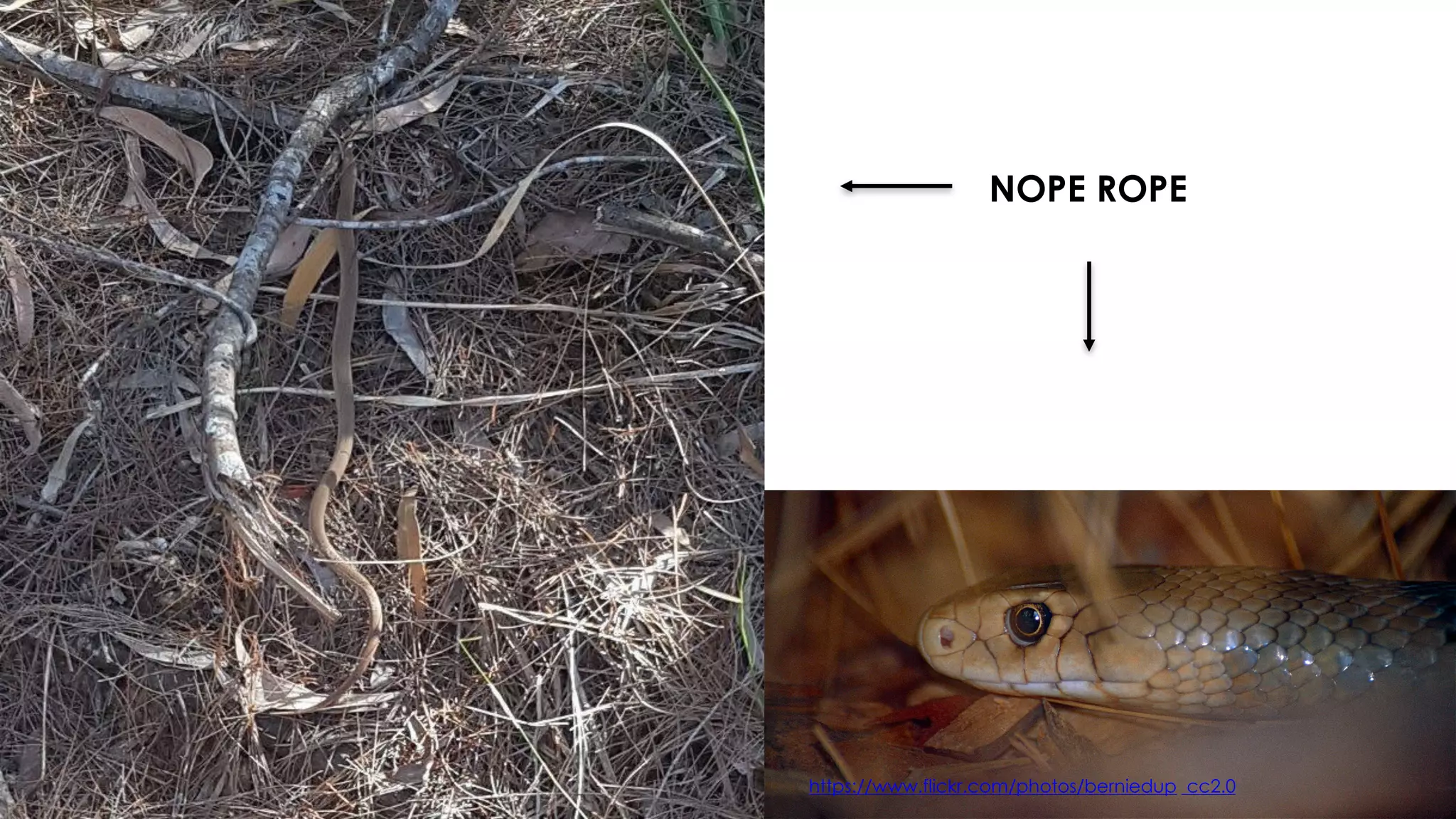
NOPE ROPE
https://www.flickr.com/photos/berniedup cc2.0
YOUR TURN: INTRODUCE YOURSELF
TO THE TABLE +
SHARE A LOCAL PIECE OF SLANG
START
1.30PM
FINISH
4.30PM
WHAT IS A
FIEFDOM?
WORKPLACE
CONFLICT
ACTIVITY
ACTIVITY
WORKPLACE
COMMUNICTION
AFTERNOON
TEA
TYPICAL MODERN FIEFDOMS
Marketing: Battles over home page, last
minute requests, secrecy over projects,
content production and approval
bottlenecks.
Technology: Conflict between teams that
want to be nimble and innovative using
apps or technology and a traditional IT
department that is slow moving and
restricted.
Business: Resistance to change, battles
over resources, content returned to a
waterfall team after Agile project delivery.
CONFLICT IN THE
WORKPLACE
TYPES OF CONFLICT
Task: Caused by lack of clarity over the
task at hand. People uncertain about
what they are trying to achieve.
Relationship: When people don’t get
along, have different management styles,
or conflicting personalities.
Value: Arises from differences in identities
or values, for example politics, religion or
ethics.
Reference: Program on Negotiation, Harvard Law School
TYPES OF CONFLICT
Task: Caused by lack of clarity over the
task at hand. People uncertain about
what they are trying to achieve.
Relationship: When people don’t get
along, have different management styles,
or conflicting personalities.
Value: Arises from differences in identities
or values, for example politics, religion or
ethics.
Reference: Program on Negotiation, Harvard Law School
OUR FOCUS TODAY
“That’s not what
I expected”
“Why are you
doing that?”
“I didn’t agree
to that”
DEFINING THE TASK
Get alignment on what problem you are
trying to solve.
Problem statement (or problem framing):
• Concise description of the problem you
are going to try to solve and why.
• Focuses on who the problem is
affecting (can be internal or external),
what is causing the problem, and what
is likely to happen if the problem is
ignored.
• Best done as a group so there’s
ownership of the outcome.
18F:We have observed
that [product/service/organization] isn’t
meeting [these goals/needs], which is
causing [this adverse effect]. How might
we improve so that our
product/service/team/organization is
more successful based on [these
measurable criteria]?
https://www.atlassian.com/team-playbook/plays/problem-framing
ACTIVITY 1
ACTIVITY INSTRUCTIONS
1. Read the scenario.
2. Assign roles. There must be a product
owner/project manager.
3. Complete the worksheet:
• Define the problem (individually).
• Write a problem statement (as a group).
Share your problem statement with the room.
BREAK TIME
See you back here soon!
WORKPLACE
COMMUNICATION
GETTING BACK TO BASICS
Play to people’s communication strengths:
Pay attention to how people prefer to
learn and interact.
Practice active listening: People respond
more positively when they feel they are
being listened to.
Learn to negotiate: Know what’s worth
fighting for and what you are happy to
compromise on.
Choose the right deliverable or tool: Don’t
let the communication format or
technology be a barrier to success.
LEARNING STYLES AND STRENGTHS
A
V
K
T
Visual
I	want	to	see	it
Auditory
Tell	me	a	story
KINAESTHETIC
Give	me	an	example
TACTILE
Let	me	build	it
“The biggest communication problem
is we do not listen to understand.
We listen to reply. ”
Stephen Covey, author of The 7 Habits of Highly Effective People
ACTIVE LISTENING “I’m	going	
to	give	you	
my	full	
attention.”
“Can	you	
tell	me	
more	about	
that?”
“How	did	
that	make	
you	feel?.”
“Let	me	
summarise	
what	you’ve	
just	said.”
NEGOTIATING THE OUTCOME
Use communication skills to align
stakeholders on the best way forward.
• Go into a negotiation prepared.
• Know your options and the best
possible outcome (for yourself and the
other party).
• Have three choices to offer.
• Practice your active listening.
• Refer back to the problem statement.
• Provide the opportunity for the other
person to save face. (No one wants to
look bad in front of their peers.)
• Be prepared to walk away.
CLEAR FRAMING
“However,	
we	are	
being	
challenged	
by…”
“We	are	
trying	to…”
“The	
implications	
of	this	
are…”
“Possible	
solutions	
are…”
“The	best	
choice	is…
because…”
CHOOSE THE RIGHT DELIVERY
Pick the right tool or format to make
decisions accessible.
• What is the best way to communicate
with your stakeholders?
• Does everyone have access to the
tools you use to communicate?
• How will people use this information to
make their own decisions?
• Is your communication in a format
people feel comfortable using?
ACTIVITY 2
ACTIVITY INSTRUCTIONS
1. Product owner/project manager to collect role
cards.
2. Read the updated scenario and your role
information.
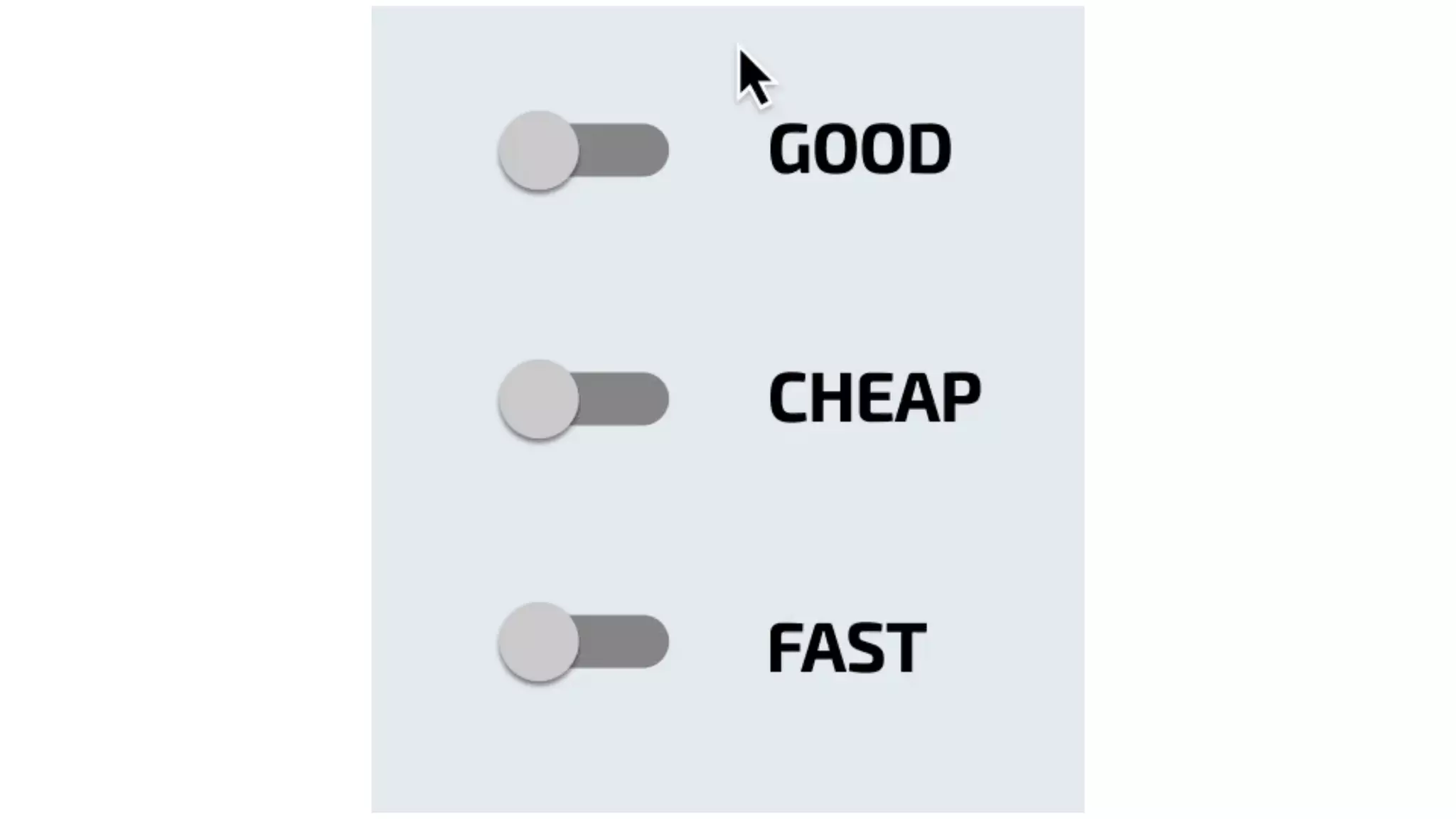
3. Work together to prioritize the items on your slider.
4. Product owner/project manager facilitates.
Share your priorities with the room.
A QUICK RECAP
Getting your complex stakeholders to move forward together.
• Task conflict is the most common cause of workplace conflict.
• Use a problem statement to help people agree on the problem you are
solving.
• Play to people’s communication strengths.
• Active listening helps you understand people’s needs, concerns and
goals.
• Learn to negotiate! The better planned you are, the more successful the
outcome.
• Choose the right way to communicate your decisions.
WHAT HAPPENS IF THERE ARE
11TH HOUR PROBLEMS?
THANK YOU
Sally Bagshaw
sally@snappysentences.com
@snappysentences

Aligning fiefdoms - Confab Intensive 2017