Collaborating with colleagues to
provide scaffolding for learners
on a flipped learning module
Gareth Bramley
Zoe Ollerenshaw
School of Law
University of Sheffield
The background and problem
 We have been running a module for two academic years on the LLB
law degree (final year, elective module - cohort of approximately 140
students)
 This module is delivered using flipped learning techniques - using
online screencasts for delivery of materials; prior to interactive
super-group sessions in place of traditional lectures; followed by one
seminar for each module topic
 Contact time with the cohort is limited with only 22 x1 hour
interactive supergroup sessions and only 6 x 50 minutes seminars
over 11 teaching weeks
 In 2017 we were looking for technical support and input in terms of
developing the quality of our module, in particular:
- development of the VLE to aid structured learning by the cohort
and engagement;
- to achieve better engagement by students in online discussions
and in lectures;
- to increase effective student usage of TEL and blended learning
The Solution
 Participation in a University of
Sheffield Two Day Digital Retreat ( 6
and 7 April 2017)
 Where we could call on a multi-
disciplinary team of learning
technologists and teaching excellence
colleagues
 Who were able to challenge and
provoke our assumptions and inspire
us to make changes to our teaching
Our Digital Retreat
Colleagues
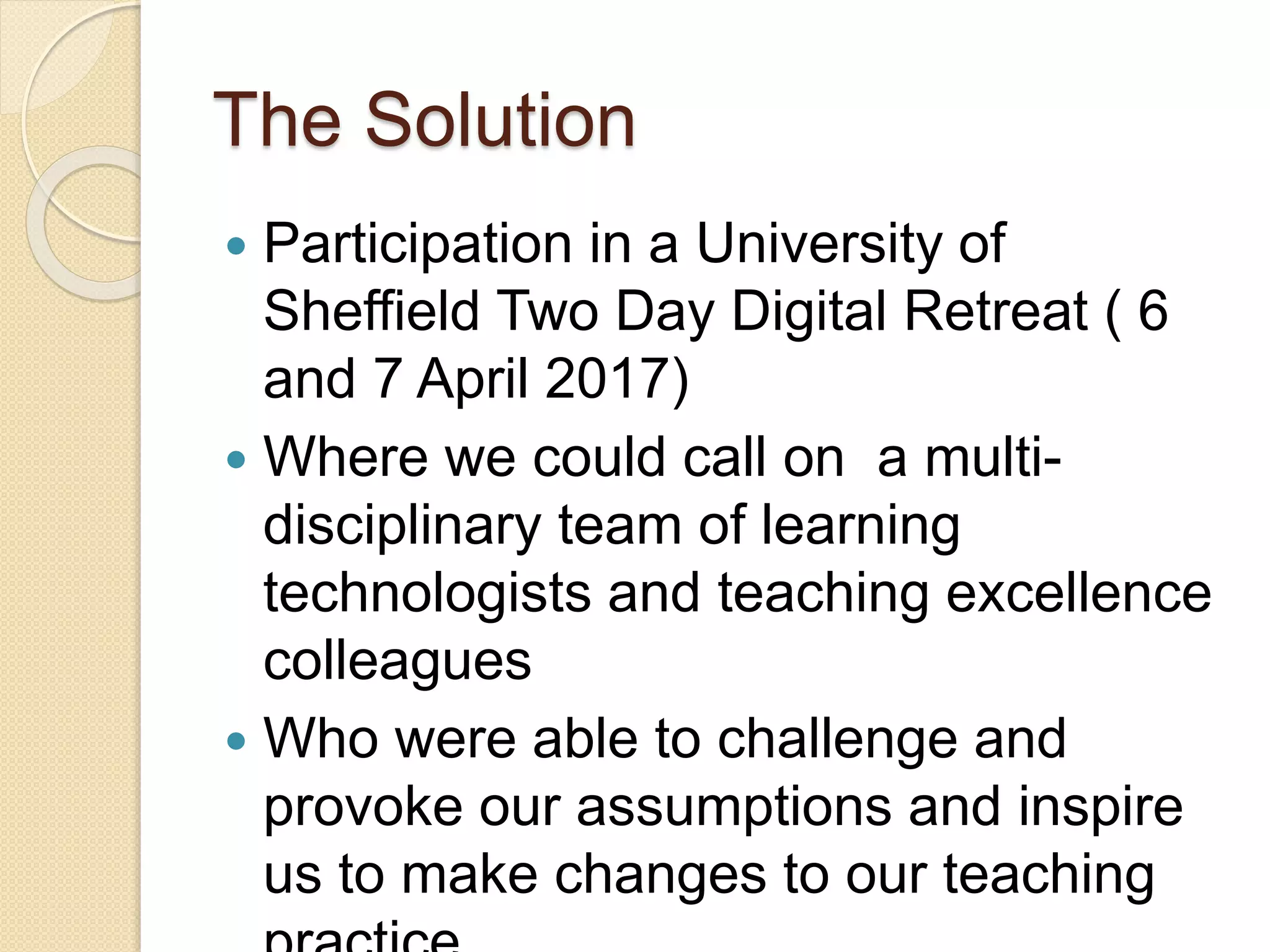
 Pete Mella
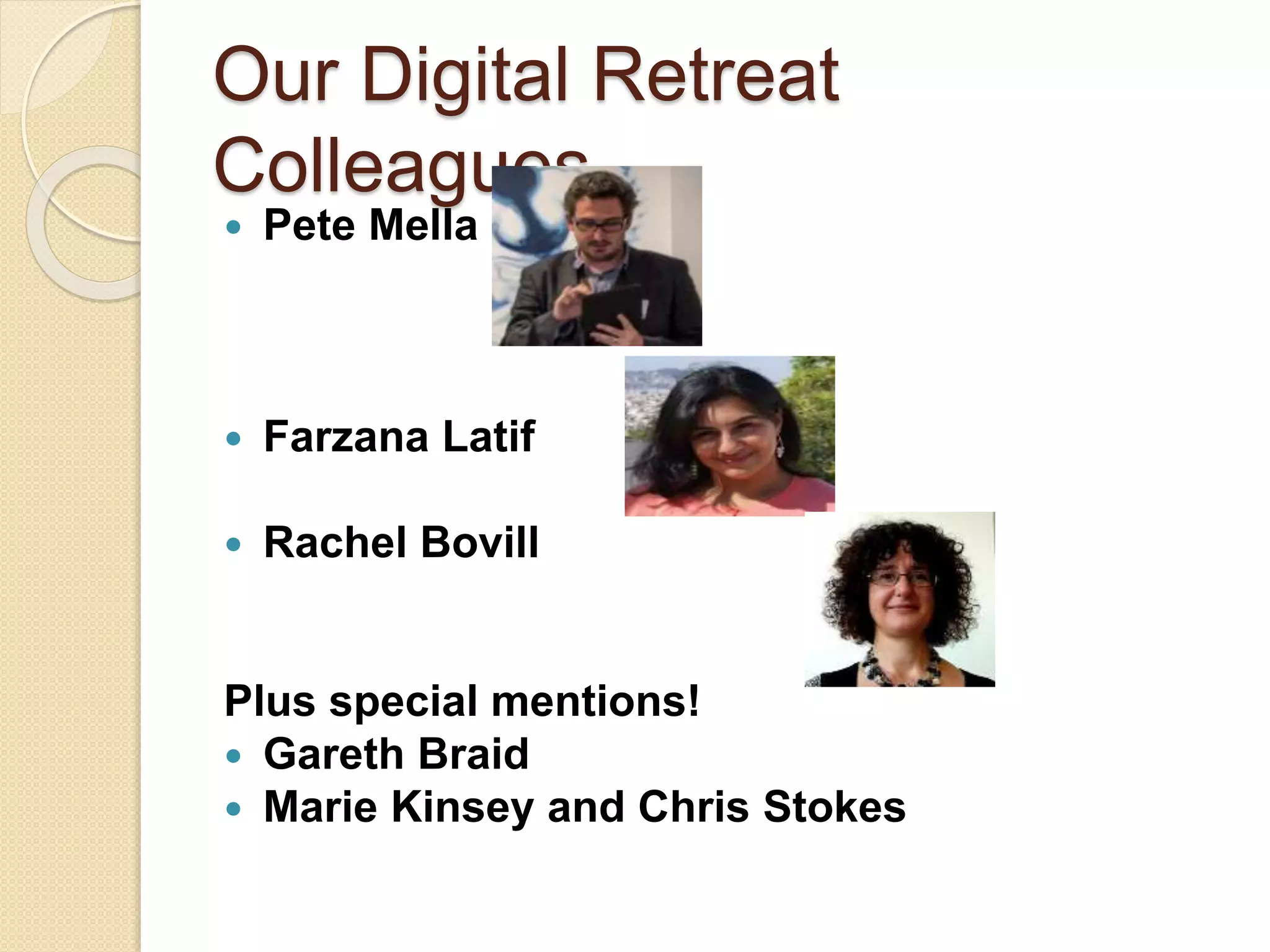
 Farzana Latif
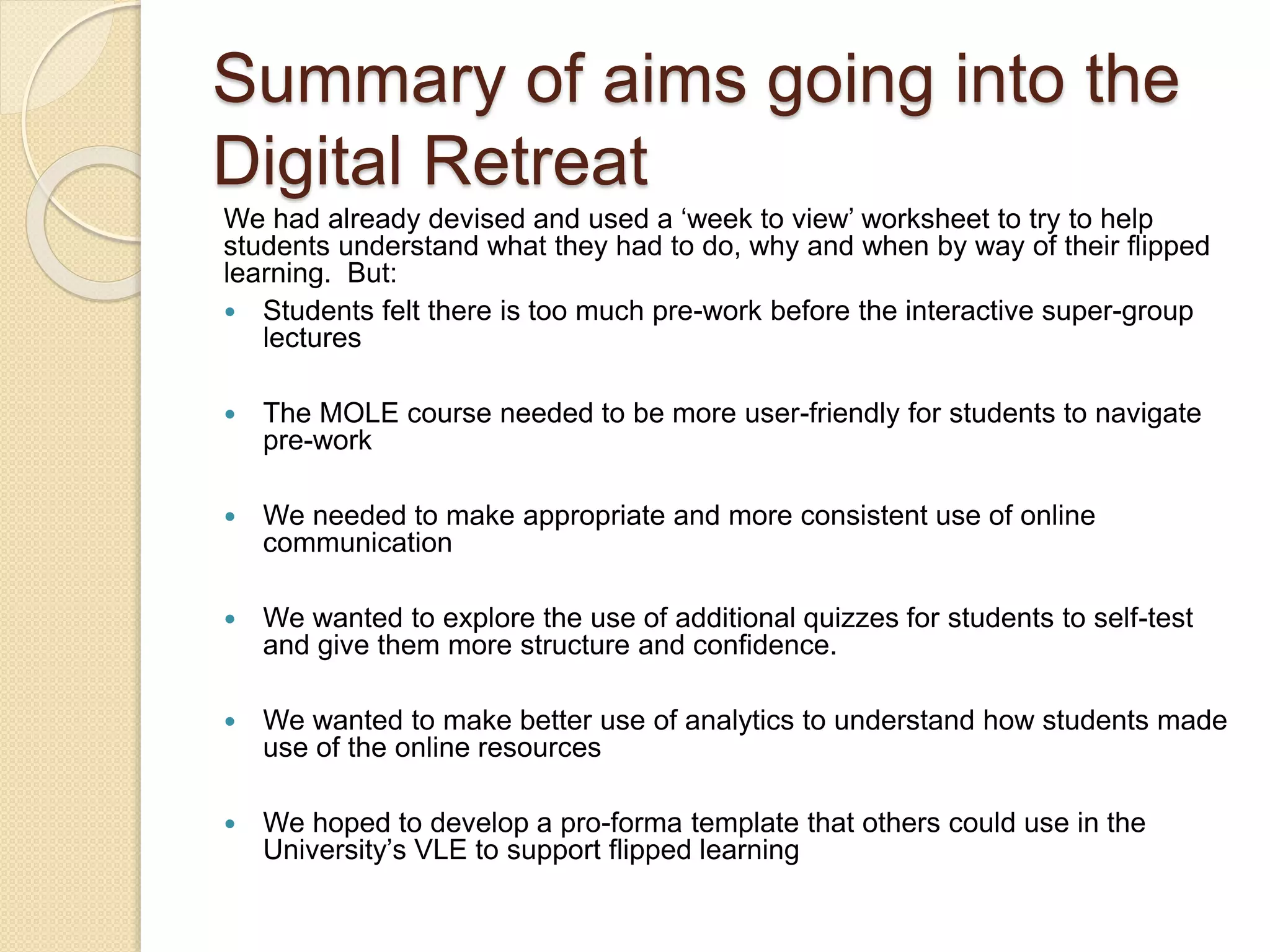
 Rachel Bovill
Plus special mentions!
 Gareth Braid
 Marie Kinsey and Chris Stokes
Summary of aims going into the
Digital Retreat
We had already devised and used a ‘week to view’ worksheet to try to help
students understand what they had to do, why and when by way of their flipped
learning. But:
 Students felt there is too much pre-work before the interactive super-group
lectures
 The MOLE course needed to be more user-friendly for students to navigate
pre-work
 We needed to make appropriate and more consistent use of online
communication
 We wanted to explore the use of additional quizzes for students to self-test
and give them more structure and confidence.
 We wanted to make better use of analytics to understand how students made
use of the online resources
 We hoped to develop a pro-forma template that others could use in the
University’s VLE to support flipped learning
The two (intense!) days of the
Digital Retreat
Development of a MOLE template that:
 Blueprints clearly how the flipped and face to
face aspects work together
 Sets out a clear sequential structure outlining
what the students should be doing when.
 Streamlines the content, and allows for a full
course review and refresh
 Provides a single unified interface to all the
MOLE learning materials needed for each
teaching week
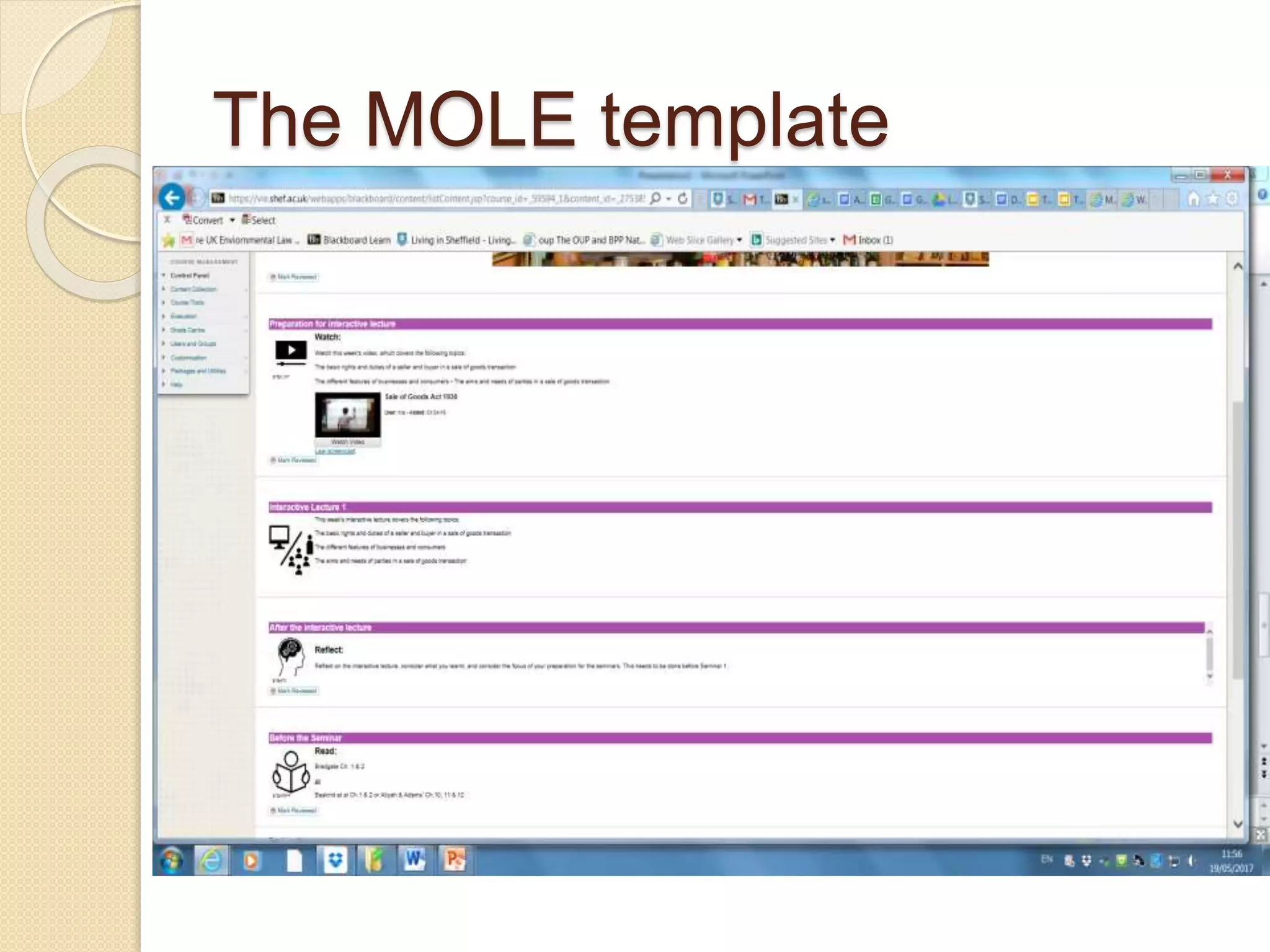
The MOLE template
Personal experience
 Intensive but incredibly rewarding – a huge
amount achieved in 2 days!
 A focused flexible space away from the
distraction of the office
 A fantastic and patient team
 Great interaction with the wider group, and a
hugely positive buzz to the two days
 A very clear structured event with signposting,
guidance and continued support
And lots of….
After the retreat – the hard work!
 Loading content on the MOLE structure
 Developing quizzes to help test learning, and
revisiting content of Interactive Supergroup
 Increased variety of content, through the use of
Padlet and Kaltura in particular
 Dissemination of good practice – to colleagues in
the School of law, and at external conferences
 A flipped learning VLE template for wider use
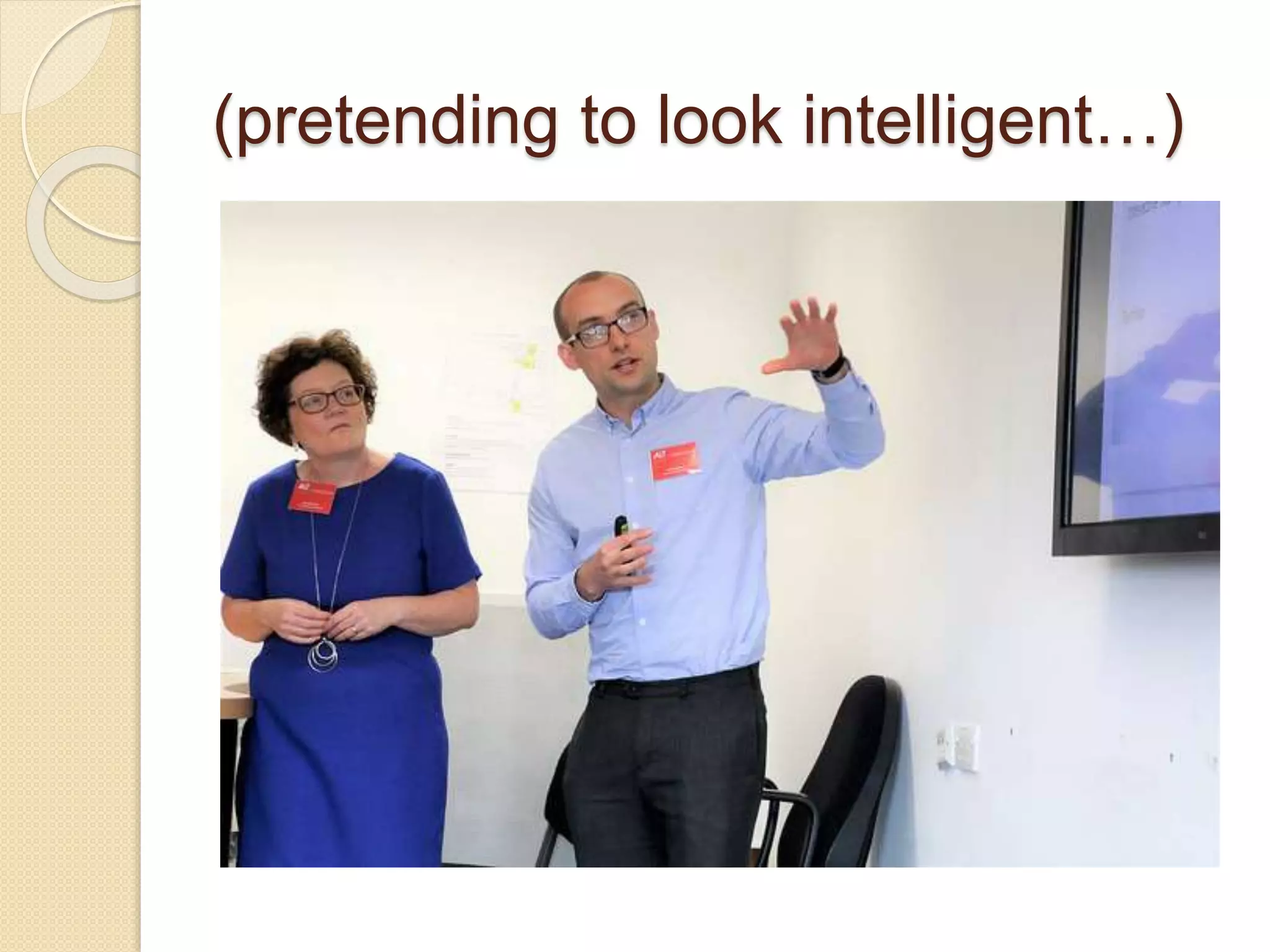
(pretending to look intelligent…)
Hints and tips
1. Apply for the Retreat, or start your own!– a
fantastic, dedicated space away from the office
2. If part of a team – have a meeting that is
dedicated to learning and teaching
3. Make use of student feedback – this is key to
development
4. Think about scholarship – disseminate,
present, chat, write
5. Keep an open mind!
6. Identify areas for development, and then have
an open conversation with learning
technologists about how TEL can support
(rather than using technology for technology’s
sake)

Collaborating with colleagues to provide a scaffolded VLE for a flipped learning module

  • 1.
    Collaborating with colleaguesto provide scaffolding for learners on a flipped learning module Gareth Bramley Zoe Ollerenshaw School of Law University of Sheffield
  • 2.
    The background andproblem  We have been running a module for two academic years on the LLB law degree (final year, elective module - cohort of approximately 140 students)  This module is delivered using flipped learning techniques - using online screencasts for delivery of materials; prior to interactive super-group sessions in place of traditional lectures; followed by one seminar for each module topic  Contact time with the cohort is limited with only 22 x1 hour interactive supergroup sessions and only 6 x 50 minutes seminars over 11 teaching weeks  In 2017 we were looking for technical support and input in terms of developing the quality of our module, in particular: - development of the VLE to aid structured learning by the cohort and engagement; - to achieve better engagement by students in online discussions and in lectures; - to increase effective student usage of TEL and blended learning
  • 3.
    The Solution  Participationin a University of Sheffield Two Day Digital Retreat ( 6 and 7 April 2017)  Where we could call on a multi- disciplinary team of learning technologists and teaching excellence colleagues  Who were able to challenge and provoke our assumptions and inspire us to make changes to our teaching
  • 4.
    Our Digital Retreat Colleagues Pete Mella  Farzana Latif  Rachel Bovill Plus special mentions!  Gareth Braid  Marie Kinsey and Chris Stokes
  • 5.
    Summary of aimsgoing into the Digital Retreat We had already devised and used a ‘week to view’ worksheet to try to help students understand what they had to do, why and when by way of their flipped learning. But:  Students felt there is too much pre-work before the interactive super-group lectures  The MOLE course needed to be more user-friendly for students to navigate pre-work  We needed to make appropriate and more consistent use of online communication  We wanted to explore the use of additional quizzes for students to self-test and give them more structure and confidence.  We wanted to make better use of analytics to understand how students made use of the online resources  We hoped to develop a pro-forma template that others could use in the University’s VLE to support flipped learning
  • 6.
    The two (intense!)days of the Digital Retreat Development of a MOLE template that:  Blueprints clearly how the flipped and face to face aspects work together  Sets out a clear sequential structure outlining what the students should be doing when.  Streamlines the content, and allows for a full course review and refresh  Provides a single unified interface to all the MOLE learning materials needed for each teaching week
  • 7.
  • 8.
    Personal experience  Intensivebut incredibly rewarding – a huge amount achieved in 2 days!  A focused flexible space away from the distraction of the office  A fantastic and patient team  Great interaction with the wider group, and a hugely positive buzz to the two days  A very clear structured event with signposting, guidance and continued support
  • 9.
  • 10.
    After the retreat– the hard work!  Loading content on the MOLE structure  Developing quizzes to help test learning, and revisiting content of Interactive Supergroup  Increased variety of content, through the use of Padlet and Kaltura in particular  Dissemination of good practice – to colleagues in the School of law, and at external conferences  A flipped learning VLE template for wider use
  • 11.
    (pretending to lookintelligent…)
  • 12.
    Hints and tips 1.Apply for the Retreat, or start your own!– a fantastic, dedicated space away from the office 2. If part of a team – have a meeting that is dedicated to learning and teaching 3. Make use of student feedback – this is key to development 4. Think about scholarship – disseminate, present, chat, write 5. Keep an open mind! 6. Identify areas for development, and then have an open conversation with learning technologists about how TEL can support (rather than using technology for technology’s sake)