Outstanding Learning and Teaching;
Joint Practice Development within and
            between schools
Performance Management
• Across NPA and SVC teachers have set a
  Professional Pathway Target. Join working and
  sharing ideas across the school with a T&L
  Focus

• Linked to Whole Education Interest Groups
  with Middle Leaders leading these groups in
  school
T&L Sessions

 •   Prioritise T&L for all staff; half termly 2 hour twilight sessions
 •   Staff choose a pathway for the year Pace, Progress, Personalisation
 •   One session per pathway on each evening
 •   Sessions mainly run by middle leaders, outstanding teachers
 •   Half hour ‘warm down’ over tea with colleagues to review
 •   Open to Trust partners and feeder primaries

 Date                        Title                        Venue       Leader           Pathway
           How can we provide effective feedback
January
            through formative marking and oral            GERC      Simon Elbourn      PROGRESS
  29th
                        comment?
January    How can we encourage students to take         CAROLE
                                                                       Science           PACE
  29th          more risks in their learning?             SHAW
January
             De-escalating challenging situations        NEW HALL    Ollie Sharp    PERSONALISATION
  29th
          The wider role of the tutor, understanding
January    what factors inhibit a student’s ability to
                                                           MU1       Stuart Gent    PERSONALISATION
  29th    learn and how to establish links between
            subject teacher, student and parent.
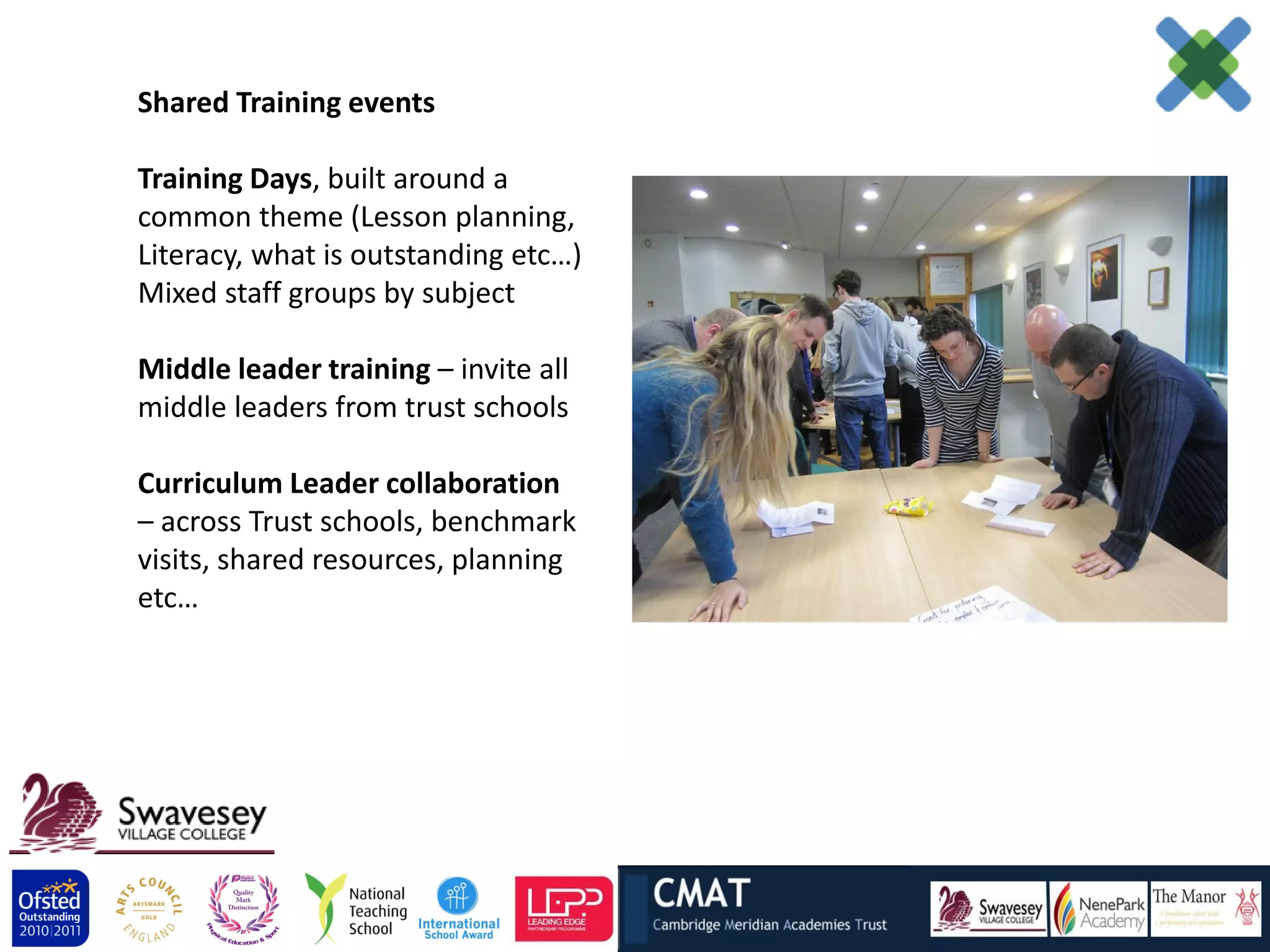
Shared Training events

Training Days, built around a
common theme (Lesson planning,
Literacy, what is outstanding etc…)
Mixed staff groups by subject

Middle leader training – invite all
middle leaders from trust schools

Curriculum Leader collaboration
– across Trust schools, benchmark
visits, shared resources, planning
etc…
Middle Leader Training
• 3 sessions across the year based at alternate
  schools
• Use of data and how to give constructive
  lesson feedback
• Having difficult conversations
• Joint reflection on roles and responsibilities
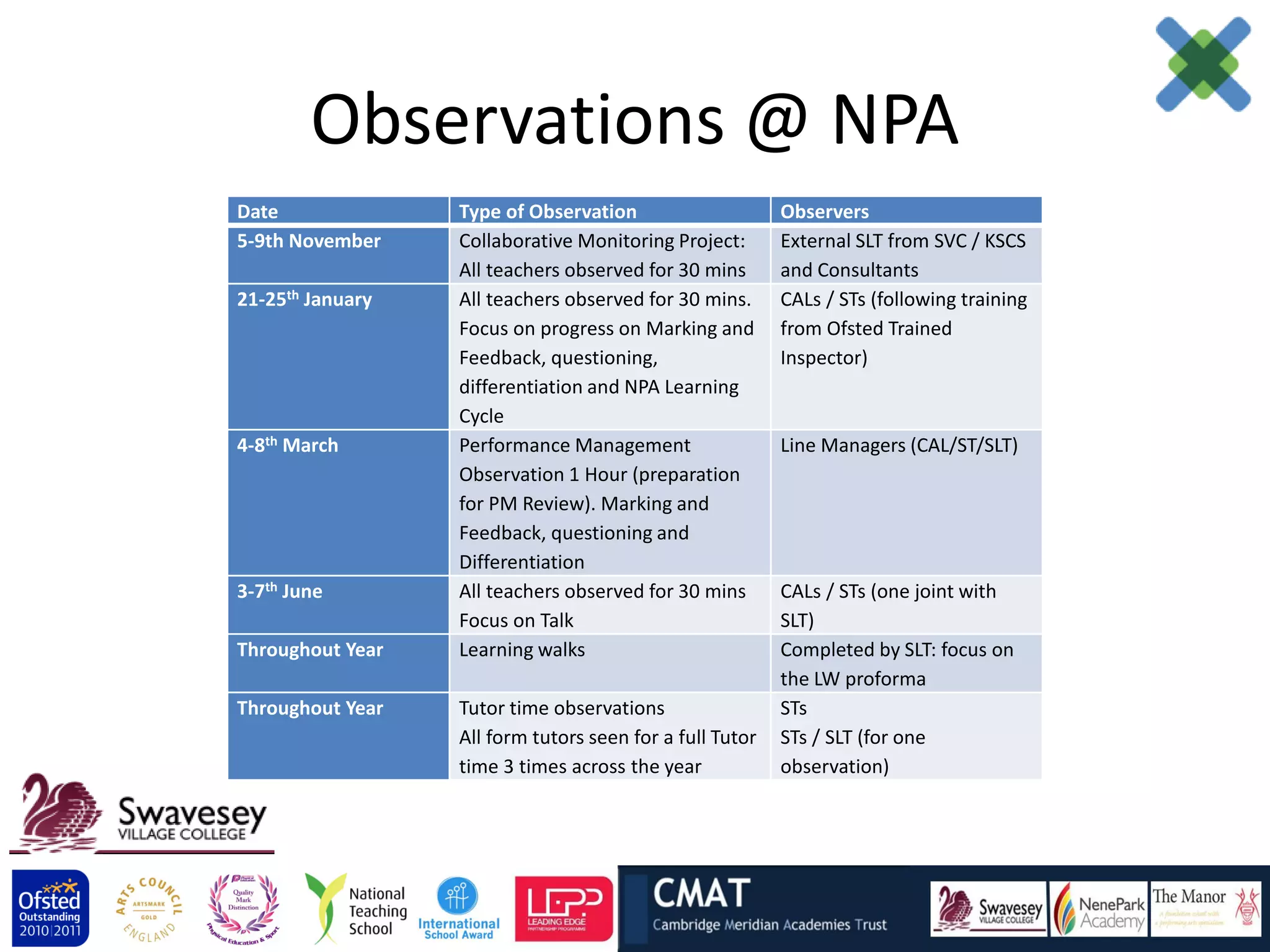
Observations @ NPA
Date              Type of Observation                     Observers
5-9th November    Collaborative Monitoring Project:       External SLT from SVC / KSCS
                  All teachers observed for 30 mins       and Consultants
21-25th January   All teachers observed for 30 mins.      CALs / STs (following training
                  Focus on progress on Marking and        from Ofsted Trained
                  Feedback, questioning,                  Inspector)
                  differentiation and NPA Learning
                  Cycle
4-8th March       Performance Management                  Line Managers (CAL/ST/SLT)
                  Observation 1 Hour (preparation
                  for PM Review). Marking and
                  Feedback, questioning and
                  Differentiation
3-7th June        All teachers observed for 30 mins       CALs / STs (one joint with
                  Focus on Talk                           SLT)
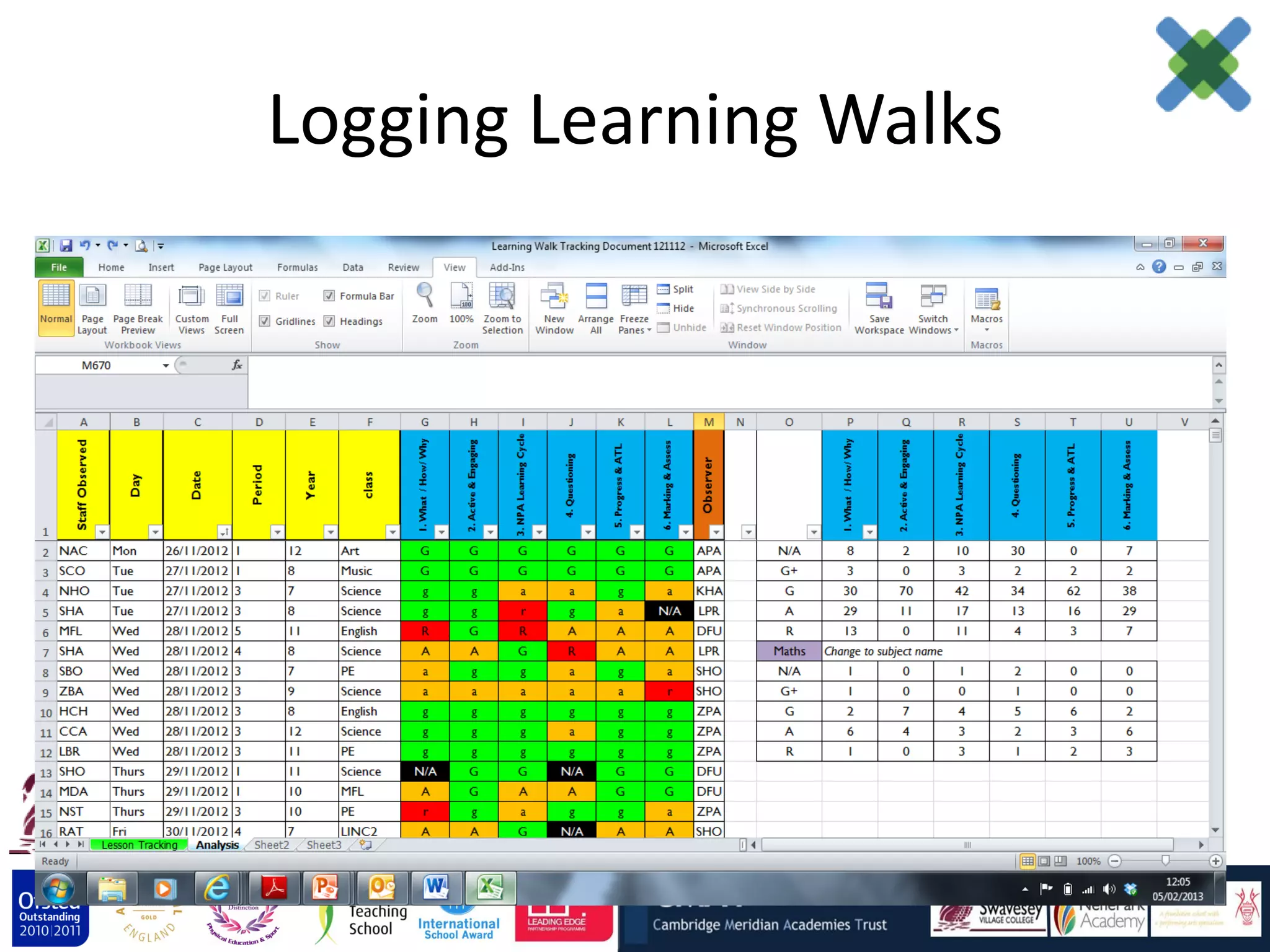
Throughout Year   Learning walks                          Completed by SLT: focus on
                                                          the LW proforma
Throughout Year   Tutor time observations                 STs
                  All form tutors seen for a full Tutor   STs / SLT (for one
                  time 3 times across the year            observation)
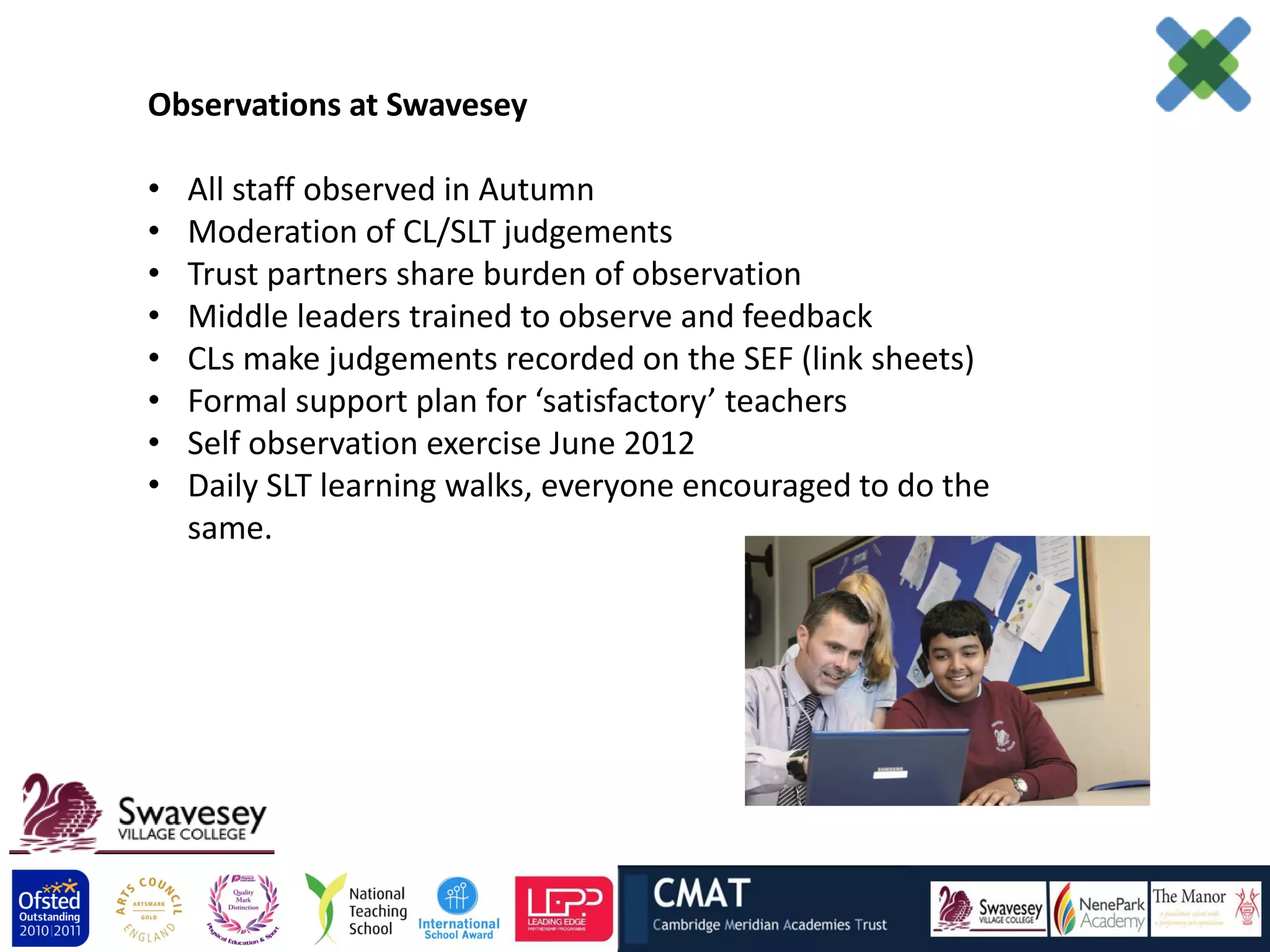
Observations at Swavesey

•   All staff observed in Autumn
•   Moderation of CL/SLT judgements
•   Trust partners share burden of observation
•   Middle leaders trained to observe and feedback
•   CLs make judgements recorded on the SEF (link sheets)
•   Formal support plan for ‘satisfactory’ teachers
•   Self observation exercise June 2012
•   Daily SLT learning walks, everyone encouraged to do the
    same.
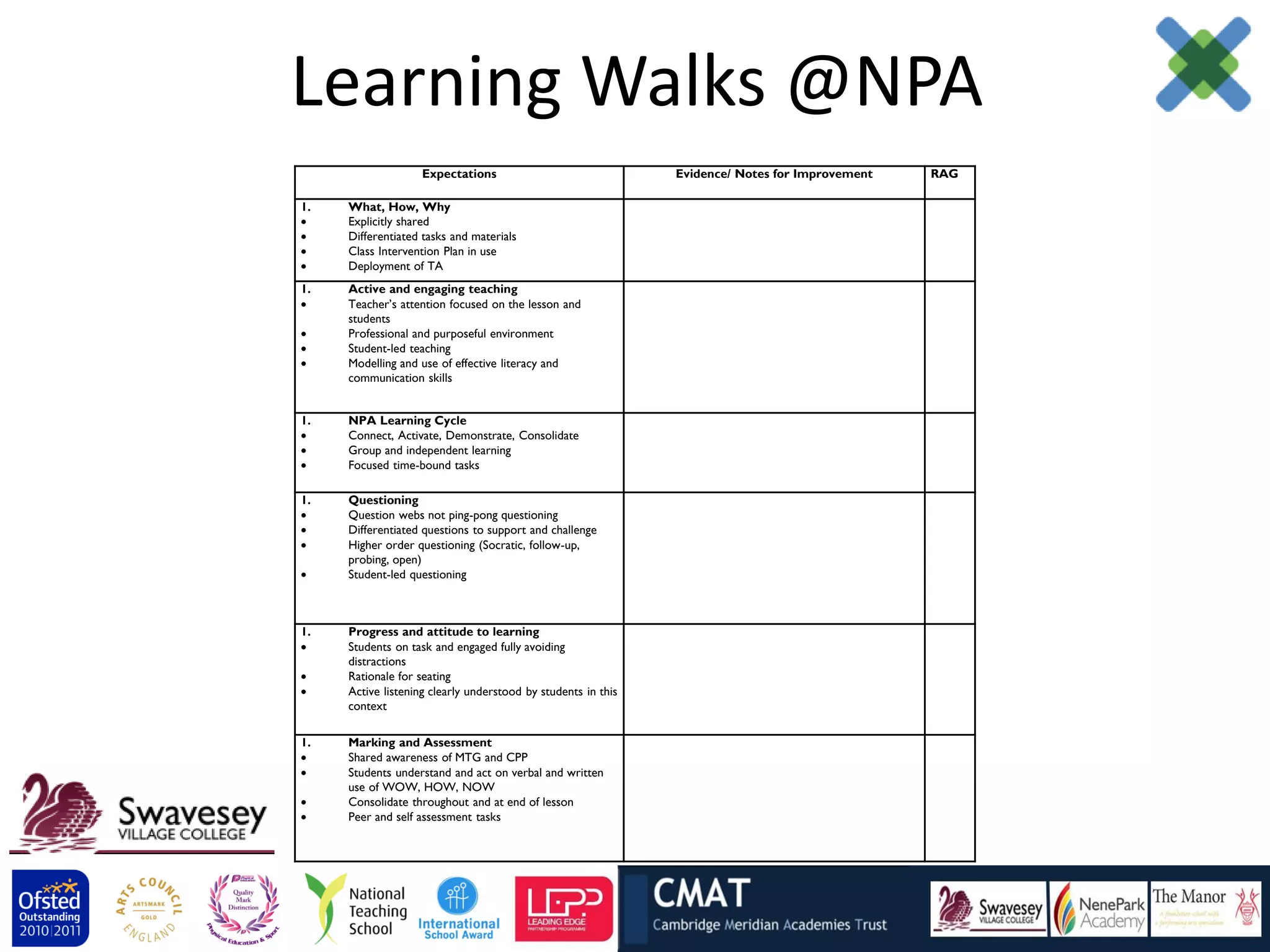
Learning Walks @NPA
                    Expectations                               Evidence/ Notes for Improvement   RAG

1.   What, How, Why
    Explicitly shared
    Differentiated tasks and materials
    Class Intervention Plan in use
    Deployment of TA
1.   Active and engaging teaching
    Teacher’s attention focused on the lesson and
     students
    Professional and purposeful environment
    Student-led teaching
    Modelling and use of effective literacy and
     communication skills


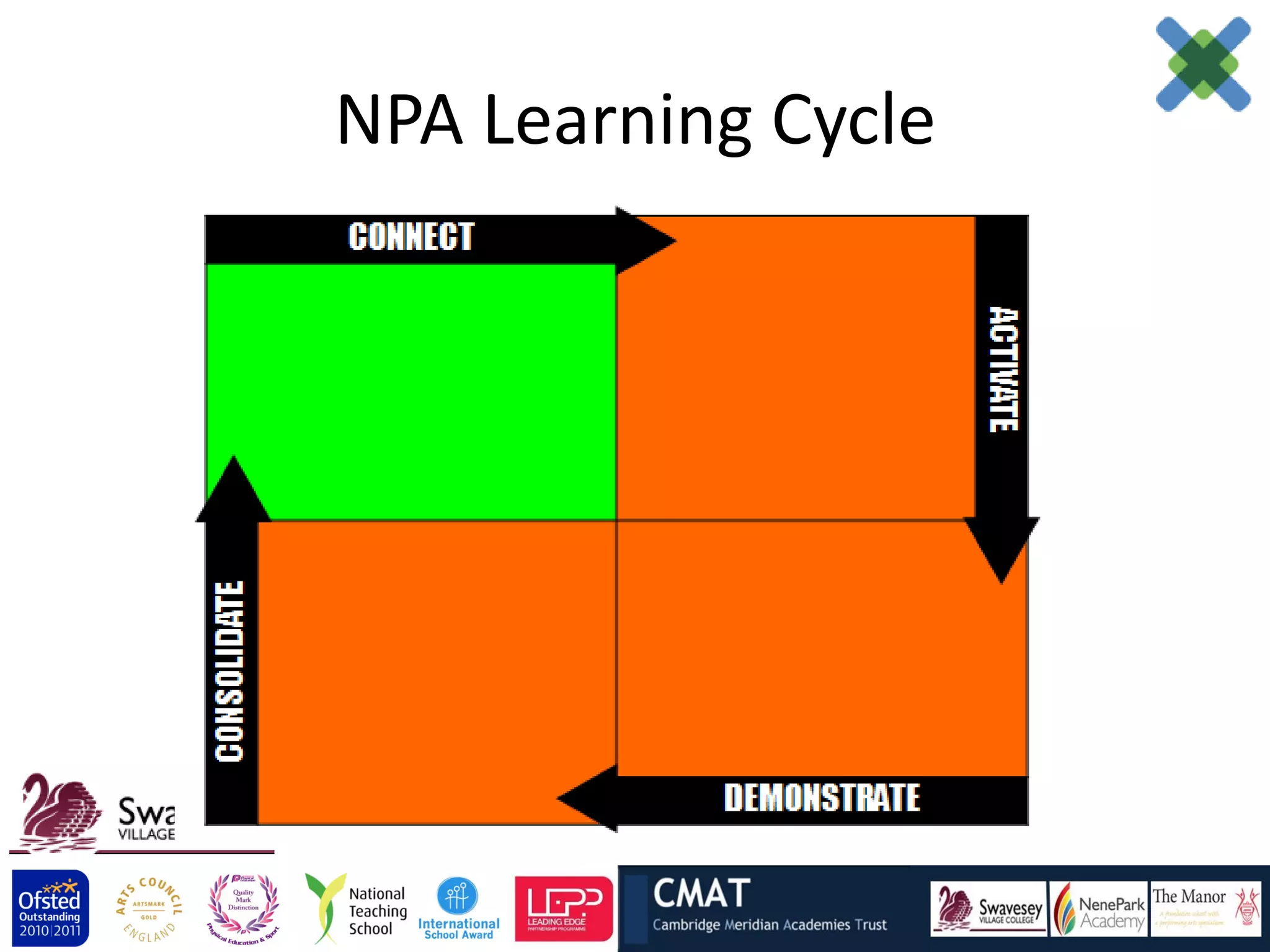
1.   NPA Learning Cycle
    Connect, Activate, Demonstrate, Consolidate
    Group and independent learning
    Focused time-bound tasks

1.   Questioning
    Question webs not ping-pong questioning
    Differentiated questions to support and challenge
    Higher order questioning (Socratic, follow-up,
     probing, open)
    Student-led questioning


1.   Progress and attitude to learning
    Students on task and engaged fully avoiding
     distractions
    Rationale for seating
    Active listening clearly understood by students in this
     context

1.   Marking and Assessment
    Shared awareness of MTG and CPP
    Students understand and act on verbal and written
     use of WOW, HOW, NOW
    Consolidate throughout and at end of lesson
    Peer and self assessment tasks
Logging Learning Walks
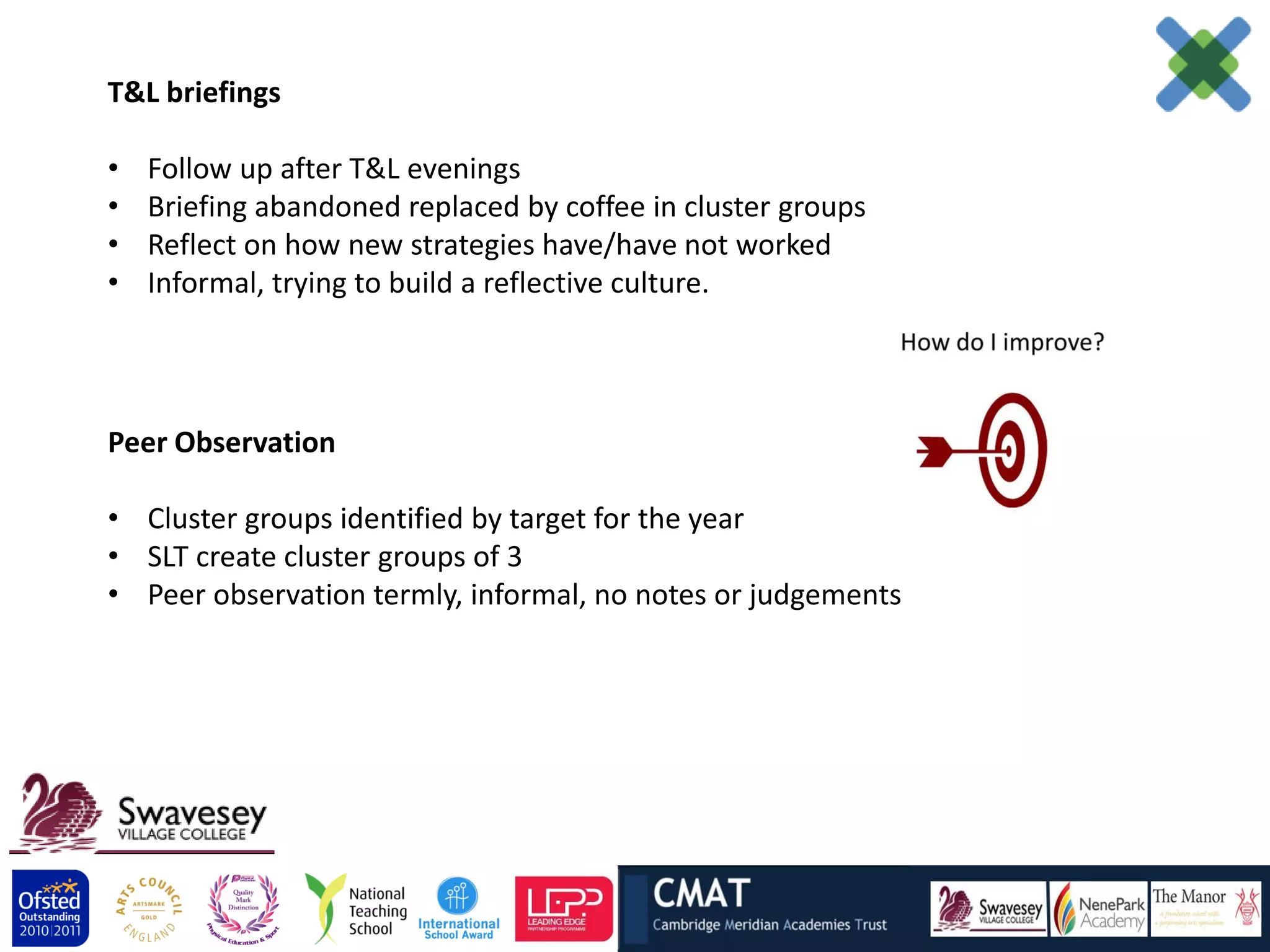
T&L briefings

•   Follow up after T&L evenings
•   Briefing abandoned replaced by coffee in cluster groups
•   Reflect on how new strategies have/have not worked
•   Informal, trying to build a reflective culture.


Peer Observation

• Cluster groups identified by target for the year
• SLT create cluster groups of 3
• Peer observation termly, informal, no notes or judgements
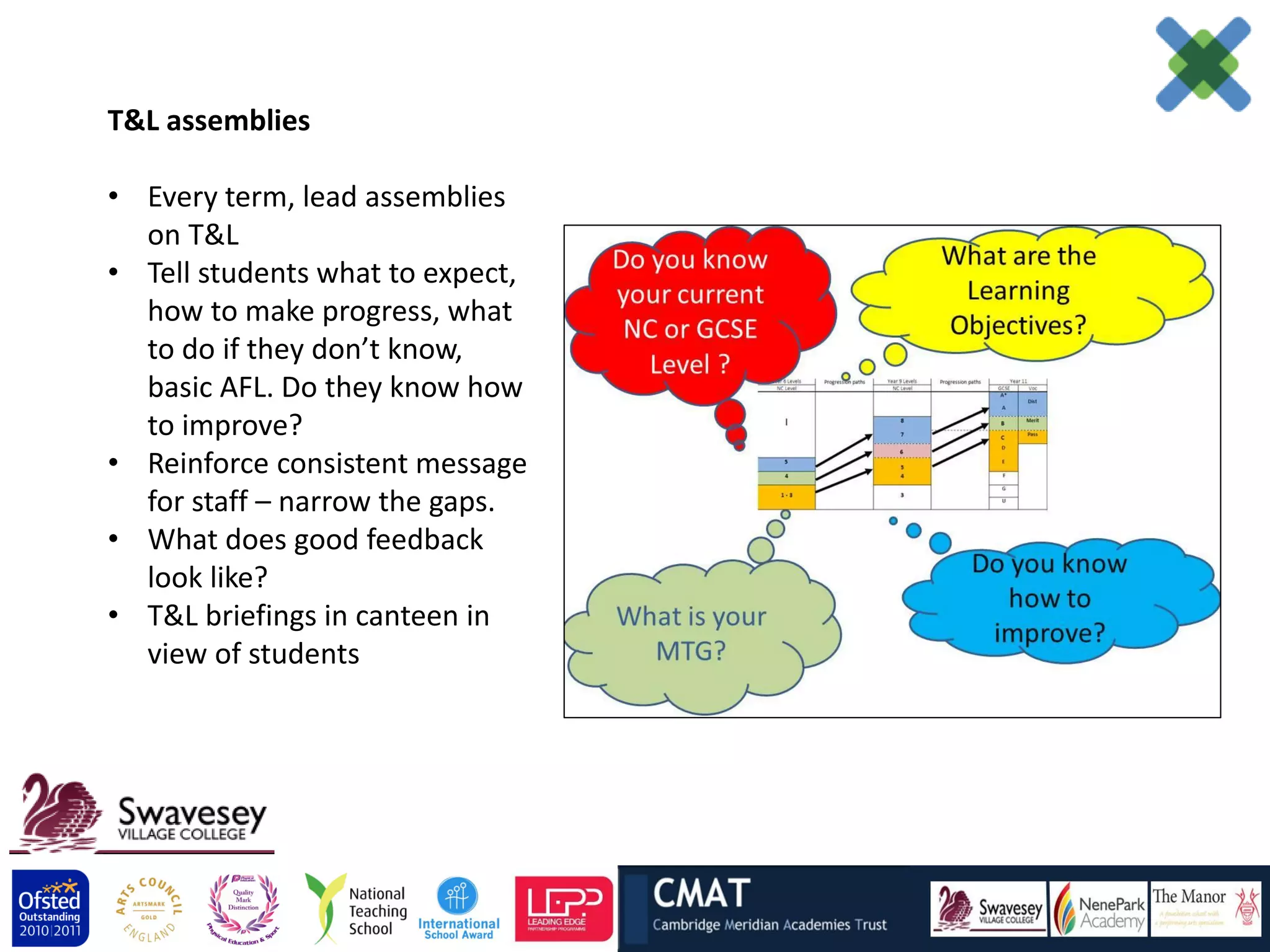
T&L assemblies

• Every term, lead assemblies
  on T&L
• Tell students what to expect,
  how to make progress, what
  to do if they don’t know,
  basic AFL. Do they know how
  to improve?
• Reinforce consistent message
  for staff – narrow the gaps.
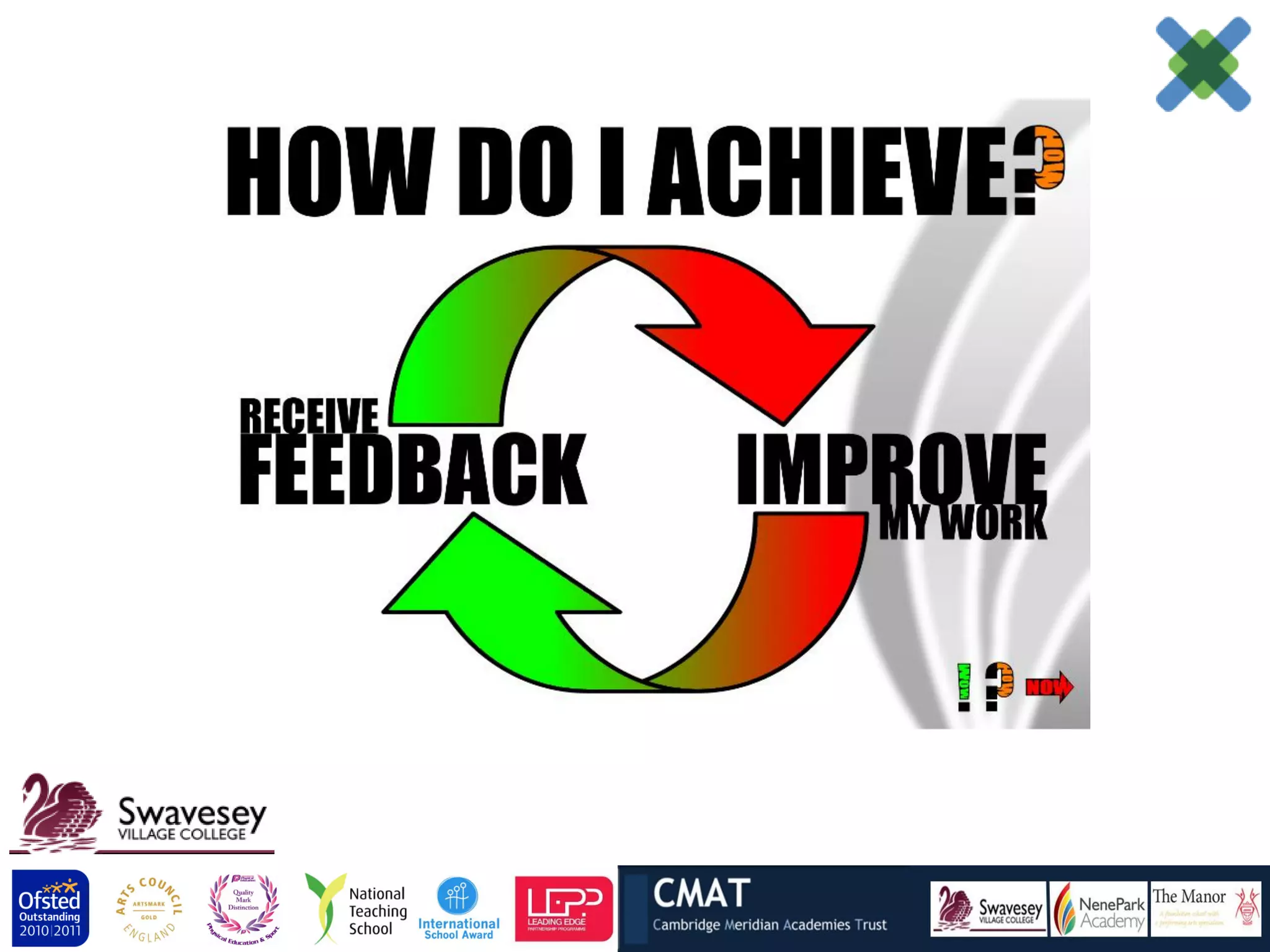
• What does good feedback
  look like?
• T&L briefings in canteen in
  view of students
NPA Learning Cycle
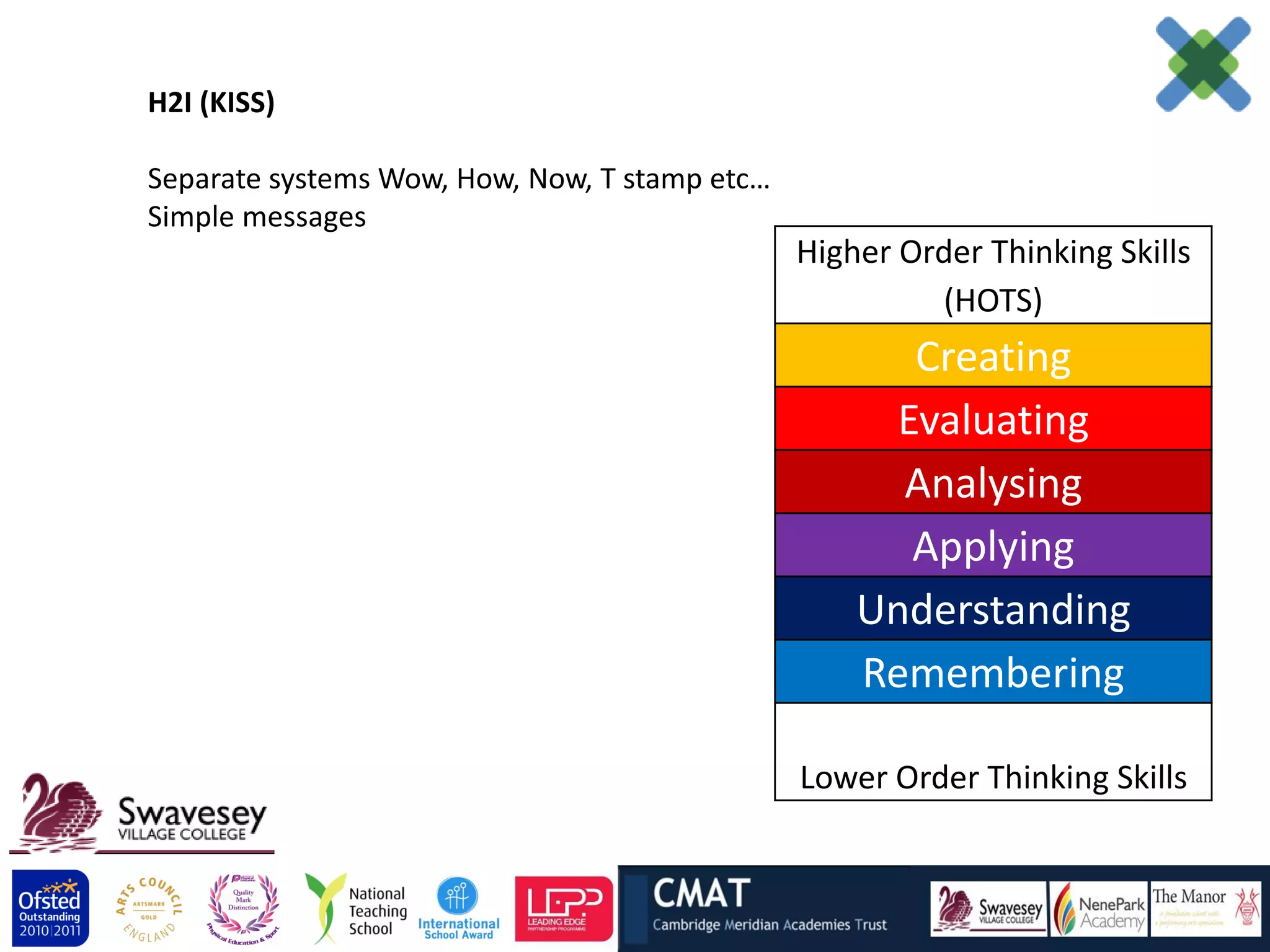
H2I (KISS)

Separate systems Wow, How, Now, T stamp etc…
Simple messages
                                               Higher Order Thinking Skills
                                                        (HOTS)
                                                      Creating
                                                     Evaluating
                                                     Analysing
                                                      Applying
                                                   Understanding
                                                   Remembering

                                               Lower Order Thinking Skills

Whole education event tl

  • 1.
    Outstanding Learning andTeaching; Joint Practice Development within and between schools
  • 2.
    Performance Management • AcrossNPA and SVC teachers have set a Professional Pathway Target. Join working and sharing ideas across the school with a T&L Focus • Linked to Whole Education Interest Groups with Middle Leaders leading these groups in school
  • 3.
    T&L Sessions • Prioritise T&L for all staff; half termly 2 hour twilight sessions • Staff choose a pathway for the year Pace, Progress, Personalisation • One session per pathway on each evening • Sessions mainly run by middle leaders, outstanding teachers • Half hour ‘warm down’ over tea with colleagues to review • Open to Trust partners and feeder primaries Date Title Venue Leader Pathway How can we provide effective feedback January through formative marking and oral GERC Simon Elbourn PROGRESS 29th comment? January How can we encourage students to take CAROLE Science PACE 29th more risks in their learning? SHAW January De-escalating challenging situations NEW HALL Ollie Sharp PERSONALISATION 29th The wider role of the tutor, understanding January what factors inhibit a student’s ability to MU1 Stuart Gent PERSONALISATION 29th learn and how to establish links between subject teacher, student and parent.
  • 4.
    Shared Training events TrainingDays, built around a common theme (Lesson planning, Literacy, what is outstanding etc…) Mixed staff groups by subject Middle leader training – invite all middle leaders from trust schools Curriculum Leader collaboration – across Trust schools, benchmark visits, shared resources, planning etc…
  • 5.
    Middle Leader Training •3 sessions across the year based at alternate schools • Use of data and how to give constructive lesson feedback • Having difficult conversations • Joint reflection on roles and responsibilities
  • 6.
    Observations @ NPA Date Type of Observation Observers 5-9th November Collaborative Monitoring Project: External SLT from SVC / KSCS All teachers observed for 30 mins and Consultants 21-25th January All teachers observed for 30 mins. CALs / STs (following training Focus on progress on Marking and from Ofsted Trained Feedback, questioning, Inspector) differentiation and NPA Learning Cycle 4-8th March Performance Management Line Managers (CAL/ST/SLT) Observation 1 Hour (preparation for PM Review). Marking and Feedback, questioning and Differentiation 3-7th June All teachers observed for 30 mins CALs / STs (one joint with Focus on Talk SLT) Throughout Year Learning walks Completed by SLT: focus on the LW proforma Throughout Year Tutor time observations STs All form tutors seen for a full Tutor STs / SLT (for one time 3 times across the year observation)
  • 7.
    Observations at Swavesey • All staff observed in Autumn • Moderation of CL/SLT judgements • Trust partners share burden of observation • Middle leaders trained to observe and feedback • CLs make judgements recorded on the SEF (link sheets) • Formal support plan for ‘satisfactory’ teachers • Self observation exercise June 2012 • Daily SLT learning walks, everyone encouraged to do the same.
  • 8.
    Learning Walks @NPA Expectations Evidence/ Notes for Improvement RAG 1. What, How, Why  Explicitly shared  Differentiated tasks and materials  Class Intervention Plan in use  Deployment of TA 1. Active and engaging teaching  Teacher’s attention focused on the lesson and students  Professional and purposeful environment  Student-led teaching  Modelling and use of effective literacy and communication skills 1. NPA Learning Cycle  Connect, Activate, Demonstrate, Consolidate  Group and independent learning  Focused time-bound tasks 1. Questioning  Question webs not ping-pong questioning  Differentiated questions to support and challenge  Higher order questioning (Socratic, follow-up, probing, open)  Student-led questioning 1. Progress and attitude to learning  Students on task and engaged fully avoiding distractions  Rationale for seating  Active listening clearly understood by students in this context 1. Marking and Assessment  Shared awareness of MTG and CPP  Students understand and act on verbal and written use of WOW, HOW, NOW  Consolidate throughout and at end of lesson  Peer and self assessment tasks
  • 9.
  • 10.
    T&L briefings • Follow up after T&L evenings • Briefing abandoned replaced by coffee in cluster groups • Reflect on how new strategies have/have not worked • Informal, trying to build a reflective culture. Peer Observation • Cluster groups identified by target for the year • SLT create cluster groups of 3 • Peer observation termly, informal, no notes or judgements
  • 11.
    T&L assemblies • Everyterm, lead assemblies on T&L • Tell students what to expect, how to make progress, what to do if they don’t know, basic AFL. Do they know how to improve? • Reinforce consistent message for staff – narrow the gaps. • What does good feedback look like? • T&L briefings in canteen in view of students
  • 12.
  • 14.
    H2I (KISS) Separate systemsWow, How, Now, T stamp etc… Simple messages Higher Order Thinking Skills (HOTS) Creating Evaluating Analysing Applying Understanding Remembering Lower Order Thinking Skills