Downloaded 56 times
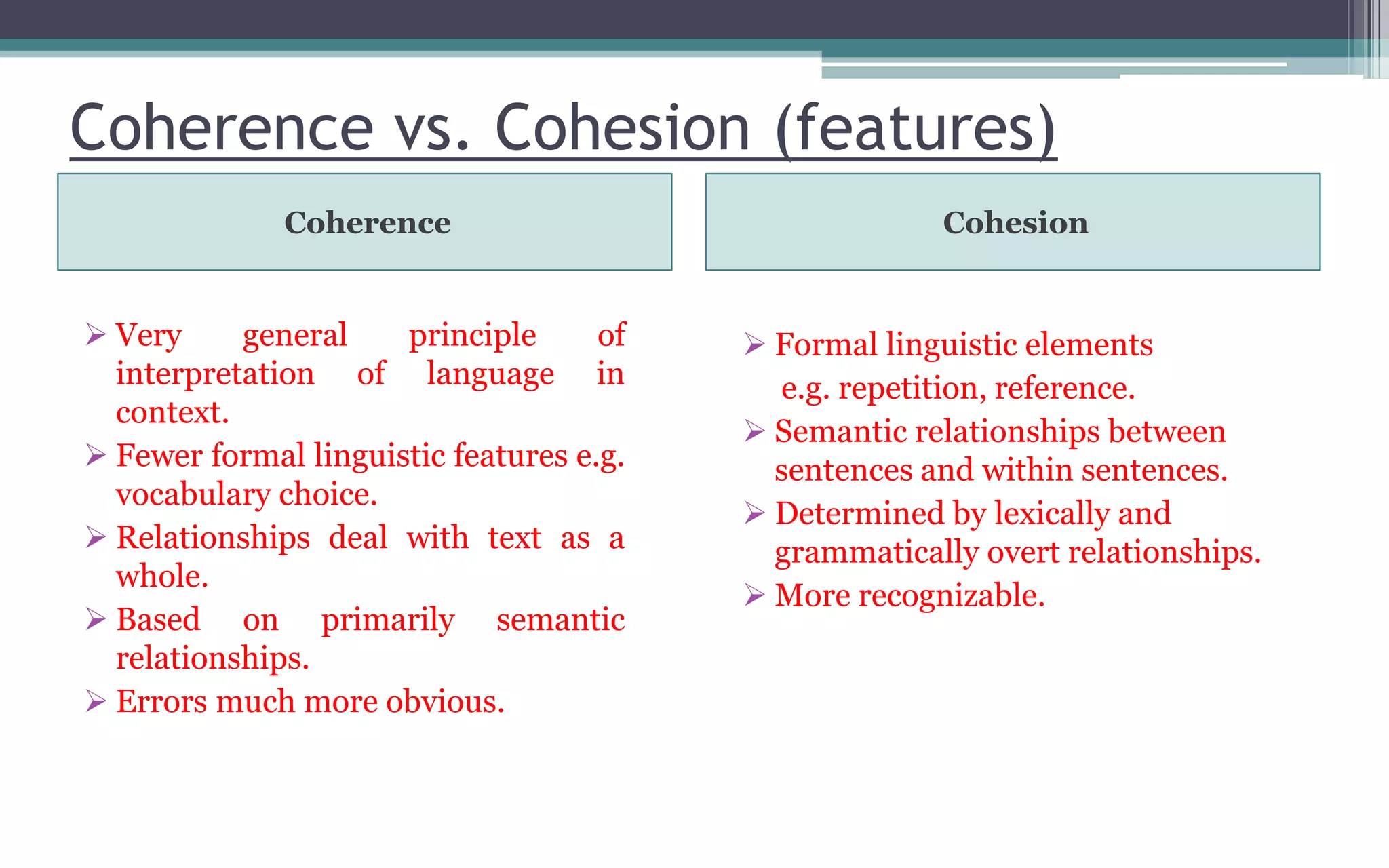
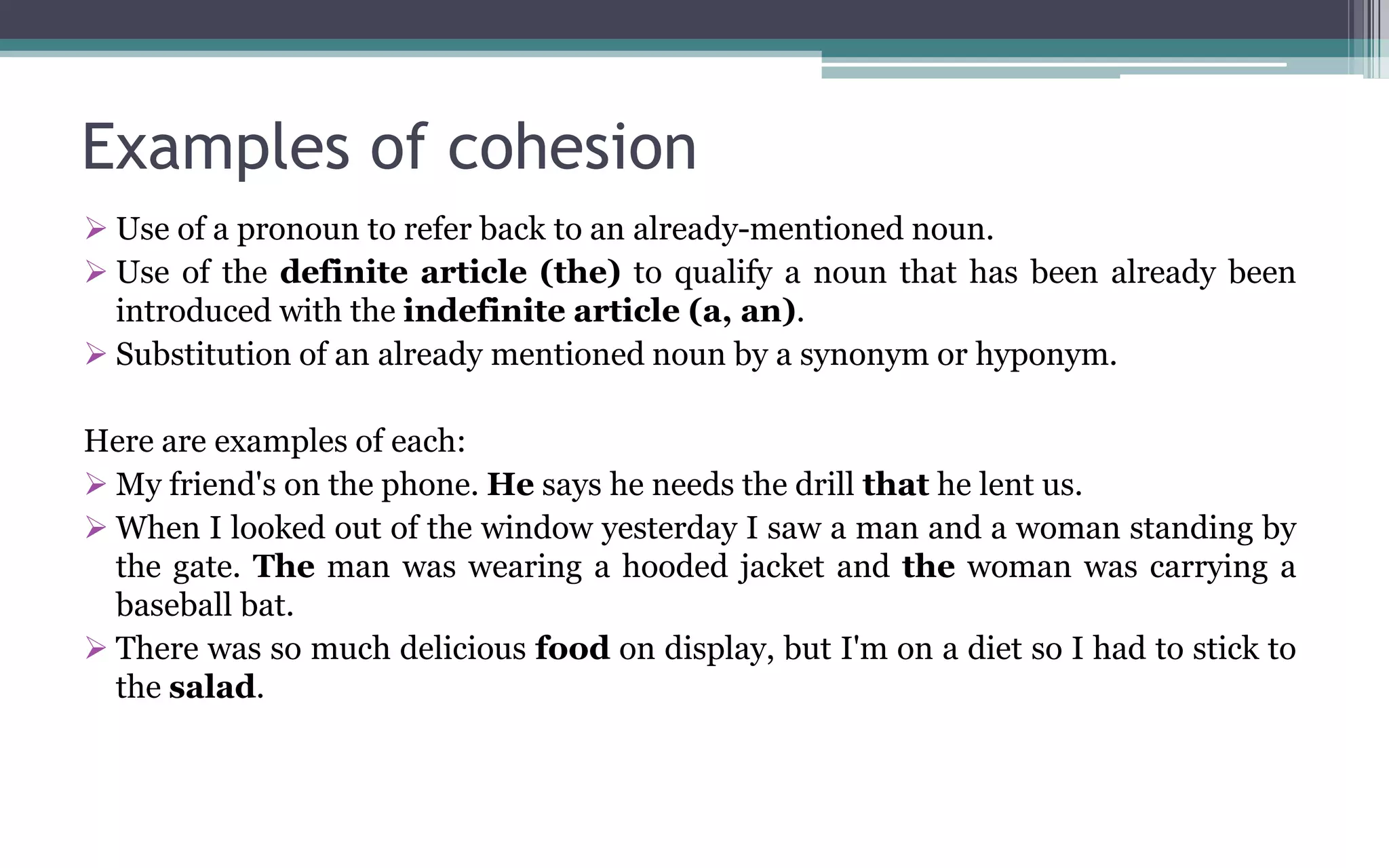
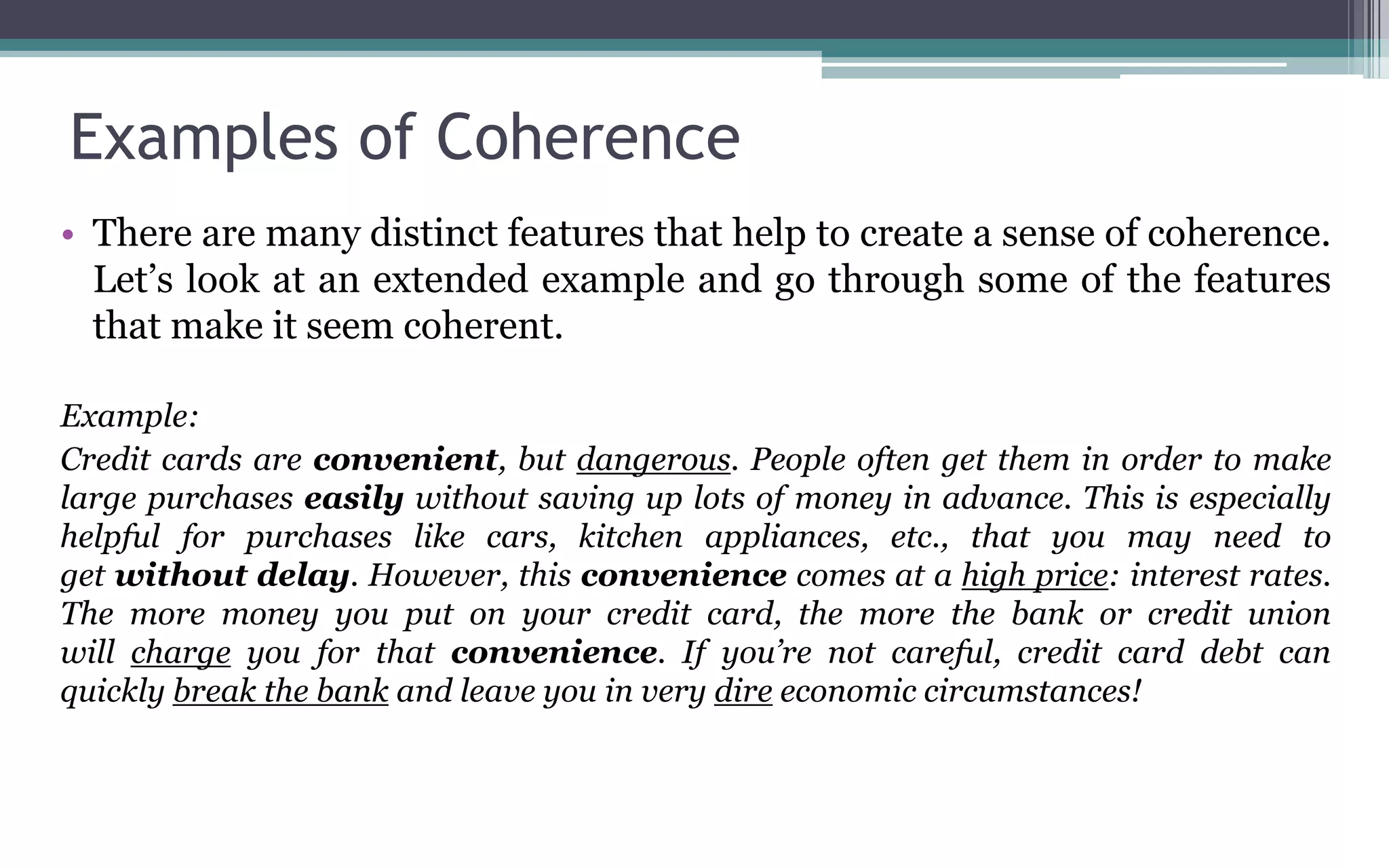
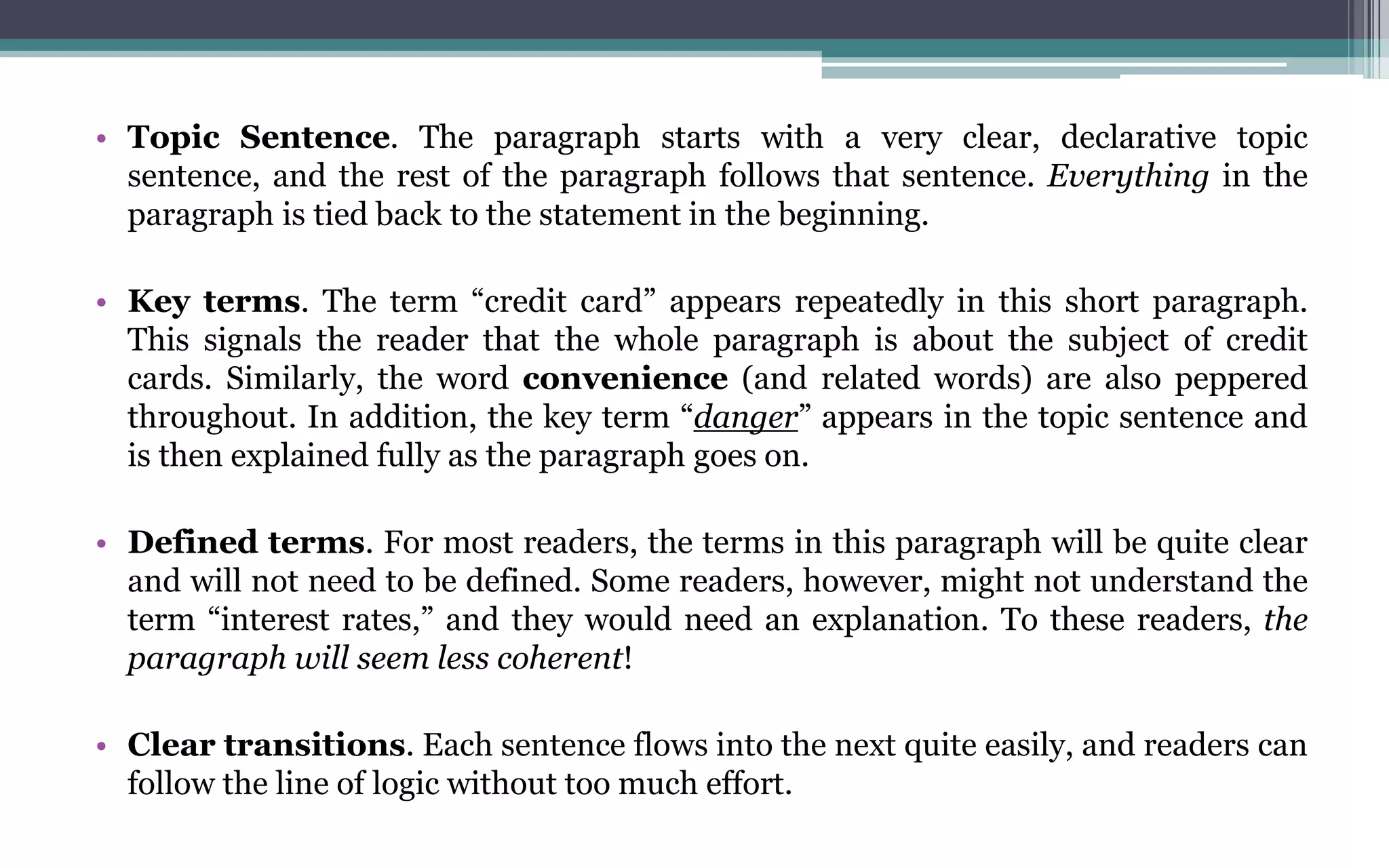
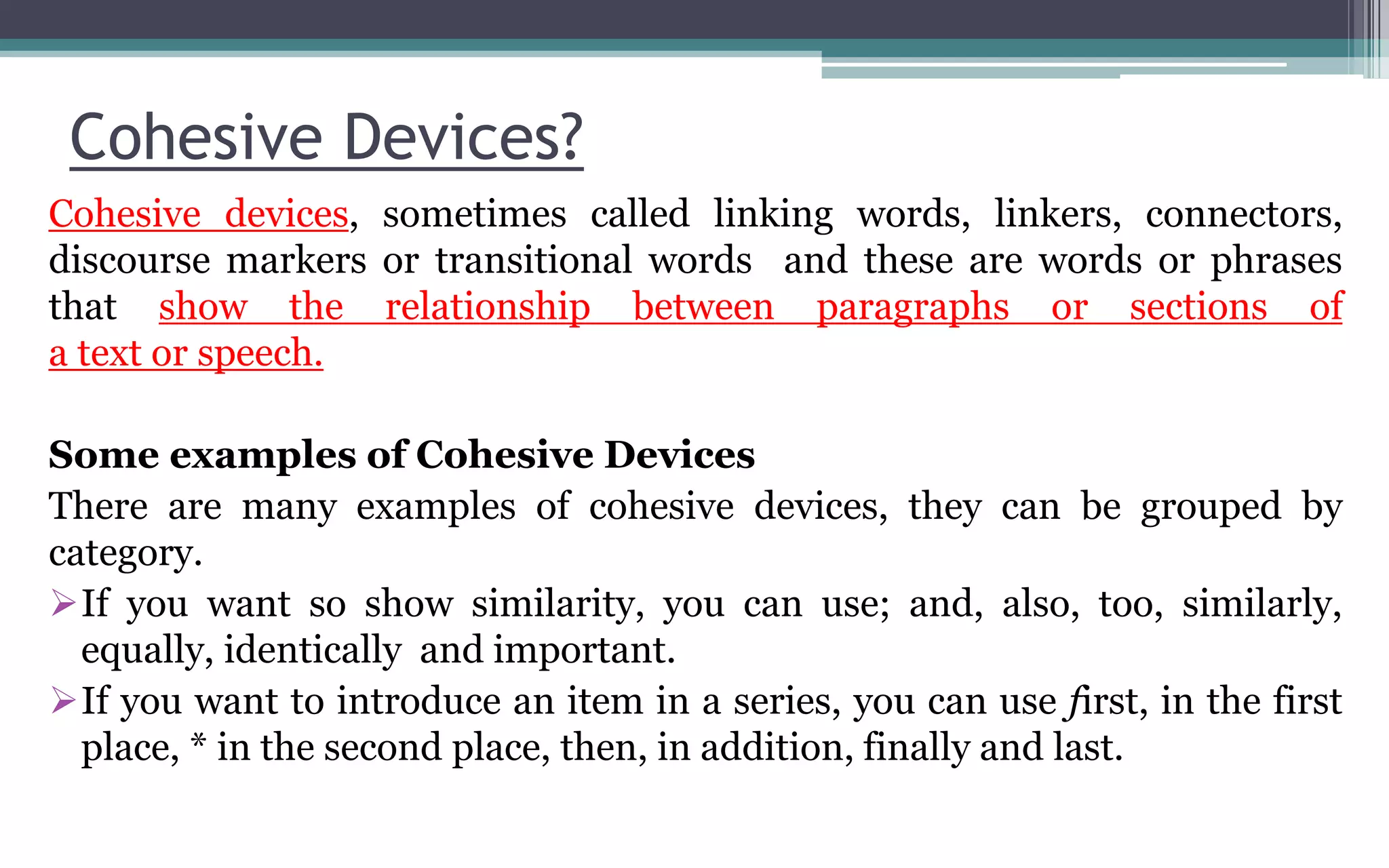
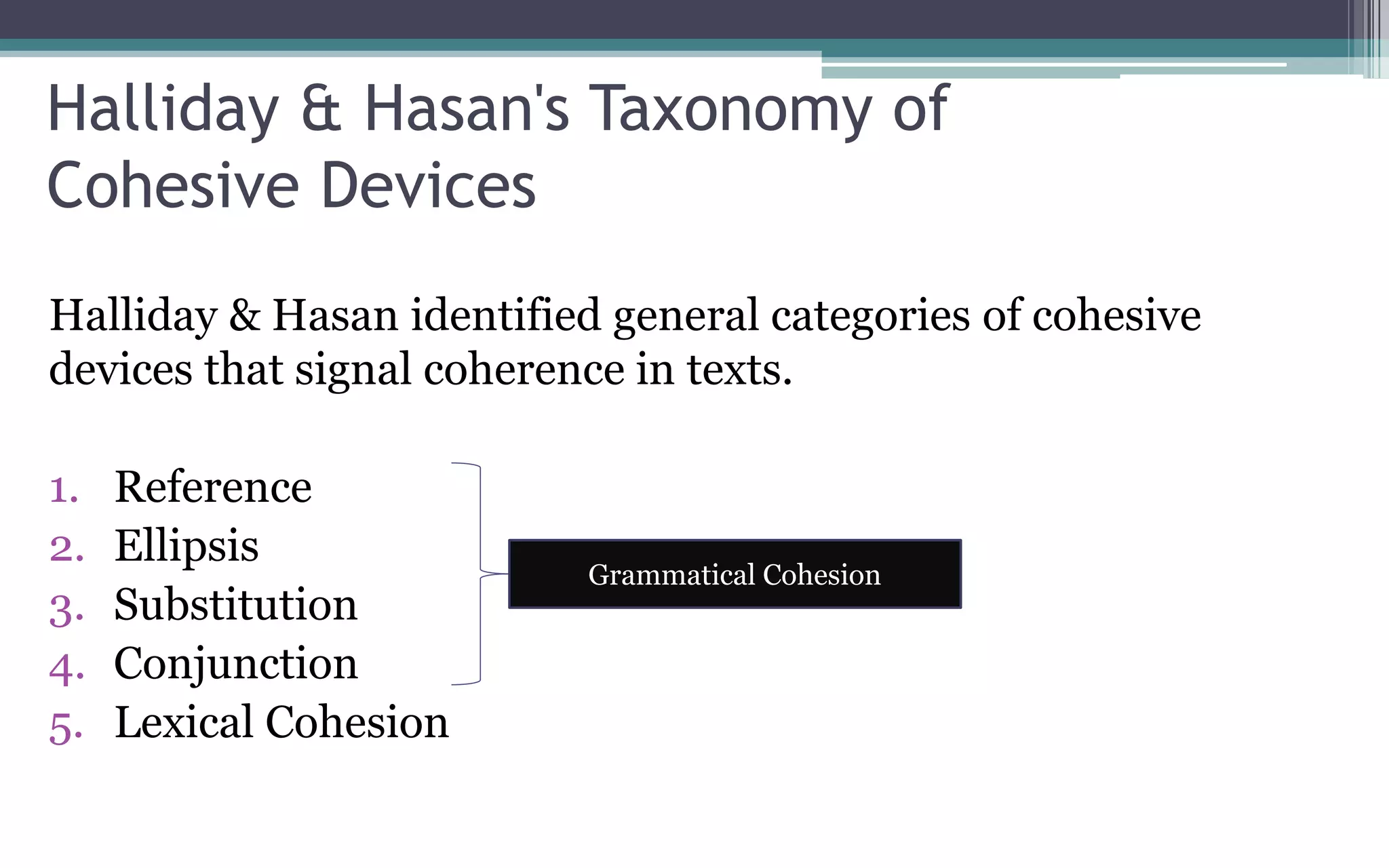
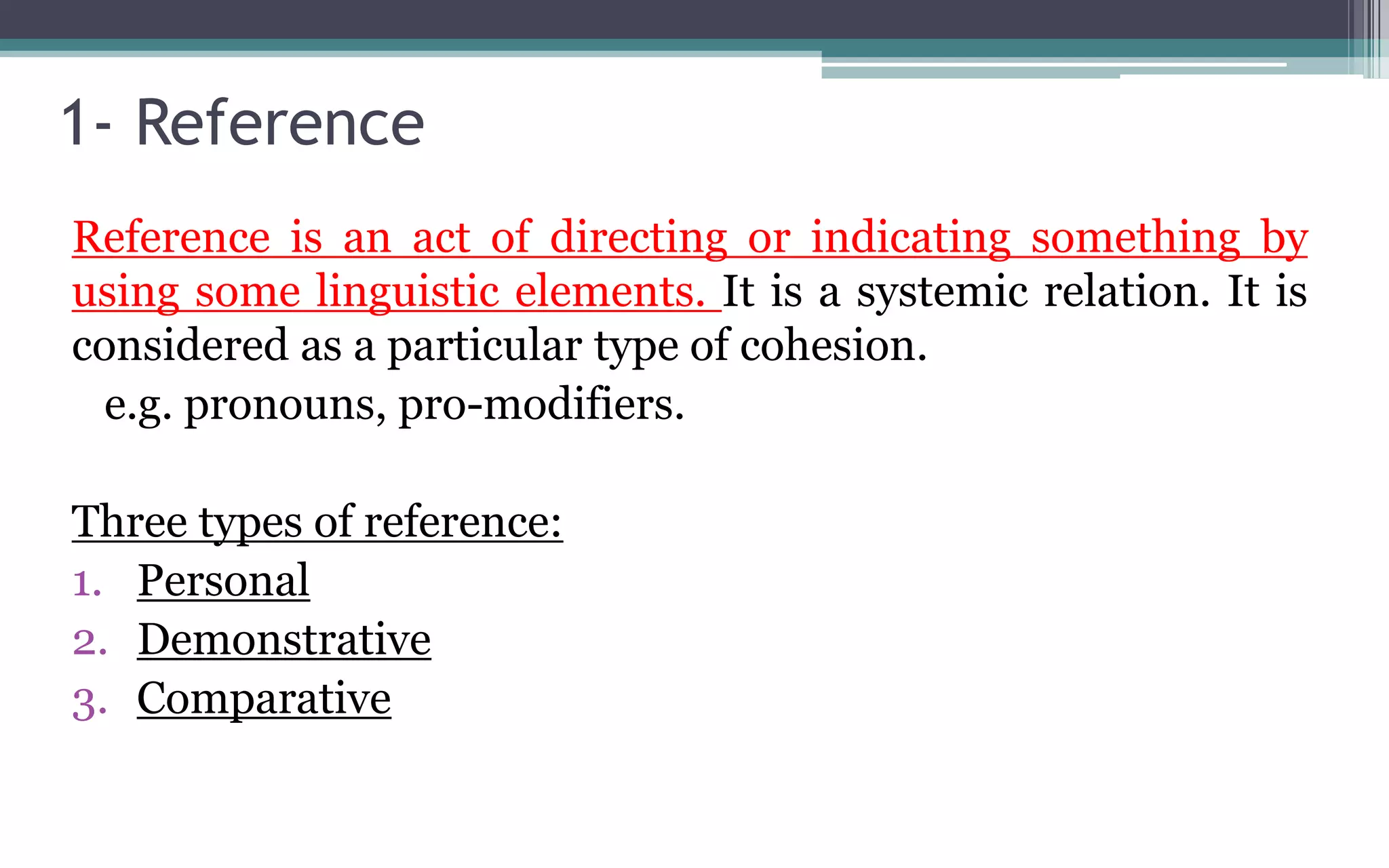
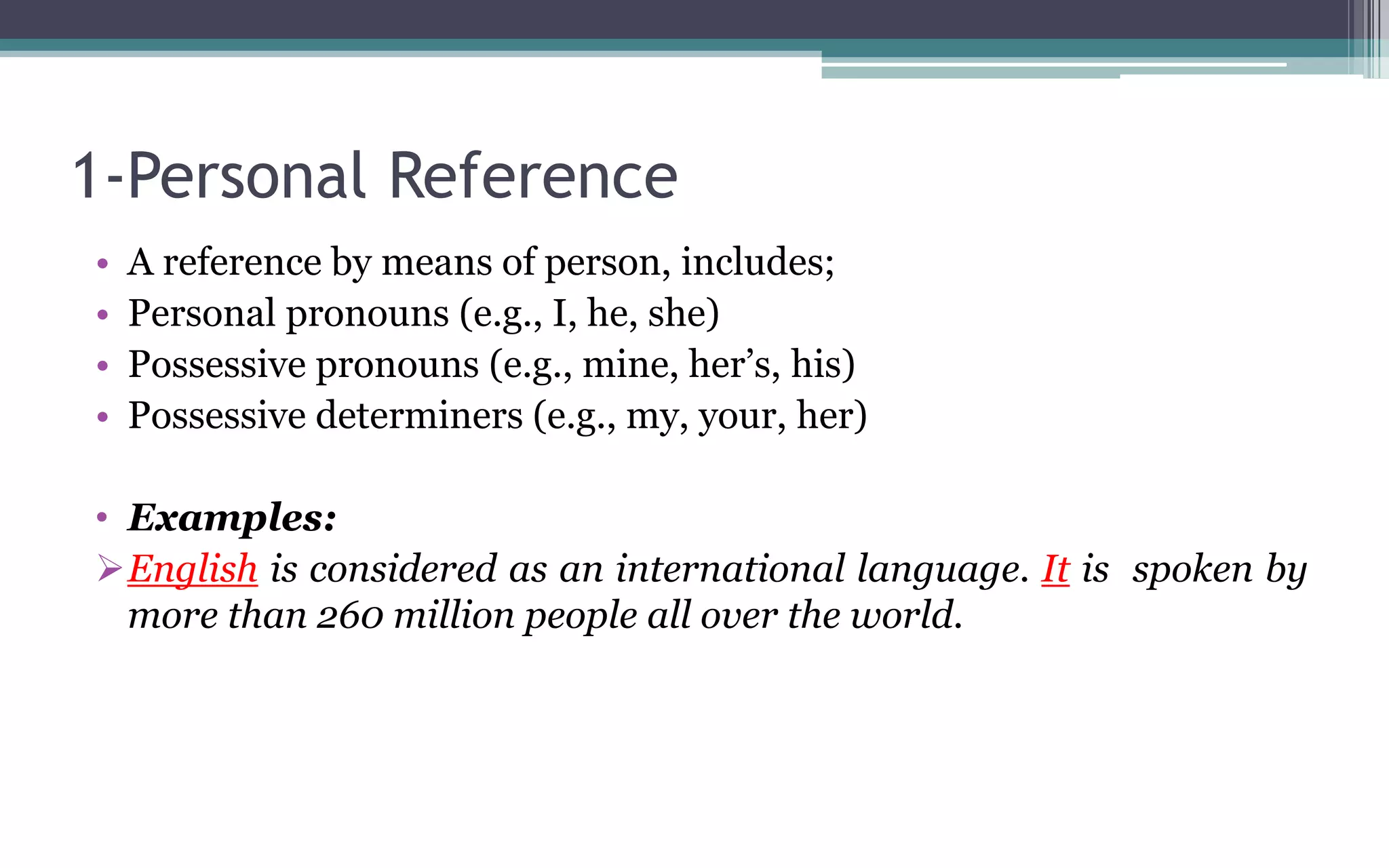
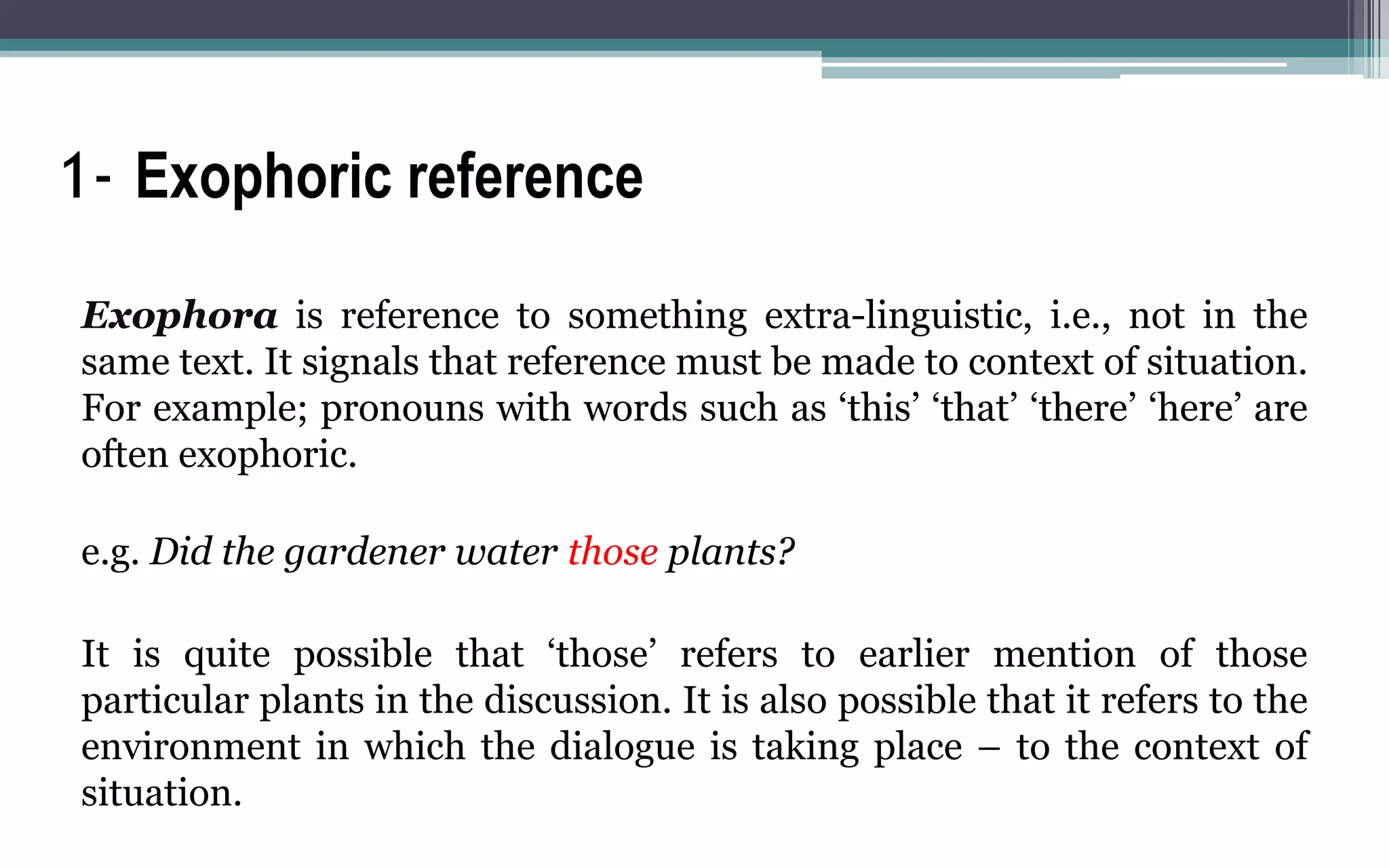
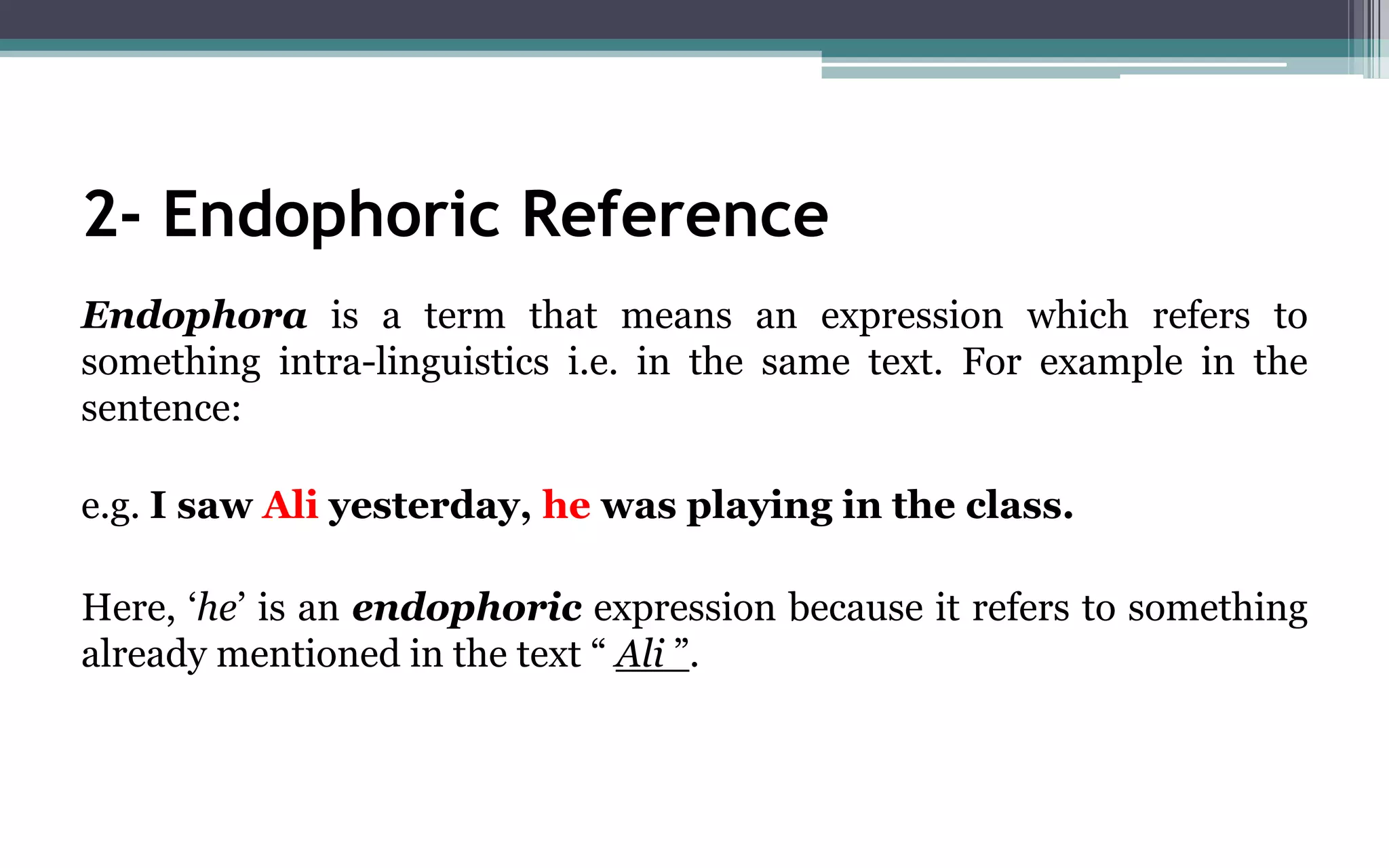
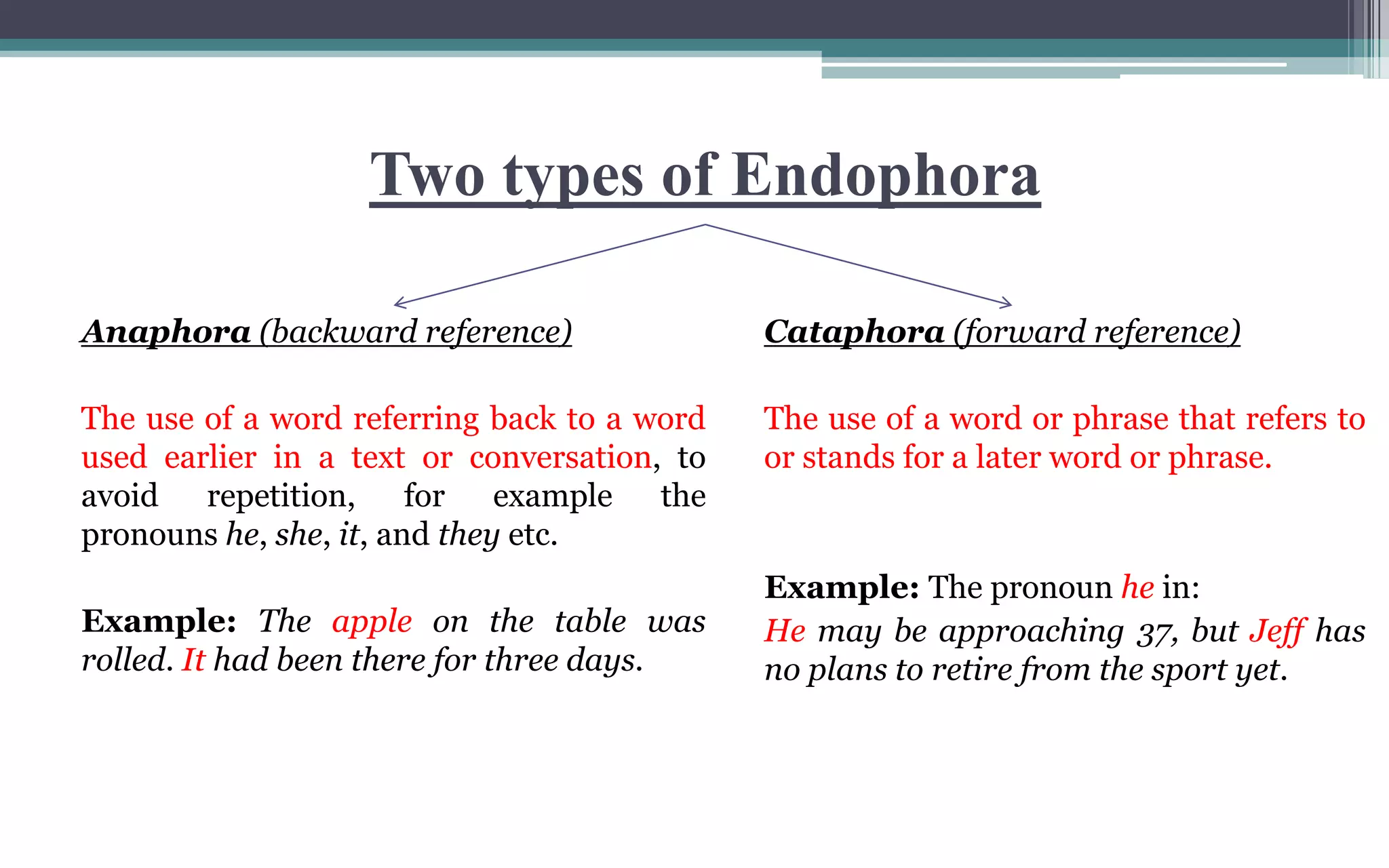
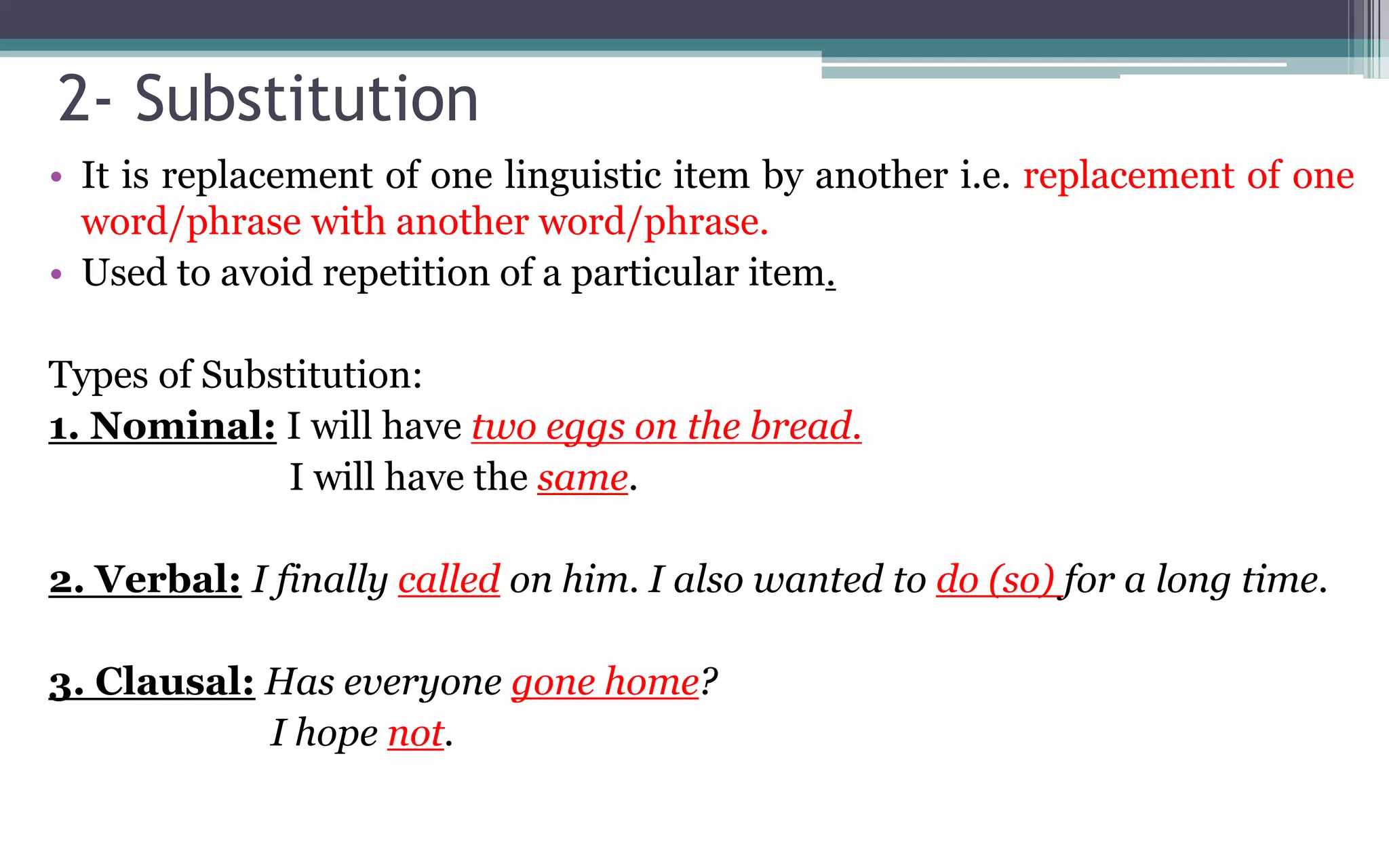
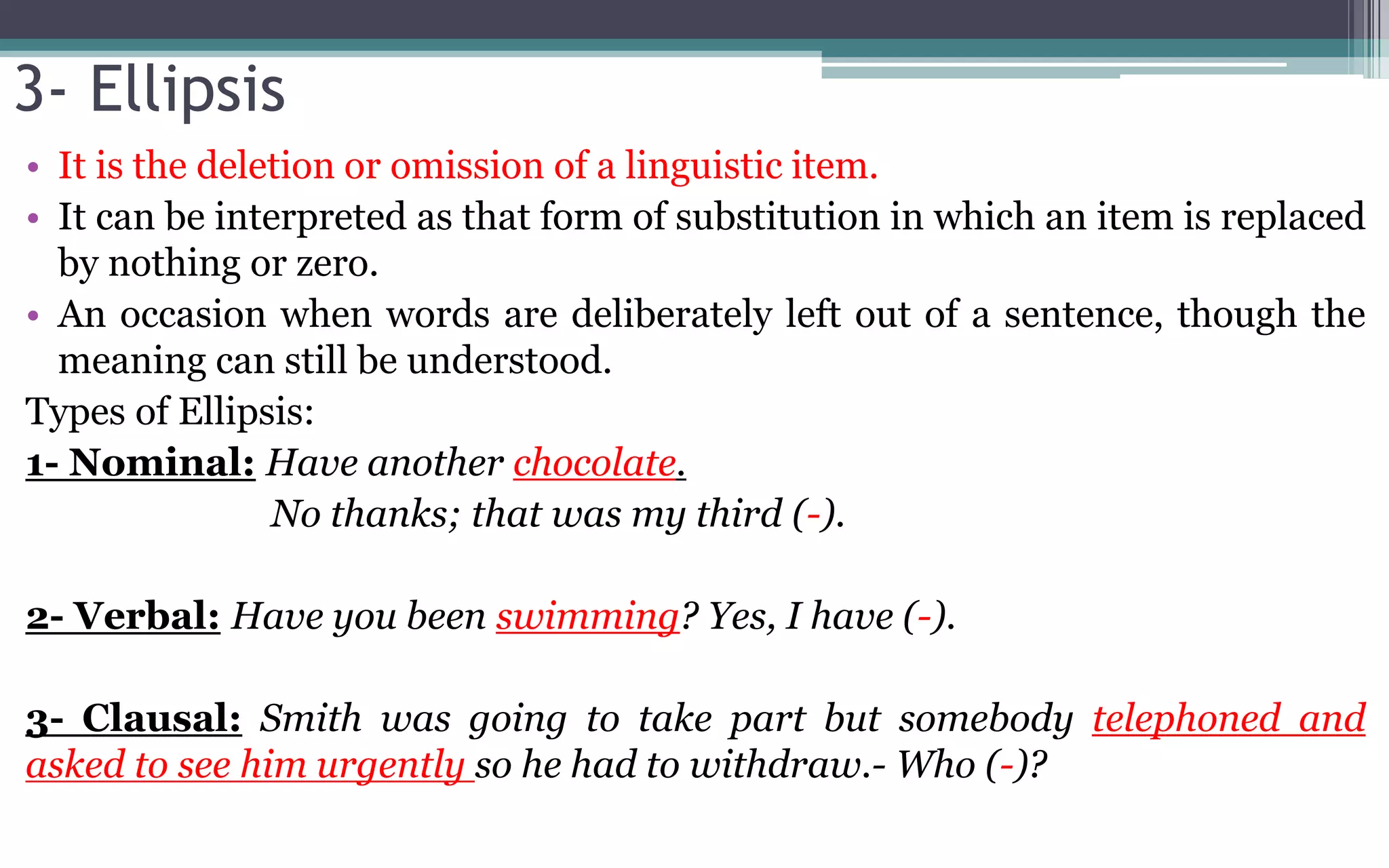
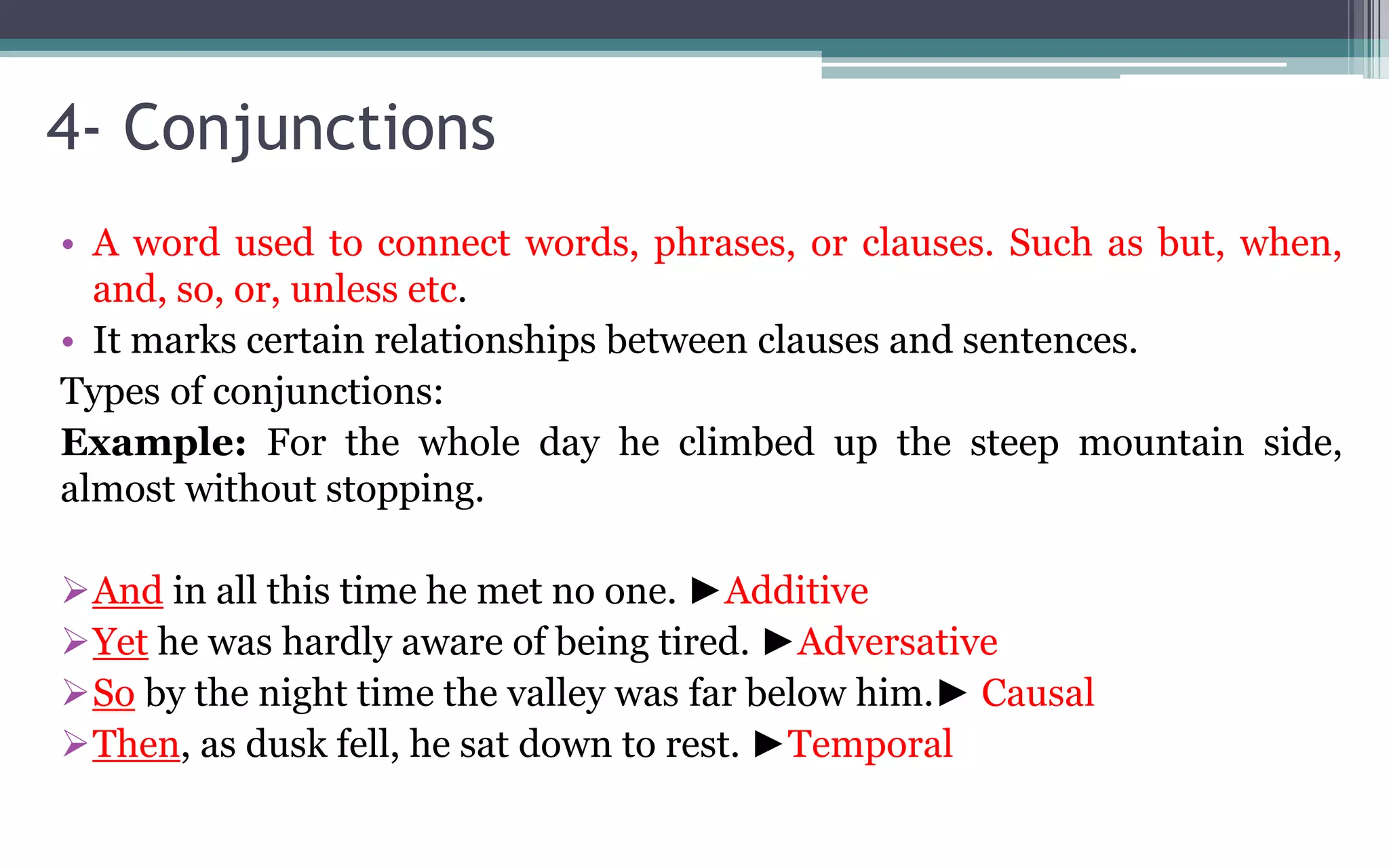
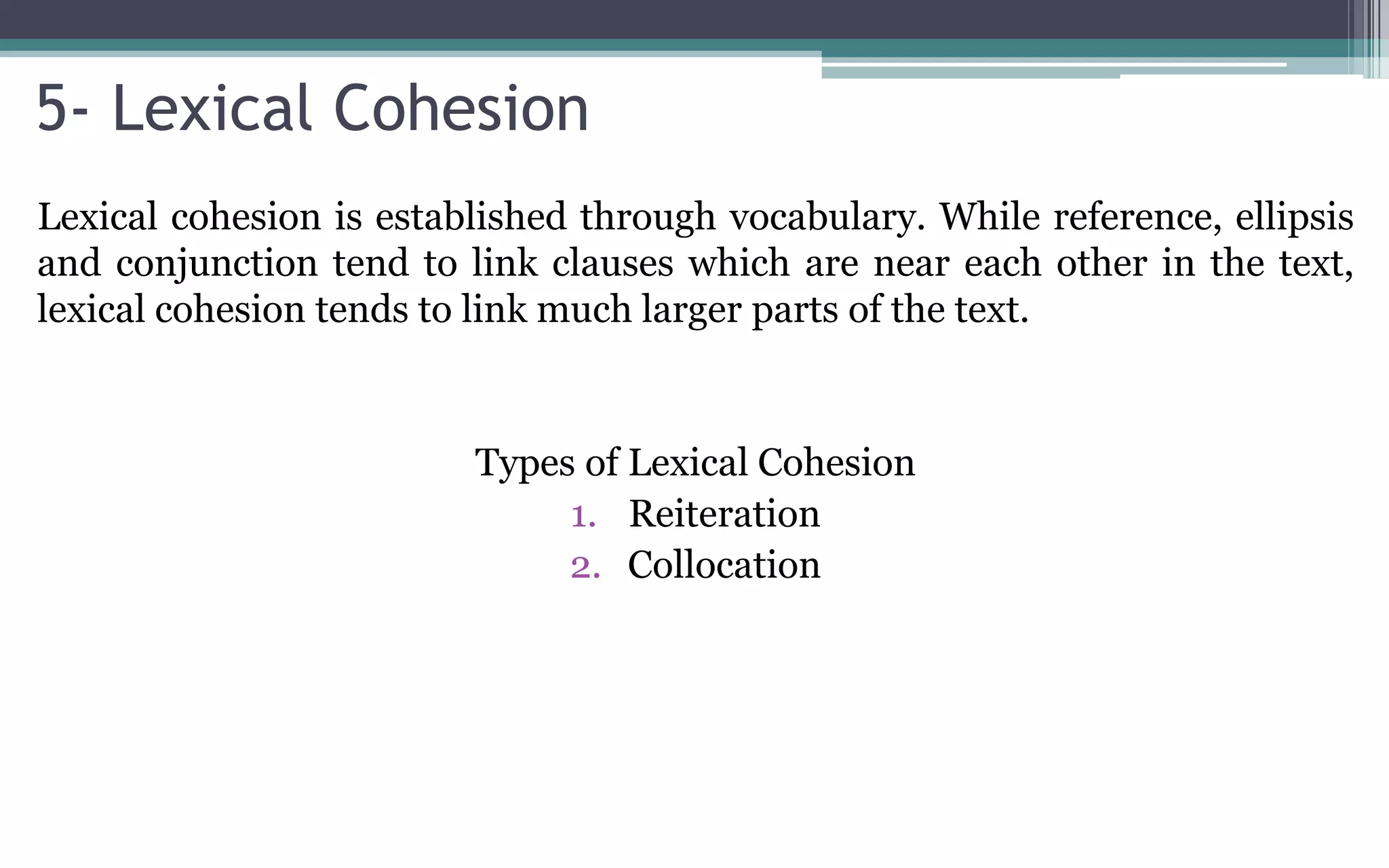
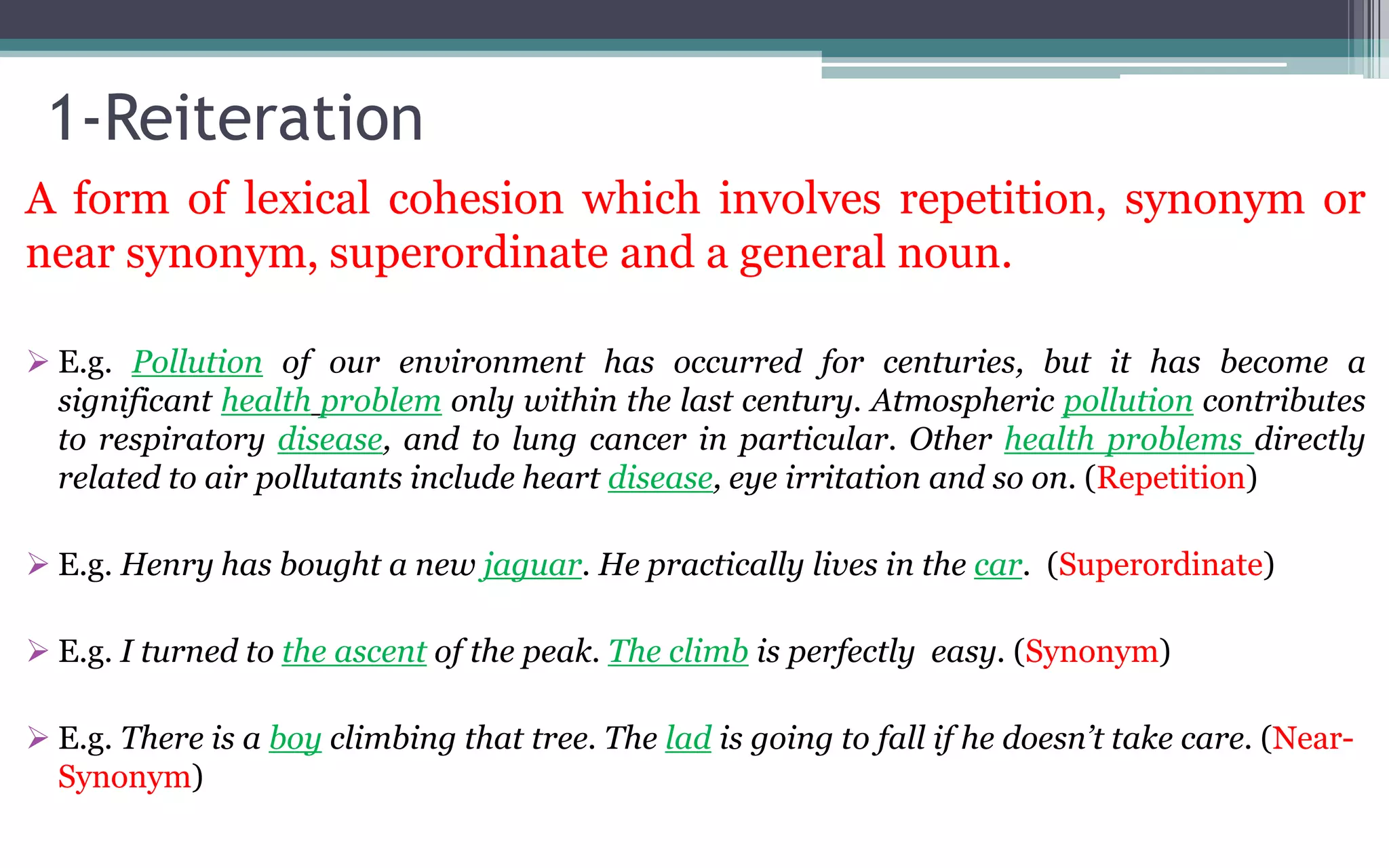
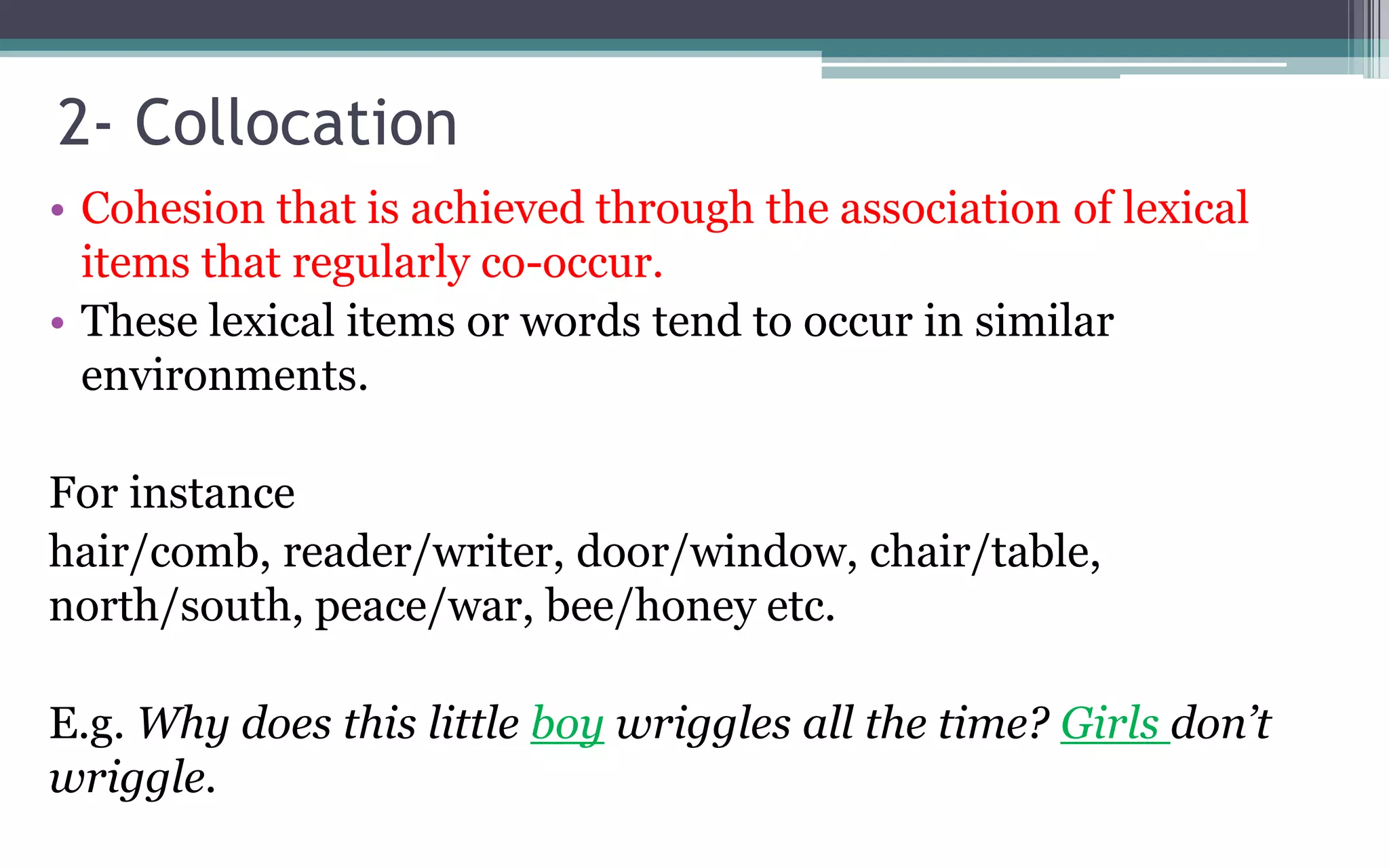


Cohesion and coherence are essential properties of written texts that aid readability and communication of ideas. Cohesion refers to the grammatical and lexical links between elements of a text, while coherence is the semantic unity between ideas. Some techniques that create cohesion and coherence include reference, substitution, ellipsis, conjunctions, and lexical repetition. Together, cohesion and coherence allow readers to understand a text as a unified whole rather than a disjointed set of sentences.


