Coaching
• Apply techniques and demonstrate the qualities
required to be an effective coach/coachee
• Recognise and start implementing coaching models,
tools and techniques in your day to day interactions
• Understand how and when a coaching approach
can be effective.
2
Session Objectives
1. What is coaching?
2. What's the difference between coaching and
mentoring?
3. When would you use/apply it?
4. What does an effective coach do?
(demonstrate/behave?)
Think about...
3
What is Coaching .......
• essentially a non-directive form of development
• focuses on improving performance and developing
individuals’ skills
• personal issues may be discussed - but the
emphasis is on performance at work.
• coaching activities have both organisational and
individual goals
• it provides people with feedback on both their
strengths and their development areas.
• learning a new skill
• problem solving
• delegating work
• leading on a project
• performance
• motivating staff
• increasing potential
awareness
Use/apply it when...
• improving working
relationships
• time management
• work/life balance
• team building
• career development
5
What makes an effective coach?
• Supportive
• Encouraging
• Non-judgemental
• Interested
• Focused
• Patient
• Active listening - summarising,
asking questions to seek
clarification
• Attentive
• Trusting
• Explorative
• Respectful
• Perceptive
• Objective
Typical Behaviours/characteristics:
6
What makes an effective coach?
When you coach you:
 guide individuals and together work out a solution
 tailor your help and style to suit the needs of the individual
 actively involve those being coached in the process - and
encourage others to provide feedback on the individual's progress
 encourage a range of alternative methods to try out
 discuss the coachees’ ideas
 allow the coachee to be more in control of the pace
 encourage what they learn is transferred back into the work place
7
What things should you avoid doing?
 Ask lots of question at once?
 Ask leading questions (e.g. would it be a good idea to...?')
 Ignore the signals people are sending with their body language
 Panic! if people do not respond immediately (silence is powerful)
 Become accusatory (e.g. why on earth would you do it that way?)
 Ask closed questions that close down the dialogue
 Ask open questions that lead to further dialogue without action
8
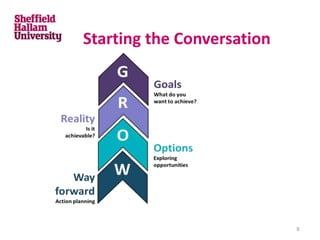
Starting the Conversation
9
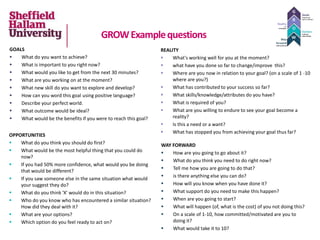
GOALS
 What do you want to achieve?
 What is important to you right now?
 What would you like to get from the next 30 minutes?
 What are you working on at the moment?
 What new skill do you want to explore and develop?
 How can you word this goal using positive language?
 Describe your perfect world.
 What outcome would be ideal?
 What would be the benefits if you were to reach this goal?
GROWExamplequestions
REALITY
 What's working well for you at the moment?
 what have you done so far to change/improve this?
 Where are you now in relation to your goal? (on a scale of 1 -10
where are you?)
 What has contributed to your success so far?
 What skills/knowledge/attributes do you have?
 What is required of you?
 What are you willing to endure to see your goal become a
reality?
 Is this a need or a want?
 What has stopped you from achieving your goal thus far?
OPPORTUNITIES
 What do you think you should do first?
 What would be the most helpful thing that you could do
now?
 If you had 50% more confidence, what would you be doing
that would be different?
 If you saw someone else in the same situation what would
your suggest they do?
 What do you think 'X' would do in this situation?
 Who do you know who has encountered a similar situation?
How did they deal with it?
 What are your options?
 Which option do you feel ready to act on?
WAY FORWARD
 How are you going to go about it?
 What do you think you need to do right now?
 Tell me how you are going to do that?
 is there anything else you can do?
 How will you know when you have done it?
 What support do you need to make this happen?
 When are you going to start?
 What will happen (of, what is the cost) of you not doing this?
 On a scale of 1-10, how committed/motivated are you to
doing it?
 What would take it to 10?
Thank you!
Any questions?
11

Coaching - Richard Hughes

  • 1.
  • 2.
    • Apply techniquesand demonstrate the qualities required to be an effective coach/coachee • Recognise and start implementing coaching models, tools and techniques in your day to day interactions • Understand how and when a coaching approach can be effective. 2 Session Objectives
  • 3.
    1. What iscoaching? 2. What's the difference between coaching and mentoring? 3. When would you use/apply it? 4. What does an effective coach do? (demonstrate/behave?) Think about... 3
  • 4.
    What is Coaching....... • essentially a non-directive form of development • focuses on improving performance and developing individuals’ skills • personal issues may be discussed - but the emphasis is on performance at work. • coaching activities have both organisational and individual goals • it provides people with feedback on both their strengths and their development areas.
  • 5.
    • learning anew skill • problem solving • delegating work • leading on a project • performance • motivating staff • increasing potential awareness Use/apply it when... • improving working relationships • time management • work/life balance • team building • career development 5
  • 6.
    What makes aneffective coach? • Supportive • Encouraging • Non-judgemental • Interested • Focused • Patient • Active listening - summarising, asking questions to seek clarification • Attentive • Trusting • Explorative • Respectful • Perceptive • Objective Typical Behaviours/characteristics: 6
  • 7.
    What makes aneffective coach? When you coach you:  guide individuals and together work out a solution  tailor your help and style to suit the needs of the individual  actively involve those being coached in the process - and encourage others to provide feedback on the individual's progress  encourage a range of alternative methods to try out  discuss the coachees’ ideas  allow the coachee to be more in control of the pace  encourage what they learn is transferred back into the work place 7
  • 8.
    What things shouldyou avoid doing?  Ask lots of question at once?  Ask leading questions (e.g. would it be a good idea to...?')  Ignore the signals people are sending with their body language  Panic! if people do not respond immediately (silence is powerful)  Become accusatory (e.g. why on earth would you do it that way?)  Ask closed questions that close down the dialogue  Ask open questions that lead to further dialogue without action 8
  • 9.
  • 10.
    GOALS  What doyou want to achieve?  What is important to you right now?  What would you like to get from the next 30 minutes?  What are you working on at the moment?  What new skill do you want to explore and develop?  How can you word this goal using positive language?  Describe your perfect world.  What outcome would be ideal?  What would be the benefits if you were to reach this goal? GROWExamplequestions REALITY  What's working well for you at the moment?  what have you done so far to change/improve this?  Where are you now in relation to your goal? (on a scale of 1 -10 where are you?)  What has contributed to your success so far?  What skills/knowledge/attributes do you have?  What is required of you?  What are you willing to endure to see your goal become a reality?  Is this a need or a want?  What has stopped you from achieving your goal thus far? OPPORTUNITIES  What do you think you should do first?  What would be the most helpful thing that you could do now?  If you had 50% more confidence, what would you be doing that would be different?  If you saw someone else in the same situation what would your suggest they do?  What do you think 'X' would do in this situation?  Who do you know who has encountered a similar situation? How did they deal with it?  What are your options?  Which option do you feel ready to act on? WAY FORWARD  How are you going to go about it?  What do you think you need to do right now?  Tell me how you are going to do that?  is there anything else you can do?  How will you know when you have done it?  What support do you need to make this happen?  When are you going to start?  What will happen (of, what is the cost) of you not doing this?  On a scale of 1-10, how committed/motivated are you to doing it?  What would take it to 10?
  • 11.