Computational and literature
investigation to understand the
mechanism behind the
catalyzed hydrogenation of CO2
- Darrell Nelson
Outline
I. Background
II. Attacking the Problem
III. Metal Oxides
IV. Mechanism
V. Additional Factors
VI. Future Work
Background
 Converting CO2 into useful fuels (i.e. methanol, methane)
 (MTO) Methanol to Olefins (i.e. ethylene, propylene)
 Create CO to be used as syngas
 1$27 billion annual market for ethylene glycol
1. © 2013 Liquid Light Corporation. All rights reserved. | www.llchemical.com
2
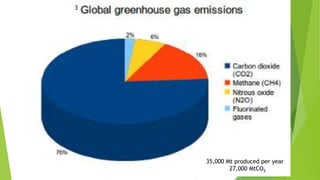
35,000 Mt produced per year
27,000 MtCO2
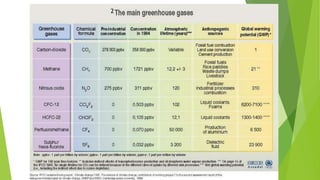
3
Energy Crisis
 Over 7 billion people in the world
 Depleting energy sources rapidly
 Economies of both China and India are growing
 Creating scarcity of natural resources
2 problems 1 solution
 Hydrogenation of CO2 instead of sequestration
 Stops emissions and provides very cheap fuel can be used again and again
Attacking the problem
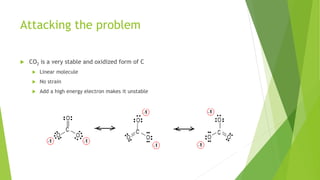
 CO2 is a very stable and oxidized form of C
 Linear molecule
 No strain
 Add a high energy electron makes it unstable
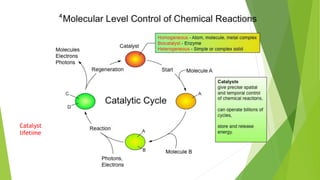
Catalyst
lifetime
4
How to unravel this complex system?
𝐴 + 𝐵 𝐴𝐵
CAT
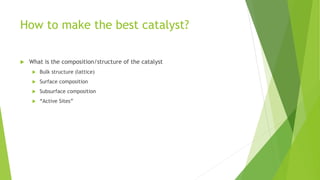
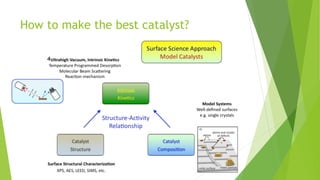
How to make the best catalyst?
 What is the composition/structure of the catalyst
 Bulk structure (lattice)
 Surface composition
 Subsurface composition
 “Active Sites”
How to make the best catalyst?
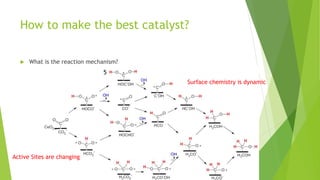
 What is the reaction mechanism?
Surface chemistry is dynamic
Active Sites are changing
5
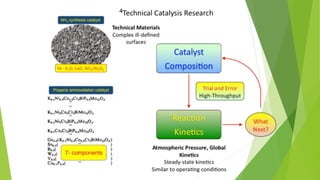
How to make the best catalyst?
4
4
Metal Oxides (Chosen catalyst)
 e.g. (Al2O3, SiO2)
 High surface area
 Very stable under usual chemical reaction conditions
 Reduced metal oxides (i.e. CuO, Ce2O) that can change their oxidation states
and have vacancies in their structure upon release/storage of oxygen
 Diffusion from the bulk
4
Optimization Problem
Keeping the reactivity high involves not changing the catalyst. But, reactivity
means that the catalyst is unstable and willing to change.
Using an industrial high-throughput approach to find the maximum between
lifetime and reactivity
What is the chemistry?
 As you can see from previous slides Surface properties of the catalyst are the most important
(e.g. solid acid/base)
 CO2 is a Lewis acid
 Look at materials that are willing to donate electrons
 Low valent ion oxides are preferred
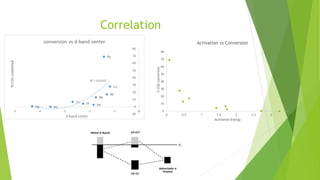
Correlation
0
10
20
30
40
50
60
70
80
0 0.5 1 1.5 2 2.5 3 3.5
%CO2conversion
Activation Energy
Activation vs Conversion
Statistical Analysis
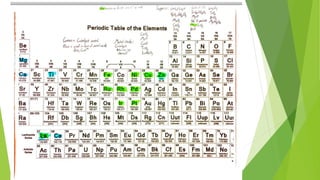
 Highest conversion came from Ni and Fe
 46 out of 287 Ni, 34 out of 287 Fe
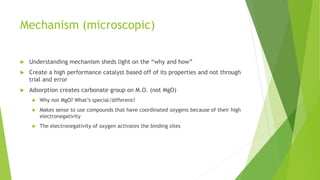
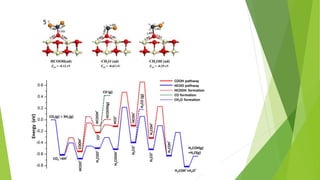
Mechanism (microscopic)
 Understanding mechanism sheds light on the “why and how”
 Create a high performance catalyst based off of its properties and not through
trial and error
 Adsorption creates carbonate group on M.O. (not MgO)
 Why not MgO? What’s special/different?
 Makes sense to use compounds that have coordinated oxygens because of their high
electronegativity
 The electronegativity of oxygen activates the binding sites
5
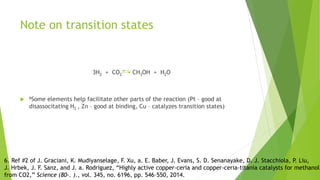
Note on transition states
3H2 + CO2 CH3OH + H2O
 6Some elements help facilitate other parts of the reaction (Pt – good at
disassocitating H2 , Zn – good at binding, Cu – catalyzes transition states)
6. Ref #2 of J. Graciani, K. Mudiyanselage, F. Xu, a. E. Baber, J. Evans, S. D. Senanayake, D. J. Stacchiola, P. Liu,
J. Hrbek, J. F. Sanz, and J. a. Rodriguez, “Highly active copper-ceria and copper-ceria-titania catalysts for methanol
from CO2,” Science (80-. )., vol. 345, no. 6196, pp. 546–550, 2014.
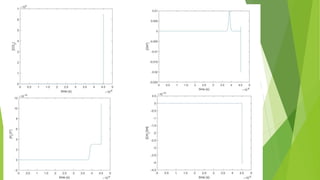
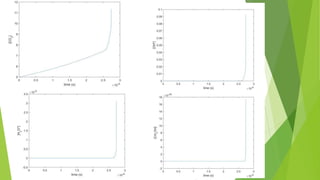
Analyzing hydrogenation of CO2 on ceria
% use ode45 first and then compare to ode15s, this is a 'stiff' problem
% (concentrations are changing at different time scales) so I want to
% measure the accuracy between the two
x0=0; xf=40; %start at time zero and go for 40 seconds
%assume 1:1 molar ratio of CO2 and H2 with the number active sites being 7
y0=[5 0 0 0 0 0 0 0 0 0 0 0 0 0 0 0 0 0 0 0 0 0 5 0 5]; %last point is active sites
options = odeset('RelTol',1e-3,'NonNegative',ones(25,1));
[x,y] = ode15s(@f,[x0 xf],y0,options);
%plot methanol as a function of time
figure
plot(x,y(:,19))
xlabel('time (s)')
ylabel('[CH_3OH]')
%plot adsorbed hrdroxyl
figure
plot(x,y(:,20))
xlabel('time (s)')
ylabel('[OH*]')
%adsorbed water
figure
plot(x,y(:,21))
xlabel('time (s)')
function dC = f(~,y)
% all rate constants are in INVERSE SECONDS
global ratesk
load myparam
% ratesk = [1.95e4 3.23e1
% 2.67e4 5.19e4
% 6.31e3 3.13e5
% 3.11e1 1.78e2
% 2.17e3 4.21e3
% 1.02e1 3.57e3
% 4.24e6 3.82e6
% 3.82e-3 1.31e-2
% 7.33e-4 5.41e-5
% 6.55e-2 8.21e-4
% 3.91e4 3.55e2
% 5.11e3 8.26e5
% 7.63e3 5.19e2
% 4.55e-4 1.98e-2
% 1.02e1 2.82e3
% 3.76e1 5.43e-1
% 9.21 2.13e-1
% 8.33e1 4.08e2
% 5.91e-3 3.41e-5
% 7.32e2 2.45e2
% 5.89e1 2.87e1];
Additional Factors
 Treatments (a priori)
 Incipient wetness method, reverse microemulsion (RM), coprecipitation and
impregnation
 Dopants and deposits
 Varying temperature and pressure a priori and/or in situ
 Thermodynamic and kinetic effects
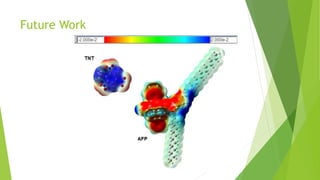
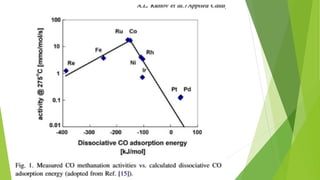
Future Work
 Comparing catalysts from database
 Mapping and understanding the change in electron density as CO2 is adsorbed onto surface and
converted
 Plot activity, activation energy and adsorption energy vs d-band center
 Machine Learning
 Understand Transition State Theory and recalculate k’s
Future Work
Machine Learning
 Supervised Learning
 Using gradient descent to maximize
specified characteristics (θ0, θ1 are independent variables)
Machine Learning
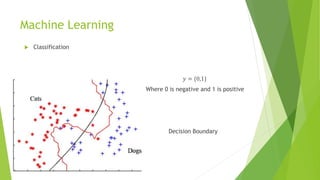
 Classification
𝑦 = {0,1}
Where 0 is negative and 1 is positive
Decision Boundary
Machine Learning
Questions?
Works Cited
1. © 2013 Liquid Light Corporation. All rights reserved. | www.llchemical.com
2. UNEP, Introduction to Climate Change
http://www.grida.no/climate/vital/05.htm
3. Global greenhouse gas emissions (2012), International Energy Agency.
4. Dr. John T. Gleaves – received on December 2, 2015
5. Lo, C.; Cheng, Zhuo. EECE Washington University
6. Ref #2 of J. Graciani, K. Mudiyanselage, F. Xu, a. E. Baber, J. Evans, S. D. Senanayake, D. J. Stacchiola, P. Liu,
J. Hrbek, J. F. Sanz, and J. a. Rodriguez, “Highly active copper-ceria and copper-ceria-titania catalysts for
methanol synthesis from CO2,” Science (80-. )., vol. 345, no. 6196, pp. 546–550, 2014.

CO2 Presentation

  • 1.
    Computational and literature investigationto understand the mechanism behind the catalyzed hydrogenation of CO2 - Darrell Nelson
  • 2.
    Outline I. Background II. Attackingthe Problem III. Metal Oxides IV. Mechanism V. Additional Factors VI. Future Work
  • 3.
    Background  Converting CO2into useful fuels (i.e. methanol, methane)  (MTO) Methanol to Olefins (i.e. ethylene, propylene)  Create CO to be used as syngas  1$27 billion annual market for ethylene glycol 1. © 2013 Liquid Light Corporation. All rights reserved. | www.llchemical.com
  • 4.
  • 5.
    35,000 Mt producedper year 27,000 MtCO2 3
  • 6.
    Energy Crisis  Over7 billion people in the world  Depleting energy sources rapidly  Economies of both China and India are growing  Creating scarcity of natural resources
  • 7.
    2 problems 1solution  Hydrogenation of CO2 instead of sequestration  Stops emissions and provides very cheap fuel can be used again and again
  • 8.
    Attacking the problem CO2 is a very stable and oxidized form of C  Linear molecule  No strain  Add a high energy electron makes it unstable
  • 9.
  • 10.
    How to unravelthis complex system? 𝐴 + 𝐵 𝐴𝐵 CAT
  • 11.
    How to makethe best catalyst?  What is the composition/structure of the catalyst  Bulk structure (lattice)  Surface composition  Subsurface composition  “Active Sites”
  • 12.
    How to makethe best catalyst?  What is the reaction mechanism? Surface chemistry is dynamic Active Sites are changing 5
  • 13.
    How to makethe best catalyst? 4
  • 14.
  • 15.
    Metal Oxides (Chosencatalyst)  e.g. (Al2O3, SiO2)  High surface area  Very stable under usual chemical reaction conditions  Reduced metal oxides (i.e. CuO, Ce2O) that can change their oxidation states and have vacancies in their structure upon release/storage of oxygen  Diffusion from the bulk
  • 16.
  • 17.
    Optimization Problem Keeping thereactivity high involves not changing the catalyst. But, reactivity means that the catalyst is unstable and willing to change. Using an industrial high-throughput approach to find the maximum between lifetime and reactivity
  • 19.
    What is thechemistry?  As you can see from previous slides Surface properties of the catalyst are the most important (e.g. solid acid/base)  CO2 is a Lewis acid  Look at materials that are willing to donate electrons  Low valent ion oxides are preferred
  • 21.
    Correlation 0 10 20 30 40 50 60 70 80 0 0.5 11.5 2 2.5 3 3.5 %CO2conversion Activation Energy Activation vs Conversion
  • 22.
    Statistical Analysis  Highestconversion came from Ni and Fe  46 out of 287 Ni, 34 out of 287 Fe
  • 23.
    Mechanism (microscopic)  Understandingmechanism sheds light on the “why and how”  Create a high performance catalyst based off of its properties and not through trial and error  Adsorption creates carbonate group on M.O. (not MgO)  Why not MgO? What’s special/different?  Makes sense to use compounds that have coordinated oxygens because of their high electronegativity  The electronegativity of oxygen activates the binding sites
  • 24.
  • 25.
    Note on transitionstates 3H2 + CO2 CH3OH + H2O  6Some elements help facilitate other parts of the reaction (Pt – good at disassocitating H2 , Zn – good at binding, Cu – catalyzes transition states) 6. Ref #2 of J. Graciani, K. Mudiyanselage, F. Xu, a. E. Baber, J. Evans, S. D. Senanayake, D. J. Stacchiola, P. Liu, J. Hrbek, J. F. Sanz, and J. a. Rodriguez, “Highly active copper-ceria and copper-ceria-titania catalysts for methanol from CO2,” Science (80-. )., vol. 345, no. 6196, pp. 546–550, 2014.
  • 26.
  • 29.
    % use ode45first and then compare to ode15s, this is a 'stiff' problem % (concentrations are changing at different time scales) so I want to % measure the accuracy between the two x0=0; xf=40; %start at time zero and go for 40 seconds %assume 1:1 molar ratio of CO2 and H2 with the number active sites being 7 y0=[5 0 0 0 0 0 0 0 0 0 0 0 0 0 0 0 0 0 0 0 0 0 5 0 5]; %last point is active sites options = odeset('RelTol',1e-3,'NonNegative',ones(25,1)); [x,y] = ode15s(@f,[x0 xf],y0,options); %plot methanol as a function of time figure plot(x,y(:,19)) xlabel('time (s)') ylabel('[CH_3OH]') %plot adsorbed hrdroxyl figure plot(x,y(:,20)) xlabel('time (s)') ylabel('[OH*]') %adsorbed water figure plot(x,y(:,21)) xlabel('time (s)')
  • 30.
    function dC =f(~,y) % all rate constants are in INVERSE SECONDS global ratesk load myparam % ratesk = [1.95e4 3.23e1 % 2.67e4 5.19e4 % 6.31e3 3.13e5 % 3.11e1 1.78e2 % 2.17e3 4.21e3 % 1.02e1 3.57e3 % 4.24e6 3.82e6 % 3.82e-3 1.31e-2 % 7.33e-4 5.41e-5 % 6.55e-2 8.21e-4 % 3.91e4 3.55e2 % 5.11e3 8.26e5 % 7.63e3 5.19e2 % 4.55e-4 1.98e-2 % 1.02e1 2.82e3 % 3.76e1 5.43e-1 % 9.21 2.13e-1 % 8.33e1 4.08e2 % 5.91e-3 3.41e-5 % 7.32e2 2.45e2 % 5.89e1 2.87e1];
  • 31.
    Additional Factors  Treatments(a priori)  Incipient wetness method, reverse microemulsion (RM), coprecipitation and impregnation  Dopants and deposits  Varying temperature and pressure a priori and/or in situ  Thermodynamic and kinetic effects
  • 32.
    Future Work  Comparingcatalysts from database  Mapping and understanding the change in electron density as CO2 is adsorbed onto surface and converted  Plot activity, activation energy and adsorption energy vs d-band center  Machine Learning  Understand Transition State Theory and recalculate k’s
  • 33.
  • 35.
    Machine Learning  SupervisedLearning  Using gradient descent to maximize specified characteristics (θ0, θ1 are independent variables)
  • 36.
    Machine Learning  Classification 𝑦= {0,1} Where 0 is negative and 1 is positive Decision Boundary
  • 37.
  • 39.
  • 40.
    Works Cited 1. ©2013 Liquid Light Corporation. All rights reserved. | www.llchemical.com 2. UNEP, Introduction to Climate Change http://www.grida.no/climate/vital/05.htm 3. Global greenhouse gas emissions (2012), International Energy Agency. 4. Dr. John T. Gleaves – received on December 2, 2015 5. Lo, C.; Cheng, Zhuo. EECE Washington University 6. Ref #2 of J. Graciani, K. Mudiyanselage, F. Xu, a. E. Baber, J. Evans, S. D. Senanayake, D. J. Stacchiola, P. Liu, J. Hrbek, J. F. Sanz, and J. a. Rodriguez, “Highly active copper-ceria and copper-ceria-titania catalysts for methanol synthesis from CO2,” Science (80-. )., vol. 345, no. 6196, pp. 546–550, 2014.

Editor's Notes

  • #10 We live in a chemical world. Catalysts provide the means to control chemical reactions. Imagine if we could use CO2 as a feedstock, converting it to any chemical intermediate we might need, and ultimately into an essential material, e.g., nylon.
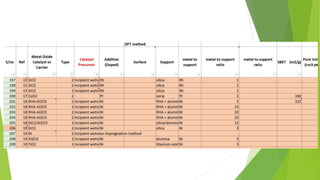
  • #15 There are two leading approaches to this challenge, the surface science approach and the high-throughput approach.