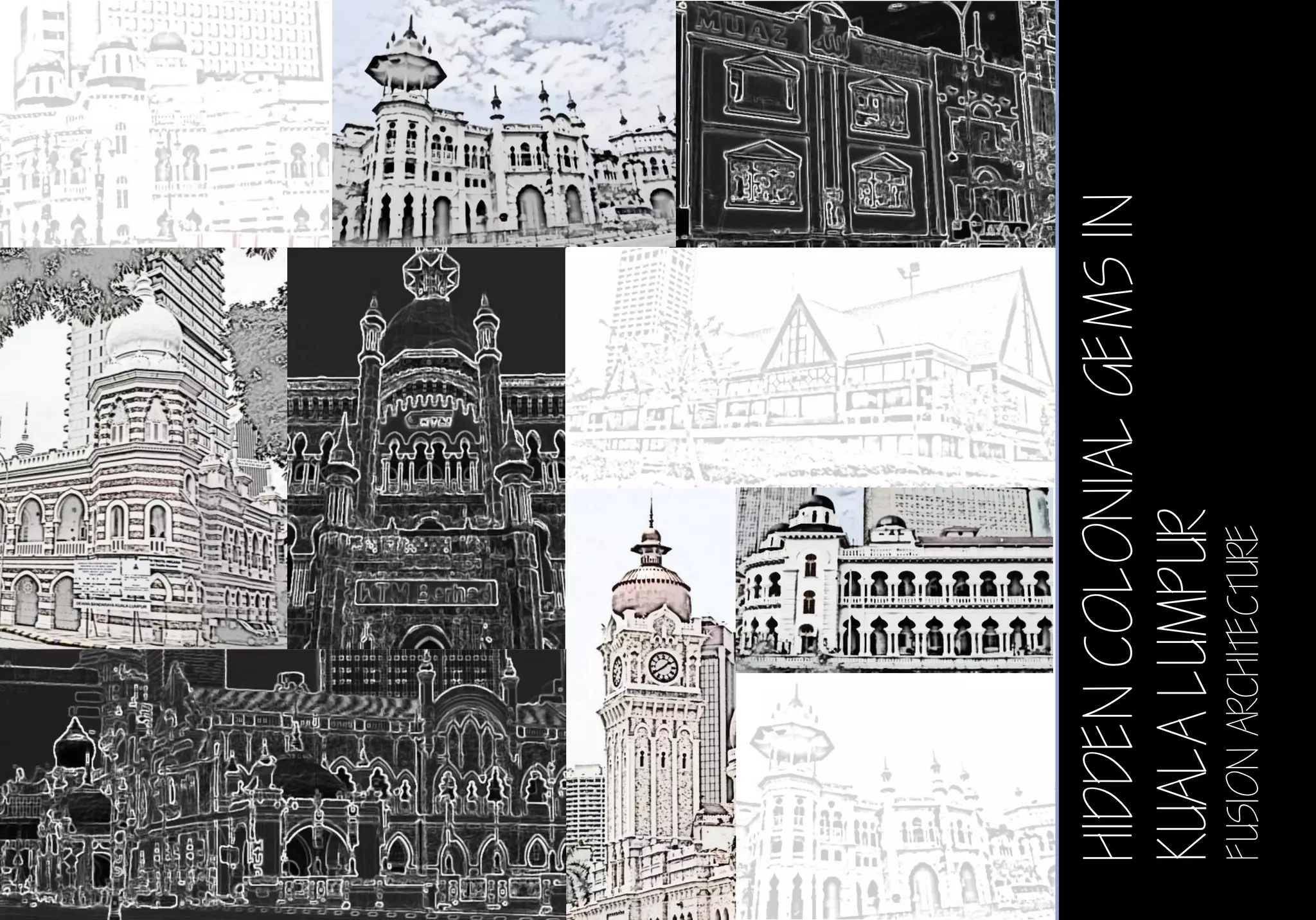
HIDDENCOLONIALGEMSIN
KUALALUMPUR
FUSIONARCHITECTURE
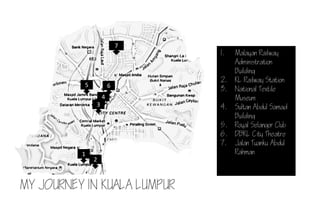
1. Malayan Railway
Administration
Building
2. KL Railway Station
3. National Textile
Museum
4. Sultan Abdul Samad
Building
5. Royal Selangor Club
6. DBKL City Theatre
7. Jalan Tuanku Abdul
Rahman
MY JOURNEY IN KUALA LUMPUR
4
3
5
2
1
6
7
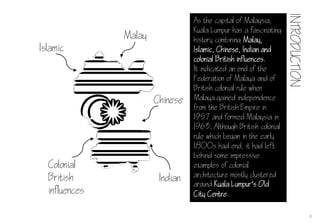
As the capital of Malaysia,
Kuala Lumpur has a fascinating
history combining Malay,
Islamic, Chinese, Indian and
colonial British influences.
It indicated an end of the
Federation of Malaya and of
British colonial rule when
Malaya gained independence
from the British Empire in
1957 and formed Malaysia in
1963. Although British colonial
rule which began in the early
1800s had end, it had left
behind some impressive
examples of colonial
architecture mostly clustered
around Kuala Lumpur‘s Old
City Centre.
Malay
Islamic
Chinese
Indian
Colonial
British
influences
3
INTRODUCTION
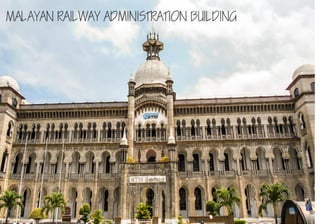
MALAYAN RAILWAY ADMINISTRATION BUILDING
5
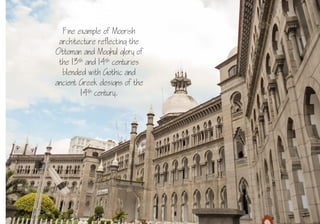
Fine example of Moorish
architecture reflecting the
Ottoman and Moghul glory of
the 13th and 14th centuries
blended with Gothic and
ancient Greek designs of the
14th century.
6
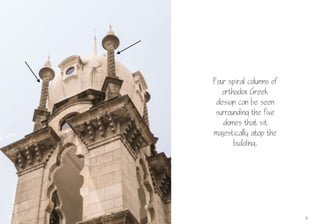
Four spiral columns of
orthodox Greek
design can be seen
surrounding the five
domes that sit
majestically atop the
building.
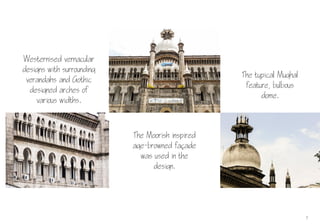
Westernised vernacular
designs with surrounding
verandahs and Gothic
designed arches of
various widths.
7
The Moorish inspired
age-browned faade
was used in the
design.
The typical Mughal
feature, bulbous
dome.
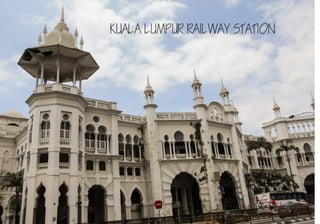
KUALA LUMPUR RAILWAY STATION
9
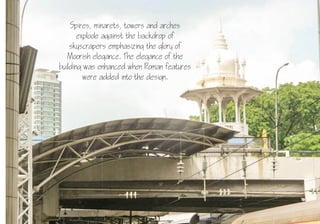
Spires, minarets, towers and arches
explode against the backdrop of
skyscrapers emphasizing the glory of
Moorish elegance. The elegance of the
building was enhanced when Roman features
were added into the design.
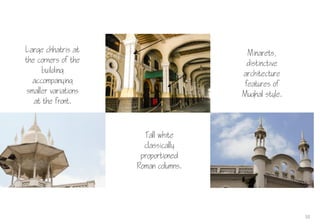
Large chhatris at
the corners of the
building
accompanying
smaller variations
at the front.
10
Tall white
classically
proportioned
Roman columns.
Minarets,
distinctive
architecture
features of
Mughal style.
11
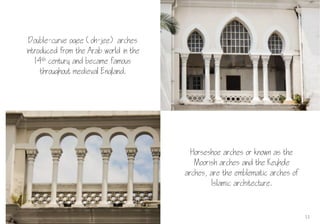
Double-curve ogee (oh-jee) arches
introduced from the Arab world in the
14th century and became famous
throughout medieval England.
Horseshoe arches or known as the
Moorish arches and the Keyhole
arches, are the emblematic arches of
Islamic architecture.
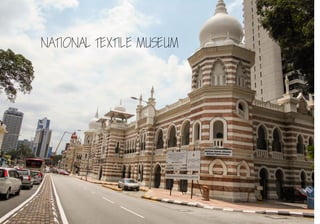
NATIONAL TEXTILE MUSEUM
13
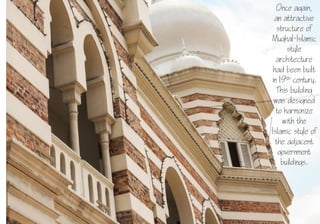
Once again,
an attractive
structure of
Mughal-Islamic
style
architecture
had been built
in 19th century.
This building
was designed
to harmonize
with the
Islamic style of
the adjacent
government
buildings.
14
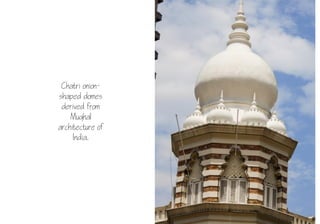
Chatri onion-
shaped domes
derived from
Mughal
architecture of
India.
15
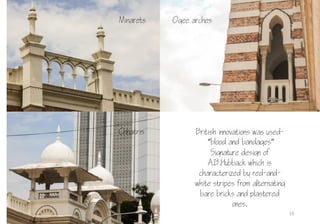
Ogee archesMinarets
Chhatris British innovations was used-
“blood and bandages”
Signature design of
A.B.Hubback which is
characterized by red-and-
white stripes from alternating
bare bricks and plastered
ones.
SULTAN ABDUL SAMAD BUILDING
17
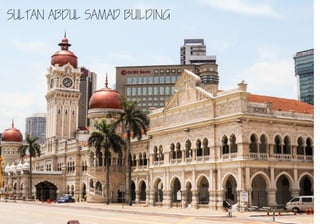
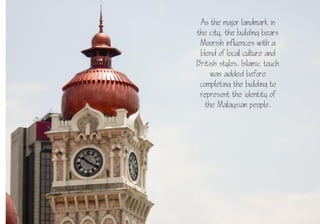
As the major landmark in
the city, the building bears
Moorish influences with a
blend of local culture and
British styles. Islamic touch
was added before
completing the building to
represent the identity of
the Malaysian people.
18
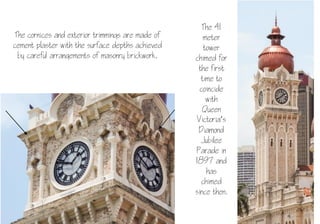
The 41
meter
tower
chimed for
the first
time to
coincide
with
Queen
Victoria’s
Diamond
Jubilee
Parade in
1897 and
has
chimed
since then.
The cornices and exterior trimmings are made of
cement plaster with the surface depths achieved
by careful arrangements of masonry brickwork.
19
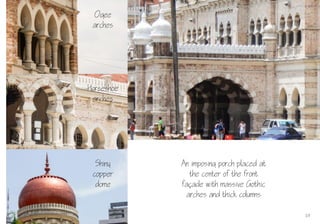
Ogee
arches
Horseshoe
arches
Shiny
copper
dome
An imposing porch placed at
the center of the front
faade with massive Gothic
arches and thick columns
DBKL CITY
THEATRE
21
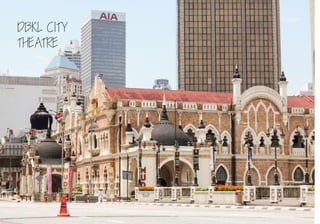
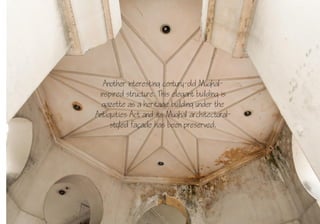
Another interesting century-old Mughal-
inspired structure. This elegant building is
gazette as a heritage building under the
Antiquities Act and its Mughal architectural-
styled faade has been preserved.
22
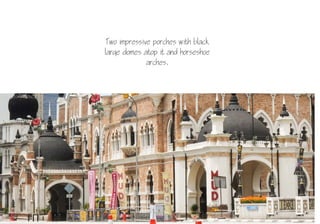
Two impressive porches with black
large domes atop it and horseshoe
arches.
23
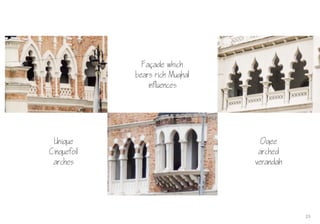
Faade which
bears rich Mughal
influences
Unique
Cinquefoil
arches
Ogee
arched
verandah
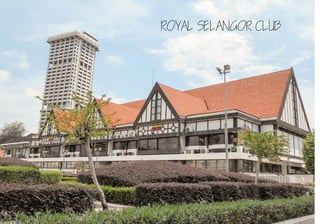
ROYAL SELANGOR CLUB
25
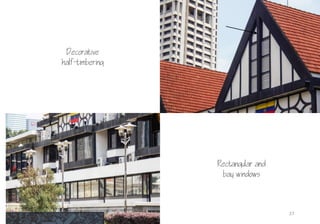
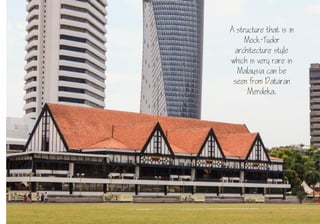
A structure that is in
Mock-Tudor
architecture style
which is very rare in
Malaysia can be
seen from Dataran
Merdeka.
26
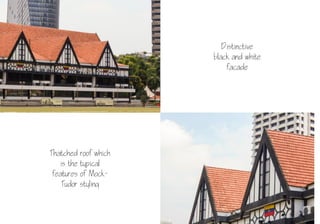
Distinctive
black and white
facade
Thatched roof which
is the typical
features of Mock-
Tudor styling
27
Decorative
half-timbering
Rectangular and
bay windows
JALAN TUANKU ABDUL RAHMAN
29
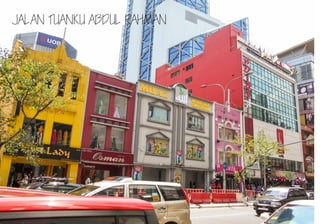
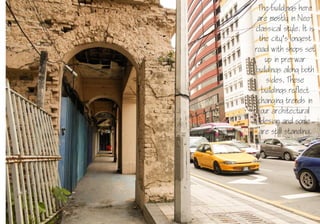
The buildings here
are mostly in Neo-
classical style. It is
the city’s longest
road with shops set
up in pre-war
buildings along both
sides. These
buildings reflect
changing trends in
our architectural
design and some
are still standing.
30
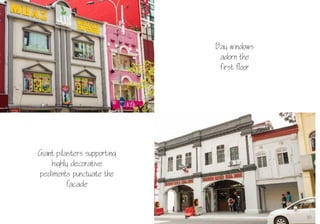
Giant pilasters supporting
highly decorative
pediments punctuate the
facade
Bay windows
adorn the
first floor
31
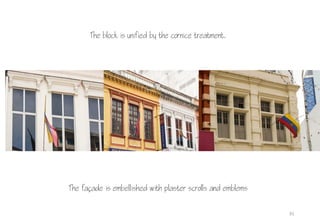
The block is unified by the cornice treatment.
The faade is embellished with plaster scrolls and emblems
AUTHOR:LIMZIAHUEI
PHOTOTAKENBY:AUTHOR
Fusion architecture can be defined as
architecture style that combines culture,
technology, style, shapes and even ‘time’.
Fusion architecture can combines the classic
elements and the modern elements together in
a single structure. Some say fusion
architecture is the combination of beauty and
I totally agree with that. There are no rules
that limit in fusion architecture, creativity
move freely, just like ‘the sky is the only limit
of creativity’. This is why I like fusion
architecture style.

Cnc final

  • 1.
  • 2.
    1. Malayan Railway Administration Building 2.KL Railway Station 3. National Textile Museum 4. Sultan Abdul Samad Building 5. Royal Selangor Club 6. DBKL City Theatre 7. Jalan Tuanku Abdul Rahman MY JOURNEY IN KUALA LUMPUR 4 3 5 2 1 6 7
  • 3.
    As the capitalof Malaysia, Kuala Lumpur has a fascinating history combining Malay, Islamic, Chinese, Indian and colonial British influences. It indicated an end of the Federation of Malaya and of British colonial rule when Malaya gained independence from the British Empire in 1957 and formed Malaysia in 1963. Although British colonial rule which began in the early 1800s had end, it had left behind some impressive examples of colonial architecture mostly clustered around Kuala Lumpur‘s Old City Centre. Malay Islamic Chinese Indian Colonial British influences 3 INTRODUCTION
  • 4.
  • 5.
    5 Fine example ofMoorish architecture reflecting the Ottoman and Moghul glory of the 13th and 14th centuries blended with Gothic and ancient Greek designs of the 14th century.
  • 6.
    6 Four spiral columnsof orthodox Greek design can be seen surrounding the five domes that sit majestically atop the building.
  • 7.
    Westernised vernacular designs withsurrounding verandahs and Gothic designed arches of various widths. 7 The Moorish inspired age-browned faade was used in the design. The typical Mughal feature, bulbous dome.
  • 8.
  • 9.
    9 Spires, minarets, towersand arches explode against the backdrop of skyscrapers emphasizing the glory of Moorish elegance. The elegance of the building was enhanced when Roman features were added into the design.
  • 10.
    Large chhatris at thecorners of the building accompanying smaller variations at the front. 10 Tall white classically proportioned Roman columns. Minarets, distinctive architecture features of Mughal style.
  • 11.
    11 Double-curve ogee (oh-jee)arches introduced from the Arab world in the 14th century and became famous throughout medieval England. Horseshoe arches or known as the Moorish arches and the Keyhole arches, are the emblematic arches of Islamic architecture.
  • 12.
  • 13.
    13 Once again, an attractive structureof Mughal-Islamic style architecture had been built in 19th century. This building was designed to harmonize with the Islamic style of the adjacent government buildings.
  • 14.
    14 Chatri onion- shaped domes derivedfrom Mughal architecture of India.
  • 15.
    15 Ogee archesMinarets Chhatris Britishinnovations was used- “blood and bandages” Signature design of A.B.Hubback which is characterized by red-and- white stripes from alternating bare bricks and plastered ones.
  • 16.
  • 17.
    17 As the majorlandmark in the city, the building bears Moorish influences with a blend of local culture and British styles. Islamic touch was added before completing the building to represent the identity of the Malaysian people.
  • 18.
    18 The 41 meter tower chimed for thefirst time to coincide with Queen Victoria’s Diamond Jubilee Parade in 1897 and has chimed since then. The cornices and exterior trimmings are made of cement plaster with the surface depths achieved by careful arrangements of masonry brickwork.
  • 19.
    19 Ogee arches Horseshoe arches Shiny copper dome An imposing porchplaced at the center of the front faade with massive Gothic arches and thick columns
  • 20.
  • 21.
    21 Another interesting century-oldMughal- inspired structure. This elegant building is gazette as a heritage building under the Antiquities Act and its Mughal architectural- styled faade has been preserved.
  • 22.
    22 Two impressive porcheswith black large domes atop it and horseshoe arches.
  • 23.
    23 Faade which bears richMughal influences Unique Cinquefoil arches Ogee arched verandah
  • 24.
  • 25.
    25 A structure thatis in Mock-Tudor architecture style which is very rare in Malaysia can be seen from Dataran Merdeka.
  • 26.
    26 Distinctive black and white facade Thatchedroof which is the typical features of Mock- Tudor styling
  • 27.
  • 28.
  • 29.
    29 The buildings here aremostly in Neo- classical style. It is the city’s longest road with shops set up in pre-war buildings along both sides. These buildings reflect changing trends in our architectural design and some are still standing.
  • 30.
    30 Giant pilasters supporting highlydecorative pediments punctuate the facade Bay windows adorn the first floor
  • 31.
    31 The block isunified by the cornice treatment. The faade is embellished with plaster scrolls and emblems
  • 32.
    AUTHOR:LIMZIAHUEI PHOTOTAKENBY:AUTHOR Fusion architecture canbe defined as architecture style that combines culture, technology, style, shapes and even ‘time’. Fusion architecture can combines the classic elements and the modern elements together in a single structure. Some say fusion architecture is the combination of beauty and I totally agree with that. There are no rules that limit in fusion architecture, creativity move freely, just like ‘the sky is the only limit of creativity’. This is why I like fusion architecture style.