Republic of the Philippines
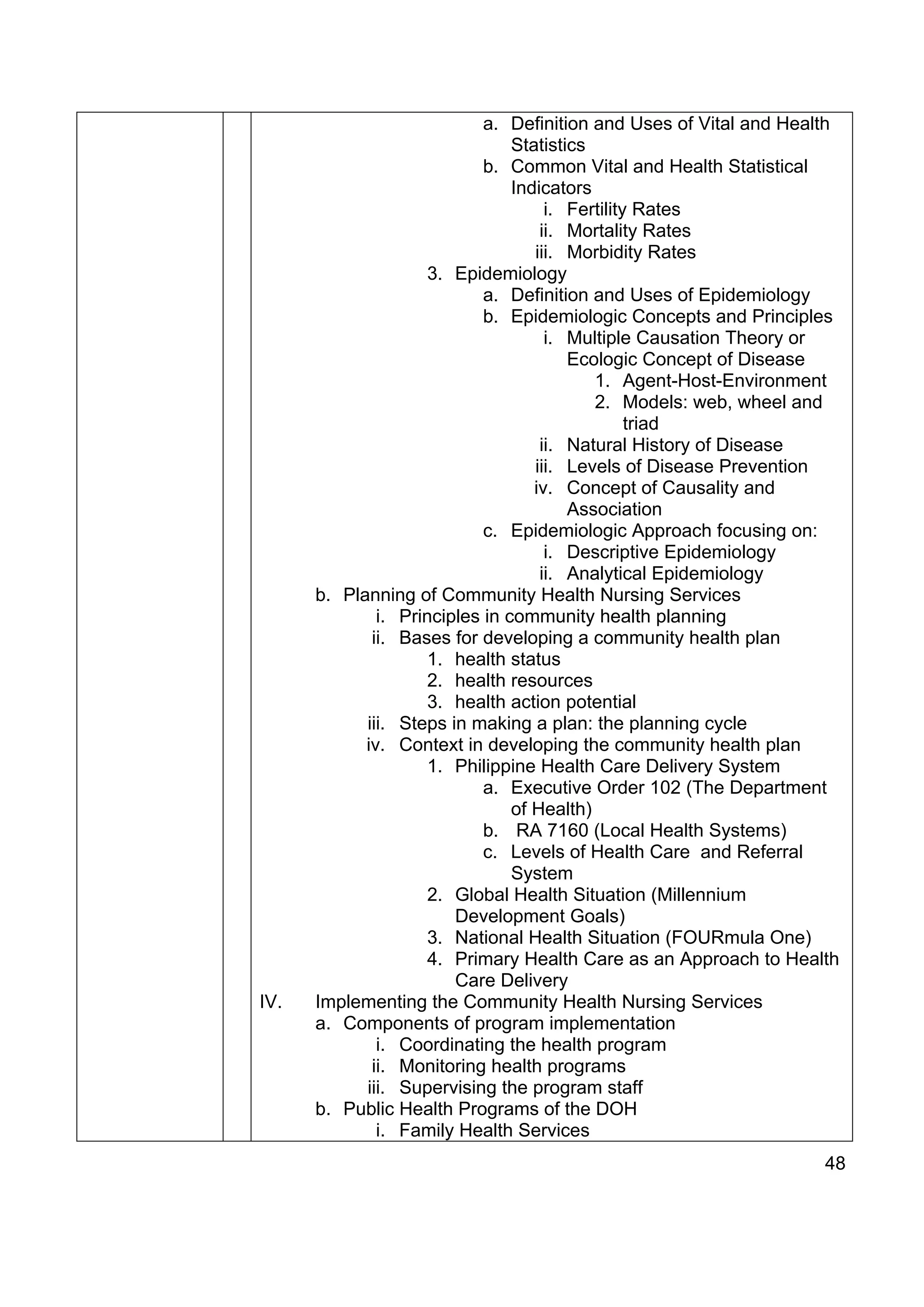
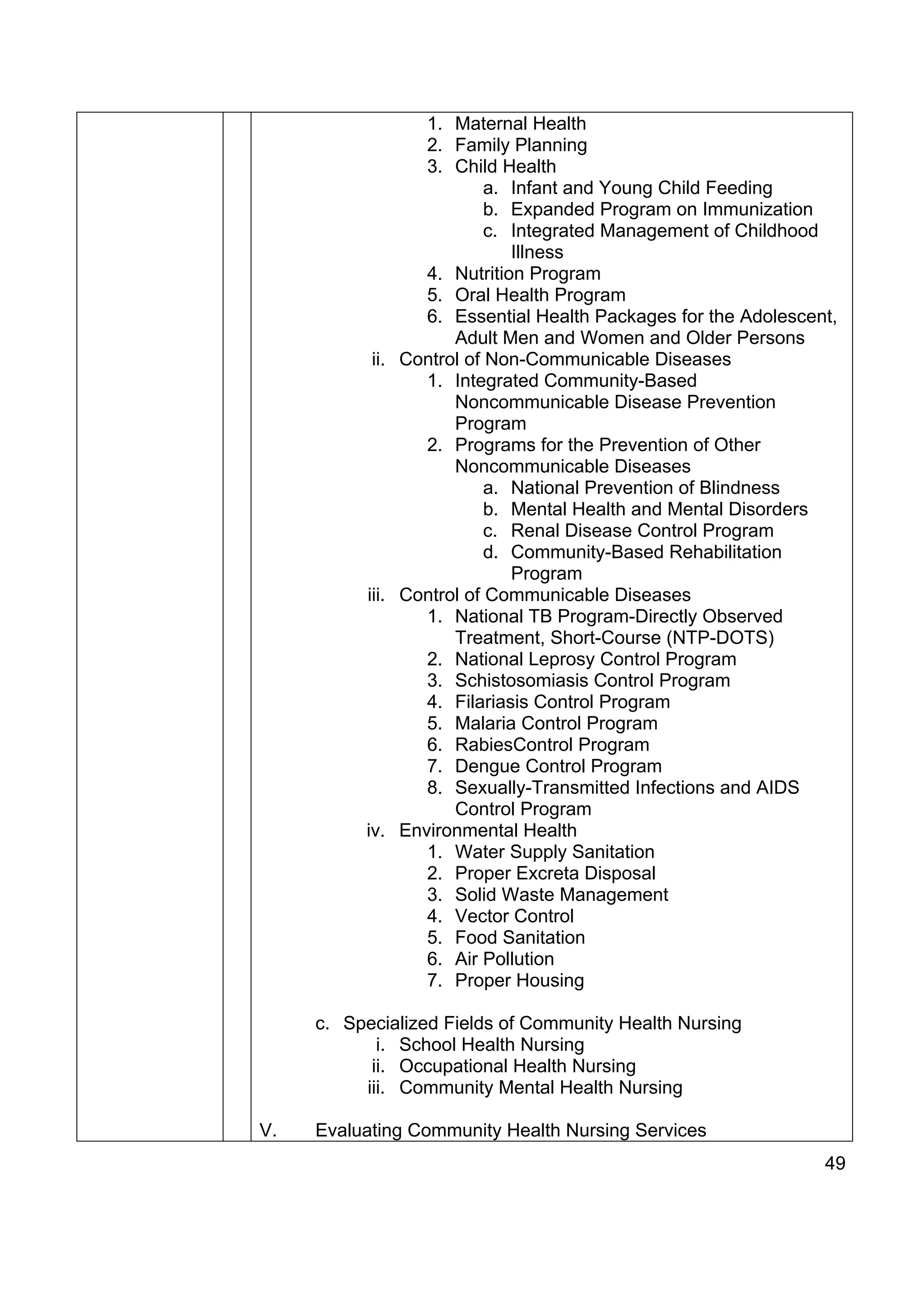
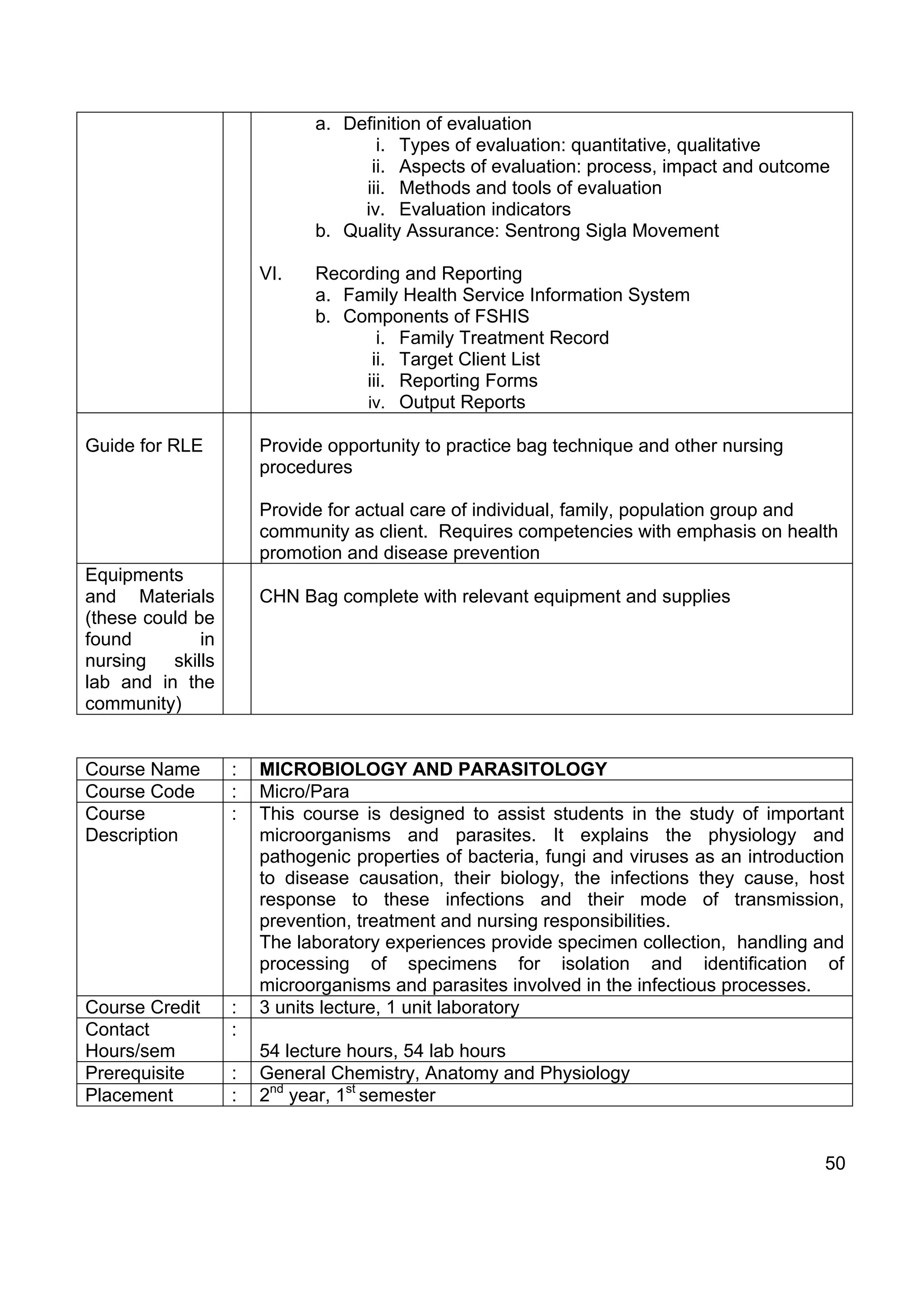
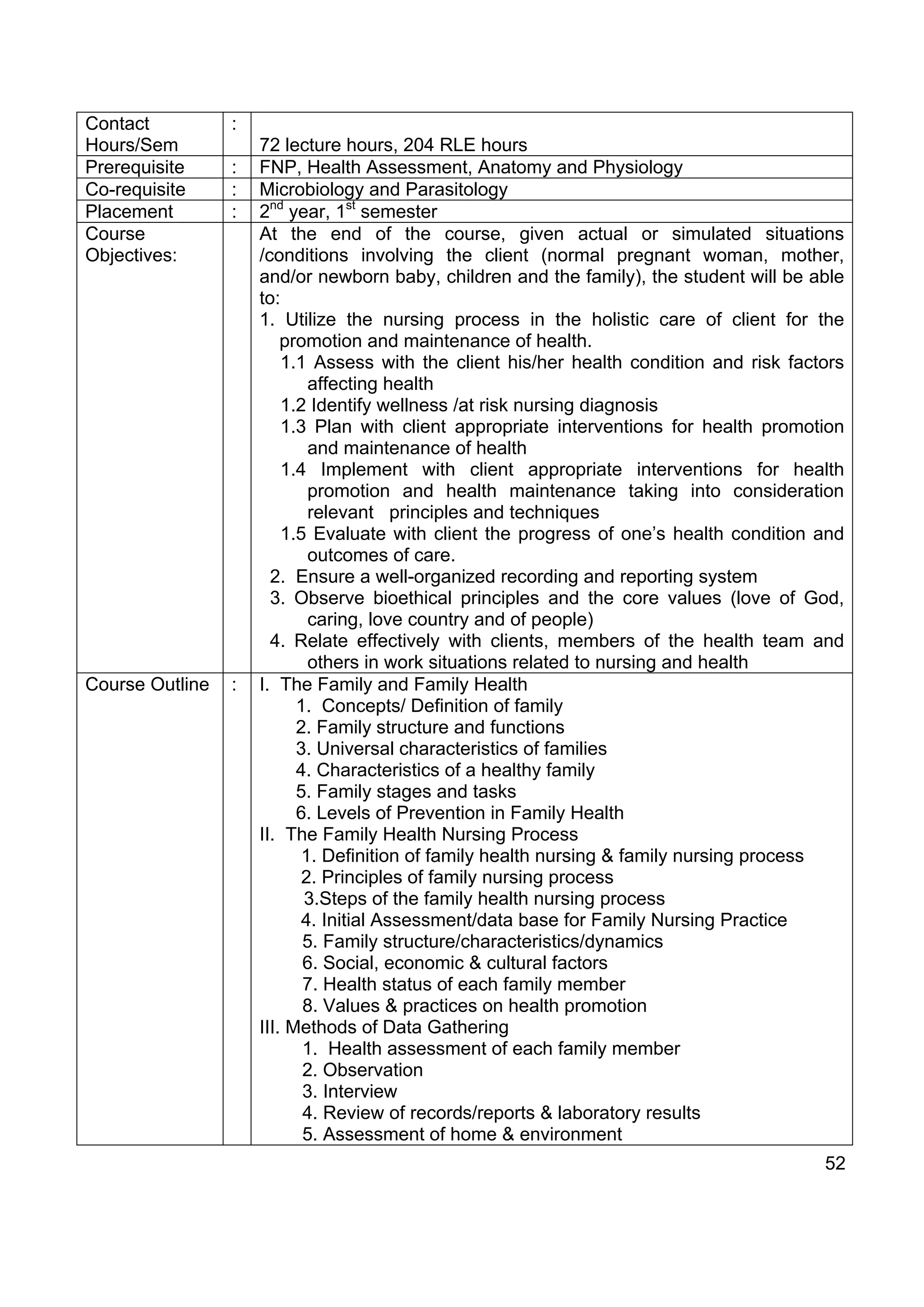
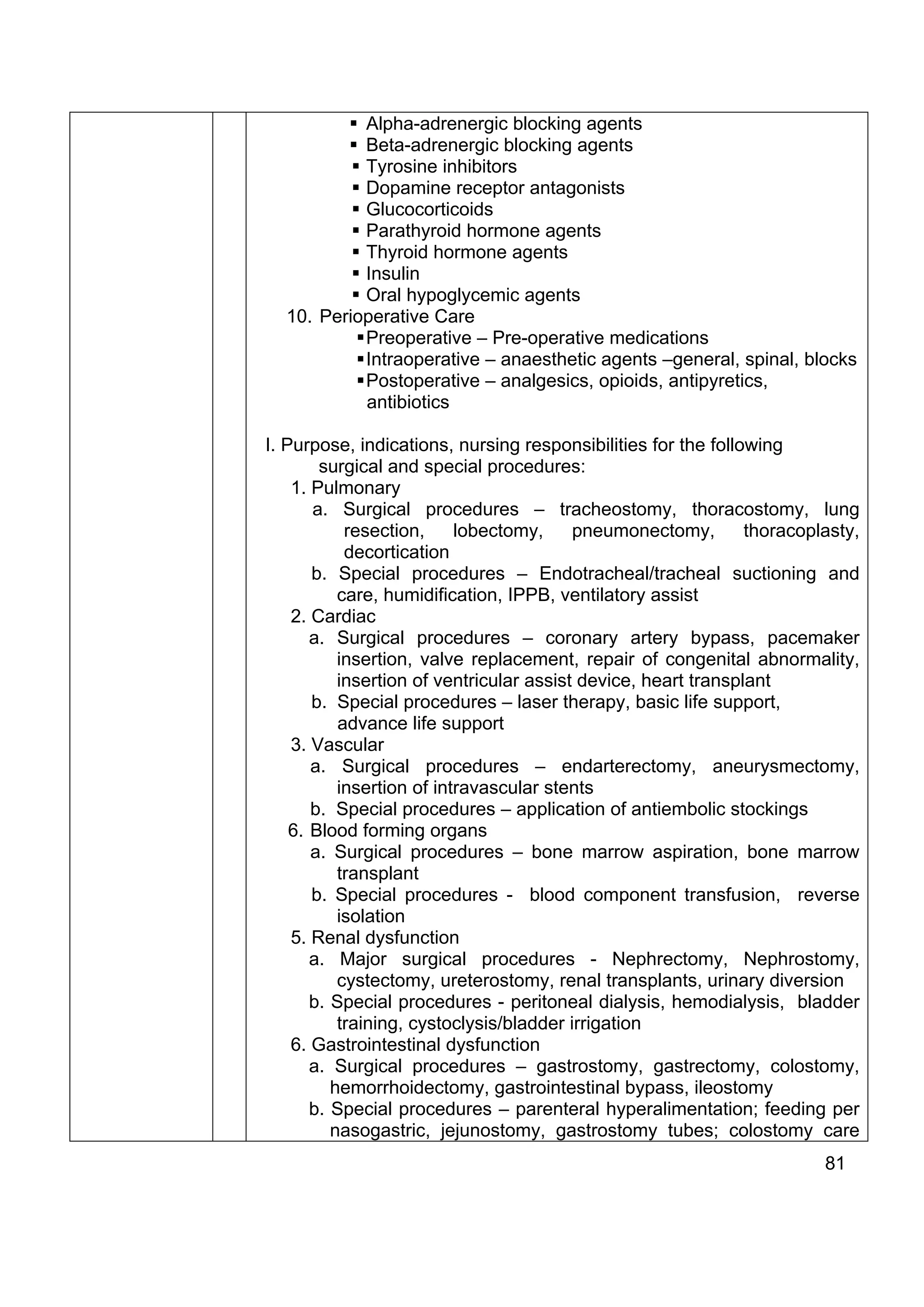
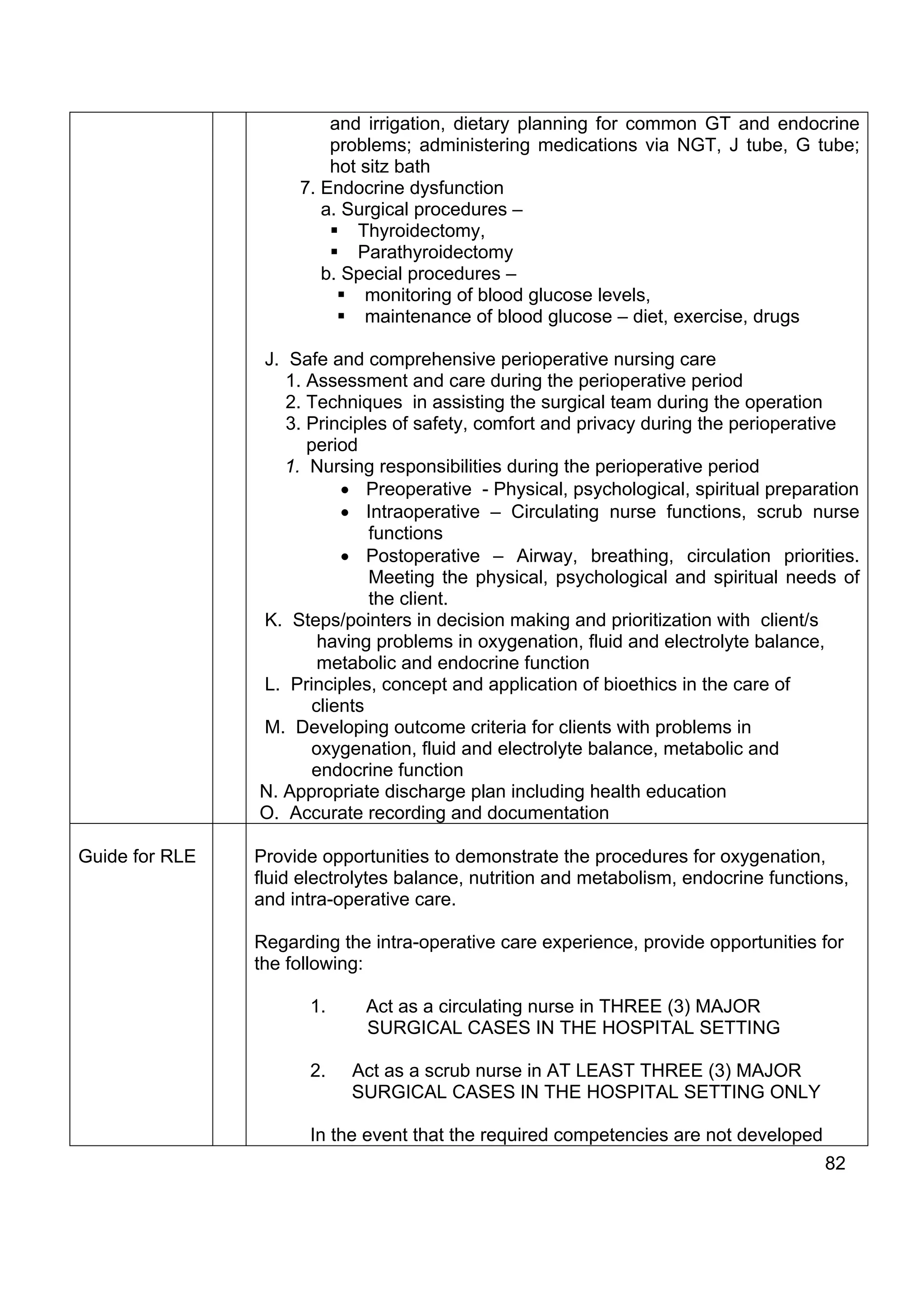
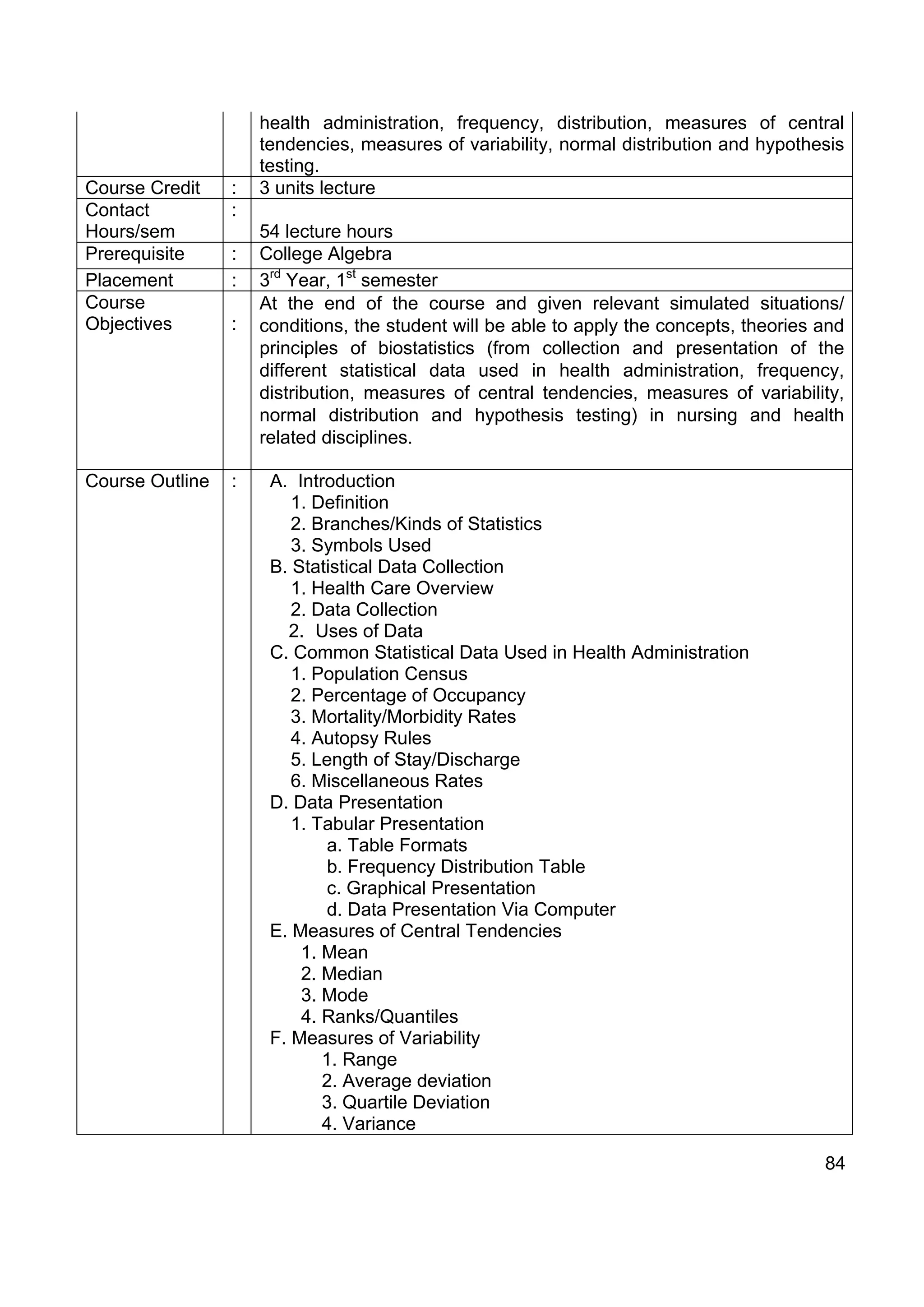
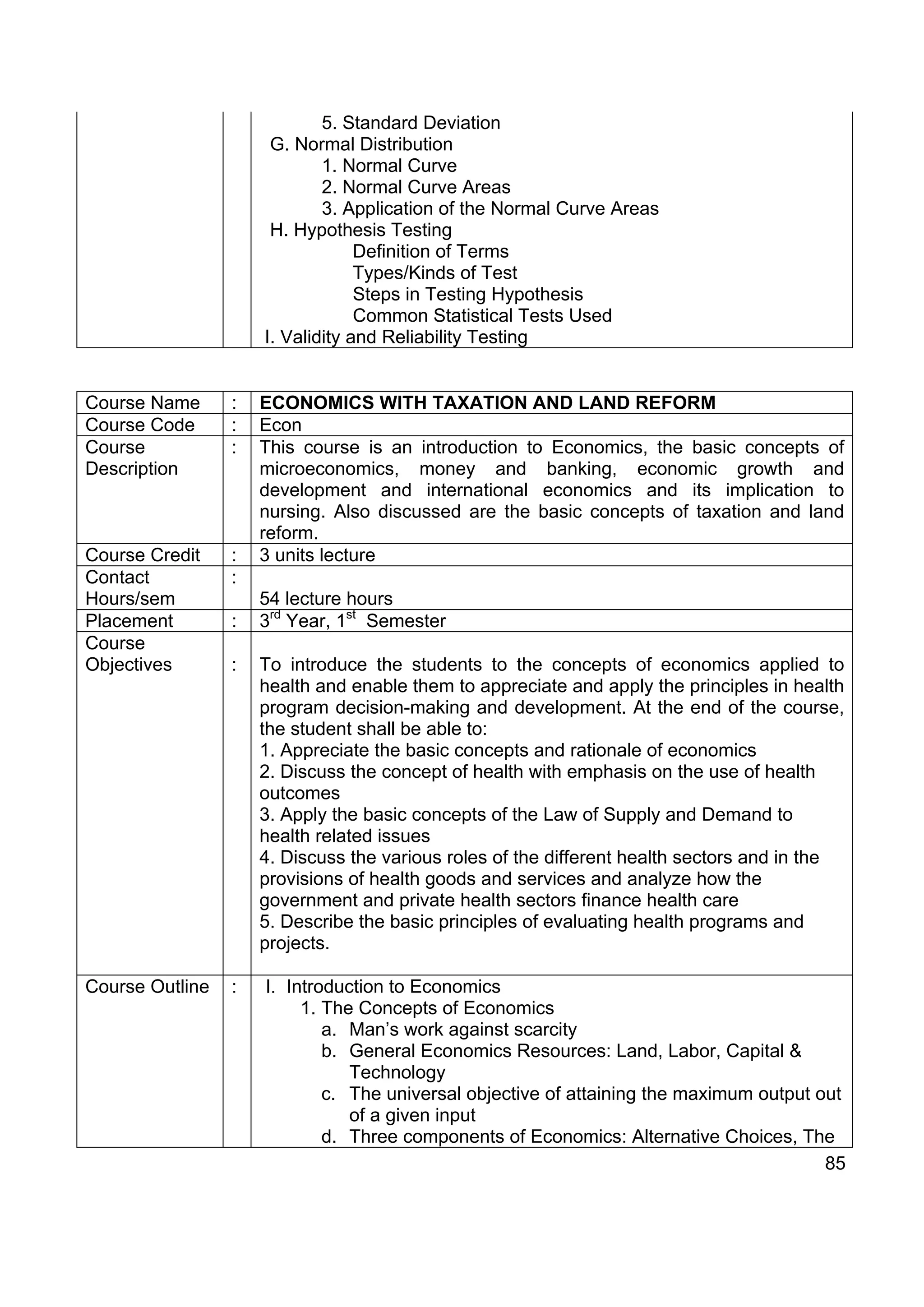
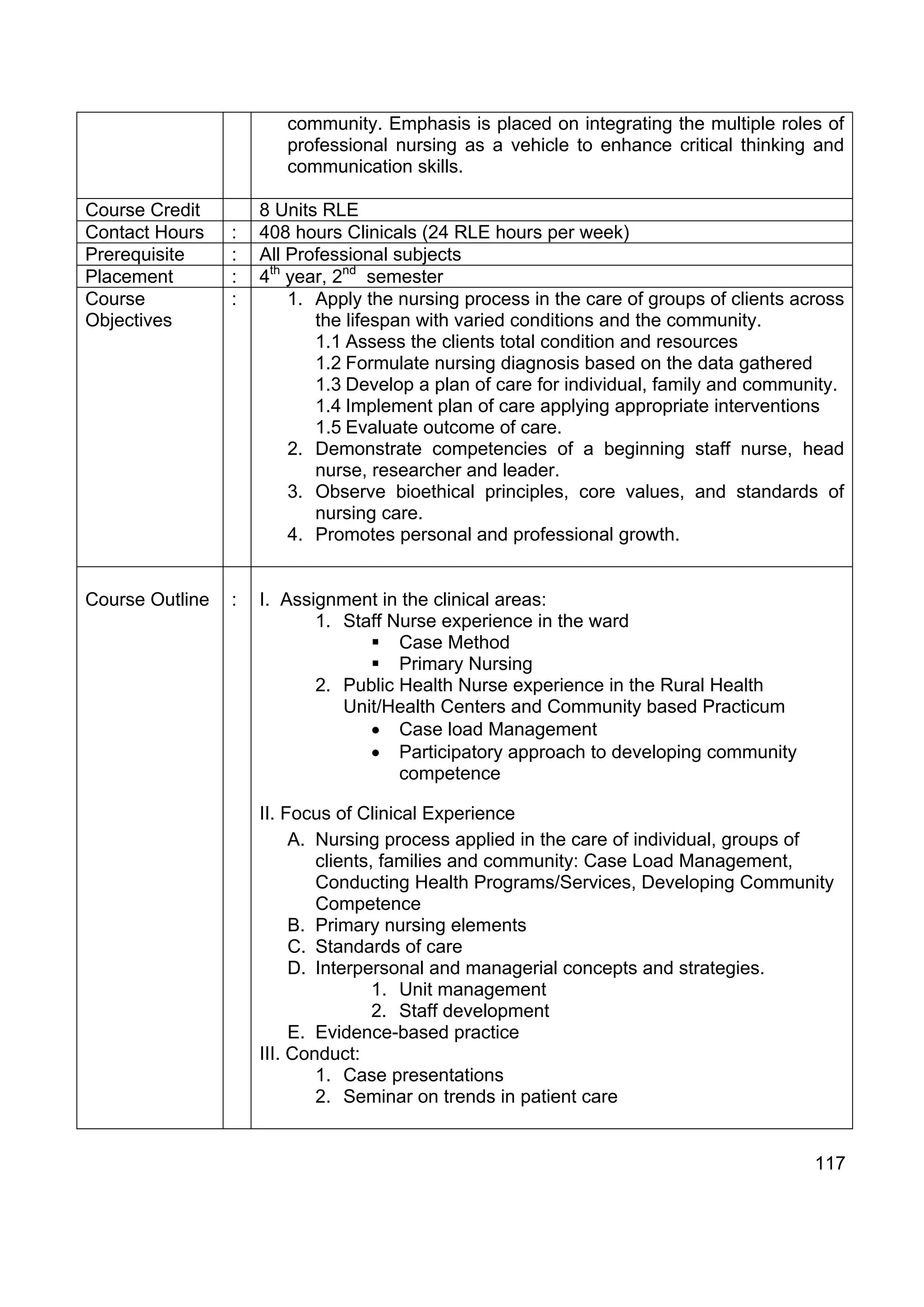
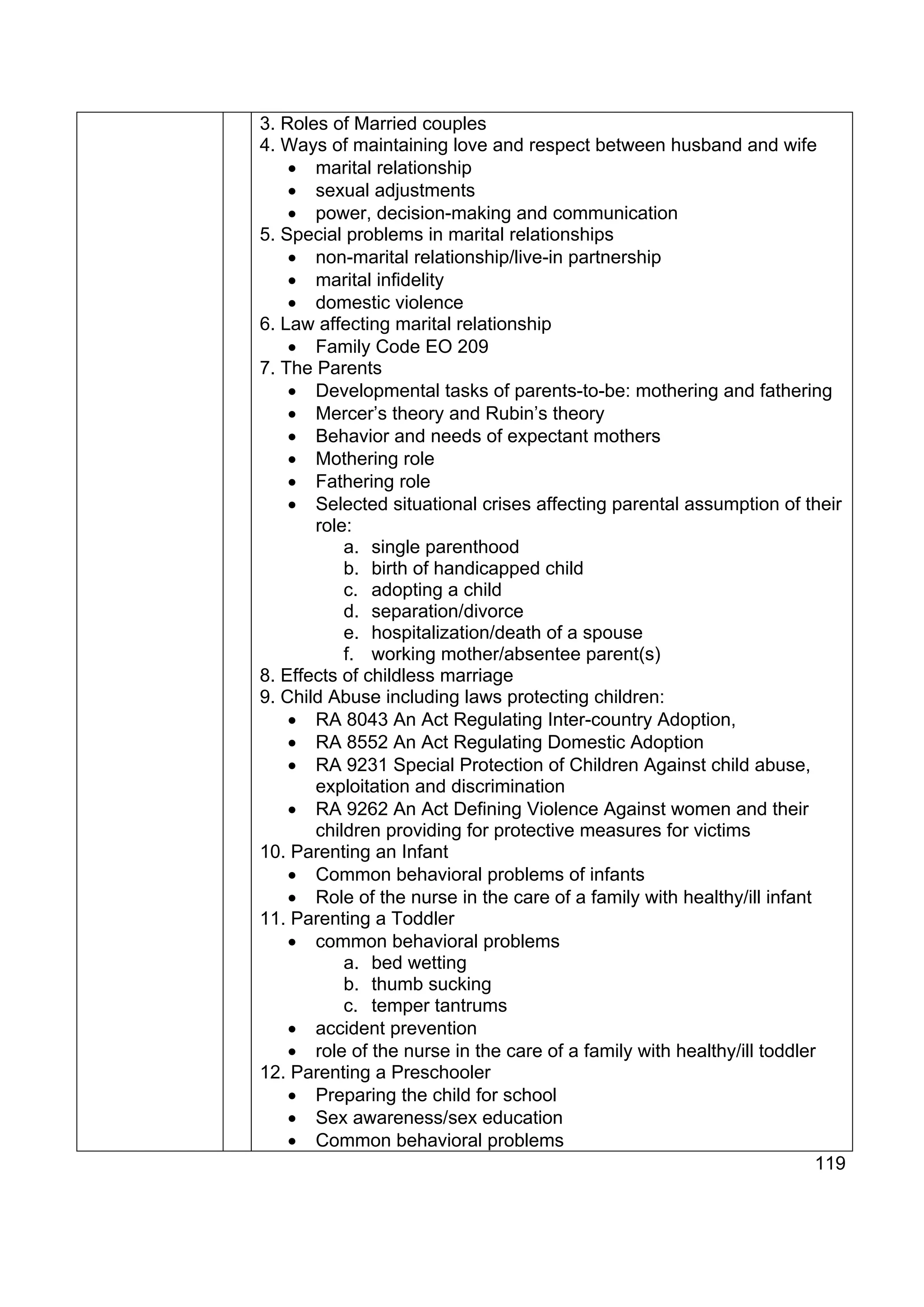
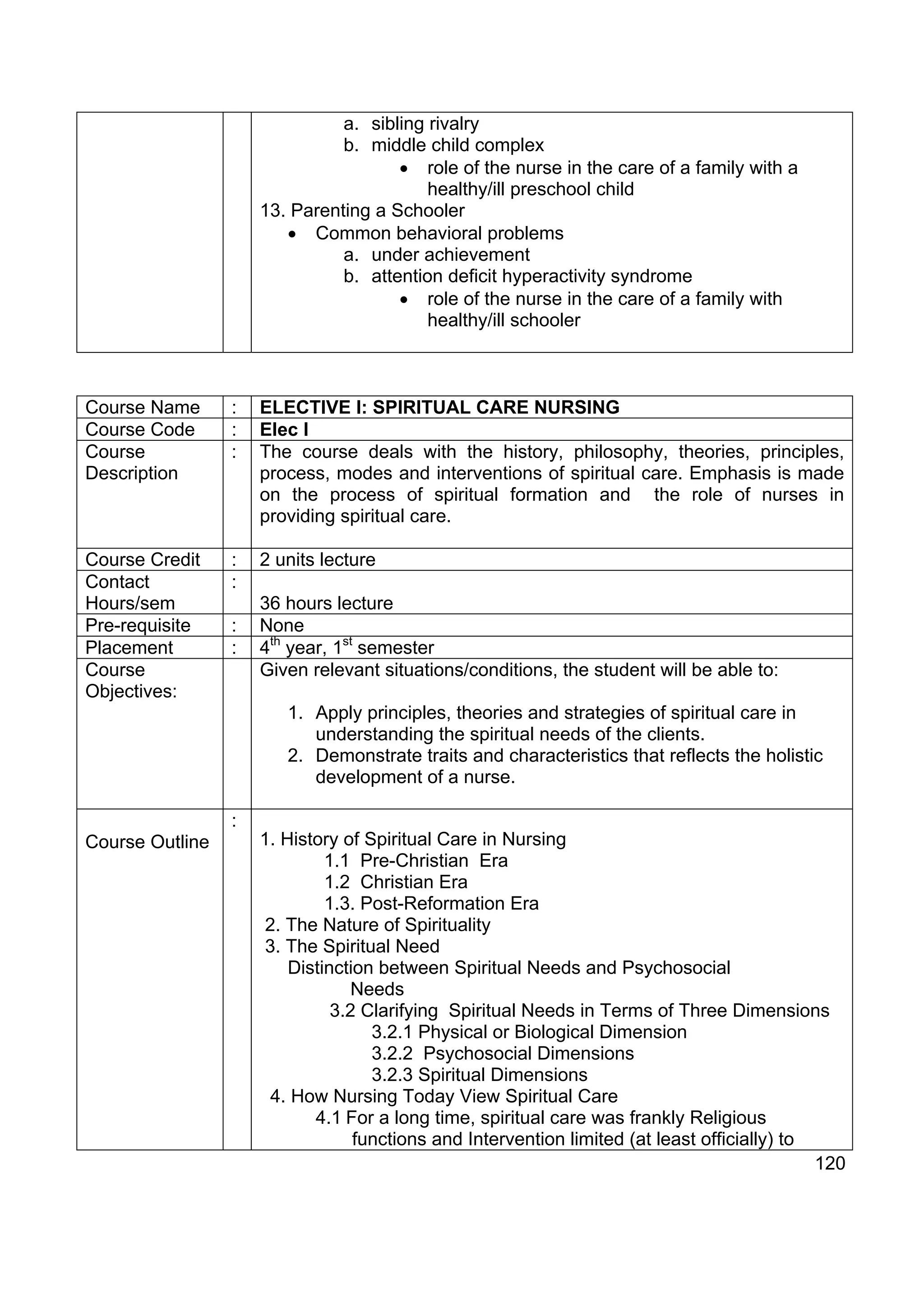
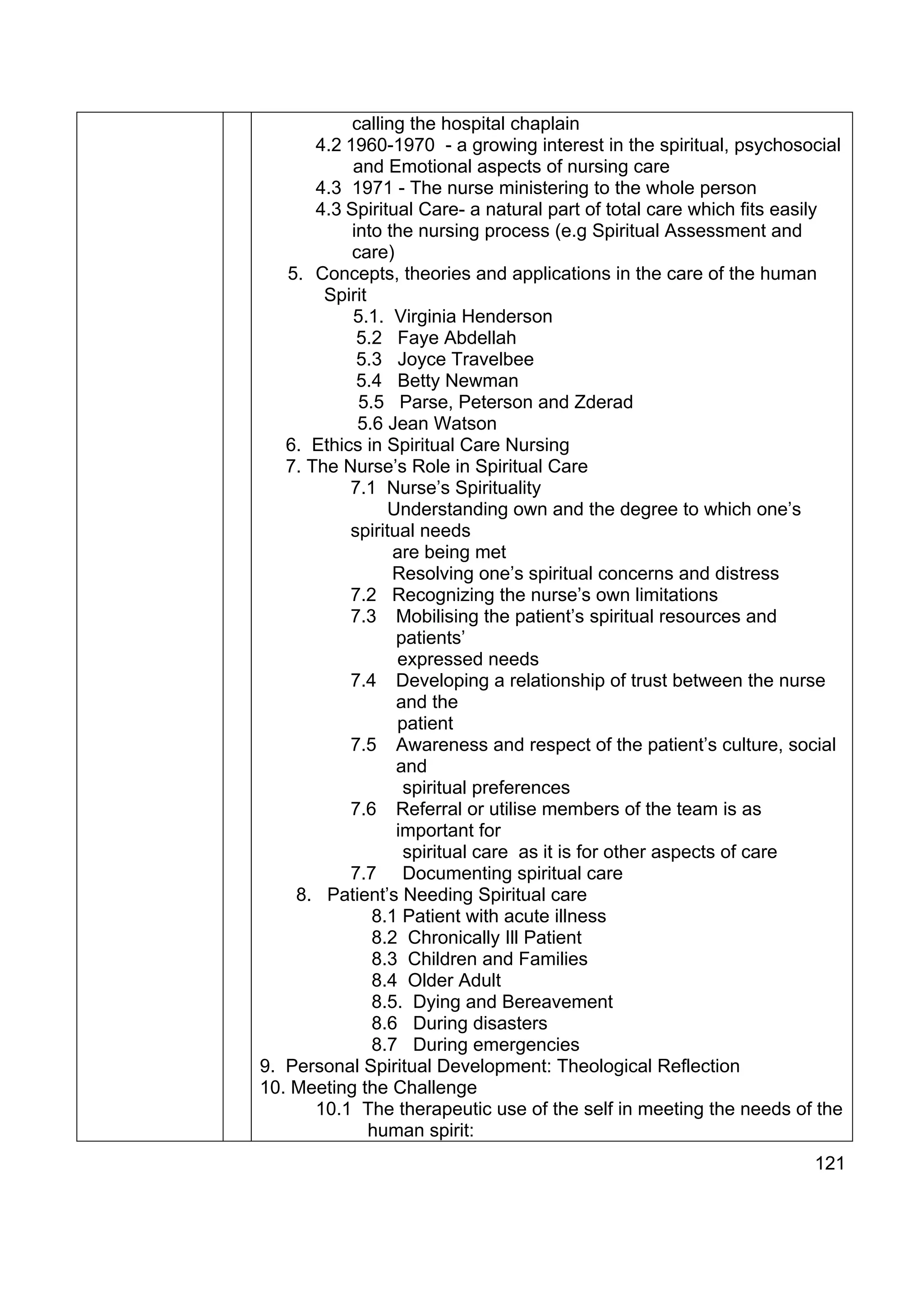
                            OFFICE OF THE PRESIDENT
                        COMMISSION ON HIGHER EDUCATION


CHED MEMORANDUM ORDER (CMO)
No. 14
Series of 2009


SUBJECT:     POLICIES AND STANDARDS FOR BACHELOR
             OF SCIENCE IN NURSING (BSN) PROGRAM


      In accordance with pertinent provisions of Republic Act (RA) No. 7722, otherwise
known as the Higher Education Act of 1994 and pursuant to Commission en Banc
Resolution No. 170 dated April 19, 2009 and for the purpose of rationalizing Nursing
Education in the country in order to provide relevant and quality health services locally
and internationally, the following policies and standards for Bachelor of Science in
Nursing (BSN) program are hereby adopted and promulgated by the Commission.

                                       ARTICLE I
                                    INTRODUCTION

       Section 1. A person is a unique bio-psycho-socio-cultural and spiritual being,
always in constant interaction with the environment. These interactions affect individuals,
families, population groups and societal health status.

       The nurse assumes the caring role in the promotion of health, prevention of
diseases, restoration of health, alleviation of suffering and, when recovery is not
possible, in assisting patients towards peaceful death. The nurse collaborates with other
members of the health team and other sectors to achieve quality healthcare. Moreover,
the nurse works with the individuals, families, population groups, community and society
in ensuring active participation in the delivery of holistic healthcare.

      Within the context of the Philippine society, nursing education with caring as its
foundation, subscribes to the following core values which are vital components in the
development of a professional nurse and are emphasized in the BSN program:

          1.1 Love of God
          1.2 Caring as the core of nursing
                 a. Compassion
                 b. Competence
                 c. Confidence
                 d. Conscience
                 e. Commitment (commitment to a culture of excellence, discipline,
                    integrity and professionalism)
                                                                                         1
1.3 Love of People
                a. Respect for the dignity of each person regardless of creed, color,
                   gender and political affiliation.
          1.4 Love of Country
                a. Patriotism (Civic duty, social responsibility and good governance)
                b. Preservation and enrichment of the environment and culture
                   heritage

        A strong liberal arts and sciences education with a transdisciplinary approach,
enhances this belief. The BSN program therefore, aims to prepare a nurse who, upon
completion of the program, demonstrates beginning professional competencies and shall
continue to assume responsibility for professional development and utilizes research
findings in the practice of the profession. The following are the Key Areas of
Responsibility for which the nurse should demonstrate competence:

             1. Safe and quality nursing care
             2. Management of resources and environment
             3. Health education
             4. Legal responsibility
             5. Ethico-moral responsibility
             6. Personal and professional development
             7. Quality improvement
             8. Research
             9. Record Management
             10. Communication
             11. Collaboration and teamwork


                                   ARTICLE II
                              AUTHORITY TO OPERATE


       Section 2. All private higher education institutions (PHEIs) intending to offer the
Bachelor of Science in Nursing program must first secure proper authority from the
Commission in accordance with existing rules and regulations. State universities and
colleges (SUCs) and local colleges and universities (LCUs) should strictly adhere to the
provisions of these policies and standards.

       The BSN program should be offered by HEIs with strong liberal arts education,
offering at least six (6) baccalaureate programs, preferably in a university-based setting.
In the case of colleges and universities with less than six (6) baccalaureate program
offerings, a Memorandum of Agreement [MOA] shall be entered between and among
higher education institutions with strong liberal arts education [e.g. BS Math, AB
Psychology, BS Biology, AB English, BS Engineering, BS Economics] or hire qualified
faculty to teach the General Education courses.
                                                                                         2
ARTICLE III
                               PROGRAM SPECIFICATIONS

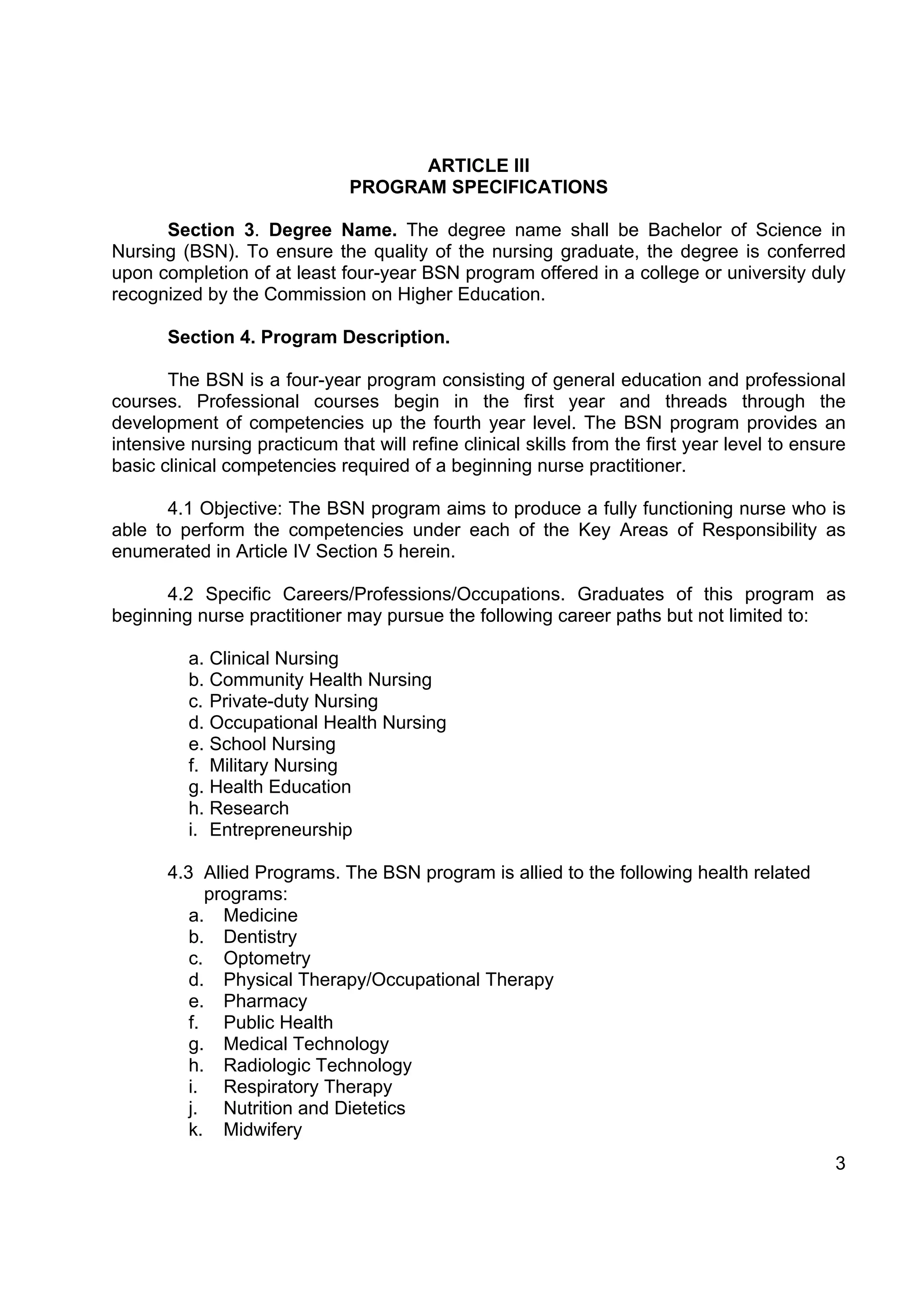
      Section 3. Degree Name. The degree name shall be Bachelor of Science in
Nursing (BSN). To ensure the quality of the nursing graduate, the degree is conferred
upon completion of at least four-year BSN program offered in a college or university duly
recognized by the Commission on Higher Education.

       Section 4. Program Description.

       The BSN is a four-year program consisting of general education and professional
courses. Professional courses begin in the first year and threads through the
development of competencies up the fourth year level. The BSN program provides an
intensive nursing practicum that will refine clinical skills from the first year level to ensure
basic clinical competencies required of a beginning nurse practitioner.

       4.1 Objective: The BSN program aims to produce a fully functioning nurse who is
able to perform the competencies under each of the Key Areas of Responsibility as
enumerated in Article IV Section 5 herein.

      4.2 Specific Careers/Professions/Occupations. Graduates of this program as
beginning nurse practitioner may pursue the following career paths but not limited to:

          a. Clinical Nursing
          b. Community Health Nursing
          c. Private-duty Nursing
          d. Occupational Health Nursing
          e. School Nursing
          f. Military Nursing
          g. Health Education
          h. Research
          i. Entrepreneurship

       4.3 Allied Programs. The BSN program is allied to the following health related
            programs:
          a. Medicine
          b. Dentistry
          c. Optometry
          d. Physical Therapy/Occupational Therapy
          e. Pharmacy
          f. Public Health
          g. Medical Technology
          h. Radiologic Technology
          i. Respiratory Therapy
          j. Nutrition and Dietetics
          k. Midwifery
                                                                                              3
l.   Speech Pathology


                                   ARTICLE IV
                             COMPETENCY STANDARDS

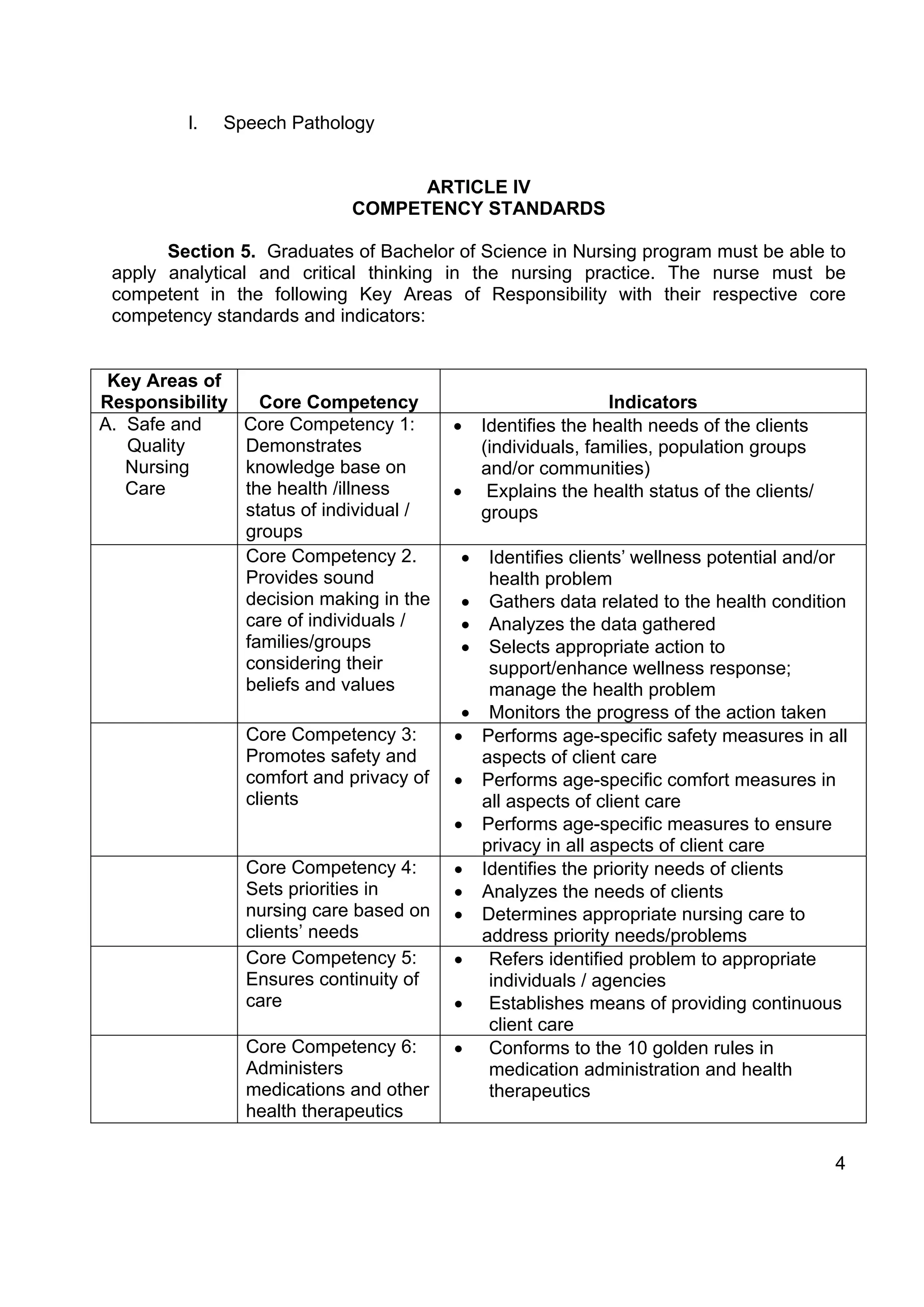
       Section 5. Graduates of Bachelor of Science in Nursing program must be able to
 apply analytical and critical thinking in the nursing practice. The nurse must be
 competent in the following Key Areas of Responsibility with their respective core
 competency standards and indicators:


 Key Areas of
Responsibility     Core Competency                              Indicators
A. Safe and      Core Competency 1:       •    Identifies the health needs of the clients
   Quality       Demonstrates                  (individuals, families, population groups
   Nursing       knowledge base on             and/or communities)
   Care          the health /illness      •     Explains the health status of the clients/
                 status of individual /        groups
                 groups
                 Core Competency 2.       •     Identifies clients’ wellness potential and/or
                 Provides sound                 health problem
                 decision making in the   •     Gathers data related to the health condition
                 care of individuals /    •     Analyzes the data gathered
                 families/groups          •     Selects appropriate action to
                 considering their              support/enhance wellness response;
                 beliefs and values             manage the health problem
                                           •    Monitors the progress of the action taken
                 Core Competency 3:       •    Performs age-specific safety measures in all
                 Promotes safety and           aspects of client care
                 comfort and privacy of   •    Performs age-specific comfort measures in
                 clients                       all aspects of client care
                                          •    Performs age-specific measures to ensure
                                               privacy in all aspects of client care
                 Core Competency 4:       •    Identifies the priority needs of clients
                 Sets priorities in       •    Analyzes the needs of clients
                 nursing care based on    •    Determines appropriate nursing care to
                 clients’ needs                address priority needs/problems
                 Core Competency 5:       •     Refers identified problem to appropriate
                 Ensures continuity of          individuals / agencies
                 care                     •     Establishes means of providing continuous
                                                client care
                 Core Competency 6:       •     Conforms to the 10 golden rules in
                 Administers                    medication administration and health
                 medications and other          therapeutics
                 health therapeutics

                                                                                             4
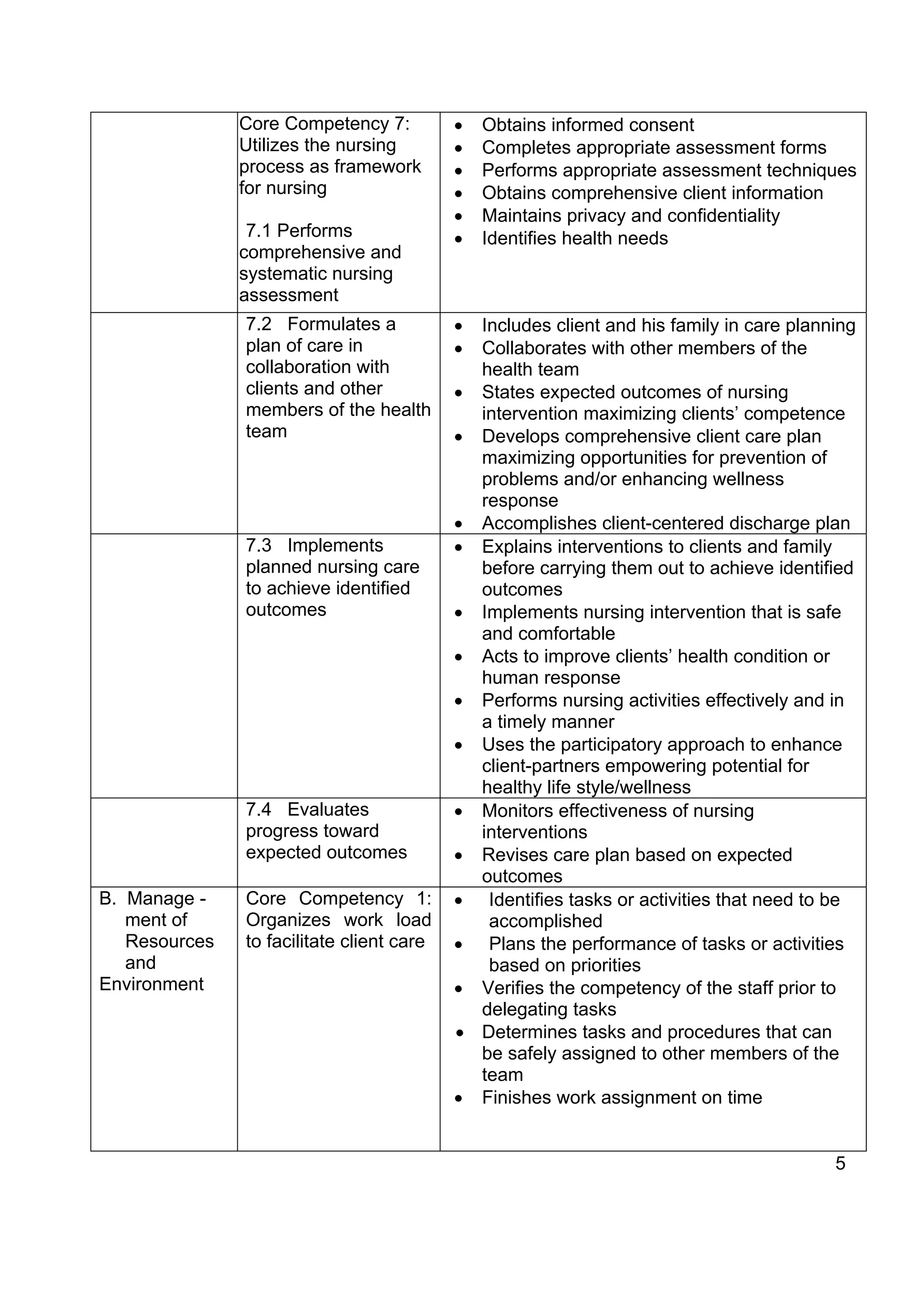
Core Competency 7:          •   Obtains informed consent
               Utilizes the nursing        •   Completes appropriate assessment forms
               process as framework        •   Performs appropriate assessment techniques
               for nursing                 •   Obtains comprehensive client information
                                           •   Maintains privacy and confidentiality
                7.1 Performs               •   Identifies health needs
               comprehensive and
               systematic nursing
               assessment
               7.2 Formulates a            • Includes client and his family in care planning
               plan of care in             • Collaborates with other members of the
               collaboration with            health team
               clients and other           • States expected outcomes of nursing
               members of the health         intervention maximizing clients’ competence
               team                        • Develops comprehensive client care plan
                                             maximizing opportunities for prevention of
                                             problems and/or enhancing wellness
                                             response
                                           • Accomplishes client-centered discharge plan
               7.3 Implements              • Explains interventions to clients and family
               planned nursing care          before carrying them out to achieve identified
               to achieve identified         outcomes
               outcomes                    • Implements nursing intervention that is safe
                                             and comfortable
                                           • Acts to improve clients’ health condition or
                                             human response
                                           • Performs nursing activities effectively and in
                                             a timely manner
                                           • Uses the participatory approach to enhance
                                             client-partners empowering potential for
                                             healthy life style/wellness
               7.4 Evaluates               • Monitors effectiveness of nursing
               progress toward               interventions
               expected outcomes           • Revises care plan based on expected
                                             outcomes
B. Manage -    Core Competency 1:          • Identifies tasks or activities that need to be
   ment of     Organizes work load            accomplished
   Resources   to facilitate client care   • Plans the performance of tasks or activities
   and                                        based on priorities
Environment                                • Verifies the competency of the staff prior to
                                             delegating tasks
                                           • Determines tasks and procedures that can
                                             be safely assigned to other members of the
                                             team
                                           • Finishes work assignment on time


                                                                                         5
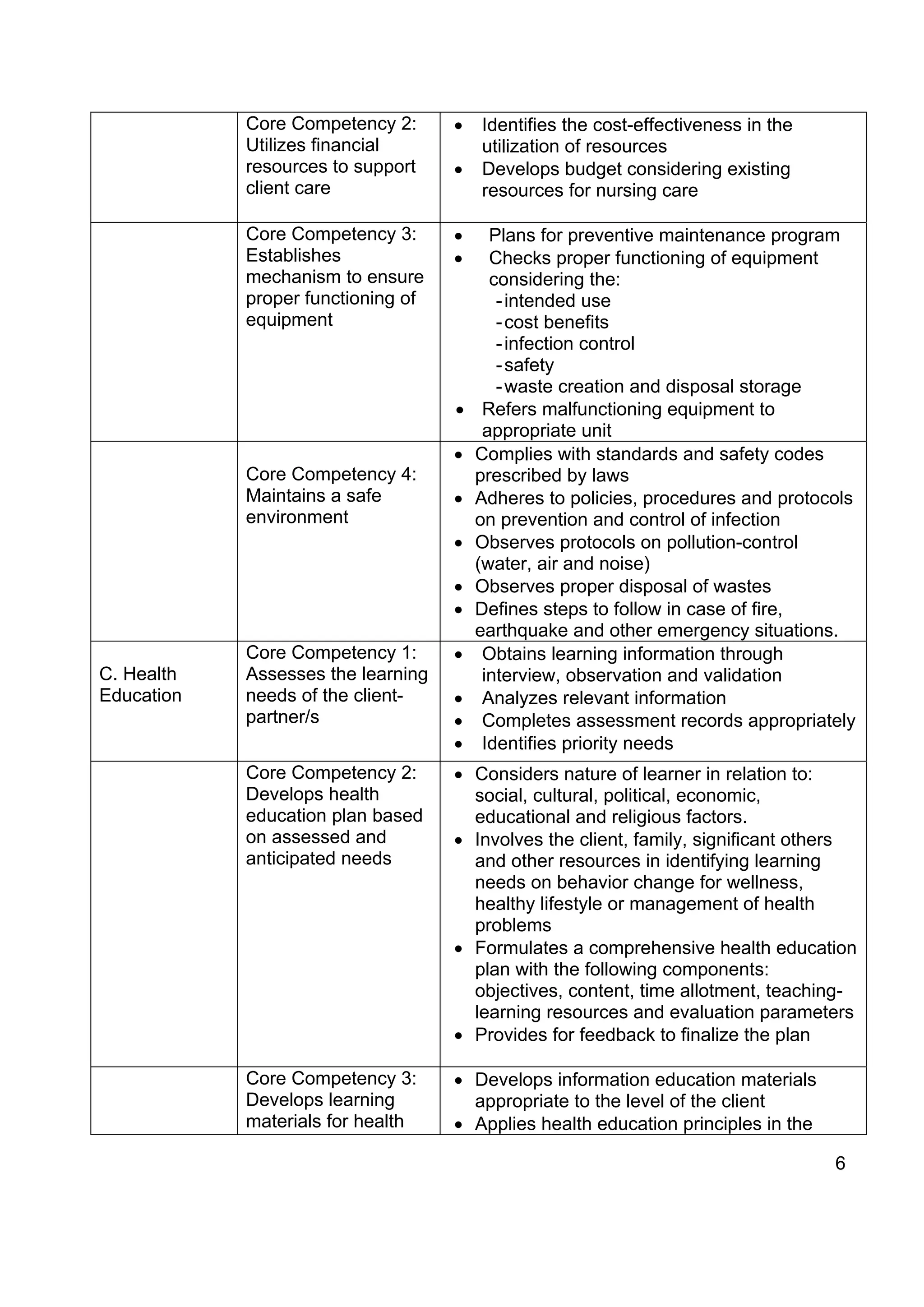
Core Competency 2:      •   Identifies the cost-effectiveness in the
            Utilizes financial          utilization of resources
            resources to support    •   Develops budget considering existing
            client care                 resources for nursing care

            Core Competency 3:      •     Plans for preventive maintenance program
            Establishes             •     Checks proper functioning of equipment
            mechanism to ensure           considering the:
            proper functioning of          - intended use
            equipment                      - cost benefits
                                           - infection control
                                           - safety
                                           - waste creation and disposal storage
                                    •    Refers malfunctioning equipment to
                                         appropriate unit
                                    •   Complies with standards and safety codes
            Core Competency 4:          prescribed by laws
            Maintains a safe        •   Adheres to policies, procedures and protocols
            environment                 on prevention and control of infection
                                    •   Observes protocols on pollution-control
                                        (water, air and noise)
                                    •   Observes proper disposal of wastes
                                    •   Defines steps to follow in case of fire,
                                        earthquake and other emergency situations.
            Core Competency 1:      •    Obtains learning information through
C. Health   Assesses the learning        interview, observation and validation
Education   needs of the client-    •    Analyzes relevant information
            partner/s               •    Completes assessment records appropriately
                                    •    Identifies priority needs
            Core Competency 2:      • Considers nature of learner in relation to:
            Develops health           social, cultural, political, economic,
            education plan based      educational and religious factors.
            on assessed and         • Involves the client, family, significant others
            anticipated needs         and other resources in identifying learning
                                      needs on behavior change for wellness,
                                      healthy lifestyle or management of health
                                      problems
                                    • Formulates a comprehensive health education
                                      plan with the following components:
                                      objectives, content, time allotment, teaching-
                                      learning resources and evaluation parameters
                                    • Provides for feedback to finalize the plan

            Core Competency 3:      • Develops information education materials
            Develops learning         appropriate to the level of the client
            materials for health    • Applies health education principles in the

                                                                                   6
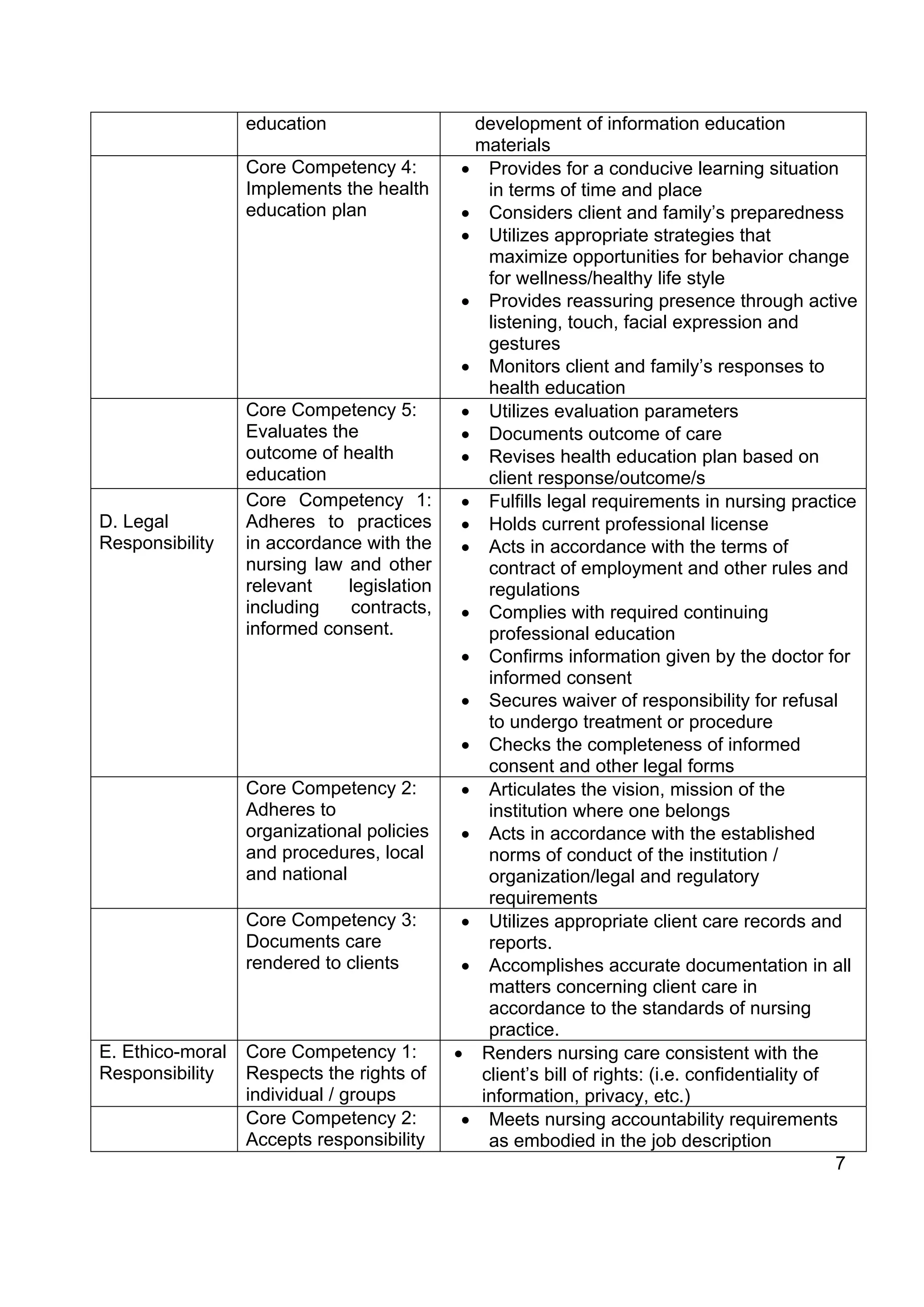
education                   development of information education
                                              materials
                  Core Competency 4:         • Provides for a conducive learning situation
                  Implements the health         in terms of time and place
                  education plan             • Considers client and family’s preparedness
                                             • Utilizes appropriate strategies that
                                                maximize opportunities for behavior change
                                                for wellness/healthy life style
                                             • Provides reassuring presence through active
                                                listening, touch, facial expression and
                                                gestures
                                             • Monitors client and family’s responses to
                                                health education
                  Core Competency 5:         • Utilizes evaluation parameters
                  Evaluates the              • Documents outcome of care
                  outcome of health          • Revises health education plan based on
                  education                     client response/outcome/s
                  Core Competency 1:         • Fulfills legal requirements in nursing practice
D. Legal          Adheres to practices       • Holds current professional license
Responsibility    in accordance with the     • Acts in accordance with the terms of
                  nursing law and other         contract of employment and other rules and
                  relevant    legislation       regulations
                  including    contracts,    • Complies with required continuing
                  informed consent.             professional education
                                             • Confirms information given by the doctor for
                                                informed consent
                                             • Secures waiver of responsibility for refusal
                                                to undergo treatment or procedure
                                             • Checks the completeness of informed
                                                consent and other legal forms
                  Core Competency 2:         • Articulates the vision, mission of the
                  Adheres to                    institution where one belongs
                  organizational policies    • Acts in accordance with the established
                  and procedures, local         norms of conduct of the institution /
                  and national                  organization/legal and regulatory
                                                requirements
                  Core Competency 3:         • Utilizes appropriate client care records and
                  Documents care                reports.
                  rendered to clients        • Accomplishes accurate documentation in all
                                                matters concerning client care in
                                                accordance to the standards of nursing
                                                practice.
E. Ethico-moral   Core Competency 1:        • Renders nursing care consistent with the
Responsibility    Respects the rights of       client’s bill of rights: (i.e. confidentiality of
                  individual / groups          information, privacy, etc.)
                  Core Competency 2:         • Meets nursing accountability requirements
                  Accepts responsibility        as embodied in the job description
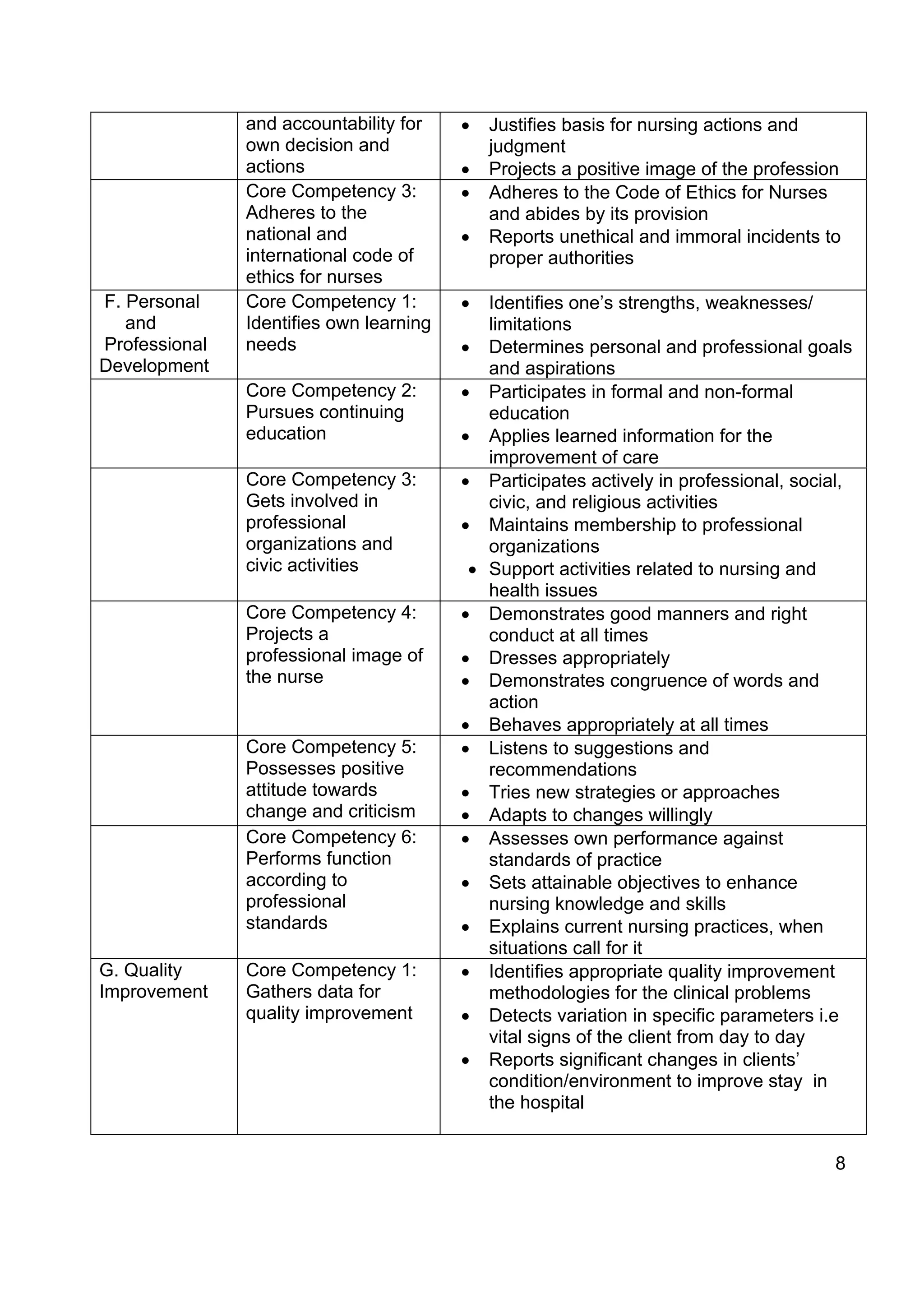
                                                                                                 7
and accountability for    •   Justifies basis for nursing actions and
               own decision and              judgment
               actions                   •   Projects a positive image of the profession
               Core Competency 3:        •   Adheres to the Code of Ethics for Nurses
               Adheres to the                and abides by its provision
               national and              •   Reports unethical and immoral incidents to
               international code of         proper authorities
               ethics for nurses
F. Personal    Core Competency 1:        •  Identifies one’s strengths, weaknesses/
   and         Identifies own learning      limitations
Professional   needs                     • Determines personal and professional goals
Development                                 and aspirations
               Core Competency 2:        • Participates in formal and non-formal
               Pursues continuing           education
               education                 • Applies learned information for the
                                            improvement of care
               Core Competency 3:        • Participates actively in professional, social,
               Gets involved in             civic, and religious activities
               professional              • Maintains membership to professional
               organizations and            organizations
               civic activities           • Support activities related to nursing and
                                            health issues
               Core Competency 4:        • Demonstrates good manners and right
               Projects a                   conduct at all times
               professional image of     • Dresses appropriately
               the nurse                 • Demonstrates congruence of words and
                                            action
                                         • Behaves appropriately at all times
               Core Competency 5:        • Listens to suggestions and
               Possesses positive           recommendations
               attitude towards          • Tries new strategies or approaches
               change and criticism      • Adapts to changes willingly
               Core Competency 6:        • Assesses own performance against
               Performs function            standards of practice
               according to              • Sets attainable objectives to enhance
               professional                 nursing knowledge and skills
               standards                 • Explains current nursing practices, when
                                            situations call for it
G. Quality     Core Competency 1:        • Identifies appropriate quality improvement
Improvement    Gathers data for             methodologies for the clinical problems
               quality improvement       • Detects variation in specific parameters i.e
                                            vital signs of the client from day to day
                                         • Reports significant changes in clients’
                                            condition/environment to improve stay in
                                            the hospital


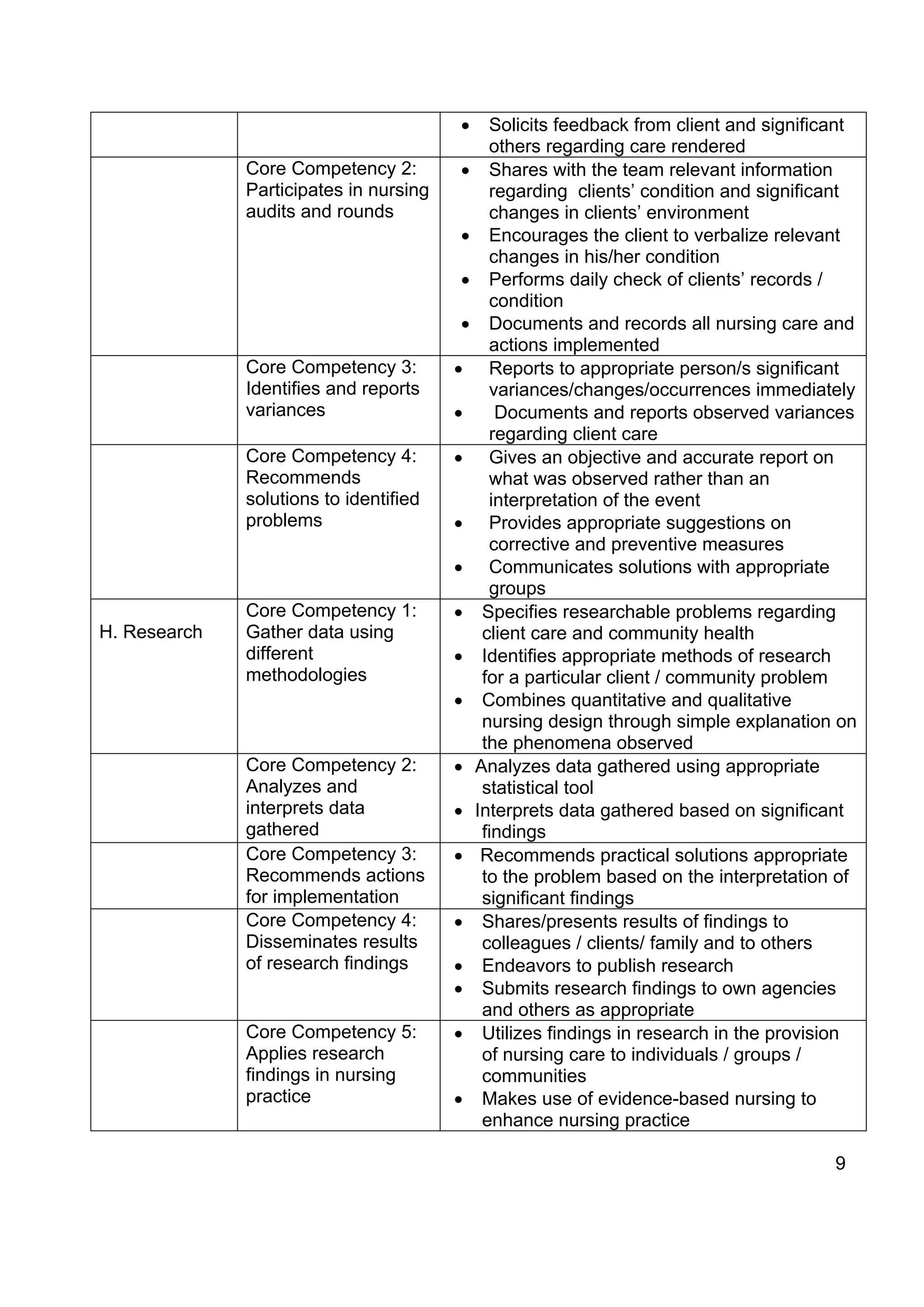
                                                                                       8
•   Solicits feedback from client and significant
                                            others regarding care rendered
              Core Competency 2:         • Shares with the team relevant information
              Participates in nursing       regarding clients’ condition and significant
              audits and rounds             changes in clients’ environment
                                         • Encourages the client to verbalize relevant
                                            changes in his/her condition
                                         • Performs daily check of clients’ records /
                                            condition
                                         • Documents and records all nursing care and
                                            actions implemented
              Core Competency 3:        • Reports to appropriate person/s significant
              Identifies and reports        variances/changes/occurrences immediately
              variances                 •    Documents and reports observed variances
                                            regarding client care
              Core Competency 4:        • Gives an objective and accurate report on
              Recommends                    what was observed rather than an
              solutions to identified       interpretation of the event
              problems                  • Provides appropriate suggestions on
                                            corrective and preventive measures
                                        • Communicates solutions with appropriate
                                            groups
              Core Competency 1:        • Specifies researchable problems regarding
H. Research   Gather data using            client care and community health
              different                 • Identifies appropriate methods of research
              methodologies                for a particular client / community problem
                                        • Combines quantitative and qualitative
                                           nursing design through simple explanation on
                                           the phenomena observed
              Core Competency 2:        • Analyzes data gathered using appropriate
              Analyzes and                 statistical tool
              interprets data           • Interprets data gathered based on significant
              gathered                     findings
              Core Competency 3:        • Recommends practical solutions appropriate
              Recommends actions           to the problem based on the interpretation of
              for implementation           significant findings
              Core Competency 4:        • Shares/presents results of findings to
              Disseminates results         colleagues / clients/ family and to others
              of research findings      • Endeavors to publish research
                                        • Submits research findings to own agencies
                                           and others as appropriate
              Core Competency 5:        • Utilizes findings in research in the provision
              Applies research             of nursing care to individuals / groups /
              findings in nursing          communities
              practice                  • Makes use of evidence-based nursing to
                                           enhance nursing practice

                                                                                      9
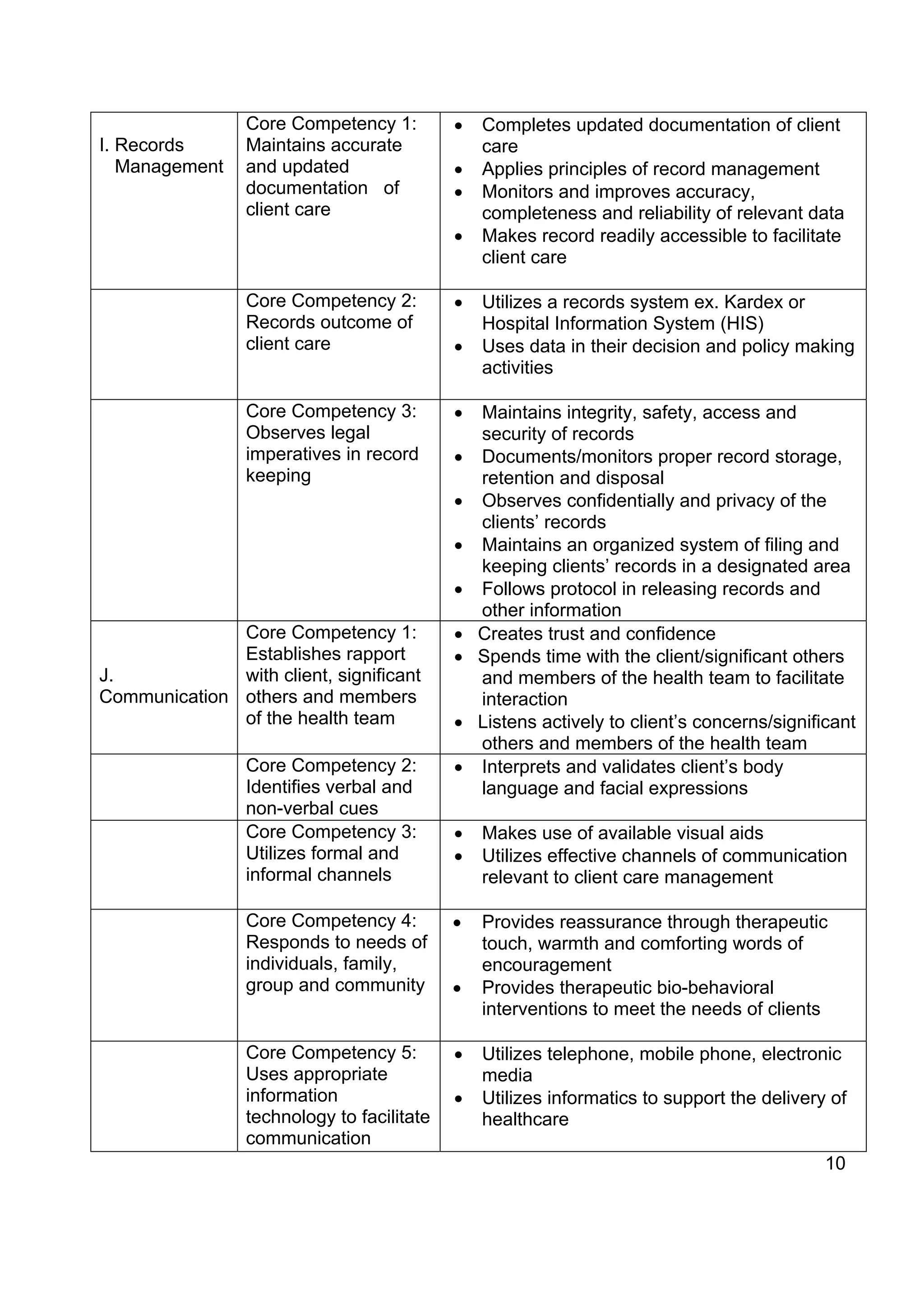
Core Competency 1:         •   Completes updated documentation of client
I. Records       Maintains accurate             care
   Management    and updated                •   Applies principles of record management
                 documentation of           •   Monitors and improves accuracy,
                 client care                    completeness and reliability of relevant data
                                            •   Makes record readily accessible to facilitate
                                                client care

                 Core Competency 2:         •   Utilizes a records system ex. Kardex or
                 Records outcome of             Hospital Information System (HIS)
                 client care                •   Uses data in their decision and policy making
                                                activities

                 Core Competency 3:         •   Maintains integrity, safety, access and
                 Observes legal                 security of records
                 imperatives in record      •   Documents/monitors proper record storage,
                 keeping                        retention and disposal
                                            •   Observes confidentially and privacy of the
                                                clients’ records
                                            •   Maintains an organized system of filing and
                                                keeping clients’ records in a designated area
                                            •   Follows protocol in releasing records and
                                                other information
              Core Competency 1:            •   Creates trust and confidence
              Establishes rapport           •   Spends time with the client/significant others
J.            with client, significant          and members of the health team to facilitate
Communication others and members                interaction
              of the health team            •   Listens actively to client’s concerns/significant
                                                others and members of the health team
                 Core Competency 2:         •   Interprets and validates client’s body
                 Identifies verbal and          language and facial expressions
                 non-verbal cues
                 Core Competency 3:         •   Makes use of available visual aids
                 Utilizes formal and        •   Utilizes effective channels of communication
                 informal channels              relevant to client care management

                 Core Competency 4:         •   Provides reassurance through therapeutic
                 Responds to needs of           touch, warmth and comforting words of
                 individuals, family,           encouragement
                 group and community        •   Provides therapeutic bio-behavioral
                                                interventions to meet the needs of clients

                 Core Competency 5:         •   Utilizes telephone, mobile phone, electronic
                 Uses appropriate               media
                 information                •   Utilizes informatics to support the delivery of
                 technology to facilitate       healthcare
                 communication
                                                                                             10
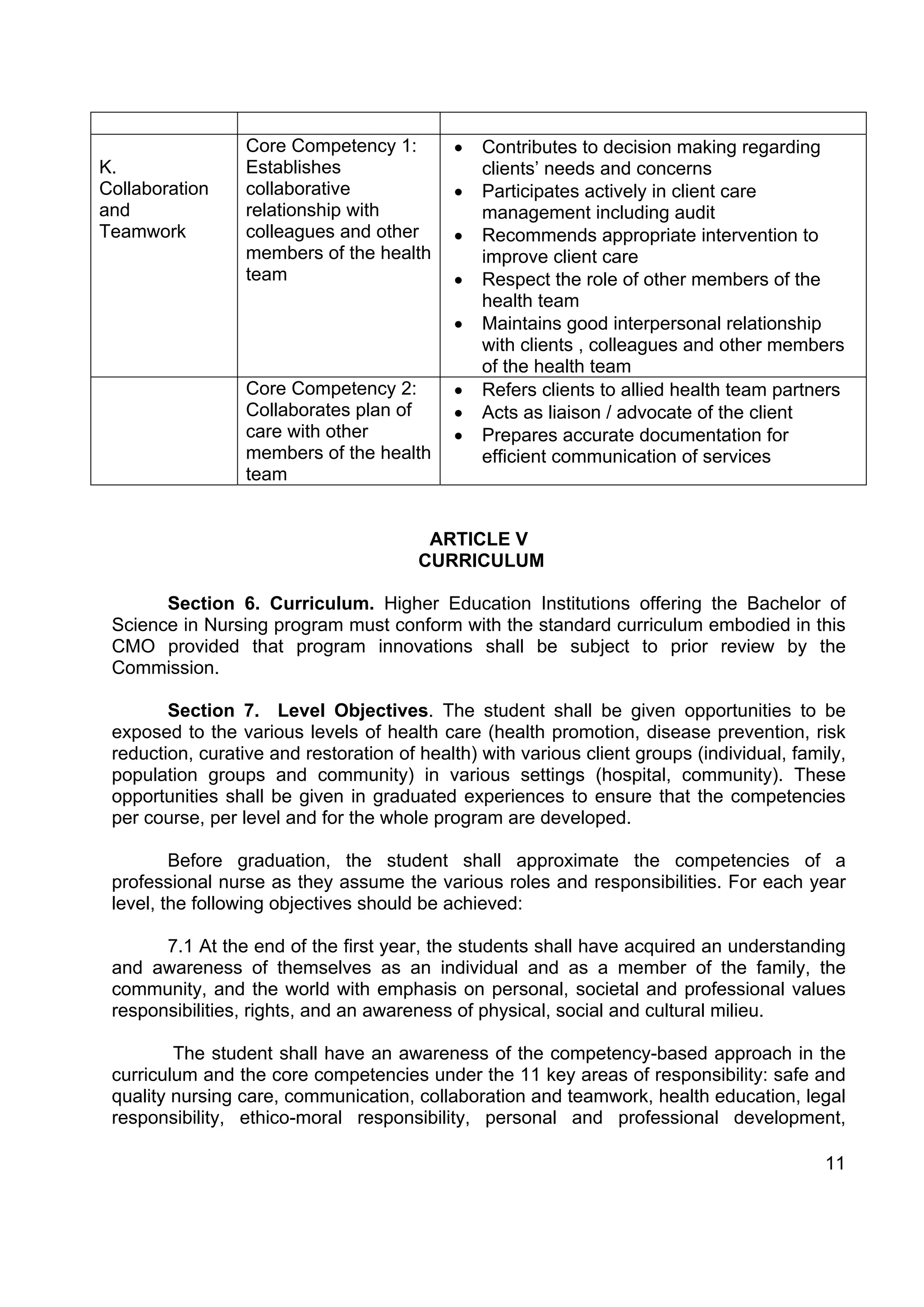
Core Competency 1:        •   Contributes to decision making regarding
K.                Establishes                   clients’ needs and concerns
Collaboration     collaborative             •   Participates actively in client care
and               relationship with             management including audit
Teamwork          colleagues and other      •   Recommends appropriate intervention to
                  members of the health         improve client care
                  team                      •   Respect the role of other members of the
                                                health team
                                            •   Maintains good interpersonal relationship
                                                with clients , colleagues and other members
                                                of the health team
                  Core Competency 2:        •   Refers clients to allied health team partners
                  Collaborates plan of      •   Acts as liaison / advocate of the client
                  care with other           •   Prepares accurate documentation for
                  members of the health         efficient communication of services
                  team


                                         ARTICLE V
                                        CURRICULUM

       Section 6. Curriculum. Higher Education Institutions offering the Bachelor of
 Science in Nursing program must conform with the standard curriculum embodied in this
 CMO provided that program innovations shall be subject to prior review by the
 Commission.

        Section 7. Level Objectives. The student shall be given opportunities to be
 exposed to the various levels of health care (health promotion, disease prevention, risk
 reduction, curative and restoration of health) with various client groups (individual, family,
 population groups and community) in various settings (hospital, community). These
 opportunities shall be given in graduated experiences to ensure that the competencies
 per course, per level and for the whole program are developed.

         Before graduation, the student shall approximate the competencies of a
 professional nurse as they assume the various roles and responsibilities. For each year
 level, the following objectives should be achieved:

       7.1 At the end of the first year, the students shall have acquired an understanding
 and awareness of themselves as an individual and as a member of the family, the
 community, and the world with emphasis on personal, societal and professional values
 responsibilities, rights, and an awareness of physical, social and cultural milieu.

         The student shall have an awareness of the competency-based approach in the
 curriculum and the core competencies under the 11 key areas of responsibility: safe and
 quality nursing care, communication, collaboration and teamwork, health education, legal
 responsibility, ethico-moral responsibility, personal and professional development,

                                                                                            11
quality improvement, research, management of resources and environment, and record
management.

       Specifically, the student shall:

       a. develop a deeper understanding of himself/herself and the multi-factorial
          dimensions of the individual which can affect health and well being;
       b. recognize his/her duty in improving the quality of life not only for himself/herself
          but for others as well;
       c. develop a deeper awareness of his/her rights, duties and responsibilities to
          God, country and the world;
       d. demonstrate beginning skills in the use of the nursing process in the care of
          healthy individual;
       e. explain the theoretical foundation of nursing with the four meta-paradigms as
          guide to his/her nursing practice;
       f. apply the scientific method to his activities wherever possible;
       g. imbibe the values cherished by the nursing profession such as teamwork,
          respect, love of God, integrity and caring;
       h. discuss the competency based BSN program and the core competencies under
          the 11 key areas of responsibility
       i. demonstrate critical thinking skills in relating with self and others.

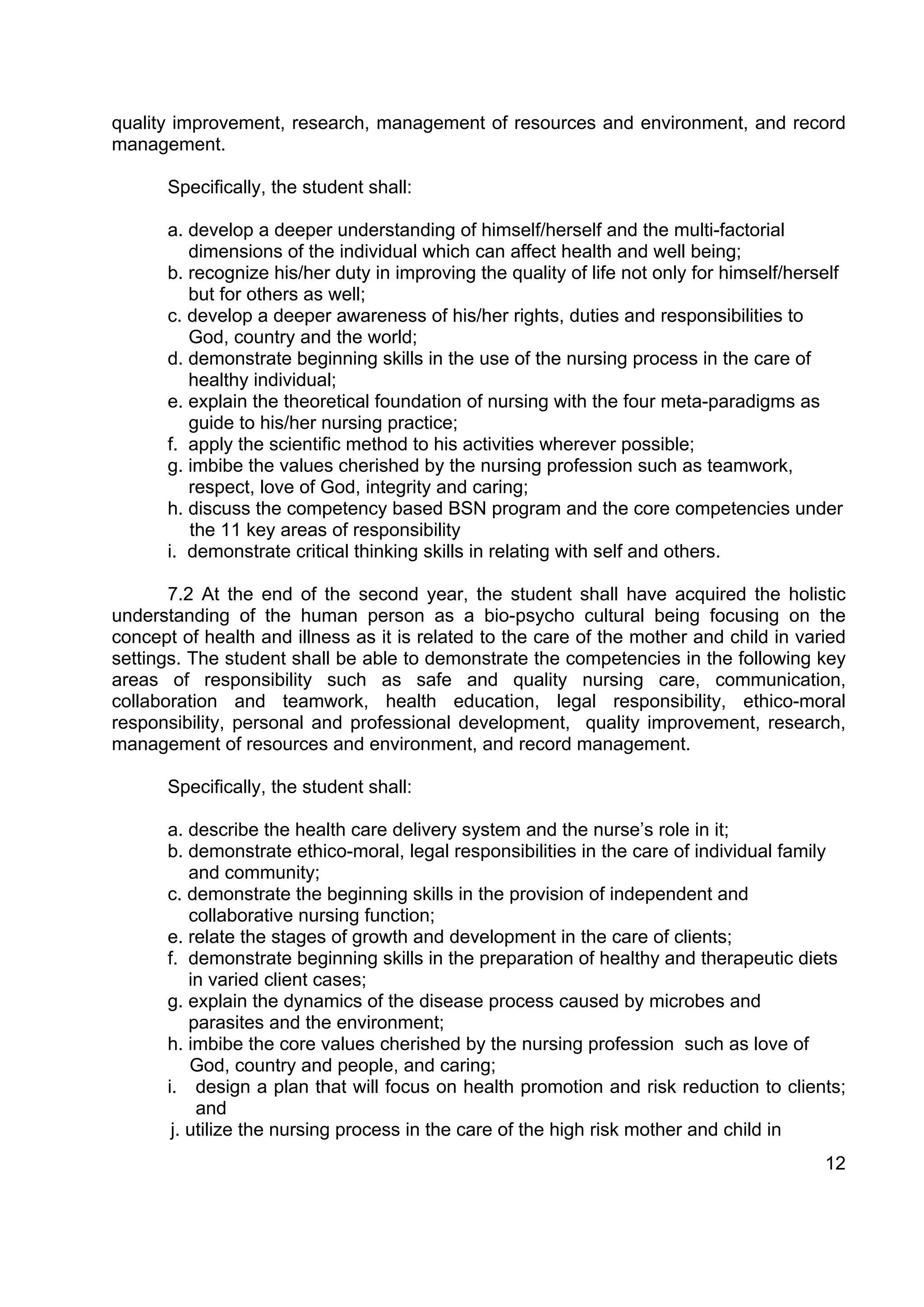
       7.2 At the end of the second year, the student shall have acquired the holistic
understanding of the human person as a bio-psycho cultural being focusing on the
concept of health and illness as it is related to the care of the mother and child in varied
settings. The student shall be able to demonstrate the competencies in the following key
areas of responsibility such as safe and quality nursing care, communication,
collaboration and teamwork, health education, legal responsibility, ethico-moral
responsibility, personal and professional development, quality improvement, research,
management of resources and environment, and record management.

       Specifically, the student shall:

       a. describe the health care delivery system and the nurse’s role in it;
       b. demonstrate ethico-moral, legal responsibilities in the care of individual family
           and community;
       c. demonstrate the beginning skills in the provision of independent and
           collaborative nursing function;
       e. relate the stages of growth and development in the care of clients;
       f. demonstrate beginning skills in the preparation of healthy and therapeutic diets
           in varied client cases;
       g. explain the dynamics of the disease process caused by microbes and
           parasites and the environment;
       h. imbibe the core values cherished by the nursing profession such as love of
           God, country and people, and caring;
       i. design a plan that will focus on health promotion and risk reduction to clients;
            and
        j. utilize the nursing process in the care of the high risk mother and child in
                                                                                           12
the family.

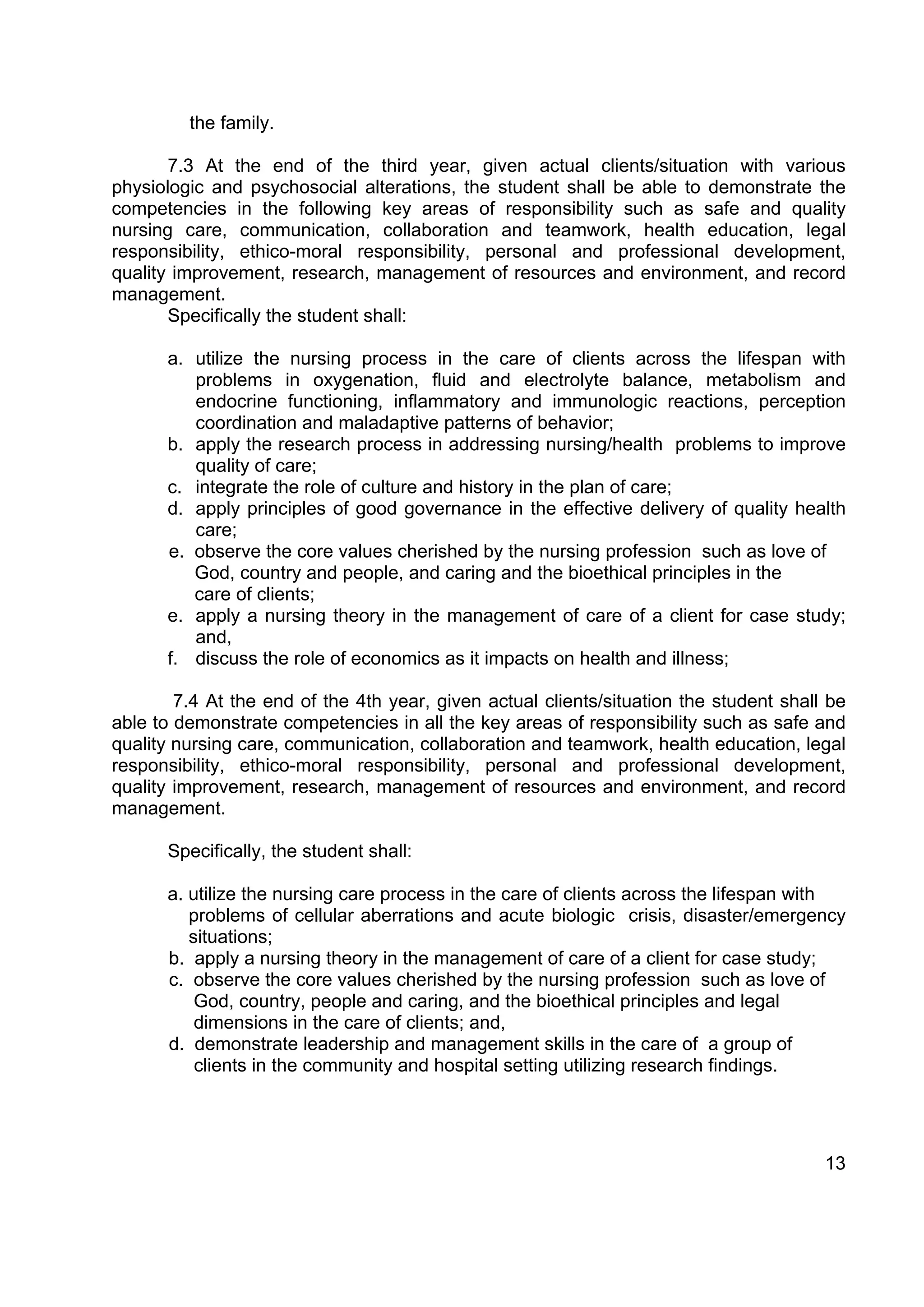
       7.3 At the end of the third year, given actual clients/situation with various
physiologic and psychosocial alterations, the student shall be able to demonstrate the
competencies in the following key areas of responsibility such as safe and quality
nursing care, communication, collaboration and teamwork, health education, legal
responsibility, ethico-moral responsibility, personal and professional development,
quality improvement, research, management of resources and environment, and record
management.
       Specifically the student shall:

      a. utilize the nursing process in the care of clients across the lifespan with
         problems in oxygenation, fluid and electrolyte balance, metabolism and
         endocrine functioning, inflammatory and immunologic reactions, perception
         coordination and maladaptive patterns of behavior;
      b. apply the research process in addressing nursing/health problems to improve
         quality of care;
      c. integrate the role of culture and history in the plan of care;
      d. apply principles of good governance in the effective delivery of quality health
         care;
      e. observe the core values cherished by the nursing profession such as love of
         God, country and people, and caring and the bioethical principles in the
         care of clients;
      e. apply a nursing theory in the management of care of a client for case study;
         and,
      f. discuss the role of economics as it impacts on health and illness;

        7.4 At the end of the 4th year, given actual clients/situation the student shall be
able to demonstrate competencies in all the key areas of responsibility such as safe and
quality nursing care, communication, collaboration and teamwork, health education, legal
responsibility, ethico-moral responsibility, personal and professional development,
quality improvement, research, management of resources and environment, and record
management.

      Specifically, the student shall:

      a. utilize the nursing care process in the care of clients across the lifespan with
         problems of cellular aberrations and acute biologic crisis, disaster/emergency
         situations;
      b. apply a nursing theory in the management of care of a client for case study;
      c. observe the core values cherished by the nursing profession such as love of
          God, country, people and caring, and the bioethical principles and legal
          dimensions in the care of clients; and,
      d. demonstrate leadership and management skills in the care of a group of
          clients in the community and hospital setting utilizing research findings.


                                                                                        13
Section 8. Curriculum Outline

A. Outline of Total Units of General Education (GE) Courses:   87 Units
                                  Courses                           Units
   Language and Humanities                                              21
      English 1 & 2 (Communication Skills)                        6
      English 3 (Speech and Communication)                        3
      Filipino 1 & 2                                              6
      Philosophy of Man                                           3
      Logic and Critical Thinking                                 3
   Mathematics, Natural Sciences & Information Technology               22
      Mathematics (College Algebra)                               3
      Biostatistics                                               3
      General Chemistry 3/2                                       5
      Biochemistry 3/2                                            5
      Physics 2/1                                                 3
      Informatics 2/1                                             3
   Health Sciences                                                        9
      Anatomy & Physiology 3/2                                    5
      Microbiology & Parasitology 3/1                             4
   Social Sciences                                                      15
       General Psychology                                         3
       Sociology/Anthropology                                     3
       Humanities [ World Civilization & Literature]              3
       Economics with Taxation & Land Reform                      3
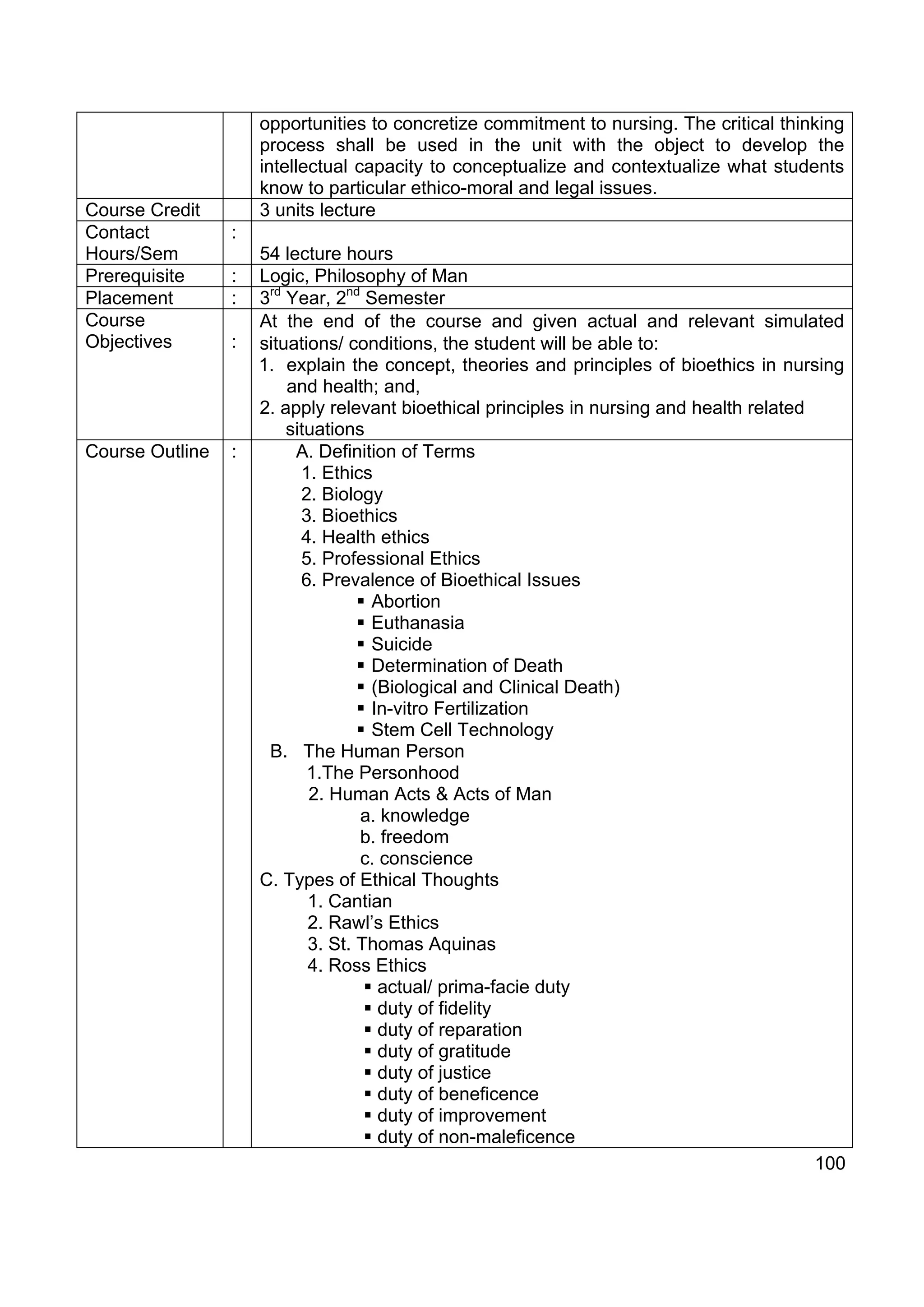
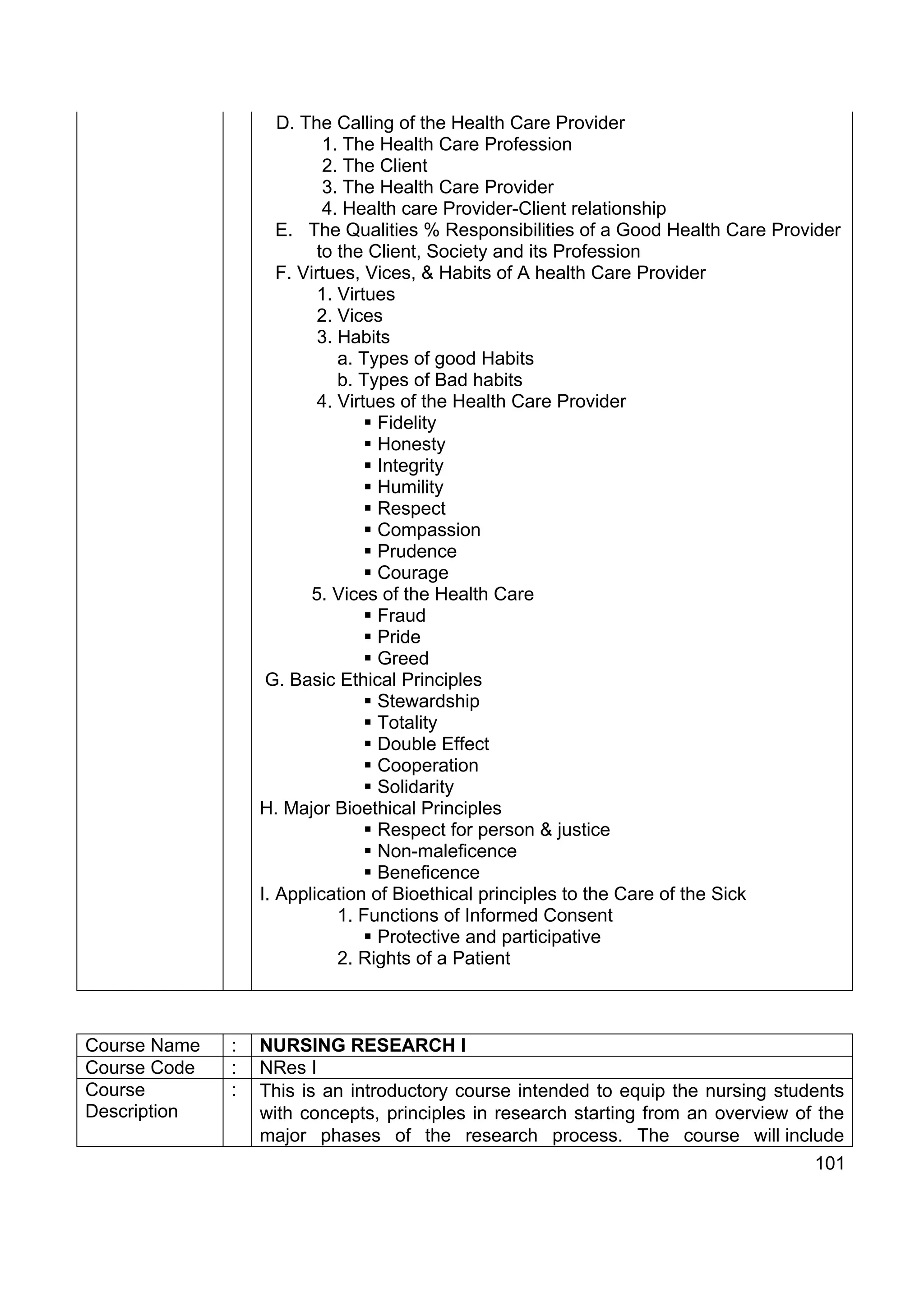
       Bioethics                                                  3
   Mandated Subjects                                                    20
        Life, Works and Writings of Rizal                         3
        Philippine History, Government & Constitution             3
        PE 1 to 4 [2 units each]                                  8
        National Service Training Program 1& 2                    6

B. Outline and Units of Professional Courses                     115 Units
   Theoretical Foundations in Nursing                            3
   Health Assessment (2/1*)                                      3
   Community Health Nursing (3/2*)                               5
   Nutrition and Diet Therapy (3/1)                              4
   Health Education                                              3
   Pharmacology                                                  3
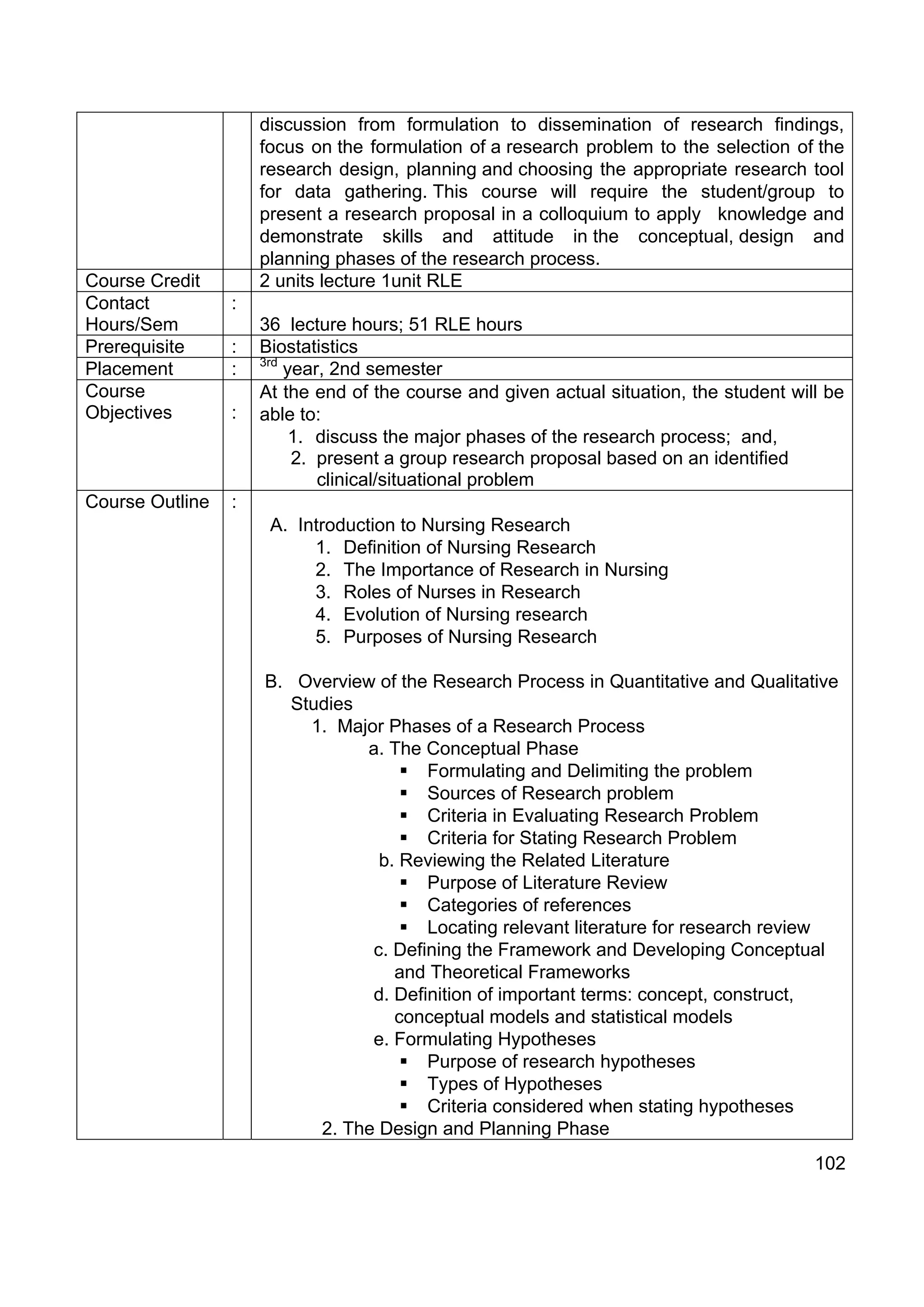
   Nursing Research I (2/1)                                      3
   Nursing Research II                                           2
   Competency Appraisal I                                        3
   Competency Appraisal II                                       3
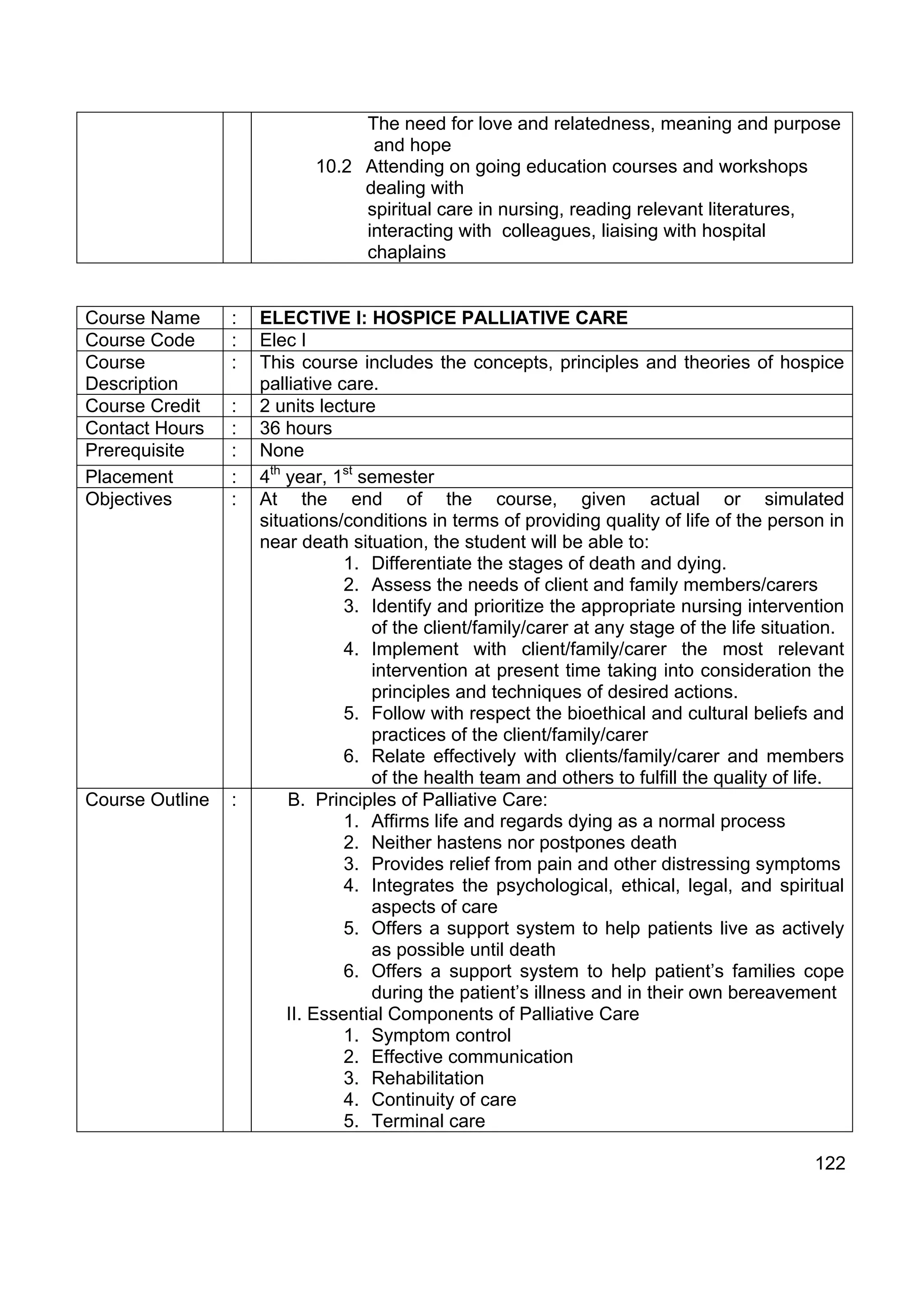
   Elective I**                                                  2
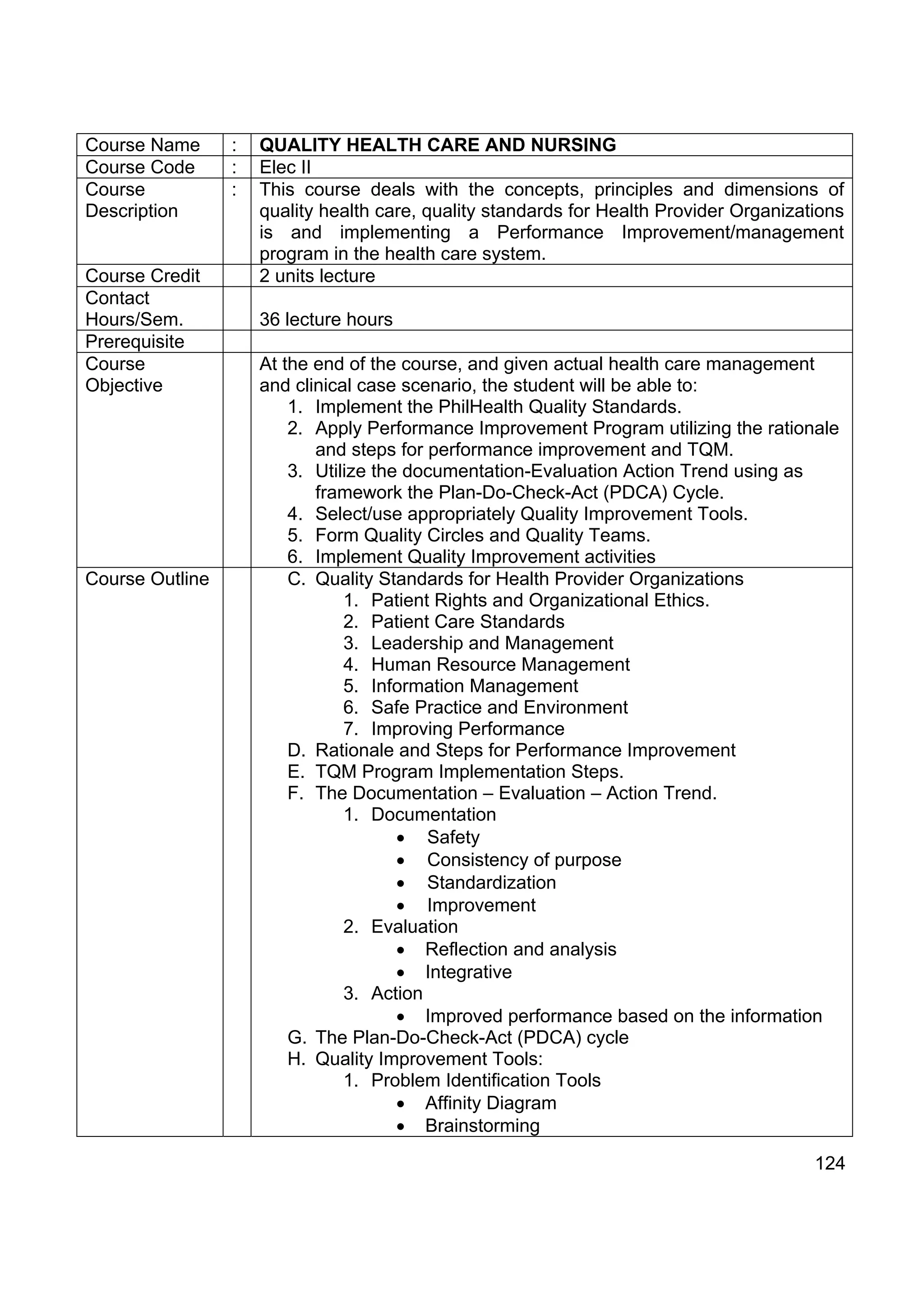
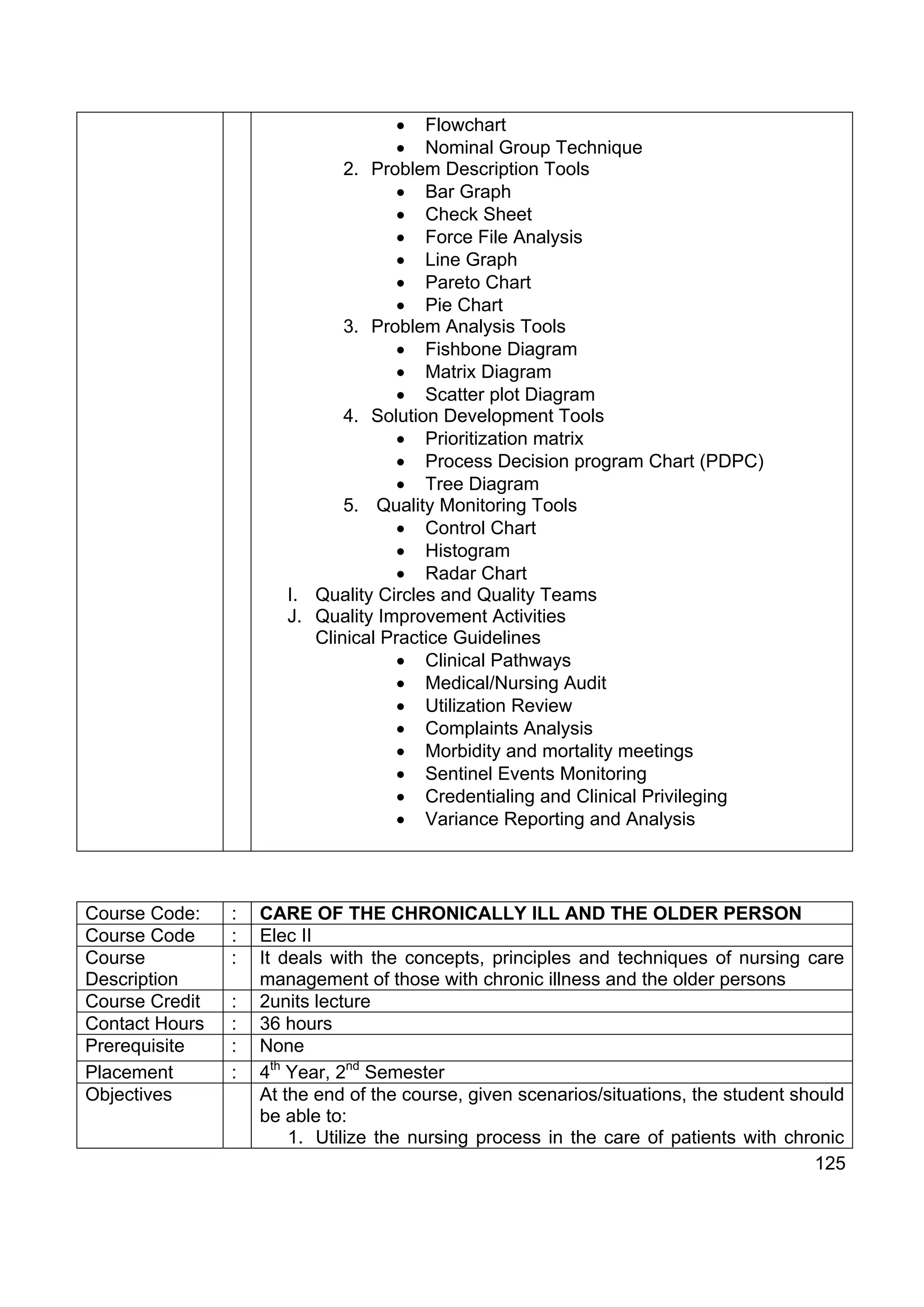
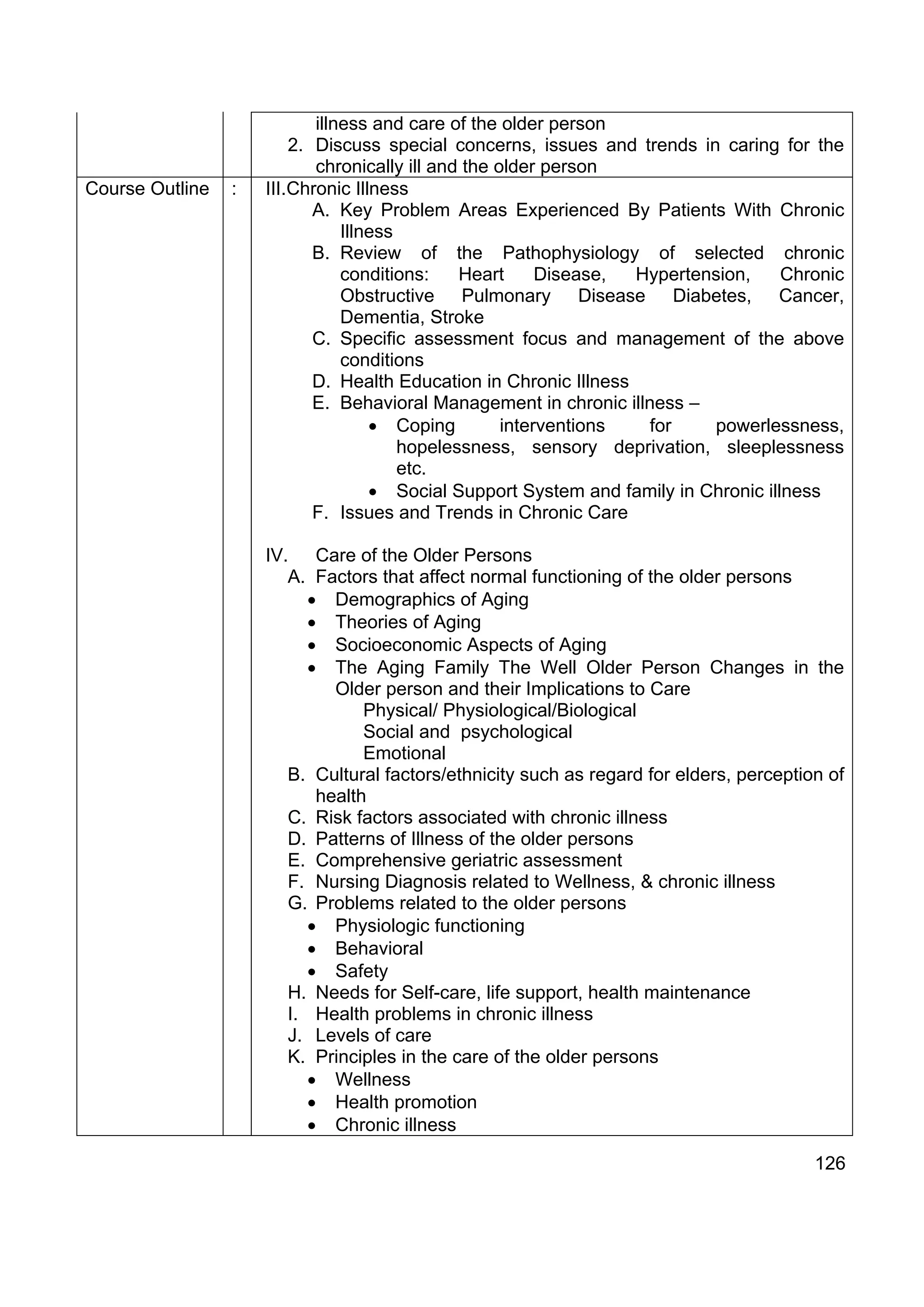
   Elective II**                                                 2
   NCM 100 – Fundamentals of Nursing Practice (3/2*)             5
   NCM 101 Care of Mother, Child and Family (4/4*)               8
                                                                              14
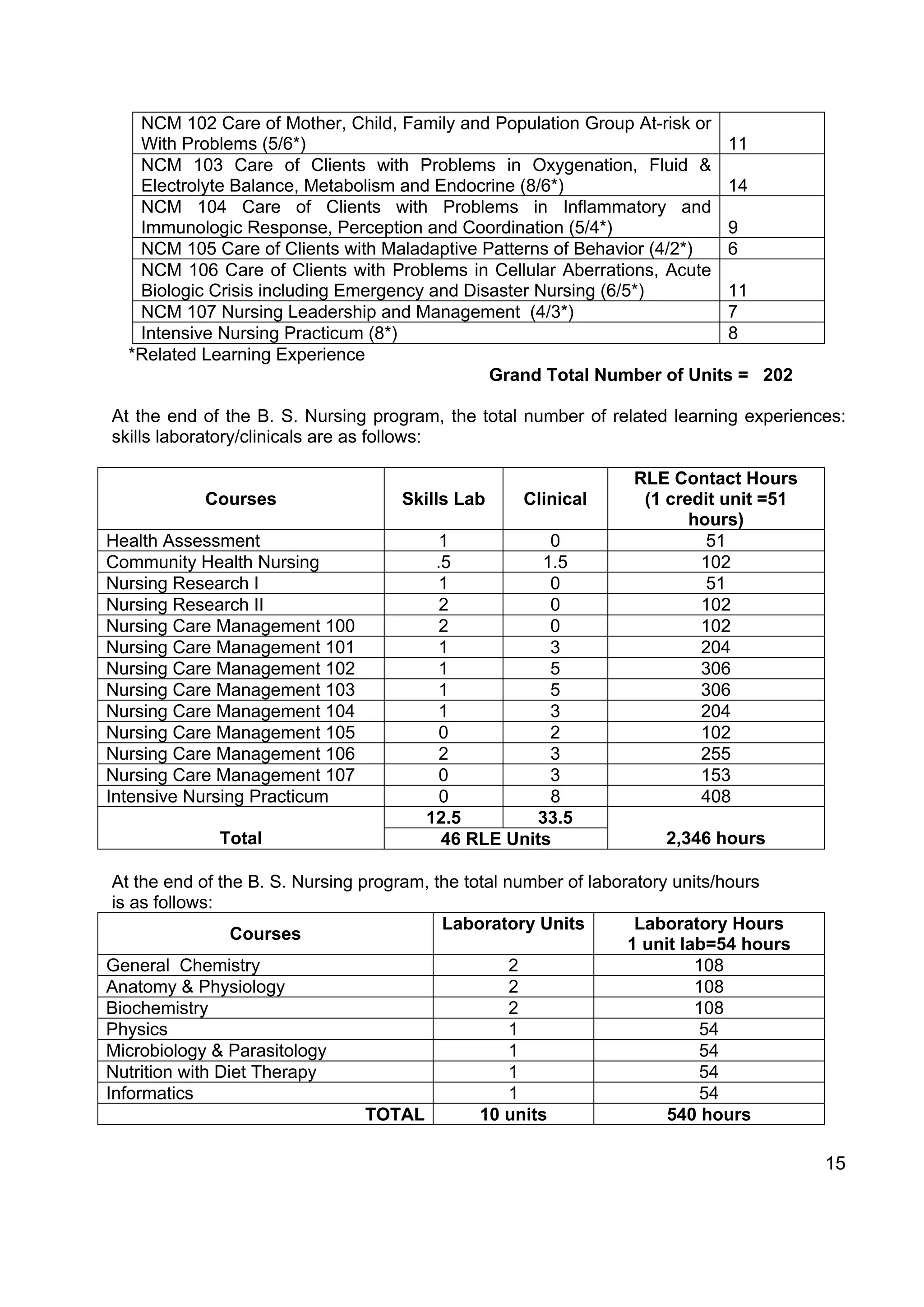
NCM 102 Care of Mother, Child, Family and Population Group At-risk or
   With Problems (5/6*)                                                  11
   NCM 103 Care of Clients with Problems in Oxygenation, Fluid &
   Electrolyte Balance, Metabolism and Endocrine (8/6*)                  14
   NCM 104 Care of Clients with Problems in Inflammatory and
   Immunologic Response, Perception and Coordination (5/4*)              9
   NCM 105 Care of Clients with Maladaptive Patterns of Behavior (4/2*)  6
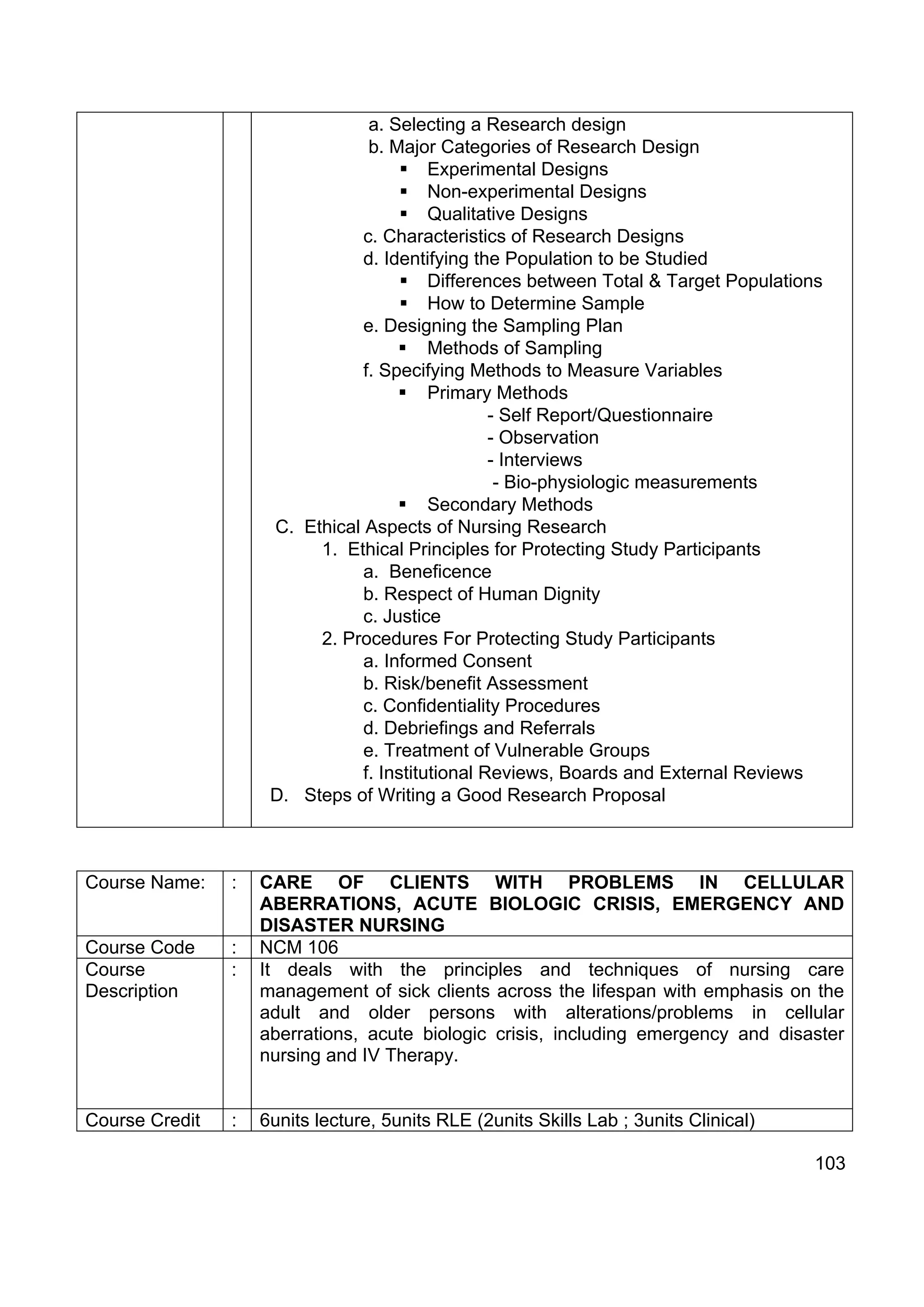
   NCM 106 Care of Clients with Problems in Cellular Aberrations, Acute
   Biologic Crisis including Emergency and Disaster Nursing (6/5*)       11
   NCM 107 Nursing Leadership and Management (4/3*)                      7
   Intensive Nursing Practicum (8*)                                      8
  *Related Learning Experience
                                              Grand Total Number of Units = 202

At the end of the B. S. Nursing program, the total number of related learning experiences:
skills laboratory/clinicals are as follows:

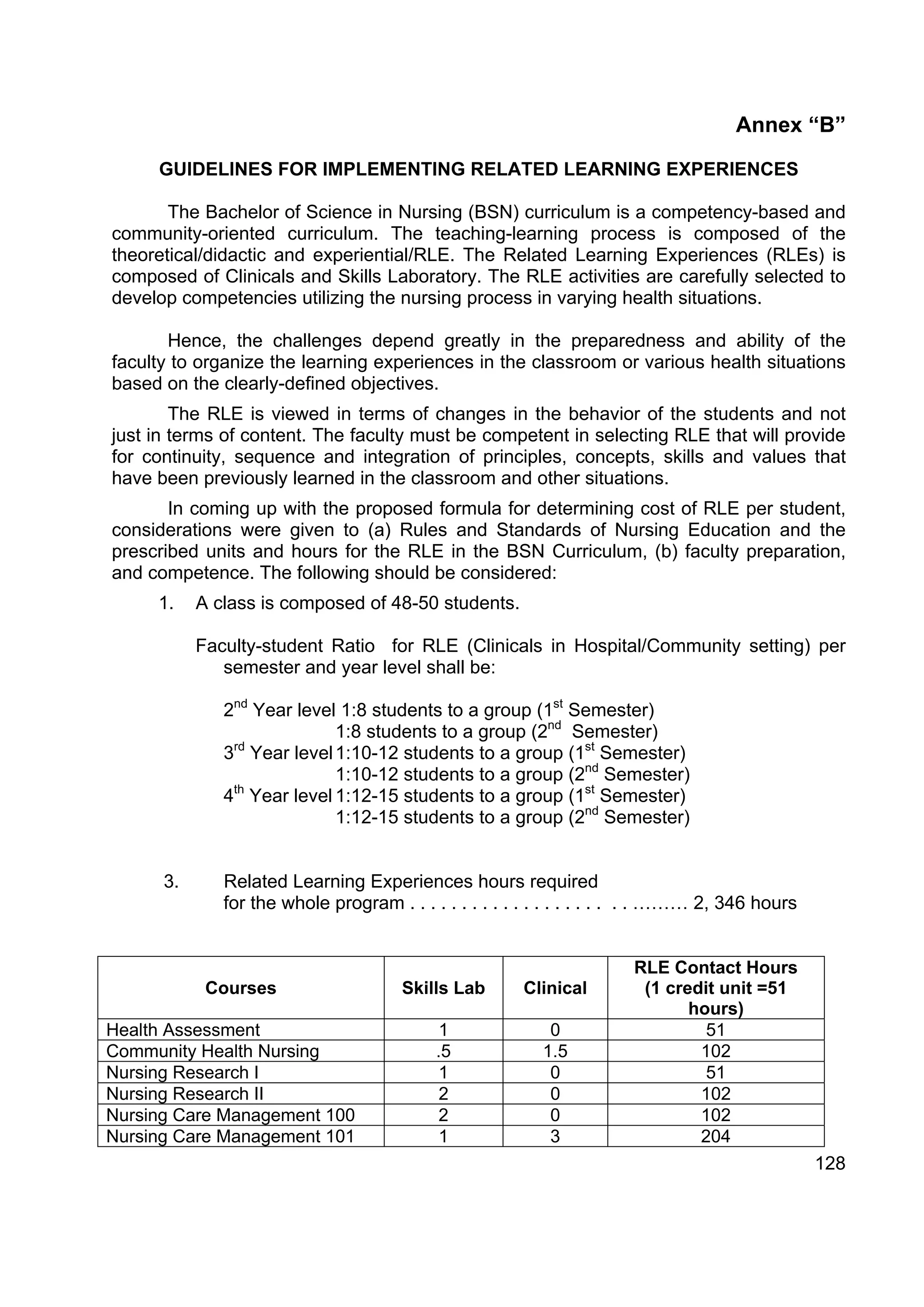
                                                                  RLE Contact Hours
            Courses                  Skills Lab     Clinical       (1 credit unit =51
                                                                         hours)
Health Assessment                         1           0                    51
Community Health Nursing                 .5          1.5                  102
Nursing Research I                        1           0                    51
Nursing Research II                       2           0                   102
Nursing Care Management 100               2           0                   102
Nursing Care Management 101               1           3                   204
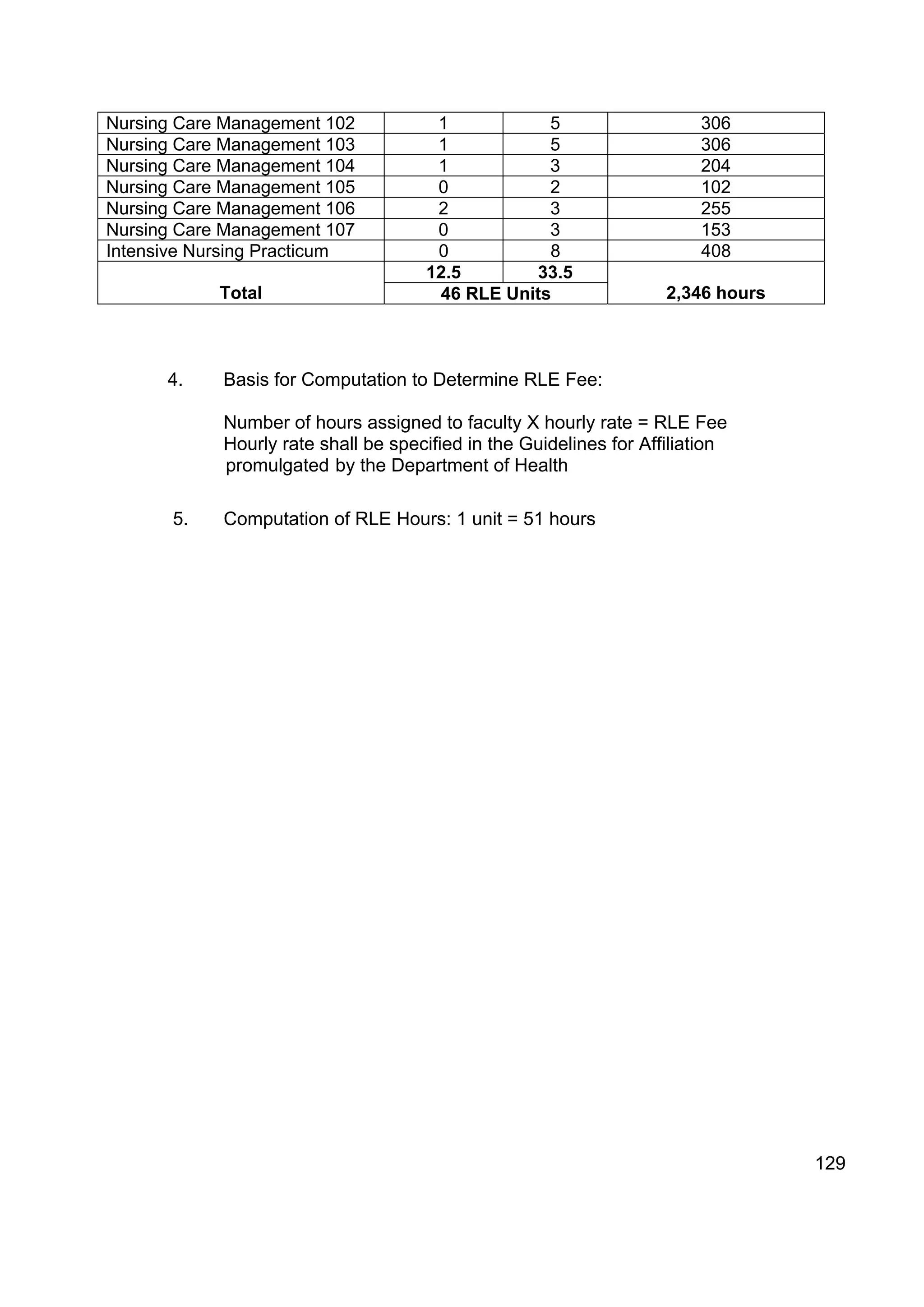
Nursing Care Management 102               1           5                   306
Nursing Care Management 103               1           5                   306
Nursing Care Management 104               1           3                   204
Nursing Care Management 105               0           2                   102
Nursing Care Management 106               2           3                   255
Nursing Care Management 107               0           3                   153
Intensive Nursing Practicum               0           8                   408
                                        12.5        33.5
              Total                       46 RLE Units                2,346 hours

 At the end of the B. S. Nursing program, the total number of laboratory units/hours
 is as follows:
                                           Laboratory Units         Laboratory Hours
                 Courses
                                                                   1 unit lab=54 hours
General Chemistry                                    2                      108
Anatomy & Physiology                                 2                      108
Biochemistry                                         2                      108
Physics                                              1                       54
Microbiology & Parasitology                          1                       54
Nutrition with Diet Therapy                          1                       54
Informatics                                          1                       54
                                  TOTAL         10 units                540 hours

                                                                                         15
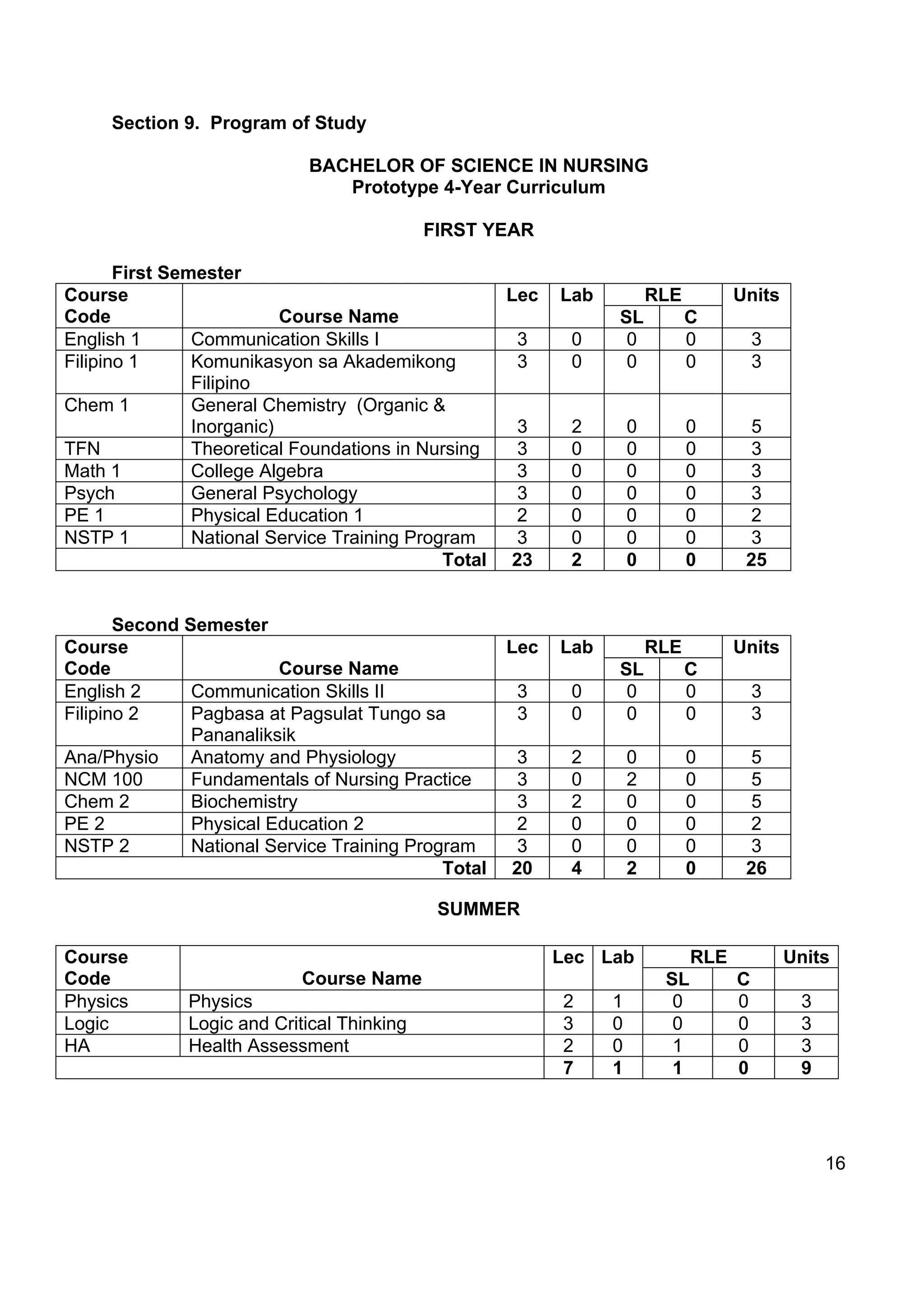
Section 9. Program of Study

                             BACHELOR OF SCIENCE IN NURSING
                                Prototype 4-Year Curriculum

                                            FIRST YEAR

       First Semester
Course                                                Lec   Lab           RLE         Units
Code                       Course Name                            SL            C
English 1       Communication Skills I                 3     0     0            0         3
Filipino 1      Komunikasyon sa Akademikong            3     0     0            0         3
                Filipino
Chem 1          General Chemistry (Organic &
                Inorganic)                             3     2        0         0       5
TFN             Theoretical Foundations in Nursing     3     0        0         0       3
Math 1          College Algebra                       3      0        0         0      3
Psych           General Psychology                     3     0        0         0       3
PE 1            Physical Education 1                  2      0        0         0      2
NSTP 1          National Service Training Program      3     0        0         0       3
                                              Total   23     2        0         0      25


       Second Semester
Course                                                Lec   Lab           RLE         Units
Code                     Course Name                              SL            C
English 2      Communication Skills II                 3     0     0            0         3
Filipino 2     Pagbasa at Pagsulat Tungo sa            3     0     0            0         3
               Pananaliksik
Ana/Physio     Anatomy and Physiology                 3      2        0         0       5
NCM 100        Fundamentals of Nursing Practice        3     0        2         0       5
Chem 2         Biochemistry                            3     2        0         0       5
PE 2           Physical Education 2                   2      0        0         0      2
NSTP 2         National Service Training Program       3     0        0         0       3
                                             Total    20     4        2         0      26

                                             SUMMER

Course                                                      Lec Lab             RLE           Units
Code                        Course Name                                    SL         C
Physics       Physics                                       2     1         0         0        3
Logic         Logic and Critical Thinking                   3     0         0         0        3
HA            Health Assessment                             2     0         1         0        3
                                                            7     1         1         0        9


                                                                                                   16
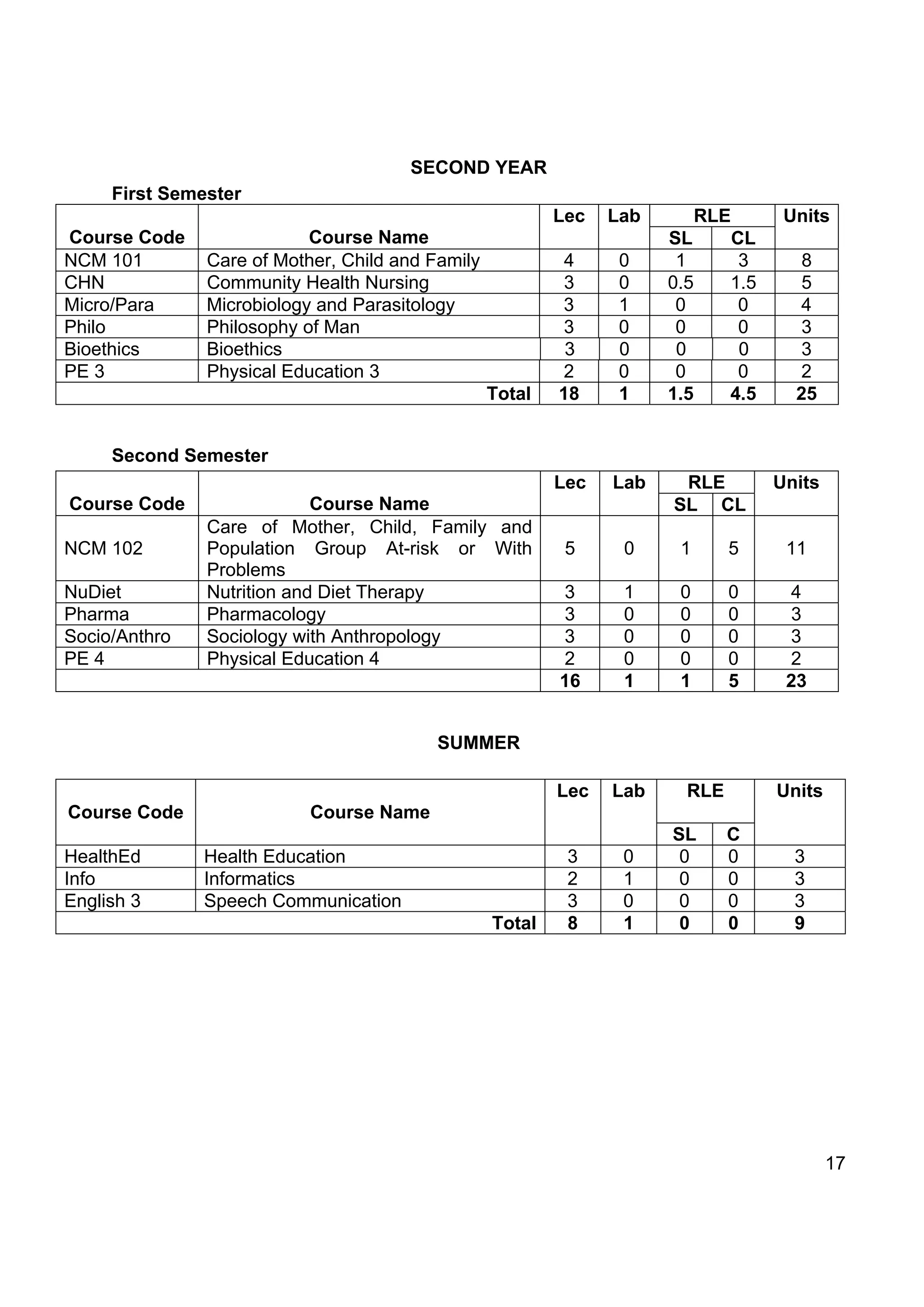
SECOND YEAR
     First Semester
                                                          Lec   Lab         RLE      Units
Course Code                Course Name                                SL      CL
NCM 101        Care of Mother, Child and Family            4     0     1       3       8
CHN            Community Health Nursing                    3     0    0.5     1.5      5
Micro/Para     Microbiology and Parasitology              3      1     0       0      4
Philo          Philosophy of Man                          3      0     0       0      3
Bioethics      Bioethics                                   3     0     0       0      3
PE 3           Physical Education 3                       2      0     0       0      2
                                                  Total   18     1    1.5     4.5     25


     Second Semester
                                                          Lec   Lab    RLE          Units
Course Code                 Course Name                               SL CL
               Care of Mother, Child, Family and
NCM 102        Population Group At-risk or With            5     0     1      5      11
               Problems
NuDiet         Nutrition and Diet Therapy                 3      1     0      0      4
Pharma         Pharmacology                               3      0     0      0      3
Socio/Anthro   Sociology with Anthropology                3      0     0      0      3
PE 4           Physical Education 4                       2      0     0      0      2
                                                          16     1     1      5      23


                                          SUMMER

                                                          Lec   Lab     RLE         Units
Course Code                Course Name
                                                                      SL      C
HealthEd       Health Education                            3     0     0      0       3
Info           Informatics                                 2     1     0      0       3
English 3      Speech Communication                        3     0     0      0       3
                                                  Total    8     1     0      0       9


                                                                                            17
THIRD YEAR

    First Semester
Course Code                Course Name                  Lec    Lab      RLE         Units
                                                                      SL    C
                Care of Clients with Problems in
NCM 103         Oxygenation, Fluid & Electrolyte         8      0      1      5         14
                Balance, Metabolism and Endocrine
Biostat         Biostatistics                            3      0      0      0         3
Econ            Economics with Taxation & Land           3      0      0      0         3
                Reform
Humanities      Humanities [World Civilization and       3      0      0      0         3
                Literature]
Rizal           Life, Works and Writings of Rizal       3       0      0      0         3
                                                Total   20      0      1      5         26


        Second Semester

Course                    Course Name                   Lec    Lab      RLE         Units
Code                                                                  SL    C
                Care of Clients with Problems in
NCM 104         Inflammatory      and     Immunologic  5       0        1     3         9
                Response,         Perception      and
                Coordination
NCM 105         Care of Clients with Maladaptive       4       0        0     2*        6
                Patterns of Behavior
PhilHist        Philippine History, Government &       3       0        0     0         3
                Constitution
Nres 1          Nursing Research 1                     2       0        1     0         3
Elective 1      Elective Course 1                      2       0        0     0         2
                                                 Total 16      0        2     5         23
      *The clinicals in NCM 105 may be done in Summer for Cross affiliation purposes.


                                                                                             18
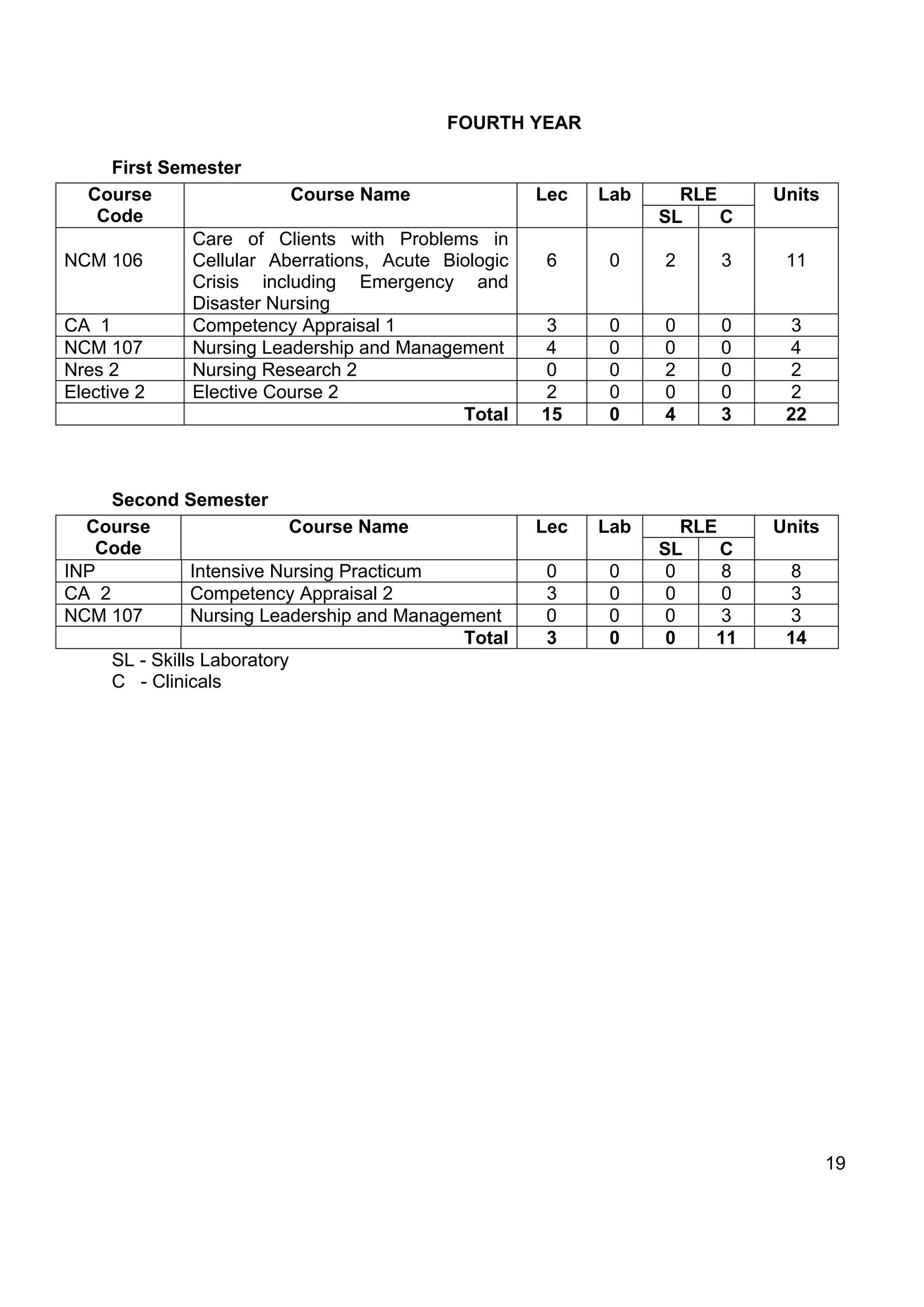
FOURTH YEAR

      First Semester
   Course                 Course Name                 Lec   Lab     RLE      Units
    Code                                                          SL    C
               Care of Clients with Problems in
NCM 106        Cellular Aberrations, Acute Biologic    6     0    2     3     11
               Crisis including Emergency and
               Disaster Nursing
CA 1           Competency Appraisal 1                 3      0    0     0      3
NCM 107        Nursing Leadership and Management      4      0    0     0     4
Nres 2         Nursing Research 2                     0      0    2     0     2
Elective 2     Elective Course 2                      2      0    0     0     2
                                             Total    15     0    4     3     22


     Second Semester
  Course                    Course Name               Lec   Lab      RLE     Units
   Code                                                           SL     C
INP             Intensive Nursing Practicum           0      0     0     8    8
CA 2            Competency Appraisal 2                3      0     0     0     3
NCM 107         Nursing Leadership and Management     0      0     0     3    3
                                             Total    3      0     0    11    14
     SL - Skills Laboratory
     C - Clinicals


                                                                                     19
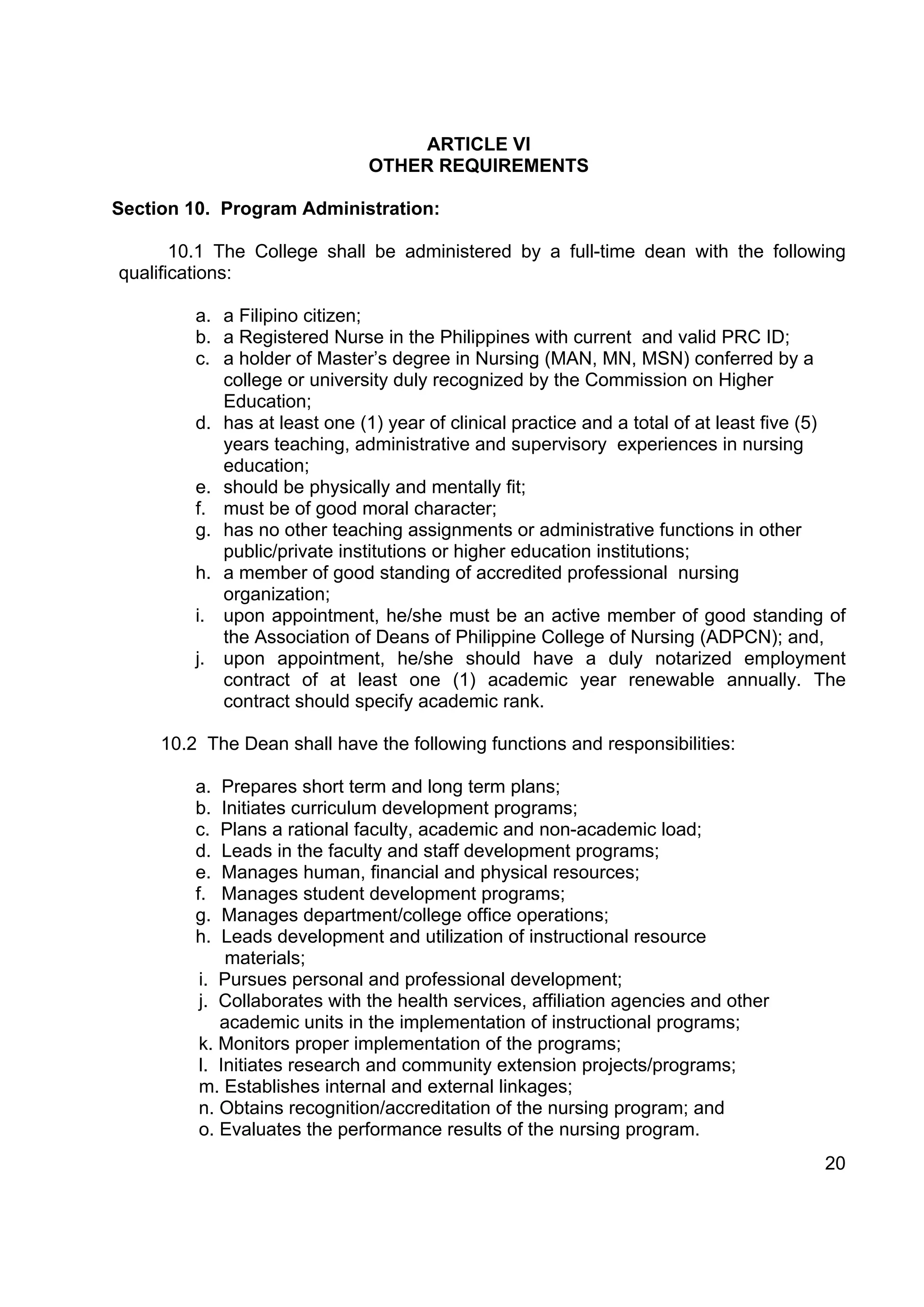
ARTICLE VI
                              OTHER REQUIREMENTS

Section 10. Program Administration:

       10.1 The College shall be administered by a full-time dean with the following
qualifications:

         a. a Filipino citizen;
         b. a Registered Nurse in the Philippines with current and valid PRC ID;
         c. a holder of Master’s degree in Nursing (MAN, MN, MSN) conferred by a
            college or university duly recognized by the Commission on Higher
            Education;
         d. has at least one (1) year of clinical practice and a total of at least five (5)
            years teaching, administrative and supervisory experiences in nursing
            education;
         e. should be physically and mentally fit;
         f. must be of good moral character;
         g. has no other teaching assignments or administrative functions in other
            public/private institutions or higher education institutions;
         h. a member of good standing of accredited professional nursing
            organization;
         i. upon appointment, he/she must be an active member of good standing of
            the Association of Deans of Philippine College of Nursing (ADPCN); and,
         j. upon appointment, he/she should have a duly notarized employment
            contract of at least one (1) academic year renewable annually. The
            contract should specify academic rank.

     10.2 The Dean shall have the following functions and responsibilities:

         a.  Prepares short term and long term plans;
         b.  Initiates curriculum development programs;
         c. Plans a rational faculty, academic and non-academic load;
         d.  Leads in the faculty and staff development programs;
         e.  Manages human, financial and physical resources;
         f.  Manages student development programs;
         g.  Manages department/college office operations;
         h.  Leads development and utilization of instructional resource
              materials;
         i. Pursues personal and professional development;
         j. Collaborates with the health services, affiliation agencies and other
            academic units in the implementation of instructional programs;
         k. Monitors proper implementation of the programs;
         l. Initiates research and community extension projects/programs;
         m. Establishes internal and external linkages;
         n. Obtains recognition/accreditation of the nursing program; and
         o. Evaluates the performance results of the nursing program.
                                                                                        20
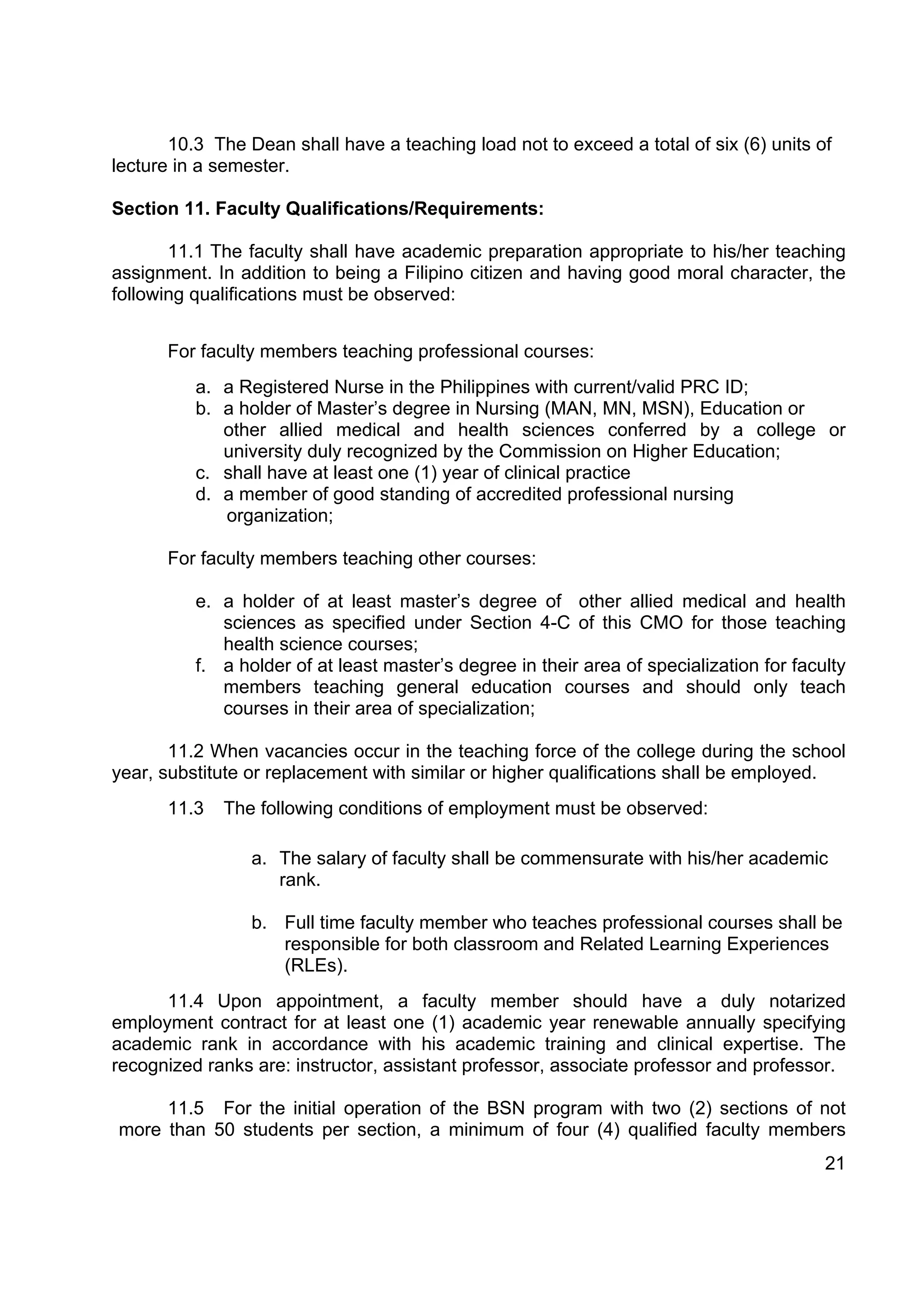
10.3 The Dean shall have a teaching load not to exceed a total of six (6) units of
lecture in a semester.

Section 11. Faculty Qualifications/Requirements:

       11.1 The faculty shall have academic preparation appropriate to his/her teaching
assignment. In addition to being a Filipino citizen and having good moral character, the
following qualifications must be observed:


      For faculty members teaching professional courses:
          a. a Registered Nurse in the Philippines with current/valid PRC ID;
          b. a holder of Master’s degree in Nursing (MAN, MN, MSN), Education or
             other allied medical and health sciences conferred by a college or
             university duly recognized by the Commission on Higher Education;
          c. shall have at least one (1) year of clinical practice
          d. a member of good standing of accredited professional nursing
             organization;

      For faculty members teaching other courses:

          e. a holder of at least master’s degree of other allied medical and health
             sciences as specified under Section 4-C of this CMO for those teaching
             health science courses;
          f. a holder of at least master’s degree in their area of specialization for faculty
             members teaching general education courses and should only teach
             courses in their area of specialization;

       11.2 When vacancies occur in the teaching force of the college during the school
year, substitute or replacement with similar or higher qualifications shall be employed.
      11.3   The following conditions of employment must be observed:

                 a. The salary of faculty shall be commensurate with his/her academic
                    rank.

                 b. Full time faculty member who teaches professional courses shall be
                    responsible for both classroom and Related Learning Experiences
                    (RLEs).
      11.4 Upon appointment, a faculty member should have a duly notarized
employment contract for at least one (1) academic year renewable annually specifying
academic rank in accordance with his academic training and clinical expertise. The
recognized ranks are: instructor, assistant professor, associate professor and professor.

     11.5 For the initial operation of the BSN program with two (2) sections of not
more than 50 students per section, a minimum of four (4) qualified faculty members
                                                                                          21
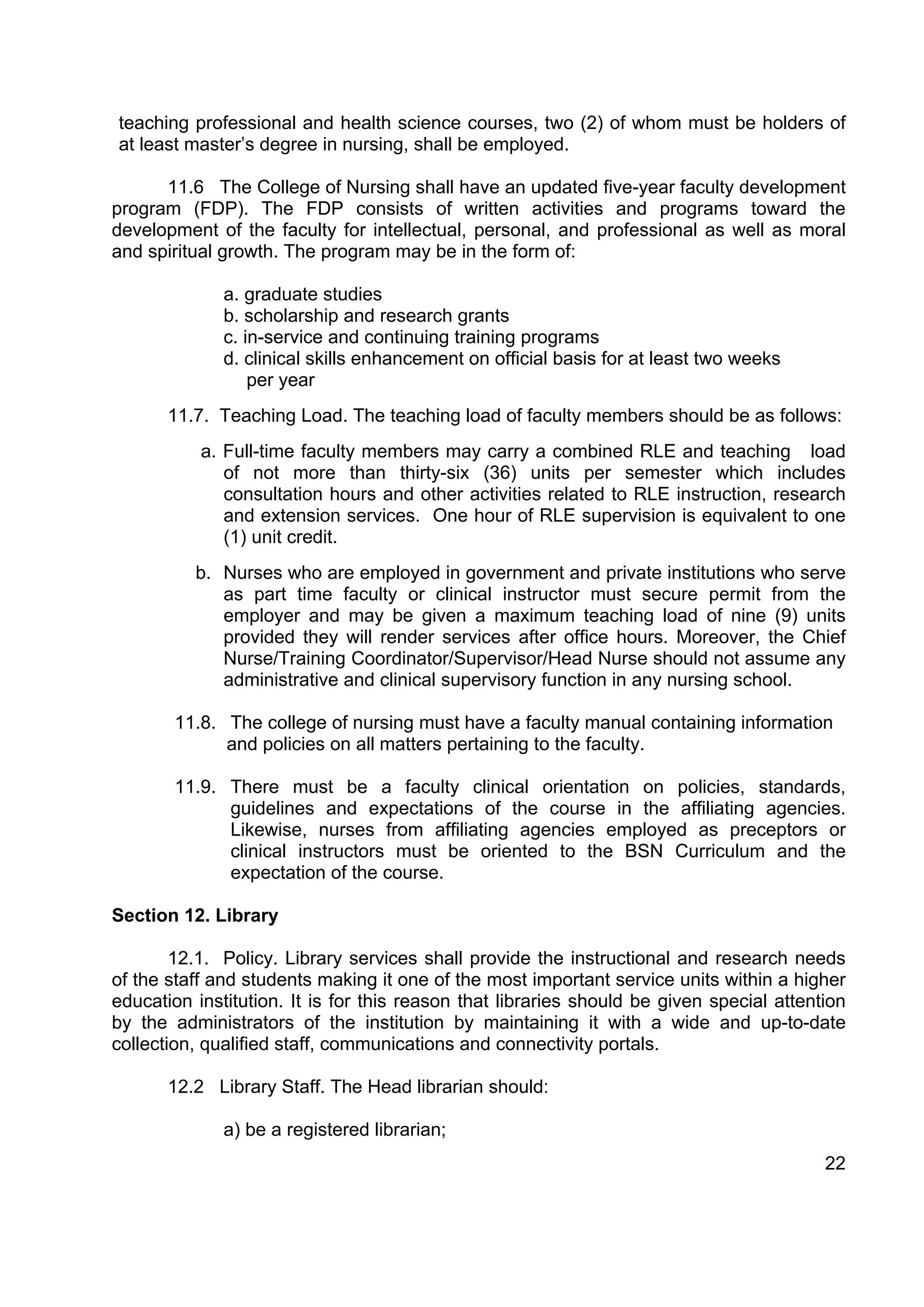
teaching professional and health science courses, two (2) of whom must be holders of
at least master’s degree in nursing, shall be employed.

      11.6 The College of Nursing shall have an updated five-year faculty development
program (FDP). The FDP consists of written activities and programs toward the
development of the faculty for intellectual, personal, and professional as well as moral
and spiritual growth. The program may be in the form of:

              a. graduate studies
              b. scholarship and research grants
              c. in-service and continuing training programs
              d. clinical skills enhancement on official basis for at least two weeks
                  per year
       11.7. Teaching Load. The teaching load of faculty members should be as follows:
           a. Full-time faculty members may carry a combined RLE and teaching load
              of not more than thirty-six (36) units per semester which includes
              consultation hours and other activities related to RLE instruction, research
              and extension services. One hour of RLE supervision is equivalent to one
              (1) unit credit.
          b. Nurses who are employed in government and private institutions who serve
             as part time faculty or clinical instructor must secure permit from the
             employer and may be given a maximum teaching load of nine (9) units
             provided they will render services after office hours. Moreover, the Chief
             Nurse/Training Coordinator/Supervisor/Head Nurse should not assume any
             administrative and clinical supervisory function in any nursing school.

       11.8. The college of nursing must have a faculty manual containing information
             and policies on all matters pertaining to the faculty.

       11.9. There must be a faculty clinical orientation on policies, standards,
             guidelines and expectations of the course in the affiliating agencies.
             Likewise, nurses from affiliating agencies employed as preceptors or
             clinical instructors must be oriented to the BSN Curriculum and the
             expectation of the course.

Section 12. Library

        12.1. Policy. Library services shall provide the instructional and research needs
of the staff and students making it one of the most important service units within a higher
education institution. It is for this reason that libraries should be given special attention
by the administrators of the institution by maintaining it with a wide and up-to-date
collection, qualified staff, communications and connectivity portals.

       12.2 Library Staff. The Head librarian should:

              a) be a registered librarian;
                                                                                          22
b) be a holder of Masters’ degree in Library Science; and,
              c) have an appropriate professional training.

             The library should be staffed with one full time registered librarian for every
       1,000 students and a ratio of 1 librarian to 2 staff/clerks.

        12.3. Library Holdings. Library holdings should conform with existing requirements
for libraries. There should have five (5) book titles per professional subject found in the
curriculum at a ratio of one (1) volume per fifteen (15) students enrolled in the program.
Book titles must be of recent edition, published within the last five (5) years. The higher
education institution [HEI] is encouraged to maintain periodicals and other non-print
materials relevant to the nursing program to aid the faculty and students in their
academic work. CD-ROMs may complement a library’s book collection but should not be
considered replacement for the same.

             a. Opening of new BSN program shall have at least 3,000 total number of
       books accessioned, 30% of which shall consist of professional books. Ten percent
       (10%) of the total professional book collection shall be of Filipiniana collection.

              b. The library collection during the recognition of the BS Nursing program
       shall double the book collection specified in 12.3.a.

        12.4. Journals. For the opening of new BS nursing program, the HEI shall have a
regular and updated subscription to at least seven (7) professional foreign nursing
journals and at least two (2) local journals in the following areas:

             a. Maternal and Child Nursing
             b. General Nursing
             c. Nursing Research
             d. Psychiatric Nursing
             e. Nursing Management/Leadership
             f. Pediatric Nursing
             g. Medical-Surgical Nursing

              For the recognition of the BS nursing program, the subscription of foreign
       nursing journals should be regularly maintained. The number of copies of these
       journals shall be increased depending upon the student population.

               In addition to the core book collection, a core periodical collection of
       current and relevant titles (local and foreign) shall also be provided. Periodicals
       shall include serials, magazines and newspapers. A minimum of five (5) titles is
       required. The recommended number of periodicals based on enrollment are as
       follows:

                                                     No. of copies of
                        Enrollment                      Periodicals
               For every 250 students                5 copies per title

                                                                                         23
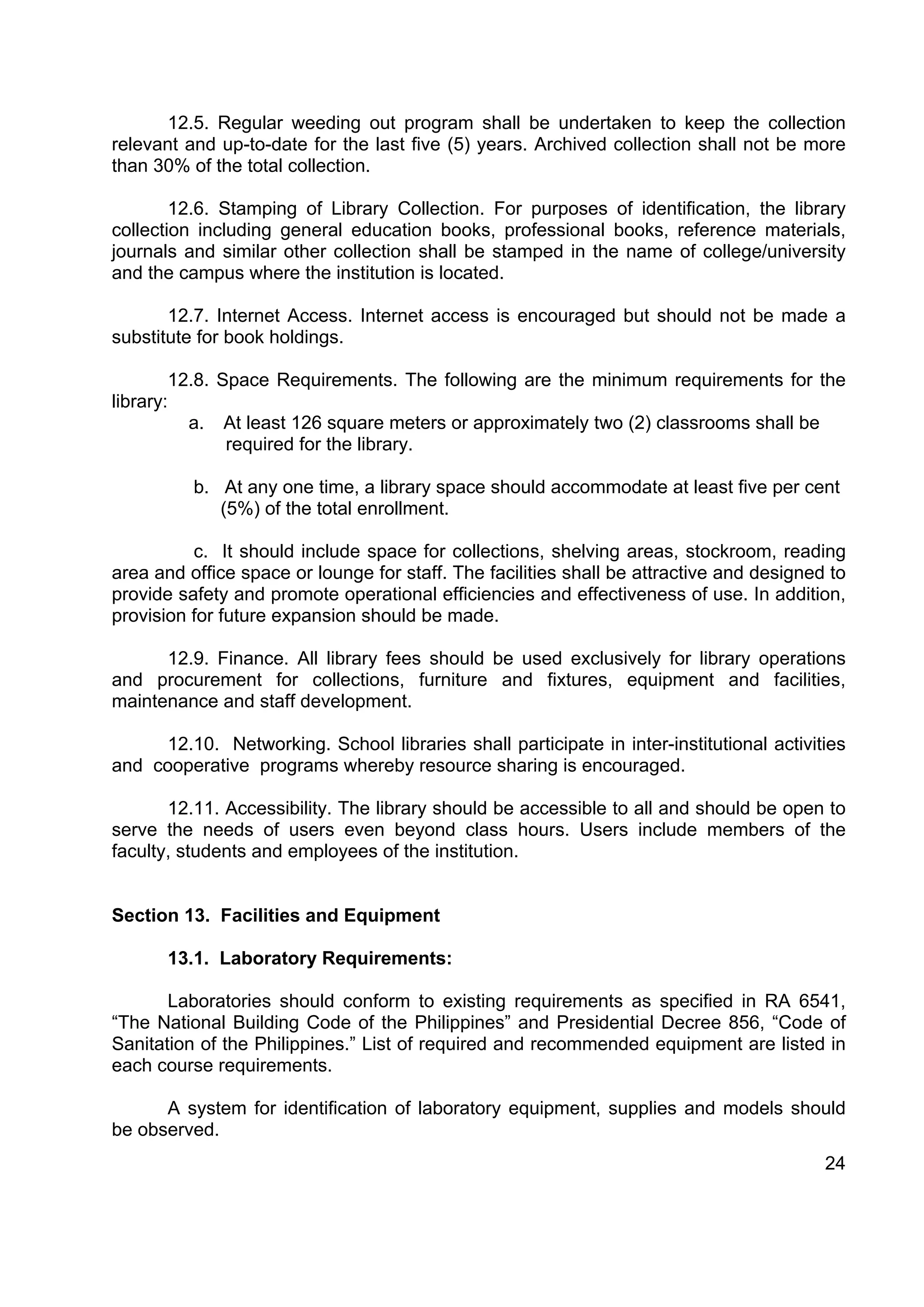
12.5. Regular weeding out program shall be undertaken to keep the collection
relevant and up-to-date for the last five (5) years. Archived collection shall not be more
than 30% of the total collection.

        12.6. Stamping of Library Collection. For purposes of identification, the library
collection including general education books, professional books, reference materials,
journals and similar other collection shall be stamped in the name of college/university
and the campus where the institution is located.

       12.7. Internet Access. Internet access is encouraged but should not be made a
substitute for book holdings.

        12.8. Space Requirements. The following are the minimum requirements for the
library:
          a. At least 126 square meters or approximately two (2) classrooms shall be
               required for the library.

          b. At any one time, a library space should accommodate at least five per cent
             (5%) of the total enrollment.

          c. It should include space for collections, shelving areas, stockroom, reading
area and office space or lounge for staff. The facilities shall be attractive and designed to
provide safety and promote operational efficiencies and effectiveness of use. In addition,
provision for future expansion should be made.

      12.9. Finance. All library fees should be used exclusively for library operations
and procurement for collections, furniture and fixtures, equipment and facilities,
maintenance and staff development.

     12.10. Networking. School libraries shall participate in inter-institutional activities
and cooperative programs whereby resource sharing is encouraged.

       12.11. Accessibility. The library should be accessible to all and should be open to
serve the needs of users even beyond class hours. Users include members of the
faculty, students and employees of the institution.


Section 13. Facilities and Equipment

       13.1. Laboratory Requirements:

       Laboratories should conform to existing requirements as specified in RA 6541,
“The National Building Code of the Philippines” and Presidential Decree 856, “Code of
Sanitation of the Philippines.” List of required and recommended equipment are listed in
each course requirements.

      A system for identification of laboratory equipment, supplies and models should
be observed.
                                                                                          24
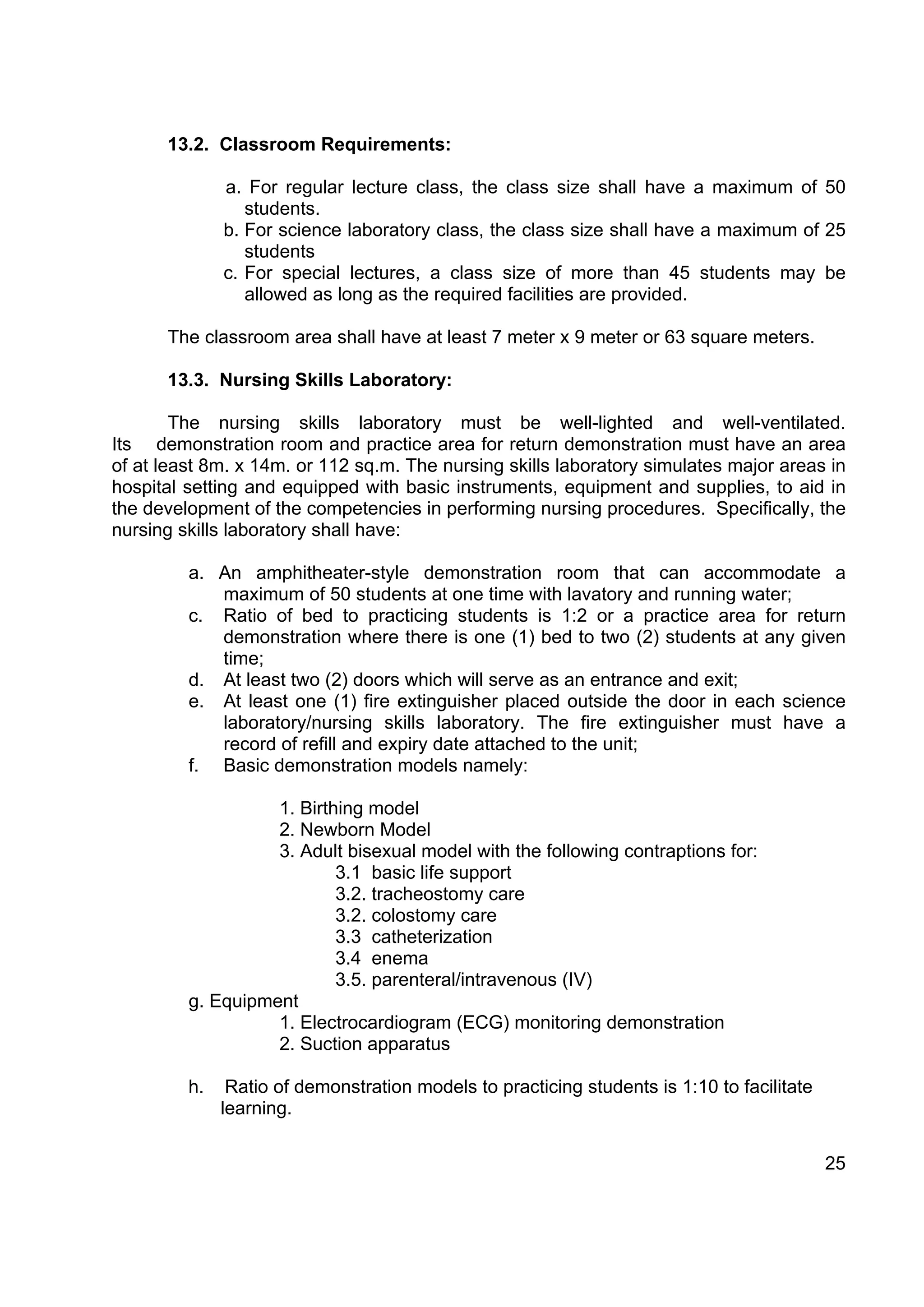
13.2. Classroom Requirements:

              a. For regular lecture class, the class size shall have a maximum of 50
                 students.
              b. For science laboratory class, the class size shall have a maximum of 25
                 students
              c. For special lectures, a class size of more than 45 students may be
                 allowed as long as the required facilities are provided.

      The classroom area shall have at least 7 meter x 9 meter or 63 square meters.

      13.3. Nursing Skills Laboratory:

        The nursing skills laboratory must be well-lighted and well-ventilated.
Its demonstration room and practice area for return demonstration must have an area
of at least 8m. x 14m. or 112 sq.m. The nursing skills laboratory simulates major areas in
hospital setting and equipped with basic instruments, equipment and supplies, to aid in
the development of the competencies in performing nursing procedures. Specifically, the
nursing skills laboratory shall have:

         a. An amphitheater-style demonstration room that can accommodate a
            maximum of 50 students at one time with lavatory and running water;
         c. Ratio of bed to practicing students is 1:2 or a practice area for return
            demonstration where there is one (1) bed to two (2) students at any given
            time;
         d. At least two (2) doors which will serve as an entrance and exit;
         e. At least one (1) fire extinguisher placed outside the door in each science
            laboratory/nursing skills laboratory. The fire extinguisher must have a
            record of refill and expiry date attached to the unit;
         f. Basic demonstration models namely:

                   1. Birthing model
                   2. Newborn Model
                   3. Adult bisexual model with the following contraptions for:
                           3.1 basic life support
                           3.2. tracheostomy care
                           3.2. colostomy care
                           3.3 catheterization
                           3.4 enema
                           3.5. parenteral/intravenous (IV)
         g. Equipment
                   1. Electrocardiogram (ECG) monitoring demonstration
                   2. Suction apparatus

         h.    Ratio of demonstration models to practicing students is 1:10 to facilitate
              learning.

                                                                                            25
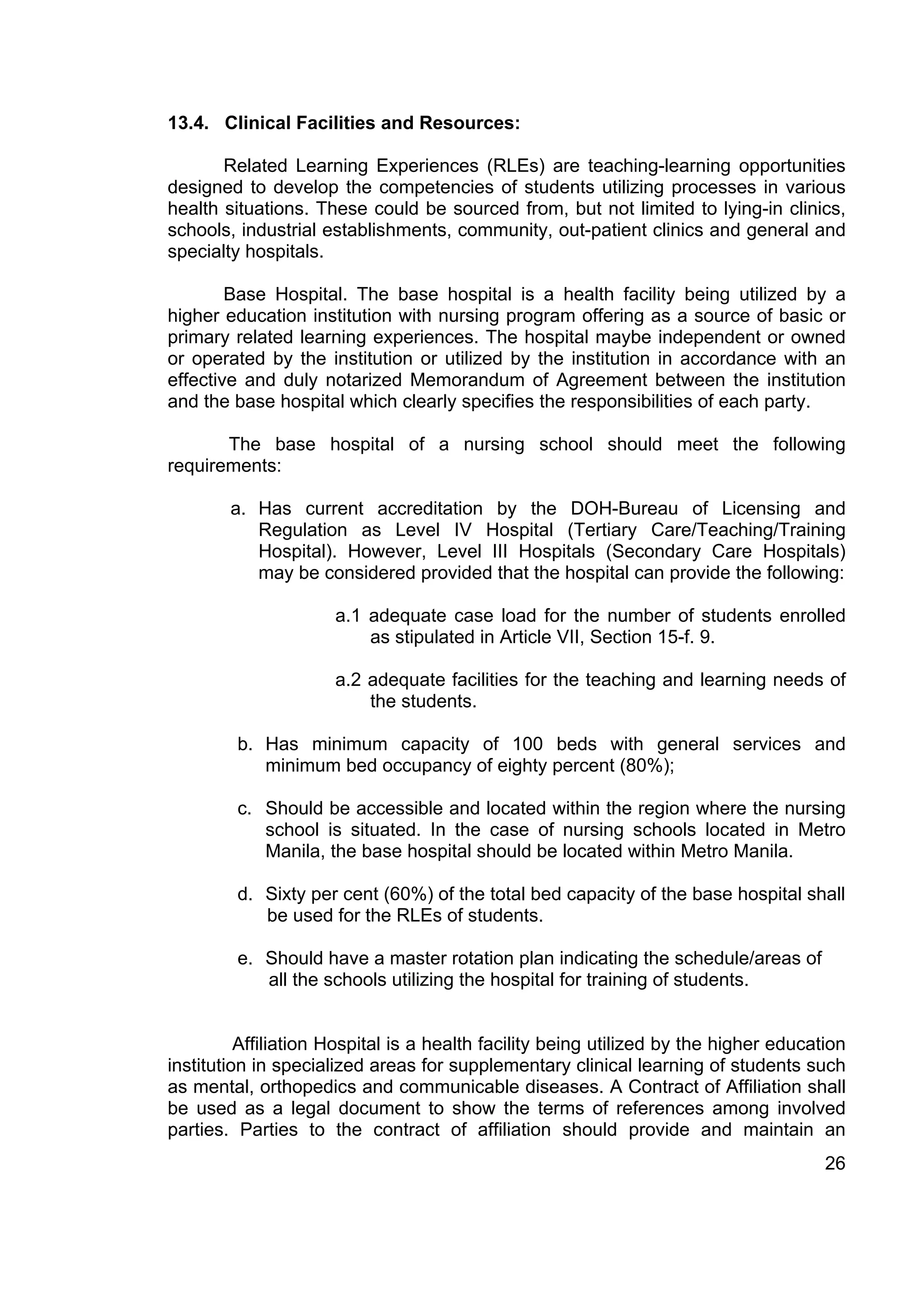
13.4. Clinical Facilities and Resources:

       Related Learning Experiences (RLEs) are teaching-learning opportunities
designed to develop the competencies of students utilizing processes in various
health situations. These could be sourced from, but not limited to lying-in clinics,
schools, industrial establishments, community, out-patient clinics and general and
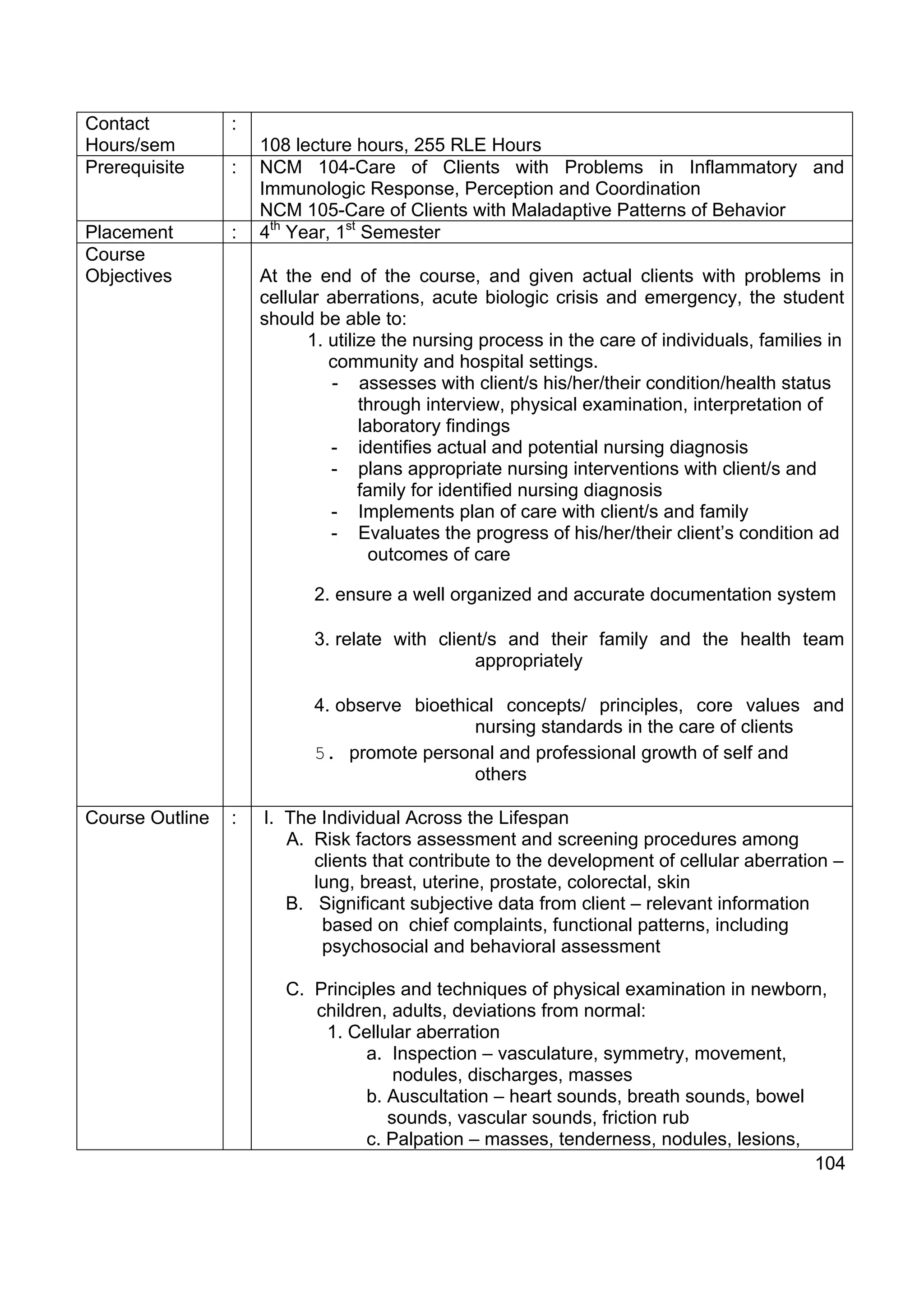
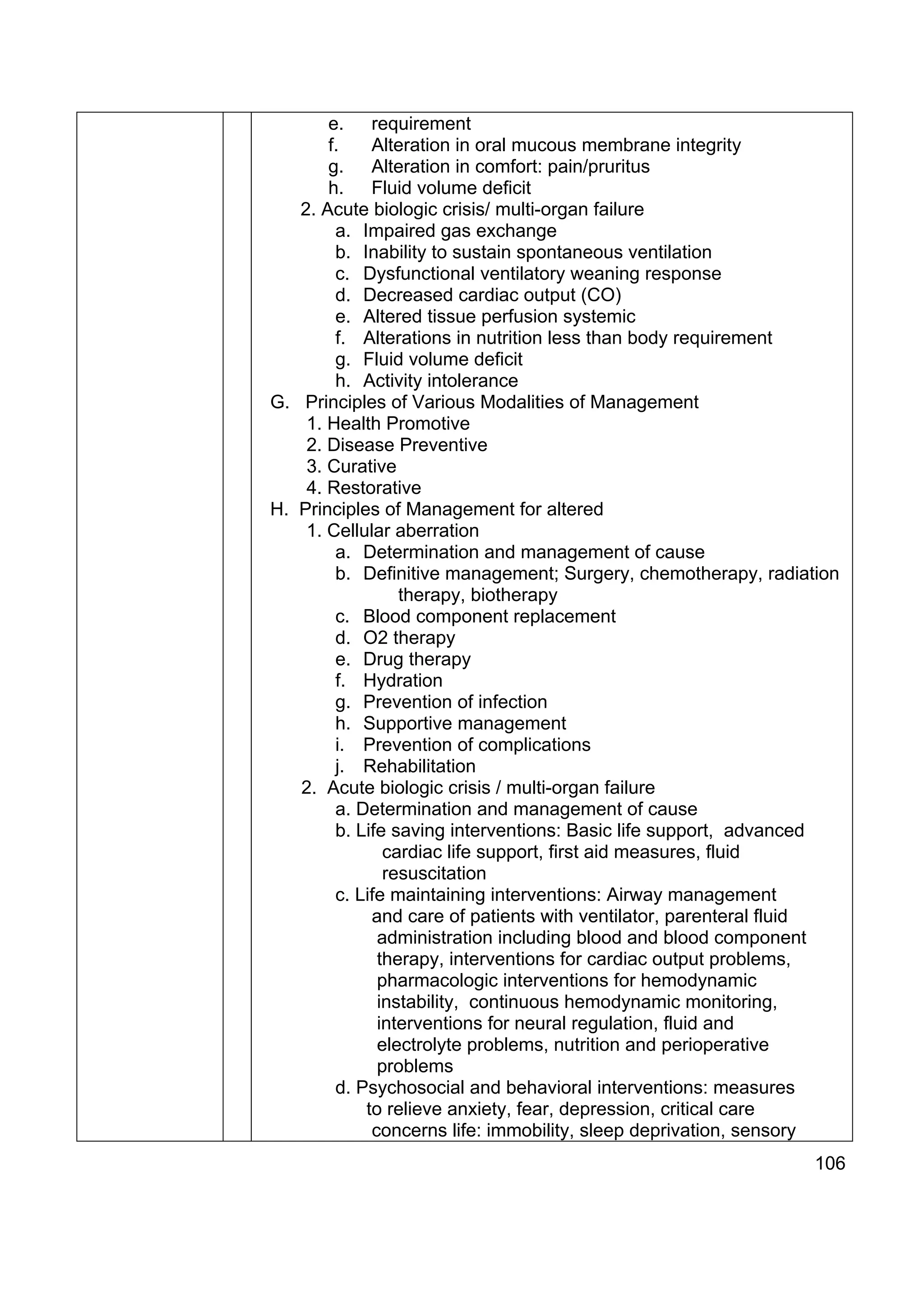
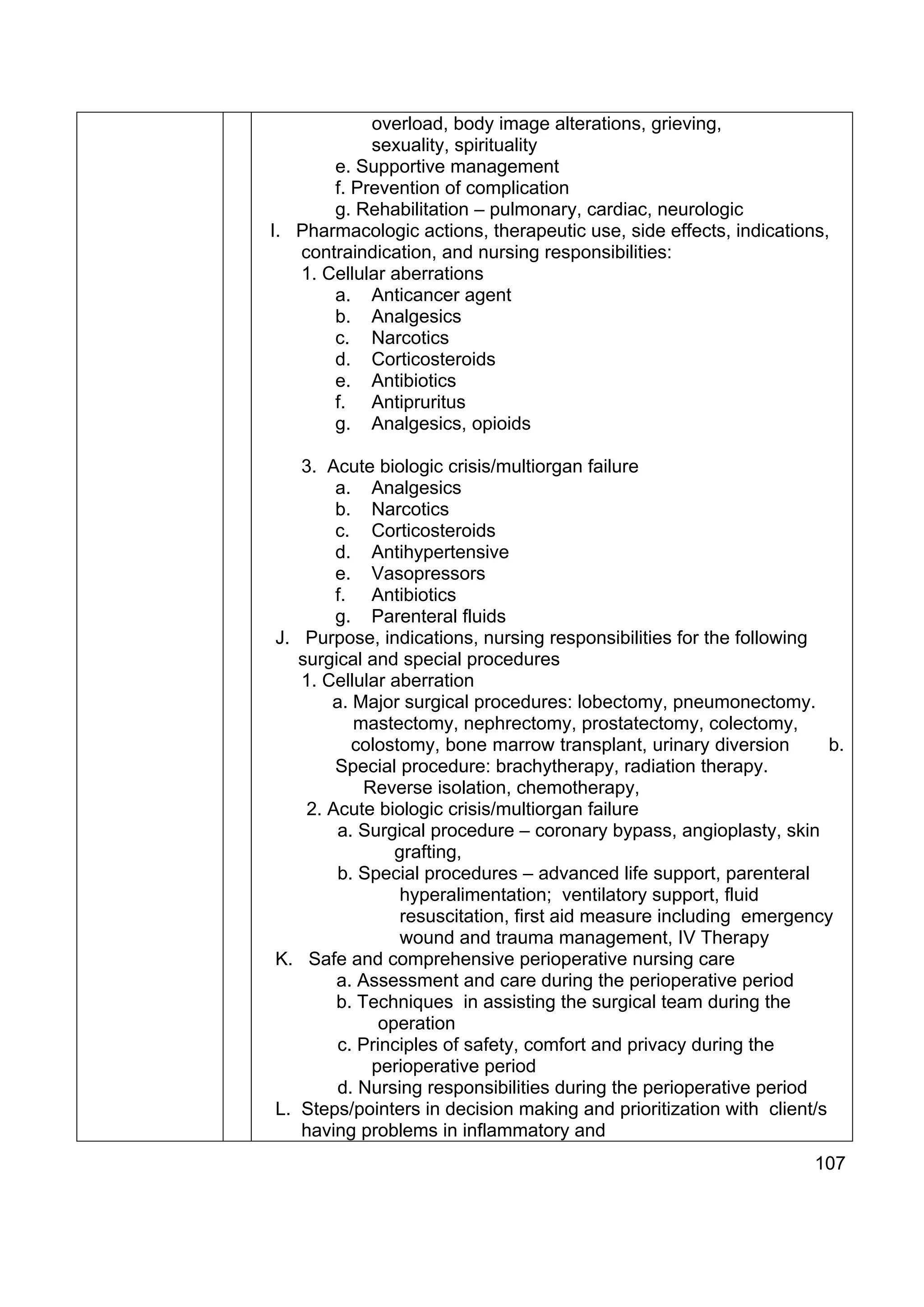
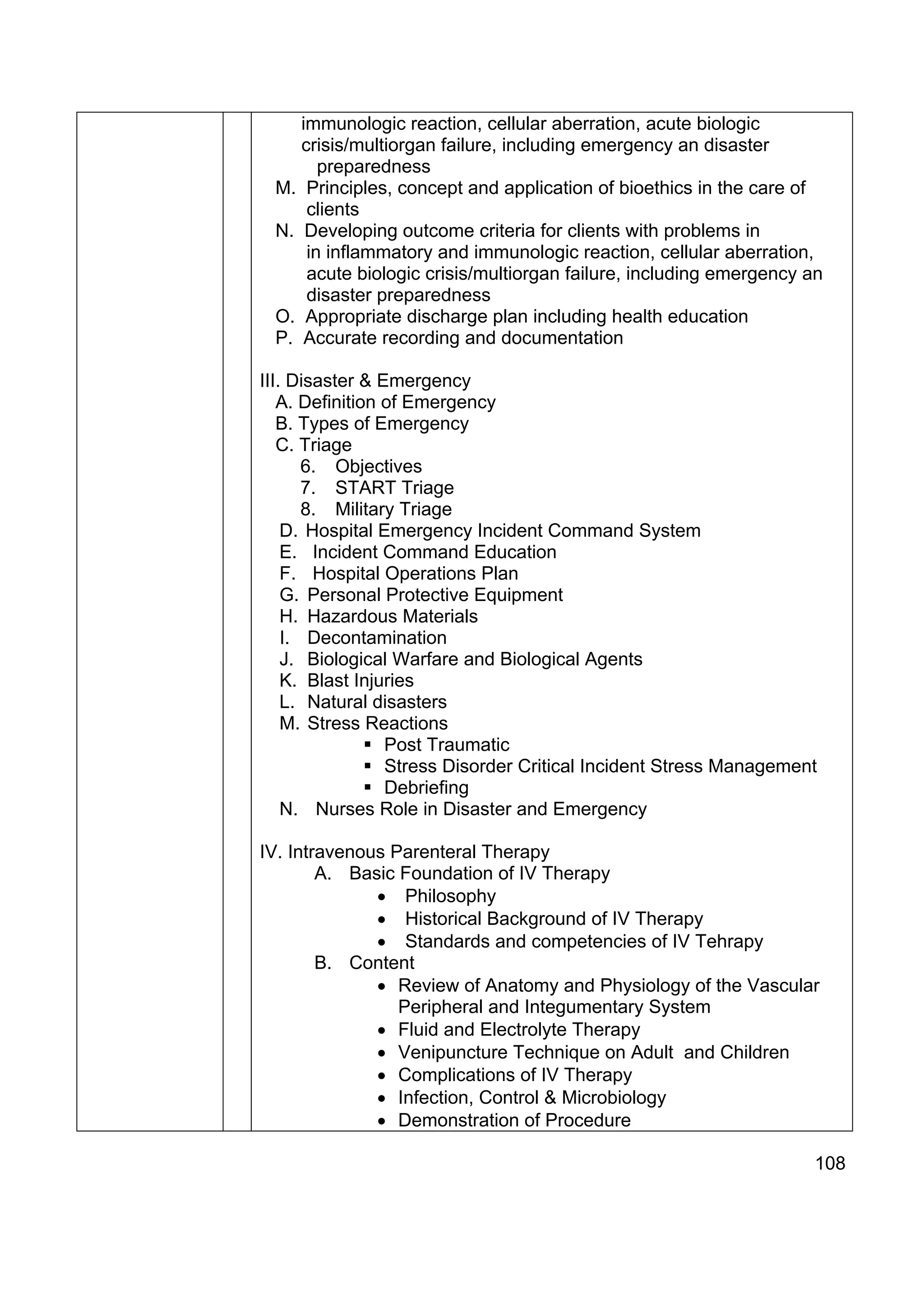
specialty hospitals.

        Base Hospital. The base hospital is a health facility being utilized by a
higher education institution with nursing program offering as a source of basic or
primary related learning experiences. The hospital maybe independent or owned
or operated by the institution or utilized by the institution in accordance with an
effective and duly notarized Memorandum of Agreement between the institution
and the base hospital which clearly specifies the responsibilities of each party.

       The base hospital of a nursing school should meet the following
requirements:

        a. Has current accreditation by the DOH-Bureau of Licensing and
           Regulation as Level IV Hospital (Tertiary Care/Teaching/Training
           Hospital). However, Level III Hospitals (Secondary Care Hospitals)
           may be considered provided that the hospital can provide the following:

                      a.1 adequate case load for the number of students enrolled
                          as stipulated in Article VII, Section 15-f. 9.

                      a.2 adequate facilities for the teaching and learning needs of
                          the students.

         b. Has minimum capacity of 100 beds with general services and
            minimum bed occupancy of eighty percent (80%);

         c. Should be accessible and located within the region where the nursing
            school is situated. In the case of nursing schools located in Metro
            Manila, the base hospital should be located within Metro Manila.

         d. Sixty per cent (60%) of the total bed capacity of the base hospital shall
            be used for the RLEs of students.

         e. Should have a master rotation plan indicating the schedule/areas of
            all the schools utilizing the hospital for training of students.


          Affiliation Hospital is a health facility being utilized by the higher education
institution in specialized areas for supplementary clinical learning of students such
as mental, orthopedics and communicable diseases. A Contract of Affiliation shall
be used as a legal document to show the terms of references among involved
parties. Parties to the contract of affiliation should provide and maintain an
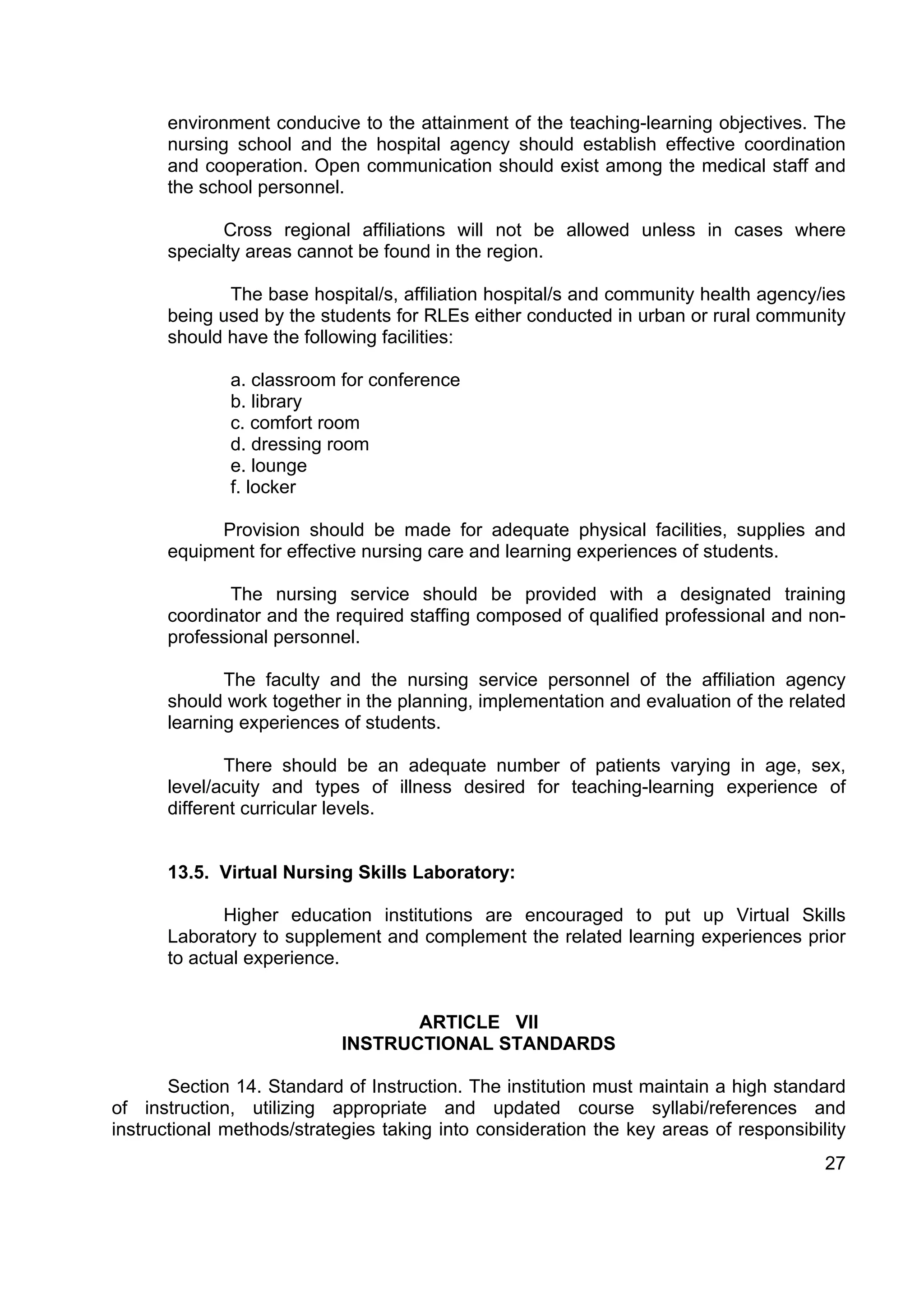
                                                                                       26
environment conducive to the attainment of the teaching-learning objectives. The
      nursing school and the hospital agency should establish effective coordination
      and cooperation. Open communication should exist among the medical staff and
      the school personnel.

             Cross regional affiliations will not be allowed unless in cases where
      specialty areas cannot be found in the region.

             The base hospital/s, affiliation hospital/s and community health agency/ies
      being used by the students for RLEs either conducted in urban or rural community
      should have the following facilities:

              a. classroom for conference
              b. library
              c. comfort room
              d. dressing room
              e. lounge
              f. locker

            Provision should be made for adequate physical facilities, supplies and
      equipment for effective nursing care and learning experiences of students.

             The nursing service should be provided with a designated training
      coordinator and the required staffing composed of qualified professional and non-
      professional personnel.

             The faculty and the nursing service personnel of the affiliation agency
      should work together in the planning, implementation and evaluation of the related
      learning experiences of students.

             There should be an adequate number of patients varying in age, sex,
      level/acuity and types of illness desired for teaching-learning experience of
      different curricular levels.


      13.5. Virtual Nursing Skills Laboratory:

             Higher education institutions are encouraged to put up Virtual Skills
      Laboratory to supplement and complement the related learning experiences prior
      to actual experience.


                                   ARTICLE VII
                            INSTRUCTIONAL STANDARDS

       Section 14. Standard of Instruction. The institution must maintain a high standard
of instruction, utilizing appropriate and updated course syllabi/references and
instructional methods/strategies taking into consideration the key areas of responsibility
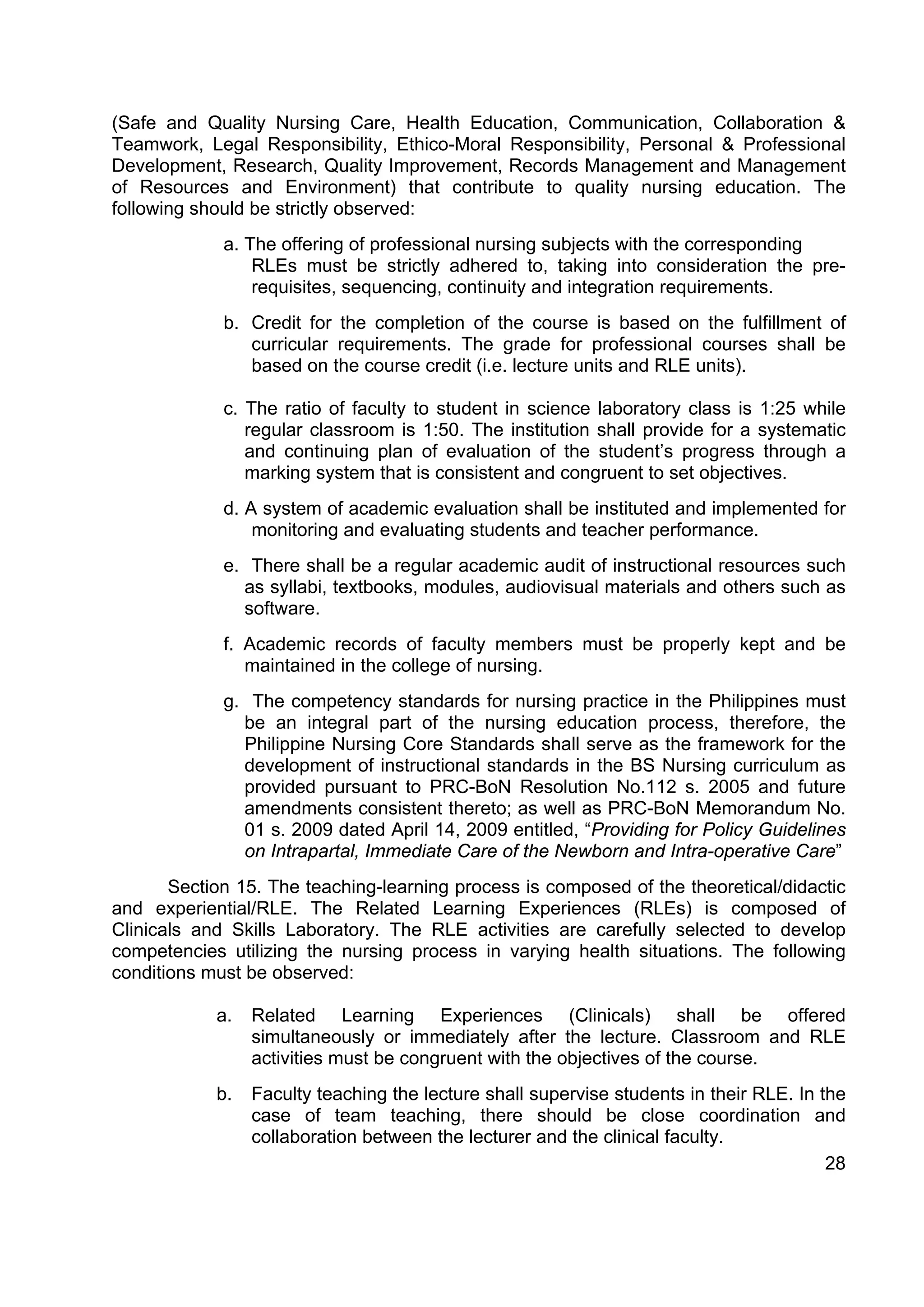
                                                                                       27
(Safe and Quality Nursing Care, Health Education, Communication, Collaboration &
Teamwork, Legal Responsibility, Ethico-Moral Responsibility, Personal & Professional
Development, Research, Quality Improvement, Records Management and Management
of Resources and Environment) that contribute to quality nursing education. The
following should be strictly observed:
             a. The offering of professional nursing subjects with the corresponding
                 RLEs must be strictly adhered to, taking into consideration the pre-
                 requisites, sequencing, continuity and integration requirements.
             b. Credit for the completion of the course is based on the fulfillment of
                curricular requirements. The grade for professional courses shall be
                based on the course credit (i.e. lecture units and RLE units).

             c. The ratio of faculty to student in science laboratory class is 1:25 while
                regular classroom is 1:50. The institution shall provide for a systematic
                and continuing plan of evaluation of the student’s progress through a
                marking system that is consistent and congruent to set objectives.
             d. A system of academic evaluation shall be instituted and implemented for
                 monitoring and evaluating students and teacher performance.
             e. There shall be a regular academic audit of instructional resources such
               as syllabi, textbooks, modules, audiovisual materials and others such as
               software.
             f. Academic records of faculty members must be properly kept and be
                maintained in the college of nursing.
             g. The competency standards for nursing practice in the Philippines must
               be an integral part of the nursing education process, therefore, the
               Philippine Nursing Core Standards shall serve as the framework for the
               development of instructional standards in the BS Nursing curriculum as
               provided pursuant to PRC-BoN Resolution No.112 s. 2005 and future
               amendments consistent thereto; as well as PRC-BoN Memorandum No.
               01 s. 2009 dated April 14, 2009 entitled, “Providing for Policy Guidelines
               on Intrapartal, Immediate Care of the Newborn and Intra-operative Care”
       Section 15. The teaching-learning process is composed of the theoretical/didactic
and experiential/RLE. The Related Learning Experiences (RLEs) is composed of
Clinicals and Skills Laboratory. The RLE activities are carefully selected to develop
competencies utilizing the nursing process in varying health situations. The following
conditions must be observed:

            a.   Related Learning Experiences (Clinicals) shall be offered
                 simultaneously or immediately after the lecture. Classroom and RLE
                 activities must be congruent with the objectives of the course.
            b.   Faculty teaching the lecture shall supervise students in their RLE. In the
                 case of team teaching, there should be close coordination and
                 collaboration between the lecturer and the clinical faculty.
                                                                                         28
c. A documented RLE rotation plan showing distribution of students and
   faculty supervision in each clinical area of base hospital and affiliation
   agencies shall be made available.
d. Faculty compensation shall be based on the computation that one (1)
   hour RLE is equivalent to one (1) lecture hour.

e. Effectiveness and efficiency of the related learning experience, shall
   consider the following factors:

   f.1 Quality of supervision of clinical instructors and teaching-learning
       process
   f.2 Readiness and capability of the learner
   f.3 Quality of the learning resources both in institutions and communities
   f.4 Adequate number and variety of clientele
   f.5 Utilization of appropriate feedback mechanism
   f.6 Adequate number of qualified nursing staff and other personnel
   f.7 Quality of nursing care services
   f.8 Compliance with the required equivalence of fifty one (51) hours to
       to one (1) unit RLE
   f.9 Ratio of student to clientele depends upon the objectives and the
       capacity of the student.


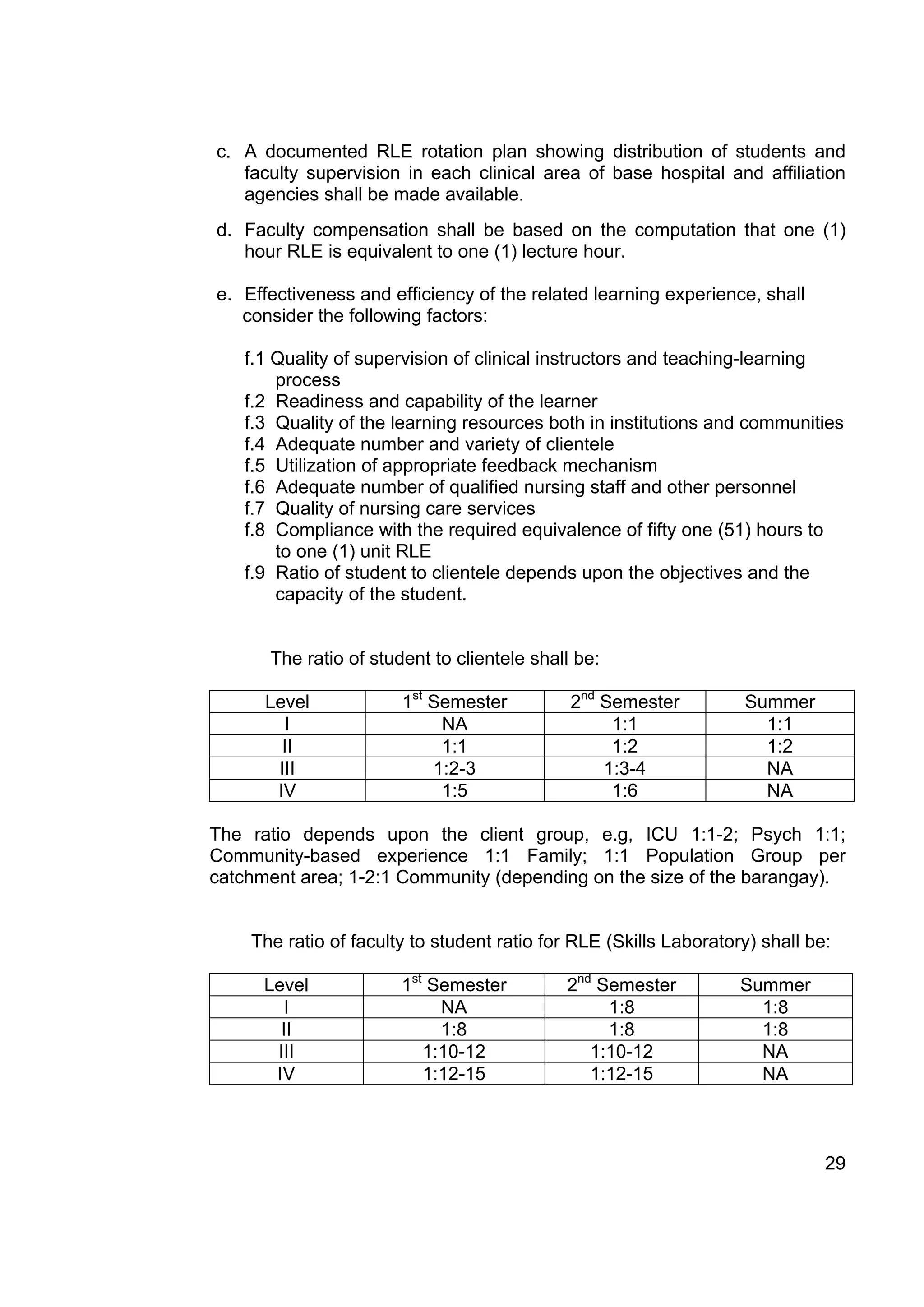
      The ratio of student to clientele shall be:

      Level            1st Semester          2nd Semester          Summer
         I                  NA                    1:1                1:1
        II                  1:1                   1:2                1:2
       III                 1:2-3                 1:3-4               NA
       IV                   1:5                   1:6                NA

The ratio depends upon the client group, e.g, ICU 1:1-2; Psych 1:1;
Community-based experience 1:1 Family; 1:1 Population Group per
catchment area; 1-2:1 Community (depending on the size of the barangay).


    The ratio of faculty to student ratio for RLE (Skills Laboratory) shall be:

      Level            1st Semester         2nd Semester           Summer
         I                  NA                   1:8                 1:8
        II                  1:8                  1:8                 1:8
       III                1:10-12              1:10-12               NA
       IV                 1:12-15              1:12-15               NA


                                                                              29
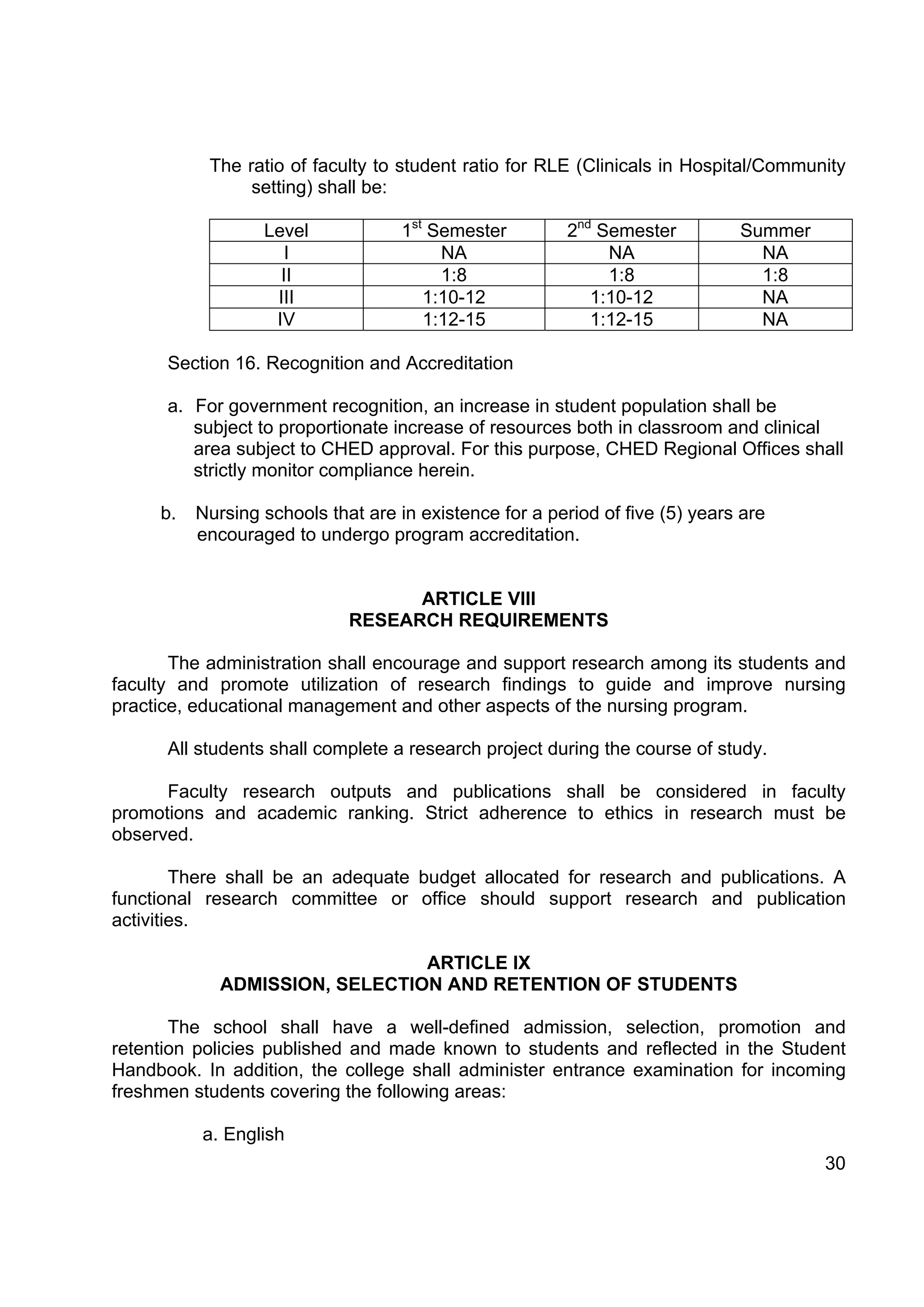
The ratio of faculty to student ratio for RLE (Clinicals in Hospital/Community
                setting) shall be:

                  Level             1st Semester        2nd Semester          Summer
                     I                   NA                  NA                 NA
                    II                   1:8                 1:8                1:8
                   III                 1:10-12             1:10-12              NA
                   IV                  1:12-15             1:12-15              NA

      Section 16. Recognition and Accreditation

      a. For government recognition, an increase in student population shall be
         subject to proportionate increase of resources both in classroom and clinical
         area subject to CHED approval. For this purpose, CHED Regional Offices shall
         strictly monitor compliance herein.

     b.   Nursing schools that are in existence for a period of five (5) years are
          encouraged to undergo program accreditation.


                                   ARTICLE VIII
                             RESEARCH REQUIREMENTS

       The administration shall encourage and support research among its students and
faculty and promote utilization of research findings to guide and improve nursing
practice, educational management and other aspects of the nursing program.

      All students shall complete a research project during the course of study.

      Faculty research outputs and publications shall be considered in faculty
promotions and academic ranking. Strict adherence to ethics in research must be
observed.

        There shall be an adequate budget allocated for research and publications. A
functional research committee or office should support research and publication
activities.

                                ARTICLE IX
             ADMISSION, SELECTION AND RETENTION OF STUDENTS

       The school shall have a well-defined admission, selection, promotion and
retention policies published and made known to students and reflected in the Student
Handbook. In addition, the college shall administer entrance examination for incoming
freshmen students covering the following areas:

          a. English
                                                                                       30
b. Science
           c. Mathematics
           d. Inductive Reasoning

       The number of students admitted to the College of Nursing shall be based on the
following:

           a. qualified faculty
           b. teaching/learning resources
           c. resources of the base hospital/affiliation agencies based on:
                    - clientele
                    - staffing
                    - facilities/services
                    - number of student affiliates

       Records and evidences of actual implementation of these policies must be made
available.

       A student is allowed to enroll a course after he/she has satisfactorily passed all its
pre-requisite courses.

     A student shall be allowed to carry only the regular semestral load. However,
academic load for graduating students must be guided by appropriate CHED issuances.

       All students in the BS Nursing program shall strictly adhere to the regular rotation
of RLE and schedule of classes. The Special BS Nursing program provided in CMO No.
9 s. 2004 shall no longer be allowed.


                                    ARTICLE X
                             RESIDENCY REQUIREMENTS

       As a general rule, a candidate for graduation must have taken the last curricular
year level in the college. The student shall be evaluated according to the criteria or
system of evaluation required by the college to determine proficiency in all professional
courses.

                                           ARTICLE XI
                                           SANCTIONS

      Non-compliance with the provisions of this CMO shall, after due process, cause
the Commission to revoke government permit/recognition or deny issuance of authority
to operate the nursing program.

     The average national passing percentage in the Philippine Nurses Licensure
Examination from 2004 to 2008 is 45.91%. Two thirds (2/3]) of 45.91% is thirty percent
(30%), the basis for the implementation of gradual phase-out.

                                                                                          31
Thus, in the initial implementation for the gradual phase out of the nursing
program, an average of below 30% for a three-year period (SY 2010-2011, 2011-2012,
2012-2013) in the Philippine Nurse Licensure Examination starting from 2013 shall be
implemented by the CHED subject to the following guidelines:

       1. The official results of the Nurse Licensure Examination from the Board of
          Nursing of the Professional Regulation Commission shall be the basis in
          phasing-out of nursing programs.

       2. The performance of the school shall be based upon the average rating
          obtained within the schoolyear, namely ratings in the June and December
          examinations. If the school has only one examination undertaken in a year,
          this shall be considered the annual rating.

       3. The average passing rate obtained by HEIs for the past three (3) years shall
          be the basis of phasing-out of the program.

       4. The computation of the 30% shall only involve the ratings of the examinees
          who took the Nurse Licensure Examination for the first time.


                                      ARTICLE XII
                              TRANSITORY PROVISION

      Higher education institutions that have been granted permit or recognition to offer
the BS Nursing program are required to fully comply with all the requirements in this
CMO within three (3) years after the date of effectivity. There shall be close monitoring
of nursing programs by the Commission.


                                 ARTICLE XIII
                      SEPARABILITY AND REPEALING CLAUSE


       Any provision of this Order, which may thereafter be held invalid, shall not affect
the remaining provisions.

       All CHED issuances, rules and regulations or parts thereof that are inconsistent
with the provisions of this CMO are hereby repealed.


                                                                                       32
ARTICLE XIV
                                EFFECTIVITY CLAUSE

       Higher education institutions [HEIs] that opted to implement CMO No. 30 s. 2001
shall allow their students to the finish BSN curriculum under CMO No. 30 s. 2001 while
those HEIs that opted to implement CMO No. 5 s. 2008 during the SY 2008-2009 shall
allow their students to graduate under this CMO.

       This CMO shall take effect starting School Year 2009-2010, fifteen (15) days after
its publication in the Official Gazette or in a newspaper of national circulation.


                                                EMMANUEL Y. ANGELES
                                                     Chairman

Quezon City, Philippines
April __, 2009


                                                                                      33
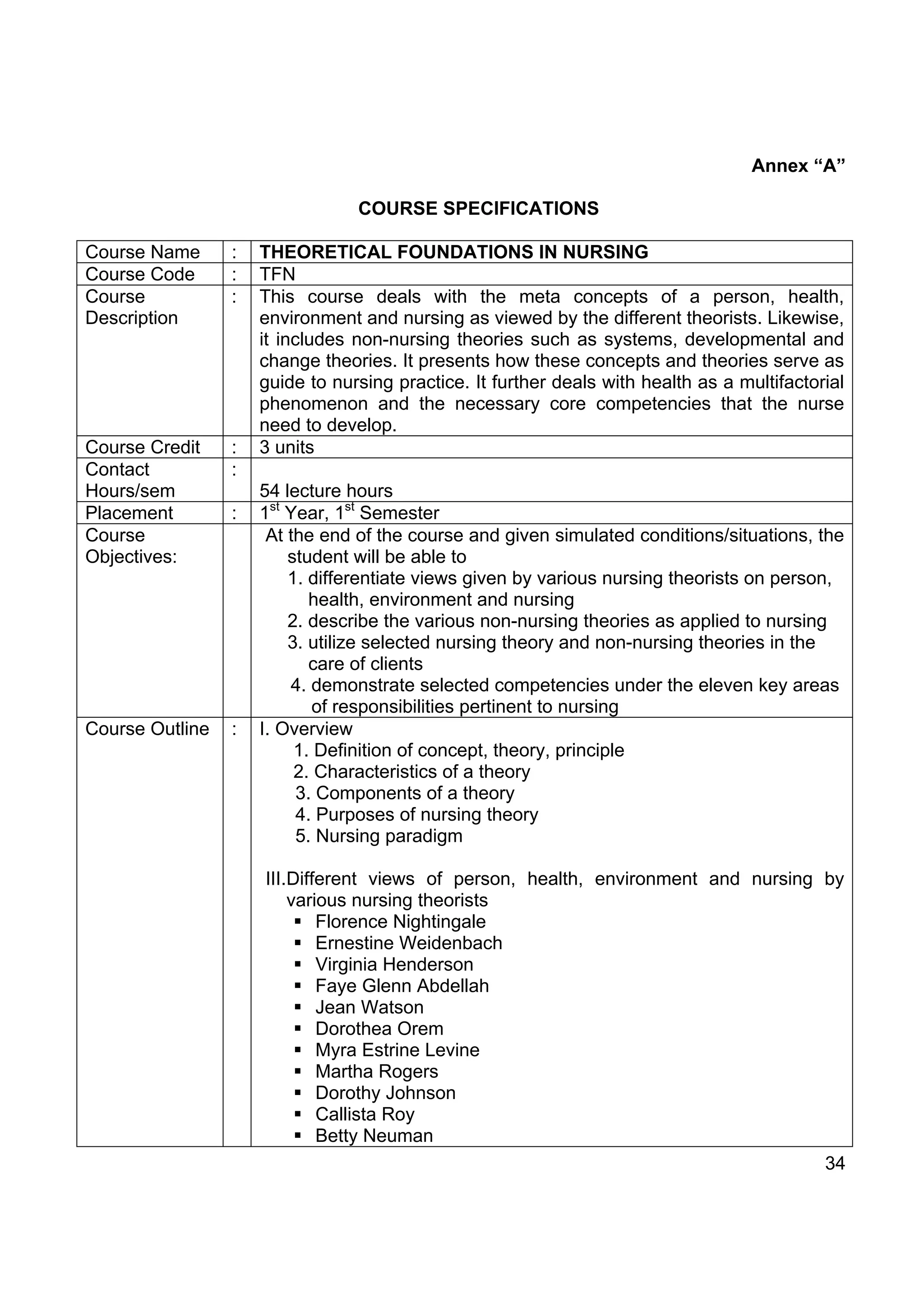
Annex “A”

                                 COURSE SPECIFICATIONS

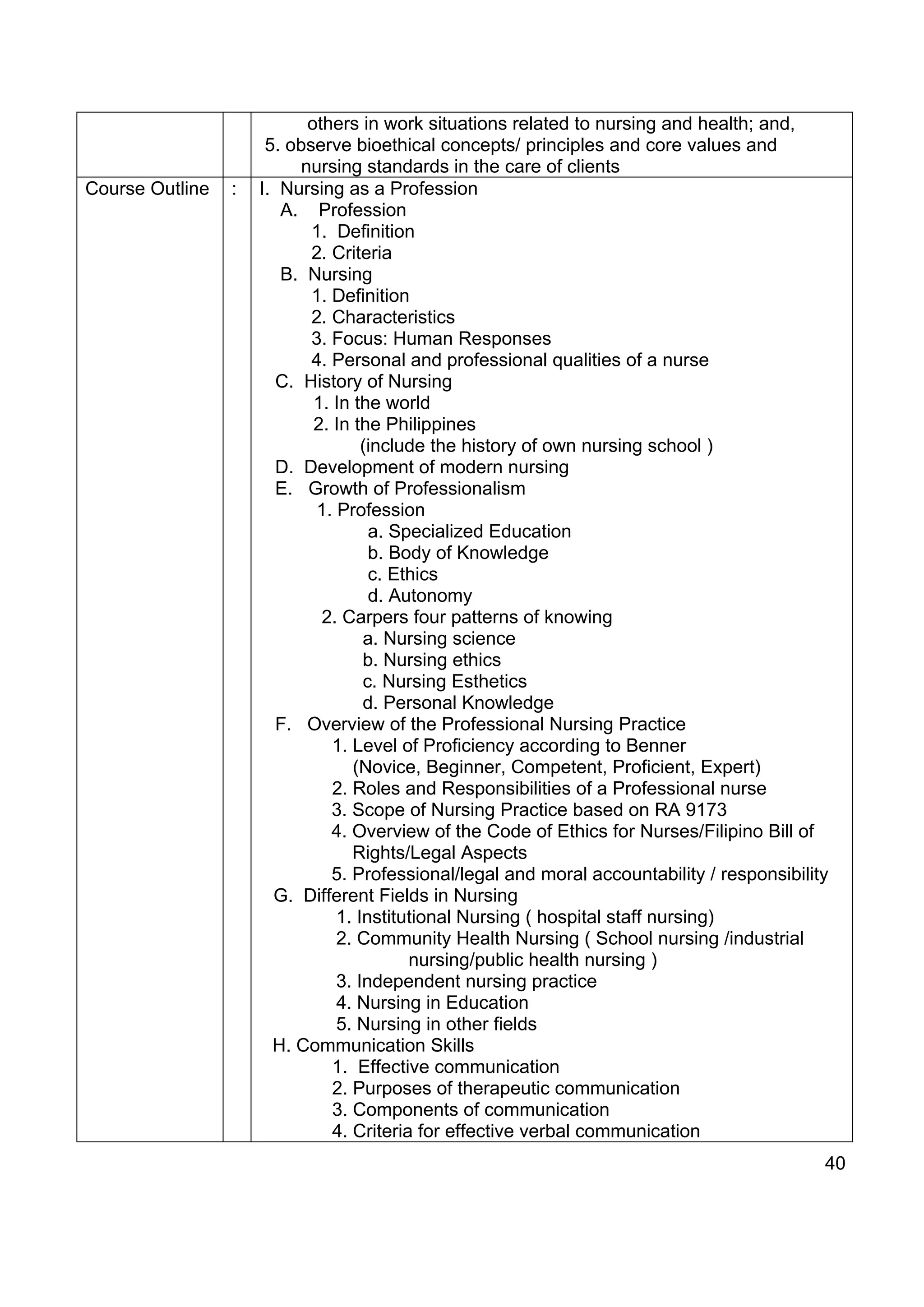
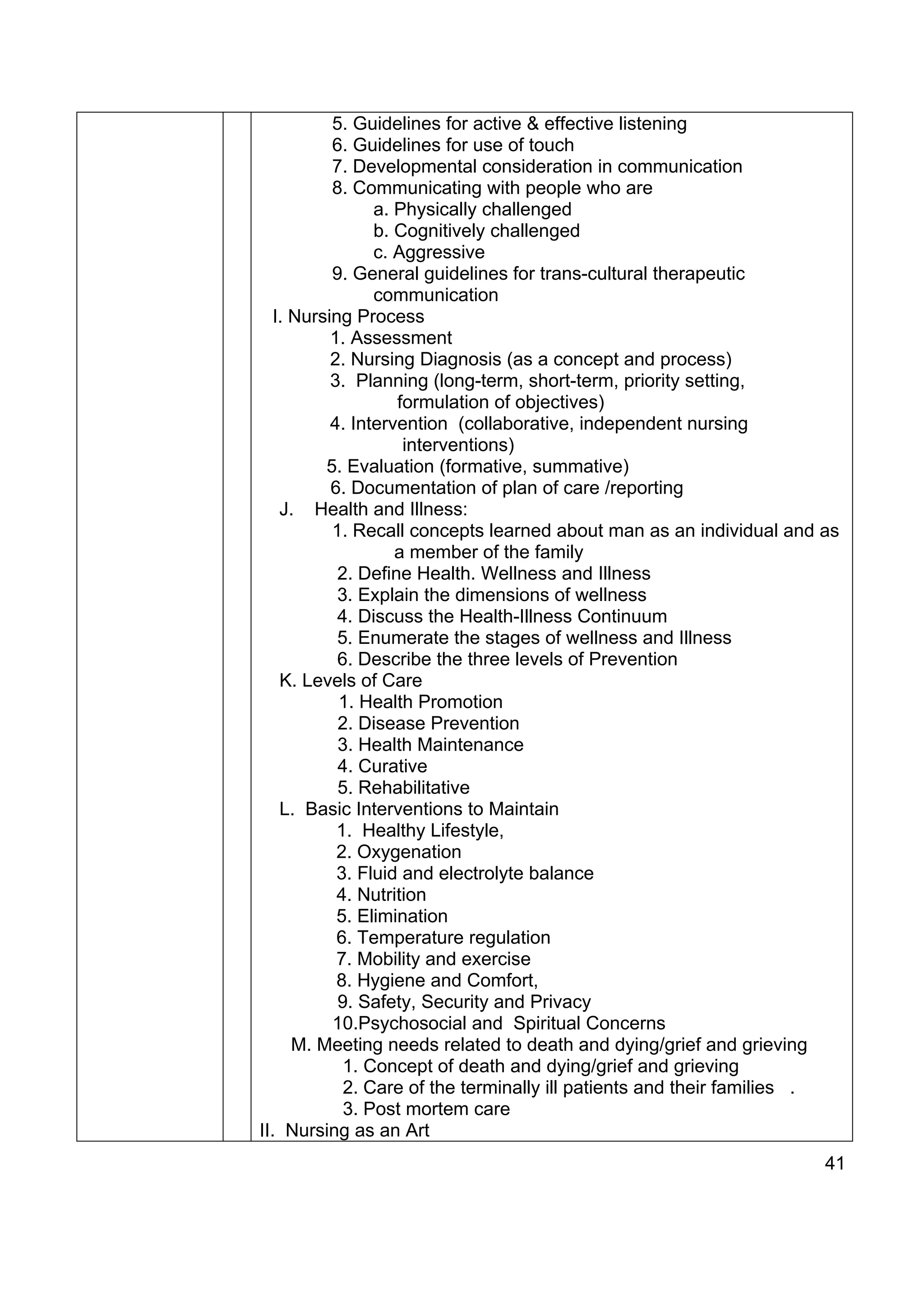
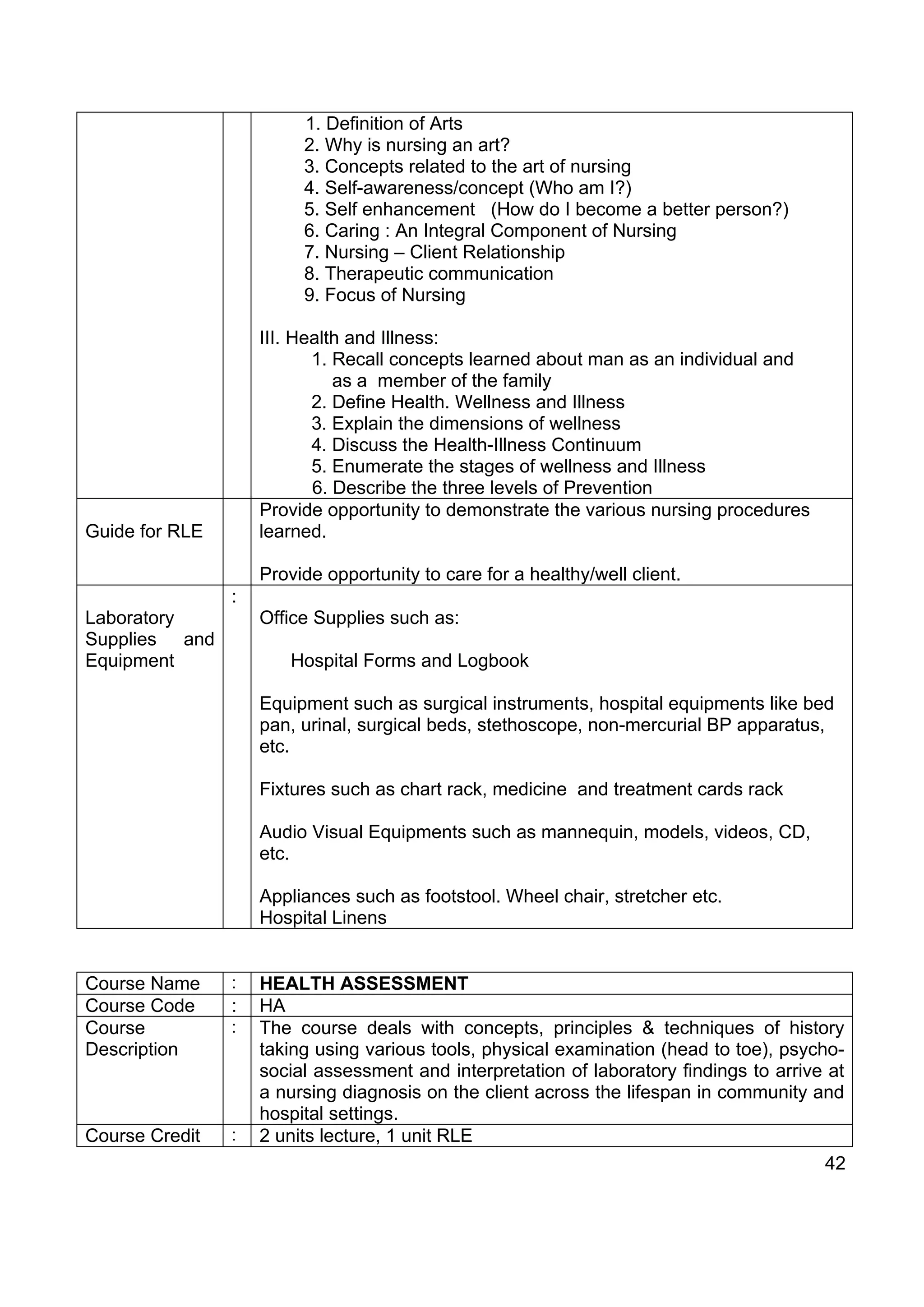
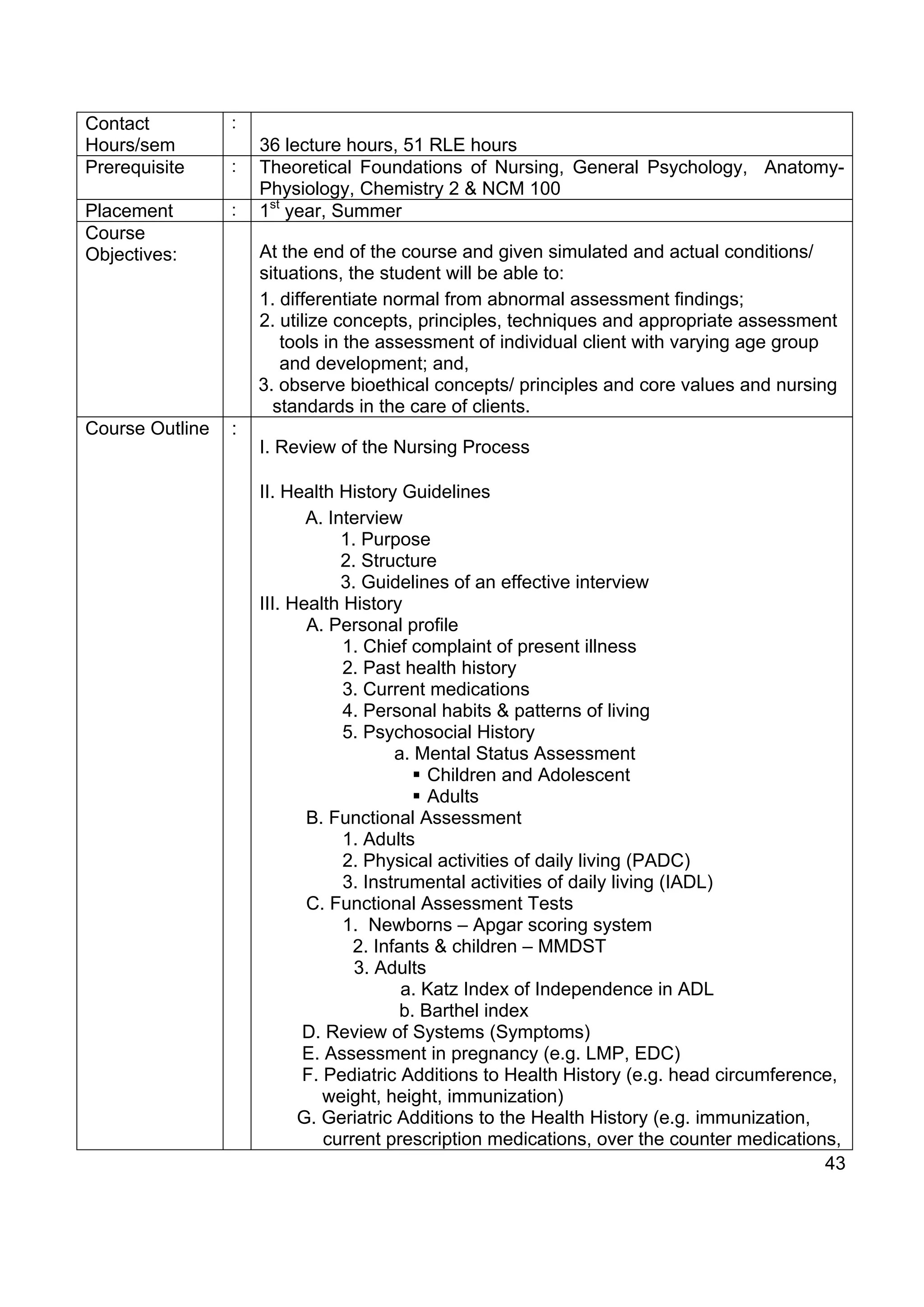
Course Name      :   THEORETICAL FOUNDATIONS IN NURSING
Course Code      :   TFN
Course           :   This course deals with the meta concepts of a person, health,
Description          environment and nursing as viewed by the different theorists. Likewise,
                     it includes non-nursing theories such as systems, developmental and
                     change theories. It presents how these concepts and theories serve as
                     guide to nursing practice. It further deals with health as a multifactorial
                     phenomenon and the necessary core competencies that the nurse
                     need to develop.
Course Credit    :   3 units
Contact          :
Hours/sem            54 lecture hours
Placement        :   1st Year, 1st Semester
Course                At the end of the course and given simulated conditions/situations, the
Objectives:              student will be able to
                         1. differentiate views given by various nursing theorists on person,
                            health, environment and nursing
                         2. describe the various non-nursing theories as applied to nursing
                         3. utilize selected nursing theory and non-nursing theories in the
                            care of clients
                         4. demonstrate selected competencies under the eleven key areas
                            of responsibilities pertinent to nursing
Course Outline   :   I. Overview
                          1. Definition of concept, theory, principle
                          2. Characteristics of a theory
                          3. Components of a theory
                          4. Purposes of nursing theory
                          5. Nursing paradigm

                     III.Different views of person, health, environment and nursing by
                         various nursing theorists
                             Florence Nightingale
                             Ernestine Weidenbach
                             Virginia Henderson
                             Faye Glenn Abdellah
                             Jean Watson
                             Dorothea Orem
                             Myra Estrine Levine
                             Martha Rogers
                             Dorothy Johnson
                             Callista Roy
                             Betty Neuman
                                                                                    34
Imogene King
                             Hildegard Perplau
                             Ida Jean Orlando
                             Joyce Travelbee
                             Madelline Leininger
                             Rosemarie Rizzo Parse
                             Joyce J. Fitzpatrick
                             Anne Boykin and Savina Schoenhoffer
                             Margaret Neuman
                             Josephine E. Paterson
                             Loretta Zderad
                    III. Different Views of Non-nursing Theories:
                          1. Systems Theory
                          2. Change Theory
                          3. Developmental Theory
                     IV. Health as a Multifactorial Phenomenon
                      V. Interlinking Relationships of Factors Affecting Health
                      VI Care Enhancement Qualities including Core Values
                     VII. Competency-based Approach to the BSN Curriculum
                     VIII. Core competencies under the 11 Key Areas of Responsibility


Course Name     :   ANATOMY AND PHYSIOLOGY
Course Code     :   Ana/Physio
Course          :   This course deals with the physiologic concepts, principles and basic
Description         anatomical structure.
Course Credit   :   3 units lecture, 2 units lab
Contact         :
Hours/sem           54 lecture hours, 108 lab hours
Pre-requisite   :   None
Placement       :   1st year, 2nd semester
Course
Objectives:         At the end of the course and given specific situations/conditions, the
                    student should be able to:
                    1. describe the anatomic structures and physiologic
                       mechanisms/processes/systems involved in the following
                       physiologic concepts:
                       1.1 locomotion
                       1.2 fluid transport
                       1.3 gas exchange
                       1.4 fluid and electrolyte, acid/base dynamics
                       1.5 nutrition metabolism
                       1.6 chemical regulation
                       1.7 neural regulation
                       1.8 sensory intake
                       1.9 protection
                       1.10 awareness and response to the environment
                       1.11 reproduction
                                                                                             35
2. utilize basic anatomical facts and physiological concepts and
                     principles in the nursing care of individuals
Course Outline   :
                     I. Anatomy
                          A. Definition
                             1. Types of Study
                                    a. Systematic Anatomy
                                    b. Regional Anatomy
                                    c. Surface Anatomy
                          B. Physiology
                              1. Definition
                              2. Types of Study:
                                    a. According to the organism involved
                                    b. According to levels of organism within
                                       a given organism
                          C. Structural and Functional organization
                               1. Seven Structural Levels

                                  a. Chemical
                                  b. Organelle
                                  c. Cell
                                  d. Tissues
                                  e. Organ
                                   f. Organ System
                                   g. Organism
                         D. Characteristics of Life
                              1. Organization
                              2. Metabolism
                              3. Responsiveness
                              4. Growth
                              5. Development
                              6. Reproduction
                         E. Homeostasis
                             1. Negative feedback
                             2. Positive feedback

                        F. Terminology and the Body Plan
                            1. Directional Terms
                            2. Planes/Sections
                            3. Body Regions
                            4. Body Cavities
                            5. Serous Membranes

                     II. Cells, Tissues, Glands and Membranes
                          A. Cells
                               1. Cell Structure and Function
                               2. Whole Cell Activity

                                                                                        36
B. Tissues
        1. Basic Tissue Types
           a. Epithelial tissue
           b. Connective tissue
           c. Muscle tissue
           d. Nervous tissue
           e. Membranes
           f. Inflammation
           g. Tissue repair
    C. The Chemistry of Life
        1. Basic Chemistry
        2. Chemical Reactions
        3. Acids and Bases
        4. Water
        5.Organic Molecules

III. The Respiratory System
      A. Anatomy of the Respiratory System
          1. Nose & Nasal Cavities
          2. Pharynx
          3. Larynx
          4. Trachea
          5. Bronchi & smaller air passages
          6. Lungs
           5. Pleural cavities
      B. Ventilation and Lung Volumes
            1. Phases of Ventilation
            2. Mechanisms of Ventilation
            3. Collapse of the Lung
            4. Pulmonary volumes and capacities
      C. Gas Exchange
      D. O2 and CO2 transport in the Blood
      E. Modification of Ventilation
IV. The Cardio Vascular System
     A. The Heart
            1. The Blood Vessels and Circulation of Blood
                a. Structure & Function
                b. Blood Vessels of the Pulmonary Circulation
                c. Blood Vessels of the Systemic Circulation
                d. The Physiology of Circulation
                e. Control of Blood Vessels
                 f. Regulation of Arterial Pressure
      B. The Blood
           1. Function
            2. Composition of Blood
                a. Plasma
                b. Cellular Content
                c. WBC or Leukocytes
                                                                37
d. Platelets or Thrombocytes
          3. Preventing Blood Loss
V. The Lymphatic System and Immunity
          1. Functions
          2. Lymphatic Vessels
          3. Lymphatic Organs
          4. Immunity
VI. The Digestive System
         1. Activities in the Digestive System
         2. Trunks or Layers of the Digestive Tract
         3. Organs and Functions of the Digestive System
         4. Movements and Secretions in the Digestive System
         5. Metabolism
VII. The Endocrine System
         1. Hormones
         2. The Endocrine Glands and their Hormones
         3. Other Hormones
VIII. The Urinary System and Fluid Balance
         1. Structure and function
         2. Kidney
         3. Ureters
         4. Urinary Bladder
         5. Urethra
IX. Fluids and Electrolytes
        1. Body Fluid Compartments
         2. Composition of Fluid in the body Fluid Compartments
         3. Exchange between Body fluid Compartments
         4. Regulation of Extracellular Fluid Composition
         5. Regulation of Acid-Base Balance
         6. Alterations in the Buffering Mechanism
X. The Integumentary System
        1. Structure of the Skin
        2. Accessory Skin Structures
 XI. The Nervous System
        1. Division of the Nervous System
        2. Cells of the Nervous System
        3. Central Nervous System
        4. Peripheral Nervous System
        5. Autonomic Nervous System
XII. The Special Senses
        1. Major Groups
        2. General Sense
        3. Special Senses
XIII. The Skeletal System
        1. Major Components
        2. Connective Tissue
        3. General Feature of Bone
        4. General Classification of Bone Anatomy
                                                                  38
XIV. The Muscular System
                           1. Characteristics of Skeletal muscle
                           2. Smooth Muscle Anatomy
                           3. Skeletal Muscle Anatomy
                    XV. The Reproductive System
                           1. Male Reproductive System
                                 a. Parts
                                 b. Physiology of male reproduction
                           2. Female Reproductive System
                                 a. Parts
                           3. Physiology of the female reproduction
Laboratory   :      Anatomical models, charts                    Sphygmomanometer
Supplies and        Videos and CD ROMs                            Stethoscope
Equipment           Preserved specimens and slides                Microscope
                    Reflex hammer


Course Name     :   FUNDAMENTALS OF NURSING PRACTICE
Course Code     :   NCM 100
Course          :   This course provides the students with the overview of nursing as a
Description         science, an art and a profession. It deals with the concept of man as a
                    holistic being comprised of bio- psycho- socio and spiritual
                    dimensions. It includes a discussion on the different roles of a nurse
                    emphasizing health promotion, maintenance of health as well as
                    prevention of illness utilizing the nursing process. It includes the basic
                    nursing skills needed in the care of individual clients.
Course Credit   :   3units lecture, 2units RLE (Skills Lab)
Contact         :
Hours/Sem           54 hours lecture, 102 RLE hours Skills Lab
Prerequisite    :   General Chemistry, Theoretical Foundations of Nursing
Co-requisite        Anatomy & Physiology, Biochemistry
Placement       :   1st Year, 2nd semester
Course              At the end of the course and given actual or simulated situations
Objectives:         /conditions, the student will be able to:
                    1. utilize the nursing process in the holistic care of client for the
                       promotion and maintenance of health
                       1.1 Assess with the client his/her health status and risk factors
                          affecting health
                       1.2 Identify actual wellness/at risk nursing diagnosis
                       1.3 Plan with client appropriate interventions for the promotion and
                          maintenance of health
                       1.4 Implement with client appropriate interventions for the promotion
                          and maintenance of health
                       1.5 Evaluate with client outcomes of a healthy status
                     2. ensure a well-organized recording and reporting system
                     3. observe bioethical principles and the core values (love of God,
                          caring, love country and of people)
                     4. relate effectively with clients, members of the health team and
                                                                                          39
others in work situations related to nursing and health; and,
                      5. observe bioethical concepts/ principles and core values and
                           nursing standards in the care of clients
Course Outline   :   I. Nursing as a Profession
                        A. Profession
                            1. Definition
                            2. Criteria
                        B. Nursing
                            1. Definition
                            2. Characteristics
                            3. Focus: Human Responses
                            4. Personal and professional qualities of a nurse
                        C. History of Nursing
                             1. In the world
                             2. In the Philippines
                                    (include the history of own nursing school )
                        D. Development of modern nursing
                        E. Growth of Professionalism
                             1. Profession
                                     a. Specialized Education
                                     b. Body of Knowledge
                                     c. Ethics
                                     d. Autonomy
                              2. Carpers four patterns of knowing
                                    a. Nursing science
                                    b. Nursing ethics
                                    c. Nursing Esthetics
                                    d. Personal Knowledge
                        F. Overview of the Professional Nursing Practice
                                1. Level of Proficiency according to Benner
                                   (Novice, Beginner, Competent, Proficient, Expert)
                                2. Roles and Responsibilities of a Professional nurse
                                3. Scope of Nursing Practice based on RA 9173
                               4. Overview of the Code of Ethics for Nurses/Filipino Bill of
                                   Rights/Legal Aspects
                               5. Professional/legal and moral accountability / responsibility
                       G. Different Fields in Nursing
                                1. Institutional Nursing ( hospital staff nursing)
                                2. Community Health Nursing ( School nursing /industrial
                                           nursing/public health nursing )
                                3. Independent nursing practice
                                4. Nursing in Education
                                5. Nursing in other fields
                       H. Communication Skills
                                1. Effective communication
                                2. Purposes of therapeutic communication
                                3. Components of communication
                                4. Criteria for effective verbal communication
                                                                                             40
5. Guidelines for active & effective listening
          6. Guidelines for use of touch
          7. Developmental consideration in communication
          8. Communicating with people who are
                a. Physically challenged
                b. Cognitively challenged
                c. Aggressive
          9. General guidelines for trans-cultural therapeutic
                communication
  I. Nursing Process
          1. Assessment
          2. Nursing Diagnosis (as a concept and process)
          3. Planning (long-term, short-term, priority setting,
                   formulation of objectives)
          4. Intervention (collaborative, independent nursing
                    interventions)
         5. Evaluation (formative, summative)
          6. Documentation of plan of care /reporting
   J. Health and Illness:
          1. Recall concepts learned about man as an individual and as
                   a member of the family
           2. Define Health. Wellness and Illness
           3. Explain the dimensions of wellness
           4. Discuss the Health-Illness Continuum
           5. Enumerate the stages of wellness and Illness
           6. Describe the three levels of Prevention
   K. Levels of Care
           1. Health Promotion
           2. Disease Prevention
           3. Health Maintenance
           4. Curative
           5. Rehabilitative
   L. Basic Interventions to Maintain
           1. Healthy Lifestyle,
           2. Oxygenation
           3. Fluid and electrolyte balance
           4. Nutrition
           5. Elimination
           6. Temperature regulation
           7. Mobility and exercise
           8. Hygiene and Comfort,
           9. Safety, Security and Privacy
          10.Psychosocial and Spiritual Concerns
     M. Meeting needs related to death and dying/grief and grieving
            1. Concept of death and dying/grief and grieving
            2. Care of the terminally ill patients and their families .
            3. Post mortem care
II. Nursing as an Art
                                                                     41
1. Definition of Arts
                         2. Why is nursing an art?
                         3. Concepts related to the art of nursing
                         4. Self-awareness/concept (Who am I?)
                         5. Self enhancement (How do I become a better person?)
                         6. Caring : An Integral Component of Nursing
                         7. Nursing – Client Relationship
                         8. Therapeutic communication
                         9. Focus of Nursing

                    III. Health and Illness:
                           1. Recall concepts learned about man as an individual and
                              as a member of the family
                           2. Define Health. Wellness and Illness
                           3. Explain the dimensions of wellness
                           4. Discuss the Health-Illness Continuum
                           5. Enumerate the stages of wellness and Illness
                           6. Describe the three levels of Prevention
                    Provide opportunity to demonstrate the various nursing procedures
Guide for RLE       learned.

                    Provide opportunity to care for a healthy/well client.
                :
Laboratory          Office Supplies such as:
Supplies and
Equipment               Hospital Forms and Logbook

                    Equipment such as surgical instruments, hospital equipments like bed
                    pan, urinal, surgical beds, stethoscope, non-mercurial BP apparatus,
                    etc.

                    Fixtures such as chart rack, medicine and treatment cards rack

                    Audio Visual Equipments such as mannequin, models, videos, CD,
                    etc.

                    Appliances such as footstool. Wheel chair, stretcher etc.
                    Hospital Linens


Course Name     :   HEALTH ASSESSMENT
Course Code     :   HA
Course          :   The course deals with concepts, principles & techniques of history
Description         taking using various tools, physical examination (head to toe), psycho-
                    social assessment and interpretation of laboratory findings to arrive at
                    a nursing diagnosis on the client across the lifespan in community and
                    hospital settings.
Course Credit   :   2 units lecture, 1 unit RLE
                                                                                         42
Contact          :
Hours/sem            36 lecture hours, 51 RLE hours
Prerequisite     :   Theoretical Foundations of Nursing, General Psychology, Anatomy-
                     Physiology, Chemistry 2 & NCM 100
Placement        :   1st year, Summer
Course
Objectives:          At the end of the course and given simulated and actual conditions/
                     situations, the student will be able to:
                     1. differentiate normal from abnormal assessment findings;
                     2. utilize concepts, principles, techniques and appropriate assessment
                        tools in the assessment of individual client with varying age group
                        and development; and,
                     3. observe bioethical concepts/ principles and core values and nursing
                       standards in the care of clients.
Course Outline   :
                     I. Review of the Nursing Process

                     II. Health History Guidelines
                            A. Interview
                                 1. Purpose
                                 2. Structure
                                 3. Guidelines of an effective interview
                     III. Health History
                            A. Personal profile
                                 1. Chief complaint of present illness
                                 2. Past health history
                                 3. Current medications
                                 4. Personal habits & patterns of living
                                 5. Psychosocial History
                                        a. Mental Status Assessment
                                             Children and Adolescent
                                             Adults
                            B. Functional Assessment
                                 1. Adults
                                 2. Physical activities of daily living (PADC)
                                 3. Instrumental activities of daily living (IADL)
                            C. Functional Assessment Tests
                                 1. Newborns – Apgar scoring system
                                  2. Infants & children – MMDST
                                   3. Adults
                                         a. Katz Index of Independence in ADL
                                         b. Barthel index
                           D. Review of Systems (Symptoms)
                           E. Assessment in pregnancy (e.g. LMP, EDC)
                           F. Pediatric Additions to Health History (e.g. head circumference,
                              weight, height, immunization)
                           G. Geriatric Additions to the Health History (e.g. immunization,
                              current prescription medications, over the counter medications,
                                                                                            43
ADL, social support, etc.)

                 III. Physical Examination
                        A. Preparation guidelines
                        B. PE guidelines
                        C. Techniques in Physical assessment
                               1. Inspection
                               2. Auscultation
                               3. Percussion
                               4. Palpation
                        D. Continuing Assessment
                               1. Pain
                               2. Fever
                        E. Pediatric Adaptation
                              1. General guidelines
                              2. Specific age groups
                       F. Geriatric adaptations
                              1. General guidelines
                              2. Modifications
                      G. Cultural considerations
                             1. Sequence of PE (adult/pedia/geriatric adaptations)
                                 a. Overview
                                 b. Integument
                                 c. Head
                                 d. Neck
                                 e. Back
                                 f. Anterior Truck
                                 g. Abdomen
                                 h. Musculoskeletal system
                                 i. Neurologic system
                                 j. Genitourinary system
                      H. Clinical alert
                      I. Documentation of findings
                      J. Patient & Family Education & Home Health Teaching

                 IV. Diagnostic Tests (routine laboratory exams)
                 V. Appropriate Nursing Diagnosis
Laboratory   :   Assessment forms               Patient’s chart
Supplies and     Ophthalmoscope                  Watch with second hand
Equipment        Otoscope                       Sphygmomanometer
                 Flashlight or penlight         Stethoscope
                 Tongue depressor               Gloves and lubricant
                 Ruler & tape           Vaginal speculum and equipment for cytological
                 Thermometer                       bacteriological study
                 Tuning fork                    Reflex hammer
                 Safety pins                    Paper & pen and pencil
                 Cotton

                                                                                     44
Course Name      :   COMMUNITY HEALTH NURSING
Course Code      :   CHN
Course           :   This course focuses on the care of population groups and community
Description          as clients utilizing concepts and principles in community health
                     development. It also describes problems, trends and issues in the
                     Philippine and global health care systems affecting community health
                     nursing practice.

Course Credit    :   3 units lecture; 2 units RLE (.5 Skills Lab; 1.5 Clinicals)
Contact          :
Hours/sem            54 lecture hours; 102 RLE hours
Prerequisite     :   NCM 100, Theoretical Foundations of Nursing, Health Assessment
                     2nd
Placement        :       Year, 1st semester
Course               At the end of the course the student will be able to:
Objectives:          Objectives:
                      1.    Apply concepts and principles of community health
                            development in the care of communities and population groups.
                       2. Utilizes the nursing process in the care of communities and
                            population groups.

                           a. Assess the health status of communities and population
                     groups to identify existing and potential problems.

                           b. Plans relevant and comprehensive interventions and
                     programs based on identified priority problems.

                            c. Implements appropriate plan of care to improve the health
                     status of the communities and population groups.

                            d. Evaluates the progress and outcomes of community health
                     nursing interventions and programs.

                     3. Ensure a well-organized recording and reporting system.

                     4. Share leadership/relate effectively with others in work situations
                     related to nursing and health.
Course Outline   :   I.     Overview of Community Health Nursing
                            a. Community Health Nursing as a Field of Nursing Practice
                                    i. The hallmark of community health nursing is that it is
                                       population- or aggregate-focused.
                                   ii. CHN is a synthesis of nursing and public health
                                       practice
                                          1. emphasis on the importance of the “greatest
                                              good for the greatest number”
                                          2. assessing health needs planning,
                                              implementing and evaluating the impact of
                                              health services on population groups
                                                                                            45
3. priority of health-promotive and disease-
                         preventive strategies over curative
                         interventions
                    4. tools for measuring and analyzing community
                         health problems; and
                    5. application of principles of management and
                         organization in the delivery of health services
                         to the community
            iii. Basic Concepts and Principles of Community Health
                 Nursing
                    1. The family is the unit of care; the community is
                         the patient and there are four levels of clientele
                         in community health nursing.
                    2. The goal of improving community health is
                         realized through multidisciplinary effort.
                    3. The community health nurse works with and
                         not for the individual patient, family, group or
                         community. The latter are active partners, not
                         passive recipients of care.
                    4. The practice of community health nursing is
                         affected by changes in society in general and
                         by developments in the health field in
                         particular.
                    5. Community health nursing is part of the
                         community health system, which in turn is part
                         of the larger human services system.
            iv. Roles of the Nurse in Caring for Communities and
                 Population Groups
             v. Brief History of Community Health/Public Health
                 Nursing Practice in the Philippines
II.   Community Health and Development Concepts, Principles and
      Strategies
      a. Primary Health Care Approach
              i. Definition; PHC as a philosophy, approach, structure
                 and services
             ii. Legal Basis of PHC in the Philippines
            iii. Components of PHC
      b. Health Promotion
              i. Concept of Health Promotion (as embodied in the
                 Ottawa Charter, November 1986)
             ii. Health Promotion Strategies:
                    1. Build healthy public policy
                    2. Create supportive environments
                    3. Strengthen community action
                    4. Develop personal skills
                    5. Reorient health services
            iii. Examples of Theories/Models of Health Promotion:
                 Pender, Bandura, Green
                                                                        46
c. Community Organizing Towards Community Participation in
          Health
              i. Definition of Community Organizing
                    1. CO Characteristics,
                    2. Process,
                    3. Phases
                    4. Goal
             ii. Community Participation in Health: levels of
                 community participation, factors affecting community
                 participation
       d. Capacity-building for Sustainable Community Health
          Development Towards Community Competence
              i. Concept of a sustainable community health
                 development: integrated, community-based,
                 comprehensive
             ii. Capacity-building strategies: health education,
                 competency-based training for community health
                 workers, supervision of lower level health workers
       e. Partnership Building and Collaboration
              i. Networking
             ii. Linkage-building
            iii. Multi-sectoral collaboration
            iv. Interdisciplinary collaboration
             v. Advocacy
III.   The Community Health Nursing Process
       a. Assessment of Community Health Needs
              i. Components of community needs assessment:
                    1. health status
                    2. health resources
                    3. health action potential
             ii. Community Diagnosis
                    1. Definition
                    2. Types of Community Diagnosis:
                         comprehensive, problem-oriented or focused
                    3. Steps in Conducting the Community Diagnosis

             iii. Tools used in community diagnosis: demography,
                  vital and health statistics, epidemiology
                      1. Demography
                             a. Definition and Uses of Demography
                             b. Components of Demography
                                      i. Describing population size
                                     ii. Describing population
                                         composition
                                    iii. Describing spatial distribution
                             c. Sources of demographic data
                      2. Vital and Health Statistics
                                                                           47
a. Definition and Uses of Vital and Health
                                Statistics
                            b. Common Vital and Health Statistical
                                Indicators
                                     i. Fertility Rates
                                    ii. Mortality Rates
                                   iii. Morbidity Rates
                     3. Epidemiology
                            a. Definition and Uses of Epidemiology
                            b. Epidemiologic Concepts and Principles
                                     i. Multiple Causation Theory or
                                        Ecologic Concept of Disease
                                           1. Agent-Host-Environment
                                           2. Models: web, wheel and
                                                 triad
                                    ii. Natural History of Disease
                                   iii. Levels of Disease Prevention
                                   iv. Concept of Causality and
                                        Association
                            c. Epidemiologic Approach focusing on:
                                     i. Descriptive Epidemiology
                                    ii. Analytical Epidemiology
      b. Planning of Community Health Nursing Services
              i. Principles in community health planning
             ii. Bases for developing a community health plan
                     1. health status
                     2. health resources
                     3. health action potential
            iii. Steps in making a plan: the planning cycle
            iv. Context in developing the community health plan
                     1. Philippine Health Care Delivery System
                            a. Executive Order 102 (The Department
                                of Health)
                            b. RA 7160 (Local Health Systems)
                            c. Levels of Health Care and Referral
                                System
                     2. Global Health Situation (Millennium
                        Development Goals)
                     3. National Health Situation (FOURmula One)
                     4. Primary Health Care as an Approach to Health
                        Care Delivery
IV.   Implementing the Community Health Nursing Services
      a. Components of program implementation
              i. Coordinating the health program
             ii. Monitoring health programs
            iii. Supervising the program staff
      b. Public Health Programs of the DOH
              i. Family Health Services
                                                                    48
1. Maternal Health
                 2. Family Planning
                 3. Child Health
                          a. Infant and Young Child Feeding
                          b. Expanded Program on Immunization
                          c. Integrated Management of Childhood
                             Illness
                 4. Nutrition Program
                 5. Oral Health Program
                 6. Essential Health Packages for the Adolescent,
                     Adult Men and Women and Older Persons
           ii. Control of Non-Communicable Diseases
                 1. Integrated Community-Based
                     Noncommunicable Disease Prevention
                     Program
                 2. Programs for the Prevention of Other
                     Noncommunicable Diseases
                          a. National Prevention of Blindness
                          b. Mental Health and Mental Disorders
                          c. Renal Disease Control Program
                          d. Community-Based Rehabilitation
                             Program
          iii. Control of Communicable Diseases
                 1. National TB Program-Directly Observed
                     Treatment, Short-Course (NTP-DOTS)
                 2. National Leprosy Control Program
                 3. Schistosomiasis Control Program
                 4. Filariasis Control Program
                 5. Malaria Control Program
                 6. RabiesControl Program
                 7. Dengue Control Program
                 8. Sexually-Transmitted Infections and AIDS
                     Control Program
          iv. Environmental Health
                 1. Water Supply Sanitation
                 2. Proper Excreta Disposal
                 3. Solid Waste Management
                 4. Vector Control
                 5. Food Sanitation
                 6. Air Pollution
                 7. Proper Housing

     c. Specialized Fields of Community Health Nursing
            i. School Health Nursing
           ii. Occupational Health Nursing
          iii. Community Mental Health Nursing

V.   Evaluating Community Health Nursing Services
                                                               49
a. Definition of evaluation
                                    i. Types of evaluation: quantitative, qualitative
                                   ii. Aspects of evaluation: process, impact and outcome
                                  iii. Methods and tools of evaluation
                                  iv. Evaluation indicators
                             b. Quality Assurance: Sentrong Sigla Movement

                       VI.   Recording and Reporting
                             a. Family Health Service Information System
                             b. Components of FSHIS
                                    i. Family Treatment Record
                                   ii. Target Client List
                                  iii. Reporting Forms
                                  iv. Output Reports

Guide for RLE          Provide opportunity to practice bag technique and other nursing
                       procedures

                       Provide for actual care of individual, family, population group and
                       community as client. Requires competencies with emphasis on health
                       promotion and disease prevention
Equipments
and Materials          CHN Bag complete with relevant equipment and supplies
(these could be
found         in
nursing   skills
lab and in the
community)


Course Name        :   MICROBIOLOGY AND PARASITOLOGY
Course Code        :   Micro/Para
Course             :   This course is designed to assist students in the study of important
Description            microorganisms and parasites. It explains the physiology and
                       pathogenic properties of bacteria, fungi and viruses as an introduction
                       to disease causation, their biology, the infections they cause, host
                       response to these infections and their mode of transmission,
                       prevention, treatment and nursing responsibilities.
                       The laboratory experiences provide specimen collection, handling and
                       processing of specimens for isolation and identification of
                       microorganisms and parasites involved in the infectious processes.
Course Credit      :   3 units lecture, 1 unit laboratory
Contact            :
Hours/sem              54 lecture hours, 54 lab hours
Prerequisite       :   General Chemistry, Anatomy and Physiology
Placement          :   2nd year, 1st semester


                                                                                           50
Course               At the end of the course and given simulated/actual
Objectives           situations/conditions, the student will be able to:
                     1. apply the concepts and principles of microbiology and parasitology
                        in the care of individuals.
                     2. Utilize principles and techniques in the collection, handling of
                          specimens and identification of microorganisms and parasites
                          involved in the infectious processes.

Course Outline   :   I. Scope of Microbiology
                            1. Organisms that make up the microbial world and the
                                     development of microbiology
                            2. Microorganisms
                            3. Division of Microbiology
                            4. Significance of Microbiology
                            5. Practical Applications of Microbiology
                            6. Evolution of Microbiology
                            7. Basic Laboratory Equipment and Procedures in the Study of
                                  bacteria
                     II. Microbial Control
                            1. Techniques for controlling pathogenic microorganisms
                            2. Surgical and Medical Asepsis
                            3. Antimicrobial Agents in Therapy
                     III. Infection and Host Resistance
                            1. Infection and bacterial invasion
                            2. Host response to infection
                                   a. Non-specific host resistance
                                   b. Specific host resistance
                                   c. Vaccines in the elimination of disease
                     IV. Pathogenic Microorganisms and Parasitic Helminthes
                            1. Normal human microbial flora and microorganisms pathogenic
                                to man
                            2. Protozoan and helminthes diseases of man
                     V. Microbial Disease of the Different Organ System
                             1. Skin and Eye
                             2. Nervous System
                             3. Cardiovascular System
                             4. Respiratory System
                             5. Digestive System
                             6. Urinary and reproductive system


Course Name      :   CARE OF MOTHER, CHILD AND FAMILY
Course Code      :   NCM 101
Course           :   Principles and techniques of caring for the normal mothers, infants,
Description          children and family and the application of principles and concepts on
                     family and family health nursing process.
Course Credit    :   4 units lecture, 4units RLE [1unit Skills Lab/3units Clinical]
                                                                                             51
Contact          :
Hours/Sem            72 lecture hours, 204 RLE hours
Prerequisite     :   FNP, Health Assessment, Anatomy and Physiology
Co-requisite     :   Microbiology and Parasitology
Placement        :   2nd year, 1st semester
Course               At the end of the course, given actual or simulated situations
Objectives:          /conditions involving the client (normal pregnant woman, mother,
                     and/or newborn baby, children and the family), the student will be able
                     to:
                     1. Utilize the nursing process in the holistic care of client for the
                         promotion and maintenance of health.
                         1.1 Assess with the client his/her health condition and risk factors
                             affecting health
                         1.2 Identify wellness /at risk nursing diagnosis
                         1.3 Plan with client appropriate interventions for health promotion
                             and maintenance of health
                         1.4 Implement with client appropriate interventions for health
                             promotion and health maintenance taking into consideration
                             relevant principles and techniques
                         1.5 Evaluate with client the progress of one’s health condition and
                             outcomes of care.
                       2. Ensure a well-organized recording and reporting system
                       3. Observe bioethical principles and the core values (love of God,
                             caring, love country and of people)
                       4. Relate effectively with clients, members of the health team and
                             others in work situations related to nursing and health
Course Outline   :   I. The Family and Family Health
                           1. Concepts/ Definition of family
                           2. Family structure and functions
                           3. Universal characteristics of families
                           4. Characteristics of a healthy family
                           5. Family stages and tasks
                           6. Levels of Prevention in Family Health
                     II. The Family Health Nursing Process
                            1. Definition of family health nursing & family nursing process
                            2. Principles of family nursing process
                            3.Steps of the family health nursing process
                            4. Initial Assessment/data base for Family Nursing Practice
                            5. Family structure/characteristics/dynamics
                            6. Social, economic & cultural factors
                            7. Health status of each family member
                            8. Values & practices on health promotion
                     III. Methods of Data Gathering
                            1. Health assessment of each family member
                            2. Observation
                            3. Interview
                            4. Review of records/reports & laboratory results
                            5. Assessment of home & environment
                                                                                          52
6. Tools used in family assessment: genogram, ecomap, initial
           database, family assessment guide
IV. Typology of Nursing Problems in Family Nursing Practice
        1. 1st level assessment: identify health threats, foreseeable
                  crisis, health deficits & wellness potential/state
            nd
        2. 2 level assessment: determining family’s ability to perform
               the family health tasks on each health threat, health
               deficit, foreseeable crisis or wellness potential
V. Statement of a Family Health Nursing Problem- health problem and
cause/ contributing factors or health condition and factors related with
non-performance of family health tasks
VI. Developing the Care Plan
       1. Priority Setting : Criteria
       2. Defining/Setting Goals/Objectives
       3. Specifying Intervention Plan
       4. Developing the evaluation plan, specifying methods/tools
VII. Categories of nursing interventions in family nursing practice
     include:
        1. Human becoming: Methods/Processes
        2. Competency-based teaching
        3. Motivation-support for behavior chang3e/lifestyle modification
VIII. Categories of health care strategies and intervention
       1. Preventive
       2.Curative
       3. Rehabilitative
       4. Facilitative
       5. Facilitation
       6. Direct
IX. Evaluation
        1. Qualitative & quantitative data for evaluation
        2. Methods & sources of evaluative data
        3. Steps in evaluation
        4. Evaluation criteria
        5. Evaluation in Family nursing practice
X. Records in Family Health Nursing Practice
        1. Importance & uses
        2. Types of records& reports
XI. Mother and Child Health
         1.Procreative Health
              a. Definition and theories related to procreation
              b. Process of human reproduction
              c. Risk factors that will lead to genetic disorders
              d. Common tests for determination of genetic abnormalities
              e. Utilization of the nursing process in the prevention of
                 genetic alteration and in the care of clients seeking
                 services before & during conception
XII. Antepartum/ Pregnancy
           1. Anatomy & physiology of the male and female
                                                                       53
reproductive system
           2. Physiology of menstrual cycle
           3. The process of conception
           4. Fetal circulation
           5. Milestones of fetal development
          6. Estimating the EDC
           7. Common teratogens and their effects
           8. Health history: past, present, potential, biographical data,
              menstrual history, current pregnancy (EDD, AOG, gravid,
              para), previous pregnancies & outcomes (TPAL score),
              gynecologic history, medical history, nutritional status
          9. Normal changes during pregnancy
               a. Local & systematic physical changes including vital
                   signs, review of systems
               b. Emotional changes including ‘angers in pregnancy’
               c. Leopold’s maneuver
          10. Danger signs of pregnancy
        11. Normal diagnostic/laboratory findings & deviations
                Pregnancy test
                Urine test
                Blood test (CBC)
                ultrasound
       12. Appropriate nursing diagnoses
       13. Addressing the needs and discomforts of pregnant mothers
       14. Prenatal exercises
       15. Preparation for labor and delivery
XIII. Intrapartum (Process of Labor & Delivery)
         1. Factors affecting labor & delivery process- passenger,
            passage, power (primary and secondary) and placenta
         2. Functional relationships of presenting part
         3. Theories of labor onset
         4. Common signs of labor
         5. Stages of labor & delivery
        6. Common discomforts of the woman during labor and delivery
         7. Danger signs during labor & delivery
         8. Appropriate Nursing Diagnoses
         9. Care of clients experiencing labor & delivery process
        10. Physical & psychological preparation of the client:
                 Explanation of the procedure, Securing informed
                  consent, Provision of safety, comfort & privacy (proper
                  positioning, Draping, Constant feedback, Therapeutic
                  touch
        11. Monitoring of progress of labor delivery
        12. Provision of personal hygiene, safety & comfort
               measures e.g. perineal care, management of labor pain,
               bladder and bowel elimination
        13. Coping mechanisms of woman’s partner and family of the
             stresses of pregnancy, labor and delivery & puerperium
                                                                       54
14. Preparation of the labor & delivery room
      15. Preparation of health personnel
XIV. Post Partum
       1. Definition
      2. Specific Body Changes on the Mother
      3. Psychological Changes on the Mother
       4. Phases of Puerperium
                    “Taking In”
                    “Taking Hold”
                    “Letting Go”
       5. Monitoring of Vital signs, uterine involution, amount & pattern
           of lochia, emotional responses, responses to drug therapy,
           episiotomy healing
      6. Possible complications during post partum : bleeding &
           infection
      7. Appropriate Nursing Diagnoses
      8. Nursing care of mothers during post partum
              a. Safety measures: limitations in movement, protection
                   from falls, provision of adequate clothing, wound care
                   e.g. episiotomy
              b. Comfort measures: exercises, initiation of lactation, relief
                   of discomforts like breast engorgement and nipple
                   sores, hygienic measures, maintaining adequate
                   nutrition
               c. Measures to prevent complication: ensuring adequate
                  uterine contraction to prevent bleeding, adequate
                  monitoring, early ambulation, prompt referral for
                  complications
              d. Support for the psychosocial adjustment of the mother
               e. Health teaching needs of mother, newborn, family
              f. Accurate documentation and reporting as needed
       9. Health beliefs & practices of different cultures in pregnancy, l
             labor delivery, puerperium
     10. Current trends in maternal and child care
     11. Family planning
          a. Natural methods- Standard Days method (SDM) with cycle
               beads, Billing’s Method, sympto-thermal method, lactation
               amenorrhea method (LAM)
          b. Artificial methods- use of hormones, intra-uterine device,
               barrier methods, tubal ligation, vasectomy
XV. The Newborn
   A. Profile of the newborn
       1. Physiologic function & appearance
                APGAR score, Ballard’s score, Review of systems,
                Anthropometric measurements (weight, head, chest,
                abdomen circumference, length, other relevant
                measures)
      2. Vital signs, patent airway
                                                                          55
3. Behavioral assessment & other significant information
   4. Newborn Screening
B. Nursing care of the newborn.
    1. Establishment of respiration
    2. Maintaining patent airway
   3. Water/oil bath, tub bath, changing of diapers,
    4. Eye prophylaxis
    5. Cord care
    6. Vitamin K administration
    7. Regulation of temperature
    8. Sensory stimulation (audio& tactile)
    9. Vestibular stimulation
    10. Breast feeding
    11. Burping
    12. Elimination
    13. Cuddling
C. Concept on Growth & Development
    1. Definition
     2. Principles of growth & development (GD)
    3. Major factors influencing GD
     4. Foundations of GD
              Age Periods
              Methods of studying GD –cross-sectionals,
              longitudinal
              Patterns of GD
              Individual differences
     6.. Biologic growth & development
     7. Development of mental function & personality development
     8.Theories:
         - psychosexual          - moral
         - psychosocial          - relational
         - cognitive             - behaviorism

    9. Development of self-concept- body image, self-esteem
    10. Development of sexuality

D. The Infant and Family
    1. Definition of terms
    2. Growth & development of the infant
          biologic- proportional changes & maturation of
          systems, development milestones – fine & gross motor,
          language, psychosocial development, cognitive
          development, social development, development of social
          image, temperament
    3. Coping with concerns related to normal growth &
           Development, e.g. separation anxiety, teething, etc.
    4. Promotion of health during infancy
    5. Prevention of injury
                                                               56
E. The Toddler & the Family
       1. Definition
       2. Growth & development of the toddler – biologic,
          developmental milestone, psychosocial, cognitive, social,
          spiritual, sexuality, and body image development
       3. Coping with concerns related to normal growth &
            development
       4. Promotion of health during toddlerhood
       5. Prevention of Injury

  F. The Preschooler and the Family
      1. Definition of terms
      2. Growth & development- biologic, developmental milestone,
           psychosocial, cognitive, social & moral development
      3. Coping with concerns related to normal growth &
          development
      4. Promotion of Health
      5. Prevention of Injury

   G. The Schooler and the Family
       1. Definition of terms
       2. Growth & development- biological, psychosocial, cognitive,
             moral, spiritual, social & self-concept development
        3. Coping with concerns related to normal growth and
             development
        4. Promotion of health during school age period
        5. Prevention of Injury

H. The Adolescent & the Family
        1. Definition of terms
        2. Growth & development – biologic, psychosocial, cognitive,
             moral, spiritual and social development
        3. Promotion of health during adolescence

I. Adulthood
        1. Early adulthood
                  a. Theories, physiological, cognitive, moral &
                       psychosocial development
                  b. Nursing implications
        2. Middle adulthood
               a. Physical, cognitive, moral and psychosocial
                 development
              b. Nursing implications
        3. Late adulthood
             a. Viewpoints on aging
             b. Theories of aging
             c. Biologic, sociologic, psychologic changes
                                                                       57
d. Needs of older persons
                                  e. Nursing implications

Guide for RLE        Provide for actual hospital and community experiences to ensure that
                     competencies are developed in the following:
                        • Prenatal
                        • Intrapartal
                        • Post partal
                        • Immediate care of the newborn
                     Provide the opportunity to do the following related clinical experiences:

                            AT LEAST THREE (3) ACTUAL DELIVERIES properly
                            supervised in any of these settings:
                               • Lying-in/Birthing Centers
                               • Hospitals (any category)
                               • One home/domiciliary delivery may be allowed as long
                                  as the two others are done in any of the above settings
                                  first.
                               AT LEAST THREE (3) NEWBORNS GIVEN IMMEDIATE
                               CARE in settings where actual deliveries are performed.

                     In the event that the required competencies are not developed within
                     the allotted hours/weeks, the nursing student/s shall be made to
                     “extend” his/her Related Learning Experience (RLE) exposure until the
                     expected competencies are satisfactorily achieved.

                     To standardize documentation, a prescribed form shall be completed
                     right after the related clinical experience.

                     Provide opportunities to participate in Expanded Program of
                     Immunization [EPI]

Equipment and        Delivery set, delivery table, functional birthing model, pelvic model,
Materials            newborn with placenta, weighing scale for infants, Doppler apparatus, ,
[these could be      fetoscope, perineal flushing tray, breast care tray, perilight, nipple
found           in   shield, breast pump.
nursing     skills
lab,        base     Baby’s Layette, cord dressing tray, oil bath tray, ophthalmic ointment,
hospital,            Vitamin K, injection, baby’s bath tub, feeding bottle, immunization tray,
affiliating          MMDST Kit and Manual.
centers]
                      Visual aids on family planning methods, breast feeding, growth charts,
                     immunization schedules , developmental landmarks, video on actual
                     delivery


                                                                                            58
Course Name      : CARE OF MOTHER, CHILD, FAMILY AND POPULATION GROUP
                   AT-RISK OR WITH PROBLEMS
Course Code      : NCM 102
Course           : This course deals with the concept of disturbances & pre-existing
Description        health problems of pregnant women and the pathologic changes during
                   intrapartum and post partum periods. This course further deals with the
                   common problems occurring during infancy to adolescence stage.
Course Credit    : 5 units lecture, 6 units RLE [1unit Skills Lab/5units Clinical]
Contact          :
Hours/Sem            90 lecture hours, 306 RLE hours
Prerequisite     : Care of Mother, Child and Family
Co-requisite     : Pharmacology; Nutrition with Diet Therapy
Placement        : 2nd year, 2nd semester
Course               At the end of the course, given actual or simulated situations
Objectives:          /conditions involving individual client (mother, newborn baby, children)
                     and family at risk/with problem, the student will be able to:
                     1. Utilize the nursing process in the holistic care of client for the
                        promotion and maintenance of health in community and hospital
                        settings.
                           1.1 Assess with the client his/her health condition and risk factors
                              affecting health
                           1.2 Identify actual/at risk nursing diagnosis
                           1.3 Plan with client appropriate interventions for identified
                              problems
                           1.4 Implement with client appropriate interventions for identified
                              problems
                           1.5 Evaluate with client the progress of their condition and
                              outcomes of care.
                       2. Ensure a well-organized recording and reporting system
                       3. Observe bioethical principles and the core values (love of God,
                            caring, love country and of people)
                       4. Relate effectively with clients, members of the health team and
                          others in work situations related to nursing and health

Course Outline   : I. Mother
                       A. High-Risk Prenatal Client
                          a. Identifying Clients at Risk
                             1. Assessment of risk factors
                             2. Screening procedures
                             3. Diagnostic tests and laboratory exams

                           b. Pre-gestational Conditions such as rheumatic heart disease,
                              diabetes mellitus, substance abuse, HIV/AIDS, Rh
                              Sensitization, Anemia

                           c. Gestational Condition such as Hyperemesis Gravidarum,
                               Ectopic Pregnancy, Gestational Trophoblastic disease (H-
                               mole), Incompetent Cervix, Spontaneous Abortion, Placenta
                                                                                        59
Previa, Abruptio Placenta, Premature Rupture of membranes,
       Pregnancy-induced hypertension

B. Nursing Care of the client with High-Risk Labor & Delivery t & her
  Family
    1. High-Risk factors:
     ( may happen at anytime during the course of labor in a client
      who has been otherwise been healthy throughout her
      pregnancy & may be related to Stress/Stressor; Adaptive
      Process):
                - passenger or fetus
                - passage way or pelvic bones & other pelvic
                  structure
                - powers or uterine contractions
                - placenta
                - clients' psyche or psychologic state
      2. Problems of the Passenger
          a. Fetal malposition
              1. Types of fetal malposition
              2. Nursing care
              3. Medical Management
          b. Fetal Malpresentation
             1)Vertex malpresentation
                a). brow presentation
                b) face presentation
                c) sincipital presentation
             2) Breech presentation
                 a) types
                  b) maternal risks
                  c) vaginal evolving of breech
                   d) external/podalic version
               3) Shoulder presentation
                   a) Compound presentation
           . 4) Nursing care of client with malpresentation
       c. Fetal Distress
             1). Causes
             2) Signs/symptoms
             3) Nursing interventions
       d. Prolapse umbilical cord
             1) cause
             2) contributing factors
             3) assessment & nursing diagnoses
             4) nursing interventions.
     3. Problems with the Passageway
         a. Abnormal size or shape of the pelvis
         b. Cephalopelvic disproportion
         c. Shoulder Dystocia
         d. Nursing Care of client with problems of the passageway
                                                                   60
4. Problems with the Powers
             a. Dystocia or difficult labor
                       hypertonic uterine dysfunction
                       hypotonic uterine dysfunction
                       abnormal progress in labor
                       retraction rings
             b. Premature labor
             c. Precipitate labor and birth
             d. Uterine prolapse
             e. Uterine rupture
       5. Placental problems
          a. Implantation in the lower uterine segment
          b. Premature detachment of placenta
       6. Problems with the Psyche factors
           a. Inability to bear down properly
           b. Fear/anxiety
   C. Nursing Care of the High-Risk Postpartal Client
     1. Postpartal Hemorrhage
          a. Early Postpartal Hemorrhage
          b. Late postpartal hemorrhage subinvolution
     2. Postpartal Puerperal infection
          a. Endometritis
          b. Wound infection
          c. UTI
      3. Thromboembolic disorders
      4. Postpartal Psychiatric Disorder
    D. Care of couple with problems of infertility
      1. Causes of infertility in males and females
      2. Diagnostic tests
      3. Nursing interventions

II. Child

  A. Nursing Care of the High-Risk Newborn to Maturity
       1. Problems related to Maturity
         a. Prematurity
         b. Postmaturity
      2. Problems related to gestational weight
          a. Small for Gestational Age (SGA)
          b. Large for Gestational Age (LGA)
      3. Acute conditions of the neonates such as:
         a. Respiratory distress syndrome
         b. Meconium aspiration syndrome
         c. Sepsis
         d. Hyperbilirubinemia
         e. Sudden death syndrome (SDS)
  B. Common Health Problems That Develop During Infancy
     Example: Intussusception, Failure to thrive, Sudden infant death
                                                                   61
syndrome, Colic, Trisomy 21, Cleft palate, Imperforated anus,
       Hirchsprung's disease, Spina bifida, Hydrocephalus, Otitis Media,
       Meningitis, Febrile seizures, Autism/ADHD
    C. Health Problems Common In Toddlers
       Example: Burns, Poisoning, Child Abuse, Cerebral Palsy
    D. Health Problems Common In Preschooler
       Example: Leukemia, Wilm's Tumor (Nephroblastoma), Asthma,
       Urinary Tract Infection (UTI)
     E. Health Problems Most Common In School Aged Children
       Example: Diabetes mellitus, Rheumatic Fever, Rheumatic
       Arthritis, Scabies, Pediculosis, Impetigo
    F. Health Problems Common In Adolescent
       Example: Scoliosis, Bone Tumors, Accidents (trauma/injury),
       STD, Amenorrhea, Dysmenorrhea, Obesity, Anorexia Nervosa,
       Substance abuse, Suicide
III. Family
     A. The Family with Health Problems
       1. Assessment of the Family Capability to perform health tasks
          a. Primary assessment
          b. Secondary assessment
       2. Family Health Problem Identification
          a. Determination of Categories of family health problems
                    Health deficits
                    Health threats
                    Foreseeable crisis/stress points
                    Enhanced capability for health promotion
        3. Definition of contributing risk factors
                    Predisposing factors
                    Enabling factors
                    Reinforcing factors
        4. Criteria of setting priorities among family health problems:
                    Nature of the problem
                    Magnitude of the problem
                    Modifiability of the problem
                    Preventive potential
                    Salience
        5. Tool of analysis
                    Social determinants of health
     B. Planning of Individual & Family Health Nursing Care
        1. Concepts, principles, phases and components in planning
           family health interventions
         2. Programs and services that focus on primary & secondary
           prevention of communicable and non-communicable diseases
               a. Examples of DOH Programs:
                        National Tuberculosis Program – Direct Observed
                        Short Course Treatment (NTP-DOTS)
                        Integrated Management of Childhood Illness (IMCI)
                        Control of Diarrheal Diseases (CDD)
                                                                      62
3. Identification of goal of care for priority problems
                            4. Parameters for selecting nursing interventions:
                                    a. Applicable, appropriate and available to the home
                                       community setting
                                    b. Promotes client safety, comfort & hygiene
                                    c. Standards of care & interventions that address acute
                                       and chronic illness
                            5. Principles of collaboration and advocacy to be considered to
                               ensure continuity of care
                       C. Implementation of Individual & Family Health Nursing Care
                             1. Component of care in acute and chronic illness
                                   a. Health promotion
                                   b. Disease prevention
                                   c. Restorative
                                   d. Curative
                                   e. Rehabilitative care
                             2. Bio-behavioral interventions and holistic care for individuals &
                                Family with specific problems in oxygenation, fluid and
                                electrolyte balance, metabolic and endocrine function
                             3. Strategies in meeting health problems of family
                                   a. Promoting behavior change
                                   b. Creating a supportive environment towards healthy
                                      lifestyle
                            4. Principles of behavior change
                            5. Referral System
                            6. Concept & principles of collaboration & advocacy
                        D. Evaluation of progress and outcome of care
                            1. Methods & tools in evaluating effectiveness of family health
                                 interventions
                            2. Sources of evaluative data
                            3. Alternative strategies & approaches for specific problems &
                               objectives
                        E. Ensuring a well organized & accurate documentation & reporting
                           1. Standard format
                           2. Legal principles involved in documentation
                     Provide opportunity for actual clinical hospital and community
Guide for RLE        experiences to ensure competencies are developed.
Equipment and
Materials            Baby model for resuscitation, video on resuscitation, rubber bulb, infant
[these could be      suction catheter, suction apparatus, IV set (microdrip), infant feeding
found           in   tubes
nursing     skills
lab,        base
hospital,
affiliating
centers]


                                                                                             63
Course Name      :   NUTRITION AND DIET THERAPY
Course Code      :   NuDiet
Course           :   This course deals with the study of food in relation to health. It covers
Description          nutrients and other substances and their action, and interaction and
                     balance in relation to health and diseases and the process by which
                     organism ingests, digests, absorbs, transports, utilizes and excretes
                     food substances. It will also focus in the therapeutic and food service
                     aspects of the delivery of nutritional services in hospitals and other
                     healthcare institutions.
Course Credit    :   3 units lecture, 1 unit laboratory
Contact          :
Hours/sem            54 lecture hours, 54 laboratory hours
Prerequisite     :   General Chemistry, Biochemistry, Anatomy and Physiology,
                     Micro-Parasitology
Placement        :   2nd year, 2nd semester
Course               At the end of the course, given relevant situation/condition, the student
Objectives:          will be able to :
                     1.       apply appropriate principles and techniques to assist clients in
                       maintaining nutritional health
                     2.utilize knowledge of diet therapy in assisting clients needing dietary
                        modifications
Course Outline   :    A. Introduction to Nutrition
                           1. Definition of Terms
                           2. Nutrition Concepts
                           3. Classification of Nutrients
                      B. Basic Tools in Nutrition
                          1. FNRI & USDA Food Guide Pyramid
                          2. 10 NGF
                          3. RDA or RENI
                          4. FEL
                            5. Food Labeling
                      C. Six Essential Nutrients
                            1. Carbohydrates
                                  a. Functions
                                  b. Deficiencies/Toxicity
                                  c. Food Sources
                            2. Protein
                                 a. Functions
                                 b. Deficiencies/Toxicity
                                 c. Food Sources
                           3. Fats and Waters
                                  a. Functions
                                  b. Deficiencies/Toxicity
                                  c. Food Sources
                          4. Vitamins and Minerals
                                 a. Functions
                                 b. Deficiencies/Toxicity
                                 c. Food Sources
                                                                                            64
D. Dietary Computations
   1. Body Mass Index and Classification
   2. Desirable Body Weight (DRW) Determination
   3. Total Energy Requirement (TER) & Distribution of TER
   4. Application to Food Exchange List (FEL) & Sample Menu
E. Nutrition Throughout the Lifespan
   1. Pregnancy
           a. Stages
           b. Nutritional Problems and Interventions
           c. Recommended Diet
    2. Lactation
           a. Common Nutritional Problems and Interventions
           b. Recommended Diet
    3. Infancy
           a. Nutritional Problems and Intervention
           b. Factors Affecting Nutritional Status
           c. Guidelines in Feeding
           d. Recommended Diet
    4. Pre-Schoolers & Schoolers
           a. Nutritional Problems and Interventions
           b. Guidelines in Feeding
           c. Recommended Diet
   5. Adolescents
           a. Nutritional problems and intervention
           b. Recommended Diet
   6. Adulthood
           a. Nutritional Problems and Interventions
           b. Recommended Diet
 F. Diet Therapy
     1. General Diets
                      Regular/Full Diet
                      High Fiber Diet
                      Vegetarian Diets
                      Therapeutic Diets
      2. Diets Modified in Consistency
                      Clear Liquid
                      Full Liquid
                      Cold Liquid/ T& A Diet
                      Soft Bland
                      Mechanical Soft
                      Soft Bland
                      Bland
                      Residue Restricted
                      Low Fiber
      3. Diets Modified in Composition
                      Low Calorie
                      High Calorie
                                                              65
High Protein
                                              Low Protein
                                              Low Fat
                                              Low Cholesterol
                                              Low Carbohydrate
                                              Low Salt/Sodium Restricted
                                              Low Potassium
                                              Low Purine/ Purine Restricted
                               4.Tube Feeding
                                  a. Enteral Feeding
                                              Types
                                              Indications & Contraindications for Use
                                              Complications and Problems
                                  b. Types of Enteral Formulas
                                              Intact
                                              Hydrolyzed
                                              Modular
                                 c. Feeding Administration
                                              Continuous Drip
                                              Bolos
                                              Combination
                                  d. Parenteral Feeding
                                              Indications & Contraindications for Use
                                              Complications & Problems
                        G. Dietary Management of Some Common Medical Conditions
                           including computations and preparations and their rationale

Guide        for :      Provide opportunity for actual preparation of the prescribed therapeutic
Laboratory              dietary regimen (to include evaluation and computation)
                    :
Laboratory              Weighing scale, food pyramid/chart, IEC materials for diet, osteorizer,
Equipment       &       demonstration table, calorie counter
Supplies

Reference               Laboratory Guide/Manual


Course Name         :   PHARMACOLOGY
Course Code         :   Pharma
Course              :   This course deals with pharmacodynamics, pharmakokinetics,
Description             clinical/therapeutic uses and toxicology of drugs. Emphasis is given
                        on how a drug works to anticipate when giving a drug to a patient are
                        of paramount importance since nursing responsibilities include
                        administering drugs, assessing drug effects, intervening to make a
                        drug more tolerable, and providing teaching about drugs and the drug
                        regimen.
Course Credit       :   3 units lecture
                                                                                           66
Contact          :
Hours/Sem            54 lecture hours
Prerequisite     :   Math 1, General Chemistry, Anatomy & Physiology, NCM 102
Placement        :   2nd year, 2nd semester
Course               At the end of the course and given relevant actual or simulated
Objectives       :   situations/conditions, the student will be able to:
                     1. apply concept and principles of pharmacology to ensure safe and
                         proper use of drugs
                     2. explain the action, therapeutic use, preparation, dosage, mode of
                         administration of selected drugs and medicinal plants
                     3. state precautionary measures to be observed in the administration
                         of selected drugs
                     4. discuss the role and responsibility of the nurse in pharmacology
                 :     A. Introduction to Nursing Pharmacology
Course Outline               1.Introduction to Drugs
                                  a. Drugs and the Body
                                  b. Toxic Effects of Drugs
                                  c. Nursing Management
                                  d. Dosage calculations
                             2. Chemotherapeutic Agents
                                   a. Anti-infective agents
                                   b. Antibiotics
                                   c. Antiviral agents
                                   d. Antifungal agents
                                   e. Antiprotozoal agents
                                   f. Antihelmintic agents
                                   g. Antineoplastic agents
                            3. Drugs acting on the Immune System
                                   a. Anti-inflammatory agents
                                   b. Immune Modulators
                                   c. Vaccines and Sera
                            4. Drugs acting on the CNS and PNS
                                   a. Anxiolytic and Hypnotic Agents
                                   b. Antidepressant Agents
                                   c. Psychotherapeutic
                                   d. Antiepileptic Agents
                                   e. Antiparkinsonism Agents
                                   f. Muscle relaxants
                                   g. Narcotics and Anti-migraine drugs
                                   h. General and Local Anesthetics
                                   i. Neuromuscular Blocking agents
                            5. Drugs acting on the ANS
                                    a. Adrenergic agents
                                    b. Adrenergic Blocking agents
                                    c. Cholinergic agents
                                    d. Cholinergic blocking agents
                                                                                      67
6. Drugs acting on Endocrine system
                                 a. Hypothalamic and Pituitary Agents
                                 b. Adrenocortical agents
                                 c. Thyroid and Parathyroid agents
                                 d. Antidiabetic agents
                          7. Drugs acting on the Cardiovascular System
                                 a. Anti-Hypertensive Drugs
                                 b. Cardiotonic Agents
                                 c. Anti-arrhythmic Agents
                                 d. Antianginal Agents
                                 e. Lipid Lowering Agents
                                 f. Drugs affecting Blood Coagulations
                                 g. Drugs used to treat Anemias
                         8. Drugs acting on Renal System
                                 a. Diuretics such as potassium-sparing, potassium-losing,
                                     osmotic diuretics, parenteral fluids (hypotonic,
                                     hypertonic, isotonic), electrolytes (sodium, potassium
                                     chloride)
                         9. Drugs acting on the Respiratory System
                                 a. Bronchodilators
                                 b. Expectorants
                                 c. Antitussive
                         10. Drugs acting on the Gastrointestinal System


Course Name      :   HEALTH EDUCATION
Course Code      :   HealthEd
Course           :   The course includes discussions of health education concepts,
Description          principles, theories and strategies as they apply in the clinical and
                     classroom situations.
Course Credit    :   3 units lecture
Contact          :
Hours/sem            54 lecture hours
Prerequisite     :   None
Placement        :   2nd year, Summer
Course               At the end of the course , given relevant situations/conditions, the
Objectives       :   student will be able to:
                     1. apply principles, theories and strategies of health education in
                        assisting clients to promote and maintain their health
                     2. develop an instructional design to meet the learning needs of clients

Course Outline   :   A. Health Education Perspective
                        1. Historical Development in Health Education
                        2. Issues and trends in Health Education
                             2.1 Health issues and the biological, psychological, and

                                                                                          68
sociological aspects of health and disease
       2.2 Contemporary health and the promotion of optimal health
              throughout the lifespan
   3. Theories in Health Education - (e.g. Pender’s Health
          Promotion Theory, Bandura’s Self Efficacy Theory, Health
          Belief Model, Green’s Precede-Proceed Model
B. Perspective on Teaching and Learning
     1. Overview of Education on Health Care
     2. Concepts of teaching, learning, education process vis a vis
           nursing process, historical foundations for the teaching role
          of the nurse,
      3. Role of the Nurse as a Health Educator
      4. Hallmarks of Effective Teaching in Nursing
      5. Principles of Good Teaching Practice in Undergraduate
         Education
      6. Barrier to Education and Obstacles to Learning
      7. Applying Learning Theories to Health Care Practice
           a. Principles of Learning
            b. Learning Theories
           c. Types of learning
            d. Learning styles of different age groups
     8. Planning and Conducting Classes
            a. Developing a Course Outline/Syllabus
           b. Formulating Course objectives
           c. Selecting Content
           d. Selecting Teaching Methods
           e. Choosing a textbook/references
           f. Conducting the Class
 C. Characteristics of the Learner
      1. Determinants of Learning
            a. Learner's Characteristics
            b. Assessment of the Learner
             c. Assessing Learning needs
       2. Motivation and behavior of the Learner
            a. Learning Principles
            b. Motivation and behavior Change Theories
       3. Literacy and Readability
           a. Reading levels of clients
           b. Assessing literacy
           c. Teaching Strategies for Low Literate Patients
           d. Developing Printed Educational Materials
  D. Teaching Strategies and Methodologies for Teaching and
        Learning
       1. Traditional Teaching Strategies
            a. Lecturing
            b. Discussion

                                                                           69
c. Questioning
                                d. Using Audiovisuals
                                e. Interactive lecture
                           2. Activity-Based Strategies
                                a. Cooperative Learning
                                b. Simulations
                                c. Problem-based Learning
                                d. Self-learning Modules
                          3. Computer Teaching Strategies
                                a. Computer-Assisted Instructions
                                b. Internet
                                c. Virtual Reality
                          4. Distance learning
                                a. Interactive TV Classes
                                b. Via Internet
                          5. Teaching Psychomotor Skills
                                 a. Approaches to Teaching Skills
                                 b. Assessment of Psychomotor Skill Learning
                          6. Clinical teaching
                                 a. Purpose of Clinical Laboratory
                                 b. Models of Clinical Teaching
                                 c. Preparation for Clinical Instruction
                                 d. Conducting a Clinical Laboratory session
                       E. Assessment and Evaluation
                                 a. Learning Assessment of clients
                                 b. Methods of Evaluation
                                 c. Qualities of Good Measurement
                                 d. Interaction Process Analysis/Process Recording


Course Name     :   INFORMATICS
Course Code     :   IT
Course          :   This course deals with the use of information technology system and
Description         data standards based on nursing informatics principles/theories. It
                    further deals with the utilization of clinical information systems in the
                    management and decision-making of patient care. A laboratory
                    session shall be provided for practice application.

Course Credit   :   2 units lecture; 1 unit laboratory
Contact         :
Hours/sem            36 lecture hours; 54 laboratory hours
Prerequisite    :   College Algebra
Placement       :   2nd Year, Summer
Course              At the end of the course and given relevant actual or simulated
Objectives      :   situations/conditions, the student will be able to:
                        1. apply concept, theories and principles of informatics in nursing

                                                                                          70
and health care
                         2. discuss issues and trends in informatics relevant to nursing and
                             health
Course Outline   :    A. Computers and Nursing
                            1. Computers and Nursing
                            2. Historical Perspectives of Nursing and the Computer
                            3. Electronic Health Record from a Historical Perspective
                      B. Computer System
                              1. Computer Hardware
                              2. Computer Software and Systems
                              3. Open Source and Free Software
                              4. Data Processing
                              5. The Internet: A Nursing Resource
                              6. PDA and Wireless Devices
                              7. Incorporating Evidence: Use of Computer-Based Clinical
                                 Decision Support System for Health Professionals
                     C. Issues in Informatics
                              1. Nursing Informatics and Healthcare Policy
                              2. The Role of Technology in the Medication-Use Process
                              3. Healthcare Data Standards
                              4. Electronic Health Record Systems: U.S. Federal Initiatives
                                 and Public/Private Partnerships
                              5. Dependable Systems for Quality Care
                              6. Nursing Minimum Data Set Systems
                     D. Informatics Theory
                              1. Theories, Models and Frameworks
                              2. Advanced Terminology Systems
                              3. Implementing and Upgrading Clinical Information Systems
                     E. Practice Application
                              1. Practice Application
                              2. Critical Care Applications
                              3. Community Health Applications
                              4. Ambulatory Care Systems
                              5. Internet Tools for Advanced Nursing Practice
                              6. Informatics Solutions for Emergency Preparedness and
                                 Response
                              7. Vendor Applications
                     F. Consumer’s Use of Informatics
                         1. Consumer and Patient Use of Computers for Health
                         2. Decision Support for Consumers
                     G. International Perspectives
                         1. Nursing Informatics in Canada
                         2. Nursing Informatics in Europe
                         3. Pacific Rim
                         4. Nursing Informatics in Asia
                         5. Nursing Informatics in South America
                     H. The Future of Informatics
                         1. Future Directions
                                                                                          71
Course Name      :   CARE OF CLIENTS WITH PROBLEMS IN OXYGENATION, FLUID
                     AND ELECTROLYTE BALANCE, NUTRITION AND METABOLISM
                     AND ENDOCRINE
Course Code      :   NCM 103
Course               This course deals with the principles and techniques of nursing care
Description          management of sick clients across lifespan with emphasis on the adult
                     and the older person, population group in any setting with
                     alterations/problems in oxygenation, fluid and electrolyte balance,
                     nutrition and metabolism and endocrine function.
Course Credit        8 units lecture, 6 units RLE (1 unit Skills Lab; 5 units Clinical)
Contact
Hours/sem            144 hours lecture and 306 hours RLE
Prerequisite         NCM 102
Placement            3rd year, 1st semester
Course               At the end of the course, and given actual clients with problems in
Objectives           oxygenation, fluid and electrolyte balance, nutrition and metabolism, and
                     endocrine function, the student should be able to:
                        1. utilize the nursing process in the care of individuals, families in
                           community and hospital settings.
                             - assesses with client/s his/her/their condition/health status
                                 through interview, physical examination, interpretation of
                                 laboratory findings
                             - identifies actual and at-risk nursing diagnosis
                             - plans appropriate nursing interventions with client/s and
                                 family for identified nursing diagnosis
                             - Implements plan of care with client/s and family
                             - evaluates the progress of his/her/their client’s condition ad
                                   outcomes of care
                        2. ensure a well organized and accurate documentation system;
                        3. relate with client/s and their family and the health team
                           appropriately;
                        4. observe bioethical concepts/ principles, core values and nursing
                           standards in the care of clients; and,
                        5. promote personal and professional growth of self and others.

Course Outline   :   I. The individual client with problems in oxygenation, fluid & electrolyte
                         balance, nutrition and metabolism & endocrine function:

                       A. Risk factors among clients that contribute to the development of
                           problems in the following:
                          1. Oxygenation – cardiovascular risk factors (modifiable and non-
                                modifiable
                          2. Fluid and electrolyte – potential factors for exceeding renal
                                reserve capacity, dietary habits to include salt intake,
                                hypertension, infection, diabetes
                          3. Nutrition and metabolism - risk factors related to malnutrition,
                                                                                            72
obesity
   4. Endocrine function - risk factors related to endocrine hypo or
       hyper-functioning
B. Identifies significant subjective data from the client history related to
   problems in oxygenation, fluid electrolyte , nutrition and metabolism
   and endocrine function
    1. Chief complaints
    2. Relevant information, to include eleven functional patterns
             Health Perception management pattern
             Nutritional/metabolic pattern
             Elimination pattern
             Activity/exercise patterns
             Cognitive/perceptual pattern
             Sleep-rest pattern
             Self perception –self concept pattern
             Role relationship pattern
             Sexuality-reproductive pattern
             Coping-stress tolerance pattern
             Value-belief pattern
C. Principles and techniques of physical examination in newborn,
    children, adults, deviations from normal:
   1. Oxygenation
       a. Inspection – gas exchange; perfusion
       b. Palpation – gas exchange ; perfusion
       c. Percussion – gas exchange
       d. Auscultation – gas exchange – heart sound, breath
          sound, deviations ; fluid transport
    2. Fluid and electrolyte balance
        a. Inspection – signs of dehydration, overhydration,
        b. Palpation – edema, ascites, neck vein filling, hand vein filling,
            neuromuscular irritability, characteristic of pulse
        c. Percussion – abdomen for presence of air, fluid
        d. Auscultation – rates
    3. Gastrointestinal Function – IPPA
        a. Inspection – color, texture of skin, mucous membrane,
           growth patterns, scars, masses
        b. Ausculation – bowel sounds, bruits
        c. Palpation – focus on GIT for presence of masses, ascites,
            rebound tenderness, distention
         d. Percussion – liver span, masses, ascites
    4. Metabolism and endocrine function ( focus on
       GIT, systemic effects of endocrine malfunction ) -IPPA
        a. Inspection – color, texture of skin, mucous membrane,
           growth patterns, obesity
        b. Ausculation – bruit, heart sounds, breath sounds
         c. Palpation – organ - thyroid enlargement, masses, edema
        d. Percussion – fluid, edema
        e. Others – weight, delayed healing of wounds
                                                                        73
C. Results and implications of diagnostic/laboratory examinations of
   clients with reference to problems in:
       1. Oxygenation:
           a. Screening procedure – peak flow meter
           b. Diagnostic procedures –
                Non-invasive:
                - Pulmonary: e.g. sputum microscopy, chest x-ray,
                    pulmonary function tests, smoke analyzer
                    Fagerstrom test – standardized degree of nicotine
                    dependence
                - Cardiac: ultrasound, ECG, 2-D echo, stress test,
                - Vascular: doppler ultrasonography
                - Blood: pulse oximeter .
                Invasive:
                 - Pulmonary: bronchoscopy, ABG, thoracentesis,
                       pulmonary angiography
                 - Cardiac: CO determination, cardiac catheterization,
                     CVP, hemodynamics monitoring, enzyme levels,
                     Serum, Cholesterol,
                 - Vascular: angiography,
              - Blood: CBC, bone marrow biopsy
    2. Fluid and Electrolyte Balance:
         a. Diagnostic tests –
                Non-invasive: electrolyte determination, intake and
                output, KUB-IVP, Ultrasound
                Invasive – biopsy,
         b. Weight, VS
    3. Gastrointestinal function –
                   Non-invasive: Ultrasound o the abdomen, stool culture
                   Invasive: to include: barium swallow, esophagoscopy,
                   biopsy, cytology examination, gastric secretion
                   analysis, endoscopy (gastroscopy, duodenoscopy),
                   proctosigmoidoscopy, rectal examination
    4. Metabolic and endocrine function –
         a. Screening: glucose tolerance test,
                Non-invasive: e.g. GI x-ray, Ultrasound abdomen,
                Radio-iodine assay (RAI), protein bound iodine (PBI),
                thyroid scan, Free thyroxin level, Basal metabolic rate
                (BMR), Thyroxin stimulating hormone (TSH) test, OGTT
                (Glucose tolerance test) Urinalysis (glycosuria, ketonuria)
                Invasive: e.g. percutaneous transhepatic
                cholangiogram, liver function test , derum thyroxine and
                triiodothyronine test, Iodine 131 uptake, blood sugar tests
                ( fasting blood sugar (FBS), random blood sugar (RBS),
                Glycosylated hemoglogin (Hgb), Two hour post prandial
                blood glucose), endocrine assay
 D. Pathophysiologic Mechanisms:
    1. Alterations in oxygenation
                                                                      74
a. Alteration in gas exchange – ventilatory dysfunction, impaired
           diffusion, impaired perfusion
       b. Alteration in cardiac performance – heart rate problems,
          Impaired stroke volume secondary to altered preload,
          afterload, myocardial contractility
       c. Alteration in vascular integrity – transport network
           impairment
       d. Alteration in oxygen carrying capacity of the blood –
          decreased circulating erythrocytes (anemia) , increased
          circulating erythrocytes(polycythemia)
   2. Fluid electrolyte imbalances
       a. Volume impairment – fluid volume deficit, fluid volume
           excess, third space fluid shift
       b. Osmotic imbalances – hyponatremia, hypernatremia
       c. Ionic concentration problems – hypo- and hyperkalemia;
            hypo- and hypercalcemia; hypo and hyperchloremia; hypo-
           and hypermagnesemia; hypo- and hyperphosphatemia
       d. Acid and base imbalances – metabolic acidosis and
           alkalosis; respiratory acidosis and alkalosis
   3. Alterations in GIT function
       a. Disturbances in ingestion – problems in buccal cavity and
            esophagus
       b. Disturbances in digestion – peptic acid disease, gastritis,
           gastric cancer
       c. Disturbances in absorption – malnutrition, malabsorption
          syndrome, inflammatory bowel conditions
       d. Disturbances in elimination – bowel obstruction,
           hemorrhoids, diarrhea, constipation
   4. Alterations in endocrine function
       a. Hypo- and Hyperfunction of the pituitary organ
       b. Hypo- and Hyperfunction of the hypothalamus
       c. Hypo- and Hyperfunction of the thyroid organ
       d. Hypo- and Hyperfunction of the parathyroid organ
       e. Hypo- and Hyperfunction of the adrenal organ
        f. Hypo- and Hyperfunction of the gonads
       g. Problems in glucose metabolism – hypoglycemia and
          Hyperglycemia (IDM, NIDDM)
E. Nursing Diagnoses taxonomy pertinent to problems/ alteration in:
   1. Oxygenation
       a. Ineffective breathing pattern
       b. Ineffective airway clearance
       c. Impaired gas exchange
       d. Inability to sustain spontaneous ventilation
       e. Dysfunctional ventilatory weaning response
       f. Decreased cardiac output (CO)
       g. Altered tissue perfusion systemic
       h. Impaired gas exchange related to altered O2 carrying
            capacity of blood due to decreased erythrocytes/hemoglobin
                                                                    75
i. Activity intolerance related to malnutrition, tissue hypoxia,
    2. Fluid and Electrolyte Imbalance
        a. Risk for fluid volume deficit
        b. Fluid volume deficit
        c. Fluid volume excess
        d. High risk for injury related to electrolyte deficit/excess
        e. High risk for injury related to acid/base imbalance
        f. Altered urinary elimination
        g. Impaired integumentary integrity
   3. Gastrointestinal Function
        a. Alteration in nutrition less than body requirement
        b. Alteration in nutrition more than body requirement
        c. Alteration in oral mucous membrane integrity
        d. Alteration in comfort: epigastric pain/abdominal pain
        e. Fluid volume deficit
   4. Endocrine Function
        a. Alterations in nutrition less than body requirement
        b. Fluid volume deficit
        c. Activity intolerance
F. Principles of Various Modalities of Management
     1. Health Promotive
     2. Disease Preventive
     3. Curative and Restorative
G. Principles of Management
     1. For Altered Pulmonary Function
             Airway patency
             Oxygen therapy
             Adequate ventilation
             Drug therapy
             Hydration
             Removal of secretion
             Prevention of infection
             Prevention of complications
             Prevention of psychosocial problems
             Rehabilitation
   2. For Cardiac Function
             Hemodynamics monitoring
             O2 therapy
             Drug therapy
             Hydration
             Prevention of infection
             Prevention of complications
             Prevention of psychosocial problems
             Rehabilitation
   3. Oxygen Carrying Capacity of the Blood
             Blood component replacement
             O2 therapy
             Drug therapy
                                                                       76
Hydration
         Prevention of infection
         Prevention of complications
         Prevention of psychosocial problems
         Rehabilitation
4. Fluid Volume Deficit
         Determination and management of cause
         Hydration
         Blood transfusion as needed
         Drug therapy - electrolyte
         Supportive management
         Prevention of infection
         Prevention of complication
         Prevention of psychosocial problems
         Rehabilitation
5. Fluid Volume Excess
         Determination and management of cause
         Drug therapy – diuretics, electrolytes
         Dietary restriction - sodium
         Supportive management
         Prevention of infection
         Prevention of complication
         Prevention of psychosocial problems
         Rehabilitation
6. Electrolyte Deficit – hyponatremia, hypokalemia, hypocalcemia,
         hypomagnesemia, hypophosphatemia
            Determination and management of cause
            Drug therapy – electrolyte replacement
            Dietary management
            Supportive management
            Prevention of complication
            Prevention of psychosocial problems
            Rehabilitation
 7. Electrolyte Excess- hypernatremia, hyperkalemia,
         hypercalcemia, hypermagnesemia, hyperphosphatemia
            Determination and management of cause
            Drug therapy – electrolyte replacement
            Dietary management
            Supportive management
            Prevention of complication
            Prevention of psychosocial problems
            Rehabilitation
8. Metabolic Alkalosis – Base bicarbonate excess
            Determination and management of cause
            Drug therapy -
            Dietary management
            Supportive management
            Prevention of complication
                                                               77
Prevention of psychosocial problems
            Rehabilitation
 9. Metabolic Acidosis – Base bicarbonate deficit
            Determination and management of cause
            Drug therapy
            Dietary management
            Supportive management
            Prevention of complication
            Prevention of psychosocial problems
            Rehabilitation
  10. Respiratory Alkalosis – Carbonic acid deficit
            Determination and management of cause
            Drug therapy
            Dietary management
            Supportive management
            Prevention of complication
            Prevention of psychosocial problems
            Rehabilitation
11. Respiratory Acidosis – Carbonic acid excess
            Determination of cause
            Drug therapy
            Dietary management
            Supportive management
            Prevention of complication
            Prevention of psychosocial problems
            Rehabilitation
 12. Disturbances in Ingestion
            Determination and management of cause
            Hydration
            Drug therapy
            Dietary management
            Supportive management
            Prevention of infection
            Prevention of complication
            Prevention of psychosocial problems
            Rehabilitation
13. Disturbances in Digestion
            Determination and management of cause
            Hydration
            Drug therapy
            Dietary management
            Supportive management
            Prevention of infection
            Prevention of complication
            Prevention of psychosocial problems
            Rehabilitation
14. Disturbances in Absorption
            Determination and management of cause
                                                      78
Hydration
             Drug therapy
             Dietary management
             Supportive management
             Prevention of infection
             Prevention of complication
             Prevention of psychosocial problems
             Rehabilitation
  15. Disturbances in Elimination
             Determination and management of cause
             Hydration
             Drug therapy
             Dietary management
             Supportive management
             Prevention of infection
             Prevention of complication
             Prevention of psychosocial problems
             Rehabilitation
   16. Disturbances in Hepatic, Biliary and Pancreatic Function
             Determination and management of cause
             Hydration
             Drug therapy
             Dietary management
             Supportive management
             Prevention of infection
             Prevention of complication
             Prevention of psychosocial problems
             Rehabilitation
   17. Disturbances in Endocrine hypo-function
             Determination and management of cause
             Drug therapy – diuretics, electrolytes
             Dietary restriction - sodium
             Supportive management
             Prevention of infection
             Prevention of complication
             Prevention of psychosocial problems
             Rehabilitation
   18. DIsturbances in Endocrine Hyperfunction
             Determination and management of cause
             Drug therapy – diuretics, electrolytes
             Dietary restriction - sodium
             Supportive management
             Prevention of infection
             Prevention of complication
             Prevention of psychosocial problems
             Rehabilitation
H. Pharmacologic actions, therapeutic use, side effects, indications,
    contraindication, and nursing responsibilities:
                                                                   79
1. Pulmonary
            Bronchodilators
            Expectorants
            Antitussives
            Antihistamines
 2. Cardiac
            Sympathomymetic agents
            Sympatholytic agents
            Anti-anginal agents
            Anti-arrhythmic agents
            Angiotensin converting enzyme inhibitors
            Antilipemic agents
            Anticoagulant agents
            Thrombolytics
            Peripheral vascular agents
 3. Blood
            Hematinics
            Vitamin supplements
 4. Fluid
       a. Parenteral fluids –
            hypotonic,
            hypertonic
            isotonic solutions
  5. Electrolyte
            Sodium
            Potassium
            Calcium
            Magnesium
            Phosphate
 6. Diuretics
            Potassium-sparing
            Potassium-losing
            Osmotic diuretics
 7. Vitamin D supplements
 8. Gastrointestinal, hepato-biliary and pancreatic function
            Antiemetics
            Anticoagulant
            Hematinics agents
            Laxatives and stool softeners
            Antipruritus
            Vitamin supplement
            Antacids
            Antihyperlipidemics
            Antispasmodics
            Antidiarrheal
9. Endocrine function
            Corticosteroids
            Alpha-adrenergic blocking agents
                                                               80
Alpha-adrenergic blocking agents
           Beta-adrenergic blocking agents
           Tyrosine inhibitors
           Dopamine receptor antagonists
           Glucocorticoids
           Parathyroid hormone agents
           Thyroid hormone agents
           Insulin
           Oral hypoglycemic agents
  10. Perioperative Care
           Preoperative – Pre-operative medications
           Intraoperative – anaesthetic agents –general, spinal, blocks
           Postoperative – analgesics, opioids, antipyretics,
           antibiotics

I. Purpose, indications, nursing responsibilities for the following
        surgical and special procedures:
    1. Pulmonary
       a. Surgical procedures – tracheostomy, thoracostomy, lung
            resection,     lobectomy,     pneumonectomy,        thoracoplasty,
            decortication
       b. Special procedures – Endotracheal/tracheal suctioning and
           care, humidification, IPPB, ventilatory assist
    2. Cardiac
       a. Surgical procedures – coronary artery bypass, pacemaker
           insertion, valve replacement, repair of congenital abnormality,
           insertion of ventricular assist device, heart transplant
       b. Special procedures – laser therapy, basic life support,
           advance life support
    3. Vascular
       a. Surgical procedures – endarterectomy, aneurysmectomy,
           insertion of intravascular stents
       b. Special procedures – application of antiembolic stockings
    6. Blood forming organs
       a. Surgical procedures – bone marrow aspiration, bone marrow
           transplant
       b. Special procedures - blood component transfusion, reverse
           isolation
    5. Renal dysfunction
       a. Major surgical procedures - Nephrectomy, Nephrostomy,
           cystectomy, ureterostomy, renal transplants, urinary diversion
       b. Special procedures - peritoneal dialysis, hemodialysis, bladder
           training, cystoclysis/bladder irrigation
    6. Gastrointestinal dysfunction
       a. Surgical procedures – gastrostomy, gastrectomy, colostomy,
          hemorrhoidectomy, gastrointestinal bypass, ileostomy
       b. Special procedures – parenteral hyperalimentation; feeding per
          nasogastric, jejunostomy, gastrostomy tubes; colostomy care
                                                                         81
and irrigation, dietary planning for common GT and endocrine
                         problems; administering medications via NGT, J tube, G tube;
                         hot sitz bath
                     7. Endocrine dysfunction
                        a. Surgical procedures –
                            Thyroidectomy,
                            Parathyroidectomy
                        b. Special procedures –
                             monitoring of blood glucose levels,
                             maintenance of blood glucose – diet, exercise, drugs

                J. Safe and comprehensive perioperative nursing care
                   1. Assessment and care during the perioperative period
                   2. Techniques in assisting the surgical team during the operation
                   3. Principles of safety, comfort and privacy during the perioperative
                      period
                   1. Nursing responsibilities during the perioperative period
                          • Preoperative - Physical, psychological, spiritual preparation
                          • Intraoperative – Circulating nurse functions, scrub nurse
                              functions
                          • Postoperative – Airway, breathing, circulation priorities.
                              Meeting the physical, psychological and spiritual needs of
                              the client.
                K. Steps/pointers in decision making and prioritization with client/s
                       having problems in oxygenation, fluid and electrolyte balance,
                       metabolic and endocrine function
                L. Principles, concept and application of bioethics in the care of
                      clients
                M. Developing outcome criteria for clients with problems in
                      oxygenation, fluid and electrolyte balance, metabolic and
                      endocrine function
                N. Appropriate discharge plan including health education
                O. Accurate recording and documentation

Guide for RLE   Provide opportunities to demonstrate the procedures for oxygenation,
                fluid electrolytes balance, nutrition and metabolism, endocrine functions,
                and intra-operative care.

                Regarding the intra-operative care experience, provide opportunities for
                the following:

                      1.     Act as a circulating nurse in THREE (3) MAJOR
                             SURGICAL CASES IN THE HOSPITAL SETTING

                      2.    Act as a scrub nurse in AT LEAST THREE (3) MAJOR
                            SURGICAL CASES IN THE HOSPITAL SETTING ONLY

                      In the event that the required competencies are not developed
                                                                                       82
within the allotted hours/weeks, the nursing student/s shall be
                               made to “extend” his/her Related Learning Experience (RLE)
                               exposure until the expected competencies are satisfactorily
                               achieved.

                               To standardize documentation, a prescribed form shall be
                               completed right after the related clinical experience.

                        Provide opportunities for actual hospital and community experiences to
                        ensure that competencies are developed.

Equipment and           Alteration in Oxygenation : Oxygen (O2) tank, O2 regulator, humidifier,
Materials               monkey wrench, O2 tubings, O2 cannula/catheter, O2 masks, croupette,
[these      could       O2 tent, suction catheters, suction machine, suction catheters, oxymeter,
be found in             peak flow meter, ventilatory support equipments, nebulizer, one-way/two-
nursing skills          way/three-way water seal drainage, microscope, glass slide, BP
lab,        base        apparatus, stethoscope, basic life support model, cardiac monitor, EKG
hospital,               machine cardiac arrest board, gloves, tongue depressor,            Blood
affiliating             transfusion set, hemoglobin test
centers]
                        Alteration in Fluid Electrolyte Balance - Weighing scale, tape measure,
                        stethoscope, IV tubings, different types of IV fluids (hypotonic, hypertonic
                        and isotonic ), peritoneal dialysis set, dialyzing solution, hemodialysis
                        machine

                        Alteration in Nutrition and Metabolism – body weight, tape measure,
                        BMR, body fat analyser, antrophometric measurement, special diets,
                        nasogastric or gastrostomy feeding, enterostomal care (colostomy,
                        ileustiomy), hot Sitz bath,

                        Alteration in Endocrine Function – blood glucose monitoring, ketone
                        determination, diet therapy computation for diabetics, insulin injection,

                        Pain - measurement of pain perception

                        Perioperative Care - pre- operative care ( Physical, psychological and
                        spiritual preparation ) Intraoperative: ( gowning, gloving, simulated OR
                        table, scrubs Etc); Postoperative care: (suction apparatus, oral airway,
                        endotracheal tube, nasogastric/gastrostomy tubes, different types of
                        dressings)


Course Name         :    BIOSTATISTICS
Course Code         :    Biostat
Course              :    This course is designed to meet the introductory statistical needs of
Description              students in the health related disciplines. The study includes topics on
                         collection and presentation of the different statistical data used in
                                                                                                    83
health administration, frequency, distribution, measures of central
                     tendencies, measures of variability, normal distribution and hypothesis
                     testing.
Course Credit    :   3 units lecture
Contact          :
Hours/sem            54 lecture hours
Prerequisite     :   College Algebra
Placement        :   3rd Year, 1st semester
Course               At the end of the course and given relevant simulated situations/
Objectives       :   conditions, the student will be able to apply the concepts, theories and
                     principles of biostatistics (from collection and presentation of the
                     different statistical data used in health administration, frequency,
                     distribution, measures of central tendencies, measures of variability,
                     normal distribution and hypothesis testing) in nursing and health
                     related disciplines.

Course Outline   :    A. Introduction
                         1. Definition
                         2. Branches/Kinds of Statistics
                         3. Symbols Used
                      B. Statistical Data Collection
                         1. Health Care Overview
                         2. Data Collection
                        2. Uses of Data
                      C. Common Statistical Data Used in Health Administration
                         1. Population Census
                         2. Percentage of Occupancy
                         3. Mortality/Morbidity Rates
                         4. Autopsy Rules
                         5. Length of Stay/Discharge
                         6. Miscellaneous Rates
                      D. Data Presentation
                         1. Tabular Presentation
                             a. Table Formats
                              b. Frequency Distribution Table
                             c. Graphical Presentation
                             d. Data Presentation Via Computer
                      E. Measures of Central Tendencies
                          1. Mean
                          2. Median
                          3. Mode
                          4. Ranks/Quantiles
                      F. Measures of Variability
                             1. Range
                             2. Average deviation
                             3. Quartile Deviation
                             4. Variance

                                                                                          84
5. Standard Deviation
                      G. Normal Distribution
                             1. Normal Curve
                             2. Normal Curve Areas
                             3. Application of the Normal Curve Areas
                      H. Hypothesis Testing
                                  Definition of Terms
                                  Types/Kinds of Test
                                  Steps in Testing Hypothesis
                                  Common Statistical Tests Used
                     I. Validity and Reliability Testing


Course Name      :   ECONOMICS WITH TAXATION AND LAND REFORM
Course Code      :   Econ
Course           :   This course is an introduction to Economics, the basic concepts of
Description          microeconomics, money and banking, economic growth and
                     development and international economics and its implication to
                     nursing. Also discussed are the basic concepts of taxation and land
                     reform.
Course Credit    :   3 units lecture
Contact          :
Hours/sem            54 lecture hours
Placement        :   3rd Year, 1st Semester
Course
Objectives       :   To introduce the students to the concepts of economics applied to
                     health and enable them to appreciate and apply the principles in health
                     program decision-making and development. At the end of the course,
                     the student shall be able to:
                     1. Appreciate the basic concepts and rationale of economics
                     2. Discuss the concept of health with emphasis on the use of health
                     outcomes
                     3. Apply the basic concepts of the Law of Supply and Demand to
                     health related issues
                     4. Discuss the various roles of the different health sectors and in the
                     provisions of health goods and services and analyze how the
                     government and private health sectors finance health care
                     5. Describe the basic principles of evaluating health programs and
                     projects.

Course Outline   :   I. Introduction to Economics
                          1. The Concepts of Economics
                             a. Man’s work against scarcity
                             b. General Economics Resources: Land, Labor, Capital &
                                Technology
                             c. The universal objective of attaining the maximum output out
                                of a given input
                             d. Three components of Economics: Alternative Choices, The
                                                                                         85
Choices and their Costs, the effect of Choices on the Future
II. General Economic Concepts: The Law of Supply and Demand
    1. The Demand Curve
        a. Characteristics of the Demand Curve; the Law of Downward
            Sloping Demand
        b. Relationships between the Price of Goods and the Quantity
            Demanded
        c. Economic Factors which Affect the Demand Curve
        d. Demand Shift
    2. The Supply Curve
        a.     Characteristics of the Supply Curve
        b.    The Law of Upward Sloping Supply: Relationship
                between the Price of Goods and the Quantity of
                Procedures are willing to supply
        c. Economic Factors which affect the Supply of Goods
        d. The Supply Shift
    3. The Supply and Demand Inter-relationships
       a. Price, Demand and Supply
       b. The Equilibrium Point
       c. Elasticities
Case No. 1: Cases on Law of Supply and demand apply to
healthcare policy making

III. Introduction to the Concept of Health
       1. Definition of Health
       2. How is “health” objectively measured?
       3. What determines health? The underlying and proximate
           determinants of health

IV.      Economics and the Health Care Sector
      1. Demand for Health Care: Determinants of Health Seeking
          Behavior:
          a. Economic Variables which affect the demand for health
             care
          b. Demographic Variables which affect the demand for health
             care
          c. Why are health services and commodities different from
             other consumer goods?
      2. The supply of Health Services
             a. Factors which affect the supply of health manpower
             b. Trade-off between high quality manpower and abundant
                 supply
             c. Experiences from manpower substitution
             d. Experiences from other input substitution
      3. Concept of demographic transition
         3.1 changes in age, health risks and health –stock and its effect
            on:
              a. probability of getting ill
                                                                        86
b. the type of illnesses experienced
          c. the type of health care commodities demanded
      3.2 Population composition, demographic transition and its
         applications on Health Program Planning

Case No. 2: “Where do we put our money?” A case on demographic
transition, population, composition, and comprehensive health
programs of Japan and the Philippines

V. Economic Evaluation of Health Programs
   1.Health Cost Concepts
      Type of Costs: Direct and Indirect Costs
        Recurrent and Capitalized Costs
   2. Cost Minimization [description]
   3. Cost Benefit Analysis [ description]
   4. Cost Utility Analysis [description]

VI.   Description of the Health Care Sector
      Reaction Paper: “Health Status of the Philippines and Asia”

VII. Health Finance and Managed Care
 1. Current Trends and Growth of Alternative Moods of Healthcare
     Financing in the Philippines
        Out-of-pocket/Fee-for Service
        Medical Insurance
        Health Maintenance Organizations and Other Managed Care
        Organizations
 2. Out-of-pocket Healthcare Financing: Advantages and
      Disadvantages
 3. Concepts: Medical Insurance
          Costs and Pricing of Medical Insurance: Actuarial (medical)
          Costs and Administrative Costs
 4. Health Maintenance Organizations: an off-shoot of medical
      insurance and emphasis on preventive and promotive healthcare
         Growth and Trends of the HMO Industry
         Conceptual Framework of the Organization of HMOs
 5. Other Managed-care organizations: Description and Concepts
          Changing Roles of Physicians, Nurses and Allied Medical
          Professionals under a managed-care system
          Emphasis on efficiency outcomes
VII-A. Descriptive Study on Philippine Health Maintenance
        Organizations
       1. Trends in Philippine HMOs
       2. Examples of HMO Plan Benefit Coverage
       3. A Glimpse on the Financial/Operational Performance of
          HMOs
VIII. Taxation
IX. Land Reform
                                                                    87
Course Name:     :   CARE OF CLIENTS WITH PROBLEMS IN INFLAMMATORY AND
                     IMMUNOLOGIC            RESPONSE          AND       PERCEPTION     AND
                     COORDINATION
Course Code      :   NCM 104
Course           :   This course deals with the concepts, principles and theories of human
Description          behavior and the care of the sick client across the lifespan with
                     emphasis on the adult and the older person, population group
                     experiencing alterations in Inflammatory and Immunologic Response
                     and perception and coordination in varied settings.
Course Credit    :   5 units lecture, 4 units RLE (1unit skills lab, 3 unit clinicals)
Contact          :
Hours/Sem            90 Lecture Hours/ 204 RLE Hours
Prerequisite     :   NCM 103
Placement        :   3rd Year, 2nd Semester
Course               At the end of the course, and given actual clients, population group,
Objectives           with problems in inflammatory and immunologic response and
                     perception and coordination, the student should be able to:

                        1. utilize the nursing process in the care of individuals, families in
                           community and hospital settings.
                             - assesses with client/s his/her/their condition/health status
                                  through interview, physical examination, interpretation of
                                  laboratory findings
                             - identifies actual and at-risk nursing diagnosis
                             - plans appropriate nursing interventions with client/s and
                                family for identified nursing diagnosis
                             - implements plan of care with client/s and family
                             - evaluates the progress of his/her/their client’s condition ad
                                    outcomes of care;
                       2.   ensure a well organized and accurate documentation system;
                       3.   relate with client/s and their family and the health team
                            appropriately;


                       4.   observe bioethical concepts/ principles and core values and
                            nursing standards in the care of clients; and,
                       5.   promote personal and professional growth of self and others

Course Outline   : I. Alteration In Inflammatory And Immunologic Response
                      A. Risk factors assessment and screening procedures among
                          clients that contribute to the development of problems in
                          inflammatory and Immunologic reaction
                      B. Significant subjective data from client – relevant information
                         based on chief complaints, functional patterns, including
                         psychosocial and behavioral assessment
                                                                                            88
2. Alterations in Perception and Coordination
   A. Risk factors assessment and screening procedures among
        Clients that contribute to the development of problems in
        perception and coordination

 B. Significant subjective data from client – relevant information
     based on chief complaints, functional patterns, including
     psychosocial and behavioral assessment
 C. Principles and techniques of physical examination in newborn,
     Children & adults and deviations from normal in perception &
     coordination
     1. Inflammatory and Immunologic reactions
          a. Inspection – color, lesions, masses
          b. Palpation – turgor, tenderness, masses, body
                            temperature, tenderness
     2. Neurologic Assessment
           a. Inspection: loss of consciousness (LOC), hearing, sight ,
              papillary changes, gait, posture, ADL, muscle strength,
              discharge
           b. Palpation: tenderness, muscle strength
           c. Percussion: reflexes
     3. Visual and auditory assessment
          a. Inspection: hearing, sight , papillary changes, discharge,
             bleeding
           b. Palpation: pain, tenderness, presence of mass/lesions
    4. Locomotion Assessment
           a. Inspection: posture and gait, ADL, swelling, atrophy,
             deformity, deformity, muscle strength, discharge
            b. Palpation: deviation/limitation in range of motion (ROM),
             tenderness, deformity of joints, muscle size and strength,
             crepitation on movement of joints, presence of
             subcutaneous nodules
            c. Palpation: turgor, tenderness, masses, body
               temperature, tenderness
 D. Results and implications of diagnostic/laboratory examinations of
    clients with reference to problems in:
     1. Inflammatory and immunologic reaction –
           a. Diagnostic tests –
                  Non-invasive: urinalysis, culture and sensitivity tests,
                  x-ray
                  Invasive – CBC, antistreptolysin titer, biopsy, blood
                  Chemistry, CSF, Gram Staining, ELISA, Western Blot,
                  tests for emerging infections e.g. SARS
      2. Perception and Coordination –
            a. Neural regulation
                    Non-invasive diagnostic procedures:
                      Skull x-ray, electroencephalogram (EEG),
                      magnetic resonance imaging (MRI), ultrasound,
                                                                        89
Invasive diagnostic procedures:
                     cerebral angiography, lumbar puncture, CT scan
                     ventriculogram
          b. Visual Auditory
                    Non-invasive diagnostic procedures:
                     visual acuity, visual field testing, ophthalmoscopy,
                     slit lamp, audiometry
                     Invasive diagnostic procedures:
                     CT scan, electronystagmography, ear culture,
                      sensitivity
         c. Locomotion
                     Non-invasive diagnostic procedures:
                     electromyogram (EMG)
                     Invasive diagnostic procedures:
                     biopsy, cerebrospinal & synovial fluid determination,
                     serum calcium, phosphorus, alkaline phosphatase
                     determination
E. Pathophysiologic mechanisms of Alterations in perception and
   coordination
      1. Inflammatory and Immunologic reactions
          a. Inflammatory reactions
          b. Bacterial conditions
          c. Bullous diseases
          d. Infestation and parasitic diseases
          e. Vaccine-preventable infectious diseases
          f. Others – AIDS, STDs
      2. Immunologic reactions
          a. Hypersensitivity reactions
          b. Immunodeficiency
          c. Autoimmune disorders
      3. Neural regulation
              a. Motor disturbances
              b. Seizures
              c. Sensory deviations
              d. Head ache ad pain
              e. Altered state of consciousness
      4. Visual and Auditory
              a. Disturbances in visual perception: blindness,
                  inflammatory disturbances: neoplastic disturbances,
                  traumatic interferences with visual perception,
                  absence of visual perception, congenital and neonatal
                  visual disturbances,
              b. Disturbances in auditory perception: deafness/hearing
                  loss, inflammatory /infection, trauma, meniere’s
                  syndrome, degenerative changes, disturbances of
                  hearing, obstructive problems
      5. Locomotion
              a. Infections/Inflammatory disorders
                                                                       90
b. Abnormalities in the curvature of the spine
              c. Degenerative disorders
              d. Traumatic injuries
              e. Congenital disorders
              f. Bone tumors
F. Nursing Diagnoses taxonomy pertinent to problems/ alteration
    in Perception and Coordination
        1. Inflammatory and immunologic reaction
             a. Impaired skin integrity
             b. Activity intolerance
             c. Potential for infection
             d. Disturbances in self-concept
             e. Ineffective family coping
             f. Social isolation
        2. Neural regulation
              a. Altered cerebral tissue perfusion
              b. Impaired verbal communication
              c. Impaired swallowing
              d. Potential for injury
              e. Activity intolerance
              f. Ineffective individual coping
              g. Knowledge deficit
        3. Visual and auditory perception
              a. Alteration in sensory perception: visual/auditory
              b. Potential for infection
              c. Self esteem disturbance
              d. Potential for injury
              e. Knowledge deficit
        4. Locomotion
              a. Alteration in comfort: pain/pruritus
              b. Knowledge deficit
              c. Impaired physical mobility
              d. Disturbance in self-concept
              e. Altered nutrition
G. Principles of Management for altered Perception coordination
       1. Inflammatory and immunologic reaction
            a. Determination and management of cause
            b. Drug therapy
            c. Prevention of infection
            d. Supportive management
            e. Prevention of complications
            f. Rehabilitation
       2. Neural regulation
              a. Determination and management of cause
              b. Airway patency
              c. Oxygen therapy
              d. Adequate ventilation
              e. Drug therapy
                                                                     91
f. Hydration
            g. Removal of secretion
            h. Prevention of infection
            i. Psychosocial interventions
            j. Seizure precaution
            k. Increased ICP precaution
            l. Prevention of complications
            m. Rehabilitation
     3. Visual and auditory perception
            a. Determination and management of cause
            b. Drug therapy
            c. Supportive management for visual/auditory impaired
            d. Prevention of infection
            e. Psychosocial interventions
            f. Prevention of complication
            g. Rehabilitation
      4. Locomotion
            a. Determination and management of cause
            b. Drug therapy
            c. Supportive management: immobility precaution
            d. Removal of secretion
            e. Prevention of infection
            f. Prevention of complications
            g. Rehabilitation
H. Pharmacologic actions, therapeutic use, side effects, indications,
   contraindication, and nursing responsibilities for perception and
   coordination
       1. Inflammatory and Immunologic reactions
           a. Antibiotics
           b. Antifungal agents
           c. Keratolytic agents
           d. Anticholinergic agents
           e. Adrenergic agents
           f. Antihistamines
           g. Anti-inflammatory agents
           h. Corticosteroids
           i. Immunologic agents
           j. Vaccines
       2. Neural regulation
            a. Anti-convulsants
            b. Osmotic diuretics
            c. Corticosteroid
            d. Antibiotics
            e. Antipyretics
            f. Anti-inflammatory agents
       3. Visual and auditory perception
            a. Miotic agents
            b. Corticosteroids
                                                                    92
c. Mydriatic agents
              d. Antibiotics
          4. Locomotion
              a. Antibiotics
              b. Anti-inflammatory agents
              c. Corticosteroids
I. Purpose, indications, nursing responsibilities for the following
    surgical and special procedures in perception and coordination
         1. Inflammatory and immunologic reaction
             a. Surgical procedures – debridement, incision and
                  drainage, excision
             b. Special procedures - universal precaution, reverse
                  isolation, medical asepsis/surgical asepsis
         2. Neural regulation
             a. Surgical procedures: craniotomy, cranioplasty,
                 ventriculo- peritoneal shunt
             b. Special procedures: ICP monitoring, seizure precaution
          2. Visual and Auditory perception
             a. Surgical procedures: iridectomy, cataract procedures,
                    enucleation, keratoplasty, mastoidectomy,
                    tympanoplasty, myringotomy, fenestration
             b. Special procedures: instillation of otic solution, external
                     auditory canal irrigation, hearing aide device
         3. Locomotion
             a. Surgical procedures: internal/external fixation,
                    amputation, bone resection, open reduction,
                    tenorrhaphy, spinal fusion,
             b. Special procedures: application of casts, tractions,
                 braces, crutch walking

J. Safe and comprehensive perioperative nursing care
     1. Assessment ad care during the perioperative period
     2. Techniques in assisting the surgical team during the
        operation
     3. Principles of safety, comfort and privacy during the
        perioperative period
     4. Nursing responsibilities during the perioperative period

K. Steps/pointers in decision making and prioritization with client/s
   having problems in perception coordination, adjustment or
   adaptation
L. Principles, concept and application of bioethics in the care of
    clients
M. Developing outcome criteria for clients with problems in
    in perception coordination and adjustment/adaptation
N. Appropriate discharge plan including health education
O. Accurate recording and documentation

                                                                        93
Provide opportunities to demonstrate the procedures for inflammatory
Guide for RLE            and immunologic response, perception and coordination

                         In the event that the required intra-operative competencies in NCM
                         103 are not achieved within the allotted hours/weeks, the nursing
                         student/s shall be made to complete the competencies in this course.

                         To standardize documentation, a prescribed form shall be completed
                         right after the related clinical experience.

                         Provide opportunities for actual clinical hospital and community
                         experiences to ensure competencies are developed.

Equipment and            Alterations in Inflammatory and Immunologic Reactions: hand washing
Materials                facility, isolation barrier techniques and materials, needles and
(these could be          syringes for skin testing.
found           in
nursing     skills       Alterations in Neural regulation: Flashlight/penlight, tongue depressor,
lab,        base         cotton, safety pin, reflex hammer, watch with second hand.
hospital,
affiliating              Alterations in Visual and auditory: ophthalmoscope, otoscope, penlight,
centers)                 ear irrigating device, Snellen chart, tuning fork, hearing augmentation
                         device.

                         Alterations in Locomotion: sand bag, splints, types of traction, types of
                         casts, orthopedic bed/appliances, crutches, walker

                         Videos on exercises, neurologic assessment


Course Name          :   CARE OF CLIENTS WITH MALADAPTIVE PATTERNS OF
                         BEHAVIOR
Course Code          :   NCM 105
Course               :   The course is designed to focus on health and illness across the
Description              lifespan of clients, population group with acute and chronic
                         psychosocial difficulties and psychiatric illnesses.

Course Credit        :   4units lecture ; 2units RLE (2units Clinical)
Contact              :
Hours/Sem                72 Lecture hours; 102 RLE hours
Prerequisite         :   General Psychology, NCM 103
Co-requisite             NCM 104
Placement            :   3rd Year; 2nd semester
Course                   At the end of the course, and given actual clients with maladaptive
Objectives           :   patterns of behavior, the student shall be able to:
                                    1. utilize the nursing process in the care of individuals,
                                                                                               94
families in community and hospital settings.
                             - assess client/s with his/her/their condition through mental
                             status examination , physical examination, interpretation of
                                diagnostic procedures
                             - identify actual and potential nursing diagnosis
                             - plans appropriate nursing interventions with client/s and
                                family for identified nursing diagnosis
                             - Implement plan of care with client/s and family
                             - Evaluate the progress of his/her/their client’s condition and
                                  outcomes of care

                               2. Apply knowledge and understanding of maladaptive
                                  patterns of behavior in providing safe and quality care to
                                  clients.

                               3. Increase self-awareness and therapeutic use of self in
                                  the care of clients

                               4. Ensure a well organized and accurate documentation
                                  system

                               5. Relate with client/s and their family and the health team
                                  appropriately

                               6. Observe bioethical concepts/ principles, core values and
                                  nursing standards in the care of clients

                               7. Promote personal and professional growth of self and
                                   others
Course Outline   :   I. Overview of Psychiatric Nursing
                               Evolution of Mental Health-Psychiatric Nursing Practice

                                 The Mental Health Nurse
                                        • Role
                                        • Essential qualities
                                Interdisciplinary Team
                                The Mental Health Illness Continuum
                     II. Mental Health-Psychiatric Nursing Practice
                         A. Personality Theories and Determinants of Psychopathology:
                            Implications for Mental Health-Psychiatric Nursing Practice
                                a. Psychoanalytic
                                b. Behavioral
                                c. Interpersonal
                                d. Cognitive
                                e. Humanistic
                                f. Psychobiologic
                                g. Cognitive
                                h. Psychosocial
                                                                                          95
i. Psychospiritual
           j. Eclectic
B. General Assessment Considerations
              1. Principles and Techniques of Mental Health-Psychiatric
                  Nursing Interview
              2. Mental Status Examination
              3. Diagnostic Examinations Specific to Psychiatric
                  Patients
C. Building Nurse-Client Relationship
       1. Nurse-Client Interaction vs. Nurse-Client Relationship
       2.Therapeutic Use of Self
       3.Therapeutic Communication
              a. Characteristics
              b. Techniques
       4. Goals in the One-to-One Relationship
       5. Phases in the Development of Nurse-Client Relationship
D. Documentation in Psychiatric Nursing Practice
     Problem Oriented Recording
          SOAP
     Narrative Recording
     Process Recording
E. Therapeutic Modalities, Psychosocial Skills and Nursing Strategies
       1. Biophysical /Somatic Interventions
               a. Electroconvulsive and Other Somatic Therapies
               b. Psychopharmacology
       2. Supportive Psychotherapy
               a. Nurse-Patient Relationship Therapy
               b. Group therapy
               c. Family therapy
       3. Counseling
       4. Mental Health Teaching/Client Education
          5. Self-Enhancement, Growth/Therapeutic Groups
          6. Assertiveness Training
          7. Stress Management
          8. Behavior Modification
          9. Cognitive Restructuring
         10. Milleu Therapy
         11. Play Therapy
         12. Psychosocial Support Interventions
         13. Psychospiritual Interventions
         14. Alternative Medicine/Therapies
  F. Concept of Anxiety
              1. Defining characteristics of Anxiety
              2. Levels of Anxiety
              3. Manifestations of Levels of Anxiety
                   3.1. Physiologic
                   3.2. Psychologic
              4. Ego Defense Mechanisms
                                                                     96
4.1. Four levels of Defense
     G. Crisis
            1. Types of crisis
            2. Phases of Crisis Development
            3.Characteristics of Crisis
            4. Crisis Intervention
III. Care of clients with maladaptive patterns of behavior across the
     lifespan (childhood, adolescent, adulthood)

   A. The Nursing Process applied to Psychiatric Nursing Practice:
       1.      Assessing human response to the different maladaptive
               patterns of behavior
                         Self-awareness and Use of Self
                         Bio-Psycho-Social and Behavioral data
       2.      Nursing Diagnosis and Outcome identification
       3.      Planning and implementing nursing intervention
                          Biological
                          Psychosocial
       4.      Evaluation and treatment outcomes
B.Maladaptive Patterns of Behavior
       1. Age-Related Maladaptive Patterns: Disorders Across the
          Lifespan
       2.Anxiety-Related Disorders
          2.1 Anxiety disorders across the lifespan
                        Panic Disorder
                        Phobias
                        Post traumatic stress disorder
                        Acute Stress disorder
                        Obsessive-compulsive disorder
                        Generalized Anxiety Disorder
       2.2 Somatoform disorders
                   Somatization disorder
                   Conversion disorder
                   Hypochondriasis
                   Pain disorder
                   Body Dysmorphic disorder
       2.3 Dissociative disorders
                   Depersonalization
                   Psychogenic Amnesia
                   Psychogenic Fugue
                   Dissociative Identity Disorder/ Multiple Personality
                   disorder
    3. Psychophysiologic Response and Sleep
    4. Personality Disorders
       4.1 Childhood Personality disorders
                   Conduct disorder
                   Oppositional Defiant Behavior
       1.2 Odd/ eccentric behaviors
                                                                        97
Paranoid personality disorder
                Schizoid personality disorder
                Schizotypal personality disorder
     1.3 Dramatic, emotional, erratic behaviors
                 Antisocial personality disorder
                 Borderline personality disorder
                 Narsicistic personality disorder
                 Histrionic personality disorder
     1.4 Anxious, fearful behaviors
                Obsessive compulsive personality disorder
                Dependent personality disorder
                Avoidant personality disorder
     1.5 Passive aggressive
6.   Substance-Related Disorders: Substance Abuse, Dependence,
          Intoxication, Withdrawal and Polysubstance dependence

     6.1 Central Nervous System Depressants
               Alcohol
               Sedatives-Hypnotics and Anxiolytics
               Opioids

     6.2 Central Nervous System Stimulants
                Caffeine
                Nicotine
                Amphetamine and Cocaine
     6.3 Hallucinogens
     6.4 Cannabis
     6.5 Inhalants
     6.6 Nursing Issues

7.Mood Disorders
       7.1 Reactive Attachment disorder
       7.2 Bipolar I disorder
       7.3 Bipolar II disorder
       7.4 Cyclothymic disorder
       7.5 Dysthymic disorder
        7.6 Major Depressive Disorder
       7.7 Clients at risk for suicidal and self-destructive behavior
8.Schizophrenia and other Psychoses
        8.1 Schizophrenia
                  Catatonic type
                  Paranoid type
                  Undifferentiated type
                  Disorganized type
                  Residual type
       8.2 Other Psychotic Disorders
                  Schizophreniform d.
                  Schizoaffective d.
                                                                        98
Delusional disorder
                                          Brief Psychotic disorder
                                          Shared Psychotic disorder
                      9.Cognitive Disorders
                               9.1 Fetal Alcohol Syndrome
                               9.2 Attention deficit hyperactive disorder
                               9.3 Autism
                               9.4 Delirium
                               9.5 Dementia
                               9.6 Alzheimer’s Disease
                               9.7Diffuse Lewy Body disease
                               9.8 Korsakoff’s Disease
                               9.9 Huntington’s Disease
                               9.10 Pick’s Disease
                               9.11Vascular and Multi-infarct Dementia
                    10.Eating disorders
                                  10.1 Pica
                                  10.2Rumination
                                  10.3 Feeding disorders
                                  10.4 Anorexia Nervosa
                                  10.5 Bulimia Nervosa
                          4. Psychosexual Disorders
                           11.1 Gender Identity Disorder
                           11.2 Sexual Dysfunctions
                           11.3 Paraphilias
                          5. Abuse and Violence
                           12.1 Victims of violent behavior
                                          Child
                                          Spouse
                                          Elderly
                           12.2 Torture and ritual abuse
                           12.3 Rape and Sexual Assault
                    C. Legal issues affecting mental health nursing
                    D. Future trends and issues in mental health nursing practice
                    E. Community-Based mental health programs

Guide for RLE       Provide opportunities to care for actual clients in the hospital and
                    community to ensure competencies are developed.


Course Name     :   BIOETHICS
Course Code     :   Bioethics
Course          :   This course deals with the application of ethico-moral and legal
Description         concepts and principles to issues that affect the practice of nursing.
                    These provide the basis for appropriate decision making given varied
                    situations, to prepare the learner to render effective, efficient and safe
                    nursing care. Furthermore, related learning experiences provide
                                                                                           99
opportunities to concretize commitment to nursing. The critical thinking
                     process shall be used in the unit with the object to develop the
                     intellectual capacity to conceptualize and contextualize what students
                     know to particular ethico-moral and legal issues.
Course Credit        3 units lecture
Contact          :
Hours/Sem            54 lecture hours
Prerequisite     :   Logic, Philosophy of Man
Placement        :   3rd Year, 2nd Semester
Course               At the end of the course and given actual and relevant simulated
Objectives       :   situations/ conditions, the student will be able to:
                     1. explain the concept, theories and principles of bioethics in nursing
                         and health; and,
                     2. apply relevant bioethical principles in nursing and health related
                         situations
Course Outline   :        A. Definition of Terms
                           1. Ethics
                           2. Biology
                           3. Bioethics
                           4. Health ethics
                           5. Professional Ethics
                           6. Prevalence of Bioethical Issues
                                    Abortion
                                    Euthanasia
                                    Suicide
                                    Determination of Death
                                    (Biological and Clinical Death)
                                    In-vitro Fertilization
                                    Stem Cell Technology
                      B. The Human Person
                            1.The Personhood
                            2. Human Acts & Acts of Man
                                   a. knowledge
                                   b. freedom
                                   c. conscience
                     C. Types of Ethical Thoughts
                            1. Cantian
                            2. Rawl’s Ethics
                            3. St. Thomas Aquinas
                            4. Ross Ethics
                                      actual/ prima-facie duty
                                      duty of fidelity
                                      duty of reparation
                                      duty of gratitude
                                      duty of justice
                                      duty of beneficence
                                      duty of improvement
                                      duty of non-maleficence
                                                                                           100
D. The Calling of the Health Care Provider
                            1. The Health Care Profession
                            2. The Client
                            3. The Health Care Provider
                           4. Health care Provider-Client relationship
                     E. The Qualities % Responsibilities of a Good Health Care Provider
                          to the Client, Society and its Profession
                     F. Virtues, Vices, & Habits of A health Care Provider
                           1. Virtues
                           2. Vices
                           3. Habits
                              a. Types of good Habits
                              b. Types of Bad habits
                           4. Virtues of the Health Care Provider
                                   Fidelity
                                   Honesty
                                   Integrity
                                   Humility
                                   Respect
                                   Compassion
                                   Prudence
                                   Courage
                          5. Vices of the Health Care
                                   Fraud
                                   Pride
                                   Greed
                   G. Basic Ethical Principles
                                   Stewardship
                                   Totality
                                   Double Effect
                                   Cooperation
                                   Solidarity
                  H. Major Bioethical Principles
                                   Respect for person & justice
                                   Non-maleficence
                                   Beneficence
                  I. Application of Bioethical principles to the Care of the Sick
                              1. Functions of Informed Consent
                                   Protective and participative
                              2. Rights of a Patient


Course Name   :   NURSING RESEARCH I
Course Code   :   NRes I
Course        :   This is an introductory course intended to equip the nursing students
Description       with concepts, principles in research starting from an overview of the
                  major phases of the research process. The course will include
                                                                                     101
discussion from formulation to dissemination of research findings,
                     focus on the formulation of a research problem to the selection of the
                     research design, planning and choosing the appropriate research tool
                     for data gathering. This course will require the student/group to
                     present a research proposal in a colloquium to apply knowledge and
                     demonstrate skills and attitude in the conceptual, design and
                     planning phases of the research process.
Course Credit        2 units lecture 1unit RLE
Contact          :
Hours/Sem            36 lecture hours; 51 RLE hours
Prerequisite     :   Biostatistics
                     3rd
Placement        :       year, 2nd semester
Course               At the end of the course and given actual situation, the student will be
Objectives       :   able to:
                          1. discuss the major phases of the research process; and,
                          2. present a group research proposal based on an identified
                             clinical/situational problem
Course Outline   :
                      A. Introduction to Nursing Research
                           1. Definition of Nursing Research
                           2. The Importance of Research in Nursing
                           3. Roles of Nurses in Research
                           4. Evolution of Nursing research
                           5. Purposes of Nursing Research

                     B. Overview of the Research Process in Quantitative and Qualitative
                        Studies
                          1. Major Phases of a Research Process
                                a. The Conceptual Phase
                                        Formulating and Delimiting the problem
                                        Sources of Research problem
                                        Criteria in Evaluating Research Problem
                                        Criteria for Stating Research Problem
                                  b. Reviewing the Related Literature
                                        Purpose of Literature Review
                                        Categories of references
                                        Locating relevant literature for research review
                                 c. Defining the Framework and Developing Conceptual
                                    and Theoretical Frameworks
                                 d. Definition of important terms: concept, construct,
                                    conceptual models and statistical models
                                 e. Formulating Hypotheses
                                        Purpose of research hypotheses
                                        Types of Hypotheses
                                        Criteria considered when stating hypotheses
                           2. The Design and Planning Phase
                                                                                         102
a. Selecting a Research design
                                 b. Major Categories of Research Design
                                          Experimental Designs
                                          Non-experimental Designs
                                          Qualitative Designs
                                c. Characteristics of Research Designs
                                d. Identifying the Population to be Studied
                                          Differences between Total & Target Populations
                                          How to Determine Sample
                                e. Designing the Sampling Plan
                                          Methods of Sampling
                                f. Specifying Methods to Measure Variables
                                          Primary Methods
                                                  - Self Report/Questionnaire
                                                  - Observation
                                                  - Interviews
                                                   - Bio-physiologic measurements
                                          Secondary Methods
                     C. Ethical Aspects of Nursing Research
                          1. Ethical Principles for Protecting Study Participants
                                a. Beneficence
                                b. Respect of Human Dignity
                                c. Justice
                          2. Procedures For Protecting Study Participants
                                a. Informed Consent
                                b. Risk/benefit Assessment
                                c. Confidentiality Procedures
                                d. Debriefings and Referrals
                                e. Treatment of Vulnerable Groups
                                f. Institutional Reviews, Boards and External Reviews
                     D. Steps of Writing a Good Research Proposal


Course Name:    :   CARE OF CLIENTS WITH PROBLEMS IN CELLULAR
                    ABERRATIONS, ACUTE BIOLOGIC CRISIS, EMERGENCY AND
                    DISASTER NURSING
Course Code     :   NCM 106
Course          :   It deals with the principles and techniques of nursing care
Description         management of sick clients across the lifespan with emphasis on the
                    adult and older persons with alterations/problems in cellular
                    aberrations, acute biologic crisis, including emergency and disaster
                    nursing and IV Therapy.


Course Credit   :   6units lecture, 5units RLE (2units Skills Lab ; 3units Clinical)

                                                                                       103
Contact          :
Hours/sem            108 lecture hours, 255 RLE Hours
Prerequisite     :   NCM 104-Care of Clients with Problems in Inflammatory and
                     Immunologic Response, Perception and Coordination
                     NCM 105-Care of Clients with Maladaptive Patterns of Behavior
Placement        :   4th Year, 1st Semester
Course
Objectives           At the end of the course, and given actual clients with problems in
                     cellular aberrations, acute biologic crisis and emergency, the student
                     should be able to:
                           1. utilize the nursing process in the care of individuals, families in
                              community and hospital settings.
                               - assesses with client/s his/her/their condition/health status
                                   through interview, physical examination, interpretation of
                                   laboratory findings
                              - identifies actual and potential nursing diagnosis
                              - plans appropriate nursing interventions with client/s and
                                   family for identified nursing diagnosis
                              - Implements plan of care with client/s and family
                              - Evaluates the progress of his/her/their client’s condition ad
                                     outcomes of care

                            2. ensure a well organized and accurate documentation system

                            3. relate with client/s and their family and the health team
                                                appropriately

                            4. observe bioethical concepts/ principles, core values and
                                               nursing standards in the care of clients
                            5. promote personal and professional growth of self and
                                               others

Course Outline   :   I. The Individual Across the Lifespan
                        A. Risk factors assessment and screening procedures among
                           clients that contribute to the development of cellular aberration –
                           lung, breast, uterine, prostate, colorectal, skin
                        B. Significant subjective data from client – relevant information
                            based on chief complaints, functional patterns, including
                            psychosocial and behavioral assessment

                        C. Principles and techniques of physical examination in newborn,
                           children, adults, deviations from normal:
                            1. Cellular aberration
                                  a. Inspection – vasculature, symmetry, movement,
                                      nodules, discharges, masses
                                  b. Auscultation – heart sounds, breath sounds, bowel
                                     sounds, vascular sounds, friction rub
                                  c. Palpation – masses, tenderness, nodules, lesions,
                                                                                       104
distention
          d. Percussion – gas patterns, areas of flatness and
             dullness, liver span, masses, ascites
      3. Acute biologic crisis or life threatening situation)
            Standard assessment of the critically ill (focused
              history-taking, discriminating PE - airway, breathing
              circulation, including hemodynamics status )

D. Results and implications of diagnostic/laboratory examinations of
   clients with reference to problems in:
      1. Cellular aberration
         a. Screening: BSE, Pap smear, rectal examination,
         b. Non-invasive: MRI, CT scan, Bone scan, ultrasound,
              thyroid scan
         c. Invasive: Biopsy, digital rectal examination, cyst
              aspiration, cystoscopy, lymph angiography, cerebral
               arteriography
      2. Acute biologic crisis/multiorgan problem
          a. Non-invasive: ECG, cardiac rhythms,
          b. Invasive: ABG, hemodynamic monitoring, CVP,
              pulmonary capillary wedge pressure (PCWP)
E. Pathophysiologic mechanisms:
    1. Cellular aberrations
         a. Solid tumors – lung cancer, breast, uterine cancer,
             prostate cancer, colorectal, brain cancer
         b. Liquid tumors – lymphomas, leukemias
     2. Acute biologic crisis /multiorgan system
          dysfunction/ emergency
                     Cardiac failure
                     Acute Myocardial infarction
                     Acute pulmonary failure
                     Acute renal failure
                     Stroke
                     Increased Intracranial pressure
                     Metabolic emergencies – e.g. DKA/HHNK
                     Massive Bleeding
                     Extensive surgeries
                     Extensive Burns
                     Poisoning
                     Emerging illnesses (SARS, Avian Flu)
                     Multiple injuries

F. Nursing Diagnoses taxonomy pertinent to problems/ alteration in:
   1. Cellular aberration
      a. Potential for infection
      b. Alteration in tissue perception
      c.   Activity intolerance
      d. Potential for Alteration in nutrition less than body
                                                                  105
e. requirement
       f.    Alteration in oral mucous membrane integrity
       g. Alteration in comfort: pain/pruritus
       h. Fluid volume deficit
   2. Acute biologic crisis/ multi-organ failure
        a. Impaired gas exchange
        b. Inability to sustain spontaneous ventilation
        c. Dysfunctional ventilatory weaning response
        d. Decreased cardiac output (CO)
        e. Altered tissue perfusion systemic
        f. Alterations in nutrition less than body requirement
        g. Fluid volume deficit
        h. Activity intolerance
G. Principles of Various Modalities of Management
    1. Health Promotive
    2. Disease Preventive
    3. Curative
    4. Restorative
H. Principles of Management for altered
    1. Cellular aberration
        a. Determination and management of cause
        b. Definitive management; Surgery, chemotherapy, radiation
                 therapy, biotherapy
        c. Blood component replacement
        d. O2 therapy
        e. Drug therapy
        f. Hydration
        g. Prevention of infection
        h. Supportive management
        i. Prevention of complications
        j. Rehabilitation
   2. Acute biologic crisis / multi-organ failure
        a. Determination and management of cause
        b. Life saving interventions: Basic life support, advanced
               cardiac life support, first aid measures, fluid
               resuscitation
        c. Life maintaining interventions: Airway management
             and care of patients with ventilator, parenteral fluid
              administration including blood and blood component
              therapy, interventions for cardiac output problems,
              pharmacologic interventions for hemodynamic
              instability, continuous hemodynamic monitoring,
              interventions for neural regulation, fluid and
              electrolyte problems, nutrition and perioperative
              problems
        d. Psychosocial and behavioral interventions: measures
            to relieve anxiety, fear, depression, critical care
             concerns life: immobility, sleep deprivation, sensory
                                                                106
overload, body image alterations, grieving,
            sexuality, spirituality
       e. Supportive management
       f. Prevention of complication
       g. Rehabilitation – pulmonary, cardiac, neurologic
I. Pharmacologic actions, therapeutic use, side effects, indications,
   contraindication, and nursing responsibilities:
   1. Cellular aberrations
       a. Anticancer agent
       b. Analgesics
       c. Narcotics
       d. Corticosteroids
       e. Antibiotics
       f. Antipruritus
       g. Analgesics, opioids

   3. Acute biologic crisis/multiorgan failure
        a. Analgesics
        b. Narcotics
        c. Corticosteroids
        d. Antihypertensive
        e. Vasopressors
        f. Antibiotics
        g. Parenteral fluids
J. Purpose, indications, nursing responsibilities for the following
   surgical and special procedures
   1. Cellular aberration
       a. Major surgical procedures: lobectomy, pneumonectomy.
          mastectomy, nephrectomy, prostatectomy, colectomy,
          colostomy, bone marrow transplant, urinary diversion        b.
        Special procedure: brachytherapy, radiation therapy.
            Reverse isolation, chemotherapy,
    2. Acute biologic crisis/multiorgan failure
        a. Surgical procedure – coronary bypass, angioplasty, skin
                grafting,
        b. Special procedures – advanced life support, parenteral
                 hyperalimentation; ventilatory support, fluid
                 resuscitation, first aid measure including emergency
                 wound and trauma management, IV Therapy
K. Safe and comprehensive perioperative nursing care
        a. Assessment and care during the perioperative period
        b. Techniques in assisting the surgical team during the
              operation
        c. Principles of safety, comfort and privacy during the
             perioperative period
        d. Nursing responsibilities during the perioperative period
L. Steps/pointers in decision making and prioritization with client/s
   having problems in inflammatory and
                                                                    107
immunologic reaction, cellular aberration, acute biologic
    crisis/multiorgan failure, including emergency an disaster
       preparedness
 M. Principles, concept and application of bioethics in the care of
     clients
 N. Developing outcome criteria for clients with problems in
     in inflammatory and immunologic reaction, cellular aberration,
     acute biologic crisis/multiorgan failure, including emergency an
     disaster preparedness
 O. Appropriate discharge plan including health education
 P. Accurate recording and documentation

III. Disaster & Emergency
   A. Definition of Emergency
   B. Types of Emergency
   C. Triage
       6. Objectives
       7. START Triage
       8. Military Triage
    D. Hospital Emergency Incident Command System
    E. Incident Command Education
    F. Hospital Operations Plan
    G. Personal Protective Equipment
    H. Hazardous Materials
    I. Decontamination
    J. Biological Warfare and Biological Agents
    K. Blast Injuries
    L. Natural disasters
    M. Stress Reactions
                 Post Traumatic
                 Stress Disorder Critical Incident Stress Management
                 Debriefing
    N. Nurses Role in Disaster and Emergency

IV. Intravenous Parenteral Therapy
        A. Basic Foundation of IV Therapy
              • Philosophy
              • Historical Background of IV Therapy
              • Standards and competencies of IV Tehrapy
        B. Content
              • Review of Anatomy and Physiology of the Vascular
                 Peripheral and Integumentary System
              • Fluid and Electrolyte Therapy
              • Venipuncture Technique on Adult and Children
              • Complications of IV Therapy
              • Infection, Control & Microbiology
              • Demonstration of Procedure

                                                                   108
• Documentation Activity
                                C. Performance Scale for IV Therapy

                         Provide opportunities to demonstrate procedures needed in acute
Guide for RLE            biologic crisis.

                         Acute Biologic Crisis: Provide opportunities for actual experience to
                         ensure competencies in caring for clients with acute biologic crisis and
                         those with emergency situations are develoed.

                         For Disaster Situations: You may provide simulated
                         scenarios/situations for these experience

                         IV Therapy:
                            • Faculty member handling the course must have a current
                               certificate as IV Therapist
                            • Provide opportunities for demonstration/return demonstration
                               through the use of an IV dummy arm and one-on –one
                               intravenous insertion

Equipment and            Cellular Aberration: Breast examination model, cervical examination
Materials                model, safety guidelines for chemotherapy and radiotherapy, safety
[these could be          barriers, for chemotherapy and spill kits.
found           in       Acute Biologic Crisis: Cardiac monitor, EKG machine, oxymeter,
nursing     skills       ventilatory support equipments, endotracheal tubes, tracheostomy
lab,        base         tube, airway, BP apparatus, stethoscope, oxygen tank, O2 regulator,
hospital,                humidifier, monkey wrench, O2 tubings, O2 cannula/catheter, O12
affiliating              masks, croupette, O2 tent, suction catheters, suction machine, cardiac
centers]                 arrest board, gloves, peak flow meter, tongue depressor, microscope,
                         glass slide, one-way/two-way/three-way water seal drainage, CVP
                         manometer and tubing, peritoneal dialysis set, dialyzing solution,
                         hemodialysis machine (optional), incubator, Billi light, Isolette, Model
                         for basic and advance life support, including equipment and materials
                         in NCM 104 and NCM 105.
                         IV Therapy: - IV arm dummy, IV injection tray, IV needles, cotton and
                         alcohol


Course Name          :   NURSING LEADERSHIP AND MANAGEMENT
Course Code          :   NCM 107
Course               :   This course deals with the application of the concepts, principles,
Description              theories and methods of developing nursing leaders and managers in
                         the hospital and community-based settings. It also includes ethico-
                         moral/legal aspects of health care and nursing practice and the nurses’
                         responsibilities for personal and professional growth.
Course Credit        :   4units lecture, 3units RLE (3units Clinical)
Contact              :
Hours/sem                72 lecture hours, 153 RLE hours
                                                                                              109
Pre-requisite    :   NCM 104-Care of Clients with Problems in Inflammatory and
                     Immunologic Response, Perception and Coordination

                     NCM 105-Care of Clients with Maladaptive Patterns of Behavior
Co-requisite     :   NCM 106-Care of Clients with Problems in Cellular Aberrations, Acute
                     Biological Crisis, Emergency and Disaster Nursing
Placement        :   4th Year, 1st semester
Course               At the end of the course, given a group of clients with varied
Objectives       :   conditions, the student should be able to:
                        1. utilize the nursing process in the care of individuals, families,
                           population group, in hospital and community settings.
                             1.1 assesses with client/s his/her/their condition/health status
                                 through interview, physical examination and interpretation of
                                 laboratory findings
                             1.2 identifies actual and at-risk nursing diagnosis
                             1.3 plans appropriate nursing interventions with client/s and
                                 family for identified nursing diagnosis
                             1.4 implements plan of care with client/s and family
                             1.5 evaluates the progress of the client’s condition and
                                 outcomes of care;

                       2. ensure a well organized and accurate documentation and
                         reporting system;

                       3. demonstrate leadership and competence in the performance of
                          her responsibilities as a beginning nurse practitioner in the
                          hospital or community setting
                       4. observes bioethical principles, core values, and standards of
                          nursing care while practicing nursing
                       5. promote personal and professional growth for self and others

Course Outline   :    A. Management
                         1. Definition/description
                         2. Universal principles of management.
                          3. Theories of Management
                          4. Management process.
                              a. Roles that managers fulfill in an organization
                          5. Strategic planning process
                               b. Vision/mission/philosophy/objectives/core values
                          6. Standards of Nursing Practice
                      B. Management Functions
                          1. Planning
                          2. Organizing
                             a. organizational structure
                             b. staffing (selection, orientation, job description)
                             c. patient classification system
                             d. scheduling
                             e. modalities of care
                                                                                          110
case method
                 primary nursing
                 team nursing
                 modular nursing
                 functional nursing
                 modified method
     3. Directing/Leading
       a. Leadership Theories
       b. Leadership Styles
       c. Leadership Skills
                 Case analysis
                 Decision making
       c. Bases for Power
       d. Principles of Delegation
       e. Communication
       f. Motivation Theories
       g. Time Management
       h. Conflict Management
    4. Controlling
        a. budgeting
                types of budgeting
                costing of nursing services
         b. performance evaluation/appraisal
                  feedback
        c. staff development
        d. quality improvement /quality management
                 nursing audits & rounds
                 variance reports
                 solutions to identified problems
D. Professional and Personal Development
      1. Ethico moral aspects of nursing
        a. Code of Ethics for Nurses in the Philippines
        b. International Council of Nursing (ICN) Code of Ethics for
                            Nurses
      2. Legal Aspects of Nursing
         a. RA 9173 or The Nursing Act of 2002
         b. Legal Responsibilities of Nurses
         c. Other Laws Affecting Nursing Profession and the Nurse
                  (e.g. Magna Carta for Public Health Workers, Labor
                  Code, Rooming In and Breastfeeding Act, Milk Code,
                  Senior Citizens Act, Sexual Harassment, Clean Air
                  Act, Local Government Code, Dangerous Drugs Act,
                  etc. )
         d. Malpractice and Negligence Act
         e. Contracts/Wills/ Testament
         f. Legal protections in the Nursing Service
      3. Personal /Professional
         a. Positive Image of a Professional Nurse
                                                                 111
Self assessment
               Self awareness
     b. Roles and Responsibilities of Beginning Nurse Practitioner
            Benner’s Theory
            Nurse Practitioner
     c. Career Planning
                Beginning a Job Search
                Sources of Job Leads
                Developing a Resume
                    - Elements
                    - Types
                    - Writing a Cover Letter
                    - Developing an Electronic Resume
                Tracking Job Leads
                Dressing for a successful interview
                Answering Interview Questions
                Resigning from a nursing position
      d. Emerging Opportunities
                Fields of Specialization
                Expanded Roles of Nurses
                Balancing Personal and Professional needs
       e. Issues and Trends in Nursing Practice/Education
            [migration, aging population, complementary therapy,
            medical tourism, evidence–based practice, etc.]
       f. Nursing Associations
                     Accredited Professional Organization
                     Interest Groups
                     Specialty Organizations
4. Leadership in Community Development
      a. Application of concepts, approaches, methodologies,
          strategies and tools in community development discussed
          in NCM 100
      b. The Community as a Client
              Community diagnosis– definition, types, components,
                phases
              Definition of health problems, nursing problems
              Priority setting based on selected criteria
              Strategies in people participation
              Programs for basic health services ( maternal and
                child health, family planning, medical care,
                environmental sanitation, communicable disease
                control) and the nursing components of these
               programs
              Existing government and non-government programs
              Community organization – definition, principles and
              mechanics
               Leadership training principles and process
              Specific programs and projects of DOH
                                                               112
Concepts and principles of networking and linkage-
                                         building
                                         Evaluation of programs and services
                                         Recording and reporting system (vital statistics,
                                         notifiable disease, services provided to family and
                                         community)
                            5. Seminar-Workshop on:
                                     • Leadership and Management
                                     • Issues and Trends
                         Provide opportunities for actual staff/head nursing experience in the
Guide for RLE            hospital to ensure competencies are developed.

                          Provide opportunities to demonstrate managerial and leadership
                         functions in the community.


Course Name      :       NURSING RESEARCH II
Course Code      :       NRes II
Course           :
Description              This course is a continuation of Nursing Research 1 which
                         includes collection of data, analysis, interpretation, summary and
                         conclusion and recommendation. Advising is done throughout the
                         practicum sessions.
                         The course will provide the student/group an opportunity to undergo
                         the final research defense process to appreciate data gathering,
                         analyze and interpret study results disseminate the findings and make
                         recommendations based on the results of their respective studies.

Course Credit    :       2 units RLE
Contact          :
Hours/Sem                102 RLE hours
Prerequisite     :       Nursing Research I
Placement        :       4th year, 1st semester
Course                   At the end of the course and given actual situation, a group of student
Objectives       :       will be able to:
                         1. undertake a final research defense process (from data gathering,
                            analysis and interpretation of study results, dissemination of the
                            research findings and making appropriate recommendations based
                            on the results of their respective studies).
                         2. submit a written group research study
                         3. critique a research study based on stated guidelines.
                         4. observe ethical concepts/ principles and standards in research

Course Outline       :    A. The Empirical Phase
                             1. Measurement and the Assessment of Quantitative Data
                                a. Definition of Measurement
                                b. Levels of Measurement
                                                                                             113
c. Advantages of Measurement
                        2. Reliability
                           a. Three important aspects of reliability (stability, internal
                               consistency and equivalence)
                        3. Validity
                           a. Three important aspects of validity (content validity,
                              criterion- related validity & construct )
                           b. Sensitivity and Specificity
                    B. The Analytical Phase
                         1. Analyzing the Quantitative and Qualitative Data
                           a. Descriptive Data Analysis
                           b. Inferential Data Analysis
                           c. Classification of Statistics
                           d. Criteria for Selecting Statistical Tool
                    C. The Dissemination Phase
                           a. Communicating the Research Findings
                           b. Using Research in Evidence-Based Nursing Practice
                    D. Writing the Final Research Report (Handout on Research
                       Report)
                        (Format will be given to the students during the discussion)
                    E. Critiquing of Research Reports
                           a. Guidelines for Use in Critiquing Reports


Course Name     :   COMPETENCY APPRAISAL I
Course Code     :   CA I
Course Credit   :   3 units lecture
Contact         :
Hours/sem           54 lecture hours
Prerequisite    :   NCM 105, Nursing Research 1
Placement       :   4th Year, 1st Semester
Course              At the end of the course, given relevant simulated situations involving
Objectives      :   health promotion, disease prevention, health maintenance, risk
                    reduction, curative and rehabilitative aspects of care for the mother,
                    child and family, population group and community, the student will be
                    able to:
                       1. apply the nursing process in the care of individuals, families,
                          population group in selected settings.
                             1.1 assesses client/s condition/health status through data
                                 derived from case scenarios (history, physical examination,
                                 interpretation of laboratory findings)
                             1.2 identifies actual and at risk nursing diagnosis
                             1.3 plans appropriate nursing interventions with client/s and
                                 family for identified nursing diagnosis
                             1.4 Implements plan of care with client/s and family
                             1.5 evaluates the progress of his/her/their client’s condition
                                 and outcomes of care
                                                                                            114
2. ensure a well organized and accurate documentation system
                        3. utilize bioethical concepts/ principles, core values and nursing
                           standards in the care of clients
                        4. integrate the various competencies in the various key areas of
                           responsibilities in the care of selected clients.

Course Outline   :   A. Overview
                           1. Core competencies under the 11Key Areas of Responsibility
                           2. Terminal Competencies per nursing care management
                              courses [NCM 100-104]
                     B. Nursing Clinical Scenarios integrating the nursing process, levels
                       of care/prevention in the nursing management of the following:
                           1. Healthy/at risk/sick mother and child
                            2. Sick individual with alterations in oxygenation, fluid and
                                   electrolyte balance, metabolism and endocrine
                                   functioning, inflammatory and immunologic response,
                                    perception and coordination, pain including the
                                    perioperative concept,.
                           3. Family
                           4. Population group
                           5. Community
                     C. Nursing Scenarios [integrating communication, health education,
                       ethico-moral/legal responsibilities and research in various settings]
                            1. Hospital
                            2. Home
                            3. Community
                            4. School


Course Name      :   COMPETENCY APPRAISAL II
Course Code      :   CA II
Course           :   This course deals with the application of the concepts, principles and
Description          processes basic to the practice of nursing with emphasis on health
                     promotion, health maintenance, preventive, risk reduction, curative
                     and rehabilitative aspects of care of sick individual with alterations in
                     cellular aberrations, adjustment problems and maladaptive patterns of
                     behavior, acute biologic crisis, disaster and emergency. It includes the
                     utilization of the nursing process and the core competencies under the
                     eleven (11) key areas of responsibility.

Course Credit        3units lecture
Contact Hours    :
                     90 lecture hours
Prerequisite     :   Competency Appraisal I, NCM 106, Research 2
Placement        :   4th Year, 2nd Semester
Course           :   At the end of the course, given relevant simulated situations involving

                                                                                          115
Objectives           health promotion, health maintenance, preventive, risk reduction,
                     curative and rehabilitative aspects of care of sick individuals with
                     alterations in cellular aberrations, adjustment problems and
                     maladaptive patterns of behavior, acute biologic crisis, disaster and
                     emergency, the student will be able to:
                     1. apply the nursing process in the care of individuals, families,
                        population group in selected settings.

                         1.1 assesses client/s condition/health         status   through data
                            derived from case scenarios (history, physical examination,
                            interpretation of laboratory findings)
                         1.2 identifies actual and at risk nursing diagnosis
                         1.3 plans appropriate nursing interventions with client/s and
                              family for identified nursing diagnosis
                         1.4 implements plan of care with client/s and family
                         1.5 evaluates the progress of his/her/their client’s condition and
                               outcomes of care
                     2. ensure a well organized and accurate documentation system
                     3 utilize bioethical concepts/ principles, core values and nursing
                        standards in the care of clients
                     4. integrate the various competencies in the various Key Areas of
                        Responsibility in the care of selected clients
                      A. Overview
Course Outline   :          1. Core competencies under the 11Key Areas of Responsibility
                             2.Terminal Competencies per nursing care management
                                courses [NCM 105-107]
                       B. Nursing Clinical Scenarios integrating the nursing process, levels
                      of care/prevention in the nursing management of the following:
                             1. Sick individual with alterations in cellular aberrations,
                                 adjustment problems and maladaptive patterns of behavior,
                                 acute biologic crisis, disaster and emergency.
                       C. Nursing Scenarios integrating leadership and management,
                          management of resources and environment, records
                          management, collaboration and teamwork, quality improvement,
                          ethico-moral/legal responsibility and research in various settings]
                                    Hospital
                                    Home
                                    Community
                                    School


Course Name      :   INTENSIVE NURSING PRACTICUM
Course Code      :   INP
Course           :      Actual application of the theories, principles and concepts of clinical
Description             nursing practice to groups of clients in varied settings to refine
                        nursing skills in the different basic nursing services including

                                                                                           116
community. Emphasis is placed on integrating the multiple roles of
                        professional nursing as a vehicle to enhance critical thinking and
                        communication skills.

Course Credit        8 Units RLE
Contact Hours    :   408 hours Clinicals (24 RLE hours per week)
Prerequisite     :   All Professional subjects
Placement        :   4th year, 2nd semester
Course           :       1. Apply the nursing process in the care of groups of clients across
Objectives                  the lifespan with varied conditions and the community.
                            1.1 Assess the clients total condition and resources
                            1.2 Formulate nursing diagnosis based on the data gathered
                            1.3 Develop a plan of care for individual, family and community.
                            1.4 Implement plan of care applying appropriate interventions
                            1.5 Evaluate outcome of care.
                         2. Demonstrate competencies of a beginning staff nurse, head
                            nurse, researcher and leader.
                         3. Observe bioethical principles, core values, and standards of
                            nursing care.
                         4. Promotes personal and professional growth.


Course Outline   :   I. Assignment in the clinical areas:
                            1. Staff Nurse experience in the ward
                                      Case Method
                                      Primary Nursing
                            2. Public Health Nurse experience in the Rural Health
                               Unit/Health Centers and Community based Practicum
                                  • Case load Management
                                  • Participatory approach to developing community
                                      competence

                     II. Focus of Clinical Experience
                          A. Nursing process applied in the care of individual, groups of
                             clients, families and community: Case Load Management,
                             Conducting Health Programs/Services, Developing Community
                             Competence
                          B. Primary nursing elements
                          C. Standards of care
                          D. Interpersonal and managerial concepts and strategies.
                                     1. Unit management
                                     2. Staff development
                          E. Evidence-based practice
                     III. Conduct:
                             1. Case presentations
                             2. Seminar on trends in patient care


                                                                                         117
Guide for RLE        Provide opportunities for actual hospital experiences applying the
                     primary nursing and case method of assignment to ensure
                     competencies are developed.

                     Provide opportunities for actual experience with community as the
                     client.


  Nursing Electives: Students shall choose at least two Electives [Elective I and      Elective
  II] to Complete the BS Nursing Program.

  Elective I is taken in the 4th Year 1st Semester. Choices for Elective I are as follows:
              1. Parent-Child Nursing
              2. Spiritual Care Nursing
              3. Hospice Palliative Care

  Elective II is taken in the 4th Year, 2nd Semester. Choices for Elective II are as follows:
              1. Acute/Critical Care Nursing
              2. Quality Health Care and Nursing
              3. Care of the Chronically ill and the Older Person

Course Name:     :   ELECTIVE I: PARENT CHILD NURSING
Course Code      :   Elec I
Course           :   Nursing interventions/strategies for the prevention and/or management
Description          of behavioral problems of children arising from parent-child
                     relationships.
Course Credit    :   2 units
Contact Hours    :   36 hours
Prerequisite     :   NCM 101, NCM 102
Placement        :   4th Year, 1st Semester
Objectives           At the end of the course, given actual scenarios/situations, the student
                     will be able to:
                         1. Explain the developmental tasks of the family as a unit and of
                             parents;
                         2. Discuss strategies to address marital relationship problems
                             based on relevant laws; and
                         3. Discuss strategies to address parent-child relationship problems
                             that are age-appropriate and based on relevant laws.

Course Outline   :   1. The Family as a unit
                         • family developmental tasks
                     2. Choosing a partner
                         • factors influencing the choice of a spouse
                         • dating and courtship

                                                                                             118
3. Roles of Married couples
4. Ways of maintaining love and respect between husband and wife
    • marital relationship
    • sexual adjustments
    • power, decision-making and communication
5. Special problems in marital relationships
    • non-marital relationship/live-in partnership
    • marital infidelity
    • domestic violence
6. Law affecting marital relationship
    • Family Code EO 209
7. The Parents
    • Developmental tasks of parents-to-be: mothering and fathering
    • Mercer’s theory and Rubin’s theory
    • Behavior and needs of expectant mothers
    • Mothering role
    • Fathering role
    • Selected situational crises affecting parental assumption of their
       role:
           a. single parenthood
           b. birth of handicapped child
           c. adopting a child
           d. separation/divorce
           e. hospitalization/death of a spouse
           f. working mother/absentee parent(s)
8. Effects of childless marriage
9. Child Abuse including laws protecting children:
    • RA 8043 An Act Regulating Inter-country Adoption,
    • RA 8552 An Act Regulating Domestic Adoption
    • RA 9231 Special Protection of Children Against child abuse,
       exploitation and discrimination
    • RA 9262 An Act Defining Violence Against women and their
       children providing for protective measures for victims
10. Parenting an Infant
    • Common behavioral problems of infants
    • Role of the nurse in the care of a family with healthy/ill infant
11. Parenting a Toddler
    • common behavioral problems
           a. bed wetting
           b. thumb sucking
           c. temper tantrums
    • accident prevention
    • role of the nurse in the care of a family with healthy/ill toddler
12. Parenting a Preschooler
    • Preparing the child for school
    • Sex awareness/sex education
    • Common behavioral problems
                                                                        119
a. sibling rivalry
                               b. middle child complex
                                      • role of the nurse in the care of a family with a
                                          healthy/ill preschool child
                     13. Parenting a Schooler
                        • Common behavioral problems
                               a. under achievement
                               b. attention deficit hyperactivity syndrome
                                      • role of the nurse in the care of a family with
                                          healthy/ill schooler


Course Name      :   ELECTIVE I: SPIRITUAL CARE NURSING
Course Code      :   Elec I
Course           :   The course deals with the history, philosophy, theories, principles,
Description          process, modes and interventions of spiritual care. Emphasis is made
                     on the process of spiritual formation and the role of nurses in
                     providing spiritual care.

Course Credit    :   2 units lecture
Contact          :
Hours/sem            36 hours lecture
Pre-requisite    :   None
Placement        :   4th year, 1st semester
Course               Given relevant situations/conditions, the student will be able to:
Objectives:
                        1. Apply principles, theories and strategies of spiritual care in
                           understanding the spiritual needs of the clients.
                        2. Demonstrate traits and characteristics that reflects the holistic
                           development of a nurse.

                 :
Course Outline       1. History of Spiritual Care in Nursing
                              1.1 Pre-Christian Era
                              1.2 Christian Era
                              1.3. Post-Reformation Era
                      2. The Nature of Spirituality
                      3. The Spiritual Need
                         Distinction between Spiritual Needs and Psychosocial
                                  Needs
                               3.2 Clarifying Spiritual Needs in Terms of Three Dimensions
                                    3.2.1 Physical or Biological Dimension
                                    3.2.2 Psychosocial Dimensions
                                    3.2.3 Spiritual Dimensions
                       4. How Nursing Today View Spiritual Care
                            4.1 For a long time, spiritual care was frankly Religious
                                  functions and Intervention limited (at least officially) to
                                                                                              120
calling the hospital chaplain
       4.2 1960-1970 - a growing interest in the spiritual, psychosocial
            and Emotional aspects of nursing care
       4.3 1971 - The nurse ministering to the whole person
       4.3 Spiritual Care- a natural part of total care which fits easily
            into the nursing process (e.g Spiritual Assessment and
            care)
   5. Concepts, theories and applications in the care of the human
        Spirit
            5.1. Virginia Henderson
             5.2 Faye Abdellah
             5.3 Joyce Travelbee
             5.4 Betty Newman
             5.5 Parse, Peterson and Zderad
             5.6 Jean Watson
   6. Ethics in Spiritual Care Nursing
   7. The Nurse’s Role in Spiritual Care
           7.1 Nurse’s Spirituality
                 Understanding own and the degree to which one’s
           spiritual needs
                  are being met
                  Resolving one’s spiritual concerns and distress
           7.2 Recognizing the nurse’s own limitations
           7.3 Mobilising the patient’s spiritual resources and
                  patients’
                  expressed needs
           7.4 Developing a relationship of trust between the nurse
                  and the
                  patient
           7.5 Awareness and respect of the patient’s culture, social
                  and
                   spiritual preferences
           7.6 Referral or utilise members of the team is as
                  important for
                   spiritual care as it is for other aspects of care
           7.7 Documenting spiritual care
    8. Patient’s Needing Spiritual care
               8.1 Patient with acute illness
               8.2 Chronically Ill Patient
               8.3 Children and Families
               8.4 Older Adult
               8.5. Dying and Bereavement
               8.6 During disasters
               8.7 During emergencies
9. Personal Spiritual Development: Theological Reflection
10. Meeting the Challenge
       10.1 The therapeutic use of the self in meeting the needs of the
               human spirit:
                                                                     121
The need for love and relatedness, meaning and purpose
                                  and hope
                            10.2 Attending on going education courses and workshops
                                 dealing with
                                 spiritual care in nursing, reading relevant literatures,
                                 interacting with colleagues, liaising with hospital
                                 chaplains


Course Name      :   ELECTIVE I: HOSPICE PALLIATIVE CARE
Course Code      :   Elec I
Course           :   This course includes the concepts, principles and theories of hospice
Description          palliative care.
Course Credit    :   2 units lecture
Contact Hours    :   36 hours
Prerequisite     :   None
Placement        :   4th year, 1st semester
Objectives       :   At the end of the course, given actual or simulated
                     situations/conditions in terms of providing quality of life of the person in
                     near death situation, the student will be able to:
                                 1. Differentiate the stages of death and dying.
                                 2. Assess the needs of client and family members/carers
                                 3. Identify and prioritize the appropriate nursing intervention
                                    of the client/family/carer at any stage of the life situation.
                                 4. Implement with client/family/carer the most relevant
                                    intervention at present time taking into consideration the
                                    principles and techniques of desired actions.
                                 5. Follow with respect the bioethical and cultural beliefs and
                                    practices of the client/family/carer
                                 6. Relate effectively with clients/family/carer and members
                                    of the health team and others to fulfill the quality of life.
Course Outline   :       B. Principles of Palliative Care:
                                 1. Affirms life and regards dying as a normal process
                                 2. Neither hastens nor postpones death
                                 3. Provides relief from pain and other distressing symptoms
                                 4. Integrates the psychological, ethical, legal, and spiritual
                                    aspects of care
                                 5. Offers a support system to help patients live as actively
                                    as possible until death
                                 6. Offers a support system to help patient’s families cope
                                    during the patient’s illness and in their own bereavement
                         II. Essential Components of Palliative Care
                                 1. Symptom control
                                 2. Effective communication
                                 3. Rehabilitation
                                 4. Continuity of care
                                 5. Terminal care

                                                                                              122
6. Support in bereavement
                               7. Education
                               8. Research
                        I. Nurses Role
                               a. Providing direct care
                               b. Advocate
                               c. Counselor
                               d. Collaborative Role
                        II. Issues and Trends in Hospice Palliative Care

Course Name      :   ACUTE/CRITICAL CARE NURSING
Course Code      :   Elec II
Course           :   This course is designed to introduce the student to care for critically ill
Description          patients. Emphasis is on rapid assessment, setting priorities, rapid
                     decision-making and appropriate nursing interventions. The course
                     may include cases with cardiovascular, pulmonary, renal, neurologic,
                     and multisystem alterations.

Course Credit        2units lecture
Contact Hours    :   36 lecture hours
Prerequisite     :   All Professional Subjects
Placement        :   4th year, 2nd semester
Course           :   At the end of the course, students should be able to:
Objectives               1. Utilize the nursing process in the care of patients with
                            acute/critical condition.
                         2. Identify trends and issues related to the care of acutely/critically
                            ill patients.
                         3. Apply principles of decision-making, critical thinking and
                            independent judgment to the care of patients in acute/critical
                            condition.
                         4. Observe bioethical principles, core values, and standards of
                            nursing care.
                         6. Promote personal and professional growth.

Course Outline   :      1. Critical care nursing concept
                        2. Characteristics of acute illness and injury
                        3. Nursing process applied to acutely/critically ill patients
                           - Health Assessment
                           - Correlation of pathophysiology to nursing assessment and
                               management
                        4. Trends in the management of acute and critically ill patients
                        5. Psychosocial concerns in acute illness [e.g. role transition,
                           sleep deprivators, sensory overload, powerlessness, altered
                           body image]
                        6. Critical thinking
                           - Self-directed decision-making skills
                           - Critical thinking skills

                                                                                             123
Course Name      :   QUALITY HEALTH CARE AND NURSING
Course Code      :   Elec II
Course           :   This course deals with the concepts, principles and dimensions of
Description          quality health care, quality standards for Health Provider Organizations
                     is and implementing a Performance Improvement/management
                     program in the health care system.
Course Credit        2 units lecture
Contact
Hours/Sem.           36 lecture hours
Prerequisite
Course               At the end of the course, and given actual health care management
Objective            and clinical case scenario, the student will be able to:
                         1. Implement the PhilHealth Quality Standards.
                         2. Apply Performance Improvement Program utilizing the rationale
                            and steps for performance improvement and TQM.
                         3. Utilize the documentation-Evaluation Action Trend using as
                            framework the Plan-Do-Check-Act (PDCA) Cycle.
                         4. Select/use appropriately Quality Improvement Tools.
                         5. Form Quality Circles and Quality Teams.
                         6. Implement Quality Improvement activities
Course Outline           C. Quality Standards for Health Provider Organizations
                                1. Patient Rights and Organizational Ethics.
                                2. Patient Care Standards
                                3. Leadership and Management
                                4. Human Resource Management
                                5. Information Management
                                6. Safe Practice and Environment
                                7. Improving Performance
                         D. Rationale and Steps for Performance Improvement
                         E. TQM Program Implementation Steps.
                         F. The Documentation – Evaluation – Action Trend.
                                1. Documentation
                                       • Safety
                                       • Consistency of purpose
                                       • Standardization
                                       • Improvement
                                2. Evaluation
                                       • Reflection and analysis
                                       • Integrative
                                3. Action
                                       • Improved performance based on the information
                         G. The Plan-Do-Check-Act (PDCA) cycle
                         H. Quality Improvement Tools:
                                1. Problem Identification Tools
                                       • Affinity Diagram
                                       • Brainstorming

                                                                                         124
• Flowchart
                                     • Nominal Group Technique
                              2. Problem Description Tools
                                     • Bar Graph
                                     • Check Sheet
                                     • Force File Analysis
                                     • Line Graph
                                     • Pareto Chart
                                     • Pie Chart
                              3. Problem Analysis Tools
                                     • Fishbone Diagram
                                     • Matrix Diagram
                                     • Scatter plot Diagram
                              4. Solution Development Tools
                                     • Prioritization matrix
                                     • Process Decision program Chart (PDPC)
                                     • Tree Diagram
                              5. Quality Monitoring Tools
                                     • Control Chart
                                     • Histogram
                                     • Radar Chart
                       I. Quality Circles and Quality Teams
                       J. Quality Improvement Activities
                          Clinical Practice Guidelines
                                     • Clinical Pathways
                                     • Medical/Nursing Audit
                                     • Utilization Review
                                     • Complaints Analysis
                                     • Morbidity and mortality meetings
                                     • Sentinel Events Monitoring
                                     • Credentialing and Clinical Privileging
                                     • Variance Reporting and Analysis


Course Code:    :   CARE OF THE CHRONICALLY ILL AND THE OLDER PERSON
Course Code     :   Elec II
Course          :   It deals with the concepts, principles and techniques of nursing care
Description         management of those with chronic illness and the older persons
Course Credit   :   2units lecture
Contact Hours   :   36 hours
Prerequisite    :   None
Placement       :   4th Year, 2nd Semester
Objectives          At the end of the course, given scenarios/situations, the student should
                    be able to:
                        1. Utilize the nursing process in the care of patients with chronic
                                                                                         125
illness and care of the older person
                         2. Discuss special concerns, issues and trends in caring for the
                            chronically ill and the older person
Course Outline   :   III.Chronic Illness
                            A. Key Problem Areas Experienced By Patients With Chronic
                                Illness
                            B. Review of the Pathophysiology of selected chronic
                                conditions:    Heart      Disease, Hypertension,     Chronic
                                Obstructive Pulmonary Disease Diabetes, Cancer,
                                Dementia, Stroke
                            C. Specific assessment focus and management of the above
                                conditions
                            D. Health Education in Chronic Illness
                            E. Behavioral Management in chronic illness –
                                    • Coping         interventions  for    powerlessness,
                                        hopelessness, sensory deprivation, sleeplessness
                                        etc.
                                    • Social Support System and family in Chronic illness
                            F. Issues and Trends in Chronic Care

                     IV. Care of the Older Persons
                        A. Factors that affect normal functioning of the older persons
                           • Demographics of Aging
                           • Theories of Aging
                           • Socioeconomic Aspects of Aging
                           • The Aging Family The Well Older Person Changes in the
                              Older person and their Implications to Care
                                  Physical/ Physiological/Biological
                                  Social and psychological
                                  Emotional
                        B. Cultural factors/ethnicity such as regard for elders, perception of
                            health
                        C. Risk factors associated with chronic illness
                        D. Patterns of Illness of the older persons
                        E. Comprehensive geriatric assessment
                        F. Nursing Diagnosis related to Wellness, & chronic illness
                        G. Problems related to the older persons
                           • Physiologic functioning
                           • Behavioral
                           • Safety
                        H. Needs for Self-care, life support, health maintenance
                        I. Health problems in chronic illness
                        J. Levels of care
                        K. Principles in the care of the older persons
                           • Wellness
                           • Health promotion
                           • Chronic illness

                                                                                          126
• Recovery and rehabilitation
  • Quality of Life
L. Nursing Interventions for specific problems of the older persons
   include care that support:
  • Wellness
         Nutrition support
         Activity and exercise
         Stress management
  • Physiologic functioning
         Activity & exercise
         Nutrition support
         Respiratory management
         Tissue perfusion management
         Electrolyte and acid-base balance management
         Skin/wound management
         Physical comfort promotion
  • Behavioral
         Coping assistance
         Patient education
         Spiritual care
  • Safety
         Risk reduction activities
         Management of the environment
   • Bioethical components of care
M. Community resources for care of older persons
N. Criteria for evaluation
  • Indicators for wellness
  • Responses to care
O. Gerontological nursing concepts, standards of care
P. Ethical aspects in the care of the older person
Q. Current trends and issues in the care of the older person
R. Evidence based interventions in the care of older persons


                                                               127
Annex “B”
     GUIDELINES FOR IMPLEMENTING RELATED LEARNING EXPERIENCES

       The Bachelor of Science in Nursing (BSN) curriculum is a competency-based and
community-oriented curriculum. The teaching-learning process is composed of the
theoretical/didactic and experiential/RLE. The Related Learning Experiences (RLEs) is
composed of Clinicals and Skills Laboratory. The RLE activities are carefully selected to
develop competencies utilizing the nursing process in varying health situations.

       Hence, the challenges depend greatly in the preparedness and ability of the
faculty to organize the learning experiences in the classroom or various health situations
based on the clearly-defined objectives.
        The RLE is viewed in terms of changes in the behavior of the students and not
just in terms of content. The faculty must be competent in selecting RLE that will provide
for continuity, sequence and integration of principles, concepts, skills and values that
have been previously learned in the classroom and other situations.
       In coming up with the proposed formula for determining cost of RLE per student,
considerations were given to (a) Rules and Standards of Nursing Education and the
prescribed units and hours for the RLE in the BSN Curriculum, (b) faculty preparation,
and competence. The following should be considered:
     1.    A class is composed of 48-50 students.

           Faculty-student Ratio for RLE (Clinicals in Hospital/Community setting) per
              semester and year level shall be:

              2nd Year level 1:8 students to a group (1st Semester)
                            1:8 students to a group (2nd Semester)
              3 Year level 1:10-12 students to a group (1st Semester)
               rd

                            1:10-12 students to a group (2nd Semester)
              4 Year level 1:12-15 students to a group (1st Semester)
               th

                            1:12-15 students to a group (2nd Semester)


      3.      Related Learning Experiences hours required
              for the whole program . . . . . . . . . . . . . . . . . . . . . ……… 2, 346 hours


                                                                       RLE Contact Hours
            Courses                   Skills Lab       Clinical         (1 credit unit =51
                                                                              hours)
Health Assessment                           1              0                    51
Community Health Nursing                   .5             1.5                  102
Nursing Research I                          1              0                    51
Nursing Research II                         2              0                   102
Nursing Care Management 100                 2              0                   102
Nursing Care Management 101                 1              3                   204
                                                                                                 128
Nursing Care Management 102           1           5                     306
Nursing Care Management 103           1           5                     306
Nursing Care Management 104           1           3                     204
Nursing Care Management 105           0           2                     102
Nursing Care Management 106           2           3                     255
Nursing Care Management 107           0           3                     153
Intensive Nursing Practicum           0           8                     408
                                     12.5       33.5
            Total                     46 RLE Units                  2,346 hours


      4.    Basis for Computation to Determine RLE Fee:

            Number of hours assigned to faculty X hourly rate = RLE Fee
            Hourly rate shall be specified in the Guidelines for Affiliation
            promulgated by the Department of Health

       5.   Computation of RLE Hours: 1 unit = 51 hours


                                                                                  129

cmo 14 series2009 bsn

  • 1.
    Republic of thePhilippines OFFICE OF THE PRESIDENT COMMISSION ON HIGHER EDUCATION CHED MEMORANDUM ORDER (CMO) No. 14 Series of 2009 SUBJECT: POLICIES AND STANDARDS FOR BACHELOR OF SCIENCE IN NURSING (BSN) PROGRAM In accordance with pertinent provisions of Republic Act (RA) No. 7722, otherwise known as the Higher Education Act of 1994 and pursuant to Commission en Banc Resolution No. 170 dated April 19, 2009 and for the purpose of rationalizing Nursing Education in the country in order to provide relevant and quality health services locally and internationally, the following policies and standards for Bachelor of Science in Nursing (BSN) program are hereby adopted and promulgated by the Commission. ARTICLE I INTRODUCTION Section 1. A person is a unique bio-psycho-socio-cultural and spiritual being, always in constant interaction with the environment. These interactions affect individuals, families, population groups and societal health status. The nurse assumes the caring role in the promotion of health, prevention of diseases, restoration of health, alleviation of suffering and, when recovery is not possible, in assisting patients towards peaceful death. The nurse collaborates with other members of the health team and other sectors to achieve quality healthcare. Moreover, the nurse works with the individuals, families, population groups, community and society in ensuring active participation in the delivery of holistic healthcare. Within the context of the Philippine society, nursing education with caring as its foundation, subscribes to the following core values which are vital components in the development of a professional nurse and are emphasized in the BSN program: 1.1 Love of God 1.2 Caring as the core of nursing a. Compassion b. Competence c. Confidence d. Conscience e. Commitment (commitment to a culture of excellence, discipline, integrity and professionalism) 1
  • 2.
    1.3 Love ofPeople a. Respect for the dignity of each person regardless of creed, color, gender and political affiliation. 1.4 Love of Country a. Patriotism (Civic duty, social responsibility and good governance) b. Preservation and enrichment of the environment and culture heritage A strong liberal arts and sciences education with a transdisciplinary approach, enhances this belief. The BSN program therefore, aims to prepare a nurse who, upon completion of the program, demonstrates beginning professional competencies and shall continue to assume responsibility for professional development and utilizes research findings in the practice of the profession. The following are the Key Areas of Responsibility for which the nurse should demonstrate competence: 1. Safe and quality nursing care 2. Management of resources and environment 3. Health education 4. Legal responsibility 5. Ethico-moral responsibility 6. Personal and professional development 7. Quality improvement 8. Research 9. Record Management 10. Communication 11. Collaboration and teamwork ARTICLE II AUTHORITY TO OPERATE Section 2. All private higher education institutions (PHEIs) intending to offer the Bachelor of Science in Nursing program must first secure proper authority from the Commission in accordance with existing rules and regulations. State universities and colleges (SUCs) and local colleges and universities (LCUs) should strictly adhere to the provisions of these policies and standards. The BSN program should be offered by HEIs with strong liberal arts education, offering at least six (6) baccalaureate programs, preferably in a university-based setting. In the case of colleges and universities with less than six (6) baccalaureate program offerings, a Memorandum of Agreement [MOA] shall be entered between and among higher education institutions with strong liberal arts education [e.g. BS Math, AB Psychology, BS Biology, AB English, BS Engineering, BS Economics] or hire qualified faculty to teach the General Education courses. 2
  • 3.
    ARTICLE III PROGRAM SPECIFICATIONS Section 3. Degree Name. The degree name shall be Bachelor of Science in Nursing (BSN). To ensure the quality of the nursing graduate, the degree is conferred upon completion of at least four-year BSN program offered in a college or university duly recognized by the Commission on Higher Education. Section 4. Program Description. The BSN is a four-year program consisting of general education and professional courses. Professional courses begin in the first year and threads through the development of competencies up the fourth year level. The BSN program provides an intensive nursing practicum that will refine clinical skills from the first year level to ensure basic clinical competencies required of a beginning nurse practitioner. 4.1 Objective: The BSN program aims to produce a fully functioning nurse who is able to perform the competencies under each of the Key Areas of Responsibility as enumerated in Article IV Section 5 herein. 4.2 Specific Careers/Professions/Occupations. Graduates of this program as beginning nurse practitioner may pursue the following career paths but not limited to: a. Clinical Nursing b. Community Health Nursing c. Private-duty Nursing d. Occupational Health Nursing e. School Nursing f. Military Nursing g. Health Education h. Research i. Entrepreneurship 4.3 Allied Programs. The BSN program is allied to the following health related programs: a. Medicine b. Dentistry c. Optometry d. Physical Therapy/Occupational Therapy e. Pharmacy f. Public Health g. Medical Technology h. Radiologic Technology i. Respiratory Therapy j. Nutrition and Dietetics k. Midwifery 3
  • 4.
    l. Speech Pathology ARTICLE IV COMPETENCY STANDARDS Section 5. Graduates of Bachelor of Science in Nursing program must be able to apply analytical and critical thinking in the nursing practice. The nurse must be competent in the following Key Areas of Responsibility with their respective core competency standards and indicators: Key Areas of Responsibility Core Competency Indicators A. Safe and Core Competency 1: • Identifies the health needs of the clients Quality Demonstrates (individuals, families, population groups Nursing knowledge base on and/or communities) Care the health /illness • Explains the health status of the clients/ status of individual / groups groups Core Competency 2. • Identifies clients’ wellness potential and/or Provides sound health problem decision making in the • Gathers data related to the health condition care of individuals / • Analyzes the data gathered families/groups • Selects appropriate action to considering their support/enhance wellness response; beliefs and values manage the health problem • Monitors the progress of the action taken Core Competency 3: • Performs age-specific safety measures in all Promotes safety and aspects of client care comfort and privacy of • Performs age-specific comfort measures in clients all aspects of client care • Performs age-specific measures to ensure privacy in all aspects of client care Core Competency 4: • Identifies the priority needs of clients Sets priorities in • Analyzes the needs of clients nursing care based on • Determines appropriate nursing care to clients’ needs address priority needs/problems Core Competency 5: • Refers identified problem to appropriate Ensures continuity of individuals / agencies care • Establishes means of providing continuous client care Core Competency 6: • Conforms to the 10 golden rules in Administers medication administration and health medications and other therapeutics health therapeutics 4
  • 5.
    Core Competency 7: • Obtains informed consent Utilizes the nursing • Completes appropriate assessment forms process as framework • Performs appropriate assessment techniques for nursing • Obtains comprehensive client information • Maintains privacy and confidentiality 7.1 Performs • Identifies health needs comprehensive and systematic nursing assessment 7.2 Formulates a • Includes client and his family in care planning plan of care in • Collaborates with other members of the collaboration with health team clients and other • States expected outcomes of nursing members of the health intervention maximizing clients’ competence team • Develops comprehensive client care plan maximizing opportunities for prevention of problems and/or enhancing wellness response • Accomplishes client-centered discharge plan 7.3 Implements • Explains interventions to clients and family planned nursing care before carrying them out to achieve identified to achieve identified outcomes outcomes • Implements nursing intervention that is safe and comfortable • Acts to improve clients’ health condition or human response • Performs nursing activities effectively and in a timely manner • Uses the participatory approach to enhance client-partners empowering potential for healthy life style/wellness 7.4 Evaluates • Monitors effectiveness of nursing progress toward interventions expected outcomes • Revises care plan based on expected outcomes B. Manage - Core Competency 1: • Identifies tasks or activities that need to be ment of Organizes work load accomplished Resources to facilitate client care • Plans the performance of tasks or activities and based on priorities Environment • Verifies the competency of the staff prior to delegating tasks • Determines tasks and procedures that can be safely assigned to other members of the team • Finishes work assignment on time 5
  • 6.
    Core Competency 2: • Identifies the cost-effectiveness in the Utilizes financial utilization of resources resources to support • Develops budget considering existing client care resources for nursing care Core Competency 3: • Plans for preventive maintenance program Establishes • Checks proper functioning of equipment mechanism to ensure considering the: proper functioning of - intended use equipment - cost benefits - infection control - safety - waste creation and disposal storage • Refers malfunctioning equipment to appropriate unit • Complies with standards and safety codes Core Competency 4: prescribed by laws Maintains a safe • Adheres to policies, procedures and protocols environment on prevention and control of infection • Observes protocols on pollution-control (water, air and noise) • Observes proper disposal of wastes • Defines steps to follow in case of fire, earthquake and other emergency situations. Core Competency 1: • Obtains learning information through C. Health Assesses the learning interview, observation and validation Education needs of the client- • Analyzes relevant information partner/s • Completes assessment records appropriately • Identifies priority needs Core Competency 2: • Considers nature of learner in relation to: Develops health social, cultural, political, economic, education plan based educational and religious factors. on assessed and • Involves the client, family, significant others anticipated needs and other resources in identifying learning needs on behavior change for wellness, healthy lifestyle or management of health problems • Formulates a comprehensive health education plan with the following components: objectives, content, time allotment, teaching- learning resources and evaluation parameters • Provides for feedback to finalize the plan Core Competency 3: • Develops information education materials Develops learning appropriate to the level of the client materials for health • Applies health education principles in the 6
  • 7.
    education development of information education materials Core Competency 4: • Provides for a conducive learning situation Implements the health in terms of time and place education plan • Considers client and family’s preparedness • Utilizes appropriate strategies that maximize opportunities for behavior change for wellness/healthy life style • Provides reassuring presence through active listening, touch, facial expression and gestures • Monitors client and family’s responses to health education Core Competency 5: • Utilizes evaluation parameters Evaluates the • Documents outcome of care outcome of health • Revises health education plan based on education client response/outcome/s Core Competency 1: • Fulfills legal requirements in nursing practice D. Legal Adheres to practices • Holds current professional license Responsibility in accordance with the • Acts in accordance with the terms of nursing law and other contract of employment and other rules and relevant legislation regulations including contracts, • Complies with required continuing informed consent. professional education • Confirms information given by the doctor for informed consent • Secures waiver of responsibility for refusal to undergo treatment or procedure • Checks the completeness of informed consent and other legal forms Core Competency 2: • Articulates the vision, mission of the Adheres to institution where one belongs organizational policies • Acts in accordance with the established and procedures, local norms of conduct of the institution / and national organization/legal and regulatory requirements Core Competency 3: • Utilizes appropriate client care records and Documents care reports. rendered to clients • Accomplishes accurate documentation in all matters concerning client care in accordance to the standards of nursing practice. E. Ethico-moral Core Competency 1: • Renders nursing care consistent with the Responsibility Respects the rights of client’s bill of rights: (i.e. confidentiality of individual / groups information, privacy, etc.) Core Competency 2: • Meets nursing accountability requirements Accepts responsibility as embodied in the job description 7
  • 8.
    and accountability for • Justifies basis for nursing actions and own decision and judgment actions • Projects a positive image of the profession Core Competency 3: • Adheres to the Code of Ethics for Nurses Adheres to the and abides by its provision national and • Reports unethical and immoral incidents to international code of proper authorities ethics for nurses F. Personal Core Competency 1: • Identifies one’s strengths, weaknesses/ and Identifies own learning limitations Professional needs • Determines personal and professional goals Development and aspirations Core Competency 2: • Participates in formal and non-formal Pursues continuing education education • Applies learned information for the improvement of care Core Competency 3: • Participates actively in professional, social, Gets involved in civic, and religious activities professional • Maintains membership to professional organizations and organizations civic activities • Support activities related to nursing and health issues Core Competency 4: • Demonstrates good manners and right Projects a conduct at all times professional image of • Dresses appropriately the nurse • Demonstrates congruence of words and action • Behaves appropriately at all times Core Competency 5: • Listens to suggestions and Possesses positive recommendations attitude towards • Tries new strategies or approaches change and criticism • Adapts to changes willingly Core Competency 6: • Assesses own performance against Performs function standards of practice according to • Sets attainable objectives to enhance professional nursing knowledge and skills standards • Explains current nursing practices, when situations call for it G. Quality Core Competency 1: • Identifies appropriate quality improvement Improvement Gathers data for methodologies for the clinical problems quality improvement • Detects variation in specific parameters i.e vital signs of the client from day to day • Reports significant changes in clients’ condition/environment to improve stay in the hospital 8
  • 9.
    Solicits feedback from client and significant others regarding care rendered Core Competency 2: • Shares with the team relevant information Participates in nursing regarding clients’ condition and significant audits and rounds changes in clients’ environment • Encourages the client to verbalize relevant changes in his/her condition • Performs daily check of clients’ records / condition • Documents and records all nursing care and actions implemented Core Competency 3: • Reports to appropriate person/s significant Identifies and reports variances/changes/occurrences immediately variances • Documents and reports observed variances regarding client care Core Competency 4: • Gives an objective and accurate report on Recommends what was observed rather than an solutions to identified interpretation of the event problems • Provides appropriate suggestions on corrective and preventive measures • Communicates solutions with appropriate groups Core Competency 1: • Specifies researchable problems regarding H. Research Gather data using client care and community health different • Identifies appropriate methods of research methodologies for a particular client / community problem • Combines quantitative and qualitative nursing design through simple explanation on the phenomena observed Core Competency 2: • Analyzes data gathered using appropriate Analyzes and statistical tool interprets data • Interprets data gathered based on significant gathered findings Core Competency 3: • Recommends practical solutions appropriate Recommends actions to the problem based on the interpretation of for implementation significant findings Core Competency 4: • Shares/presents results of findings to Disseminates results colleagues / clients/ family and to others of research findings • Endeavors to publish research • Submits research findings to own agencies and others as appropriate Core Competency 5: • Utilizes findings in research in the provision Applies research of nursing care to individuals / groups / findings in nursing communities practice • Makes use of evidence-based nursing to enhance nursing practice 9
  • 10.
    Core Competency 1: • Completes updated documentation of client I. Records Maintains accurate care Management and updated • Applies principles of record management documentation of • Monitors and improves accuracy, client care completeness and reliability of relevant data • Makes record readily accessible to facilitate client care Core Competency 2: • Utilizes a records system ex. Kardex or Records outcome of Hospital Information System (HIS) client care • Uses data in their decision and policy making activities Core Competency 3: • Maintains integrity, safety, access and Observes legal security of records imperatives in record • Documents/monitors proper record storage, keeping retention and disposal • Observes confidentially and privacy of the clients’ records • Maintains an organized system of filing and keeping clients’ records in a designated area • Follows protocol in releasing records and other information Core Competency 1: • Creates trust and confidence Establishes rapport • Spends time with the client/significant others J. with client, significant and members of the health team to facilitate Communication others and members interaction of the health team • Listens actively to client’s concerns/significant others and members of the health team Core Competency 2: • Interprets and validates client’s body Identifies verbal and language and facial expressions non-verbal cues Core Competency 3: • Makes use of available visual aids Utilizes formal and • Utilizes effective channels of communication informal channels relevant to client care management Core Competency 4: • Provides reassurance through therapeutic Responds to needs of touch, warmth and comforting words of individuals, family, encouragement group and community • Provides therapeutic bio-behavioral interventions to meet the needs of clients Core Competency 5: • Utilizes telephone, mobile phone, electronic Uses appropriate media information • Utilizes informatics to support the delivery of technology to facilitate healthcare communication 10
  • 11.
    Core Competency 1: • Contributes to decision making regarding K. Establishes clients’ needs and concerns Collaboration collaborative • Participates actively in client care and relationship with management including audit Teamwork colleagues and other • Recommends appropriate intervention to members of the health improve client care team • Respect the role of other members of the health team • Maintains good interpersonal relationship with clients , colleagues and other members of the health team Core Competency 2: • Refers clients to allied health team partners Collaborates plan of • Acts as liaison / advocate of the client care with other • Prepares accurate documentation for members of the health efficient communication of services team ARTICLE V CURRICULUM Section 6. Curriculum. Higher Education Institutions offering the Bachelor of Science in Nursing program must conform with the standard curriculum embodied in this CMO provided that program innovations shall be subject to prior review by the Commission. Section 7. Level Objectives. The student shall be given opportunities to be exposed to the various levels of health care (health promotion, disease prevention, risk reduction, curative and restoration of health) with various client groups (individual, family, population groups and community) in various settings (hospital, community). These opportunities shall be given in graduated experiences to ensure that the competencies per course, per level and for the whole program are developed. Before graduation, the student shall approximate the competencies of a professional nurse as they assume the various roles and responsibilities. For each year level, the following objectives should be achieved: 7.1 At the end of the first year, the students shall have acquired an understanding and awareness of themselves as an individual and as a member of the family, the community, and the world with emphasis on personal, societal and professional values responsibilities, rights, and an awareness of physical, social and cultural milieu. The student shall have an awareness of the competency-based approach in the curriculum and the core competencies under the 11 key areas of responsibility: safe and quality nursing care, communication, collaboration and teamwork, health education, legal responsibility, ethico-moral responsibility, personal and professional development, 11
  • 12.
    quality improvement, research,management of resources and environment, and record management. Specifically, the student shall: a. develop a deeper understanding of himself/herself and the multi-factorial dimensions of the individual which can affect health and well being; b. recognize his/her duty in improving the quality of life not only for himself/herself but for others as well; c. develop a deeper awareness of his/her rights, duties and responsibilities to God, country and the world; d. demonstrate beginning skills in the use of the nursing process in the care of healthy individual; e. explain the theoretical foundation of nursing with the four meta-paradigms as guide to his/her nursing practice; f. apply the scientific method to his activities wherever possible; g. imbibe the values cherished by the nursing profession such as teamwork, respect, love of God, integrity and caring; h. discuss the competency based BSN program and the core competencies under the 11 key areas of responsibility i. demonstrate critical thinking skills in relating with self and others. 7.2 At the end of the second year, the student shall have acquired the holistic understanding of the human person as a bio-psycho cultural being focusing on the concept of health and illness as it is related to the care of the mother and child in varied settings. The student shall be able to demonstrate the competencies in the following key areas of responsibility such as safe and quality nursing care, communication, collaboration and teamwork, health education, legal responsibility, ethico-moral responsibility, personal and professional development, quality improvement, research, management of resources and environment, and record management. Specifically, the student shall: a. describe the health care delivery system and the nurse’s role in it; b. demonstrate ethico-moral, legal responsibilities in the care of individual family and community; c. demonstrate the beginning skills in the provision of independent and collaborative nursing function; e. relate the stages of growth and development in the care of clients; f. demonstrate beginning skills in the preparation of healthy and therapeutic diets in varied client cases; g. explain the dynamics of the disease process caused by microbes and parasites and the environment; h. imbibe the core values cherished by the nursing profession such as love of God, country and people, and caring; i. design a plan that will focus on health promotion and risk reduction to clients; and j. utilize the nursing process in the care of the high risk mother and child in 12
  • 13.
    the family. 7.3 At the end of the third year, given actual clients/situation with various physiologic and psychosocial alterations, the student shall be able to demonstrate the competencies in the following key areas of responsibility such as safe and quality nursing care, communication, collaboration and teamwork, health education, legal responsibility, ethico-moral responsibility, personal and professional development, quality improvement, research, management of resources and environment, and record management. Specifically the student shall: a. utilize the nursing process in the care of clients across the lifespan with problems in oxygenation, fluid and electrolyte balance, metabolism and endocrine functioning, inflammatory and immunologic reactions, perception coordination and maladaptive patterns of behavior; b. apply the research process in addressing nursing/health problems to improve quality of care; c. integrate the role of culture and history in the plan of care; d. apply principles of good governance in the effective delivery of quality health care; e. observe the core values cherished by the nursing profession such as love of God, country and people, and caring and the bioethical principles in the care of clients; e. apply a nursing theory in the management of care of a client for case study; and, f. discuss the role of economics as it impacts on health and illness; 7.4 At the end of the 4th year, given actual clients/situation the student shall be able to demonstrate competencies in all the key areas of responsibility such as safe and quality nursing care, communication, collaboration and teamwork, health education, legal responsibility, ethico-moral responsibility, personal and professional development, quality improvement, research, management of resources and environment, and record management. Specifically, the student shall: a. utilize the nursing care process in the care of clients across the lifespan with problems of cellular aberrations and acute biologic crisis, disaster/emergency situations; b. apply a nursing theory in the management of care of a client for case study; c. observe the core values cherished by the nursing profession such as love of God, country, people and caring, and the bioethical principles and legal dimensions in the care of clients; and, d. demonstrate leadership and management skills in the care of a group of clients in the community and hospital setting utilizing research findings. 13
  • 14.
    Section 8. CurriculumOutline A. Outline of Total Units of General Education (GE) Courses: 87 Units Courses Units Language and Humanities 21 English 1 & 2 (Communication Skills) 6 English 3 (Speech and Communication) 3 Filipino 1 & 2 6 Philosophy of Man 3 Logic and Critical Thinking 3 Mathematics, Natural Sciences & Information Technology 22 Mathematics (College Algebra) 3 Biostatistics 3 General Chemistry 3/2 5 Biochemistry 3/2 5 Physics 2/1 3 Informatics 2/1 3 Health Sciences 9 Anatomy & Physiology 3/2 5 Microbiology & Parasitology 3/1 4 Social Sciences 15 General Psychology 3 Sociology/Anthropology 3 Humanities [ World Civilization & Literature] 3 Economics with Taxation & Land Reform 3 Bioethics 3 Mandated Subjects 20 Life, Works and Writings of Rizal 3 Philippine History, Government & Constitution 3 PE 1 to 4 [2 units each] 8 National Service Training Program 1& 2 6 B. Outline and Units of Professional Courses 115 Units Theoretical Foundations in Nursing 3 Health Assessment (2/1*) 3 Community Health Nursing (3/2*) 5 Nutrition and Diet Therapy (3/1) 4 Health Education 3 Pharmacology 3 Nursing Research I (2/1) 3 Nursing Research II 2 Competency Appraisal I 3 Competency Appraisal II 3 Elective I** 2 Elective II** 2 NCM 100 – Fundamentals of Nursing Practice (3/2*) 5 NCM 101 Care of Mother, Child and Family (4/4*) 8 14
  • 15.
    NCM 102 Careof Mother, Child, Family and Population Group At-risk or With Problems (5/6*) 11 NCM 103 Care of Clients with Problems in Oxygenation, Fluid & Electrolyte Balance, Metabolism and Endocrine (8/6*) 14 NCM 104 Care of Clients with Problems in Inflammatory and Immunologic Response, Perception and Coordination (5/4*) 9 NCM 105 Care of Clients with Maladaptive Patterns of Behavior (4/2*) 6 NCM 106 Care of Clients with Problems in Cellular Aberrations, Acute Biologic Crisis including Emergency and Disaster Nursing (6/5*) 11 NCM 107 Nursing Leadership and Management (4/3*) 7 Intensive Nursing Practicum (8*) 8 *Related Learning Experience Grand Total Number of Units = 202 At the end of the B. S. Nursing program, the total number of related learning experiences: skills laboratory/clinicals are as follows: RLE Contact Hours Courses Skills Lab Clinical (1 credit unit =51 hours) Health Assessment 1 0 51 Community Health Nursing .5 1.5 102 Nursing Research I 1 0 51 Nursing Research II 2 0 102 Nursing Care Management 100 2 0 102 Nursing Care Management 101 1 3 204 Nursing Care Management 102 1 5 306 Nursing Care Management 103 1 5 306 Nursing Care Management 104 1 3 204 Nursing Care Management 105 0 2 102 Nursing Care Management 106 2 3 255 Nursing Care Management 107 0 3 153 Intensive Nursing Practicum 0 8 408 12.5 33.5 Total 46 RLE Units 2,346 hours At the end of the B. S. Nursing program, the total number of laboratory units/hours is as follows: Laboratory Units Laboratory Hours Courses 1 unit lab=54 hours General Chemistry 2 108 Anatomy & Physiology 2 108 Biochemistry 2 108 Physics 1 54 Microbiology & Parasitology 1 54 Nutrition with Diet Therapy 1 54 Informatics 1 54 TOTAL 10 units 540 hours 15
  • 16.
    Section 9. Programof Study BACHELOR OF SCIENCE IN NURSING Prototype 4-Year Curriculum FIRST YEAR First Semester Course Lec Lab RLE Units Code Course Name SL C English 1 Communication Skills I 3 0 0 0 3 Filipino 1 Komunikasyon sa Akademikong 3 0 0 0 3 Filipino Chem 1 General Chemistry (Organic & Inorganic) 3 2 0 0 5 TFN Theoretical Foundations in Nursing 3 0 0 0 3 Math 1 College Algebra 3 0 0 0 3 Psych General Psychology 3 0 0 0 3 PE 1 Physical Education 1 2 0 0 0 2 NSTP 1 National Service Training Program 3 0 0 0 3 Total 23 2 0 0 25 Second Semester Course Lec Lab RLE Units Code Course Name SL C English 2 Communication Skills II 3 0 0 0 3 Filipino 2 Pagbasa at Pagsulat Tungo sa 3 0 0 0 3 Pananaliksik Ana/Physio Anatomy and Physiology 3 2 0 0 5 NCM 100 Fundamentals of Nursing Practice 3 0 2 0 5 Chem 2 Biochemistry 3 2 0 0 5 PE 2 Physical Education 2 2 0 0 0 2 NSTP 2 National Service Training Program 3 0 0 0 3 Total 20 4 2 0 26 SUMMER Course Lec Lab RLE Units Code Course Name SL C Physics Physics 2 1 0 0 3 Logic Logic and Critical Thinking 3 0 0 0 3 HA Health Assessment 2 0 1 0 3 7 1 1 0 9 16
  • 17.
    SECOND YEAR First Semester Lec Lab RLE Units Course Code Course Name SL CL NCM 101 Care of Mother, Child and Family 4 0 1 3 8 CHN Community Health Nursing 3 0 0.5 1.5 5 Micro/Para Microbiology and Parasitology 3 1 0 0 4 Philo Philosophy of Man 3 0 0 0 3 Bioethics Bioethics 3 0 0 0 3 PE 3 Physical Education 3 2 0 0 0 2 Total 18 1 1.5 4.5 25 Second Semester Lec Lab RLE Units Course Code Course Name SL CL Care of Mother, Child, Family and NCM 102 Population Group At-risk or With 5 0 1 5 11 Problems NuDiet Nutrition and Diet Therapy 3 1 0 0 4 Pharma Pharmacology 3 0 0 0 3 Socio/Anthro Sociology with Anthropology 3 0 0 0 3 PE 4 Physical Education 4 2 0 0 0 2 16 1 1 5 23 SUMMER Lec Lab RLE Units Course Code Course Name SL C HealthEd Health Education 3 0 0 0 3 Info Informatics 2 1 0 0 3 English 3 Speech Communication 3 0 0 0 3 Total 8 1 0 0 9 17
  • 18.
    THIRD YEAR First Semester Course Code Course Name Lec Lab RLE Units SL C Care of Clients with Problems in NCM 103 Oxygenation, Fluid & Electrolyte 8 0 1 5 14 Balance, Metabolism and Endocrine Biostat Biostatistics 3 0 0 0 3 Econ Economics with Taxation & Land 3 0 0 0 3 Reform Humanities Humanities [World Civilization and 3 0 0 0 3 Literature] Rizal Life, Works and Writings of Rizal 3 0 0 0 3 Total 20 0 1 5 26 Second Semester Course Course Name Lec Lab RLE Units Code SL C Care of Clients with Problems in NCM 104 Inflammatory and Immunologic 5 0 1 3 9 Response, Perception and Coordination NCM 105 Care of Clients with Maladaptive 4 0 0 2* 6 Patterns of Behavior PhilHist Philippine History, Government & 3 0 0 0 3 Constitution Nres 1 Nursing Research 1 2 0 1 0 3 Elective 1 Elective Course 1 2 0 0 0 2 Total 16 0 2 5 23 *The clinicals in NCM 105 may be done in Summer for Cross affiliation purposes. 18
  • 19.
    FOURTH YEAR First Semester Course Course Name Lec Lab RLE Units Code SL C Care of Clients with Problems in NCM 106 Cellular Aberrations, Acute Biologic 6 0 2 3 11 Crisis including Emergency and Disaster Nursing CA 1 Competency Appraisal 1 3 0 0 0 3 NCM 107 Nursing Leadership and Management 4 0 0 0 4 Nres 2 Nursing Research 2 0 0 2 0 2 Elective 2 Elective Course 2 2 0 0 0 2 Total 15 0 4 3 22 Second Semester Course Course Name Lec Lab RLE Units Code SL C INP Intensive Nursing Practicum 0 0 0 8 8 CA 2 Competency Appraisal 2 3 0 0 0 3 NCM 107 Nursing Leadership and Management 0 0 0 3 3 Total 3 0 0 11 14 SL - Skills Laboratory C - Clinicals 19
  • 20.
    ARTICLE VI OTHER REQUIREMENTS Section 10. Program Administration: 10.1 The College shall be administered by a full-time dean with the following qualifications: a. a Filipino citizen; b. a Registered Nurse in the Philippines with current and valid PRC ID; c. a holder of Master’s degree in Nursing (MAN, MN, MSN) conferred by a college or university duly recognized by the Commission on Higher Education; d. has at least one (1) year of clinical practice and a total of at least five (5) years teaching, administrative and supervisory experiences in nursing education; e. should be physically and mentally fit; f. must be of good moral character; g. has no other teaching assignments or administrative functions in other public/private institutions or higher education institutions; h. a member of good standing of accredited professional nursing organization; i. upon appointment, he/she must be an active member of good standing of the Association of Deans of Philippine College of Nursing (ADPCN); and, j. upon appointment, he/she should have a duly notarized employment contract of at least one (1) academic year renewable annually. The contract should specify academic rank. 10.2 The Dean shall have the following functions and responsibilities: a. Prepares short term and long term plans; b. Initiates curriculum development programs; c. Plans a rational faculty, academic and non-academic load; d. Leads in the faculty and staff development programs; e. Manages human, financial and physical resources; f. Manages student development programs; g. Manages department/college office operations; h. Leads development and utilization of instructional resource materials; i. Pursues personal and professional development; j. Collaborates with the health services, affiliation agencies and other academic units in the implementation of instructional programs; k. Monitors proper implementation of the programs; l. Initiates research and community extension projects/programs; m. Establishes internal and external linkages; n. Obtains recognition/accreditation of the nursing program; and o. Evaluates the performance results of the nursing program. 20
  • 21.
    10.3 The Deanshall have a teaching load not to exceed a total of six (6) units of lecture in a semester. Section 11. Faculty Qualifications/Requirements: 11.1 The faculty shall have academic preparation appropriate to his/her teaching assignment. In addition to being a Filipino citizen and having good moral character, the following qualifications must be observed: For faculty members teaching professional courses: a. a Registered Nurse in the Philippines with current/valid PRC ID; b. a holder of Master’s degree in Nursing (MAN, MN, MSN), Education or other allied medical and health sciences conferred by a college or university duly recognized by the Commission on Higher Education; c. shall have at least one (1) year of clinical practice d. a member of good standing of accredited professional nursing organization; For faculty members teaching other courses: e. a holder of at least master’s degree of other allied medical and health sciences as specified under Section 4-C of this CMO for those teaching health science courses; f. a holder of at least master’s degree in their area of specialization for faculty members teaching general education courses and should only teach courses in their area of specialization; 11.2 When vacancies occur in the teaching force of the college during the school year, substitute or replacement with similar or higher qualifications shall be employed. 11.3 The following conditions of employment must be observed: a. The salary of faculty shall be commensurate with his/her academic rank. b. Full time faculty member who teaches professional courses shall be responsible for both classroom and Related Learning Experiences (RLEs). 11.4 Upon appointment, a faculty member should have a duly notarized employment contract for at least one (1) academic year renewable annually specifying academic rank in accordance with his academic training and clinical expertise. The recognized ranks are: instructor, assistant professor, associate professor and professor. 11.5 For the initial operation of the BSN program with two (2) sections of not more than 50 students per section, a minimum of four (4) qualified faculty members 21
  • 22.
    teaching professional andhealth science courses, two (2) of whom must be holders of at least master’s degree in nursing, shall be employed. 11.6 The College of Nursing shall have an updated five-year faculty development program (FDP). The FDP consists of written activities and programs toward the development of the faculty for intellectual, personal, and professional as well as moral and spiritual growth. The program may be in the form of: a. graduate studies b. scholarship and research grants c. in-service and continuing training programs d. clinical skills enhancement on official basis for at least two weeks per year 11.7. Teaching Load. The teaching load of faculty members should be as follows: a. Full-time faculty members may carry a combined RLE and teaching load of not more than thirty-six (36) units per semester which includes consultation hours and other activities related to RLE instruction, research and extension services. One hour of RLE supervision is equivalent to one (1) unit credit. b. Nurses who are employed in government and private institutions who serve as part time faculty or clinical instructor must secure permit from the employer and may be given a maximum teaching load of nine (9) units provided they will render services after office hours. Moreover, the Chief Nurse/Training Coordinator/Supervisor/Head Nurse should not assume any administrative and clinical supervisory function in any nursing school. 11.8. The college of nursing must have a faculty manual containing information and policies on all matters pertaining to the faculty. 11.9. There must be a faculty clinical orientation on policies, standards, guidelines and expectations of the course in the affiliating agencies. Likewise, nurses from affiliating agencies employed as preceptors or clinical instructors must be oriented to the BSN Curriculum and the expectation of the course. Section 12. Library 12.1. Policy. Library services shall provide the instructional and research needs of the staff and students making it one of the most important service units within a higher education institution. It is for this reason that libraries should be given special attention by the administrators of the institution by maintaining it with a wide and up-to-date collection, qualified staff, communications and connectivity portals. 12.2 Library Staff. The Head librarian should: a) be a registered librarian; 22
  • 23.
    b) be aholder of Masters’ degree in Library Science; and, c) have an appropriate professional training. The library should be staffed with one full time registered librarian for every 1,000 students and a ratio of 1 librarian to 2 staff/clerks. 12.3. Library Holdings. Library holdings should conform with existing requirements for libraries. There should have five (5) book titles per professional subject found in the curriculum at a ratio of one (1) volume per fifteen (15) students enrolled in the program. Book titles must be of recent edition, published within the last five (5) years. The higher education institution [HEI] is encouraged to maintain periodicals and other non-print materials relevant to the nursing program to aid the faculty and students in their academic work. CD-ROMs may complement a library’s book collection but should not be considered replacement for the same. a. Opening of new BSN program shall have at least 3,000 total number of books accessioned, 30% of which shall consist of professional books. Ten percent (10%) of the total professional book collection shall be of Filipiniana collection. b. The library collection during the recognition of the BS Nursing program shall double the book collection specified in 12.3.a. 12.4. Journals. For the opening of new BS nursing program, the HEI shall have a regular and updated subscription to at least seven (7) professional foreign nursing journals and at least two (2) local journals in the following areas: a. Maternal and Child Nursing b. General Nursing c. Nursing Research d. Psychiatric Nursing e. Nursing Management/Leadership f. Pediatric Nursing g. Medical-Surgical Nursing For the recognition of the BS nursing program, the subscription of foreign nursing journals should be regularly maintained. The number of copies of these journals shall be increased depending upon the student population. In addition to the core book collection, a core periodical collection of current and relevant titles (local and foreign) shall also be provided. Periodicals shall include serials, magazines and newspapers. A minimum of five (5) titles is required. The recommended number of periodicals based on enrollment are as follows: No. of copies of Enrollment Periodicals For every 250 students 5 copies per title 23
  • 24.
    12.5. Regular weedingout program shall be undertaken to keep the collection relevant and up-to-date for the last five (5) years. Archived collection shall not be more than 30% of the total collection. 12.6. Stamping of Library Collection. For purposes of identification, the library collection including general education books, professional books, reference materials, journals and similar other collection shall be stamped in the name of college/university and the campus where the institution is located. 12.7. Internet Access. Internet access is encouraged but should not be made a substitute for book holdings. 12.8. Space Requirements. The following are the minimum requirements for the library: a. At least 126 square meters or approximately two (2) classrooms shall be required for the library. b. At any one time, a library space should accommodate at least five per cent (5%) of the total enrollment. c. It should include space for collections, shelving areas, stockroom, reading area and office space or lounge for staff. The facilities shall be attractive and designed to provide safety and promote operational efficiencies and effectiveness of use. In addition, provision for future expansion should be made. 12.9. Finance. All library fees should be used exclusively for library operations and procurement for collections, furniture and fixtures, equipment and facilities, maintenance and staff development. 12.10. Networking. School libraries shall participate in inter-institutional activities and cooperative programs whereby resource sharing is encouraged. 12.11. Accessibility. The library should be accessible to all and should be open to serve the needs of users even beyond class hours. Users include members of the faculty, students and employees of the institution. Section 13. Facilities and Equipment 13.1. Laboratory Requirements: Laboratories should conform to existing requirements as specified in RA 6541, “The National Building Code of the Philippines” and Presidential Decree 856, “Code of Sanitation of the Philippines.” List of required and recommended equipment are listed in each course requirements. A system for identification of laboratory equipment, supplies and models should be observed. 24
  • 25.
    13.2. Classroom Requirements: a. For regular lecture class, the class size shall have a maximum of 50 students. b. For science laboratory class, the class size shall have a maximum of 25 students c. For special lectures, a class size of more than 45 students may be allowed as long as the required facilities are provided. The classroom area shall have at least 7 meter x 9 meter or 63 square meters. 13.3. Nursing Skills Laboratory: The nursing skills laboratory must be well-lighted and well-ventilated. Its demonstration room and practice area for return demonstration must have an area of at least 8m. x 14m. or 112 sq.m. The nursing skills laboratory simulates major areas in hospital setting and equipped with basic instruments, equipment and supplies, to aid in the development of the competencies in performing nursing procedures. Specifically, the nursing skills laboratory shall have: a. An amphitheater-style demonstration room that can accommodate a maximum of 50 students at one time with lavatory and running water; c. Ratio of bed to practicing students is 1:2 or a practice area for return demonstration where there is one (1) bed to two (2) students at any given time; d. At least two (2) doors which will serve as an entrance and exit; e. At least one (1) fire extinguisher placed outside the door in each science laboratory/nursing skills laboratory. The fire extinguisher must have a record of refill and expiry date attached to the unit; f. Basic demonstration models namely: 1. Birthing model 2. Newborn Model 3. Adult bisexual model with the following contraptions for: 3.1 basic life support 3.2. tracheostomy care 3.2. colostomy care 3.3 catheterization 3.4 enema 3.5. parenteral/intravenous (IV) g. Equipment 1. Electrocardiogram (ECG) monitoring demonstration 2. Suction apparatus h. Ratio of demonstration models to practicing students is 1:10 to facilitate learning. 25
  • 26.
    13.4. Clinical Facilitiesand Resources: Related Learning Experiences (RLEs) are teaching-learning opportunities designed to develop the competencies of students utilizing processes in various health situations. These could be sourced from, but not limited to lying-in clinics, schools, industrial establishments, community, out-patient clinics and general and specialty hospitals. Base Hospital. The base hospital is a health facility being utilized by a higher education institution with nursing program offering as a source of basic or primary related learning experiences. The hospital maybe independent or owned or operated by the institution or utilized by the institution in accordance with an effective and duly notarized Memorandum of Agreement between the institution and the base hospital which clearly specifies the responsibilities of each party. The base hospital of a nursing school should meet the following requirements: a. Has current accreditation by the DOH-Bureau of Licensing and Regulation as Level IV Hospital (Tertiary Care/Teaching/Training Hospital). However, Level III Hospitals (Secondary Care Hospitals) may be considered provided that the hospital can provide the following: a.1 adequate case load for the number of students enrolled as stipulated in Article VII, Section 15-f. 9. a.2 adequate facilities for the teaching and learning needs of the students. b. Has minimum capacity of 100 beds with general services and minimum bed occupancy of eighty percent (80%); c. Should be accessible and located within the region where the nursing school is situated. In the case of nursing schools located in Metro Manila, the base hospital should be located within Metro Manila. d. Sixty per cent (60%) of the total bed capacity of the base hospital shall be used for the RLEs of students. e. Should have a master rotation plan indicating the schedule/areas of all the schools utilizing the hospital for training of students. Affiliation Hospital is a health facility being utilized by the higher education institution in specialized areas for supplementary clinical learning of students such as mental, orthopedics and communicable diseases. A Contract of Affiliation shall be used as a legal document to show the terms of references among involved parties. Parties to the contract of affiliation should provide and maintain an 26
  • 27.
    environment conducive tothe attainment of the teaching-learning objectives. The nursing school and the hospital agency should establish effective coordination and cooperation. Open communication should exist among the medical staff and the school personnel. Cross regional affiliations will not be allowed unless in cases where specialty areas cannot be found in the region. The base hospital/s, affiliation hospital/s and community health agency/ies being used by the students for RLEs either conducted in urban or rural community should have the following facilities: a. classroom for conference b. library c. comfort room d. dressing room e. lounge f. locker Provision should be made for adequate physical facilities, supplies and equipment for effective nursing care and learning experiences of students. The nursing service should be provided with a designated training coordinator and the required staffing composed of qualified professional and non- professional personnel. The faculty and the nursing service personnel of the affiliation agency should work together in the planning, implementation and evaluation of the related learning experiences of students. There should be an adequate number of patients varying in age, sex, level/acuity and types of illness desired for teaching-learning experience of different curricular levels. 13.5. Virtual Nursing Skills Laboratory: Higher education institutions are encouraged to put up Virtual Skills Laboratory to supplement and complement the related learning experiences prior to actual experience. ARTICLE VII INSTRUCTIONAL STANDARDS Section 14. Standard of Instruction. The institution must maintain a high standard of instruction, utilizing appropriate and updated course syllabi/references and instructional methods/strategies taking into consideration the key areas of responsibility 27
  • 28.
    (Safe and QualityNursing Care, Health Education, Communication, Collaboration & Teamwork, Legal Responsibility, Ethico-Moral Responsibility, Personal & Professional Development, Research, Quality Improvement, Records Management and Management of Resources and Environment) that contribute to quality nursing education. The following should be strictly observed: a. The offering of professional nursing subjects with the corresponding RLEs must be strictly adhered to, taking into consideration the pre- requisites, sequencing, continuity and integration requirements. b. Credit for the completion of the course is based on the fulfillment of curricular requirements. The grade for professional courses shall be based on the course credit (i.e. lecture units and RLE units). c. The ratio of faculty to student in science laboratory class is 1:25 while regular classroom is 1:50. The institution shall provide for a systematic and continuing plan of evaluation of the student’s progress through a marking system that is consistent and congruent to set objectives. d. A system of academic evaluation shall be instituted and implemented for monitoring and evaluating students and teacher performance. e. There shall be a regular academic audit of instructional resources such as syllabi, textbooks, modules, audiovisual materials and others such as software. f. Academic records of faculty members must be properly kept and be maintained in the college of nursing. g. The competency standards for nursing practice in the Philippines must be an integral part of the nursing education process, therefore, the Philippine Nursing Core Standards shall serve as the framework for the development of instructional standards in the BS Nursing curriculum as provided pursuant to PRC-BoN Resolution No.112 s. 2005 and future amendments consistent thereto; as well as PRC-BoN Memorandum No. 01 s. 2009 dated April 14, 2009 entitled, “Providing for Policy Guidelines on Intrapartal, Immediate Care of the Newborn and Intra-operative Care” Section 15. The teaching-learning process is composed of the theoretical/didactic and experiential/RLE. The Related Learning Experiences (RLEs) is composed of Clinicals and Skills Laboratory. The RLE activities are carefully selected to develop competencies utilizing the nursing process in varying health situations. The following conditions must be observed: a. Related Learning Experiences (Clinicals) shall be offered simultaneously or immediately after the lecture. Classroom and RLE activities must be congruent with the objectives of the course. b. Faculty teaching the lecture shall supervise students in their RLE. In the case of team teaching, there should be close coordination and collaboration between the lecturer and the clinical faculty. 28
  • 29.
    c. A documentedRLE rotation plan showing distribution of students and faculty supervision in each clinical area of base hospital and affiliation agencies shall be made available. d. Faculty compensation shall be based on the computation that one (1) hour RLE is equivalent to one (1) lecture hour. e. Effectiveness and efficiency of the related learning experience, shall consider the following factors: f.1 Quality of supervision of clinical instructors and teaching-learning process f.2 Readiness and capability of the learner f.3 Quality of the learning resources both in institutions and communities f.4 Adequate number and variety of clientele f.5 Utilization of appropriate feedback mechanism f.6 Adequate number of qualified nursing staff and other personnel f.7 Quality of nursing care services f.8 Compliance with the required equivalence of fifty one (51) hours to to one (1) unit RLE f.9 Ratio of student to clientele depends upon the objectives and the capacity of the student. The ratio of student to clientele shall be: Level 1st Semester 2nd Semester Summer I NA 1:1 1:1 II 1:1 1:2 1:2 III 1:2-3 1:3-4 NA IV 1:5 1:6 NA The ratio depends upon the client group, e.g, ICU 1:1-2; Psych 1:1; Community-based experience 1:1 Family; 1:1 Population Group per catchment area; 1-2:1 Community (depending on the size of the barangay). The ratio of faculty to student ratio for RLE (Skills Laboratory) shall be: Level 1st Semester 2nd Semester Summer I NA 1:8 1:8 II 1:8 1:8 1:8 III 1:10-12 1:10-12 NA IV 1:12-15 1:12-15 NA 29
  • 30.
    The ratio offaculty to student ratio for RLE (Clinicals in Hospital/Community setting) shall be: Level 1st Semester 2nd Semester Summer I NA NA NA II 1:8 1:8 1:8 III 1:10-12 1:10-12 NA IV 1:12-15 1:12-15 NA Section 16. Recognition and Accreditation a. For government recognition, an increase in student population shall be subject to proportionate increase of resources both in classroom and clinical area subject to CHED approval. For this purpose, CHED Regional Offices shall strictly monitor compliance herein. b. Nursing schools that are in existence for a period of five (5) years are encouraged to undergo program accreditation. ARTICLE VIII RESEARCH REQUIREMENTS The administration shall encourage and support research among its students and faculty and promote utilization of research findings to guide and improve nursing practice, educational management and other aspects of the nursing program. All students shall complete a research project during the course of study. Faculty research outputs and publications shall be considered in faculty promotions and academic ranking. Strict adherence to ethics in research must be observed. There shall be an adequate budget allocated for research and publications. A functional research committee or office should support research and publication activities. ARTICLE IX ADMISSION, SELECTION AND RETENTION OF STUDENTS The school shall have a well-defined admission, selection, promotion and retention policies published and made known to students and reflected in the Student Handbook. In addition, the college shall administer entrance examination for incoming freshmen students covering the following areas: a. English 30
  • 31.
    b. Science c. Mathematics d. Inductive Reasoning The number of students admitted to the College of Nursing shall be based on the following: a. qualified faculty b. teaching/learning resources c. resources of the base hospital/affiliation agencies based on: - clientele - staffing - facilities/services - number of student affiliates Records and evidences of actual implementation of these policies must be made available. A student is allowed to enroll a course after he/she has satisfactorily passed all its pre-requisite courses. A student shall be allowed to carry only the regular semestral load. However, academic load for graduating students must be guided by appropriate CHED issuances. All students in the BS Nursing program shall strictly adhere to the regular rotation of RLE and schedule of classes. The Special BS Nursing program provided in CMO No. 9 s. 2004 shall no longer be allowed. ARTICLE X RESIDENCY REQUIREMENTS As a general rule, a candidate for graduation must have taken the last curricular year level in the college. The student shall be evaluated according to the criteria or system of evaluation required by the college to determine proficiency in all professional courses. ARTICLE XI SANCTIONS Non-compliance with the provisions of this CMO shall, after due process, cause the Commission to revoke government permit/recognition or deny issuance of authority to operate the nursing program. The average national passing percentage in the Philippine Nurses Licensure Examination from 2004 to 2008 is 45.91%. Two thirds (2/3]) of 45.91% is thirty percent (30%), the basis for the implementation of gradual phase-out. 31
  • 32.
    Thus, in theinitial implementation for the gradual phase out of the nursing program, an average of below 30% for a three-year period (SY 2010-2011, 2011-2012, 2012-2013) in the Philippine Nurse Licensure Examination starting from 2013 shall be implemented by the CHED subject to the following guidelines: 1. The official results of the Nurse Licensure Examination from the Board of Nursing of the Professional Regulation Commission shall be the basis in phasing-out of nursing programs. 2. The performance of the school shall be based upon the average rating obtained within the schoolyear, namely ratings in the June and December examinations. If the school has only one examination undertaken in a year, this shall be considered the annual rating. 3. The average passing rate obtained by HEIs for the past three (3) years shall be the basis of phasing-out of the program. 4. The computation of the 30% shall only involve the ratings of the examinees who took the Nurse Licensure Examination for the first time. ARTICLE XII TRANSITORY PROVISION Higher education institutions that have been granted permit or recognition to offer the BS Nursing program are required to fully comply with all the requirements in this CMO within three (3) years after the date of effectivity. There shall be close monitoring of nursing programs by the Commission. ARTICLE XIII SEPARABILITY AND REPEALING CLAUSE Any provision of this Order, which may thereafter be held invalid, shall not affect the remaining provisions. All CHED issuances, rules and regulations or parts thereof that are inconsistent with the provisions of this CMO are hereby repealed. 32
  • 33.
    ARTICLE XIV EFFECTIVITY CLAUSE Higher education institutions [HEIs] that opted to implement CMO No. 30 s. 2001 shall allow their students to the finish BSN curriculum under CMO No. 30 s. 2001 while those HEIs that opted to implement CMO No. 5 s. 2008 during the SY 2008-2009 shall allow their students to graduate under this CMO. This CMO shall take effect starting School Year 2009-2010, fifteen (15) days after its publication in the Official Gazette or in a newspaper of national circulation. EMMANUEL Y. ANGELES Chairman Quezon City, Philippines April __, 2009 33
  • 34.
    Annex “A” COURSE SPECIFICATIONS Course Name : THEORETICAL FOUNDATIONS IN NURSING Course Code : TFN Course : This course deals with the meta concepts of a person, health, Description environment and nursing as viewed by the different theorists. Likewise, it includes non-nursing theories such as systems, developmental and change theories. It presents how these concepts and theories serve as guide to nursing practice. It further deals with health as a multifactorial phenomenon and the necessary core competencies that the nurse need to develop. Course Credit : 3 units Contact : Hours/sem 54 lecture hours Placement : 1st Year, 1st Semester Course At the end of the course and given simulated conditions/situations, the Objectives: student will be able to 1. differentiate views given by various nursing theorists on person, health, environment and nursing 2. describe the various non-nursing theories as applied to nursing 3. utilize selected nursing theory and non-nursing theories in the care of clients 4. demonstrate selected competencies under the eleven key areas of responsibilities pertinent to nursing Course Outline : I. Overview 1. Definition of concept, theory, principle 2. Characteristics of a theory 3. Components of a theory 4. Purposes of nursing theory 5. Nursing paradigm III.Different views of person, health, environment and nursing by various nursing theorists Florence Nightingale Ernestine Weidenbach Virginia Henderson Faye Glenn Abdellah Jean Watson Dorothea Orem Myra Estrine Levine Martha Rogers Dorothy Johnson Callista Roy Betty Neuman 34
  • 35.
    Imogene King Hildegard Perplau Ida Jean Orlando Joyce Travelbee Madelline Leininger Rosemarie Rizzo Parse Joyce J. Fitzpatrick Anne Boykin and Savina Schoenhoffer Margaret Neuman Josephine E. Paterson Loretta Zderad III. Different Views of Non-nursing Theories: 1. Systems Theory 2. Change Theory 3. Developmental Theory IV. Health as a Multifactorial Phenomenon V. Interlinking Relationships of Factors Affecting Health VI Care Enhancement Qualities including Core Values VII. Competency-based Approach to the BSN Curriculum VIII. Core competencies under the 11 Key Areas of Responsibility Course Name : ANATOMY AND PHYSIOLOGY Course Code : Ana/Physio Course : This course deals with the physiologic concepts, principles and basic Description anatomical structure. Course Credit : 3 units lecture, 2 units lab Contact : Hours/sem 54 lecture hours, 108 lab hours Pre-requisite : None Placement : 1st year, 2nd semester Course Objectives: At the end of the course and given specific situations/conditions, the student should be able to: 1. describe the anatomic structures and physiologic mechanisms/processes/systems involved in the following physiologic concepts: 1.1 locomotion 1.2 fluid transport 1.3 gas exchange 1.4 fluid and electrolyte, acid/base dynamics 1.5 nutrition metabolism 1.6 chemical regulation 1.7 neural regulation 1.8 sensory intake 1.9 protection 1.10 awareness and response to the environment 1.11 reproduction 35
  • 36.
    2. utilize basicanatomical facts and physiological concepts and principles in the nursing care of individuals Course Outline : I. Anatomy A. Definition 1. Types of Study a. Systematic Anatomy b. Regional Anatomy c. Surface Anatomy B. Physiology 1. Definition 2. Types of Study: a. According to the organism involved b. According to levels of organism within a given organism C. Structural and Functional organization 1. Seven Structural Levels a. Chemical b. Organelle c. Cell d. Tissues e. Organ f. Organ System g. Organism D. Characteristics of Life 1. Organization 2. Metabolism 3. Responsiveness 4. Growth 5. Development 6. Reproduction E. Homeostasis 1. Negative feedback 2. Positive feedback F. Terminology and the Body Plan 1. Directional Terms 2. Planes/Sections 3. Body Regions 4. Body Cavities 5. Serous Membranes II. Cells, Tissues, Glands and Membranes A. Cells 1. Cell Structure and Function 2. Whole Cell Activity 36
  • 37.
    B. Tissues 1. Basic Tissue Types a. Epithelial tissue b. Connective tissue c. Muscle tissue d. Nervous tissue e. Membranes f. Inflammation g. Tissue repair C. The Chemistry of Life 1. Basic Chemistry 2. Chemical Reactions 3. Acids and Bases 4. Water 5.Organic Molecules III. The Respiratory System A. Anatomy of the Respiratory System 1. Nose & Nasal Cavities 2. Pharynx 3. Larynx 4. Trachea 5. Bronchi & smaller air passages 6. Lungs 5. Pleural cavities B. Ventilation and Lung Volumes 1. Phases of Ventilation 2. Mechanisms of Ventilation 3. Collapse of the Lung 4. Pulmonary volumes and capacities C. Gas Exchange D. O2 and CO2 transport in the Blood E. Modification of Ventilation IV. The Cardio Vascular System A. The Heart 1. The Blood Vessels and Circulation of Blood a. Structure & Function b. Blood Vessels of the Pulmonary Circulation c. Blood Vessels of the Systemic Circulation d. The Physiology of Circulation e. Control of Blood Vessels f. Regulation of Arterial Pressure B. The Blood 1. Function 2. Composition of Blood a. Plasma b. Cellular Content c. WBC or Leukocytes 37
  • 38.
    d. Platelets orThrombocytes 3. Preventing Blood Loss V. The Lymphatic System and Immunity 1. Functions 2. Lymphatic Vessels 3. Lymphatic Organs 4. Immunity VI. The Digestive System 1. Activities in the Digestive System 2. Trunks or Layers of the Digestive Tract 3. Organs and Functions of the Digestive System 4. Movements and Secretions in the Digestive System 5. Metabolism VII. The Endocrine System 1. Hormones 2. The Endocrine Glands and their Hormones 3. Other Hormones VIII. The Urinary System and Fluid Balance 1. Structure and function 2. Kidney 3. Ureters 4. Urinary Bladder 5. Urethra IX. Fluids and Electrolytes 1. Body Fluid Compartments 2. Composition of Fluid in the body Fluid Compartments 3. Exchange between Body fluid Compartments 4. Regulation of Extracellular Fluid Composition 5. Regulation of Acid-Base Balance 6. Alterations in the Buffering Mechanism X. The Integumentary System 1. Structure of the Skin 2. Accessory Skin Structures XI. The Nervous System 1. Division of the Nervous System 2. Cells of the Nervous System 3. Central Nervous System 4. Peripheral Nervous System 5. Autonomic Nervous System XII. The Special Senses 1. Major Groups 2. General Sense 3. Special Senses XIII. The Skeletal System 1. Major Components 2. Connective Tissue 3. General Feature of Bone 4. General Classification of Bone Anatomy 38
  • 39.
    XIV. The MuscularSystem 1. Characteristics of Skeletal muscle 2. Smooth Muscle Anatomy 3. Skeletal Muscle Anatomy XV. The Reproductive System 1. Male Reproductive System a. Parts b. Physiology of male reproduction 2. Female Reproductive System a. Parts 3. Physiology of the female reproduction Laboratory : Anatomical models, charts Sphygmomanometer Supplies and Videos and CD ROMs Stethoscope Equipment Preserved specimens and slides Microscope Reflex hammer Course Name : FUNDAMENTALS OF NURSING PRACTICE Course Code : NCM 100 Course : This course provides the students with the overview of nursing as a Description science, an art and a profession. It deals with the concept of man as a holistic being comprised of bio- psycho- socio and spiritual dimensions. It includes a discussion on the different roles of a nurse emphasizing health promotion, maintenance of health as well as prevention of illness utilizing the nursing process. It includes the basic nursing skills needed in the care of individual clients. Course Credit : 3units lecture, 2units RLE (Skills Lab) Contact : Hours/Sem 54 hours lecture, 102 RLE hours Skills Lab Prerequisite : General Chemistry, Theoretical Foundations of Nursing Co-requisite Anatomy & Physiology, Biochemistry Placement : 1st Year, 2nd semester Course At the end of the course and given actual or simulated situations Objectives: /conditions, the student will be able to: 1. utilize the nursing process in the holistic care of client for the promotion and maintenance of health 1.1 Assess with the client his/her health status and risk factors affecting health 1.2 Identify actual wellness/at risk nursing diagnosis 1.3 Plan with client appropriate interventions for the promotion and maintenance of health 1.4 Implement with client appropriate interventions for the promotion and maintenance of health 1.5 Evaluate with client outcomes of a healthy status 2. ensure a well-organized recording and reporting system 3. observe bioethical principles and the core values (love of God, caring, love country and of people) 4. relate effectively with clients, members of the health team and 39
  • 40.
    others in worksituations related to nursing and health; and, 5. observe bioethical concepts/ principles and core values and nursing standards in the care of clients Course Outline : I. Nursing as a Profession A. Profession 1. Definition 2. Criteria B. Nursing 1. Definition 2. Characteristics 3. Focus: Human Responses 4. Personal and professional qualities of a nurse C. History of Nursing 1. In the world 2. In the Philippines (include the history of own nursing school ) D. Development of modern nursing E. Growth of Professionalism 1. Profession a. Specialized Education b. Body of Knowledge c. Ethics d. Autonomy 2. Carpers four patterns of knowing a. Nursing science b. Nursing ethics c. Nursing Esthetics d. Personal Knowledge F. Overview of the Professional Nursing Practice 1. Level of Proficiency according to Benner (Novice, Beginner, Competent, Proficient, Expert) 2. Roles and Responsibilities of a Professional nurse 3. Scope of Nursing Practice based on RA 9173 4. Overview of the Code of Ethics for Nurses/Filipino Bill of Rights/Legal Aspects 5. Professional/legal and moral accountability / responsibility G. Different Fields in Nursing 1. Institutional Nursing ( hospital staff nursing) 2. Community Health Nursing ( School nursing /industrial nursing/public health nursing ) 3. Independent nursing practice 4. Nursing in Education 5. Nursing in other fields H. Communication Skills 1. Effective communication 2. Purposes of therapeutic communication 3. Components of communication 4. Criteria for effective verbal communication 40
  • 41.
    5. Guidelines foractive & effective listening 6. Guidelines for use of touch 7. Developmental consideration in communication 8. Communicating with people who are a. Physically challenged b. Cognitively challenged c. Aggressive 9. General guidelines for trans-cultural therapeutic communication I. Nursing Process 1. Assessment 2. Nursing Diagnosis (as a concept and process) 3. Planning (long-term, short-term, priority setting, formulation of objectives) 4. Intervention (collaborative, independent nursing interventions) 5. Evaluation (formative, summative) 6. Documentation of plan of care /reporting J. Health and Illness: 1. Recall concepts learned about man as an individual and as a member of the family 2. Define Health. Wellness and Illness 3. Explain the dimensions of wellness 4. Discuss the Health-Illness Continuum 5. Enumerate the stages of wellness and Illness 6. Describe the three levels of Prevention K. Levels of Care 1. Health Promotion 2. Disease Prevention 3. Health Maintenance 4. Curative 5. Rehabilitative L. Basic Interventions to Maintain 1. Healthy Lifestyle, 2. Oxygenation 3. Fluid and electrolyte balance 4. Nutrition 5. Elimination 6. Temperature regulation 7. Mobility and exercise 8. Hygiene and Comfort, 9. Safety, Security and Privacy 10.Psychosocial and Spiritual Concerns M. Meeting needs related to death and dying/grief and grieving 1. Concept of death and dying/grief and grieving 2. Care of the terminally ill patients and their families . 3. Post mortem care II. Nursing as an Art 41
  • 42.
    1. Definition ofArts 2. Why is nursing an art? 3. Concepts related to the art of nursing 4. Self-awareness/concept (Who am I?) 5. Self enhancement (How do I become a better person?) 6. Caring : An Integral Component of Nursing 7. Nursing – Client Relationship 8. Therapeutic communication 9. Focus of Nursing III. Health and Illness: 1. Recall concepts learned about man as an individual and as a member of the family 2. Define Health. Wellness and Illness 3. Explain the dimensions of wellness 4. Discuss the Health-Illness Continuum 5. Enumerate the stages of wellness and Illness 6. Describe the three levels of Prevention Provide opportunity to demonstrate the various nursing procedures Guide for RLE learned. Provide opportunity to care for a healthy/well client. : Laboratory Office Supplies such as: Supplies and Equipment Hospital Forms and Logbook Equipment such as surgical instruments, hospital equipments like bed pan, urinal, surgical beds, stethoscope, non-mercurial BP apparatus, etc. Fixtures such as chart rack, medicine and treatment cards rack Audio Visual Equipments such as mannequin, models, videos, CD, etc. Appliances such as footstool. Wheel chair, stretcher etc. Hospital Linens Course Name : HEALTH ASSESSMENT Course Code : HA Course : The course deals with concepts, principles & techniques of history Description taking using various tools, physical examination (head to toe), psycho- social assessment and interpretation of laboratory findings to arrive at a nursing diagnosis on the client across the lifespan in community and hospital settings. Course Credit : 2 units lecture, 1 unit RLE 42
  • 43.
    Contact : Hours/sem 36 lecture hours, 51 RLE hours Prerequisite : Theoretical Foundations of Nursing, General Psychology, Anatomy- Physiology, Chemistry 2 & NCM 100 Placement : 1st year, Summer Course Objectives: At the end of the course and given simulated and actual conditions/ situations, the student will be able to: 1. differentiate normal from abnormal assessment findings; 2. utilize concepts, principles, techniques and appropriate assessment tools in the assessment of individual client with varying age group and development; and, 3. observe bioethical concepts/ principles and core values and nursing standards in the care of clients. Course Outline : I. Review of the Nursing Process II. Health History Guidelines A. Interview 1. Purpose 2. Structure 3. Guidelines of an effective interview III. Health History A. Personal profile 1. Chief complaint of present illness 2. Past health history 3. Current medications 4. Personal habits & patterns of living 5. Psychosocial History a. Mental Status Assessment Children and Adolescent Adults B. Functional Assessment 1. Adults 2. Physical activities of daily living (PADC) 3. Instrumental activities of daily living (IADL) C. Functional Assessment Tests 1. Newborns – Apgar scoring system 2. Infants & children – MMDST 3. Adults a. Katz Index of Independence in ADL b. Barthel index D. Review of Systems (Symptoms) E. Assessment in pregnancy (e.g. LMP, EDC) F. Pediatric Additions to Health History (e.g. head circumference, weight, height, immunization) G. Geriatric Additions to the Health History (e.g. immunization, current prescription medications, over the counter medications, 43
  • 44.
    ADL, social support,etc.) III. Physical Examination A. Preparation guidelines B. PE guidelines C. Techniques in Physical assessment 1. Inspection 2. Auscultation 3. Percussion 4. Palpation D. Continuing Assessment 1. Pain 2. Fever E. Pediatric Adaptation 1. General guidelines 2. Specific age groups F. Geriatric adaptations 1. General guidelines 2. Modifications G. Cultural considerations 1. Sequence of PE (adult/pedia/geriatric adaptations) a. Overview b. Integument c. Head d. Neck e. Back f. Anterior Truck g. Abdomen h. Musculoskeletal system i. Neurologic system j. Genitourinary system H. Clinical alert I. Documentation of findings J. Patient & Family Education & Home Health Teaching IV. Diagnostic Tests (routine laboratory exams) V. Appropriate Nursing Diagnosis Laboratory : Assessment forms Patient’s chart Supplies and Ophthalmoscope Watch with second hand Equipment Otoscope Sphygmomanometer Flashlight or penlight Stethoscope Tongue depressor Gloves and lubricant Ruler & tape Vaginal speculum and equipment for cytological Thermometer bacteriological study Tuning fork Reflex hammer Safety pins Paper & pen and pencil Cotton 44
  • 45.
    Course Name : COMMUNITY HEALTH NURSING Course Code : CHN Course : This course focuses on the care of population groups and community Description as clients utilizing concepts and principles in community health development. It also describes problems, trends and issues in the Philippine and global health care systems affecting community health nursing practice. Course Credit : 3 units lecture; 2 units RLE (.5 Skills Lab; 1.5 Clinicals) Contact : Hours/sem 54 lecture hours; 102 RLE hours Prerequisite : NCM 100, Theoretical Foundations of Nursing, Health Assessment 2nd Placement : Year, 1st semester Course At the end of the course the student will be able to: Objectives: Objectives: 1. Apply concepts and principles of community health development in the care of communities and population groups. 2. Utilizes the nursing process in the care of communities and population groups. a. Assess the health status of communities and population groups to identify existing and potential problems. b. Plans relevant and comprehensive interventions and programs based on identified priority problems. c. Implements appropriate plan of care to improve the health status of the communities and population groups. d. Evaluates the progress and outcomes of community health nursing interventions and programs. 3. Ensure a well-organized recording and reporting system. 4. Share leadership/relate effectively with others in work situations related to nursing and health. Course Outline : I. Overview of Community Health Nursing a. Community Health Nursing as a Field of Nursing Practice i. The hallmark of community health nursing is that it is population- or aggregate-focused. ii. CHN is a synthesis of nursing and public health practice 1. emphasis on the importance of the “greatest good for the greatest number” 2. assessing health needs planning, implementing and evaluating the impact of health services on population groups 45
  • 46.
    3. priority ofhealth-promotive and disease- preventive strategies over curative interventions 4. tools for measuring and analyzing community health problems; and 5. application of principles of management and organization in the delivery of health services to the community iii. Basic Concepts and Principles of Community Health Nursing 1. The family is the unit of care; the community is the patient and there are four levels of clientele in community health nursing. 2. The goal of improving community health is realized through multidisciplinary effort. 3. The community health nurse works with and not for the individual patient, family, group or community. The latter are active partners, not passive recipients of care. 4. The practice of community health nursing is affected by changes in society in general and by developments in the health field in particular. 5. Community health nursing is part of the community health system, which in turn is part of the larger human services system. iv. Roles of the Nurse in Caring for Communities and Population Groups v. Brief History of Community Health/Public Health Nursing Practice in the Philippines II. Community Health and Development Concepts, Principles and Strategies a. Primary Health Care Approach i. Definition; PHC as a philosophy, approach, structure and services ii. Legal Basis of PHC in the Philippines iii. Components of PHC b. Health Promotion i. Concept of Health Promotion (as embodied in the Ottawa Charter, November 1986) ii. Health Promotion Strategies: 1. Build healthy public policy 2. Create supportive environments 3. Strengthen community action 4. Develop personal skills 5. Reorient health services iii. Examples of Theories/Models of Health Promotion: Pender, Bandura, Green 46
  • 47.
    c. Community OrganizingTowards Community Participation in Health i. Definition of Community Organizing 1. CO Characteristics, 2. Process, 3. Phases 4. Goal ii. Community Participation in Health: levels of community participation, factors affecting community participation d. Capacity-building for Sustainable Community Health Development Towards Community Competence i. Concept of a sustainable community health development: integrated, community-based, comprehensive ii. Capacity-building strategies: health education, competency-based training for community health workers, supervision of lower level health workers e. Partnership Building and Collaboration i. Networking ii. Linkage-building iii. Multi-sectoral collaboration iv. Interdisciplinary collaboration v. Advocacy III. The Community Health Nursing Process a. Assessment of Community Health Needs i. Components of community needs assessment: 1. health status 2. health resources 3. health action potential ii. Community Diagnosis 1. Definition 2. Types of Community Diagnosis: comprehensive, problem-oriented or focused 3. Steps in Conducting the Community Diagnosis iii. Tools used in community diagnosis: demography, vital and health statistics, epidemiology 1. Demography a. Definition and Uses of Demography b. Components of Demography i. Describing population size ii. Describing population composition iii. Describing spatial distribution c. Sources of demographic data 2. Vital and Health Statistics 47
  • 48.
    a. Definition andUses of Vital and Health Statistics b. Common Vital and Health Statistical Indicators i. Fertility Rates ii. Mortality Rates iii. Morbidity Rates 3. Epidemiology a. Definition and Uses of Epidemiology b. Epidemiologic Concepts and Principles i. Multiple Causation Theory or Ecologic Concept of Disease 1. Agent-Host-Environment 2. Models: web, wheel and triad ii. Natural History of Disease iii. Levels of Disease Prevention iv. Concept of Causality and Association c. Epidemiologic Approach focusing on: i. Descriptive Epidemiology ii. Analytical Epidemiology b. Planning of Community Health Nursing Services i. Principles in community health planning ii. Bases for developing a community health plan 1. health status 2. health resources 3. health action potential iii. Steps in making a plan: the planning cycle iv. Context in developing the community health plan 1. Philippine Health Care Delivery System a. Executive Order 102 (The Department of Health) b. RA 7160 (Local Health Systems) c. Levels of Health Care and Referral System 2. Global Health Situation (Millennium Development Goals) 3. National Health Situation (FOURmula One) 4. Primary Health Care as an Approach to Health Care Delivery IV. Implementing the Community Health Nursing Services a. Components of program implementation i. Coordinating the health program ii. Monitoring health programs iii. Supervising the program staff b. Public Health Programs of the DOH i. Family Health Services 48
  • 49.
    1. Maternal Health 2. Family Planning 3. Child Health a. Infant and Young Child Feeding b. Expanded Program on Immunization c. Integrated Management of Childhood Illness 4. Nutrition Program 5. Oral Health Program 6. Essential Health Packages for the Adolescent, Adult Men and Women and Older Persons ii. Control of Non-Communicable Diseases 1. Integrated Community-Based Noncommunicable Disease Prevention Program 2. Programs for the Prevention of Other Noncommunicable Diseases a. National Prevention of Blindness b. Mental Health and Mental Disorders c. Renal Disease Control Program d. Community-Based Rehabilitation Program iii. Control of Communicable Diseases 1. National TB Program-Directly Observed Treatment, Short-Course (NTP-DOTS) 2. National Leprosy Control Program 3. Schistosomiasis Control Program 4. Filariasis Control Program 5. Malaria Control Program 6. RabiesControl Program 7. Dengue Control Program 8. Sexually-Transmitted Infections and AIDS Control Program iv. Environmental Health 1. Water Supply Sanitation 2. Proper Excreta Disposal 3. Solid Waste Management 4. Vector Control 5. Food Sanitation 6. Air Pollution 7. Proper Housing c. Specialized Fields of Community Health Nursing i. School Health Nursing ii. Occupational Health Nursing iii. Community Mental Health Nursing V. Evaluating Community Health Nursing Services 49
  • 50.
    a. Definition ofevaluation i. Types of evaluation: quantitative, qualitative ii. Aspects of evaluation: process, impact and outcome iii. Methods and tools of evaluation iv. Evaluation indicators b. Quality Assurance: Sentrong Sigla Movement VI. Recording and Reporting a. Family Health Service Information System b. Components of FSHIS i. Family Treatment Record ii. Target Client List iii. Reporting Forms iv. Output Reports Guide for RLE Provide opportunity to practice bag technique and other nursing procedures Provide for actual care of individual, family, population group and community as client. Requires competencies with emphasis on health promotion and disease prevention Equipments and Materials CHN Bag complete with relevant equipment and supplies (these could be found in nursing skills lab and in the community) Course Name : MICROBIOLOGY AND PARASITOLOGY Course Code : Micro/Para Course : This course is designed to assist students in the study of important Description microorganisms and parasites. It explains the physiology and pathogenic properties of bacteria, fungi and viruses as an introduction to disease causation, their biology, the infections they cause, host response to these infections and their mode of transmission, prevention, treatment and nursing responsibilities. The laboratory experiences provide specimen collection, handling and processing of specimens for isolation and identification of microorganisms and parasites involved in the infectious processes. Course Credit : 3 units lecture, 1 unit laboratory Contact : Hours/sem 54 lecture hours, 54 lab hours Prerequisite : General Chemistry, Anatomy and Physiology Placement : 2nd year, 1st semester 50
  • 51.
    Course At the end of the course and given simulated/actual Objectives situations/conditions, the student will be able to: 1. apply the concepts and principles of microbiology and parasitology in the care of individuals. 2. Utilize principles and techniques in the collection, handling of specimens and identification of microorganisms and parasites involved in the infectious processes. Course Outline : I. Scope of Microbiology 1. Organisms that make up the microbial world and the development of microbiology 2. Microorganisms 3. Division of Microbiology 4. Significance of Microbiology 5. Practical Applications of Microbiology 6. Evolution of Microbiology 7. Basic Laboratory Equipment and Procedures in the Study of bacteria II. Microbial Control 1. Techniques for controlling pathogenic microorganisms 2. Surgical and Medical Asepsis 3. Antimicrobial Agents in Therapy III. Infection and Host Resistance 1. Infection and bacterial invasion 2. Host response to infection a. Non-specific host resistance b. Specific host resistance c. Vaccines in the elimination of disease IV. Pathogenic Microorganisms and Parasitic Helminthes 1. Normal human microbial flora and microorganisms pathogenic to man 2. Protozoan and helminthes diseases of man V. Microbial Disease of the Different Organ System 1. Skin and Eye 2. Nervous System 3. Cardiovascular System 4. Respiratory System 5. Digestive System 6. Urinary and reproductive system Course Name : CARE OF MOTHER, CHILD AND FAMILY Course Code : NCM 101 Course : Principles and techniques of caring for the normal mothers, infants, Description children and family and the application of principles and concepts on family and family health nursing process. Course Credit : 4 units lecture, 4units RLE [1unit Skills Lab/3units Clinical] 51
  • 52.
    Contact : Hours/Sem 72 lecture hours, 204 RLE hours Prerequisite : FNP, Health Assessment, Anatomy and Physiology Co-requisite : Microbiology and Parasitology Placement : 2nd year, 1st semester Course At the end of the course, given actual or simulated situations Objectives: /conditions involving the client (normal pregnant woman, mother, and/or newborn baby, children and the family), the student will be able to: 1. Utilize the nursing process in the holistic care of client for the promotion and maintenance of health. 1.1 Assess with the client his/her health condition and risk factors affecting health 1.2 Identify wellness /at risk nursing diagnosis 1.3 Plan with client appropriate interventions for health promotion and maintenance of health 1.4 Implement with client appropriate interventions for health promotion and health maintenance taking into consideration relevant principles and techniques 1.5 Evaluate with client the progress of one’s health condition and outcomes of care. 2. Ensure a well-organized recording and reporting system 3. Observe bioethical principles and the core values (love of God, caring, love country and of people) 4. Relate effectively with clients, members of the health team and others in work situations related to nursing and health Course Outline : I. The Family and Family Health 1. Concepts/ Definition of family 2. Family structure and functions 3. Universal characteristics of families 4. Characteristics of a healthy family 5. Family stages and tasks 6. Levels of Prevention in Family Health II. The Family Health Nursing Process 1. Definition of family health nursing & family nursing process 2. Principles of family nursing process 3.Steps of the family health nursing process 4. Initial Assessment/data base for Family Nursing Practice 5. Family structure/characteristics/dynamics 6. Social, economic & cultural factors 7. Health status of each family member 8. Values & practices on health promotion III. Methods of Data Gathering 1. Health assessment of each family member 2. Observation 3. Interview 4. Review of records/reports & laboratory results 5. Assessment of home & environment 52
  • 53.
    6. Tools usedin family assessment: genogram, ecomap, initial database, family assessment guide IV. Typology of Nursing Problems in Family Nursing Practice 1. 1st level assessment: identify health threats, foreseeable crisis, health deficits & wellness potential/state nd 2. 2 level assessment: determining family’s ability to perform the family health tasks on each health threat, health deficit, foreseeable crisis or wellness potential V. Statement of a Family Health Nursing Problem- health problem and cause/ contributing factors or health condition and factors related with non-performance of family health tasks VI. Developing the Care Plan 1. Priority Setting : Criteria 2. Defining/Setting Goals/Objectives 3. Specifying Intervention Plan 4. Developing the evaluation plan, specifying methods/tools VII. Categories of nursing interventions in family nursing practice include: 1. Human becoming: Methods/Processes 2. Competency-based teaching 3. Motivation-support for behavior chang3e/lifestyle modification VIII. Categories of health care strategies and intervention 1. Preventive 2.Curative 3. Rehabilitative 4. Facilitative 5. Facilitation 6. Direct IX. Evaluation 1. Qualitative & quantitative data for evaluation 2. Methods & sources of evaluative data 3. Steps in evaluation 4. Evaluation criteria 5. Evaluation in Family nursing practice X. Records in Family Health Nursing Practice 1. Importance & uses 2. Types of records& reports XI. Mother and Child Health 1.Procreative Health a. Definition and theories related to procreation b. Process of human reproduction c. Risk factors that will lead to genetic disorders d. Common tests for determination of genetic abnormalities e. Utilization of the nursing process in the prevention of genetic alteration and in the care of clients seeking services before & during conception XII. Antepartum/ Pregnancy 1. Anatomy & physiology of the male and female 53
  • 54.
    reproductive system 2. Physiology of menstrual cycle 3. The process of conception 4. Fetal circulation 5. Milestones of fetal development 6. Estimating the EDC 7. Common teratogens and their effects 8. Health history: past, present, potential, biographical data, menstrual history, current pregnancy (EDD, AOG, gravid, para), previous pregnancies & outcomes (TPAL score), gynecologic history, medical history, nutritional status 9. Normal changes during pregnancy a. Local & systematic physical changes including vital signs, review of systems b. Emotional changes including ‘angers in pregnancy’ c. Leopold’s maneuver 10. Danger signs of pregnancy 11. Normal diagnostic/laboratory findings & deviations Pregnancy test Urine test Blood test (CBC) ultrasound 12. Appropriate nursing diagnoses 13. Addressing the needs and discomforts of pregnant mothers 14. Prenatal exercises 15. Preparation for labor and delivery XIII. Intrapartum (Process of Labor & Delivery) 1. Factors affecting labor & delivery process- passenger, passage, power (primary and secondary) and placenta 2. Functional relationships of presenting part 3. Theories of labor onset 4. Common signs of labor 5. Stages of labor & delivery 6. Common discomforts of the woman during labor and delivery 7. Danger signs during labor & delivery 8. Appropriate Nursing Diagnoses 9. Care of clients experiencing labor & delivery process 10. Physical & psychological preparation of the client: Explanation of the procedure, Securing informed consent, Provision of safety, comfort & privacy (proper positioning, Draping, Constant feedback, Therapeutic touch 11. Monitoring of progress of labor delivery 12. Provision of personal hygiene, safety & comfort measures e.g. perineal care, management of labor pain, bladder and bowel elimination 13. Coping mechanisms of woman’s partner and family of the stresses of pregnancy, labor and delivery & puerperium 54
  • 55.
    14. Preparation ofthe labor & delivery room 15. Preparation of health personnel XIV. Post Partum 1. Definition 2. Specific Body Changes on the Mother 3. Psychological Changes on the Mother 4. Phases of Puerperium “Taking In” “Taking Hold” “Letting Go” 5. Monitoring of Vital signs, uterine involution, amount & pattern of lochia, emotional responses, responses to drug therapy, episiotomy healing 6. Possible complications during post partum : bleeding & infection 7. Appropriate Nursing Diagnoses 8. Nursing care of mothers during post partum a. Safety measures: limitations in movement, protection from falls, provision of adequate clothing, wound care e.g. episiotomy b. Comfort measures: exercises, initiation of lactation, relief of discomforts like breast engorgement and nipple sores, hygienic measures, maintaining adequate nutrition c. Measures to prevent complication: ensuring adequate uterine contraction to prevent bleeding, adequate monitoring, early ambulation, prompt referral for complications d. Support for the psychosocial adjustment of the mother e. Health teaching needs of mother, newborn, family f. Accurate documentation and reporting as needed 9. Health beliefs & practices of different cultures in pregnancy, l labor delivery, puerperium 10. Current trends in maternal and child care 11. Family planning a. Natural methods- Standard Days method (SDM) with cycle beads, Billing’s Method, sympto-thermal method, lactation amenorrhea method (LAM) b. Artificial methods- use of hormones, intra-uterine device, barrier methods, tubal ligation, vasectomy XV. The Newborn A. Profile of the newborn 1. Physiologic function & appearance APGAR score, Ballard’s score, Review of systems, Anthropometric measurements (weight, head, chest, abdomen circumference, length, other relevant measures) 2. Vital signs, patent airway 55
  • 56.
    3. Behavioral assessment& other significant information 4. Newborn Screening B. Nursing care of the newborn. 1. Establishment of respiration 2. Maintaining patent airway 3. Water/oil bath, tub bath, changing of diapers, 4. Eye prophylaxis 5. Cord care 6. Vitamin K administration 7. Regulation of temperature 8. Sensory stimulation (audio& tactile) 9. Vestibular stimulation 10. Breast feeding 11. Burping 12. Elimination 13. Cuddling C. Concept on Growth & Development 1. Definition 2. Principles of growth & development (GD) 3. Major factors influencing GD 4. Foundations of GD Age Periods Methods of studying GD –cross-sectionals, longitudinal Patterns of GD Individual differences 6.. Biologic growth & development 7. Development of mental function & personality development 8.Theories: - psychosexual - moral - psychosocial - relational - cognitive - behaviorism 9. Development of self-concept- body image, self-esteem 10. Development of sexuality D. The Infant and Family 1. Definition of terms 2. Growth & development of the infant biologic- proportional changes & maturation of systems, development milestones – fine & gross motor, language, psychosocial development, cognitive development, social development, development of social image, temperament 3. Coping with concerns related to normal growth & Development, e.g. separation anxiety, teething, etc. 4. Promotion of health during infancy 5. Prevention of injury 56
  • 57.
    E. The Toddler& the Family 1. Definition 2. Growth & development of the toddler – biologic, developmental milestone, psychosocial, cognitive, social, spiritual, sexuality, and body image development 3. Coping with concerns related to normal growth & development 4. Promotion of health during toddlerhood 5. Prevention of Injury F. The Preschooler and the Family 1. Definition of terms 2. Growth & development- biologic, developmental milestone, psychosocial, cognitive, social & moral development 3. Coping with concerns related to normal growth & development 4. Promotion of Health 5. Prevention of Injury G. The Schooler and the Family 1. Definition of terms 2. Growth & development- biological, psychosocial, cognitive, moral, spiritual, social & self-concept development 3. Coping with concerns related to normal growth and development 4. Promotion of health during school age period 5. Prevention of Injury H. The Adolescent & the Family 1. Definition of terms 2. Growth & development – biologic, psychosocial, cognitive, moral, spiritual and social development 3. Promotion of health during adolescence I. Adulthood 1. Early adulthood a. Theories, physiological, cognitive, moral & psychosocial development b. Nursing implications 2. Middle adulthood a. Physical, cognitive, moral and psychosocial development b. Nursing implications 3. Late adulthood a. Viewpoints on aging b. Theories of aging c. Biologic, sociologic, psychologic changes 57
  • 58.
    d. Needs ofolder persons e. Nursing implications Guide for RLE Provide for actual hospital and community experiences to ensure that competencies are developed in the following: • Prenatal • Intrapartal • Post partal • Immediate care of the newborn Provide the opportunity to do the following related clinical experiences: AT LEAST THREE (3) ACTUAL DELIVERIES properly supervised in any of these settings: • Lying-in/Birthing Centers • Hospitals (any category) • One home/domiciliary delivery may be allowed as long as the two others are done in any of the above settings first. AT LEAST THREE (3) NEWBORNS GIVEN IMMEDIATE CARE in settings where actual deliveries are performed. In the event that the required competencies are not developed within the allotted hours/weeks, the nursing student/s shall be made to “extend” his/her Related Learning Experience (RLE) exposure until the expected competencies are satisfactorily achieved. To standardize documentation, a prescribed form shall be completed right after the related clinical experience. Provide opportunities to participate in Expanded Program of Immunization [EPI] Equipment and Delivery set, delivery table, functional birthing model, pelvic model, Materials newborn with placenta, weighing scale for infants, Doppler apparatus, , [these could be fetoscope, perineal flushing tray, breast care tray, perilight, nipple found in shield, breast pump. nursing skills lab, base Baby’s Layette, cord dressing tray, oil bath tray, ophthalmic ointment, hospital, Vitamin K, injection, baby’s bath tub, feeding bottle, immunization tray, affiliating MMDST Kit and Manual. centers] Visual aids on family planning methods, breast feeding, growth charts, immunization schedules , developmental landmarks, video on actual delivery 58
  • 59.
    Course Name : CARE OF MOTHER, CHILD, FAMILY AND POPULATION GROUP AT-RISK OR WITH PROBLEMS Course Code : NCM 102 Course : This course deals with the concept of disturbances & pre-existing Description health problems of pregnant women and the pathologic changes during intrapartum and post partum periods. This course further deals with the common problems occurring during infancy to adolescence stage. Course Credit : 5 units lecture, 6 units RLE [1unit Skills Lab/5units Clinical] Contact : Hours/Sem 90 lecture hours, 306 RLE hours Prerequisite : Care of Mother, Child and Family Co-requisite : Pharmacology; Nutrition with Diet Therapy Placement : 2nd year, 2nd semester Course At the end of the course, given actual or simulated situations Objectives: /conditions involving individual client (mother, newborn baby, children) and family at risk/with problem, the student will be able to: 1. Utilize the nursing process in the holistic care of client for the promotion and maintenance of health in community and hospital settings. 1.1 Assess with the client his/her health condition and risk factors affecting health 1.2 Identify actual/at risk nursing diagnosis 1.3 Plan with client appropriate interventions for identified problems 1.4 Implement with client appropriate interventions for identified problems 1.5 Evaluate with client the progress of their condition and outcomes of care. 2. Ensure a well-organized recording and reporting system 3. Observe bioethical principles and the core values (love of God, caring, love country and of people) 4. Relate effectively with clients, members of the health team and others in work situations related to nursing and health Course Outline : I. Mother A. High-Risk Prenatal Client a. Identifying Clients at Risk 1. Assessment of risk factors 2. Screening procedures 3. Diagnostic tests and laboratory exams b. Pre-gestational Conditions such as rheumatic heart disease, diabetes mellitus, substance abuse, HIV/AIDS, Rh Sensitization, Anemia c. Gestational Condition such as Hyperemesis Gravidarum, Ectopic Pregnancy, Gestational Trophoblastic disease (H- mole), Incompetent Cervix, Spontaneous Abortion, Placenta 59
  • 60.
    Previa, Abruptio Placenta,Premature Rupture of membranes, Pregnancy-induced hypertension B. Nursing Care of the client with High-Risk Labor & Delivery t & her Family 1. High-Risk factors: ( may happen at anytime during the course of labor in a client who has been otherwise been healthy throughout her pregnancy & may be related to Stress/Stressor; Adaptive Process): - passenger or fetus - passage way or pelvic bones & other pelvic structure - powers or uterine contractions - placenta - clients' psyche or psychologic state 2. Problems of the Passenger a. Fetal malposition 1. Types of fetal malposition 2. Nursing care 3. Medical Management b. Fetal Malpresentation 1)Vertex malpresentation a). brow presentation b) face presentation c) sincipital presentation 2) Breech presentation a) types b) maternal risks c) vaginal evolving of breech d) external/podalic version 3) Shoulder presentation a) Compound presentation . 4) Nursing care of client with malpresentation c. Fetal Distress 1). Causes 2) Signs/symptoms 3) Nursing interventions d. Prolapse umbilical cord 1) cause 2) contributing factors 3) assessment & nursing diagnoses 4) nursing interventions. 3. Problems with the Passageway a. Abnormal size or shape of the pelvis b. Cephalopelvic disproportion c. Shoulder Dystocia d. Nursing Care of client with problems of the passageway 60
  • 61.
    4. Problems withthe Powers a. Dystocia or difficult labor hypertonic uterine dysfunction hypotonic uterine dysfunction abnormal progress in labor retraction rings b. Premature labor c. Precipitate labor and birth d. Uterine prolapse e. Uterine rupture 5. Placental problems a. Implantation in the lower uterine segment b. Premature detachment of placenta 6. Problems with the Psyche factors a. Inability to bear down properly b. Fear/anxiety C. Nursing Care of the High-Risk Postpartal Client 1. Postpartal Hemorrhage a. Early Postpartal Hemorrhage b. Late postpartal hemorrhage subinvolution 2. Postpartal Puerperal infection a. Endometritis b. Wound infection c. UTI 3. Thromboembolic disorders 4. Postpartal Psychiatric Disorder D. Care of couple with problems of infertility 1. Causes of infertility in males and females 2. Diagnostic tests 3. Nursing interventions II. Child A. Nursing Care of the High-Risk Newborn to Maturity 1. Problems related to Maturity a. Prematurity b. Postmaturity 2. Problems related to gestational weight a. Small for Gestational Age (SGA) b. Large for Gestational Age (LGA) 3. Acute conditions of the neonates such as: a. Respiratory distress syndrome b. Meconium aspiration syndrome c. Sepsis d. Hyperbilirubinemia e. Sudden death syndrome (SDS) B. Common Health Problems That Develop During Infancy Example: Intussusception, Failure to thrive, Sudden infant death 61
  • 62.
    syndrome, Colic, Trisomy21, Cleft palate, Imperforated anus, Hirchsprung's disease, Spina bifida, Hydrocephalus, Otitis Media, Meningitis, Febrile seizures, Autism/ADHD C. Health Problems Common In Toddlers Example: Burns, Poisoning, Child Abuse, Cerebral Palsy D. Health Problems Common In Preschooler Example: Leukemia, Wilm's Tumor (Nephroblastoma), Asthma, Urinary Tract Infection (UTI) E. Health Problems Most Common In School Aged Children Example: Diabetes mellitus, Rheumatic Fever, Rheumatic Arthritis, Scabies, Pediculosis, Impetigo F. Health Problems Common In Adolescent Example: Scoliosis, Bone Tumors, Accidents (trauma/injury), STD, Amenorrhea, Dysmenorrhea, Obesity, Anorexia Nervosa, Substance abuse, Suicide III. Family A. The Family with Health Problems 1. Assessment of the Family Capability to perform health tasks a. Primary assessment b. Secondary assessment 2. Family Health Problem Identification a. Determination of Categories of family health problems Health deficits Health threats Foreseeable crisis/stress points Enhanced capability for health promotion 3. Definition of contributing risk factors Predisposing factors Enabling factors Reinforcing factors 4. Criteria of setting priorities among family health problems: Nature of the problem Magnitude of the problem Modifiability of the problem Preventive potential Salience 5. Tool of analysis Social determinants of health B. Planning of Individual & Family Health Nursing Care 1. Concepts, principles, phases and components in planning family health interventions 2. Programs and services that focus on primary & secondary prevention of communicable and non-communicable diseases a. Examples of DOH Programs: National Tuberculosis Program – Direct Observed Short Course Treatment (NTP-DOTS) Integrated Management of Childhood Illness (IMCI) Control of Diarrheal Diseases (CDD) 62
  • 63.
    3. Identification ofgoal of care for priority problems 4. Parameters for selecting nursing interventions: a. Applicable, appropriate and available to the home community setting b. Promotes client safety, comfort & hygiene c. Standards of care & interventions that address acute and chronic illness 5. Principles of collaboration and advocacy to be considered to ensure continuity of care C. Implementation of Individual & Family Health Nursing Care 1. Component of care in acute and chronic illness a. Health promotion b. Disease prevention c. Restorative d. Curative e. Rehabilitative care 2. Bio-behavioral interventions and holistic care for individuals & Family with specific problems in oxygenation, fluid and electrolyte balance, metabolic and endocrine function 3. Strategies in meeting health problems of family a. Promoting behavior change b. Creating a supportive environment towards healthy lifestyle 4. Principles of behavior change 5. Referral System 6. Concept & principles of collaboration & advocacy D. Evaluation of progress and outcome of care 1. Methods & tools in evaluating effectiveness of family health interventions 2. Sources of evaluative data 3. Alternative strategies & approaches for specific problems & objectives E. Ensuring a well organized & accurate documentation & reporting 1. Standard format 2. Legal principles involved in documentation Provide opportunity for actual clinical hospital and community Guide for RLE experiences to ensure competencies are developed. Equipment and Materials Baby model for resuscitation, video on resuscitation, rubber bulb, infant [these could be suction catheter, suction apparatus, IV set (microdrip), infant feeding found in tubes nursing skills lab, base hospital, affiliating centers] 63
  • 64.
    Course Name : NUTRITION AND DIET THERAPY Course Code : NuDiet Course : This course deals with the study of food in relation to health. It covers Description nutrients and other substances and their action, and interaction and balance in relation to health and diseases and the process by which organism ingests, digests, absorbs, transports, utilizes and excretes food substances. It will also focus in the therapeutic and food service aspects of the delivery of nutritional services in hospitals and other healthcare institutions. Course Credit : 3 units lecture, 1 unit laboratory Contact : Hours/sem 54 lecture hours, 54 laboratory hours Prerequisite : General Chemistry, Biochemistry, Anatomy and Physiology, Micro-Parasitology Placement : 2nd year, 2nd semester Course At the end of the course, given relevant situation/condition, the student Objectives: will be able to : 1. apply appropriate principles and techniques to assist clients in maintaining nutritional health 2.utilize knowledge of diet therapy in assisting clients needing dietary modifications Course Outline : A. Introduction to Nutrition 1. Definition of Terms 2. Nutrition Concepts 3. Classification of Nutrients B. Basic Tools in Nutrition 1. FNRI & USDA Food Guide Pyramid 2. 10 NGF 3. RDA or RENI 4. FEL 5. Food Labeling C. Six Essential Nutrients 1. Carbohydrates a. Functions b. Deficiencies/Toxicity c. Food Sources 2. Protein a. Functions b. Deficiencies/Toxicity c. Food Sources 3. Fats and Waters a. Functions b. Deficiencies/Toxicity c. Food Sources 4. Vitamins and Minerals a. Functions b. Deficiencies/Toxicity c. Food Sources 64
  • 65.
    D. Dietary Computations 1. Body Mass Index and Classification 2. Desirable Body Weight (DRW) Determination 3. Total Energy Requirement (TER) & Distribution of TER 4. Application to Food Exchange List (FEL) & Sample Menu E. Nutrition Throughout the Lifespan 1. Pregnancy a. Stages b. Nutritional Problems and Interventions c. Recommended Diet 2. Lactation a. Common Nutritional Problems and Interventions b. Recommended Diet 3. Infancy a. Nutritional Problems and Intervention b. Factors Affecting Nutritional Status c. Guidelines in Feeding d. Recommended Diet 4. Pre-Schoolers & Schoolers a. Nutritional Problems and Interventions b. Guidelines in Feeding c. Recommended Diet 5. Adolescents a. Nutritional problems and intervention b. Recommended Diet 6. Adulthood a. Nutritional Problems and Interventions b. Recommended Diet F. Diet Therapy 1. General Diets Regular/Full Diet High Fiber Diet Vegetarian Diets Therapeutic Diets 2. Diets Modified in Consistency Clear Liquid Full Liquid Cold Liquid/ T& A Diet Soft Bland Mechanical Soft Soft Bland Bland Residue Restricted Low Fiber 3. Diets Modified in Composition Low Calorie High Calorie 65
  • 66.
    High Protein Low Protein Low Fat Low Cholesterol Low Carbohydrate Low Salt/Sodium Restricted Low Potassium Low Purine/ Purine Restricted 4.Tube Feeding a. Enteral Feeding Types Indications & Contraindications for Use Complications and Problems b. Types of Enteral Formulas Intact Hydrolyzed Modular c. Feeding Administration Continuous Drip Bolos Combination d. Parenteral Feeding Indications & Contraindications for Use Complications & Problems G. Dietary Management of Some Common Medical Conditions including computations and preparations and their rationale Guide for : Provide opportunity for actual preparation of the prescribed therapeutic Laboratory dietary regimen (to include evaluation and computation) : Laboratory Weighing scale, food pyramid/chart, IEC materials for diet, osteorizer, Equipment & demonstration table, calorie counter Supplies Reference Laboratory Guide/Manual Course Name : PHARMACOLOGY Course Code : Pharma Course : This course deals with pharmacodynamics, pharmakokinetics, Description clinical/therapeutic uses and toxicology of drugs. Emphasis is given on how a drug works to anticipate when giving a drug to a patient are of paramount importance since nursing responsibilities include administering drugs, assessing drug effects, intervening to make a drug more tolerable, and providing teaching about drugs and the drug regimen. Course Credit : 3 units lecture 66
  • 67.
    Contact : Hours/Sem 54 lecture hours Prerequisite : Math 1, General Chemistry, Anatomy & Physiology, NCM 102 Placement : 2nd year, 2nd semester Course At the end of the course and given relevant actual or simulated Objectives : situations/conditions, the student will be able to: 1. apply concept and principles of pharmacology to ensure safe and proper use of drugs 2. explain the action, therapeutic use, preparation, dosage, mode of administration of selected drugs and medicinal plants 3. state precautionary measures to be observed in the administration of selected drugs 4. discuss the role and responsibility of the nurse in pharmacology : A. Introduction to Nursing Pharmacology Course Outline 1.Introduction to Drugs a. Drugs and the Body b. Toxic Effects of Drugs c. Nursing Management d. Dosage calculations 2. Chemotherapeutic Agents a. Anti-infective agents b. Antibiotics c. Antiviral agents d. Antifungal agents e. Antiprotozoal agents f. Antihelmintic agents g. Antineoplastic agents 3. Drugs acting on the Immune System a. Anti-inflammatory agents b. Immune Modulators c. Vaccines and Sera 4. Drugs acting on the CNS and PNS a. Anxiolytic and Hypnotic Agents b. Antidepressant Agents c. Psychotherapeutic d. Antiepileptic Agents e. Antiparkinsonism Agents f. Muscle relaxants g. Narcotics and Anti-migraine drugs h. General and Local Anesthetics i. Neuromuscular Blocking agents 5. Drugs acting on the ANS a. Adrenergic agents b. Adrenergic Blocking agents c. Cholinergic agents d. Cholinergic blocking agents 67
  • 68.
    6. Drugs actingon Endocrine system a. Hypothalamic and Pituitary Agents b. Adrenocortical agents c. Thyroid and Parathyroid agents d. Antidiabetic agents 7. Drugs acting on the Cardiovascular System a. Anti-Hypertensive Drugs b. Cardiotonic Agents c. Anti-arrhythmic Agents d. Antianginal Agents e. Lipid Lowering Agents f. Drugs affecting Blood Coagulations g. Drugs used to treat Anemias 8. Drugs acting on Renal System a. Diuretics such as potassium-sparing, potassium-losing, osmotic diuretics, parenteral fluids (hypotonic, hypertonic, isotonic), electrolytes (sodium, potassium chloride) 9. Drugs acting on the Respiratory System a. Bronchodilators b. Expectorants c. Antitussive 10. Drugs acting on the Gastrointestinal System Course Name : HEALTH EDUCATION Course Code : HealthEd Course : The course includes discussions of health education concepts, Description principles, theories and strategies as they apply in the clinical and classroom situations. Course Credit : 3 units lecture Contact : Hours/sem 54 lecture hours Prerequisite : None Placement : 2nd year, Summer Course At the end of the course , given relevant situations/conditions, the Objectives : student will be able to: 1. apply principles, theories and strategies of health education in assisting clients to promote and maintain their health 2. develop an instructional design to meet the learning needs of clients Course Outline : A. Health Education Perspective 1. Historical Development in Health Education 2. Issues and trends in Health Education 2.1 Health issues and the biological, psychological, and 68
  • 69.
    sociological aspects ofhealth and disease 2.2 Contemporary health and the promotion of optimal health throughout the lifespan 3. Theories in Health Education - (e.g. Pender’s Health Promotion Theory, Bandura’s Self Efficacy Theory, Health Belief Model, Green’s Precede-Proceed Model B. Perspective on Teaching and Learning 1. Overview of Education on Health Care 2. Concepts of teaching, learning, education process vis a vis nursing process, historical foundations for the teaching role of the nurse, 3. Role of the Nurse as a Health Educator 4. Hallmarks of Effective Teaching in Nursing 5. Principles of Good Teaching Practice in Undergraduate Education 6. Barrier to Education and Obstacles to Learning 7. Applying Learning Theories to Health Care Practice a. Principles of Learning b. Learning Theories c. Types of learning d. Learning styles of different age groups 8. Planning and Conducting Classes a. Developing a Course Outline/Syllabus b. Formulating Course objectives c. Selecting Content d. Selecting Teaching Methods e. Choosing a textbook/references f. Conducting the Class C. Characteristics of the Learner 1. Determinants of Learning a. Learner's Characteristics b. Assessment of the Learner c. Assessing Learning needs 2. Motivation and behavior of the Learner a. Learning Principles b. Motivation and behavior Change Theories 3. Literacy and Readability a. Reading levels of clients b. Assessing literacy c. Teaching Strategies for Low Literate Patients d. Developing Printed Educational Materials D. Teaching Strategies and Methodologies for Teaching and Learning 1. Traditional Teaching Strategies a. Lecturing b. Discussion 69
  • 70.
    c. Questioning d. Using Audiovisuals e. Interactive lecture 2. Activity-Based Strategies a. Cooperative Learning b. Simulations c. Problem-based Learning d. Self-learning Modules 3. Computer Teaching Strategies a. Computer-Assisted Instructions b. Internet c. Virtual Reality 4. Distance learning a. Interactive TV Classes b. Via Internet 5. Teaching Psychomotor Skills a. Approaches to Teaching Skills b. Assessment of Psychomotor Skill Learning 6. Clinical teaching a. Purpose of Clinical Laboratory b. Models of Clinical Teaching c. Preparation for Clinical Instruction d. Conducting a Clinical Laboratory session E. Assessment and Evaluation a. Learning Assessment of clients b. Methods of Evaluation c. Qualities of Good Measurement d. Interaction Process Analysis/Process Recording Course Name : INFORMATICS Course Code : IT Course : This course deals with the use of information technology system and Description data standards based on nursing informatics principles/theories. It further deals with the utilization of clinical information systems in the management and decision-making of patient care. A laboratory session shall be provided for practice application. Course Credit : 2 units lecture; 1 unit laboratory Contact : Hours/sem 36 lecture hours; 54 laboratory hours Prerequisite : College Algebra Placement : 2nd Year, Summer Course At the end of the course and given relevant actual or simulated Objectives : situations/conditions, the student will be able to: 1. apply concept, theories and principles of informatics in nursing 70
  • 71.
    and health care 2. discuss issues and trends in informatics relevant to nursing and health Course Outline : A. Computers and Nursing 1. Computers and Nursing 2. Historical Perspectives of Nursing and the Computer 3. Electronic Health Record from a Historical Perspective B. Computer System 1. Computer Hardware 2. Computer Software and Systems 3. Open Source and Free Software 4. Data Processing 5. The Internet: A Nursing Resource 6. PDA and Wireless Devices 7. Incorporating Evidence: Use of Computer-Based Clinical Decision Support System for Health Professionals C. Issues in Informatics 1. Nursing Informatics and Healthcare Policy 2. The Role of Technology in the Medication-Use Process 3. Healthcare Data Standards 4. Electronic Health Record Systems: U.S. Federal Initiatives and Public/Private Partnerships 5. Dependable Systems for Quality Care 6. Nursing Minimum Data Set Systems D. Informatics Theory 1. Theories, Models and Frameworks 2. Advanced Terminology Systems 3. Implementing and Upgrading Clinical Information Systems E. Practice Application 1. Practice Application 2. Critical Care Applications 3. Community Health Applications 4. Ambulatory Care Systems 5. Internet Tools for Advanced Nursing Practice 6. Informatics Solutions for Emergency Preparedness and Response 7. Vendor Applications F. Consumer’s Use of Informatics 1. Consumer and Patient Use of Computers for Health 2. Decision Support for Consumers G. International Perspectives 1. Nursing Informatics in Canada 2. Nursing Informatics in Europe 3. Pacific Rim 4. Nursing Informatics in Asia 5. Nursing Informatics in South America H. The Future of Informatics 1. Future Directions 71
  • 72.
    Course Name : CARE OF CLIENTS WITH PROBLEMS IN OXYGENATION, FLUID AND ELECTROLYTE BALANCE, NUTRITION AND METABOLISM AND ENDOCRINE Course Code : NCM 103 Course This course deals with the principles and techniques of nursing care Description management of sick clients across lifespan with emphasis on the adult and the older person, population group in any setting with alterations/problems in oxygenation, fluid and electrolyte balance, nutrition and metabolism and endocrine function. Course Credit 8 units lecture, 6 units RLE (1 unit Skills Lab; 5 units Clinical) Contact Hours/sem 144 hours lecture and 306 hours RLE Prerequisite NCM 102 Placement 3rd year, 1st semester Course At the end of the course, and given actual clients with problems in Objectives oxygenation, fluid and electrolyte balance, nutrition and metabolism, and endocrine function, the student should be able to: 1. utilize the nursing process in the care of individuals, families in community and hospital settings. - assesses with client/s his/her/their condition/health status through interview, physical examination, interpretation of laboratory findings - identifies actual and at-risk nursing diagnosis - plans appropriate nursing interventions with client/s and family for identified nursing diagnosis - Implements plan of care with client/s and family - evaluates the progress of his/her/their client’s condition ad outcomes of care 2. ensure a well organized and accurate documentation system; 3. relate with client/s and their family and the health team appropriately; 4. observe bioethical concepts/ principles, core values and nursing standards in the care of clients; and, 5. promote personal and professional growth of self and others. Course Outline : I. The individual client with problems in oxygenation, fluid & electrolyte balance, nutrition and metabolism & endocrine function: A. Risk factors among clients that contribute to the development of problems in the following: 1. Oxygenation – cardiovascular risk factors (modifiable and non- modifiable 2. Fluid and electrolyte – potential factors for exceeding renal reserve capacity, dietary habits to include salt intake, hypertension, infection, diabetes 3. Nutrition and metabolism - risk factors related to malnutrition, 72
  • 73.
    obesity 4. Endocrine function - risk factors related to endocrine hypo or hyper-functioning B. Identifies significant subjective data from the client history related to problems in oxygenation, fluid electrolyte , nutrition and metabolism and endocrine function 1. Chief complaints 2. Relevant information, to include eleven functional patterns Health Perception management pattern Nutritional/metabolic pattern Elimination pattern Activity/exercise patterns Cognitive/perceptual pattern Sleep-rest pattern Self perception –self concept pattern Role relationship pattern Sexuality-reproductive pattern Coping-stress tolerance pattern Value-belief pattern C. Principles and techniques of physical examination in newborn, children, adults, deviations from normal: 1. Oxygenation a. Inspection – gas exchange; perfusion b. Palpation – gas exchange ; perfusion c. Percussion – gas exchange d. Auscultation – gas exchange – heart sound, breath sound, deviations ; fluid transport 2. Fluid and electrolyte balance a. Inspection – signs of dehydration, overhydration, b. Palpation – edema, ascites, neck vein filling, hand vein filling, neuromuscular irritability, characteristic of pulse c. Percussion – abdomen for presence of air, fluid d. Auscultation – rates 3. Gastrointestinal Function – IPPA a. Inspection – color, texture of skin, mucous membrane, growth patterns, scars, masses b. Ausculation – bowel sounds, bruits c. Palpation – focus on GIT for presence of masses, ascites, rebound tenderness, distention d. Percussion – liver span, masses, ascites 4. Metabolism and endocrine function ( focus on GIT, systemic effects of endocrine malfunction ) -IPPA a. Inspection – color, texture of skin, mucous membrane, growth patterns, obesity b. Ausculation – bruit, heart sounds, breath sounds c. Palpation – organ - thyroid enlargement, masses, edema d. Percussion – fluid, edema e. Others – weight, delayed healing of wounds 73
  • 74.
    C. Results andimplications of diagnostic/laboratory examinations of clients with reference to problems in: 1. Oxygenation: a. Screening procedure – peak flow meter b. Diagnostic procedures – Non-invasive: - Pulmonary: e.g. sputum microscopy, chest x-ray, pulmonary function tests, smoke analyzer Fagerstrom test – standardized degree of nicotine dependence - Cardiac: ultrasound, ECG, 2-D echo, stress test, - Vascular: doppler ultrasonography - Blood: pulse oximeter . Invasive: - Pulmonary: bronchoscopy, ABG, thoracentesis, pulmonary angiography - Cardiac: CO determination, cardiac catheterization, CVP, hemodynamics monitoring, enzyme levels, Serum, Cholesterol, - Vascular: angiography, - Blood: CBC, bone marrow biopsy 2. Fluid and Electrolyte Balance: a. Diagnostic tests – Non-invasive: electrolyte determination, intake and output, KUB-IVP, Ultrasound Invasive – biopsy, b. Weight, VS 3. Gastrointestinal function – Non-invasive: Ultrasound o the abdomen, stool culture Invasive: to include: barium swallow, esophagoscopy, biopsy, cytology examination, gastric secretion analysis, endoscopy (gastroscopy, duodenoscopy), proctosigmoidoscopy, rectal examination 4. Metabolic and endocrine function – a. Screening: glucose tolerance test, Non-invasive: e.g. GI x-ray, Ultrasound abdomen, Radio-iodine assay (RAI), protein bound iodine (PBI), thyroid scan, Free thyroxin level, Basal metabolic rate (BMR), Thyroxin stimulating hormone (TSH) test, OGTT (Glucose tolerance test) Urinalysis (glycosuria, ketonuria) Invasive: e.g. percutaneous transhepatic cholangiogram, liver function test , derum thyroxine and triiodothyronine test, Iodine 131 uptake, blood sugar tests ( fasting blood sugar (FBS), random blood sugar (RBS), Glycosylated hemoglogin (Hgb), Two hour post prandial blood glucose), endocrine assay D. Pathophysiologic Mechanisms: 1. Alterations in oxygenation 74
  • 75.
    a. Alteration ingas exchange – ventilatory dysfunction, impaired diffusion, impaired perfusion b. Alteration in cardiac performance – heart rate problems, Impaired stroke volume secondary to altered preload, afterload, myocardial contractility c. Alteration in vascular integrity – transport network impairment d. Alteration in oxygen carrying capacity of the blood – decreased circulating erythrocytes (anemia) , increased circulating erythrocytes(polycythemia) 2. Fluid electrolyte imbalances a. Volume impairment – fluid volume deficit, fluid volume excess, third space fluid shift b. Osmotic imbalances – hyponatremia, hypernatremia c. Ionic concentration problems – hypo- and hyperkalemia; hypo- and hypercalcemia; hypo and hyperchloremia; hypo- and hypermagnesemia; hypo- and hyperphosphatemia d. Acid and base imbalances – metabolic acidosis and alkalosis; respiratory acidosis and alkalosis 3. Alterations in GIT function a. Disturbances in ingestion – problems in buccal cavity and esophagus b. Disturbances in digestion – peptic acid disease, gastritis, gastric cancer c. Disturbances in absorption – malnutrition, malabsorption syndrome, inflammatory bowel conditions d. Disturbances in elimination – bowel obstruction, hemorrhoids, diarrhea, constipation 4. Alterations in endocrine function a. Hypo- and Hyperfunction of the pituitary organ b. Hypo- and Hyperfunction of the hypothalamus c. Hypo- and Hyperfunction of the thyroid organ d. Hypo- and Hyperfunction of the parathyroid organ e. Hypo- and Hyperfunction of the adrenal organ f. Hypo- and Hyperfunction of the gonads g. Problems in glucose metabolism – hypoglycemia and Hyperglycemia (IDM, NIDDM) E. Nursing Diagnoses taxonomy pertinent to problems/ alteration in: 1. Oxygenation a. Ineffective breathing pattern b. Ineffective airway clearance c. Impaired gas exchange d. Inability to sustain spontaneous ventilation e. Dysfunctional ventilatory weaning response f. Decreased cardiac output (CO) g. Altered tissue perfusion systemic h. Impaired gas exchange related to altered O2 carrying capacity of blood due to decreased erythrocytes/hemoglobin 75
  • 76.
    i. Activity intolerancerelated to malnutrition, tissue hypoxia, 2. Fluid and Electrolyte Imbalance a. Risk for fluid volume deficit b. Fluid volume deficit c. Fluid volume excess d. High risk for injury related to electrolyte deficit/excess e. High risk for injury related to acid/base imbalance f. Altered urinary elimination g. Impaired integumentary integrity 3. Gastrointestinal Function a. Alteration in nutrition less than body requirement b. Alteration in nutrition more than body requirement c. Alteration in oral mucous membrane integrity d. Alteration in comfort: epigastric pain/abdominal pain e. Fluid volume deficit 4. Endocrine Function a. Alterations in nutrition less than body requirement b. Fluid volume deficit c. Activity intolerance F. Principles of Various Modalities of Management 1. Health Promotive 2. Disease Preventive 3. Curative and Restorative G. Principles of Management 1. For Altered Pulmonary Function Airway patency Oxygen therapy Adequate ventilation Drug therapy Hydration Removal of secretion Prevention of infection Prevention of complications Prevention of psychosocial problems Rehabilitation 2. For Cardiac Function Hemodynamics monitoring O2 therapy Drug therapy Hydration Prevention of infection Prevention of complications Prevention of psychosocial problems Rehabilitation 3. Oxygen Carrying Capacity of the Blood Blood component replacement O2 therapy Drug therapy 76
  • 77.
    Hydration Prevention of infection Prevention of complications Prevention of psychosocial problems Rehabilitation 4. Fluid Volume Deficit Determination and management of cause Hydration Blood transfusion as needed Drug therapy - electrolyte Supportive management Prevention of infection Prevention of complication Prevention of psychosocial problems Rehabilitation 5. Fluid Volume Excess Determination and management of cause Drug therapy – diuretics, electrolytes Dietary restriction - sodium Supportive management Prevention of infection Prevention of complication Prevention of psychosocial problems Rehabilitation 6. Electrolyte Deficit – hyponatremia, hypokalemia, hypocalcemia, hypomagnesemia, hypophosphatemia Determination and management of cause Drug therapy – electrolyte replacement Dietary management Supportive management Prevention of complication Prevention of psychosocial problems Rehabilitation 7. Electrolyte Excess- hypernatremia, hyperkalemia, hypercalcemia, hypermagnesemia, hyperphosphatemia Determination and management of cause Drug therapy – electrolyte replacement Dietary management Supportive management Prevention of complication Prevention of psychosocial problems Rehabilitation 8. Metabolic Alkalosis – Base bicarbonate excess Determination and management of cause Drug therapy - Dietary management Supportive management Prevention of complication 77
  • 78.
    Prevention of psychosocialproblems Rehabilitation 9. Metabolic Acidosis – Base bicarbonate deficit Determination and management of cause Drug therapy Dietary management Supportive management Prevention of complication Prevention of psychosocial problems Rehabilitation 10. Respiratory Alkalosis – Carbonic acid deficit Determination and management of cause Drug therapy Dietary management Supportive management Prevention of complication Prevention of psychosocial problems Rehabilitation 11. Respiratory Acidosis – Carbonic acid excess Determination of cause Drug therapy Dietary management Supportive management Prevention of complication Prevention of psychosocial problems Rehabilitation 12. Disturbances in Ingestion Determination and management of cause Hydration Drug therapy Dietary management Supportive management Prevention of infection Prevention of complication Prevention of psychosocial problems Rehabilitation 13. Disturbances in Digestion Determination and management of cause Hydration Drug therapy Dietary management Supportive management Prevention of infection Prevention of complication Prevention of psychosocial problems Rehabilitation 14. Disturbances in Absorption Determination and management of cause 78
  • 79.
    Hydration Drug therapy Dietary management Supportive management Prevention of infection Prevention of complication Prevention of psychosocial problems Rehabilitation 15. Disturbances in Elimination Determination and management of cause Hydration Drug therapy Dietary management Supportive management Prevention of infection Prevention of complication Prevention of psychosocial problems Rehabilitation 16. Disturbances in Hepatic, Biliary and Pancreatic Function Determination and management of cause Hydration Drug therapy Dietary management Supportive management Prevention of infection Prevention of complication Prevention of psychosocial problems Rehabilitation 17. Disturbances in Endocrine hypo-function Determination and management of cause Drug therapy – diuretics, electrolytes Dietary restriction - sodium Supportive management Prevention of infection Prevention of complication Prevention of psychosocial problems Rehabilitation 18. DIsturbances in Endocrine Hyperfunction Determination and management of cause Drug therapy – diuretics, electrolytes Dietary restriction - sodium Supportive management Prevention of infection Prevention of complication Prevention of psychosocial problems Rehabilitation H. Pharmacologic actions, therapeutic use, side effects, indications, contraindication, and nursing responsibilities: 79
  • 80.
    1. Pulmonary Bronchodilators Expectorants Antitussives Antihistamines 2. Cardiac Sympathomymetic agents Sympatholytic agents Anti-anginal agents Anti-arrhythmic agents Angiotensin converting enzyme inhibitors Antilipemic agents Anticoagulant agents Thrombolytics Peripheral vascular agents 3. Blood Hematinics Vitamin supplements 4. Fluid a. Parenteral fluids – hypotonic, hypertonic isotonic solutions 5. Electrolyte Sodium Potassium Calcium Magnesium Phosphate 6. Diuretics Potassium-sparing Potassium-losing Osmotic diuretics 7. Vitamin D supplements 8. Gastrointestinal, hepato-biliary and pancreatic function Antiemetics Anticoagulant Hematinics agents Laxatives and stool softeners Antipruritus Vitamin supplement Antacids Antihyperlipidemics Antispasmodics Antidiarrheal 9. Endocrine function Corticosteroids Alpha-adrenergic blocking agents 80
  • 81.
    Alpha-adrenergic blocking agents Beta-adrenergic blocking agents Tyrosine inhibitors Dopamine receptor antagonists Glucocorticoids Parathyroid hormone agents Thyroid hormone agents Insulin Oral hypoglycemic agents 10. Perioperative Care Preoperative – Pre-operative medications Intraoperative – anaesthetic agents –general, spinal, blocks Postoperative – analgesics, opioids, antipyretics, antibiotics I. Purpose, indications, nursing responsibilities for the following surgical and special procedures: 1. Pulmonary a. Surgical procedures – tracheostomy, thoracostomy, lung resection, lobectomy, pneumonectomy, thoracoplasty, decortication b. Special procedures – Endotracheal/tracheal suctioning and care, humidification, IPPB, ventilatory assist 2. Cardiac a. Surgical procedures – coronary artery bypass, pacemaker insertion, valve replacement, repair of congenital abnormality, insertion of ventricular assist device, heart transplant b. Special procedures – laser therapy, basic life support, advance life support 3. Vascular a. Surgical procedures – endarterectomy, aneurysmectomy, insertion of intravascular stents b. Special procedures – application of antiembolic stockings 6. Blood forming organs a. Surgical procedures – bone marrow aspiration, bone marrow transplant b. Special procedures - blood component transfusion, reverse isolation 5. Renal dysfunction a. Major surgical procedures - Nephrectomy, Nephrostomy, cystectomy, ureterostomy, renal transplants, urinary diversion b. Special procedures - peritoneal dialysis, hemodialysis, bladder training, cystoclysis/bladder irrigation 6. Gastrointestinal dysfunction a. Surgical procedures – gastrostomy, gastrectomy, colostomy, hemorrhoidectomy, gastrointestinal bypass, ileostomy b. Special procedures – parenteral hyperalimentation; feeding per nasogastric, jejunostomy, gastrostomy tubes; colostomy care 81
  • 82.
    and irrigation, dietaryplanning for common GT and endocrine problems; administering medications via NGT, J tube, G tube; hot sitz bath 7. Endocrine dysfunction a. Surgical procedures – Thyroidectomy, Parathyroidectomy b. Special procedures – monitoring of blood glucose levels, maintenance of blood glucose – diet, exercise, drugs J. Safe and comprehensive perioperative nursing care 1. Assessment and care during the perioperative period 2. Techniques in assisting the surgical team during the operation 3. Principles of safety, comfort and privacy during the perioperative period 1. Nursing responsibilities during the perioperative period • Preoperative - Physical, psychological, spiritual preparation • Intraoperative – Circulating nurse functions, scrub nurse functions • Postoperative – Airway, breathing, circulation priorities. Meeting the physical, psychological and spiritual needs of the client. K. Steps/pointers in decision making and prioritization with client/s having problems in oxygenation, fluid and electrolyte balance, metabolic and endocrine function L. Principles, concept and application of bioethics in the care of clients M. Developing outcome criteria for clients with problems in oxygenation, fluid and electrolyte balance, metabolic and endocrine function N. Appropriate discharge plan including health education O. Accurate recording and documentation Guide for RLE Provide opportunities to demonstrate the procedures for oxygenation, fluid electrolytes balance, nutrition and metabolism, endocrine functions, and intra-operative care. Regarding the intra-operative care experience, provide opportunities for the following: 1. Act as a circulating nurse in THREE (3) MAJOR SURGICAL CASES IN THE HOSPITAL SETTING 2. Act as a scrub nurse in AT LEAST THREE (3) MAJOR SURGICAL CASES IN THE HOSPITAL SETTING ONLY In the event that the required competencies are not developed 82
  • 83.
    within the allottedhours/weeks, the nursing student/s shall be made to “extend” his/her Related Learning Experience (RLE) exposure until the expected competencies are satisfactorily achieved. To standardize documentation, a prescribed form shall be completed right after the related clinical experience. Provide opportunities for actual hospital and community experiences to ensure that competencies are developed. Equipment and Alteration in Oxygenation : Oxygen (O2) tank, O2 regulator, humidifier, Materials monkey wrench, O2 tubings, O2 cannula/catheter, O2 masks, croupette, [these could O2 tent, suction catheters, suction machine, suction catheters, oxymeter, be found in peak flow meter, ventilatory support equipments, nebulizer, one-way/two- nursing skills way/three-way water seal drainage, microscope, glass slide, BP lab, base apparatus, stethoscope, basic life support model, cardiac monitor, EKG hospital, machine cardiac arrest board, gloves, tongue depressor, Blood affiliating transfusion set, hemoglobin test centers] Alteration in Fluid Electrolyte Balance - Weighing scale, tape measure, stethoscope, IV tubings, different types of IV fluids (hypotonic, hypertonic and isotonic ), peritoneal dialysis set, dialyzing solution, hemodialysis machine Alteration in Nutrition and Metabolism – body weight, tape measure, BMR, body fat analyser, antrophometric measurement, special diets, nasogastric or gastrostomy feeding, enterostomal care (colostomy, ileustiomy), hot Sitz bath, Alteration in Endocrine Function – blood glucose monitoring, ketone determination, diet therapy computation for diabetics, insulin injection, Pain - measurement of pain perception Perioperative Care - pre- operative care ( Physical, psychological and spiritual preparation ) Intraoperative: ( gowning, gloving, simulated OR table, scrubs Etc); Postoperative care: (suction apparatus, oral airway, endotracheal tube, nasogastric/gastrostomy tubes, different types of dressings) Course Name : BIOSTATISTICS Course Code : Biostat Course : This course is designed to meet the introductory statistical needs of Description students in the health related disciplines. The study includes topics on collection and presentation of the different statistical data used in 83
  • 84.
    health administration, frequency,distribution, measures of central tendencies, measures of variability, normal distribution and hypothesis testing. Course Credit : 3 units lecture Contact : Hours/sem 54 lecture hours Prerequisite : College Algebra Placement : 3rd Year, 1st semester Course At the end of the course and given relevant simulated situations/ Objectives : conditions, the student will be able to apply the concepts, theories and principles of biostatistics (from collection and presentation of the different statistical data used in health administration, frequency, distribution, measures of central tendencies, measures of variability, normal distribution and hypothesis testing) in nursing and health related disciplines. Course Outline : A. Introduction 1. Definition 2. Branches/Kinds of Statistics 3. Symbols Used B. Statistical Data Collection 1. Health Care Overview 2. Data Collection 2. Uses of Data C. Common Statistical Data Used in Health Administration 1. Population Census 2. Percentage of Occupancy 3. Mortality/Morbidity Rates 4. Autopsy Rules 5. Length of Stay/Discharge 6. Miscellaneous Rates D. Data Presentation 1. Tabular Presentation a. Table Formats b. Frequency Distribution Table c. Graphical Presentation d. Data Presentation Via Computer E. Measures of Central Tendencies 1. Mean 2. Median 3. Mode 4. Ranks/Quantiles F. Measures of Variability 1. Range 2. Average deviation 3. Quartile Deviation 4. Variance 84
  • 85.
    5. Standard Deviation G. Normal Distribution 1. Normal Curve 2. Normal Curve Areas 3. Application of the Normal Curve Areas H. Hypothesis Testing Definition of Terms Types/Kinds of Test Steps in Testing Hypothesis Common Statistical Tests Used I. Validity and Reliability Testing Course Name : ECONOMICS WITH TAXATION AND LAND REFORM Course Code : Econ Course : This course is an introduction to Economics, the basic concepts of Description microeconomics, money and banking, economic growth and development and international economics and its implication to nursing. Also discussed are the basic concepts of taxation and land reform. Course Credit : 3 units lecture Contact : Hours/sem 54 lecture hours Placement : 3rd Year, 1st Semester Course Objectives : To introduce the students to the concepts of economics applied to health and enable them to appreciate and apply the principles in health program decision-making and development. At the end of the course, the student shall be able to: 1. Appreciate the basic concepts and rationale of economics 2. Discuss the concept of health with emphasis on the use of health outcomes 3. Apply the basic concepts of the Law of Supply and Demand to health related issues 4. Discuss the various roles of the different health sectors and in the provisions of health goods and services and analyze how the government and private health sectors finance health care 5. Describe the basic principles of evaluating health programs and projects. Course Outline : I. Introduction to Economics 1. The Concepts of Economics a. Man’s work against scarcity b. General Economics Resources: Land, Labor, Capital & Technology c. The universal objective of attaining the maximum output out of a given input d. Three components of Economics: Alternative Choices, The 85
  • 86.
    Choices and theirCosts, the effect of Choices on the Future II. General Economic Concepts: The Law of Supply and Demand 1. The Demand Curve a. Characteristics of the Demand Curve; the Law of Downward Sloping Demand b. Relationships between the Price of Goods and the Quantity Demanded c. Economic Factors which Affect the Demand Curve d. Demand Shift 2. The Supply Curve a. Characteristics of the Supply Curve b. The Law of Upward Sloping Supply: Relationship between the Price of Goods and the Quantity of Procedures are willing to supply c. Economic Factors which affect the Supply of Goods d. The Supply Shift 3. The Supply and Demand Inter-relationships a. Price, Demand and Supply b. The Equilibrium Point c. Elasticities Case No. 1: Cases on Law of Supply and demand apply to healthcare policy making III. Introduction to the Concept of Health 1. Definition of Health 2. How is “health” objectively measured? 3. What determines health? The underlying and proximate determinants of health IV. Economics and the Health Care Sector 1. Demand for Health Care: Determinants of Health Seeking Behavior: a. Economic Variables which affect the demand for health care b. Demographic Variables which affect the demand for health care c. Why are health services and commodities different from other consumer goods? 2. The supply of Health Services a. Factors which affect the supply of health manpower b. Trade-off between high quality manpower and abundant supply c. Experiences from manpower substitution d. Experiences from other input substitution 3. Concept of demographic transition 3.1 changes in age, health risks and health –stock and its effect on: a. probability of getting ill 86
  • 87.
    b. the typeof illnesses experienced c. the type of health care commodities demanded 3.2 Population composition, demographic transition and its applications on Health Program Planning Case No. 2: “Where do we put our money?” A case on demographic transition, population, composition, and comprehensive health programs of Japan and the Philippines V. Economic Evaluation of Health Programs 1.Health Cost Concepts Type of Costs: Direct and Indirect Costs Recurrent and Capitalized Costs 2. Cost Minimization [description] 3. Cost Benefit Analysis [ description] 4. Cost Utility Analysis [description] VI. Description of the Health Care Sector Reaction Paper: “Health Status of the Philippines and Asia” VII. Health Finance and Managed Care 1. Current Trends and Growth of Alternative Moods of Healthcare Financing in the Philippines Out-of-pocket/Fee-for Service Medical Insurance Health Maintenance Organizations and Other Managed Care Organizations 2. Out-of-pocket Healthcare Financing: Advantages and Disadvantages 3. Concepts: Medical Insurance Costs and Pricing of Medical Insurance: Actuarial (medical) Costs and Administrative Costs 4. Health Maintenance Organizations: an off-shoot of medical insurance and emphasis on preventive and promotive healthcare Growth and Trends of the HMO Industry Conceptual Framework of the Organization of HMOs 5. Other Managed-care organizations: Description and Concepts Changing Roles of Physicians, Nurses and Allied Medical Professionals under a managed-care system Emphasis on efficiency outcomes VII-A. Descriptive Study on Philippine Health Maintenance Organizations 1. Trends in Philippine HMOs 2. Examples of HMO Plan Benefit Coverage 3. A Glimpse on the Financial/Operational Performance of HMOs VIII. Taxation IX. Land Reform 87
  • 88.
    Course Name: : CARE OF CLIENTS WITH PROBLEMS IN INFLAMMATORY AND IMMUNOLOGIC RESPONSE AND PERCEPTION AND COORDINATION Course Code : NCM 104 Course : This course deals with the concepts, principles and theories of human Description behavior and the care of the sick client across the lifespan with emphasis on the adult and the older person, population group experiencing alterations in Inflammatory and Immunologic Response and perception and coordination in varied settings. Course Credit : 5 units lecture, 4 units RLE (1unit skills lab, 3 unit clinicals) Contact : Hours/Sem 90 Lecture Hours/ 204 RLE Hours Prerequisite : NCM 103 Placement : 3rd Year, 2nd Semester Course At the end of the course, and given actual clients, population group, Objectives with problems in inflammatory and immunologic response and perception and coordination, the student should be able to: 1. utilize the nursing process in the care of individuals, families in community and hospital settings. - assesses with client/s his/her/their condition/health status through interview, physical examination, interpretation of laboratory findings - identifies actual and at-risk nursing diagnosis - plans appropriate nursing interventions with client/s and family for identified nursing diagnosis - implements plan of care with client/s and family - evaluates the progress of his/her/their client’s condition ad outcomes of care; 2. ensure a well organized and accurate documentation system; 3. relate with client/s and their family and the health team appropriately; 4. observe bioethical concepts/ principles and core values and nursing standards in the care of clients; and, 5. promote personal and professional growth of self and others Course Outline : I. Alteration In Inflammatory And Immunologic Response A. Risk factors assessment and screening procedures among clients that contribute to the development of problems in inflammatory and Immunologic reaction B. Significant subjective data from client – relevant information based on chief complaints, functional patterns, including psychosocial and behavioral assessment 88
  • 89.
    2. Alterations inPerception and Coordination A. Risk factors assessment and screening procedures among Clients that contribute to the development of problems in perception and coordination B. Significant subjective data from client – relevant information based on chief complaints, functional patterns, including psychosocial and behavioral assessment C. Principles and techniques of physical examination in newborn, Children & adults and deviations from normal in perception & coordination 1. Inflammatory and Immunologic reactions a. Inspection – color, lesions, masses b. Palpation – turgor, tenderness, masses, body temperature, tenderness 2. Neurologic Assessment a. Inspection: loss of consciousness (LOC), hearing, sight , papillary changes, gait, posture, ADL, muscle strength, discharge b. Palpation: tenderness, muscle strength c. Percussion: reflexes 3. Visual and auditory assessment a. Inspection: hearing, sight , papillary changes, discharge, bleeding b. Palpation: pain, tenderness, presence of mass/lesions 4. Locomotion Assessment a. Inspection: posture and gait, ADL, swelling, atrophy, deformity, deformity, muscle strength, discharge b. Palpation: deviation/limitation in range of motion (ROM), tenderness, deformity of joints, muscle size and strength, crepitation on movement of joints, presence of subcutaneous nodules c. Palpation: turgor, tenderness, masses, body temperature, tenderness D. Results and implications of diagnostic/laboratory examinations of clients with reference to problems in: 1. Inflammatory and immunologic reaction – a. Diagnostic tests – Non-invasive: urinalysis, culture and sensitivity tests, x-ray Invasive – CBC, antistreptolysin titer, biopsy, blood Chemistry, CSF, Gram Staining, ELISA, Western Blot, tests for emerging infections e.g. SARS 2. Perception and Coordination – a. Neural regulation Non-invasive diagnostic procedures: Skull x-ray, electroencephalogram (EEG), magnetic resonance imaging (MRI), ultrasound, 89
  • 90.
    Invasive diagnostic procedures: cerebral angiography, lumbar puncture, CT scan ventriculogram b. Visual Auditory Non-invasive diagnostic procedures: visual acuity, visual field testing, ophthalmoscopy, slit lamp, audiometry Invasive diagnostic procedures: CT scan, electronystagmography, ear culture, sensitivity c. Locomotion Non-invasive diagnostic procedures: electromyogram (EMG) Invasive diagnostic procedures: biopsy, cerebrospinal & synovial fluid determination, serum calcium, phosphorus, alkaline phosphatase determination E. Pathophysiologic mechanisms of Alterations in perception and coordination 1. Inflammatory and Immunologic reactions a. Inflammatory reactions b. Bacterial conditions c. Bullous diseases d. Infestation and parasitic diseases e. Vaccine-preventable infectious diseases f. Others – AIDS, STDs 2. Immunologic reactions a. Hypersensitivity reactions b. Immunodeficiency c. Autoimmune disorders 3. Neural regulation a. Motor disturbances b. Seizures c. Sensory deviations d. Head ache ad pain e. Altered state of consciousness 4. Visual and Auditory a. Disturbances in visual perception: blindness, inflammatory disturbances: neoplastic disturbances, traumatic interferences with visual perception, absence of visual perception, congenital and neonatal visual disturbances, b. Disturbances in auditory perception: deafness/hearing loss, inflammatory /infection, trauma, meniere’s syndrome, degenerative changes, disturbances of hearing, obstructive problems 5. Locomotion a. Infections/Inflammatory disorders 90
  • 91.
    b. Abnormalities inthe curvature of the spine c. Degenerative disorders d. Traumatic injuries e. Congenital disorders f. Bone tumors F. Nursing Diagnoses taxonomy pertinent to problems/ alteration in Perception and Coordination 1. Inflammatory and immunologic reaction a. Impaired skin integrity b. Activity intolerance c. Potential for infection d. Disturbances in self-concept e. Ineffective family coping f. Social isolation 2. Neural regulation a. Altered cerebral tissue perfusion b. Impaired verbal communication c. Impaired swallowing d. Potential for injury e. Activity intolerance f. Ineffective individual coping g. Knowledge deficit 3. Visual and auditory perception a. Alteration in sensory perception: visual/auditory b. Potential for infection c. Self esteem disturbance d. Potential for injury e. Knowledge deficit 4. Locomotion a. Alteration in comfort: pain/pruritus b. Knowledge deficit c. Impaired physical mobility d. Disturbance in self-concept e. Altered nutrition G. Principles of Management for altered Perception coordination 1. Inflammatory and immunologic reaction a. Determination and management of cause b. Drug therapy c. Prevention of infection d. Supportive management e. Prevention of complications f. Rehabilitation 2. Neural regulation a. Determination and management of cause b. Airway patency c. Oxygen therapy d. Adequate ventilation e. Drug therapy 91
  • 92.
    f. Hydration g. Removal of secretion h. Prevention of infection i. Psychosocial interventions j. Seizure precaution k. Increased ICP precaution l. Prevention of complications m. Rehabilitation 3. Visual and auditory perception a. Determination and management of cause b. Drug therapy c. Supportive management for visual/auditory impaired d. Prevention of infection e. Psychosocial interventions f. Prevention of complication g. Rehabilitation 4. Locomotion a. Determination and management of cause b. Drug therapy c. Supportive management: immobility precaution d. Removal of secretion e. Prevention of infection f. Prevention of complications g. Rehabilitation H. Pharmacologic actions, therapeutic use, side effects, indications, contraindication, and nursing responsibilities for perception and coordination 1. Inflammatory and Immunologic reactions a. Antibiotics b. Antifungal agents c. Keratolytic agents d. Anticholinergic agents e. Adrenergic agents f. Antihistamines g. Anti-inflammatory agents h. Corticosteroids i. Immunologic agents j. Vaccines 2. Neural regulation a. Anti-convulsants b. Osmotic diuretics c. Corticosteroid d. Antibiotics e. Antipyretics f. Anti-inflammatory agents 3. Visual and auditory perception a. Miotic agents b. Corticosteroids 92
  • 93.
    c. Mydriatic agents d. Antibiotics 4. Locomotion a. Antibiotics b. Anti-inflammatory agents c. Corticosteroids I. Purpose, indications, nursing responsibilities for the following surgical and special procedures in perception and coordination 1. Inflammatory and immunologic reaction a. Surgical procedures – debridement, incision and drainage, excision b. Special procedures - universal precaution, reverse isolation, medical asepsis/surgical asepsis 2. Neural regulation a. Surgical procedures: craniotomy, cranioplasty, ventriculo- peritoneal shunt b. Special procedures: ICP monitoring, seizure precaution 2. Visual and Auditory perception a. Surgical procedures: iridectomy, cataract procedures, enucleation, keratoplasty, mastoidectomy, tympanoplasty, myringotomy, fenestration b. Special procedures: instillation of otic solution, external auditory canal irrigation, hearing aide device 3. Locomotion a. Surgical procedures: internal/external fixation, amputation, bone resection, open reduction, tenorrhaphy, spinal fusion, b. Special procedures: application of casts, tractions, braces, crutch walking J. Safe and comprehensive perioperative nursing care 1. Assessment ad care during the perioperative period 2. Techniques in assisting the surgical team during the operation 3. Principles of safety, comfort and privacy during the perioperative period 4. Nursing responsibilities during the perioperative period K. Steps/pointers in decision making and prioritization with client/s having problems in perception coordination, adjustment or adaptation L. Principles, concept and application of bioethics in the care of clients M. Developing outcome criteria for clients with problems in in perception coordination and adjustment/adaptation N. Appropriate discharge plan including health education O. Accurate recording and documentation 93
  • 94.
    Provide opportunities todemonstrate the procedures for inflammatory Guide for RLE and immunologic response, perception and coordination In the event that the required intra-operative competencies in NCM 103 are not achieved within the allotted hours/weeks, the nursing student/s shall be made to complete the competencies in this course. To standardize documentation, a prescribed form shall be completed right after the related clinical experience. Provide opportunities for actual clinical hospital and community experiences to ensure competencies are developed. Equipment and Alterations in Inflammatory and Immunologic Reactions: hand washing Materials facility, isolation barrier techniques and materials, needles and (these could be syringes for skin testing. found in nursing skills Alterations in Neural regulation: Flashlight/penlight, tongue depressor, lab, base cotton, safety pin, reflex hammer, watch with second hand. hospital, affiliating Alterations in Visual and auditory: ophthalmoscope, otoscope, penlight, centers) ear irrigating device, Snellen chart, tuning fork, hearing augmentation device. Alterations in Locomotion: sand bag, splints, types of traction, types of casts, orthopedic bed/appliances, crutches, walker Videos on exercises, neurologic assessment Course Name : CARE OF CLIENTS WITH MALADAPTIVE PATTERNS OF BEHAVIOR Course Code : NCM 105 Course : The course is designed to focus on health and illness across the Description lifespan of clients, population group with acute and chronic psychosocial difficulties and psychiatric illnesses. Course Credit : 4units lecture ; 2units RLE (2units Clinical) Contact : Hours/Sem 72 Lecture hours; 102 RLE hours Prerequisite : General Psychology, NCM 103 Co-requisite NCM 104 Placement : 3rd Year; 2nd semester Course At the end of the course, and given actual clients with maladaptive Objectives : patterns of behavior, the student shall be able to: 1. utilize the nursing process in the care of individuals, 94
  • 95.
    families in communityand hospital settings. - assess client/s with his/her/their condition through mental status examination , physical examination, interpretation of diagnostic procedures - identify actual and potential nursing diagnosis - plans appropriate nursing interventions with client/s and family for identified nursing diagnosis - Implement plan of care with client/s and family - Evaluate the progress of his/her/their client’s condition and outcomes of care 2. Apply knowledge and understanding of maladaptive patterns of behavior in providing safe and quality care to clients. 3. Increase self-awareness and therapeutic use of self in the care of clients 4. Ensure a well organized and accurate documentation system 5. Relate with client/s and their family and the health team appropriately 6. Observe bioethical concepts/ principles, core values and nursing standards in the care of clients 7. Promote personal and professional growth of self and others Course Outline : I. Overview of Psychiatric Nursing Evolution of Mental Health-Psychiatric Nursing Practice The Mental Health Nurse • Role • Essential qualities Interdisciplinary Team The Mental Health Illness Continuum II. Mental Health-Psychiatric Nursing Practice A. Personality Theories and Determinants of Psychopathology: Implications for Mental Health-Psychiatric Nursing Practice a. Psychoanalytic b. Behavioral c. Interpersonal d. Cognitive e. Humanistic f. Psychobiologic g. Cognitive h. Psychosocial 95
  • 96.
    i. Psychospiritual j. Eclectic B. General Assessment Considerations 1. Principles and Techniques of Mental Health-Psychiatric Nursing Interview 2. Mental Status Examination 3. Diagnostic Examinations Specific to Psychiatric Patients C. Building Nurse-Client Relationship 1. Nurse-Client Interaction vs. Nurse-Client Relationship 2.Therapeutic Use of Self 3.Therapeutic Communication a. Characteristics b. Techniques 4. Goals in the One-to-One Relationship 5. Phases in the Development of Nurse-Client Relationship D. Documentation in Psychiatric Nursing Practice Problem Oriented Recording SOAP Narrative Recording Process Recording E. Therapeutic Modalities, Psychosocial Skills and Nursing Strategies 1. Biophysical /Somatic Interventions a. Electroconvulsive and Other Somatic Therapies b. Psychopharmacology 2. Supportive Psychotherapy a. Nurse-Patient Relationship Therapy b. Group therapy c. Family therapy 3. Counseling 4. Mental Health Teaching/Client Education 5. Self-Enhancement, Growth/Therapeutic Groups 6. Assertiveness Training 7. Stress Management 8. Behavior Modification 9. Cognitive Restructuring 10. Milleu Therapy 11. Play Therapy 12. Psychosocial Support Interventions 13. Psychospiritual Interventions 14. Alternative Medicine/Therapies F. Concept of Anxiety 1. Defining characteristics of Anxiety 2. Levels of Anxiety 3. Manifestations of Levels of Anxiety 3.1. Physiologic 3.2. Psychologic 4. Ego Defense Mechanisms 96
  • 97.
    4.1. Four levelsof Defense G. Crisis 1. Types of crisis 2. Phases of Crisis Development 3.Characteristics of Crisis 4. Crisis Intervention III. Care of clients with maladaptive patterns of behavior across the lifespan (childhood, adolescent, adulthood) A. The Nursing Process applied to Psychiatric Nursing Practice: 1. Assessing human response to the different maladaptive patterns of behavior Self-awareness and Use of Self Bio-Psycho-Social and Behavioral data 2. Nursing Diagnosis and Outcome identification 3. Planning and implementing nursing intervention Biological Psychosocial 4. Evaluation and treatment outcomes B.Maladaptive Patterns of Behavior 1. Age-Related Maladaptive Patterns: Disorders Across the Lifespan 2.Anxiety-Related Disorders 2.1 Anxiety disorders across the lifespan Panic Disorder Phobias Post traumatic stress disorder Acute Stress disorder Obsessive-compulsive disorder Generalized Anxiety Disorder 2.2 Somatoform disorders Somatization disorder Conversion disorder Hypochondriasis Pain disorder Body Dysmorphic disorder 2.3 Dissociative disorders Depersonalization Psychogenic Amnesia Psychogenic Fugue Dissociative Identity Disorder/ Multiple Personality disorder 3. Psychophysiologic Response and Sleep 4. Personality Disorders 4.1 Childhood Personality disorders Conduct disorder Oppositional Defiant Behavior 1.2 Odd/ eccentric behaviors 97
  • 98.
    Paranoid personality disorder Schizoid personality disorder Schizotypal personality disorder 1.3 Dramatic, emotional, erratic behaviors Antisocial personality disorder Borderline personality disorder Narsicistic personality disorder Histrionic personality disorder 1.4 Anxious, fearful behaviors Obsessive compulsive personality disorder Dependent personality disorder Avoidant personality disorder 1.5 Passive aggressive 6. Substance-Related Disorders: Substance Abuse, Dependence, Intoxication, Withdrawal and Polysubstance dependence 6.1 Central Nervous System Depressants Alcohol Sedatives-Hypnotics and Anxiolytics Opioids 6.2 Central Nervous System Stimulants Caffeine Nicotine Amphetamine and Cocaine 6.3 Hallucinogens 6.4 Cannabis 6.5 Inhalants 6.6 Nursing Issues 7.Mood Disorders 7.1 Reactive Attachment disorder 7.2 Bipolar I disorder 7.3 Bipolar II disorder 7.4 Cyclothymic disorder 7.5 Dysthymic disorder 7.6 Major Depressive Disorder 7.7 Clients at risk for suicidal and self-destructive behavior 8.Schizophrenia and other Psychoses 8.1 Schizophrenia Catatonic type Paranoid type Undifferentiated type Disorganized type Residual type 8.2 Other Psychotic Disorders Schizophreniform d. Schizoaffective d. 98
  • 99.
    Delusional disorder Brief Psychotic disorder Shared Psychotic disorder 9.Cognitive Disorders 9.1 Fetal Alcohol Syndrome 9.2 Attention deficit hyperactive disorder 9.3 Autism 9.4 Delirium 9.5 Dementia 9.6 Alzheimer’s Disease 9.7Diffuse Lewy Body disease 9.8 Korsakoff’s Disease 9.9 Huntington’s Disease 9.10 Pick’s Disease 9.11Vascular and Multi-infarct Dementia 10.Eating disorders 10.1 Pica 10.2Rumination 10.3 Feeding disorders 10.4 Anorexia Nervosa 10.5 Bulimia Nervosa 4. Psychosexual Disorders 11.1 Gender Identity Disorder 11.2 Sexual Dysfunctions 11.3 Paraphilias 5. Abuse and Violence 12.1 Victims of violent behavior Child Spouse Elderly 12.2 Torture and ritual abuse 12.3 Rape and Sexual Assault C. Legal issues affecting mental health nursing D. Future trends and issues in mental health nursing practice E. Community-Based mental health programs Guide for RLE Provide opportunities to care for actual clients in the hospital and community to ensure competencies are developed. Course Name : BIOETHICS Course Code : Bioethics Course : This course deals with the application of ethico-moral and legal Description concepts and principles to issues that affect the practice of nursing. These provide the basis for appropriate decision making given varied situations, to prepare the learner to render effective, efficient and safe nursing care. Furthermore, related learning experiences provide 99
  • 100.
    opportunities to concretizecommitment to nursing. The critical thinking process shall be used in the unit with the object to develop the intellectual capacity to conceptualize and contextualize what students know to particular ethico-moral and legal issues. Course Credit 3 units lecture Contact : Hours/Sem 54 lecture hours Prerequisite : Logic, Philosophy of Man Placement : 3rd Year, 2nd Semester Course At the end of the course and given actual and relevant simulated Objectives : situations/ conditions, the student will be able to: 1. explain the concept, theories and principles of bioethics in nursing and health; and, 2. apply relevant bioethical principles in nursing and health related situations Course Outline : A. Definition of Terms 1. Ethics 2. Biology 3. Bioethics 4. Health ethics 5. Professional Ethics 6. Prevalence of Bioethical Issues Abortion Euthanasia Suicide Determination of Death (Biological and Clinical Death) In-vitro Fertilization Stem Cell Technology B. The Human Person 1.The Personhood 2. Human Acts & Acts of Man a. knowledge b. freedom c. conscience C. Types of Ethical Thoughts 1. Cantian 2. Rawl’s Ethics 3. St. Thomas Aquinas 4. Ross Ethics actual/ prima-facie duty duty of fidelity duty of reparation duty of gratitude duty of justice duty of beneficence duty of improvement duty of non-maleficence 100
  • 101.
    D. The Callingof the Health Care Provider 1. The Health Care Profession 2. The Client 3. The Health Care Provider 4. Health care Provider-Client relationship E. The Qualities % Responsibilities of a Good Health Care Provider to the Client, Society and its Profession F. Virtues, Vices, & Habits of A health Care Provider 1. Virtues 2. Vices 3. Habits a. Types of good Habits b. Types of Bad habits 4. Virtues of the Health Care Provider Fidelity Honesty Integrity Humility Respect Compassion Prudence Courage 5. Vices of the Health Care Fraud Pride Greed G. Basic Ethical Principles Stewardship Totality Double Effect Cooperation Solidarity H. Major Bioethical Principles Respect for person & justice Non-maleficence Beneficence I. Application of Bioethical principles to the Care of the Sick 1. Functions of Informed Consent Protective and participative 2. Rights of a Patient Course Name : NURSING RESEARCH I Course Code : NRes I Course : This is an introductory course intended to equip the nursing students Description with concepts, principles in research starting from an overview of the major phases of the research process. The course will include 101
  • 102.
    discussion from formulationto dissemination of research findings, focus on the formulation of a research problem to the selection of the research design, planning and choosing the appropriate research tool for data gathering. This course will require the student/group to present a research proposal in a colloquium to apply knowledge and demonstrate skills and attitude in the conceptual, design and planning phases of the research process. Course Credit 2 units lecture 1unit RLE Contact : Hours/Sem 36 lecture hours; 51 RLE hours Prerequisite : Biostatistics 3rd Placement : year, 2nd semester Course At the end of the course and given actual situation, the student will be Objectives : able to: 1. discuss the major phases of the research process; and, 2. present a group research proposal based on an identified clinical/situational problem Course Outline : A. Introduction to Nursing Research 1. Definition of Nursing Research 2. The Importance of Research in Nursing 3. Roles of Nurses in Research 4. Evolution of Nursing research 5. Purposes of Nursing Research B. Overview of the Research Process in Quantitative and Qualitative Studies 1. Major Phases of a Research Process a. The Conceptual Phase Formulating and Delimiting the problem Sources of Research problem Criteria in Evaluating Research Problem Criteria for Stating Research Problem b. Reviewing the Related Literature Purpose of Literature Review Categories of references Locating relevant literature for research review c. Defining the Framework and Developing Conceptual and Theoretical Frameworks d. Definition of important terms: concept, construct, conceptual models and statistical models e. Formulating Hypotheses Purpose of research hypotheses Types of Hypotheses Criteria considered when stating hypotheses 2. The Design and Planning Phase 102
  • 103.
    a. Selecting aResearch design b. Major Categories of Research Design Experimental Designs Non-experimental Designs Qualitative Designs c. Characteristics of Research Designs d. Identifying the Population to be Studied Differences between Total & Target Populations How to Determine Sample e. Designing the Sampling Plan Methods of Sampling f. Specifying Methods to Measure Variables Primary Methods - Self Report/Questionnaire - Observation - Interviews - Bio-physiologic measurements Secondary Methods C. Ethical Aspects of Nursing Research 1. Ethical Principles for Protecting Study Participants a. Beneficence b. Respect of Human Dignity c. Justice 2. Procedures For Protecting Study Participants a. Informed Consent b. Risk/benefit Assessment c. Confidentiality Procedures d. Debriefings and Referrals e. Treatment of Vulnerable Groups f. Institutional Reviews, Boards and External Reviews D. Steps of Writing a Good Research Proposal Course Name: : CARE OF CLIENTS WITH PROBLEMS IN CELLULAR ABERRATIONS, ACUTE BIOLOGIC CRISIS, EMERGENCY AND DISASTER NURSING Course Code : NCM 106 Course : It deals with the principles and techniques of nursing care Description management of sick clients across the lifespan with emphasis on the adult and older persons with alterations/problems in cellular aberrations, acute biologic crisis, including emergency and disaster nursing and IV Therapy. Course Credit : 6units lecture, 5units RLE (2units Skills Lab ; 3units Clinical) 103
  • 104.
    Contact : Hours/sem 108 lecture hours, 255 RLE Hours Prerequisite : NCM 104-Care of Clients with Problems in Inflammatory and Immunologic Response, Perception and Coordination NCM 105-Care of Clients with Maladaptive Patterns of Behavior Placement : 4th Year, 1st Semester Course Objectives At the end of the course, and given actual clients with problems in cellular aberrations, acute biologic crisis and emergency, the student should be able to: 1. utilize the nursing process in the care of individuals, families in community and hospital settings. - assesses with client/s his/her/their condition/health status through interview, physical examination, interpretation of laboratory findings - identifies actual and potential nursing diagnosis - plans appropriate nursing interventions with client/s and family for identified nursing diagnosis - Implements plan of care with client/s and family - Evaluates the progress of his/her/their client’s condition ad outcomes of care 2. ensure a well organized and accurate documentation system 3. relate with client/s and their family and the health team appropriately 4. observe bioethical concepts/ principles, core values and nursing standards in the care of clients 5. promote personal and professional growth of self and others Course Outline : I. The Individual Across the Lifespan A. Risk factors assessment and screening procedures among clients that contribute to the development of cellular aberration – lung, breast, uterine, prostate, colorectal, skin B. Significant subjective data from client – relevant information based on chief complaints, functional patterns, including psychosocial and behavioral assessment C. Principles and techniques of physical examination in newborn, children, adults, deviations from normal: 1. Cellular aberration a. Inspection – vasculature, symmetry, movement, nodules, discharges, masses b. Auscultation – heart sounds, breath sounds, bowel sounds, vascular sounds, friction rub c. Palpation – masses, tenderness, nodules, lesions, 104
  • 105.
    distention d. Percussion – gas patterns, areas of flatness and dullness, liver span, masses, ascites 3. Acute biologic crisis or life threatening situation) Standard assessment of the critically ill (focused history-taking, discriminating PE - airway, breathing circulation, including hemodynamics status ) D. Results and implications of diagnostic/laboratory examinations of clients with reference to problems in: 1. Cellular aberration a. Screening: BSE, Pap smear, rectal examination, b. Non-invasive: MRI, CT scan, Bone scan, ultrasound, thyroid scan c. Invasive: Biopsy, digital rectal examination, cyst aspiration, cystoscopy, lymph angiography, cerebral arteriography 2. Acute biologic crisis/multiorgan problem a. Non-invasive: ECG, cardiac rhythms, b. Invasive: ABG, hemodynamic monitoring, CVP, pulmonary capillary wedge pressure (PCWP) E. Pathophysiologic mechanisms: 1. Cellular aberrations a. Solid tumors – lung cancer, breast, uterine cancer, prostate cancer, colorectal, brain cancer b. Liquid tumors – lymphomas, leukemias 2. Acute biologic crisis /multiorgan system dysfunction/ emergency Cardiac failure Acute Myocardial infarction Acute pulmonary failure Acute renal failure Stroke Increased Intracranial pressure Metabolic emergencies – e.g. DKA/HHNK Massive Bleeding Extensive surgeries Extensive Burns Poisoning Emerging illnesses (SARS, Avian Flu) Multiple injuries F. Nursing Diagnoses taxonomy pertinent to problems/ alteration in: 1. Cellular aberration a. Potential for infection b. Alteration in tissue perception c. Activity intolerance d. Potential for Alteration in nutrition less than body 105
  • 106.
    e. requirement f. Alteration in oral mucous membrane integrity g. Alteration in comfort: pain/pruritus h. Fluid volume deficit 2. Acute biologic crisis/ multi-organ failure a. Impaired gas exchange b. Inability to sustain spontaneous ventilation c. Dysfunctional ventilatory weaning response d. Decreased cardiac output (CO) e. Altered tissue perfusion systemic f. Alterations in nutrition less than body requirement g. Fluid volume deficit h. Activity intolerance G. Principles of Various Modalities of Management 1. Health Promotive 2. Disease Preventive 3. Curative 4. Restorative H. Principles of Management for altered 1. Cellular aberration a. Determination and management of cause b. Definitive management; Surgery, chemotherapy, radiation therapy, biotherapy c. Blood component replacement d. O2 therapy e. Drug therapy f. Hydration g. Prevention of infection h. Supportive management i. Prevention of complications j. Rehabilitation 2. Acute biologic crisis / multi-organ failure a. Determination and management of cause b. Life saving interventions: Basic life support, advanced cardiac life support, first aid measures, fluid resuscitation c. Life maintaining interventions: Airway management and care of patients with ventilator, parenteral fluid administration including blood and blood component therapy, interventions for cardiac output problems, pharmacologic interventions for hemodynamic instability, continuous hemodynamic monitoring, interventions for neural regulation, fluid and electrolyte problems, nutrition and perioperative problems d. Psychosocial and behavioral interventions: measures to relieve anxiety, fear, depression, critical care concerns life: immobility, sleep deprivation, sensory 106
  • 107.
    overload, body imagealterations, grieving, sexuality, spirituality e. Supportive management f. Prevention of complication g. Rehabilitation – pulmonary, cardiac, neurologic I. Pharmacologic actions, therapeutic use, side effects, indications, contraindication, and nursing responsibilities: 1. Cellular aberrations a. Anticancer agent b. Analgesics c. Narcotics d. Corticosteroids e. Antibiotics f. Antipruritus g. Analgesics, opioids 3. Acute biologic crisis/multiorgan failure a. Analgesics b. Narcotics c. Corticosteroids d. Antihypertensive e. Vasopressors f. Antibiotics g. Parenteral fluids J. Purpose, indications, nursing responsibilities for the following surgical and special procedures 1. Cellular aberration a. Major surgical procedures: lobectomy, pneumonectomy. mastectomy, nephrectomy, prostatectomy, colectomy, colostomy, bone marrow transplant, urinary diversion b. Special procedure: brachytherapy, radiation therapy. Reverse isolation, chemotherapy, 2. Acute biologic crisis/multiorgan failure a. Surgical procedure – coronary bypass, angioplasty, skin grafting, b. Special procedures – advanced life support, parenteral hyperalimentation; ventilatory support, fluid resuscitation, first aid measure including emergency wound and trauma management, IV Therapy K. Safe and comprehensive perioperative nursing care a. Assessment and care during the perioperative period b. Techniques in assisting the surgical team during the operation c. Principles of safety, comfort and privacy during the perioperative period d. Nursing responsibilities during the perioperative period L. Steps/pointers in decision making and prioritization with client/s having problems in inflammatory and 107
  • 108.
    immunologic reaction, cellularaberration, acute biologic crisis/multiorgan failure, including emergency an disaster preparedness M. Principles, concept and application of bioethics in the care of clients N. Developing outcome criteria for clients with problems in in inflammatory and immunologic reaction, cellular aberration, acute biologic crisis/multiorgan failure, including emergency an disaster preparedness O. Appropriate discharge plan including health education P. Accurate recording and documentation III. Disaster & Emergency A. Definition of Emergency B. Types of Emergency C. Triage 6. Objectives 7. START Triage 8. Military Triage D. Hospital Emergency Incident Command System E. Incident Command Education F. Hospital Operations Plan G. Personal Protective Equipment H. Hazardous Materials I. Decontamination J. Biological Warfare and Biological Agents K. Blast Injuries L. Natural disasters M. Stress Reactions Post Traumatic Stress Disorder Critical Incident Stress Management Debriefing N. Nurses Role in Disaster and Emergency IV. Intravenous Parenteral Therapy A. Basic Foundation of IV Therapy • Philosophy • Historical Background of IV Therapy • Standards and competencies of IV Tehrapy B. Content • Review of Anatomy and Physiology of the Vascular Peripheral and Integumentary System • Fluid and Electrolyte Therapy • Venipuncture Technique on Adult and Children • Complications of IV Therapy • Infection, Control & Microbiology • Demonstration of Procedure 108
  • 109.
    • Documentation Activity C. Performance Scale for IV Therapy Provide opportunities to demonstrate procedures needed in acute Guide for RLE biologic crisis. Acute Biologic Crisis: Provide opportunities for actual experience to ensure competencies in caring for clients with acute biologic crisis and those with emergency situations are develoed. For Disaster Situations: You may provide simulated scenarios/situations for these experience IV Therapy: • Faculty member handling the course must have a current certificate as IV Therapist • Provide opportunities for demonstration/return demonstration through the use of an IV dummy arm and one-on –one intravenous insertion Equipment and Cellular Aberration: Breast examination model, cervical examination Materials model, safety guidelines for chemotherapy and radiotherapy, safety [these could be barriers, for chemotherapy and spill kits. found in Acute Biologic Crisis: Cardiac monitor, EKG machine, oxymeter, nursing skills ventilatory support equipments, endotracheal tubes, tracheostomy lab, base tube, airway, BP apparatus, stethoscope, oxygen tank, O2 regulator, hospital, humidifier, monkey wrench, O2 tubings, O2 cannula/catheter, O12 affiliating masks, croupette, O2 tent, suction catheters, suction machine, cardiac centers] arrest board, gloves, peak flow meter, tongue depressor, microscope, glass slide, one-way/two-way/three-way water seal drainage, CVP manometer and tubing, peritoneal dialysis set, dialyzing solution, hemodialysis machine (optional), incubator, Billi light, Isolette, Model for basic and advance life support, including equipment and materials in NCM 104 and NCM 105. IV Therapy: - IV arm dummy, IV injection tray, IV needles, cotton and alcohol Course Name : NURSING LEADERSHIP AND MANAGEMENT Course Code : NCM 107 Course : This course deals with the application of the concepts, principles, Description theories and methods of developing nursing leaders and managers in the hospital and community-based settings. It also includes ethico- moral/legal aspects of health care and nursing practice and the nurses’ responsibilities for personal and professional growth. Course Credit : 4units lecture, 3units RLE (3units Clinical) Contact : Hours/sem 72 lecture hours, 153 RLE hours 109
  • 110.
    Pre-requisite : NCM 104-Care of Clients with Problems in Inflammatory and Immunologic Response, Perception and Coordination NCM 105-Care of Clients with Maladaptive Patterns of Behavior Co-requisite : NCM 106-Care of Clients with Problems in Cellular Aberrations, Acute Biological Crisis, Emergency and Disaster Nursing Placement : 4th Year, 1st semester Course At the end of the course, given a group of clients with varied Objectives : conditions, the student should be able to: 1. utilize the nursing process in the care of individuals, families, population group, in hospital and community settings. 1.1 assesses with client/s his/her/their condition/health status through interview, physical examination and interpretation of laboratory findings 1.2 identifies actual and at-risk nursing diagnosis 1.3 plans appropriate nursing interventions with client/s and family for identified nursing diagnosis 1.4 implements plan of care with client/s and family 1.5 evaluates the progress of the client’s condition and outcomes of care; 2. ensure a well organized and accurate documentation and reporting system; 3. demonstrate leadership and competence in the performance of her responsibilities as a beginning nurse practitioner in the hospital or community setting 4. observes bioethical principles, core values, and standards of nursing care while practicing nursing 5. promote personal and professional growth for self and others Course Outline : A. Management 1. Definition/description 2. Universal principles of management. 3. Theories of Management 4. Management process. a. Roles that managers fulfill in an organization 5. Strategic planning process b. Vision/mission/philosophy/objectives/core values 6. Standards of Nursing Practice B. Management Functions 1. Planning 2. Organizing a. organizational structure b. staffing (selection, orientation, job description) c. patient classification system d. scheduling e. modalities of care 110
  • 111.
    case method primary nursing team nursing modular nursing functional nursing modified method 3. Directing/Leading a. Leadership Theories b. Leadership Styles c. Leadership Skills Case analysis Decision making c. Bases for Power d. Principles of Delegation e. Communication f. Motivation Theories g. Time Management h. Conflict Management 4. Controlling a. budgeting types of budgeting costing of nursing services b. performance evaluation/appraisal feedback c. staff development d. quality improvement /quality management nursing audits & rounds variance reports solutions to identified problems D. Professional and Personal Development 1. Ethico moral aspects of nursing a. Code of Ethics for Nurses in the Philippines b. International Council of Nursing (ICN) Code of Ethics for Nurses 2. Legal Aspects of Nursing a. RA 9173 or The Nursing Act of 2002 b. Legal Responsibilities of Nurses c. Other Laws Affecting Nursing Profession and the Nurse (e.g. Magna Carta for Public Health Workers, Labor Code, Rooming In and Breastfeeding Act, Milk Code, Senior Citizens Act, Sexual Harassment, Clean Air Act, Local Government Code, Dangerous Drugs Act, etc. ) d. Malpractice and Negligence Act e. Contracts/Wills/ Testament f. Legal protections in the Nursing Service 3. Personal /Professional a. Positive Image of a Professional Nurse 111
  • 112.
    Self assessment Self awareness b. Roles and Responsibilities of Beginning Nurse Practitioner Benner’s Theory Nurse Practitioner c. Career Planning Beginning a Job Search Sources of Job Leads Developing a Resume - Elements - Types - Writing a Cover Letter - Developing an Electronic Resume Tracking Job Leads Dressing for a successful interview Answering Interview Questions Resigning from a nursing position d. Emerging Opportunities Fields of Specialization Expanded Roles of Nurses Balancing Personal and Professional needs e. Issues and Trends in Nursing Practice/Education [migration, aging population, complementary therapy, medical tourism, evidence–based practice, etc.] f. Nursing Associations Accredited Professional Organization Interest Groups Specialty Organizations 4. Leadership in Community Development a. Application of concepts, approaches, methodologies, strategies and tools in community development discussed in NCM 100 b. The Community as a Client Community diagnosis– definition, types, components, phases Definition of health problems, nursing problems Priority setting based on selected criteria Strategies in people participation Programs for basic health services ( maternal and child health, family planning, medical care, environmental sanitation, communicable disease control) and the nursing components of these programs Existing government and non-government programs Community organization – definition, principles and mechanics Leadership training principles and process Specific programs and projects of DOH 112
  • 113.
    Concepts and principlesof networking and linkage- building Evaluation of programs and services Recording and reporting system (vital statistics, notifiable disease, services provided to family and community) 5. Seminar-Workshop on: • Leadership and Management • Issues and Trends Provide opportunities for actual staff/head nursing experience in the Guide for RLE hospital to ensure competencies are developed. Provide opportunities to demonstrate managerial and leadership functions in the community. Course Name : NURSING RESEARCH II Course Code : NRes II Course : Description This course is a continuation of Nursing Research 1 which includes collection of data, analysis, interpretation, summary and conclusion and recommendation. Advising is done throughout the practicum sessions. The course will provide the student/group an opportunity to undergo the final research defense process to appreciate data gathering, analyze and interpret study results disseminate the findings and make recommendations based on the results of their respective studies. Course Credit : 2 units RLE Contact : Hours/Sem 102 RLE hours Prerequisite : Nursing Research I Placement : 4th year, 1st semester Course At the end of the course and given actual situation, a group of student Objectives : will be able to: 1. undertake a final research defense process (from data gathering, analysis and interpretation of study results, dissemination of the research findings and making appropriate recommendations based on the results of their respective studies). 2. submit a written group research study 3. critique a research study based on stated guidelines. 4. observe ethical concepts/ principles and standards in research Course Outline : A. The Empirical Phase 1. Measurement and the Assessment of Quantitative Data a. Definition of Measurement b. Levels of Measurement 113
  • 114.
    c. Advantages ofMeasurement 2. Reliability a. Three important aspects of reliability (stability, internal consistency and equivalence) 3. Validity a. Three important aspects of validity (content validity, criterion- related validity & construct ) b. Sensitivity and Specificity B. The Analytical Phase 1. Analyzing the Quantitative and Qualitative Data a. Descriptive Data Analysis b. Inferential Data Analysis c. Classification of Statistics d. Criteria for Selecting Statistical Tool C. The Dissemination Phase a. Communicating the Research Findings b. Using Research in Evidence-Based Nursing Practice D. Writing the Final Research Report (Handout on Research Report) (Format will be given to the students during the discussion) E. Critiquing of Research Reports a. Guidelines for Use in Critiquing Reports Course Name : COMPETENCY APPRAISAL I Course Code : CA I Course Credit : 3 units lecture Contact : Hours/sem 54 lecture hours Prerequisite : NCM 105, Nursing Research 1 Placement : 4th Year, 1st Semester Course At the end of the course, given relevant simulated situations involving Objectives : health promotion, disease prevention, health maintenance, risk reduction, curative and rehabilitative aspects of care for the mother, child and family, population group and community, the student will be able to: 1. apply the nursing process in the care of individuals, families, population group in selected settings. 1.1 assesses client/s condition/health status through data derived from case scenarios (history, physical examination, interpretation of laboratory findings) 1.2 identifies actual and at risk nursing diagnosis 1.3 plans appropriate nursing interventions with client/s and family for identified nursing diagnosis 1.4 Implements plan of care with client/s and family 1.5 evaluates the progress of his/her/their client’s condition and outcomes of care 114
  • 115.
    2. ensure awell organized and accurate documentation system 3. utilize bioethical concepts/ principles, core values and nursing standards in the care of clients 4. integrate the various competencies in the various key areas of responsibilities in the care of selected clients. Course Outline : A. Overview 1. Core competencies under the 11Key Areas of Responsibility 2. Terminal Competencies per nursing care management courses [NCM 100-104] B. Nursing Clinical Scenarios integrating the nursing process, levels of care/prevention in the nursing management of the following: 1. Healthy/at risk/sick mother and child 2. Sick individual with alterations in oxygenation, fluid and electrolyte balance, metabolism and endocrine functioning, inflammatory and immunologic response, perception and coordination, pain including the perioperative concept,. 3. Family 4. Population group 5. Community C. Nursing Scenarios [integrating communication, health education, ethico-moral/legal responsibilities and research in various settings] 1. Hospital 2. Home 3. Community 4. School Course Name : COMPETENCY APPRAISAL II Course Code : CA II Course : This course deals with the application of the concepts, principles and Description processes basic to the practice of nursing with emphasis on health promotion, health maintenance, preventive, risk reduction, curative and rehabilitative aspects of care of sick individual with alterations in cellular aberrations, adjustment problems and maladaptive patterns of behavior, acute biologic crisis, disaster and emergency. It includes the utilization of the nursing process and the core competencies under the eleven (11) key areas of responsibility. Course Credit 3units lecture Contact Hours : 90 lecture hours Prerequisite : Competency Appraisal I, NCM 106, Research 2 Placement : 4th Year, 2nd Semester Course : At the end of the course, given relevant simulated situations involving 115
  • 116.
    Objectives health promotion, health maintenance, preventive, risk reduction, curative and rehabilitative aspects of care of sick individuals with alterations in cellular aberrations, adjustment problems and maladaptive patterns of behavior, acute biologic crisis, disaster and emergency, the student will be able to: 1. apply the nursing process in the care of individuals, families, population group in selected settings. 1.1 assesses client/s condition/health status through data derived from case scenarios (history, physical examination, interpretation of laboratory findings) 1.2 identifies actual and at risk nursing diagnosis 1.3 plans appropriate nursing interventions with client/s and family for identified nursing diagnosis 1.4 implements plan of care with client/s and family 1.5 evaluates the progress of his/her/their client’s condition and outcomes of care 2. ensure a well organized and accurate documentation system 3 utilize bioethical concepts/ principles, core values and nursing standards in the care of clients 4. integrate the various competencies in the various Key Areas of Responsibility in the care of selected clients A. Overview Course Outline : 1. Core competencies under the 11Key Areas of Responsibility 2.Terminal Competencies per nursing care management courses [NCM 105-107] B. Nursing Clinical Scenarios integrating the nursing process, levels of care/prevention in the nursing management of the following: 1. Sick individual with alterations in cellular aberrations, adjustment problems and maladaptive patterns of behavior, acute biologic crisis, disaster and emergency. C. Nursing Scenarios integrating leadership and management, management of resources and environment, records management, collaboration and teamwork, quality improvement, ethico-moral/legal responsibility and research in various settings] Hospital Home Community School Course Name : INTENSIVE NURSING PRACTICUM Course Code : INP Course : Actual application of the theories, principles and concepts of clinical Description nursing practice to groups of clients in varied settings to refine nursing skills in the different basic nursing services including 116
  • 117.
    community. Emphasis isplaced on integrating the multiple roles of professional nursing as a vehicle to enhance critical thinking and communication skills. Course Credit 8 Units RLE Contact Hours : 408 hours Clinicals (24 RLE hours per week) Prerequisite : All Professional subjects Placement : 4th year, 2nd semester Course : 1. Apply the nursing process in the care of groups of clients across Objectives the lifespan with varied conditions and the community. 1.1 Assess the clients total condition and resources 1.2 Formulate nursing diagnosis based on the data gathered 1.3 Develop a plan of care for individual, family and community. 1.4 Implement plan of care applying appropriate interventions 1.5 Evaluate outcome of care. 2. Demonstrate competencies of a beginning staff nurse, head nurse, researcher and leader. 3. Observe bioethical principles, core values, and standards of nursing care. 4. Promotes personal and professional growth. Course Outline : I. Assignment in the clinical areas: 1. Staff Nurse experience in the ward Case Method Primary Nursing 2. Public Health Nurse experience in the Rural Health Unit/Health Centers and Community based Practicum • Case load Management • Participatory approach to developing community competence II. Focus of Clinical Experience A. Nursing process applied in the care of individual, groups of clients, families and community: Case Load Management, Conducting Health Programs/Services, Developing Community Competence B. Primary nursing elements C. Standards of care D. Interpersonal and managerial concepts and strategies. 1. Unit management 2. Staff development E. Evidence-based practice III. Conduct: 1. Case presentations 2. Seminar on trends in patient care 117
  • 118.
    Guide for RLE Provide opportunities for actual hospital experiences applying the primary nursing and case method of assignment to ensure competencies are developed. Provide opportunities for actual experience with community as the client. Nursing Electives: Students shall choose at least two Electives [Elective I and Elective II] to Complete the BS Nursing Program. Elective I is taken in the 4th Year 1st Semester. Choices for Elective I are as follows: 1. Parent-Child Nursing 2. Spiritual Care Nursing 3. Hospice Palliative Care Elective II is taken in the 4th Year, 2nd Semester. Choices for Elective II are as follows: 1. Acute/Critical Care Nursing 2. Quality Health Care and Nursing 3. Care of the Chronically ill and the Older Person Course Name: : ELECTIVE I: PARENT CHILD NURSING Course Code : Elec I Course : Nursing interventions/strategies for the prevention and/or management Description of behavioral problems of children arising from parent-child relationships. Course Credit : 2 units Contact Hours : 36 hours Prerequisite : NCM 101, NCM 102 Placement : 4th Year, 1st Semester Objectives At the end of the course, given actual scenarios/situations, the student will be able to: 1. Explain the developmental tasks of the family as a unit and of parents; 2. Discuss strategies to address marital relationship problems based on relevant laws; and 3. Discuss strategies to address parent-child relationship problems that are age-appropriate and based on relevant laws. Course Outline : 1. The Family as a unit • family developmental tasks 2. Choosing a partner • factors influencing the choice of a spouse • dating and courtship 118
  • 119.
    3. Roles ofMarried couples 4. Ways of maintaining love and respect between husband and wife • marital relationship • sexual adjustments • power, decision-making and communication 5. Special problems in marital relationships • non-marital relationship/live-in partnership • marital infidelity • domestic violence 6. Law affecting marital relationship • Family Code EO 209 7. The Parents • Developmental tasks of parents-to-be: mothering and fathering • Mercer’s theory and Rubin’s theory • Behavior and needs of expectant mothers • Mothering role • Fathering role • Selected situational crises affecting parental assumption of their role: a. single parenthood b. birth of handicapped child c. adopting a child d. separation/divorce e. hospitalization/death of a spouse f. working mother/absentee parent(s) 8. Effects of childless marriage 9. Child Abuse including laws protecting children: • RA 8043 An Act Regulating Inter-country Adoption, • RA 8552 An Act Regulating Domestic Adoption • RA 9231 Special Protection of Children Against child abuse, exploitation and discrimination • RA 9262 An Act Defining Violence Against women and their children providing for protective measures for victims 10. Parenting an Infant • Common behavioral problems of infants • Role of the nurse in the care of a family with healthy/ill infant 11. Parenting a Toddler • common behavioral problems a. bed wetting b. thumb sucking c. temper tantrums • accident prevention • role of the nurse in the care of a family with healthy/ill toddler 12. Parenting a Preschooler • Preparing the child for school • Sex awareness/sex education • Common behavioral problems 119
  • 120.
    a. sibling rivalry b. middle child complex • role of the nurse in the care of a family with a healthy/ill preschool child 13. Parenting a Schooler • Common behavioral problems a. under achievement b. attention deficit hyperactivity syndrome • role of the nurse in the care of a family with healthy/ill schooler Course Name : ELECTIVE I: SPIRITUAL CARE NURSING Course Code : Elec I Course : The course deals with the history, philosophy, theories, principles, Description process, modes and interventions of spiritual care. Emphasis is made on the process of spiritual formation and the role of nurses in providing spiritual care. Course Credit : 2 units lecture Contact : Hours/sem 36 hours lecture Pre-requisite : None Placement : 4th year, 1st semester Course Given relevant situations/conditions, the student will be able to: Objectives: 1. Apply principles, theories and strategies of spiritual care in understanding the spiritual needs of the clients. 2. Demonstrate traits and characteristics that reflects the holistic development of a nurse. : Course Outline 1. History of Spiritual Care in Nursing 1.1 Pre-Christian Era 1.2 Christian Era 1.3. Post-Reformation Era 2. The Nature of Spirituality 3. The Spiritual Need Distinction between Spiritual Needs and Psychosocial Needs 3.2 Clarifying Spiritual Needs in Terms of Three Dimensions 3.2.1 Physical or Biological Dimension 3.2.2 Psychosocial Dimensions 3.2.3 Spiritual Dimensions 4. How Nursing Today View Spiritual Care 4.1 For a long time, spiritual care was frankly Religious functions and Intervention limited (at least officially) to 120
  • 121.
    calling the hospitalchaplain 4.2 1960-1970 - a growing interest in the spiritual, psychosocial and Emotional aspects of nursing care 4.3 1971 - The nurse ministering to the whole person 4.3 Spiritual Care- a natural part of total care which fits easily into the nursing process (e.g Spiritual Assessment and care) 5. Concepts, theories and applications in the care of the human Spirit 5.1. Virginia Henderson 5.2 Faye Abdellah 5.3 Joyce Travelbee 5.4 Betty Newman 5.5 Parse, Peterson and Zderad 5.6 Jean Watson 6. Ethics in Spiritual Care Nursing 7. The Nurse’s Role in Spiritual Care 7.1 Nurse’s Spirituality Understanding own and the degree to which one’s spiritual needs are being met Resolving one’s spiritual concerns and distress 7.2 Recognizing the nurse’s own limitations 7.3 Mobilising the patient’s spiritual resources and patients’ expressed needs 7.4 Developing a relationship of trust between the nurse and the patient 7.5 Awareness and respect of the patient’s culture, social and spiritual preferences 7.6 Referral or utilise members of the team is as important for spiritual care as it is for other aspects of care 7.7 Documenting spiritual care 8. Patient’s Needing Spiritual care 8.1 Patient with acute illness 8.2 Chronically Ill Patient 8.3 Children and Families 8.4 Older Adult 8.5. Dying and Bereavement 8.6 During disasters 8.7 During emergencies 9. Personal Spiritual Development: Theological Reflection 10. Meeting the Challenge 10.1 The therapeutic use of the self in meeting the needs of the human spirit: 121
  • 122.
    The need forlove and relatedness, meaning and purpose and hope 10.2 Attending on going education courses and workshops dealing with spiritual care in nursing, reading relevant literatures, interacting with colleagues, liaising with hospital chaplains Course Name : ELECTIVE I: HOSPICE PALLIATIVE CARE Course Code : Elec I Course : This course includes the concepts, principles and theories of hospice Description palliative care. Course Credit : 2 units lecture Contact Hours : 36 hours Prerequisite : None Placement : 4th year, 1st semester Objectives : At the end of the course, given actual or simulated situations/conditions in terms of providing quality of life of the person in near death situation, the student will be able to: 1. Differentiate the stages of death and dying. 2. Assess the needs of client and family members/carers 3. Identify and prioritize the appropriate nursing intervention of the client/family/carer at any stage of the life situation. 4. Implement with client/family/carer the most relevant intervention at present time taking into consideration the principles and techniques of desired actions. 5. Follow with respect the bioethical and cultural beliefs and practices of the client/family/carer 6. Relate effectively with clients/family/carer and members of the health team and others to fulfill the quality of life. Course Outline : B. Principles of Palliative Care: 1. Affirms life and regards dying as a normal process 2. Neither hastens nor postpones death 3. Provides relief from pain and other distressing symptoms 4. Integrates the psychological, ethical, legal, and spiritual aspects of care 5. Offers a support system to help patients live as actively as possible until death 6. Offers a support system to help patient’s families cope during the patient’s illness and in their own bereavement II. Essential Components of Palliative Care 1. Symptom control 2. Effective communication 3. Rehabilitation 4. Continuity of care 5. Terminal care 122
  • 123.
    6. Support inbereavement 7. Education 8. Research I. Nurses Role a. Providing direct care b. Advocate c. Counselor d. Collaborative Role II. Issues and Trends in Hospice Palliative Care Course Name : ACUTE/CRITICAL CARE NURSING Course Code : Elec II Course : This course is designed to introduce the student to care for critically ill Description patients. Emphasis is on rapid assessment, setting priorities, rapid decision-making and appropriate nursing interventions. The course may include cases with cardiovascular, pulmonary, renal, neurologic, and multisystem alterations. Course Credit 2units lecture Contact Hours : 36 lecture hours Prerequisite : All Professional Subjects Placement : 4th year, 2nd semester Course : At the end of the course, students should be able to: Objectives 1. Utilize the nursing process in the care of patients with acute/critical condition. 2. Identify trends and issues related to the care of acutely/critically ill patients. 3. Apply principles of decision-making, critical thinking and independent judgment to the care of patients in acute/critical condition. 4. Observe bioethical principles, core values, and standards of nursing care. 6. Promote personal and professional growth. Course Outline : 1. Critical care nursing concept 2. Characteristics of acute illness and injury 3. Nursing process applied to acutely/critically ill patients - Health Assessment - Correlation of pathophysiology to nursing assessment and management 4. Trends in the management of acute and critically ill patients 5. Psychosocial concerns in acute illness [e.g. role transition, sleep deprivators, sensory overload, powerlessness, altered body image] 6. Critical thinking - Self-directed decision-making skills - Critical thinking skills 123
  • 124.
    Course Name : QUALITY HEALTH CARE AND NURSING Course Code : Elec II Course : This course deals with the concepts, principles and dimensions of Description quality health care, quality standards for Health Provider Organizations is and implementing a Performance Improvement/management program in the health care system. Course Credit 2 units lecture Contact Hours/Sem. 36 lecture hours Prerequisite Course At the end of the course, and given actual health care management Objective and clinical case scenario, the student will be able to: 1. Implement the PhilHealth Quality Standards. 2. Apply Performance Improvement Program utilizing the rationale and steps for performance improvement and TQM. 3. Utilize the documentation-Evaluation Action Trend using as framework the Plan-Do-Check-Act (PDCA) Cycle. 4. Select/use appropriately Quality Improvement Tools. 5. Form Quality Circles and Quality Teams. 6. Implement Quality Improvement activities Course Outline C. Quality Standards for Health Provider Organizations 1. Patient Rights and Organizational Ethics. 2. Patient Care Standards 3. Leadership and Management 4. Human Resource Management 5. Information Management 6. Safe Practice and Environment 7. Improving Performance D. Rationale and Steps for Performance Improvement E. TQM Program Implementation Steps. F. The Documentation – Evaluation – Action Trend. 1. Documentation • Safety • Consistency of purpose • Standardization • Improvement 2. Evaluation • Reflection and analysis • Integrative 3. Action • Improved performance based on the information G. The Plan-Do-Check-Act (PDCA) cycle H. Quality Improvement Tools: 1. Problem Identification Tools • Affinity Diagram • Brainstorming 124
  • 125.
    • Flowchart • Nominal Group Technique 2. Problem Description Tools • Bar Graph • Check Sheet • Force File Analysis • Line Graph • Pareto Chart • Pie Chart 3. Problem Analysis Tools • Fishbone Diagram • Matrix Diagram • Scatter plot Diagram 4. Solution Development Tools • Prioritization matrix • Process Decision program Chart (PDPC) • Tree Diagram 5. Quality Monitoring Tools • Control Chart • Histogram • Radar Chart I. Quality Circles and Quality Teams J. Quality Improvement Activities Clinical Practice Guidelines • Clinical Pathways • Medical/Nursing Audit • Utilization Review • Complaints Analysis • Morbidity and mortality meetings • Sentinel Events Monitoring • Credentialing and Clinical Privileging • Variance Reporting and Analysis Course Code: : CARE OF THE CHRONICALLY ILL AND THE OLDER PERSON Course Code : Elec II Course : It deals with the concepts, principles and techniques of nursing care Description management of those with chronic illness and the older persons Course Credit : 2units lecture Contact Hours : 36 hours Prerequisite : None Placement : 4th Year, 2nd Semester Objectives At the end of the course, given scenarios/situations, the student should be able to: 1. Utilize the nursing process in the care of patients with chronic 125
  • 126.
    illness and careof the older person 2. Discuss special concerns, issues and trends in caring for the chronically ill and the older person Course Outline : III.Chronic Illness A. Key Problem Areas Experienced By Patients With Chronic Illness B. Review of the Pathophysiology of selected chronic conditions: Heart Disease, Hypertension, Chronic Obstructive Pulmonary Disease Diabetes, Cancer, Dementia, Stroke C. Specific assessment focus and management of the above conditions D. Health Education in Chronic Illness E. Behavioral Management in chronic illness – • Coping interventions for powerlessness, hopelessness, sensory deprivation, sleeplessness etc. • Social Support System and family in Chronic illness F. Issues and Trends in Chronic Care IV. Care of the Older Persons A. Factors that affect normal functioning of the older persons • Demographics of Aging • Theories of Aging • Socioeconomic Aspects of Aging • The Aging Family The Well Older Person Changes in the Older person and their Implications to Care Physical/ Physiological/Biological Social and psychological Emotional B. Cultural factors/ethnicity such as regard for elders, perception of health C. Risk factors associated with chronic illness D. Patterns of Illness of the older persons E. Comprehensive geriatric assessment F. Nursing Diagnosis related to Wellness, & chronic illness G. Problems related to the older persons • Physiologic functioning • Behavioral • Safety H. Needs for Self-care, life support, health maintenance I. Health problems in chronic illness J. Levels of care K. Principles in the care of the older persons • Wellness • Health promotion • Chronic illness 126
  • 127.
    • Recovery andrehabilitation • Quality of Life L. Nursing Interventions for specific problems of the older persons include care that support: • Wellness Nutrition support Activity and exercise Stress management • Physiologic functioning Activity & exercise Nutrition support Respiratory management Tissue perfusion management Electrolyte and acid-base balance management Skin/wound management Physical comfort promotion • Behavioral Coping assistance Patient education Spiritual care • Safety Risk reduction activities Management of the environment • Bioethical components of care M. Community resources for care of older persons N. Criteria for evaluation • Indicators for wellness • Responses to care O. Gerontological nursing concepts, standards of care P. Ethical aspects in the care of the older person Q. Current trends and issues in the care of the older person R. Evidence based interventions in the care of older persons 127
  • 128.
    Annex “B” GUIDELINES FOR IMPLEMENTING RELATED LEARNING EXPERIENCES The Bachelor of Science in Nursing (BSN) curriculum is a competency-based and community-oriented curriculum. The teaching-learning process is composed of the theoretical/didactic and experiential/RLE. The Related Learning Experiences (RLEs) is composed of Clinicals and Skills Laboratory. The RLE activities are carefully selected to develop competencies utilizing the nursing process in varying health situations. Hence, the challenges depend greatly in the preparedness and ability of the faculty to organize the learning experiences in the classroom or various health situations based on the clearly-defined objectives. The RLE is viewed in terms of changes in the behavior of the students and not just in terms of content. The faculty must be competent in selecting RLE that will provide for continuity, sequence and integration of principles, concepts, skills and values that have been previously learned in the classroom and other situations. In coming up with the proposed formula for determining cost of RLE per student, considerations were given to (a) Rules and Standards of Nursing Education and the prescribed units and hours for the RLE in the BSN Curriculum, (b) faculty preparation, and competence. The following should be considered: 1. A class is composed of 48-50 students. Faculty-student Ratio for RLE (Clinicals in Hospital/Community setting) per semester and year level shall be: 2nd Year level 1:8 students to a group (1st Semester) 1:8 students to a group (2nd Semester) 3 Year level 1:10-12 students to a group (1st Semester) rd 1:10-12 students to a group (2nd Semester) 4 Year level 1:12-15 students to a group (1st Semester) th 1:12-15 students to a group (2nd Semester) 3. Related Learning Experiences hours required for the whole program . . . . . . . . . . . . . . . . . . . . . ……… 2, 346 hours RLE Contact Hours Courses Skills Lab Clinical (1 credit unit =51 hours) Health Assessment 1 0 51 Community Health Nursing .5 1.5 102 Nursing Research I 1 0 51 Nursing Research II 2 0 102 Nursing Care Management 100 2 0 102 Nursing Care Management 101 1 3 204 128
  • 129.
    Nursing Care Management102 1 5 306 Nursing Care Management 103 1 5 306 Nursing Care Management 104 1 3 204 Nursing Care Management 105 0 2 102 Nursing Care Management 106 2 3 255 Nursing Care Management 107 0 3 153 Intensive Nursing Practicum 0 8 408 12.5 33.5 Total 46 RLE Units 2,346 hours 4. Basis for Computation to Determine RLE Fee: Number of hours assigned to faculty X hourly rate = RLE Fee Hourly rate shall be specified in the Guidelines for Affiliation promulgated by the Department of Health 5. Computation of RLE Hours: 1 unit = 51 hours 129