• Based on culture and life experiences women either
view pregnancy as an illness, a natural health state
or a combination of both.
 Healthy/natural
• Active participant in social circle/career
• Choose provider with similar view
• Prenatal care
 Illness perspective
• Withdraw from work/social obligations
• May make unhealthy pregnancy choices, deny pregnancy
Health Perception–
Health Management Pattern
1Copyright © 2014 by Mosby, an imprint of Elsevier Inc.
 Good nutrition is essential for proper
growth/ development
 Maternal nutritional deficiencies
 Developmental and physiological disadvantages
 Due to pre-pregnancy nutrition/weight, finances, culture
 Recommendation
 Weight gain 25-35 lb (300 calories or more/day)
 Well-balanced diet
• 8-10 glasses water
• 70 g protein
• Increased vitamins/minerals (Fe 27 mg, folic acid 600 mcg)
• Fats/carbohydrates for energy needs
Nutritional-Metabolic Pattern
2Copyright © 2014 by Mosby, an imprint of Elsevier Inc.
 Fetus
 Elimination through placenta
• Carbon dioxide
• Water
• Urea
 Pregnant woman
 Common discomforts of pregnancy owing to
enlarging uterus and hormonal influences
 Urinary frequency, constipation, hemorrhoids
Elimination Pattern
3Copyright © 2014 by Mosby, an imprint of Elsevier Inc.
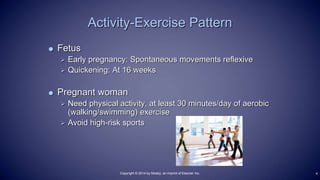
 Fetus
 Early pregnancy: Spontaneous movements reflexive
 Quickening: At 16 weeks
 Pregnant woman
 Need physical activity, at least 30 minutes/day of aerobic
(walking/swimming) exercise
 Avoid high-risk sports
Activity-Exercise Pattern
4Copyright © 2014 by Mosby, an imprint of Elsevier Inc.
 Fetus
 Four cyclical states of activity: complete wakefulness,
drowsy wakefulness, rapid eye movement sleep, and
quiet sleep
 Increasing levels of quiet sleep and quiet alertness
as fetus develops
 Pregnant woman
 Fatigue significant during pregnancy
 Rest periods during day and good night’s sleep
needed
 Sleep interruptions (frequent urination, postural
discomfort) common
Sleep-Rest Pattern
5Copyright © 2014 by Mosby, an imprint of Elsevier Inc.
 Fetus
 Senses (vision, hearing, taste, smell, touch,
proprioception, vestibular sense) function
 25 weeks: Able to respond to sudden noise
 Pregnant woman
 Psychological and cognitive changes
 Emotional
• Progesterone affects mood—focus on child
• Increased sensitivity and analysis of experiences
• Increased mood swings/variability
• Transitioning process to motherhood—influenced by
maternal/infant variables and context
Cognitive-Perceptual Pattern
6Copyright © 2014 by Mosby, an imprint of Elsevier Inc.
 Ensuring safe passage
 Decides prenatal care options; more protective of
self/fetus
 Ensuring acceptance of the child
 Receptivity of partner, others
 Binding into her unknown child
 Complex; integrate fetus as part of self but also as
separate being (fantasies/nesting)
 Learning to give of herself
 Examines meaning of giving, gifts for herself/baby
Cognitive-Perceptual Pattern (Cont.)
7Copyright © 2014 by Mosby, an imprint of Elsevier Inc.
 Acceptance of pregnant body image
 Ambivalence vs. acceptance vs. yearning
for pre-pregnant state
 Influences in assuming maternal role
 Internal (personality, maturity level)
 External (societal, family)
Self-Perception–
Self-Concept Pattern
8Copyright © 2014 by Mosby, an imprint of Elsevier Inc.
 Pregnancy affects whole family
 Without partner
• Isolation; dependent on family
 Partner
• Possible resentment, financial stress, potential for abuse,
concerns about role
 Children
• Changed relationship with mother, less attention from parents
 Extended family/expectant grandparents
• Reminded of own aging; feeling of resentment vs. new
closeness
Roles-Relationships Pattern
9Copyright © 2014 by Mosby, an imprint of Elsevier Inc.
 Perception of stressors and coping for all life
aspects affected
 Anxiety
 Greatest in first and third trimesters
 May decrease blood flow to uterus/fetus
 May be demonstrated through
• Psychosomatic complaints/behaviors
• Dreams/fantasies
• Smoking/substance abuse
 Stress-relieving strategies encouraged
Coping-Stress Tolerance Pattern
10Copyright © 2014 by Mosby, an imprint of Elsevier Inc.
 Fulfillment vs. fear of losing part of self
 Shifting in relationships
 Mother
 Friends
 Shifting in values
 Self
 Partner
 Influence/changing of spiritual values
 Finding meaning in pregnancy
 Spiritual influences on pregnancy care decisions
Values-Belief Pattern
11Copyright © 2014 by Mosby, an imprint of Elsevier Inc.

Pregnancy- Gordon's Functional Health Patterns

  • 1.
    • Based onculture and life experiences women either view pregnancy as an illness, a natural health state or a combination of both.  Healthy/natural • Active participant in social circle/career • Choose provider with similar view • Prenatal care  Illness perspective • Withdraw from work/social obligations • May make unhealthy pregnancy choices, deny pregnancy Health Perception– Health Management Pattern 1Copyright © 2014 by Mosby, an imprint of Elsevier Inc.
  • 2.
     Good nutritionis essential for proper growth/ development  Maternal nutritional deficiencies  Developmental and physiological disadvantages  Due to pre-pregnancy nutrition/weight, finances, culture  Recommendation  Weight gain 25-35 lb (300 calories or more/day)  Well-balanced diet • 8-10 glasses water • 70 g protein • Increased vitamins/minerals (Fe 27 mg, folic acid 600 mcg) • Fats/carbohydrates for energy needs Nutritional-Metabolic Pattern 2Copyright © 2014 by Mosby, an imprint of Elsevier Inc.
  • 3.
     Fetus  Eliminationthrough placenta • Carbon dioxide • Water • Urea  Pregnant woman  Common discomforts of pregnancy owing to enlarging uterus and hormonal influences  Urinary frequency, constipation, hemorrhoids Elimination Pattern 3Copyright © 2014 by Mosby, an imprint of Elsevier Inc.
  • 4.
     Fetus  Earlypregnancy: Spontaneous movements reflexive  Quickening: At 16 weeks  Pregnant woman  Need physical activity, at least 30 minutes/day of aerobic (walking/swimming) exercise  Avoid high-risk sports Activity-Exercise Pattern 4Copyright © 2014 by Mosby, an imprint of Elsevier Inc.
  • 5.
     Fetus  Fourcyclical states of activity: complete wakefulness, drowsy wakefulness, rapid eye movement sleep, and quiet sleep  Increasing levels of quiet sleep and quiet alertness as fetus develops  Pregnant woman  Fatigue significant during pregnancy  Rest periods during day and good night’s sleep needed  Sleep interruptions (frequent urination, postural discomfort) common Sleep-Rest Pattern 5Copyright © 2014 by Mosby, an imprint of Elsevier Inc.
  • 6.
     Fetus  Senses(vision, hearing, taste, smell, touch, proprioception, vestibular sense) function  25 weeks: Able to respond to sudden noise  Pregnant woman  Psychological and cognitive changes  Emotional • Progesterone affects mood—focus on child • Increased sensitivity and analysis of experiences • Increased mood swings/variability • Transitioning process to motherhood—influenced by maternal/infant variables and context Cognitive-Perceptual Pattern 6Copyright © 2014 by Mosby, an imprint of Elsevier Inc.
  • 7.
     Ensuring safepassage  Decides prenatal care options; more protective of self/fetus  Ensuring acceptance of the child  Receptivity of partner, others  Binding into her unknown child  Complex; integrate fetus as part of self but also as separate being (fantasies/nesting)  Learning to give of herself  Examines meaning of giving, gifts for herself/baby Cognitive-Perceptual Pattern (Cont.) 7Copyright © 2014 by Mosby, an imprint of Elsevier Inc.
  • 8.
     Acceptance ofpregnant body image  Ambivalence vs. acceptance vs. yearning for pre-pregnant state  Influences in assuming maternal role  Internal (personality, maturity level)  External (societal, family) Self-Perception– Self-Concept Pattern 8Copyright © 2014 by Mosby, an imprint of Elsevier Inc.
  • 9.
     Pregnancy affectswhole family  Without partner • Isolation; dependent on family  Partner • Possible resentment, financial stress, potential for abuse, concerns about role  Children • Changed relationship with mother, less attention from parents  Extended family/expectant grandparents • Reminded of own aging; feeling of resentment vs. new closeness Roles-Relationships Pattern 9Copyright © 2014 by Mosby, an imprint of Elsevier Inc.
  • 10.
     Perception ofstressors and coping for all life aspects affected  Anxiety  Greatest in first and third trimesters  May decrease blood flow to uterus/fetus  May be demonstrated through • Psychosomatic complaints/behaviors • Dreams/fantasies • Smoking/substance abuse  Stress-relieving strategies encouraged Coping-Stress Tolerance Pattern 10Copyright © 2014 by Mosby, an imprint of Elsevier Inc.
  • 11.
     Fulfillment vs.fear of losing part of self  Shifting in relationships  Mother  Friends  Shifting in values  Self  Partner  Influence/changing of spiritual values  Finding meaning in pregnancy  Spiritual influences on pregnancy care decisions Values-Belief Pattern 11Copyright © 2014 by Mosby, an imprint of Elsevier Inc.

Editor's Notes

  • #2 Based on culture and life experiences women either view pregnancy as an illness, a natural health state or a combination of both. This perception will influence her view of her changing body, attitude towards the typical discomforts of pregnancy, and choice of health vs illness oriented care. Health/Natural Continue an active health lifestyle within their social circle and career Choose a healthcare provider that has a similar outlook on pregnancy; avoid western medicine Seek pre-natal care Illness Withdraw from work and social circles Fail to eat properly, get enough rest/exercise, breastfeed or seek prenatal care. Approx 50% of pregnancies are unplanned; what age groups do you think that this is most relevant? Adolescents and women over 40 As healthcare providers we need to target interventions that focus on this groups needs and beliefs while adhering to professional practice standards that will improve the outcomes. What would be some interventions that you, as a dental hygienist, could focus on?
  • #3 Nutrition is essential for the maternal and fetal wellbeing. The quality of nutrition is dependent on many factors and maternal nutritional deficiencies can contribute to developmental physiological disadvantages to the growing fetus. Many factors can contribute to this including pre-pregnancy nutrition/weight, finances, culture When do you want to educate your patient? Pre-pregnancy To meet the metabolic, energy and structural needs for pregnancy the following is recommended: Healthy weight gain is 25-35 lbs Increase calorie intake of 300/day Well balanced diet consisting of 8-10 glasses of water 70g protein Increased vitamins and minerals (30 g Iron and 400 mcg folic acid) What are some sources of iron? Lean meats, dark green leafy vegetables, eggs, whole grain, dried fruit and shellfish Folic Acid? Fresh green leafy vegetables, liver, peanuts, whole-grain breads and cereals REVIEW CHART ON PG 364 of TEXT
  • #4 The fetus can accomplish all essential elimination function through the placenta The mother is going to experience changes in her elimination pattern due to the enlarged uterus and hormonal changes Frequent urination Constipation Hemorrhoids
  • #5 Fetus By 16 week the fetal movements will occur regularly and this is termed quickening During the 3rd trimestester fetal movement is less frequent due to limited space in the uterus Lack of movement for 8 hours may be a sign of fetal distress Pregnant Woman Stay active! Just avoid high-risk sports.
  • #6 Fetus Studies have shown four cyclical states of activity: complete wakefulness, drowsy wakefulness, rapid eye movement sleep, and quiet sleep As the fetus develops there are increasing levels of quiet sleep and quiet alertness Pregnant Woman Fatigue reflects the significant physical and emotional changes occurring Pregnant women should rest the body when it signals its tired Unfortunately during the first and 3rd trimesters there are many sleep interruptions for frequent urination, postural discomfort- this can increase fatigue
  • #7 Fetus During fetal development all sensory systems function or nearly function and at 25 weeks the babies can respond to loud sudden noises. Pregnant Woman Due to the increase in progesterone the mothers mood is going to change is typically going to focus more on the child and become more introverted and passive. Mood swings/variability
  • #8 There are 4 major developmental tasks that a woman seeks to accomplish as she learns to become a mother. These include: Ensuring Safe passage Ensuring Acceptance of the child Binding into her unknown child Learning to Give herself
  • #9 To develop a maternal identity the woman must first accept the pregnant body image Initially she may show ambivalence (mixed feelings) based on her need to fit the pregnancy with her perception of self Acceptance- show off to others; more acceptance during second trimester when she feels movement and increased estrogen and progesterone. Yearning- towards the end of pregnancy when uncomfortable Internal and external factors that influence how the mother accepts their new role.
  • #10 The roles and relationships within a family change drastically during pregnancy and postpartum. Single mothers-may feel isolated and depend on friends and family for support Partner- may feel rivalry with the fetus during pregnancy, he also may resent the attention that the mother receives, obviously he is going to feel financial stress, which could lead to abuse. He may also be concerned about being a father and living up to the expectations of this new role. Children- may feel as if they are being pushed aside and receiving less attention Grandparents- reminders of their age- example of Liam
  • #11 Pregnancy is going to cause a lot of stress. Things that may not have caused stress in the past, may now be a huge deal. Anxiety is going to be the greatest in the 1st and 3rd trimesters Complaints/behaviors Dreams/fantasies Smoking/substance abuse Too much anxiety may decrease blood flow to the fetus Extremely important to practice stress relieving strategies. What are some strategies that you all use to help reduce stress?
  • #12 Pregnancy is often viewed as the biggest fulfillment for a woman however, she may fear of loosing herself Gives up relationships and pleasures to assume other satisfactions Value friendships with mothers rather then focusing on her career Both pregnant woman and spouse may have a shift in spiritual values Find meaning in pregnancy through conception Want child to be religious