



Quality Management system
Welcome everyone to :QMS OverviewWelcome
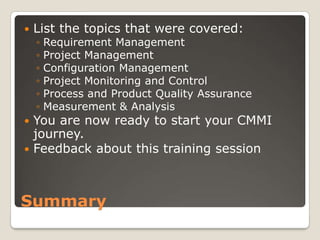
Goal: Train everyone for performing following: Requirement Management
 Project Management (Planning)
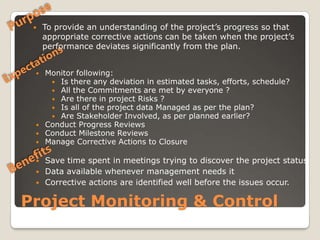
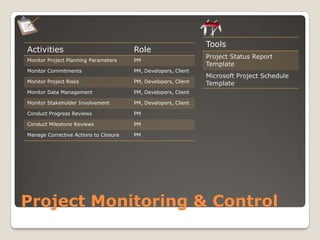
 Project Monitoring and control
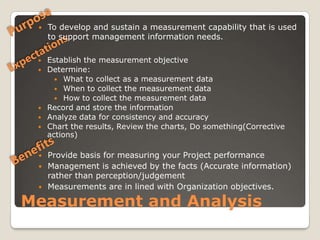
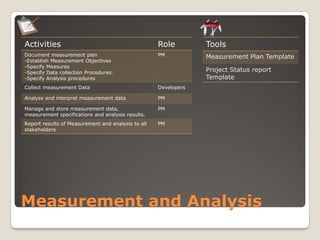
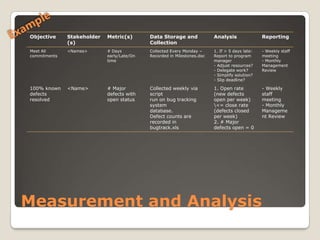
 Measurement of your Project performance
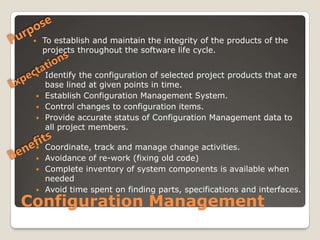
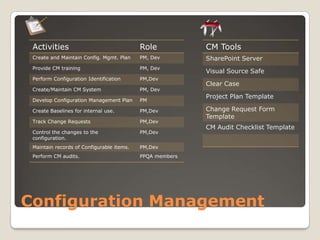
 Configuration Management
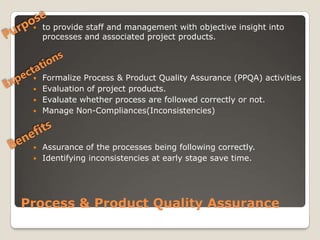
 Quality Assurance of your Product/Process
Importance of this training:
 Improved Project Management
 Improved Reporting, monitoring and control
 Qualify your organization for CMM-L2certificationOverview
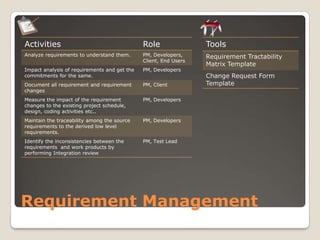
Requirement Management
PurposeTo manage the requirements of the project's products and product components and to identify inconsistencies between those requirements and the Deliverables.ExpectationsUnderstand the requirements
Get an agreement and commitment to the requirements
Manage the requirement changes
Maintain the bidirectional traceability of the requirements
Maintain the consistency between requirements and  Project plansBenefitsAvoid Unnecessary efforts, resources on rework (i.e. more cost)
Develop/deliver accurate and complete project
Meet deadlines, budgets, expectations of the customers.
Avoid Unplanned project delays and Project failuresRequirement Management
Requirement Management
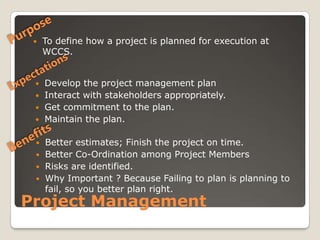
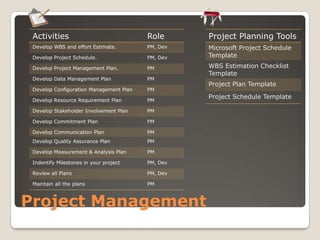
Project Management
PurposeTo define how a project is planned for execution at WCCS.ExpectationsDevelop the project management plan
Interact with stakeholders appropriately.
Get commitment to the plan.
Maintain the plan.BenefitsBetter estimates; Finish the project on time.

CMM L2- Quality Management System

Editor's Notes

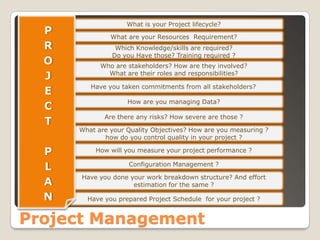
  • #9 Estimating the Scope of the Project - work breakdown structure (WBS).Determine the size of the work.Data management – Is nothing but how to manage all of the data and documentation your project will create, acquire, or require. Listed as work products are privacy and security requirements, security procedures, schedule for collection of project data, format descriptions, and mechanisms for reproduction and distribution. You should discuss how you will identify, collect, and make changes to the data that are necessary for your project, and why that data are necessary in the first place. The purpose of this practice is to make you think about why you are collecting this information, how it will be used, and how you will make changes and protect the data from being used in an abusive manner.Project Planning includes identifying and documenting the scope of the project in order to define and maintain work boundaries; estimating size and complexity of work products; estimating tasks, effort, and cost; defining the project life cycle or selecting a preexisting life cycle that matches the project; determining preliminary and follow-on budgets and schedules; identifying and documenting project risks; planning the extent to which stakeholders should become involved to ensure success; planning for managing information, staff, computer resources, and hardware; planning for the training needs of project team members. The scope of work here has greatly expanded from just planning the software portion of a project to planning the design, development, and delivery of the entire product. This work will include systems engineering.