1. Result when air
   compressed or allowed to
   expand
2. Expand= cool, and
   compressed= warm
1. Mountains acting as
   barriers to the flow
   of air, forcing air to
   ascend
2. Happens a lot in
   rainier location
1. It produces a front
2. It causes air to rise
1. Is whenever air in the
   lower atmosphere
   flows together. Lifting
   results
2. Cannot go down, must
   go up
1. Is the process that produces rising thermals
2. Good for hang gliding
1. Air that
   resists
   vertical
   movement
2. Good for
   hot air
   balloons
1. When a gas
   becomes a liquid
2. A good example is
   dew and water
   outside of a cold cup
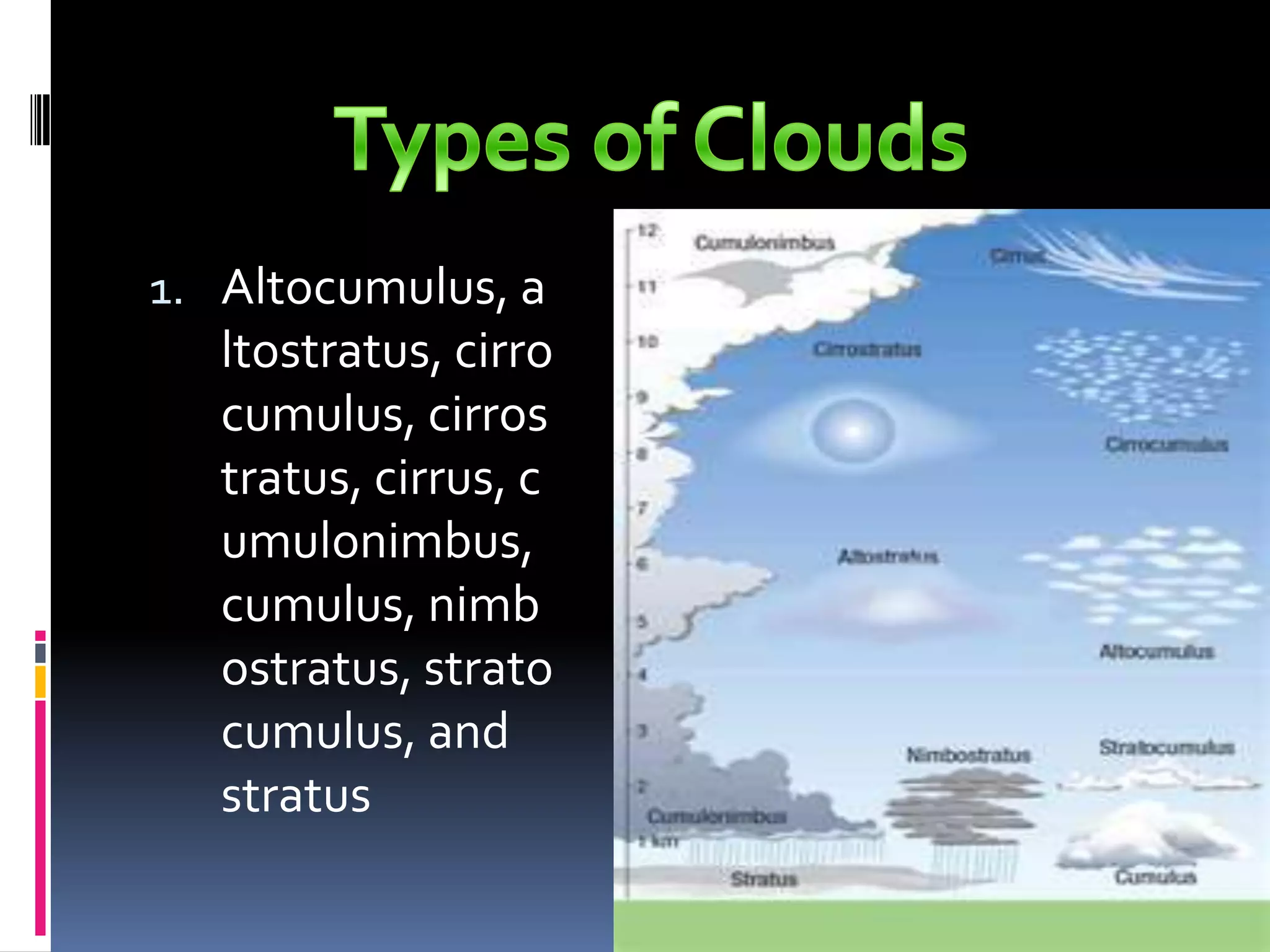
1. Altocumulus, a
   ltostratus, cirro
   cumulus, cirros
   tratus, cirrus, c
   umulonimbus,
   cumulus, nimb
   ostratus, strato
   cumulus, and
   stratus
1. Cirrus, Cirrocumul
   us, Cirrostratus
2. Made out of ice
   crystals and are
   about 6000
   meters above sea
   level
1. Altocumulus
   , Altostratus
2. Drizzle or
   light snow
   comes from
   these clouds
   and are
   about 4000
   meters high
1. Stratus, Str
   atocumulu
   s, Nimbost
   ratus
2. Make
   precipitati
   on and are
   about 2000
   meters
   high
1. Cumulus and
   Cumulonimbus
2. Cumulonimbus
   produces
   thunderstorms
   and both extend
   upwards
1. Can be caused by cooling of evaporation
2. Can produce on land and on water
1. Droplets under
   0C and above -
   40C are called
   super cooled
2. Air that is
   100% relative
   humidity is
   called
   supersaturated
1. Mechanism that
   forms raindrops
   is the collision-
   coalescence
   process
2. Happens a lot in
   the tropics like
   rainforests
1. Rain is considered drops
   of water that is at least
   0.5 mm from a cloud
2. Snow is rain that hasn’t
   melted yet and happens
   when the surface is -5C
1. Sleet is small particles of clear to translucent
   ice
2. Glaze is freezing rain and Hail is produced by
   cumulonimbus clouds and is ice
SLIDES:
1- http://www.sawater.com.au/SAWater/Education/OurWaterSystems/The+Water+Cycle.htm
2- http://www.kidsgeo.com/geography-for-kids/0070-adiabatic-temperature-changes.php
3- http://www.nc-climate.ncsu.edu/edu/k12/.LiftingMechanisms
4- http://www.geo.hunter.cuny.edu/~tbw/wc.notes/4.moisture.atm.stability/frontal_wedging.htm
5- http://www.explainingthefuture.com/nic.html
6- http://www.richhoffmanclass.com/chapter4.html
7- http://www.johnsboatstuff.com/Articles/estimati.htm
8- http://keep3.sjfc.edu/students/kes00898/e-port/condensation%20page%20for%20unit.html
9- http://www.tpwd.state.tx.us/publications/nonpwdpubs/young_naturalist/earth_sciences/clouds/
10- http://eo.ucar.edu/webweather/cloud3.html
11- http://eo.ucar.edu/webweather/cloud3.html
12- http://www.weathervortex.com/cloud-types.htm
13- http://www.richhoffmanclass.com/chapter5.html
14- http://helicopterblog.com/?p=276
15- http://pugetsoundblogs.com/forecasting-kitsap/category/long-range-thoughts/
16- http://www.cartoonstock.com/directory/w/warm_rain.asp
17- http://depositphotos.com/5213558/stock-photo-Heavy-cloud-with-rain-and-snow..html
18- http://climate.met.psu.edu/features/Hail/PEMA_hail.php

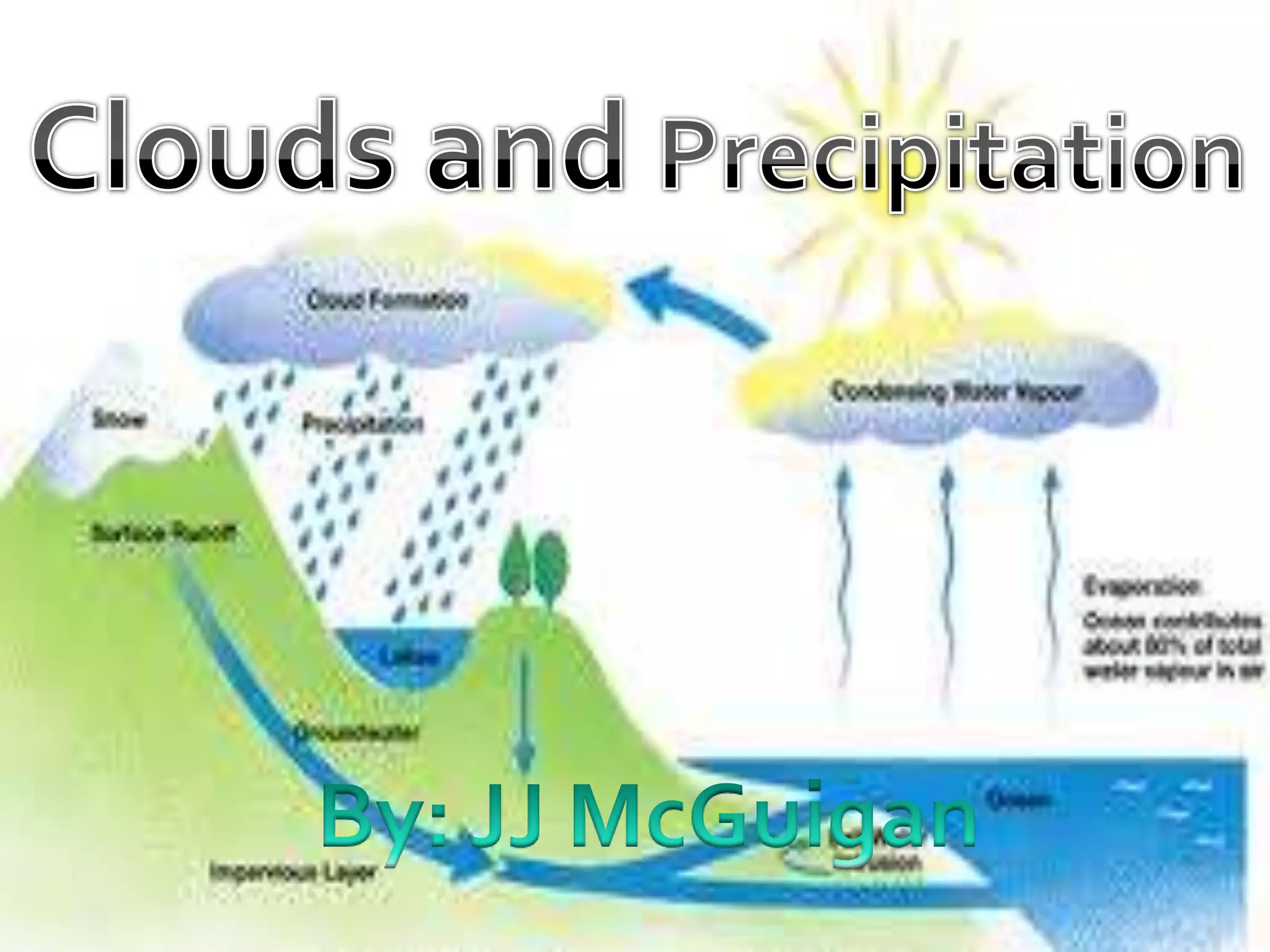
Clouds and precipitation

  • 2.
    1. Result whenair compressed or allowed to expand 2. Expand= cool, and compressed= warm
  • 3.
    1. Mountains actingas barriers to the flow of air, forcing air to ascend 2. Happens a lot in rainier location
  • 4.
    1. It producesa front 2. It causes air to rise
  • 5.
    1. Is wheneverair in the lower atmosphere flows together. Lifting results 2. Cannot go down, must go up
  • 6.
    1. Is theprocess that produces rising thermals 2. Good for hang gliding
  • 7.
    1. Air that resists vertical movement 2. Good for hot air balloons
  • 8.
    1. When agas becomes a liquid 2. A good example is dew and water outside of a cold cup
  • 9.
    1. Altocumulus, a ltostratus, cirro cumulus, cirros tratus, cirrus, c umulonimbus, cumulus, nimb ostratus, strato cumulus, and stratus
  • 10.
    1. Cirrus, Cirrocumul us, Cirrostratus 2. Made out of ice crystals and are about 6000 meters above sea level
  • 11.
    1. Altocumulus , Altostratus 2. Drizzle or light snow comes from these clouds and are about 4000 meters high
  • 12.
    1. Stratus, Str atocumulu s, Nimbost ratus 2. Make precipitati on and are about 2000 meters high
  • 13.
    1. Cumulus and Cumulonimbus 2. Cumulonimbus produces thunderstorms and both extend upwards
  • 14.
    1. Can becaused by cooling of evaporation 2. Can produce on land and on water
  • 15.
    1. Droplets under 0C and above - 40C are called super cooled 2. Air that is 100% relative humidity is called supersaturated
  • 16.
    1. Mechanism that forms raindrops is the collision- coalescence process 2. Happens a lot in the tropics like rainforests
  • 17.
    1. Rain isconsidered drops of water that is at least 0.5 mm from a cloud 2. Snow is rain that hasn’t melted yet and happens when the surface is -5C
  • 18.
    1. Sleet issmall particles of clear to translucent ice 2. Glaze is freezing rain and Hail is produced by cumulonimbus clouds and is ice
  • 20.
    SLIDES: 1- http://www.sawater.com.au/SAWater/Education/OurWaterSystems/The+Water+Cycle.htm 2- http://www.kidsgeo.com/geography-for-kids/0070-adiabatic-temperature-changes.php 3-http://www.nc-climate.ncsu.edu/edu/k12/.LiftingMechanisms 4- http://www.geo.hunter.cuny.edu/~tbw/wc.notes/4.moisture.atm.stability/frontal_wedging.htm 5- http://www.explainingthefuture.com/nic.html 6- http://www.richhoffmanclass.com/chapter4.html 7- http://www.johnsboatstuff.com/Articles/estimati.htm 8- http://keep3.sjfc.edu/students/kes00898/e-port/condensation%20page%20for%20unit.html 9- http://www.tpwd.state.tx.us/publications/nonpwdpubs/young_naturalist/earth_sciences/clouds/ 10- http://eo.ucar.edu/webweather/cloud3.html 11- http://eo.ucar.edu/webweather/cloud3.html 12- http://www.weathervortex.com/cloud-types.htm 13- http://www.richhoffmanclass.com/chapter5.html 14- http://helicopterblog.com/?p=276 15- http://pugetsoundblogs.com/forecasting-kitsap/category/long-range-thoughts/ 16- http://www.cartoonstock.com/directory/w/warm_rain.asp 17- http://depositphotos.com/5213558/stock-photo-Heavy-cloud-with-rain-and-snow..html 18- http://climate.met.psu.edu/features/Hail/PEMA_hail.php