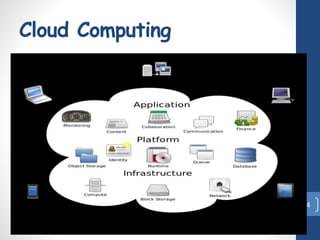
Cloud Computing
Risk Assessment
Done by Ahmad Taweel
1
Outline
• Introduction
• Survey Risk Assessment for Cloud Computing
• Assessing the Security Risks of Cloud
Computing
• Security and Privacy Challenges in Cloud
Computing
• Conclusion
2
Introduction
• Massive developments and implementations of cloud
computing services
• Real advantages in term of cost and computational
power
• Security risks that need to be assessed and mitigated
• Assessment of security risks is essential
3
Cloud Computing
4
What is Risk management ?
• Set of activities and methods to control risks
• Architecture to manage risks
5
What is Risk assessment ?
• Process
• Identifying the security risks
• Occurrence for these risks
• Impact
• Safeguards against these risks
• Controls for reducing or eliminating those risks
6
Risk assessment steps
• Threat Identification
• Vulnerability Identification(list)
• Risk Determination(level)
• Control Recommendation
7
Risk assessment for cloud
computing
• European Network and Information Security Agency
(ENISA)
• Pointed
• Advantages and security risks
• Provided
• recommendations
• Approaches to asses risks
8
Risk assessment for cloud
computing
• Risk analysis approach
• Service
• Methodology
9
Assessing the Security
Risks of Cloud Computing
• First What to Evaluate
• Then How to Assess
10
What to Evaluate
• Data Location
• Recovery
• Viability
• Support in Reducing Risk
11
Data Location
• Every customer need to know where his data are
hosted, in which country the data is stored
12
Recovery
• How cloud offerings will recover from total disaster?
• Know what will happen if one of the offered sites
went down?
• Can it completely restore everything?
• How much time does it need to complete restoration?
13
Viability
• What would happen to your service if the provider
goes broke?
• How would I get my data back?
• Can I use the data in a replacement application?
14
Support in Reducing Risk
• How to use the product safely?
• To whom the instructions for setting and monitoring
policies provided to ?
• How to avoid phishing or malware attacks?
15
How to Assess
• Qualification of the provider’s policymakers, coders
and operators
• What risk control processes and technical
mechanisms are used?
• Functionality of there services
• Identification of unanticipated vulnerabilities
16
Security and
Privacy Challenges
1. Authentication and Identity Management
2. Access Control and Accounting
3. Secure-Service Management
4. Privacy and Data Protection
17
Authentication and Identity
Management
• Users can easily access their personal information and
make it available to various services across the
Internet
• Issue is drawbacks that could result from using
different identity tokens
18
Access Control and Accounting
• Access control is demanded
• Access control should be flexible
• The access control models should also be able to
capture relevant aspects of SLAs
• Accounting create privacy issues
19
Secure-Service Management
• Many cloud service providers use the Web Services
Description Language (WSDL)
• Issues such as quality of service, price and SLAs are
critical in services
20
Privacy and Data Protection
• Privacy is a core issue
• Protect Identity information
• Transaction histories
• Data stored out side the premises
• who created a piece of data, who modified it and how,
and so on
21
Conclusion
• Risk assessment is for helping cloud consumers
• Specific risk assessment approach
• Cloud computing risk assessment isn’t easy
• Cloud computing need higher level of assurance
• Organizations need to
• Evaluate cloud-computing risks
• Identify appropriate controls
22

Cloud computing risk assesment presentation

  • 1.
  • 2.
    Outline • Introduction • SurveyRisk Assessment for Cloud Computing • Assessing the Security Risks of Cloud Computing • Security and Privacy Challenges in Cloud Computing • Conclusion 2
  • 3.
    Introduction • Massive developmentsand implementations of cloud computing services • Real advantages in term of cost and computational power • Security risks that need to be assessed and mitigated • Assessment of security risks is essential 3
  • 4.
  • 5.
    What is Riskmanagement ? • Set of activities and methods to control risks • Architecture to manage risks 5
  • 6.
    What is Riskassessment ? • Process • Identifying the security risks • Occurrence for these risks • Impact • Safeguards against these risks • Controls for reducing or eliminating those risks 6
  • 7.
    Risk assessment steps •Threat Identification • Vulnerability Identification(list) • Risk Determination(level) • Control Recommendation 7
  • 8.
    Risk assessment forcloud computing • European Network and Information Security Agency (ENISA) • Pointed • Advantages and security risks • Provided • recommendations • Approaches to asses risks 8
  • 9.
    Risk assessment forcloud computing • Risk analysis approach • Service • Methodology 9
  • 10.
    Assessing the Security Risksof Cloud Computing • First What to Evaluate • Then How to Assess 10
  • 11.
    What to Evaluate •Data Location • Recovery • Viability • Support in Reducing Risk 11
  • 12.
    Data Location • Everycustomer need to know where his data are hosted, in which country the data is stored 12
  • 13.
    Recovery • How cloudofferings will recover from total disaster? • Know what will happen if one of the offered sites went down? • Can it completely restore everything? • How much time does it need to complete restoration? 13
  • 14.
    Viability • What wouldhappen to your service if the provider goes broke? • How would I get my data back? • Can I use the data in a replacement application? 14
  • 15.
    Support in ReducingRisk • How to use the product safely? • To whom the instructions for setting and monitoring policies provided to ? • How to avoid phishing or malware attacks? 15
  • 16.
    How to Assess •Qualification of the provider’s policymakers, coders and operators • What risk control processes and technical mechanisms are used? • Functionality of there services • Identification of unanticipated vulnerabilities 16
  • 17.
    Security and Privacy Challenges 1.Authentication and Identity Management 2. Access Control and Accounting 3. Secure-Service Management 4. Privacy and Data Protection 17
  • 18.
    Authentication and Identity Management •Users can easily access their personal information and make it available to various services across the Internet • Issue is drawbacks that could result from using different identity tokens 18
  • 19.
    Access Control andAccounting • Access control is demanded • Access control should be flexible • The access control models should also be able to capture relevant aspects of SLAs • Accounting create privacy issues 19
  • 20.
    Secure-Service Management • Manycloud service providers use the Web Services Description Language (WSDL) • Issues such as quality of service, price and SLAs are critical in services 20
  • 21.
    Privacy and DataProtection • Privacy is a core issue • Protect Identity information • Transaction histories • Data stored out side the premises • who created a piece of data, who modified it and how, and so on 21
  • 22.
    Conclusion • Risk assessmentis for helping cloud consumers • Specific risk assessment approach • Cloud computing risk assessment isn’t easy • Cloud computing need higher level of assurance • Organizations need to • Evaluate cloud-computing risks • Identify appropriate controls 22