Cloning Genes
• Gene cloning: amplifying a specific piece of
DNA via a bacteria cell
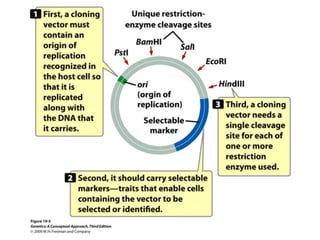
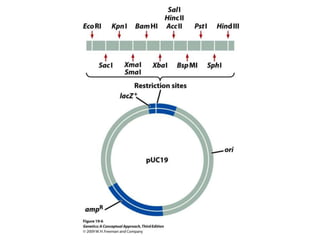
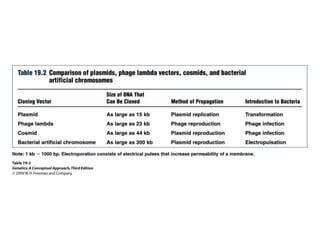
• Cloning vector: a replicating DNA molecule
attached with a foreign DNA fragment to be
introduced into a cell
– Has features that make it easier to insert DNA and
select for presence of vector in cell.
• Origin of replication
• Antibiotic resistance gene
• Cloning site
Cloning Genes
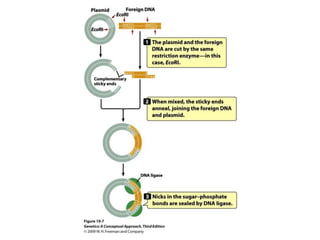
• Plasmid vectors
• Linkers: synthetic DNA fragments containing
restriction sites
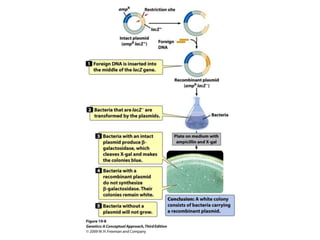
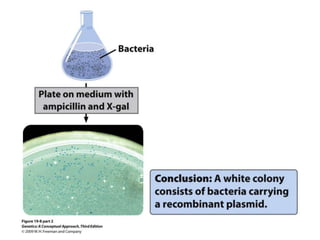
• Transformation of host cells with plasmids
• Selectable markers are used to confirm whether
the cells have been transformed or not.
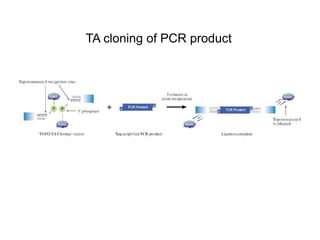
TA cloning of PCR product
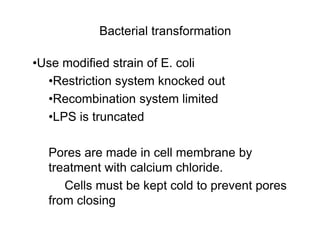
Bacterial transformation
•Use modified strain of E. coli
•Restriction system knocked out
•Recombination system limited
•LPS is truncated
Pores are made in cell membrane by
treatment with calcium chloride.
Cells must be kept cold to prevent pores
from closing
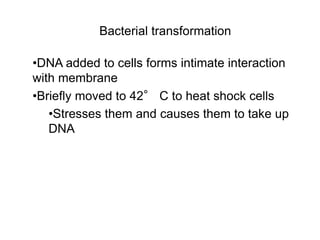
Bacterial transformation
•DNA added to cells forms intimate interaction
with membrane
•Briefly moved to 42° C to heat shock cells
•Stresses them and causes them to take up
DNA

cloning and transformation.ppt

  • 1.
    Cloning Genes • Genecloning: amplifying a specific piece of DNA via a bacteria cell • Cloning vector: a replicating DNA molecule attached with a foreign DNA fragment to be introduced into a cell – Has features that make it easier to insert DNA and select for presence of vector in cell. • Origin of replication • Antibiotic resistance gene • Cloning site
  • 3.
    Cloning Genes • Plasmidvectors • Linkers: synthetic DNA fragments containing restriction sites • Transformation of host cells with plasmids • Selectable markers are used to confirm whether the cells have been transformed or not.
  • 9.
    TA cloning ofPCR product
  • 10.
    Bacterial transformation •Use modifiedstrain of E. coli •Restriction system knocked out •Recombination system limited •LPS is truncated Pores are made in cell membrane by treatment with calcium chloride. Cells must be kept cold to prevent pores from closing
  • 11.
    Bacterial transformation •DNA addedto cells forms intimate interaction with membrane •Briefly moved to 42° C to heat shock cells •Stresses them and causes them to take up DNA