
How I Treat :   Chronic Lymphocytic Leukemia Thanyaphong Na Nakorn, MD, PhD Division of Hematology, Department of Medicine Faculty of Medicine, Chulalongkorn University King Chulalongkorn Memorial Hospital
Issue to be discussed How to diagnose chronic lymphocytic leukemia When to treat CLL Treatment Guideline/ Regimen selection Response evaluation
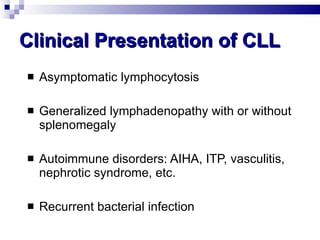
Clinical Presentation of CLL Asymptomatic lymphocytosis Generalized lymphadenopathy with or without splenomegaly Autoimmune disorders: AIHA, ITP, vasculitis, nephrotic syndrome, etc. Recurrent bacterial infection
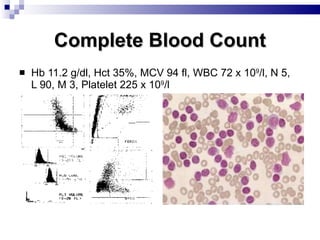
Complete Blood Count Hb 11.2 g/dl, Hct 35%, MCV 94 fl, WBC 72 x 10 9 /l, N 5, L 90, M 3, Platelet 225 x 10 9 /l
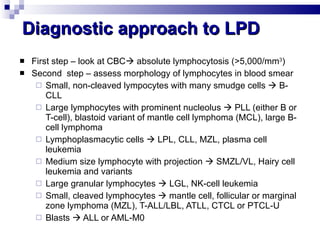
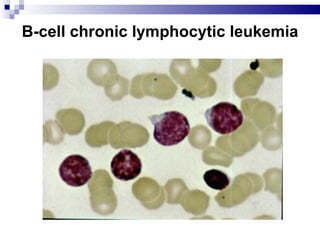
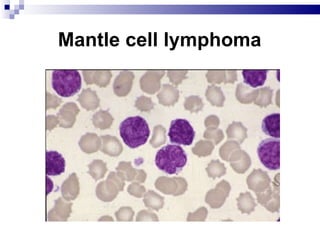
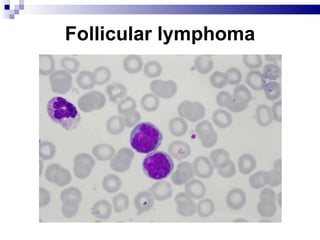
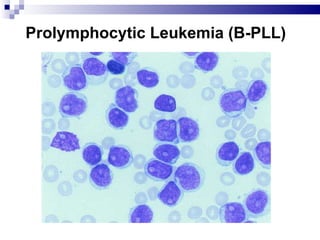
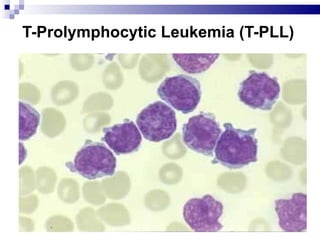
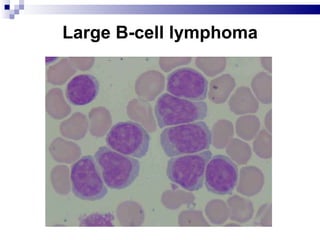
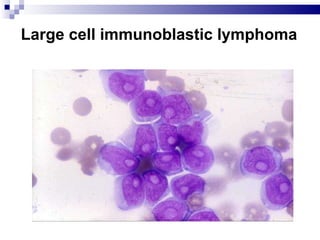
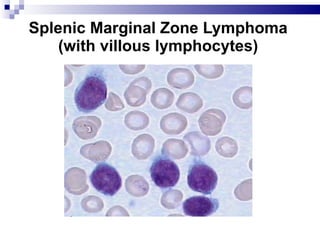
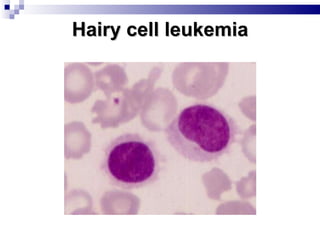
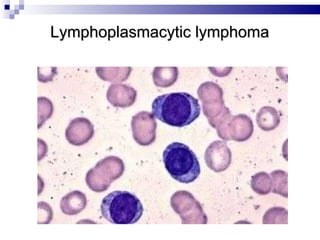
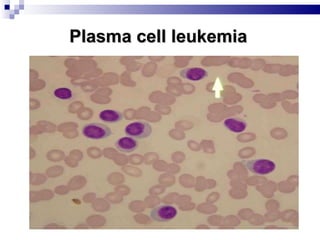
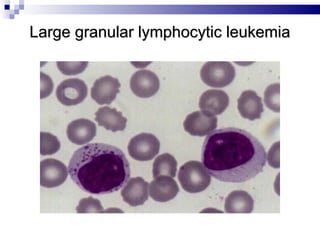
Diagnostic approach to LPD First step – look at CBC   absolute lymphocytosis (>5,000/mm 3 ) Second  step – assess morphology of lymphocytes in blood smear Small, non-cleaved lympocytes with many smudge cells    B-CLL Large lymphocytes with prominent nucleolus    PLL (either B or T-cell), blastoid variant of mantle cell lymphoma (MCL), large B-cell lymphoma Lymphoplasmacytic cells    LPL, CLL, MZL, plasma cell leukemia  Medium size lymphocyte with projection    SMZL/VL, Hairy cell leukemia and variants Large granular lymphocytes    LGL, NK-cell leukemia  Small, cleaved lymphocytes    mantle cell, follicular or marginal zone lymphoma (MZL), T-ALL/LBL, ATLL, CTCL or PTCL-U Blasts    ALL or AML-M0
B-cell chronic lymphocytic leukemia
Mantle cell lymphoma
Follicular lymphoma
Prolymphocytic Leukemia (B-PLL)
T-Prolymphocytic Leukemia (T-PLL)
Large B-cell lymphoma
Large cell immunoblastic lymphoma
Splenic Marginal Zone Lymphoma (with villous lymphocytes)
Hairy cell leukemia
Lymphoplasmacytic lymphoma
Plasma cell leukemia
Large granular lymphocytic leukemia
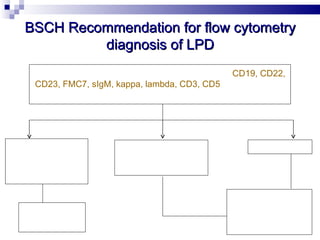
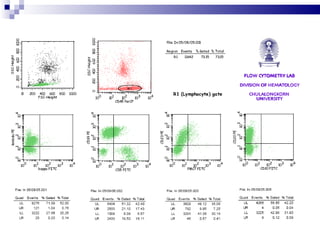
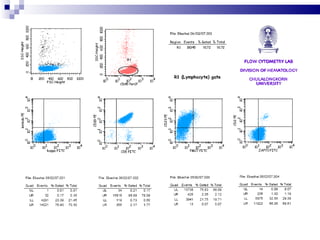
BSCH Recommendation for flow cytometry diagnosis of LPD Assess morphology, apply the first line Ab panel ( CD19, CD22, CD23, FMC7, sIgM, kappa, lambda, CD3, CD5 ) and assign CLL score CLL score 3-5 Typical CLL morphology CLL CLL score 0-2 Non-CLL or atypical morphology T-cell Apply second line Ab panel
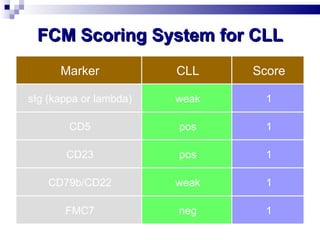
FCM Scoring System for CLL Marker CLL Score sIg (kappa or lambda) weak 1 CD5 pos 1 CD23 pos 1 CD79b/CD22 weak 1 FMC7 neg 1
 
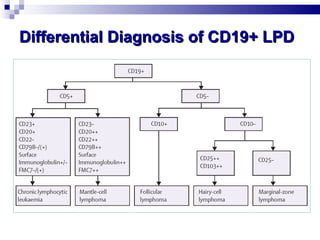
Differential Diagnosis of CD19+ LPD Hamblin GDT. Lancet 2008 ; 371 : 1017-29
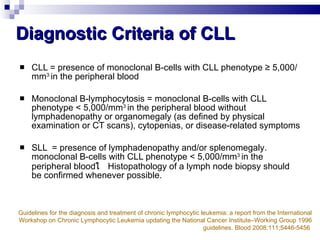
Diagnostic Criteria of CLL CLL = presence of monoclonal B-cells with CLL phenotype â‰Ĩ 5,000/mm 3   in the peripheral blood Monoclonal B-lymphocytosis   = monoclonal B-cells with CLL phenotype < 5,000/mm 3   in the peripheral blood   without   lymphadenopathy or organomegaly  ( as defined   by physical examination or CT scans ) , cytopenias, or disease - related   symptoms  SLL  = presence of lymphadenopathy   and / or splenomegaly .  monoclonal B-cells with CLL phenotype < 5,000/mm 3   in the peripheral blood āđƒ  Histopathology of a lymph node biopsy should be confirmed whenever possible .  Guidelines for the diagnosis and treatment of chronic lymphocytic leukemia :  a report from the International Workshop on Chronic Lymphocytic Leukemia updating the National Cancer Institute–Working Group 1996 guidelines. Blood 2008:111;5446-5456
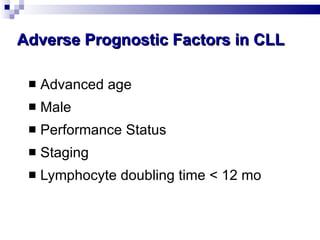
Adverse Prognostic Factors in CLL Advanced age Male  Performance Status Staging Lymphocyte doubling time < 12 mo
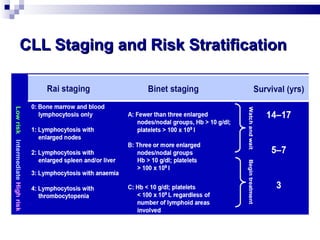
CLL Staging and Risk Stratification
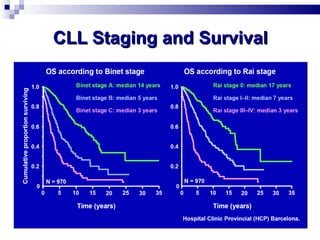
CLL Staging and Survival
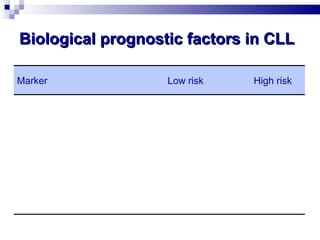
Biological prognostic factors in CLL Marker Low risk High risk Genomic aberrations Normal, 13q– single 11q–, 17p– IgV H Mutated Unmutated CD38 â‰Ī  30% >  30% ZAP-70 Negative Positive Serum CD23, TK,  ïĒ 2 microglobulin Low High
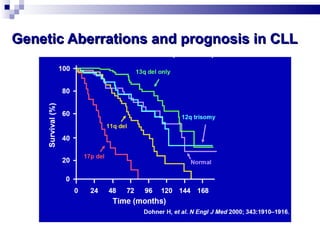
Genetic Aberrations and prognosis in CLL
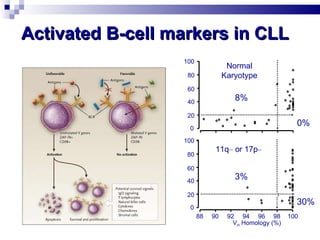
Activated B-cell markers in CLL ZAP-70 expression (%) 0 20 40 60 80 100 8% 0% Normal Karyotype 88 90 92 94 96 98 100 0 20 40 60 80 100 3% 30% 11q –  or 17p – V H  Homology (%)
 
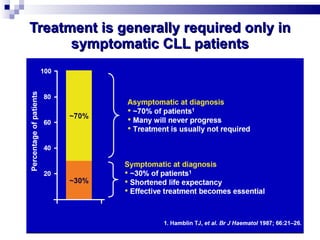
Treatment is generally required only in symptomatic CLL patients
Hallek M, et al.  Blood 2008 ; 111 : 5446-5456
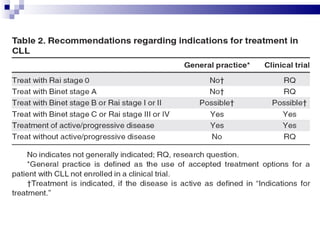
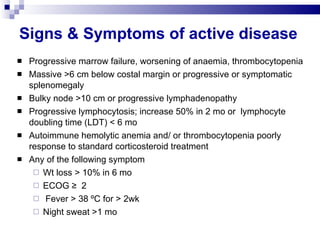
Signs & Symptoms of active disease Progressive marrow failure, worsening of anaemia, thrombocytopenia Massive >6 cm below costal margin or progressive or symptomatic splenomegaly Bulky node >10 cm or progressive lymphadenopathy Progressive lymphocytosis; increase 50% in 2 mo or  lymphocyte doubling time (LDT) < 6 mo  Autoimmune hemolytic anemia and/ or thrombocytopenia poorly response to standard corticosteroid treatment Any of the following symptom Wt loss > 10% in 6 mo ECOG â‰Ĩ  2 Fever > 38 šC for > 2wk Night sweat >1 mo
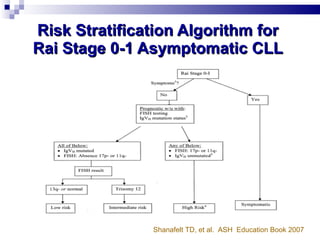
Risk Stratification Algorithm for  Rai Stage 0-1 Asymptomatic CLL  Shanafelt TD, et al.  ASH  Education Book 2007
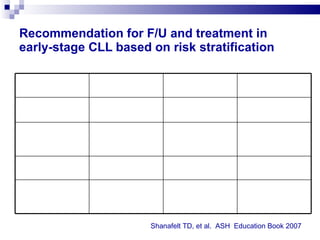
Recommendation for F/U and treatment in early-stage CLL based on risk stratification Shanafelt TD, et al.  ASH  Education Book 2007 Low risk Intermediate risk High risk Median expected survival   (y) >15 10 3-8 Median expected treatment-free survival (y) >5 3-4 1-4 Recommended F/U mo. 6-12 6-12 3-6 Immediate Treatment indicated No No Consider clinical trial
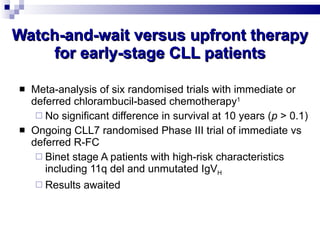
Watch-and-wait versus upfront therapy for early-stage CLL patients Meta-analysis of six randomised trials with immediate or deferred chlorambucil-based chemotherapy 1 No significant difference in survival at 10 years ( p  > 0.1) Ongoing CLL7 randomised Phase III trial of immediate vs deferred R-FC Binet stage A patients with high-risk characteristics including 11q del and unmutated IgV H Results awaited CLL Trialists’ Collaborative Group.  J Natl Cancer Inst  1999; 91:861–868.
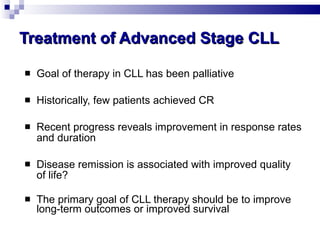
Treatment of Advanced Stage CLL Goal of therapy in CLL has been palliative Historically, few patients achieved CR Recent progress reveals improvement in response rates and duration  Disease remission is associated with improved quality of life? The primary goal of CLL therapy should be to improve long-term outcomes or improved survival
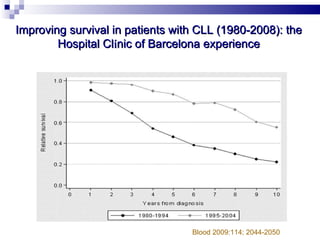
Survival curves for CLL patients younger than 70 years in Binet stage B / C Improving survival in patients with CLL  ( 1980-2008 ):  the Hospital Cl í nic of Barcelona experience Blood 2009:114;   2044-2050
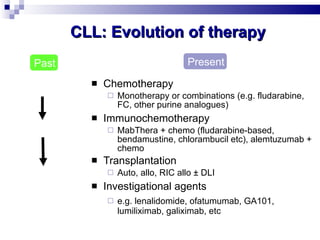
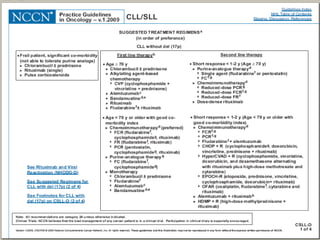
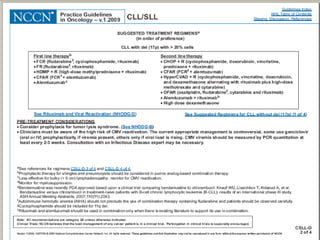
CLL: Evolution of therapy Chemotherapy Monotherapy or combinations (e.g. fludarabine, FC, other purine analogues) Immunochemotherapy MabThera + chemo (fludarabine-based, bendamustine, chlorambucil etc), alemtuzumab + chemo Transplantation Auto, allo, RIC allo Âą DLI Investigational agents e.g. lenalidomide, ofatumumab, GA101, lumiliximab, galiximab, etc Past Present Watch-and-wait Chlorambucil Conservative approach
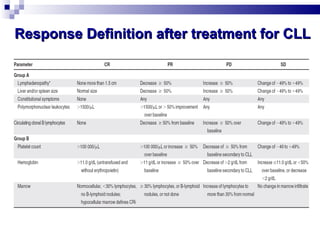
Response Definition after treatment for CLL Hallek M, et al.  Blood 2008 ; 111 : 5446-5456
 
 
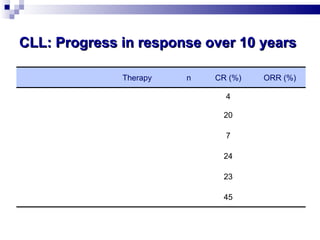
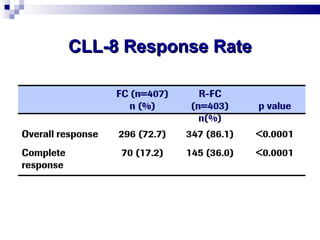
CLL: Progress in response over 10 years 1. Rai KR,  et al. New Engl J Med  2000; 343:1750–1757. 2. Eichhorst BF,  et al. Blood  2006; 107:885–891. 3. Hallek M,  et al. Blood  2008; 112:Abstract 325. Therapy n CR (%) ORR (%) Rai  et al.  2000 1 Chlorambucil 181 4 33 Fludarabine 170 20 43 GCLLSG CLL4 Eichhorst  et al.  2006 2   Fludarabine 164 7 83 FC 164 24 95 GCLLSG CLL8 Hallek  et al.  2008 3 FC 409 23 85 R-FC 408 45 93
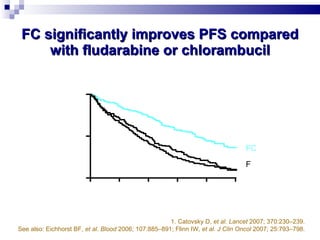
FC significantly improves PFS compared with fludarabine or chlorambucil 1. Catovsky D,  et al. Lancet  2007; 370:230–239. See also: Eichhorst BF,  et al. Blood  2006; 107:885–891; Flinn IW,  et al. J Clin Oncol  2007; 25:793–798. PFS (%) FC F Clb p  = 0.00005 Time (years) 0 5 1 2 3 4 0 50 100 PFS 1
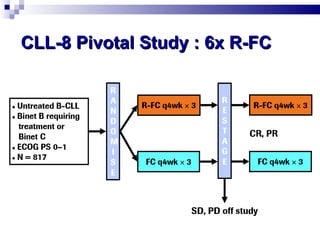
CLL-8 Pivotal Study : 6x R-FC
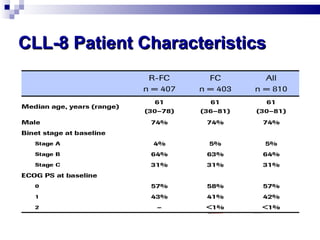
CLL-8 Patient Characteristics
CLL-8 Response Rate
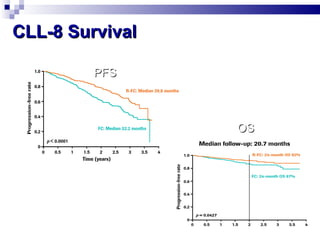
CLL-8 Survival  PFS OS
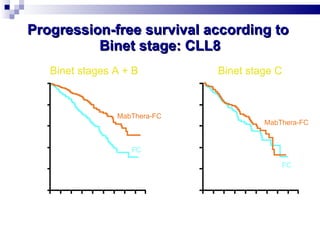
Progression-free survival according to  Binet stage: CLL8 p  = 0.44 p  < 0.000001 Binet stages A + B Binet stage C FC MabThera-FC PFS 0.8 0.6 0.4 0.2 0 1.0 0 6 12 18 24 30 36 42 48 54 0 6 12 18 24 30 36 42 48 54 0.8 0.6 0.4 0.2 0 1.0 PFS Time (months) Time (months) MabThera-FC FC Hallek M,  et al. Blood  2008; 112:Abstract 325.
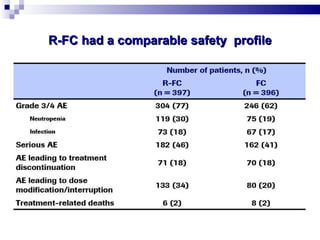
R-FC had a comparable safety  profile
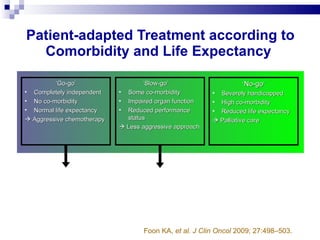
Patient-adapted Treatment according to Comorbidity and Life Expectancy  ‘ Go-go’ Completely independent No co-morbidity Normal life expectancy    Aggressive chemotherapy ‘ No-go ’ Severely handicapped High co-morbidity Reduced life expectancy    Palliative care R-FC is the standard of care ‘ Slow-go’  Some co-morbidity Impaired organ function Reduced performance status    Less aggressive approach R-chemo is the standard of care? e.g. R-HDMP, R-FC-‘lite’, R plus bendamustine or chlorambucil  Foon KA,  et al. J Clin Oncol  2009; 27:498–503.
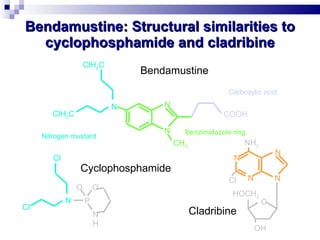
Bendamustine: Structural similarities to cyclophosphamide and cladribine N N CH 3 COOH N ClH 2 C ClH 2 C Bendamustine Nitrogen mustard N N N N NH 2 Cl O OH HOCH 2 Cladribine Benzimidazole ring Carboxylic acid N Cl Cl N P O O H Cyclophosphamide
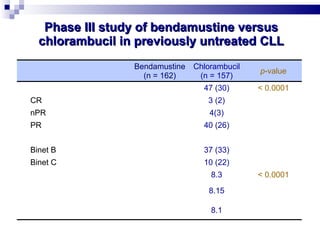
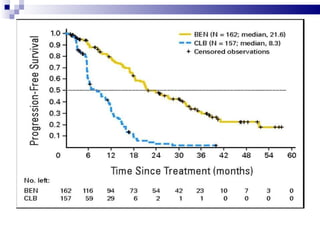
Phase III study of bendamustine versus chlorambucil in previously untreated CLL J Clin Oncol 2009;27:4378-4384. Bendamustine (n = 162) Chlorambucil (n = 157) p -value ORR, n (%) 108 (67) 47 (30) < 0.0001 CR 51 (32) 3 (2) nPR 16 (10) 4(3) PR 41 (25) 40 (26) ORR by Binet stage, n (%) Binet B 80 (69) 37 (33) Binet C 28 (61) 10 (22) Median PFS, months 21.5 8.3 < 0.0001 Median duration of CR, months 27 8.15 Median duration of PR, months 18.8 8.1
Bendamustine 100 mg/m2/d iv on days 1 to 2, or Chlorambucil 0.8 mg/kg orally on days 1 and 15; treatment cycles were repeated every 4 weeks for a maximum of six cycles
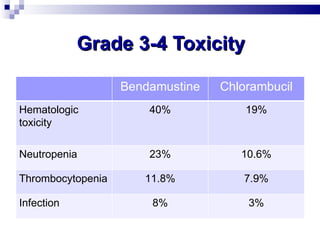
Grade 3-4 Toxicity Bendamustine Chlorambucil Hematologic toxicity 40% 19% Neutropenia 23% 10.6% Thrombocytopenia 11.8% 7.9% Infection 8% 3%
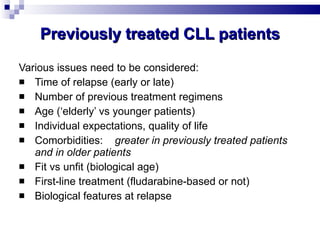
Previously treated CLL patients Various issues need to be considered: Time of relapse (early or late) Number of previous treatment regimens Age (‘elderly’ vs younger patients) Individual expectations, quality of life  Comorbidities: greater in previously treated patients and in older patients Fit vs unfit (biological age) First-line treatment (fludarabine-based or not) Biological features at relapse
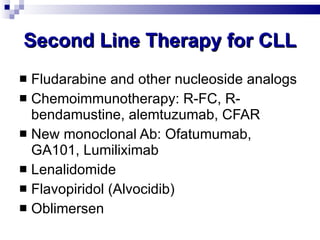
Second Line Therapy for CLL Fludarabine and other nucleoside analogs Chemoimmunotherapy: R-FC, R-bendamustine, alemtuzumab, CFAR New monoclonal Ab:  Ofatumumab, GA101, Lumiliximab Lenalidomide Flavopiridol (Alvocidib) Oblimersen
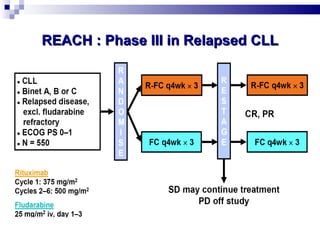
REACH : Phase III in Relapsed CLL
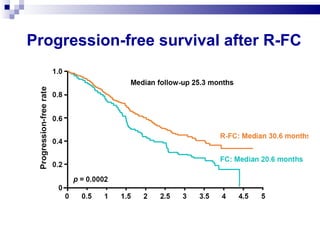
Progression-free survival after R-FC Robak T, et al.  Blood 2008 ; abstract LBA 1
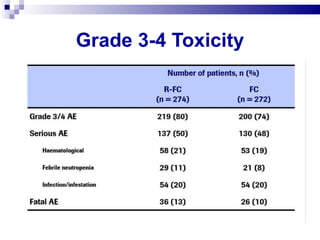
Grade 3-4 Toxicity Robak T, et al.  Blood 2008 ; abstract LBA 1
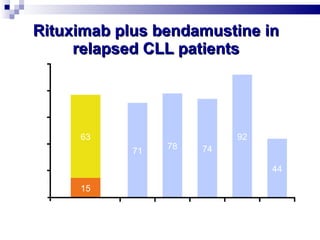
Rituximab plus bendamustine in relapsed CLL patients Fischer K,  et al. Blood  2008; 112:Abstract 330. 15 63 ORR = 77% (n = 62) Patients (%) 80 60 40 20 0 100 All patients PR/ nPR 71 Fludara- sensitive Fludara- refractory Unmutated IgV H 11q del 17p del 78 74 92 44 CR n = 41 n = 9 n = 39 n = 13 n = 9 ORR
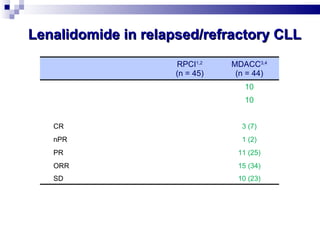
Lenalidomide in relapsed/refractory CLL 1. Chanan-Khan A,  et al.  IWCLL,   London, UK, 14–16 Sep 2007. 2. Chanan-Khan A,  et al. J Clin Oncol  2006; 24:2343–2349. 3. Ferrajoli A,  et al.  IWCLL,   London, UK, 14–16 Sep 2007. 4. Ferrajoli A,  et al. Blood  2006; 108:Abstract 305. * Median dose not calculated to date;  †  Molecular remission (by PCR) in 3 patients. RPCI 1,2 (n = 45) MDACC 3,4 (n = 44) Starting dose, mg 25 10 Median dose, mg TBD* 10 Response, n (%) CR 4 (9) † 3 (7) nPR 1 (2) PR 17 (38) 11 (25) ORR 21 (47) 15 (34) SD 8 (18) 10 (23)
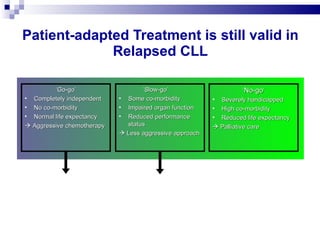
Patient-adapted Treatment is still valid in Relapsed CLL ‘ Go-go’ Completely independent No co-morbidity Normal life expectancy    Aggressive chemotherapy ‘ No-go ’ Severely handicapped High co-morbidity Reduced life expectancy    Palliative care R-FC Alemtuzumab C-FAR Auto +/- miniallo ‘ Slow-go’  Some co-morbidity Impaired organ function Reduced performance status    Less aggressive approach R-bendamusti ne R-chlorambucil Lenalidomide New monoclonal Ab or novel therapy
 
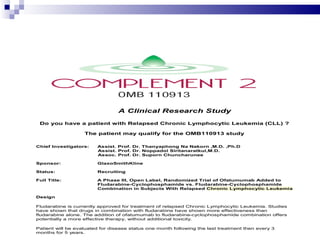
Inclusion Criteria : confirmed and active CLL requiring treatment  at least one previous treatment for CLL and having achieved a complete or partial remission/response but after a period of 6 or more months, shows evidence of disease progression  Exclusion Criteria: diagnosis of refractory CLL (failure to achieve a complete or partial remission/response or disease progression within 6 months of last anti-CLL treatment  abnormal/inadequate blood values, liver and kidney function  certain heart problems, serious significant diseases, AIHA, other current cancers or within the last 5 years  active or chronic infections  use of drugs to suppress allergic or inflammatory responses (glucocorticoids)  CLL transformation  CLL central nervous system involvement
Conclusion CLL and MBL may be the most common hematologic malignancies in the Western but the majority of patients do not require aggressive treatment Accurate diagnosis and risk stratification are the most essential parts of clinical decision Treatment plan should aim at improvement of quality of life and long-term survival rather than eradication of disease alone
Thank You for  Your attention

CLL - TSH Midyear 2009

  • 1.
    How I Treat: Chronic Lymphocytic Leukemia Thanyaphong Na Nakorn, MD, PhD Division of Hematology, Department of Medicine Faculty of Medicine, Chulalongkorn University King Chulalongkorn Memorial Hospital
  • 2.
    Issue to bediscussed How to diagnose chronic lymphocytic leukemia When to treat CLL Treatment Guideline/ Regimen selection Response evaluation
  • 3.
    Clinical Presentation ofCLL Asymptomatic lymphocytosis Generalized lymphadenopathy with or without splenomegaly Autoimmune disorders: AIHA, ITP, vasculitis, nephrotic syndrome, etc. Recurrent bacterial infection
  • 4.
    Complete Blood CountHb 11.2 g/dl, Hct 35%, MCV 94 fl, WBC 72 x 10 9 /l, N 5, L 90, M 3, Platelet 225 x 10 9 /l
  • 5.
    Diagnostic approach toLPD First step – look at CBC  absolute lymphocytosis (>5,000/mm 3 ) Second step – assess morphology of lymphocytes in blood smear Small, non-cleaved lympocytes with many smudge cells  B-CLL Large lymphocytes with prominent nucleolus  PLL (either B or T-cell), blastoid variant of mantle cell lymphoma (MCL), large B-cell lymphoma Lymphoplasmacytic cells  LPL, CLL, MZL, plasma cell leukemia Medium size lymphocyte with projection  SMZL/VL, Hairy cell leukemia and variants Large granular lymphocytes  LGL, NK-cell leukemia Small, cleaved lymphocytes  mantle cell, follicular or marginal zone lymphoma (MZL), T-ALL/LBL, ATLL, CTCL or PTCL-U Blasts  ALL or AML-M0
  • 6.
  • 7.
  • 8.
  • 9.
  • 10.
  • 11.
  • 12.
  • 13.
    Splenic Marginal ZoneLymphoma (with villous lymphocytes)
  • 14.
  • 15.
  • 16.
  • 17.
  • 18.
    BSCH Recommendation forflow cytometry diagnosis of LPD Assess morphology, apply the first line Ab panel ( CD19, CD22, CD23, FMC7, sIgM, kappa, lambda, CD3, CD5 ) and assign CLL score CLL score 3-5 Typical CLL morphology CLL CLL score 0-2 Non-CLL or atypical morphology T-cell Apply second line Ab panel
  • 19.
    FCM Scoring Systemfor CLL Marker CLL Score sIg (kappa or lambda) weak 1 CD5 pos 1 CD23 pos 1 CD79b/CD22 weak 1 FMC7 neg 1
  • 20.
  • 21.
    Differential Diagnosis ofCD19+ LPD Hamblin GDT. Lancet 2008 ; 371 : 1017-29
  • 22.
    Diagnostic Criteria ofCLL CLL = presence of monoclonal B-cells with CLL phenotype â‰Ĩ 5,000/mm 3 in the peripheral blood Monoclonal B-lymphocytosis = monoclonal B-cells with CLL phenotype < 5,000/mm 3 in the peripheral blood without lymphadenopathy or organomegaly ( as defined by physical examination or CT scans ) , cytopenias, or disease - related symptoms SLL = presence of lymphadenopathy and / or splenomegaly . monoclonal B-cells with CLL phenotype < 5,000/mm 3 in the peripheral blood āđƒ Histopathology of a lymph node biopsy should be confirmed whenever possible . Guidelines for the diagnosis and treatment of chronic lymphocytic leukemia : a report from the International Workshop on Chronic Lymphocytic Leukemia updating the National Cancer Institute–Working Group 1996 guidelines. Blood 2008:111;5446-5456
  • 23.
    Adverse Prognostic Factorsin CLL Advanced age Male Performance Status Staging Lymphocyte doubling time < 12 mo
  • 24.
    CLL Staging andRisk Stratification
  • 25.
  • 26.
    Biological prognostic factorsin CLL Marker Low risk High risk Genomic aberrations Normal, 13q– single 11q–, 17p– IgV H Mutated Unmutated CD38 â‰Ī 30% > 30% ZAP-70 Negative Positive Serum CD23, TK, ïĒ 2 microglobulin Low High
  • 27.
    Genetic Aberrations andprognosis in CLL
  • 28.
    Activated B-cell markersin CLL ZAP-70 expression (%) 0 20 40 60 80 100 8% 0% Normal Karyotype 88 90 92 94 96 98 100 0 20 40 60 80 100 3% 30% 11q – or 17p – V H Homology (%)
  • 29.
  • 30.
    Treatment is generallyrequired only in symptomatic CLL patients
  • 31.
    Hallek M, etal. Blood 2008 ; 111 : 5446-5456
  • 32.
    Signs & Symptomsof active disease Progressive marrow failure, worsening of anaemia, thrombocytopenia Massive >6 cm below costal margin or progressive or symptomatic splenomegaly Bulky node >10 cm or progressive lymphadenopathy Progressive lymphocytosis; increase 50% in 2 mo or lymphocyte doubling time (LDT) < 6 mo Autoimmune hemolytic anemia and/ or thrombocytopenia poorly response to standard corticosteroid treatment Any of the following symptom Wt loss > 10% in 6 mo ECOG â‰Ĩ 2 Fever > 38 šC for > 2wk Night sweat >1 mo
  • 33.
    Risk Stratification Algorithmfor Rai Stage 0-1 Asymptomatic CLL Shanafelt TD, et al. ASH Education Book 2007
  • 34.
    Recommendation for F/Uand treatment in early-stage CLL based on risk stratification Shanafelt TD, et al. ASH Education Book 2007 Low risk Intermediate risk High risk Median expected survival (y) >15 10 3-8 Median expected treatment-free survival (y) >5 3-4 1-4 Recommended F/U mo. 6-12 6-12 3-6 Immediate Treatment indicated No No Consider clinical trial
  • 35.
    Watch-and-wait versus upfronttherapy for early-stage CLL patients Meta-analysis of six randomised trials with immediate or deferred chlorambucil-based chemotherapy 1 No significant difference in survival at 10 years ( p > 0.1) Ongoing CLL7 randomised Phase III trial of immediate vs deferred R-FC Binet stage A patients with high-risk characteristics including 11q del and unmutated IgV H Results awaited CLL Trialists’ Collaborative Group. J Natl Cancer Inst 1999; 91:861–868.
  • 36.
    Treatment of AdvancedStage CLL Goal of therapy in CLL has been palliative Historically, few patients achieved CR Recent progress reveals improvement in response rates and duration Disease remission is associated with improved quality of life? The primary goal of CLL therapy should be to improve long-term outcomes or improved survival
  • 37.
    Survival curves forCLL patients younger than 70 years in Binet stage B / C Improving survival in patients with CLL ( 1980-2008 ): the Hospital Cl í nic of Barcelona experience Blood 2009:114; 2044-2050
  • 38.
    CLL: Evolution oftherapy Chemotherapy Monotherapy or combinations (e.g. fludarabine, FC, other purine analogues) Immunochemotherapy MabThera + chemo (fludarabine-based, bendamustine, chlorambucil etc), alemtuzumab + chemo Transplantation Auto, allo, RIC allo Âą DLI Investigational agents e.g. lenalidomide, ofatumumab, GA101, lumiliximab, galiximab, etc Past Present Watch-and-wait Chlorambucil Conservative approach
  • 39.
    Response Definition aftertreatment for CLL Hallek M, et al. Blood 2008 ; 111 : 5446-5456
  • 40.
  • 41.
  • 42.
    CLL: Progress inresponse over 10 years 1. Rai KR, et al. New Engl J Med 2000; 343:1750–1757. 2. Eichhorst BF, et al. Blood 2006; 107:885–891. 3. Hallek M, et al. Blood 2008; 112:Abstract 325. Therapy n CR (%) ORR (%) Rai et al. 2000 1 Chlorambucil 181 4 33 Fludarabine 170 20 43 GCLLSG CLL4 Eichhorst et al. 2006 2 Fludarabine 164 7 83 FC 164 24 95 GCLLSG CLL8 Hallek et al. 2008 3 FC 409 23 85 R-FC 408 45 93
  • 43.
    FC significantly improvesPFS compared with fludarabine or chlorambucil 1. Catovsky D, et al. Lancet 2007; 370:230–239. See also: Eichhorst BF, et al. Blood 2006; 107:885–891; Flinn IW, et al. J Clin Oncol 2007; 25:793–798. PFS (%) FC F Clb p = 0.00005 Time (years) 0 5 1 2 3 4 0 50 100 PFS 1
  • 44.
  • 45.
  • 46.
  • 47.
  • 48.
    Progression-free survival accordingto Binet stage: CLL8 p = 0.44 p < 0.000001 Binet stages A + B Binet stage C FC MabThera-FC PFS 0.8 0.6 0.4 0.2 0 1.0 0 6 12 18 24 30 36 42 48 54 0 6 12 18 24 30 36 42 48 54 0.8 0.6 0.4 0.2 0 1.0 PFS Time (months) Time (months) MabThera-FC FC Hallek M, et al. Blood 2008; 112:Abstract 325.
  • 49.
    R-FC had acomparable safety profile
  • 50.
    Patient-adapted Treatment accordingto Comorbidity and Life Expectancy ‘ Go-go’ Completely independent No co-morbidity Normal life expectancy  Aggressive chemotherapy ‘ No-go ’ Severely handicapped High co-morbidity Reduced life expectancy  Palliative care R-FC is the standard of care ‘ Slow-go’ Some co-morbidity Impaired organ function Reduced performance status  Less aggressive approach R-chemo is the standard of care? e.g. R-HDMP, R-FC-‘lite’, R plus bendamustine or chlorambucil Foon KA, et al. J Clin Oncol 2009; 27:498–503.
  • 51.
    Bendamustine: Structural similaritiesto cyclophosphamide and cladribine N N CH 3 COOH N ClH 2 C ClH 2 C Bendamustine Nitrogen mustard N N N N NH 2 Cl O OH HOCH 2 Cladribine Benzimidazole ring Carboxylic acid N Cl Cl N P O O H Cyclophosphamide
  • 52.
    Phase III studyof bendamustine versus chlorambucil in previously untreated CLL J Clin Oncol 2009;27:4378-4384. Bendamustine (n = 162) Chlorambucil (n = 157) p -value ORR, n (%) 108 (67) 47 (30) < 0.0001 CR 51 (32) 3 (2) nPR 16 (10) 4(3) PR 41 (25) 40 (26) ORR by Binet stage, n (%) Binet B 80 (69) 37 (33) Binet C 28 (61) 10 (22) Median PFS, months 21.5 8.3 < 0.0001 Median duration of CR, months 27 8.15 Median duration of PR, months 18.8 8.1
  • 53.
    Bendamustine 100 mg/m2/div on days 1 to 2, or Chlorambucil 0.8 mg/kg orally on days 1 and 15; treatment cycles were repeated every 4 weeks for a maximum of six cycles
  • 54.
    Grade 3-4 ToxicityBendamustine Chlorambucil Hematologic toxicity 40% 19% Neutropenia 23% 10.6% Thrombocytopenia 11.8% 7.9% Infection 8% 3%
  • 55.
    Previously treated CLLpatients Various issues need to be considered: Time of relapse (early or late) Number of previous treatment regimens Age (‘elderly’ vs younger patients) Individual expectations, quality of life Comorbidities: greater in previously treated patients and in older patients Fit vs unfit (biological age) First-line treatment (fludarabine-based or not) Biological features at relapse
  • 56.
    Second Line Therapyfor CLL Fludarabine and other nucleoside analogs Chemoimmunotherapy: R-FC, R-bendamustine, alemtuzumab, CFAR New monoclonal Ab: Ofatumumab, GA101, Lumiliximab Lenalidomide Flavopiridol (Alvocidib) Oblimersen
  • 57.
    REACH : PhaseIII in Relapsed CLL
  • 58.
    Progression-free survival afterR-FC Robak T, et al. Blood 2008 ; abstract LBA 1
  • 59.
    Grade 3-4 ToxicityRobak T, et al. Blood 2008 ; abstract LBA 1
  • 60.
    Rituximab plus bendamustinein relapsed CLL patients Fischer K, et al. Blood 2008; 112:Abstract 330. 15 63 ORR = 77% (n = 62) Patients (%) 80 60 40 20 0 100 All patients PR/ nPR 71 Fludara- sensitive Fludara- refractory Unmutated IgV H 11q del 17p del 78 74 92 44 CR n = 41 n = 9 n = 39 n = 13 n = 9 ORR
  • 61.
    Lenalidomide in relapsed/refractoryCLL 1. Chanan-Khan A, et al. IWCLL, London, UK, 14–16 Sep 2007. 2. Chanan-Khan A, et al. J Clin Oncol 2006; 24:2343–2349. 3. Ferrajoli A, et al. IWCLL, London, UK, 14–16 Sep 2007. 4. Ferrajoli A, et al. Blood 2006; 108:Abstract 305. * Median dose not calculated to date; † Molecular remission (by PCR) in 3 patients. RPCI 1,2 (n = 45) MDACC 3,4 (n = 44) Starting dose, mg 25 10 Median dose, mg TBD* 10 Response, n (%) CR 4 (9) † 3 (7) nPR 1 (2) PR 17 (38) 11 (25) ORR 21 (47) 15 (34) SD 8 (18) 10 (23)
  • 62.
    Patient-adapted Treatment isstill valid in Relapsed CLL ‘ Go-go’ Completely independent No co-morbidity Normal life expectancy  Aggressive chemotherapy ‘ No-go ’ Severely handicapped High co-morbidity Reduced life expectancy  Palliative care R-FC Alemtuzumab C-FAR Auto +/- miniallo ‘ Slow-go’ Some co-morbidity Impaired organ function Reduced performance status  Less aggressive approach R-bendamusti ne R-chlorambucil Lenalidomide New monoclonal Ab or novel therapy
  • 63.
  • 64.
    Inclusion Criteria :confirmed and active CLL requiring treatment at least one previous treatment for CLL and having achieved a complete or partial remission/response but after a period of 6 or more months, shows evidence of disease progression Exclusion Criteria: diagnosis of refractory CLL (failure to achieve a complete or partial remission/response or disease progression within 6 months of last anti-CLL treatment abnormal/inadequate blood values, liver and kidney function certain heart problems, serious significant diseases, AIHA, other current cancers or within the last 5 years active or chronic infections use of drugs to suppress allergic or inflammatory responses (glucocorticoids) CLL transformation CLL central nervous system involvement
  • 65.
    Conclusion CLL andMBL may be the most common hematologic malignancies in the Western but the majority of patients do not require aggressive treatment Accurate diagnosis and risk stratification are the most essential parts of clinical decision Treatment plan should aim at improvement of quality of life and long-term survival rather than eradication of disease alone
  • 66.
    Thank You for Your attention

Editor's Notes

  • #51 5 References Balducci L, et al. Oncologist 2000; 5: 224–237. Hallek M, et al. Blood 2008; 112: Abstract 325. James DF, et al. Blood 2008; 112: Abstract 47. Foon KA, et al. J Clin Oncol 2009; 27: 498–503. Kay NE, et al. Blood 2007; 109: 405–411. Reynolds CR, et al. Blood 2008; 112: Abstract 327.
  • #63 5 References Balducci L, et al. Oncologist 2000; 5: 224–237. Hallek M, et al. Blood 2008; 112: Abstract 325. James DF, et al. Blood 2008; 112: Abstract 47. Foon KA, et al. J Clin Oncol 2009; 27: 498–503. Kay NE, et al. Blood 2007; 109: 405–411. Reynolds CR, et al. Blood 2008; 112: Abstract 327.