CLIMATE CHANGE
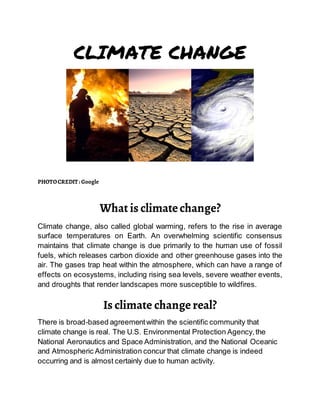
PHOTOCREDIT : Google
What is climatechange?
Climate change, also called global warming, refers to the rise in average
surface temperatures on Earth. An overwhelming scientific consensus
maintains that climate change is due primarily to the human use of fossil
fuels, which releases carbon dioxide and other greenhouse gases into the
air. The gases trap heat within the atmosphere, which can have a range of
effects on ecosystems, including rising sea levels, severe weather events,
and droughts that render landscapes more susceptible to wildfires.
Is climate changereal?
There is broad-based agreementwithin the scientific community that
climate change is real. The U.S. Environmental Protection Agency,the
National Aeronautics and Space Administration, and the National Oceanic
and Atmospheric Administration concur that climate change is indeed
occurring and is almost certainly due to human activity.
Cellphones are a common way to access agromet information in many parts of India.
Farmers use the information to manage climate and weather risks. Photo by: Francesco
Fiondella / International Research Institute for Climate and Society / CC BY-NC-ND
Climate change is not easy to deal with because of
some circumstances that gives problem to people
especially in Agriculture, Energy, Water Supply and etc,.
Here is an article about 4 waysclimate change causes
world hunger by Mara Russel.
• Productionmay be less predictable.
Without high-tech irrigation systems, most farmers in developing countries depend on rainfall. In
regions of the world where rain has declined, crops fail. In places where the arrival or departure
of seasonal rainfall has shifted, farmers either plant crops too early or too late, missing the
highest rainfall. Even for farmers with access to irrigation or state-of-the art weather information,
catastrophic storms and droughts will result in production failures.
• Supplies to marketscould be less predictable.
If production levels fall, the supplies entering markets may also fall. These drops in
supply could affect prices for crops — and the livestock that consume crops — and may
occur in both developed and developing countries.
• Greaterrisks to those less able to sustain risk.
Women are often those at greatest risk as they tend to be the least educated, and own fewer
assets and less wealth. High education levels, access to adequate and diverse food throughout
the year, adequate early warning systems, and adequate assets, wealth and insurance will often
enable people — especially women and vulnerable groups — to cope better with and address
the impact of unpredictable weather events. Even if severe storms destroy people’s homes,
crops and livelihoods, people with these assets and capabilities can often rebuild their lives
quickly after a shock.
• Traditionalagriculture — a way of life that supportsfood security —
is dying out.
In many countries and regions, mobile pastoralists who depend entirely on their livestock herds
for their lives and livelihoods are losing their animals to droughts and diseases. Traditional low-
input farming is also becoming more difficult due to unpredictable rainfall patterns.
Climate change is a long term change of weather on
Earth.Climate is rapidly changing that affects the way of
living of many people.
We must all understand climate change is changing
the game. And, it is the new normal. Here are a few
things Land O’Lakes International Development is doing
about it:
● We assess the likely impact of climate change.
When designing our strategic approaches to agriculture and food
security programs,we integrate activities that help build assets and
incomes.For instance, we build the capacity of pastoralists to maintain the
health of their livestock herds, create market opportunities that maximize
the value of animals sold, provide livestock microinsurance where possible,
supportanimal nutrition through fodderproduction,and provide income
earning opportunities for those who must transition out of pastoralism.
● We guide farmers in livelihood diversification.
We help farmers produce crops that will help them cope with floods,
droughts and other disasters by diversifying their production. We train
farmers to produce crops such as vegetables,fruits and legumes,and
livestock products such as milk, meat, eggs and fish that will help ensure
they have various options to fall back on if one of them fails.
● We guide farmers to climate-smartstrategies.
It’s a simple idea: Adjust productionto make it more adaptable to new
climate patterns. This may include promotionof seed varieties that require
less water, survive better during times of stress or are drought resistant.
● Disaster preparedness: a new approach.
We build climate awareness among farmers by connecting them with
meteorological societies and provide trained farmers with weather
monitoring equipment. This also helps meteorologists monitor weather
indicators closer to farmers’ fields, thus creating opportunities to
understand the actual growing conditions with which farmers must cope.
We also help farmers learn how to manage severe weather events and
raise flood or storm alarms so that households can evacuate in time. This
includes ensuring that women, children and the elderly have time to reach
rally points on higher ground.
“The realities of climate change and their impact on food security
are here to stay. They are a significant cause of world hunger. As
we work to improve food security, we must also devise the means
for those we work with to cope effectively. In other words, we
must work together to ensure the populations we serve are
resilient with respect to climate change or our strategies will
ultimately fail.” - Mara Russel
Great Advice To Help Prevent Climate
Change...
Climate change, and more importantly its prevention, is
arguably the biggest environmental challenge that our
generation and the next will have to face. It's something
to be taken into account when making decisions in many
areas of our lives, from the cars we drive and the fuels
we use, to how we build our houses, run our businesses,
structure our food supply chains, dispose of our rubbish
and even invest our money.
GROUP MEMBERS:
KENNETH RINSULAT
CAROLYN PADAYUGDOG
MADELEINE VERDADERO
REFERENCE:
https://www.devex.com/news/4-ways-climate-change-
causes-world-hunger-83972
http://www.takepart.com/flashcards/what-is-climate-chang
e/
http://www.preventclimatechange.co.uk/

Climate change

  • 1.
    CLIMATE CHANGE PHOTOCREDIT :Google What is climatechange? Climate change, also called global warming, refers to the rise in average surface temperatures on Earth. An overwhelming scientific consensus maintains that climate change is due primarily to the human use of fossil fuels, which releases carbon dioxide and other greenhouse gases into the air. The gases trap heat within the atmosphere, which can have a range of effects on ecosystems, including rising sea levels, severe weather events, and droughts that render landscapes more susceptible to wildfires. Is climate changereal? There is broad-based agreementwithin the scientific community that climate change is real. The U.S. Environmental Protection Agency,the National Aeronautics and Space Administration, and the National Oceanic and Atmospheric Administration concur that climate change is indeed occurring and is almost certainly due to human activity.
  • 2.
    Cellphones are acommon way to access agromet information in many parts of India. Farmers use the information to manage climate and weather risks. Photo by: Francesco Fiondella / International Research Institute for Climate and Society / CC BY-NC-ND Climate change is not easy to deal with because of some circumstances that gives problem to people especially in Agriculture, Energy, Water Supply and etc,. Here is an article about 4 waysclimate change causes world hunger by Mara Russel. • Productionmay be less predictable. Without high-tech irrigation systems, most farmers in developing countries depend on rainfall. In regions of the world where rain has declined, crops fail. In places where the arrival or departure of seasonal rainfall has shifted, farmers either plant crops too early or too late, missing the highest rainfall. Even for farmers with access to irrigation or state-of-the art weather information, catastrophic storms and droughts will result in production failures. • Supplies to marketscould be less predictable. If production levels fall, the supplies entering markets may also fall. These drops in supply could affect prices for crops — and the livestock that consume crops — and may occur in both developed and developing countries.
  • 3.
    • Greaterrisks tothose less able to sustain risk. Women are often those at greatest risk as they tend to be the least educated, and own fewer assets and less wealth. High education levels, access to adequate and diverse food throughout the year, adequate early warning systems, and adequate assets, wealth and insurance will often enable people — especially women and vulnerable groups — to cope better with and address the impact of unpredictable weather events. Even if severe storms destroy people’s homes, crops and livelihoods, people with these assets and capabilities can often rebuild their lives quickly after a shock. • Traditionalagriculture — a way of life that supportsfood security — is dying out. In many countries and regions, mobile pastoralists who depend entirely on their livestock herds for their lives and livelihoods are losing their animals to droughts and diseases. Traditional low- input farming is also becoming more difficult due to unpredictable rainfall patterns. Climate change is a long term change of weather on Earth.Climate is rapidly changing that affects the way of living of many people. We must all understand climate change is changing the game. And, it is the new normal. Here are a few things Land O’Lakes International Development is doing about it: ● We assess the likely impact of climate change. When designing our strategic approaches to agriculture and food security programs,we integrate activities that help build assets and incomes.For instance, we build the capacity of pastoralists to maintain the health of their livestock herds, create market opportunities that maximize the value of animals sold, provide livestock microinsurance where possible, supportanimal nutrition through fodderproduction,and provide income earning opportunities for those who must transition out of pastoralism. ● We guide farmers in livelihood diversification.
  • 4.
    We help farmersproduce crops that will help them cope with floods, droughts and other disasters by diversifying their production. We train farmers to produce crops such as vegetables,fruits and legumes,and livestock products such as milk, meat, eggs and fish that will help ensure they have various options to fall back on if one of them fails. ● We guide farmers to climate-smartstrategies. It’s a simple idea: Adjust productionto make it more adaptable to new climate patterns. This may include promotionof seed varieties that require less water, survive better during times of stress or are drought resistant. ● Disaster preparedness: a new approach. We build climate awareness among farmers by connecting them with meteorological societies and provide trained farmers with weather monitoring equipment. This also helps meteorologists monitor weather indicators closer to farmers’ fields, thus creating opportunities to understand the actual growing conditions with which farmers must cope. We also help farmers learn how to manage severe weather events and raise flood or storm alarms so that households can evacuate in time. This includes ensuring that women, children and the elderly have time to reach rally points on higher ground. “The realities of climate change and their impact on food security are here to stay. They are a significant cause of world hunger. As we work to improve food security, we must also devise the means for those we work with to cope effectively. In other words, we must work together to ensure the populations we serve are resilient with respect to climate change or our strategies will ultimately fail.” - Mara Russel Great Advice To Help Prevent Climate Change...
  • 5.
    Climate change, andmore importantly its prevention, is arguably the biggest environmental challenge that our generation and the next will have to face. It's something to be taken into account when making decisions in many areas of our lives, from the cars we drive and the fuels we use, to how we build our houses, run our businesses, structure our food supply chains, dispose of our rubbish and even invest our money. GROUP MEMBERS: KENNETH RINSULAT CAROLYN PADAYUGDOG
  • 6.