




1
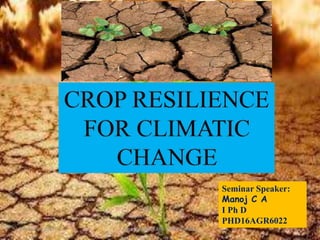
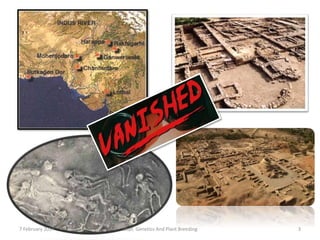
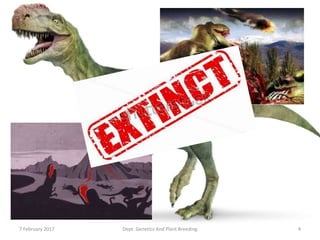
Did somewhere, something wentterribly
WRONG..?
7 February 2017 Dept. Genetics And Plant Breeding
Seminar Speaker:
Manoj C A
I Ph D
PHD16AGR6022
27 February 2017 Dept. Genetics And Plant Breeding
7 February 2017 3Dept. Genetics And Plant Breeding
47 February 2017 Dept. Genetics And Plant Breeding
7 February 2017 5Dept. Genetics And Plant Breeding
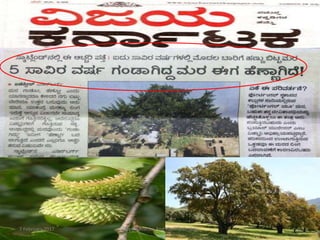
Diospyros celebica
(Makassar ebony)7 February 2017 6Dept. Genetics And Plant Breeding
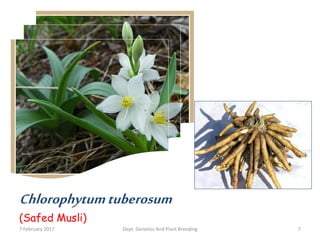
Chlorophytumtuberosum
(Safed Musli)
7 February 2017 7Dept. Genetics And Plant Breeding
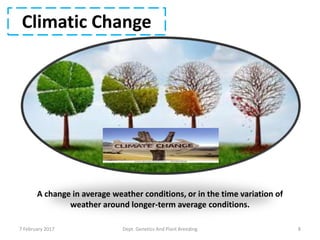
Climatic Change
8
A change in average weather conditions, or in the time variation of
weather around longer-term average conditions.
7 February 2017 Dept. Genetics And Plant Breeding
7 February 2017 Dept. Genetics And Plant Breeding 9
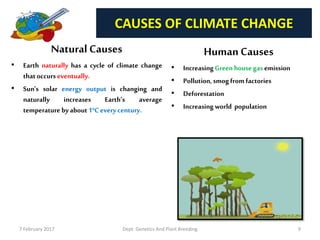
CAUSES OF CLIMATE CHANGE
Natural Causes
• Earth naturally has a cycle of climate change
thatoccurseventually.
• Sun’s solar energy output is changing and
naturally increases Earth’s average
temperature byabout1ºCevery century.
Human Causes
• Increasing Green housegas emission
• Pollution,smogfrom factories
• Deforestation
• Increasing world population
7 February 2017 Dept. Genetics And Plant Breeding 10
Responses to changing climate
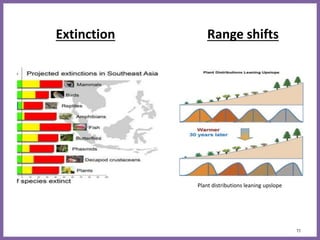
• Extinction
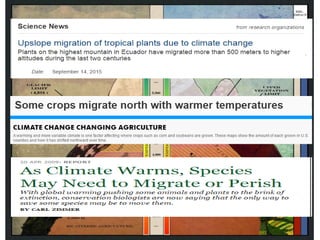
• Range shifts
• Habitat fragmentation
• Genetic differentiation
• Migration
• Phenotypic plasticity
Extinction Range shifts
11
Plant distributions leaning upslope
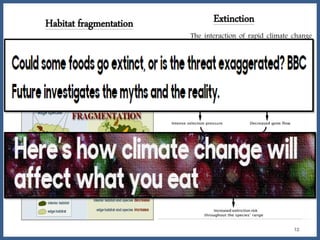
Habitat fragmentation
12
Extinction
The process by which
habitat loss results in the division
of large, continuous habitats into
smaller, more isolated remnants.
The interaction of rapid climate change
and habitat fragmentation within populations
leading to a range-wide increase in extinction risk.
This can occur in the absence of habitat
fragmentation if climate change occurs at a rate
faster than the maximum rate of gene flow between
populations.
13
7 February 2017 15Dept. Genetics And Plant Breeding
7 February 2017 Dept. Genetics And Plant Breeding 16
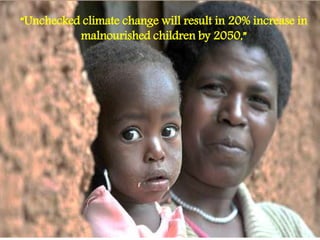
“Unchecked climate change will result in 20% increase in
malnourished children by 2050,”
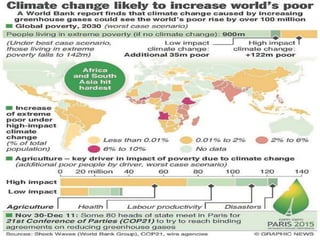
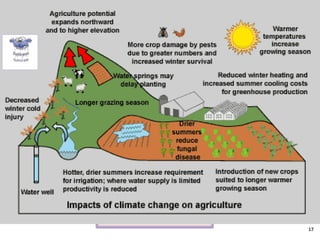
PREDICTED CLIMATE CHANGE
IMPACTS ON AGRICULTURE
Direct effect on
cropgrowth
•Physiology
•Morphology
Indirect effects
•Soil Fertility
•Irrigation availability
•Pest
•Flood & droughts
Socio economic
•Policy
•Trade
•Farmer’s
response
Human interventions
Adaptation strategies
Mitigation strategies
Agricultural Production &
vulnerability
CLIMATE CHANGE
17
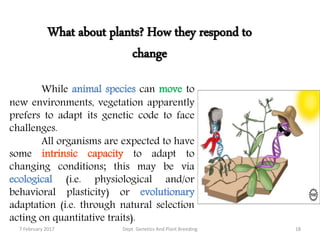
What about plants? How they respond to
change
18
While animal species can move to
new environments, vegetation apparently
prefers to adapt its genetic code to face
challenges.
All organisms are expected to have
some intrinsic capacity to adapt to
changing conditions; this may be via
ecological (i.e. physiological and/or
behavioral plasticity) or evolutionary
adaptation (i.e. through natural selection
acting on quantitative traits).
7 February 2017 Dept. Genetics And Plant Breeding
19
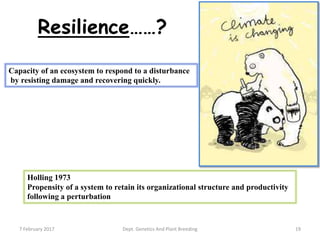
Capacity of an ecosystem to respond to a disturbance
by resisting damage and recovering quickly.
Holling 1973
Propensity of a system to retain its organizational structure and productivity
following a perturbation
Resilience……?
7 February 2017 Dept. Genetics And Plant Breeding
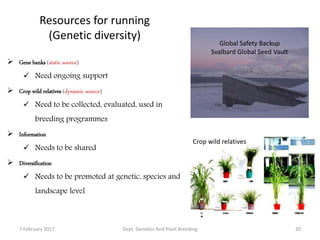
Resources for running
(Genetic diversity)
Global Safety Backup
Svalbard Global Seed Vault
O.minutaO.
alta
O.ridleyiO.officinalis
O.brachyanta O.longistaminataO.rufipogon
Crop wild relatives
 Gene banks (static source)
 Need ongoing support
 Crop wild relatives (dynamic source)
 Need to be collected, evaluated, used in
breeding programmes
 Information
 Needs to be shared
 Diversification
 Needs to be promoted at genetic, species and
landscape level
7 February 2017 20Dept. Genetics And Plant Breeding
Strategies…!
21
7 February 2017 Dept. Genetics And Plant Breeding
1. Crop Diversification
Rational and cost-effective method.
Provide link between stress and resilience.
Improve resilience in a variety in 2 ways:
1. Greater ability to suppress pest outbreaks
2. Buffering capacity of crop to greater climate variability
and extreme events.
Enhances ecosystem function because different genotypes
perform slightly different roles
7 February 2017 22Dept. Genetics And Plant Breeding
Contd..,
This concept is linked to the Insurance hypothesis (Yachi and
Loreau 1999).
7 February 2017 Dept. Genetics And Plant Breeding 23
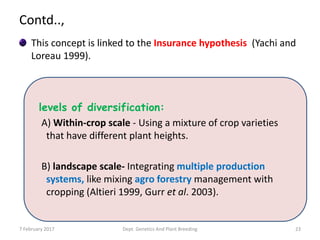
levels of diversification:
A) Within-crop scale - Using a mixture of crop varieties
that have different plant heights.
B) landscape scale- Integrating multiple production
systems, like mixing agro forestry management with
cropping (Altieri 1999, Gurr et al. 2003).
7 February 2017 Dept. Genetics And Plant Breeding 24
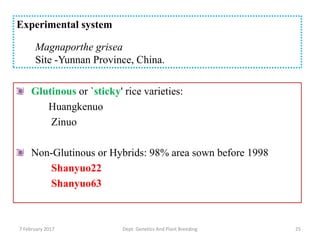
Glutinous or `sticky' rice varieties:
Huangkenuo
Zinuo
Non-Glutinous or Hybrids: 98% area sown before 1998
Shanyuo22
Shanyuo63
7 February 2017 Dept. Genetics And Plant Breeding 25
Experimental system
Magnaporthe grisea
Site -Yunnan Province, China.
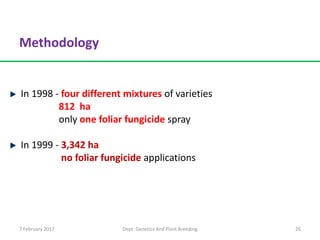
In 1998 - four different mixtures of varieties
812 ha
only one foliar fungicide spray
In 1999 - 3,342 ha
no foliar fungicide applications
26
Methodology
7 February 2017 Dept. Genetics And Plant Breeding
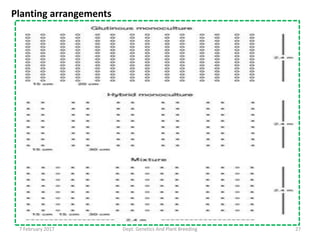
Planting arrangements
277 February 2017 Dept. Genetics And Plant Breeding
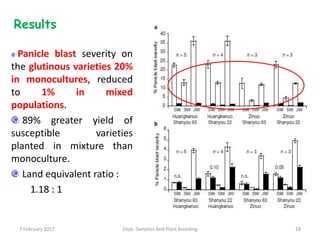
Results
Panicle blast severity on
the glutinous varieties 20%
in monocultures, reduced
to 1% in mixed
populations.
89% greater yield of
susceptible varieties
planted in mixture than
monoculture.
Land equivalent ratio :
1.18 : 1
7 February 2017 Dept. Genetics And Plant Breeding 28
7 February 2017 Dept. Genetics And Plant Breeding 29
Crop heterogeneity is a possible solution to the vulnerability
of monoculture crops to disease.
Observation indicated that genetic heterogeneity provides
greater disease suppression when used over large areas.
Results support the view that intraspecific crop
diversification provides an ecological approach to disease
control that can be highly effective and contribute to the
sustainability of crop production.
Conclusion
7 February 2017 Dept. Genetics And Plant Breeding 30
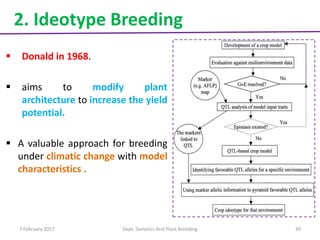
 Donald in 1968.
 aims to modify plant
architecture to increase the yield
potential.
 A valuable approach for breeding
under climatic change with model
characteristics .
2. Ideotype Breeding
7 February 2017 Dept. Genetics And Plant Breeding 31
Why..?
An optimized crop ideotype will make a minimum demand on
resources per unit of dry matter produced.
Ideotypes should be developed to include protection against
adverse conditions such as heat, cold, salinity, and drought.
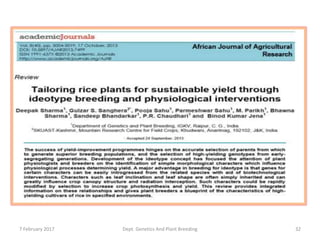
Helps plant breeders as a blueprint of the characteristics of high
yielding cultivars in specified environments.
7 February 2017 Dept. Genetics And Plant Breeding 32
7 February 2017 Dept. Genetics And Plant Breeding 33
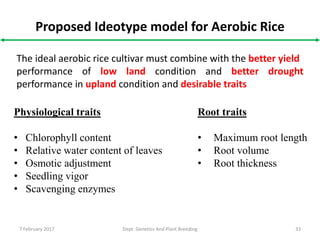
Proposed Ideotype model for Aerobic Rice
The ideal aerobic rice cultivar must combine with the better yield
performance of low land condition and better drought
performance in upland condition and desirable traits
Physiological traits
• Chlorophyll content
• Relative water content of leaves
• Osmotic adjustment
• Seedling vigor
• Scavenging enzymes
Root traits
• Maximum root length
• Root volume
• Root thickness
7 February 2017 Dept. Genetics And Plant Breeding 34
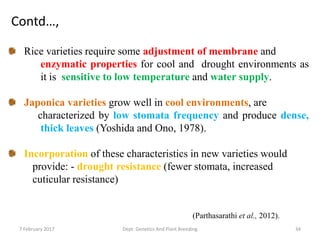
Rice varieties require some adjustment of membrane and
enzymatic properties for cool and drought environments as
it is sensitive to low temperature and water supply.
Japonica varieties grow well in cool environments, are
characterized by low stomata frequency and produce dense,
thick leaves (Yoshida and Ono, 1978).
Incorporation of these characteristics in new varieties would
provide: - drought resistance (fewer stomata, increased
cuticular resistance)
(Parthasarathi et al., 2012).
Contd…,
7 February 2017 Dept. Genetics And Plant Breeding 35
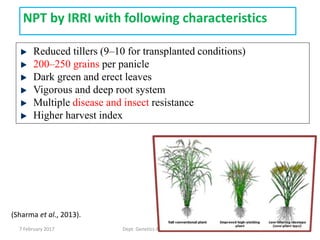
Reduced tillers (9–10 for transplanted conditions)
200–250 grains per panicle
Dark green and erect leaves
Vigorous and deep root system
Multiple disease and insect resistance
Higher harvest index
NPT by IRRI with following characteristics
(Sharma et al., 2013).
7 February 2017 Dept. Genetics And Plant Breeding 36
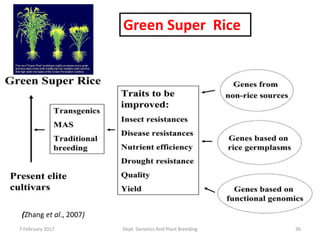
Green Super Rice
(Zhang et al., 2007)
7 February 2017 Dept. Genetics And Plant Breeding 37
An ideotype for climate change is the combination of
traits (genes) that confers the crop a satisfying
adaptation to climate variability and extreme events
in specific environments and under specific cropping
systems
Conclusion
3. Mutation breeding
Purpose : To enhance mutation rate in a short duration
By in vitro selection, desirable mutants with useful traits, e.g.
abiotic and biotic stress tolerant can be isolated in a short period
of time.
Useful as a reliable tool for feeding the ever-growing human
population
Induced by physical (e.g. gamma radiation) and chemical
(e.g. ethylmethane sulfonate) mutagen
387 February 2017 Dept. Genetics And Plant Breeding
39
Desirable to increase the genetic variability by combining
mutagenesis and tissue culture.
Benefits:
a) Mutagen treatment can be given to large No. of cells or
protoplast.
b) Fast multiplication of mutant plant material
c) In vitro selection of mutant
d) Less space required for shoot multiplication under the controlled
conditions.
In vitro Mutagenesis
7 February 2017 Dept. Genetics And Plant Breeding
407 February 2017 Dept. Genetics And Plant Breeding
7 February 2017 Dept. Genetics And Plant Breeding 41
42
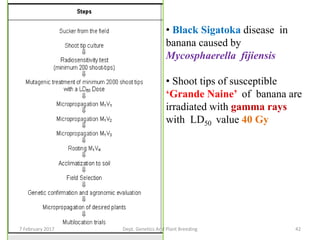
• Black Sigatoka disease in
banana caused by
Mycosphaerella fijiensis
• Shoot tips of susceptible
‘Grande Naine’ of banana are
irradiated with gamma rays
with LD50 value 40 Gy
7 February 2017 Dept. Genetics And Plant Breeding
43
Results
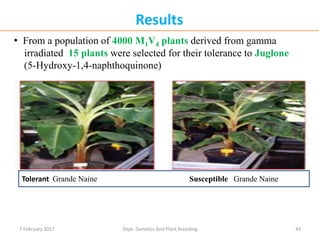
• From a population of 4000 M1V4 plants derived from gamma
irradiated 15 plants were selected for their tolerance to Juglone
(5-Hydroxy-1,4-naphthoquinone)
Tolerant Grande Naine Susceptible Grande Naine
7 February 2017 Dept. Genetics And Plant Breeding
44
Induced mutations are necessary to enhance rate of genetic
variability .
A combination of somatic embryogenesis and organogenesis
would be a realistic approach for mutation induction and
multiplication of mutant plants in large numbers.
In vitro selection shortens the time for the selection of a
desirable trait under the selection pressure and should
complement the field conditions.
Conclusion
7 February 2017 Dept. Genetics And Plant Breeding
4. MARKER ASSISTED SELECTION
 Selection of a genotype carrying a desirable gene or gene
combination via linked markers is called MAS.
Different MAS strategies are used depending on the specific types
of traits and breeding programs (Xu et al., 2012).
457 February 2017 Dept. Genetics And Plant Breeding
Marker-assisted backcrossing
(MABC)
Marker Assisted Back Cross transfer favorable traits from donor
into elite (recurrent) while selecting against donor
introgressions across the rest of the genome
Incorporating genes/QTLs into ‘mega varieties’
Utilize DNA markers for backcrossing gives greater efficiency.
467 February 2017 Dept. Genetics And Plant Breeding
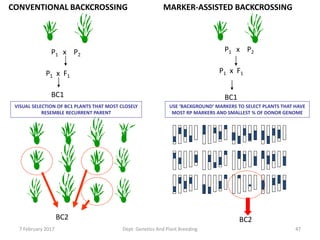
P1 x F1
P1 x P2
CONVENTIONAL BACKCROSSING
BC1
VISUAL SELECTION OF BC1 PLANTS THAT MOST CLOSELY
RESEMBLE RECURRENT PARENT
BC2
MARKER-ASSISTED BACKCROSSING
P1 x F1
P1 x P2
BC1
USE ‘BACKGROUND’ MARKERS TO SELECT PLANTS THAT HAVE
MOST RP MARKERS AND SMALLEST % OF DONOR GENOME
BC2
477 February 2017 Dept. Genetics And Plant Breeding
7 February 2017 Dept. Genetics And Plant Breeding 48
 Submergence stress regularly affects 15 mha of lowland rice
areas in South and Southeast Asia.
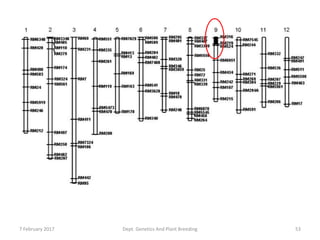
 A major QTL on chromosome 9, Sub1, has provided the
opportunity to apply marker assisted backcrossing (MAB)
to develop submergence tolerant versions of rice
cultivars that are widely grown in the region.
 IRRI initiated a program to introduce the Sub1A gene into five
mega varieties (Swarna, Samba Mahsuri, BR11, IR64 and
CR1009) of South Asia.
497 February 2017 Dept. Genetics And Plant Breeding
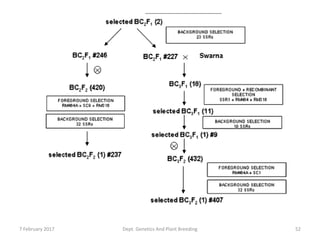
Backcrosses between a submergence tolerant donor and the
widely grown recurrent parent Swarna.
By the BC2F2 generation a submergence tolerant plant was
identified that possessed Swarna type simple sequence
repeat (SSR) alleles on all fragments analyzed except the tip
segment of rice chromosome 9 that possessed the Sub1 locus.
A BC3F2 plant was identified that was homozygous for all Swarna
type alleles except for an approximately 2.3–3.4 Mb region
surrounding the Sub1 locus.
50
Methodology
7 February 2017 Dept. Genetics And Plant Breeding
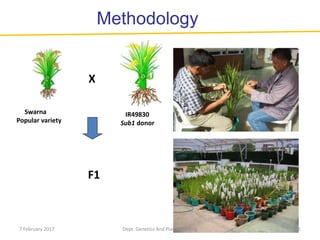
Methodology
Swarna
Popular variety
X
IR49830
Sub1 donor
F1
517 February 2017 Dept. Genetics And Plant Breeding
7 February 2017 Dept. Genetics And Plant Breeding 52
7 February 2017 Dept. Genetics And Plant Breeding 53
54
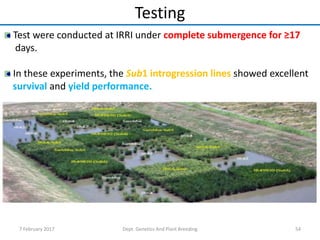
Test were conducted at IRRI under complete submergence for ≥17
days.
In these experiments, the Sub1 introgression lines showed excellent
survival and yield performance.
Testing
7 February 2017 Dept. Genetics And Plant Breeding
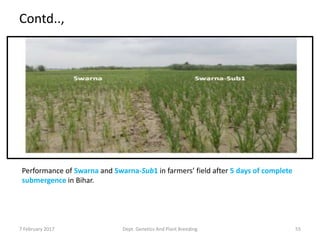
Performance of Swarna and Swarna-Sub1 in farmers’ field after 5 days of complete
submergence in Bihar.
55
Contd..,
7 February 2017 Dept. Genetics And Plant Breeding
7 February 2017 Dept. Genetics And Plant Breeding 56
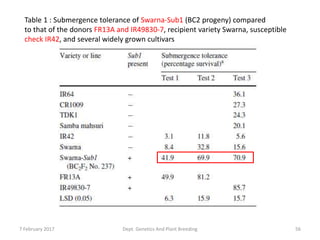
Table 1 : Submergence tolerance of Swarna-Sub1 (BC2 progeny) compared
to that of the donors FR13A and IR49830-7, recipient variety Swarna, susceptible
check IR42, and several widely grown cultivars
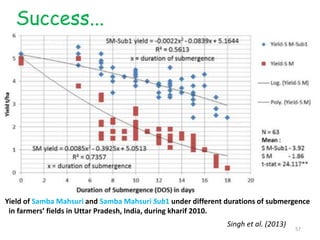
Yield of Samba Mahsuri and Samba Mahsuri Sub1 under different durations of submergence
in farmers’ fields in Uttar Pradesh, India, during kharif 2010.
Singh et al. (2013)
Success...
57
58
Conclusion
The results showed that the mega variety Swarna could be
efficiently converted to a submergence tolerant variety in three
backcross generations, involving a time of two to three years.
This approach demonstrates the effective use of marker assisted
selection for breeding under rapid climatic change situation
for specific regions
7 February 2017 Dept. Genetics And Plant Breeding
59
5. Participatory Plant Breeding
“Participatory plant breeding (PPB) is when farmers are
involved in a plant breeding programmes with opportunities
to make decisions at different stages during the process.”
The main aim of the PPB initiative is to
establish cooperative and complementary
relations between the formal seed system
and farmers’ seed systems.
60
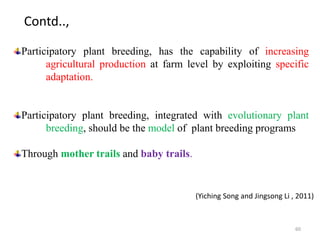
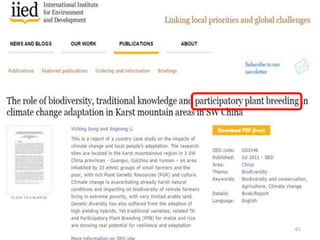
Participatory plant breeding, has the capability of increasing
agricultural production at farm level by exploiting specific
adaptation.
Participatory plant breeding, integrated with evolutionary plant
breeding, should be the model of plant breeding programs
Through mother trails and baby trails.
(Yiching Song and Jingsong Li , 2011)
Contd..,
61
62
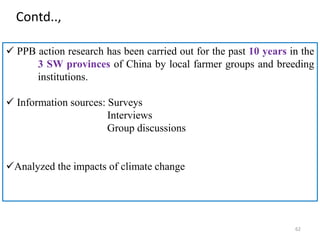
 PPB action research has been carried out for the past 10 years in the
3 SW provinces of China by local farmer groups and breeding
institutions.
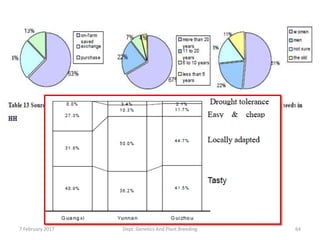
 Information sources: Surveys
Interviews
Group discussions
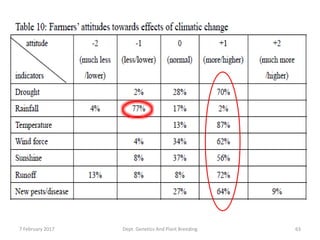
Analyzed the impacts of climate change
Contd..,
7 February 2017 Dept. Genetics And Plant Breeding 63
7 February 2017 Dept. Genetics And Plant Breeding 64
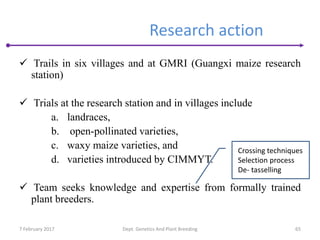
Research action
 Trails in six villages and at GMRI (Guangxi maize research
station)
 Trials at the research station and in villages include
a. landraces,
b. open-pollinated varieties,
c. waxy maize varieties, and
d. varieties introduced by CIMMYT.
 Team seeks knowledge and expertise from formally trained
plant breeders.
7 February 2017 Dept. Genetics And Plant Breeding 65
Crossing techniques
Selection process
De- tasselling
66
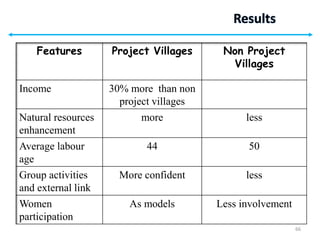
Results
Features Project Villages Non Project
Villages
Income 30% more than non
project villages
Natural resources
enhancement
more less
Average labour
age
44 50
Group activities
and external link
More confident less
Women
participation
As models Less involvement
67
Success stories
7 February 2017 Dept. Genetics And Plant Breeding
7 February 2017 Dept. Genetics And Plant Breeding 68
7 February 2017 Dept. Genetics And Plant Breeding 69

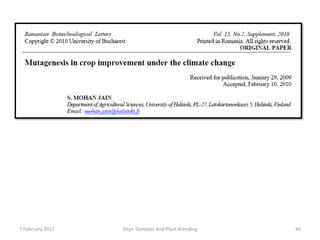
Climate Change

  • 1.
    1 Did somewhere, somethingwentterribly WRONG..? 7 February 2017 Dept. Genetics And Plant Breeding
  • 2.
    Seminar Speaker: Manoj CA I Ph D PHD16AGR6022 27 February 2017 Dept. Genetics And Plant Breeding
  • 3.
    7 February 20173Dept. Genetics And Plant Breeding
  • 4.
    47 February 2017Dept. Genetics And Plant Breeding
  • 5.
    7 February 20175Dept. Genetics And Plant Breeding
  • 6.
    Diospyros celebica (Makassar ebony)7February 2017 6Dept. Genetics And Plant Breeding
  • 7.
    Chlorophytumtuberosum (Safed Musli) 7 February2017 7Dept. Genetics And Plant Breeding
  • 8.
    Climatic Change 8 A changein average weather conditions, or in the time variation of weather around longer-term average conditions. 7 February 2017 Dept. Genetics And Plant Breeding
  • 9.
    7 February 2017Dept. Genetics And Plant Breeding 9 CAUSES OF CLIMATE CHANGE Natural Causes • Earth naturally has a cycle of climate change thatoccurseventually. • Sun’s solar energy output is changing and naturally increases Earth’s average temperature byabout1ºCevery century. Human Causes • Increasing Green housegas emission • Pollution,smogfrom factories • Deforestation • Increasing world population
  • 10.
    7 February 2017Dept. Genetics And Plant Breeding 10 Responses to changing climate • Extinction • Range shifts • Habitat fragmentation • Genetic differentiation • Migration • Phenotypic plasticity
  • 11.
    Extinction Range shifts 11 Plantdistributions leaning upslope
  • 12.
    Habitat fragmentation 12 Extinction The processby which habitat loss results in the division of large, continuous habitats into smaller, more isolated remnants. The interaction of rapid climate change and habitat fragmentation within populations leading to a range-wide increase in extinction risk. This can occur in the absence of habitat fragmentation if climate change occurs at a rate faster than the maximum rate of gene flow between populations.
  • 13.
  • 15.
    7 February 201715Dept. Genetics And Plant Breeding
  • 16.
    7 February 2017Dept. Genetics And Plant Breeding 16 “Unchecked climate change will result in 20% increase in malnourished children by 2050,”
  • 17.
    PREDICTED CLIMATE CHANGE IMPACTSON AGRICULTURE Direct effect on cropgrowth •Physiology •Morphology Indirect effects •Soil Fertility •Irrigation availability •Pest •Flood & droughts Socio economic •Policy •Trade •Farmer’s response Human interventions Adaptation strategies Mitigation strategies Agricultural Production & vulnerability CLIMATE CHANGE 17
  • 18.
    What about plants?How they respond to change 18 While animal species can move to new environments, vegetation apparently prefers to adapt its genetic code to face challenges. All organisms are expected to have some intrinsic capacity to adapt to changing conditions; this may be via ecological (i.e. physiological and/or behavioral plasticity) or evolutionary adaptation (i.e. through natural selection acting on quantitative traits). 7 February 2017 Dept. Genetics And Plant Breeding
  • 19.
    19 Capacity of anecosystem to respond to a disturbance by resisting damage and recovering quickly. Holling 1973 Propensity of a system to retain its organizational structure and productivity following a perturbation Resilience……? 7 February 2017 Dept. Genetics And Plant Breeding
  • 20.
    Resources for running (Geneticdiversity) Global Safety Backup Svalbard Global Seed Vault O.minutaO. alta O.ridleyiO.officinalis O.brachyanta O.longistaminataO.rufipogon Crop wild relatives  Gene banks (static source)  Need ongoing support  Crop wild relatives (dynamic source)  Need to be collected, evaluated, used in breeding programmes  Information  Needs to be shared  Diversification  Needs to be promoted at genetic, species and landscape level 7 February 2017 20Dept. Genetics And Plant Breeding
  • 21.
    Strategies…! 21 7 February 2017Dept. Genetics And Plant Breeding
  • 22.
    1. Crop Diversification Rationaland cost-effective method. Provide link between stress and resilience. Improve resilience in a variety in 2 ways: 1. Greater ability to suppress pest outbreaks 2. Buffering capacity of crop to greater climate variability and extreme events. Enhances ecosystem function because different genotypes perform slightly different roles 7 February 2017 22Dept. Genetics And Plant Breeding
  • 23.
    Contd.., This concept islinked to the Insurance hypothesis (Yachi and Loreau 1999). 7 February 2017 Dept. Genetics And Plant Breeding 23 levels of diversification: A) Within-crop scale - Using a mixture of crop varieties that have different plant heights. B) landscape scale- Integrating multiple production systems, like mixing agro forestry management with cropping (Altieri 1999, Gurr et al. 2003).
  • 24.
    7 February 2017Dept. Genetics And Plant Breeding 24
  • 25.
    Glutinous or `sticky'rice varieties: Huangkenuo Zinuo Non-Glutinous or Hybrids: 98% area sown before 1998 Shanyuo22 Shanyuo63 7 February 2017 Dept. Genetics And Plant Breeding 25 Experimental system Magnaporthe grisea Site -Yunnan Province, China.
  • 26.
    In 1998 -four different mixtures of varieties 812 ha only one foliar fungicide spray In 1999 - 3,342 ha no foliar fungicide applications 26 Methodology 7 February 2017 Dept. Genetics And Plant Breeding
  • 27.
    Planting arrangements 277 February2017 Dept. Genetics And Plant Breeding
  • 28.
    Results Panicle blast severityon the glutinous varieties 20% in monocultures, reduced to 1% in mixed populations. 89% greater yield of susceptible varieties planted in mixture than monoculture. Land equivalent ratio : 1.18 : 1 7 February 2017 Dept. Genetics And Plant Breeding 28
  • 29.
    7 February 2017Dept. Genetics And Plant Breeding 29 Crop heterogeneity is a possible solution to the vulnerability of monoculture crops to disease. Observation indicated that genetic heterogeneity provides greater disease suppression when used over large areas. Results support the view that intraspecific crop diversification provides an ecological approach to disease control that can be highly effective and contribute to the sustainability of crop production. Conclusion
  • 30.
    7 February 2017Dept. Genetics And Plant Breeding 30  Donald in 1968.  aims to modify plant architecture to increase the yield potential.  A valuable approach for breeding under climatic change with model characteristics . 2. Ideotype Breeding
  • 31.
    7 February 2017Dept. Genetics And Plant Breeding 31 Why..? An optimized crop ideotype will make a minimum demand on resources per unit of dry matter produced. Ideotypes should be developed to include protection against adverse conditions such as heat, cold, salinity, and drought. Helps plant breeders as a blueprint of the characteristics of high yielding cultivars in specified environments.
  • 32.
    7 February 2017Dept. Genetics And Plant Breeding 32
  • 33.
    7 February 2017Dept. Genetics And Plant Breeding 33 Proposed Ideotype model for Aerobic Rice The ideal aerobic rice cultivar must combine with the better yield performance of low land condition and better drought performance in upland condition and desirable traits Physiological traits • Chlorophyll content • Relative water content of leaves • Osmotic adjustment • Seedling vigor • Scavenging enzymes Root traits • Maximum root length • Root volume • Root thickness
  • 34.
    7 February 2017Dept. Genetics And Plant Breeding 34 Rice varieties require some adjustment of membrane and enzymatic properties for cool and drought environments as it is sensitive to low temperature and water supply. Japonica varieties grow well in cool environments, are characterized by low stomata frequency and produce dense, thick leaves (Yoshida and Ono, 1978). Incorporation of these characteristics in new varieties would provide: - drought resistance (fewer stomata, increased cuticular resistance) (Parthasarathi et al., 2012). Contd…,
  • 35.
    7 February 2017Dept. Genetics And Plant Breeding 35 Reduced tillers (9–10 for transplanted conditions) 200–250 grains per panicle Dark green and erect leaves Vigorous and deep root system Multiple disease and insect resistance Higher harvest index NPT by IRRI with following characteristics (Sharma et al., 2013).
  • 36.
    7 February 2017Dept. Genetics And Plant Breeding 36 Green Super Rice (Zhang et al., 2007)
  • 37.
    7 February 2017Dept. Genetics And Plant Breeding 37 An ideotype for climate change is the combination of traits (genes) that confers the crop a satisfying adaptation to climate variability and extreme events in specific environments and under specific cropping systems Conclusion
  • 38.
    3. Mutation breeding Purpose: To enhance mutation rate in a short duration By in vitro selection, desirable mutants with useful traits, e.g. abiotic and biotic stress tolerant can be isolated in a short period of time. Useful as a reliable tool for feeding the ever-growing human population Induced by physical (e.g. gamma radiation) and chemical (e.g. ethylmethane sulfonate) mutagen 387 February 2017 Dept. Genetics And Plant Breeding
  • 39.
    39 Desirable to increasethe genetic variability by combining mutagenesis and tissue culture. Benefits: a) Mutagen treatment can be given to large No. of cells or protoplast. b) Fast multiplication of mutant plant material c) In vitro selection of mutant d) Less space required for shoot multiplication under the controlled conditions. In vitro Mutagenesis 7 February 2017 Dept. Genetics And Plant Breeding
  • 40.
    407 February 2017Dept. Genetics And Plant Breeding
  • 41.
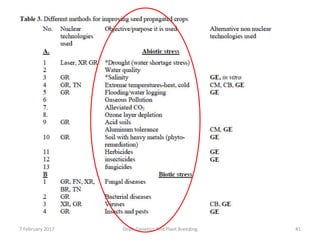
    7 February 2017Dept. Genetics And Plant Breeding 41
  • 42.
    42 • Black Sigatokadisease in banana caused by Mycosphaerella fijiensis • Shoot tips of susceptible ‘Grande Naine’ of banana are irradiated with gamma rays with LD50 value 40 Gy 7 February 2017 Dept. Genetics And Plant Breeding
  • 43.
    43 Results • From apopulation of 4000 M1V4 plants derived from gamma irradiated 15 plants were selected for their tolerance to Juglone (5-Hydroxy-1,4-naphthoquinone) Tolerant Grande Naine Susceptible Grande Naine 7 February 2017 Dept. Genetics And Plant Breeding
  • 44.
    44 Induced mutations arenecessary to enhance rate of genetic variability . A combination of somatic embryogenesis and organogenesis would be a realistic approach for mutation induction and multiplication of mutant plants in large numbers. In vitro selection shortens the time for the selection of a desirable trait under the selection pressure and should complement the field conditions. Conclusion 7 February 2017 Dept. Genetics And Plant Breeding
  • 45.
    4. MARKER ASSISTEDSELECTION  Selection of a genotype carrying a desirable gene or gene combination via linked markers is called MAS. Different MAS strategies are used depending on the specific types of traits and breeding programs (Xu et al., 2012). 457 February 2017 Dept. Genetics And Plant Breeding
  • 46.
    Marker-assisted backcrossing (MABC) Marker AssistedBack Cross transfer favorable traits from donor into elite (recurrent) while selecting against donor introgressions across the rest of the genome Incorporating genes/QTLs into ‘mega varieties’ Utilize DNA markers for backcrossing gives greater efficiency. 467 February 2017 Dept. Genetics And Plant Breeding
  • 47.
    P1 x F1 P1x P2 CONVENTIONAL BACKCROSSING BC1 VISUAL SELECTION OF BC1 PLANTS THAT MOST CLOSELY RESEMBLE RECURRENT PARENT BC2 MARKER-ASSISTED BACKCROSSING P1 x F1 P1 x P2 BC1 USE ‘BACKGROUND’ MARKERS TO SELECT PLANTS THAT HAVE MOST RP MARKERS AND SMALLEST % OF DONOR GENOME BC2 477 February 2017 Dept. Genetics And Plant Breeding
  • 48.
    7 February 2017Dept. Genetics And Plant Breeding 48
  • 49.
     Submergence stressregularly affects 15 mha of lowland rice areas in South and Southeast Asia.  A major QTL on chromosome 9, Sub1, has provided the opportunity to apply marker assisted backcrossing (MAB) to develop submergence tolerant versions of rice cultivars that are widely grown in the region.  IRRI initiated a program to introduce the Sub1A gene into five mega varieties (Swarna, Samba Mahsuri, BR11, IR64 and CR1009) of South Asia. 497 February 2017 Dept. Genetics And Plant Breeding
  • 50.
    Backcrosses between asubmergence tolerant donor and the widely grown recurrent parent Swarna. By the BC2F2 generation a submergence tolerant plant was identified that possessed Swarna type simple sequence repeat (SSR) alleles on all fragments analyzed except the tip segment of rice chromosome 9 that possessed the Sub1 locus. A BC3F2 plant was identified that was homozygous for all Swarna type alleles except for an approximately 2.3–3.4 Mb region surrounding the Sub1 locus. 50 Methodology 7 February 2017 Dept. Genetics And Plant Breeding
  • 51.
    Methodology Swarna Popular variety X IR49830 Sub1 donor F1 517February 2017 Dept. Genetics And Plant Breeding
  • 52.
    7 February 2017Dept. Genetics And Plant Breeding 52
  • 53.
    7 February 2017Dept. Genetics And Plant Breeding 53
  • 54.
    54 Test were conductedat IRRI under complete submergence for ≥17 days. In these experiments, the Sub1 introgression lines showed excellent survival and yield performance. Testing 7 February 2017 Dept. Genetics And Plant Breeding
  • 55.
    Performance of Swarnaand Swarna-Sub1 in farmers’ field after 5 days of complete submergence in Bihar. 55 Contd.., 7 February 2017 Dept. Genetics And Plant Breeding
  • 56.
    7 February 2017Dept. Genetics And Plant Breeding 56 Table 1 : Submergence tolerance of Swarna-Sub1 (BC2 progeny) compared to that of the donors FR13A and IR49830-7, recipient variety Swarna, susceptible check IR42, and several widely grown cultivars
  • 57.
    Yield of SambaMahsuri and Samba Mahsuri Sub1 under different durations of submergence in farmers’ fields in Uttar Pradesh, India, during kharif 2010. Singh et al. (2013) Success... 57
  • 58.
    58 Conclusion The results showedthat the mega variety Swarna could be efficiently converted to a submergence tolerant variety in three backcross generations, involving a time of two to three years. This approach demonstrates the effective use of marker assisted selection for breeding under rapid climatic change situation for specific regions 7 February 2017 Dept. Genetics And Plant Breeding
  • 59.
    59 5. Participatory PlantBreeding “Participatory plant breeding (PPB) is when farmers are involved in a plant breeding programmes with opportunities to make decisions at different stages during the process.” The main aim of the PPB initiative is to establish cooperative and complementary relations between the formal seed system and farmers’ seed systems.
  • 60.
    60 Participatory plant breeding,has the capability of increasing agricultural production at farm level by exploiting specific adaptation. Participatory plant breeding, integrated with evolutionary plant breeding, should be the model of plant breeding programs Through mother trails and baby trails. (Yiching Song and Jingsong Li , 2011) Contd..,
  • 61.
  • 62.
    62  PPB actionresearch has been carried out for the past 10 years in the 3 SW provinces of China by local farmer groups and breeding institutions.  Information sources: Surveys Interviews Group discussions Analyzed the impacts of climate change Contd..,
  • 63.
    7 February 2017Dept. Genetics And Plant Breeding 63
  • 64.
    7 February 2017Dept. Genetics And Plant Breeding 64
  • 65.
    Research action  Trailsin six villages and at GMRI (Guangxi maize research station)  Trials at the research station and in villages include a. landraces, b. open-pollinated varieties, c. waxy maize varieties, and d. varieties introduced by CIMMYT.  Team seeks knowledge and expertise from formally trained plant breeders. 7 February 2017 Dept. Genetics And Plant Breeding 65 Crossing techniques Selection process De- tasselling
  • 66.
    66 Results Features Project VillagesNon Project Villages Income 30% more than non project villages Natural resources enhancement more less Average labour age 44 50 Group activities and external link More confident less Women participation As models Less involvement
  • 67.
    67 Success stories 7 February2017 Dept. Genetics And Plant Breeding
  • 68.
    7 February 2017Dept. Genetics And Plant Breeding 68
  • 69.
    7 February 2017Dept. Genetics And Plant Breeding 69