


CLEANING OF
ROTARY Ni-Ti
ENDODONTIC
INSTRUMENTS
INDIAN DENTAL ACADEMY
Leader in continuing Dental Education
www.indiandentalacademy.com
SOURCE
LIBRARY
www.indiandentalacademy.com
INTRODUCTION
CROSS INFECTION IS A MAJOR
ISSUE IN THE DENTAL CARE
SETTING BECAUSE OF CONCERNS
ABOUT TRANSMISSION OF DISEASE
via THE ORAL CAVITY.
www.indiandentalacademy.com
Indian Dental academy
• www.indiandentalacademy.com
• Leader continuing dental education
• Offer both online and offline dental
courses
AIM
TO DEVELOP AND EVALUATE AN
EFFECTIVE CLEANING PROCEDURE FOR
ROTARY NICKEL-TITANIUM (Ni-Ti)
ENDODONTIC INSTRUMENTS
www.indiandentalacademy.com
Sterilization:
The process that destroys all types and
forms of microorganisms including
viruses, bacteria, fungi and bacterial
endospores.
www.indiandentalacademy.com
Disinfection:
A less lethal process than sterilization it
eliminates virtually all pathogenic
vegetative microorganisms, but not
necessarily all microbial forms (spores).
Disinfection is usually reserved for large
surfaces that cannot be sterilized.
Disinfection locks the margin of safety
afforded by sterilization procedures.
www.indiandentalacademy.com
Objectives of infection
control
 Decrease the number of pathogenic
microbes to the level where normal body
resistance mechanisms can prevent
infection.
 Break the cycle of infection from dentist,
assistant and patient and eliminate cross-
contamination.
 Treat all patients and instruments as though
they could transmit an infectious disease.
 Protect patients and personnel from infection.
www.indiandentalacademy.com
Route of transmission of
microorganisms in the dental
field
 Patient to dental team
 Dental team to patient
 Patient to patient
 Dental office to the community
www.indiandentalacademy.com
Methods of sterilization
 The four methods of sterilization that are
generally accepted in dentistry include
steam under pressure, chemical vapor,
dry heat sterilization and glutaraldehyde
solutions.
www.indiandentalacademy.com
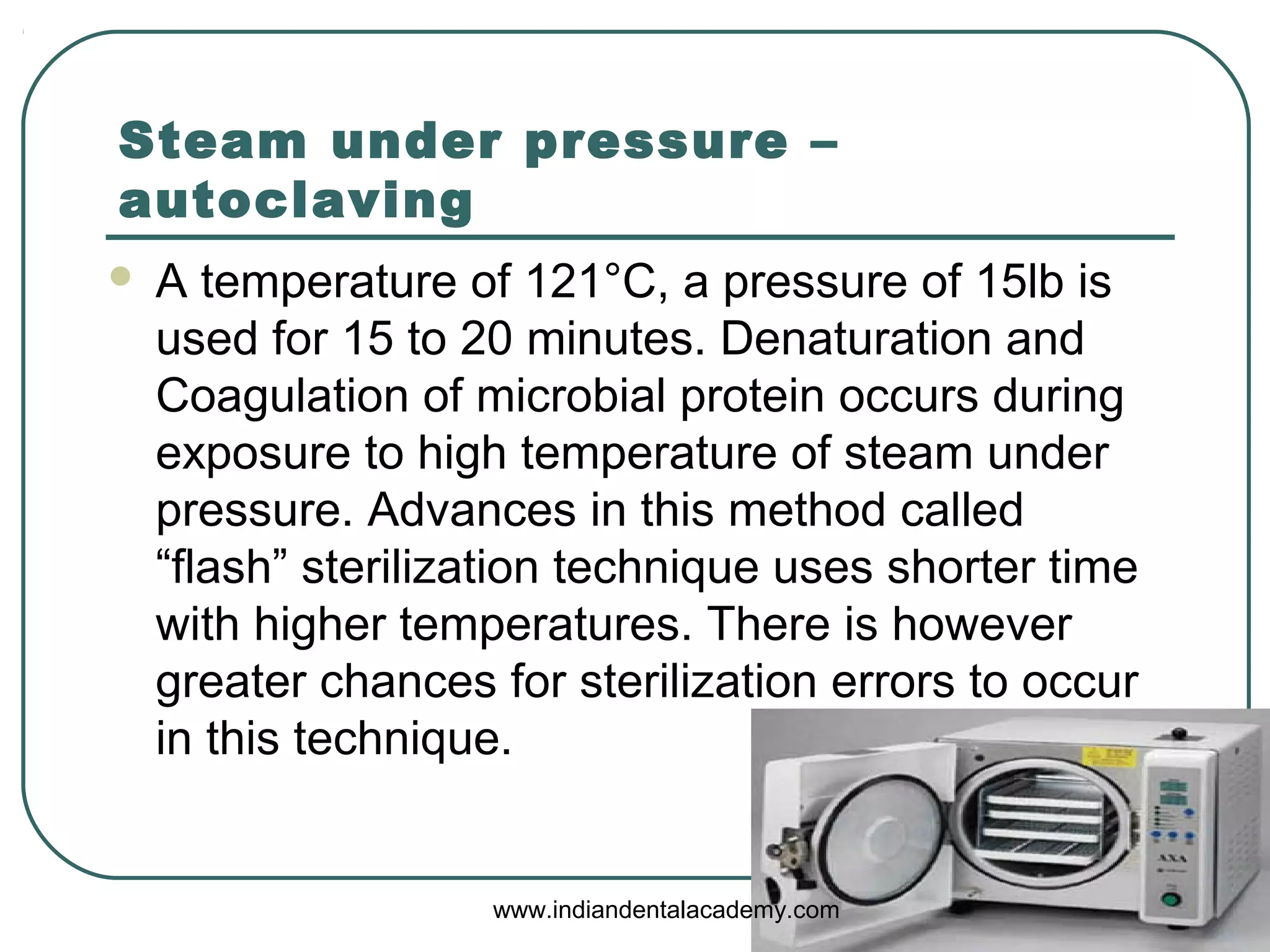
Steam under pressure –
autoclaving
 A temperature of 121°C, a pressure of 15lb is
used for 15 to 20 minutes. Denaturation and
Coagulation of microbial protein occurs during
exposure to high temperature of steam under
pressure. Advances in this method called
“flash” sterilization technique uses shorter time
with higher temperatures. There is however
greater chances for sterilization errors to occur
in this technique.
www.indiandentalacademy.com
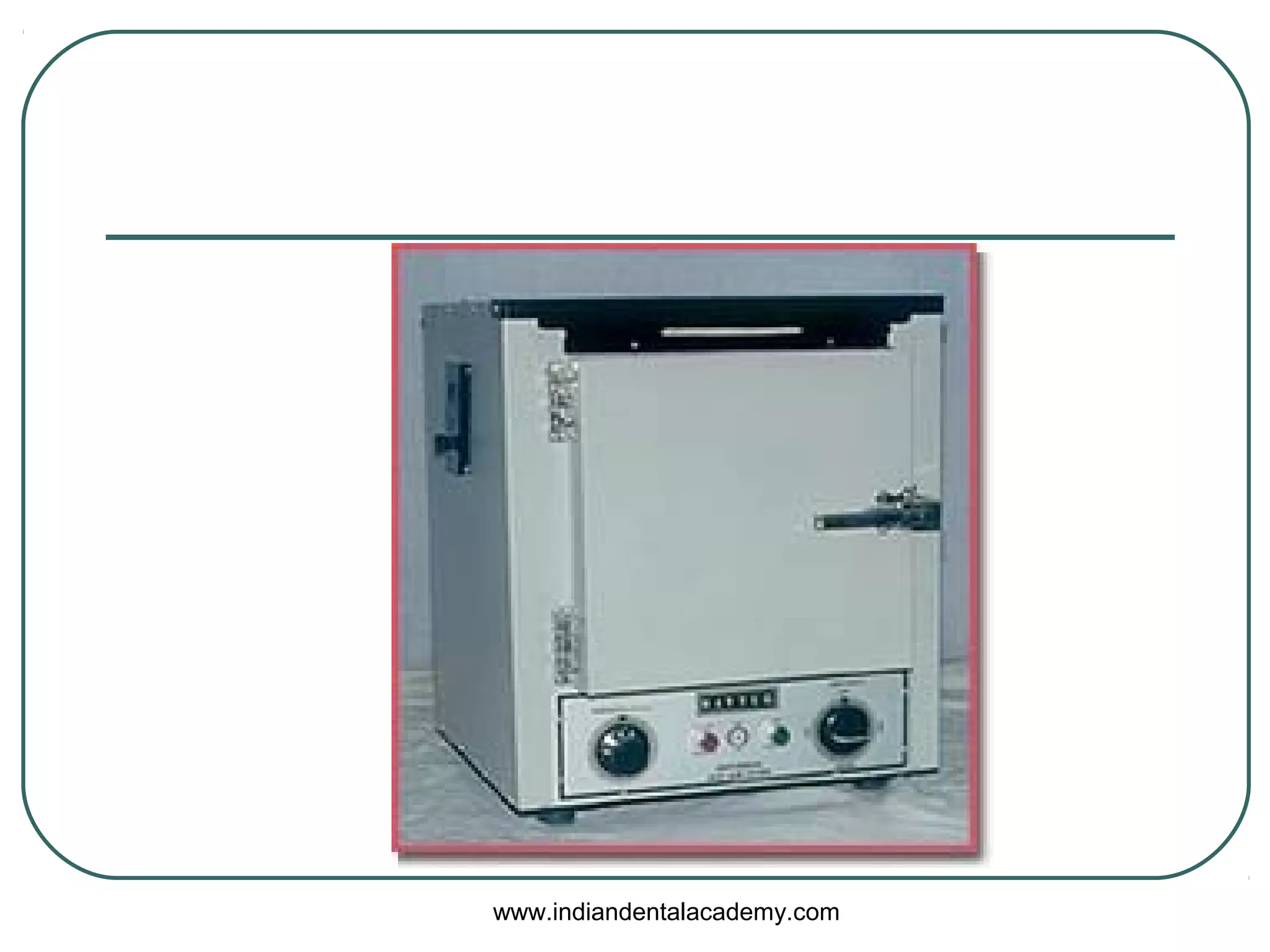
Dry heat sterilization
 They use hot air to kill microorganisms. The
technique requires a temperature of 160°C
for 2 hours.
 Recently a rapid heat transfer sterilizer was
introduced operated at 190°C it will by rapid
airflow sterilize unpacked instruments in
6mins and packaged instruments in 12
minutes.
www.indiandentalacademy.com
Chemical vapour
sterilization
 This method is based on the factors of heat,
water and chemical synergism. The chemicals
include alcohol, acetone, ketones and
formaldehydes.
 The water content is below the 15% level, above
which rust, corrosion and dullness of metal occur.
 The temperature requirements are 132°C for 20
minutes. The composition of heat and chemicals
is much kinder to metal surfaces than the other
techniques.
www.indiandentalacademy.com
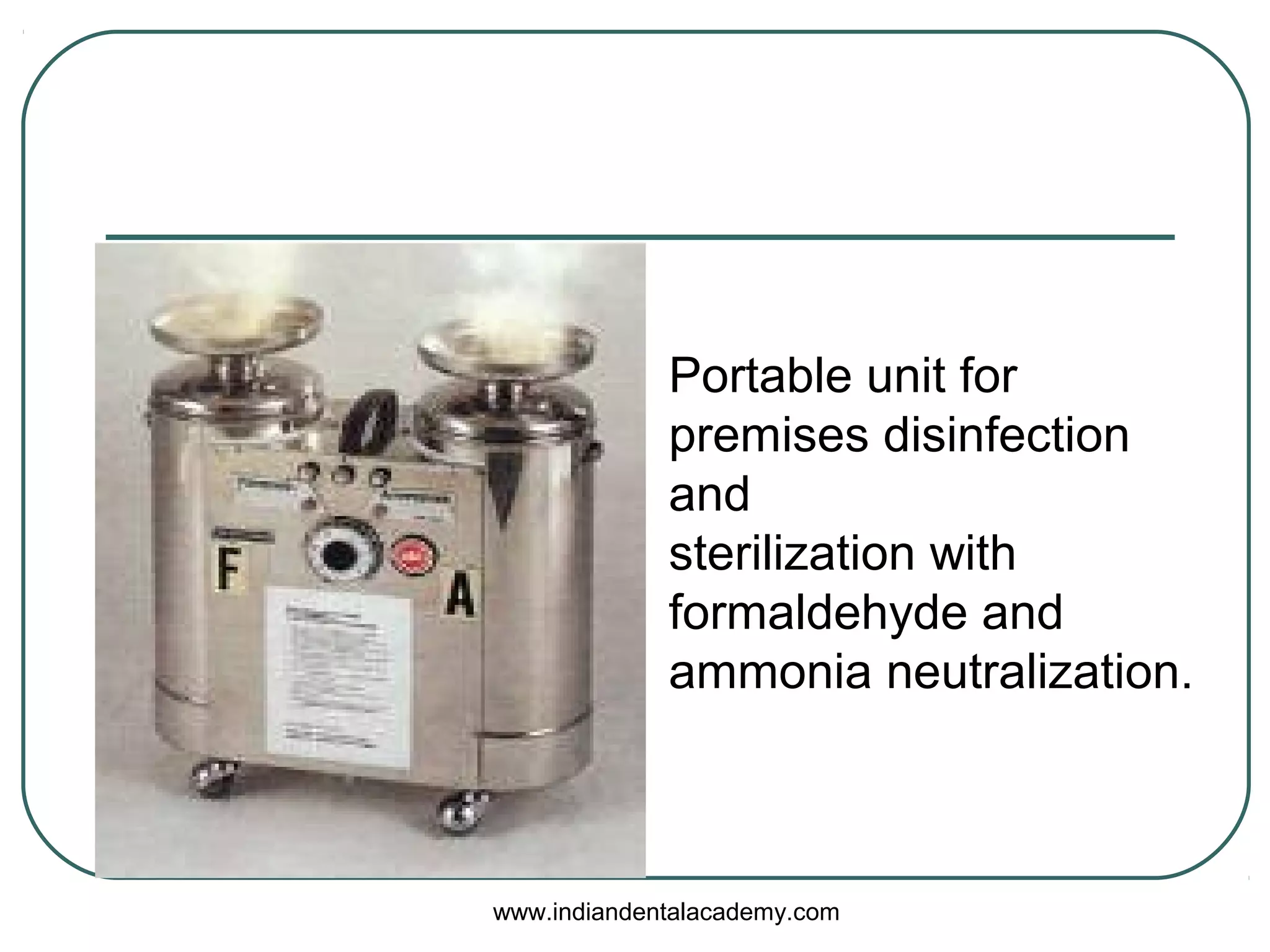
Portable unit for
premises disinfection
and
sterilization with
formaldehyde and
ammonia neutralization.
www.indiandentalacademy.com
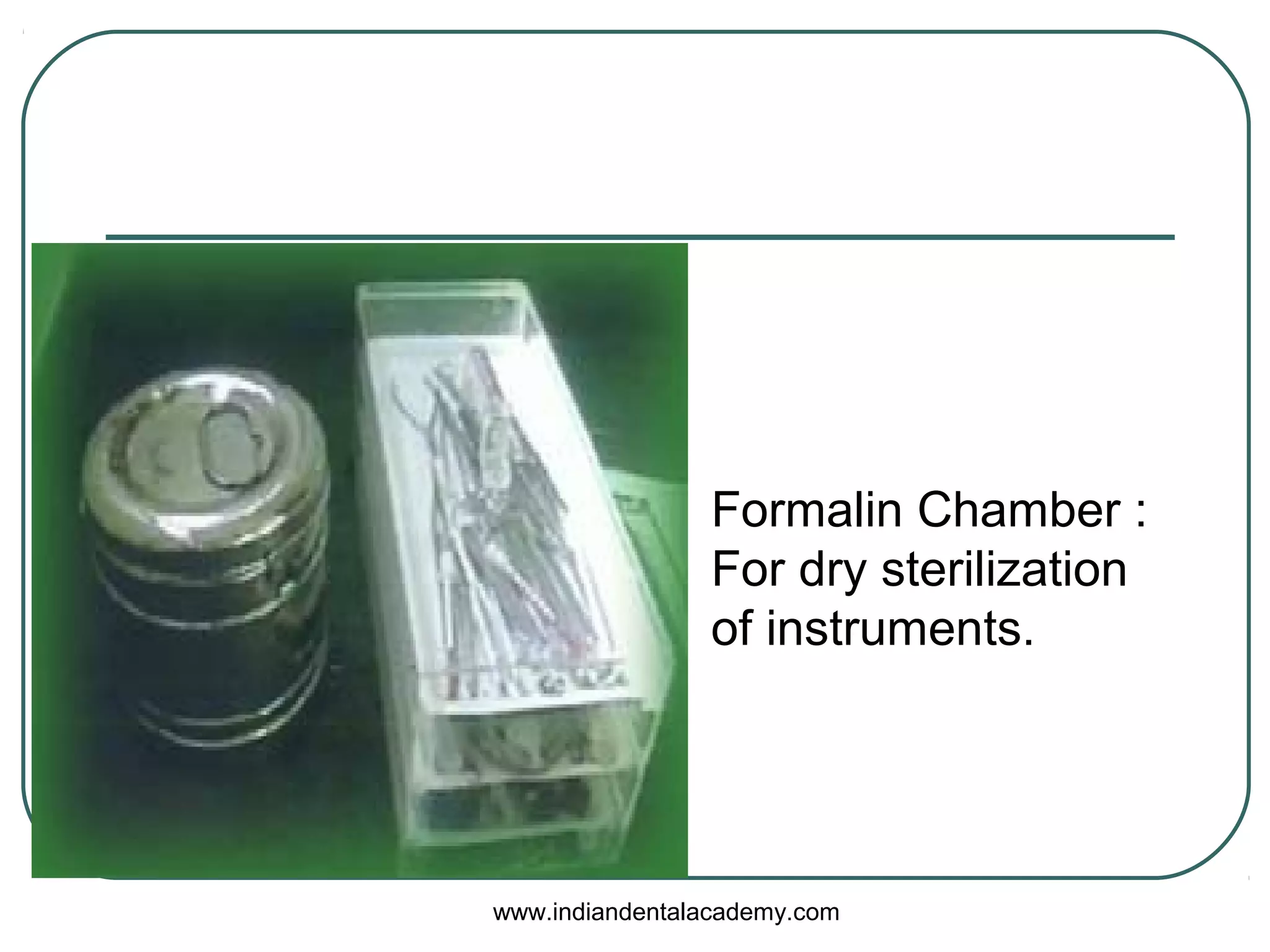
Formalin Chamber :
For dry sterilization
of instruments.
www.indiandentalacademy.com
Glutaraldehyde as
immersion chemical
steriliant :
 For endodontic instruments sterilization by
heat is the method of choice, however the
use of glutaraldehyde preparations for the
chemical sterilization of heat sensitive
equipment has become a widespread
practice.
 Glutaraldehyde kills microorganisms by
altering essential protein components.
www.indiandentalacademy.com
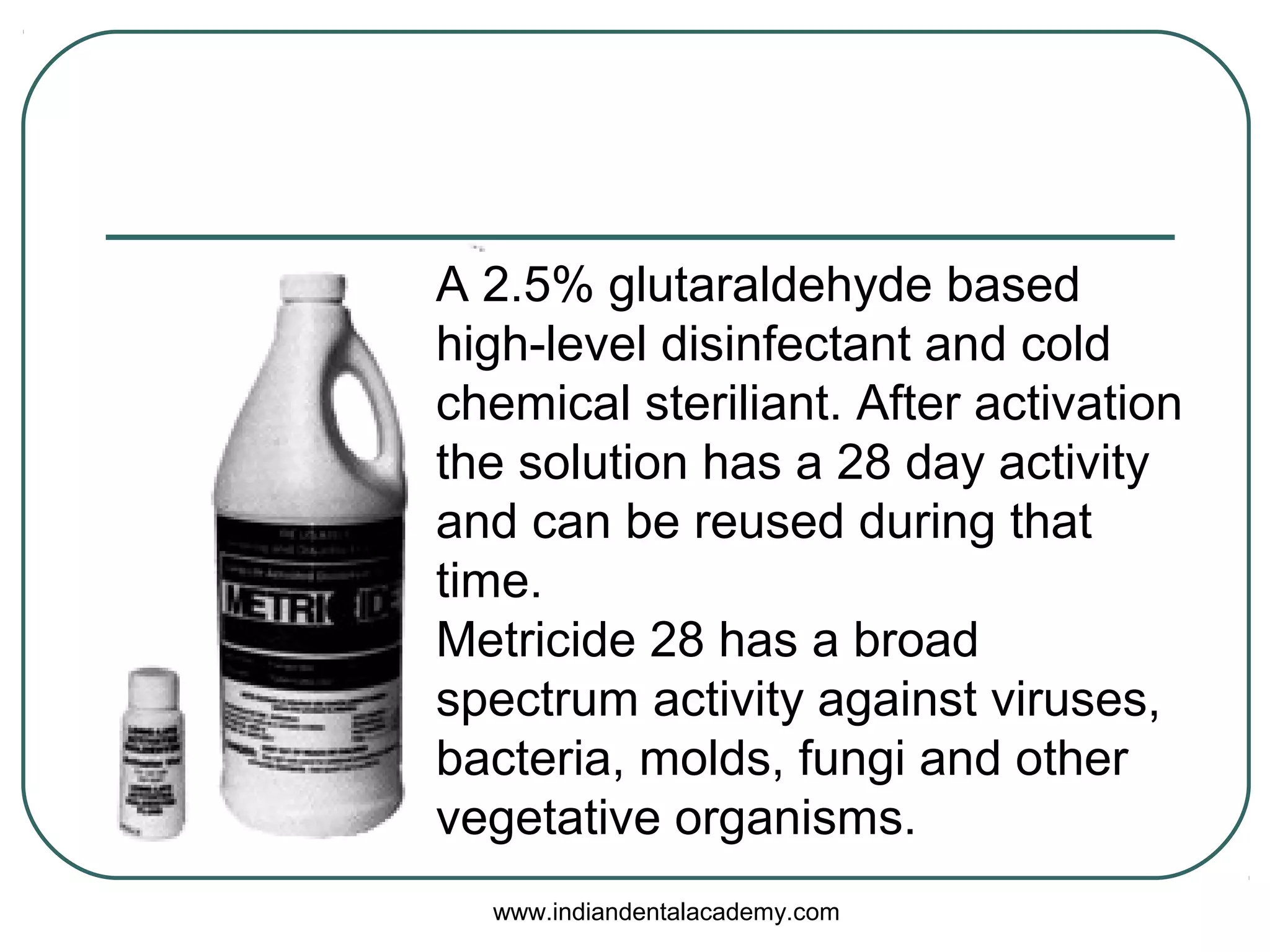
A 2.5% glutaraldehyde based
high-level disinfectant and cold
chemical steriliant. After activation
the solution has a 28 day activity
and can be reused during that
time.
Metricide 28 has a broad
spectrum activity against viruses,
bacteria, molds, fungi and other
vegetative organisms.
www.indiandentalacademy.com
Ethylene Oxide Gas (E.T.O.)
 Ethylene oxide was first used as a sterilizing
agent in the late 1940’s. Since then ETO has
become an increasingly popular means of
sterilization especially in hospitals. It has high
penetration capacity. Temperature required
is low i.e. 25°C.
 This makes it ideal for sterilizing heat
sensitive instruments. Time period required
for proper sterilization varies from 10 to 16
hours.
www.indiandentalacademy.com
Glass bead sterilizers
 Chair side sterilization of endodontic files,
reamers and broaches can be accomplished
by using a glass bead sterilizer.
 The transfer medium heats the endodontic
instrument through heat connection and kills
any adherent microorganisms.
 At a temperature of 220°C contaminated
endodontic instruments require 15 seconds
to be sterilized.
www.indiandentalacademy.com
Glass Bead Sterilizer :
Used for sterilization of
instruments.
In few seconds you can
sterilize the instruments.
www.indiandentalacademy.com
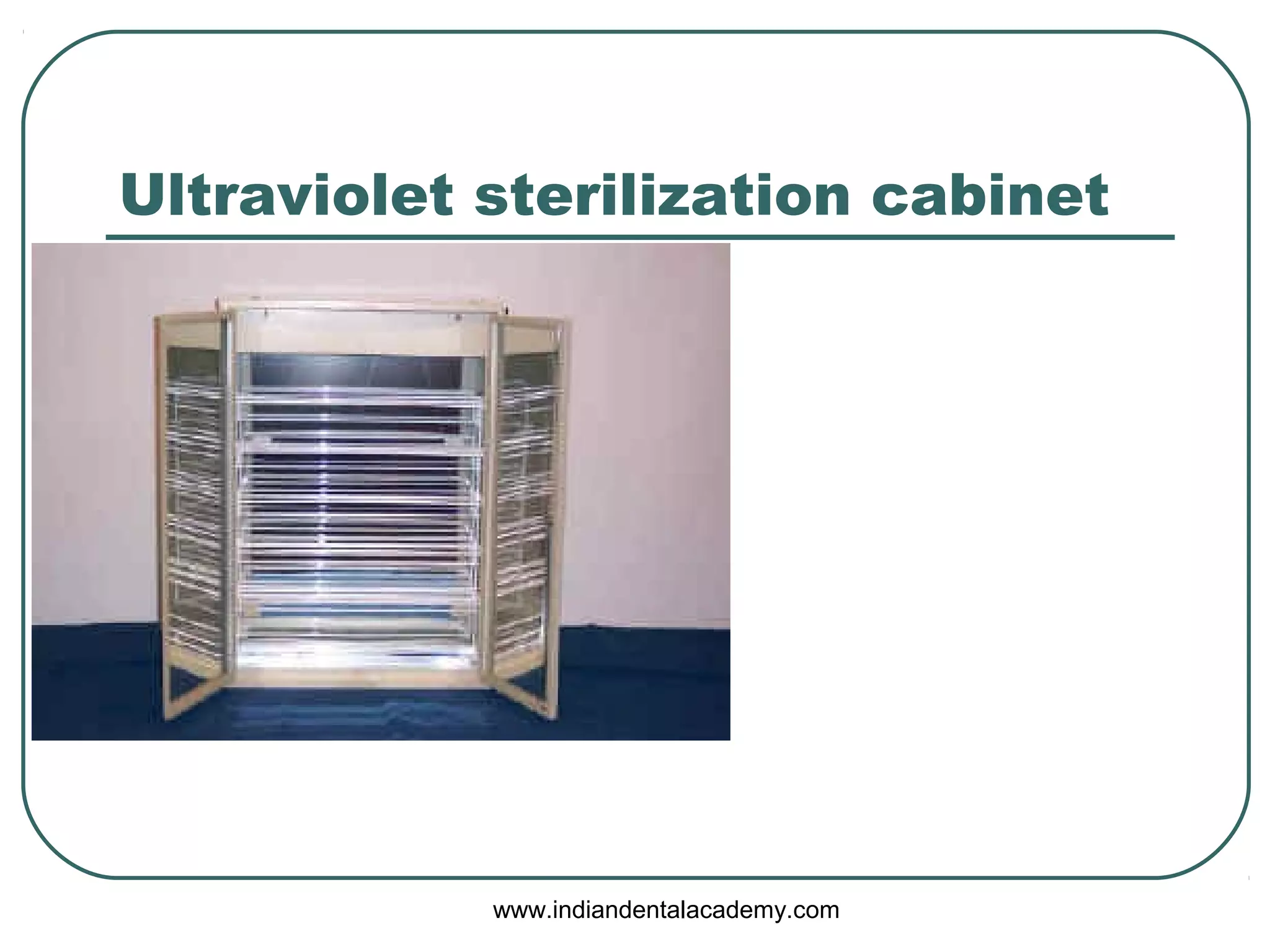
Ultraviolet sterilization cabinet
www.indiandentalacademy.com
Chemical Disinfectants
 Alcohols
 Chlorine compounds
 Glutaraldehyde
 Iodophores
 Phenolic compounds
www.indiandentalacademy.com
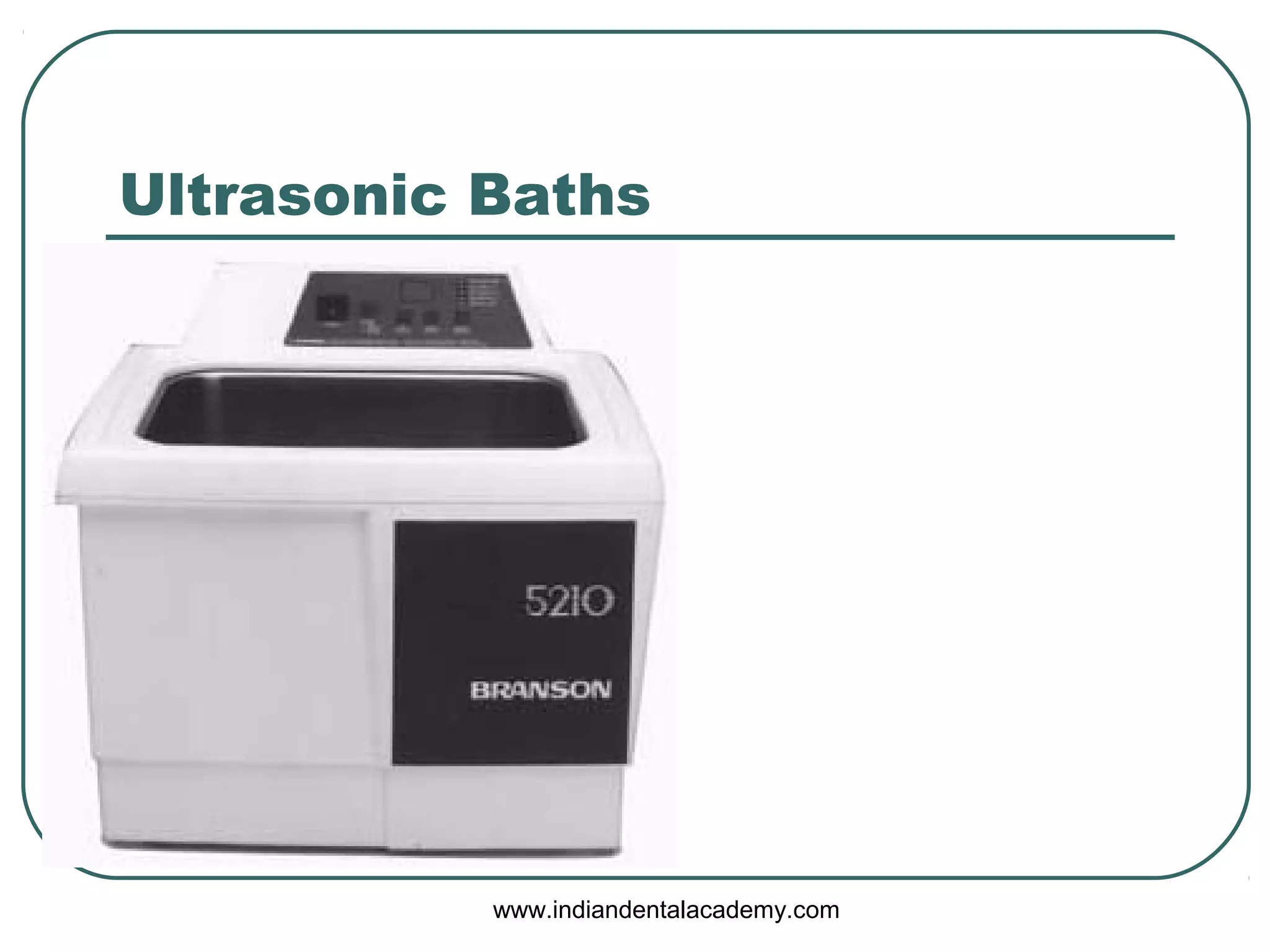
Ultrasonic Baths
www.indiandentalacademy.com
KEYWORDS
 CLEANING
 CLEANING OF Ni-Ti INSTRUMENTS
 CROSS-INFECTION
 ENDODONTIC INSTRUMENT
 NICKEL-TITANIUM.
www.indiandentalacademy.com
MATERIAL AND METHODS
 New rotary NiTi instruments
ProFile
Flexmaster
K3
Quantec
 Instruments were stored in covered Petri
dishes excepts during the cleaning and
scoring procedures
www.indiandentalacademy.com
MATERIAL AND METHODS
 Before the cleaning procedures,
instruments were used under simulated
clinical conditions to prepare canals of
extracted teeth
 Scoring system
1. The entire surface of the flutes of each
instrument was examined at 45×
www.indiandentalacademy.com
MATERIAL AND METHODS
1. All instruments were immersed in Van
Gieson’s solution for 3 mins to stain any
biological debris
2. The instruments were rinsed using
distilled water and air-dried on an
endodontic stand
3. The category and extent of debris were
recorded using the criteria shown in the
table
www.indiandentalacademy.com
Scoring system for debris on instruments
Categories of debris
SD (stained particulate debris) : particulate matter stained red or orange
F ( organic film ) : a thin unstructured layer covering part of the
instrument surface and generally stained red
UD ( unstained particulate debris) : fine particles that did not exhibit any
red/orange coloration after staining
C : clean
Extent of stained debris
0 (none)
1 (film only)
2 (slight) : scattered particles spaced widely apart on the flute sufaces
3 (moderate) : numerous particles with areas of continuous coverage of
surfaces
4 (heavy) : areas of the instruments where the flutes were packed with
debris to there entire depth.
www.indiandentalacademy.com
Evaluation of different cleaning
procedures
 Baseline levels of contamination
1. 40 new instruments were stained immediately after removal from
their packages
2. 20 instruments were contaminated by using them to prepare
canals of extracted and then stained after dry storage overnight
without any cleaning procedure
3. 20 instruments were contaminated by the same procedure , then
inserted into a sponge saturated with 0.1% Cholorhexidine
gluconate sol. For 2 hrs and stained in the same manner as the
dry storage group
www.indiandentalacademy.com
Experimental groups
 80 instruments were used to instruments
canals of extracted teeth.
 All instruments were inserted into a sponge
soaked in 0.1% chlorhexidine gluconate for 30
mins.
 The instruments were then randomly assigned
into 4 equal groups representing four different
cleaning procedures
www.indiandentalacademy.com
Experimental groups
Group 1 : the instruments were placed in a
stand and the flues were brushed for 20
strokes per row with a nylon bristle brush
under running distilled water.
Group 2 : instruments were brushed as in grp 1
and then laced in a beaker containing 1%
NaOCl , soaked for 10 mins and rinsed under
running distilled water.
www.indiandentalacademy.com
Experimental groups
Group 3 : without brushing the instruments
were directly placed in a beaker containing
1% NaOCl for10 mins and the beaker was
placed into an ultrasonic bath.
Group 4 : instruments were brushed ,
immersed for 10 mins in 1% NaOCl , placed in
the ultrasonic bath for 5 mins and rinsed
www.indiandentalacademy.com
Experimental groups
 After the cleaning procedures,
instruments were air dried and immersed
in Van Gieson’s solution for 3 mins,
rinsed under running distilled water and
air-dried on the endodontic stand.
 Instruments were then scored for debris
at 45× magnification.
www.indiandentalacademy.com
Effect of storage conditions or
autoclave sterilization on cleaning
effectiveness
 100 instruments from previous
experiments were cleaned using the
complete cycle
 They were reused to instrument canals
of extracted teeth
 They were divided into five equal groups
www.indiandentalacademy.com
Effect of storage conditions or
autoclave sterilization on cleaning
effectiveness
 Group 1(dry-storage) : the instruments
were bench-dried overnight
 Group 2(moist-storage): the instruments
were kept moist by placing them
overnight in a sponge soaked in
0.1%aqueous chlorhexidine gluconate.
With no additional cleaning
www.indiandentalacademy.com
Effect of storage conditions or
autoclave sterilization on cleaning
effectiveness
 Group 3(dry storage, complete cleaning
sequence) : the instruments were bench-
dried overnight and were then transferred to
the brushing stand and subjected to the
complete cleaning sequence
 Group 4(moist storage, complete cleaning
sequence) : the instruments were inserted
into a sponge soaked in 0.1% chlorhexidine
gluconate solution
www.indiandentalacademy.com
Effect of storage conditions or
autoclave sterilization on cleaning
effectiveness
 Group 5(autoclave sterilization group) :
instruments were brushed on the
instrument stand and passed through
autoclave sterilization at 134ºc , 220kPa
for 3 min. the instrument were then
cleaned with the full cleaning protocol.
All instruments were stained and scored in
the same manner as before
www.indiandentalacademy.com
Biological risk analysis
 Considering each instrument as one unit, the
instrument was classified as either positive
(stained debris or film present) or negative
(unstained debris only or clean) ‘biological
risk’
 The presence of stained material in any
location of the instrument was considered to
constitute a biological risk.
www.indiandentalacademy.com
Results
www.indiandentalacademy.com
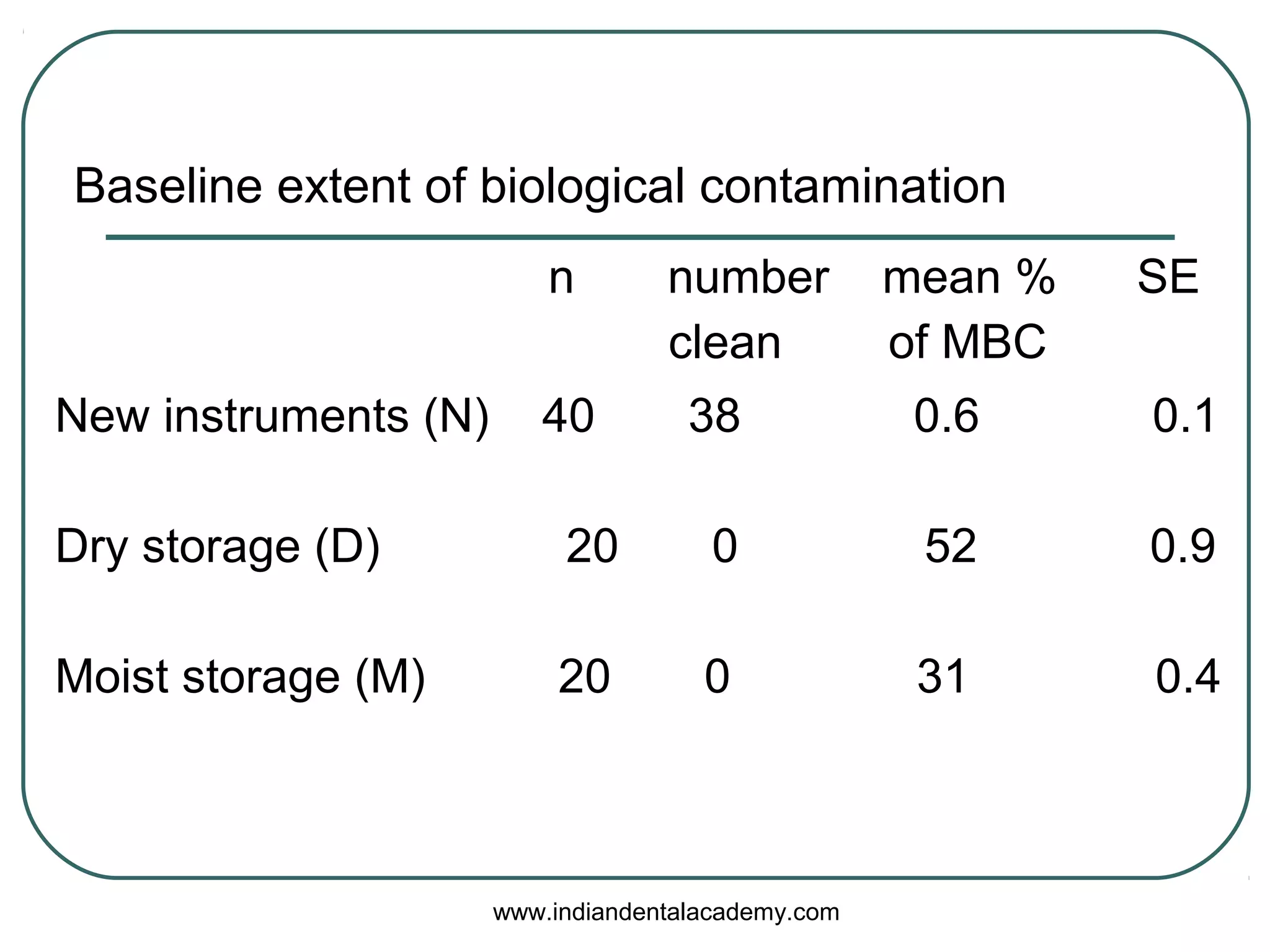
n number mean % SE
clean of MBC
New instruments (N) 40 38 0.6 0.1
Dry storage (D) 20 0 52 0.9
Moist storage (M) 20 0 31 0.4
Baseline extent of biological contamination
www.indiandentalacademy.com
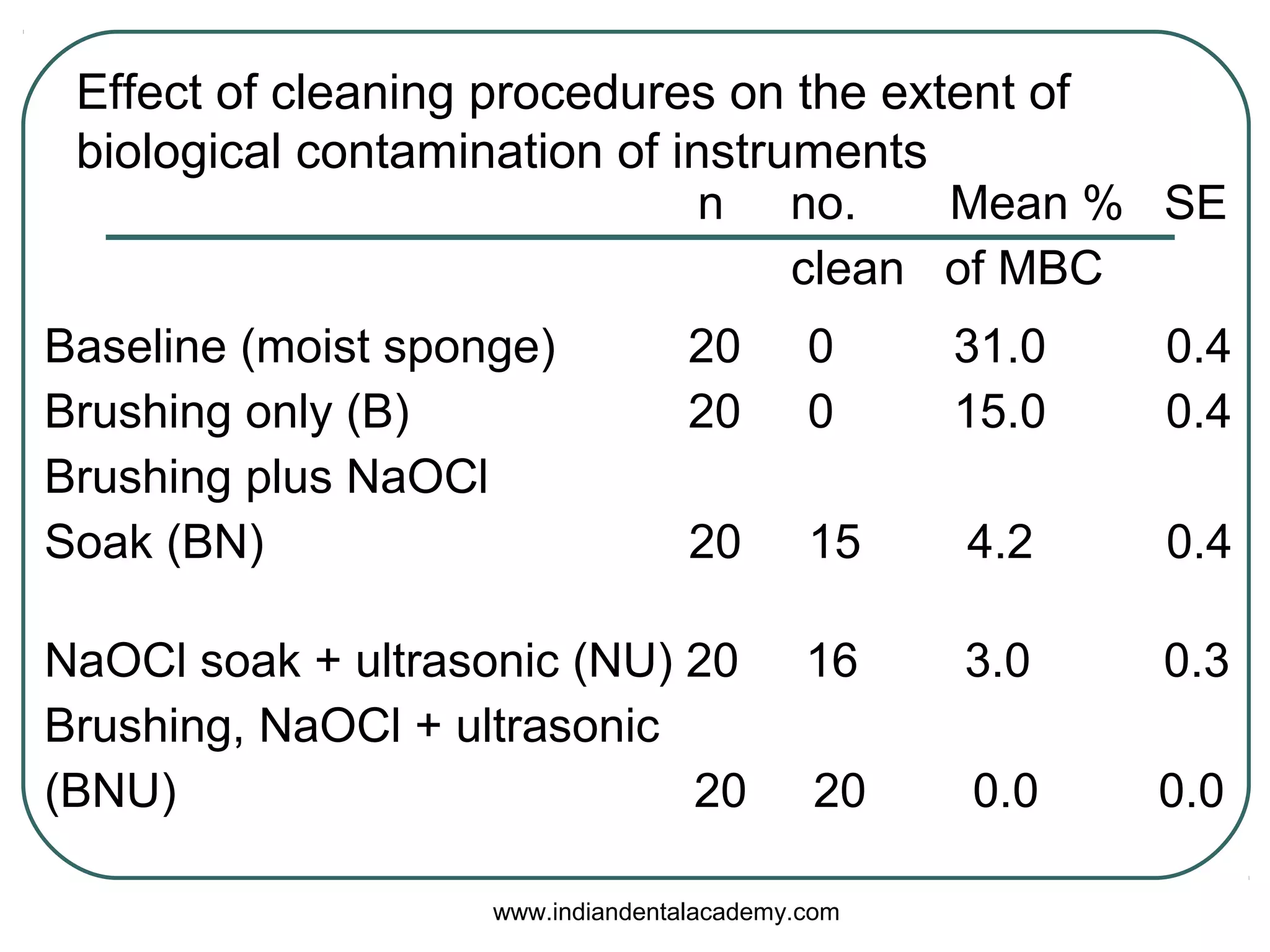
n no. Mean % SE
clean of MBC
Baseline (moist sponge) 20 0 31.0 0.4
Brushing only (B) 20 0 15.0 0.4
Brushing plus NaOCl
Soak (BN) 20 15 4.2 0.4
NaOCl soak + ultrasonic (NU) 20 16 3.0 0.3
Brushing, NaOCl + ultrasonic
(BNU) 20 20 0.0 0.0
Effect of cleaning procedures on the extent of
biological contamination of instruments
www.indiandentalacademy.com
n number mean%
SE
clean of MBC
Autoclaving (A) 20 0 17.0 0.5
Dry storage (D) 20 11 6.2 0.4
Moist sponge (M) 20 20 0.0 0.0
Effect of storage on the effectiveness of cleaning
www.indiandentalacademy.com
Review of literature
 Miller C. et. al. 2002
conducted a study on preparing instruments for sterilization
and concluded that moist storage after clinical use is
essential for a proper sterilization
 Martins et. al. 2002
conducted a study on surface analysis of ProFile
instruments by SEM and reported that adherent deposits
containing carbon and sulphur, which originate from
lubricating oils used during manufacture serve as sites for
subsequent accumulation of debris during clinical use.
www.indiandentalacademy.com
Review of literature
 Moorer & Wesselink 1982
conducted a study on the factors promoting the
tissue dissolving capability of sodium hypochlorite
and concluded that it’s tissue dissolving ability
does not depend only on it’s concentration but also
increased with mechanical agitation.
 Tanomaru Filho et. al. 2001
recommended the use of the ultrasonic bath as
the most effective method to remove foreign
particles from the surface of the instruments.
www.indiandentalacademy.com
Conclusions
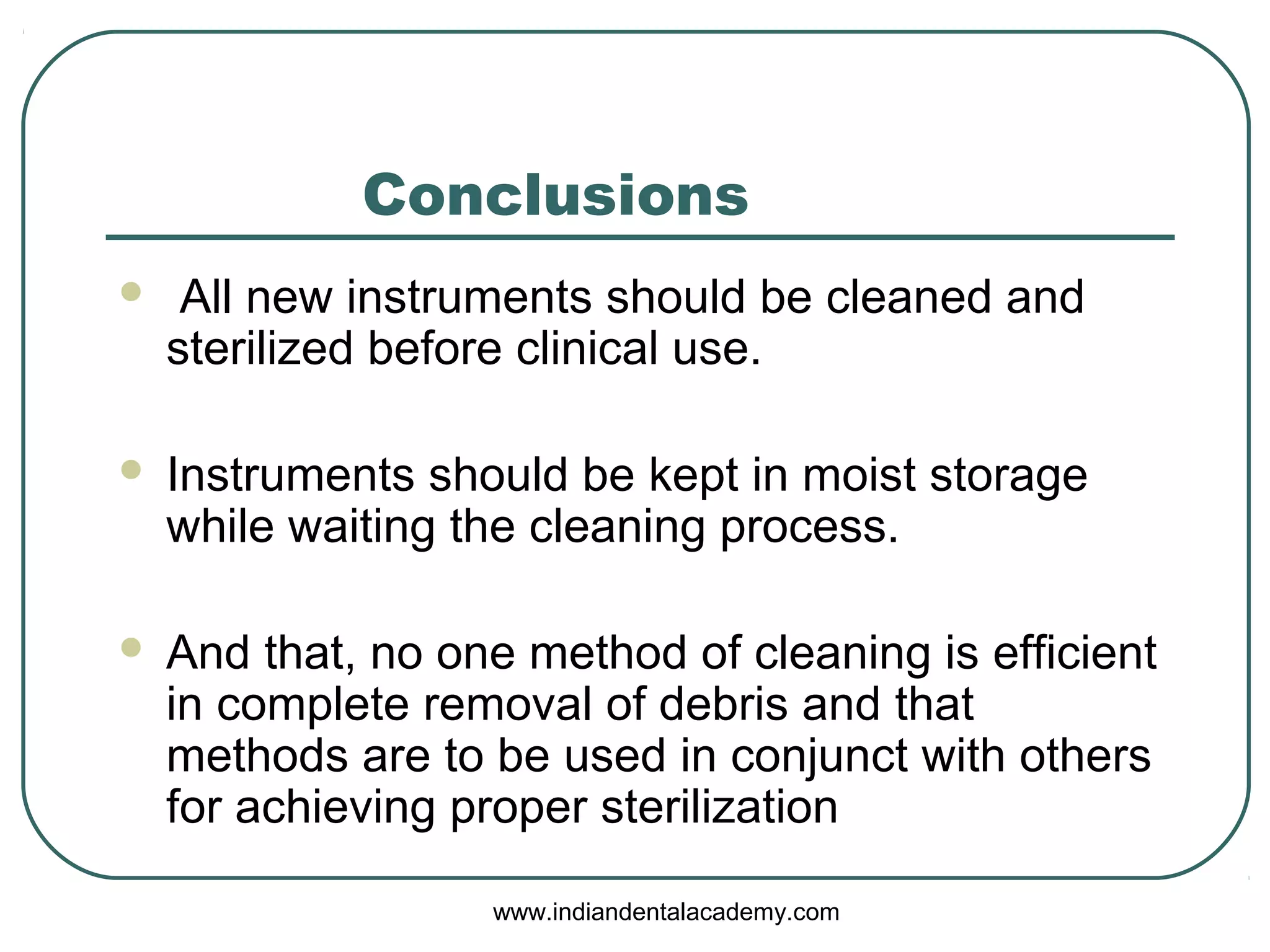
 All new instruments should be cleaned and
sterilized before clinical use.
 Instruments should be kept in moist storage
while waiting the cleaning process.
 And that, no one method of cleaning is efficient
in complete removal of debris and that
methods are to be used in conjunct with others
for achieving proper sterilization
www.indiandentalacademy.com

Cleaning of rotary ni ti endodontic instruments / dental implant courses

  • 1.
    CLEANING OF ROTARY Ni-Ti ENDODONTIC INSTRUMENTS INDIANDENTAL ACADEMY Leader in continuing Dental Education www.indiandentalacademy.com
  • 2.
  • 3.
    INTRODUCTION CROSS INFECTION ISA MAJOR ISSUE IN THE DENTAL CARE SETTING BECAUSE OF CONCERNS ABOUT TRANSMISSION OF DISEASE via THE ORAL CAVITY. www.indiandentalacademy.com
  • 4.
    www.indiandentalacademy.com www.indiandentalacademy.com Indian Dental academy •www.indiandentalacademy.com • Leader continuing dental education • Offer both online and offline dental courses
  • 5.
    AIM TO DEVELOP ANDEVALUATE AN EFFECTIVE CLEANING PROCEDURE FOR ROTARY NICKEL-TITANIUM (Ni-Ti) ENDODONTIC INSTRUMENTS www.indiandentalacademy.com
  • 6.
    Sterilization: The process thatdestroys all types and forms of microorganisms including viruses, bacteria, fungi and bacterial endospores. www.indiandentalacademy.com
  • 7.
    Disinfection: A less lethalprocess than sterilization it eliminates virtually all pathogenic vegetative microorganisms, but not necessarily all microbial forms (spores). Disinfection is usually reserved for large surfaces that cannot be sterilized. Disinfection locks the margin of safety afforded by sterilization procedures. www.indiandentalacademy.com
  • 8.
    Objectives of infection control Decrease the number of pathogenic microbes to the level where normal body resistance mechanisms can prevent infection.  Break the cycle of infection from dentist, assistant and patient and eliminate cross- contamination.  Treat all patients and instruments as though they could transmit an infectious disease.  Protect patients and personnel from infection. www.indiandentalacademy.com
  • 9.
    Route of transmissionof microorganisms in the dental field  Patient to dental team  Dental team to patient  Patient to patient  Dental office to the community www.indiandentalacademy.com
  • 10.
    Methods of sterilization The four methods of sterilization that are generally accepted in dentistry include steam under pressure, chemical vapor, dry heat sterilization and glutaraldehyde solutions. www.indiandentalacademy.com
  • 11.
    Steam under pressure– autoclaving  A temperature of 121°C, a pressure of 15lb is used for 15 to 20 minutes. Denaturation and Coagulation of microbial protein occurs during exposure to high temperature of steam under pressure. Advances in this method called “flash” sterilization technique uses shorter time with higher temperatures. There is however greater chances for sterilization errors to occur in this technique. www.indiandentalacademy.com
  • 12.
    Dry heat sterilization They use hot air to kill microorganisms. The technique requires a temperature of 160°C for 2 hours.  Recently a rapid heat transfer sterilizer was introduced operated at 190°C it will by rapid airflow sterilize unpacked instruments in 6mins and packaged instruments in 12 minutes. www.indiandentalacademy.com
  • 13.
  • 14.
    Chemical vapour sterilization  Thismethod is based on the factors of heat, water and chemical synergism. The chemicals include alcohol, acetone, ketones and formaldehydes.  The water content is below the 15% level, above which rust, corrosion and dullness of metal occur.  The temperature requirements are 132°C for 20 minutes. The composition of heat and chemicals is much kinder to metal surfaces than the other techniques. www.indiandentalacademy.com
  • 15.
    Portable unit for premisesdisinfection and sterilization with formaldehyde and ammonia neutralization. www.indiandentalacademy.com
  • 16.
    Formalin Chamber : Fordry sterilization of instruments. www.indiandentalacademy.com
  • 17.
    Glutaraldehyde as immersion chemical steriliant:  For endodontic instruments sterilization by heat is the method of choice, however the use of glutaraldehyde preparations for the chemical sterilization of heat sensitive equipment has become a widespread practice.  Glutaraldehyde kills microorganisms by altering essential protein components. www.indiandentalacademy.com
  • 18.
    A 2.5% glutaraldehydebased high-level disinfectant and cold chemical steriliant. After activation the solution has a 28 day activity and can be reused during that time. Metricide 28 has a broad spectrum activity against viruses, bacteria, molds, fungi and other vegetative organisms. www.indiandentalacademy.com
  • 19.
    Ethylene Oxide Gas(E.T.O.)  Ethylene oxide was first used as a sterilizing agent in the late 1940’s. Since then ETO has become an increasingly popular means of sterilization especially in hospitals. It has high penetration capacity. Temperature required is low i.e. 25°C.  This makes it ideal for sterilizing heat sensitive instruments. Time period required for proper sterilization varies from 10 to 16 hours. www.indiandentalacademy.com
  • 20.
    Glass bead sterilizers Chair side sterilization of endodontic files, reamers and broaches can be accomplished by using a glass bead sterilizer.  The transfer medium heats the endodontic instrument through heat connection and kills any adherent microorganisms.  At a temperature of 220°C contaminated endodontic instruments require 15 seconds to be sterilized. www.indiandentalacademy.com
  • 21.
    Glass Bead Sterilizer: Used for sterilization of instruments. In few seconds you can sterilize the instruments. www.indiandentalacademy.com
  • 22.
  • 23.
    Chemical Disinfectants  Alcohols Chlorine compounds  Glutaraldehyde  Iodophores  Phenolic compounds www.indiandentalacademy.com
  • 24.
  • 25.
    KEYWORDS  CLEANING  CLEANINGOF Ni-Ti INSTRUMENTS  CROSS-INFECTION  ENDODONTIC INSTRUMENT  NICKEL-TITANIUM. www.indiandentalacademy.com
  • 26.
    MATERIAL AND METHODS New rotary NiTi instruments ProFile Flexmaster K3 Quantec  Instruments were stored in covered Petri dishes excepts during the cleaning and scoring procedures www.indiandentalacademy.com
  • 27.
    MATERIAL AND METHODS Before the cleaning procedures, instruments were used under simulated clinical conditions to prepare canals of extracted teeth  Scoring system 1. The entire surface of the flutes of each instrument was examined at 45× www.indiandentalacademy.com
  • 28.
    MATERIAL AND METHODS 1.All instruments were immersed in Van Gieson’s solution for 3 mins to stain any biological debris 2. The instruments were rinsed using distilled water and air-dried on an endodontic stand 3. The category and extent of debris were recorded using the criteria shown in the table www.indiandentalacademy.com
  • 29.
    Scoring system fordebris on instruments Categories of debris SD (stained particulate debris) : particulate matter stained red or orange F ( organic film ) : a thin unstructured layer covering part of the instrument surface and generally stained red UD ( unstained particulate debris) : fine particles that did not exhibit any red/orange coloration after staining C : clean Extent of stained debris 0 (none) 1 (film only) 2 (slight) : scattered particles spaced widely apart on the flute sufaces 3 (moderate) : numerous particles with areas of continuous coverage of surfaces 4 (heavy) : areas of the instruments where the flutes were packed with debris to there entire depth. www.indiandentalacademy.com
  • 30.
    Evaluation of differentcleaning procedures  Baseline levels of contamination 1. 40 new instruments were stained immediately after removal from their packages 2. 20 instruments were contaminated by using them to prepare canals of extracted and then stained after dry storage overnight without any cleaning procedure 3. 20 instruments were contaminated by the same procedure , then inserted into a sponge saturated with 0.1% Cholorhexidine gluconate sol. For 2 hrs and stained in the same manner as the dry storage group www.indiandentalacademy.com
  • 31.
    Experimental groups  80instruments were used to instruments canals of extracted teeth.  All instruments were inserted into a sponge soaked in 0.1% chlorhexidine gluconate for 30 mins.  The instruments were then randomly assigned into 4 equal groups representing four different cleaning procedures www.indiandentalacademy.com
  • 32.
    Experimental groups Group 1: the instruments were placed in a stand and the flues were brushed for 20 strokes per row with a nylon bristle brush under running distilled water. Group 2 : instruments were brushed as in grp 1 and then laced in a beaker containing 1% NaOCl , soaked for 10 mins and rinsed under running distilled water. www.indiandentalacademy.com
  • 33.
    Experimental groups Group 3: without brushing the instruments were directly placed in a beaker containing 1% NaOCl for10 mins and the beaker was placed into an ultrasonic bath. Group 4 : instruments were brushed , immersed for 10 mins in 1% NaOCl , placed in the ultrasonic bath for 5 mins and rinsed www.indiandentalacademy.com
  • 34.
    Experimental groups  Afterthe cleaning procedures, instruments were air dried and immersed in Van Gieson’s solution for 3 mins, rinsed under running distilled water and air-dried on the endodontic stand.  Instruments were then scored for debris at 45× magnification. www.indiandentalacademy.com
  • 35.
    Effect of storageconditions or autoclave sterilization on cleaning effectiveness  100 instruments from previous experiments were cleaned using the complete cycle  They were reused to instrument canals of extracted teeth  They were divided into five equal groups www.indiandentalacademy.com
  • 36.
    Effect of storageconditions or autoclave sterilization on cleaning effectiveness  Group 1(dry-storage) : the instruments were bench-dried overnight  Group 2(moist-storage): the instruments were kept moist by placing them overnight in a sponge soaked in 0.1%aqueous chlorhexidine gluconate. With no additional cleaning www.indiandentalacademy.com
  • 37.
    Effect of storageconditions or autoclave sterilization on cleaning effectiveness  Group 3(dry storage, complete cleaning sequence) : the instruments were bench- dried overnight and were then transferred to the brushing stand and subjected to the complete cleaning sequence  Group 4(moist storage, complete cleaning sequence) : the instruments were inserted into a sponge soaked in 0.1% chlorhexidine gluconate solution www.indiandentalacademy.com
  • 38.
    Effect of storageconditions or autoclave sterilization on cleaning effectiveness  Group 5(autoclave sterilization group) : instruments were brushed on the instrument stand and passed through autoclave sterilization at 134ºc , 220kPa for 3 min. the instrument were then cleaned with the full cleaning protocol. All instruments were stained and scored in the same manner as before www.indiandentalacademy.com
  • 39.
    Biological risk analysis Considering each instrument as one unit, the instrument was classified as either positive (stained debris or film present) or negative (unstained debris only or clean) ‘biological risk’  The presence of stained material in any location of the instrument was considered to constitute a biological risk. www.indiandentalacademy.com
  • 40.
  • 41.
    n number mean% SE clean of MBC New instruments (N) 40 38 0.6 0.1 Dry storage (D) 20 0 52 0.9 Moist storage (M) 20 0 31 0.4 Baseline extent of biological contamination www.indiandentalacademy.com
  • 42.
    n no. Mean% SE clean of MBC Baseline (moist sponge) 20 0 31.0 0.4 Brushing only (B) 20 0 15.0 0.4 Brushing plus NaOCl Soak (BN) 20 15 4.2 0.4 NaOCl soak + ultrasonic (NU) 20 16 3.0 0.3 Brushing, NaOCl + ultrasonic (BNU) 20 20 0.0 0.0 Effect of cleaning procedures on the extent of biological contamination of instruments www.indiandentalacademy.com
  • 43.
    n number mean% SE cleanof MBC Autoclaving (A) 20 0 17.0 0.5 Dry storage (D) 20 11 6.2 0.4 Moist sponge (M) 20 20 0.0 0.0 Effect of storage on the effectiveness of cleaning www.indiandentalacademy.com
  • 44.
    Review of literature Miller C. et. al. 2002 conducted a study on preparing instruments for sterilization and concluded that moist storage after clinical use is essential for a proper sterilization  Martins et. al. 2002 conducted a study on surface analysis of ProFile instruments by SEM and reported that adherent deposits containing carbon and sulphur, which originate from lubricating oils used during manufacture serve as sites for subsequent accumulation of debris during clinical use. www.indiandentalacademy.com
  • 45.
    Review of literature Moorer & Wesselink 1982 conducted a study on the factors promoting the tissue dissolving capability of sodium hypochlorite and concluded that it’s tissue dissolving ability does not depend only on it’s concentration but also increased with mechanical agitation.  Tanomaru Filho et. al. 2001 recommended the use of the ultrasonic bath as the most effective method to remove foreign particles from the surface of the instruments. www.indiandentalacademy.com
  • 46.
    Conclusions  All newinstruments should be cleaned and sterilized before clinical use.  Instruments should be kept in moist storage while waiting the cleaning process.  And that, no one method of cleaning is efficient in complete removal of debris and that methods are to be used in conjunct with others for achieving proper sterilization www.indiandentalacademy.com
  • 47.