Rubber dam isolationBy Amin Abusallamah
ADVANTAGESComplete isolation of the teeth from saliva, blood, or gingival fluid exudate is possible. (esp. required for bonded restorations)Aids isolation from bacteria in saliva.Also indicated when infection for the rest of the mouth must be excluded, for example in direct and indirect pulp capping and endodontic treatment.
Cont ….protects the patient from swallowing or inhaling instrumentsprotects the dentist from infection from the patienthas the effect of psychologically, as well as physically, separating the dentist from the patient (patients are more relaxed)
DISADVANTAGESThe patient can no longer speak easily. Conversations thus become one-sided and cease.A few patients dislike the rubber dam intensely, feeling claustrophobic when it is in position.
Cont ….dam takes time to apply and remove, although the more experienced the dentist is in its use, the less time is taken.
The rubber is held on posterior teeth with clamps, and a tooth which has been clamped may be sensitive for some hours after the clamp has been removed.Guidelines for ApplicationFor incisors isolate from canine to canine. (no clamp required)For canines isolate from 1st premolar to 1st premolar. (variation)For posterior teeth include two teeth distal to the working tooth and teeth up to opposing lateral incisor.Minimum isolation should include at least three teeth, one distal and one mesial to the working tooth.
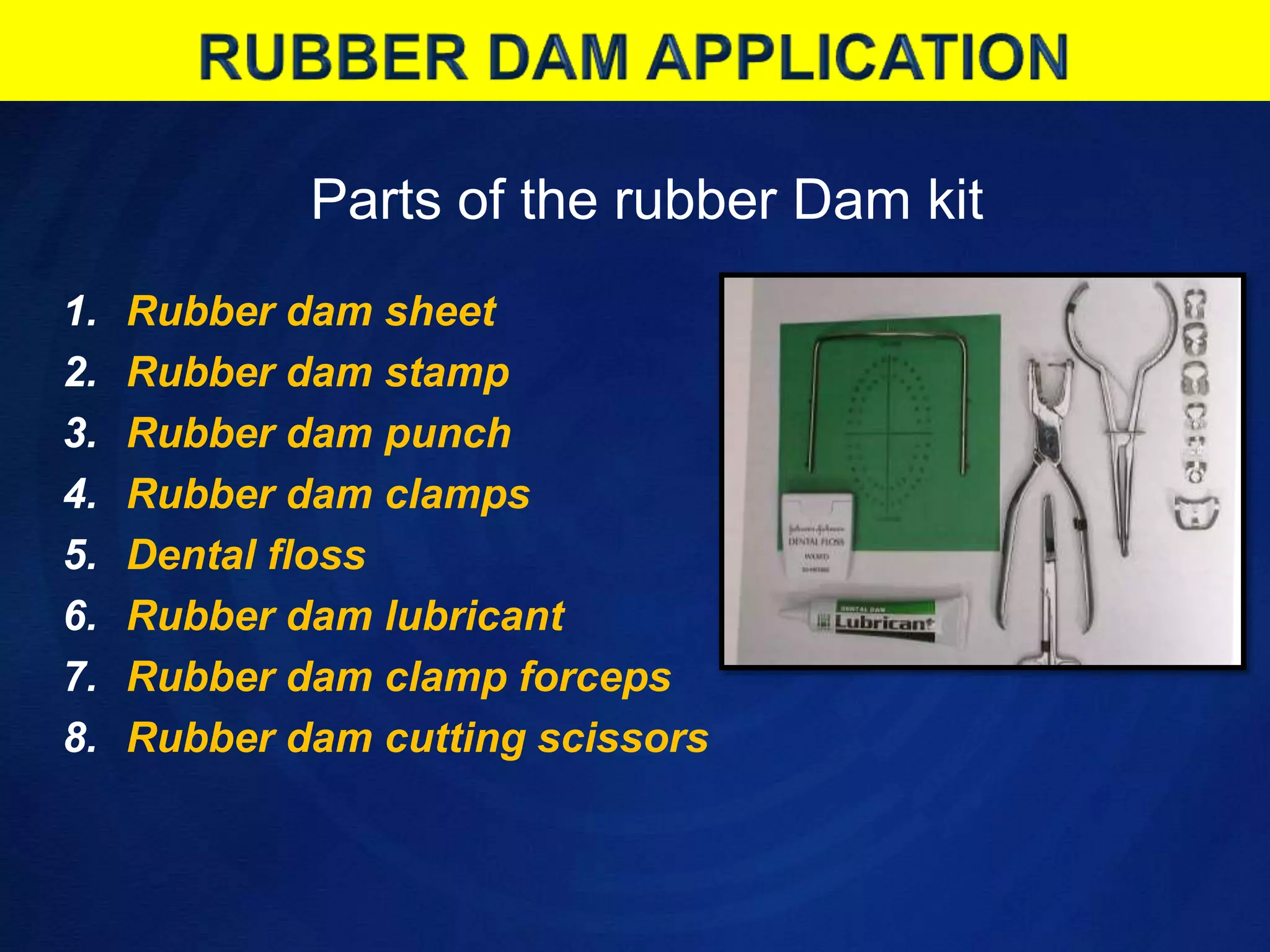
RUBBER DAM APPLICATIONParts of the rubber Dam kitRubber dam sheetRubber dam stampRubber dam punchRubber dam clampsDental flossRubber dam lubricantRubber dam clamp forcepsRubber dam cutting scissors
WHEN TO APPLY THE DAMIDEALLY BEFORE STARTING THE CAVITY
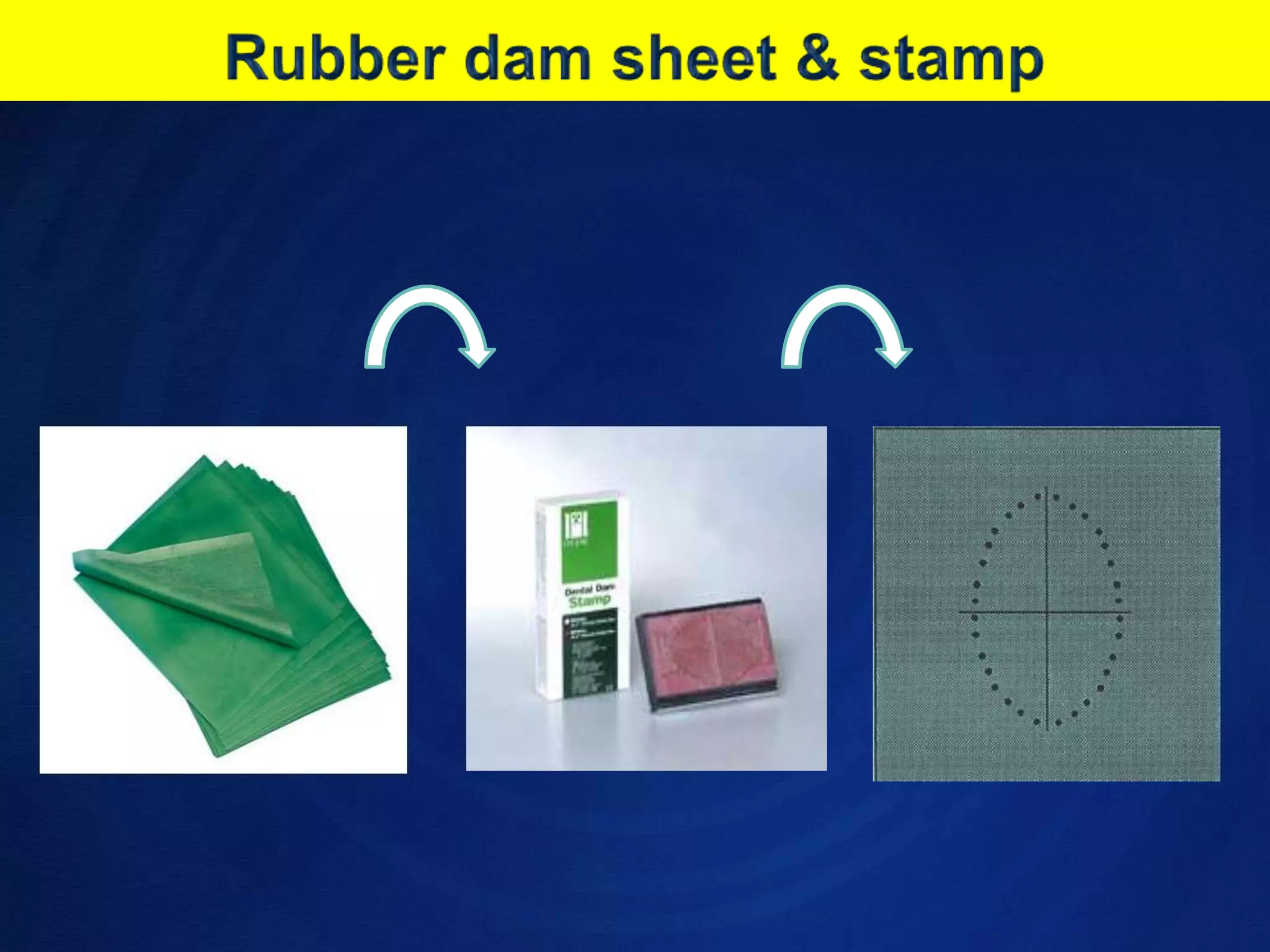
Rubber dam sheet &stamp
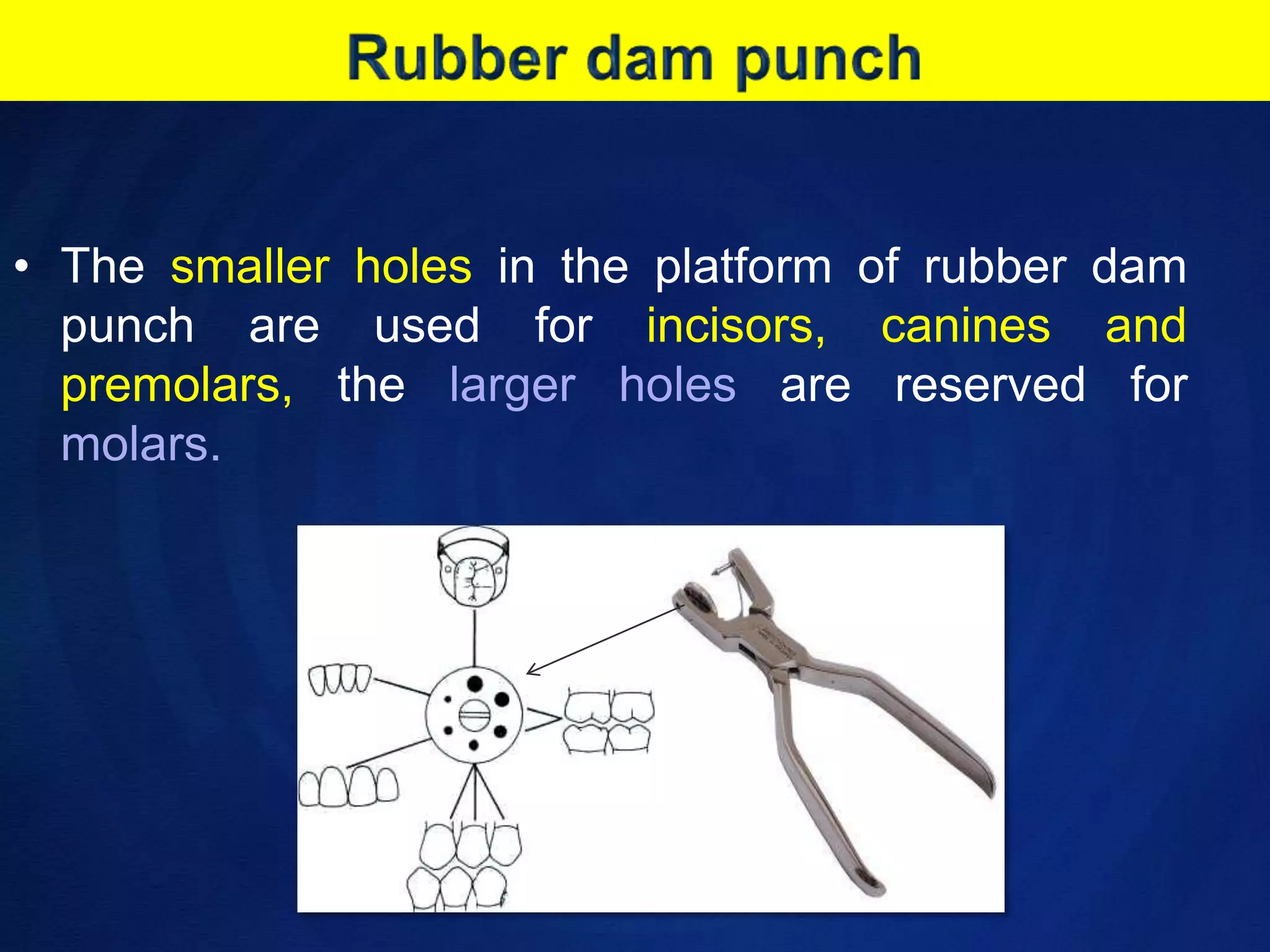
Rubber dam punchThe smaller holes in the platform of rubber dam punch are used for incisors, canines and premolars, the larger holes are reserved for molars.
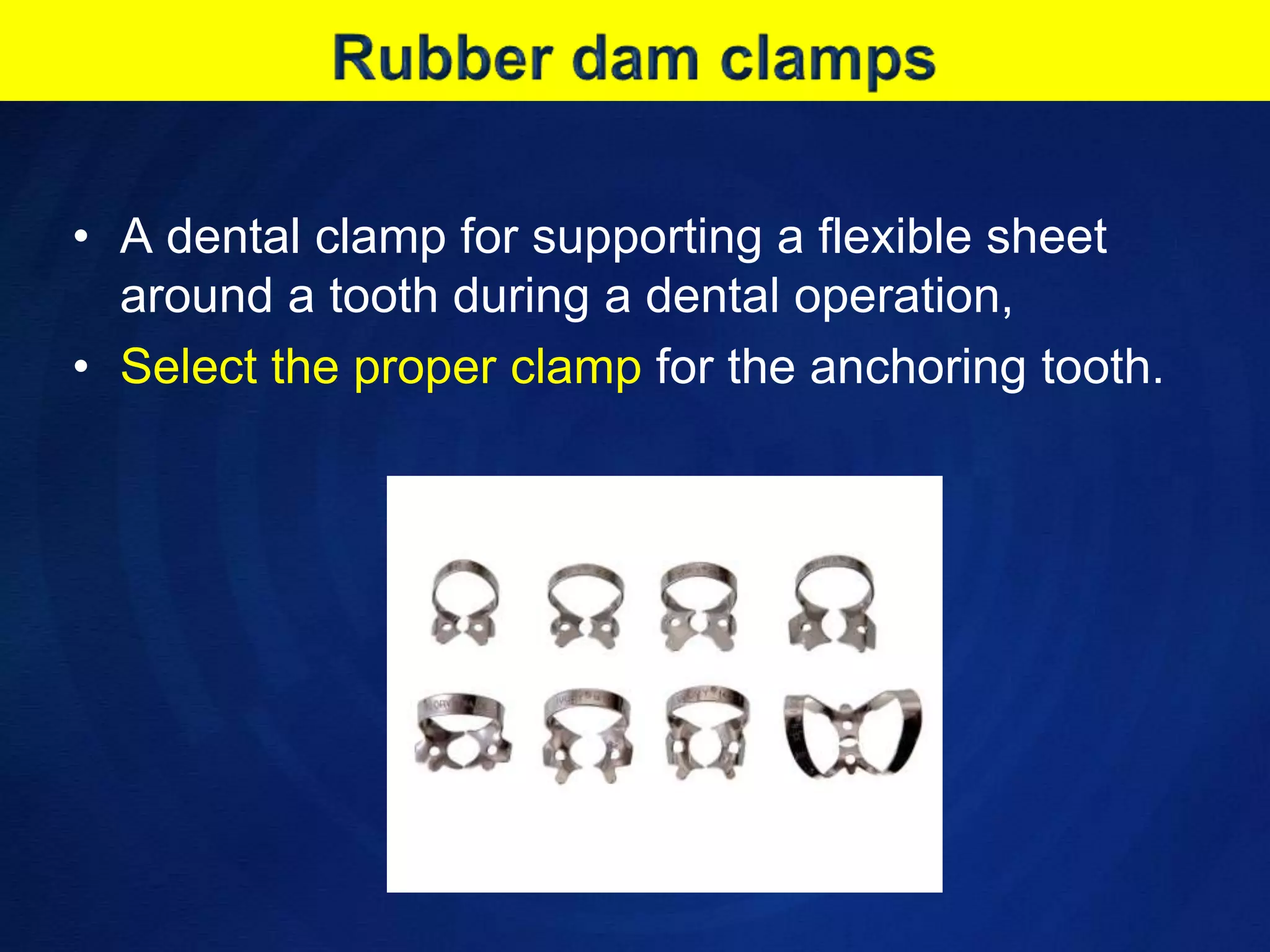
Rubber dam clampsA dental clamp for supporting a flexible sheet around a tooth during a dental operation,Select the proper clamp for the anchoring tooth. 
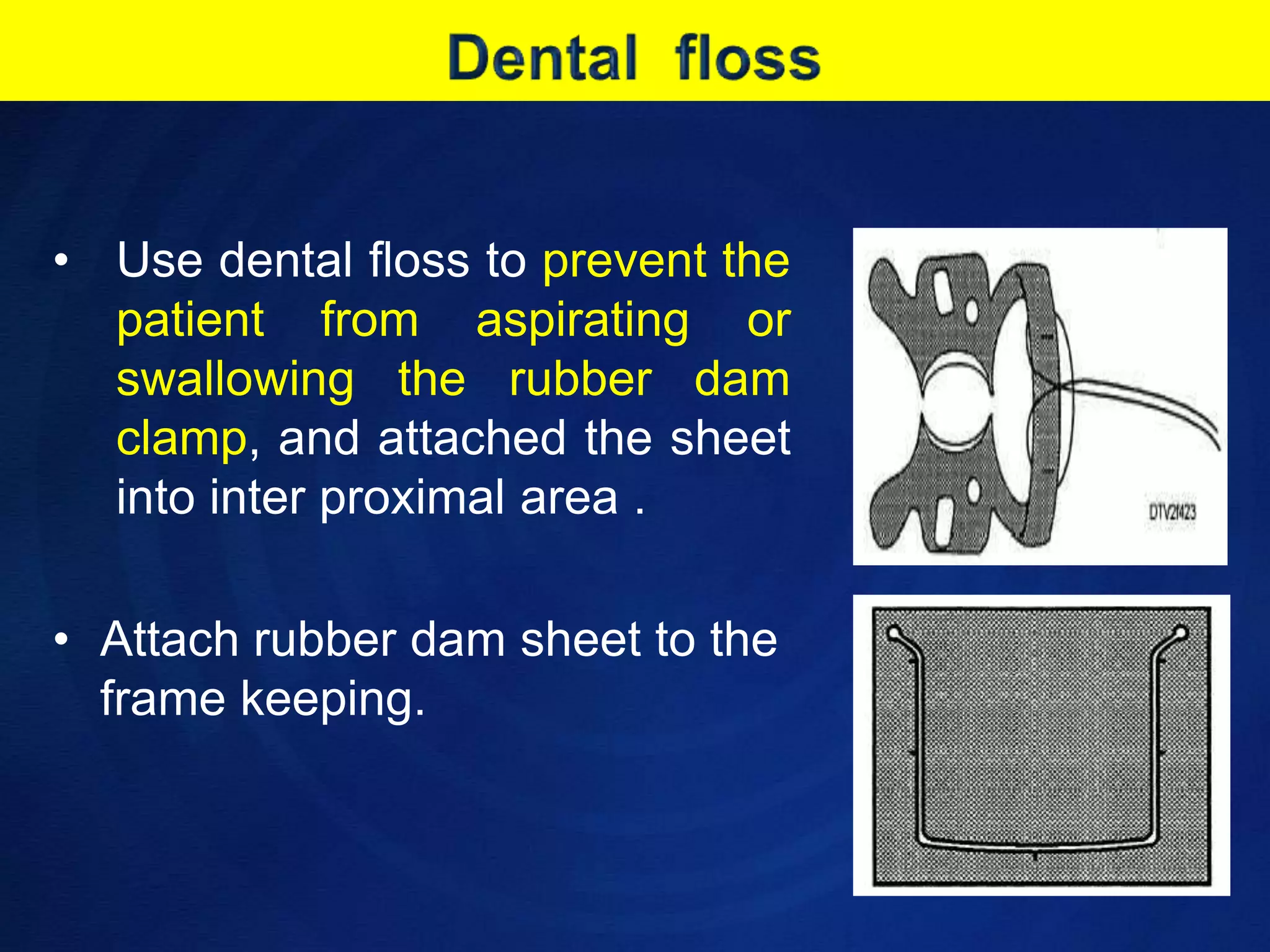
Dental  flossUse dental floss to prevent the patient from aspirating or swallowing the rubber dam clamp, and attached the sheet into inter proximal area .Attach rubber dam sheet to the frame keeping.
Rubber dam lubricantLightly apply the water-based lubricant around the punched holes on the under surface of the dam.Pass both wings of the anchoring clamp through anchor hole of rubber dam sheet.
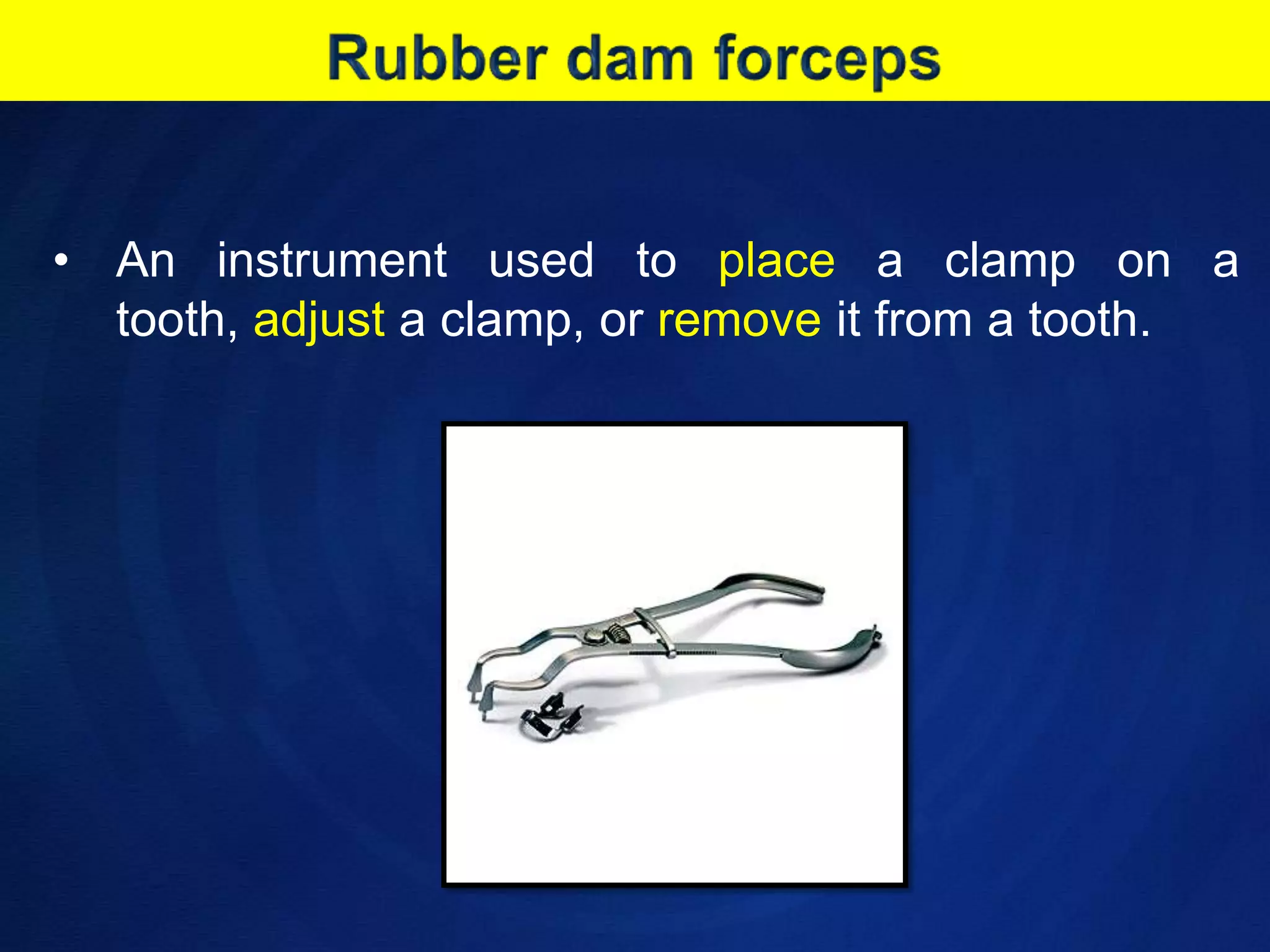
Rubber dam forceps An instrument used to place a clamp on a tooth, adjust a clamp, or remove it from a tooth.
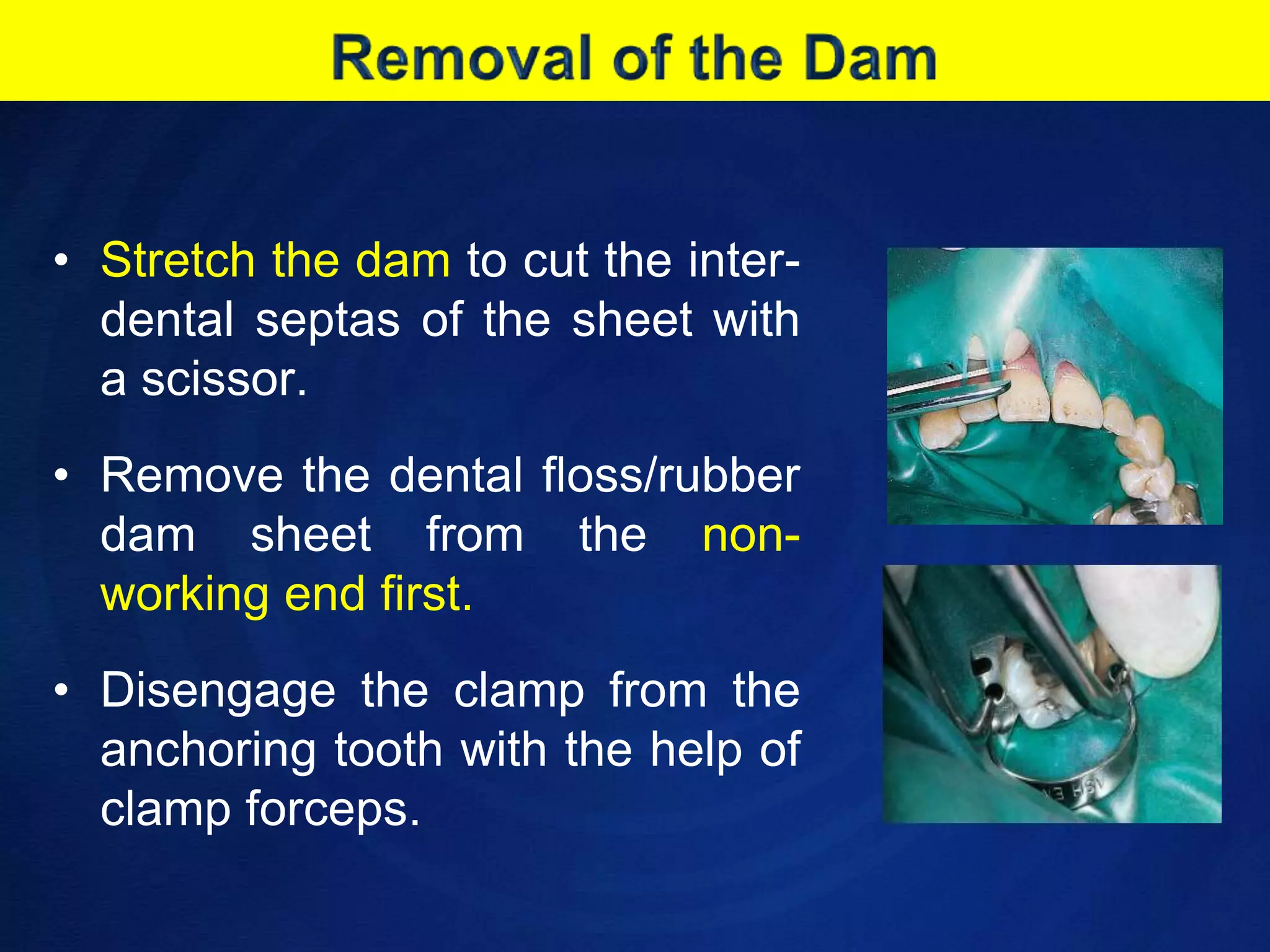
Removal of the DamStretch the dam to cut the inter-dental septas of the sheet with a scissor.Remove the dental floss/rubber dam sheet from the non-working end first.Disengage the clamp from the anchoring tooth with the help of clamp forceps.
THANKYOUReference : Art and science of operative dentistry 2000

Rubber dam isloation

  • 1.
    Rubber dam isolationByAmin Abusallamah
  • 2.
    ADVANTAGESComplete isolation ofthe teeth from saliva, blood, or gingival fluid exudate is possible. (esp. required for bonded restorations)Aids isolation from bacteria in saliva.Also indicated when infection for the rest of the mouth must be excluded, for example in direct and indirect pulp capping and endodontic treatment.
  • 3.
    Cont ….protects thepatient from swallowing or inhaling instrumentsprotects the dentist from infection from the patienthas the effect of psychologically, as well as physically, separating the dentist from the patient (patients are more relaxed)
  • 4.
    DISADVANTAGESThe patient canno longer speak easily. Conversations thus become one-sided and cease.A few patients dislike the rubber dam intensely, feeling claustrophobic when it is in position.
  • 5.
    Cont ….dam takestime to apply and remove, although the more experienced the dentist is in its use, the less time is taken.
  • 6.
    The rubber isheld on posterior teeth with clamps, and a tooth which has been clamped may be sensitive for some hours after the clamp has been removed.Guidelines for ApplicationFor incisors isolate from canine to canine. (no clamp required)For canines isolate from 1st premolar to 1st premolar. (variation)For posterior teeth include two teeth distal to the working tooth and teeth up to opposing lateral incisor.Minimum isolation should include at least three teeth, one distal and one mesial to the working tooth.
  • 7.
    RUBBER DAM APPLICATIONPartsof the rubber Dam kitRubber dam sheetRubber dam stampRubber dam punchRubber dam clampsDental flossRubber dam lubricantRubber dam clamp forcepsRubber dam cutting scissors
  • 8.
    WHEN TO APPLYTHE DAMIDEALLY BEFORE STARTING THE CAVITY
  • 9.
  • 10.
    Rubber dam punchThesmaller holes in the platform of rubber dam punch are used for incisors, canines and premolars, the larger holes are reserved for molars.
  • 11.
    Rubber dam clampsAdental clamp for supporting a flexible sheet around a tooth during a dental operation,Select the proper clamp for the anchoring tooth. 
  • 12.
    Dental flossUsedental floss to prevent the patient from aspirating or swallowing the rubber dam clamp, and attached the sheet into inter proximal area .Attach rubber dam sheet to the frame keeping.
  • 13.
    Rubber dam lubricantLightlyapply the water-based lubricant around the punched holes on the under surface of the dam.Pass both wings of the anchoring clamp through anchor hole of rubber dam sheet.
  • 14.
    Rubber dam forcepsAn instrument used to place a clamp on a tooth, adjust a clamp, or remove it from a tooth.
  • 15.
    Removal of theDamStretch the dam to cut the inter-dental septas of the sheet with a scissor.Remove the dental floss/rubber dam sheet from the non-working end first.Disengage the clamp from the anchoring tooth with the help of clamp forceps.
  • 16.
    THANKYOUReference : Artand science of operative dentistry 2000