Cleaning ,Disinfection ,and
Sterilization
Cleaning
3/31/20192
 A form of decontamination by
removing organic matter, salts, and
visible soils
Physical action of scrubbing with
detergents or surfactants and rinsing
with water
Necessary step prior to sterilization or
disinfection
Prof Dr Muhammad Tauseef Jawaid
How can microorganisms
be killed?
3/31/20193
 Denaturation of proteins (e.g. wet heat,
ethylene oxide)
 Oxidation (e.g. dry heat, hydrogen peroxide)
 Filtration
 Interruption of DNA synthesis/repair (e.g.
radiation)
 Interference with protein synthesis (e.g.
bleach)
 Disruption of cell membranes (e.g. phenols)Prof Dr Muhammad Tauseef Jawaid
Disinfection
3/31/20194
Disinfection is done to
eliminate as many
microorganisms from an item
or from the environment as
possible, but does not
eliminate spores. Disinfection
is used when items cannot or
needn’t be sterilized or in
situations where no method ofProf Dr Muhammad Tauseef Jawaid
Disinfection
3/31/20195
“Spaulding’s* three levels of disinfection:
 High-level
 Intermediate-level
 Low-level
*for treatment of devices and surfaces that do
not require sterility for safe use
Prof Dr Muhammad Tauseef Jawaid
The effects types of disinfectants
3/31/20196
Effects level Disinfectants
examples
High level Ethylene oxide,
peracetic
acid ,kinds of
aldehyde
Intermediate-level Kinds of alcohol,
kinds of iodine,
chloric
disinfectants
Low level Chlorhexidine,
phenolic
disinfectants
Prof Dr Muhammad Tauseef Jawaid
High-level Disinfection
3/31/20197
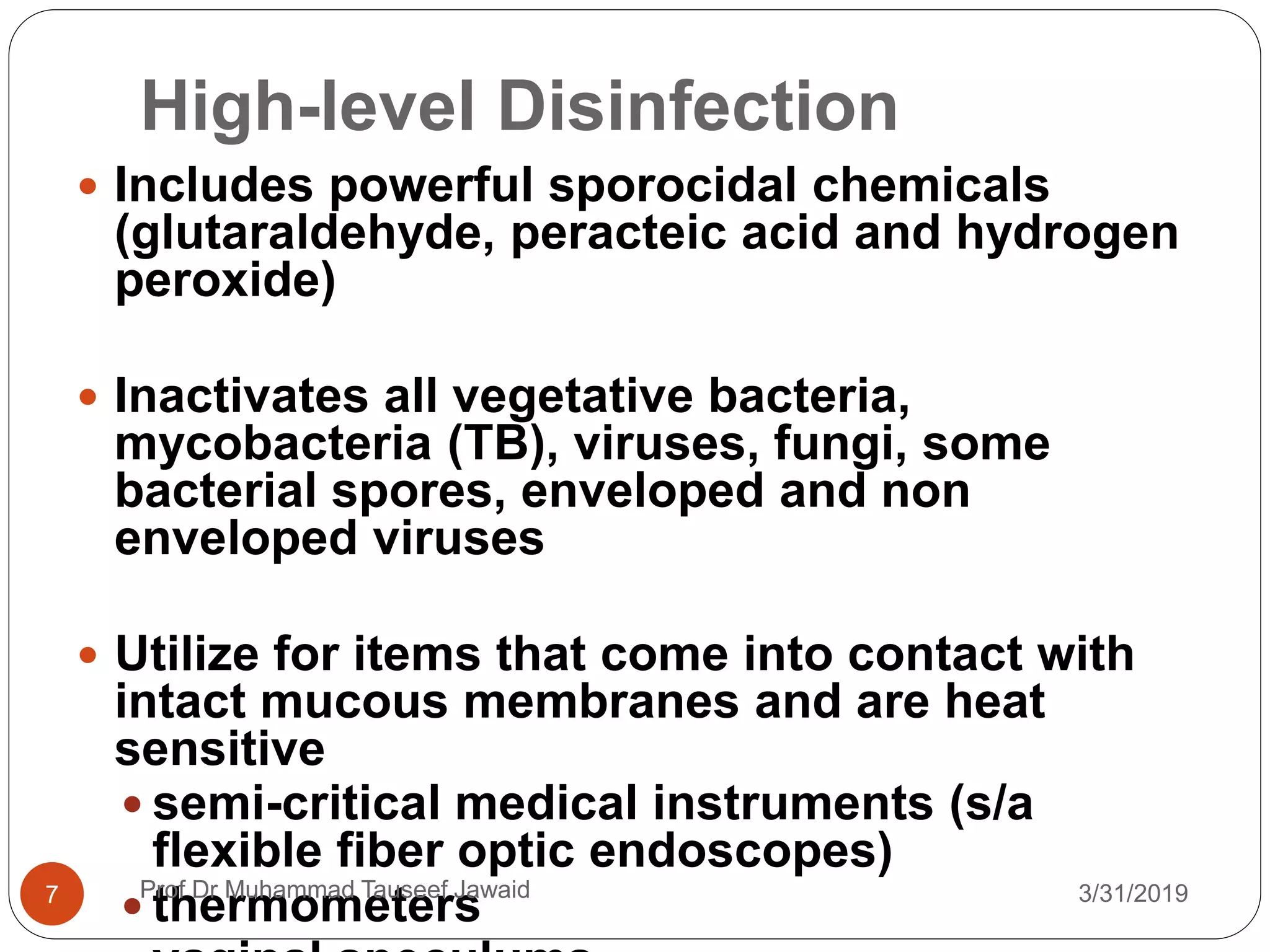
 Includes powerful sporocidal chemicals
(glutaraldehyde, peracteic acid and hydrogen
peroxide)
 Inactivates all vegetative bacteria,
mycobacteria (TB), viruses, fungi, some
bacterial spores, enveloped and non
enveloped viruses
 Utilize for items that come into contact with
intact mucous membranes and are heat
sensitive
 semi-critical medical instruments (s/a
flexible fiber optic endoscopes)
 thermometersProf Dr Muhammad Tauseef Jawaid
Intermediate-level Disinfection
 Includes Chlorine-containing compounds,
alcohols (small surfaces), some phenolics,
and some iodophors
 Inactivates a highly resistant organisms
and exhibits some sporcidal activity
 Utilize for non-critical medical equipment
s/a stethoscopes, blood pressure cuffs,
dialysis machines, equipment knobs and
controls.
3/31/20198 Prof Dr Muhammad Tauseef Jawaid
Low-level Disinfection
3/31/20199
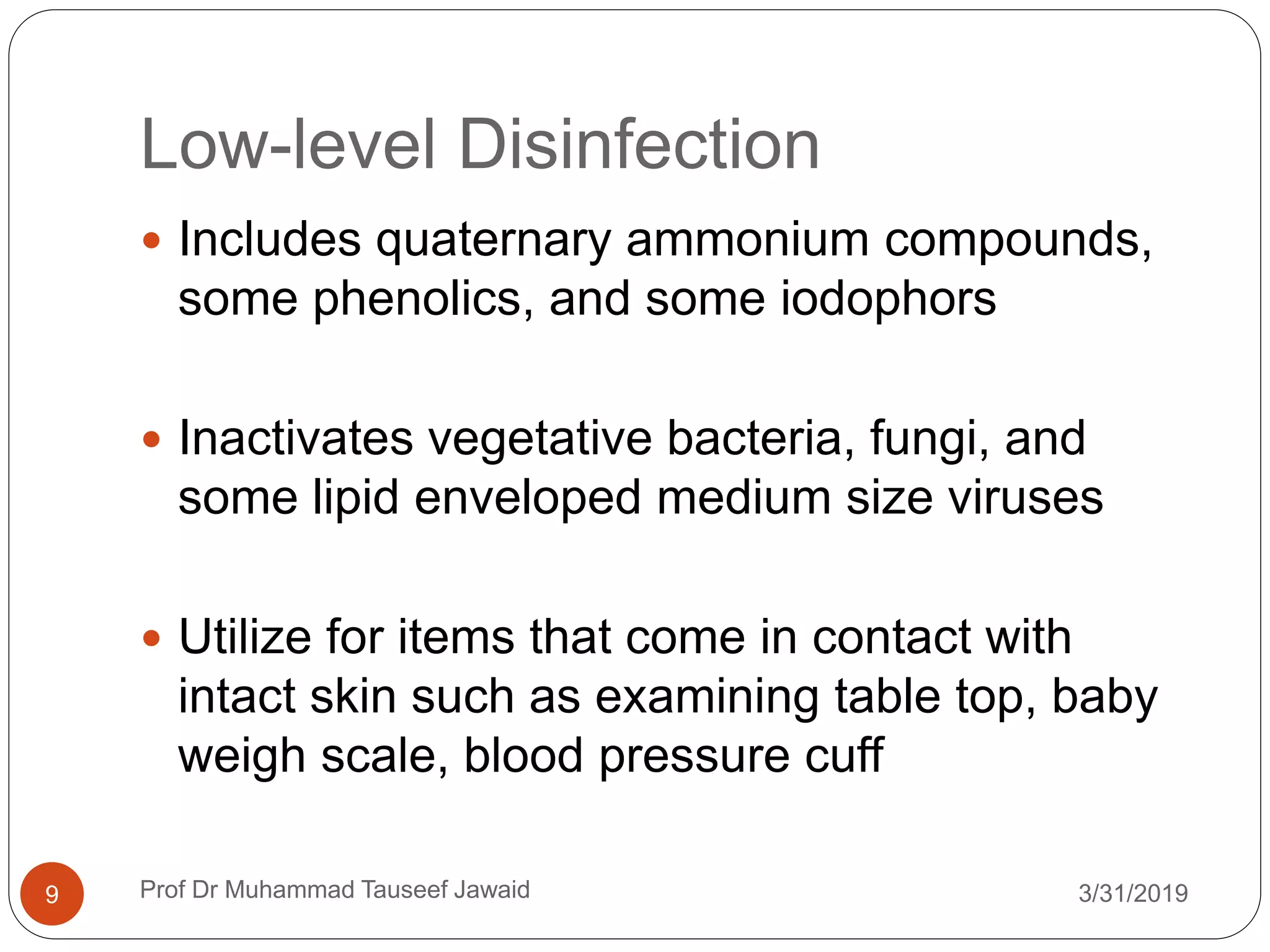
 Includes quaternary ammonium compounds,
some phenolics, and some iodophors
 Inactivates vegetative bacteria, fungi, and
some lipid enveloped medium size viruses
 Utilize for items that come in contact with
intact skin such as examining table top, baby
weigh scale, blood pressure cuff
Prof Dr Muhammad Tauseef Jawaid
Hand Hygiene
3/31/201910
 Avoid artificial nails and keep natural nails
< ¼ in
 For visibly soiled hands use soap and
water
 Use alcohol-based handrubs
 Before and after each patient
 Before and after glove use
 Improved hand hygiene adherence has:
 Terminated outbreaks in health care
facilities
 ↓ transmission of AR organismsProf Dr Muhammad Tauseef Jawaid
Sterilization
3/31/201911
Sterilization is the process
by which all
microorganisms, including
spores, are destroyed
Prof Dr Muhammad Tauseef Jawaid
METHODS
3/31/201912
Physical methods of
disinfection and sterilization
Chemical methods of
disinfection and sterilization
Prof Dr Muhammad Tauseef Jawaid
Physical Methods of Microbial Control
3/31/201913
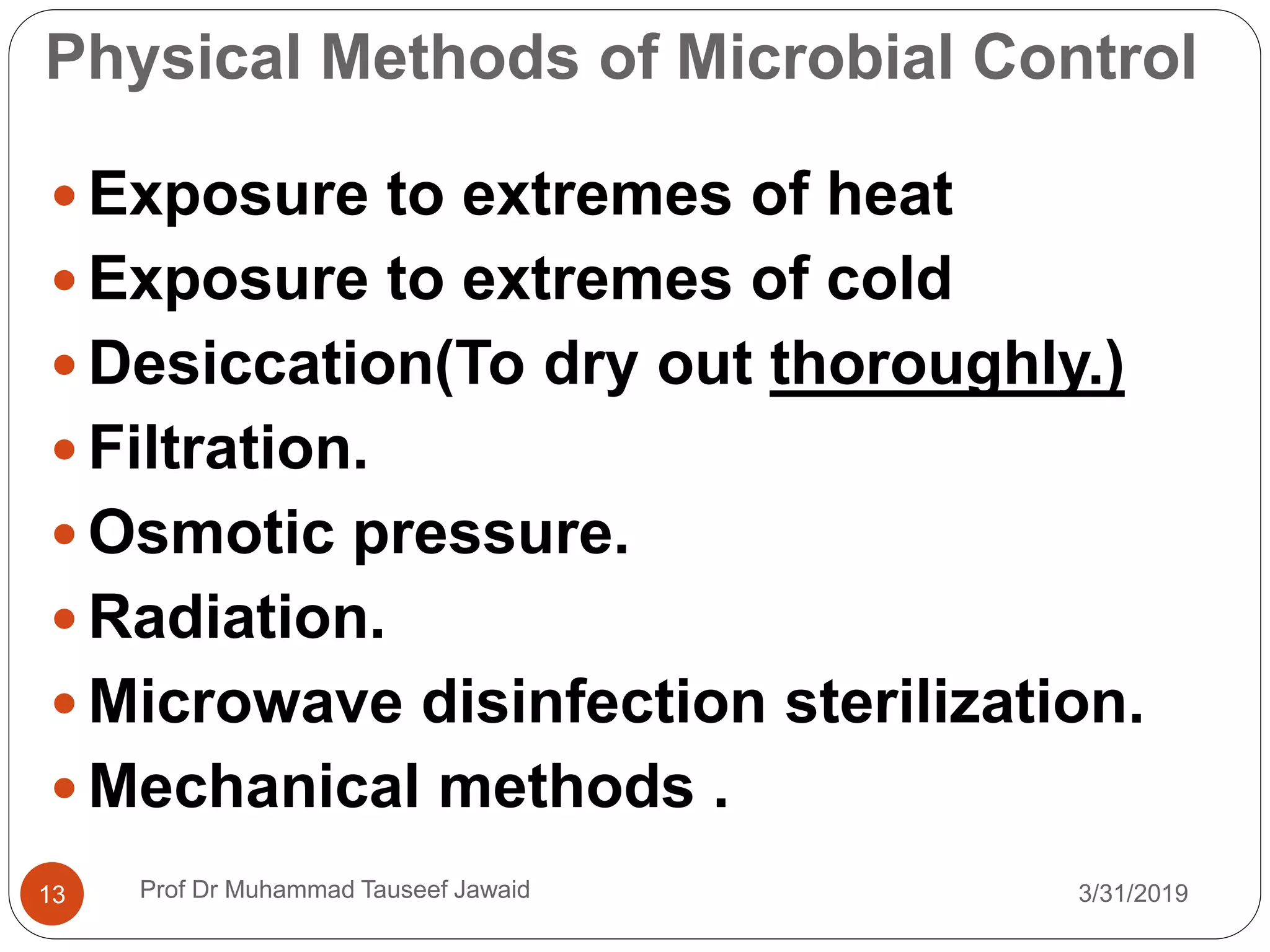
 Exposure to extremes of heat
 Exposure to extremes of cold
 Desiccation(To dry out thoroughly.)
 Filtration.
 Osmotic pressure.
 Radiation.
 Microwave disinfection sterilization.
 Mechanical methods .
Prof Dr Muhammad Tauseef Jawaid
Heat-Related Methods
3/31/201914
 Effects of high temperatures
 Denaturation of proteins
 Interference with integrity of cytoplasmic
membrane and cell walls
 Disruption of structure and function of nucleic
acids
 Thermal death point – lowest temperature that
kills all cells in broth in 10 minutes
 Thermal death time – time to sterilize volume of
liquid at set temperature
Prof Dr Muhammad Tauseef Jawaid
Moist Heat
3/31/201915
 Used to disinfect, sanitize, and sterilize
 Kills by denaturing proteins and destroying
cytoplasmic membranes
 More effective than dry heat; water better
conductor of heat than air. Moist heat is also more
penetrating than dry heat
 Methods of microbial control using moist heat
 Boiling
 Autoclaving
 Pasteurization
 Ultrahigh-Temperature Sterilization
Prof Dr Muhammad Tauseef Jawaid
Boiling
3/31/201916
 Kills vegetative cells of bacteria and fungi,
protozoan trophozoites, and most viruses within 10
minutes at sea level
 Temperature cannot exceed 100ºC at sea level;
steam carries some heat away
 Boiling time is critical
 Water boils at lower temperatures at higher
elevations; requires longer boiling time
 Endospores, protozoan cysts, and some viruses
can survive boiling
Prof Dr Muhammad Tauseef Jawaid
Autoclaving
3/31/201917
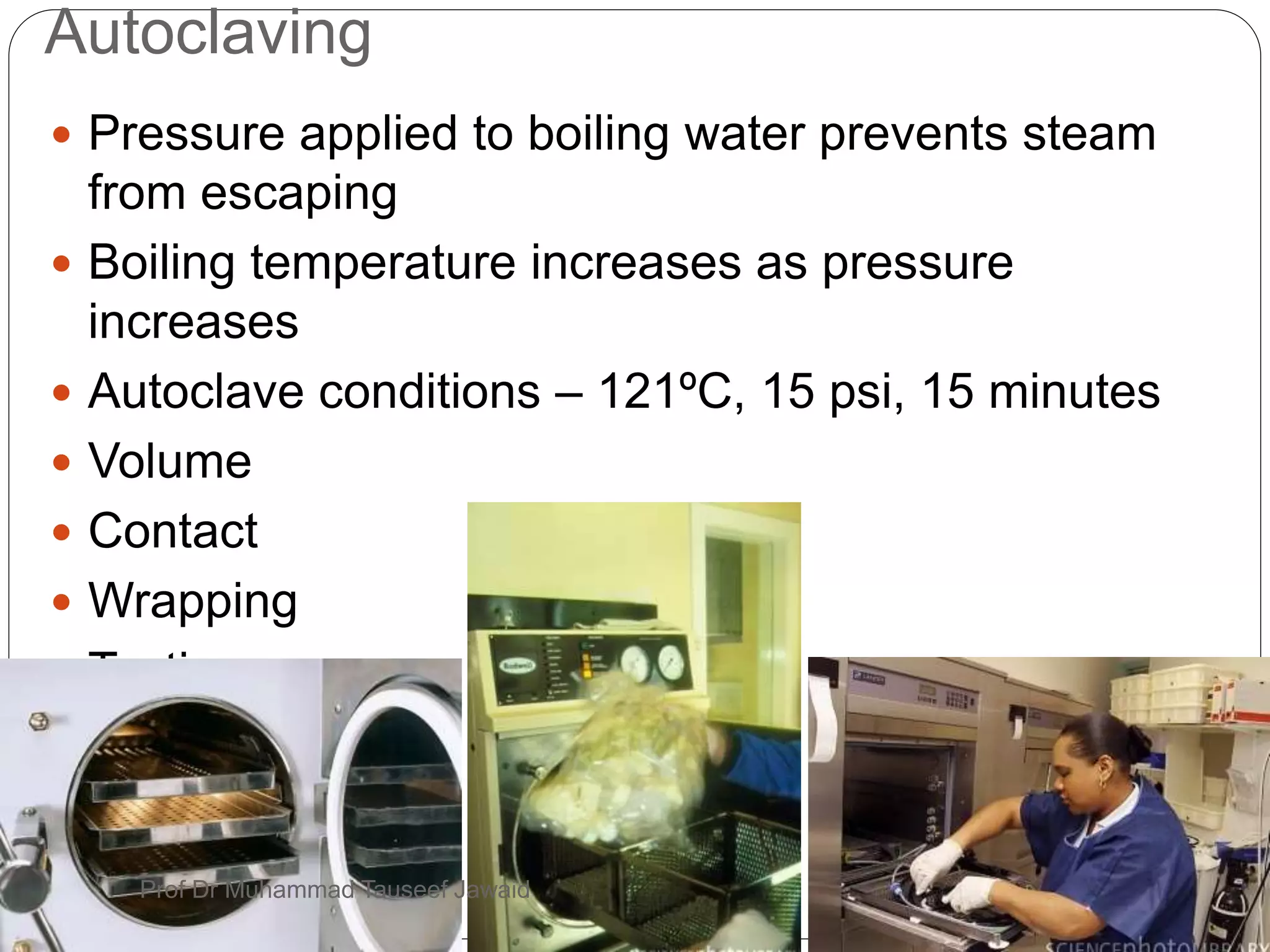
 Pressure applied to boiling water prevents steam
from escaping
 Boiling temperature increases as pressure
increases
 Autoclave conditions – 121ºC, 15 psi, 15 minutes
 Volume
 Contact
 Wrapping
 Testing
Prof Dr Muhammad Tauseef Jawaid
Dry heat
3/31/201918
 Burning
 Hot air drying
Prof Dr Muhammad Tauseef Jawaid
burning method(incineration)
3/31/201919
 Character
Simple,fast,thorough
 Used for
contaminated wastes, Pathologic
specimens,dressings and paper with purulent
secretions,patients’corpses
 Method
directly burn or burn in incinerator
Prof Dr Muhammad Tauseef Jawaid
Hot air drying
3/31/201920
 Make use of the specially made hot air drying oven to
sterilize, the heat power spread and penetration
depends on the air convection and medium
conduction, and the effect of this method is reliable
 Suitable for
the articles that do not change in character ,do not
damage and do not evaporate under high
temperature.
For example: oil, powder ,glass products and metal
products,etc.
Not suitable for
Fiber products, plastics productsProf Dr Muhammad Tauseef Jawaid
Illumination disinfection(radiation
sterilization)
3/31/201921
 Make use of the
ultraviolet rays
to photolyze
and
denaturalize the
bacteria’s
protein and lead
the bacteria’s
 Insolation under
the sun
 Ultraviolet lamp
disinfection
 Ozone lamp
Prof Dr Muhammad Tauseef Jawaid
Insolation under the sun
3/31/201922
Commonly used for mattress,
carpet,clothes,books.
Method:insolate the articles
directly under the sun for 6
hours, and turn over the articles
periodically to make each side
of the articles exposure to the
sun
Prof Dr Muhammad Tauseef Jawaid
Ultraviolet lamp disinfection
3/31/201923
C wave,
wavelength:200~275nm, the
most effective:250~270nm
Ultraviolet rays can kill
bacillus, virus fungus,
bacterial vegetative form,
spores.
Prof Dr Muhammad Tauseef Jawaid
Ozone lamp
3/31/201924
 This method can be used to kill
bacterial vegetative form, virus,
spores, fungus and destroy botulin
Mainly used to air disinfection,
hospital dirt water disinfection and
articles surfaces disinfection
Prof Dr Muhammad Tauseef Jawaid
Chemical Disinfection
Sterilization
3/31/201925
The chemicals used for
disinfection are called as
disinfectants. The effects of
some disinfectants are enough
strong to sterilize, these
disinfectants are also called as
sterilants.Prof Dr Muhammad Tauseef Jawaid
Chemical disinfectants use
principles
3/31/201926
 Select the proper disinfectants according to the
types of the objects to be disinfected and the
characters of the microorganisms to be killed
 Strictly control the effective concentration of the
disinfectants and the disinfection time , the use
methods
 The disinfectants should be changed
periodically, the disinfectants which vaporize
easily should be covered and examine and
regulate its concentration
Prof Dr Muhammad Tauseef Jawaid
Chemical disinfectants use
principles
3/31/201927
 The objects must be cleaned and dried
beforehand
 There should not be the gauzes, cotton and
so on in the disinfectant solutions, for these
kinds of objects can absorb the disinfectants
so that the effect of the disinfectants can be
weakened.
 The objects after being disinfected must be
rinsed with physiological saline() before use to
protect body tissues from the disinfectants’
irritatingProf Dr Muhammad Tauseef Jawaid
use methods of chemical
disinfectants
3/31/201928
Immersion:
Firstly, clean the articles to be disinfected, secondly,
dry the articles, then, immerse the articles into the
disinfectant solution..
Immersion time and the concentration of the
solution should be according to the provision.
Prof Dr Muhammad Tauseef Jawaid
use methods of chemical
disinfectants
3/31/201929
Rubbing:
Which is the method to use the chemical
disinfectants to rub the surfaces of the
contaminated articles or the method to disinfect
the skin.
e.g:using iodophor of 0.5%~1.0% to disinfect skin;
using chloric disinfectants to rub the walls and the
floors.
Prof Dr Muhammad Tauseef Jawaid
use methods of chemical
disinfectants
3/31/201930
Nebulization
The method is that using a nebulizer spray the
chemical disinfectants evenly on the surfaces of
articles or the air.
The method is commonly used for the disinfection
of floors, walls, and environment, etc.
Attention to wet the articles’ surfaces well when one
spray.
Prof Dr Muhammad Tauseef Jawaid
use methods of chemical
disinfectants
3/31/201931
Fumigation
The method means creating air to disinfect
through heating a disinfectant or add oxidants
into it.
The method is commonly used for disinfection
of space, e.g: the space of operation rooms,
dressing rooms and wards.
And in the closed containers this method can
also be used to disinfect the contaminated
articles.
The formaldehyde gas and ethylene oxide gas
Prof Dr Muhammad Tauseef Jawaid
Chemical Methods of Microbial Control
3/31/201932
 Major Categories
 Phenols
 Alcohols
 Halogens
 Oxidizing agents
 Surfactants
 Heavy Metals
 Aldehydes
 Gaseous Agents
 Antimicrobics
Prof Dr Muhammad Tauseef Jawaid
Factors that influence efficacy of
disinfection/sterilization
3/31/201933
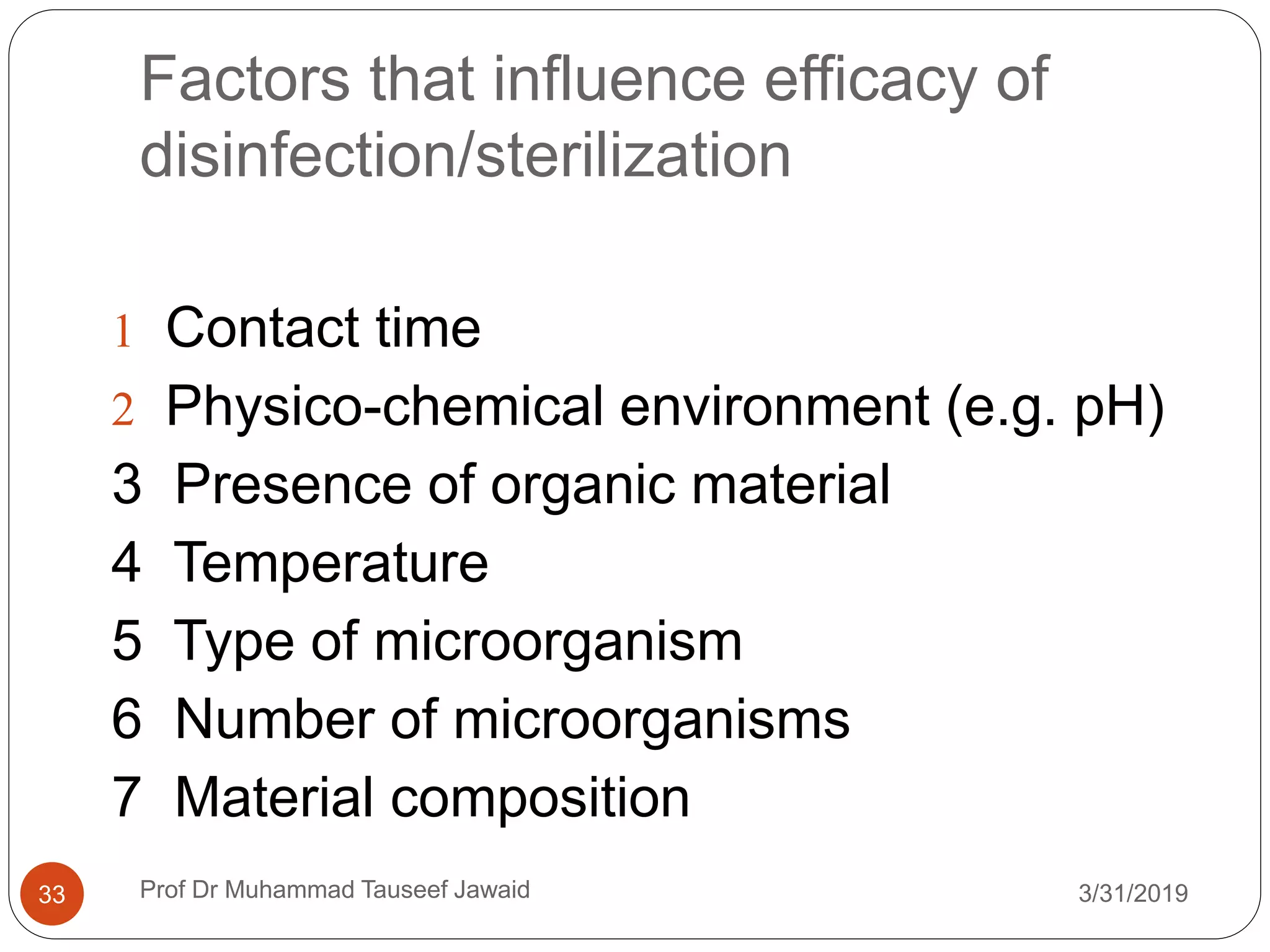
 Contact time
 Physico-chemical environment (e.g. pH)
3 Presence of organic material
4 Temperature
5 Type of microorganism
6 Number of microorganisms
7 Material composition
Prof Dr Muhammad Tauseef Jawaid
Ideal sterilization/disinfection process
3/31/201934
 Highly efficacious
 Fast
 Good penetrability
 Compatible with all materials
 Non-toxic
 Effective despite presence of organic
material
 Difficult to make significant mistakes in
process
 Easily monitored
Prof Dr Muhammad Tauseef Jawaid
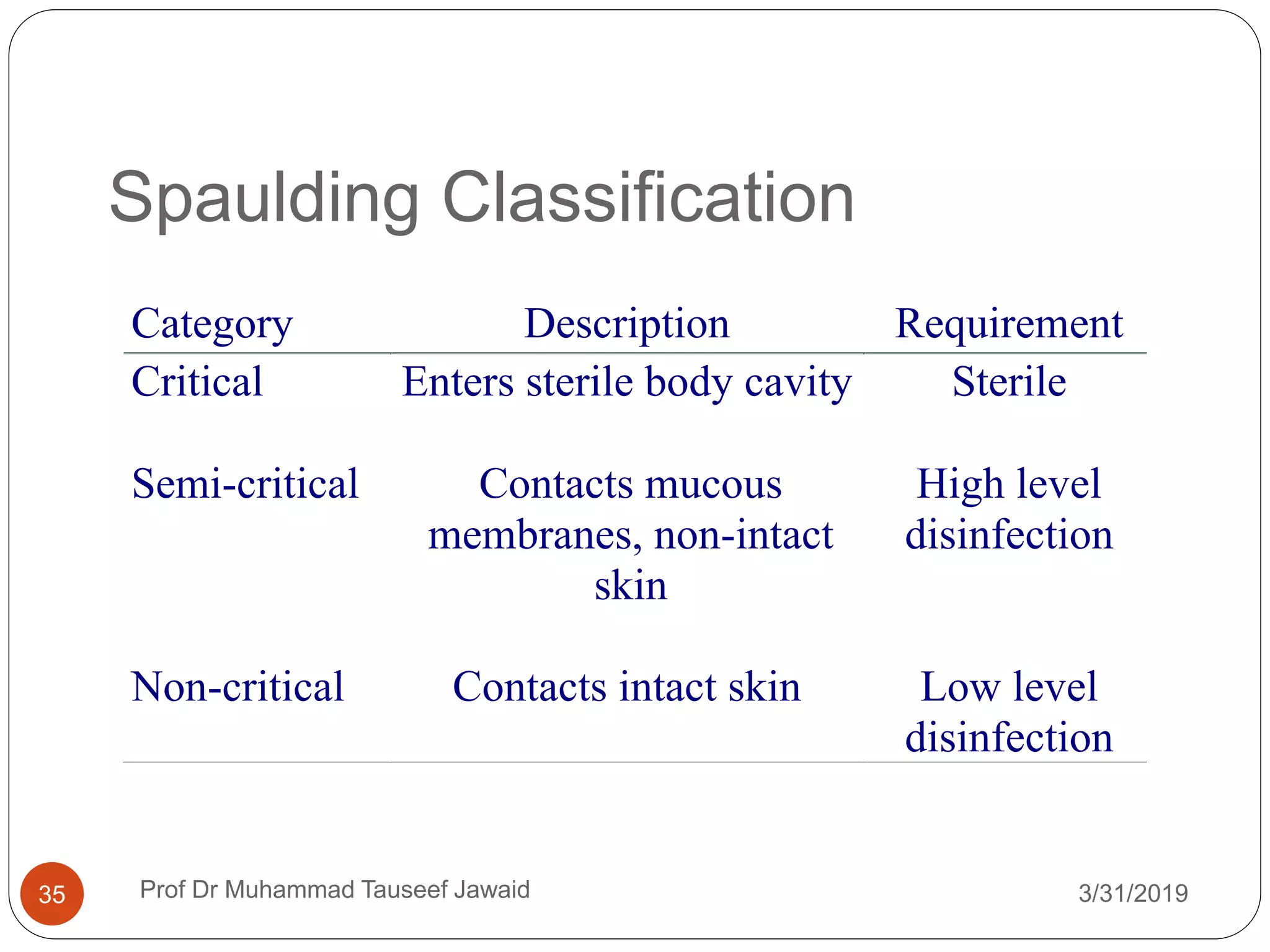
Spaulding Classification
Category Description Requirement
Critical Enters sterile body cavity Sterile
Semi-critical Contacts mucous
membranes, non-intact
skin
High level
disinfection
Non-critical Contacts intact skin Low level
disinfection
3/31/201935 Prof Dr Muhammad Tauseef Jawaid
Sterilization
3/31/201936
 Steam
 Ethylene oxide
 Peracetic acid (.2%)
 Hydrogen peroxide gas plasma
 Vapourized hydrogen peroxide
 Ozone
Prof Dr Muhammad Tauseef Jawaid
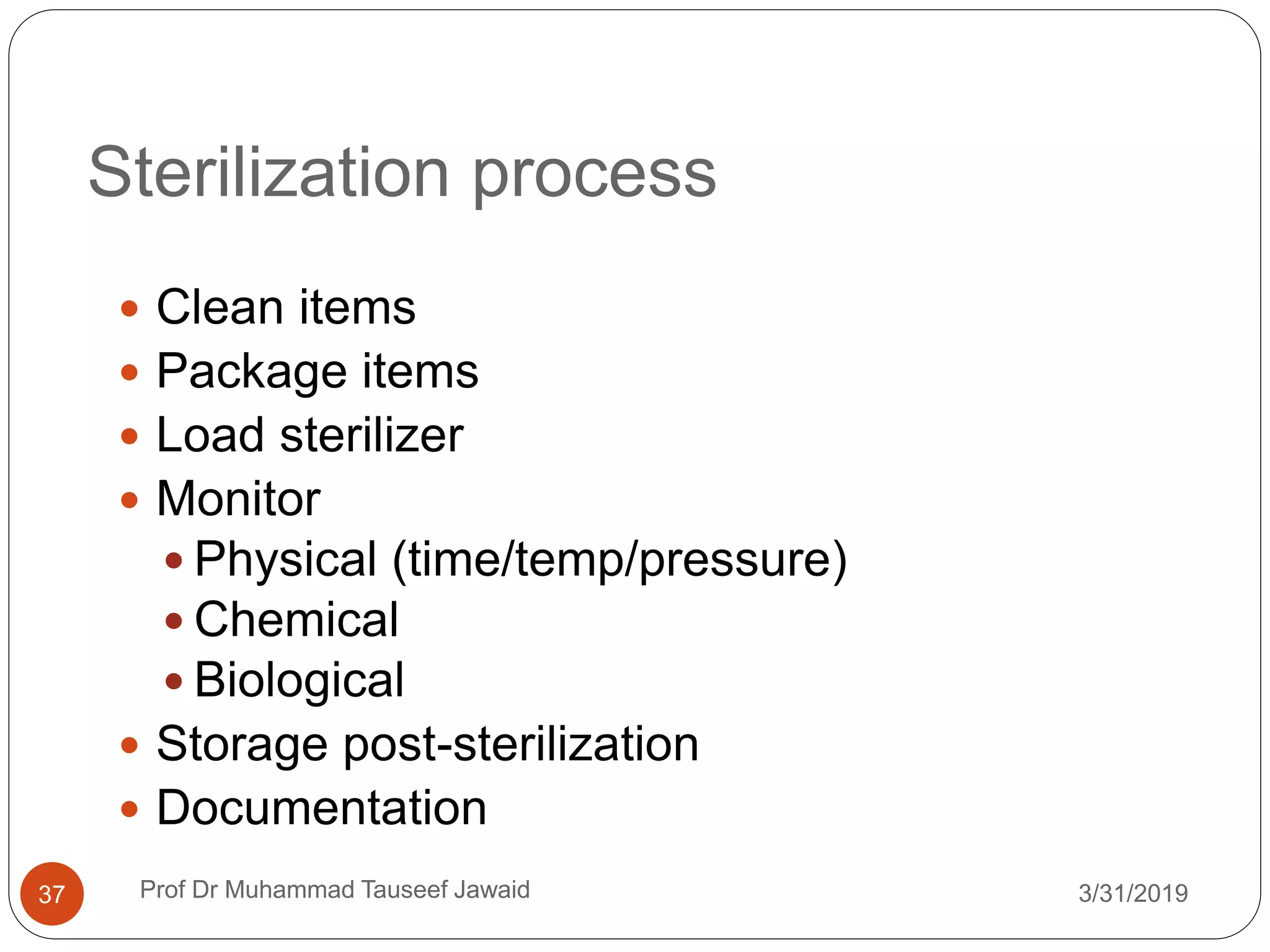
Sterilization process
3/31/201937
 Clean items
 Package items
 Load sterilizer
 Monitor
 Physical (time/temp/pressure)
 Chemical
 Biological
 Storage post-sterilization
 Documentation
Prof Dr Muhammad Tauseef Jawaid
Problems with sterility
3/31/201938
 Lack of understanding of risk/process
 physicians introducing new products (borrowed,
samples)
 Multidose vials
 What is sterile vs not
 Lack of understanding of components of
process
 MDs, technologists have less training than nurses
(anaesthesiology, imaging, urology)
Prof Dr Muhammad Tauseef Jawaid
Flash Sterilization
3/31/201939
 Unwrapped objects,
132°C, 3mins, 27-28lbs
pressure in gravity
 Acceptable for
processing items that
cannot be sterilized and
stored before use
Prof Dr Muhammad Tauseef Jawaid
Problems with semi-critical items
3/31/201940
 Complex and delicate pieces of
equipment
 Expensive equipment used frequently
Centralizing process difficult
Time an important factor
 Absence of regulation/guidance for
design
 Narrow margin of safety
Prof Dr Muhammad Tauseef Jawaid
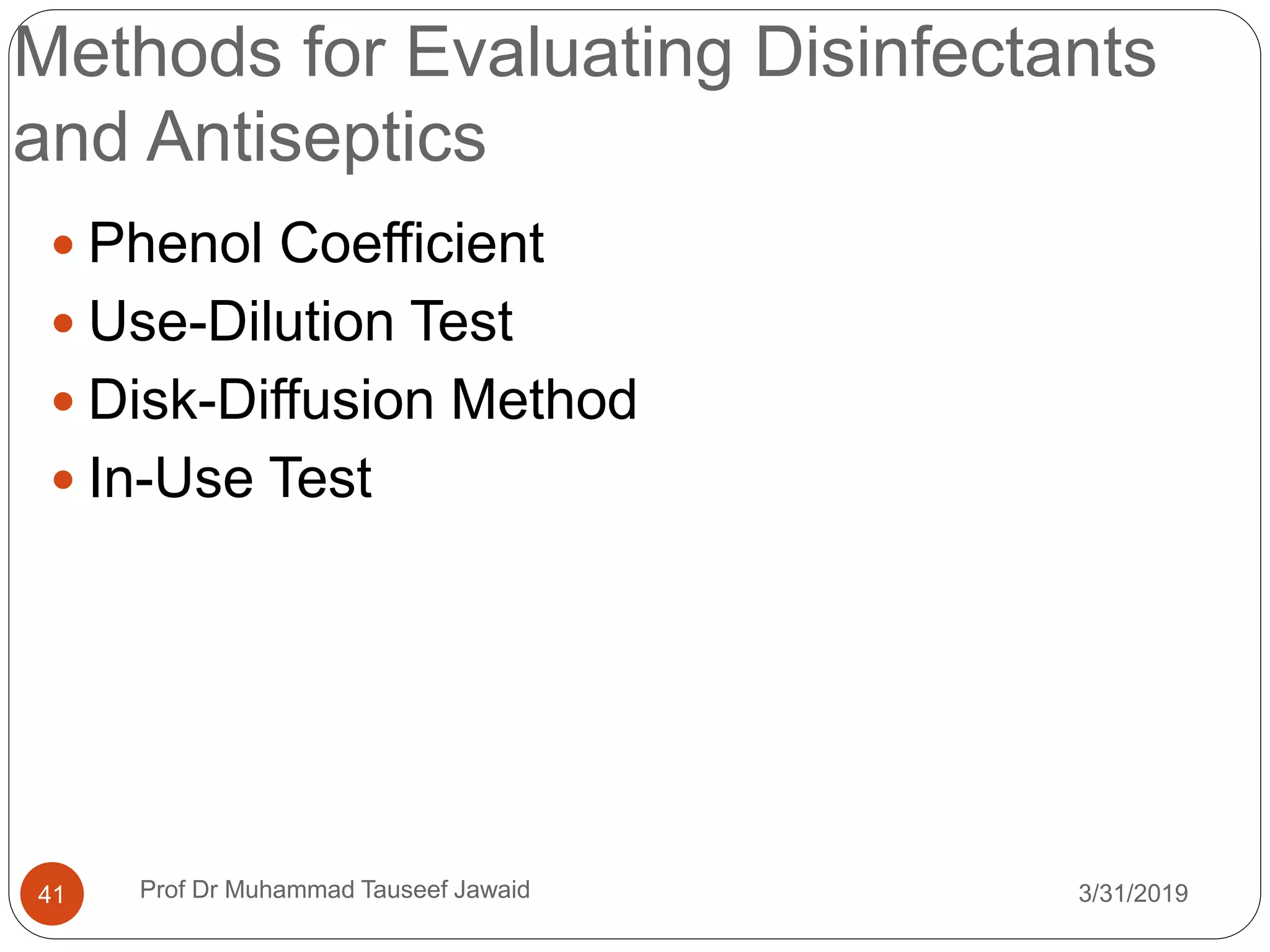
Methods for Evaluating Disinfectants
and Antiseptics
3/31/201941
 Phenol Coefficient
 Use-Dilution Test
 Disk-Diffusion Method
 In-Use Test
Prof Dr Muhammad Tauseef Jawaid
Phenol Coefficient
3/31/201942
 Evaluating the efficacy of disinfectants and
antiseptics by determining the ratio of
agent’s ability to control microbes to that of
phenol
 Greater than 1.0 indicates that agent is more
effective than phenol
 Has been replaced by newer methods
Prof Dr Muhammad Tauseef Jawaid
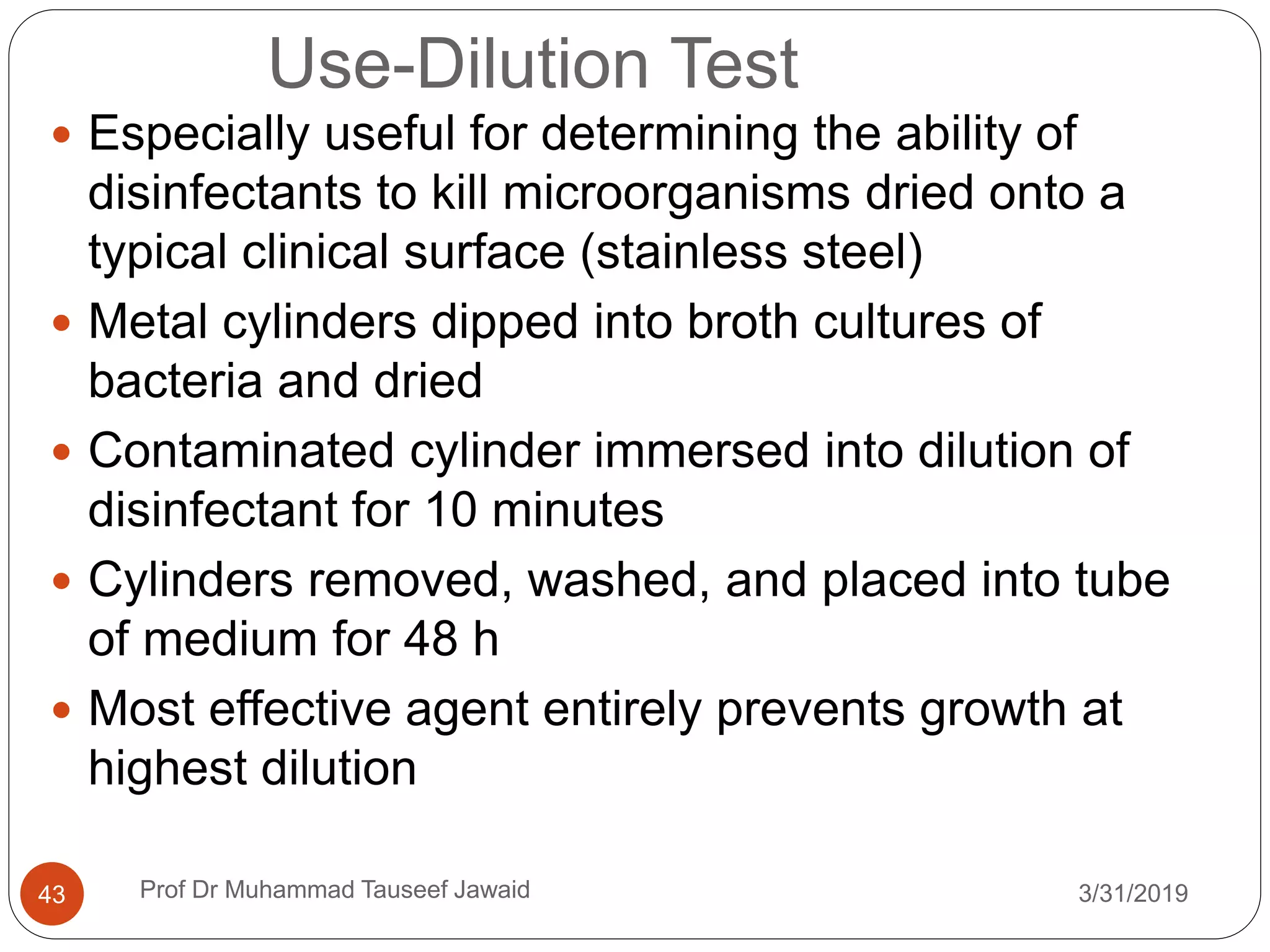
Use-Dilution Test
3/31/201943
 Especially useful for determining the ability of
disinfectants to kill microorganisms dried onto a
typical clinical surface (stainless steel)
 Metal cylinders dipped into broth cultures of
bacteria and dried
 Contaminated cylinder immersed into dilution of
disinfectant for 10 minutes
 Cylinders removed, washed, and placed into tube
of medium for 48 h
 Most effective agent entirely prevents growth at
highest dilution
Prof Dr Muhammad Tauseef Jawaid
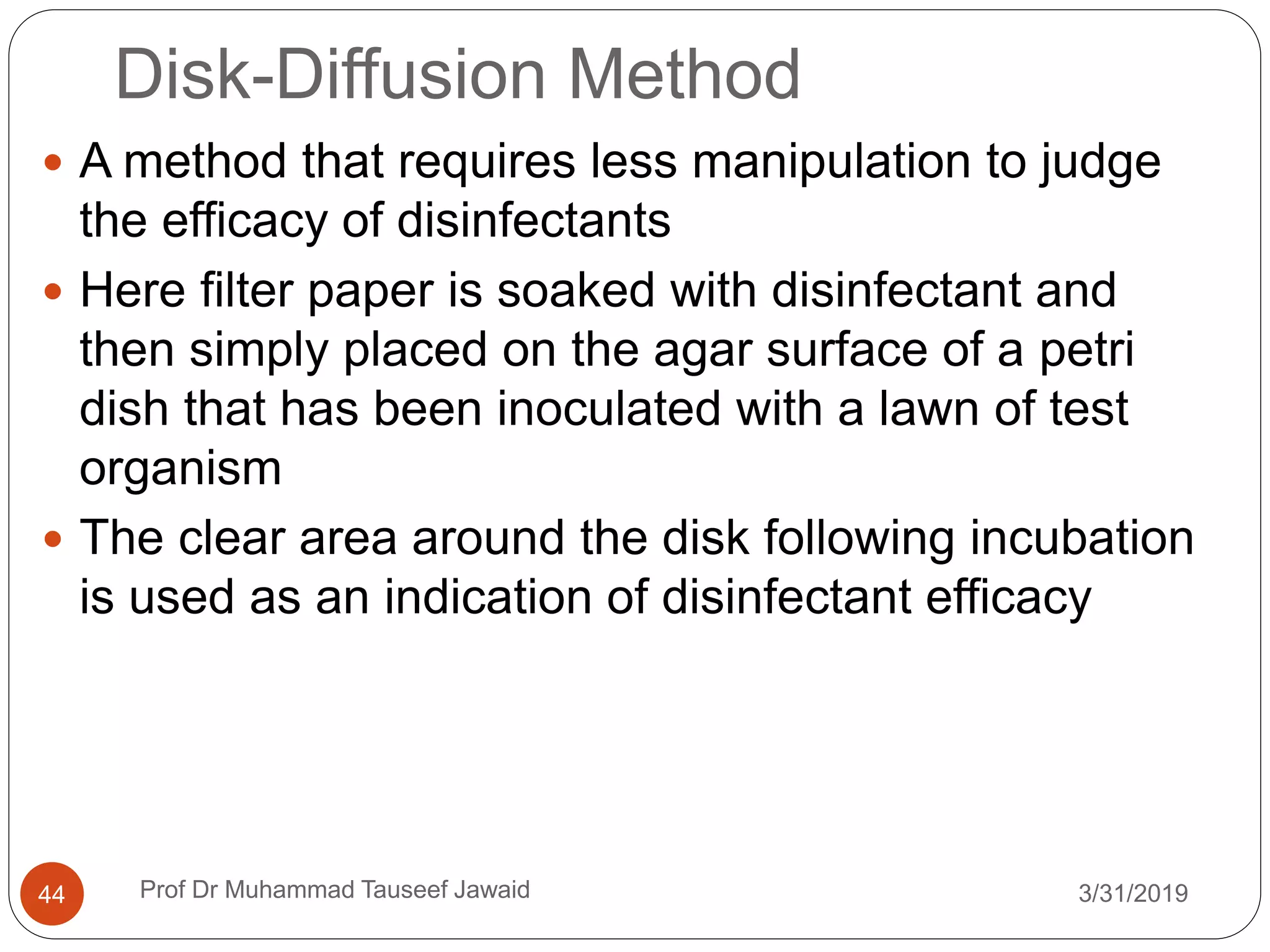
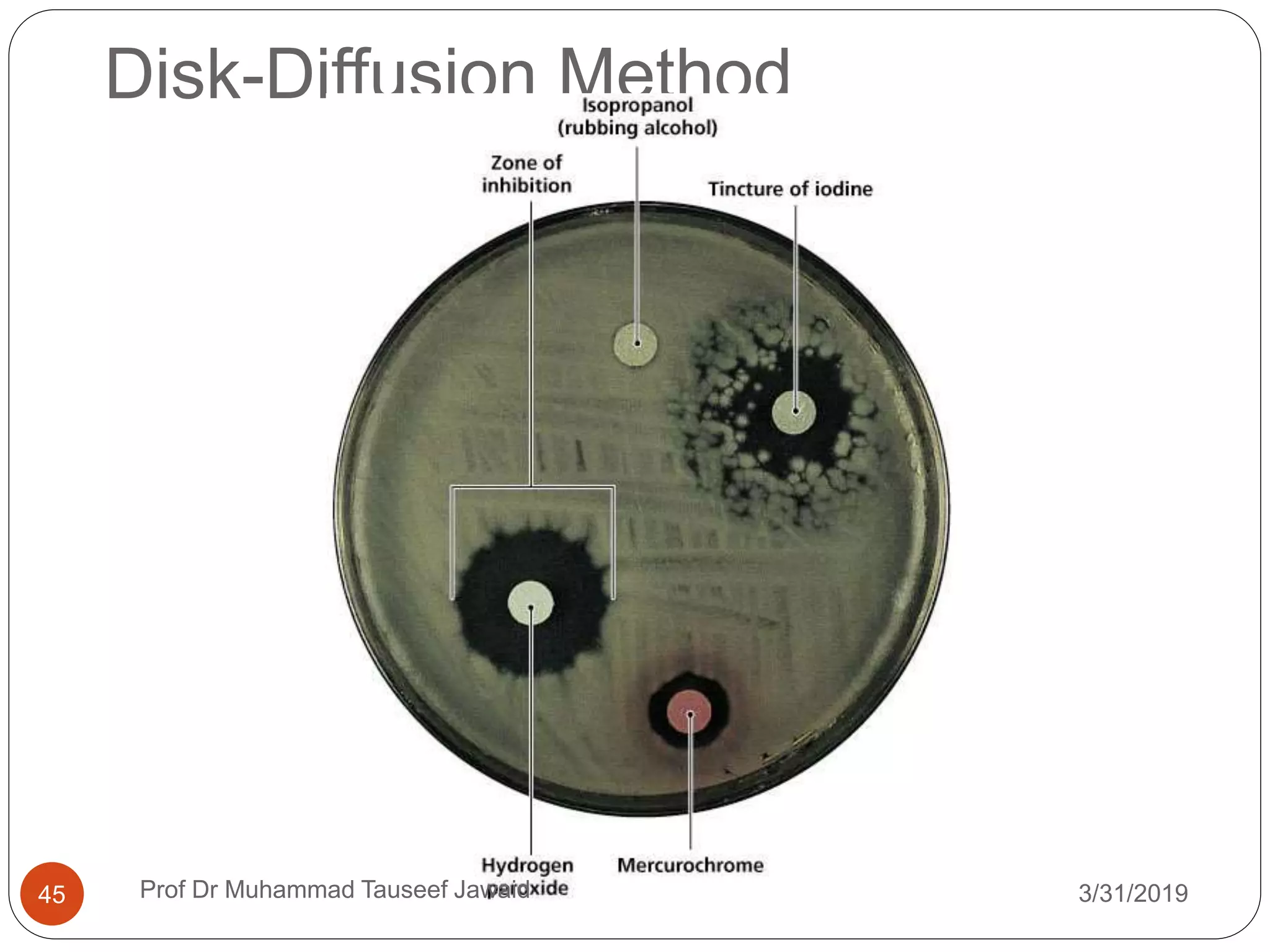
Disk-Diffusion Method
3/31/201944
 A method that requires less manipulation to judge
the efficacy of disinfectants
 Here filter paper is soaked with disinfectant and
then simply placed on the agar surface of a petri
dish that has been inoculated with a lawn of test
organism
 The clear area around the disk following incubation
is used as an indication of disinfectant efficacy
Prof Dr Muhammad Tauseef Jawaid
Disk-Diffusion Method
3/31/201945 Prof Dr Muhammad Tauseef Jawaid
In-Use Test
3/31/201946
 Swabs taken from objects before and after
application of disinfectant or antiseptic
 Swabs inoculated into growth medium and
incubated
 Medium monitored for growth
 Accurate determination of proper strength
and application procedure for each specific
situation
Prof Dr Muhammad Tauseef Jawaid
Relative Susceptibility of
Microorganisms
3/31/201947 Prof Dr Muhammad Tauseef Jawaid
Any Question???
3/31/201948 Prof Dr Muhammad Tauseef Jawaid

Cleaning ,Disinfection ,and Sterilization

  • 1.
  • 2.
    Cleaning 3/31/20192  A formof decontamination by removing organic matter, salts, and visible soils Physical action of scrubbing with detergents or surfactants and rinsing with water Necessary step prior to sterilization or disinfection Prof Dr Muhammad Tauseef Jawaid
  • 3.
    How can microorganisms bekilled? 3/31/20193  Denaturation of proteins (e.g. wet heat, ethylene oxide)  Oxidation (e.g. dry heat, hydrogen peroxide)  Filtration  Interruption of DNA synthesis/repair (e.g. radiation)  Interference with protein synthesis (e.g. bleach)  Disruption of cell membranes (e.g. phenols)Prof Dr Muhammad Tauseef Jawaid
  • 4.
    Disinfection 3/31/20194 Disinfection is doneto eliminate as many microorganisms from an item or from the environment as possible, but does not eliminate spores. Disinfection is used when items cannot or needn’t be sterilized or in situations where no method ofProf Dr Muhammad Tauseef Jawaid
  • 5.
    Disinfection 3/31/20195 “Spaulding’s* three levelsof disinfection:  High-level  Intermediate-level  Low-level *for treatment of devices and surfaces that do not require sterility for safe use Prof Dr Muhammad Tauseef Jawaid
  • 6.
    The effects typesof disinfectants 3/31/20196 Effects level Disinfectants examples High level Ethylene oxide, peracetic acid ,kinds of aldehyde Intermediate-level Kinds of alcohol, kinds of iodine, chloric disinfectants Low level Chlorhexidine, phenolic disinfectants Prof Dr Muhammad Tauseef Jawaid
  • 7.
    High-level Disinfection 3/31/20197  Includespowerful sporocidal chemicals (glutaraldehyde, peracteic acid and hydrogen peroxide)  Inactivates all vegetative bacteria, mycobacteria (TB), viruses, fungi, some bacterial spores, enveloped and non enveloped viruses  Utilize for items that come into contact with intact mucous membranes and are heat sensitive  semi-critical medical instruments (s/a flexible fiber optic endoscopes)  thermometersProf Dr Muhammad Tauseef Jawaid
  • 8.
    Intermediate-level Disinfection  IncludesChlorine-containing compounds, alcohols (small surfaces), some phenolics, and some iodophors  Inactivates a highly resistant organisms and exhibits some sporcidal activity  Utilize for non-critical medical equipment s/a stethoscopes, blood pressure cuffs, dialysis machines, equipment knobs and controls. 3/31/20198 Prof Dr Muhammad Tauseef Jawaid
  • 9.
    Low-level Disinfection 3/31/20199  Includesquaternary ammonium compounds, some phenolics, and some iodophors  Inactivates vegetative bacteria, fungi, and some lipid enveloped medium size viruses  Utilize for items that come in contact with intact skin such as examining table top, baby weigh scale, blood pressure cuff Prof Dr Muhammad Tauseef Jawaid
  • 10.
    Hand Hygiene 3/31/201910  Avoidartificial nails and keep natural nails < ¼ in  For visibly soiled hands use soap and water  Use alcohol-based handrubs  Before and after each patient  Before and after glove use  Improved hand hygiene adherence has:  Terminated outbreaks in health care facilities  ↓ transmission of AR organismsProf Dr Muhammad Tauseef Jawaid
  • 11.
    Sterilization 3/31/201911 Sterilization is theprocess by which all microorganisms, including spores, are destroyed Prof Dr Muhammad Tauseef Jawaid
  • 12.
    METHODS 3/31/201912 Physical methods of disinfectionand sterilization Chemical methods of disinfection and sterilization Prof Dr Muhammad Tauseef Jawaid
  • 13.
    Physical Methods ofMicrobial Control 3/31/201913  Exposure to extremes of heat  Exposure to extremes of cold  Desiccation(To dry out thoroughly.)  Filtration.  Osmotic pressure.  Radiation.  Microwave disinfection sterilization.  Mechanical methods . Prof Dr Muhammad Tauseef Jawaid
  • 14.
    Heat-Related Methods 3/31/201914  Effectsof high temperatures  Denaturation of proteins  Interference with integrity of cytoplasmic membrane and cell walls  Disruption of structure and function of nucleic acids  Thermal death point – lowest temperature that kills all cells in broth in 10 minutes  Thermal death time – time to sterilize volume of liquid at set temperature Prof Dr Muhammad Tauseef Jawaid
  • 15.
    Moist Heat 3/31/201915  Usedto disinfect, sanitize, and sterilize  Kills by denaturing proteins and destroying cytoplasmic membranes  More effective than dry heat; water better conductor of heat than air. Moist heat is also more penetrating than dry heat  Methods of microbial control using moist heat  Boiling  Autoclaving  Pasteurization  Ultrahigh-Temperature Sterilization Prof Dr Muhammad Tauseef Jawaid
  • 16.
    Boiling 3/31/201916  Kills vegetativecells of bacteria and fungi, protozoan trophozoites, and most viruses within 10 minutes at sea level  Temperature cannot exceed 100ºC at sea level; steam carries some heat away  Boiling time is critical  Water boils at lower temperatures at higher elevations; requires longer boiling time  Endospores, protozoan cysts, and some viruses can survive boiling Prof Dr Muhammad Tauseef Jawaid
  • 17.
    Autoclaving 3/31/201917  Pressure appliedto boiling water prevents steam from escaping  Boiling temperature increases as pressure increases  Autoclave conditions – 121ºC, 15 psi, 15 minutes  Volume  Contact  Wrapping  Testing Prof Dr Muhammad Tauseef Jawaid
  • 18.
    Dry heat 3/31/201918  Burning Hot air drying Prof Dr Muhammad Tauseef Jawaid
  • 19.
    burning method(incineration) 3/31/201919  Character Simple,fast,thorough Used for contaminated wastes, Pathologic specimens,dressings and paper with purulent secretions,patients’corpses  Method directly burn or burn in incinerator Prof Dr Muhammad Tauseef Jawaid
  • 20.
    Hot air drying 3/31/201920 Make use of the specially made hot air drying oven to sterilize, the heat power spread and penetration depends on the air convection and medium conduction, and the effect of this method is reliable  Suitable for the articles that do not change in character ,do not damage and do not evaporate under high temperature. For example: oil, powder ,glass products and metal products,etc. Not suitable for Fiber products, plastics productsProf Dr Muhammad Tauseef Jawaid
  • 21.
    Illumination disinfection(radiation sterilization) 3/31/201921  Makeuse of the ultraviolet rays to photolyze and denaturalize the bacteria’s protein and lead the bacteria’s  Insolation under the sun  Ultraviolet lamp disinfection  Ozone lamp Prof Dr Muhammad Tauseef Jawaid
  • 22.
    Insolation under thesun 3/31/201922 Commonly used for mattress, carpet,clothes,books. Method:insolate the articles directly under the sun for 6 hours, and turn over the articles periodically to make each side of the articles exposure to the sun Prof Dr Muhammad Tauseef Jawaid
  • 23.
    Ultraviolet lamp disinfection 3/31/201923 Cwave, wavelength:200~275nm, the most effective:250~270nm Ultraviolet rays can kill bacillus, virus fungus, bacterial vegetative form, spores. Prof Dr Muhammad Tauseef Jawaid
  • 24.
    Ozone lamp 3/31/201924  Thismethod can be used to kill bacterial vegetative form, virus, spores, fungus and destroy botulin Mainly used to air disinfection, hospital dirt water disinfection and articles surfaces disinfection Prof Dr Muhammad Tauseef Jawaid
  • 25.
    Chemical Disinfection Sterilization 3/31/201925 The chemicalsused for disinfection are called as disinfectants. The effects of some disinfectants are enough strong to sterilize, these disinfectants are also called as sterilants.Prof Dr Muhammad Tauseef Jawaid
  • 26.
    Chemical disinfectants use principles 3/31/201926 Select the proper disinfectants according to the types of the objects to be disinfected and the characters of the microorganisms to be killed  Strictly control the effective concentration of the disinfectants and the disinfection time , the use methods  The disinfectants should be changed periodically, the disinfectants which vaporize easily should be covered and examine and regulate its concentration Prof Dr Muhammad Tauseef Jawaid
  • 27.
    Chemical disinfectants use principles 3/31/201927 The objects must be cleaned and dried beforehand  There should not be the gauzes, cotton and so on in the disinfectant solutions, for these kinds of objects can absorb the disinfectants so that the effect of the disinfectants can be weakened.  The objects after being disinfected must be rinsed with physiological saline() before use to protect body tissues from the disinfectants’ irritatingProf Dr Muhammad Tauseef Jawaid
  • 28.
    use methods ofchemical disinfectants 3/31/201928 Immersion: Firstly, clean the articles to be disinfected, secondly, dry the articles, then, immerse the articles into the disinfectant solution.. Immersion time and the concentration of the solution should be according to the provision. Prof Dr Muhammad Tauseef Jawaid
  • 29.
    use methods ofchemical disinfectants 3/31/201929 Rubbing: Which is the method to use the chemical disinfectants to rub the surfaces of the contaminated articles or the method to disinfect the skin. e.g:using iodophor of 0.5%~1.0% to disinfect skin; using chloric disinfectants to rub the walls and the floors. Prof Dr Muhammad Tauseef Jawaid
  • 30.
    use methods ofchemical disinfectants 3/31/201930 Nebulization The method is that using a nebulizer spray the chemical disinfectants evenly on the surfaces of articles or the air. The method is commonly used for the disinfection of floors, walls, and environment, etc. Attention to wet the articles’ surfaces well when one spray. Prof Dr Muhammad Tauseef Jawaid
  • 31.
    use methods ofchemical disinfectants 3/31/201931 Fumigation The method means creating air to disinfect through heating a disinfectant or add oxidants into it. The method is commonly used for disinfection of space, e.g: the space of operation rooms, dressing rooms and wards. And in the closed containers this method can also be used to disinfect the contaminated articles. The formaldehyde gas and ethylene oxide gas Prof Dr Muhammad Tauseef Jawaid
  • 32.
    Chemical Methods ofMicrobial Control 3/31/201932  Major Categories  Phenols  Alcohols  Halogens  Oxidizing agents  Surfactants  Heavy Metals  Aldehydes  Gaseous Agents  Antimicrobics Prof Dr Muhammad Tauseef Jawaid
  • 33.
    Factors that influenceefficacy of disinfection/sterilization 3/31/201933  Contact time  Physico-chemical environment (e.g. pH) 3 Presence of organic material 4 Temperature 5 Type of microorganism 6 Number of microorganisms 7 Material composition Prof Dr Muhammad Tauseef Jawaid
  • 34.
    Ideal sterilization/disinfection process 3/31/201934 Highly efficacious  Fast  Good penetrability  Compatible with all materials  Non-toxic  Effective despite presence of organic material  Difficult to make significant mistakes in process  Easily monitored Prof Dr Muhammad Tauseef Jawaid
  • 35.
    Spaulding Classification Category DescriptionRequirement Critical Enters sterile body cavity Sterile Semi-critical Contacts mucous membranes, non-intact skin High level disinfection Non-critical Contacts intact skin Low level disinfection 3/31/201935 Prof Dr Muhammad Tauseef Jawaid
  • 36.
    Sterilization 3/31/201936  Steam  Ethyleneoxide  Peracetic acid (.2%)  Hydrogen peroxide gas plasma  Vapourized hydrogen peroxide  Ozone Prof Dr Muhammad Tauseef Jawaid
  • 37.
    Sterilization process 3/31/201937  Cleanitems  Package items  Load sterilizer  Monitor  Physical (time/temp/pressure)  Chemical  Biological  Storage post-sterilization  Documentation Prof Dr Muhammad Tauseef Jawaid
  • 38.
    Problems with sterility 3/31/201938 Lack of understanding of risk/process  physicians introducing new products (borrowed, samples)  Multidose vials  What is sterile vs not  Lack of understanding of components of process  MDs, technologists have less training than nurses (anaesthesiology, imaging, urology) Prof Dr Muhammad Tauseef Jawaid
  • 39.
    Flash Sterilization 3/31/201939  Unwrappedobjects, 132°C, 3mins, 27-28lbs pressure in gravity  Acceptable for processing items that cannot be sterilized and stored before use Prof Dr Muhammad Tauseef Jawaid
  • 40.
    Problems with semi-criticalitems 3/31/201940  Complex and delicate pieces of equipment  Expensive equipment used frequently Centralizing process difficult Time an important factor  Absence of regulation/guidance for design  Narrow margin of safety Prof Dr Muhammad Tauseef Jawaid
  • 41.
    Methods for EvaluatingDisinfectants and Antiseptics 3/31/201941  Phenol Coefficient  Use-Dilution Test  Disk-Diffusion Method  In-Use Test Prof Dr Muhammad Tauseef Jawaid
  • 42.
    Phenol Coefficient 3/31/201942  Evaluatingthe efficacy of disinfectants and antiseptics by determining the ratio of agent’s ability to control microbes to that of phenol  Greater than 1.0 indicates that agent is more effective than phenol  Has been replaced by newer methods Prof Dr Muhammad Tauseef Jawaid
  • 43.
    Use-Dilution Test 3/31/201943  Especiallyuseful for determining the ability of disinfectants to kill microorganisms dried onto a typical clinical surface (stainless steel)  Metal cylinders dipped into broth cultures of bacteria and dried  Contaminated cylinder immersed into dilution of disinfectant for 10 minutes  Cylinders removed, washed, and placed into tube of medium for 48 h  Most effective agent entirely prevents growth at highest dilution Prof Dr Muhammad Tauseef Jawaid
  • 44.
    Disk-Diffusion Method 3/31/201944  Amethod that requires less manipulation to judge the efficacy of disinfectants  Here filter paper is soaked with disinfectant and then simply placed on the agar surface of a petri dish that has been inoculated with a lawn of test organism  The clear area around the disk following incubation is used as an indication of disinfectant efficacy Prof Dr Muhammad Tauseef Jawaid
  • 45.
    Disk-Diffusion Method 3/31/201945 ProfDr Muhammad Tauseef Jawaid
  • 46.
    In-Use Test 3/31/201946  Swabstaken from objects before and after application of disinfectant or antiseptic  Swabs inoculated into growth medium and incubated  Medium monitored for growth  Accurate determination of proper strength and application procedure for each specific situation Prof Dr Muhammad Tauseef Jawaid
  • 47.
  • 48.
    Any Question??? 3/31/201948 ProfDr Muhammad Tauseef Jawaid