"Management refers to your role as a
teacher in creating a classroom
environment where success is possible. It
refers to how order is established and
maintained in the classroom"
(Savage & Savage, 2010, p.6).
WHAT IS CLASSROOM MANAGEMENT?
• It’s effective discipline
• It’s being prepared for class
• It’s motivating your students
• It’s providing a safe, comfortable learning
environment
• It’s building your students’ self esteem
• It’s being creative and imaginative in daily
lessons
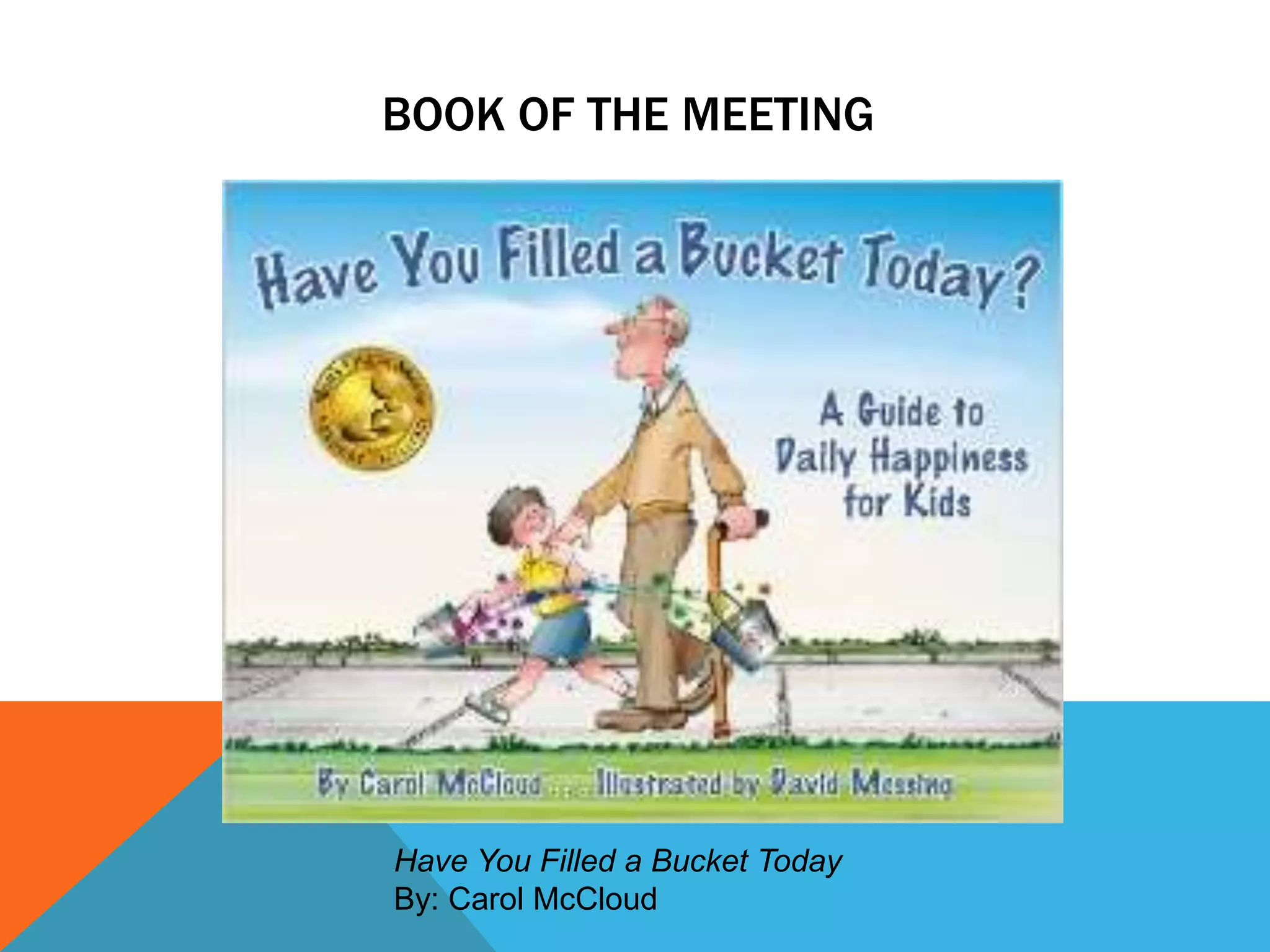
BOOK OF THE MEETING
Have You Filled a Bucket Today
By: Carol McCloud
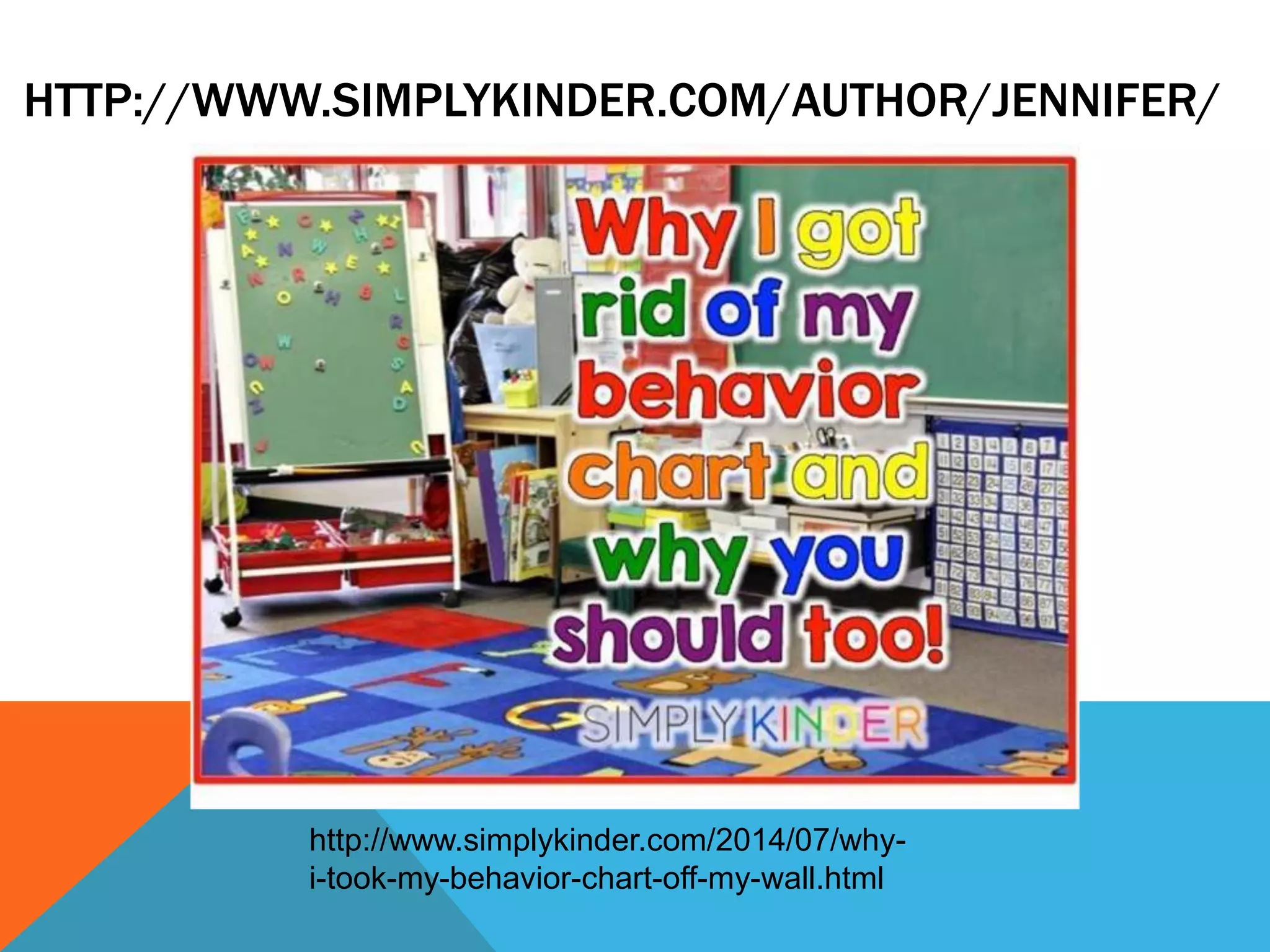
HTTP://WWW.SIMPLYKINDER.COM/AUTHOR/JENNIFER/
http://www.simplykinder.com/2014/07/why-
i-took-my-behavior-chart-off-my-wall.html
• “I really felt as if I was quick to just call people out and have them
go pull their card. Someone was talking while I was talking… I
gave a warning and then they had to pull their card. They had to
do the walk of shame over to the wall and their card had to be on
my yellow pocket chart for the rest of the day. But did I really give
that child a fair chance to explain why they were talking. Simply
stated – no. I would have a conversation with them after but the
emotional damage and embarrassment was done and that really
started killing ME inside. And then to post it on the wall for
everyone to see just seemed unfair.”
• “So we started focusing on rules more! I made these great
rules to use in my room and we began to make that the
focus. Every day we would stand behind our chairs and my
handy helper would point while the entire class recited the
rules. Every day… we never missed.”
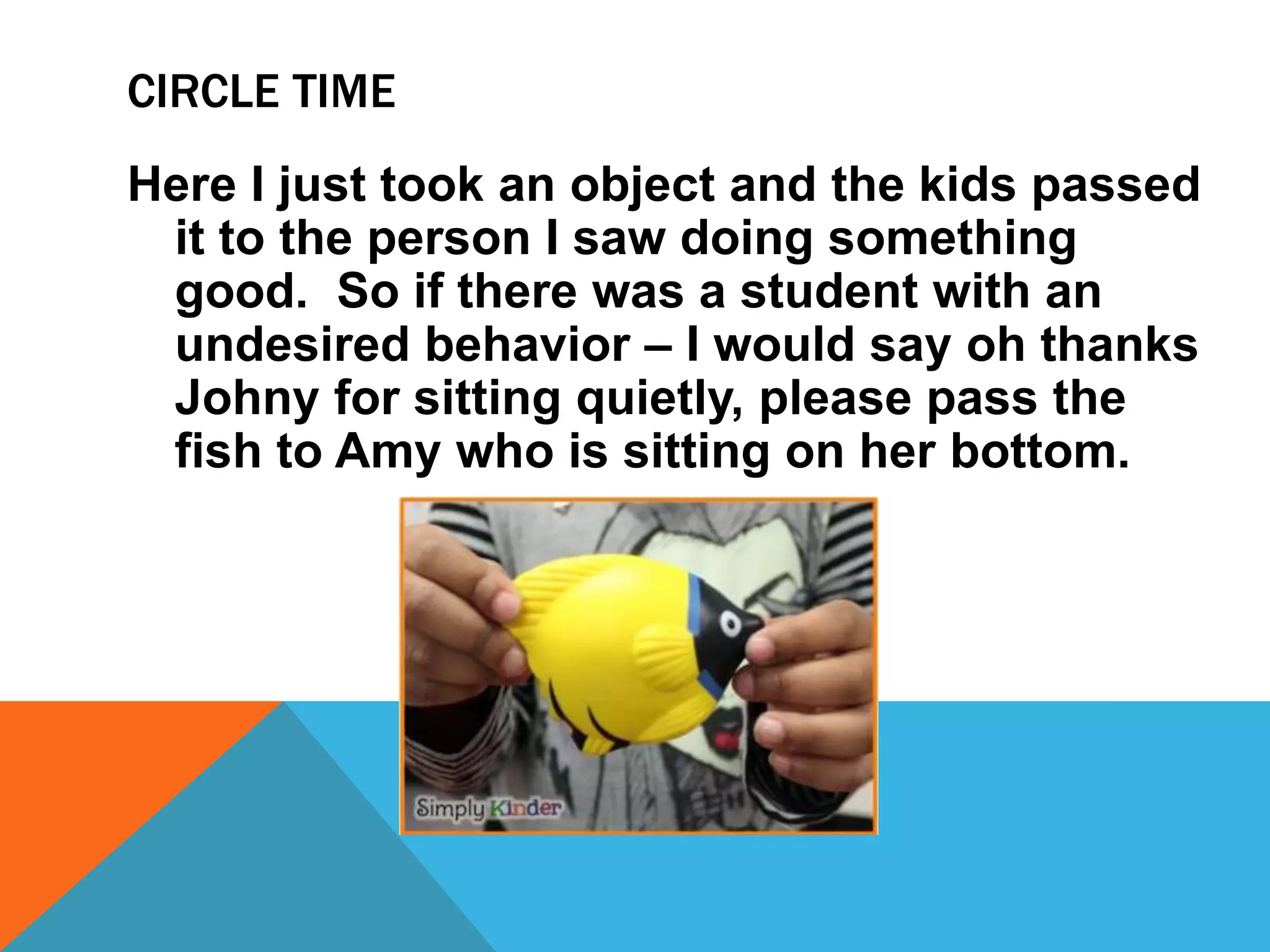
Here I just took an object and the kids passed
it to the person I saw doing something
good. So if there was a student with an
undesired behavior – I would say oh thanks
Johny for sitting quietly, please pass the
fish to Amy who is sitting on her bottom.
CIRCLE TIME
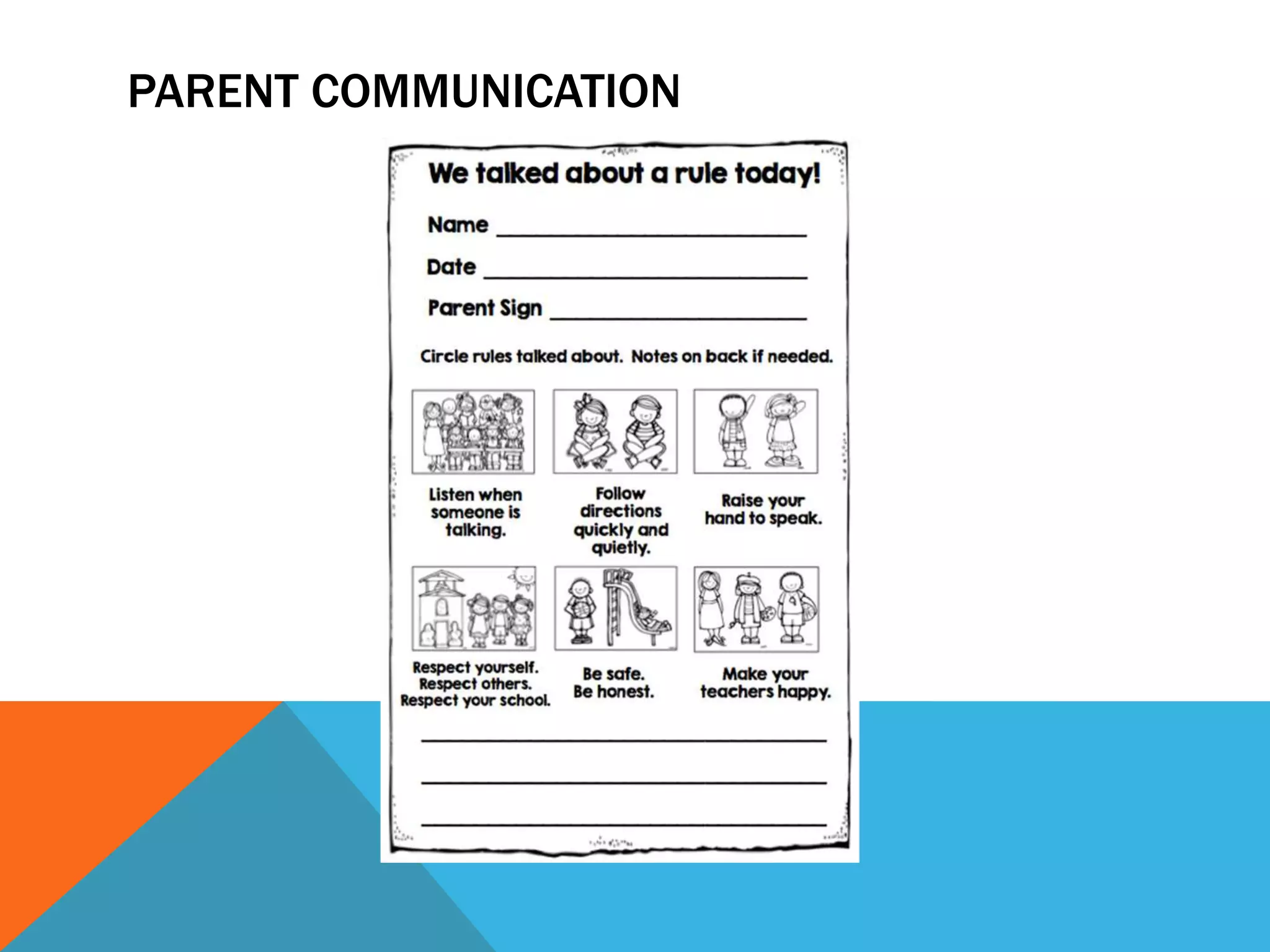
PARENT COMMUNICATION
DO-OVERS
“Let’s try that again.” – “What’s another way to say that?” – “How can we
do that differently?”
The “IDEAL” Approach to handle misbehavior discussed in the book is:
I – Immediate response;
D – Directly respond to the child, making eye contact
E – Efficiently use words and firmness;
A – Action-based “do-overs”;
L – Level your response to the behavior, not the child.
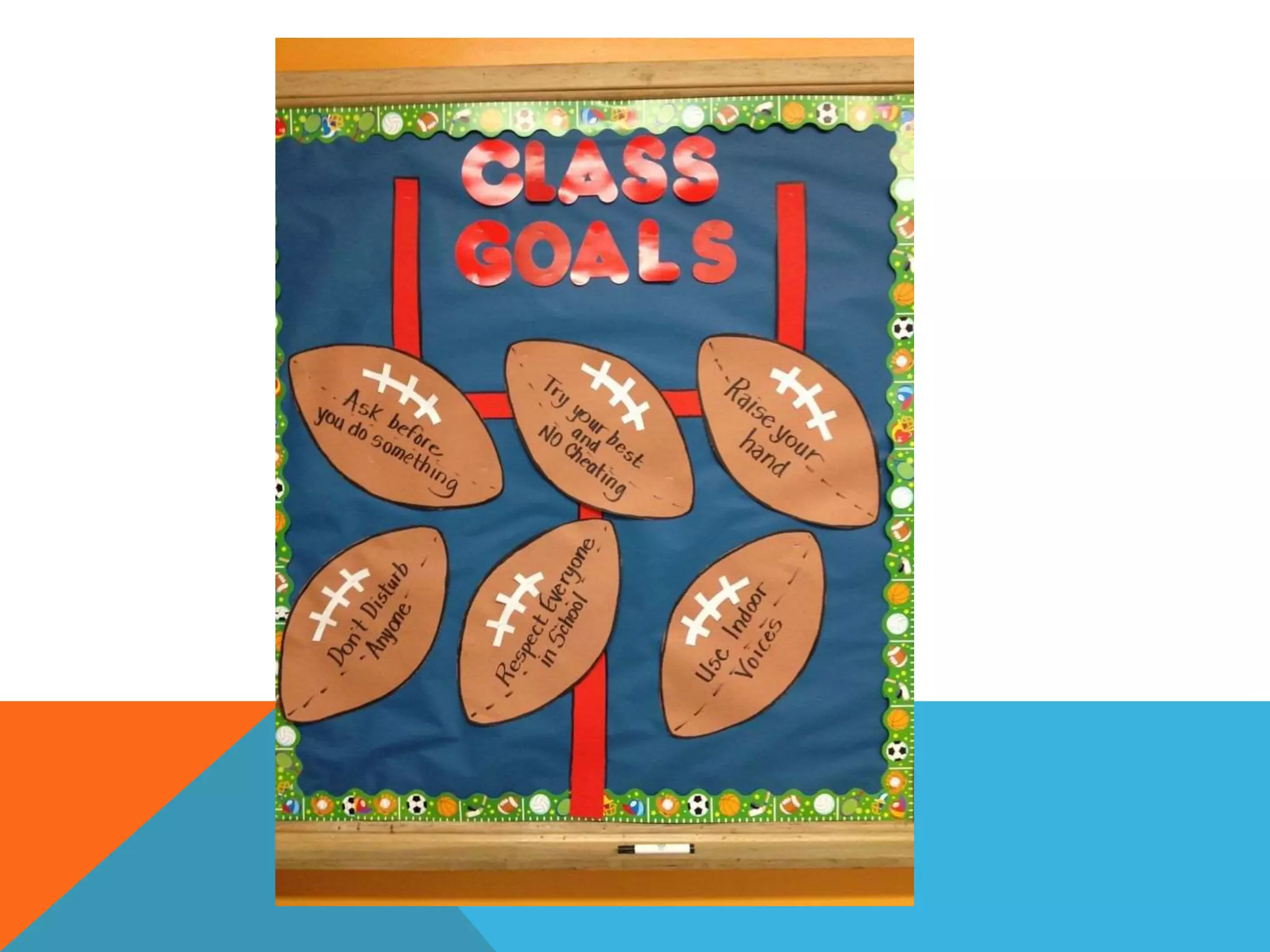
CHILD CREATING GOALS
Dr. Baynum- would you please share what
you did with your third grade goals.
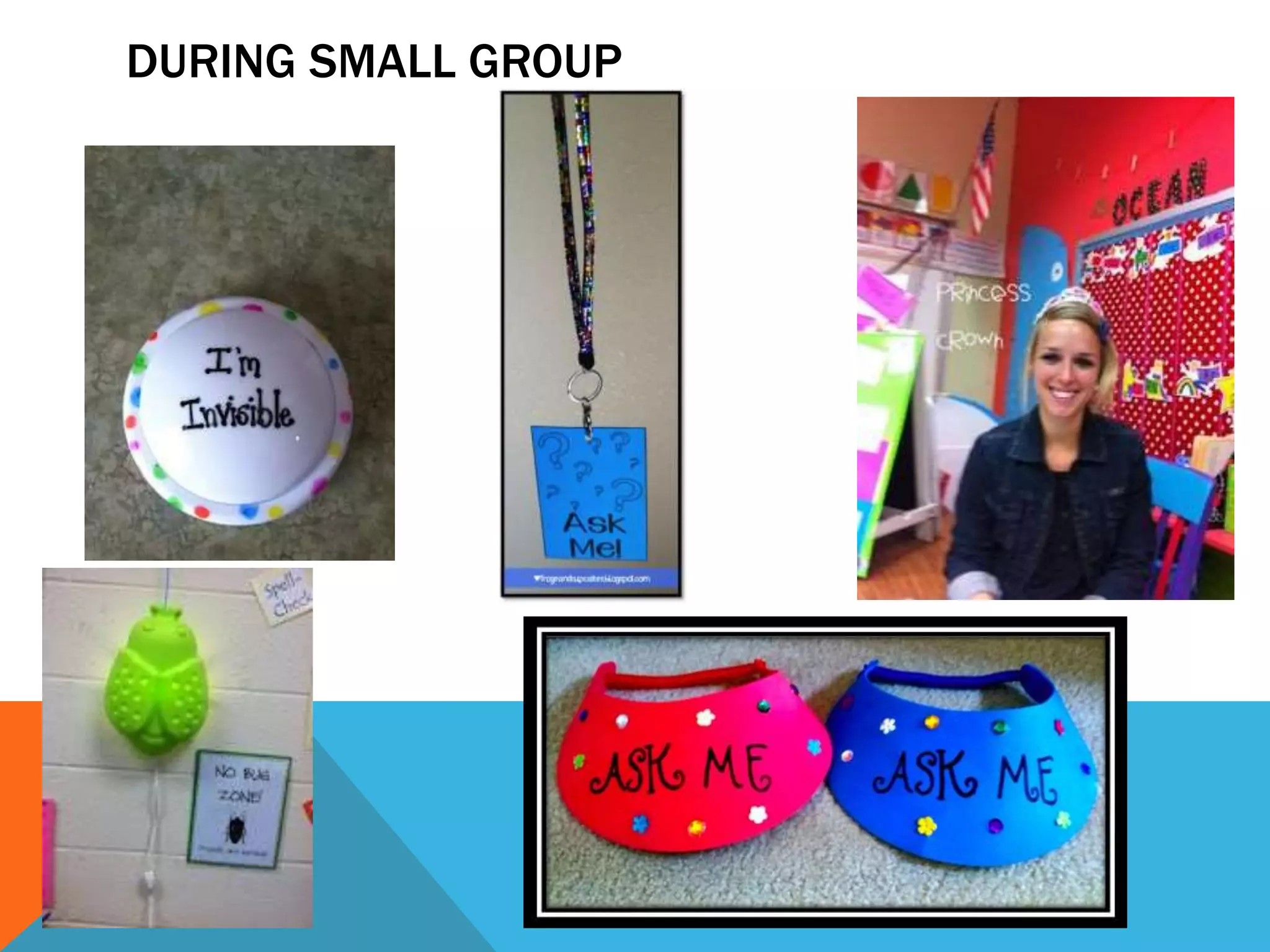
DURING SMALL GROUP
DURING SMALL GROUP CONTINUED…
#1: Establish classroom rules immediately and
enforce them consistently.
#2: Set logical rules and consequences.
#3: Use positive instead of negative language
#4: Make your students feel responsible for their
own learning environment.
#5: Praise efforts and achievements for their
own sake, not for the sake of teacher
approval.
#6: Be mindful of different learning paces and
keep the students occupied.
12 TIPS
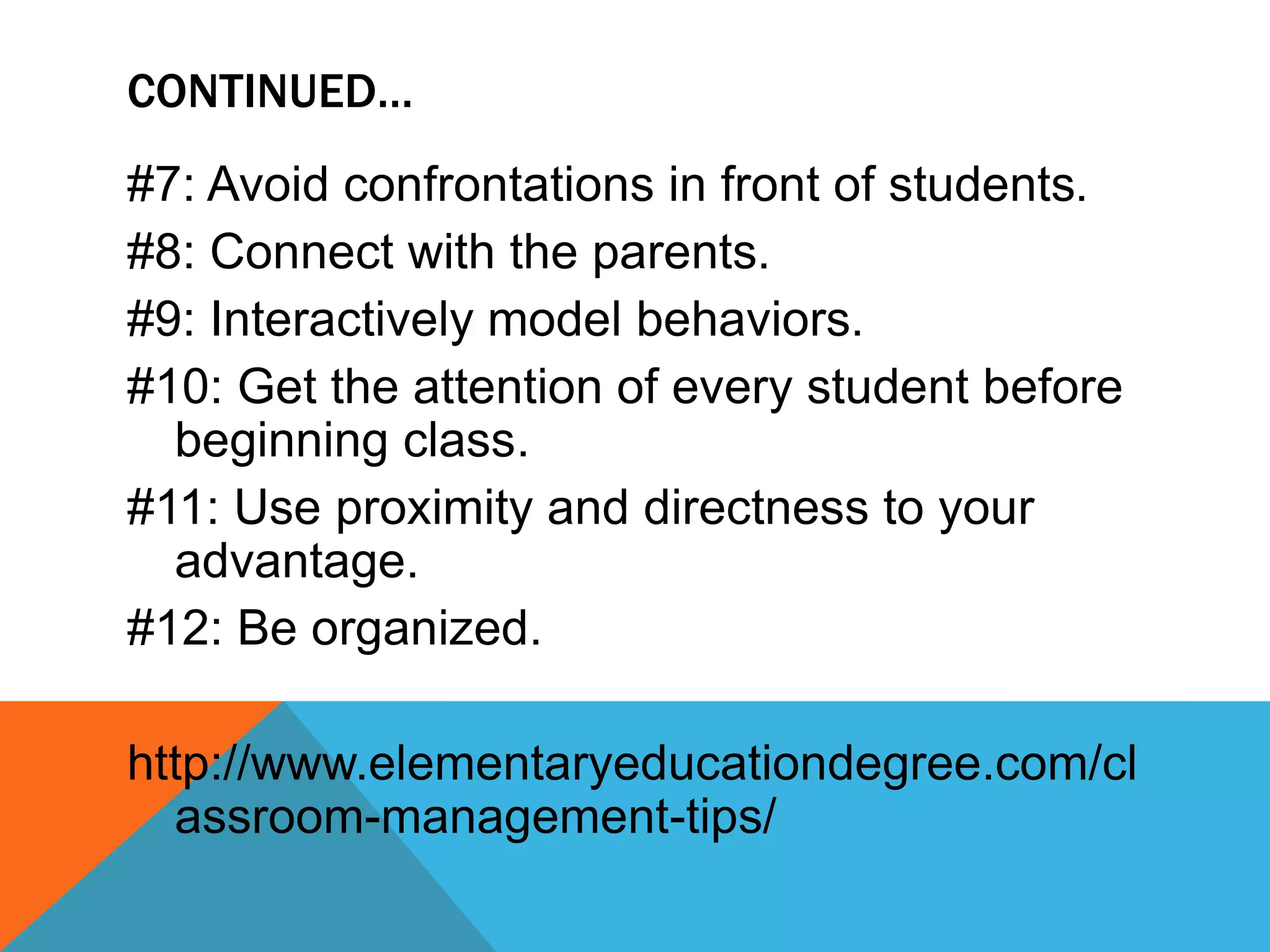
#7: Avoid confrontations in front of students.
#8: Connect with the parents.
#9: Interactively model behaviors.
#10: Get the attention of every student before
beginning class.
#11: Use proximity and directness to your
advantage.
#12: Be organized.
http://www.elementaryeducationdegree.com/cl
assroom-management-tips/
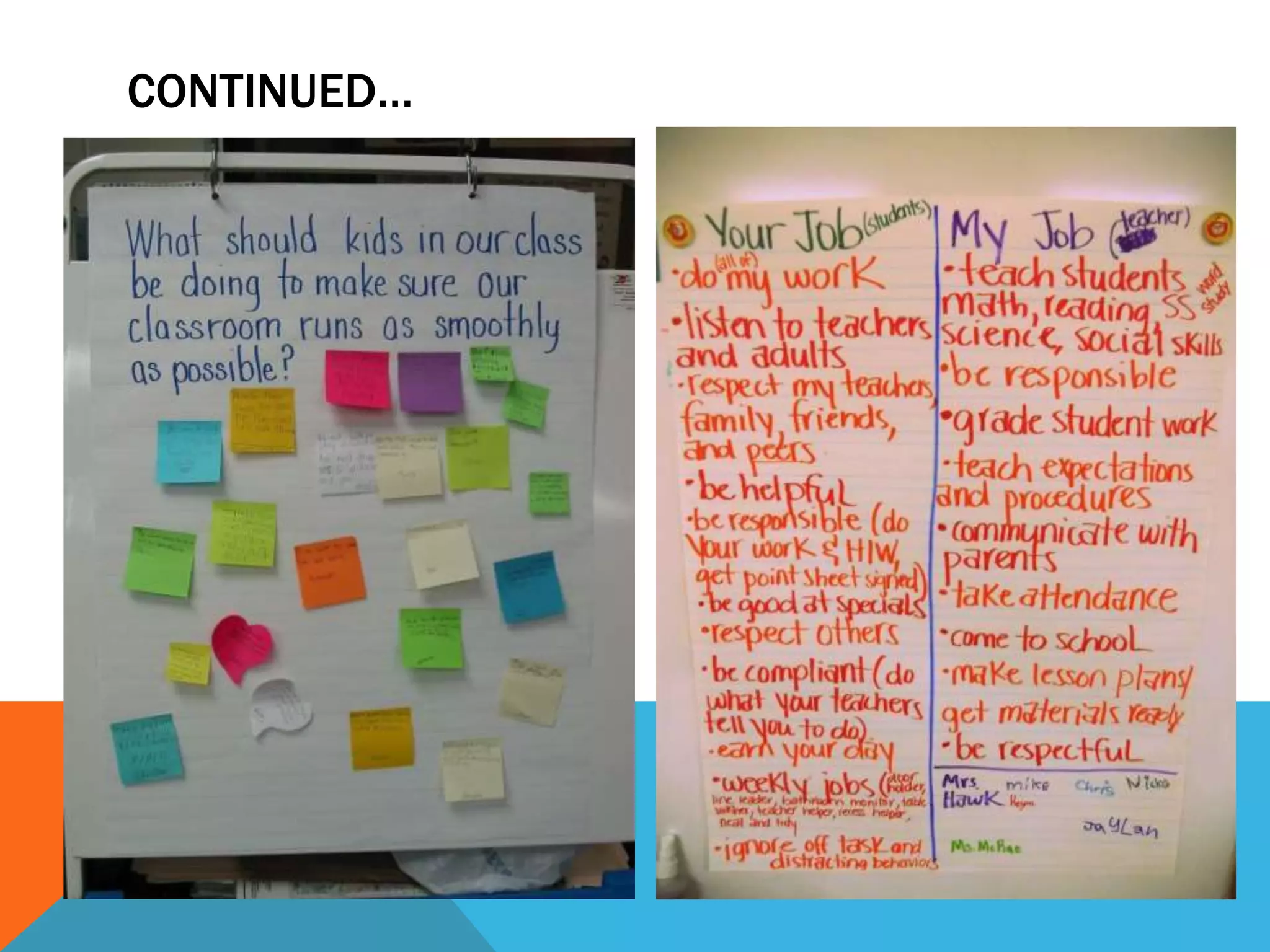
CONTINUED…
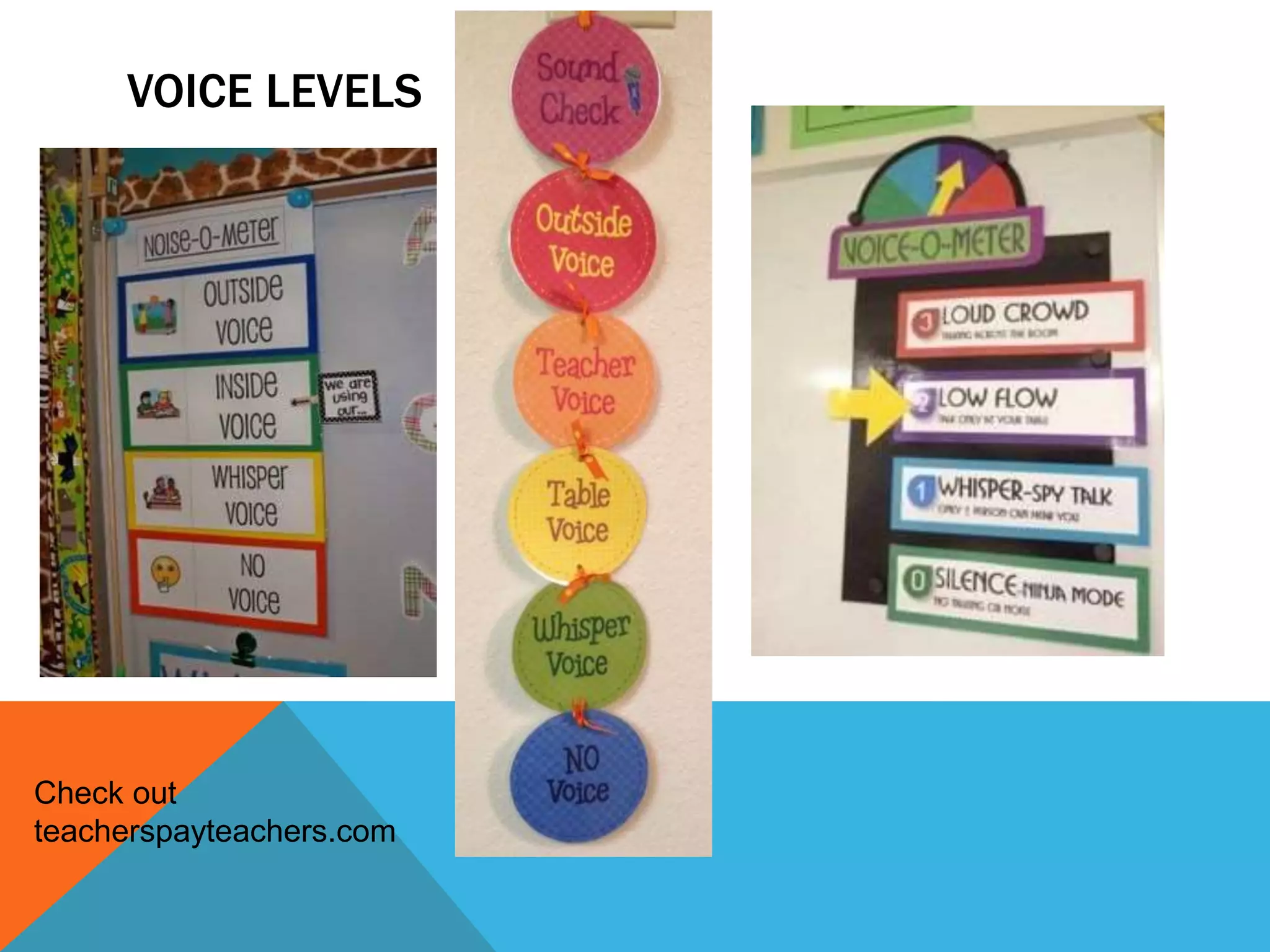
VOICE LEVELS
Check out
teacherspayteachers.com
TATTLING
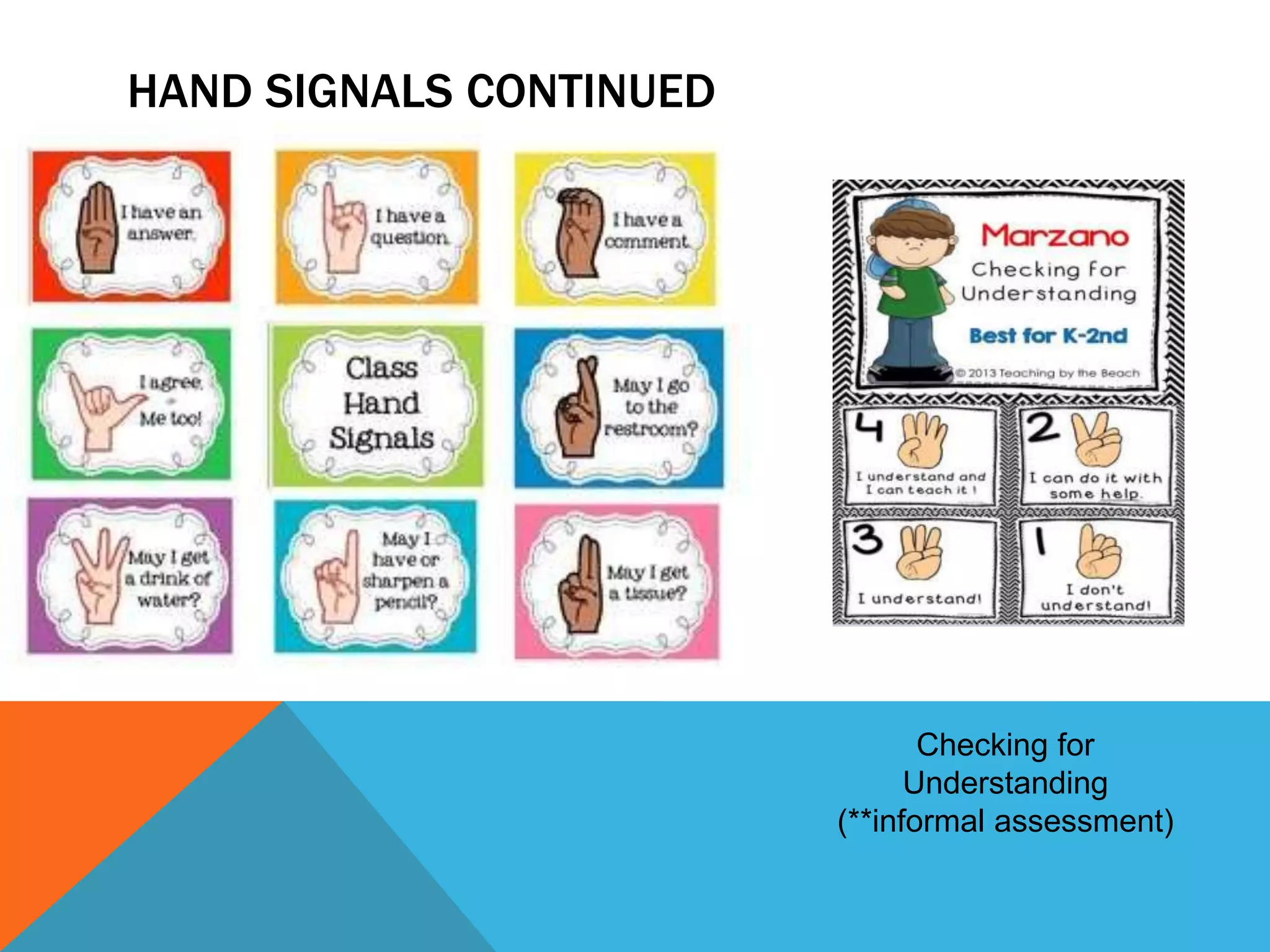
HAND SIGNALS
HAND SIGNALS CONTINUED
Checking for
Understanding
(**informal assessment)
MYSTERY MOTIVATORS
• Incentive systems designed to deliver random
rewards for appropriate behavior
• Can be used for single students, teams, or a whole
class
• Depends on what you as the teacher want to
implement in the classroom on what behaviors you
want to focus on to reward
Explain HOW this works in the classroom
Refer to the book The Tough Kid Tool Box
• Awesome for ANY student who may have a
behavior problem in class or even just to
reward your class for excellent behavior
during small group settings, large group
instruction or individually
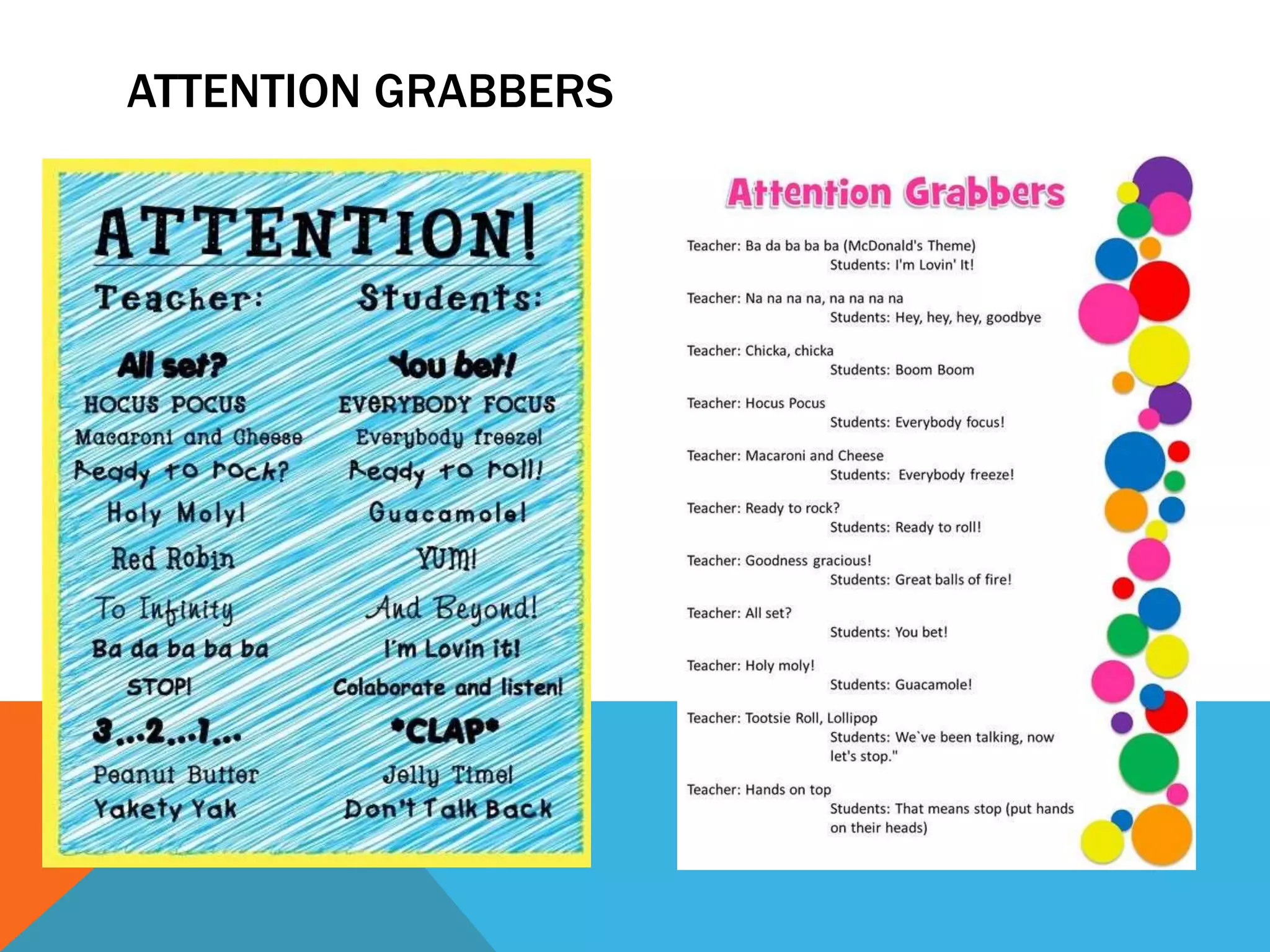
ATTENTION GRABBERS
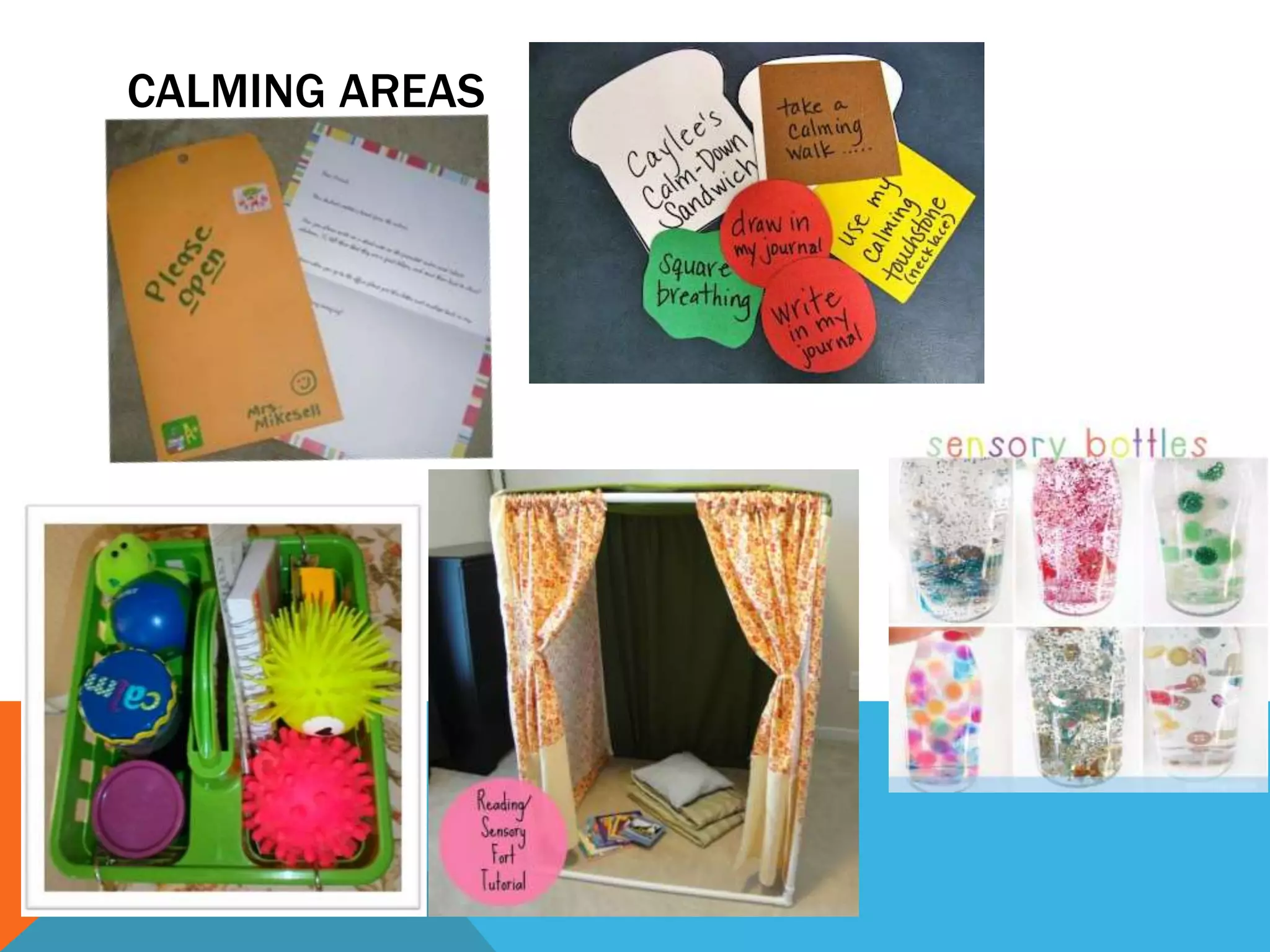
CALMING AREAS
• Have a contract
for students to
sign at the
beginning of the
year
• Make sure
students
understand and
know the rules
and your
expectations of
them
RULES AND CONTRACTS
CONTINUED…
1.Take advantage of the
new school year or term
to set the stage for
cooperation
2. Be particularly prepared
and organized
3. Minimize transition time
4. Utilize a communication
style that establishing
non-threatening,
comfortable environment
5. Clearly establish
expectations for conduct
5 STEPS TO CLASSROOM MANAGEMENT
www.usu.edu/ata/docs/classroom_manage
ment.ppt
Instagram: ksrashippensburg
Facebook: KSRA Shippensburg
Pinterest: www.pinterest.com/ksraship1
Don’t‘ forget! If you want a t-shirt bring $20 to
the next meeting!
SOCIAL MEDIA
NEXT MEETING IS
OCTOBER 7th AT 5 PM

Classroom management

  • 1.
    "Management refers toyour role as a teacher in creating a classroom environment where success is possible. It refers to how order is established and maintained in the classroom" (Savage & Savage, 2010, p.6).
  • 2.
    WHAT IS CLASSROOMMANAGEMENT? • It’s effective discipline • It’s being prepared for class • It’s motivating your students • It’s providing a safe, comfortable learning environment • It’s building your students’ self esteem • It’s being creative and imaginative in daily lessons
  • 3.
    BOOK OF THEMEETING Have You Filled a Bucket Today By: Carol McCloud
  • 6.
  • 7.
    • “I reallyfelt as if I was quick to just call people out and have them go pull their card. Someone was talking while I was talking… I gave a warning and then they had to pull their card. They had to do the walk of shame over to the wall and their card had to be on my yellow pocket chart for the rest of the day. But did I really give that child a fair chance to explain why they were talking. Simply stated – no. I would have a conversation with them after but the emotional damage and embarrassment was done and that really started killing ME inside. And then to post it on the wall for everyone to see just seemed unfair.”
  • 8.
    • “So westarted focusing on rules more! I made these great rules to use in my room and we began to make that the focus. Every day we would stand behind our chairs and my handy helper would point while the entire class recited the rules. Every day… we never missed.”
  • 9.
    Here I justtook an object and the kids passed it to the person I saw doing something good. So if there was a student with an undesired behavior – I would say oh thanks Johny for sitting quietly, please pass the fish to Amy who is sitting on her bottom. CIRCLE TIME
  • 10.
  • 11.
    DO-OVERS “Let’s try thatagain.” – “What’s another way to say that?” – “How can we do that differently?” The “IDEAL” Approach to handle misbehavior discussed in the book is: I – Immediate response; D – Directly respond to the child, making eye contact E – Efficiently use words and firmness; A – Action-based “do-overs”; L – Level your response to the behavior, not the child.
  • 12.
    CHILD CREATING GOALS Dr.Baynum- would you please share what you did with your third grade goals.
  • 14.
  • 15.
    DURING SMALL GROUPCONTINUED…
  • 16.
    #1: Establish classroomrules immediately and enforce them consistently. #2: Set logical rules and consequences. #3: Use positive instead of negative language #4: Make your students feel responsible for their own learning environment. #5: Praise efforts and achievements for their own sake, not for the sake of teacher approval. #6: Be mindful of different learning paces and keep the students occupied. 12 TIPS
  • 17.
    #7: Avoid confrontationsin front of students. #8: Connect with the parents. #9: Interactively model behaviors. #10: Get the attention of every student before beginning class. #11: Use proximity and directness to your advantage. #12: Be organized. http://www.elementaryeducationdegree.com/cl assroom-management-tips/ CONTINUED…
  • 18.
  • 19.
  • 20.
  • 21.
    HAND SIGNALS CONTINUED Checkingfor Understanding (**informal assessment)
  • 23.
    MYSTERY MOTIVATORS • Incentivesystems designed to deliver random rewards for appropriate behavior • Can be used for single students, teams, or a whole class • Depends on what you as the teacher want to implement in the classroom on what behaviors you want to focus on to reward
  • 24.
    Explain HOW thisworks in the classroom Refer to the book The Tough Kid Tool Box
  • 25.
    • Awesome forANY student who may have a behavior problem in class or even just to reward your class for excellent behavior during small group settings, large group instruction or individually
  • 26.
  • 27.
  • 28.
    • Have acontract for students to sign at the beginning of the year • Make sure students understand and know the rules and your expectations of them RULES AND CONTRACTS
  • 29.
  • 30.
    1.Take advantage ofthe new school year or term to set the stage for cooperation 2. Be particularly prepared and organized 3. Minimize transition time 4. Utilize a communication style that establishing non-threatening, comfortable environment 5. Clearly establish expectations for conduct 5 STEPS TO CLASSROOM MANAGEMENT www.usu.edu/ata/docs/classroom_manage ment.ppt
  • 31.
    Instagram: ksrashippensburg Facebook: KSRAShippensburg Pinterest: www.pinterest.com/ksraship1 Don’t‘ forget! If you want a t-shirt bring $20 to the next meeting! SOCIAL MEDIA NEXT MEETING IS OCTOBER 7th AT 5 PM